

Highly accurate protein structure prediction for the human proteome
Open accessThe DOI matches its Crossref record; 77 of the 83 references it cites were found in a registry or an index; 18 of the 24 sources its claims cite were checked for support.
Abstract
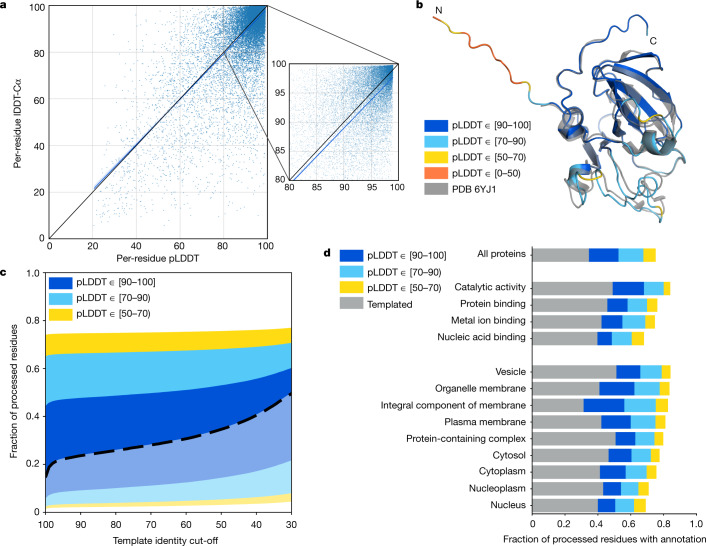
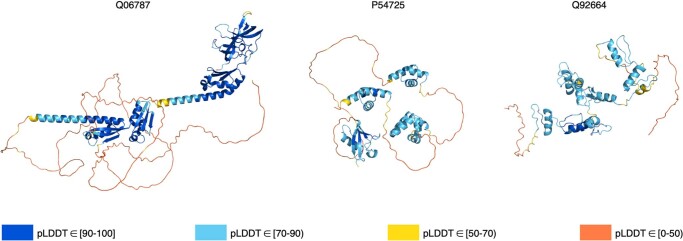
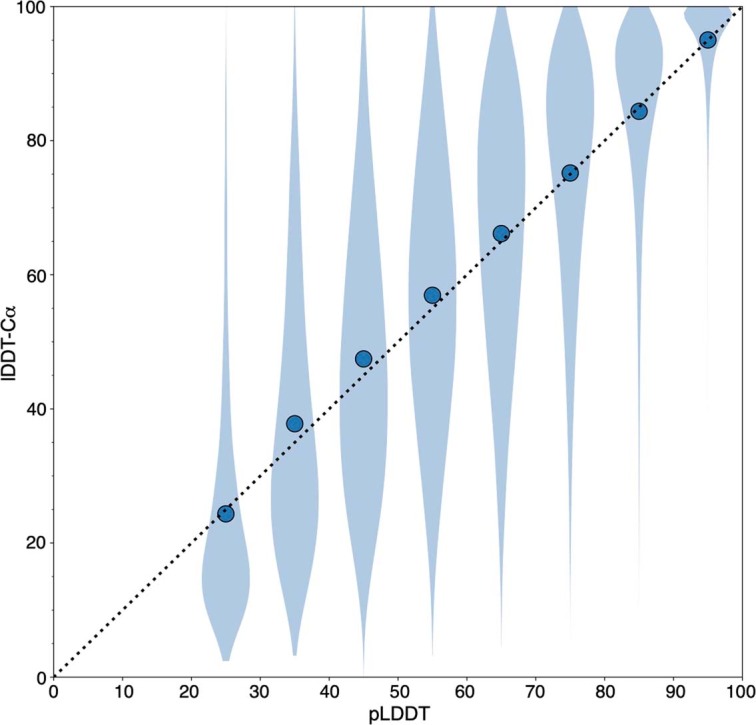
Protein structures can provide invaluable information, both for reasoning about biological processes and for enabling interventions such as structure-based drug development or targeted mutagenesis. After decades of effort, 17% of the total residues in human protein sequences are covered by an experimentally determined structure 1 . Here we markedly expand the structural coverage of the proteome by applying the state-of-the-art machine learning method, AlphaFold 2 , at a scale that covers almost the entire human proteome (98.5% of human proteins). The resulting dataset covers 58% of residues with a confident prediction, of which a subset (36% of all residues) have very high confidence. We introduce several metrics developed by building on the AlphaFold model and use them to interpret the dataset, identifying strong multi-domain predictions as well as regions that are likely to be disordered. Finally, we provide some case studies to illustrate how high-quality predictions could be used to generate biological hypotheses. We are making our predictions freely available to the community and anticipate that routine large-scale and high-accuracy structure prediction will become an important tool that will allow new questions to be addressed from a structural perspective.
Overview
CoChat Summary
TL;DR
AlphaFold2 was applied to 98.5% of human proteins, producing confident predictions for 58% of residues and very high confidence for 36% of all residues. The paper introduces pLDDT, pTM and an experimentally resolved head to interpret the dataset, presents case studies, and releases predictions freely.
Key findings
- The dataset covers 98.5% of human proteins with full-chain predictions, amounting to 10,537,122 residues (92.5% of residues); 58.0% of residues were predicted confidently (pLDDT > 70), and 35.7% of total residues fell in the highest accuracy band (pLDDT > 90), double the residues covered by experimental structures.
- At the per-protein level, 43.8% of proteins had a confident prediction on at least three quarters of their sequence, and 1,290 proteins contained a substantial region (>200 residues) with pLDDT ≥ 70 and no good template.
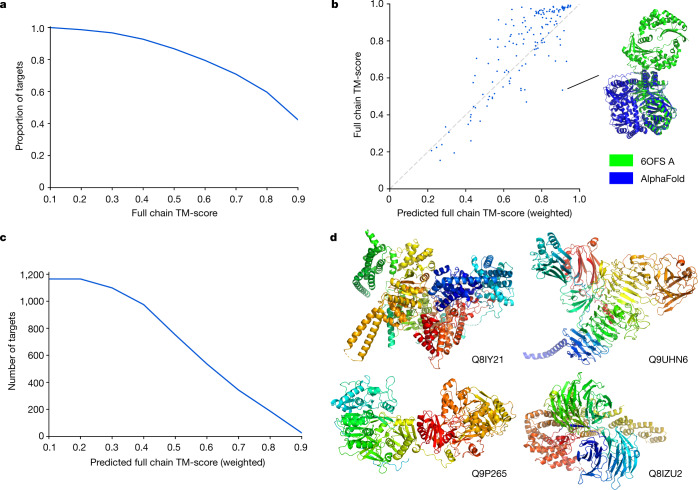
- On a held-out set of long PDB chains (n = 151), 70% of predictions had a TM-score > 0.7; pTM correlated with actual TM-score at Pearson’s r = 0.84, and among human proteins enriched for novel multidomain predictions, 187 had pTM > 0.8 and 343 had pTM > 0.7.
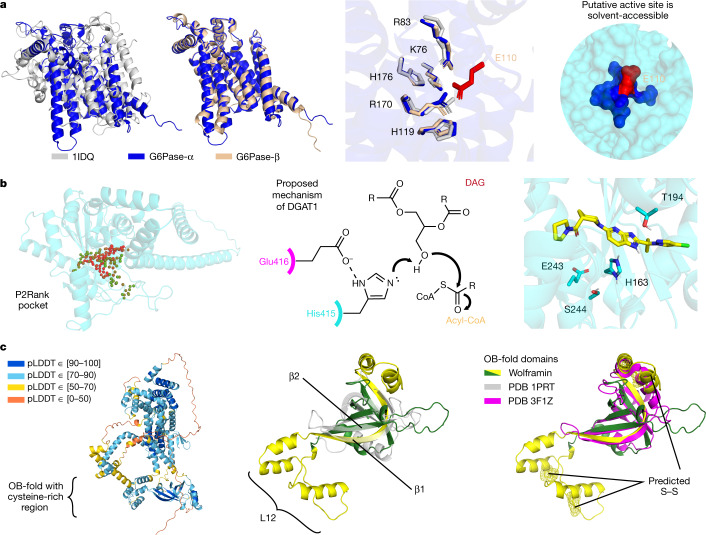
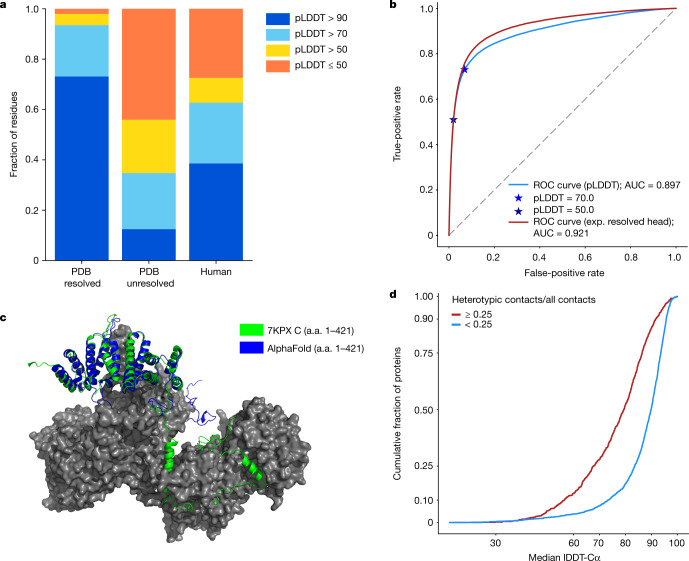
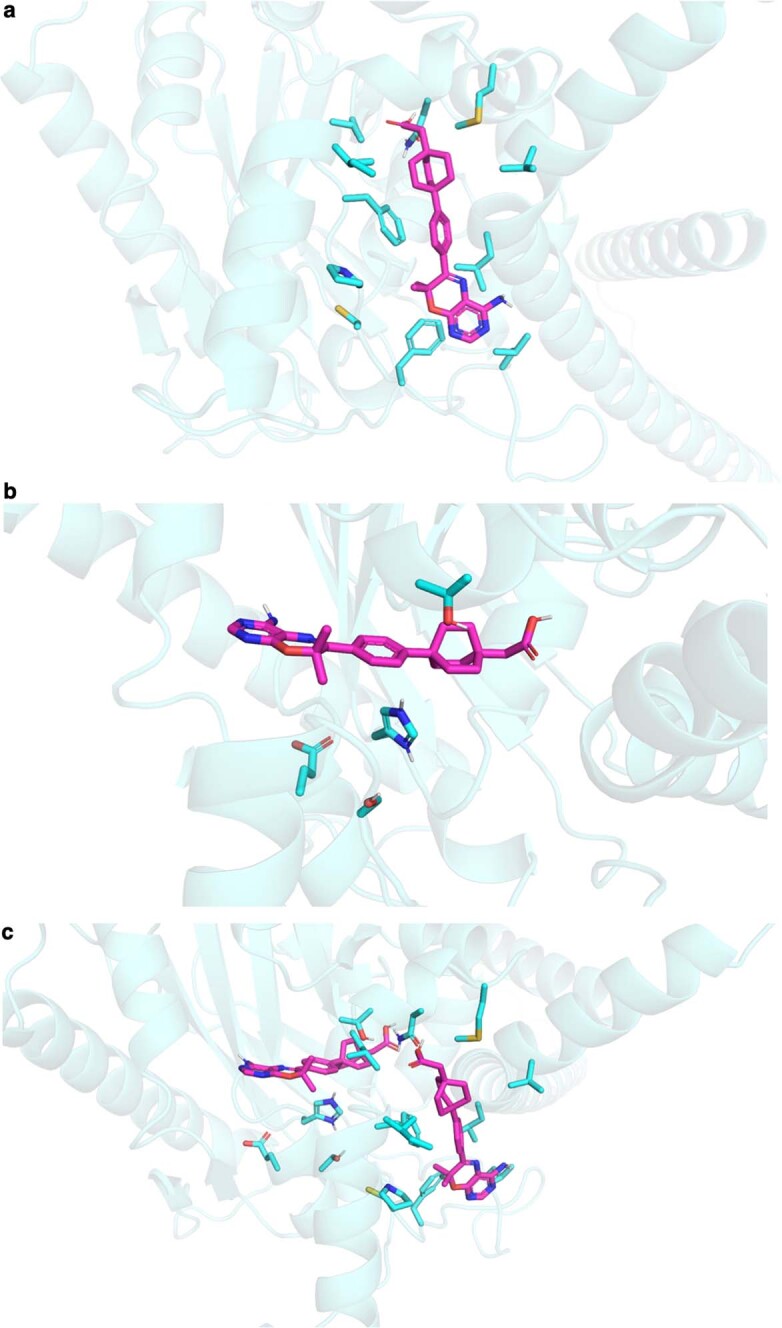
- pLDDT performed as a competitive disorder predictor on the CAID benchmark with AUC 0.897, while the experimentally resolved head achieved AUC 0.921; case studies proposed mechanistic hypotheses for G6Pase-α, DGAT2 and wolframin.
Methods
- AlphaFold2 was applied to the UniProt human reference proteome (release 2021_02), attempting all sequences of 16–2,700 amino acids and excluding residue codes B, J, O, U, Z or X; the pipeline used MSA construction, template search, inference with five models, model ranking by mean pLDDT, and constrained relaxation, with Reduced BFD and reduced ensembling.
- Evaluation used a recent PDB dataset of 12,494 chains, CAMEO targets from 21 March 2020 to 13 March 2021, and the CAID Disprot-PDB benchmark; metrics included pLDDT, pTM, the experimentally resolved head, TM-score, lDDT-Cα and AUC.
- Case-study analyses used PyMOL, P2Rank, AutoDockTools, AutoDock Vina and TM-align; inference for the human proteome used 930 GPU days, with an estimated 510 core days for other pipeline stages from scratch.
Limitations
- The paper states that low-confidence regions may reflect intrinsic disorder or regions structured only in complex, and that some proportion of proteins without confident predictions will be genuine failures where a fixed structure exists but AlphaFold does not predict it.
- The paper states that inter-domain accuracy is expected to be lower than within-domain accuracy, that some multidomain proteins may have mobile domains with no fixed packing, and that the case-study biological hypotheses require experimental confirmation.
- Evident from the text: predictions are single-chain and exclude sequences longer than 2,700 residues, so complex-dependent structure and larger proteins are not directly addressed.
Model-written summary. Check it against the paper before relying on it.
Integrity signals
Registry
Cites
Statistics
Figures
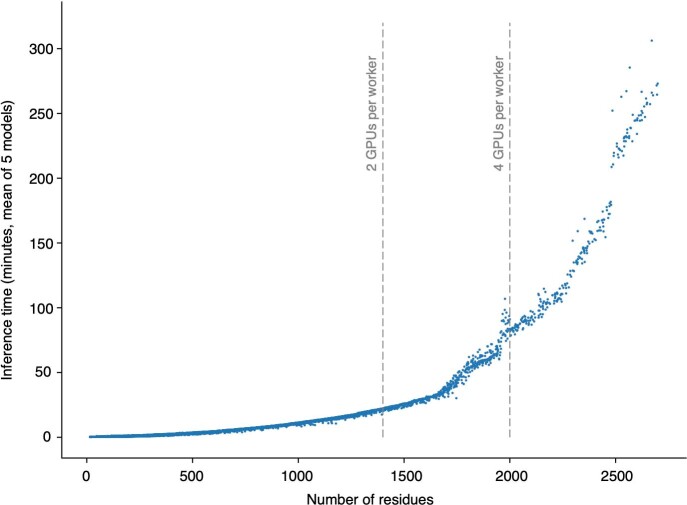
![Extended Data Fig. 7 Relationship between sequence length and run time for the non-inference stages of the pipeline. On the basis of 240 human protein sequences, chosen by stratified sampling from the length buckets: [16, 500), [500, 1,000), [1,000, 1,500), [1,500, 2,000), [2,000, 2,500) and [2,500, 2,700]. The relax plot shows five times more points, since five relaxed models are generated per protein. Coefficients for the quadratic lines of best fit were computed with Numpy polyfit.](https://figures.cochat.ai/paper-figures/c9bdcad64694429b95a292e248c7f05a/highly-accurate-protein-structure-prediction-for-the-human-proteome-figure-11.jpg)
Verification
Claims the paper makes
14 Valid · 1 Not valid · 5 Not checked · 44 Own results and interpretations
The cited sources support only part of this claim — read each source’s verdict below.
In the paper
“This system used a completely different model from our CASP13 entry31, and demonstrated a considerable improvement over previous methods in terms of providing routinely high accuracy29,30.”
§ Highly accurate protein structure prediction for the human proteome > Main
What the sources say
- Partly supportedcites [29] Kryshtafovych A Schwede T Topf M Fidelis K Moult J Critical assessment of methods of protein structure prediction (CASP)-round XIII Proteins 2019 87 1011 1020 10.1002/prot.25823 31589781 PMC6927249 sourceExperimental — accuracy not yet measured
The PROGRESS IN CASP13 section reports a dramatic improvement in model accuracy over earlier CASP rounds, and TEMPLATE FREE MODELING says DeepMind’s A7D group had the most accurate results overall. Those passages concern CASP13 methods, not the different system in the citing sentence; they do not establish that AlphaFold2 routinely achieved high accuracy. (LLM, conf=0.84)
- Supportedcites [30] Pereira, J. et al. High-accuracy protein structure prediction in CASP14. Proteins10.1002/prot.26171 (2021). 34218458 source
The Abstract reports a large leap in high accuracy due to AF2. The Conclusions say AF2 substantially outperformed its predecessor and produced the best models for 89 of 97 CASP14 targets, supporting both the improvement and its routine high accuracy. (LLM, conf=0.94)
boostedstates a cause- Asserted: passes — The authors put it forward as true.
- Checkable: passes — It can be checked against evidence.
- Load-bearing: passes — The paper’s conclusions depend on it.
- Based: passes — The paper gives a reason why it holds.
- Partly supported
Every source the paper cites for this claim was checked and supports it.
In the paper
“We note that the accuracy of AlphaFold was validated in CASP142, which focuses on challenging proteins that are dissimilar to structures already available in the PDB.”
§ Highly accurate protein structure prediction for the human proteome > Model confidence and added coverage
What the sources say
- Supportedcites [2] Jumper, J. et al. Highly accurate protein structure prediction with AlphaFold. Nature10.1038/s41586-021-03819-2 (2021). PMC8371605 34265844 source
The paper’s CASP14 assessment passage (section and page not provided in our copy) says AlphaFold was entered into CASP14, describes it as a blind accuracy assessment, and reports that AlphaFold’s structures were substantially more accurate than competing methods. This supports the attributed claim that its accuracy was validated in CASP14. (LLM, conf=0.94)
plain- Asserted: passes — The authors put it forward as true.
- Checkable: passes — It can be checked against evidence.
- Load-bearing: unclear — It is unclear whether the paper’s conclusions depend on it.
- Based: passes — The paper gives a reason why it holds.
- Supported
The cited sources support only part of this claim — read each source’s verdict below.
In the paper
“Despite being the most similar chain, 3F1Z lacks the cysteines that are present in wolframin, which could form disulfide cross-links in the endoplasmic reticulum59.”
§ Highly accurate protein structure prediction for the human proteome > Highlighted predictions > Wolframin
What the sources say
- Partly supportedcites [59] Fass D Thorpe C Chemistry and enzymology of disulfide cross-linking in proteins Chem. Rev. 2018 118 1169 1198 10.1021/acs.chemrev.7b00123 28699750 PMC5808910 sourceExperimental — accuracy not yet measured
Section 2, “Which Proteins Contain Disulfides” (page unavailable), says that proteins in or passing through the ER can have cysteines positioned to form disulfide bonds. It does not address wolframin, 3F1Z, or whether their cysteine residues differ, so it supports only the general possibility of ER disulfide cross-linking. (LLM, conf=0.86)
hedged- Asserted: passes — The authors put it forward as true.
- Checkable: passes — It can be checked against evidence.
- Load-bearing: unclear — It is unclear whether the paper’s conclusions depend on it.
- Based: passes — The paper gives a reason why it holds.
- Partly supported
The sources with a verdict support this claim; the rest weren’t checked yet, have no full text we could read, or their verdicts aren’t rated yet.
In the paper
“Comparing our prediction for this region (median pLDDT of 86.0) to existing PDB chains using TM-align42,57 identified 3F1Z58 as the most similar known chain (TM-score of 0.472) (Fig. 3c, magenta).”
§ Highly accurate protein structure prediction for the human proteome > Highlighted predictions > Wolframin
What the sources say
- Not checked — no full text of the sourcecites [42] Zhang Y Skolnick J Scoring function for automated assessment of protein structure template quality Proteins 2004 57 702 710 10.1002/prot.20264 15476259 source
- Supportedcites [57] Zhang Y Skolnick J TM-align: a protein structure alignment algorithm based on the TM-score Nucleic Acids Res. 2005 33 2302 2309 10.1093/nar/gki524 15849316 PMC1084323 source
The citation is attached to “using TM-align,” identifying the method used by the citing authors, not attributing their 3F1Z match or TM-score to this source. The source’s Results (Benchmark test; page unavailable) describes TM-align as a tool for comparing protein structures and reporting TM-scores. (LLM, conf=0.93)
- Supportedcites [58] Das D The structure of KPN03535 (gi|152972051), a novel putative lipoprotein from Klebsiella pneumoniae, reveals an OB-fold Acta Crystallogr. F 2010 66 1254 1260 10.1107/S1744309109018168 PMC2954213 20944219 source
The citation is attached to 3F1Z, identifying the PDB chain used in the citing authors’ comparison. The source paper’s Materials and methods section states that its KPN03535 structure was deposited under accession code 3f1z; the pLDDT and TM-score describe the citing authors’ own analysis, not a result attributed to this source. (LLM, conf=0.93)
plainstates an association- Asserted: passes — The authors put it forward as true.
- Checkable: passes — It can be checked against evidence.
- Load-bearing: unclear — It is unclear whether the paper’s conclusions depend on it.
- Based: passes — The paper gives a reason why it holds.
Every source the paper cites for this claim was checked and supports it.
In the paper
“A recent evolutionary analysis suggested domains for wolframin, which our prediction largely supports55.”
§ Highly accurate protein structure prediction for the human proteome > Highlighted predictions > Wolframin
What the sources say
- Supportedcites [55] Schäffer DE Iyer LM Burroughs AM Aravind L Functional innovation in the evolution of the calcium-dependent system of the eukaryotic endoplasmic reticulum Front. Genet. 2020 11 34 10.3389/fgene.2020.00034 32117448 PMC7016017 source
The Results section, “Domain Architectural Anatomy and Functional Analysis of the Wolframin Protein,” reports the paper’s proposed domain assignments for wolframin, including Sel1-like repeats, an EF-hand region, and an OB-fold domain (Figure 4A). The citing authors’ statement that their own prediction largely supports those assignments is not a finding attributed to this source. (LLM, conf=0.93)
plainstates an association- Asserted: passes — The authors put it forward as true.
- Checkable: passes — It can be checked against evidence.
- Load-bearing: unclear — It is unclear whether the paper’s conclusions depend on it.
- Based: passes — The paper gives a reason why it holds.
- Supported
36 more claims · 4 with their cited sources checked
Create a free account to see all 64 claims and every source verdict.
- It may state two separate claims as one. 13
- Probably not a substantial claim. 12
Claims other papers make about this one
Each is checked against this paper’s own text: does it say what the citing paper says it does?
The source backs part of the claim, not all of it — or backs it for a different population, condition or comparison.
In the citing paper
“While AF2 performs exceptionally well on these types of folds on average”
From The power and pitfalls of AlphaFold2 for structure prediction beyond rigid globular proteins (2024) · cites this paper as [5]
Experimental — accuracy not yet measuredThe source backs part of the claim, not all of it — or backs it for a different population, condition or comparison.
In the citing paper
“For the majority of globular proteins, AF2 provides accurate, reliable models with high pLDDT (> 70) or low PAE values (< 5 Å) highlighting confidence in the prediction of the position of the atomic coordinates, which match experimentally determined native structures5,17,23,59”
From The power and pitfalls of AlphaFold2 for structure prediction beyond rigid globular proteins (2024) · cites this paper as [5]
Experimental — accuracy not yet measuredThe source backs part of the claim, not all of it — or backs it for a different population, condition or comparison.
In the citing paper
“The lower confidence bands appear to correlate well with backbone flexibility and intrinsic disorder (13) (Figure 2).”
From AlphaFold Protein Structure Database: massively expanding the structural coverage of protein-sequence space with high-accuracy models (2022) · cites this paper as [13]
Experimental — accuracy not yet measuredThe source backs part of the claim, not all of it — or backs it for a different population, condition or comparison.
In the citing paper
“One of the major insights leveraged by AlphaFold 1,2 comes from the use of evolutionary covariations that can be extracted from large-scale multiple sequence alignments.[49][50][51][52][53][54]”
From AlphaFold and Implications for Intrinsically Disordered Proteins (2021) · cites this paper as [2]
Experimental — accuracy not yet measuredThe source backs part of the claim, not all of it — or backs it for a different population, condition or comparison.
In the citing paper
“DeepMind’s AlphaFold2 success in sequence-based protein structure prediction,4 as well as the RoseTTAFold70 open-source counterpart, and the publicly available AlphaFold2 prediction of all human proteins203 are major steps that benefit the scientific community.”
From AlphaFold, Artificial Intelligence (AI), and Allostery (2022) · cites this paper as [203]
Experimental — accuracy not yet measured
16 more claims about this paper
Create a free account to see every claim other papers make about this one.
Citations
Cites
Highly accurate protein structure prediction with AlphaFold
Jumper, J., Evans, R., Pritzel, A., Green, T., Figurnov, M., Ronneberger, O., Tunyasuvunakool, K., Bates, R., Žídek, A., Potapenko, A., et al. (2021) · Nature · doi:10.1038/s41586-021-03819-2 · Cited by 43,764 · cited 1×
“[16, 500), [500, 1,000), [1,000, 1,500), [1,500, 2,000), [2,000, 2,500) and [2,500, 2,700].”
Self-citationGene Ontology: tool for the unification of biology
Ashburner, M., Ball, C. A., Blake, J. A., Botstein, D., Butler, H., Cherry, J. M., Davis, A. P., Dolinski, K., Dwight, S. S., Eppig, J. T., et al. (2000) · Nature Genetics · doi:10.1038/75556 · Cited by 43,206
Trott, O., & Olson, A. J. (2010) · Journal of Computational Chemistry · doi:10.1002/jcc.21334 · Cited by 38,412
AutoDock4 and AutoDockTools4: Automated docking with selective receptor flexibility
Morris, G. M., Huey, R., Lindstrom, W., Sanner, M. F., Belew, R. K., Goodsell, D. S., & Olson, A. J. (2009) · Journal of Computational Chemistry · doi:10.1002/jcc.21256 · Cited by 25,486
Initial sequencing and analysis of the human genome
International Human Genome Sequencing Consortium, Whitehead Institute for Biomedical Research, C. F. G. R., Lander, E. S., Linton, L. M., Birren, B., Nusbaum, C., Zody, M. C., Baldwin, J., Devon, K., Dewar, K., et al. (2001) · Nature · doi:10.1038/35057062 · Cited by 24,216
Self-citationThe sequence of the human genome
Venter, J. C., Adams, M. D., Myers, E. W., Li, P. W., Mural, R. J., Sutton, G. G., Smith, H. O., Yandell, M., Evans, C. A., Holt, R. A., et al. (2001) · Science · doi:10.1126/science.1058040 · Cited by 13,909
SWISS-MODEL: homology modelling of protein structures and complexes
Waterhouse, A., Bertoni, M., Bienert, S., Studer, G., Tauriello, G., Gumienny, R., Heer, F. T., de Beer, T. A. P., Rempfer, C., Bordoli, L., et al. (2018) · Nucleic Acids Research · doi:10.1093/nar/gky427 · Cited by 13,067
Pfam: The protein families database in 2021
Mistry, J., Chuguransky, S., Williams, L., Qureshi, M., Salazar, G. A., Sonnhammer, E. L. L., Tosatto, S. C. E., Paladin, L., Raj, S., Richardson, L. J., et al. (2021) · Nucleic Acids Research · doi:10.1093/nar/gkaa913 · Cited by 7,452
Self-citationUniProt: the universal protein knowledgebase in 2021
The UniProt Consortium, Bateman, A., Martin, M.-J., Orchard, S., Magrane, M., Agivetova, R., Ahmad, S., Alpi, E., Bowler-Barnett, E. H., Britto, R., et al. (2021) · Nucleic Acids Research · doi:10.1093/nar/gkaa1100 · Cited by 6,372
Self-citationThe Gene Ontology Resource: 20 years and still GOing strong
The Gene Ontology Consortium (2019) · Nucleic Acids Research · doi:10.1093/nar/gky1055 · Cited by 4,747
Cited by
Items 2,201–2,300 of 3,208
AlphaFold Prediction of Protein–Protein Interactions in the Flaviviridae Proteomes
Surya, W., Goh, J., Ponniah, C., & Torres, J. (2025) · International Journal of Molecular Sciences · doi:10.3390/ijms262010159 · Cited by 2
“…(<30) [110]. plDDT scores 100–90 indicate high accuracy comparable to high-resolution structures; regions with scores 70–90 are modelled well with good backbone prediction; regions of scores 50–70 are low confidence and regions <50 cannot be interpreted or may be disordered [110,112,113].”
Singh, S., Mantri, M. P., Khan, M. I., & Banerjee, A. K. (2025) · BMC Plant Biology · doi:10.1186/s12870-025-07548-w · Cited by 2
“The conserved regions in each clade of the phylogenetic tree were visualized in the AlphaFold Protein Structure Database ( h t t p s : / / a l p h a f o l d . e b i . a c . u k / ) using the respective A. thaliana trithorax protein.pdb structure files [76].”
Kaptin Functions as a Barbed-End Binding Protein to Control Actin Filament Dynamics
Dutta, P., Maiti, I., Maiti, I., et al. (2025) · Journal of Molecular Biology · doi:10.1016/j.jmb.2025.169554 · Cited by 2
Zhang, L., Xu, Q., Sun, G., Zhang, X., Xue, J., Yao, C., Liu, D., & Zhai, J. (2025) · Frontiers in Pharmacology · doi:10.3389/fphar.2025.1717293 · Cited by 2
“The PDB fi les and details of the target proteins were obtained from the PDB database (https://www.rcsb.org/) or AlphaFold database (https://alphafold.ebi.ac.uk/) (Berman et al., 2000; Tunyasuvunakool et al., 2021) (Table 2).”
Leopard-EM : an extensible 2D template-matching package to accelerate in situ structural biology
Giammar, M., Dickerson, J. L., Hall, L. N., & Lucas, B. A. (2025) · Acta Crystallographica Section D Structural Biology · doi:10.1107/s2059798325009982 · Cited by 4
Li, Z., Huang, J., Chen, B., et al. (2025) · Green Synthesis and Catalysis · doi:10.1016/j.gresc.2025.12.001 · Cited by 2
Qi, H., Li, Y. M., & Chen, C. (2025) · 2022 IEEE Frontiers in Education Conference (FIE) · doi:10.1109/fie63693.2025.11328534 · Cited by 2
“Beyond these widespread uses, AI tools are capable of performing complex tasks, including generating human-like text and media, assisting with scientific discovery (e.g., protein folding prediction) [5], and supporting expert decision-making in fields like medicine [6].”
Nonspecific Cellular Interactions Are a Key Determinant in the Disposition of Fc-Fused Proteins
Bryniarski, M. A., Wang, S., Chen, A., Coventry, B., Korkmaz, E. N., Tuhin, M. T. H., Ko, E. C., Wakefield, D. L., LaGory, E. L., Wu, H., et al. (2026) · Molecular Pharmaceutics · doi:10.1021/acs.molpharmaceut.5c01228 · Cited by 5
“70,71 To this end, a panel of proteins was successfully generated that varied in size from five to 20 kDa, bearing isoelectric points (pI) of around 4, 7, or 9 and differing levels of surface charge and hydrophobicity (Figures 1 and 2, Table 1).”
Li, X.-Z., Li, Y.-L., Liu, W., & Zhu, J. (2026) · Biology · doi:10.3390/biology15020186 · Cited by 2
Chimeric Approach to Identify Molecular Determinants of Nicotinic Acetylcholine Receptors
Sapkota, P., Akaberi, S. M., Ghimire, B., & Sharma, K. (2026) · International Journal of Molecular Sciences · doi:10.3390/ijms27021091 · Cited by 3
“AlphaFold has demonstrated exceptional proficiency in predicting monomeric protein structures with high accuracy for single-domain proteins [125] and has been successfully applied to membrane proteins, including ion channels and receptors [126,127].”
Accelerated discovery of thermophilic biocatalysts for marine polysaccharide bioprocessing via ETopt
Liu, C., Li, B., Jiang, H. W., Sun, J., Ren, J., Huang, X., Xu, P., Li, M., Xin, Y., Chen, S., et al. (2026) · International Journal of Biological Macromolecules · doi:10.1016/j.ijbiomac.2026.151068 · Cited by 3
The emerging role of high-throughput proteomics in advancing precision medicine
You, J., Deng, Y., Chen, L., Wang, L., Guo, Y., Li, Z.-Y., Feng, J., Yu, Y., & Cheng, W. (2026) · Science Bulletin · doi:10.1016/j.scib.2026.02.054 · Cited by 4
TCL1A mediates DNA methylation defects in recurrent hydatidiform mole with NLRP7 pathogenic variants
Gao, Z., Liu, Q., Li, L., Hu, T., Lu, X., Wu, Y. Z., Qin, D., Wang, X., Gu, C., Li, J., et al. (2026) · Nature Communications · doi:10.1038/s41467-026-69744-y · Cited by 4
“The initial model of NLRP7-TCL1A was generated by docking the AlphaFold2-predicted NLRP7 and TCL1A into the cryo-EM map with UCSF ChimeraX software for structure visualization, and then performed the manual adjustments by COOT 84,85 .”
Jiang, Z., Liu, J., Shao, C., Wang, S., Xu, J., Wang, Y., Lin, X., Xu, H., & Wu, X. (2026) · International Journal of Biological Macromolecules · doi:10.1016/j.ijbiomac.2026.151309 · Cited by 2
Zhang, J., Wang, S., Gao, L., & Li, Q. (2026) · Journal of Biotechnology · doi:10.1016/j.jbiotec.2026.03.012 · Cited by 4
Sebastiano, M. R., Apprato, G., Francisco, S., Ermondi, G., & Caron, G. (2026) · Medicinal Research Reviews · doi:10.1002/med.70038 · Cited by 5
Structural dynamics of the midnolin-proteasome during ubiquitin-independent substrate turnover
Zhu, C., Qin, L., Dai, Z., Zuo, P., Yang, A., Zhong, L., Lin, Z., & Liang, L. (2026) · Nature Communications · doi:10.1038/s41467-026-71002-0 · Cited by 4
“The AlphaFold-predicted midnolin structure 44 was then rigid-body fi tted into the remaining density inChimera.”
Haq, I., Ngo, J. C., Roy, N., Lee, E., Choudhury, M. A., Soni, R. K., Teich, A. F., Mayeux, R. P., Jager, P. L. D., He, Y., et al. (2026) · Acta Neuropathologica · doi:10.1007/s00401-026-03002-9 · Cited by 3
“To further assess the structural plausibility of the SorLA–SUN2 association, we performed AlphaFold multimer modeling [48, 135].”
Vilchez‐Pinto, G., Garrido‐Arandia, M., Molina, A., Torres, M. Á. M., & Jordá, L. (2026) · The Plant Journal · doi:10.1111/tpj.70876 · Cited by 4
“…et al., 2021) for more than 200 million proteins in UniProt available in the AlphaFold Protein Structure Database (updated October 2025 with UniProt release 2025_03; Tunyasuvunakool et al., 2021, Fleming et al., 2025) opens a virtually unlimited field of exploration for structural investigations.”
Fernandes, N. P., Gomes, T., & Cordeiro, T. N. (2026) · Journal of Molecular Biology · doi:10.1016/j.jmb.2026.169862 · Cited by 5
Harnessing AlphaFold: Applications in disease understanding, drug discovery, and vaccine design
Kinde, M. Z., Gessese, A. T., Fenta, M. D., Chanie, S. D., & Sisay, T. (2026) · Results in Engineering · doi:10.1016/j.rineng.2026.111095 · Cited by 3
Design principles of human membrane protein topology
Wu, H., & Hegde, R. S. (2026) · The Journal of Cell Biology · doi:10.1083/jcb.202604059 · Cited by 2
“We combine classical topology prediction algorithms (Hallgren et al., 2022, Pre-print ; Tsirigos et al., 2015) with recent genome-wide protein structure predictions (Tunyasuvunakool et al., 2021), together with manual inspection, to generate a census of human membrane protein topology.”
Sharma, S. R. K., Saha, S., Arora, S., Ahlawa, Y. K., Sheoran, S., Mukherjee, S., Sinha, A., Chaudhary, K., & Gosipatala, S. B. (2026) · Disease and Therapeutics · doi:10.1016/j.dist.2026.100012 · Cited by 3
Allosteric Inhibition of PKMYT1 Induces a Unique, Inactive ATP Binding Site Conformation
Herrington, N. B., Khamrui, S., Zhao, Y., Lansiquot, C., Wu, R., Pandey, G., Lazarus, M. B., & Schlessinger, A. (2026) · Journal of the American Chemical Society · doi:10.1021/jacs.6c05178 · Cited by 2
Metabolovigilance: Associating Drug Metabolites with Adverse Drug Reactions
Tan, H., & Reed, S. M. (2022) · Molecular Informatics · doi:10.1002/minf.202100261 · Cited by 4
Structural Analysis of the Black-Legged Tick Saliva Protein Salp15
Chaves‐Arquero, B., Persson, C., Merino, N., Tomás‐Cortázar, J., Rojas, A. L., Anguíta, J., & Blanco, F. J. (2022) · International Journal of Molecular Sciences · doi:10.3390/ijms23063134 · Cited by 2
“AlphaFold provides a quantitative measure of the prediction confidence at the residue level, and the regions with low-confidence values have been found to correlate with predicted disordered regions in the human proteome [11].”
BackgroundMango, G., Osti, N., Udali, S., Vareschi, A., Malerba, G., Giorgetti, A., Pizzolo, F., Friso, S., Girelli, D., Olivieri, O., et al. (2022) · Atherosclerosis Plus · doi:10.1016/j.athplu.2022.06.001 · Cited by 4
“1B) obtained with AlphaFold [13] presented an average pLDDT of 83.75 and revealed a secondary structure composition consistent with the information present in literature 14 12.”
MethodInfluentialSahoo, P. K., Kumar, R., Rani, A., et al. (2022) · Microbiology Spectrum · doi:10.1128/spectrum.01607-22 · Cited by 2
“Both monomer as well as fibrous model of Bg_9562 was generated using AlphaFold2 (12, 14).”
MethodInfluentialNallasamy, V., & Seshiah, M. (2022) · Neural Computing and Applications · doi:10.1007/s00521-022-07868-0 · Cited by 2
Prediction of protein structure and intrinsic disorder in the era of deep learning
Erdős, G., & Dosztányi, Z. (2022) · Elsevier eBooks · doi:10.1016/b978-0-323-99533-7.00007-8 · Cited by 2
Intrinsic disorder and allosteric regulation
Huang, Q., Chen, L., Lai, L., & Liu, Z. (2022) · Elsevier eBooks · doi:10.1016/b978-0-323-99533-7.00006-6 · Cited by 2
Weina, S., Yuan, M., Yin, L., Ke, X., & Zuo, Y. (2022) · Plant Cell Reports · doi:10.1007/s00299-022-02967-7 · Cited by 3
Desikan, R., & Jayachandran, P. (2023) · CPT Pharmacometrics & Systems Pharmacology · doi:10.1002/psp4.12897 · Cited by 2
“…the learning and experimental needs of structural biologists, computational scientists, students, and educators while catalyzing the creation of other protein structural databases, such as the “Membranome” 3 and “AlphaFold DB,” 4 collectively accelerating the field of protein structure and folding.”
BackgroundNiu, M., McGrath, M., Sammon, D., Gardner, S., Morgan, R. M. L., Bubeck, D., Liu, Y., Bubeck, D., & Hohenester, E. (2023) · Wellcome Open Research · doi:10.12688/wellcomeopenres.18937.1 · Cited by 19
“I don’t find any obvious problems with the structural study and it seems that the very high correlation of AlphaFold prediction with the actual crystal structure is a good indicator of the reliability of these results.”
InfluentialHomology Modeling in the Twilight Zone: Improved Accuracy by Sequence Space Analysis
Boubaker, R. B., Tiss, A., Henrion, D., & Chabbert, M. (2023) · Methods in molecular biology · doi:10.1007/978-1-0716-2974-1_1 · Cited by 5
Carter, A. A., Ramsey, K. M., Hatem, C. L., Sherry, K. P., Majumdar, A. K., & Barrick, D. (2023) · Structure · doi:10.1016/j.str.2023.03.003 · Cited by 2
PCNA Ser46-Leu47 residues are crucial in preserving genomic integrity
Kim, S., Kim, Y., Kim, Y., Yoon, S., Lee, K., Lee, Y., Kang, S., Myung, K., & Oh, C. (2023) · PLoS ONE · doi:10.1371/journal.pone.0285337 · Cited by 3
“Protein structure prediction was performed using recommended codes [60,61].”
MethodCovalency-enabled Drug Discovery is Redefining Druggability
McKenna, J. M., & Proctor, R. S. J. (2023) · CHIMIA International Journal for Chemistry · doi:10.2533/chimia.2023.537 · Cited by 3
Olğaç, A., Çapan, İ., Dahlke, P., Jordan, P. M., Werz, O., & Banoğlu, E. (2023) · ACS Omega · doi:10.1021/acsomega.3c03682 · Cited by 6
Li, L., Zhou, L., Jiang, C., Liu, Z., Meng, D., Luo, F., He, Q., & Yin, H. (2023) · Frontiers in Microbiology · doi:10.3389/fmicb.2023.1243987 · Cited by 4
“These predicted protein structures, when combined with other structure-based analyses, can provide valuable insights into the molecular mechanisms of target proteins and generate scientific hypotheses, including the identification of uncharacterized reaction sites or novel substrate interaction diagrams, as demonstrat…”
BackgroundMethodSklar, J. (2023) · Proceedings of the National Academy of Sciences · doi:10.1073/pnas.2313816120 · Cited by 2
Single-molecule-binding studies of antivirals targeting the hepatitis C virus core protein
Nepal, S., & Holmstrom, E. D. (2023) · Journal of Virology · doi:10.1128/jvi.00892-23 · Cited by 2
“of AlphaFold’s predicted local distance difference test (pLDDT) (11, 12), scaled from 0 to 100, provide a”
BackgroundMonogene Varianten in „laccase domain-containing 1“ (LACC1) als Ursache einer juvenilen Arthritis
Knieper, A.-M., von Stuckrad, A. S. L., Minden, K., Goetzke, C. C., & Kallinich, T. (2023) · Zeitschrift für Rheumatologie · doi:10.1007/s00393-023-01442-2 · Cited by 2
Ma, L., Gao, J., Qiu, Y., Liu, Y., Wu, X., Zhang, X., Tong, Y., Gao, W., Zhang, Y., & Liu, C. (2024) · ChemistrySelect · doi:10.1002/slct.202304679 · Cited by 3
Tsishevskaya, A. A., Gladysheva, A. V., Ternovoi, V. A., et al. (2023) · Biochemistry (Moscow) Supplement Series B Biomedical Chemistry · doi:10.1134/s1990750823600188 · Cited by 2
“…to predict angles and distances between atoms in the structure template created by the program, which makes it possible to obtain three-dimensional models of the protein under study with high accuracy, even despite the low level of homology with the prototype, which can be less than 30% [14].”
Statistical methods for assessing the effects of de novo variants on birth defects
Xie, Y., Wu, R., Li, H., Dong, W., Zhou, G., & Zhao, H. (2024) · Human Genomics · doi:10.1186/s40246-024-00590-z · Cited by 2
“Despite the efforts in experiments, only 35% of human proteins are mapped to a PDB entry, and frequently, these entries represent only fragments or segments of protein sequences rather than the whole proteins [72, 73].”
BackgroundInfluentialZhu, Y., Mehmood, A., & Li, D. (2024) · New Journal of Chemistry · doi:10.1039/d4nj00016a · Cited by 2
Olszewska, M., Malcher, A., Stokowy, T., Pollock, N. C., Berman, A. J., Budkiewicz, S., Kamieniczna, M., Jackowiak, H., Suszyńska-Zajczyk, J., Jędrzejczak, P., et al. (2024) · Human Reproduction Open · doi:10.1093/hropen/hoae020 · Cited by 2
“…molecular implications of the identified mutations on the structure and function of TCTE1, we performed homology modeling experiments using the Phyre2, I-TASSER, and AlphaFold tools (Roy et al. , 2010; Kelley et al. , 2015; Yang et al. , 2015; Yang and Zhang, 2015; Tunyasuvunakool et al. , 2021).”
MethodTan, X., Han, Y., Zhai, S., Dong, H., Zhang, T., & Zhang, K. (2024) · ACS Omega · doi:10.1021/acsomega.3c09514 · Cited by 2
Management of Tephritid Fruit Flies Targeting the Olfactory System
Jiang, H., Xu, L., Li, H., Chen, X., Yang, Y., & Wang, J. (2024) · CABI eBooks · doi:10.1079/9781789248715.0006 · Cited by 2
Unlocking the power of AI models: exploring protein folding prediction through comparative analysis
Nevado, P. T., Serrano, E., González-Herrero, A., Bermejo, R., & Rodríguez‐González, A. (2024) · Berichte aus der medizinischen Informatik und Bioinformatik/Journal of integrative bioinformatics · doi:10.1515/jib-2023-0041 · Cited by 4
“A low confidence observed in the pLDDT scores might be linked to disorder [33].”
BackgroundGTExome: Modeling commonly expressed missense mutations in the human genome
Hoffman, J., Tan, H., Sandoval-Cooper, C., de Villiers, K., & Reed, S. M. (2024) · PLoS ONE · doi:10.1371/journal.pone.0303604 · Cited by 2
Miyairi, Y., Ohkawara, B., Sato, A., Sawada, R., Ishii, H., Tomita, H., Inoue, T., Nakashima, H., Ito, M., Masuda, A., et al. (2024) · Biochemical and Biophysical Research Communications · doi:10.1016/j.bbrc.2024.150400 · Cited by 2
Li, Z., Hu, Y., Song, Y., Li, D., Yang, X., Zhang, L., Li, T., & Wang, H. (2024) · Genes · doi:10.3390/genes15101250 · Cited by 1
“The resulting dataset encompasses 58% of residues with a confident prediction, with a subset (36% of all residues) exhibiting exceptionally high confidence [48–51].”
BackgroundWang, Y., Guo, X., Chang, S., Zhao, L. H., Li, A., Liu, X., Ma, H., & Li, Y. (2024) · International Journal of Biological Macromolecules · doi:10.1016/j.ijbiomac.2024.137366 · Cited by 2
Should We Expect a Second Wave of AlphaFold Misuse After the Nobel Prize?
de Brevern, A. G. (2024) · BioMedInformatics · doi:10.3390/biomedinformatics4040124 · Cited by 3
Zeng, H., Bai, D., Zhao, D., et al. (2024) · Food Bioscience · doi:10.1016/j.fbio.2024.105697 · Cited by 2
Biochemical and neurophysiological effects of deficiency of the mitochondrial import protein TIMM50
Paz, E., Jain, S., Gottfried, I., Staretz‐Chacham, O., Mahajnah, M. M., Bagchi, P., Seyfried, N. T., Ashery, U., & Azem, A. (2024) · eLife · doi:10.7554/elife.99914.3 · Cited by 3
Kondi, A., Papia, E.-M., & Constantoudis, V. (2024) · Hellenic Conference on Artificial Intelligence · doi:10.1145/3688671.3688740 · Cited by 8
“At the same time, efforts have been made to encompass the entire human proteome, demonstrating a remarkable increase in both scope and accuracy [16].”
Molecular Dynamics Insights into Peptide-Based Tetrodotoxin Delivery Nanostructures
Song, S., Xia, X., Shorty, T., et al. (2024) · Molecules · doi:10.3390/molecules30010061 · Cited by 2
“…Figures S1 and S2, for each Colabfold peptide prediction, their per-residue Local-Distance Difference Test (pLDDT) scores are above 70. pLDDT scores above 70 indicate that the predicted structures are reliable as suggested in the original AlphaFold 2 paper [26] and AlphaFold Protein DataBank [28].”
Rodríguez‐Sotres, R., & Aguayo‐Ortiz, R. (2025) · Educación Química · doi:10.22201/fq.18708404e.2025.1.89902 · Cited by 2
Zhai, B., Ran, W., Sun, Y., et al. (2025) · Virulence · doi:10.1080/21505594.2025.2457967 · Cited by 2
“…between 5804PeH-H wt / 5804PeH-VhS-H D540G and hSLAM/dSLAM, the complete amino acid sequences of 5804PeH-H wt , 5804PeH-VhS-H D540G , hSLAM and dSLAM were input into the AlphaFold 2.3.1(DeepMind, London, The United Kingdom of Great Britain and Northern Ireland, UK) [29–31] for structural modelling.”
InfluentialAdvanced molecular modeling of proteins: Methods, breakthroughs, and future prospects
Nuthakki, V. K., Barik, R. K., Gangashetty, S. B., & Srikanth, G. (2025) · Advances in pharmacology · doi:10.1016/bs.apha.2025.02.005 · Cited by 2
Vigneswaran, A., Buschmann, T. A., & Latham, M. P. (2025) · Journal of Magnetic Resonance · doi:10.1016/j.jmr.2025.107865 · Cited by 2
Modica, M. V., Leone, S., Gerdol, M., Greco, S., Aurelle, D., Oliverio, M., Fassio, G., Koulali, K. E., Barrachina, C., & Dutertre, S. (2025) · Open Biology · doi:10.1098/rsob.250015 · Cited by 2
“The structures that were modelled with reasonable confidence (average pLDDT ≥ 70, which is generally recognized as the threshold for reliable models) [40] were submitted to the DALI [41] and RUPEE [42] servers for structural homology search against the Protein Data Bank.”
Bittrich, S., Rose, A., Sehnal, D., Duarte, J. M., Rose, Y., Segura, J., Piehl, D. W., Vallat, B. K., Shao, C., Bhikadiya, C., et al. (2025) · Protein Science · doi:10.1002/pro.70093 · Cited by 4
6-Methoxyflavone inhibits glycolytic energy metabolism in HeLa cells
Zhang, C., & Chen, L. (2025) · BMC Cancer · doi:10.1186/s12885-025-14133-9 · Cited by 2
“The structures of ALDOA, ENO3, GPI, LDHA, LDHB, PGK1, PGM1, PKM, and TPI1 were obtained from the AlphaFold database [62, 63].”
Loch, J. I., Pieróg, I., Imiolczyk, B., Barciszewski, J. F., Marsolais, F., Gilski, M. J., & Jaskólski, M. (2025) · Acta Crystallographica Section D Structural Biology · doi:10.1107/s205979832500292x · Cited by 3
Yan, L., Zhang, Q., Liu, D., Zhao, W., & Yu, Z. (2025) · Journal of the Science of Food and Agriculture · doi:10.1002/jsfa.14289 · Cited by 2
Peptide-assembled nanozymes: a promising strategy to combat antimicrobial resistance.
Du, H., Liu, J., & Zhang, M. (2025) · PubMed · doi:10.12336/biomatertransl.2025.01.009 · Cited by 2
“12 Since its introduction, AF2 has made a significant impact in the field of protein structure prediction due to its superior performance.”
In Silico Identification of LSD1 Inhibition-Responsive Targets in Small Cell Lung Cancer
Nalkıran, İ., Nalkıran, H. S., Özçelik, N., & Kıvrak, M. (2025) · Bioengineering · doi:10.3390/bioengineering12050504 · Cited by 2
Malovitski, K., Feller, Y., Giladi, M., Janagond, A. B., Shivaraj, N., Kadakol, G. S., Khair, L. G., Assaf, S., Mohamad, J., Ishtewy, R., et al. (2025) · British Journal of Dermatology · doi:10.1093/bjd/ljaf181 · Cited by 2
Aguilera, L. U., Weber, L. M., Ron, E., King, C. R., Öcal, K., Popinga, A., Cook, J., May, M. P., Raymond, W., Fox, Z., et al. (2025) · Physical Biology · doi:10.1088/1478-3975/adda85 · Cited by 4
“In the realm of protein structure prediction, AlphaFold is an increasingly popular deep-learning model that has been demonstrated to predict protein structures with comparable scores to experimental results in Critical Assessment of Protein Structure Prediction competitions [27, 28].”
Wang, J., Li, Z., Mu, K., Qi, Q., Zhang, Z., Yan, C., Jiang, X., & Chen, A. (2025) · Cell Insight · doi:10.1016/j.cellin.2025.100253 · Cited by 2
“We directly obtained the 3D structures of these proteins from the Protein Data Bank (PDB) (Berman et al. , 2000) and the AlphaFold Protein Structure Database (AlphaFold DB) (Tunyasuvunakool et al. , 2021) (Table 3).”
Dansereau, S. J., Shekhtman, A. G., Epifano, F., Genovese, S., Fiorito, S., Begley, T. J., & Sheng, J. (2025) · Biochemistry · doi:10.1021/acs.biochem.5c00053 · Cited by 2
Structural Insights into Autophagy in the AlphaFold Era
Maruyama, T., & Noda, N. N. (2025) · Journal of Molecular Biology · doi:10.1016/j.jmb.2025.169235 · Cited by 2
VWA7 – A Putative Human Phosphatidylcholine-specific Phospholipase C
Klipp, A., Greitens, C., Leroux, J., & Burger, M. (2025) · Journal of Molecular Biology · doi:10.1016/j.jmb.2025.169239 · Cited by 2
Deep Learning Approaches for Protein Secondary Structure Prediction
Afroz, U. I., Das, S., & Siddique, N. H. (2024) · International Conference on Computer and Information Technology (ICCIT) · doi:10.1109/iccit64611.2024.11021832 · Cited by 2
“Experimental methods for protein structure prediction provide highly accurate solutions at very high costs [1], [2].”
Xie, Z., Liu, C., Zhong, C., Xie, J., Wang, Z., Qin, Y., Shen, B., Pan, G., Zhang, S., & Jin, J. (2025) · Plant Physiology and Biochemistry · doi:10.1016/j.plaphy.2025.110173 · Cited by 2
A Complementarity‐Based Approach to De Novo Binder Design
Maksymenko, K., Hatskovska, V., Coles, M. P., Aghaallaei, N., Pashkovskaia, N., Borbarán‐Bravo, N., Pilz, M., Bucher, P., Volz, M., Pereira, J., et al. (2025) · Advanced Science · doi:10.1002/advs.202502015 · Cited by 6
Resurgence of magnetic resonance techniques in the era of AlphaFold
Skinner, C. E., Haynes, B. A., & Isaacson, R. L. (2025) · Biophysical Reviews · doi:10.1007/s12551-025-01329-3 · Cited by 2
“Unlike prior prediction methods, AlphaFold is able to provide a possible structure without specific template structures or high degrees of sequence similarity (Tunyasuvunakool et al. 2021).”
A 25-year journey with protein blocks: Unveiling the versatility of a structural alphabet
Offmann, B., & de Brevern, A. G. (2025) · Biochimie · doi:10.1016/j.biochi.2025.08.007 · Cited by 2
Chagas, B. C. A., Brixius, B., Pirhadi, S., et al. (2025) · Drug Metabolism and Disposition · doi:10.1016/j.dmd.2025.100176 · Cited by 2
“To model the structures of CYP4F3A and CYP4F3B, we used AlphaFold 2 36 via the local implementation of ColabFold.”
Liu, D., Li, N., Deng, H., Song, D., & Song, H. (2025) · International Journal of Molecular Sciences · doi:10.3390/ijms26199568 · Cited by 3
Moura, M., Barbosa, J., Pinto, I. M., Leça, N., Cunha‐Silva, S., Verza, A. E., Pedroso, P. D., Lemaire, S., Duro, J., Simoes-da-Silva, M. M., et al. (2025) · Current Biology · doi:10.1016/j.cub.2025.09.049 · Cited by 3
Zetka, M., Pezeshki, A., Dawson, R., Veld, P. J. H. I. ’., Jones, S. J. M., & Silva, N. (2025) · Nature Communications · doi:10.1038/s41467-025-64403-0 · Cited by 3
“The Alphafold 3 webserve 66,79 was used to predict the structures of HIM-3 mutants and position P382 of CCT-4 in TRiC.”
Blavier, J., Esposito, G., Twizere, J., & Percipalle, P. (2025) · Drug Discovery Today · doi:10.1016/j.drudis.2025.104531 · Cited by 5
Pharmacological considerations for next-generation protein therapeutics in cardiovascular disease
Lin, E., & Momin, N. (2025) · Journal of Pharmacology and Experimental Therapeutics · doi:10.1016/j.jpet.2025.103696 · Cited by 3
Spitzer, M. (2022) · Nervenheilkunde · doi:10.1055/a-1650-2220 · Cited by 2
Decoding Protein Dynamics in Cells Using Chemical Cross‐Linking and Hierarchical Analysis**
Zhang, B., Gong, Z., Zhao, L., An, Y., Gao, H., Chen, J., Liang, Z., Liu, M., Zhang, Y., Zhao, Q., et al. (2023) · Angewandte Chemie · doi:10.1002/ange.202301345 · Cited by 7
Giza, P. (2021) · Philosophy Compass · doi:10.1111/phc3.12802 · Cited by 4
Drug Repurposing Techniques in Viral Diseases
Zhang, R., Oerlemans, R., Wang, C., Zhang, L., & Groves, M. R. (2022) · IntechOpen eBooks · doi:10.5772/intechopen.101443 · Cited by 2
“In addition, the recent achievements of AlphaFold [39], including the prediction of the 3-dimensional structures of the entire human proteome, might alleviate this issue [40].”
BackgroundKenny, S. E., Antaw, F., Locke, W. J., Howard, C. B., Korbie, D. J., & Trau, M. (2022) · Life · doi:10.3390/life12030363 · Cited by 3
Deciphering In-vivo Cross-linking Mass Spectrometry Data for Dynamic Protein Structure Analysis
Zhao, L., Gong, Z., Zhao, Q., et al. (2022) · Chemical Research in Chinese Universities · doi:10.1007/s40242-022-2037-6 · Cited by 2
Lin, S., Hua, X., Li, J., et al. (2022) · Frontiers in Cardiovascular Medicine · doi:10.3389/fcvm.2022.872172 · Cited by 2
“The protein structure of PKLR has been built and named AF-P30623-F1 (7, 8).”
Whole-proteome structures shed new light on posttranslational modifications
Joosten, R. P., & Agirre, J. (2022) · PLoS Biology · doi:10.1371/journal.pbio.3001673 · Cited by 2
“The AFDB, released in 2021 and subsequently updated [3], is expected to cover the 100 million set of sequences in the proteomes available at UniRef90 [4].”
Novak, W. R. P. (2022) · Biochemistry and Molecular Biology Education · doi:10.1002/bmb.21645 · Cited by 2
“, every sequence is searched against all others in the reduced set), and (4) visualizing and analyzing connections among sequences in the SSN.”
BackgroundMethodNew era in structural biology with the AlphaFold program
Miyazono, K., & Tanokura, M. (2022) · Translational and Regulatory Sciences · doi:10.33611/trs.2022-005 · Cited by 4
Li, Z., & Buck, M. (2022) · Proteins Structure Function and Bioinformatics · doi:10.1002/prot.26404 · Cited by 4
“establishment of the AlphaFold Protein Structure Database with the effort of DeepMind and EMBL should advance understanding of molecular evolution with widely available protein structures.(48) To “get the ball rolling,” at least at a vertebrate subproteome level, we propose that the alteration of amino acid contents h…”
Zhang, Y., Chen, R., Dong, Y., Zhu, J., Su, K., Liu, J., & Xu, J. (2022) · Journal of Molecular Biology · doi:10.1016/j.jmb.2022.167823 · Cited by 3
Metadata
- Authors
- Tunyasuvunakool, K., Adler, J., Wu, Z., Green, T., Zielinski, M., Žídek, A., Bridgland, A., Cowie, A., Meyer, C., Laydon, A., Velankar, S., Kleywegt, G. J., Bateman, A., Evans, R., Pritzel, A., Figurnov, M., Ronneberger, O., Bates, R., Kohl, S. A. A., Potapenko, A., Ballard, A. J., Romera-Paredes, B., Nikolov, S., Jain, R., Clancy, E., Reiman, D., Petersen, S., Senior, A. W., Kavukcuoglu, K., Birney, E., Kohli, P., Jumper, J., & Hassabis, D.
- Affiliations
- Google DeepMind (United Kingdom) (GB)
- European Bioinformatics Institute (GB)
- Corresponding author
- Tunyasuvunakool, Kathryn
- Jumper, John
- Hassabis, Demis
- ORCID
- Tunyasuvunakool, Kathryn
- Adler, Jonas
- Wu, Zachary
- Green, Tim
- Žídek, Augustin
- Meyer, Clemens
- Laydon, Agata
- Velankar, Sameer
- Kleywegt, Gerard J.
- Bateman, Alex
- Evans, Richard
- Pritzel, Alexander
- Figurnov, Michael
- Ronneberger, Olaf
- Bates, Russ
- Kohl, Simon A. A.
- Potapenko, Anna
- Ballard, Andrew J.
- Nikolov, Stanislav
- Jain, Rishub
- Clancy, Ellen
- Reiman, David
- Petersen, Stig
- Senior, Andrew W.
- Birney, Ewan
- Kohli, Pushmeet
- Jumper, John
- Hassabis, Demis
- Venue
- Nature
- Published
- 2021-07-22
- Volume
- 596
- Issue
- 7873
- Pages
- 590-596
- ISSN
- 0028-0836 (ISSN-L)
- 1476-4687
- PMC
- PMC8387240
- OpenAlex
- W3183475563
- Semantic Scholar
- 1fb3ad9969245795f268636eff9a145337144718
- Cited by
- 3,025
- References
- 83
- Citations by year
- 2026: 346 · 2025: 517 · 2024: 580 · 2023: 701 · 2022: 692 · 2021: 181
- FWCI
- 169.53
- Type
- journal article
- Language
- en
- Open access
- hybrid
- doi.org
- Licence
- cc-by
- creativecommons.org/licenses/by/4.0 (tdm)
- creativecommons.org/licenses/by/4.0 (vor)
- Locations
- Nature (publishedVersion, cc-by)
- Europe PMC (PubMed Central) (publishedVersion, other-oa)
- PubMed Central (publishedVersion, cc-by)
- PubMed (publishedVersion)
- RePEc: Research Papers in Economics (submittedVersion)
- Funders
- European Bioinformatics Institute
- DeepMind
- Topics
- Life Sciences › Biochemistry, Genetics and Molecular Biology › Molecular Biology › Protein Structure and Dynamics
- Life Sciences › Biochemistry, Genetics and Molecular Biology › Molecular Biology › Machine Learning in Bioinformatics
- Life Sciences › Biochemistry, Genetics and Molecular Biology › Structural Biology › Enzyme Structure and Function
- Keywords
- protein structure prediction, human proteome, AlphaFold2, structural coverage, intrinsically disordered regions, multidomain proteins, protein structure database
- MeSH terms
- Deep Learning, Glucose-6-Phosphatase, Humans, Membrane Proteins, Models, Molecular, Protein Conformation, Reproducibility of Results, Protein Folding, Computational Biology, Proteome, Diacylglycerol O-Acyltransferase, Datasets as Topic
About these checks
Registry, retraction, Cites and statistics results are computed, not judged, with one exception: a printed reference that no index lists is read once by a model before it counts as a citation error. Claims are extracted by a model and kept only when their quote appears verbatim in the text; each cited source is then checked, with a model’s help, for whether it says what the claim relies on. Those verdicts can be wrong — read the claim’s quote and the cited source before relying on one.
The claim verdicts this report counts are experimental: their accuracy is not yet measured.
A language model drew the claims from the paper on 2026-10-10, under version 3 of the claim definition (model deepseek-v4.1-flash, prompt extract-v3).
A second model labelled each claim on 2026-10-10 (model jev-1.13-20260917, definition revision gold-guideline-v0.2).
Cited sources are checked with a language model’s help (gpt-6-sol).
Statistics and arithmetic are recomputed, not judged.
Confidence bands are shown only for fields calibrated on our annotated test set. None is calibrated yet, so no band is shown.
What counts as a claim ›How we measure confidence ›How we check this ›
Are you an author, or do you see a problem with this page? Request a review
Data sources
Bibliographic data: Semantic Scholar, OpenAlex, Crossref.
Contains information from the Semantic Scholar Academic Graph Datasets, made available under the ODC Attribution License (ODC-BY 1.0).
Semantic Scholar’s data is described in: Kinney, R., et al. (2023). The Semantic Scholar Open Data Platform. arXiv:2301.10140.
