

The DOI matches its Crossref record; 53 of the 53 references it cites were found in a registry or an index.
TDP-43 represses cryptic exon inclusion in the FTD-ALS gene UNC13A
Open accessPublished version of a preprint
Abstract
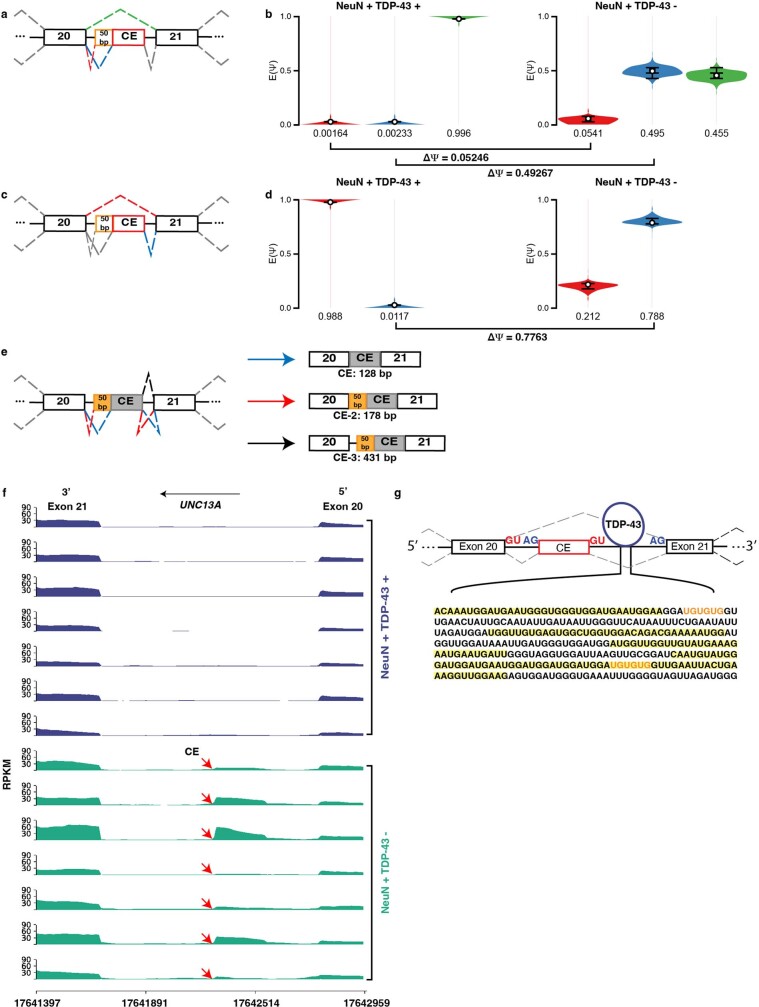
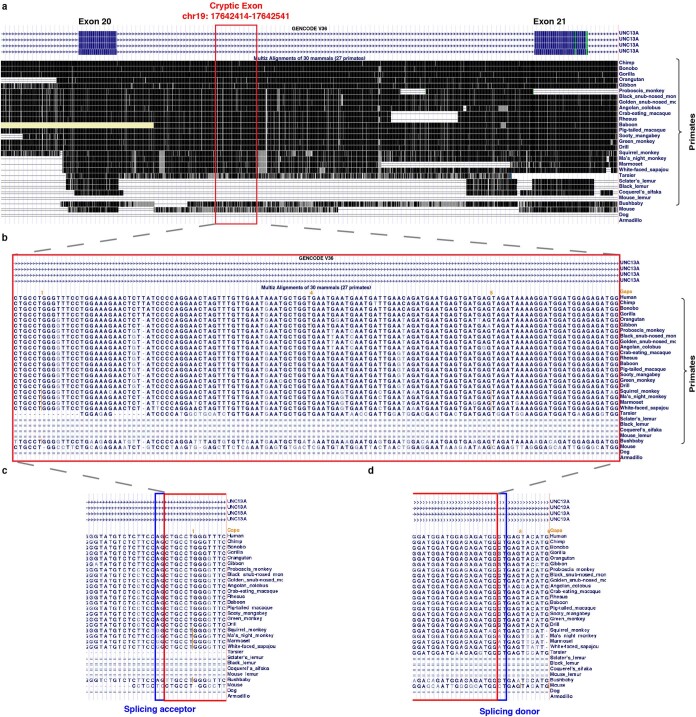
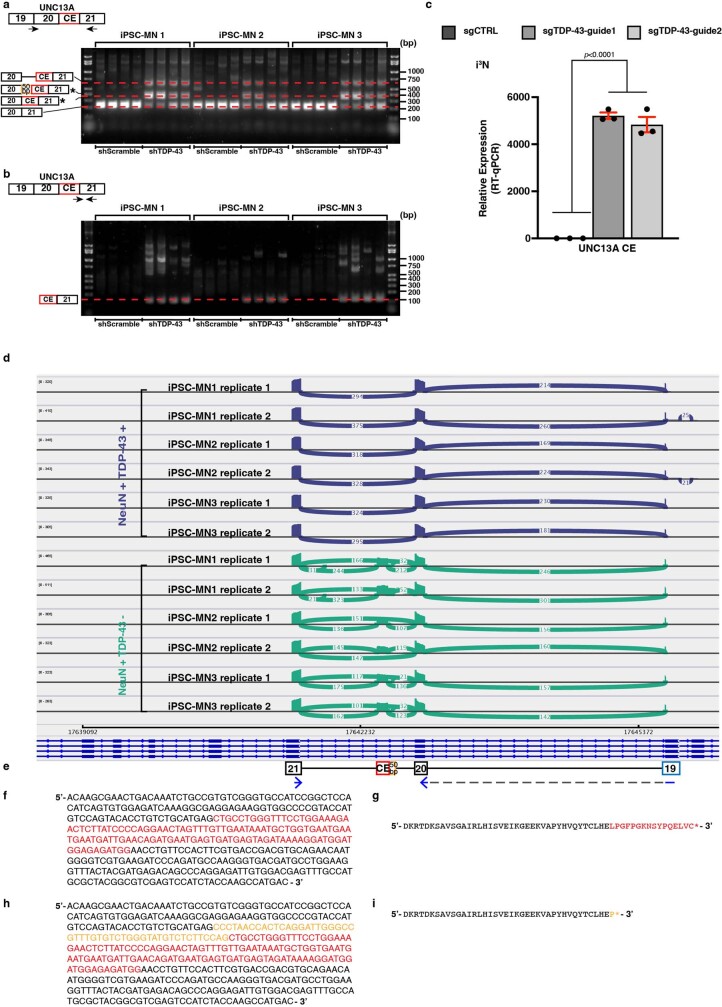
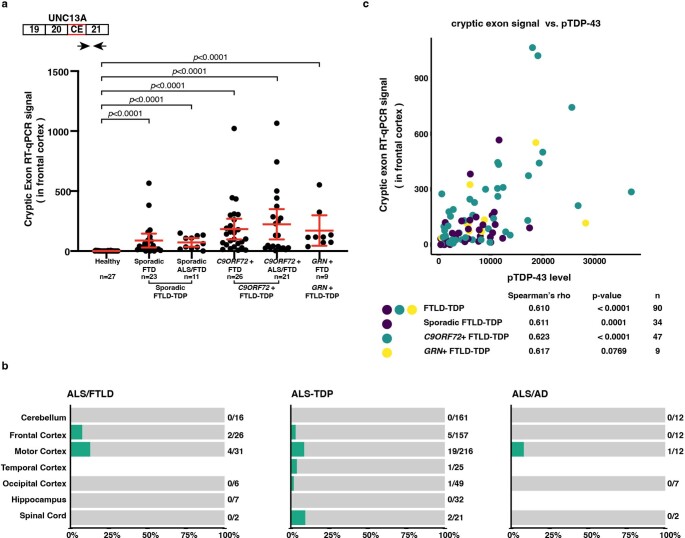
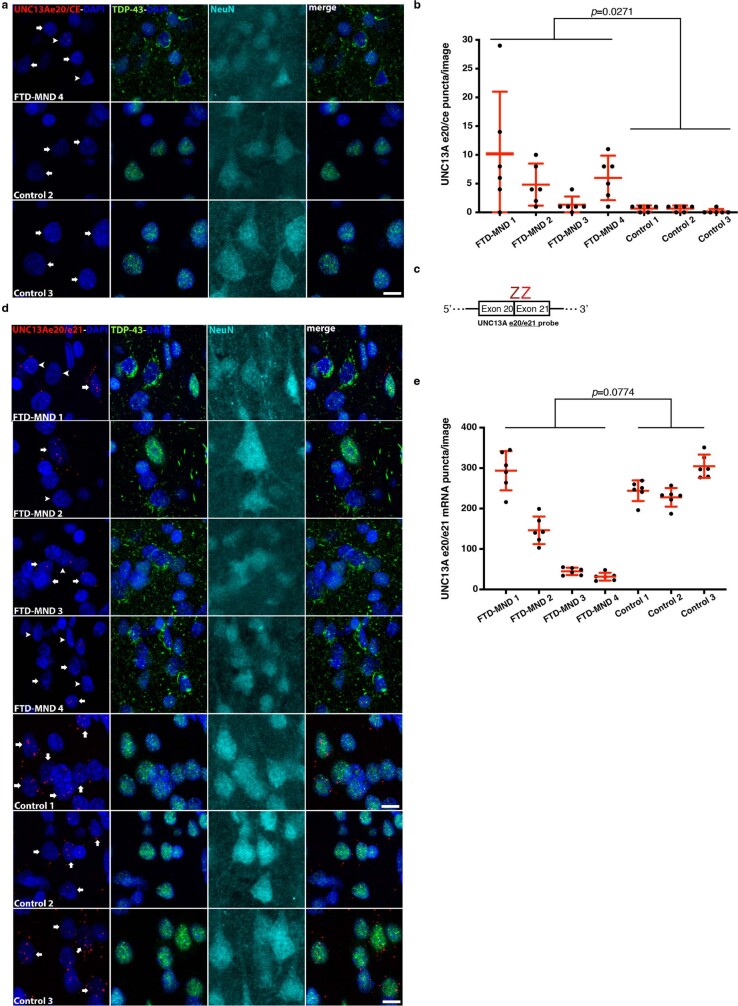
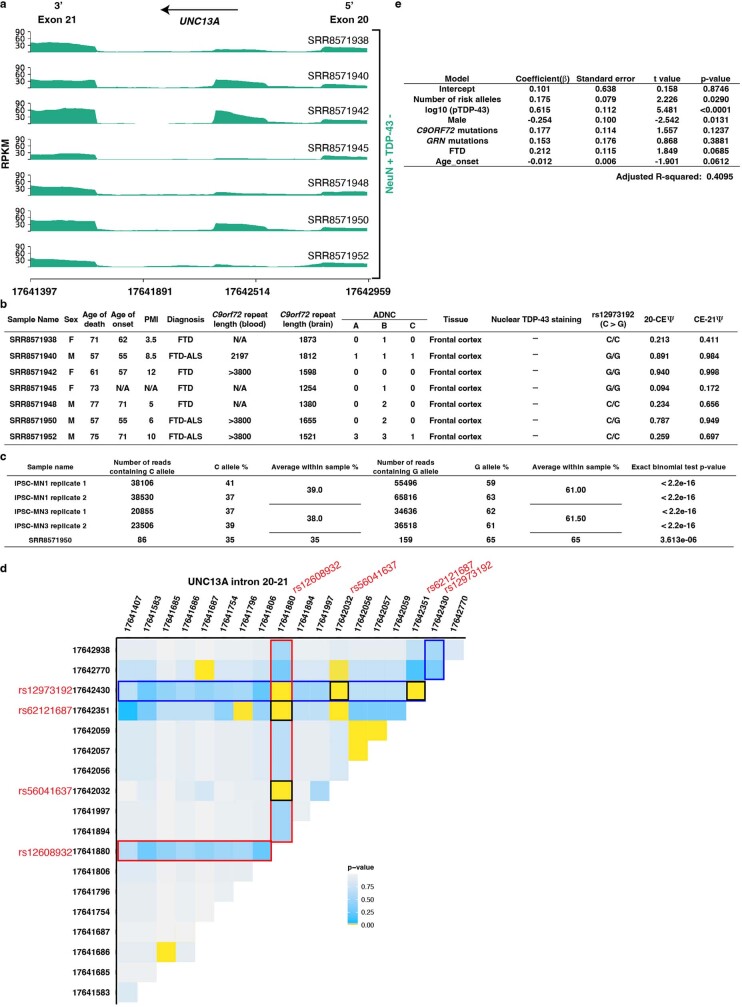
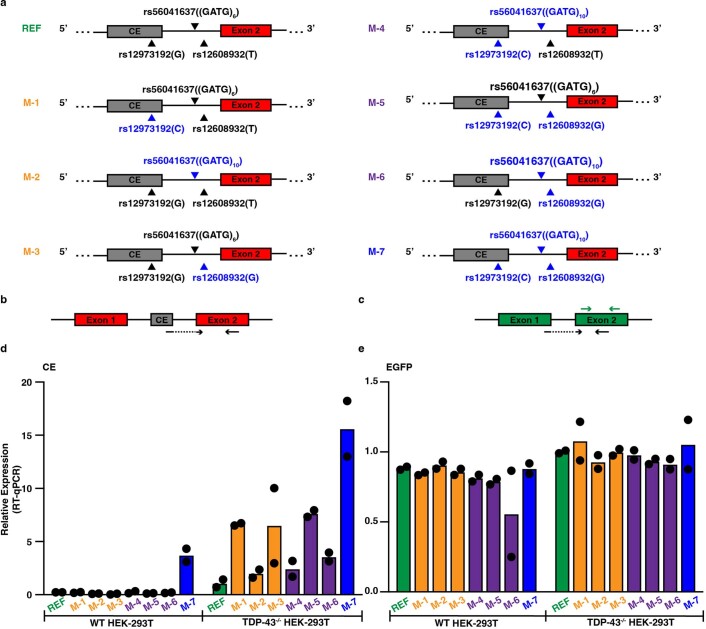
A hallmark pathological feature of the neurodegenerative diseases amyotrophic lateral sclerosis (ALS) and frontotemporal dementia (FTD) is the depletion of RNA-binding protein TDP-43 from the nucleus of neurons in the brain and spinal cord 1 . A major function of TDP-43 is as a repressor of cryptic exon inclusion during RNA splicing 2–4 . Single nucleotide polymorphisms in UNC13A are among the strongest hits associated with FTD and ALS in human genome-wide association studies 5,6 , but how those variants increase risk for disease is unknown. Here we show that TDP-43 represses a cryptic exon-splicing event in UNC13A . Loss of TDP-43 from the nucleus in human brain, neuronal cell lines and motor neurons derived from induced pluripotent stem cells resulted in the inclusion of a cryptic exon in UNC13A mRNA and reduced UNC13A protein expression. The top variants associated with FTD or ALS risk in humans are located in the intron harbouring the cryptic exon, and we show that they increase UNC13A cryptic exon splicing in the face of TDP-43 dysfunction. Together, our data provide a direct functional link between one of the strongest genetic risk factors for FTD and ALS ( UNC13A genetic variants), and loss of TDP-43 function.
Overview
The claims and statistics of this paper haven’t been checked yet.
Run the check — free, no account needed. It reads the open-access text and checks the sources it cites.
Integrity signals
Registry
Cites
Statistics
Figures
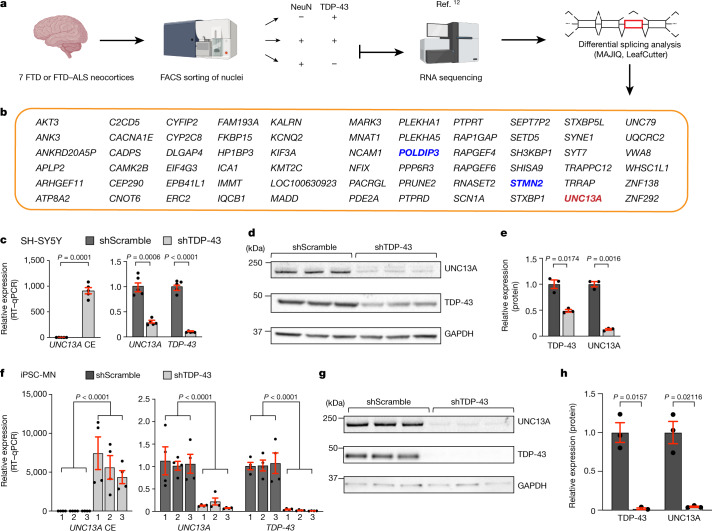
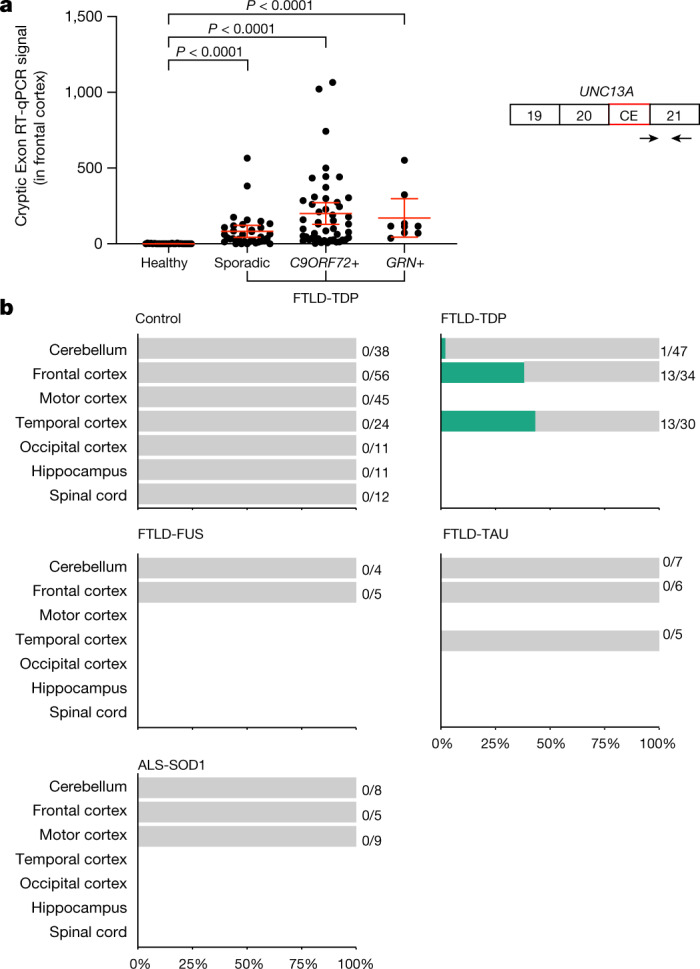
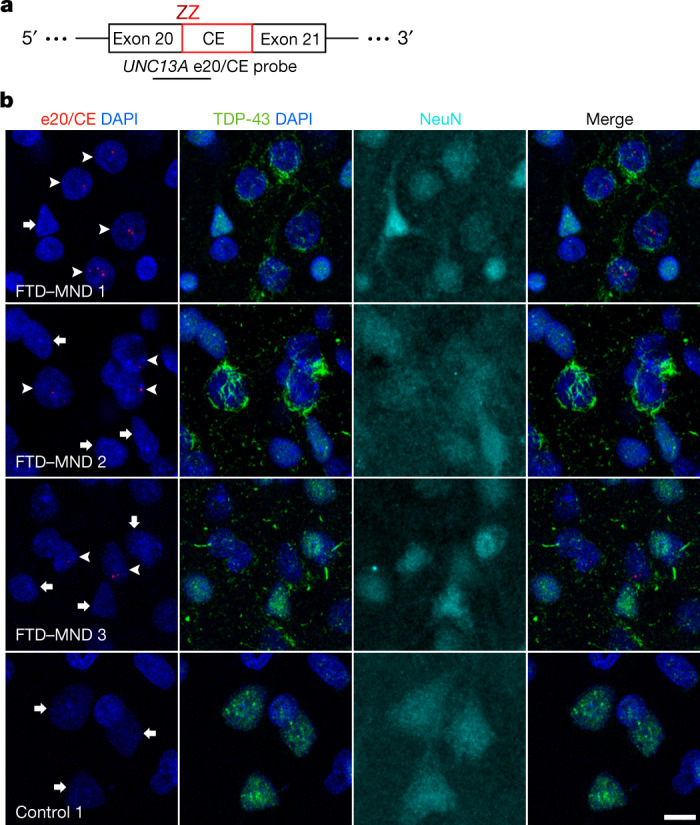
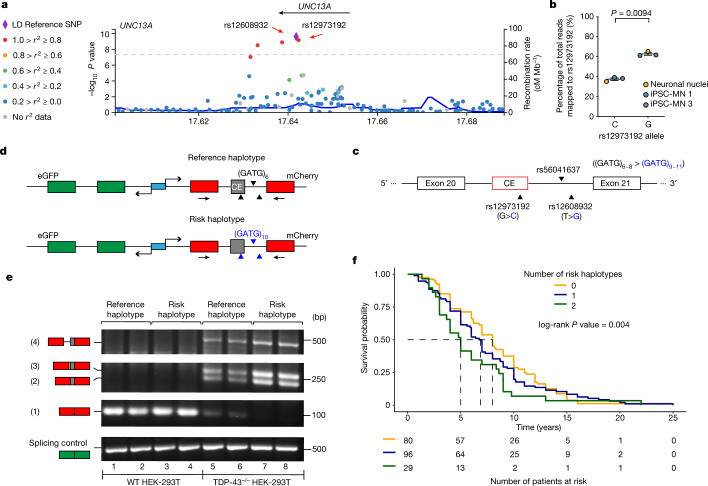
Verification
Claims the paper makes
The claims and statistics of this paper haven’t been checked yet.
Run the check — free, no account needed. It reads the open-access text and checks the sources it cites.
Claims other papers make about this one
Each is checked against this paper’s own text: does it say what the citing paper says it does?
In the citing paper
“The most common genes identified in clinical practice include SOD1, C9ORF72, TARDBP, FUS, and OPTNTD-P43 (55–57, 73, 74).”
From Modulation of the gut–brain axis via the gut microbiota: a new era in treatment of amyotrophic lateral sclerosis (2023) · cites this paper as [73]
Self-check
Percentages, sums and reported differences re-computed from the paper’s own numbers.
The self-check needs the paper’s full text.
Citations
Cites
Moderated estimation of fold change and dispersion for RNA-seq data with DESeq2
Love, M. I., Huber, W., & Anders, S. (2014) · Genome Biology · doi:10.1186/s13059-014-0550-8 · Cited by 95,106
A global reference for human genetic variation
The 1000 Genomes Project Consortium, authors, C., Auton, A., Abecasis, G. R., Steering committee, Altshuler, D. M., Durbin, R. M., Abecasis, G. R., Bentley, D. R., Chakravarti, A., et al. (2015) · Nature · doi:10.1038/nature15393 · Cited by 18,247
Self-citationTHE GENETICS OF CAENORHABDITIS ELEGANS
Brenner, S. (1974) · Genetics · doi:10.1093/genetics/77.1.71 · Cited by 15,220
The Human Genome Browser at UCSC
Kent, W. J., Sugnet, C. W., Furey, T. S., Roskin, K. M., Pringle, T. H., Zahler, A. M., & Haussler, A. D. (2002) · Genome Research · doi:10.1101/gr.229102 · Cited by 10,400
Ubiquitinated TDP-43 in Frontotemporal Lobar Degeneration and Amyotrophic Lateral Sclerosis
Neumann, M., Sampathu, D. M., Kwong, L. K., Truax, A. C., Micsenyi, M. C., Chou, T. T., Bruce, J., Schuck, T., Grossman, M., Clark, C. M., et al. (2006) · Science · doi:10.1126/science.1134108 · Cited by 6,576
LocusZoom: regional visualization of genome-wide association scan results
Pruim, R. J., Welch, R. P., Sanna, S., Teslovich, T. M., Chines, P. S., Gliedt, T. P., Boehnke, M., Abecasis, G. R., & Willer, C. J. (2010) · Bioinformatics · doi:10.1093/bioinformatics/btq419 · Cited by 2,707
Limbic-predominant age-related TDP-43 encephalopathy (LATE): consensus working group report
Nelson, P. T., Dickson, D. W., Trojanowski, J. Q., Jack, C. R., Boyle, P. A., Arfanakis, K., Rademakers, R., Alafuzoff, I., Attems, J., Brayne, C., et al. (2019) · Brain · doi:10.1093/brain/awz099 · Cited by 1,547
Self-citationLong pre-mRNA depletion and RNA missplicing contribute to neuronal vulnerability from loss of TDP-43
Polymenidou, M., Lagier-Tourenne, C., Hutt, K. R., Huelga, S. C., Moran, J., Liang, T. Y., Ling, S.-C., Sun, E., Wancewicz, E., Mazur, C., et al. (2011) · Nature Neuroscience · doi:10.1038/nn.2779 · Cited by 1,335
Characterizing the RNA targets and position-dependent splicing regulation by TDP-43
Tollervey, J. R., Curk, T., Rogelj, B., Briese, M., Cereda, M., Kayikci, M., König, J., Hortobágyi, T., Nishimura, A. L., Župunski, V., et al. (2011) · Nature Neuroscience · doi:10.1038/nn.2778 · Cited by 1,165
TDP-43 and FUS/TLS: emerging roles in RNA processing and neurodegeneration
Lagier-Tourenne, C., Polymenidou, M., & Cleveland, D. W. (2010) · Human Molecular Genetics · doi:10.1093/hmg/ddq137 · Cited by 1,021
Cited by
Sorted by citations
van Rheenen, W., van der Spek, R. A. A., Bakker, M. K., van Vugt, J. J. F. A., Hop, P. J., Zwamborn, R. A. J., de Klein, N., Westra, H.-J., Bakker, O. B., Deelen, P., et al. (2021) · Nature Genetics · doi:10.1038/s41588-021-00973-1 · Cited by 542
TDP-43 loss and ALS-risk SNPs drive mis-splicing and depletion of UNC13A
Brown, A., Wilkins, O. G., Keuss, M. J., Kargbo-Hill, S. E., Zanovello, M., Lee, W. C., Bampton, A., Lee, F. C. Y., Masino, L., Qi, Y. A., et al. (2022) · Nature · doi:10.1038/s41586-022-04436-3 · Cited by 545
Mechanism of STMN2 cryptic splice-polyadenylation and its correction for TDP-43 proteinopathies
Baughn, M. W., Melamed, Z., López‐Erauskin, J., Beccari, M. S., Ling, K., Zuberi, A. R., Presa, M. F., Gonzalo-Gil, E., Maimon, R., Vazquez‐Sanchez, S., et al. (2023) · Science · doi:10.1126/science.abq5622 · Cited by 252
Alternative splicing in neurodegenerative disease and the promise of RNA therapies
Nikom, D., & Zheng, S. (2023) · Nature reviews. Neuroscience · doi:10.1038/s41583-023-00717-6 · Cited by 201
Mis-spliced transcripts generate de novo proteins in TDP-43–related ALS/FTD
Seddighi, S., Qi, Y. A., Brown, A., Wilkins, O. G., Bereda, C., Belair, C., Zhang, Y., Prudencio, M., Keuss, M. J., Khandeshi, A. J., et al. (2024) · Science Translational Medicine · doi:10.1126/scitranslmed.adg7162 · Cited by 200
Self-citation
Metadata
- Authors
- Ma, X. R., Prudencio, M., Koike, Y., Vatsavayai, S. C., Kim, G., Harbinski, F., Briner, A., Rodriguez, C. M., Guo, C., Akiyama, T., Schmidt, H. B., Cummings, B. B., Wyatt, D. W., Kurylo, K., Miller, G., Mekhoubad, S., Sallee, N., Mekonnen, G., Ganser, L., Rubien, J. D., Jansen-West, K., Cook, C. N., Pickles, S., Oskarsson, B., Graff-Radford, N. R., Boeve, B. F., Knopman, D. S., Petersen, R. C., Dickson, D. W., Shorter, J., Myong, S., Green, E. M., Seeley, W. W., Petrucelli, L., & Gitler, A. D.
- Affiliations
- Stanford Medicine (US)
- Mayo Clinic (US)
- University of California, San Francisco (US)
- Maze (United States) (US)
- The University of Queensland (AU)
- Johns Hopkins University (US)
- University of Pennsylvania (US)
- Mayo Clinic in Florida (US)
- Corresponding author
- Petrucelli, Leonard
- Gitler, Aaron D.
- ORCID
- Ma, X. Rosa
- Prudencio, Mercedes
- Koike, Yuka
- Vatsavayai, Sarat C.
- Kim, Garam
- Briner, Adam
- Rodriguez, Caitlin M.
- Guo, Caiwei
- Akiyama, Tetsuya
- Schmidt, H. Broder
- Cummings, Beryl B.
- Wyatt, David W.
- Kurylo, Katherine
- Miller, Georgiana
- Ganser, Laura
- Rubien, Jack D.
- Cook, Casey N.
- Pickles, Sarah
- Oskarsson, Björn
- Boeve, Bradley F.
- Knopman, David S.
- Petersen, Ronald C.
- Dickson, Dennis W.
- Shorter, James
- Myong, Sua
- Green, Eric M.
- Seeley, William W.
- Petrucelli, Leonard
- Gitler, Aaron D.
- Venue
- Nature
- Published
- 2022-02-23
- Volume
- 603
- Issue
- 7899
- Pages
- 124-130
- ISSN
- 0028-0836 (ISSN-L)
- 1476-4687
- PMC
- PMC8891019
- OpenAlex
- W4213441627
- Cited by
- 574
- References
- 53
- Citations by year
- 2026: 126 · 2025: 151 · 2024: 121 · 2023: 107 · 2022: 57
- FWCI
- 57.66
- Type
- journal article
- Language
- en
- Open access
- hybrid
- doi.org
- Locations
- Nature (publishedVersion, cc-by)
- bioRxiv (Cold Spring Harbor Laboratory) (acceptedVersion, cc-by-nc)
- PubMed Central (publishedVersion, cc-by)
- PubMed (publishedVersion)
- eScholarship (California Digital Library) (submittedVersion, cc-by)
- RePEc: Research Papers in Economics (submittedVersion)
- Funders
- ALS Association
- BrightFocus Foundation (A2020279F)
- Takeda Science Foundation
- Johns Hopkins University
- Target ALS
- Rainwater Charitable Foundation
- National Institutes of Health (W81XWH)
- University of California, San Francisco (P30AG062422, P01AG019724)
- Wu Tsai Neurosciences Institute, Stanford University
- Stanford Research Computing Center, Stanford University
- National Institute on Aging (RF1AG064690, R01AG063780, U01AG057195, U01AG006786, RF1AG071326, T32AG047126, U19AG063911, P01AG019724, P30AG062422, P30AG062677)
- National Human Genome Research Institute (T32HG000044)
- National Institute of General Medical Sciences (F32GM139268, T32GM007231)
- National Institute of Neurological Disorders and Stroke (F32NS116208, P01NS084974, R01NS104437, RF1NS120992, RF1NS113636, R35NS097273, R35NS097263, U54NS123743)
- Robert Packard Center for ALS Research, Johns Hopkins University
- Topics
- Health Sciences › Medicine › Clinical Neurology › Amyotrophic Lateral Sclerosis Research
- Life Sciences › Biochemistry, Genetics and Molecular Biology › Molecular Biology › RNA Research and Splicing
- Life Sciences › Neuroscience › Cellular and Molecular Neuroscience › Alzheimer's disease research and treatments
- Keywords
- TDP-43, UNC13A, RNA splicing, amyotrophic lateral sclerosis, frontotemporal dementia, single nucleotide polymorphisms, genetic risk factors, RNA-binding proteins, motor neurons, intronic variants, induced pluripotent stem cells
- MeSH terms
- Amyotrophic Lateral Sclerosis, DNA-Binding Proteins, Exons, Humans, Motor Neurons, Nerve Tissue Proteins, Genome-Wide Association Study, Frontotemporal Dementia
About these checks
Registry, retraction, Cites and statistics results are computed, not judged, with one exception: a printed reference that no index lists is read once by a model before it counts as a citation error. Claims are extracted by a model and kept only when their quote appears verbatim in the text; each cited source is then checked, with a model’s help, for whether it says what the claim relies on. Those verdicts can be wrong — read the claim’s quote and the cited source before relying on one.
Statistics and arithmetic are recomputed, not judged.
Confidence bands are shown only for fields calibrated on our annotated test set. None is calibrated yet, so no band is shown.
What counts as a claim ›How we measure confidence ›How we check this ›
Are you an author, or do you see a problem with this page? Request a review
