

The DOI matches its Crossref record; 53 of the 53 references it cites were found in a registry or an index.
TDP-43 represses cryptic exon inclusion in the FTD-ALS gene UNC13A
Open accessPublished version of a preprint
Abstract
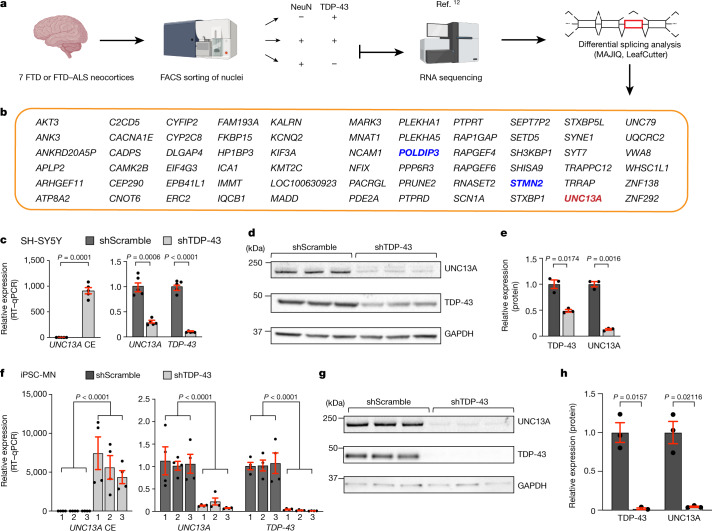
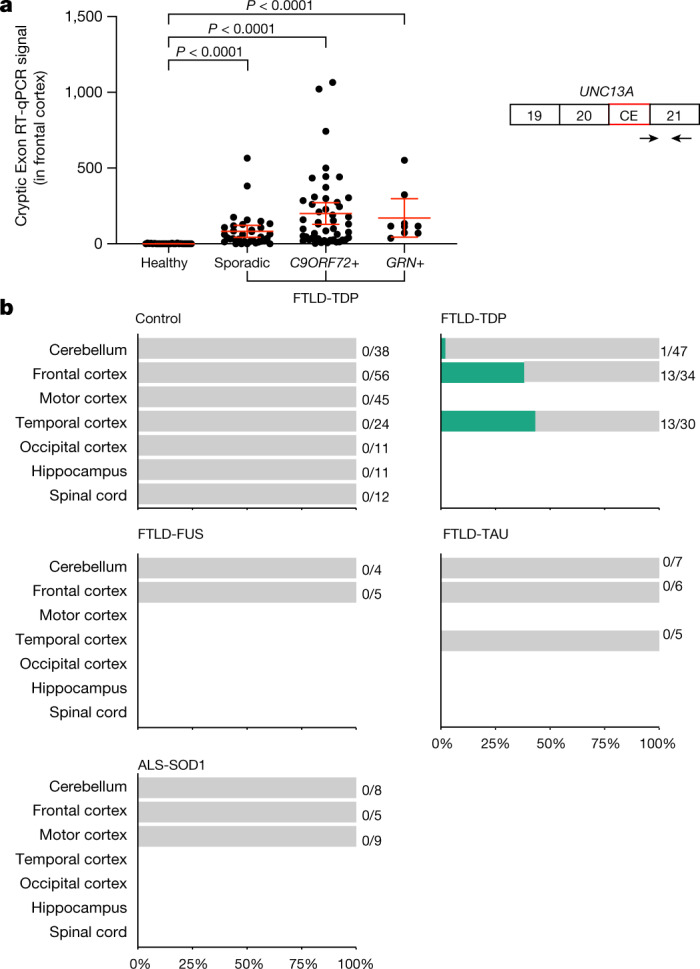
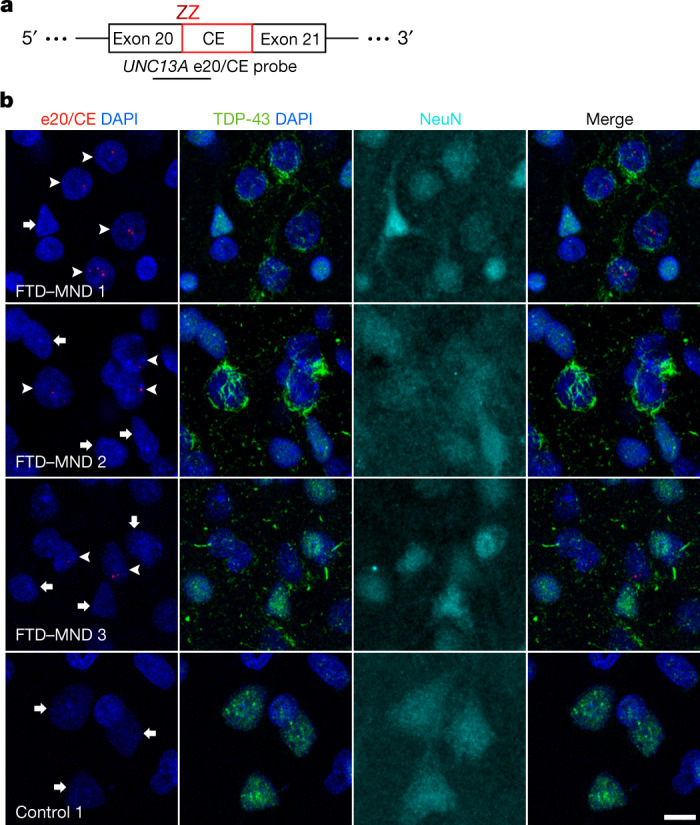
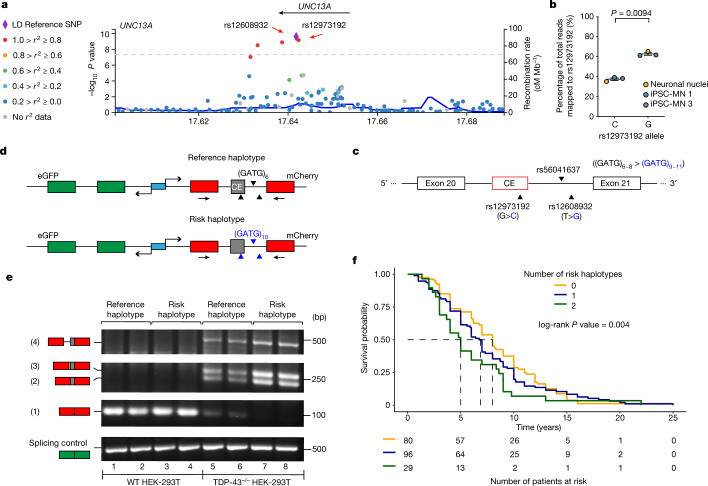
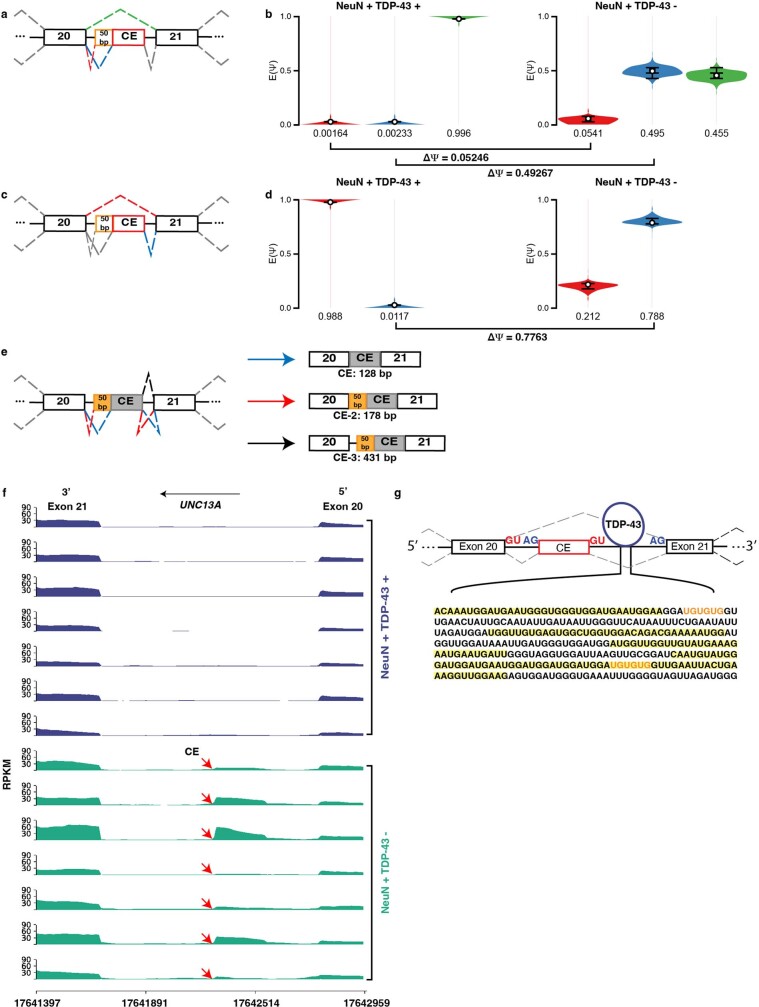
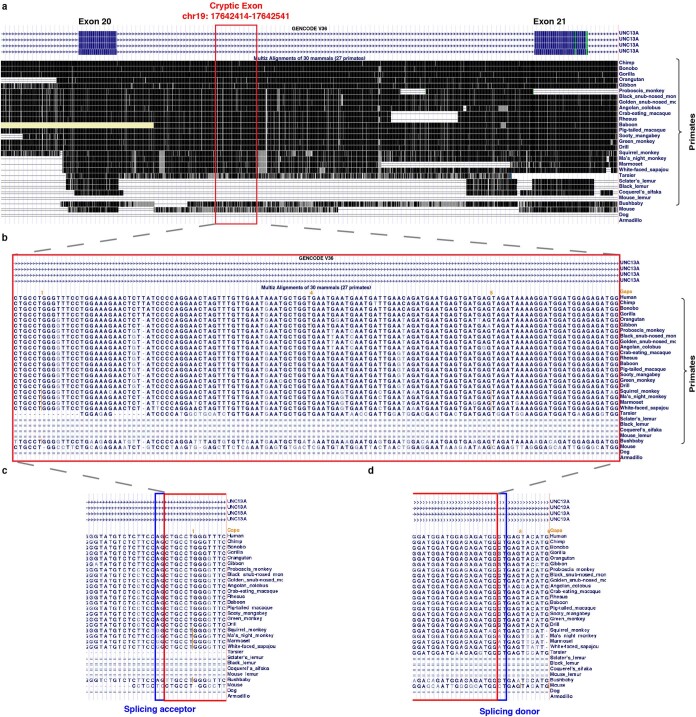
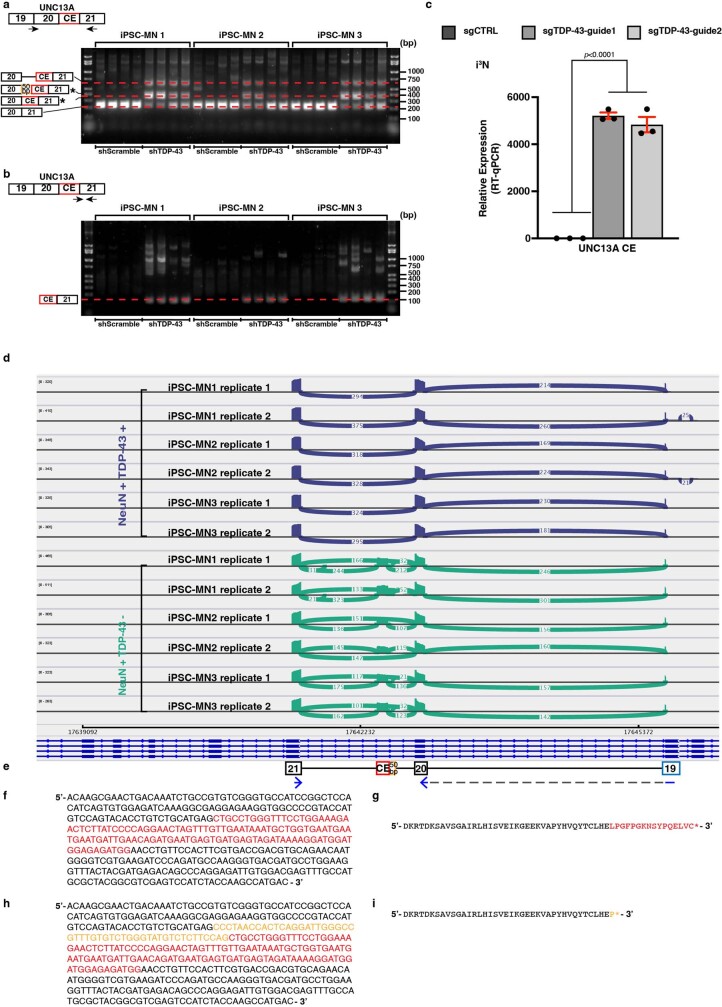
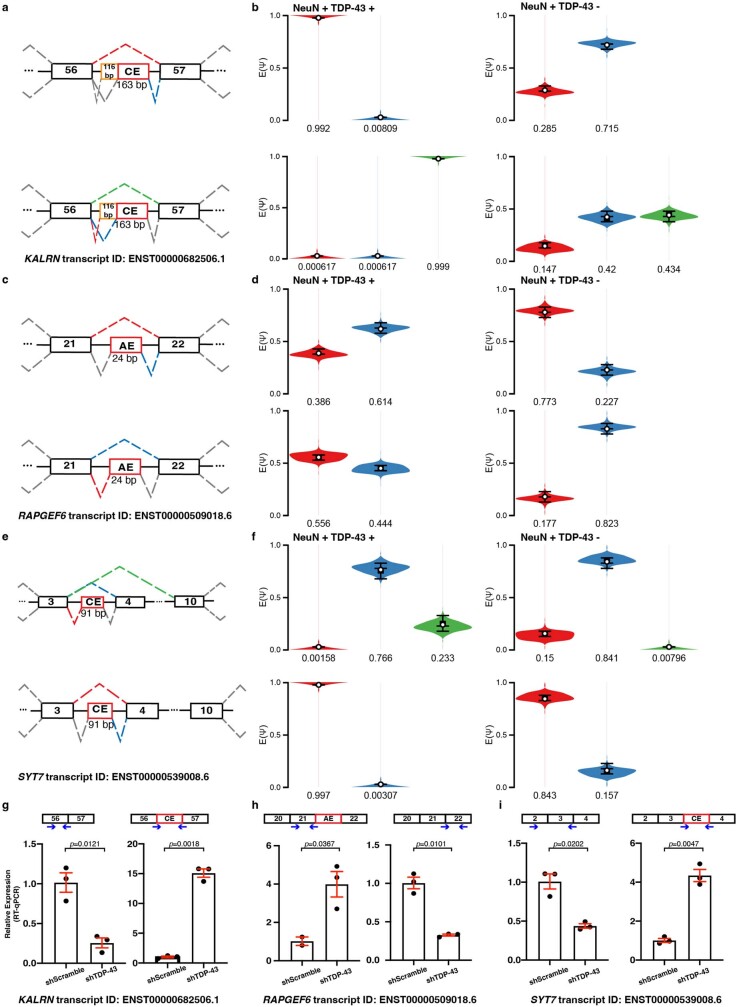
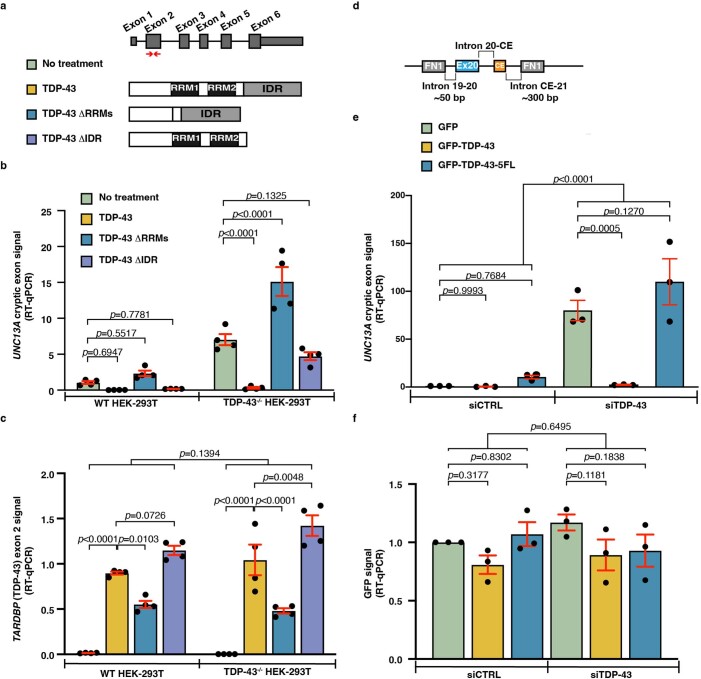
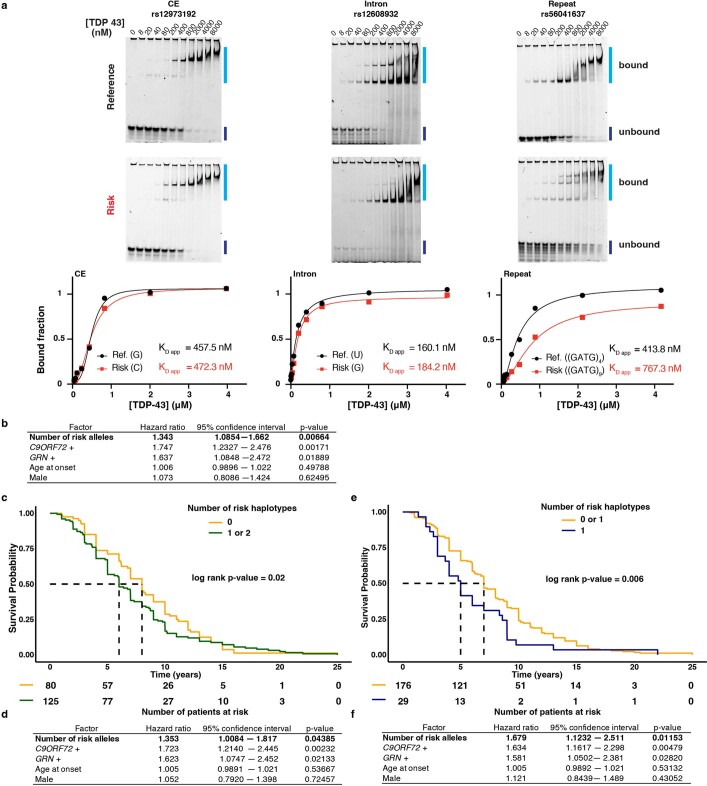
A hallmark pathological feature of the neurodegenerative diseases amyotrophic lateral sclerosis (ALS) and frontotemporal dementia (FTD) is the depletion of RNA-binding protein TDP-43 from the nucleus of neurons in the brain and spinal cord 1 . A major function of TDP-43 is as a repressor of cryptic exon inclusion during RNA splicing 2–4 . Single nucleotide polymorphisms in UNC13A are among the strongest hits associated with FTD and ALS in human genome-wide association studies 5,6 , but how those variants increase risk for disease is unknown. Here we show that TDP-43 represses a cryptic exon-splicing event in UNC13A . Loss of TDP-43 from the nucleus in human brain, neuronal cell lines and motor neurons derived from induced pluripotent stem cells resulted in the inclusion of a cryptic exon in UNC13A mRNA and reduced UNC13A protein expression. The top variants associated with FTD or ALS risk in humans are located in the intron harbouring the cryptic exon, and we show that they increase UNC13A cryptic exon splicing in the face of TDP-43 dysfunction. Together, our data provide a direct functional link between one of the strongest genetic risk factors for FTD and ALS ( UNC13A genetic variants), and loss of TDP-43 function.
Overview
The claims and statistics of this paper haven’t been checked yet.
Run the check — free, no account needed. It reads the open-access text and checks the sources it cites.
Integrity signals
Registry
Cites
Statistics
Figures
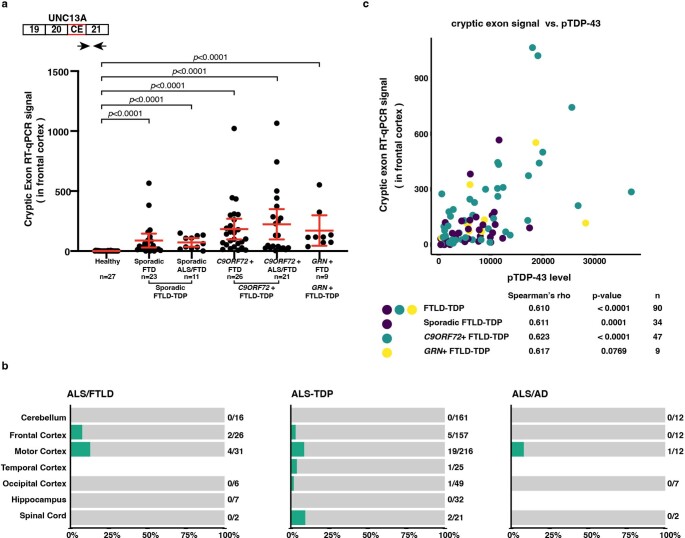
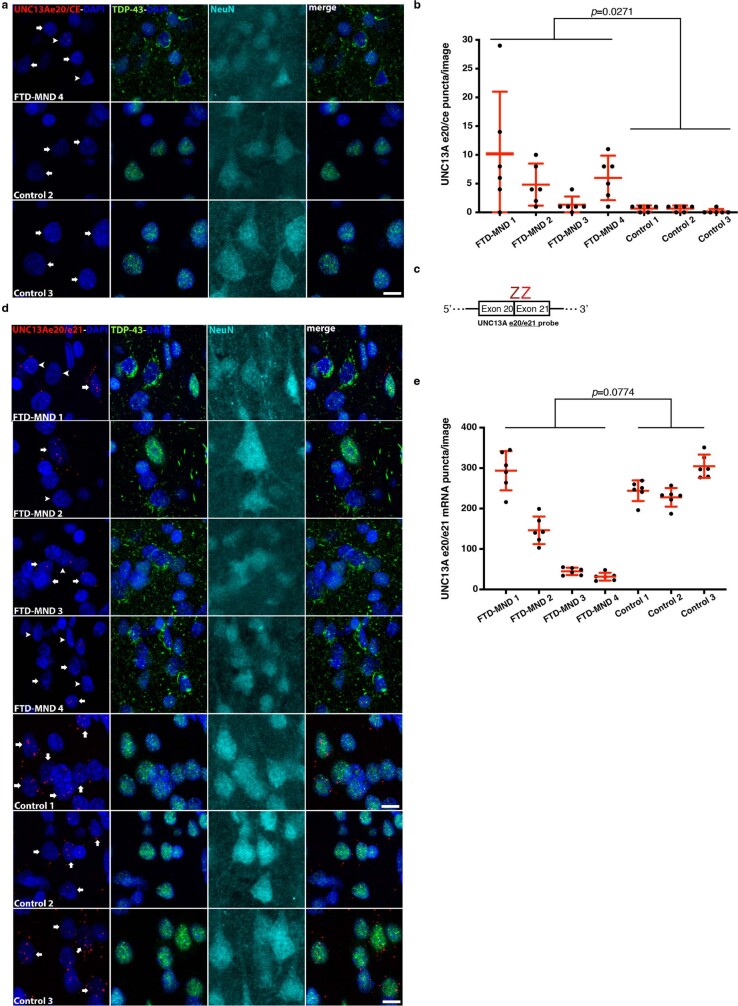
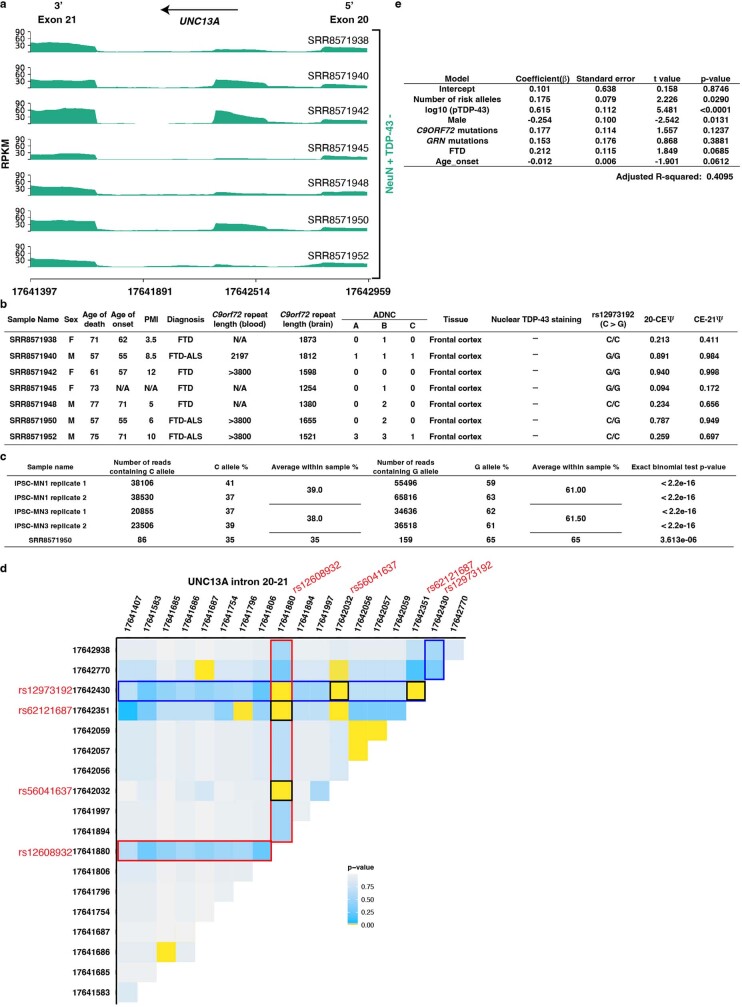
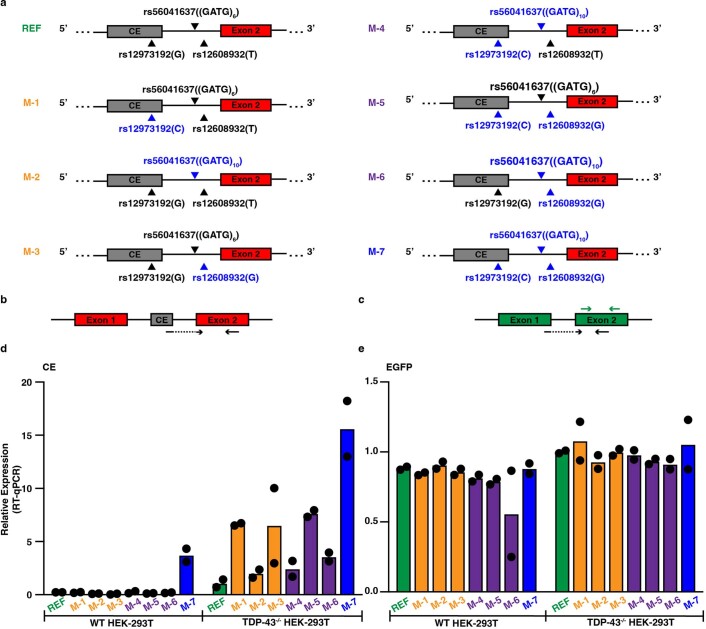
Verification
Claims the paper makes
The claims and statistics of this paper haven’t been checked yet.
Run the check — free, no account needed. It reads the open-access text and checks the sources it cites.
Claims other papers make about this one
Each is checked against this paper’s own text: does it say what the citing paper says it does?
In the citing paper
“The most common genes identified in clinical practice include SOD1, C9ORF72, TARDBP, FUS, and OPTNTD-P43 (55–57, 73, 74).”
From Modulation of the gut–brain axis via the gut microbiota: a new era in treatment of amyotrophic lateral sclerosis (2023) · cites this paper as [73]
Self-check
Percentages, sums and reported differences re-computed from the paper’s own numbers.
The self-check needs the paper’s full text.
Citations
Cites
Moderated estimation of fold change and dispersion for RNA-seq data with DESeq2
Love, M. I., Huber, W., & Anders, S. (2014) · Genome Biology · doi:10.1186/s13059-014-0550-8 · Cited by 95,106
A global reference for human genetic variation
The 1000 Genomes Project Consortium, authors, C., Auton, A., Abecasis, G. R., Steering committee, Altshuler, D. M., Durbin, R. M., Abecasis, G. R., Bentley, D. R., Chakravarti, A., et al. (2015) · Nature · doi:10.1038/nature15393 · Cited by 18,247
Self-citationTHE GENETICS OF CAENORHABDITIS ELEGANS
Brenner, S. (1974) · Genetics · doi:10.1093/genetics/77.1.71 · Cited by 15,220
The Human Genome Browser at UCSC
Kent, W. J., Sugnet, C. W., Furey, T. S., Roskin, K. M., Pringle, T. H., Zahler, A. M., & Haussler, A. D. (2002) · Genome Research · doi:10.1101/gr.229102 · Cited by 10,400
Ubiquitinated TDP-43 in Frontotemporal Lobar Degeneration and Amyotrophic Lateral Sclerosis
Neumann, M., Sampathu, D. M., Kwong, L. K., Truax, A. C., Micsenyi, M. C., Chou, T. T., Bruce, J., Schuck, T., Grossman, M., Clark, C. M., et al. (2006) · Science · doi:10.1126/science.1134108 · Cited by 6,576
LocusZoom: regional visualization of genome-wide association scan results
Pruim, R. J., Welch, R. P., Sanna, S., Teslovich, T. M., Chines, P. S., Gliedt, T. P., Boehnke, M., Abecasis, G. R., & Willer, C. J. (2010) · Bioinformatics · doi:10.1093/bioinformatics/btq419 · Cited by 2,707
Limbic-predominant age-related TDP-43 encephalopathy (LATE): consensus working group report
Nelson, P. T., Dickson, D. W., Trojanowski, J. Q., Jack, C. R., Boyle, P. A., Arfanakis, K., Rademakers, R., Alafuzoff, I., Attems, J., Brayne, C., et al. (2019) · Brain · doi:10.1093/brain/awz099 · Cited by 1,547
Self-citationLong pre-mRNA depletion and RNA missplicing contribute to neuronal vulnerability from loss of TDP-43
Polymenidou, M., Lagier-Tourenne, C., Hutt, K. R., Huelga, S. C., Moran, J., Liang, T. Y., Ling, S.-C., Sun, E., Wancewicz, E., Mazur, C., et al. (2011) · Nature Neuroscience · doi:10.1038/nn.2779 · Cited by 1,335
Characterizing the RNA targets and position-dependent splicing regulation by TDP-43
Tollervey, J. R., Curk, T., Rogelj, B., Briese, M., Cereda, M., Kayikci, M., König, J., Hortobágyi, T., Nishimura, A. L., Župunski, V., et al. (2011) · Nature Neuroscience · doi:10.1038/nn.2778 · Cited by 1,165
TDP-43 and FUS/TLS: emerging roles in RNA processing and neurodegeneration
Lagier-Tourenne, C., Polymenidou, M., & Cleveland, D. W. (2010) · Human Molecular Genetics · doi:10.1093/hmg/ddq137 · Cited by 1,021
Cited by
Sorted by citations
van Rheenen, W., van der Spek, R. A. A., Bakker, M. K., van Vugt, J. J. F. A., Hop, P. J., Zwamborn, R. A. J., de Klein, N., Westra, H.-J., Bakker, O. B., Deelen, P., et al. (2021) · Nature Genetics · doi:10.1038/s41588-021-00973-1 · Cited by 542
TDP-43 loss and ALS-risk SNPs drive mis-splicing and depletion of UNC13A
Brown, A., Wilkins, O. G., Keuss, M. J., Kargbo-Hill, S. E., Zanovello, M., Lee, W. C., Bampton, A., Lee, F. C. Y., Masino, L., Qi, Y. A., et al. (2022) · Nature · doi:10.1038/s41586-022-04436-3 · Cited by 545
Mechanism of STMN2 cryptic splice-polyadenylation and its correction for TDP-43 proteinopathies
Baughn, M. W., Melamed, Z., López‐Erauskin, J., Beccari, M. S., Ling, K., Zuberi, A. R., Presa, M. F., Gonzalo-Gil, E., Maimon, R., Vazquez‐Sanchez, S., et al. (2023) · Science · doi:10.1126/science.abq5622 · Cited by 252
Alternative splicing in neurodegenerative disease and the promise of RNA therapies
Nikom, D., & Zheng, S. (2023) · Nature reviews. Neuroscience · doi:10.1038/s41583-023-00717-6 · Cited by 201
Mis-spliced transcripts generate de novo proteins in TDP-43–related ALS/FTD
Seddighi, S., Qi, Y. A., Brown, A., Wilkins, O. G., Bereda, C., Belair, C., Zhang, Y., Prudencio, M., Keuss, M. J., Khandeshi, A. J., et al. (2024) · Science Translational Medicine · doi:10.1126/scitranslmed.adg7162 · Cited by 200
Self-citationA fluid biomarker reveals loss of TDP-43 splicing repression in presymptomatic ALS–FTD
Irwin, K. E., Jasin, P., Braunstein, K. E., Sinha, I. R., Garret, M. A., Bowden, K. D., Chang, K., Troncoso, J. C., Moghekar, A., Oh, E. S., et al. (2024) · Nature Medicine · doi:10.1038/s41591-023-02788-5 · Cited by 200
Dynamic mapping of proteome trafficking within and between living cells by TransitID
Qin, W., Cheah, J. S., Xu, C., Messing, J., Freibaum, B. D., Boeynaems, S., Taylor, J. P., Udeshi, N. D., Carr, S. A., & Ting, A. Y. (2023) · Cell · doi:10.1016/j.cell.2023.05.044 · Cited by 160
The era of cryptic exons: implications for ALS-FTD
Mehta, P. R., Brown, A., Ward, M. E., & Fratta, P. (2023) · Molecular Neurodegeneration · doi:10.1186/s13024-023-00608-5 · Cited by 164
Genetics of amyotrophic lateral sclerosis: seeking therapeutic targets in the era of gene therapy
Suzuki, N., Nishiyama, A., Warita, H., & Aoki, M. (2022) · Journal of Human Genetics · doi:10.1038/s10038-022-01055-8 · Cited by 148
Neuropathogenesis-on-chips for neurodegenerative diseases
Amartumur, S., Nguyen, H. M., Huynh, T., Kim, T. S., Woo, R., Oh, E., Kim, K. K., Lee, L. P., & Heo, C. (2024) · Nature Communications · doi:10.1038/s41467-024-46554-8 · Cited by 131
Genome-wide identification of the genetic basis of amyotrophic lateral sclerosis
Zhang, S., Cooper‐Knock, J., Weimer, A. K. K., Shi, M., Moll, T., Marshall, J. N. G., Harvey, C., Nezhad, H. G., Franklin, J., Souza, C. D. S., et al. (2022) · Neuron · doi:10.1016/j.neuron.2021.12.019 · Cited by 120
Advances in molecular pathology, diagnosis, and treatment of amyotrophic lateral sclerosis
Ilieva, H., Vullaganti, M., & Kwan, J. (2023) · BMJ · doi:10.1136/bmj-2023-075037 · Cited by 111
Loss of Stathmin-2, a hallmark of TDP-43-associated ALS, causes motor neuropathy
Krus, K. L., Strickland, A. M., Yamada, Y., DeVault, L., Schmidt, R. E., Bloom, A. J., Milbrandt, J., & DiAntonio, A. (2022) · Cell Reports · doi:10.1016/j.celrep.2022.111001 · Cited by 113
The genetics of amyotrophic lateral sclerosis
Nijs, M., & Damme, P. V. (2024) · Current Opinion in Neurology · doi:10.1097/wco.0000000000001294 · Cited by 120
Antisense Oligonucleotides for the Study and Treatment of ALS
Boros, B. D., Schoch, K. M., Kreple, C. J., & Miller, T. M. (2022) · Neurotherapeutics · doi:10.1007/s13311-022-01247-2 · Cited by 114
Large-scale differentiation of iPSC-derived motor neurons from ALS and control subjects
Workman, M. J., Lim, R. G., Wu, J., Frank, A. P., Ornelas, L., Panther, L., Galvez, E., Perez, D., Meepe, I., Lei, S., et al. (2023) · Neuron · doi:10.1016/j.neuron.2023.01.010 · Cited by 104
Recent progress of the genetics of amyotrophic lateral sclerosis and challenges of gene therapy
Wang, H., Guan, L., & Deng, M. (2023) · Frontiers in Neuroscience · doi:10.3389/fnins.2023.1170996 · Cited by 108
Pharmacotherapy for Amyotrophic Lateral Sclerosis: A Review of Approved and Upcoming Agents
Johnson, S. A., Fang, T., Marchi, F. D., Neel, D. V., Weehaeghe, D. V., Berry, J. D., & Paganoni, S. (2022) · Drugs · doi:10.1007/s40265-022-01769-1 · Cited by 105
Fluid biomarkers for amyotrophic lateral sclerosis: a review
Irwin, K. E., Sheth, U., Wong, P. C., & Gendron, T. F. (2024) · Molecular Neurodegeneration · doi:10.1186/s13024-023-00685-6 · Cited by 95
Emerging Therapies and Novel Targets for TDP-43 Proteinopathy in ALS/FTD
Hayes, L. R., & Kaláb, P. (2022) · Neurotherapeutics · doi:10.1007/s13311-022-01260-5 · Cited by 86
Molecular subtypes of ALS are associated with differences in patient prognosis
Eshima, J., O’Connor, S. A., Marschall, E., Bowser, R. P., Plaisier, C. L., & Smith, B. S. (2023) · Nature Communications · doi:10.1038/s41467-022-35494-w · Cited by 81
Quadros, A. R. A. D. A., Li, Z., Wang, X., Ndayambaje, I. S., Aryal, S., Ramesh, N., Nolan, M., Jayakumar, R., Han, Y., Stillman, H., et al. (2024) · Acta Neuropathologica · doi:10.1007/s00401-023-02655-0 · Cited by 79
Self-citationTDP-43 pathology: From noxious assembly to therapeutic removal
Keating, S. S., Gil, R. S., Swanson, M. E. V., Scotter, E. L., & Walker, A. K. (2022) · Progress in Neurobiology · doi:10.1016/j.pneurobio.2022.102229 · Cited by 81
Oiwa, K., Watanabe, S., Onodera, K., Iguchi, Y., Kinoshita, Y., Komine, O., Sobue, A., Okada, Y., Katsuno, M., & Yamanaka, K. (2023) · Science Advances · doi:10.1126/sciadv.adf6895 · Cited by 75
Piol, D., Robberechts, T., & Cruz, S. D. (2023) · Neuron · doi:10.1016/j.neuron.2023.02.028 · Cited by 68
TDP-43-regulated cryptic RNAs accumulate in Alzheimer’s disease brains
Ayuso, V. E., Pickles, S. R., Todd, T. W., Yue, M., Jansen‐West, K. R., Song, Y., Bejarano, J. G., Rawlinson, B. D., Deture, M. A., Graff‐Radford, N. R., et al. (2023) · Molecular Neurodegeneration · doi:10.1186/s13024-023-00646-z · Cited by 69
Self-citationCurrent State and Future Directions in the Diagnosis of Amyotrophic Lateral Sclerosis
Vidovic, M., Müschen, L. H., Brakemeier, S., Machetanz, G., Naumann, M., & Castro‐Gomez, S. (2023) · Cells · doi:10.3390/cells12050736 · Cited by 73
TDP-43 and other hnRNPs regulate cryptic exon inclusion of a key ALS/FTD risk gene, UNC13A
Koike, Y. M., Pickles, S. R., Ayuso, V. E., Jansen‐West, K. R., Qi, Y. A., Li, Z., Daughrity, L. M., Yue, M., Zhang, Y., Cook, C. N., et al. (2023) · PLoS Biology · doi:10.1371/journal.pbio.3002028 · Cited by 65
Self-citationUNC13A in amyotrophic lateral sclerosis: from genetic association to therapeutic target
Willemse, S. W., Harley, P., van Eijk, R. P. A., Demaegd, K. C., Zelina, P., Pasterkamp, R. J., Damme, P. V., Ingre, C., van Rheenen, W., Veldink, J. H., et al. (2023) · Journal of Neurology Neurosurgery & Psychiatry · doi:10.1136/jnnp-2022-330504 · Cited by 70
Chapman, L., Cooper‐Knock, J., & Shaw, P. J. (2022) · Brain · doi:10.1093/brain/awac470 · Cited by 67
Guise, A. J., Misal, S. A., Carson, R. H., Chu, J.-H., Boekweg, H., Watt, D. V. D., Welsh, N. C., Truong, T., Liang, Y., Xu, S., et al. (2024) · Cell Reports · doi:10.1016/j.celrep.2023.113636 · Cited by 63
Wang, H., Kodavati, M. M., Britz, G. W., & Hegde, M. L. (2021) · Frontiers in Molecular Neuroscience · doi:10.3389/fnmol.2021.784361 · Cited by 59
RNA dysregulation in neurodegenerative diseases
Li, Y., & Sun, S. (2025) · The EMBO Journal · doi:10.1038/s44318-024-00352-6 · Cited by 65
López‐Erauskin, J., Bravo‐Hernández, M., Presa, M. F., Baughn, M. W., Melamed, Z., Beccari, M. S., Quadros, A. R. A. D. A., Arnold-García, O., Zuberi, A. R., Ling, K., et al. (2023) · Nature Neuroscience · doi:10.1038/s41593-023-01496-0 · Cited by 58
Blood biomarkers in ALS : challenges, applications and novel frontiers
Sturmey, E., & Malaspina, A. (2022) · Acta Neurologica Scandinavica · doi:10.1111/ane.13698 · Cited by 56
Gittings, L. M., Alsop, E. B., Antone, J., Singer, M., Whitsett, T. G., Sattler, R., & Keuren‐Jensen, K. R. V. (2023) · Acta Neuropathologica · doi:10.1007/s00401-023-02599-5 · Cited by 58
Aggregation-prone TDP-43 sequesters and drives pathological transitions of free nuclear TDP-43
Keating, S. S., Bademosi, A. T., Gil, R. S., & Walker, A. K. (2023) · Cellular and Molecular Life Sciences · doi:10.1007/s00018-023-04739-2 · Cited by 56
A model of human neural networks reveals NPTX2 pathology in ALS and FTLD
Hruška-Plocháň, M., Wiersma, V. I., Betz, K. M., Mallona, I., Ronchi, S., Maniecka, Z., Hock, E., Tantardini, E., Laferrière, F., Sahadevan, S., et al. (2024) · Nature · doi:10.1038/s41586-024-07042-7 · Cited by 73
Chang, K., Ling, J. P., Redding‐Ochoa, J., An, Y., Li, L., Dean, S. A., Blanchard, T. G., Pylyukh, T., Barrett, A., Irwin, K. E., et al. (2023) · Acta Neuropathologica · doi:10.1007/s00401-023-02653-2 · Cited by 55
Update on genetics of amyotrophic lateral sclerosis
Brenner, D., & Freischmidt, A. (2022) · Current Opinion in Neurology · doi:10.1097/wco.0000000000001093 · Cited by 56
Lai, J. D., Berlind, J. E., Fricklas, G., Lie, C., Urenda, J., Lam, K., Maria, N. S. S., Jacobs, R. E., Yu, V. L., Zhao, Z., et al. (2024) · Cell stem cell · doi:10.1016/j.stem.2024.03.004 · Cited by 58
Gomes, L. C., Hänzelmann, S., Hausmann, F., Khatri, R., Moreno, S. O., Parvaz, M., Tzeplaeff, L., Pasetto, L., Gébelin, M., Ebbing, M., et al. (2024) · Nature Communications · doi:10.1038/s41467-024-49196-y · Cited by 58
hnRNP A1 dysfunction alters RNA splicing and drives neurodegeneration in multiple sclerosis (MS)
Salapa, H. E., Thibault, P., Libner, C. D., Ding, Y.-L., Clarke, J. P., Denomy, C., Hutchinson, C., Abidullah, H. M., Hammond, S. A., Pastushok, L., et al. (2024) · Nature Communications · doi:10.1038/s41467-023-44658-1 · Cited by 47
Molecular Dissection of TDP-43 as a Leading Cause of ALS/FTLD
Tamaki, Y., & Urushitani, M. (2022) · International Journal of Molecular Sciences · doi:10.3390/ijms232012508 · Cited by 56
Nguyen, T. B., Miramontes, R., Chillón-Marinas, C., Maimon, R., Vazquez‐Sanchez, S., Lau, A., McClure, N. R., Wu, Z., Wang, K. Q., England, W., et al. (2025) · Nature Neuroscience · doi:10.1038/s41593-024-01850-w · Cited by 67
Mizielinska, S., Hautbergue, G. M., Gendron, T. F., van Blitterswijk, M., Hardiman, O. M., Ravits, J., Isaacs, A. M., & Rademakers, R. (2025) · The Lancet Neurology · doi:10.1016/s1474-4422(25)00026-2 · Cited by 54
RNA-binding proteins in ALS and FTD: from pathogenic mechanisms to therapeutic insights
Rummens, J., & Cruz, S. D. (2025) · Molecular Neurodegeneration · doi:10.1186/s13024-025-00851-y · Cited by 62
Amyotrophic lateral sclerosis caused by TARDBP mutations: from genetics to TDP-43 proteinopathy
Balendra, R., Sreedharan, J., Hallegger, M., Luisier, R., Lashuel, H. A., Gregory, J. M., & Patani, R. (2025) · The Lancet Neurology · doi:10.1016/s1474-4422(25)00109-7 · Cited by 61
Stage-specific control of oligodendrocyte survival and morphogenesis by TDP-43
Heo, D., Ling, J. P., Molina-Castro, G. C., Langseth, A. J., Waisman, A., Nave, K., Möbius, W., Wong, P. C., & Bergles, D. E. (2022) · eLife · doi:10.7554/elife.75230 · Cited by 49
Neuronal aging causes mislocalization of splicing proteins and unchecked cellular stress
Rhine, K., Li, R., Kopalle, H., Rothamel, K. L., Ge, X., Epstein, E., Mizrahi, O., Madrigal, A. A., Her, H.-L., Gomberg, T. A., et al. (2025) · Nature Neuroscience · doi:10.1038/s41593-025-01952-z · Cited by 59
Khalil, B., Chhangani, D., Wren, M. C., Smith, C. L., Lee, J. H., Li, X., Puttinger, C., Tsai, C.-W., Fortin, G., Morderer, D., et al. (2022) · Molecular Neurodegeneration · doi:10.1186/s13024-022-00585-1 · Cited by 50
Self-citationHasan, R., Humphrey, J., Bettencourt, C., Newcombe, J., Lashley, T., Fratta, P., & Raj, T. (2021) · Acta Neuropathologica · doi:10.1007/s00401-021-02399-9 · Cited by 44
Integrative genetic analysis illuminates ALS heritability and identifies risk genes
Megat, S., Mora, N., Sanogo, J., Roman, O., Catanese, A., Alami, N. O., Freischmidt, A., Mingaj, X., de Calbiac, H., Muratet, F., et al. (2023) · Nature Communications · doi:10.1038/s41467-022-35724-1 · Cited by 53
Decoding TDP-43: the molecular chameleon of neurodegenerative diseases
Zeng, J., Luo, C., Jiang, Y., Hu, T., Lin, B., Xie, Y., Lan, J. X., & Miao, J. (2024) · Acta Neuropathologica Communications · doi:10.1186/s40478-024-01914-9 · Cited by 53
Haglund, A., Zuber, V., Abouzeid, M., Yang, Y., Ko, J. H., Wiemann, L., Otero‐Jimenez, M., Muhammed, L., Feleke, R., Nott, A., et al. (2025) · Nature Genetics · doi:10.1038/s41588-024-02050-9 · Cited by 46
Marsan, E., Velmeshev, D., Ramsey, A., Patel, R. K., Zhang, J., Koontz, M., Andrews, M. G., de Majo, M., Mora, C., Blumenfeld, J., et al. (2023) · Journal of Clinical Investigation · doi:10.1172/jci164919 · Cited by 45
Self-citationOpinion: more mouse models and more translation needed for ALS
Fisher, E., Greensmith, L., Malaspina, A., Fratta, P., Hanna, M. G., Schiavo, G., Isaacs, A. M., Orrell, R. W., Cunningham, T. J., & Acevedo‐Arozena, A. (2023) · Molecular Neurodegeneration · doi:10.1186/s13024-023-00619-2 · Cited by 45
TDP-43 dysregulation and neuromuscular junction disruption in amyotrophic lateral sclerosis
Lépine, S., Castellanos‐Montiel, M. J., & Durcan, T. M. (2022) · Translational Neurodegeneration · doi:10.1186/s40035-022-00331-z · Cited by 46
TDP-43 Proteinopathy Specific Biomarker Development
Cordts, I., Wachinger, A., Scialò, C., Lingor, P., Polymenidou, M., Buratti, E., & Feneberg, E. (2023) · Cells · doi:10.3390/cells12040597 · Cited by 50
Marks, J. D., Ayuso, V. E., Carlomagno, Y., Yue, M., Todd, T. W., Hao, Y., Li, Z., McEachin, Z. T., Shantaraman, A., Duong, D. M., et al. (2024) · Science Translational Medicine · doi:10.1126/scitranslmed.adf9735 · Cited by 45
Self-citationO’Neill, K., Shaw, R., Bolger, I., Tam, O. H., Phatnani, H. P., & Hammell, M. (2025) · Cell Reports · doi:10.1016/j.celrep.2025.115402 · Cited by 55
Aberrant axon initial segment plasticity and intrinsic excitability of ALS hiPSC motor neurons
Harley, P., Kerins, C., Gatt, A. P., Neves, G., Riccio, F., Machado, C. B., Cheesbrough, A., R’Bibo, L., Burrone, J., & Lieberam, I. (2023) · Cell Reports · doi:10.1016/j.celrep.2023.113509 · Cited by 42
Schweingruber, C., Nijssen, J., Mechtersheimer, J., Reber, S., Lebœuf, M., O’Brien, N. L., Mei, I., Hedges, E. C., Keuper, M., Benitez, J. A., et al. (2025) · Nature Communications · doi:10.1038/s41467-025-59679-1 · Cited by 43
Rothstein, J. D., Baskerville, V., Rapuri, S., Mehlhop, E., Jafar‐Nejad, P., Rigo, F., Bennett, F., Mizielinska, S., Isaacs, A. M., & Coyne, A. N. (2023) · Acta Neuropathologica · doi:10.1007/s00401-023-02652-3 · Cited by 43
Creation of de novo cryptic splicing for ALS and FTD precision medicine
Wilkins, O. G., Chien, M. Z. Y. J., Wlaschin, J. J., Barattucci, S., Harley, P., Mattedi, F., Mehta, P. R., Pisliakova, M., Ryadnov, E. M., Keuss, M. J., et al. (2024) · Science · doi:10.1126/science.adk2539 · Cited by 46
Approaches to gene modulation therapy for ALS
Meijboom, K. E., & Brown, R. H. (2022) · Neurotherapeutics · doi:10.1007/s13311-022-01285-w · Cited by 38
Hong, D., Zhang, C., Wu, W., Lu, X., & Zhang, L. (2023) · Frontiers in Neurology · doi:10.3389/fneur.2023.1133546 · Cited by 38
How do we get from hyperexcitability to excitotoxicity in amyotrophic lateral sclerosis?
Odierna, G. L., Vucic, S., Dyer, M. S., Dickson, T. C., Woodhouse, A., & Blizzard, C. A. (2024) · Brain · doi:10.1093/brain/awae039 · Cited by 36
László, Z. I., Hindley, N., Avila, A. S., Kline, R., Eaton, S. L., Lamont, D. J., Smith, C., Spires‐Jones, T. L., Wishart, T. M., & Henstridge, C. M. (2022) · Acta Neuropathologica Communications · doi:10.1186/s40478-022-01455-z · Cited by 39
Gil, R. S., Pascovici, D., Venturato, J., Brown-Wright, H., Mehta, P. M., Martin, L. M. S., Wu, J. X., Luan, W., Chui, Y. K., Bademosi, A. T., et al. (2024) · Nature Communications · doi:10.1038/s41467-024-45646-9 · Cited by 37
Biomarkers for Managing Neurodegenerative Diseases
Cheslow, L., Snook, A. E., & Waldman, S. A. (2024) · Biomolecules · doi:10.3390/biom14040398 · Cited by 41
Stress-induced TDP-43 nuclear condensation causes splicing loss of function and STMN2 depletion
Huang, W.-P., Ellis, B. C. S., Hodgson, R. E., Avila, A. S., Kumar, V., Rayment, J. A., Moll, T., & Shelkovnikova, T. A. (2024) · Cell Reports · doi:10.1016/j.celrep.2024.114421 · Cited by 38
TDP-43 seeding induces cytoplasmic aggregation heterogeneity and nuclear loss of function of TDP-43
Rummens, J., Khalil, B., Yıldırım, G., Silva, P., Zorzini, V., Peredo, N., Wojno, M., Ramakers, M., Bosch, L. V. D., Damme, P. V., et al. (2025) · Neuron · doi:10.1016/j.neuron.2025.03.004 · Cited by 39
Molecular mechanisms and consequences of TDP-43 phosphorylation in neurodegeneration
Kellett, E. A., Bademosi, A. T., & Walker, A. K. (2025) · Molecular Neurodegeneration · doi:10.1186/s13024-025-00839-8 · Cited by 47
TDP-43 loss induces cryptic polyadenylation in ALS/FTD
Bryce-Smith, S., Brown, A., Chien, M. Z. Y. J., Dattilo, D., Mehta, P. R., Mattedi, F., Barattucci, S., Mikheenko, A., Zanovello, M., Pellegrini, F., et al. (2025) · Nature Neuroscience · doi:10.1038/s41593-025-02050-w · Cited by 72
TDP-43 nuclear loss in FTD/ALS causes widespread alternative polyadenylation changes
Zeng, Y., Lovchykova, A., Akiyama, T., Rayner, S. L., Jawahar, V. M., Liu, C., Sianto, O., Guo, C., Calliari, A., Prudencio, M., et al. (2025) · Nature Neuroscience · doi:10.1038/s41593-025-02049-3 · Cited by 74
Self-citationLoss of TDP-43 induces synaptic dysfunction that is rescued by UNC13A splice-switching ASOsPreprint
Keuss, M. J., Harley, P., Ryadnov, E. M., Jackson, R. E., Zanovello, M., Wilkins, O. G., Barattucci, S., Mehta, P. R., Oliveira, M. G., Parkes, J. E., et al. (2024) · bioRxiv (Cold Spring Harbor Laboratory) · doi:10.1101/2024.06.20.599684 · Cited by 46
Held, A., Adler, M. J., Marques, C., Reyes, C. J., Kavuturu, A. S., Quadros, A. R. A. D. A., Ndayambaje, I. S., Lara, E., Ward, M. E., Lagier‐Tourenne, C., et al. (2023) · Cell Reports · doi:10.1016/j.celrep.2023.113046 · Cited by 38
A fluid biomarker reveals loss of TDP-43 splicing repression in pre-symptomatic ALSPreprint
Irwin, K. E., Jasin, P., Braunstein, K. E., Sinha, I. R., Bowden, K. D., Moghekar, A., Oh, E. S., Raitcheva, D., Bartlett, D., Berry, J. D., et al. (2023) · bioRxiv (Cold Spring Harbor Laboratory) · doi:10.1101/2023.01.23.525202 · Cited by 36
Zheng, R., Dunlap, M., Bobkov, G. O. M., Gonzalez‐Figueroa, C., Patel, K. J., Lyu, J., Harvey, S. E., Chan, T. W., Quinones-Valdez, G., Choudhury, M., et al. (2024) · Molecular Cell · doi:10.1016/j.molcel.2024.05.004 · Cited by 44
An interaction between synapsin and C9orf72 regulates excitatory synapses and is impaired in ALS/FTD
Bauer, C. S., Cohen, R. N., Sironi, F. M., Livesey, M. R., Gillingwater, T. H., Highley, J. R., Fillingham, D. J., Coldicott, I., Smith, E. F., Gibson, Y., et al. (2022) · Acta Neuropathologica · doi:10.1007/s00401-022-02470-z · Cited by 37
Gut microbiota immune cross-talk in amyotrophic lateral sclerosis
Kaul, M., Mukherjee, D., Weiner, H. L., & Cox, L. M. (2024) · Neurotherapeutics · doi:10.1016/j.neurot.2024.e00469 · Cited by 36
Seeded aggregation of TDP-43 induces its loss of function and reveals early pathological signatures
Scialò, C., Zhong, W., Jagannath, S., Wilkins, O. G., Caredio, D., Hruška-Plocháň, M., Lurati, F., Peter, M., Cecco, E. D., Celauro, L., et al. (2025) · Neuron · doi:10.1016/j.neuron.2025.03.008 · Cited by 43
Taylor, R., Hamid, F., Fielding, T., Gordon, P. M., Maloney, M., Makeyev, E. V., & Houart, C. (2022) · Nature Communications · doi:10.1038/s41467-022-34331-4 · Cited by 36
The variables on RNA molecules: concert or cacophony? Answers in long-read sequencing
Foord, C., Hsu, J., Jarroux, J., Hu, W., Belchikov, N., Pollard, S., He, Y., Joglekar, A., & Tilgner, H. (2023) · Nature Methods · doi:10.1038/s41592-022-01715-9 · Cited by 31
Lépine, S., Nauleau-Javaudin, A., Deneault, É., Chen, C. X. ‐., Abdian, N., Franco-Flores, A. K., Haghi, G., Castellanos‐Montiel, M. J., Maussion, G., Chaineau, M., et al. (2024) · iScience · doi:10.1016/j.isci.2024.109166 · Cited by 40
Sattler, R., Traynor, B. J., Robertson, J., Bosch, L. V. D., Barmada, S. J., Svendsen, C. N., Disney, M. D., Gendron, T. F., Wong, P. C., Turner, M. R., et al. (2023) · Neurology and Therapy · doi:10.1007/s40120-023-00548-8 · Cited by 33
Self-citationNuclear-import receptors as gatekeepers of pathological phase transitions in ALS/FTD
Khalil, B., Linsenmeier, M., Smith, C. L., Shorter, J., & Rossoll, W. (2024) · Molecular Neurodegeneration · doi:10.1186/s13024-023-00698-1 · Cited by 33
Self-citationDíaz-García, S., Ko, V. I., Vazquez‐Sanchez, S., Chia, R., Arogundade, O. A., Gómez-Rodríguez, M. J., Traynor, B. J., Cleveland, D. W., & Ravits, J. (2021) · Acta Neuropathologica · doi:10.1007/s00401-021-02374-4 · Cited by 33
Okano, H., Morimoto, S., Kato, C., Nakahara, J., & Takahashi, S. (2023) · Journal of Neurochemistry · doi:10.1111/jnc.16005 · Cited by 31
Jiang, L., & Ngo, S. T. (2022) · Metabolites · doi:10.3390/metabo12080709 · Cited by 35
TDP-43 proteinopathy in ALS is triggered by loss of ASRGL1 and associated with HML-2 expression
Montojo, M. G., Fathi, S., Rastegar, C. T., Simula, E. R., Doucet-O’Hare, T. T., Cheng, Y.-H. H., Abrams, R. P. M., Pasternack, N., Malik, N., Bachani, M., et al. (2024) · Nature Communications · doi:10.1038/s41467-024-48488-7 · Cited by 33
Cryptic exon inclusion is a molecular signature of LATE-NC in aging brains
Chung, M., Carter, E. K., Veire, A. M., Dammer, E. B., Chang, J., Duong, D. M., Raj, N., Bassell, G. J., Glass, J. D., Gendron, T. F., et al. (2024) · Acta Neuropathologica · doi:10.1007/s00401-023-02671-0 · Cited by 31
Artificial intelligence for dementia genetics and omics
Bettencourt, C., Skene, N., Bandres‐Ciga, S., Anderson, E., Winchester, L. M., Foote, I. F., Schwartzentruber, J., Botia, J. A., Nalls, M., Singleton, A., et al. (2023) · Alzheimer's & Dementia · doi:10.1002/alz.13427 · Cited by 30
Decoding the spatiotemporal regulation of transcription factors during human spinal cord development
Shi, Y., Huang, L., Dong, H., Yang, M., Ding, W., Zhou, X., Lu, T., Liu, Z., Zhou, X., Wang, M., et al. (2024) · Cell Research · doi:10.1038/s41422-023-00897-x · Cited by 33
Casiraghi, V., Sorce, M. N., Santangelo, S., Invernizzi, S., Bossolasco, P., Lattuada, C., Battaglia, C., Venturin, M., Silani, V., Colombrita, C., et al. (2024) · Experimental Neurology · doi:10.1016/j.expneurol.2024.115057 · Cited by 32
Emerging Trends in the Field of Inflammation and Proteinopathy in ALS/FTD Spectrum Disorder
Marchi, F. D., Franjkic, T., Schito, P., Russo, T., Nimac, J., Chami, A. A., Mele, A., Vidatic, L., Križ, J., Julien, J., et al. (2023) · Biomedicines · doi:10.3390/biomedicines11061599 · Cited by 30
HDGFL2 cryptic proteins report presence of TDP-43 pathology in neurodegenerative diseases
Calliari, A., Daughrity, L. M., Albagli, E. A., Otero, P. C., Yue, M., Jansen‐West, K. R., Islam, N. N., Caulfield, T. R., Rawlinson, B. D., Deture, M. A., et al. (2024) · Molecular Neurodegeneration · doi:10.1186/s13024-024-00718-8 · Cited by 33
Self-citationArnold, F. J., Cui, Y., Michels, S., Colwin, M. R., Stockford, C. M., Ye, W., Bharathi, V., Jansen‐West, K. R., Philippe, J., Gulia, R., et al. (2025) · Journal of Clinical Investigation · doi:10.1172/jci182088 · Cited by 44
Self-citationProgress in Amyotrophic Lateral Sclerosis Gene Discovery
Smukowski, S. N., Maioli, H., Latimer, C. S., Bird, T. D., Jayadev, S., & Valdmanis, P. N. (2022) · Neurology Genetics · doi:10.1212/nxg.0000000000000669 · Cited by 28
Metadata
- Authors
- Ma, X. R., Prudencio, M., Koike, Y., Vatsavayai, S. C., Kim, G., Harbinski, F., Briner, A., Rodriguez, C. M., Guo, C., Akiyama, T., Schmidt, H. B., Cummings, B. B., Wyatt, D. W., Kurylo, K., Miller, G., Mekhoubad, S., Sallee, N., Mekonnen, G., Ganser, L., Rubien, J. D., Jansen-West, K., Cook, C. N., Pickles, S., Oskarsson, B., Graff-Radford, N. R., Boeve, B. F., Knopman, D. S., Petersen, R. C., Dickson, D. W., Shorter, J., Myong, S., Green, E. M., Seeley, W. W., Petrucelli, L., & Gitler, A. D.
- Affiliations
- Stanford Medicine (US)
- Mayo Clinic (US)
- University of California, San Francisco (US)
- Maze (United States) (US)
- The University of Queensland (AU)
- Johns Hopkins University (US)
- University of Pennsylvania (US)
- Mayo Clinic in Florida (US)
- Corresponding author
- Petrucelli, Leonard
- Gitler, Aaron D.
- ORCID
- Ma, X. Rosa
- Prudencio, Mercedes
- Koike, Yuka
- Vatsavayai, Sarat C.
- Kim, Garam
- Briner, Adam
- Rodriguez, Caitlin M.
- Guo, Caiwei
- Akiyama, Tetsuya
- Schmidt, H. Broder
- Cummings, Beryl B.
- Wyatt, David W.
- Kurylo, Katherine
- Miller, Georgiana
- Ganser, Laura
- Rubien, Jack D.
- Cook, Casey N.
- Pickles, Sarah
- Oskarsson, Björn
- Boeve, Bradley F.
- Knopman, David S.
- Petersen, Ronald C.
- Dickson, Dennis W.
- Shorter, James
- Myong, Sua
- Green, Eric M.
- Seeley, William W.
- Petrucelli, Leonard
- Gitler, Aaron D.
- Venue
- Nature
- Published
- 2022-02-23
- Volume
- 603
- Issue
- 7899
- Pages
- 124-130
- ISSN
- 0028-0836 (ISSN-L)
- 1476-4687
- PMC
- PMC8891019
- OpenAlex
- W4213441627
- Cited by
- 574
- References
- 53
- Citations by year
- 2026: 126 · 2025: 151 · 2024: 121 · 2023: 107 · 2022: 57
- FWCI
- 57.66
- Type
- journal article
- Language
- en
- Open access
- hybrid
- doi.org
- Locations
- Nature (publishedVersion, cc-by)
- bioRxiv (Cold Spring Harbor Laboratory) (acceptedVersion, cc-by-nc)
- PubMed Central (publishedVersion, cc-by)
- PubMed (publishedVersion)
- eScholarship (California Digital Library) (submittedVersion, cc-by)
- RePEc: Research Papers in Economics (submittedVersion)
- Funders
- ALS Association
- BrightFocus Foundation (A2020279F)
- Takeda Science Foundation
- Johns Hopkins University
- Target ALS
- Rainwater Charitable Foundation
- National Institutes of Health (W81XWH)
- University of California, San Francisco (P30AG062422, P01AG019724)
- Wu Tsai Neurosciences Institute, Stanford University
- Stanford Research Computing Center, Stanford University
- National Institute on Aging (RF1AG064690, R01AG063780, U01AG057195, U01AG006786, RF1AG071326, T32AG047126, U19AG063911, P01AG019724, P30AG062422, P30AG062677)
- National Human Genome Research Institute (T32HG000044)
- National Institute of General Medical Sciences (F32GM139268, T32GM007231)
- National Institute of Neurological Disorders and Stroke (F32NS116208, P01NS084974, R01NS104437, RF1NS120992, RF1NS113636, R35NS097273, R35NS097263, U54NS123743)
- Robert Packard Center for ALS Research, Johns Hopkins University
- Topics
- Health Sciences › Medicine › Clinical Neurology › Amyotrophic Lateral Sclerosis Research
- Life Sciences › Biochemistry, Genetics and Molecular Biology › Molecular Biology › RNA Research and Splicing
- Life Sciences › Neuroscience › Cellular and Molecular Neuroscience › Alzheimer's disease research and treatments
- Keywords
- TDP-43, UNC13A, RNA splicing, amyotrophic lateral sclerosis, frontotemporal dementia, single nucleotide polymorphisms, genetic risk factors, RNA-binding proteins, motor neurons, intronic variants, induced pluripotent stem cells
- MeSH terms
- Amyotrophic Lateral Sclerosis, DNA-Binding Proteins, Exons, Humans, Motor Neurons, Nerve Tissue Proteins, Genome-Wide Association Study, Frontotemporal Dementia
About these checks
Registry, retraction, Cites and statistics results are computed, not judged, with one exception: a printed reference that no index lists is read once by a model before it counts as a citation error. Claims are extracted by a model and kept only when their quote appears verbatim in the text; each cited source is then checked, with a model’s help, for whether it says what the claim relies on. Those verdicts can be wrong — read the claim’s quote and the cited source before relying on one.
Statistics and arithmetic are recomputed, not judged.
Confidence bands are shown only for fields calibrated on our annotated test set. None is calibrated yet, so no band is shown.
What counts as a claim ›How we measure confidence ›How we check this ›
Are you an author, or do you see a problem with this page? Request a review
