

The DOI matches its Crossref record; 53 of the 53 references it cites were found in a registry or an index.
TDP-43 represses cryptic exon inclusion in the FTD-ALS gene UNC13A
Open accessPublished version of a preprint
Abstract
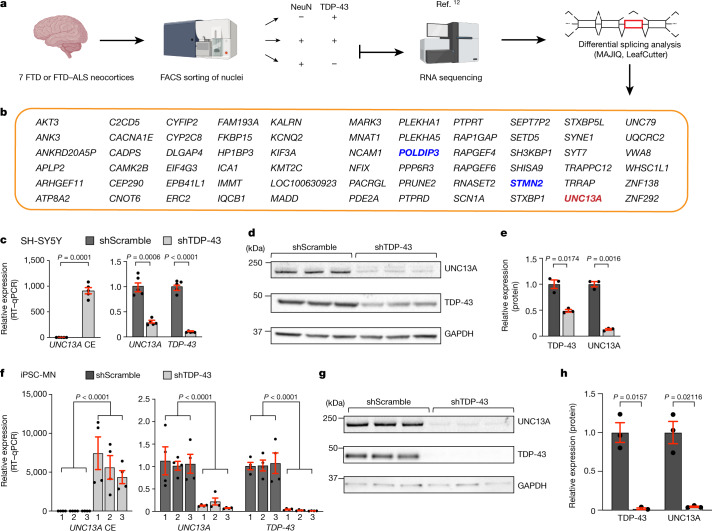
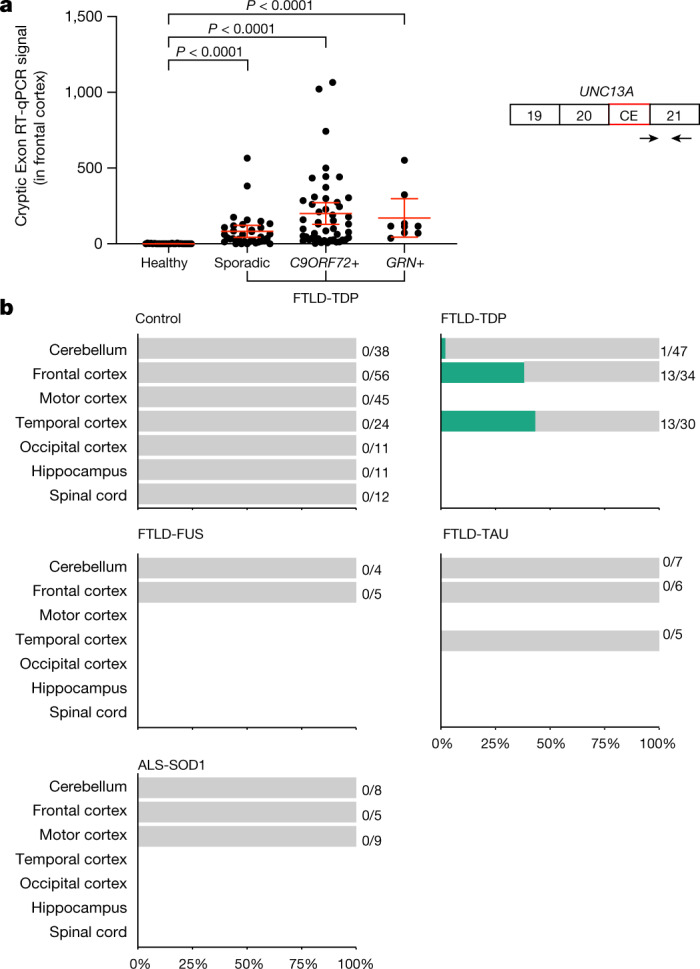
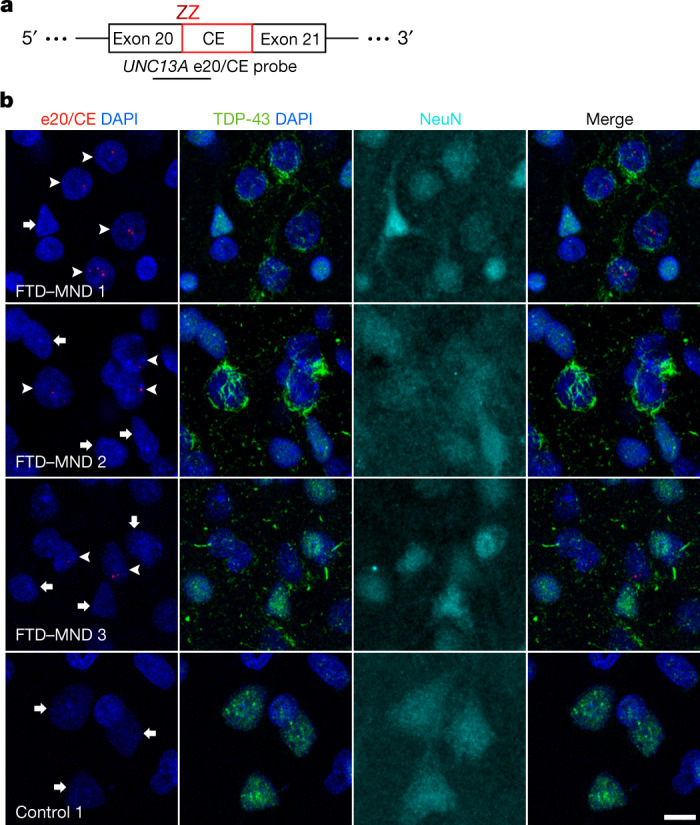
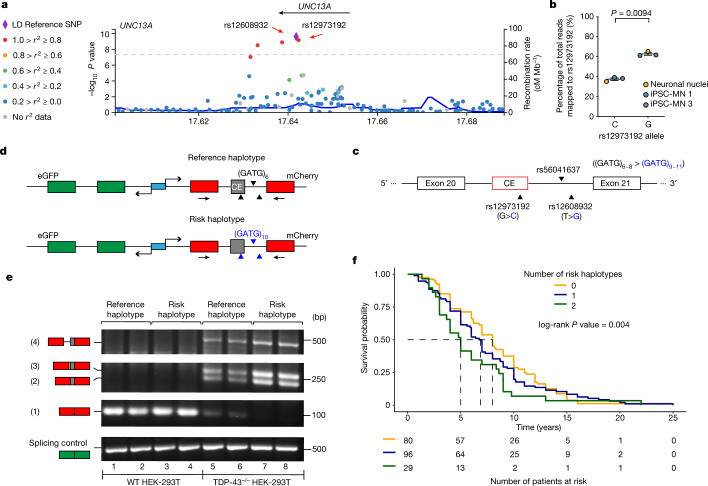
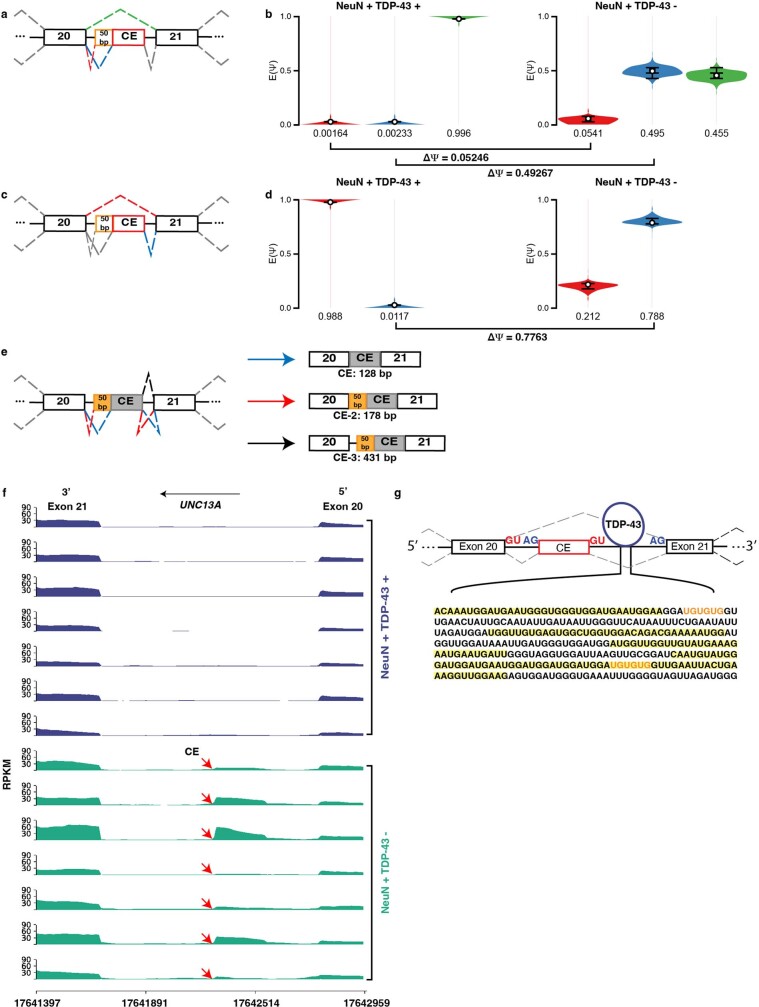
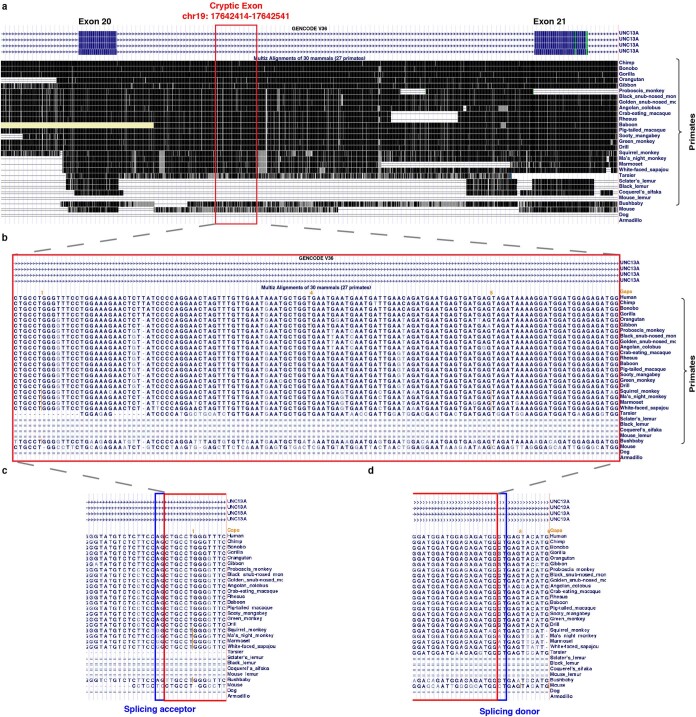
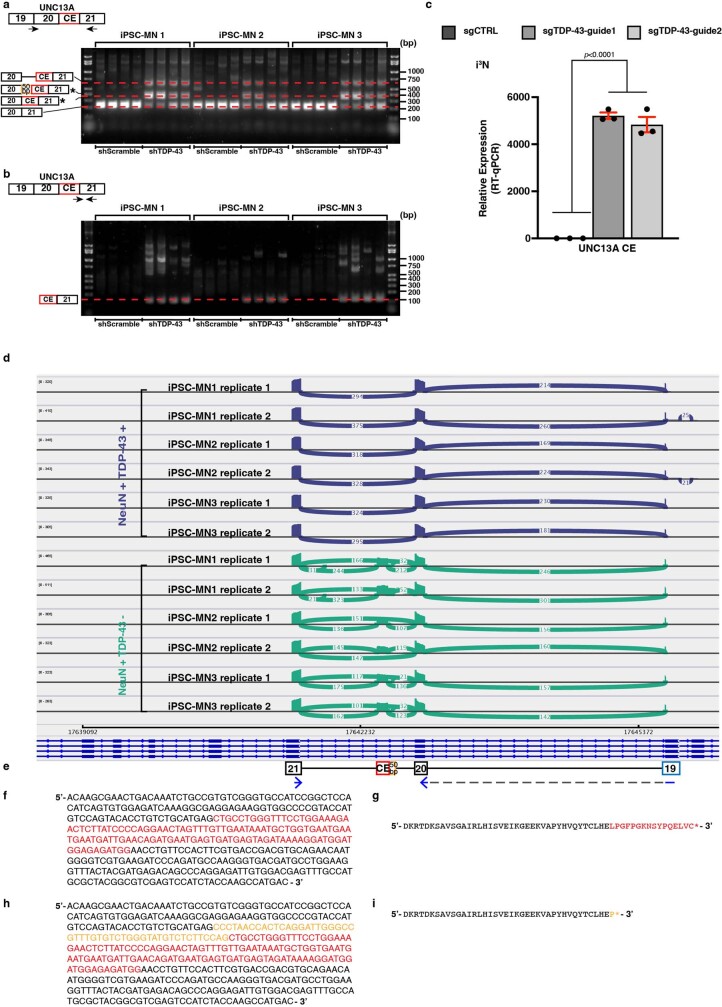
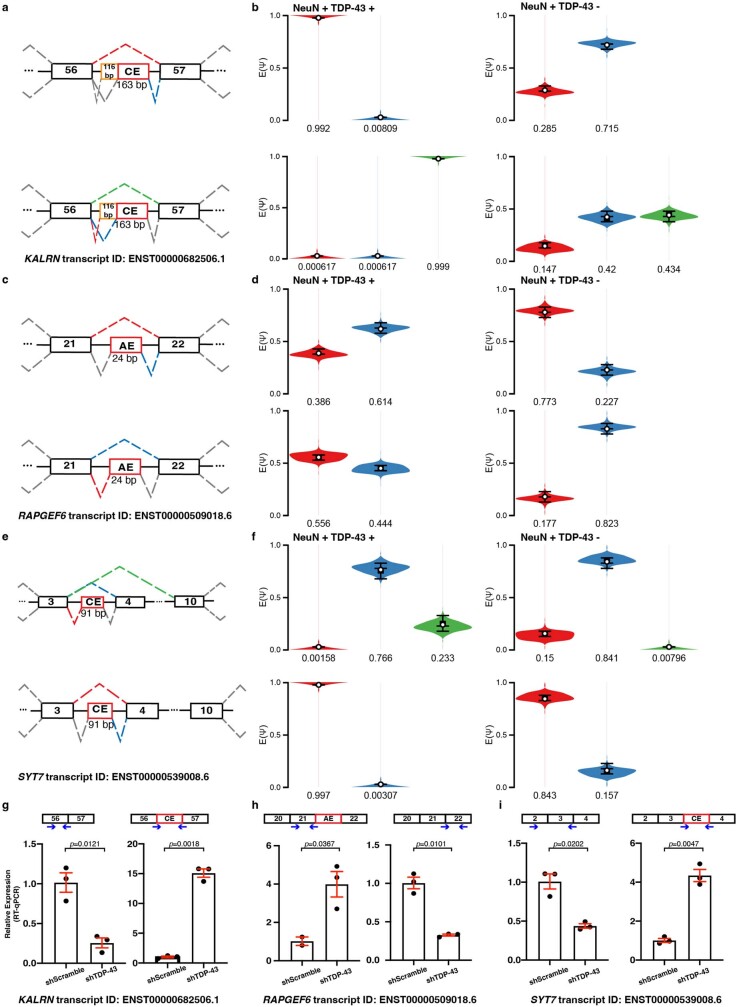
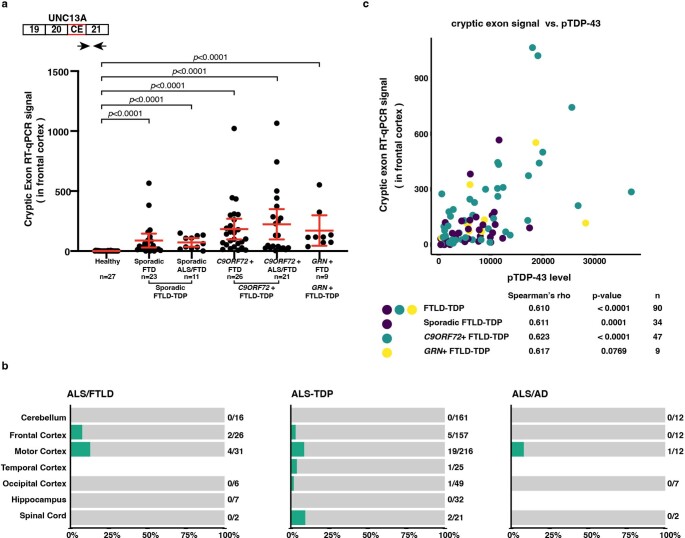
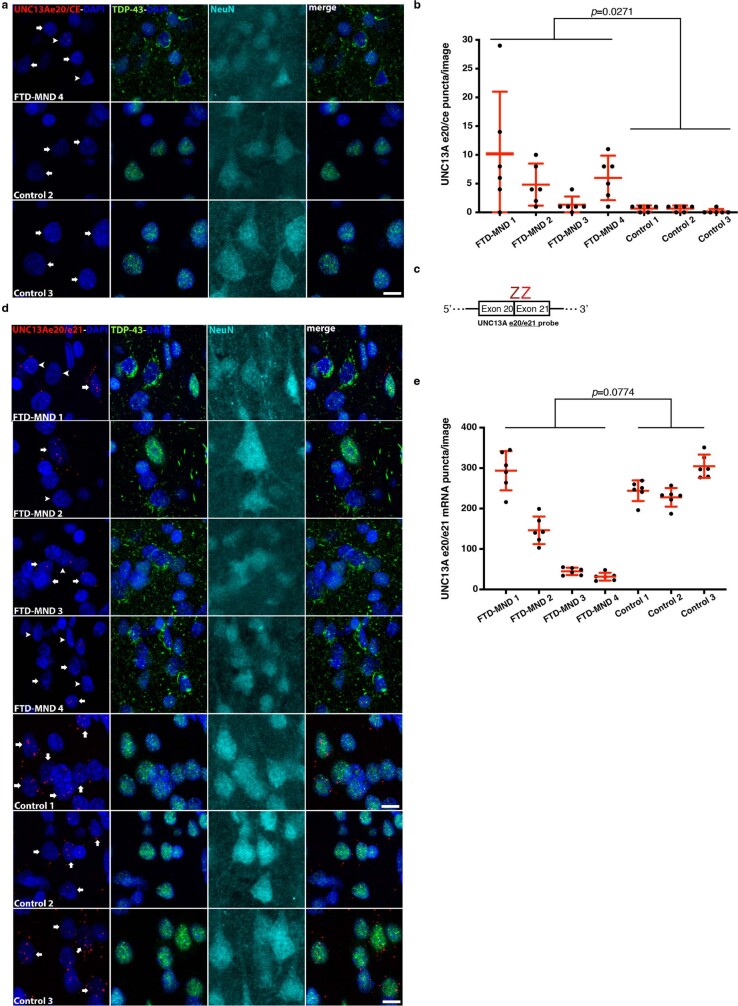
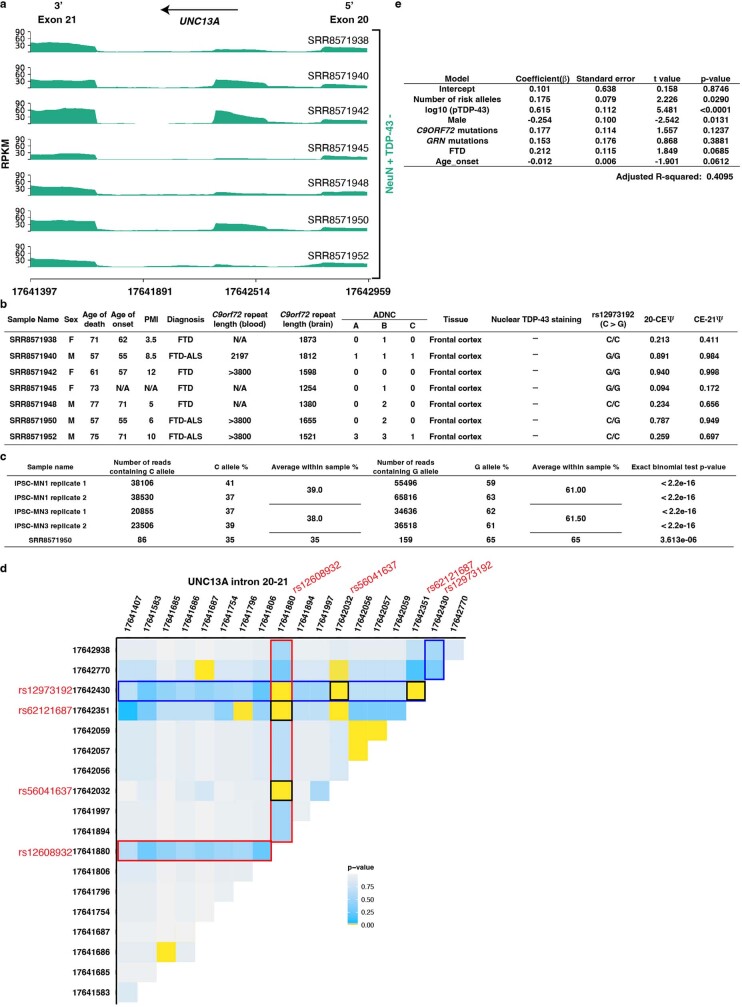
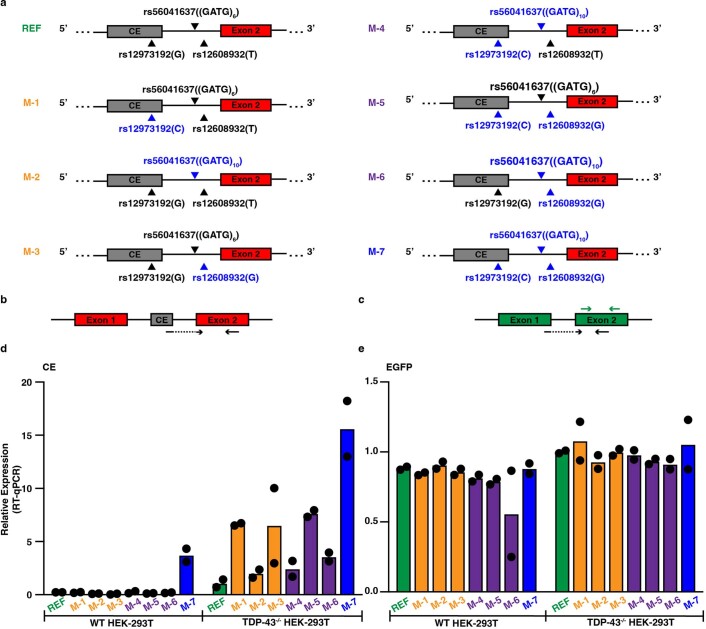
A hallmark pathological feature of the neurodegenerative diseases amyotrophic lateral sclerosis (ALS) and frontotemporal dementia (FTD) is the depletion of RNA-binding protein TDP-43 from the nucleus of neurons in the brain and spinal cord 1 . A major function of TDP-43 is as a repressor of cryptic exon inclusion during RNA splicing 2–4 . Single nucleotide polymorphisms in UNC13A are among the strongest hits associated with FTD and ALS in human genome-wide association studies 5,6 , but how those variants increase risk for disease is unknown. Here we show that TDP-43 represses a cryptic exon-splicing event in UNC13A . Loss of TDP-43 from the nucleus in human brain, neuronal cell lines and motor neurons derived from induced pluripotent stem cells resulted in the inclusion of a cryptic exon in UNC13A mRNA and reduced UNC13A protein expression. The top variants associated with FTD or ALS risk in humans are located in the intron harbouring the cryptic exon, and we show that they increase UNC13A cryptic exon splicing in the face of TDP-43 dysfunction. Together, our data provide a direct functional link between one of the strongest genetic risk factors for FTD and ALS ( UNC13A genetic variants), and loss of TDP-43 function.
Overview
The claims and statistics of this paper haven’t been checked yet.
Run the check — free, no account needed. It reads the open-access text and checks the sources it cites.
Integrity signals
Registry
Cites
Statistics
Figures
Verification
Claims the paper makes
The claims and statistics of this paper haven’t been checked yet.
Run the check — free, no account needed. It reads the open-access text and checks the sources it cites.
Claims other papers make about this one
Each is checked against this paper’s own text: does it say what the citing paper says it does?
In the citing paper
“The most common genes identified in clinical practice include SOD1, C9ORF72, TARDBP, FUS, and OPTNTD-P43 (55–57, 73, 74).”
From Modulation of the gut–brain axis via the gut microbiota: a new era in treatment of amyotrophic lateral sclerosis (2023) · cites this paper as [73]
Self-check
Percentages, sums and reported differences re-computed from the paper’s own numbers.
The self-check needs the paper’s full text.
Citations
Cites
Moderated estimation of fold change and dispersion for RNA-seq data with DESeq2
Love, M. I., Huber, W., & Anders, S. (2014) · Genome Biology · doi:10.1186/s13059-014-0550-8 · Cited by 95,106
A global reference for human genetic variation
The 1000 Genomes Project Consortium, authors, C., Auton, A., Abecasis, G. R., Steering committee, Altshuler, D. M., Durbin, R. M., Abecasis, G. R., Bentley, D. R., Chakravarti, A., et al. (2015) · Nature · doi:10.1038/nature15393 · Cited by 18,247
Self-citationTHE GENETICS OF CAENORHABDITIS ELEGANS
Brenner, S. (1974) · Genetics · doi:10.1093/genetics/77.1.71 · Cited by 15,220
The Human Genome Browser at UCSC
Kent, W. J., Sugnet, C. W., Furey, T. S., Roskin, K. M., Pringle, T. H., Zahler, A. M., & Haussler, A. D. (2002) · Genome Research · doi:10.1101/gr.229102 · Cited by 10,400
Ubiquitinated TDP-43 in Frontotemporal Lobar Degeneration and Amyotrophic Lateral Sclerosis
Neumann, M., Sampathu, D. M., Kwong, L. K., Truax, A. C., Micsenyi, M. C., Chou, T. T., Bruce, J., Schuck, T., Grossman, M., Clark, C. M., et al. (2006) · Science · doi:10.1126/science.1134108 · Cited by 6,576
LocusZoom: regional visualization of genome-wide association scan results
Pruim, R. J., Welch, R. P., Sanna, S., Teslovich, T. M., Chines, P. S., Gliedt, T. P., Boehnke, M., Abecasis, G. R., & Willer, C. J. (2010) · Bioinformatics · doi:10.1093/bioinformatics/btq419 · Cited by 2,707
Limbic-predominant age-related TDP-43 encephalopathy (LATE): consensus working group report
Nelson, P. T., Dickson, D. W., Trojanowski, J. Q., Jack, C. R., Boyle, P. A., Arfanakis, K., Rademakers, R., Alafuzoff, I., Attems, J., Brayne, C., et al. (2019) · Brain · doi:10.1093/brain/awz099 · Cited by 1,547
Self-citationLong pre-mRNA depletion and RNA missplicing contribute to neuronal vulnerability from loss of TDP-43
Polymenidou, M., Lagier-Tourenne, C., Hutt, K. R., Huelga, S. C., Moran, J., Liang, T. Y., Ling, S.-C., Sun, E., Wancewicz, E., Mazur, C., et al. (2011) · Nature Neuroscience · doi:10.1038/nn.2779 · Cited by 1,335
Characterizing the RNA targets and position-dependent splicing regulation by TDP-43
Tollervey, J. R., Curk, T., Rogelj, B., Briese, M., Cereda, M., Kayikci, M., König, J., Hortobágyi, T., Nishimura, A. L., Župunski, V., et al. (2011) · Nature Neuroscience · doi:10.1038/nn.2778 · Cited by 1,165
TDP-43 and FUS/TLS: emerging roles in RNA processing and neurodegeneration
Lagier-Tourenne, C., Polymenidou, M., & Cleveland, D. W. (2010) · Human Molecular Genetics · doi:10.1093/hmg/ddq137 · Cited by 1,021
From genome-wide associations to candidate causal variants by statistical fine-mapping
Schaid, D. J., Chen, W., & Larson, N. B. (2018) · Nature Reviews Genetics · doi:10.1038/s41576-018-0016-z · Cited by 927
A Novel Approach to High-Quality Postmortem Tissue Procurement: The GTEx Project
Carithers, L. J., Ardlie, K., Barcus, M., Branton, P. A., Britton, A., Buia, S. A., Compton, C. C., DeLuca, D. S., Peter-Demchok, J., Gelfand, E. T., et al. (2015) · Biopreservation and Biobanking · doi:10.1089/bio.2015.0032 · Cited by 833
The Post-GWAS Era: From Association to Function
Gallagher, M. D., & Chen-Plotkin, A. S. (2018) · The American Journal of Human Genetics · doi:10.1016/j.ajhg.2018.04.002 · Cited by 822
Munc13-1 is essential for fusion competence of glutamatergic synaptic vesicles
Augustin, I., Rosenmund, C., Südhof, T. C., & Brose, N. (1999) · Nature · doi:10.1038/22768 · Cited by 787
Annotation-free quantification of RNA splicing using LeafCutter
Li, Y. I., Knowles, D. A., Humphrey, J., Barbeira, A. N., Dickinson, S. P., Im, H. K., & Pritchard, J. K. (2018) · Nature Genetics · doi:10.1038/s41588-017-0004-9 · Cited by 765
Biases in Illumina transcriptome sequencing caused by random hexamer priming
Hansen, K. D., Brenner, S. E., & Dudoit, S. (2010) · Nucleic Acids Research · doi:10.1093/nar/gkq224 · Cited by 713
TDP-43 repression of nonconserved cryptic exons is compromised in ALS-FTD
Ling, J. P., Pletniková, O., Troncoso, J. C., & Wong, P. C. (2015) · Science · doi:10.1126/science.aab0983 · Cited by 697
Genome-Wide Analyses Identify KIF5A as a Novel ALS Gene
Nicolas, A., Kenna, K. P., Renton, A. E., Ticozzi, N., Faghri, F., Chia, R., Dominov, J. A., Kenna, B., Nalls, M. A., Keagle, P. J., et al. (2018) · Neuron · doi:10.1016/j.neuron.2018.02.027 · Cited by 686
ALS-implicated protein TDP-43 sustains levels of STMN2, a mediator of motor neuron growth and repair
Klim, J. R., Williams, L. A., Limone, F., Guerra San Juan, I., Davis-Dusenbery, B. N., Mordes, D. A., Burberry, A., Steinbaugh, M. J., Gamage, K. K., Kirchner, R., et al. (2019) · Nature Neuroscience · doi:10.1038/s41593-018-0300-4 · Cited by 653
TDP‐43 regulates its mRNA levels through a negative feedback loop
Ayala, Y. M., Conti, L. D., Avendaño-Vázquez, S. E., Dhir, A., Romano, M., D’Ambrogio, A., Tollervey, J. R., Ule, J., Baralle, M., Buratti, E., et al. (2010) · The EMBO Journal · doi:10.1038/emboj.2010.310 · Cited by 649
Melamed, Z., López-Erauskin, J., Baughn, M. W., Zhang, O., Drenner, K., Sun, Y., Freyermuth, F., McMahon, M. A., Beccari, M. S., Artates, J. W., et al. (2019) · Nature Neuroscience · doi:10.1038/s41593-018-0293-z · Cited by 635
Aberrant cleavage of TDP-43 enhances aggregation and cellular toxicity
Zhang, Y., Xu, Y.-F., Cook, C. N., Gendron, T. F., Roettges, P. S., Link, C. D., Lin, W.-L., Tong, J., Castanedes‐Casey, M., Ash, P. E. A., et al. (2009) · Proceedings of the National Academy of Sciences · doi:10.1073/pnas.0900688106 · Cited by 614
Self-citationTHE DNA OF CAENORHABDITIS ELEGANS
Sulston, J., & Brenner, S. (1974) · Genetics · doi:10.1093/genetics/77.1.95 · Cited by 584
PARALS Registry, van Rheenen, W., SLALOM Group, SLAP Registry, NNIPPS Study Group, Shatunov, A., Dekker, A. M., McLaughlin, R. L., Diekstra, F. P., Pulit, S. L., et al. (2016) · Nature Genetics · doi:10.1038/ng.3622 · Cited by 577
TDP-43 loss and ALS-risk SNPs drive mis-splicing and depletion of UNC13A
Brown, A., Wilkins, O. G., Keuss, M. J., Kargbo-Hill, S. E., Zanovello, M., Lee, W. C., Bampton, A., Lee, F. C. Y., Masino, L., Qi, Y. A., et al. (2022) · Nature · doi:10.1038/s41586-022-04436-3 · Cited by 545
A new view of transcriptome complexity and regulation through the lens of local splicing variations
Vaquero-Garcia, J., Barrera, A., Gazzara, M. R., González-Vallinas, J., Lahens, N. F., Hogenesch, J. B., Lynch, K. W., & Barash, Y. (2016) · eLife · doi:10.7554/elife.11752 · Cited by 488
Maury, Y., Côme, J., Piskorowski, R. A., Salah‐Mohellibi, N., Chevaleyre, V., Peschanski, M., Martinat, C., & Nedelec, S. (2014) · Nature Biotechnology · doi:10.1038/nbt.3049 · Cited by 431
van Es, M. A., Veldink, J. H., Saris, C. G. J., Blauw, H. M., van Vught, P. W. J., Birve, A., Lemmens, R., Schelhaas, H. J., Groen, E. J. N., Huisman, M. H. B., et al. (2009) · Nature Genetics · doi:10.1038/ng.442 · Cited by 408
RIM Proteins Activate Vesicle Priming by Reversing Autoinhibitory Homodimerization of Munc13
Deng, L., Kaeser, P. S., Xu, W., & Südhof, T. C. (2011) · Neuron · doi:10.1016/j.neuron.2011.01.005 · Cited by 287
TDP-43 condensation properties specify its RNA-binding and regulatory repertoire
Hallegger, M., Chakrabarti, A. M., Lee, F. C. Y., Lee, B. L., Amalietti, A. G., Odeh, H. M., Copley, K. E., Rubien, J. D., Portz, B., Kuret, K., et al. (2021) · Cell · doi:10.1016/j.cell.2021.07.018 · Cited by 239
Self-citationLoss of Nuclear TDP-43 Is Associated with Decondensation of LINE Retrotransposons
Liu, E. Y., Russ, J., Cali, C. P., Phan, J. M., Amlie-Wolf, A., & Lee, E. B. (2019) · Cell Reports · doi:10.1016/j.celrep.2019.04.003 · Cited by 231
Truncated stathmin-2 is a marker of TDP-43 pathology in frontotemporal dementia
Prudencio, M., Humphrey, J., Pickles, S., Brown, A.-L., Hill, S. E., Kachergus, J. M., Shi, J., Heckman, M. G., Spiegel, M. R., Cook, C., et al. (2020) · Journal of Clinical Investigation · doi:10.1172/jci139741 · Cited by 231
Self-citationActive zone scaffolds differentially accumulate Unc13 isoforms to tune Ca2+ channel–vesicle coupling
Böhme, M. A., Beis, C., Reddy‐Alla, S., Reynolds, E., Mampell, M. M., Grasskamp, A. T., Lützkendorf, J., Bergeron, D. D., Driller, J. H., Babikir, H. A., et al. (2016) · Nature Neuroscience · doi:10.1038/nn.4364 · Cited by 219
LRRK2 modifies α-syn pathology and spread in mouse models and human neurons
Bieri, G., Brahic, M., Bousset, L., Couthouis, J., Kramer, N. J., Ma, R. K., Nakayama, L., Monbureau, M., Defensor, E. B., Schüle, B., et al. (2019) · Acta Neuropathologica · doi:10.1007/s00401-019-01995-0 · Cited by 190
Self-citationPhase separation-deficient TDP43 remains functional in splicing
Schmidt, H. B., Barreau, A., & Rohatgi, R. (2019) · Nature Communications · doi:10.1038/s41467-019-12740-2 · Cited by 182
Self-citationUNC13A is a modifier of survival in amyotrophic lateral sclerosis
Diekstra, F. P., van Vught, P. W. J., van Rheenen, W., Koppers, M., Pasterkamp, R. J., van Es, M. A., Schelhaas, H. J., de Visser, M., Robberecht, W., Damme, P. V., et al. (2011) · Neurobiology of Aging · doi:10.1016/j.neurobiolaging.2011.10.029 · Cited by 144
Seyfried, N. T., Gozal, Y. M., Dammer, E. B., Xia, Q., Duong, D. M., Cheng, D., Lah, J. J., Levey, A. I., & Peng, J. (2010) · Molecular & Cellular Proteomics · doi:10.1074/mcp.m800390-mcp200 · Cited by 127
Neurons selectively targeted in frontotemporal dementia reveal early stage TDP-43 pathobiology
Nana, A. L., Sidhu, M., Gaus, S. E., Hwang, J., Li, L., Park, Y., Kim, E. J., Pasquini, L., Allen, I. E., Rankin, K. P., et al. (2018) · Acta Neuropathologica · doi:10.1007/s00401-018-1942-8 · Cited by 123
Self-citationRepetitive element transcripts are elevated in the brain of C9orf72 ALS/FTLD patients
Prudencio, M., Gonzales, P. K., Cook, C. N., Gendron, T. F., Daughrity, L. M., Song, Y., Ebbert, M. T. W., van Blitterswijk, M., Zhang, Y.-J., Jansen-West, K., et al. (2017) · Human Molecular Genetics · doi:10.1093/hmg/ddx233 · Cited by 122
Self-citationDiekstra, F. P., Deerlin, V. M. V., Swieten, J. C. V., Al‐Chalabi, A., Ludolph, A. C., Weishaupt, J. H., Hardiman, O. M., Landers, J. E., Brown, R. H., van Es, M. A., et al. (2014) · Annals of Neurology · doi:10.1002/ana.24198 · Cited by 121
Tdp-43 cryptic exons are highly variable between cell types
Jeong, Y. H., Ling, J. P., Lin, S. Z., Donde, A., Braunstein, K. E., Majounie, E., Traynor, B. J., LaClair, K. D., Lloyd, T. E., & Wong, P. C. (2017) · Molecular Neurodegeneration · doi:10.1186/s13024-016-0144-x · Cited by 120
Pottier, C. P., Ren, Y., Perkerson, R. B., Baker, M. C., Jenkins, G. D., van Blitterswijk, M., DeJesus‐Hernandez, M., van Rooij, J., Murray, M. E., Christopher, E. A., et al. (2019) · Acta Neuropathologica · doi:10.1007/s00401-019-01962-9 · Cited by 117
Self-citationSynaptic UNC13A protein variant causes increased neurotransmission and dyskinetic movement disorder
Lipstein, N., Verhoeven‐Duif, N. M., Michelassi, F. E., Calloway, N. T., van Hasselt, P. M., Pienkowska, K., van Haaften, G. W., van Haelst, M. M., Empelen, R. V., Cuppen, I., et al. (2017) · Journal of Clinical Investigation · doi:10.1172/jci90259 · Cited by 113
Splicing repression is a major function of TDP-43 in motor neurons
Donde, A., Sun, M., Ling, J. P., Braunstein, K. E., Pang, B., Wen, X., Cheng, X., Chen, L., & Wong, P. C. (2019) · Acta Neuropathologica · doi:10.1007/s00401-019-02042-8 · Cited by 109
Sun, M., Bell, W., LaClair, K. D., Ling, J. P., Han, H., Kageyama, Y., Pletniková, O., Troncoso, J. C., Wong, P. C., & Chen, L. L. (2017) · Acta Neuropathologica · doi:10.1007/s00401-017-1701-2 · Cited by 106
Prudencio, M., Jansen‐West, K. R., Lee, C. W., Gendron, T. F., Zhang, Y., Xu, Y.-F., Gass, J. M., Stuani, C., Stetler, C. T., Rademakers, R., et al. (2012) · Proceedings of the National Academy of Sciences · doi:10.1073/pnas.1211577110 · Cited by 97
Self-citationShiga, A., Ishihara, T., Miyashita, A., Kuwabara, M., Kato, T., Watanabe, N., Yamahira, A., Kondo, C., Yokoseki, A., Takahashi, M., et al. (2012) · PLoS ONE · doi:10.1371/journal.pone.0043120 · Cited by 94
Chiò, A., Mora, G., Restagno, G., Brunetti, M., Ossola, I., Barberis, M., Ferrucci, L., Canosa, A., Manera, U., Moglia, C., et al. (2012) · Neurobiology of Aging · doi:10.1016/j.neurobiolaging.2012.07.016 · Cited by 81
Genetic modifiers in carriers of repeat expansions in the C9ORF72 gene
van Blitterswijk, M., Mullen, B., Wojtas, A., Heckman, M. G., Diehl, N. N., Baker, M., DeJesus‐Hernandez, M., Brown, P. H., Murray, M. E., Hsiung, G. R., et al. (2014) · Molecular Neurodegeneration · doi:10.1186/1750-1326-9-38 · Cited by 78
Self-citationUNC13A polymorphism contributes to frontotemporal disease in sporadic amyotrophic lateral sclerosis
Placek, K., Baer, G. M., Elman, L. B., McCluskey, L. F., Hennessy, L., Ferraro, P. M., Lee, E. B., Lee, V. M. ‐., Trojanowski, J. Q., Deerlin, V. M. V., et al. (2018) · Neurobiology of Aging · doi:10.1016/j.neurobiolaging.2018.09.031 · Cited by 45
The Distinct Traits of the UNC13A Polymorphism in Amyotrophic Lateral Sclerosis
Tan, H. H. G., Westeneng, H., van der Burgh, H. K., van Es, M. A., Bakker, L. A., van Veenhuijzen, K., van Eijk, K. R., van Eijk, R. P. A., Veldink, J. H., & van den Berg, L. H. (2020) · Annals of Neurology · doi:10.1002/ana.25841 · Cited by 41
UNC13A confers risk for sporadic ALS and influences survival in a Spanish cohort
Vidal-Taboada, J. M., López-López, A., Salvadó, M., Lorenzo-Sanz, L., García, C. B., Mahy, N., Rodríguez, M. J., & Gámez, J. (2015) · Journal of Neurology · doi:10.1007/s00415-015-7843-z · Cited by 40
Yang, B., Jiang, H., Wang, F., Li, S., Wu, C., Bao, J., Zhu, Y., Xu, Z., Liu, B., Ren, H. J., et al. (2019) · Neurological Sciences · doi:10.1007/s10072-019-03951-y · Cited by 33
Cited by
Sorted by citations
van Rheenen, W., van der Spek, R. A. A., Bakker, M. K., van Vugt, J. J. F. A., Hop, P. J., Zwamborn, R. A. J., de Klein, N., Westra, H.-J., Bakker, O. B., Deelen, P., et al. (2021) · Nature Genetics · doi:10.1038/s41588-021-00973-1 · Cited by 542
TDP-43 loss and ALS-risk SNPs drive mis-splicing and depletion of UNC13A
Brown, A., Wilkins, O. G., Keuss, M. J., Kargbo-Hill, S. E., Zanovello, M., Lee, W. C., Bampton, A., Lee, F. C. Y., Masino, L., Qi, Y. A., et al. (2022) · Nature · doi:10.1038/s41586-022-04436-3 · Cited by 545
Mechanism of STMN2 cryptic splice-polyadenylation and its correction for TDP-43 proteinopathies
Baughn, M. W., Melamed, Z., López‐Erauskin, J., Beccari, M. S., Ling, K., Zuberi, A. R., Presa, M. F., Gonzalo-Gil, E., Maimon, R., Vazquez‐Sanchez, S., et al. (2023) · Science · doi:10.1126/science.abq5622 · Cited by 252
Alternative splicing in neurodegenerative disease and the promise of RNA therapies
Nikom, D., & Zheng, S. (2023) · Nature reviews. Neuroscience · doi:10.1038/s41583-023-00717-6 · Cited by 201
Mis-spliced transcripts generate de novo proteins in TDP-43–related ALS/FTD
Seddighi, S., Qi, Y. A., Brown, A., Wilkins, O. G., Bereda, C., Belair, C., Zhang, Y., Prudencio, M., Keuss, M. J., Khandeshi, A. J., et al. (2024) · Science Translational Medicine · doi:10.1126/scitranslmed.adg7162 · Cited by 200
Self-citation
Metadata
- Authors
- Ma, X. R., Prudencio, M., Koike, Y., Vatsavayai, S. C., Kim, G., Harbinski, F., Briner, A., Rodriguez, C. M., Guo, C., Akiyama, T., Schmidt, H. B., Cummings, B. B., Wyatt, D. W., Kurylo, K., Miller, G., Mekhoubad, S., Sallee, N., Mekonnen, G., Ganser, L., Rubien, J. D., Jansen-West, K., Cook, C. N., Pickles, S., Oskarsson, B., Graff-Radford, N. R., Boeve, B. F., Knopman, D. S., Petersen, R. C., Dickson, D. W., Shorter, J., Myong, S., Green, E. M., Seeley, W. W., Petrucelli, L., & Gitler, A. D.
- Affiliations
- Stanford Medicine (US)
- Mayo Clinic (US)
- University of California, San Francisco (US)
- Maze (United States) (US)
- The University of Queensland (AU)
- Johns Hopkins University (US)
- University of Pennsylvania (US)
- Mayo Clinic in Florida (US)
- Corresponding author
- Petrucelli, Leonard
- Gitler, Aaron D.
- ORCID
- Ma, X. Rosa
- Prudencio, Mercedes
- Koike, Yuka
- Vatsavayai, Sarat C.
- Kim, Garam
- Briner, Adam
- Rodriguez, Caitlin M.
- Guo, Caiwei
- Akiyama, Tetsuya
- Schmidt, H. Broder
- Cummings, Beryl B.
- Wyatt, David W.
- Kurylo, Katherine
- Miller, Georgiana
- Ganser, Laura
- Rubien, Jack D.
- Cook, Casey N.
- Pickles, Sarah
- Oskarsson, Björn
- Boeve, Bradley F.
- Knopman, David S.
- Petersen, Ronald C.
- Dickson, Dennis W.
- Shorter, James
- Myong, Sua
- Green, Eric M.
- Seeley, William W.
- Petrucelli, Leonard
- Gitler, Aaron D.
- Venue
- Nature
- Published
- 2022-02-23
- Volume
- 603
- Issue
- 7899
- Pages
- 124-130
- ISSN
- 0028-0836 (ISSN-L)
- 1476-4687
- PMC
- PMC8891019
- OpenAlex
- W4213441627
- Cited by
- 574
- References
- 53
- Citations by year
- 2026: 126 · 2025: 151 · 2024: 121 · 2023: 107 · 2022: 57
- FWCI
- 57.66
- Type
- journal article
- Language
- en
- Open access
- hybrid
- doi.org
- Locations
- Nature (publishedVersion, cc-by)
- bioRxiv (Cold Spring Harbor Laboratory) (acceptedVersion, cc-by-nc)
- PubMed Central (publishedVersion, cc-by)
- PubMed (publishedVersion)
- eScholarship (California Digital Library) (submittedVersion, cc-by)
- RePEc: Research Papers in Economics (submittedVersion)
- Funders
- ALS Association
- BrightFocus Foundation (A2020279F)
- Takeda Science Foundation
- Johns Hopkins University
- Target ALS
- Rainwater Charitable Foundation
- National Institutes of Health (W81XWH)
- University of California, San Francisco (P30AG062422, P01AG019724)
- Wu Tsai Neurosciences Institute, Stanford University
- Stanford Research Computing Center, Stanford University
- National Institute on Aging (RF1AG064690, R01AG063780, U01AG057195, U01AG006786, RF1AG071326, T32AG047126, U19AG063911, P01AG019724, P30AG062422, P30AG062677)
- National Human Genome Research Institute (T32HG000044)
- National Institute of General Medical Sciences (F32GM139268, T32GM007231)
- National Institute of Neurological Disorders and Stroke (F32NS116208, P01NS084974, R01NS104437, RF1NS120992, RF1NS113636, R35NS097273, R35NS097263, U54NS123743)
- Robert Packard Center for ALS Research, Johns Hopkins University
- Topics
- Health Sciences › Medicine › Clinical Neurology › Amyotrophic Lateral Sclerosis Research
- Life Sciences › Biochemistry, Genetics and Molecular Biology › Molecular Biology › RNA Research and Splicing
- Life Sciences › Neuroscience › Cellular and Molecular Neuroscience › Alzheimer's disease research and treatments
- Keywords
- TDP-43, UNC13A, RNA splicing, amyotrophic lateral sclerosis, frontotemporal dementia, single nucleotide polymorphisms, genetic risk factors, RNA-binding proteins, motor neurons, intronic variants, induced pluripotent stem cells
- MeSH terms
- Amyotrophic Lateral Sclerosis, DNA-Binding Proteins, Exons, Humans, Motor Neurons, Nerve Tissue Proteins, Genome-Wide Association Study, Frontotemporal Dementia
About these checks
Registry, retraction, Cites and statistics results are computed, not judged, with one exception: a printed reference that no index lists is read once by a model before it counts as a citation error. Claims are extracted by a model and kept only when their quote appears verbatim in the text; each cited source is then checked, with a model’s help, for whether it says what the claim relies on. Those verdicts can be wrong — read the claim’s quote and the cited source before relying on one.
Statistics and arithmetic are recomputed, not judged.
Confidence bands are shown only for fields calibrated on our annotated test set. None is calibrated yet, so no band is shown.
What counts as a claim ›How we measure confidence ›How we check this ›
Are you an author, or do you see a problem with this page? Request a review
