

A synergistic mindsets intervention protects adolescents from stress
Open accessPublished version of a preprint
The DOI matches its Crossref record; 80 of the 82 references it cites were found in a registry or an index.
Abstract
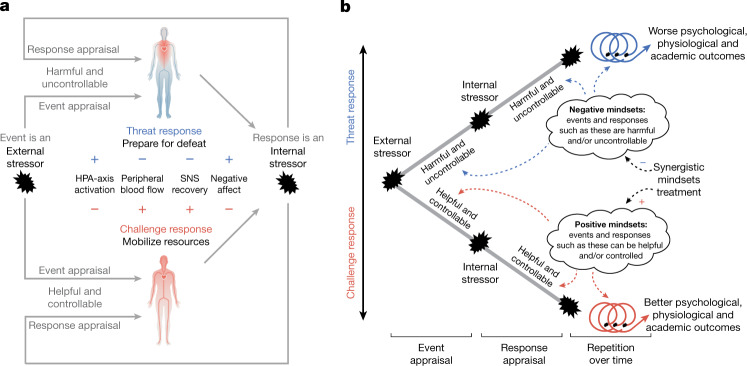
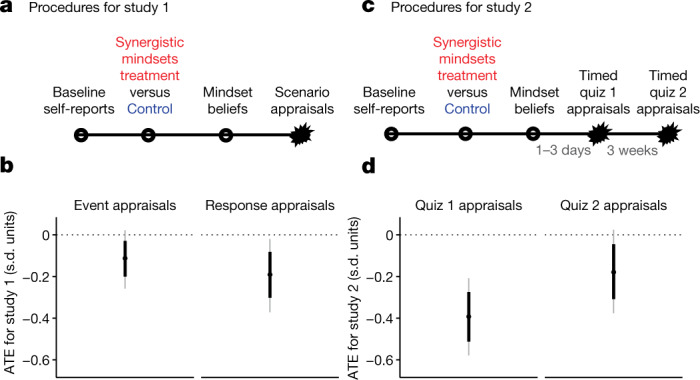
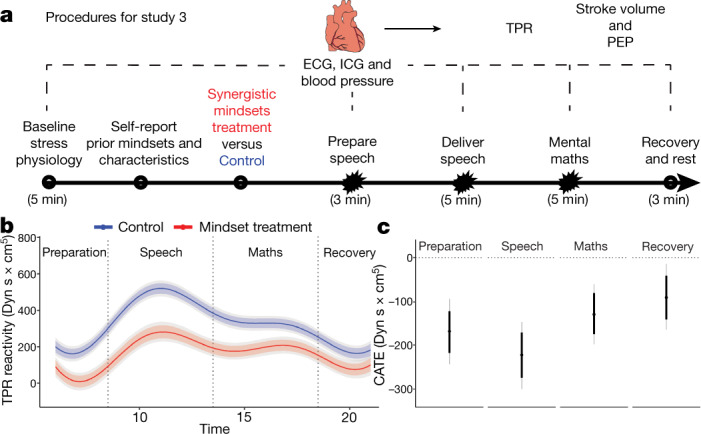
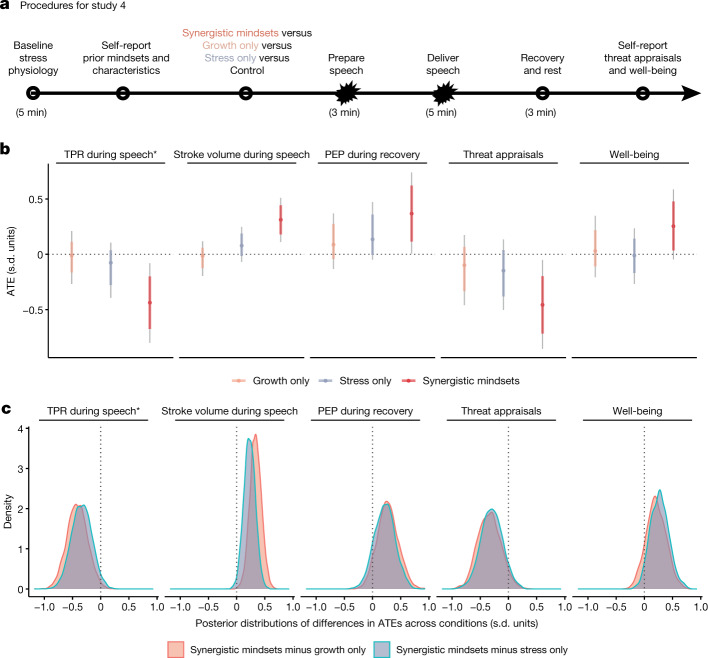
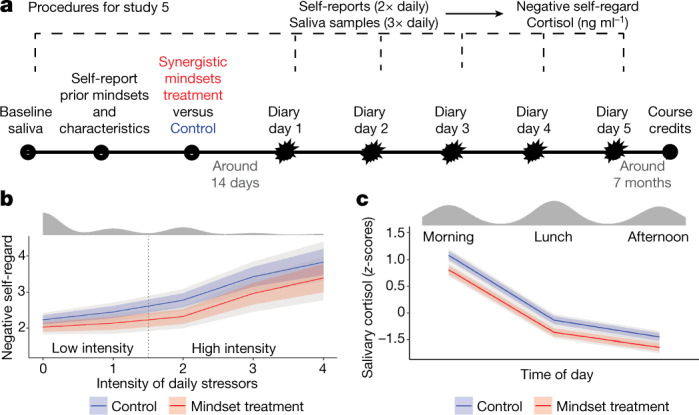
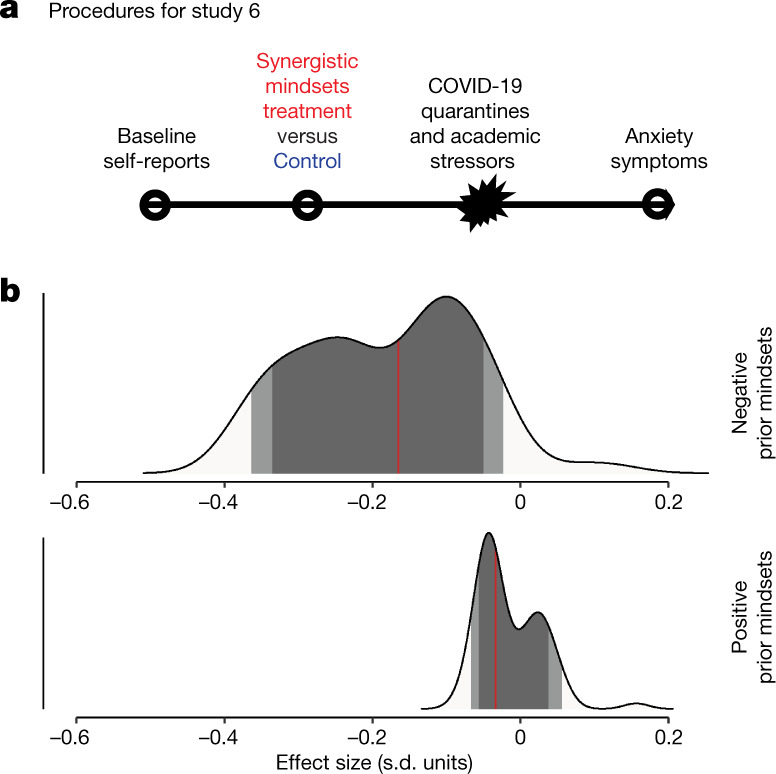
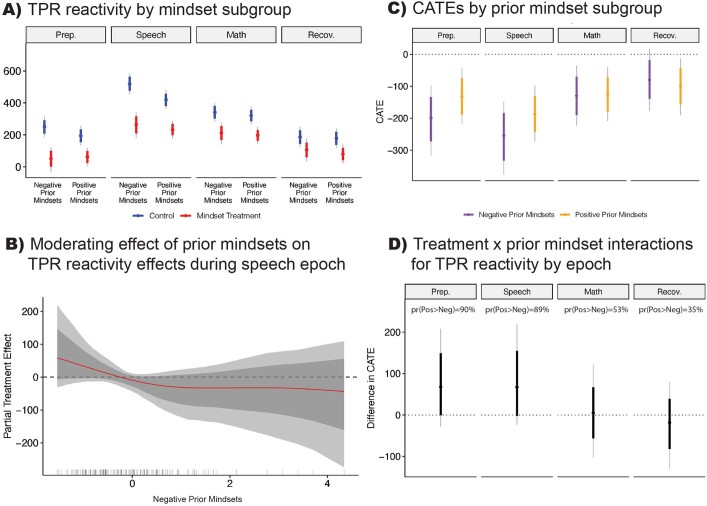
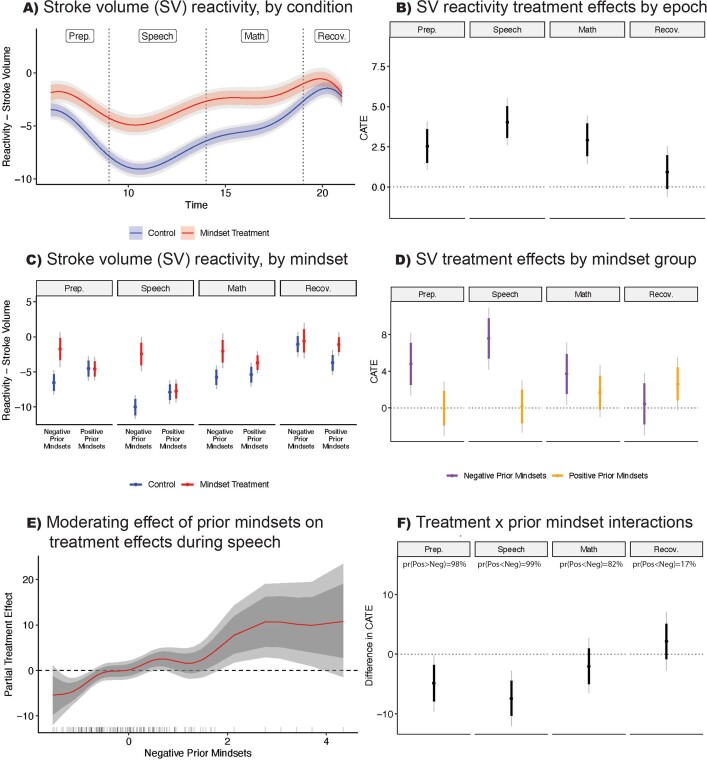
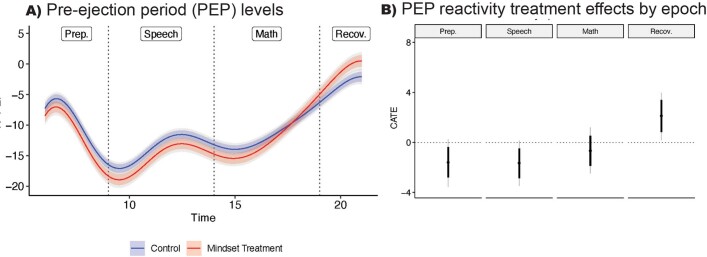
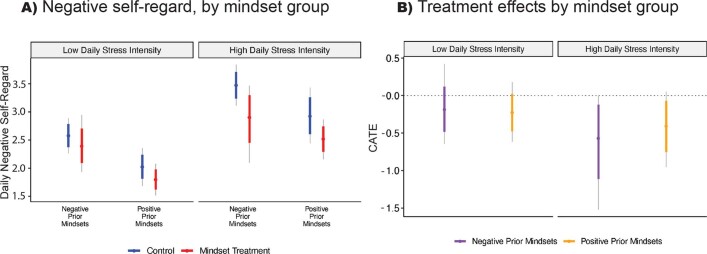
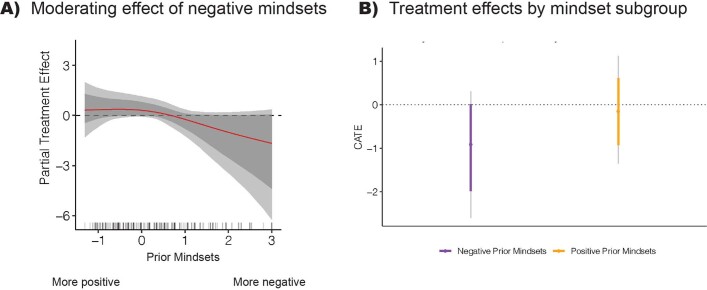
Social-evaluative stressors—experiences in which people feel they could be judged negatively—pose a major threat to adolescent mental health 1–3 and can cause young people to disengage from stressful pursuits, resulting in missed opportunities to acquire valuable skills. Here we show that replicable benefits for the stress responses of adolescents can be achieved with a short (around 30-min), scalable 'synergistic mindsets' intervention. This intervention, which is a self-administered online training module, synergistically targets both growth mindsets 4 (the idea that intelligence can be developed) and stress-can-be-enhancing mindsets 5 (the idea that one’s physiological stress response can fuel optimal performance). In six double-blind, randomized, controlled experiments that were conducted with secondary and post-secondary students in the United States, the synergistic mindsets intervention improved stress-related cognitions (study 1, n = 2,717; study 2, n = 755), cardiovascular reactivity (study 3, n = 160; study 4, n = 200), daily cortisol levels (study 5, n = 118 students, n = 1,213 observations), psychological well-being (studies 4 and 5), academic success (study 5) and anxiety symptoms during the 2020 COVID-19 lockdowns (study 6, n = 341). Heterogeneity analyses (studies 3, 5 and 6) and a four-cell experiment (study 4) showed that the benefits of the intervention depended on addressing both mindsets—growth and stress—synergistically. Confidence in these conclusions comes from a conservative, Bayesian machine-learning statistical method for detecting heterogeneous effects 6 . Thus, our research has identified a treatment for adolescent stress that could, in principle, be scaled nationally at low cost.
Overview
The claims and statistics of this paper haven’t been checked yet.
Free: it reads the open-access text and checks the first 5 claims that cite a source we can check. Create a free account to check every claim.
Integrity signals
Registry
Cites
Statistics
Figures
Verification
Claims the paper makes
The claims and statistics of this paper haven’t been checked yet.
Free: it reads the open-access text and checks the first 5 claims that cite a source we can check. Create a free account to check every claim.
Claims other papers make about this one
Each is checked against this paper’s own text: does it say what the citing paper says it does?
The cited source says what the claim attributes to it.
In the citing paper
“Several studies reported reduced anxiety [19,47,54,55,59-62,66-68].”
The cited source says what the claim attributes to it.
In the citing paper
“The impact on anxiety was more prominent in some studies for the treatment group than for the control group [19,59-61,66,68].”
The cited source says what the claim attributes to it.
In the citing paper
“Several studies found increased well-being [47,57,60,65,67,68].”
The cited source says what the claim attributes to it.
In the citing paper
“Furthermore, synergistic mindset interventions more effectively promote adolescent mental health than each individual component (Yeager et al., 2022).”
From A single session online training reduces intolerance of uncertainty and improves mental health in emerging adults. (2025) · cites this paper as Yeager et al., 2022
Self-check
Percentages, sums and reported differences re-computed from the paper’s own numbers.
The self-check needs the paper’s full text.
Citations
Cites
A Brief Measure for Assessing Generalized Anxiety Disorder: The GAD-7
Spitzer, R. L., Kroenke, K., Williams, J. B. W., & Löwe, B. (2006) · Archives of Internal Medicine · doi:10.1001/archinte.166.10.1092 · Cited by 31,765
Journal of personality and social psychology
Armstrong, J. S. (1988) · International Journal of Forecasting · doi:10.1016/0169-2070(88)90126-4 · Cited by 10,485
The American Psychological Association
Langfeld, H. S. (1919) · Science · doi:10.1126/science.49.1254.51 · Cited by 7,475
Kirschbaum, C., Pirke, K.-M., & Hellhammer, D. H. (2008) · Neuropsychobiology · doi:10.1159/000119004 · Cited by 6,093
Dickerson, S. S., & Kemeny, M. E. (2004) · Psychological Bulletin · doi:10.1037/0033-2909.130.3.355 · Cited by 5,881
Emotion regulation: current status and future prospects
Gross, J. J. (2015) · Psychological Inquiry · doi:10.1080/1047840x.2014.940781 · Cited by 5,229
Self-citationOur future: a Lancet commission on adolescent health and wellbeing
Patton, G. C., Sawyer, S. M., Santelli, J. S., Ross, D. A., Afifi, R., Allen, N. B., Arora, M., Azzopardi, P., Baldwin, W., Bonell, C., et al. (2016) · The Lancet · doi:10.1016/s0140-6736(16)00579-1 · Cited by 3,785
Understanding adolescence as a period of social–affective engagement and goal flexibility
Crone, E. A., & Dahl, R. E. (2012) · Nature Reviews Neuroscience · doi:10.1038/nrn3313 · Cited by 2,507
Thapar, A., Collishaw, S., Pine, D. S., & Thapar, A. K. (2012) · The Lancet · doi:10.1016/s0140-6736(11)60871-4 · Cited by 2,365
Yeager, D. S., & Dweck, C. S. (2012) · Educational Psychologist · doi:10.1080/00461520.2012.722805 · Cited by 2,334
Self-citation
Research works printed but not linked: 4
- American Psychological Association. Stress in America 2021: One Year Later, a New Wave of Pandemic Health Concerns. American Psychological Association https://www.apa.org/news/press/releases/stress/2021/one-year-pandemic-stress (2021).
- Pope, D. C. Doing School: How We Are Creating a Generation of Stressed-Out, Materialistic, and Miseducated Students (Yale University Press, 2001).
- Blascovich, J. & Mendes, W. B. in Handbook of Social Psychology (eds Fiske, S. T., Gilbert, D. T. & Lindzey, G.) 194–227 (John Wiley & Sons, 2010).
- Grant, K. E. et al. in Handbook of Developmental Psychopathology (eds Lewis, M. & Rudolph, K. D.) 205–223 (Springer, 2014).
Cited by
Items 101–200 of 224
Teachers who use cognitive reappraisal to manage their emotions are more forgiving of others
Schornick, Z. T., & Braun, S. S. (2025) · Social and Emotional Learning Research Practice and Policy · doi:10.1016/j.sel.2025.100158 · Cited by 4
Entrepreneurship and Health: an Existential Perspective
Torrès, O., Guiliani, F., & Thurik, R. (2022) · Revue de l’Entrepreneuriat · doi:10.3917/e.entre.hs2.0011 · Cited by 27
Zhang, J., Cai, M., Li, D., & Lv, L. (2024) · Thinking Skills and Creativity · doi:10.1016/j.tsc.2024.101573 · Cited by 4
Zhang, X., & Hao, S. (2025) · Research on Child and Adolescent Psychopathology · doi:10.1007/s10802-025-01307-z · Cited by 4
“Stress mindset was measured using the three-item scale developed by Yeager et al. ( 2022).”
Bosshard, M., Guttormsen, S., Nater, U. M., Schmitz, F., Gomez, P., & Berendonk, C. (2025) · Scientific Reports · doi:10.1038/s41598-025-06995-7 · Cited by 4
“For instance, stroke volume serves as an indicator of challenge and threat independent of heart rate, which, according to the BPSM of challenge and threat, is irrelevant for differentiating between challenge and threat 30,35,36 .”
InfluentialAn Analysis of the Causes of Test Anxiety in Secondary School and University Students
Yang, W. (2023) · doi:10.2991/978-2-38476-018-3_11 · Cited by 3
Straand, I. J., Følstad, A., & Wuensche, B. C. (2024) · JMIR Formative Research · doi:10.2196/59158 · Cited by 5
Yu, T., Zeng, C., He, L., Hu, Y., Liu, J., Wu, Y., Li, J., Guo, Y., Chen, Y., & Pan, X. (2025) · Frontiers in Public Health · doi:10.3389/fpubh.2025.1421319 · Cited by 4
Daniels, S., Hasan, Y., & Schweizer, S. (2025) · Psychological Medicine · doi:10.1017/s0033291725102419 · Cited by 2
“Furthermore, synergistic mindset interventions more effectively promote adolescent mental health than each individual component (Yeager et al., 2022).”
Help-Seeking Matters: Exploring the Dual Effects of Stress Mindsets on Academic Behaviors
Zhang, J., Guo, G., Fu, M., Yang, W., Li, C., & Jiang, Y. (2025) · Psychological Reports · doi:10.1177/00332941251343550 · Cited by 5
Abukasim, S. M., Sutrisno, H., & Rohaeti, E. (2025) · Frontiers in Education · doi:10.3389/feduc.2025.1570760 · Cited by 6
Wellbeing skills strengthening as a model for healthy adolescent digital technology use
Hirshberg, M. J., Heyroth, M., & Davidson, R. J. (2025) · Annals of the New York Academy of Sciences · doi:10.1111/nyas.15414 · Cited by 5
“Digital wellbeing trainings focused on adaptive mindsets, 79 positive psychology, 89 mindfulness, 74 and Dahl and colleagues’ 12 multidimensional wellbeing framework 69 have demonstrated promise in reducing psychological symptoms and increasing wellbeing.”
Huang, H., Wu, X.-B., Hu, J., Hu, Y., & Gan, Y. (2025) · Stress and Health · doi:10.1002/smi.70085 · Cited by 2
Ma, J., Luo, X., & Hu, Y. (2025) · Stress and Health · doi:10.1002/smi.70089 · Cited by 3
Loneliness Mindsets: A New Measurement Approach and Implications for Predicting Wellbeing
Burnette, J. L., Earl, S., Hoyt, C. L., & Pollack, J. M. (2025) · Behavioral Sciences · doi:10.3390/bs15091196 · Cited by 12
“Such an approach may promote resiliency and wellbeing by addressing both how individuals perceive themselves and how they interpret experiences (Jamieson et al., 2023).”
Impact of outreach on physics student development: Quantitative results from a national survey
Perry, J., Sauncy, T., White, S. C., Ivie, R. L., Tyler, J. H., & Erukhimova, T. L. (2025) · Physical Review Physics Education Research · doi:10.1103/mj85-87vk · Cited by 3
Jiang, H., He, J., Zhou, B., Guo, Y., Gan, X., Fan, X., Wang, X., Ferraro, S., Vatansever, D., Kendrick, K. M., et al. (2026) · Journal of Affective Disorders · doi:10.1016/j.jad.2025.121145 · Cited by 2
Bosshard, M., Guttormsen, S., Nater, U. M., Schmitz, F., Gomez, P., & Berendonk, C. (2026) · Royal Society Open Science · doi:10.1098/rsos.251699 · Cited by 3
Kapil, M., & Hadwin, A. F. (2026) · Frontiers in Education · doi:10.3389/feduc.2026.1714552 · Cited by 7
Liu, J., Ding, X., & Gan, Y. (2026) · Clinical Psychology Review · doi:10.1016/j.cpr.2026.102728 · Cited by 3
GRAPE Model of Rational Emotive Behavior Coaching for Growth Mindset and Academic Resilience
Sugara, G. S., Payza, R. Z., Muhajirin, M., & Rahimsyah, A. P. (2026) · Journal of Rational-Emotive & Cognitive-Behavior Therapy · doi:10.1007/s10942-026-00691-9 · Cited by 2
“These findings suggest that growth mindset may function as a psychological mechanism that supports students’ adaptation to academic challenges (Yeager et al., 2022 ).”
InfluentialHoyt, C. L., Rafferty, D., Earl, S., & Burnette, J. L. (2023) · Group Processes & Intergroup Relations · doi:10.1177/13684302231187262 · Cited by 2
Lichand, G., Ash, E., Arold, B. W., Gudino, J., Dória, C. A., Trindade, A., Bettinger, E., & Yeager, D. S. (2024) · Journal of Research on Adolescence · doi:10.1111/jora.13008 · Cited by 2
Self-citationIdentity as a resource or a demand
Singh, K., Elliot, A. J., Handley, E. D., & Jamieson, J. P. (2025) · PLoS ONE · doi:10.1371/journal.pone.0318449 · Cited by 4
Self-citation‘I was told to toughen up’: is academia getting resilience all wrong?
Conroy, G. (2025) · Nature · doi:10.1038/d41586-025-00383-x · Cited by 2
Wang, Y.-Y., Xi, A., Wong, S. S. K., Yam, K., Leung, J. T. Y., & Zhu, S. (2025) · JMIR Research Protocols · doi:10.2196/67234 · Cited by 2
“Extant interventions with similar core concepts from Western or local practice have been found effective in improving mental health [28,36,40].”
Scott, S., Rozek, C. S., Wolfe, G. R., Fox, K. R., & Doom, J. R. (2024) · Adversity and Resilience Science · doi:10.1007/s42844-024-00147-y · Cited by 1
“…to financial stress, which might persist for decades (Jordà et al., 2022), may have also been offset by having stronger benefit-finding skills (Hittner et al., 2019; Jamieson et al., 2018; Rozek et al., 2019; Yeager et al., 2022), in addition to policy-level intervention (Wilson & McDaid, 2021).”
Mindsets of Parenting Ability: Coping With Challenges and Engaging in Parenting
Burnette, J. L., Becker, W., Hoyt, C. L., & Lipsey, N. P. (2024) · Journal of Applied Social Psychology · doi:10.1111/jasp.13081 · Cited by 1
Can a Short-Term Intervention Promote Growth Among Parents of Children with ASD?
Baransi, N., & Scharf, M. (2025) · Journal of Autism and Developmental Disorders · doi:10.1007/s10803-025-06744-9 · Cited by 4
“Yeager et al. (2022) showed that despite the significant effect of implementing the synergistic method (growth mind-set and stress-can-be-enhancing mindset), the growth mind-set-only treatment and the stress mindset-only treatment were ineffective.”
InfluentialZihniyet Teorisi ve Uygulama Alanları: Eğitimden Spora Gelişim Odaklı Yaklaşım
Özdemir, E., & Karagözoğlu, C. (2025) · Uluslararası Türk Spor ve Egzersiz Psikolojisi Dergisi · doi:10.55376/ijtsep.1689948 · Cited by 1
Supporting Stressed Students: How Veteran Educators Recognize and Address Academic Stress
Konieczna, L., & Collins, G. (2025) · SAGE Open · doi:10.1177/21582440251338682 · Cited by 2
“Yeager et al. (2022) found that instructing participants of a synergetic mindset—a combination of the growth mindset and the idea that stress can enhance performance—decreased cortisol levels throughout the day in public high school students from low-income communities.”
InfluentialWang, Y.-Y., Xi, A., Wong, S. S.-K., Leung, J. T. Y., Chow, E., Yam, K., & Zhu, S. (2025) · Journal of Evidence-Based Social Work · doi:10.1080/26408066.2025.2542452 · Cited by 1
The role of mindsets in placebo effects and healthcare
Gasteiger, C., & Crum, A. J. (2025) · Handbook of clinical neurology · doi:10.1016/b978-0-443-29884-4.00001-7 · Cited by 2
“In secondary and postsecondary students, the “synergistic mindsets” intervention targeted both growth and "stress is enhancing" mindsets (Yeager et al., 2022a).”
Kapil, M., Rostampour, R., Hadwin, A. F., Miller, M., & Lawrence, B. C. (2025) · Canadian Journal of School Psychology · doi:10.1177/08295735251395628 · Cited by 1
“…resource or detriment (Crum et al., 2017; Jamieson et al., 2022), (b) facilitates approach over avoidance motivation and behavior (Blascovich et al., 1999; Freire et al., 2016), and (c) facilitates higher levels of mental health (Crum et al., 2013, 2017; Yeager et al., 2022; Yeager & Dweck, 2023).”
Neighborhood disadvantage and adolescent sleep health: a longitudinal population-based study
Niu, L., Tan, L., Diaz, A., Xiao, Y., Li, Y., & Wang, Y. (2025) · The Lancet Regional Health - Americas · doi:10.1016/j.lana.2025.101320 · Cited by 4
“29,54 This allows us to isolate the contribution of neighborhood disadvantage on sleep outcomes above and beyond baseline covariates such as race/ethnicity, income-to-needs ratio, and parental education, which are known to influence neighborhood selection.”
Mindset Variations Among Undergraduate Neuroscience Students
Jones, J. A., Harrison, P. R., Hutson, B., & Robertson, S. D. (2025) · Journal of Undergraduate Neuroscience Education · doi:10.59390/001c.154215 · Cited by 1
Zhang, J., Niu, X., Yuxin, L. I. U., Zhang, Z., Zhou, J., Xuan, X., & Zhang, T. (2026) · Adolescent Research Review · doi:10.1007/s40894-025-00280-4 · Cited by 1
Oswald, L. R., Jamieson, J. P., Dvorak, F., Heinrichs, M., & Schiller, B. (2026) · Anxiety Stress & Coping · doi:10.1080/10615806.2026.2615347 · Cited by 1
“Participants in the control condition performed an active reading exercise with no instructions about stress coping (“control condition,” n = 60; adapted from Yeager et al., 2022).”
InfluentialSelf-citationXu, X., Ding, Y., Zhang, Y. K., Xu, M., Huang, Y., Chang, S., & Xin, S. (2026) · BMC Psychology · doi:10.1186/s40359-026-04211-3 · Cited by 1
“Within the TMSC framework, this pattern may reflect appraisal‑based processes: a growth mindset is expected be associated higher perceived controllability, more positive self‑appraisals, and more problem‑focused coping, and is linked to fewer maladaptive responses [16, 17, 83].”
Handling the Ups and Downs of Adolescence: The Role of Emotion Regulation Repertoires
Braet, J., Debra, G., Rein, M. T., Gross, J. J., Werner, K. M., & Giletta, M. (2026) · Affective Science · doi:10.1007/s42761-026-00354-z · Cited by 1
“Alternatively, some ER may have gone unreported due to unconscious or unassessed strategies like acceptance (Yeager et al., 2022) or implicit regulation (Gyurak et al., 2011 ).”
Self-citationMind the unknown: Conceptual development and validation of the uncertainty mindset
Magni, F., Gerlach, A., Pfrombeck, J., Strittmatter, L. E., Zaniboni, S., & Grote, G. (2026) · Personality and Individual Differences · doi:10.1016/j.paid.2026.113777 · Cited by 2
Pacheco, A. M., Zetsche, U., Neumann, P., Sánchez-López, Á., Vázquez, C., Koster, E., & Hoorelbeke, K. (2026) · The Behavior Therapist · doi:10.1016/j.beth.2026.03.004 · Cited by 1
Xu, C., & Ma, H. (2026) · Frontiers in Psychology · doi:10.3389/fpsyg.2026.1777509 · Cited by 1
Gębska, M., Mielcarska, S., Dalewski, B., Pałka, Ł., Weber‐Nowakowska, K., & Kołodziej, Ł. (2023) · doi:10.56984/8zg20bzsv · Cited by 1
Evidence for a causal-mechanistic role for positive appraisal style in stress resiliencePreprint
Petri‐Romão, P., Mediavilla, R., Restrepo, A., Puhlmann, L. M. C., Zerban, M., Ahrens, K. F., Barbui, C., Basten, U., Bayón, C., Chmitorz, A., et al. (2024) · doi:10.31219/osf.io/dgx4k · Cited by 1
shao, Z., Zikereya, T., Peng, J., Luo, M., Chen, J., & Shi, K. (2024) · bioRxiv (Cold Spring Harbor Laboratory) · doi:10.1101/2024.09.14.613054 · Cited by 1
Bosshard, M., Guttormsen, S., Nater, U., Schmitz, F., Gomez, P., & Berendonk, C. (2025) · medRxiv · doi:10.1101/2025.01.21.25320844 · Cited by 1
“The content of the intervention was based on SAR research 21,28-30, 35 , 44 and presented as a 7-min”
InfluentialEmotional Information‐Processing Biases in Psychopathology
Vos, L. M. W., Smeets, T., & Everaert, J. (2025) · Wiley eBooks · doi:10.1002/9781394179909.ch2 · Cited by 1
Zhao, Y., Cui, J., Zhang, Z., Zhao, H., Xu, J., Chen, M., Hao, L., He, Y., Wang, H., Wang, Y., et al. (2022) · bioRxiv (Cold Spring Harbor Laboratory) · doi:10.1101/2022.07.11.499525 · Cited by 2
Hirshberg, M. J. (2023) · PsyArXiv (OSF Preprints) · doi:10.31234/osf.io/phua4 · Cited by 1
The Impact of Online Teaching on High School Students' Academic Stress
Shao, Y., Wu, T., & Xiao, Y. (2023) · Journal of Education Humanities and Social Sciences · doi:10.54097/ehss.v22i.12408
“While online teaching brings convenience to high school students, there are also some hidden dangers [3].”
BackgroundClinical mental health interventions with adolescents during the COVID-19 pandemic: A scoping review
Costa, Í. M., Tabaczinski, C., Remor, E., & Bedin, L. M. (2024) · Suma Psicológica · doi:10.14349/sumapsi.2024.v31.n1.2
Synergistic Mindset Intervention in Competitive Situations
Karhulahti, V. (2024) · Peer Community In Registered Reports · doi:10.24072/pci.rr.100712
Barnow, S., Blitzner, E., Borm, I., & Sauer, C. (2024) · Psychotherapie: Praxis · doi:10.1007/978-3-662-68071-1_7
Buhrman, G. W., Liao, X., & Kim, J. (2024) · Springer proceedings in mathematics & statistics · doi:10.1007/978-3-031-55548-0_25
Motivational Dynamics of Self-ControlPreprint
Werner, K. M., & Berkman, E. T. (2024) · doi:10.31234/osf.io/bwxv3
Tech for Student Well-Being: Exploring Data-Generated Insights in K-12 Education
Sjöberg, J., Bergdahl, N., Sjödén, B., & Nouri, J. (2024) · Lecture notes of the Institute for Computer Sciences, Social Informatics and Telecommunications Engineering · doi:10.1007/978-3-031-67307-8_2
Benson‐Greenwald, T. M., Pelakh, A., Tumminia, M. J., Jahanian, S., Diamond, M., Kuo, E., Good, M. L., Nokes‐Malach, T. J., & Galla, B. M. (2024) · doi:10.31234/osf.io/uq3v7
Mindset, social brain, and health
Tang, Y., & Tang, R. (2024) · Elsevier eBooks · doi:10.1016/b978-0-443-15602-1.00006-9
de Ridder, D. T. D., Weiss, L., Gillebaart, M., Benjamins, J. S., & Ybema, J. F. (2024) · Psychology and Health · doi:10.1080/08870446.2024.2390645 · Cited by 1
“This approach aligns with recent insights that stress interventions for adolescents should be geared at promoting a mindset that acknowledges stress as an inherent part of life and learn to engage with it positively rather than avoiding stress altogether (Yeager et al., 2022).”
The Effect of emPloyment Stress on Job Burnout among College Students: A Chain Mediation Model
赵, 可. (2025) · Advances in Social Sciences · doi:10.12677/ass.2025.142161
Interpersonal Conversations Are Characterized by Increases in Respiratory Sinus Arrhythmia
Stuart, N. C., Peters, B. J., Zoccola, P. M., Tudder, A., & Jamieson, J. P. (2025) · Psychophysiology · doi:10.1111/psyp.70043 · Cited by 1
Self-citationCan digital technologies promote adolescent well-being?Preprint
Hirshberg, M. J., Davidson, R. J., & Heyroth, M. (2025) · PsyArXiv (OSF Preprints) · doi:10.31234/osf.io/em89c_v2
Psychometric Evaluation of the Beliefs About Stress Scale in the German General Population
Schmalbach, B., Schmalbach, I., Laferton, J. A. C., Strauss, B. M., Fegert, J. M., Brähler, E., & Petrowski, K. (2025) · International Journal of Methods in Psychiatric Research · doi:10.1002/mpr.70026
When a warm blanket becomes an uneasy bedfellow: A response to responses
Remedios, R. (2025) · Psychology of Education Review · doi:10.53841/bpsper.2025.49.1.43
Kang, S., & Yeom, H.-A. (2025) · PLoS ONE · doi:10.1371/journal.pone.0325774 · Cited by 2
“For example, single-session interventions (SSIs) targeting growth mindset of intelligence have been reported to alleviate anxiety and promote psychological well-being, positive self-evaluation [19], and academic achievement [17,19].”
Saad, M. A. E. (2026) · Journal of Rational-Emotive & Cognitive-Behavior Therapy · doi:10.1007/s10942-026-00662-0
“Individuals with high core self-evaluation have a more positive attitude towards life, interpret stressful events as opportunities rather than threats, and believe that the world is controllable, so they experience fewer stressors and anxiety (Yeager et al., 2022 ).”
Coifman, K. G., & Gunstad, J. (2025) · Academia Mental Health and Well-Being · doi:10.20935/mhealthwellb7890
Lv, M., Chen, Y., Gao, C., Zheng, X., & Liu, Z. (2025) · International Annual Conference on Complex Systems and Intelligent Science (CSIS-IAC) · doi:10.1109/csis-iac65538.2025.11162093
“Empirical studies demonstrate that fixed mindset orientations correlate with maladaptive coping strategies when confronting challenges, evidenced by diminished task performance and heightened psychological distress[10].”
Falbaum, J. T., Wong, M., Lewis, N. A., Hoyle, R. H., & Hard, B. M. (2025) · Teaching of Psychology · doi:10.1177/00986283251392098
Zhao, B., Zhang, S., Zhang, W., Zheng, S., Fu, Y., Wu, Q., Huang, X., & Shao, J. (2025) · Diabetes Metabolic Syndrome and Obesity · doi:10.2147/dmso.s545478 · Cited by 2
“11,58,61 Building on this empirical foundation, future research should focus on developing tailored, obesity-specific online growth mindset interventions, offering a scalable and cost-effective path to foster a growth mindset and sustained PA engagement.”
Bosshard, M., Schmitz, F. M., Guttormsen, S., Nater, U. M., Gomez, P., & Berendonk, C. (2024) · Figshare · doi:10.6084/m9.figshare.26588631
Mindsets Count Twice (2)Preprint
Yeager, D. S., Jamieson, J., McWilliams, J., & Elizondo, A. (2021) · doi:10.17605/osf.io/nq8re
Self-citationEmodiversity in social interactions. Dissecting affect, physiology and behavior
Kosakowski, M., Kaczmarek, L. D., Behnke, M., Dawidowski, A., Dziekan, M., Grzymała, M., Matuła, E., & Misiak, M. (2025) · Current Psychology · doi:10.1007/s12144-025-08861-1 · Cited by 3
“This might also include the physiological adaptation to emotional episodes necessary to cope effectively (Yeager et al., 2022).”
Exploring the Unexplored: Worry as a Catalyst for Exploratory Behavior in Anxiety and DepressionPreprint
Witte, K., Wise, T., Huys, Q. J. M., & Schulz, E. (2026) · PsyArXiv (OSF Preprints) · doi:10.31234/osf.io/td8xh_v2
Singh, K., Hangen, E. J., Journault, A., Elliot, A. J., & Jamieson, J. P. (2026) · Psychophysiology · doi:10.1111/psyp.70252
“…their resources as meeting the demands, they experience a challenge type stress response, which is generally associated with positive emotions, enhanced cognitive performance, and a rapid return to equilibrium after the stress offset (Jamieson et al. 2012; Oveis et al. 2020; Yeager et al. 2022).”
Self-citationde la Fuente, J., & Ollero, A. (2025) · Revista de Psicología y Educación - Journal of Psychology and Education · doi:10.70478/rpye.2026.21.04
Mindset Theory and Its Applications: A Growth-Oriented Approach from Education to Sports
Özdemir, E., & Karagözoğlu, C. (2025) · Uluslararası Türk Spor ve Egzersiz Psikolojisi Dergisi
Reducing academic cheating through growth mindset: an intervention study and a mechanism analysis
Chang, S., Bao, Y., Zhang, C., Xu, M., Huang, Y., & Xin, S. (2026) · Frontiers in Psychology · doi:10.3389/fpsyg.2026.1684354 · Cited by 1
Exploring students’ stress mindset using participatory action research
Mansell, P. C., & Bullock, J. (2026) · School Psychology International · doi:10.1177/01430343261424737
“In turn, this may lead to more approach behaviours and engagement in students ’ studies rather than avoidance behaviours associated with a ‘ stress-is-debilitating ’ mindset (Yeager et al., 2022).”
Han, J., Chen, M. F., Wu, X., Xie, M., Bu, Y., Xu, Q., & Lin, D. (2026) · BMC Psychology · doi:10.1186/s40359-026-04265-3 · Cited by 2
Hao, S., Xu, X., Wang, X., Chai, G., & Wei, W. (2026) · Frontiers in Psychology · doi:10.3389/fpsyg.2026.1789134 · Cited by 2
CHANG, B., Huang, Z., Zhiwen, D. O. N. G., & Fang, Z. (2026) · Advances in Psychological Science · doi:10.3724/sp.j.1042.2026.0801
Henderson, D., Lignier, B., Moxham, B. J., Plaisant, O., Université Paris Cité OSCEs study group, Faye, A., Bouzid, D., Marchèse, U., Thy, M., Pellat, A., et al. (2026) · Postgraduate Medical Journal · doi:10.1093/postmj/qgag033
The Utility and Impact of an Enhancing Stress Mindset : A Multi-Study Investigation
Procommenos, C. (2024) · theses.fr (ABES) · doi:10.70675/45c07c8ezf55dz4d7bz9ce7z1aa1e2565550
Beyond skills: The impact of personality traits, empathy and stress mindset on OSCE outcomesPreprint
Henderson, D., Lignier, B., Moxham, B. J., Plaisant, O., Université Paris Cité OSCEs study group, du Vaure, C. B., Faye, A., Bouzid, D., Lemogne, C., & Guédon, A. (2026) · medRxiv · doi:10.64898/2026.04.14.26350876
Henry, R. D., Singh, K., Anderson, G. M., Goldammer, L., Kapitula, A., Morse, C., Rivera, J., Wasilevich, V., Behera, S., Li, Y., et al. (2026) · Research Square · doi:10.21203/rs.3.rs-9226835/v1
Self-citationGomez, P., & Bosshard, M. (2024) · OSF Preprints (OSF Preprints)
Yan, J., Bultinck, F., Meng, L., Scheepers, D. T., & van Steenbergen, H. (2026) · Biological Psychology · doi:10.1016/j.biopsycho.2026.109279
Huang, D., & Wei, W. (2026) · Psychology of sport and exercise · doi:10.1016/j.psychsport.2026.103150
The Experience of an Objective Versus Perceived Reality
Roeloffs, J. (2026) · The frontiers collection · doi:10.1007/978-3-032-20068-6_8
Bonetti, R., & Hauw, D. (2026) · Leisure/Loisir · doi:10.1080/14927713.2026.2666057 · Cited by 1
Meyer, H. H., Stangl, B. L., Schwandt, M. L., Ramchandani, V. A., Diazgranados, N., & Luk, J. W. (2026) · Alcohol and Alcoholism · doi:10.1093/alcalc/agag030
Çiftçi, M. (2026) · Adversity and Resilience Science · doi:10.1007/s42844-026-00225-3
“…and the improv-ability of abilities through effort) can reduce adolescents’ negative stress responses through brief, scalable interventions; this finding offers strong evidence that the indirect effects observed in the current model can be targeted in edu - cational settings (Yeager et al., 2022).”
Association between cortisol and cardiovascular reactivity varied in child maltreatment
Zhang, L., & Lu, W. D. (2026) · Psychoneuroendocrinology · doi:10.1016/j.psyneuen.2026.107903
Privacy-Preserving Online Federated Learning for Massive Infinite Streams
Shi, L., Ren, X.-B., Yang, S.-S., Zhao, C., Hao, Y.-J., & Xu, Z.-L. (2026) · IEEE Transactions on Pattern Analysis and Machine Intelligence · doi:10.1109/tpami.2026.3697332
Expanding growth mindset research to fulfill its promise in education: international perspectives
King, R. B., Lou, N. M., & Barger, M. (2026) · Social Psychology of Education · doi:10.1007/s11218-026-10213-1 · Cited by 1
“Future research would benefit from more systematic integration of these contextual levels to better understand how mindset beliefs are formed, communicated, and enacted across diverse social and cultural contexts (Seo et al. 2025a, b; Yeager et al. 2022a, b).”
Perry, J., Garrett, C., Oaks, I., Hirons, J., Sauncy, T., Donaldson, J. P., White, S. C., Ivie, R. L., & Erukhimova, T. L. (2026) · Physical Review Physics Education Research · doi:10.1103/xjlq-3tb8
Myers-Miller, I., Adair, W., Hutson, B., Harrison, P. R., Jones, J., & Robertson, S. D. (2026) · International Journal of STEM Education · doi:10.1186/s40594-026-00618-x · Cited by 1
“Growth mindset is also relevant to younger students, leading to improved grades in middle school (Blackwell et al. 2007) and high school (Yeager et al. 2019) and reducing the experience of stress in adolescents (Yeager et al. 2022).”
K-Means Clustering Analysis of Intelligence Mindset Heterogeneity in Chinese Gifted Children
Zhu, L., Liu, Y., & Zhang, X. (2026) · International Conference on Big Data and Informatization Education (ICBDIE) · doi:10.1145/3806980.3807096
Metadata
- Authors
- Yeager, D. S., Bryan, C. J., Gross, J. J., Murray, J. S., Krettek Cobb, D., H. F. Santos, P., Gravelding, H., Johnson, M., & Jamieson, J. P.
- Affiliations
- The University of Texas at Austin (US)
- Stanford University (US)
- University of Rochester (US)
- Corresponding author
- Bryan, Christopher J.
- ORCID
- Venue
- Nature
- Published
- 2022-07-06
- Volume
- 607
- Issue
- 7919
- Pages
- 512-520
- ISSN
- 0028-0836 (ISSN-L)
- 1476-4687
- PMC
- PMC9258473
- OpenAlex
- W4284675830
- Cited by
- 225
- References
- 75
- Citations by year
- 2026: 62 · 2025: 61 · 2024: 53 · 2023: 39 · 2022: 9
- FWCI
- 61.92
- Type
- journal article
- Language
- en
- Open access
- hybrid
- doi.org
- Licence
- cc-by
- creativecommons.org/licenses/by/4.0 (tdm)
- creativecommons.org/licenses/by/4.0 (vor)
- Locations
- Nature (publishedVersion, cc-by)
- Research Square (acceptedVersion, cc-by)
- PubMed Central (publishedVersion, cc-by)
- PubMed (publishedVersion)
- PubMed Central (submittedVersion, cc-by)
- RePEc: Research Papers in Economics (submittedVersion)
- Funders
- National Science Foundation (P2CHD042849, 1761179, 2046896)
- University of Rochester
- University of Texas at Austin (P2CHD042849)
- National Institutes of Health
- Eunice Kennedy Shriver National Institute of Child Health and Human Development (R01HD084772, P2CHD042849)
- Topics
- Social Sciences › Psychology › Developmental and Educational Psychology › Student Stress and Coping
- Social Sciences › Psychology › Experimental and Cognitive Psychology › Anxiety, Depression, Psychometrics, Treatment, Cognitive Processes
- Social Sciences › Psychology › Clinical Psychology › Mindfulness and Compassion Interventions
- Keywords
- growth mindset, social-evaluative stress, adolescent stress, stress response, cardiovascular reactivity, cortisol, psychological well-being, academic performance, anxiety, COVID-19 lockdown, treatment effect heterogeneity, Bayesian learning
About these checks
Registry, retraction, Cites and statistics results are computed, not judged, with one exception: a printed reference that no index lists is read once by a model before it counts as a citation error. Claims are extracted by a model and kept only when their quote appears verbatim in the text; each cited source is then checked, with a model’s help, for whether it says what the claim relies on. Those verdicts can be wrong — read the claim’s quote and the cited source before relying on one.
Statistics and arithmetic are recomputed, not judged.
Confidence bands are shown only for fields calibrated on our annotated test set. None is calibrated yet, so no band is shown.
What counts as a claim ›How we measure confidence ›How we check this ›
Are you an author, or do you see a problem with this page? Request a review
Data sources
Bibliographic data: Semantic Scholar, OpenAlex, Crossref.
Contains information from the Semantic Scholar Academic Graph Datasets, made available under the ODC Attribution License (ODC-BY 1.0).
Semantic Scholar’s data is described in: Kinney, R., et al. (2023). The Semantic Scholar Open Data Platform. arXiv:2301.10140.
