

A synergistic mindsets intervention protects adolescents from stress
Open accessPublished version of a preprint
The DOI matches its Crossref record; 80 of the 82 references it cites were found in a registry or an index.
Abstract
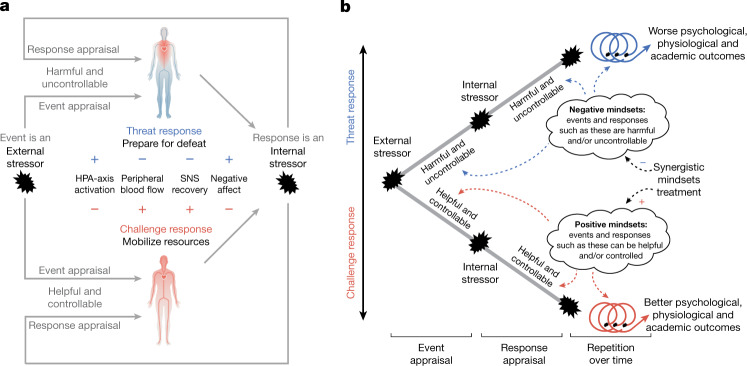
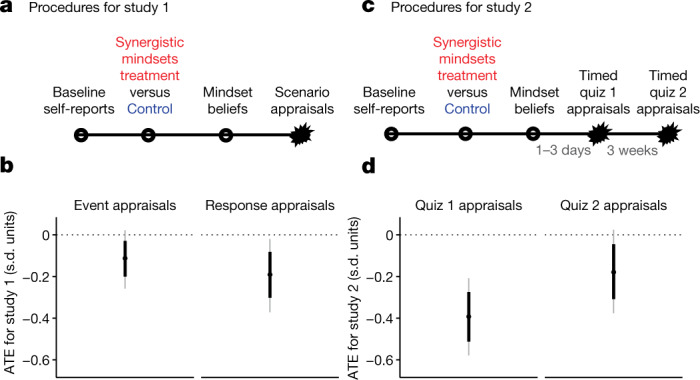
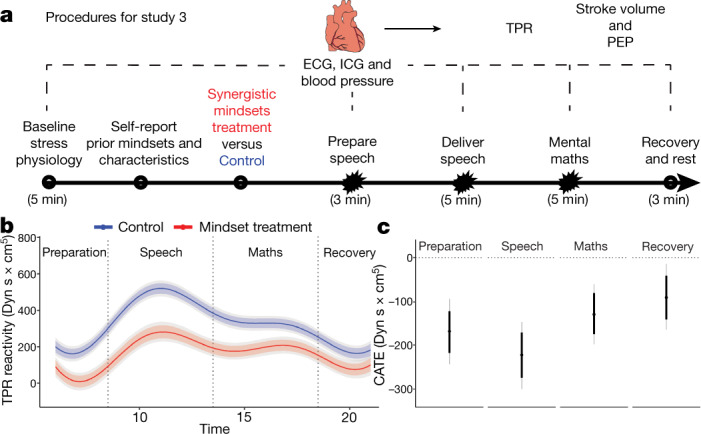
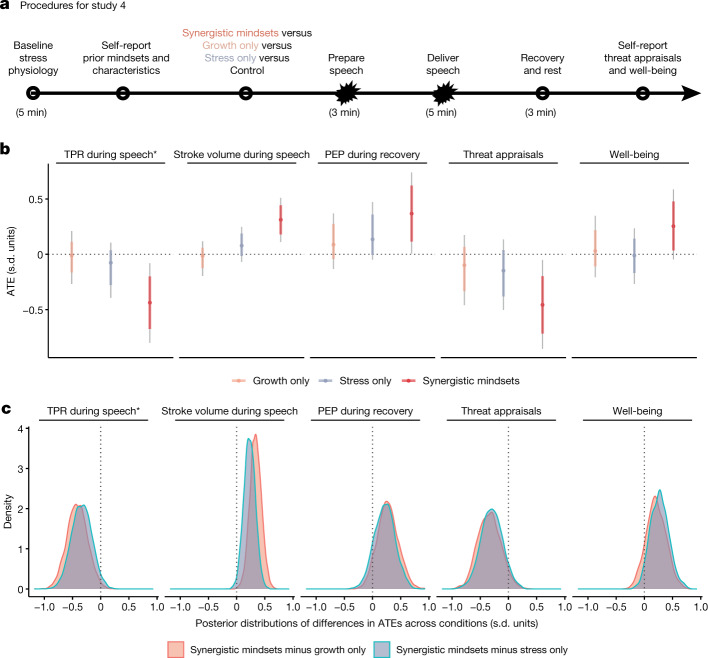
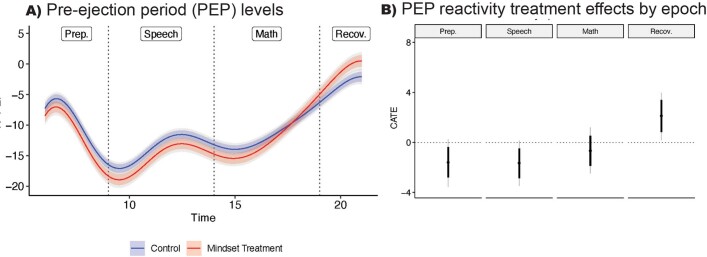
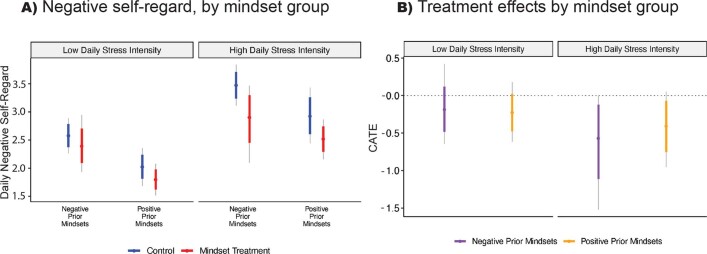
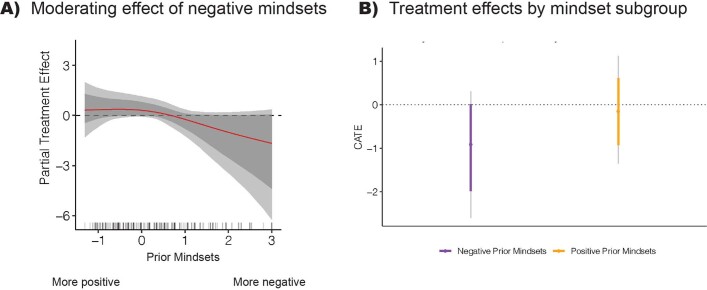
Social-evaluative stressors—experiences in which people feel they could be judged negatively—pose a major threat to adolescent mental health 1–3 and can cause young people to disengage from stressful pursuits, resulting in missed opportunities to acquire valuable skills. Here we show that replicable benefits for the stress responses of adolescents can be achieved with a short (around 30-min), scalable 'synergistic mindsets' intervention. This intervention, which is a self-administered online training module, synergistically targets both growth mindsets 4 (the idea that intelligence can be developed) and stress-can-be-enhancing mindsets 5 (the idea that one’s physiological stress response can fuel optimal performance). In six double-blind, randomized, controlled experiments that were conducted with secondary and post-secondary students in the United States, the synergistic mindsets intervention improved stress-related cognitions (study 1, n = 2,717; study 2, n = 755), cardiovascular reactivity (study 3, n = 160; study 4, n = 200), daily cortisol levels (study 5, n = 118 students, n = 1,213 observations), psychological well-being (studies 4 and 5), academic success (study 5) and anxiety symptoms during the 2020 COVID-19 lockdowns (study 6, n = 341). Heterogeneity analyses (studies 3, 5 and 6) and a four-cell experiment (study 4) showed that the benefits of the intervention depended on addressing both mindsets—growth and stress—synergistically. Confidence in these conclusions comes from a conservative, Bayesian machine-learning statistical method for detecting heterogeneous effects 6 . Thus, our research has identified a treatment for adolescent stress that could, in principle, be scaled nationally at low cost.
Overview
The claims and statistics of this paper haven’t been checked yet.
Free: it reads the open-access text and checks the first 5 claims that cite a source we can check. Create a free account to check every claim.
Integrity signals
Registry
Cites
Statistics
Figures
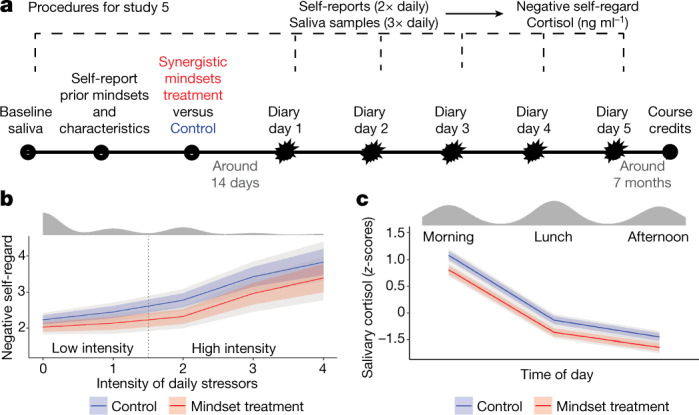
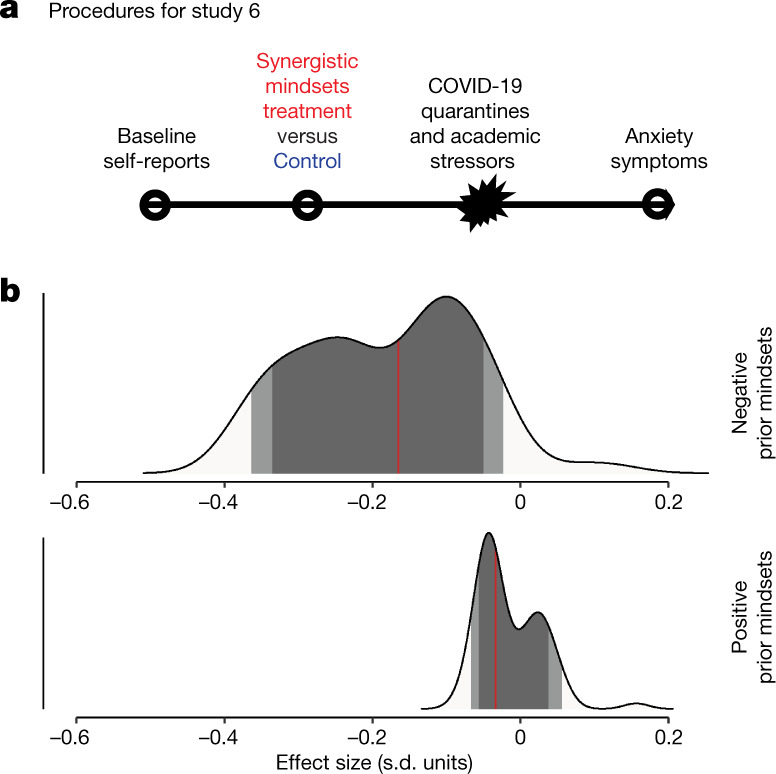
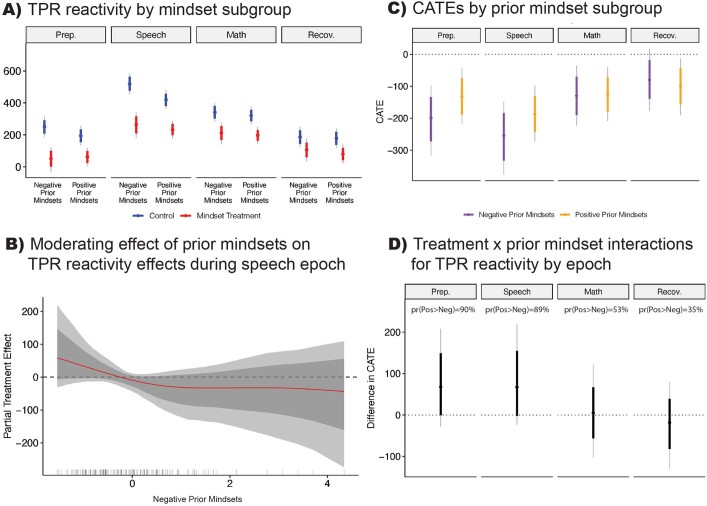
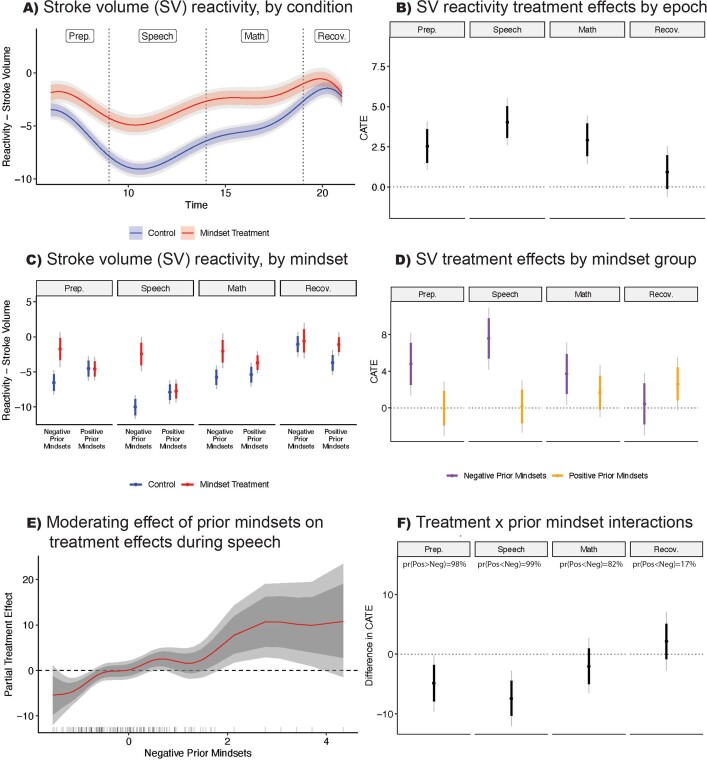
Verification
Claims the paper makes
The claims and statistics of this paper haven’t been checked yet.
Free: it reads the open-access text and checks the first 5 claims that cite a source we can check. Create a free account to check every claim.
Claims other papers make about this one
Each is checked against this paper’s own text: does it say what the citing paper says it does?
The cited source says what the claim attributes to it.
In the citing paper
“Several studies reported reduced anxiety [19,47,54,55,59-62,66-68].”
The cited source says what the claim attributes to it.
In the citing paper
“The impact on anxiety was more prominent in some studies for the treatment group than for the control group [19,59-61,66,68].”
The cited source says what the claim attributes to it.
In the citing paper
“Several studies found increased well-being [47,57,60,65,67,68].”
The cited source says what the claim attributes to it.
In the citing paper
“Furthermore, synergistic mindset interventions more effectively promote adolescent mental health than each individual component (Yeager et al., 2022).”
From A single session online training reduces intolerance of uncertainty and improves mental health in emerging adults. (2025) · cites this paper as Yeager et al., 2022
Self-check
Percentages, sums and reported differences re-computed from the paper’s own numbers.
The self-check needs the paper’s full text.
Citations
Cites
A Brief Measure for Assessing Generalized Anxiety Disorder: The GAD-7
Spitzer, R. L., Kroenke, K., Williams, J. B. W., & Löwe, B. (2006) · Archives of Internal Medicine · doi:10.1001/archinte.166.10.1092 · Cited by 31,765
Journal of personality and social psychology
Armstrong, J. S. (1988) · International Journal of Forecasting · doi:10.1016/0169-2070(88)90126-4 · Cited by 10,485
The American Psychological Association
Langfeld, H. S. (1919) · Science · doi:10.1126/science.49.1254.51 · Cited by 7,475
Kirschbaum, C., Pirke, K.-M., & Hellhammer, D. H. (2008) · Neuropsychobiology · doi:10.1159/000119004 · Cited by 6,093
Dickerson, S. S., & Kemeny, M. E. (2004) · Psychological Bulletin · doi:10.1037/0033-2909.130.3.355 · Cited by 5,881
Emotion regulation: current status and future prospects
Gross, J. J. (2015) · Psychological Inquiry · doi:10.1080/1047840x.2014.940781 · Cited by 5,229
Self-citationOur future: a Lancet commission on adolescent health and wellbeing
Patton, G. C., Sawyer, S. M., Santelli, J. S., Ross, D. A., Afifi, R., Allen, N. B., Arora, M., Azzopardi, P., Baldwin, W., Bonell, C., et al. (2016) · The Lancet · doi:10.1016/s0140-6736(16)00579-1 · Cited by 3,785
Understanding adolescence as a period of social–affective engagement and goal flexibility
Crone, E. A., & Dahl, R. E. (2012) · Nature Reviews Neuroscience · doi:10.1038/nrn3313 · Cited by 2,507
Thapar, A., Collishaw, S., Pine, D. S., & Thapar, A. K. (2012) · The Lancet · doi:10.1016/s0140-6736(11)60871-4 · Cited by 2,365
Yeager, D. S., & Dweck, C. S. (2012) · Educational Psychologist · doi:10.1080/00461520.2012.722805 · Cited by 2,334
Self-citation
Research works printed but not linked: 4
- American Psychological Association. Stress in America 2021: One Year Later, a New Wave of Pandemic Health Concerns. American Psychological Association https://www.apa.org/news/press/releases/stress/2021/one-year-pandemic-stress (2021).
- Pope, D. C. Doing School: How We Are Creating a Generation of Stressed-Out, Materialistic, and Miseducated Students (Yale University Press, 2001).
- Blascovich, J. & Mendes, W. B. in Handbook of Social Psychology (eds Fiske, S. T., Gilbert, D. T. & Lindzey, G.) 194–227 (John Wiley & Sons, 2010).
- Grant, K. E. et al. in Handbook of Developmental Psychopathology (eds Lewis, M. & Rudolph, K. D.) 205–223 (Springer, 2014).
Cited by
Using large language models in psychology
Demszky, D., Yang, D., Yeager, D. S., Bryan, C. J., Clapper, M., Chandhok, S., Eichstaedt, J. C., Hecht, C., Jamieson, J., Johnson, M., et al. (2023) · Nature Reviews Psychology · doi:10.1038/s44159-023-00241-5 · Cited by 369
“However they are generally not what research on stress shows is helpful or what might be most appropriate given the context 21,22 .”
BackgroundSelf-citationSocial media mindsets: a new approach to understanding social media use and psychological well-being
Lee, A. Y., & Hancock, J. T. (2023) · Journal of Computer-Mediated Communication · doi:10.1093/jcmc/zmad048 · Cited by 82
The Future of Emotion Regulation Research: Broadening Our Field of View
Petrova, K., & Gross, J. J. (2023) · Affective Science · doi:10.1007/s42761-023-00222-0 · Cited by 107
“…viewing a bad grade on an exam as a result of “ simply not being a math person” may help alleviate negative emotions in the moment but come at the steep cost of reduced motivation, poorer academic performance, and lower well-being later down the line (Jamieson et al., 2022; Yeager et al., 2022).”
Self-citationThurik, R., Benzari, A., Fisch, C. O., Mukerjee, J., & Torrès, O. (2023) · Entrepreneurship and Regional Development · doi:10.1080/08985626.2023.2165713 · Cited by 79
“Moreover, given that ICT induced stress is probably not different from generic stress, mindset training and intervention may prove helpful (Yeager et al. 2022). burnout (Benzari et al. 2022).”
BackgroundZhao, S., Zhang, Y., Cheng, Y., Zhang, H., Xie, M., Chen, P., & Lin, D. (2023) · Journal of Youth and Adolescence · doi:10.1007/s10964-023-01788-5 · Cited by 82
“gleaned from a recent intervention study (Yeager et al., 2022), which found that a synergistic mindset intervention”
BackgroundDifferent components of cognitive-behavioral therapy affect specific cognitive mechanisms
Norbury, A., Hauser, T. U., Fleming, S. M., Dolan, R. J., & Huys, Q. J. M. (2024) · Science Advances · doi:10.1126/sciadv.adk3222 · Cited by 88
“Interventions Taking inspiration from materials described in ( 89 ), both restructuring and control interventions were in the form of a series of interactive worksheets, requiring participants to select answers from multiple potential options during worked examples, and provide input based on…”
Fischer-Grote, L., Fössing, V., Aigner, M., Fehrmann, E., & Boeckle, M. (2024) · JMIR Mental Health · doi:10.2196/46637 · Cited by 42
“An 8-week self-program with lectures and videos was delivered as an intervention by Krifa et al [68], and Yeager et al [60] used self-administered online training to reduce stress-related symptoms.”
BackgroundMethodResultInfluentialWhat doesn’t kill us makes us stronger: insights from neuroscience studies and molecular genetics
Gan, Y., Huang, H., Xue-bing, W., & Meng, M. (2024) · Current Opinion in Behavioral Sciences · doi:10.1016/j.cobeha.2024.101431 · Cited by 51
Yan, J., Tian, L., & Lou, N. M. (2024) · System · doi:10.1016/j.system.2024.103519 · Cited by 60
Reappraisal and mindset interventions on pressurised esport performance
Sharpe, B. T., Leis, O., Moore, L. J., Sharpe, A. T. R., Seymour, S., Obine, E. A. C., & Poulus, D. (2024) · Applied Psychology · doi:10.1111/apps.12544 · Cited by 44
The psychology of esports: Trends, challenges, and future directions
Pedraza-Ramirez, I., Sharpe, B. T., Behnke, M., Toth, A. J., & Poulus, D. (2025) · Psychology of sport and exercise · doi:10.1016/j.psychsport.2025.102967 · Cited by 54
Evidence-based education: Objections and future directions
Dekker, I., & Meeter, M. (2022) · Frontiers in Education · doi:10.3389/feduc.2022.941410 · Cited by 59
Bosshard, M., & Gomez, P. (2024) · Scientific Reports · doi:10.1038/s41598-024-58408-w · Cited by 40
“Further, performance enhancing effects in academics were only achieved by combining SIE mindset interventions with other content, such as imagery exercise 48 or growth mindset about abilities/intelligence 49 .”
Mindsets and adolescent mental health
Yeager, D. S., & Dweck, C. S. (2023) · Nature Mental Health · doi:10.1038/s44220-022-00009-5 · Cited by 33
Self-citationThe computational structure of consummatory anhedonia
Hall, A., Browning, M. D., & Huys, Q. J. M. (2024) · Trends in Cognitive Sciences · doi:10.1016/j.tics.2024.01.006 · Cited by 32
Mansell, P. C., Sparks, K. V., Wright, J. L., Roe, L., Carrington, S., Lock, J., & Slater, M. (2023) · Journal of Applied Sport Psychology · doi:10.1080/10413200.2023.2296900 · Cited by 33
“Accordingly, individuals are often instructed to reduce or avoid stress which may perpetuate the notion that stress is a wholly negative construct (Yeager et al., 2022).”
BackgroundHarnessing growth mindsets to help individuals flourish
Burnette, J. L., Billingsley, J., & Hoyt, C. L. (2022) · Social and Personality Psychology Compass · doi:10.1111/spc3.12657 · Cited by 27
Chen, L., Chang, H., Rudoler, J., Arnardóttir, E., Zhang, Y., Angeles, C. D. L., & Menon, V. (2022) · npj Science of Learning · doi:10.1038/s41539-022-00146-7 · Cited by 40
“More generally, our fi ndings may inform evidence-based growth mindset interventions based on notions of brain plasticity 5,7,49 .”
Benneker, I. M. B., Lee, N. C., & van Atteveldt, N. (2023) · npj Science of Learning · doi:10.1038/s41539-023-00153-2 · Cited by 33
Janssen, T. W. P., & van Atteveldt, N. (2023) · Scientific Reports · doi:10.1038/s41598-023-33392-9 · Cited by 37
Longtermist Education Interventions Increase Concern for and Action to Protect Future Generations
Syropoulos, S., Law, K. F., & Young, L. (2024) · Social Psychological and Personality Science · doi:10.1177/19485506241228465 · Cited by 30
“…to implement across vast populations to robustly influence outcomes such as mental health symptoms during the COVID-19 pandemic (Rizvi et al., 2022; Yeager et al., 2022), climate change attitudes and beliefs (Ranney & Clark, 2016), reduced infection rates for sexually transmitted diseases (Warner…”
BackgroundThe missing hallmark of health: psychosocial adaptation
López-Otín, C., & Kroemer, G. (2024) · Cell Stress · doi:10.15698/cst2024.03.294 · Cited by 32
Chen, J., & Liu, C. (2023) · Frontiers in Psychology · doi:10.3389/fpsyg.2023.1110944 · Cited by 31
Learning to embrace one’s stress: the selective effects of short videos on youth’s stress mindsets
Journault, A., Cernik, R., Charbonneau, S., Sauvageau, C., Giguère, C., Jamieson, J. P., Plante, I., Geoffrion, S., & LUPIEN, S. J. (2023) · Anxiety Stress & Coping · doi:10.1080/10615806.2023.2234309 · Cited by 24
“In the same vein, Yeager et al. (2022) demonstrated similar results, notably when testing high school students in classroom settings.”
BackgroundMethodResultInfluentialSelf-citationHecht, C. A., Gosling, S. D., Bryan, C. J., Jamieson, J. P., Murray, J. S., & Yeager, D. S. (2023) · JCPP Advances · doi:10.1002/jcv2.12191 · Cited by 27
“The synergistic mindsets intervention is a preventative treatment that has been found to improve stress ‐ related mental health outcomes among adolescents and young adults (Yeager, Bryan, et al., 2022).”
BackgroundMethodResultInfluentialSelf-citationMcLoughlin, E., Arnold, R., & Moore, L. J. (2023) · Stress and Health · doi:10.1002/smi.3358 · Cited by 31
Zeijen, M. E. L., Brenninkmeijer, V., Peeters, M. C. W., & Mastenbroek, N. J. J. M. (2024) · The Spanish Journal of Psychology · doi:10.1017/sjp.2024.10 · Cited by 32
“However, there are also studies that suggest that personal resources play a crucial role in shaping students ’ understanding, interpretation, and response to their environment (Llorens et al., 2007, Yeager et al., 2022).”
BackgroundBosshard, M., Schmitz, F., Guttormsen, S., Nater, U. M., Gomez, P., & Berendonk, C. (2023) · BMC Psychology · doi:10.1186/s40359-023-01167-6 · Cited by 35
“Stress arousal reappraisal The content of the stress arousal reappraisal intervention is adapted from previous research [47, 61, 62, 69, 87, 99] and presented in the form of a 7-minute screencast using illustrations and voice-over.”
MethodCultivating emotional resilience in adolescent girls: Effects of a growth emotion mindset lesson
Rudolph, K. D., Troop‐Gordon, W., Skymba, H. V., Modi, H. H., Ye, Z., Clapham, R. B., Dodson, J., Finnegan, M. K., & Heller, W. (2025) · Child Development · doi:10.1111/cdev.14175 · Cited by 24
“Fourth, recent research suggests that combining mindset interventions with those that focus on the enhancing effects of failure or stress may be more effective than those focused on mindsets alone (e.g., Schleider & Weisz, 2018a; Yeager et al., 2022), suggesting one potential adjunctive component.”
Motivational Dynamics of Self-Control
Werner, K. M., & Berkman, E. T. (2024) · Current Opinion in Psychology · doi:10.1016/j.copsyc.2024.101859 · Cited by 23
I CAN Intervention to Increase Grit and Self-Efficacy: A Pilot Study
Sigmundsson, H., & Hauge, H. (2023) · Brain Sciences · doi:10.3390/brainsci14010033 · Cited by 27
“A more recent Mindset intervention, which combined a growth Mindset approach with a “stress as adaptive” protocol, also yielded promising results [14].”
Reinventing mental health care in youth through mobile approaches: Current status and future steps
Marciano, L., & Saboor, S. (2023) · Frontiers in Psychology · doi:10.3389/fpsyg.2023.1126015 · Cited by 21
“The use of these techniques is in line with a recent synergistic mindsets approach which proved to be effective in diminishing adolescents’ stress (Yeager et al., 2022).”
MethodEmirza, S., & Kozcu, G. Y. (2023) · Nursing and Health Sciences · doi:10.1111/nhs.13018 · Cited by 22
The role of stress mindset and academic buoyancy in school burnout in middle adolescence
Lakkavaara, A., Upadyaya, K., Tang, X., & Salmela‐Aro, K. (2024) · European Journal of Developmental Psychology · doi:10.1080/17405629.2024.2382398 · Cited by 26
“The results of this study support the findings that synergistic mindset interventions may have promising effects on adolescent stress (Yeager et al., 2022).”
Kyler, E. N., & Moscicki, M. K. (2024) · Social and Personality Psychology Compass · doi:10.1111/spc3.70015 · Cited by 31
“In Yeager et al.’s (2022) study, they used messaging about two different mindsets; however, these mindsets address different facets (malleability and enhancing vs. debilitating).”
InfluentialDorie, V., Perrett, G., Hill, J., & Goodrich, B. (2022) · Entropy · doi:10.3390/e24121782 · Cited by 37
Journault, A., Plante, I., Charbonneau, S., Sauvageau, C., Longpré, C., Giguère, C., Labonté, C., Roger, K., Cernik, R., Chaffee, K. E., et al. (2022) · Frontiers in Psychology · doi:10.3389/fpsyg.2022.1035494 · Cited by 22
“This speaks to the common misleading mindset that “stress and anxiety should be avoided at all costs” (Pope, 2003; Yeager et al., 2022) that might condition some students to perceive their bodily manifestations of anxiety as threats (anxiety sensitivity).”
BackgroundResultThe Effect of Mindset Interventions on Stress and Academic Motivation in College Students
Meyer, H. H., & Stutts, L. A. (2024) · Innovative Higher Education · doi:10.1007/s10755-024-09706-8 · Cited by 41
“Second, we assessed the efficacy of a shorter and simpler intervention (5 to 10 min) than was used previously (Yeager et al., 2022), which could make the intervention even more accessible for students.”
InfluentialNieuwenhuis, S., van der Mee, D. J., Janssen, T. W. P., Verstraete, L. L. L., Meeter, M., & van Atteveldt, N. (2023) · Frontiers in Psychology · doi:10.3389/fpsyg.2023.1176477 · Cited by 24
“To tackle the third point, a stronger stress paradigm should be used, such as a social evaluative stressor (Yeager et al., 2022).”
BackgroundA review of music performance anxiety in the lens of stress models
Twitchell, A., Journault, A., Singh, K. K., & Jamieson, J. (2025) · Frontiers in Psychology · doi:10.3389/fpsyg.2025.1576391 · Cited by 16
“Individuals who respond with an optimized challenge-type stress response engage with and respond to future stressors more adaptively in a self-reinforcing, positive recursive feedback cycle that results in improved outcomes (from Yeager et al., 2022).”
InfluentialSelf-citationLaMontagne, L. G., Doty, J. L., Diehl, D. C., Nesbit, T. S., Gage, N. A., Kumbkarni, N., & Leon, S. P. (2024) · Journal of Affective Disorders · doi:10.1016/j.jad.2024.09.014 · Cited by 13
Using Reappraisal to Improve Outcomes for STEM Teachers and Students
Cohen, L. D., Gross, J. J., & Rubinsten, O. (2023) · Journal of Cognition · doi:10.5334/joc.313 · Cited by 16
Self-citationApplying a synergistic mindsets intervention to an esports context
Behnke, M., Lakens, D., Petrova, K., Chwiłkowska, P., Jęśko-Białek, S., Kłoskowski, M., Krzyżaniak, W. L., Maciejewski, P. A., Kaczmarek, L. D., Szymański, K., et al. (2024) · Royal Society Open Science · doi:10.1098/rsos.240691 · Cited by 17
“These observations motivated us to use a novel double-barrel-led approach called the synergistic mindsets intervention (SMI) that targets both situational and bodily reappraisals to achieve the best results [9].”
BackgroundMethodResultInfluentialSelf-citationBeyond intelligence: Exploring the role of growth mindsets in the domain of social–emotional skills
Zhang, J., Wang, F., & King, R. B. (2025) · British Journal of Educational Psychology · doi:10.1111/bjep.70037 · Cited by 17
“More recently, Yeager et al. (2022) found that a stress mindset had a larger effect on stress than an intelligence mindset.”
InfluentialA single‐session growth mindset intervention among Chinese junior secondary school students
Cheng, Y., Zhao, S., Jin, L., Wang, Y., & Lin, D. (2024) · Applied Psychology Health and Well-Being · doi:10.1111/aphw.12596 · Cited by 14
Sustaining growth needs contextual supports: The mindset × ecological-system approach to motivation
Lou, N. M. (2025) · Studies in Second Language Learning and Teaching · doi:10.14746/ssllt.48250 · Cited by 21
Jia, X., Li, P., & Li, W. (2025) · Journal of Intelligence · doi:10.3390/jintelligence13030027 · Cited by 13
“Practically, as growth mindset interventions have been popularized through multiple avenues, particularly in the learning area (Blackwell et al. 2007; Yeager et al. 2022), future creativity education could perhaps focus on shaping individuals’ growth -oriented creative mindset.”
Laferton, J. A. C., Bartsch, L. M., Möschinger, T., Baldelli, L., Frick, S., Breitenstein, C. J., Zueger, R., Annen, H., & Fischer, S. (2023) · Psychoneuroendocrinology · doi:10.1016/j.psyneuen.2023.106091 · Cited by 12
Current and Future Approaches to Pediatric Anxiety Disorder Treatment
Zugman, A., Winkler, A. M., Qamar, P., & Pine, D. S. (2024) · American Journal of Psychiatry · doi:10.1176/appi.ajp.20231037 · Cited by 16
The secret language of peers: How peer behaviours signal mindset and influence classroom experiences
Seo, E., Lee, S. Y., Muenks, K. M., & Yan, Y. (2025) · British Journal of Educational Psychology · doi:10.1111/bjep.12759 · Cited by 15
“Many studies have focused on the impact of teachers' mindsets, students' perceptions of teachers' mind-sets, and teachers' mindset-relevant practices in secondary school and university settings (e.g., Muenks et al., 2020; Seo & Lee, 2021; Yeager et al., 2022).”
Chiu, C., Tong, Y., Lee, S.-L., & Chan, H. (2023) · Journal of Pacific Rim Psychology · doi:10.1177/18344909231166106 · Cited by 11
“Subsequent intervention studies have provided evidence for the bene fi cial effects of growth mindset interventions on students ’ academic engagement and social-emotional well-being (Burnette et al., 2022; Tipton et al., 2022; Yeager et al., 2022; Xia et al., 2022).”
BackgroundThe competitive esports physiological, affective, and video dataset
Behnke, M., Krzyżaniak, W. L., Nowak, J. A., Kupiński, S., Chwiłkowska, P., Jęśko-Białek, S., Kłoskowski, M., Maciejewski, P. A., Szymański, K., Lakens, D., et al. (2025) · Scientific Data · doi:10.1038/s41597-024-04364-z · Cited by 12
Self-citationBertollo, A. G., Braga, G. D. C., Tonin, P. T., Luzardo, A. R., Bagatini, M. D., & Ignácio, Z. M. (2023) · Brain Sciences · doi:10.3390/brainsci13101414 · Cited by 13
“…focused on improving resilience and well-being significantly protected stress levels and enhanced physiological outcomes, reducing cortisol, heart rate, blood pressure, and psychological consequences, demonstrating improved self-perception and a better ability to deal with stressful situations [68].”
BackgroundSigmundsson, H., Hauge, H., Leversen, J. S. R., & Haga, M. (2024) · Frontiers in Education · doi:10.3389/feduc.2024.1438280 · Cited by 14
Li, T., Guan, J., Huang, Y., & Jin, X. (2025) · Behavioral Sciences · doi:10.3390/bs15030266 · Cited by 16
“Existing studies show that growth mindset interventions can reduce adolescents’ neg‑ ative evaluations of stress (Yeager et al., 2022).”
Flower-like GO-MoS2 SERS platform for sensitive quantification of cortisol
Yu, W., Xu, X., & Zheng, T. (2025) · Moore and More · doi:10.1007/s44275-024-00024-x · Cited by 10
Petri‐Romão, P., Mediavilla, R., Restrepo, A., Puhlmann, L. M. C., Zerban, M., Ahrens, K. F., Barbui, C., Basten, U., Bayón, C., Chmitorz, A., et al. (2025) · Nature Communications · doi:10.1038/s41467-025-65147-7 · Cited by 18
“If the authors have done this (I can't seem to find it), I would be happy to receive it from the editorial office, and then I can judge whether I'm satisfied with the revision.”
Xu, G., Haratyan, F., & Tian, H. (2026) · Frontiers in Psychology · doi:10.3389/fpsyg.2025.1715266 · Cited by 50
Digital Single-Session Interventions for Child and Adolescent Mental Health
Ghosh, A., McDanal, R., & Schleider, J. L. (2023) · Advances in Psychiatry and Behavioral Health · doi:10.1016/j.ypsc.2023.03.016 · Cited by 13
Gu, J., & Wang, J. (2023) · Current Psychology · doi:10.1007/s12144-023-05321-6 · Cited by 10
Chan, E. S. M., Dvorsky, M. R., Green, C. D., Breaux, R., Becker, S. P., & Langberg, J. M. (2024) · Child Psychiatry & Human Development · doi:10.1007/s10578-024-01704-3 · Cited by 14
Ma, Q., & Xie, Y. (2024) · Behavioral Sciences · doi:10.3390/bs14070600 · Cited by 13
“By implementing interventions, participants may realize that they can leverage the stress response for positive outcomes [75,76].”
BackgroundHase, A., Nietschke, M., Kłoskowski, M., Szymański, K., Moore, L. J., Jamieson, J. P., & Behnke, M. (2025) · EXCLI journal · doi:10.17179/excli2024-7995 · Cited by 22
“…worth mentioning that some of the recent studies have already implemented these recommendations; that is, they were preregis-tered and involved open data sharing (Boss-hard et al., 2023; Guyon et al., 2020; Yeager et al., 2022) or tried to replicate prior research (e.g., Jewiss et al., 2023; 2024).”
InfluentialSelf-citationZsila, Á., Aruguete, M. S., Shabahang, R., & Orosz, G. (2022) · Personality and Individual Differences · doi:10.1016/j.paid.2022.111996 · Cited by 11
Hadipour, M., Meftahi, G. H., & Jahromi, G. P. (2023) · Synapse · doi:10.1002/syn.22278 · Cited by 8
Exploring the Unexplored: Worry as a Catalyst for Exploratory Behavior in Anxiety and DepressionPreprint
Witte, K., Wise, T., Huys, Q. J. M., & Schulz, E. (2024) · PsyArXiv (OSF Preprints) · doi:10.31234/osf.io/td8xh · Cited by 13
Liu, J., Hu, J., Qi, Y., Wu, X., & Gan, Y. (2025) · Journal of Anxiety Disorders · doi:10.1016/j.janxdis.2024.102964 · Cited by 10
Balancing expectancies: academic stress and coping in teacher education
Blindheim, S., Eriksen, H. R., & Johnsen, T. L. (2025) · Journal of Further and Higher Education · doi:10.1080/0309877x.2025.2539881 · Cited by 19
“This dual role aligns with research suggesting that, although stress can be uncomfortable, perceiving it as facilitative may improve academic performance and adaptive responses (Jamieson et al. 2022; Yeager et al. 2022).”
Schweizer, S., Leung, J. T., Trender, W. R., Kievit, R., Hampshire, A., & Blakemore, S. (2023) · Psychological Medicine · doi:10.1017/s0033291723002167 · Cited by 9
“The incentives are not limited to monetary incentives or other rewards, instead the relative value of ‘ training ’ can be increased by changing adolescents ’ mindset about the benefits of a specific training regime (Yeager et al., 2022).”
BackgroundExploring a Gaming-Based Intervention for Unemployed Young Adults: Thematic Analysis
Straand, I. J., Følstad, A., & Bjørnestad, J. R. (2024) · JMIR Human Factors · doi:10.2196/44423 · Cited by 9
“We added selected parts of cognitive behavioral therapy [75], specifically management of negative emotions, panic, and anxiety, to offer a more productive interpretation of stressors [76] that may occur during job search adversity [77,78].”
BackgroundLongtermist Education Interventions Increase Concern for and Action to Protect Future GenerationsPreprint
Syropoulos, S., Law, K. F., & Young, L. (2023) · doi:10.31234/osf.io/9t3gb · Cited by 7
A Metaanalysis of the relationship between growth mindset and mental health in Chinese samples
Yang, X., Yang, J., Jia, T., Wang, L., & Zhang, J. (2024) · Acta Psychologica · doi:10.1016/j.actpsy.2024.104578 · Cited by 12
da Silva, F. C., Souza‐Talarico, J. N., de Souza, T. P. B., Kuba, G., & Turrini, R. N. T. (2025) · Nursing Open · doi:10.1002/nop2.70268 · Cited by 11
Qian, Y., & Lou, H. (2025) · BMC Public Health · doi:10.1186/s12889-025-24604-0 · Cited by 7
“In addition, the COVID-19 pandemic has created intense and unrelenting stress in the form of social isolation and uncertainty about the future for adolescents [4].”
Chen, W., & Dang, J. (2026) · Frontiers in Psychology · doi:10.3389/fpsyg.2025.1736421 · Cited by 8
Laferton, J. A. C., Schiller, S., Conrad, D., Fischer, D., & Zimmermann‐Viehoff, F. (2024) · Stress and Health · doi:10.1002/smi.3410 · Cited by 9
Lou, N. M., & Noels, K. A. (2024) · International Journal of Intercultural Relations · doi:10.1016/j.ijintrel.2024.101990 · Cited by 9
Chang, S., Zhang, Y., Wang, C. H., Xu, F., Huang, Y., & Xin, S. (2024) · Psychology Research and Behavior Management · doi:10.2147/prbm.s462230 · Cited by 11
“34 Moreover, mindsets impact the stress response.”
Different components of cognitive-behavioural therapy affect specific cognitive mechanismsPreprint
Norbury, A., Hauser, T. U., Fleming, S. M., Dolan, R. J., & Huys, Q. J. M. (2023) · doi:10.31234/osf.io/ydct5 · Cited by 6
Shao, S., Zhang, Y., Yang, M., Li, C., Zhao, R., Liu, Z., Wu, M., Liu, Y., Zhu, Z., & Cui, L. (2024) · Journal of School Psychology · doi:10.1016/j.jsp.2024.101357 · Cited by 6
Bakås, S. H., Woźniak, M. P., Herstad, J., Woźniak, P. W., & Niess, J. (2025) · CHI Conference on Human Factors in Computing Systems · doi:10.1145/3706598.3713174 · Cited by 7
Journault, A., Marotta, M. E., Hangen, E. J., Gravelding, H., Elliot, A. J., & Jamieson, J. P. (2025) · Psychoneuroendocrinology · doi:10.1016/j.psyneuen.2025.107544 · Cited by 5
Self-citationThe individual, relational and societal costs of striving to feel good
Ford, B. Q. (2025) · Nature Reviews Psychology · doi:10.1038/s44159-025-00476-4 · Cited by 6
“For example, teaching adolescents about the value of unpleasant emotions (for example, how feelings of stress can be motivating) predicted better outcomes (for example, better academic performance) compared with adolescents in a control condition 126,127 .”
Scafuto, F., Conversano, C., Presaghi, F., Santoni, G., Vaglini, I., Girardi, F., Matiz, A., & Crescentini, C. (2025) · Frontiers in Psychology · doi:10.3389/fpsyg.2025.1628048 · Cited by 6
Common and distinct neurofunctional signatures of dynamic naturalistic emotion regulation strategies
Jiang, H., He, J., Zimmermann, K., Zhou, X., Gan, X., Ferraro, S., Wang, L., Zhou, B., Li, L., Kendrick, K. M., et al. (2026) · Nature Communications · doi:10.1038/s41467-026-70708-5 · Cited by 15
Du, X., Bai, X., Liu, Y., & Yuan, S. (2022) · Current Psychology · doi:10.1007/s12144-022-04168-7 · Cited by 8
“…of role models, reading materials about the ability of the brain to grow, and so on) to increase the growth mindsets (Lewis et al., 2020; Yeager et al., 2019), positive emotions (Schlei-der et al., 2019, 2020, 2022), and academic performance (Rege et al., 2021; Yeager et al., 2022) of participants.”
BackgroundGrowth mindset and responses to acute stress
Fischer, E. R., Fox, C., & Yoon, K. L. (2023) · Cognition & Emotion · doi:10.1080/02699931.2023.2226856 · Cited by 7
“In contrast, recent intervention studies demonstrated that enhancing growth mindset, albeit not TEB mindsets, lowered stress responses (Yeager et al., 2022) and depressive and anxiety symptoms (Schleider et al., 2022), indicating that mindsets might play a causal role.”
BackgroundResultPeters, B. J., Overall, N. C., Gresham, A. M., Tudder, A., Chang, V. T., Reis, H. T., & Jamieson, J. P. (2024) · Affective Science · doi:10.1007/s42761-024-00235-3 · Cited by 7
“Moreover, this research takes an integrative approach to science whereby innovations emerge from bridging different areas rather than carving out new models/theories (e.g., Yeager et al., 2022).”
BackgroundSelf-citationJiang, X., Shen, R., & Zhang, K. (2024) · Current Psychology · doi:10.1007/s12144-024-07084-0 · Cited by 6
“Yeager et al. (2022) demonstrated that synergistic interventions combining growth mindset and positive stress reap - praisal enable adolescents to perceive stress responses as motivational rather than debilitating.”
Psychometric Properties of the Turkish Adaptation of Stress Mindset Measure
Türk, N., & ÇELİK, M. (2024) · Psikiyatride Guncel Yaklasimlar - Current Approaches in Psychiatry · doi:10.18863/pgy.1541853 · Cited by 8
Chen, T. T., Ching, B. H., Wu, H. X., & Li, X. Y. (2025) · Social Psychology of Education · doi:10.1007/s11218-025-10041-9 · Cited by 5
“First, school administrators might consider incorporating stress mindset interventions into regular instructional practices to help students better understand the dual nature of stress and its potential effects (Yeager et al., 2022).”
Mindsets of poverty: Implications for redistributive policy support
Hoyt, C. L., Burnette, J. L., Billingsley, J., Becker, W., & Babij, A. D. (2023) · Analyses of Social Issues and Public Policy · doi:10.1111/asap.12367 · Cited by 10
Jia, X., Li, P., Zhao, J., & Zhang, Y. (2023) · School Psychology International · doi:10.1177/01430343231216974 · Cited by 7
“Consistent with the “ mindset + supportive context ” hypothesis (Yeager et al., 2021, 2022), it is crucial for teachers to believe in the plasticity of their students ’ intelligence and to foster a growth-focused classroom culture.”
Zhang, J., Chen, D., Ying, J., Shen, Y., Zhan, S., Zhong, R., & You, J. (2024) · Suicide and Life-Threatening Behavior · doi:10.1111/sltb.13151 · Cited by 5
Hu, J., Liu, J., Meng, M., & Gan, Y. (2025) · Journal of Anxiety Disorders · doi:10.1016/j.janxdis.2025.102983 · Cited by 8
Self-esteem as a risk factor of anxiety in senior high school students
Pratama, Y. R., & Tjhin, P. (2024) · Universa Medicina · doi:10.18051/univmed.2024.v43.69-75 · Cited by 8
Pal, R., Gao, K., Li, X., Guragai, B., Li, T., Xie, Q., & Li, G. (2023) · Brain Behavior and Immunity Integrative · doi:10.1016/j.bbii.2023.100029 · Cited by 7
Zhang, J., Zheng, W., Hua, W., & Fu, M. (2023) · Current Psychology · doi:10.1007/s12144-023-05361-y · Cited by 4
“Additionally, previous intervention experiments 1 3 have demonstrated that stress-is-enhancing mindset could reduce anxiety symptoms during COVID-19 pandemic (Yeager et al., 2022).”
Jiang, H., He, J., Zimmermann, K., Zhou, X., Gan, X., Ferraro, S., Wang, L., Zhou, B., Li, L., Kendrick, K. M., et al. (2025) · medRxiv · doi:10.1101/2025.05.29.25328539 · Cited by 4
Klatzkin, R. R., Ward, Z., Parker, E., Gilstrap, E., Arkalgud, A., Babij, A. D., Pence, J., & Bloomer, R. J. (2025) · Physiology & Behavior · doi:10.1016/j.physbeh.2025.114910 · Cited by 3
Metadata
- Authors
- Yeager, D. S., Bryan, C. J., Gross, J. J., Murray, J. S., Krettek Cobb, D., H. F. Santos, P., Gravelding, H., Johnson, M., & Jamieson, J. P.
- Affiliations
- The University of Texas at Austin (US)
- Stanford University (US)
- University of Rochester (US)
- Corresponding author
- Bryan, Christopher J.
- ORCID
- Venue
- Nature
- Published
- 2022-07-06
- Volume
- 607
- Issue
- 7919
- Pages
- 512-520
- ISSN
- 0028-0836 (ISSN-L)
- 1476-4687
- PMC
- PMC9258473
- OpenAlex
- W4284675830
- Cited by
- 225
- References
- 75
- Citations by year
- 2026: 62 · 2025: 61 · 2024: 53 · 2023: 39 · 2022: 9
- FWCI
- 61.92
- Type
- journal article
- Language
- en
- Open access
- hybrid
- doi.org
- Licence
- cc-by
- creativecommons.org/licenses/by/4.0 (tdm)
- creativecommons.org/licenses/by/4.0 (vor)
- Locations
- Nature (publishedVersion, cc-by)
- Research Square (acceptedVersion, cc-by)
- PubMed Central (publishedVersion, cc-by)
- PubMed (publishedVersion)
- PubMed Central (submittedVersion, cc-by)
- RePEc: Research Papers in Economics (submittedVersion)
- Funders
- National Science Foundation (P2CHD042849, 1761179, 2046896)
- University of Rochester
- University of Texas at Austin (P2CHD042849)
- National Institutes of Health
- Eunice Kennedy Shriver National Institute of Child Health and Human Development (R01HD084772, P2CHD042849)
- Topics
- Social Sciences › Psychology › Developmental and Educational Psychology › Student Stress and Coping
- Social Sciences › Psychology › Experimental and Cognitive Psychology › Anxiety, Depression, Psychometrics, Treatment, Cognitive Processes
- Social Sciences › Psychology › Clinical Psychology › Mindfulness and Compassion Interventions
- Keywords
- growth mindset, social-evaluative stress, adolescent stress, stress response, cardiovascular reactivity, cortisol, psychological well-being, academic performance, anxiety, COVID-19 lockdown, treatment effect heterogeneity, Bayesian learning
About these checks
Registry, retraction, Cites and statistics results are computed, not judged, with one exception: a printed reference that no index lists is read once by a model before it counts as a citation error. Claims are extracted by a model and kept only when their quote appears verbatim in the text; each cited source is then checked, with a model’s help, for whether it says what the claim relies on. Those verdicts can be wrong — read the claim’s quote and the cited source before relying on one.
Statistics and arithmetic are recomputed, not judged.
Confidence bands are shown only for fields calibrated on our annotated test set. None is calibrated yet, so no band is shown.
What counts as a claim ›How we measure confidence ›How we check this ›
Are you an author, or do you see a problem with this page? Request a review
Data sources
Bibliographic data: Semantic Scholar, OpenAlex, Crossref.
Contains information from the Semantic Scholar Academic Graph Datasets, made available under the ODC Attribution License (ODC-BY 1.0).
Semantic Scholar’s data is described in: Kinney, R., et al. (2023). The Semantic Scholar Open Data Platform. arXiv:2301.10140.
