

Microbiota-derived 3-IAA influences chemotherapy efficacy in pancreatic cancer
Open accessThe DOI matches its Crossref record; 50 of the 51 references it cites were found in a registry or an index; 17 of the 41 sources its claims cite were checked for support.
Abstract
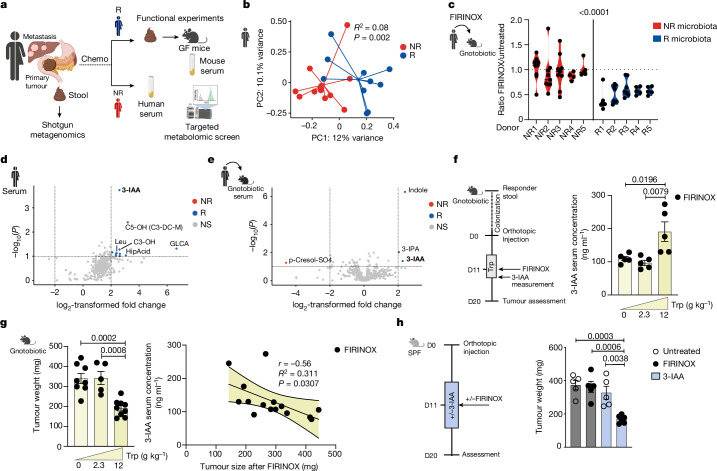
Pancreatic ductal adenocarcinoma (PDAC) is expected to be the second most deadly cancer by 2040, owing to the high incidence of metastatic disease and limited responses to treatment 1,2. Less than half of all patients respond to the primary treatment for PDAC, chemotherapy 3,4, and genetic alterations alone cannot explain this 5. Diet is an environmental factor that can influence the response to therapies, but its role in PDAC is unclear. Here, using shotgun metagenomic sequencing and metabolomic screening, we show that the microbiota-derived tryptophan metabolite indole-3-acetic acid (3-IAA) is enriched in patients who respond to treatment. Faecal microbiota transplantation, short-term dietary manipulation of tryptophan and oral 3-IAA administration increase the efficacy of chemotherapy in humanized gnotobiotic mouse models of PDAC. Using a combination of loss- and gain-of-function experiments, we show that the efficacy of 3-IAA and chemotherapy is licensed by neutrophil-derived myeloperoxidase. Myeloperoxidase oxidizes 3-IAA, which in combination with chemotherapy induces a downregulation of the reactive oxygen species (ROS)-degrading enzymes glutathione peroxidase 3 and glutathione peroxidase 7. All of this results in the accumulation of ROS and the downregulation of autophagy in cancer cells, which compromises their metabolic fitness and, ultimately, their proliferation. In humans, we observed a significant correlation between the levels of 3-IAA and the efficacy of therapy in two independent PDAC cohorts. In summary, we identify a microbiota-derived metabolite that has clinical implications in the treatment of PDAC, and provide a motivation for considering nutritional interventions during the treatment of patients with cancer.
Overview
CoChat Summary
TL;DR
Microbiota-derived tryptophan metabolite indole-3-acetic acid (3-IAA) is enriched in pancreatic ductal adenocarcinoma (PDAC) patients who respond to chemotherapy, and oral 3-IAA, dietary tryptophan, or faecal microbiota transplantation from responders improves chemotherapy efficacy in mouse PDAC models. The effect requires neutrophil-derived myeloperoxidase, which oxidizes 3-IAA, increases reactive oxygen species, downregulates GPX3/GPX7 and autophagy, and reduces tumour-cell proliferation.
Key findings
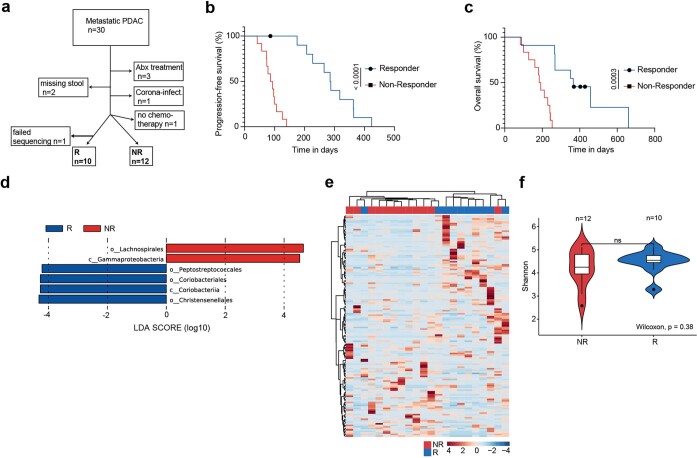
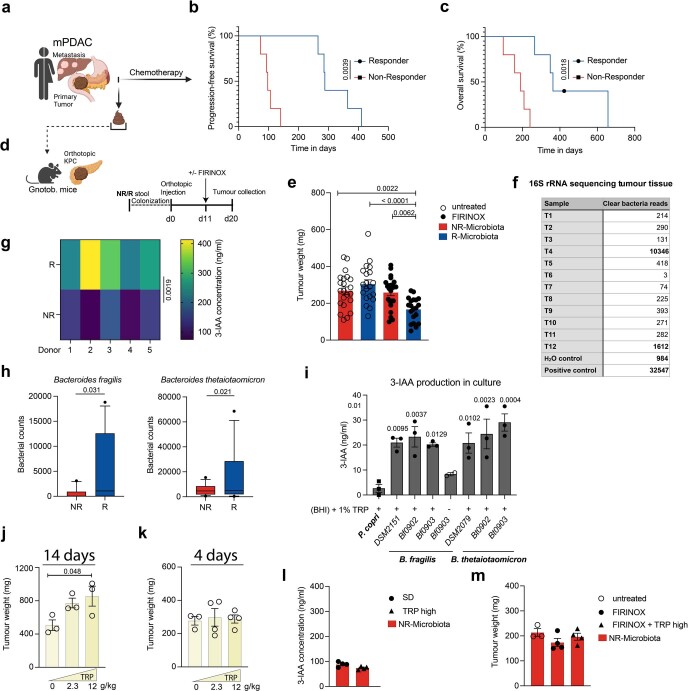
- In a metastatic PDAC cohort, responders had higher progression-free survival than non-responders (mean 40.9 weeks vs 12.8 weeks) and overall survival (51.9 weeks vs 26.4 weeks); 3-IAA was the most significantly enriched serum metabolite in responders versus non-responders.
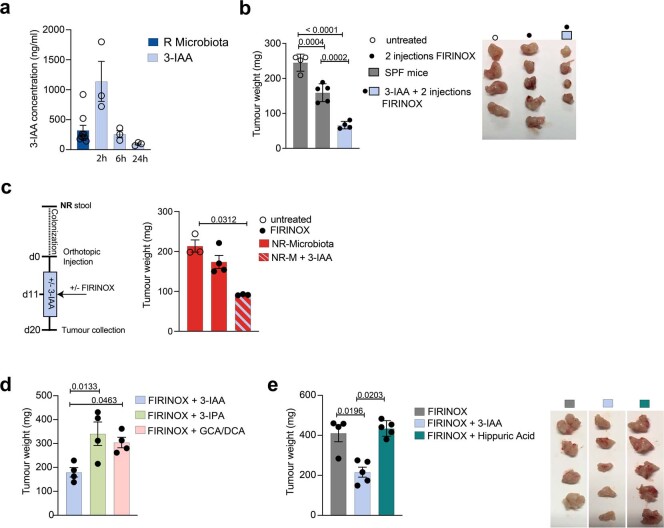
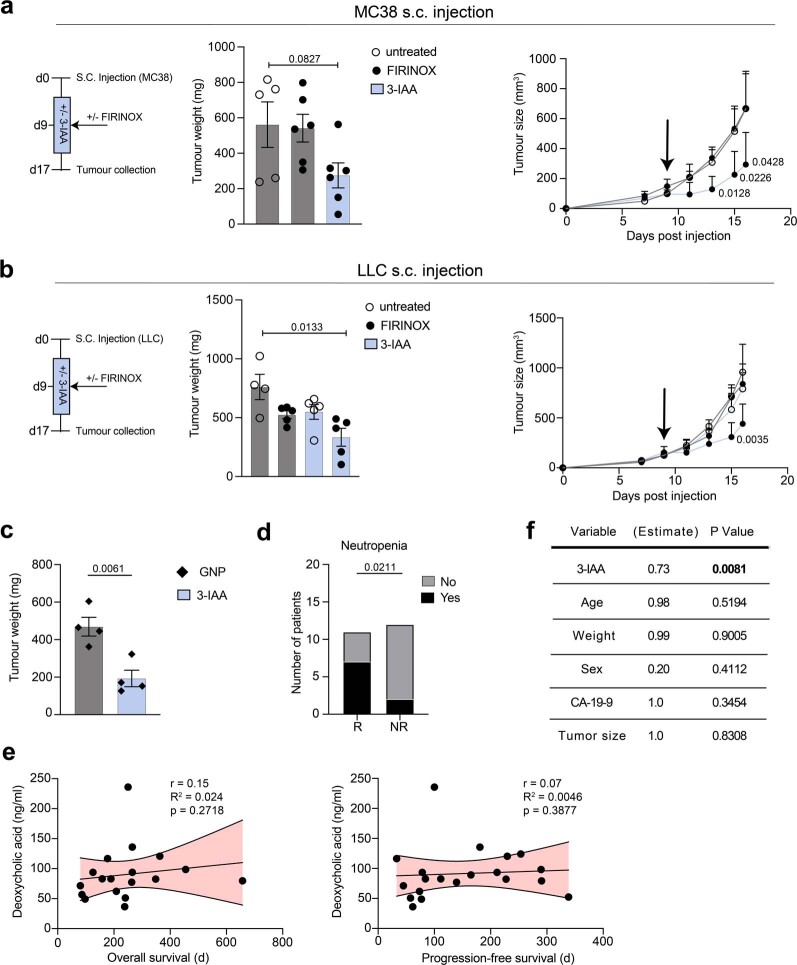
- Gnotobiotic mice colonized with responder microbiota had smaller tumours after FIRINOX than mice colonized with non-responder microbiota; four days of high-tryptophan diet increased serum 3-IAA and reduced tumour weight, and 3-IAA serum levels correlated inversely with tumour weight. Oral 3-IAA increased chemotherapy efficacy in SPF mice and in non-responder-microbiota-colonized mice.
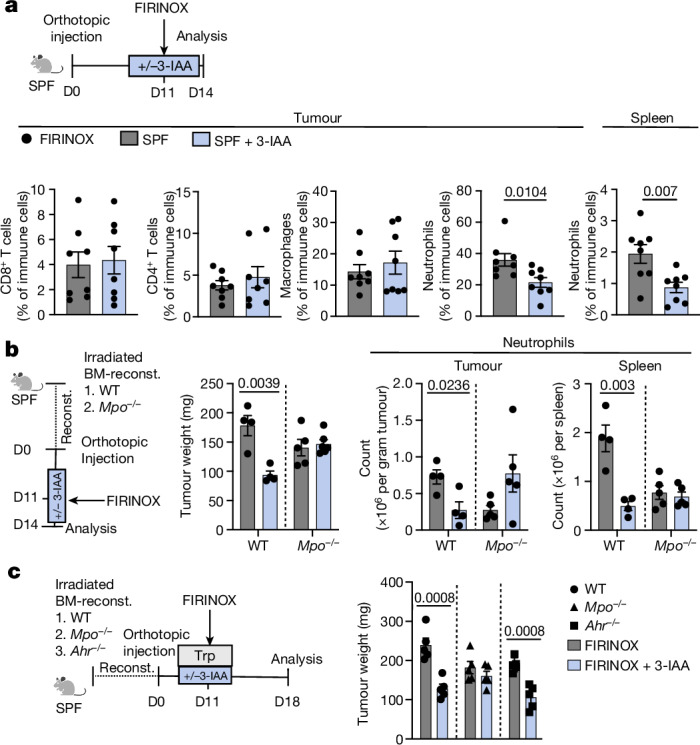
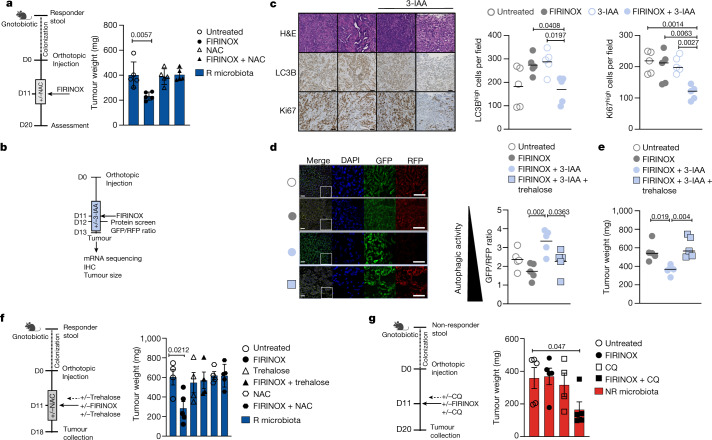
- The effect of 3-IAA plus FIRINOX was licensed by neutrophil-derived myeloperoxidase: Mpo−/− bone-marrow-reconstituted mice did not show smaller tumours with added 3-IAA, whereas Ahr−/− reconstitution did not abolish efficacy. 3-IAA plus FIRINOX increased ROS, downregulated glutathione peroxidase 3 and 7, reduced autophagy, and decreased proliferation; the ROS scavenger NAC or trehalose reversed efficacy, while hydroxychloroquine sensitized non-responder-colonized mice to FIRINOX.
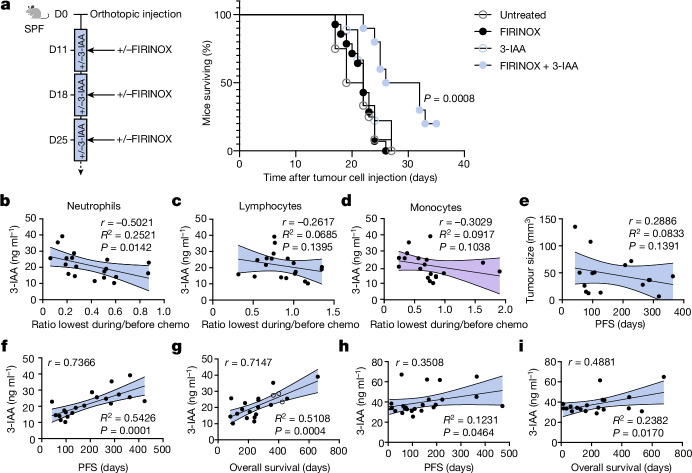
- In humans, 3-IAA serum concentration correlated with PFS or overall survival in the Hamburg cohort and was validated in the Munich cohort; neutrophil decrease after chemotherapy, but not lymphocyte or monocyte decrease, correlated with 3-IAA serum concentrations.
Methods
- Human study: recruited 30 patients with metastatic PDAC scheduled for GnP or FOLFIRINOX; 7 excluded, leaving 22 for microbiota analysis. Pre-treatment stool was analysed by shotgun metagenomics; serum/plasma was analysed by targeted metabolomics (UPLC–MS/MS, 630 metabolites) and 3-IAA/DCA chemiluminescence immune assays. Responder/non-responder classification used CT tumour shrinkage ≥25%, or PFS >140 days or ≥40% serum tumour-marker decline when CT was missing. Validation cohorts: Hamburg n = 23 (21 with serum) and Munich n = 24.
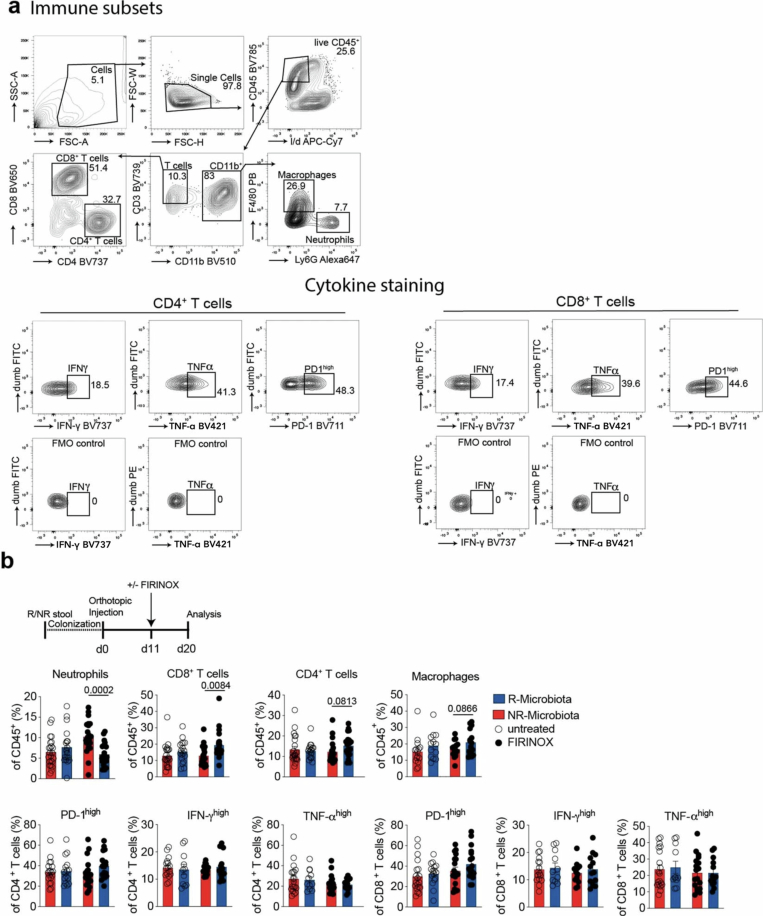
- Mouse models: C57BL/6 SPF and germ-free/gnotobiotic mice, orthotopic KPC or Hy19636 PDAC cells, subcutaneous MC38/LLC tumours, faecal microbiota transplantation from human donors, dietary tryptophan modulation, oral 3-IAA, FIRINOX or GnP, bone-marrow chimeras (wild-type, Mpo−/−, Ahr−/−), T-cell depletion, NAC, trehalose, chloroquine, and doxycycline-inducible ATG4B. Analyses included flow cytometry, immunohistochemistry, widefield microscopy, MPO activity assays, protein arrays, mRNA sequencing, qPCR, and 16S rRNA sequencing.
- Statistics: MANOVA, two-tailed nested t-test, fold-change analysis, t-tests, one-way ANOVA with Tukey’s or Dunnett’s post-hoc tests, Kruskal–Wallis with Dunn’s post-hoc test, simple linear regression with Pearson’s r, and log-rank Mantel–Cox test.
Limitations
- The paper states that patient numbers were limited (Hamburg cohort n = 23, of whom 21 had serum samples; Munich cohort n = 24), that more observational studies are needed before interventional trials, that additional mechanisms cannot be ruled out for the tryptophan-high diet experiments, that larger studies are needed to determine whether B. fragilis and B. thetaiotaomicron are responsible for 3-IAA production in responders, and that a causative link between 3-IAA and neutropenia in humans requires further study.
- The text also notes that the person treating mice was not blinded because of complex treatment schedules, and several mouse experiments show only one out of two or three independent experiments, which limits generalizability.
Model-written summary. Check it against the paper before relying on it.
Integrity signals
Registry
Cites
Statistics
Figures
Verification
Claims the paper makes
8 Valid · 2 Not valid · 15 Not checked · 109 Own results and interpretations
Some cited sources support this claim and some don’t — read each source’s verdict below.
In the paper
“In rare patients with localized PDAC who are long-term survivors, bacteria can translocate from the intestine into the tumour and control anti-tumour immune activation11,12.”
§ Microbiota-derived 3-IAA influences chemotherapy efficacy in pancreatic cancer > Main
What the sources say
- Partly supportedcites [11] Riquelme, E. et al. Tumor microbiome diversity and composition influence pancreatic cancer outcomes. Cell 178, 795–806 (2019). 31398337 PMC7288240 sourceExperimental — accuracy not yet measured
The source supports the setting and the translocation half: it studies resected (localized) PDAC where 'a minor subset survives longer', and the DISCUSSION states 'We demostrate for the first time in human PDAC patients that the gut microbiota has the capacity to colonize pancreatic tumors' (though translocation from gut to pancreas is itself hedged as 'might be occuring'). What the source does not support is the claim that in these human long-term survivors the bacteria 'control anti-tumour immune activation': the causal immune control is shown only in tumor-bearing mice receiving human FMT (RESULTS, 'Gut microbiota can influence tumor microbiota and tumor growth' — increased CD8+/IFNg+ T cells, IFN-γ/IL-2, abrogated by CD8+ depletion), while the human LTS data are correlative (RESULTS, 'The tumor microbiome shapes immune responses promoting T cell activation' — correlations of CD8+/GzmB+ density with microbiome diversity, p = 0.006–<0.0001). The DISCUSSION explicitly calls for 'further studies... in human PDAC patients to determine how FMT can induce changes in the microbiome tumor and inmune activation'. (LLM, conf=0.78)
- Disputedcites [12] Balachandran, V. P. et al. Identification of unique neoantigen qualities in long-term survivors of pancreatic cancer. Nature 551, 512–516 (2017). 29132146 PMC6145146 sourceExperimental — accuracy not yet measured
Our copy of Balachandran et al. 2017 contains no finding of intestinal bacteria translocating into the tumour; in the Discussion (Author Contributions section) it states 'Our results do not imply causal associations of pre-existing microbial and anti-tumor immunity in LTSs' and that 'whether homology to patient-derived microbiomes enhances relevant neoantigen identification remains unknown yet timely', treating intratumoral bacterial effects on T cell phenotypes as evidence from other work rather than its own. What the paper does report in rare long-term survivor PDAC is neoantigen–microbial molecular mimicry: a quality model based on homology to infectious disease-derived peptides (not patient gut bacteria), with identical TCR clones expanded to neopeptides and cross-reactive microbial peptides (Author Contributions, Results/Figure 3 passages), and it explicitly leaves unproven whether those clones drive the prolonged survival. Thus the causal 'control anti-tumour immune activation' and the gut-to-tumour translocation mechanism attributed here run counter to, rather than follow from, this source. (LLM, conf=0.68)
Checked by a reasoning model — may be wrong.
plainstates a cause- Asserted: passes — The authors put it forward as true.
- Checkable: passes — It can be checked against evidence.
- Load-bearing: unclear — It is unclear whether the paper’s conclusions depend on it.
- Based: passes — The paper gives a reason why it holds.
- Partly supported
The cited sources support only part of this claim — read each source’s verdict below.
In the paper
“genetic alterations alone cannot explain this5”
- Also stated in: § Main · plain
“Genetic alterations in PDAC poorly explain the differences between patients who respond to therapy (responder (R) patients) and NR patients5,6”
§ Microbiota-derived 3-IAA influences chemotherapy efficacy in pancreatic cancer > Abstract
What the sources say
- Supportedcites [5] Raghavan, S. et al. Microenvironment drives cell state, plasticity, and drug response in pancreatic cancer. Cell 184, 6119–6137 (2021). 34890551 PMC8822455 source
The Results section (“State-specific TME signals drive transcriptional heterogeneity and drug response”; page unavailable) reports that isogenic PDAC organoids changed their sensitivity to standard chemotherapies when TGF-β induced a different transcriptional state, and regained sensitivity when they returned to the prior state. This supports the claim that genetic alterations alone cannot explain chemotherapy response. (LLM, conf=0.93)
- Partly supportedcites [6] Aung, K. L. et al. Genomics-driven precision medicine for advanced pancreatic cancer: early results from the COMPASS trial. Clin. Cancer Res. 24, 1344–1354 (2018). 29288237 PMC5968824 sourceExperimental — accuracy not yet measured
The Results report different chemotherapy responses in classical and basal-like RNA subtypes, and paired biopsies found no new variants in genes obviously related to chemotherapy resistance. These findings support looking beyond identified genetic alterations, but the paper does not establish the categorical claim that genetic alterations alone cannot explain chemotherapy response in PDAC. (LLM, conf=0.82)
plain- Asserted: passes — The authors put it forward as true.
- Checkable: passes — It can be checked against evidence.
- Load-bearing: passes — The paper’s conclusions depend on it.
- Based: passes — The paper gives a reason why it holds.
- Also stated in: § Main · plain
The cited sources support only part of this claim — read each source’s verdict below.
In the paper
“a low neutrophil count (neutropenia) is associated with a good prognosis in mPDAC22.”
§ Microbiota-derived 3-IAA influences chemotherapy efficacy in pancreatic cancer > The effect of 3-IAA is licensed by myeloperoxidase
What the sources say
- Partly supportedcites [22] Roviello, G. et al. Association between neutropenia and survival to nab-paclitaxel and gemcitabine in patients with metastatic pancreatic cancer. Sci. Rep. 10, 19281 (2020). 33159172 PMC7648798 sourceExperimental — accuracy not yet measured
The Results (Neutropenia and clinical outcome) report longer overall survival for patients who developed grade ≥ 3 neutropenia than for those with grade < 3 neutropenia. The study examined 115 patients receiving first-line nab-paclitaxel and gemcitabine, so it does not establish the association for neutropenia in metastatic PDAC generally or for a low neutrophil count before treatment. (LLM, conf=0.85)
plainstates an association- Asserted: passes — The authors put it forward as true.
- Checkable: passes — It can be checked against evidence.
- Load-bearing: unclear — It is unclear whether the paper’s conclusions depend on it.
- Based: passes — The paper gives a reason why it holds.
- Partly supported
Every source the paper cites for this claim was checked and supports it.
In the paper
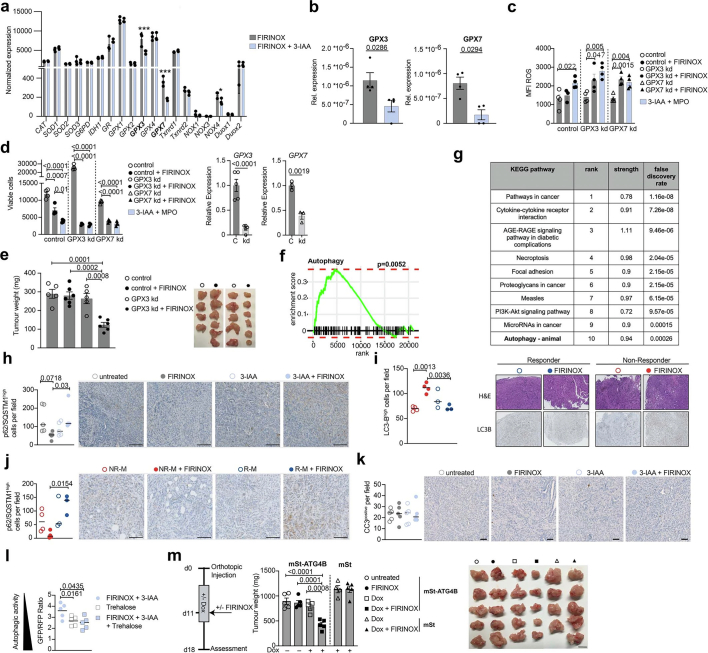
“treatment with the disaccharide trehalose30 normalizes autophagic activity, as measured by a decreasing GFP/RFP ratio in autophagy reporter cells31 (Fig. 3d and Extended Data Fig. 8l).”
§ Microbiota-derived 3-IAA influences chemotherapy efficacy in pancreatic cancer > The effect of 3-IAA depends on ROS and autophagy
What the sources say
- Supportedcites [30] DeBosch, B. J. et al. Trehalose inhibits solute carrier 2A (SLC2A) proteins to induce autophagy and prevent hepatic steatosis. Sci. Signal. 9, ra21 (2016). 26905426 PMC4816640 source
The Results section on cultured primary hepatocytes reports that trehalose induced autophagic flux, supporting its use as an autophagy-promoting treatment. The decreasing GFP/RFP ratio is presented as the citing paper’s own measurement, while the reporter-cell citation is separate; this source need not report that assay. (LLM, conf=0.88)
- Supportedcites [31] Yamamoto, K. et al. Autophagy promotes immune evasion of pancreatic cancer by degrading MHC-I. Nature 581, 100–105 (2020). 32376951 PMC7296553 source
Citation 31 is attached to the autophagy-reporter measurement, while citation 30 accompanies trehalose. The Extended Data figure captions describe GFP-LC3-RFP reporter cells and state that a lower GFP/RFP ratio reflects higher autophagy flux. They do not establish the citing paper’s trehalose-treatment result, which is not the point attributed to citation 31. (LLM, conf=0.91)
plainstates a cause- Asserted: passes — The authors put it forward as true.
- Checkable: passes — It can be checked against evidence.
- Load-bearing: passes — The paper’s conclusions depend on it.
- Based: passes — The paper gives a reason why it holds.
- Supported
Every source the paper cites for this claim was checked and supports it.
In the paper
“We observed higher rates of neutropenia in patients who responded to chemotherapy, consistent with our mouse data and the known association between neutropenia and PDAC prognosis22 (Extended Data Fig. 9d).”
§ Microbiota-derived 3-IAA influences chemotherapy efficacy in pancreatic cancer > 3-IAA has therapeutic potential
What the sources say
- Supportedcites [22] Roviello, G. et al. Association between neutropenia and survival to nab-paclitaxel and gemcitabine in patients with metastatic pancreatic cancer. Sci. Rep. 10, 19281 (2020). 33159172 PMC7648798 source
Citation 22 supports the cited background association between neutropenia and pancreatic-cancer prognosis; the higher neutropenia rates among responders are the citing authors’ own observation. In Results, under “Neutropenia and clinical outcome,” patients with grade ≥3 neutropenia had longer median overall survival than those with grade <3 neutropenia (13 versus 10 months; p = 0.04). (LLM, conf=0.92)
plainstates an association- Asserted: passes — The authors put it forward as true.
- Checkable: passes — It can be checked against evidence.
- Load-bearing: passes — The paper’s conclusions depend on it.
- Based: passes — The paper gives a reason why it holds.
- Supported
78 more claims
Create a free account to see all 134 claims and to verify the 24 references still open.
- Probably not a substantial claim. 35
- It may state two separate claims as one. 20
Claims other papers make about this one
Each is checked against this paper’s own text: does it say what the citing paper says it does?
The source backs part of the claim, not all of it — or backs it for a different population, condition or comparison.
In the citing paper
“Selective metabolites produced by distinct intestinal bacteria modulate cancer immunosurveillance in extraintestinal tumors.”
From Impact of the ONCOBIOME network in cancer microbiome research (2025) · cites this paper as [73]
Experimental — accuracy not yet measured
Self-check
Percentages, sums and reported differences re-computed from the paper’s own numbers.
Each contradiction between two passages listed here was confirmed by an independent check.
Rated minor: it would not touch a result — a value no result rests on, a p-value that stays on the same side of the significance level, or a conflict that is clerical, resolved elsewhere in the paper, or outside its own findings.
In the paper
§ Microbiota-derived 3-IAA influences chemotherapy efficacy in pancreatic cancer > The effect of 3-IAA depends on ROS and autophagy
“Third, treatment with the autophagy blocker hydroxychloroquine sensitized tumours from NR- microbiota-colonized mice (low 3-IAA) to FIRINOX treatment (Fig. 3g).”
§ Microbiota-derived 3-IAA influences chemotherapy efficacy in pancreatic cancer > Methods > Animal models
“Similarly, 60 mg kg−1 chloroquine (Sigma, C6628) dissolved in PBS was injected i.p. one day before and on the day of chemotherapy treatment.”
Citations
Cites
Moderated estimation of fold change and dispersion for RNA-seq data with DESeq2
Love, M. I., Huber, W., & Anders, S. (2014) · Genome Biology · doi:10.1186/s13059-014-0550-8 · Cited by 95,106
STAR: ultrafast universal RNA-seq aligner
Dobin, A., Davis, C. A., Schlesinger, F., Drenkow, J., Zaleski, C., Jha, S., Batut, P., Chaisson, M., & Gingeras, T. R. (2013) · Bioinformatics · doi:10.1093/bioinformatics/bts635 · Cited by 51,709 · cited 1×
“104) using STAR (v.2.7.9a) 47 .”
InfluentialDADA2: High–resolution sample inference from Illumina amplicon data
Callahan, B. J., McMurdie, P. J., Rosen, M. J., Han, A. W., Johnson, A. J. A., & Holmes, S. P. (2016) · Nature Methods · doi:10.1038/nmeth.3869 · Cited by 35,698
phyloseq: An R Package for Reproducible Interactive Analysis and Graphics of Microbiome Census Data
McMurdie, P. J., & Holmes, S. (2013) · PLoS ONE · doi:10.1371/journal.pone.0061217 · Cited by 21,322 · cited 1×
“43,44 ).”
Metagenomic biomarker discovery and explanation
Segata, N., Izard, J., Waldron, L., Gevers, D., Miropolsky, L., Garrett, W. S., & Huttenhower, C. (2011) · Genome Biology · doi:10.1186/gb-2011-12-6-r60 · Cited by 16,192
Ultra-high-throughput microbial community analysis on the Illumina HiSeq and MiSeq platforms
Caporaso, J. G., Lauber, C. L., Walters, W. A., Berg-Lyons, D., Huntley, J., Fierer, N., Owens, S. M., Betley, J., Fraser, L., Bauer, M., et al. (2012) · The ISME Journal · doi:10.1038/ismej.2012.8 · Cited by 8,839
Increased Survival in Pancreatic Cancer with nab-Paclitaxel plus Gemcitabine
Von Hoff, D. D., Ervin, T., Arena, F. P., Chiorean, E. G., Infante, J., Moore, M., Seay, T., Tjulandin, S. A., Ma, W. W., Saleh, M. N., et al. (2013) · New England Journal of Medicine · doi:10.1056/nejmoa1304369 · Cited by 6,712
The Reactome pathway Knowledgebase
Fabregat, A., Sidiropoulos, K., Garapati, P., Gillespie, M., Hausmann, K., Haw, R., Jassal, B., Jupe, S., Korninger, F., McKay, S., et al. (2016) · Nucleic Acids Research · doi:10.1093/nar/gkv1351 · Cited by 5,605
FOLFIRINOX or Gemcitabine as Adjuvant Therapy for Pancreatic Cancer
Conroy, T., Hammel, P., Hebbar, M., Ben Abdelghani, M., Wei, A. C., Raoul, J.-L., Choné, L., Francois, E., Artru, P., Biagi, J. J., et al. (2018) · New England Journal of Medicine · doi:10.1056/nejmoa1809775 · Cited by 2,874
Beghini, F., McIver, L. J., Blanco-Míguez, A., Dubois, L., Asnicar, F., Maharjan, S., Mailyan, A., Manghi, P., Scholz, M., Thomas, A. M., et al. (2021) · eLife · doi:10.7554/elife.65088 · Cited by 2,303
Cited by
Targeting ROS in cancer: rationale and strategies
Glorieux, C., Liu, S., Trachootham, D., & Huang, P. (2024) · Nature Reviews Drug Discovery · doi:10.1038/s41573-024-00979-4 · Cited by 651
“…by the findings that ROS can inhibit PKM2 through oxidation of its Cys358, leading to activation of the pentose phosphate pathway 50 , and that the tryptophan metabolite indole-3-acetic acid can regulate ROS-degrading enzymes, cause oxidative stress and inhibit pancreatic cancer growth 285 .”
Wang, G., Fan, Y., Zhang, G., Cai, S., Ma, Y., Yang, L., Wang, Y., Yu, H., Qiao, S., & Zeng, X. (2024) · Microbiome · doi:10.1186/s40168-024-01750-y · Cited by 299
“The previous research also reported that the chemotherapy efficacy of IAA is licensed by immune cell-derived myeloperoxidase, but not by AhR signaling [4].”
BackgroundSinha, A. K., Laursen, M. F., Brinck, J. E., Rybtke, M. L., Hjørne, A. P., Procházková, N., Pedersen, M., Roager, H. M., & Licht, T. R. (2024) · Nature Microbiology · doi:10.1038/s41564-024-01737-3 · Cited by 270
Current and future immunotherapeutic approaches in pancreatic cancer treatment
Farhangnia, P., Khorramdelazad, H., Nickho, H., & Delbandi, A.-A. (2024) · Journal of Hematology & Oncology · doi:10.1186/s13045-024-01561-6 · Cited by 229
Gut microbial metabolite facilitates colorectal cancer development via ferroptosis inhibition
Cui, W., Guo, M., Liu, D., Xiao, P., Yang, C., Huang, H., Liang, C., Yang, Y., Fu, X., Zhang, Y., et al. (2024) · Nature Cell Biology · doi:10.1038/s41556-023-01314-6 · Cited by 229
“However, a most recent piece of research revealed that IAA promotes chemotherapy efficacy in pancreatic cancer independent of AHR signalling 29 , arguing against the role of AHR in mediating the activity of indoles.”
Self-citationEffects of dietary intervention on human diseases: molecular mechanisms and therapeutic potential
Xiao, Y.-L., Gong, Y., Qi, Y.-J., Shao, Z.-M., & Jiang, Y.-Z. (2024) · Signal Transduction and Targeted Therapy · doi:10.1038/s41392-024-01771-x · Cited by 202
“308 These fi ndings further emphasize the crucial role of gut microbiota modulation via dietary interventions in cancer treatment outcomes.”
BackgroundMolecular mechanisms and therapeutic significance of Tryptophan Metabolism and signaling in cancer
Yan, J., Chen, D., Ye, Z., Zhu, X., Li, X., Jiao, H., Duan, M., Zhang, C., Cheng, J., Xu, L., et al. (2024) · Molecular Cancer · doi:10.1186/s12943-024-02164-y · Cited by 176
“Elevated levels of 3-IAA in PC cells increase reactive oxygen species (ROS) accumulation and reduce autophagic activity, contributing to cancer suppression [181].”
BackgroundInfluentialUtilization of the microbiome in personalized medicine
Ratiner, K., Ciocan, D., Abdeen, S. K., & Elinav, E. (2024) · Nature Reviews Microbiology · doi:10.1038/s41579-023-00998-9 · Cited by 170
“In mice, IAA acts by impairing autophagy in cancer cells 173 (Fig.”
Towards modulating the gut microbiota to enhance the efficacy of immune-checkpoint inhibitors
Simpson, R. C., Shanahan, E. R., Scolyer, R. A., & Long, G. V. (2023) · Nature Reviews Clinical Oncology · doi:10.1038/s41571-023-00803-9 · Cited by 153
Nutritional regulation of microbiota-derived metabolites: Implications for immunity and inflammation
Arifuzzaman, M., Collins, N., Guo, C., & Artis, D. (2024) · Immunity · doi:10.1016/j.immuni.2023.12.009 · Cited by 169
Gut OncoMicrobiome Signatures (GOMS) as next-generation biomarkers for cancer immunotherapy
Thomas, A. M., Fidelle, M., Routy, B., Kroemer, G., Wargo, J. A., Segata, N., & Zitvogel, L. (2023) · Nature Reviews Clinical Oncology · doi:10.1038/s41571-023-00785-8 · Cited by 141
Role of the microbiota in response to and recovery from cancer therapy
Blake, S. J., Wolf, Y., Boursi, B., & Lynn, D. J. (2023) · Nature reviews. Immunology · doi:10.1038/s41577-023-00951-0 · Cited by 158
“Furthermore, in an orthotopic pancreatic cancer model, 3-IAA increased the infiltration of neutrophils into tumours and their degranulation, release of reactive oxygen species and apoptosis following chemotherapy, which suppressed tumour cell proliferation 15 .”
InfluentialMicrobial Metabolites and Gut Immunology
Takeuchi, T., Nakanishi, Y., & Ohno, H. (2024) · Annual Review of Immunology · doi:10.1146/annurev-immunol-090222-102035 · Cited by 148
Gut microbiota controlling radiation-induced enteritis and intestinal regeneration
Moraitis, I., Guiu, J., & Rubert, J. (2023) · Trends in Endocrinology and Metabolism · doi:10.1016/j.tem.2023.05.006 · Cited by 140
“the survival of irradiated animals [57], and in a follow-up study, the same group claimed that some of the effects induced by FMT were mediated via a GMM, indole 3-propionic acid [58], which has recently demonstrated to boost chemotherapy [59] and barrier functionality [5,60–62].”
BackgroundThe gut microbiome and cancer: from tumorigenesis to therapy
Nobels, A., van Marcke, C., Jordan, B. F., Hul, M. V., & Cani, P. D. (2025) · Nature Metabolism · doi:10.1038/s42255-025-01287-w · Cited by 136
“This is mechanistically linked to the impact of the metabolite on oxidative stress in the tumour micro-environment, a crucial factor controlling the metabolic fitness of the cancer cells 106 .”
Wei, W., Liu, Y., Hou, Y., Cao, S., Chen, Z., Zhang, Y., Cai, X., Yan, Q., Li, Z., Yuan, Y., et al. (2024) · Cell Metabolism · doi:10.1016/j.cmet.2023.12.026 · Cited by 126
Chiral nanoparticle-remodeled gut microbiota alleviates neurodegeneration via the gut–brain axis
Guo, X. L., Li, C., Zhang, J., Sun, M., Xu, J., Xu, C., Kuang, H., & Xu, L. (2023) · Nature Aging · doi:10.1038/s43587-023-00516-9 · Cited by 124
“The host physiology is also affected by other gut bacterial metabolites, such as short-chain fatty acids 16 , N 6 -carboxymethyllysine 17 , indole-3 propionate 18 , indole-3-acetic acid (IAA) 19 and nicotinamide riboside 20 .”
BackgroundThe role of microbial indole metabolites in tumor
Jia, D., Kuang, Z., & Wang, L. (2024) · Gut Microbes · doi:10.1080/19490976.2024.2409209 · Cited by 115
“45 IAA can be metabolized by myeloperoxidase in neutrophils, and in combination with the FIRINOX (5-FU, irinotecan and oxaliplatin) induces the accumulation of reactive oxygen species and alteration of autophagic pathways in tumor cells to counteract PDAC (Figure 3D).”
BackgroundChen, C., Cao, Z., Lei, H., Zhang, C., Wu, M., Huang, S., Li, X., Xie, D., Liu, M., Zhang, L., et al. (2024) · Advanced Science · doi:10.1002/advs.202404545 · Cited by 144
The role of gut microbiota and metabolites in cancer chemotherapy
Li, S., Zhu, S., & Yu, J. (2023) · Journal of Advanced Research · doi:10.1016/j.jare.2023.11.027 · Cited by 114
Modulation of immunity by tryptophan microbial metabolites
Li, S. (2023) · Frontiers in Nutrition · doi:10.3389/fnut.2023.1209613 · Cited by 136
Melanoma and microbiota: Current understanding and future directions
Routy, B., Jackson, T., Mählmann, L., Baumgartner, C. K., Blaser, M., Byrd, A., Corvaia, N., Couts, K., Davar, D., Derosa, L., et al. (2024) · Cancer Cell · doi:10.1016/j.ccell.2023.12.003 · Cited by 89
The human microbiome and cancer: a diagnostic and therapeutic perspective
Kandalai, S., Li, H., Zhang, N., Peng, H., & Zheng, Q. (2023) · Cancer Biology & Therapy · doi:10.1080/15384047.2023.2240084 · Cited by 101
“Gut microbiome metabolite indole-3-acetic acid was found to improve therapeutic efficiency of the combination chemotherapy FOLFIRINOX (folinic acid, fluorouracil, irinotecan, oxaliplatin) in patients with metastatic PDAC, as it led to an accumulation of reactive oxygen species and decreased autophagy of cancer cells.(…”
BackgroundElkrief, A., Pidgeon, R., Vareki, S. M., Messaoudene, M., Castagner, B., & Routy, B. (2025) · Nature Reviews Drug Discovery · doi:10.1038/s41573-025-01211-7 · Cited by 108
“haematopoietic BMT 27 , CAR-T cell therapy 26 , chemotherapy 29 and radiotherapy 30,35 .”
Gautam, S. K., Batra, S. K., & Jain, M. (2023) · Molecular Cancer · doi:10.1186/s12943-023-01813-y · Cited by 105
“Notably, 3-IAA enhanced the efficacy of PDAC chemotherapy [236].”
BackgroundGut microbiota and microbial metabolites for osteoporosis
Zheng, X.-Q., Wang, D.-B., Jiang, Y., & Song, C. (2024) · Gut Microbes · doi:10.1080/19490976.2024.2437247 · Cited by 97
Dietary interventions and precision nutrition in cancer therapy
Martínez-Garay, C., & Djouder, N. (2023) · Trends in Molecular Medicine · doi:10.1016/j.molmed.2023.04.004 · Cited by 85
The tryptophan metabolic pathway of the microbiome and host cells in health and disease
Miyamoto, K., Sujino, T., & Kanai∥, T. (2024) · International Immunology · doi:10.1093/intimm/dxae035 · Cited by 94
“Recently, in two distinct cohorts of pancreatic ductal adenocarcinoma (PDAC), a noteworthy correlation was observed between the therapeutic response and levels of IAA, a Trp metabolite derived from the microbiota that serves as an AHR ligand (165, 166) (Fig.”
Starke, S., Harris, D. M. M., Zimmermann, J., Schuchardt, S., Oumari, M., Frank, D., Bang, C., Rosenstiel, P. C., Schreiber, S., Frey, N., et al. (2023) · The ISME Journal · doi:10.1038/s41396-023-01537-3 · Cited by 86
Beyond the Gut: The intratumoral microbiome's influence on tumorigenesis and treatment response
Zhang, H., Fu, L., Leiliang, X., Qu, C., Wu, W., Wen, R., Huang, N., He, Q., Cheng, Q., Liu, G., et al. (2024) · 癌症:英文版 · doi:10.1002/cac2.12597 · Cited by 78
“Indole-3-acetic acid (3-IAA), a molecule generated from the microbiota, has recently been recognized as a crucial amplifier of the response to chemotherapy in pancreatic cancer in humanized gnotobiotic mouse models [213].”
BackgroundGut microbiota as a new target for anticancer therapy: from mechanism to means of regulation
Sun, J., Song, S., Liu, J., Chen, F., Li, X., & Wu, G. (2025) · npj Biofilms and Microbiomes · doi:10.1038/s41522-025-00678-x · Cited by 89
“…percent of patients do not respond to this treatment, and the genotype does not fully explain the difference between chemotherapy-responsive and non-chemotherapy patients, and the emerging evidence highlights the critical role of the gut microbiota in determining chemotherapy response 70,71 (Fig.”
Luo, W., Wen, T., & Qu, X. (2024) · Journal of Experimental & Clinical Cancer Research · doi:10.1186/s13046-023-02935-3 · Cited by 87
“…and colleagues discovered that microbiota-derived indole-3-acetic acid is oxidized by myeloperoxidase expressed by neutrophils, which leads to accumulation of reactive oxygen species (ROS) and down-regulation of autophagy in PDAC cells, impairing metabolic fitness and proliferation of PDAC [112].”
BackgroundThe Kynurenine Pathway and Indole Pathway in Tryptophan Metabolism Influence Tumor Progression
Lu, Z., Zhang, C., Zhang, J., Su, W., Wang, G., & Wang, Z. (2025) · Cancer Medicine · doi:10.1002/cam4.70703 · Cited by 91
“Microbiota-derived 3-IAA depends on myeloperoxidase (MPO) to enhance the efficacy of the chemotherapy agent FIRINOX in mPDAC treatment [223].”
Spermidine – an old molecule with a new age-defying immune function
Chamoto, K., Zhang, B., Tajima, M., Honjo, T., & Fagarasan, S. (2023) · Trends in Cell Biology · doi:10.1016/j.tcb.2023.08.002 · Cited by 75
Čierniková, S., Ševčíková, A., Drgoňa, Ľ., & Mego, M. (2023) · Biochimica et Biophysica Acta (BBA) - Reviews on Cancer · doi:10.1016/j.bbcan.2023.188990 · Cited by 75
Niu, Y., Hu, X., Song, Y., Wang, C., Luo, P., Ni, S., Jiao, F., Qiu, J., Jiang, W., Yang, S., et al. (2024) · Advanced Science · doi:10.1002/advs.202309255 · Cited by 80
Integrating the gut microbiome and pharmacology
Verdegaal, A. A., & Goodman, A. L. (2024) · Science Translational Medicine · doi:10.1126/scitranslmed.adg8357 · Cited by 71
“Smaller-scale human studies have addressed mechanistic determinants of drug bioavailability, the presence of drug metabolites, or microbiome effects on drug efficacy ( 77 , 146 , 147 ).”
BackgroundRoles of microbiota in pancreatic cancer development and treatment
Cruz, M. S., Tintelnot, J., & Gagliani, N. (2024) · Gut Microbes · doi:10.1080/19490976.2024.2320280 · Cited by 68
“25 Serum metabolomics unveiled a positive association between 3-IAA and progression-free and over-all survival in two human PDAC cohorts.”
InfluentialSelf-citationSu, J., Lin, X., Li, D., Yang, C.-M., Lv, S., Chen, X., Yang, X., Pan, B., Xu, R. P., Ren, L., et al. (2024) · Gut Microbes · doi:10.1080/19490976.2024.2347757 · Cited by 63
“35 Bender et al . found that indole-3-aldehyde can promote immune checkpoint inhibitor efficacy melanoma patients, which relies on driving Tc1 effector function through the induction of aryl hydrocarbon receptor-dependent CREB activity.”
BackgroundResultEmerging clinical relevance of microbiome in cancer: promising biomarkers and therapeutic targets
Dai, J.-H., Tan, X.-R., Qiao, H., & Liu, N. (2023) · Protein & Cell · doi:10.1093/procel/pwad052 · Cited by 59
“Tryptophan metabolites derived from gut microbiota, such as indoles (Hezaveh et al., 2022), indole-3-acetic acid (Tintelnot et al., 2023), and indole-3-lactic acid (Han et al., 2023; Zhang et al., 2023), have been reported Abbreviations: ALT, alanine aminotransferase; AST, aspartate…”
BackgroundMicrobe-material hybrids for therapeutic applications
Chen, M., Xia, L., Wu, C., Wang, Z., Ding, L. S., Xie, Y., Feng, W., & Chen, Y. (2024) · Chemical Society Reviews · doi:10.1039/d3cs00655g · Cited by 62
Cao, F., Jin, L., Zhang, C., Gao, Y., Qian, Z., Wen, H., Yang, S., Ye, Z., Hong, L., Huang, Y., et al. (2023) · Advanced Materials · doi:10.1002/adma.202304257 · Cited by 66
Fucoidan enhances the anti-tumor effect of anti-PD-1 immunotherapy by regulating gut microbiota
Li, H., Dong, T., Tao, M., Zhao, H., Lan, T., Yan, S., Gong, X., Hou, Q., Ma, X., & Song, Y. (2024) · Food & Function · doi:10.1039/d3fo04807a · Cited by 55
Tryptophan metabolism in digestive system tumors: unraveling the pathways and implications
Liang, Y., Lu, J., & Du, W. (2024) · Cell Communication and Signaling · doi:10.1186/s12964-024-01552-7 · Cited by 54
“1) [77–79 , 87].”
Marroncini, G., Naldi, L., Martinelli, S., & Amedei, A. (2024) · Biomedicines · doi:10.3390/biomedicines12071398 · Cited by 60
“It has been widely demonstrated that diet has a significant impact on the composition and stability of the GM, and different diets affect the species of microorganisms that populate the gut differently, changing its internal balance [271].”
BackgroundLong-distance microbial mechanisms impacting cancer immunosurveillance
Zitvogel, L., Fidelle, M., & Kroemer, G. (2024) · Immunity · doi:10.1016/j.immuni.2024.07.020 · Cited by 58
Enterobactin inhibits microbiota-dependent activation of AhR to promote bacterial sepsis in mice
Keskey, R. C., Xiao, J. F., Hyoju, S. K., Lam, A., Kim, D., Sidebottom, A. M., Zaborin, A., Dijkstra, A., Meltzer, R. S., Thakur, A., et al. (2025) · Nature Microbiology · doi:10.1038/s41564-024-01882-9 · Cited by 56
“In this study, we showed that ‘within-group mortality’ rates following an IP lethal dose 50 (LD 50 ) of Serratia marcescens are influenced by the production of indole metabolites by the gut microbiota.”
The tumor microbiome in cancer progression: mechanisms and therapeutic potential
Zhang, W., Xiang, Y., Ren, H., Liu, Y., Wang, Q., Ran, M., Zhou, W., Lu, T., Zheng, X., Qiao, C., et al. (2025) · Molecular Cancer · doi:10.1186/s12943-025-02403-w · Cited by 64
“Additionally, the microbially derived tryptophan metabolite indole-3-acetic acid (3-IAA) has emerged as a key enhancer of chemotherapy response in humanized mouse models of PDAC [307].”
Dysbiotic Gut Microbiota-Derived Metabolites and Their Role in Non-Communicable Diseases
Tan, J., Taitz, J., Nanan, R. K. H., Grau, G. E., & Macia, L. (2023) · International Journal of Molecular Sciences · doi:10.3390/ijms242015256 · Cited by 63
“Interestingly, this study shows that mice treated with tryptophan for 14 days developed worsened disease due to a direct impact of tryptophan on tumorigenesis, suggesting that dietary intervention must be strictly controlled [112].”
BackgroundLi, J., Zheng, C., Mai, Q., Huang, X., Pan, W., Lu, J., Chen, Z., Zhang, S., Zhang, C., Huang, H., et al. (2023) · Cell Metabolism · doi:10.1016/j.cmet.2023.10.002 · Cited by 52
Xu, Q., Gao, J., Zhao, R., Li, H., Cui, H., Yuan, Z., Ren, H., Cao, B., & Wei, B. (2024) · Pharmacological Research · doi:10.1016/j.phrs.2024.107278 · Cited by 48
Shaheen, N., Miao, J., Xia, B., Zhao, Y., & Zhao, J. (2025) · The FASEB Journal · doi:10.1096/fj.202500295r · Cited by 59
Xia, L., Zhu, X., Wang, Y., & Lü, S. (2024) · Cancer Letters · doi:10.1016/j.canlet.2024.217123 · Cited by 56
The role of the gut microbiota in chemotherapy response, efficacy and toxicity: a systematic review
Böhm, D. T. M. M., Russ, E., Guchelaar, H., Ziemons, J., Penders, J., Smidt, M. L., van Best, N., & Deenen, M. J. (2025) · npj Precision Oncology · doi:10.1038/s41698-025-01034-0 · Cited by 62
“…adenocarcinoma patients showed that Bacteroides fragilis and Bacteroides thetaiotaomicron , known for their capacity to produce a tryptophan metabolite 3-IAA, were increased in responders to chemotherapy with 5-FU, folic acid, irinotecan, oxaliplatin (FOLFIRINOX) compared to non-responders 26 .”
The metabolic dialogue between intratumoural microbes and cancer: implications for immunotherapy
Situ, Y., Zhang, P., Zhang, C., Jiang, A., Zhang, N., Zhu, L., Mou, W., Liu, Z., Wong, H. Z. H., Zhang, J., et al. (2025) · eBioMedicine · doi:10.1016/j.ebiom.2025.105708 · Cited by 45
Wang, X., Liu, X., Xiao, R., Fang, Y., Zhou, F., Gu, M., Luo, X., Jiang, D., Tang, Y., You, L., et al. (2024) · Cancer Letters · doi:10.1016/j.canlet.2024.217117 · Cited by 61
Lu, S., Wang, C., Ma, J., & Wang, Y. (2024) · Frontiers in Immunology · doi:10.3389/fimmu.2024.1456030 · Cited by 56
“Tintelnot et al. investigated the in fl uence of nutrition on therapeutic responses with special emphasis on 3-IAA, a tryptophan metabolite produced by the microbiota (35).”
BackgroundMethodInfluentialGut microbial metabolites: Shaping future diagnosis and treatment against gastrointestinal cancer
Gou, H., Zeng, R., Lau, H. C.-H., & Yu, J. Q. (2024) · Pharmacological Research · doi:10.1016/j.phrs.2024.107373 · Cited by 51
Metabolites as agents and targets for cancer immunotherapy
Trefny, M. P., Kroemer, G., Zitvogel, L., & Kobold, S. (2025) · Nature Reviews Drug Discovery · doi:10.1038/s41573-025-01227-z · Cited by 66
“The microbial product indole-3-acetate (3-IA) is particularly abundant in patients with PDAC responding to chemotherapy 194 (Fig.”
Zhao, R., Li, J., Chen, B., Zhao, J., Hu, L., Huang, K., Chen, Q., Yao, J., Lin, G., Bao, L., et al. (2023) · Frontiers in Immunology · doi:10.3389/fimmu.2023.1289753 · Cited by 45
Role of the gut microbiota in tumorigenesis and treatment
Liu, Q., Yang, Y., Pan, M., Yang, F., Yu, Y., & Qian, Z. (2024) · Theranostics · doi:10.7150/thno.91700 · Cited by 47
“Currently, chemotherapy is the conventional therapeutic approach for treating pancreatic ductal adenocarcinoma; however, approximately 50% of patients do not respond to this therapeutic approach [172,173].”
BackgroundZheng, R., Liu, X., Zhang, Y., Liu, Y., Wang, Y.-P., Guo, S., Jin, X., Zhang, J., Guan, Y., & Liu, Y. (2024) · Frontiers in Immunology · doi:10.3389/fimmu.2024.1383978 · Cited by 48
Gut microbial metabolites in cancer immunomodulation
Liu, H., Xiong, X., Zhu, W., Wang, S., Huang, W.-C., Zhu, G., Xu, H., & Yang, L. (2025) · Molecular Cancer · doi:10.1186/s12943-025-02521-5 · Cited by 62
“Clinically, the microbial metabolite 3-IAA has been found enriched in pancreatic ductal adenocarcinoma (PDAC) patients who respond to chemotherapy; FMT, dietary tryptophan modulation, or oral 3-IAA supplementation enhanced chemotherapy efficacy in humanized mouse models [118].”
Zhou, Y., Han, W., Feng, Y., Wang, Y., Sun, T., & Xu, J. (2024) · International Journal of Oncology · doi:10.3892/ijo.2024.5661 · Cited by 43
“This leads to an increase in ROS levels and a decrease in tumor cell autophagy, ultimately inhibiting the development of tumor cells (117).”
BackgroundIntratumoral microbiome is associated with gastric cancer prognosis and therapy efficacy
Wang, G., Wang, H., Ji, X., Wang, T., Zhang, Y., Jiang, W., Lin, M. S., Wu, H., Xing, X., & Ji, J. (2024) · Gut Microbes · doi:10.1080/19490976.2024.2369336 · Cited by 47
Microbiome and pancreatic cancer: time to think about chemotherapy
de Castilhos, J., Tillmanns, K., Blessing, J., Larano, A., Borisov, V., & Stein‐Thoeringer, C. K. (2024) · Gut Microbes · doi:10.1080/19490976.2024.2374596 · Cited by 42
“99,100 Building on this, Tintelnot et al. (2023) explored the relationship between treatment response and the gut micro-biome in PDAC patients.”
BackgroundInfluentialMicrobial metabolites are involved in tumorigenesis and development by regulating immune responses
Liu, J., Tian, R., Sun, C., Guo, Y., Dong, L., Li, Y., & Song, X. (2023) · Frontiers in Immunology · doi:10.3389/fimmu.2023.1290414 · Cited by 41
Gut Microbiota Modulation through Akkermansia spp . Supplementation Increases CAR T-cell Potency
Marcos-Kovandzic, L., Avagliano, M., Khelil, M. B., Srikanthan, J., Abdallah, R., Petrocelli, V., Rengassamy, J., Alfaro, A., Bied, M., Fidelle, M., et al. (2025) · Cancer Discovery · doi:10.1158/2159-8290.cd-24-1230 · Cited by 45
“…from patients with pancreatic ductal adenocarcinoma produces indole-3-acetate to sensitize pancreatic ductal adenocarcinoma cells to chemotherapy through an increase in oxidative reactions secondary to the modulation of myeloid peroxidase and an inhibition of autophagy in cancer cells (55).”
Gut microbial metabolites in cancer therapy
Song, P., Peng, Z., & Guo, X. (2025) · Trends in Endocrinology & Metabolism · doi:10.1016/j.tem.2024.06.016 · Cited by 38
Modulating tumor immunity using advanced microbiome therapeutics producing an indole metabolite
Vaaben, T. H., Lützhøft, D. O., Koulouktsis, A., Dawoodi, I. M., Stavnsbjerg, C., Kvich, L., Gögenür, I., Vazquez-Uribe, R., & Sommer, M. O. A. (2025) · EMBO Reports · doi:10.1038/s44319-025-00386-9 · Cited by 41
“Recent studies have underlined the positive impact of microbially produced indole derivatives, products of tryptophan metabolism, in inhibiting cancer growth through AhR-dependent (Bender et al, 2023) and independent mechanisms (Tintelnot et al, 2023; Jia et al, 2024).”
Chemoproteomics reveals microbiota-derived aromatic monoamine agonists for GPRC5A
Zhao, X., Stein, K. R., Chen, V., Griffin, M. E., Lairson, L. L., & Hang, H. C. (2023) · Nature Chemical Biology · doi:10.1038/s41589-023-01328-z · Cited by 40
LYCHOS is a human hybrid of a plant-like PIN transporter and a GPCR
Bayly-Jones, C., Lupton, C. J., Keen, A. C., Dong, S., Mastos, C., Luo, W., Qian, C., Jones, G. D., Venugopal, H., Chang, Y., et al. (2024) · Nature · doi:10.1038/s41586-024-08012-9 · Cited by 36
“However, studies have detected IAA in humans, produced by the microbiome 24 and as a by-product of tryptophan metabolism 25 , and have suggested that IAA has a role in human physiology and disease, including altering the efficacy of chemotherapy 26 .”
Jiang, M., Yang, Z., Dai, J., Wu, T., Jiao, Z., Yu, Y., Kang, N., Chen, W., & Yang, A. (2023) · MedComm · doi:10.1002/mco2.376 · Cited by 39
Speckmann, B., Ehring, E., Hu, J., & Rodriguez‐Mateos, A. (2024) · Gut Microbes · doi:10.1080/19490976.2024.2305716 · Cited by 43
“7 Generally, interrelations between the gut microbiota and oral drugs can modulate their pharmacokinetics and dynamics, as well as trigger indirect physiological effects via changes in the microbiome.”
Crosstalk between metabolic and epigenetic modifications during cell carcinogenesis
Gao, Y., Zhang, S., Zhang, X., Du, Y., Ni, T., & Hao, S. (2024) · iScience · doi:10.1016/j.isci.2024.111359 · Cited by 47
Diet-microbiome interactions in cancer
Abdeen, S. K., Mastandrea, I., Stinchcombe, N., Puschhof, J., & Elinav, E. (2025) · Cancer Cell · doi:10.1016/j.ccell.2025.03.013 · Cited by 36
Metabolic interactions: how gut microbial metabolites influence colorectal cancer
Cao, Q., Yang, M., & Chen, M. (2025) · Frontiers in Microbiology · doi:10.3389/fmicb.2025.1611698 · Cited by 40
“These byproducts elevate ROS levels and downregulate antioxidant enzymes such as GPX3 and GPX7, enhancing oxidative stress (Tintelnot et al., 2023).”
Gut microbiota: A double-edged sword in immune checkpoint blockade immunotherapy against tumors
Wang, J., Zhu, N., Su, L., & Yang, R. (2023) · Cancer Letters · doi:10.1016/j.canlet.2023.216582 · Cited by 37
Zhang, S., Wang, X., Cai, Q.-Q., Chen, C., Zhang, Z.-Y., Xu, Y., Yang, M., Jia, Q.-A., Wang, Y., & Wang, Z.-M. (2024) · Nature Metabolism · doi:10.1038/s42255-024-01137-1 · Cited by 38
Self-citationRico‐Jiménez, M., Muñoz‐Mira, S., Lomas‐Martínez, C., Krell, T., & Matilla, M. A. (2023) · Microbial Biotechnology · doi:10.1111/1751-7915.14296 · Cited by 31
Wang, N., Sun, C., Yang, Y., Zhang, D., Huang, L., Xu, C., Wang, M., Xu, M., Yan, T., Wu, Y., et al. (2025) · Journal of Neuroinflammation · doi:10.1186/s12974-025-03505-4 · Cited by 36
“Human studies further link IAA production to B. fragilis and B. thetaiotaomi-cron [35], aligning with our findings.”
Self-citationEffect of the gut microbiota-derived tryptophan metabolite indole-3-acetic acid in pneumonia
Kullberg, R. F. J., van Linge, C. C. A., Haak, B. W., Paul, P. S., Butler, J. M., Wolff, N. S., van Engelen, T. S. R., Sikkens, J. J., Bomers, M. K., Lefèvre, A., et al. (2025) · Nature Communications · doi:10.1038/s41467-025-63611-y · Cited by 50
Programmed cell death network in cancer drug resistance: A framework for therapeutic intervention
Guo, D., Guo, Y., Zhu, C., Liao, Y., Lin, Z., Zhang, H., Zhang, W., & Zou, Z. (2026) · Drug Resistance Updates · doi:10.1016/j.drup.2026.101387 · Cited by 41
Designing live bacterial therapeutics for cancer
Lee, J., McClure, S., Weichselbaum, R. R., & Mimee, M. (2025) · Advanced Drug Delivery Reviews · doi:10.1016/j.addr.2025.115579 · Cited by 35
Disentangling the molecular mystery of tumour–microbiota interactions: Microbial metabolites
Duan, Y.-W., Dai, J.-H., Lu, Y.-Q., Qiao, H., & Liu, N. (2024) · Clinical and Translational Medicine · doi:10.1002/ctm2.70093 · Cited by 31
Tomii, A., Higa, M., Naito, K., Kurata, K., Kobayashi, J., Takei, C., Yuasa, K., Koto, Y., & Shimizu, H. (2023) · Bioscience Biotechnology and Biochemistry · doi:10.1093/bbb/zbad055 · Cited by 31
Microbiome in Cancer Development and Treatment
Čierniková, S., Ševčíková, A., Mladosievičová, B., & Mego, M. (2023) · Microorganisms · doi:10.3390/microorganisms12010024 · Cited by 32
“Fecal transfer from pancreatic cancer responders led to the development of smaller tumors in mice inoculated with cancer cells compared to the animals colonized with microbiome from non-responding patients to chemotherapy [120].”
BackgroundCheng, W., Li, F., & Yang, R. (2024) · Gastro Hep Advances · doi:10.1016/j.gastha.2024.05.012 · Cited by 31
Therapeutic Target Identification and Drug Discovery Driven by Chemical Proteomics
Zou, M., Zhou, H., Gu, L., Zhang, J., & Fang, L. (2024) · Biology · doi:10.3390/biology13080555 · Cited by 38
“…and applications of chemical proteomics in annotating the targets of both synthetic and natural small-molecule drugs (Tables 4 and 5). drugs (Tables By identifying protein targets and analyzing uncharacterized interactions, the annotation of the drug’s intrinsic functional targets is accomplished.”
BackgroundMetabolic reprogramming of neutrophils in the tumor microenvironment: Emerging therapeutic targets
Huang, S., Shi, J., Shen, J., & Fan, X. (2025) · Cancer Letters · doi:10.1016/j.canlet.2025.217466 · Cited by 35
Gu, H.-Y., Fan, J., Bao, P., Qu, W., Hu, Z., Qi, B., Zhang, X., & Yu, A. (2023) · Advanced Functional Materials · doi:10.1002/adfm.202311015 · Cited by 28
Intratumoral Microbiome: Foe or Friend in Reshaping the Tumor Microenvironment Landscape?
Kyriazi, A. A., Karaglani, M., Agelaki, S., & Baritaki, S. (2024) · Cells · doi:10.3390/cells13151279 · Cited by 33
“The myeloperoxidase release along with the presence of 3-IAA and FIRINOX subsequently act by triggering ROS accumulation in PDAC cells, ultimately dampening their metabolic fitness and proliferation [111].”
BackgroundThe bacterial metabolite, lithocholic acid, has antineoplastic effects in pancreatic adenocarcinoma
Schwarcz, S., Kovács, P., Nyerges, P., Ujlaki, G., Sipos, A., Uray, K., Bai, P., & Mikó, E. (2024) · Cell Death Discovery · doi:10.1038/s41420-024-02023-1 · Cited by 29
“Our studies highlight LCA as a non-toxic antineoplastic compound and point out the pharmacological exploitability of the nuclear receptors responding to LCA.”
BackgroundGut Microbiota Secondary Metabolites: Key Roles in GI Tract Cancers and Infectious Diseases
Anwer, E. K. E., Ajagbe, M., Sherif, M. A., Musaibah, A. S., Mahmoud, S., ElBanbi, A., & Abdelnaser, A. (2025) · Biomedicines · doi:10.3390/biomedicines13010100 · Cited by 36
Pancreatic Cancer: Pathogenesis and Clinical Studies
Zhou, K., Liu, Y., Tang, C., & Zhu, H. (2025) · MedComm · doi:10.1002/mco2.70162 · Cited by 35
Bile Acids and Microbiota Interplay in Pancreatic Cancer
Malhotra, P., Palanisamy, R., Caparros-Martin, J. A., & Falasca, M. (2023) · Cancers · doi:10.3390/cancers15143573 · Cited by 32
Li, J., Wang, S., Yan, K., Wang, P., Jiao, J., Wang, Y., Chen, M., Dong, Y., & Zhong, J. (2024) · iMeta · doi:10.1002/imt2.222 · Cited by 26
“For example, recent studies have shown that the microbiota ‐ derived metabolite indole ‐ 3 ‐ acetic acid has clinical implications for chemotherapy efficacy in pancreatic cancer [26].”
ResultZhang, G., Pan, J., Xu, X., Nie, S., Lu, L., Jing, Y., Yang, F., Ji, G., & Xu, H. (2025) · International Journal of Biological Macromolecules · doi:10.1016/j.ijbiomac.2025.143323 · Cited by 32
The double‐edged role of neutrophil heterogeneity in inflammatory diseases and cancers
Zhou, W., Cao, X., Xu, Q., Qu, J., & Sun, Y. (2023) · MedComm · doi:10.1002/mco2.325 · Cited by 28
Liu, Y., Zhao, P., Cai, Z., He, P., Wang, J., He, H., Zhu, Z., Guo, X., Ma, K., Peng, K., et al. (2024) · Chinese Medicine · doi:10.1186/s13020-024-00991-1 · Cited by 26
“The gradient elution process is based on a previous study [41].”
Method
Metadata
- Authors
- Tintelnot, J., Xu, Y., Lesker, T. R., Schönlein, M., Konczalla, L., Giannou, A. D., Pelczar, P., Kylies, D., Puelles, V. G., Bielecka, A. A., Peschka, M., Cortesi, F., Riecken, K., Jung, M., Amend, L., Bröring, T. S., Trajkovic-Arsic, M., Siveke, J. T., Renné, T., Zhang, D., Boeck, S., Strowig, T., Uzunoglu, F. G., Güngör, C., Stein, A., Izbicki, J. R., Bokemeyer, C., Sinn, M., Kimmelman, A. C., Huber, S., & Gagliani, N.
- Affiliations
- Universität Hamburg (DE)
- University Medical Center Hamburg-Eppendorf (DE)
- Helmholtz Centre for Infection Research (DE)
- Aarhus University (DK)
- German Cancer Research Center (DE)
- Royal College of Surgeons in Ireland (IE)
- LMU Klinikum (DE)
- Medizinische Hochschule Hannover (DE)
- NYU Langone’s Laura and Isaac Perlmutter Cancer Center (US)
- Corresponding author
- Tintelnot, Joseph
- Gagliani, Nicola
- ORCID
- Tintelnot, Joseph
- Xu, Yang
- Lesker, Till R.
- Schönlein, Martin
- Konczalla, Leonie
- Giannou, Anastasios D.
- Pelczar, Penelope
- Kylies, Dominik
- Puelles, Victor G.
- Peschka, Manuela
- Cortesi, Filippo
- Riecken, Kristoffer
- Amend, Lena
- Siveke, Jens T.
- Renné, Thomas
- Zhang, Danmei
- Boeck, Stefan
- Strowig, Till
- Uzunoglu, Faik G.
- Güngör, Cenap
- Stein, Alexander
- Izbicki, Jakob R.
- Bokemeyer, Carsten
- Kimmelman, Alec C.
- Huber, Samuel
- Gagliani, Nicola
- Venue
- Nature
- Published
- 2023-02-22
- Volume
- 615
- Issue
- 7950
- Pages
- 168-174
- ISSN
- 0028-0836 (ISSN-L)
- 1476-4687
- PMC
- PMC9977685
- OpenAlex
- W4321480235
- Semantic Scholar
- b8ed8ebb78b57b48513db1aa2551031896732c17
- Cited by
- 478
- References
- 51
- Citations by year
- 2026: 109 · 2025: 155 · 2024: 141 · 2023: 72
- FWCI
- 58.43
- Type
- journal article
- Language
- en
- Update notices
- correction (2025-05-13)
- Open access
- hybrid
- doi.org
- Licence
- cc-by
- creativecommons.org/licenses/by/4.0 (tdm)
- creativecommons.org/licenses/by/4.0 (vor)
- Locations
- Nature (publishedVersion, cc-by)
- PubMed Central (publishedVersion, cc-by)
- PubMed (publishedVersion)
- RePEc: Research Papers in Economics (submittedVersion)
- Universitätsbibliographie, Universität Duisburg-Essen (submittedVersion)
- Figshare (submittedVersion, cc-by)
- Lenus, The Irish Health Repository (Dr Steevens Hospital Library) (submittedVersion)
- Funders
- European Commission (800924, HORIZON2020)
- Deutsche Forschungsgemeinschaft (390874280, SI1549/4-1, EXC2155, 467261817, SFB 841, 405344257)
- Volkswagen Foundation
- Bundesministerium für Bildung und Forschung (EXC 2155, 01KD2206A/SATURN3, BMBF; 01KD2206A/SATURN3, SATURN3)
- Novo Nordisk
- Associazione Italiana per la Ricerca sul Cancro (800924)
- Deutsche Krebshilfe (70114815, 390874280)
- Novo Nordisk Fonden (NNF21OC0066381)
- Deutschen Konsortium für Translationale Krebsforschung
- Universitätsklinikum Hamburg-Eppendorf
- H2020 European Research Council (865466, 715271)
- Topics
- Health Sciences › Medicine › Oncology › Pancreatic and Hepatic Oncology Research
- Life Sciences › Biochemistry, Genetics and Molecular Biology › Molecular Biology › Gut microbiota and health
- Life Sciences › Biochemistry, Genetics and Molecular Biology › Biotechnology › Bacterial Cancer Therapy
- Keywords
- pancreatic ductal adenocarcinoma, gut microbiota, indole-3-acetic acid, tryptophan metabolism, chemotherapy response, myeloperoxidase, reactive oxygen species, glutathione peroxidase 3, GPX7, autophagy, fecal microbiota transplantation, dietary intervention, cancer metabolism
- MeSH terms
- Fecal Microbiota Transplantation, Animals, Autophagy, Disease Models, Animal, Germ-Free Life, Glutathione Peroxidase, Humans, Indoleacetic Acids, Peroxidase, Neutrophils, Pancreatic Neoplasms, Tryptophan, Reactive Oxygen Species, Carcinoma, Pancreatic Ductal, Mice, Metagenome, Metabolomics, Microbiota
About these checks
Registry, retraction, Cites and statistics results are computed, not judged, with one exception: a printed reference that no index lists is read once by a model before it counts as a citation error. Claims are extracted by a model and kept only when their quote appears verbatim in the text; each cited source is then checked, with a model’s help, for whether it says what the claim relies on. Those verdicts can be wrong — read the claim’s quote and the cited source before relying on one.
The claim verdicts this report counts are experimental: their accuracy is not yet measured.
A language model drew the claims from the paper on 2026-10-07, under version 3 of the claim definition (model deepseek-v4.1-flash, prompt extract-v3).
A second model labelled each claim on 2026-10-07 (model jev-1.13-20260917, definition revision gold-guideline-v0.2).
Cited sources are checked with a language model’s help (qwen3.8-omni-flash and gpt-6-sol).
Statistics and arithmetic are recomputed, not judged.
Confidence bands are shown only for fields calibrated on our annotated test set. None is calibrated yet, so no band is shown.
What counts as a claim ›How we measure confidence ›How we check this ›
Are you an author, or do you see a problem with this page? Request a review
Data sources
Bibliographic data: Semantic Scholar, OpenAlex, Crossref.
Contains information from the Semantic Scholar Academic Graph Datasets, made available under the ODC Attribution License (ODC-BY 1.0).
Semantic Scholar’s data is described in: Kinney, R., et al. (2023). The Semantic Scholar Open Data Platform. arXiv:2301.10140.
