

Microbiota-derived 3-IAA influences chemotherapy efficacy in pancreatic cancer
Open accessThe DOI matches its Crossref record; 50 of the 51 references it cites were found in a registry or an index; 17 of the 41 sources its claims cite were checked for support.
Abstract
Pancreatic ductal adenocarcinoma (PDAC) is expected to be the second most deadly cancer by 2040, owing to the high incidence of metastatic disease and limited responses to treatment 1,2. Less than half of all patients respond to the primary treatment for PDAC, chemotherapy 3,4, and genetic alterations alone cannot explain this 5. Diet is an environmental factor that can influence the response to therapies, but its role in PDAC is unclear. Here, using shotgun metagenomic sequencing and metabolomic screening, we show that the microbiota-derived tryptophan metabolite indole-3-acetic acid (3-IAA) is enriched in patients who respond to treatment. Faecal microbiota transplantation, short-term dietary manipulation of tryptophan and oral 3-IAA administration increase the efficacy of chemotherapy in humanized gnotobiotic mouse models of PDAC. Using a combination of loss- and gain-of-function experiments, we show that the efficacy of 3-IAA and chemotherapy is licensed by neutrophil-derived myeloperoxidase. Myeloperoxidase oxidizes 3-IAA, which in combination with chemotherapy induces a downregulation of the reactive oxygen species (ROS)-degrading enzymes glutathione peroxidase 3 and glutathione peroxidase 7. All of this results in the accumulation of ROS and the downregulation of autophagy in cancer cells, which compromises their metabolic fitness and, ultimately, their proliferation. In humans, we observed a significant correlation between the levels of 3-IAA and the efficacy of therapy in two independent PDAC cohorts. In summary, we identify a microbiota-derived metabolite that has clinical implications in the treatment of PDAC, and provide a motivation for considering nutritional interventions during the treatment of patients with cancer.
Overview
CoChat Summary
TL;DR
Microbiota-derived tryptophan metabolite indole-3-acetic acid (3-IAA) is enriched in pancreatic ductal adenocarcinoma (PDAC) patients who respond to chemotherapy, and oral 3-IAA, dietary tryptophan, or faecal microbiota transplantation from responders improves chemotherapy efficacy in mouse PDAC models. The effect requires neutrophil-derived myeloperoxidase, which oxidizes 3-IAA, increases reactive oxygen species, downregulates GPX3/GPX7 and autophagy, and reduces tumour-cell proliferation.
Key findings
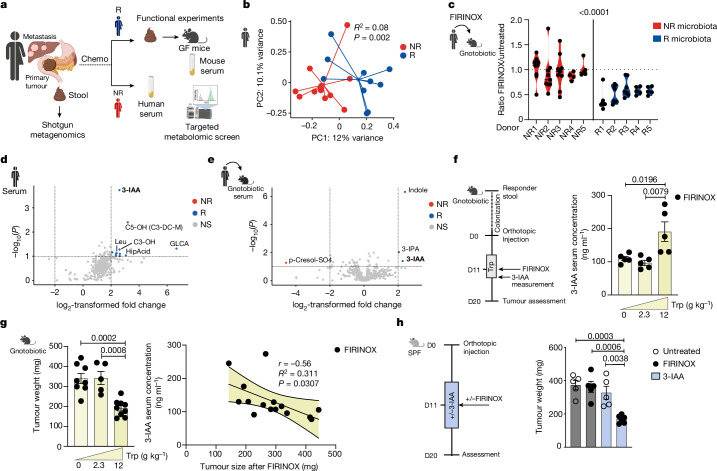
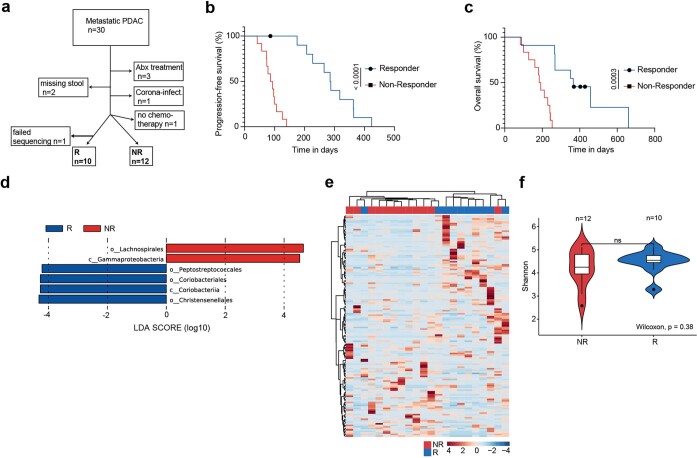
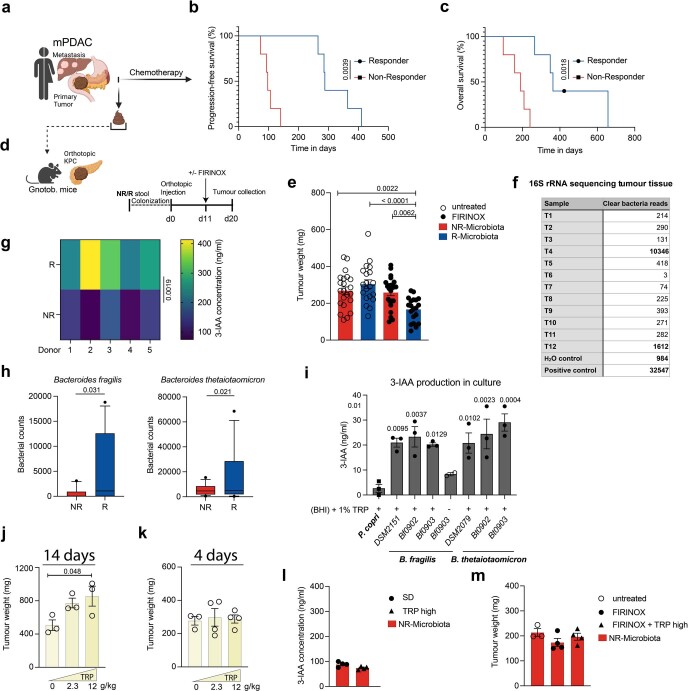
- In a metastatic PDAC cohort, responders had higher progression-free survival than non-responders (mean 40.9 weeks vs 12.8 weeks) and overall survival (51.9 weeks vs 26.4 weeks); 3-IAA was the most significantly enriched serum metabolite in responders versus non-responders.
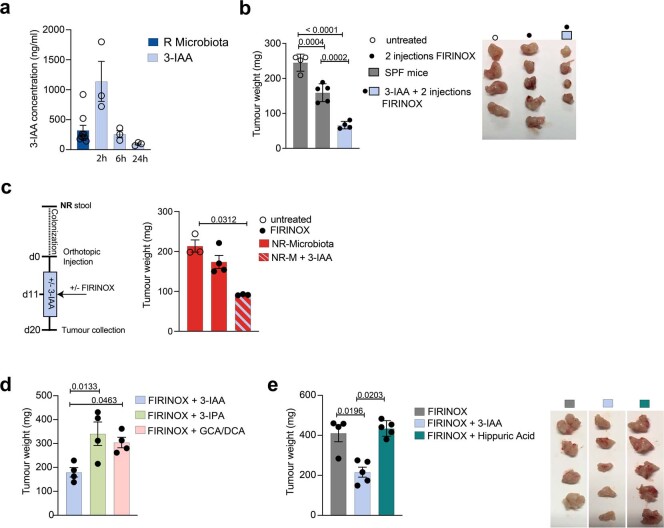
- Gnotobiotic mice colonized with responder microbiota had smaller tumours after FIRINOX than mice colonized with non-responder microbiota; four days of high-tryptophan diet increased serum 3-IAA and reduced tumour weight, and 3-IAA serum levels correlated inversely with tumour weight. Oral 3-IAA increased chemotherapy efficacy in SPF mice and in non-responder-microbiota-colonized mice.
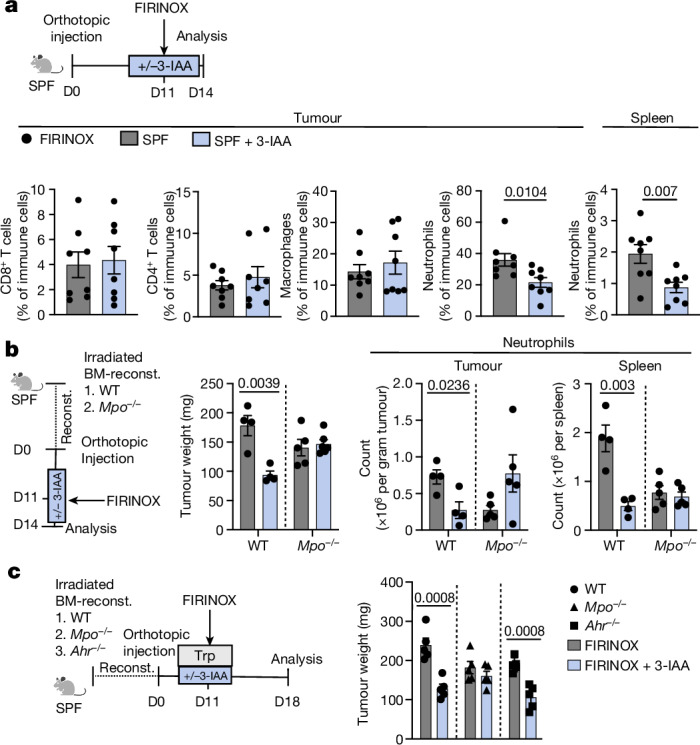
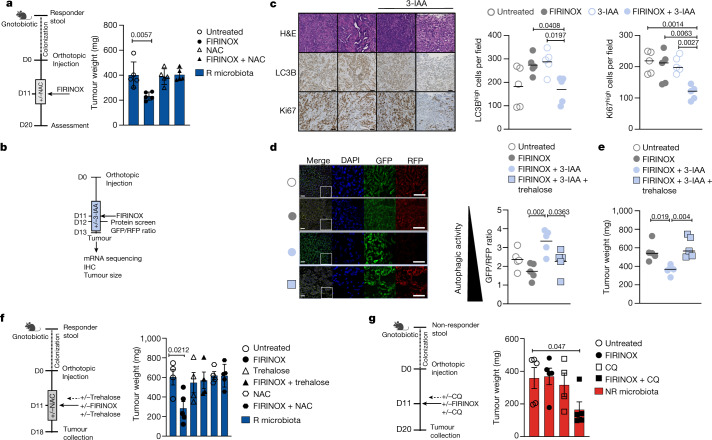
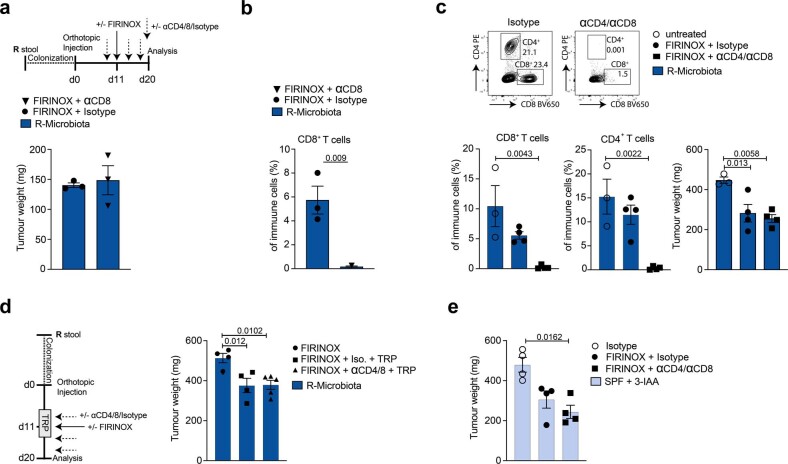
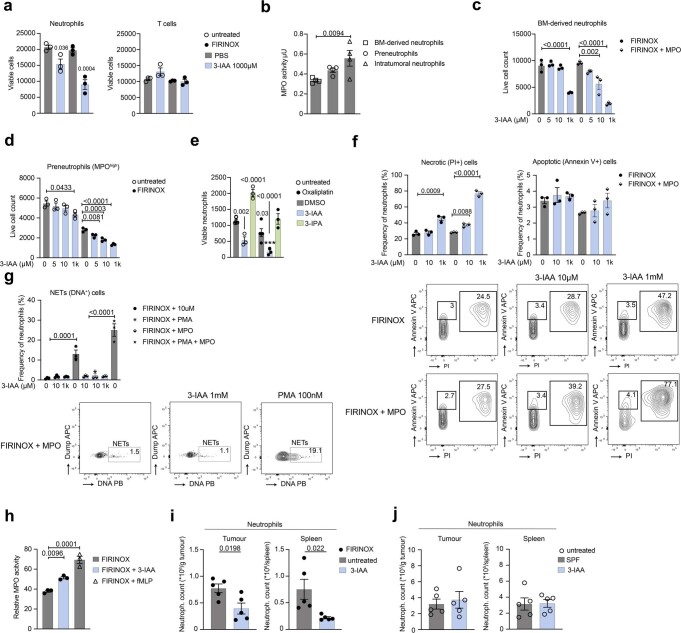
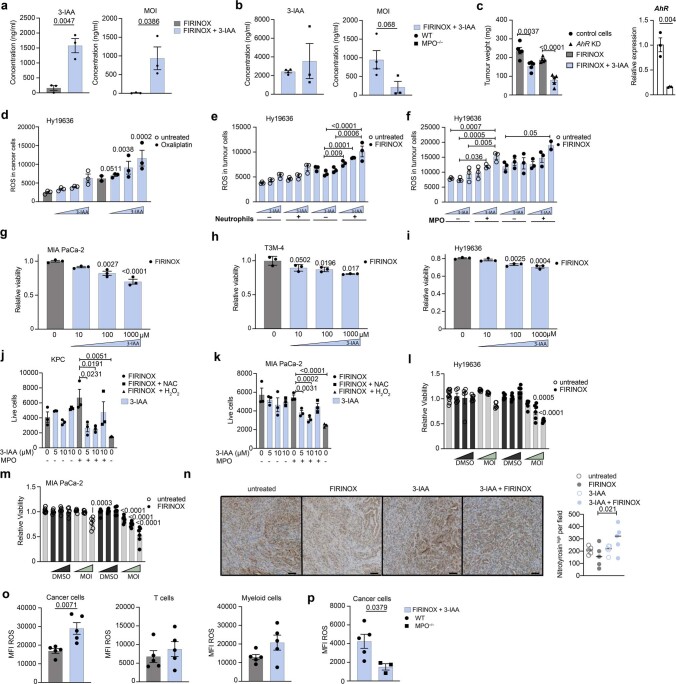
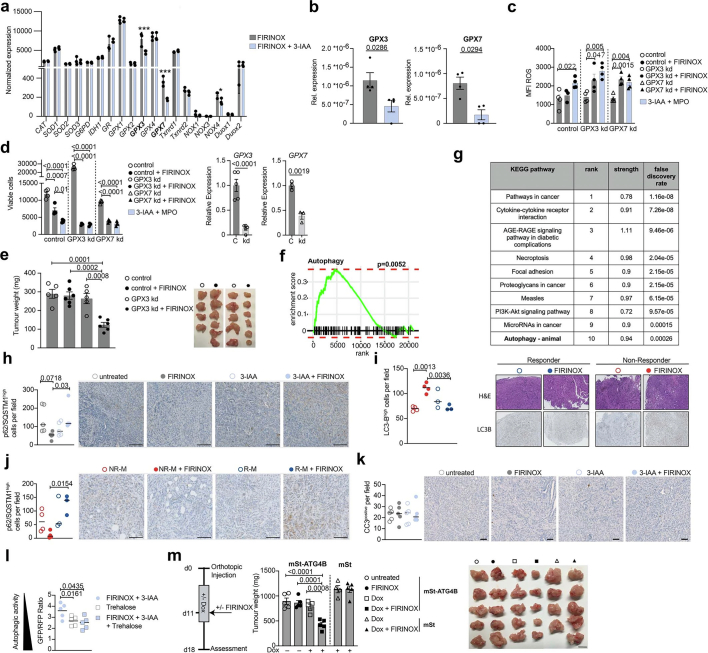
- The effect of 3-IAA plus FIRINOX was licensed by neutrophil-derived myeloperoxidase: Mpo−/− bone-marrow-reconstituted mice did not show smaller tumours with added 3-IAA, whereas Ahr−/− reconstitution did not abolish efficacy. 3-IAA plus FIRINOX increased ROS, downregulated glutathione peroxidase 3 and 7, reduced autophagy, and decreased proliferation; the ROS scavenger NAC or trehalose reversed efficacy, while hydroxychloroquine sensitized non-responder-colonized mice to FIRINOX.
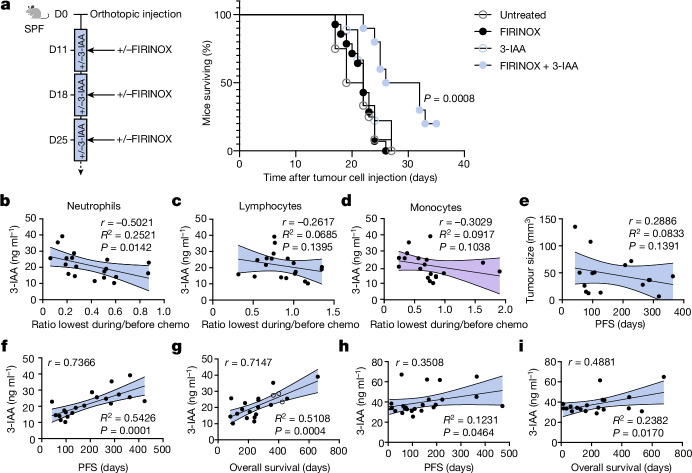
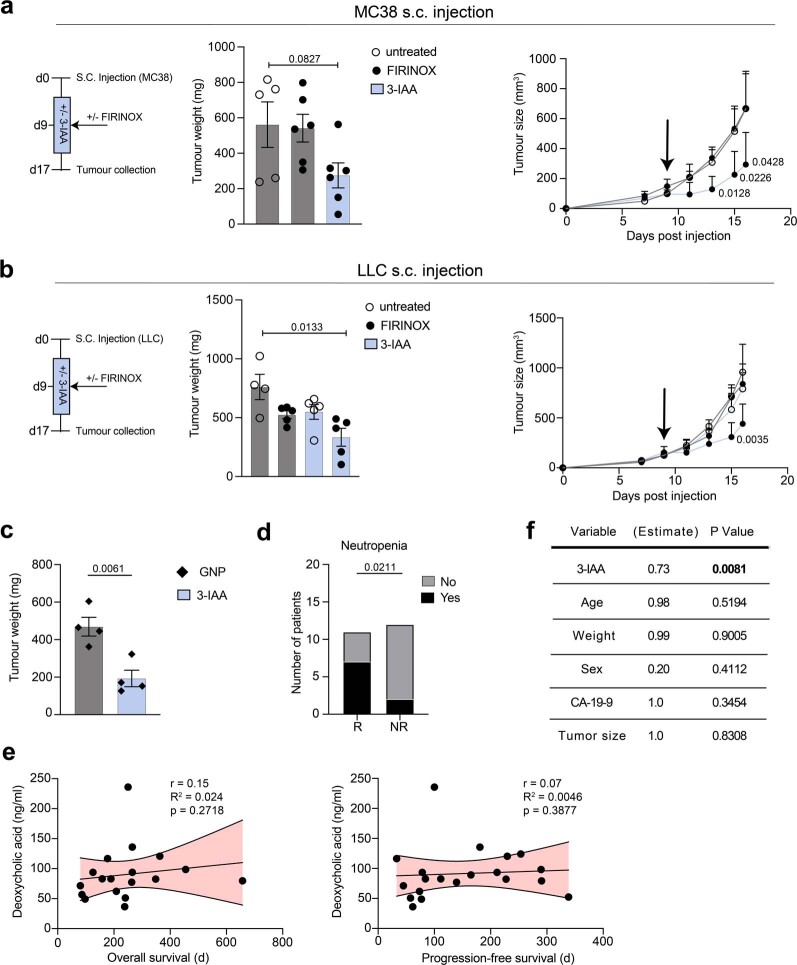
- In humans, 3-IAA serum concentration correlated with PFS or overall survival in the Hamburg cohort and was validated in the Munich cohort; neutrophil decrease after chemotherapy, but not lymphocyte or monocyte decrease, correlated with 3-IAA serum concentrations.
Methods
- Human study: recruited 30 patients with metastatic PDAC scheduled for GnP or FOLFIRINOX; 7 excluded, leaving 22 for microbiota analysis. Pre-treatment stool was analysed by shotgun metagenomics; serum/plasma was analysed by targeted metabolomics (UPLC–MS/MS, 630 metabolites) and 3-IAA/DCA chemiluminescence immune assays. Responder/non-responder classification used CT tumour shrinkage ≥25%, or PFS >140 days or ≥40% serum tumour-marker decline when CT was missing. Validation cohorts: Hamburg n = 23 (21 with serum) and Munich n = 24.
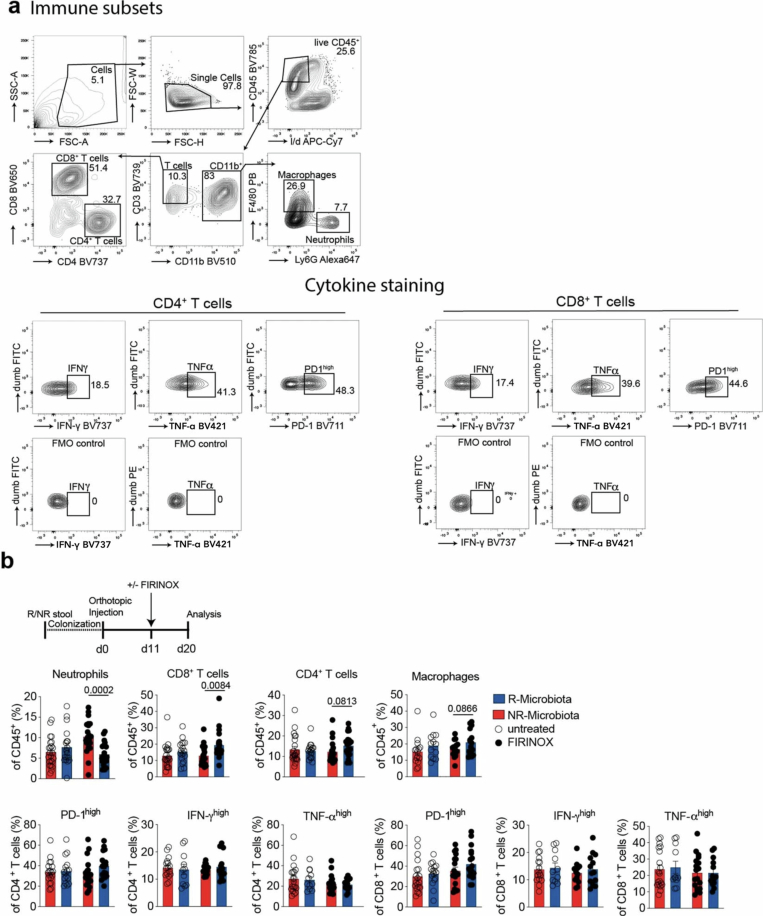
- Mouse models: C57BL/6 SPF and germ-free/gnotobiotic mice, orthotopic KPC or Hy19636 PDAC cells, subcutaneous MC38/LLC tumours, faecal microbiota transplantation from human donors, dietary tryptophan modulation, oral 3-IAA, FIRINOX or GnP, bone-marrow chimeras (wild-type, Mpo−/−, Ahr−/−), T-cell depletion, NAC, trehalose, chloroquine, and doxycycline-inducible ATG4B. Analyses included flow cytometry, immunohistochemistry, widefield microscopy, MPO activity assays, protein arrays, mRNA sequencing, qPCR, and 16S rRNA sequencing.
- Statistics: MANOVA, two-tailed nested t-test, fold-change analysis, t-tests, one-way ANOVA with Tukey’s or Dunnett’s post-hoc tests, Kruskal–Wallis with Dunn’s post-hoc test, simple linear regression with Pearson’s r, and log-rank Mantel–Cox test.
Limitations
- The paper states that patient numbers were limited (Hamburg cohort n = 23, of whom 21 had serum samples; Munich cohort n = 24), that more observational studies are needed before interventional trials, that additional mechanisms cannot be ruled out for the tryptophan-high diet experiments, that larger studies are needed to determine whether B. fragilis and B. thetaiotaomicron are responsible for 3-IAA production in responders, and that a causative link between 3-IAA and neutropenia in humans requires further study.
- The text also notes that the person treating mice was not blinded because of complex treatment schedules, and several mouse experiments show only one out of two or three independent experiments, which limits generalizability.
Model-written summary. Check it against the paper before relying on it.
Integrity signals
Registry
Cites
Statistics
Figures
Verification
Claims the paper makes
8 Valid · 2 Not valid · 15 Not checked · 109 Own results and interpretations
Some cited sources support this claim and some don’t — read each source’s verdict below.
In the paper
“In rare patients with localized PDAC who are long-term survivors, bacteria can translocate from the intestine into the tumour and control anti-tumour immune activation11,12.”
§ Microbiota-derived 3-IAA influences chemotherapy efficacy in pancreatic cancer > Main
What the sources say
- Partly supportedcites [11] Riquelme, E. et al. Tumor microbiome diversity and composition influence pancreatic cancer outcomes. Cell 178, 795–806 (2019). 31398337 PMC7288240 sourceExperimental — accuracy not yet measured
The source supports the setting and the translocation half: it studies resected (localized) PDAC where 'a minor subset survives longer', and the DISCUSSION states 'We demostrate for the first time in human PDAC patients that the gut microbiota has the capacity to colonize pancreatic tumors' (though translocation from gut to pancreas is itself hedged as 'might be occuring'). What the source does not support is the claim that in these human long-term survivors the bacteria 'control anti-tumour immune activation': the causal immune control is shown only in tumor-bearing mice receiving human FMT (RESULTS, 'Gut microbiota can influence tumor microbiota and tumor growth' — increased CD8+/IFNg+ T cells, IFN-γ/IL-2, abrogated by CD8+ depletion), while the human LTS data are correlative (RESULTS, 'The tumor microbiome shapes immune responses promoting T cell activation' — correlations of CD8+/GzmB+ density with microbiome diversity, p = 0.006–<0.0001). The DISCUSSION explicitly calls for 'further studies... in human PDAC patients to determine how FMT can induce changes in the microbiome tumor and inmune activation'. (LLM, conf=0.78)
- Disputedcites [12] Balachandran, V. P. et al. Identification of unique neoantigen qualities in long-term survivors of pancreatic cancer. Nature 551, 512–516 (2017). 29132146 PMC6145146 sourceExperimental — accuracy not yet measured
Our copy of Balachandran et al. 2017 contains no finding of intestinal bacteria translocating into the tumour; in the Discussion (Author Contributions section) it states 'Our results do not imply causal associations of pre-existing microbial and anti-tumor immunity in LTSs' and that 'whether homology to patient-derived microbiomes enhances relevant neoantigen identification remains unknown yet timely', treating intratumoral bacterial effects on T cell phenotypes as evidence from other work rather than its own. What the paper does report in rare long-term survivor PDAC is neoantigen–microbial molecular mimicry: a quality model based on homology to infectious disease-derived peptides (not patient gut bacteria), with identical TCR clones expanded to neopeptides and cross-reactive microbial peptides (Author Contributions, Results/Figure 3 passages), and it explicitly leaves unproven whether those clones drive the prolonged survival. Thus the causal 'control anti-tumour immune activation' and the gut-to-tumour translocation mechanism attributed here run counter to, rather than follow from, this source. (LLM, conf=0.68)
Checked by a reasoning model — may be wrong.
plainstates a cause- Asserted: passes — The authors put it forward as true.
- Checkable: passes — It can be checked against evidence.
- Load-bearing: unclear — It is unclear whether the paper’s conclusions depend on it.
- Based: passes — The paper gives a reason why it holds.
- Partly supported
The cited sources support only part of this claim — read each source’s verdict below.
In the paper
“genetic alterations alone cannot explain this5”
- Also stated in: § Main · plain
“Genetic alterations in PDAC poorly explain the differences between patients who respond to therapy (responder (R) patients) and NR patients5,6”
§ Microbiota-derived 3-IAA influences chemotherapy efficacy in pancreatic cancer > Abstract
What the sources say
- Supportedcites [5] Raghavan, S. et al. Microenvironment drives cell state, plasticity, and drug response in pancreatic cancer. Cell 184, 6119–6137 (2021). 34890551 PMC8822455 source
The Results section (“State-specific TME signals drive transcriptional heterogeneity and drug response”; page unavailable) reports that isogenic PDAC organoids changed their sensitivity to standard chemotherapies when TGF-β induced a different transcriptional state, and regained sensitivity when they returned to the prior state. This supports the claim that genetic alterations alone cannot explain chemotherapy response. (LLM, conf=0.93)
- Partly supportedcites [6] Aung, K. L. et al. Genomics-driven precision medicine for advanced pancreatic cancer: early results from the COMPASS trial. Clin. Cancer Res. 24, 1344–1354 (2018). 29288237 PMC5968824 sourceExperimental — accuracy not yet measured
The Results report different chemotherapy responses in classical and basal-like RNA subtypes, and paired biopsies found no new variants in genes obviously related to chemotherapy resistance. These findings support looking beyond identified genetic alterations, but the paper does not establish the categorical claim that genetic alterations alone cannot explain chemotherapy response in PDAC. (LLM, conf=0.82)
plain- Asserted: passes — The authors put it forward as true.
- Checkable: passes — It can be checked against evidence.
- Load-bearing: passes — The paper’s conclusions depend on it.
- Based: passes — The paper gives a reason why it holds.
- Also stated in: § Main · plain
The cited sources support only part of this claim — read each source’s verdict below.
In the paper
“a low neutrophil count (neutropenia) is associated with a good prognosis in mPDAC22.”
§ Microbiota-derived 3-IAA influences chemotherapy efficacy in pancreatic cancer > The effect of 3-IAA is licensed by myeloperoxidase
What the sources say
- Partly supportedcites [22] Roviello, G. et al. Association between neutropenia and survival to nab-paclitaxel and gemcitabine in patients with metastatic pancreatic cancer. Sci. Rep. 10, 19281 (2020). 33159172 PMC7648798 sourceExperimental — accuracy not yet measured
The Results (Neutropenia and clinical outcome) report longer overall survival for patients who developed grade ≥ 3 neutropenia than for those with grade < 3 neutropenia. The study examined 115 patients receiving first-line nab-paclitaxel and gemcitabine, so it does not establish the association for neutropenia in metastatic PDAC generally or for a low neutrophil count before treatment. (LLM, conf=0.85)
plainstates an association- Asserted: passes — The authors put it forward as true.
- Checkable: passes — It can be checked against evidence.
- Load-bearing: unclear — It is unclear whether the paper’s conclusions depend on it.
- Based: passes — The paper gives a reason why it holds.
- Partly supported
Every source the paper cites for this claim was checked and supports it.
In the paper
“treatment with the disaccharide trehalose30 normalizes autophagic activity, as measured by a decreasing GFP/RFP ratio in autophagy reporter cells31 (Fig. 3d and Extended Data Fig. 8l).”
§ Microbiota-derived 3-IAA influences chemotherapy efficacy in pancreatic cancer > The effect of 3-IAA depends on ROS and autophagy
What the sources say
- Supportedcites [30] DeBosch, B. J. et al. Trehalose inhibits solute carrier 2A (SLC2A) proteins to induce autophagy and prevent hepatic steatosis. Sci. Signal. 9, ra21 (2016). 26905426 PMC4816640 source
The Results section on cultured primary hepatocytes reports that trehalose induced autophagic flux, supporting its use as an autophagy-promoting treatment. The decreasing GFP/RFP ratio is presented as the citing paper’s own measurement, while the reporter-cell citation is separate; this source need not report that assay. (LLM, conf=0.88)
- Supportedcites [31] Yamamoto, K. et al. Autophagy promotes immune evasion of pancreatic cancer by degrading MHC-I. Nature 581, 100–105 (2020). 32376951 PMC7296553 source
Citation 31 is attached to the autophagy-reporter measurement, while citation 30 accompanies trehalose. The Extended Data figure captions describe GFP-LC3-RFP reporter cells and state that a lower GFP/RFP ratio reflects higher autophagy flux. They do not establish the citing paper’s trehalose-treatment result, which is not the point attributed to citation 31. (LLM, conf=0.91)
plainstates a cause- Asserted: passes — The authors put it forward as true.
- Checkable: passes — It can be checked against evidence.
- Load-bearing: passes — The paper’s conclusions depend on it.
- Based: passes — The paper gives a reason why it holds.
- Supported
Every source the paper cites for this claim was checked and supports it.
In the paper
“We observed higher rates of neutropenia in patients who responded to chemotherapy, consistent with our mouse data and the known association between neutropenia and PDAC prognosis22 (Extended Data Fig. 9d).”
§ Microbiota-derived 3-IAA influences chemotherapy efficacy in pancreatic cancer > 3-IAA has therapeutic potential
What the sources say
- Supportedcites [22] Roviello, G. et al. Association between neutropenia and survival to nab-paclitaxel and gemcitabine in patients with metastatic pancreatic cancer. Sci. Rep. 10, 19281 (2020). 33159172 PMC7648798 source
Citation 22 supports the cited background association between neutropenia and pancreatic-cancer prognosis; the higher neutropenia rates among responders are the citing authors’ own observation. In Results, under “Neutropenia and clinical outcome,” patients with grade ≥3 neutropenia had longer median overall survival than those with grade <3 neutropenia (13 versus 10 months; p = 0.04). (LLM, conf=0.92)
plainstates an association- Asserted: passes — The authors put it forward as true.
- Checkable: passes — It can be checked against evidence.
- Load-bearing: passes — The paper’s conclusions depend on it.
- Based: passes — The paper gives a reason why it holds.
- Supported
78 more claims
Create a free account to see all 134 claims and to verify the 24 references still open.
- Probably not a substantial claim. 35
- It may state two separate claims as one. 20
Claims other papers make about this one
Each is checked against this paper’s own text: does it say what the citing paper says it does?
The source backs part of the claim, not all of it — or backs it for a different population, condition or comparison.
In the citing paper
“Selective metabolites produced by distinct intestinal bacteria modulate cancer immunosurveillance in extraintestinal tumors.”
From Impact of the ONCOBIOME network in cancer microbiome research (2025) · cites this paper as [73]
Experimental — accuracy not yet measured
Self-check
Percentages, sums and reported differences re-computed from the paper’s own numbers.
Each contradiction between two passages listed here was confirmed by an independent check.
Rated minor: it would not touch a result — a value no result rests on, a p-value that stays on the same side of the significance level, or a conflict that is clerical, resolved elsewhere in the paper, or outside its own findings.
In the paper
§ Microbiota-derived 3-IAA influences chemotherapy efficacy in pancreatic cancer > The effect of 3-IAA depends on ROS and autophagy
“Third, treatment with the autophagy blocker hydroxychloroquine sensitized tumours from NR- microbiota-colonized mice (low 3-IAA) to FIRINOX treatment (Fig. 3g).”
§ Microbiota-derived 3-IAA influences chemotherapy efficacy in pancreatic cancer > Methods > Animal models
“Similarly, 60 mg kg−1 chloroquine (Sigma, C6628) dissolved in PBS was injected i.p. one day before and on the day of chemotherapy treatment.”
Citations
Cites
Moderated estimation of fold change and dispersion for RNA-seq data with DESeq2
Love, M. I., Huber, W., & Anders, S. (2014) · Genome Biology · doi:10.1186/s13059-014-0550-8 · Cited by 95,106
STAR: ultrafast universal RNA-seq aligner
Dobin, A., Davis, C. A., Schlesinger, F., Drenkow, J., Zaleski, C., Jha, S., Batut, P., Chaisson, M., & Gingeras, T. R. (2013) · Bioinformatics · doi:10.1093/bioinformatics/bts635 · Cited by 51,709 · cited 1×
“104) using STAR (v.2.7.9a) 47 .”
InfluentialDADA2: High–resolution sample inference from Illumina amplicon data
Callahan, B. J., McMurdie, P. J., Rosen, M. J., Han, A. W., Johnson, A. J. A., & Holmes, S. P. (2016) · Nature Methods · doi:10.1038/nmeth.3869 · Cited by 35,698
phyloseq: An R Package for Reproducible Interactive Analysis and Graphics of Microbiome Census Data
McMurdie, P. J., & Holmes, S. (2013) · PLoS ONE · doi:10.1371/journal.pone.0061217 · Cited by 21,322 · cited 1×
“43,44 ).”
Metagenomic biomarker discovery and explanation
Segata, N., Izard, J., Waldron, L., Gevers, D., Miropolsky, L., Garrett, W. S., & Huttenhower, C. (2011) · Genome Biology · doi:10.1186/gb-2011-12-6-r60 · Cited by 16,192
Ultra-high-throughput microbial community analysis on the Illumina HiSeq and MiSeq platforms
Caporaso, J. G., Lauber, C. L., Walters, W. A., Berg-Lyons, D., Huntley, J., Fierer, N., Owens, S. M., Betley, J., Fraser, L., Bauer, M., et al. (2012) · The ISME Journal · doi:10.1038/ismej.2012.8 · Cited by 8,839
Increased Survival in Pancreatic Cancer with nab-Paclitaxel plus Gemcitabine
Von Hoff, D. D., Ervin, T., Arena, F. P., Chiorean, E. G., Infante, J., Moore, M., Seay, T., Tjulandin, S. A., Ma, W. W., Saleh, M. N., et al. (2013) · New England Journal of Medicine · doi:10.1056/nejmoa1304369 · Cited by 6,712
The Reactome pathway Knowledgebase
Fabregat, A., Sidiropoulos, K., Garapati, P., Gillespie, M., Hausmann, K., Haw, R., Jassal, B., Jupe, S., Korninger, F., McKay, S., et al. (2016) · Nucleic Acids Research · doi:10.1093/nar/gkv1351 · Cited by 5,605
FOLFIRINOX or Gemcitabine as Adjuvant Therapy for Pancreatic Cancer
Conroy, T., Hammel, P., Hebbar, M., Ben Abdelghani, M., Wei, A. C., Raoul, J.-L., Choné, L., Francois, E., Artru, P., Biagi, J. J., et al. (2018) · New England Journal of Medicine · doi:10.1056/nejmoa1809775 · Cited by 2,874
Beghini, F., McIver, L. J., Blanco-Míguez, A., Dubois, L., Asnicar, F., Maharjan, S., Mailyan, A., Manghi, P., Scholz, M., Thomas, A. M., et al. (2021) · eLife · doi:10.7554/elife.65088 · Cited by 2,303
Cited by
Items 101–200 of 480
Wang, Y., Chen, J., Ni, Y., Liu, Y., Xiang, G., Tse, M. A., Panagiotou, G., & Xu, A. (2024) · Gut Microbes · doi:10.1080/19490976.2024.2416928 · Cited by 26
“52 The positive association between increased circulating 3-IAA levels and exercise-induced fungi genus raised the possibility that IAA may serve as a transducer mediating Verticillium-derived benefits, which warrants further investigation in the future study.”
BackgroundInfluentialEffects of Perfluorooctanoic Acid on Gut Microbiota and Microbial Metabolites in C57BL/6J Mice
Gao, B., Chen, L., Xu, W., Shan, J., Shen, W., & Gao, N. (2023) · Metabolites · doi:10.3390/metabo13060707 · Cited by 28
Impact of the ONCOBIOME network in cancer microbiome research
Zitvogel, L., Derosa, L., Routy, B., Loibl, S., Heinzerling, L., de Vries, I. J. M., Engstrand, L., ONCOBIOME Network, Silva, C. A. C., Barbieri, D., et al. (2025) · Nature Medicine · doi:10.1038/s41591-025-03608-8 · Cited by 23
Advances in Nanomaterials for Immunotherapeutic Improvement of Cancer Chemotherapy
Liu, J., Li, B., Li, L., Ming, X., & Xu, Z. P. (2024) · Small · doi:10.1002/smll.202403024 · Cited by 24
Feng, S., Gong, Y., Xia, L., Lang, Y., Shen, Y., Li, H., Feng, W., Chen, F., & Chen, Y. (2024) · Advanced Materials · doi:10.1002/adma.202405655 · Cited by 27
Fucoidan exerts antitumor effects by regulating gut microbiota and tryptophan metabolism
Ren, P., Liu, M., Wei, B., Tang, Q., Wang, Y., & Xue, C. (2025) · International Journal of Biological Macromolecules · doi:10.1016/j.ijbiomac.2025.140334 · Cited by 27
Song, Q., Li, X., Li, Q., Shang, S., Ma, S., Zhai, Z., Sun, F., Mo, Y., Wei, L., Wu, M., et al. (2025) · Cell Reports · doi:10.1016/j.celrep.2025.116132 · Cited by 30
Role of STAT3 in pancreatic cancer
Hamel, Z., Sanchez, S., Standing, D., & Anant, S. (2024) · Exploration of Targeted Anti-tumor Therapy · doi:10.37349/etat.2024.00202 · Cited by 25
Chen, J., Zhang, C., Yang, Z., Wu, W., Zou, W., Xin, Z., Zheng, S., Liu, R., Yang, L., & Peng, H. (2024) · Parasites & Vectors · doi:10.1186/s13071-024-06349-8 · Cited by 27
“Previous studies have shown that ILA can activate the aromatic hydrocarbon receptor (AhR) signaling pathway, thereby regulating immune cells such as CD4 + and CD8 + T cells [60].”
BackgroundEmerging chemophysiological diversity of gut microbiota metabolites
Lin, X., He, K., Gu, Z., & Zhao, X. (2024) · Trends in Pharmacological Sciences · doi:10.1016/j.tips.2024.07.006 · Cited by 26
Precision Targeting Strategies in Pancreatic Cancer: The Role of Tumor Microenvironment
Vitorakis, N., Gargalionis, A. N., Papavassiliou, K. A., Adamopoulos, C., & Papavassiliou, A. G. (2024) · Cancers · doi:10.3390/cancers16162876 · Cited by 29
“Such promising metabolites produced by gut microbes include trimethylamine N-oxide (TMAO), which has been found to boost anti-tumor immunity against PDAC as well as 3-IAA, which renders PDAC cells more sensitive to chemotherapy [193,194].”
BackgroundZhuo, J., Liu, D., Yu, Q., Hu, M., Huang, H., Chen, Y., Li, Y., Gao, Y., Chen, W., Meng, X., et al. (2024) · Life Sciences · doi:10.1016/j.lfs.2024.123191 · Cited by 23
Diet, gut microbiota, and health: a review
Zhang, L., TuoLiKen, H., Li, J., & Gao, H. (2024) · Food Science and Biotechnology · doi:10.1007/s10068-024-01759-x · Cited by 28
“Additionally, indole-3-acetic acid, another bacterial derivative of a tryptophan metabolite, has been found to affect chemotherapy treatment through the ROS-autophagy axis (Tintelnot et al., 2023).”
Bifidobacteria-derived exopolysaccharide promotes anti-tumor immunity
de Oliveira, R. S., Shupe, A., Krause, T., Richardo, T., Ohland, C., Sabachvili, M., Bucher, K., Hetzer, J., Hörner, S., Dauch, D., et al. (2025) · Cell Reports · doi:10.1016/j.celrep.2025.116223 · Cited by 25
Giurini, E. F., Ralph, O. G., Pappas, S. G., & Gupta, K. H. (2024) · Molecular Cancer Therapeutics · doi:10.1158/1535-7163.mct-24-0311 · Cited by 26
“Beyond immunotherapies, tryptophan metabolite 3-indole-3-acetic acid improved PDAC sensitivity to FIRINOX treatment through ROS accumulation and reduced tumor cell autophagy (82).”
Daniel, N., Farinella, R., Belluomini, F., Fajkić, A., Rizzato, C., Souček, P., Campa, D., & Hughes, D. J. (2025) · Seminars in Cancer Biology · doi:10.1016/j.semcancer.2025.03.002 · Cited by 25
Wu, S., Gao, S., Lin, D., Bekhit, A. E. A., & Chen, Y. (2025) · Food Research International · doi:10.1016/j.foodres.2025.116799 · Cited by 26
Cui, L., Wang, Z., Guo, Z., Zhang, H., Liu, Y., Zhang, H., Jin, H., Xu, F., Wang, X., Xie, C., et al. (2025) · Advanced Science · doi:10.1002/advs.202409533 · Cited by 31
Harnessing the microbiome for cancer therapy
Hajjar, R., Mars, R. A. T., & Kashyap, P. (2026) · Nature Reviews Microbiology · doi:10.1038/s41579-025-01268-6 · Cited by 34
“…microbial metabolism of tryptophan in the TME can generate indole derivatives such as indole-3-acetic acid and indole-3-propionic acid, which enhance CD8⁺ T cell function and improve responses to chemotherapy and immunotherapy across multiple cancers through metabolic or epigenetic effects 10,103 .”
Chen, J., Shi, G., Yu, L., Shan, W., Sun, J., Guo, A., Wu, J., Tang, T., Zhang, X., & Wang, Q. (2025) · Advanced Science · doi:10.1002/advs.202412667 · Cited by 29
Zhong, L., Boopathi, S., Purushothaman, B., Tu, Q., & Zhang, Y. (2025) · Microbiological Research · doi:10.1016/j.micres.2025.128293 · Cited by 26
Léon-Letelier, R. A., Dou, R., Vykoukal, J. V., Yip-Schneider, M., Maitra, A., Irajizad, E., Wu, R., Dennison, J. B., Do, K., Zhang, J., et al. (2024) · Clinical Chemistry · doi:10.1093/clinchem/hvad186 · Cited by 24
Zhang, Y., Xu, W., Peng, C., Ren, S., Hidig, S. M., & Zhang, C. (2024) · Cellular Signalling · doi:10.1016/j.cellsig.2024.111288 · Cited by 26
Liu, Z., Wang, M., Li, J., Guo, X., Guo, Q. M., & Zhu, B. (2024) · Carbohydrate Polymers · doi:10.1016/j.carbpol.2024.123126 · Cited by 21
Gut microbiota in cancer initiation, development and therapy
Zhang, R., Zhang, X., Lau, H. C.-H., & Yu, J. Q. (2024) · Science China Life Sciences · doi:10.1007/s11427-024-2831-x · Cited by 19
“Mechanistically, IAA reduces the levels of ROS-degrading enzymes which leads to an accumulation of ROS within cancer cells and decreases autophagy, ultimately compromising their metabolic fitness and inhibiting their proliferation (Tintelnot et al., 2023).”
Translocating Lactobacillus torments tumors via tryptophan catabolism
Pereira, M. S., & Kriegel, M. A. (2023) · Cell · doi:10.1016/j.cell.2023.03.022 · Cited by 19
The Interplay between Microbiota and Chemotherapy-Derived Metabolites in Breast Cancer
Plaza‐Díaz, J., & Álvarez‐Mercado, A. I. (2023) · Metabolites · doi:10.3390/metabo13060703 · Cited by 22
“fitness, and ultimately, their proliferative ability [71].”
BackgroundInfluentialGut microbiota: Impact on 5-fluorouracil efficacy and toxicity
Lo, E. K. K., Leung, H. K. M., Zhang, F., & El-Nezami, H. S. (2023) · Current Opinion in Toxicology · doi:10.1016/j.cotox.2023.100423 · Cited by 24
Qu, X., Song, Y., Li, Q., Xu, Q., Li, Y., Zhang, H., Cheng, X., Mackay, C. R., Wang, Q., & Liu, W. (2024) · Archives of Pharmacal Research · doi:10.1007/s12272-024-01488-z · Cited by 27
“Moreover, one of the most important tryptophan metabolites catabolized by the gut microbiota, IAA, has been demonstrated to increase the efficacy of chemotherapy in humanized gnotobiotic mouse models of pancreatic ductal adenocarcinoma (Tintelnot et al. 2023).”
Microecological regulation in HCC therapy: Gut microbiome enhances ICI treatment
Liu, X., Li, S., Wang, L., & Ma, K. (2024) · Biochimica et Biophysica Acta (BBA) - Molecular Basis of Disease · doi:10.1016/j.bbadis.2024.167230 · Cited by 22
Feng, Y., Zheng, H., Yin, C., Liang, D., Zhang, S., Chen, J., Mai, F., Lan, Z., Zhu, M., Mai, Z., et al. (2024) · Cell Reports Medicine · doi:10.1016/j.xcrm.2024.101678 · Cited by 21
Deng, Y., Hou, X., Fang, Q., Wang, H., Li, X., Hu, Z., Liu, Z., Fan, L., Liu, Y., Fu, Z., et al. (2025) · Molecular Medicine · doi:10.1186/s10020-025-01122-8 · Cited by 22
“Mean-while, existing studies suggested that bacterial tryptophan metabolism could affect chemotherapy response in various cancers and may be important synergistic targets (Creelan et al. 2013; Li et al. 2014; Tintelnot et al. 2023).”
Cancer stem cells: Bridging microenvironmental interactions and clinical therapy
Wang, H., Li, J., Du, F., & Deng, H. (2025) · Clinical and Translational Medicine · doi:10.1002/ctm2.70406 · Cited by 24
“In recent years, extensive research has shown that gut microbiota and tumour-resident microorganisms also play important roles in regulating the functions of various CSCs. 194,195 A portion of gut microbiota can affect CSCs in various tumours, including colorectal cancer and melanoma.”
Human microbiota-associated animal models: a review
Huang, X., Yu, Y., Tian, N., Huang, J., Zhang, X., & Yu, R. (2025) · Frontiers in Cellular and Infection Microbiology · doi:10.3389/fcimb.2025.1644187 · Cited by 21
“However, it carries a risk of dehydration, which may result from animals avoiding water due to the taste of the antibiotic or from antibiotic-associated diarrhea caused by prolonged exposure to the solution (Hill et al., 2010; Reikvam et al., 2011; Xu et al., 2023).”
InfluentialImpact of gut microbiome in the development and treatment of pancreatic cancer: Newer insights
Bangolo, A., Trivedi, C. P., Jani, I., Pender, S., Khalid, H., Alqinai, B., Intisar, A., Randhawa, K., Moore, J., Deugd, N. D., et al. (2023) · World Journal of Gastroenterology · doi:10.3748/wjg.v29.i25.3984 · Cited by 17
Combination of multiple omics techniques for a personalized therapy or treatment selection
Massa, C., & Seliger, B. (2023) · Frontiers in Immunology · doi:10.3389/fimmu.2023.1258013 · Cited by 20
Microbial metabolites as modulators of host physiology
Joyce, S. A., & Clarke, D. J. (2024) · Advances in microbial physiology/Advances in Microbial Physiology · doi:10.1016/bs.ampbs.2023.12.001 · Cited by 24
Woo, S., Kim, S. K., Lee, S., & Lee, D. (2025) · Journal of Biological Engineering · doi:10.1186/s13036-025-00479-y · Cited by 25
Eating away cancer: the potential of diet and the microbiome for shaping immunotherapy outcome
Nguyen, N.-T. A., Jiang, Y., & McQuade, J. L. (2024) · Frontiers in Immunology · doi:10.3389/fimmu.2024.1409414 · Cited by 23
“Recently, Bender et al. demonstrated that L. reuteri was able to translocate from the intestine to the tumor bed and produce indole-3-aldehyde in situ which promoted antitumor immunity and ICB response in an AhR-dependent, Tc1-cell-inducing manner (43, 44).”
BackgroundJangid, A. K., Kim, S. J., & Kim, K. (2024) · International Journal of Biological Macromolecules · doi:10.1016/j.ijbiomac.2024.133738 · Cited by 19
Gut microbiome contributes to 6PPD-quinone induced cognitive impairment through PI3K/Akt signaling
Zhu, X., & Xu, Y. (2025) · Toxicology · doi:10.1016/j.tox.2025.154217 · Cited by 16
Self-citationClassic versus innovative strategies for immuno-therapy in pancreatic cancer
Formelli, M. G., Palloni, A., Tavolari, S., Deiana, C., Andrini, E., Marco, M. D., Campana, D., Lamberti, G., & Brandi, G. (2025) · Advanced Drug Delivery Reviews · doi:10.1016/j.addr.2025.115671 · Cited by 20
Qiao, S., Li, T.-T., Jeong, M., Chuanfa, L. I. U., Mizutani, S., Hwang, S.-M., Li, Y., Lyu, M., Nishiyama, K., Tang, Y.-A., et al. (2026) · Cell Host & Microbe · doi:10.1016/j.chom.2025.12.003 · Cited by 18
Qian, J., Zhang, X., Wei, B., Tang, Z., & Zhang, B. (2023) · Biochimica et Biophysica Acta (BBA) - Reviews on Cancer · doi:10.1016/j.bbcan.2023.188943 · Cited by 17
Decoding the obesity–cancer connection: lessons from preclinical models of pancreatic adenocarcinoma
Ruiz, C. F., Garcia, C. C., Jacox, J. B., Lawres, L., & Muzumdar, M. D. (2023) · Life Science Alliance · doi:10.26508/lsa.202302228 · Cited by 17
“Conversely, a bacterial metabolite, 3-IAA, was found to increase chemotherapeutic ef fi cacy in orthotopic PDAC models and PDAC patients (Tintelnot et al, 2023).”
BackgroundIntestinal microbiota: A bridge between intermittent fasting and tumors
Liu, J., Shao, N., Qiu, H., Zhao, J., Chen, C., Wan, J., He, Z., Zhao, X., & Xu, L. (2023) · Biomedicine & Pharmacotherapy · doi:10.1016/j.biopha.2023.115484 · Cited by 17
Emerging Self‐Assembled Nanoparticles Constructed from Natural Polyphenols for Intestinal Diseases
Liu, Q., He, Y., Yan, F., Wu, Y., Gong, G., Du, X., & Guo, J. (2023) · Advanced NanoBiomed Research · doi:10.1002/anbr.202300046 · Cited by 19
Diet and immune response: how today’s plate shapes tomorrow’s health
Siracusa, F., Tintelnot, J., Cortesi, F., & Gagliani, N. (2023) · Trends in Immunology · doi:10.1016/j.it.2023.10.010 · Cited by 16
Self-citationMasad, R. J., Idriss, I., Mohamed, Y. A., Al-Sbiei, A., Bashir, G. H., Al-Marzooq, F. I., Altahrawi, A., Fernández-Cabezudo, M. J., & al-Ramadi, B. K. (2024) · Frontiers in Immunology · doi:10.3389/fimmu.2024.1354297 · Cited by 15
Ji, G., Zhao, J., Si, X., & Song, W. (2024) · Advanced Drug Delivery Reviews · doi:10.1016/j.addr.2024.115345 · Cited by 18
Merali, N., Chouari, T. A. M., Sweeney, C., Halle-Smith, J. M., Jessel, M.-D., Wang, B., Brien, J. O., Suyama, S., Jiménez, J. I., Roberts, K. J., et al. (2024) · International Journal of Surgery · doi:10.1097/js9.0000000000001762 · Cited by 16
Pharmacomicrobiomics in precision cancer therapy: bench to bedside
Ngoc, K. L., Pham, T. T. H., Nguyen, T. K., & Huong, P. T. (2024) · Frontiers in Immunology · doi:10.3389/fimmu.2024.1428420 · Cited by 20
Prajumwongs, P., Titapun, A., Thanasukarn, V., Jareanrat, A., Khuntikeo, N., Namwat, N., Klanrit, P., Wangwiwatsin, A., Chindaprasirt, J., Koonmee, S., et al. (2025) · Scientific Reports · doi:10.1038/s41598-025-97641-9 · Cited by 16
“Tintelnot J et al.. found that 3-IAA in the serum of pancreatic cancer patients and chemotherapy-sensitive mice correlates with improved progression-free and overall survival 34 .”
Biotherapeutic potential of gut microbiota-derived indole-3-acetic acid
Yang, J., Wang, H., Yan, J., Sun, J., Wang, Y., Huang, G., Zhang, F., Cao, H., & Li, D. (2025) · Critical Reviews in Microbiology · doi:10.1080/1040841x.2025.2532611 · Cited by 20
“Additionally, a negative correlation was also observed between serum iAA levels and tumor volume (tintelnot et al. 2023). the administration of iAA orally at a dosage of 500 mg/kg for 5 days has been found to enhance the response to chemotherapy.”
Microbiome-metabolome interplay in pancreatic cancer progression: insights from multi-omics analysis
Luo, D., Chen, Q., Li, Y., Yang, J., Tao, Y., Ji, L., & Gong, X. (2025) · Molecular Cancer · doi:10.1186/s12943-025-02458-9 · Cited by 19
“Changes in gut microbiota may affect host metabolic status, tumor metabolic reprogramming and influence pancreatic cancer progression by modulating immune responses [13, 29].”
Li, Y., Chen, C., Yu, L., Huang, X., Qian, J., Zhang, H., Zhang, L., Li, Y., & Zhang, Y. (2025) · Advanced Science · doi:10.1002/advs.202512575 · Cited by 18
Wang, X., Yang, J., Ren, B., Yang, G., Liu, X., Xiao, R., Ren, J., Zhou, F., You, L., & Zhao, Y. (2023) · Genes & Diseases · doi:10.1016/j.gendis.2023.101143 · Cited by 16
“57”
Microbiomes in pancreatic cancer can be an accomplice or a weapon
Guo, X., Wang, P., Li, Y., Chang, Y., & Wang, X. S. (2024) · Critical Reviews in Oncology/Hematology · doi:10.1016/j.critrevonc.2024.104262 · Cited by 15
Degron tagging for rapid protein degradation in mice
Hernández-Morán, B. A., Taylor, G. C. A., Lorente‐Macías, Á., & Wood, A. J. (2024) · Disease Models & Mechanisms · doi:10.1242/dmm.050613 · Cited by 15
Rico‐Jiménez, M., Udaondo, Z., Krell, T., & Matilla, M. A. (2024) · mSystems · doi:10.1128/msystems.00165-24 · Cited by 18
Oral microbiome and its relationship with oral cancer
Wang, S., Tan, X., Cheng, J., Liu, Z., Zhou, H., Liao, J., Wang, X., & Liu, H. (2024) · Journal of Cancer Research and Therapeutics · doi:10.4103/jcrt.jcrt_44_24 · Cited by 21
Exploring the gut microbiome and head and neck cancer interplay
SHETTY, V. S., & Shetty, S. S. (2024) · Pathology - Research and Practice · doi:10.1016/j.prp.2024.155603 · Cited by 14
Hou, Y. J., Liu, T., Sun, Z., Xu, X., Sun, Z., Li, Z., Liu, J., Tian, S., Li, Y., Zhu, N., et al. (2025) · Materials Today Bio · doi:10.1016/j.mtbio.2025.101689 · Cited by 21
“As an essential part of cellular life, autophagy can help to recycle energy and remove waste via degrading biological macromolecules and metabolic compounds, which also has been proven to play an important role in the initiation and progression of pancreatic cancer [20 – 22].”
Glapiński, F., Zając, W., Fudalej, M. M., Deptała, A., Czerw, A. I., Sygit, K., Kozłowski, R., & Badowska-Kozakiewicz, A. M. (2025) · Cancers · doi:10.3390/cancers17101599 · Cited by 16
“Many taxonomically distinct bacterial species can produce 3-IAA, and further studies are needed to assess a narrow selection of the appropriate microbiota [163].”
Cao, Z., Zhang, C., Lei, H., Lin, W., Yu, W.-K., Gao, X., He, Y., Li, X., Xiang, Q., Zhang, Z., et al. (2025) · Advanced Science · doi:10.1002/advs.202515794 · Cited by 21
Role of Gut Microbiome in Oncogenesis and Oncotherapies
Peddireddi, R. S. S., Kuchana, S. K., Kode, R., Khammammettu, S., Koppanatham, A., Mattigiri, S., Gobburi, H., & Alahari, S. K. (2025) · Cancers · doi:10.3390/cancers18010099 · Cited by 15
Decoding the microbial blueprint of pancreatic cancer
Bautista, J., Bedón-Galarza, R., Martínez-Hidalgo, F., Masache-Cruz, M. J., Benítez-Núñez, M., Valencia-Arroyo, C., & López‐Cortés, A. (2026) · Frontiers in Medicine · doi:10.3389/fmed.2026.1737582 · Cited by 15
“…salvage, bile-acid remodeling, and tryptophan–kynurenine metabolism to immune evasion, stromal remodeling, and therapeutic resistance in PDAC, supporting the development of microbiota-informed diagnostics and adjunctive strategies such as live biotherapeutics and precision nutrition (24, 25).”
Sidiropoulos, T. A., Dovrolis, N., Katifelis, H., Michalopoulos, N. V., Kokoropoulos, P., Arkadopoulos, N. F., & Gazouli, M. (2024) · Biomedicines · doi:10.3390/biomedicines12051040 · Cited by 15
Inflammation, microbiota, and pancreatic cancer
Chen, X., Sun, F., Wang, X., Feng, X., Aref, A. R., Tian, Y., Ashrafizadeh, M., & Wu, D. (2025) · Cancer Cell International · doi:10.1186/s12935-025-03673-6 · Cited by 16
“…3-IAA has been shown to reduce ROS-degrading enzymes including GPX3 and GPX7, enhancing ROS generation and inhibiting autophagy in tumor cells [213] Fecal microbiota Fecal microbiota has demonstrated better performance for the classification and prognosis of PDAC patients with AUROC of 0.84…”
InfluentialWeger, M., Weger, B. D., & Gachon, F. (2023) · Expert Opinion on Drug Discovery · doi:10.1080/17460441.2023.2224554 · Cited by 16
“3-IAA can be produced from tryptophan by indole-producing bacteria in the gut [115] and has been shown to amplify the response to chemotherapy in pancreatic cancer through an indirect and dosedependent mechanism that reduces stress adaptation in cancer cells [116].”
BackgroundLi, X., Jia, Y., Li, Y., Hei, H., Zhang, S., & Qin, J. (2025) · Frontiers in Immunology · doi:10.3389/fimmu.2025.1582166 · Cited by 16
From bugs to drugs: Bacterial 3-IAA enhances efficacy of chemotherapy in pancreatic cancer
Seo, Y. D., & Wargo, J. A. (2023) · Cell Reports Medicine · doi:10.1016/j.xcrm.2023.101039 · Cited by 13
“In a recent issue of Nature, Tintelnot et al.(1) deeply explored the interplay between the gut microbiota, the TME, and response to chemotherapy in PDAC, using translational studies in human cohorts and mechanistic studies in pre-clinical models.”
BackgroundMethodInfluentialCui, M., Qian, L., Lu, K., Liu, J., Chu, B., Wu, X., Dong, F., Song, B., & He, Y. (2024) · Small · doi:10.1002/smll.202402101 · Cited by 13
Hughes, D. L., Evans, A., Go, S., Eyres, M., Pan, L., Mukherjee, S., Soonawalla, Z. F., Willenbrock, F. W., & O’Neill, E. E. (2024) · Science Advances · doi:10.1126/sciadv.adm9071 · Cited by 15
“We will additionally explore metabolomic signatures due to mounting evidence that metabolic factors play a major role in cancer progression and treatment responses ( 42 – 44 ).”
Xu, Y., Le, J., Qin, J., Zhang, Y., Yang, J., Chen, Z., Li, C., Xiang, Q., & Zhang, A. (2024) · Pharmacological Research · doi:10.1016/j.phrs.2024.107364 · Cited by 13
Self-citationLi, P., Zhang, H., & Dai, M. (2024) · Cancer Letters · doi:10.1016/j.canlet.2024.217274 · Cited by 16
From microbes to medicine: harnessing the power of the microbiome in esophageal cancer
Liu, X., Li, B., Liang, L., Han, J., Mai, S., & Liu, L. (2024) · Frontiers in Immunology · doi:10.3389/fimmu.2024.1450927 · Cited by 14
de Juan, A., Coillard, A., Cros, A., Rigamonti, A., Alaoui, L., Sampaio, J. L., Monot, N., Balvay, A., Foussier, A., Rieux-Laucat, M., et al. (2025) · Nature Communications · doi:10.1038/s41467-025-66854-x · Cited by 16
Ni, Q., Zhen, L., Zeng, Z., Yang, J., Wang, Y., Xu, H., Zhang, Q., Zhu, Y., Yu, T., Wang, J., et al. (2024) · Cell Death and Disease · doi:10.1038/s41419-024-07024-7 · Cited by 13
Zhao, J., Sun, Y., Feng, Y., & Rong, J. (2024) · Advanced Science · doi:10.1002/advs.202404188 · Cited by 11
Feng, B., Lu, Y., Zhang, B., Zhu, Y., Su, Z., Tang, L., Yang, L., Wang, T., He, C., Li, C., et al. (2024) · International Journal of Biological Macromolecules · doi:10.1016/j.ijbiomac.2024.135992 · Cited by 12
Aksoy, S. A., Earl, J., Grahovac, J., Karakaş, D., Lencioni, G., Sığırlı, S., & Bijlsma, M. F. (2024) · Seminars in Cancer Biology · doi:10.1016/j.semcancer.2024.12.003 · Cited by 12
Fanijavadi, S., & Jensen, L. H. (2025) · International Journal of Molecular Sciences · doi:10.3390/ijms26020730 · Cited by 12
Yang, H. K., Cao, B., Tang, J., & Wang, J. (2025) · Frontiers in Microbiology · doi:10.3389/fmicb.2025.1592549 · Cited by 13
Li, W., Shangguan, W., Huang, W., Zhao, J., Zhu, Y., Xie, M., Yu, Y., Yang, Q., Zheng, J., Yang, L., et al. (2025) · Advanced Science · doi:10.1002/advs.202504688 · Cited by 37
The gut-tumor connection: the role of microbiota in cancer progression and treatment strategies
Wei, Z., Gao, G., He, Q., Kwok, L. Y., & Sun, Z. (2025) · Journal of Advanced Research · doi:10.1016/j.jare.2025.08.038 · Cited by 14
Tryptophan metabolites at the service of neuroimmune sensing of microbes
Wang, Y., Li, J., Lian, Z., Hao, H., & Zheng, X. (2025) · Trends in Molecular Medicine · doi:10.1016/j.molmed.2025.10.009 · Cited by 13
Yamamoto, K., Iwadate, D., Naito, E., Tateishi, K., & Fujishiro, M. (2023) · Current Opinion in Biotechnology · doi:10.1016/j.copbio.2023.103012 · Cited by 12
Su, H., Guo, Y., Cheng, H., Hu, S., Zhang, P.-J., & Yang, Z. (2024) · LWT · doi:10.1016/j.lwt.2024.116897 · Cited by 12
The Past, Present, and Future of Biomarkers for the Early Diagnosis of Pancreatic Cancer
Vitale, F., Verme, L. Z. D., Paratore, M., Negri, M., Nista, E. C., Ainora, M. E., Esposto, G., Mignini, I., Borriello, R., Galasso, L., et al. (2024) · Biomedicines · doi:10.3390/biomedicines12122840 · Cited by 16
Yoo, Y., Kim, S., Lee, W., Kim, J., Son, B., Lee, K. J., & Shin, H. (2024) · mSystems · doi:10.1128/msystems.01189-24 · Cited by 14
Crosstalk between gut microbiota and cancer chemotherapy: current status and trends
Yang, S., Hao, S., Ye, H., & Zhang, X. (2024) · Discover Oncology · doi:10.1007/s12672-024-01704-8 · Cited by 11
The dual role of gut microbiota in pancreatic cancer: new insights into onset and treatment
Cheng, H., Guo, H., Wen, C., Sun, G., Tang, F., & Li, Y. (2025) · Therapeutic Advances in Medical Oncology · doi:10.1177/17588359251324882 · Cited by 18
“74 Future therapeutic strategies could involve the direct supplementation of 3-IAA or adopting a high-tryptophan diet to bolster the effectiveness of chemotherapy in pancreatic cancer patients.”
Hesami, Z., Sabzehali, F., Khorsand, B., Alipour, S., Sadeghi, A., Asri, N., Pazienza, V., & Houri, H. (2025) · iScience · doi:10.1016/j.isci.2025.112314 · Cited by 19
Yu, L., Guo, Q., Gu, X., Wang, Z., Li, J., Wang, X., Xu, Z., Wang, Y., Zhang, Y., Zhang, Y., et al. (2025) · British Journal of Cancer · doi:10.1038/s41416-025-03105-2 · Cited by 14
Jank, L., Singh, S. S., Lee, J. J., Dhukhwa, A., Siavoshi, F., Joshi, D., Minney, V., Gupta, K., Ghimire, S., Deme, P., et al. (2024) · bioRxiv (Cold Spring Harbor Laboratory) · doi:10.1101/2024.10.27.620437 · Cited by 11
“This causes oxidative stress and lipid peroxidation and explains IAA’s well-characterized cytotoxic effects, especially in cells with high peroxidase activity 33,53 .”
BackgroundResultHalle-Smith, J. M., Hall, L. A., Powell-Brett, S. F., Merali, N., Frampton, A. E., Beggs, A. D., Moss, P. A. H., & Roberts, K. J. (2023) · Cancers · doi:10.3390/cancers15215140 · Cited by 10
Indole-3-pyruvate: Analysis and Control of Tautomerism and Reactivity
Christopher, M. W., Klug, A. C., Lee, J. H., Ericson, A. C., Bazargani, S. F., Dinglasan, R. R., Prentice, B. M., & Garrett, T. J. (2024) · Analytical Chemistry · doi:10.1021/acs.analchem.4c01584 · Cited by 7
Karami, S., Heydarinasab, A., Panahi, H. A., & Ghasemian, M. (2024) · Journal of Polymers and the Environment · doi:10.1007/s10924-024-03410-6 · Cited by 9
Microbial molecules, metabolites, and malignancy
Thomas, R. M. (2025) · Neoplasia · doi:10.1016/j.neo.2025.101128 · Cited by 11
“…the stool of metastatic PDAC patients who were either responders (median overall survival [OS] 51.9 weeks) or non-responders (median OS 26.4 weeks) to systemic chemotherapy consisting of gemcitabine-nab-paclitaxel or FOLFIRINOX regimen (FOLinic acid, 5-Fluorouracil, IRINotecan, OXaliplatin) [95].”
Influential
Metadata
- Authors
- Tintelnot, J., Xu, Y., Lesker, T. R., Schönlein, M., Konczalla, L., Giannou, A. D., Pelczar, P., Kylies, D., Puelles, V. G., Bielecka, A. A., Peschka, M., Cortesi, F., Riecken, K., Jung, M., Amend, L., Bröring, T. S., Trajkovic-Arsic, M., Siveke, J. T., Renné, T., Zhang, D., Boeck, S., Strowig, T., Uzunoglu, F. G., Güngör, C., Stein, A., Izbicki, J. R., Bokemeyer, C., Sinn, M., Kimmelman, A. C., Huber, S., & Gagliani, N.
- Affiliations
- Universität Hamburg (DE)
- University Medical Center Hamburg-Eppendorf (DE)
- Helmholtz Centre for Infection Research (DE)
- Aarhus University (DK)
- German Cancer Research Center (DE)
- Royal College of Surgeons in Ireland (IE)
- LMU Klinikum (DE)
- Medizinische Hochschule Hannover (DE)
- NYU Langone’s Laura and Isaac Perlmutter Cancer Center (US)
- Corresponding author
- Tintelnot, Joseph
- Gagliani, Nicola
- ORCID
- Tintelnot, Joseph
- Xu, Yang
- Lesker, Till R.
- Schönlein, Martin
- Konczalla, Leonie
- Giannou, Anastasios D.
- Pelczar, Penelope
- Kylies, Dominik
- Puelles, Victor G.
- Peschka, Manuela
- Cortesi, Filippo
- Riecken, Kristoffer
- Amend, Lena
- Siveke, Jens T.
- Renné, Thomas
- Zhang, Danmei
- Boeck, Stefan
- Strowig, Till
- Uzunoglu, Faik G.
- Güngör, Cenap
- Stein, Alexander
- Izbicki, Jakob R.
- Bokemeyer, Carsten
- Kimmelman, Alec C.
- Huber, Samuel
- Gagliani, Nicola
- Venue
- Nature
- Published
- 2023-02-22
- Volume
- 615
- Issue
- 7950
- Pages
- 168-174
- ISSN
- 0028-0836 (ISSN-L)
- 1476-4687
- PMC
- PMC9977685
- OpenAlex
- W4321480235
- Semantic Scholar
- b8ed8ebb78b57b48513db1aa2551031896732c17
- Cited by
- 478
- References
- 51
- Citations by year
- 2026: 109 · 2025: 155 · 2024: 141 · 2023: 72
- FWCI
- 58.43
- Type
- journal article
- Language
- en
- Update notices
- correction (2025-05-13)
- Open access
- hybrid
- doi.org
- Licence
- cc-by
- creativecommons.org/licenses/by/4.0 (tdm)
- creativecommons.org/licenses/by/4.0 (vor)
- Locations
- Nature (publishedVersion, cc-by)
- PubMed Central (publishedVersion, cc-by)
- PubMed (publishedVersion)
- RePEc: Research Papers in Economics (submittedVersion)
- Universitätsbibliographie, Universität Duisburg-Essen (submittedVersion)
- Figshare (submittedVersion, cc-by)
- Lenus, The Irish Health Repository (Dr Steevens Hospital Library) (submittedVersion)
- Funders
- European Commission (800924, HORIZON2020)
- Deutsche Forschungsgemeinschaft (390874280, SI1549/4-1, EXC2155, 467261817, SFB 841, 405344257)
- Volkswagen Foundation
- Bundesministerium für Bildung und Forschung (EXC 2155, 01KD2206A/SATURN3, BMBF; 01KD2206A/SATURN3, SATURN3)
- Novo Nordisk
- Associazione Italiana per la Ricerca sul Cancro (800924)
- Deutsche Krebshilfe (70114815, 390874280)
- Novo Nordisk Fonden (NNF21OC0066381)
- Deutschen Konsortium für Translationale Krebsforschung
- Universitätsklinikum Hamburg-Eppendorf
- H2020 European Research Council (865466, 715271)
- Topics
- Health Sciences › Medicine › Oncology › Pancreatic and Hepatic Oncology Research
- Life Sciences › Biochemistry, Genetics and Molecular Biology › Molecular Biology › Gut microbiota and health
- Life Sciences › Biochemistry, Genetics and Molecular Biology › Biotechnology › Bacterial Cancer Therapy
- Keywords
- pancreatic ductal adenocarcinoma, gut microbiota, indole-3-acetic acid, tryptophan metabolism, chemotherapy response, myeloperoxidase, reactive oxygen species, glutathione peroxidase 3, GPX7, autophagy, fecal microbiota transplantation, dietary intervention, cancer metabolism
- MeSH terms
- Fecal Microbiota Transplantation, Animals, Autophagy, Disease Models, Animal, Germ-Free Life, Glutathione Peroxidase, Humans, Indoleacetic Acids, Peroxidase, Neutrophils, Pancreatic Neoplasms, Tryptophan, Reactive Oxygen Species, Carcinoma, Pancreatic Ductal, Mice, Metagenome, Metabolomics, Microbiota
About these checks
Registry, retraction, Cites and statistics results are computed, not judged, with one exception: a printed reference that no index lists is read once by a model before it counts as a citation error. Claims are extracted by a model and kept only when their quote appears verbatim in the text; each cited source is then checked, with a model’s help, for whether it says what the claim relies on. Those verdicts can be wrong — read the claim’s quote and the cited source before relying on one.
The claim verdicts this report counts are experimental: their accuracy is not yet measured.
A language model drew the claims from the paper on 2026-10-07, under version 3 of the claim definition (model deepseek-v4.1-flash, prompt extract-v3).
A second model labelled each claim on 2026-10-07 (model jev-1.13-20260917, definition revision gold-guideline-v0.2).
Cited sources are checked with a language model’s help (qwen3.8-omni-flash and gpt-6-sol).
Statistics and arithmetic are recomputed, not judged.
Confidence bands are shown only for fields calibrated on our annotated test set. None is calibrated yet, so no band is shown.
What counts as a claim ›How we measure confidence ›How we check this ›
Are you an author, or do you see a problem with this page? Request a review
Data sources
Bibliographic data: Semantic Scholar, OpenAlex, Crossref.
Contains information from the Semantic Scholar Academic Graph Datasets, made available under the ODC Attribution License (ODC-BY 1.0).
Semantic Scholar’s data is described in: Kinney, R., et al. (2023). The Semantic Scholar Open Data Platform. arXiv:2301.10140.
