

Microbiota-derived 3-IAA influences chemotherapy efficacy in pancreatic cancer
Open accessThe DOI matches its Crossref record; 50 of the 51 references it cites were found in a registry or an index; 17 of the 41 sources its claims cite were checked for support.
Abstract
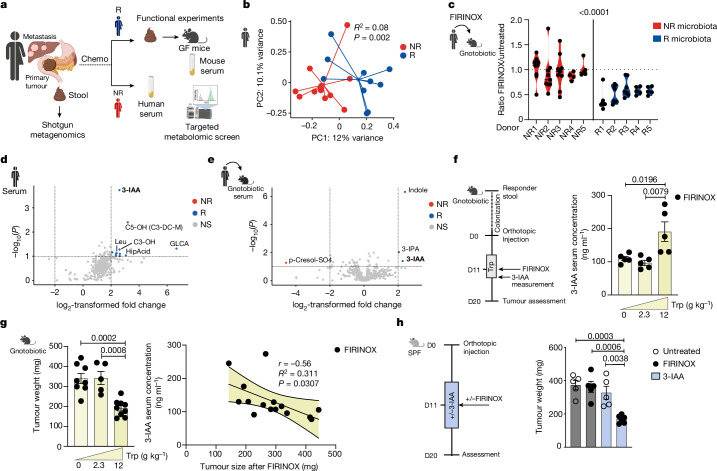
Pancreatic ductal adenocarcinoma (PDAC) is expected to be the second most deadly cancer by 2040, owing to the high incidence of metastatic disease and limited responses to treatment 1,2. Less than half of all patients respond to the primary treatment for PDAC, chemotherapy 3,4, and genetic alterations alone cannot explain this 5. Diet is an environmental factor that can influence the response to therapies, but its role in PDAC is unclear. Here, using shotgun metagenomic sequencing and metabolomic screening, we show that the microbiota-derived tryptophan metabolite indole-3-acetic acid (3-IAA) is enriched in patients who respond to treatment. Faecal microbiota transplantation, short-term dietary manipulation of tryptophan and oral 3-IAA administration increase the efficacy of chemotherapy in humanized gnotobiotic mouse models of PDAC. Using a combination of loss- and gain-of-function experiments, we show that the efficacy of 3-IAA and chemotherapy is licensed by neutrophil-derived myeloperoxidase. Myeloperoxidase oxidizes 3-IAA, which in combination with chemotherapy induces a downregulation of the reactive oxygen species (ROS)-degrading enzymes glutathione peroxidase 3 and glutathione peroxidase 7. All of this results in the accumulation of ROS and the downregulation of autophagy in cancer cells, which compromises their metabolic fitness and, ultimately, their proliferation. In humans, we observed a significant correlation between the levels of 3-IAA and the efficacy of therapy in two independent PDAC cohorts. In summary, we identify a microbiota-derived metabolite that has clinical implications in the treatment of PDAC, and provide a motivation for considering nutritional interventions during the treatment of patients with cancer.
Overview
CoChat Summary
TL;DR
Microbiota-derived tryptophan metabolite indole-3-acetic acid (3-IAA) is enriched in pancreatic ductal adenocarcinoma (PDAC) patients who respond to chemotherapy, and oral 3-IAA, dietary tryptophan, or faecal microbiota transplantation from responders improves chemotherapy efficacy in mouse PDAC models. The effect requires neutrophil-derived myeloperoxidase, which oxidizes 3-IAA, increases reactive oxygen species, downregulates GPX3/GPX7 and autophagy, and reduces tumour-cell proliferation.
Key findings
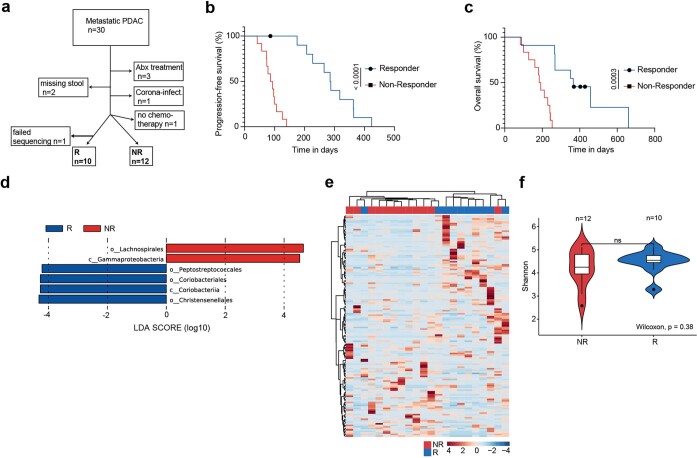
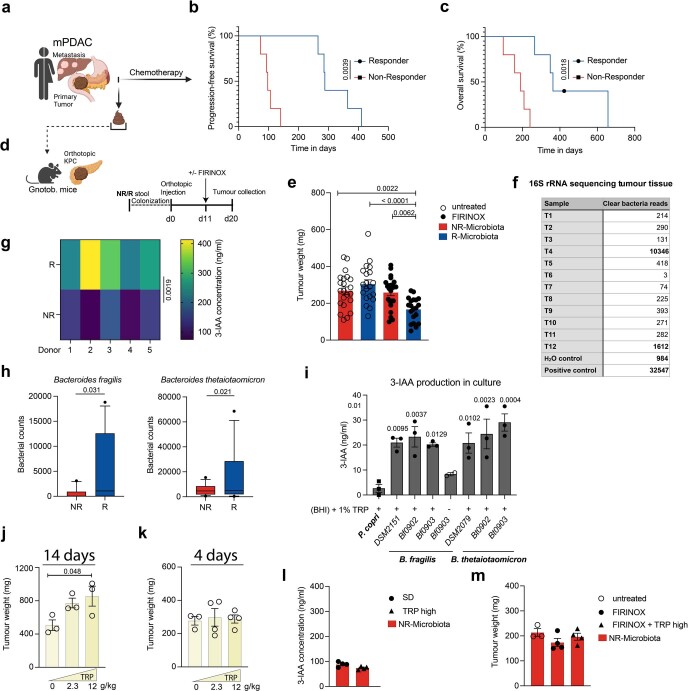
- In a metastatic PDAC cohort, responders had higher progression-free survival than non-responders (mean 40.9 weeks vs 12.8 weeks) and overall survival (51.9 weeks vs 26.4 weeks); 3-IAA was the most significantly enriched serum metabolite in responders versus non-responders.
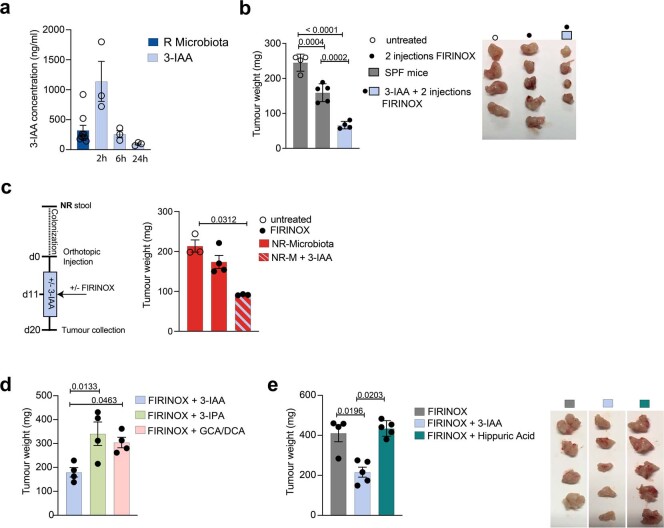
- Gnotobiotic mice colonized with responder microbiota had smaller tumours after FIRINOX than mice colonized with non-responder microbiota; four days of high-tryptophan diet increased serum 3-IAA and reduced tumour weight, and 3-IAA serum levels correlated inversely with tumour weight. Oral 3-IAA increased chemotherapy efficacy in SPF mice and in non-responder-microbiota-colonized mice.
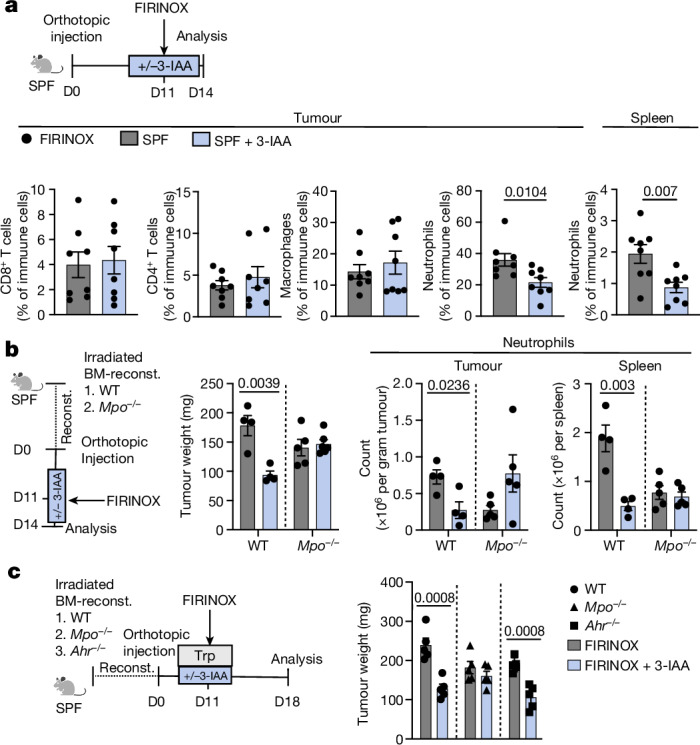
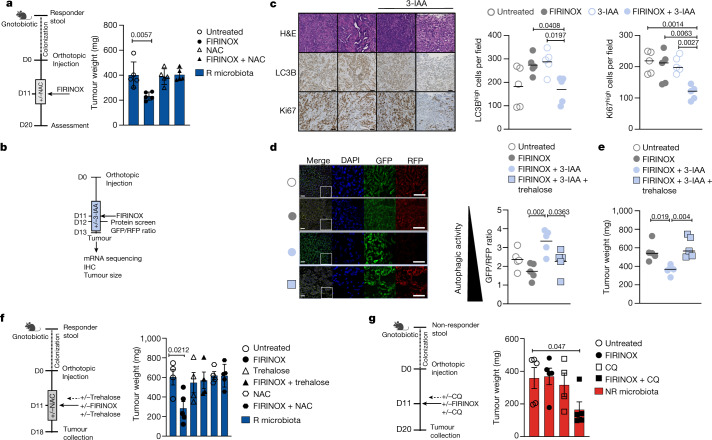
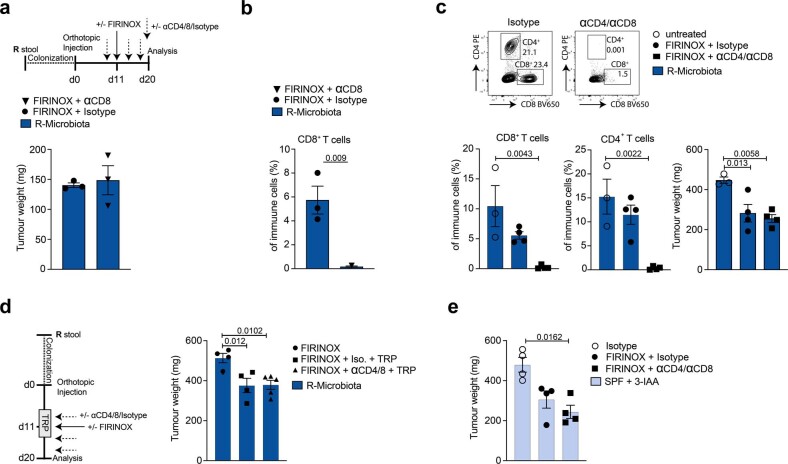
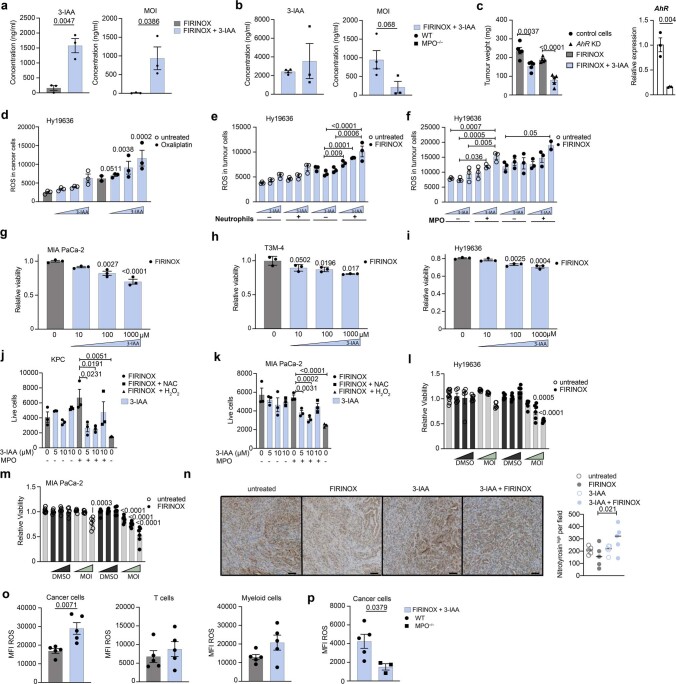
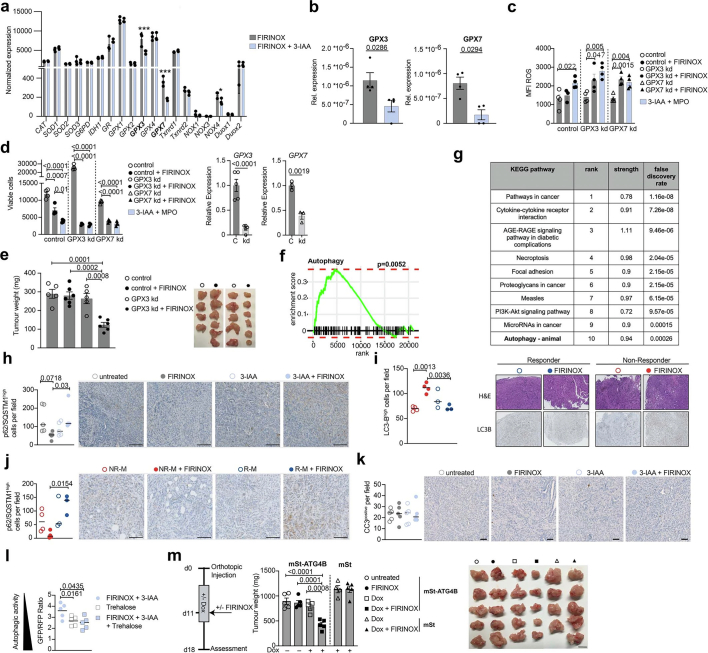
- The effect of 3-IAA plus FIRINOX was licensed by neutrophil-derived myeloperoxidase: Mpo−/− bone-marrow-reconstituted mice did not show smaller tumours with added 3-IAA, whereas Ahr−/− reconstitution did not abolish efficacy. 3-IAA plus FIRINOX increased ROS, downregulated glutathione peroxidase 3 and 7, reduced autophagy, and decreased proliferation; the ROS scavenger NAC or trehalose reversed efficacy, while hydroxychloroquine sensitized non-responder-colonized mice to FIRINOX.
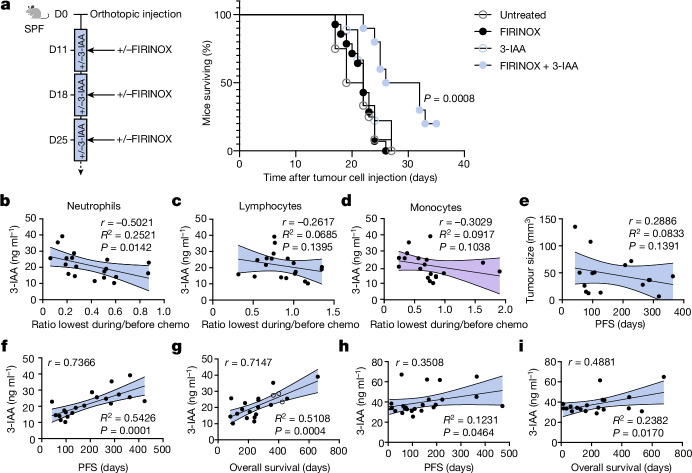
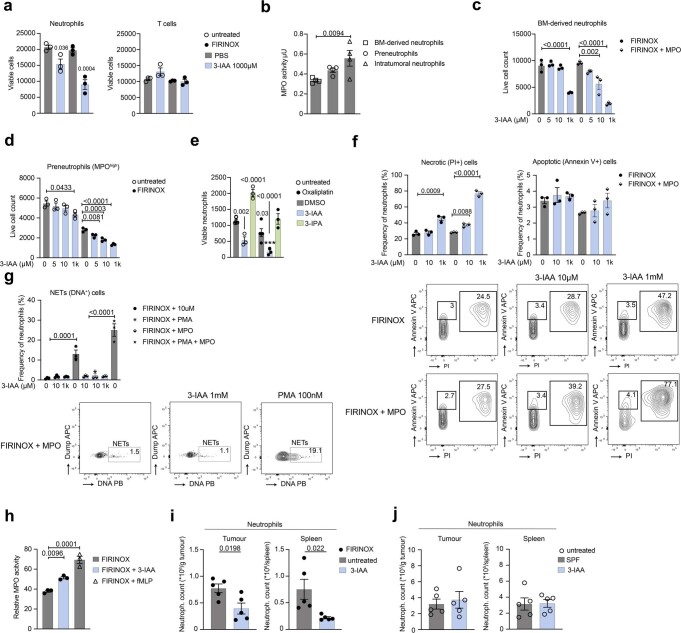
- In humans, 3-IAA serum concentration correlated with PFS or overall survival in the Hamburg cohort and was validated in the Munich cohort; neutrophil decrease after chemotherapy, but not lymphocyte or monocyte decrease, correlated with 3-IAA serum concentrations.
Methods
- Human study: recruited 30 patients with metastatic PDAC scheduled for GnP or FOLFIRINOX; 7 excluded, leaving 22 for microbiota analysis. Pre-treatment stool was analysed by shotgun metagenomics; serum/plasma was analysed by targeted metabolomics (UPLC–MS/MS, 630 metabolites) and 3-IAA/DCA chemiluminescence immune assays. Responder/non-responder classification used CT tumour shrinkage ≥25%, or PFS >140 days or ≥40% serum tumour-marker decline when CT was missing. Validation cohorts: Hamburg n = 23 (21 with serum) and Munich n = 24.
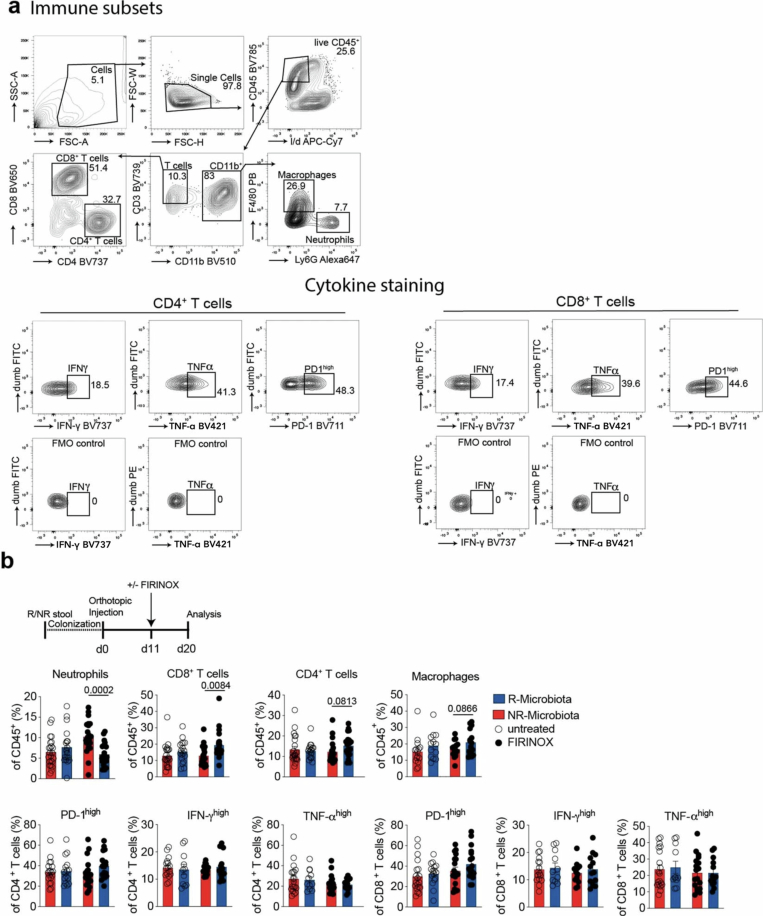
- Mouse models: C57BL/6 SPF and germ-free/gnotobiotic mice, orthotopic KPC or Hy19636 PDAC cells, subcutaneous MC38/LLC tumours, faecal microbiota transplantation from human donors, dietary tryptophan modulation, oral 3-IAA, FIRINOX or GnP, bone-marrow chimeras (wild-type, Mpo−/−, Ahr−/−), T-cell depletion, NAC, trehalose, chloroquine, and doxycycline-inducible ATG4B. Analyses included flow cytometry, immunohistochemistry, widefield microscopy, MPO activity assays, protein arrays, mRNA sequencing, qPCR, and 16S rRNA sequencing.
- Statistics: MANOVA, two-tailed nested t-test, fold-change analysis, t-tests, one-way ANOVA with Tukey’s or Dunnett’s post-hoc tests, Kruskal–Wallis with Dunn’s post-hoc test, simple linear regression with Pearson’s r, and log-rank Mantel–Cox test.
Limitations
- The paper states that patient numbers were limited (Hamburg cohort n = 23, of whom 21 had serum samples; Munich cohort n = 24), that more observational studies are needed before interventional trials, that additional mechanisms cannot be ruled out for the tryptophan-high diet experiments, that larger studies are needed to determine whether B. fragilis and B. thetaiotaomicron are responsible for 3-IAA production in responders, and that a causative link between 3-IAA and neutropenia in humans requires further study.
- The text also notes that the person treating mice was not blinded because of complex treatment schedules, and several mouse experiments show only one out of two or three independent experiments, which limits generalizability.
Model-written summary. Check it against the paper before relying on it.
Integrity signals
Registry
Cites
Statistics
Figures
Verification
Claims the paper makes
8 Valid · 2 Not valid · 15 Not checked · 109 Own results and interpretations
Some cited sources support this claim and some don’t — read each source’s verdict below.
In the paper
“In rare patients with localized PDAC who are long-term survivors, bacteria can translocate from the intestine into the tumour and control anti-tumour immune activation11,12.”
§ Microbiota-derived 3-IAA influences chemotherapy efficacy in pancreatic cancer > Main
What the sources say
- Partly supportedcites [11] Riquelme, E. et al. Tumor microbiome diversity and composition influence pancreatic cancer outcomes. Cell 178, 795–806 (2019). 31398337 PMC7288240 sourceExperimental — accuracy not yet measured
The source supports the setting and the translocation half: it studies resected (localized) PDAC where 'a minor subset survives longer', and the DISCUSSION states 'We demostrate for the first time in human PDAC patients that the gut microbiota has the capacity to colonize pancreatic tumors' (though translocation from gut to pancreas is itself hedged as 'might be occuring'). What the source does not support is the claim that in these human long-term survivors the bacteria 'control anti-tumour immune activation': the causal immune control is shown only in tumor-bearing mice receiving human FMT (RESULTS, 'Gut microbiota can influence tumor microbiota and tumor growth' — increased CD8+/IFNg+ T cells, IFN-γ/IL-2, abrogated by CD8+ depletion), while the human LTS data are correlative (RESULTS, 'The tumor microbiome shapes immune responses promoting T cell activation' — correlations of CD8+/GzmB+ density with microbiome diversity, p = 0.006–<0.0001). The DISCUSSION explicitly calls for 'further studies... in human PDAC patients to determine how FMT can induce changes in the microbiome tumor and inmune activation'. (LLM, conf=0.78)
- Disputedcites [12] Balachandran, V. P. et al. Identification of unique neoantigen qualities in long-term survivors of pancreatic cancer. Nature 551, 512–516 (2017). 29132146 PMC6145146 sourceExperimental — accuracy not yet measured
Our copy of Balachandran et al. 2017 contains no finding of intestinal bacteria translocating into the tumour; in the Discussion (Author Contributions section) it states 'Our results do not imply causal associations of pre-existing microbial and anti-tumor immunity in LTSs' and that 'whether homology to patient-derived microbiomes enhances relevant neoantigen identification remains unknown yet timely', treating intratumoral bacterial effects on T cell phenotypes as evidence from other work rather than its own. What the paper does report in rare long-term survivor PDAC is neoantigen–microbial molecular mimicry: a quality model based on homology to infectious disease-derived peptides (not patient gut bacteria), with identical TCR clones expanded to neopeptides and cross-reactive microbial peptides (Author Contributions, Results/Figure 3 passages), and it explicitly leaves unproven whether those clones drive the prolonged survival. Thus the causal 'control anti-tumour immune activation' and the gut-to-tumour translocation mechanism attributed here run counter to, rather than follow from, this source. (LLM, conf=0.68)
Checked by a reasoning model — may be wrong.
plainstates a cause- Asserted: passes — The authors put it forward as true.
- Checkable: passes — It can be checked against evidence.
- Load-bearing: unclear — It is unclear whether the paper’s conclusions depend on it.
- Based: passes — The paper gives a reason why it holds.
- Partly supported
The cited sources support only part of this claim — read each source’s verdict below.
In the paper
“genetic alterations alone cannot explain this5”
- Also stated in: § Main · plain
“Genetic alterations in PDAC poorly explain the differences between patients who respond to therapy (responder (R) patients) and NR patients5,6”
§ Microbiota-derived 3-IAA influences chemotherapy efficacy in pancreatic cancer > Abstract
What the sources say
- Supportedcites [5] Raghavan, S. et al. Microenvironment drives cell state, plasticity, and drug response in pancreatic cancer. Cell 184, 6119–6137 (2021). 34890551 PMC8822455 source
The Results section (“State-specific TME signals drive transcriptional heterogeneity and drug response”; page unavailable) reports that isogenic PDAC organoids changed their sensitivity to standard chemotherapies when TGF-β induced a different transcriptional state, and regained sensitivity when they returned to the prior state. This supports the claim that genetic alterations alone cannot explain chemotherapy response. (LLM, conf=0.93)
- Partly supportedcites [6] Aung, K. L. et al. Genomics-driven precision medicine for advanced pancreatic cancer: early results from the COMPASS trial. Clin. Cancer Res. 24, 1344–1354 (2018). 29288237 PMC5968824 sourceExperimental — accuracy not yet measured
The Results report different chemotherapy responses in classical and basal-like RNA subtypes, and paired biopsies found no new variants in genes obviously related to chemotherapy resistance. These findings support looking beyond identified genetic alterations, but the paper does not establish the categorical claim that genetic alterations alone cannot explain chemotherapy response in PDAC. (LLM, conf=0.82)
plain- Asserted: passes — The authors put it forward as true.
- Checkable: passes — It can be checked against evidence.
- Load-bearing: passes — The paper’s conclusions depend on it.
- Based: passes — The paper gives a reason why it holds.
- Also stated in: § Main · plain
The cited sources support only part of this claim — read each source’s verdict below.
In the paper
“a low neutrophil count (neutropenia) is associated with a good prognosis in mPDAC22.”
§ Microbiota-derived 3-IAA influences chemotherapy efficacy in pancreatic cancer > The effect of 3-IAA is licensed by myeloperoxidase
What the sources say
- Partly supportedcites [22] Roviello, G. et al. Association between neutropenia and survival to nab-paclitaxel and gemcitabine in patients with metastatic pancreatic cancer. Sci. Rep. 10, 19281 (2020). 33159172 PMC7648798 sourceExperimental — accuracy not yet measured
The Results (Neutropenia and clinical outcome) report longer overall survival for patients who developed grade ≥ 3 neutropenia than for those with grade < 3 neutropenia. The study examined 115 patients receiving first-line nab-paclitaxel and gemcitabine, so it does not establish the association for neutropenia in metastatic PDAC generally or for a low neutrophil count before treatment. (LLM, conf=0.85)
plainstates an association- Asserted: passes — The authors put it forward as true.
- Checkable: passes — It can be checked against evidence.
- Load-bearing: unclear — It is unclear whether the paper’s conclusions depend on it.
- Based: passes — The paper gives a reason why it holds.
- Partly supported
Every source the paper cites for this claim was checked and supports it.
In the paper
“treatment with the disaccharide trehalose30 normalizes autophagic activity, as measured by a decreasing GFP/RFP ratio in autophagy reporter cells31 (Fig. 3d and Extended Data Fig. 8l).”
§ Microbiota-derived 3-IAA influences chemotherapy efficacy in pancreatic cancer > The effect of 3-IAA depends on ROS and autophagy
What the sources say
- Supportedcites [30] DeBosch, B. J. et al. Trehalose inhibits solute carrier 2A (SLC2A) proteins to induce autophagy and prevent hepatic steatosis. Sci. Signal. 9, ra21 (2016). 26905426 PMC4816640 source
The Results section on cultured primary hepatocytes reports that trehalose induced autophagic flux, supporting its use as an autophagy-promoting treatment. The decreasing GFP/RFP ratio is presented as the citing paper’s own measurement, while the reporter-cell citation is separate; this source need not report that assay. (LLM, conf=0.88)
- Supportedcites [31] Yamamoto, K. et al. Autophagy promotes immune evasion of pancreatic cancer by degrading MHC-I. Nature 581, 100–105 (2020). 32376951 PMC7296553 source
Citation 31 is attached to the autophagy-reporter measurement, while citation 30 accompanies trehalose. The Extended Data figure captions describe GFP-LC3-RFP reporter cells and state that a lower GFP/RFP ratio reflects higher autophagy flux. They do not establish the citing paper’s trehalose-treatment result, which is not the point attributed to citation 31. (LLM, conf=0.91)
plainstates a cause- Asserted: passes — The authors put it forward as true.
- Checkable: passes — It can be checked against evidence.
- Load-bearing: passes — The paper’s conclusions depend on it.
- Based: passes — The paper gives a reason why it holds.
- Supported
Every source the paper cites for this claim was checked and supports it.
In the paper
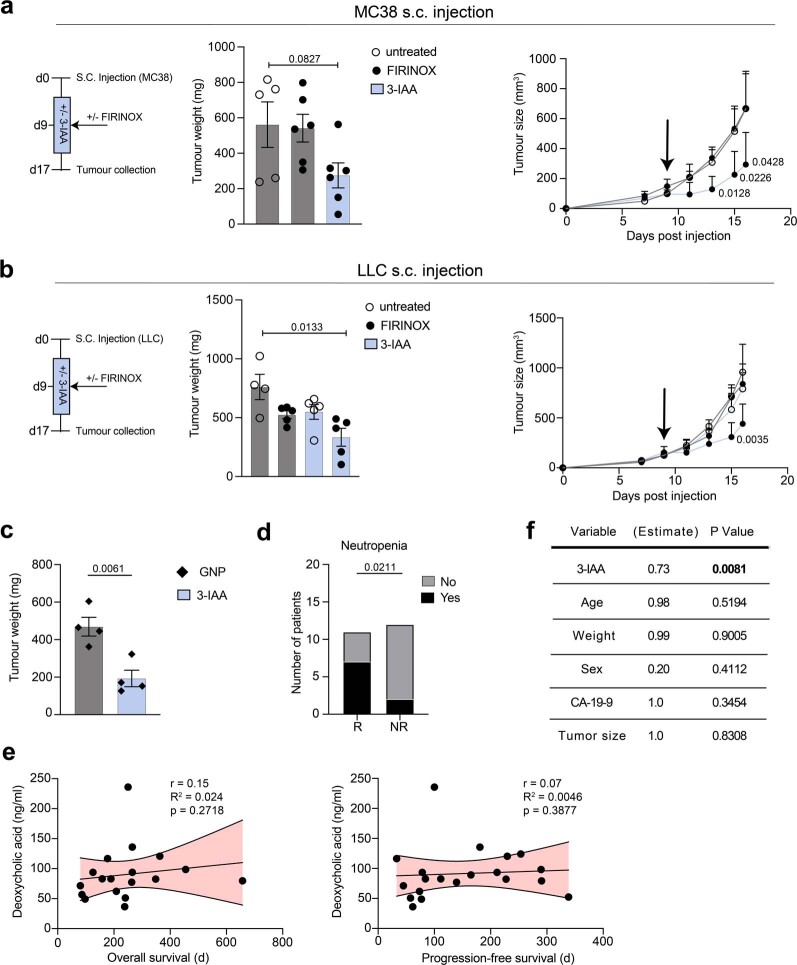
“We observed higher rates of neutropenia in patients who responded to chemotherapy, consistent with our mouse data and the known association between neutropenia and PDAC prognosis22 (Extended Data Fig. 9d).”
§ Microbiota-derived 3-IAA influences chemotherapy efficacy in pancreatic cancer > 3-IAA has therapeutic potential
What the sources say
- Supportedcites [22] Roviello, G. et al. Association between neutropenia and survival to nab-paclitaxel and gemcitabine in patients with metastatic pancreatic cancer. Sci. Rep. 10, 19281 (2020). 33159172 PMC7648798 source
Citation 22 supports the cited background association between neutropenia and pancreatic-cancer prognosis; the higher neutropenia rates among responders are the citing authors’ own observation. In Results, under “Neutropenia and clinical outcome,” patients with grade ≥3 neutropenia had longer median overall survival than those with grade <3 neutropenia (13 versus 10 months; p = 0.04). (LLM, conf=0.92)
plainstates an association- Asserted: passes — The authors put it forward as true.
- Checkable: passes — It can be checked against evidence.
- Load-bearing: passes — The paper’s conclusions depend on it.
- Based: passes — The paper gives a reason why it holds.
- Supported
78 more claims
Create a free account to see all 134 claims and to verify the 24 references still open.
- Probably not a substantial claim. 35
- It may state two separate claims as one. 20
Claims other papers make about this one
Each is checked against this paper’s own text: does it say what the citing paper says it does?
The source backs part of the claim, not all of it — or backs it for a different population, condition or comparison.
In the citing paper
“Selective metabolites produced by distinct intestinal bacteria modulate cancer immunosurveillance in extraintestinal tumors.”
From Impact of the ONCOBIOME network in cancer microbiome research (2025) · cites this paper as [73]
Experimental — accuracy not yet measured
Self-check
Percentages, sums and reported differences re-computed from the paper’s own numbers.
Each contradiction between two passages listed here was confirmed by an independent check.
Rated minor: it would not touch a result — a value no result rests on, a p-value that stays on the same side of the significance level, or a conflict that is clerical, resolved elsewhere in the paper, or outside its own findings.
In the paper
§ Microbiota-derived 3-IAA influences chemotherapy efficacy in pancreatic cancer > The effect of 3-IAA depends on ROS and autophagy
“Third, treatment with the autophagy blocker hydroxychloroquine sensitized tumours from NR- microbiota-colonized mice (low 3-IAA) to FIRINOX treatment (Fig. 3g).”
§ Microbiota-derived 3-IAA influences chemotherapy efficacy in pancreatic cancer > Methods > Animal models
“Similarly, 60 mg kg−1 chloroquine (Sigma, C6628) dissolved in PBS was injected i.p. one day before and on the day of chemotherapy treatment.”
Citations
Cites
Moderated estimation of fold change and dispersion for RNA-seq data with DESeq2
Love, M. I., Huber, W., & Anders, S. (2014) · Genome Biology · doi:10.1186/s13059-014-0550-8 · Cited by 95,106
STAR: ultrafast universal RNA-seq aligner
Dobin, A., Davis, C. A., Schlesinger, F., Drenkow, J., Zaleski, C., Jha, S., Batut, P., Chaisson, M., & Gingeras, T. R. (2013) · Bioinformatics · doi:10.1093/bioinformatics/bts635 · Cited by 51,709 · cited 1×
“104) using STAR (v.2.7.9a) 47 .”
InfluentialDADA2: High–resolution sample inference from Illumina amplicon data
Callahan, B. J., McMurdie, P. J., Rosen, M. J., Han, A. W., Johnson, A. J. A., & Holmes, S. P. (2016) · Nature Methods · doi:10.1038/nmeth.3869 · Cited by 35,698
phyloseq: An R Package for Reproducible Interactive Analysis and Graphics of Microbiome Census Data
McMurdie, P. J., & Holmes, S. (2013) · PLoS ONE · doi:10.1371/journal.pone.0061217 · Cited by 21,322 · cited 1×
“43,44 ).”
Metagenomic biomarker discovery and explanation
Segata, N., Izard, J., Waldron, L., Gevers, D., Miropolsky, L., Garrett, W. S., & Huttenhower, C. (2011) · Genome Biology · doi:10.1186/gb-2011-12-6-r60 · Cited by 16,192
Ultra-high-throughput microbial community analysis on the Illumina HiSeq and MiSeq platforms
Caporaso, J. G., Lauber, C. L., Walters, W. A., Berg-Lyons, D., Huntley, J., Fierer, N., Owens, S. M., Betley, J., Fraser, L., Bauer, M., et al. (2012) · The ISME Journal · doi:10.1038/ismej.2012.8 · Cited by 8,839
Increased Survival in Pancreatic Cancer with nab-Paclitaxel plus Gemcitabine
Von Hoff, D. D., Ervin, T., Arena, F. P., Chiorean, E. G., Infante, J., Moore, M., Seay, T., Tjulandin, S. A., Ma, W. W., Saleh, M. N., et al. (2013) · New England Journal of Medicine · doi:10.1056/nejmoa1304369 · Cited by 6,712
The Reactome pathway Knowledgebase
Fabregat, A., Sidiropoulos, K., Garapati, P., Gillespie, M., Hausmann, K., Haw, R., Jassal, B., Jupe, S., Korninger, F., McKay, S., et al. (2016) · Nucleic Acids Research · doi:10.1093/nar/gkv1351 · Cited by 5,605
FOLFIRINOX or Gemcitabine as Adjuvant Therapy for Pancreatic Cancer
Conroy, T., Hammel, P., Hebbar, M., Ben Abdelghani, M., Wei, A. C., Raoul, J.-L., Choné, L., Francois, E., Artru, P., Biagi, J. J., et al. (2018) · New England Journal of Medicine · doi:10.1056/nejmoa1809775 · Cited by 2,874
Beghini, F., McIver, L. J., Blanco-Míguez, A., Dubois, L., Asnicar, F., Maharjan, S., Mailyan, A., Manghi, P., Scholz, M., Thomas, A. M., et al. (2021) · eLife · doi:10.7554/elife.65088 · Cited by 2,303
Cited by
Items 301–400 of 480
Wei, J., Chen, X., Chen, G., Qin, Q., Chen, X., Liang, W., Zhang, W., Xue, S., Wang, W., & Wang, Y. (2025) · Ecotoxicology and Environmental Safety · doi:10.1016/j.ecoenv.2025.119520 · Cited by 4
The Mediating Role of the Gut Microbiome in the Nutritional Prevention of Cancer
Chambial, P., Thakur, N., Kumar, U., & Gupta, S. (2025) · Journal of Nutrition · doi:10.1016/j.tjnut.2025.101301 · Cited by 4
The yin and yang of bacterial Asn in tumor biology
Lobel, L. (2026) · Cell Host & Microbe · doi:10.1016/j.chom.2025.12.011 · Cited by 3
Targeting the gut-pancreatic axis: microbial modulation of immunotherapy in pancreatic cancer
Yuan, Y., Zhang, W., & Wang, D. (2026) · Frontiers in Immunology · doi:10.3389/fimmu.2026.1682390 · Cited by 4
Du, W., Zhang, C., Zou, Z., Shan, S., Wang, L., Jiang, W., Yin, B., Ye, B., & Zhou, Y. Q. (2026) · ACS Synthetic Biology · doi:10.1021/acssynbio.5c00815 · Cited by 3
AhR signaling in joint homeostasis and disease
Brahmachary, P. P., Keim, E., Walk, S. T., McGee‐Lawrence, M. E., & June, R. K. (2026) · Biochimie · doi:10.1016/j.biochi.2026.03.003 · Cited by 5
Unlocking healthy aging through gut microbial tryptophan metabolism
Xu, L., Valencak, T. G., Wang, L., Wang, X., Li, X., & Sun, H. (2026) · Pharmacological Research · doi:10.1016/j.phrs.2026.108229 · Cited by 3
Wang, D., Cui, S., Chen, Q., Ren, Z., Lyu, S., Zhao, X., & Lang, R. (2023) · BMC Cancer · doi:10.1186/s12885-023-11032-9 · Cited by 4
Contribution of tryptophan and its metabolites to transplant outcome: a mini-review
Meneses, D. D., Padilla, C. R., Moya-Guzmán, M. J., Alegre, M., & Pino‐Lagos, K. (2024) · Frontiers in Immunology · doi:10.3389/fimmu.2024.1395421 · Cited by 3
Research progress on fecal microbiota transplantation in tumor prevention and treatment
Wu, Y., Chen, X., Wu, Q., & Wang, Q. (2025) · Open Life Sciences · doi:10.1515/biol-2022-0954 · Cited by 6
“The increased accumulation of ROS also hindered the cancer cell ’ s capacity to adapt to stress, which in turn reduced the proliferation of pancreatic ductal adenocarcinoma (PDAC) cells [18].”
Dietary sugar intervention: A promising approach for cancer therapy
Zhou, X., Song, Y., Wang, Z., Fu, L., Xu, L., Feng, X., Zhang, Z., & Yuan, K. (2025) · Biochimica et Biophysica Acta (BBA) - Reviews on Cancer · doi:10.1016/j.bbcan.2025.189402 · Cited by 5
Yang, X. F., Wang, Y., Zhou, J., Li, S., Ye, J., Sun, Y., He, M., Fan, K., Chen, Z., Tian, F., et al. (2025) · Proceedings of the National Academy of Sciences · doi:10.1073/pnas.2504718122 · Cited by 4
Braadland, P. R., Farnes, I., Kure, E. H., Yaqub, S., McCann, A., Ueland, P. M., Labori, K. J., & Hov, J. R. (2024) · Frontiers in Oncology · doi:10.3389/fonc.2024.1488749 · Cited by 3
Functional regulation of cytotoxic T Cells by gut microbial metabolites
Kim, C. H. (2025) · Gut Microbes Reports · doi:10.1080/29933935.2025.2454002 · Cited by 6
Interspecies interactions drive bacterial proteome reorganisation and emergent metabolismPreprint
Kamrad, S., Mozzachiodi, S., Blasche, S., Aulakh, S. K., Scheidweiler, D., Basile, A., Guan, R., Bradley, R., van den Berg, N. I., Mülleder, M., et al. (2025) · bioRxiv (Cold Spring Harbor Laboratory) · doi:10.1101/2025.05.14.653412 · Cited by 3
Li, Q., Chen, Q., Tang, J., Liu, Q., & Gao, F. (2024) · Journal of Bio-X Research · doi:10.34133/jbioxresearch.0018 · Cited by 2
Unraveling the role of mucins and gut microbiota in gastrointestinal cancers chemoresistance
Vrinda, A. M., Thangaraju, M., Nair, S. A., Howarth, G. S., & Pothuraju, R. (2025) · Biochimica et Biophysica Acta (BBA) - Reviews on Cancer · doi:10.1016/j.bbcan.2025.189385 · Cited by 5
Focus on gut microbes: new direction in cancer treatment
Liao, L., Zeng, M., Liu, D., He, Y., Du, W., & Cao, Y. (2025) · Frontiers in Oncology · doi:10.3389/fonc.2025.1505656 · Cited by 3
“A growing body of evidence suggests that gut microbial metabolites play a pivotal role in modulating tumor cell behavior, in fl uencing both therapeutic response and metastatic potential (45, 68 – 71)(Table 1).”
The microbiome shaping cancer development, progression, and therapeutic response
Salihoğlu, R. (2025) · Physiological Genomics · doi:10.1152/physiolgenomics.00091.2025 · Cited by 3
Zhao, Y., Chen, J., Zhu, S., Xu, Y., Zhu, J., Yang, J., Zhou, W., Yang, Y., Lin, M., Chen, Q., et al. (2025) · The ISME Journal · doi:10.1093/ismejo/wraf238 · Cited by 2
“For example, in healthy individuals, enrichment of Bacteroides fragilis and Bacteroides thetaiotaomicron increased indole-3-acetic acid production [ 37], whereas enrichment of Klebsiella pneumoniae diverted tryptophan metabolism toward indoxyl sulfate synthesis, leading to ruptured intracranial…”
Self-citationYe, Q., Zhong, D., Wang, D., Zhang, X., Wang, R., Hu, H., Li, D. D., Wang, K., Zhu, N., Shi, S., et al. (2025) · Advanced Functional Materials · doi:10.1002/adfm.202519503 · Cited by 2
Peng, J., Chang, L., Yuan, M., Wang, C., Zhao, Z.-S., Yan, H., Han, X., Qin, X., Zhang, M., Li, X.-L., et al. (2025) · Food & Function · doi:10.1039/d5fo04010h · Cited by 3
Zhu, Y., Liang, X., Li, F., Xu, J., Chen, C., Tang, H., Wang, Y., Li, L., Xing, L., Dong, Y., et al. (2025) · Scientific Reports · doi:10.1038/s41598-025-27942-6 · Cited by 3
Ronchi, F., Hinterbrandner, M., Rubino, V., Römmele, M., Chiorazzo, T., Mooser, C., Ganal-Vonarburg, S. C., McCoy, K. D., Bhatia, R., Macpherson, A. J., et al. (2025) · Cell Reports · doi:10.1016/j.celrep.2025.116753 · Cited by 4
Zhang, J., Li, M., Guo, Y., Jiang, X., Li, W., Huang, J., Yang, Y., Ou, Z., Cai, Y., Kong, Y., et al. (2026) · Environment International · doi:10.1016/j.envint.2026.110128 · Cited by 2
The lethal symbiont: exploring the pathophysiology of cancer
Nolan, E., Li, L., Giampazolias, E., Ombrato, L., & Malanchi, I. (2026) · Physiological Reviews · doi:10.1152/physrev.00019.2025 · Cited by 2
Hu, X., Gong, C., Sun, S., Gao, Y., Lu, X., Yu, S. M., Qin, M., Zhu, H., & Li, Y. (2026) · BMC Microbiology · doi:10.1186/s12866-026-04929-5 · Cited by 4
“And IAA was found related with depression, colitis and pancreatic cancer [66, 73].”
Li, J., Shen, J., Lu, D., Ding, E., & Wei, L. (2026) · Frontiers in Immunology · doi:10.3389/fimmu.2026.1740257 · Cited by 2
Tumor-associated bacterial effectors: novel frontiers in tumor biology and immunity
Dai, J.-H., Lu, Y.-Q., Feng, S.-Y., Tan, X.-R., Li, L., Zeng, Y.-C., Chen, J., Ma, J., & Liu, N. (2026) · Science Bulletin · doi:10.1016/j.scib.2026.04.034 · Cited by 4
Zhang, H., Zhang, X., Guo, J., Huang, X., An, M., Wang, S., Wang, S., & Fu, B. (2026) · Molecular Biology Reports · doi:10.1007/s11033-026-11858-z · Cited by 2
Eysha, M., Fouani, M., Munir, M., Black, M., Long, A., Elchouemi, M., Singh, S., & Abid, M. B. (2026) · Frontiers in Cellular and Infection Microbiology · doi:10.3389/fcimb.2026.1787954 · Cited by 2
Mallardo, M., Memon, F., Pagliaro, R., Daniele, A., & Nigro, E. (2026) · Human Cell · doi:10.1007/s13577-026-01397-x · Cited by 4
“Regarding the colony formation ability, we previously demonstrated the ability of IAA to reduce colony in neuroblastoma cell lines [14], but no additional data are available in different cell models.”
Vaaben, T. H., Lützhøft, D. O., Hedin, K. A., Ahonen, L. L., Vazquez-Uribe, R., & Sommer, M. O. A. (2026) · Gut Microbes · doi:10.1080/19490976.2026.2690687 · Cited by 2
“62,63 In addition to systemic effects, S. boulardii caused significant changes in the gut microbiota, despite not being a long-term colonizer in mice 64 or humans.”
Bautista, J., & López-Cortés, A. (2026) · Frontiers in Immunology · doi:10.3389/fimmu.2026.1887873 · Cited by 2
Jia, Z., Liu, X., & Liao, W. (2024) · Microbiology Spectrum · doi:10.1128/spectrum.03948-23 · Cited by 3
Metabolites derived from gut microbiota mitigate chemoresistance in pancreatic cancer
Deng, J., Deng, D., Wang, B., Donati, V. L., Frampton, A. E., & Giovannetti, E. (2024) · Expert Review of Gastroenterology & Hepatology · doi:10.1080/17474124.2024.2412045 · Cited by 5
“In the evaluated study, Tintelnot and collaborators have proposed for the first time that the metabolite indole-3-acetic acid (3-IAA) generated by the gut microbiota plays a pivotal role in mediating the effectiveness of chemotherapy and enhancing responses in PDAC patients [19].”
Building an Organ-Wide Macroscopic View of Cancer Hallmarks
Liu, S., Wang, Y., Feng, J., Liu, Z., & Zhou, S. (2024) · Cancer Discovery · doi:10.1158/2159-8290.cd-24-0833 · Cited by 2
Fecal microbiota transplantation as a novel therapeutic strategy for pancreatic cancer
Yamamura, R., & Sonoshita, M. (2025) · Translational and Regulatory Sciences · doi:10.33611/trs.2025-003 · Cited by 3
Qutob, M. F. A. (2023) · British Dental Journal · doi:10.1038/s41415-023-5858-x · Cited by 1
A gut reaction can tune tumour fate during chemotherapy
Li, L., & McAllister, F. M. (2023) · Nature · doi:10.1038/d41586-023-00476-5 · Cited by 2
Tryptophan metabolite improves PDAC response rates and survival
Barranco, C. (2023) · Nature reviews. Cancer · doi:10.1038/s41568-023-00566-6 · Cited by 2
Halle-Smith, J. M., Hall, L. A., Powell-Brett, S. F., Merali, N., Frampton, A. E., & Roberts, K. J. (2023) · Clinical Surgical Oncology · doi:10.1016/j.cson.2023.100020 · Cited by 2
Wang, P. (2023) · Current Cancer Reports · doi:10.25082/ccr.2023.01.002 · Cited by 2
Low abundant intestinal commensals modulate immune control of chronic myeloid leukemia stem cellsPreprint
Hinterbrandner, M., Ronchi, F., Rubino, V., Römmele, M., Chiorazzo, T., Mooser, C., Ganal-Vonarburg, S., McCoy, K. D., Macpherson, A. J., Ochsenbein, A., et al. (2024) · bioRxiv · doi:10.1101/2024.05.31.595679 · Cited by 2
“Furthermore, the microbiota has an important role on the outcome of immunotherapeutic interventions in human cancer development 15–17 .”
BackgroundIsolation and characterization of microbiota from human pancreatic tumors and small intestinePreprint
Awad, D., Attebury, H., Hong, R., Kim, K., Zhang, L., Bischoff, A. C., denDekker, A. D., Hoostal, M. J., Carrion, J. A. N., Nelson, N. S., et al. (2024) · bioRxiv (Cold Spring Harbor Laboratory) · doi:10.1101/2024.11.27.625762 · Cited by 2
Funahashi, K., Lee, C. G., Sugitate, K., Kagata, N., Fukuda, N. N., Song, I., Ishii, C., Hirayama, A., & Fukuda, S. (2024) · Gut Microbes Reports · doi:10.1080/29933935.2024.2429408 · Cited by 1
Su, M., Qin, H., Shen, J., An, H., & Cao, Y. (2025) · Journal of Cell Communication and Signaling · doi:10.1002/ccs3.70033 · Cited by 3
“This emphasizes just how important c - Myc is in the progression of PC. 51 Specifically, c - Myc directly controls how SLC1A5 manages Gln transport, causing changes in the cell's metabolism, which links the cancer's growth with its dependence on Gln. 25,52 These changes affect how quickly cancer grows, how likely it i…”
InfluentialThe Role of the Microbiome in Pancreas Cancer
Awad, D., & Daley, D. (2025) · Surgical Clinics of North America · doi:10.1016/j.suc.2025.06.001 · Cited by 2
Tryptophan metabolism in pancreatic cancer: A review
Gao, Y., Yang, L., & Wang, X. (2025) · Medicine · doi:10.1097/md.0000000000044904 · Cited by 2
“[30] In the field of nanomedicine, Huang found that oxaliplatin combined with liposome-encapsulated IDO1 siRNA nanod-rug delivery to tumor tissue and tumor-draining lymph nodes can promote dendritic cell maturation, increase intratumoral T lymphocyte infiltration in PC, reduce Treg cells, and…”
Emerging Issues Regarding the Effects of the Microbiome on Lung Cancer Immunotherapy
Papavassiliou, K. A., Sofianidi, A. A., Spiliopoulos, F. G., Margoni, A., & Papavassiliou, A. G. (2025) · Biomolecules · doi:10.3390/biom15111525 · Cited by 1
“Low levels of its metabolite, 3-hydroxyphthalate, were linked to prolonged median progression-free survival (PFS) in patients with NSCLC [30].”
The application of AI-driven and engineered intratumoral microbes in cancer therapy
Guo, Y., Yu, R., Wang, Z., Chang, J., & Han, L. (2025) · Journal of Translational Medicine · doi:10.1186/s12967-025-07546-4 · Cited by 4
“Mechanistic studies have further characterized the contributions of microbes to tumor microenvironment remodeling [24], immune system regulation [25], and therapeutic drug metabolism [8, 26], providing critical insights for the development of microbiota-targeted anticancer strategies.”
Liu, L., Zhao, X., zhang, F., Huang, Y., Wang, Q., fang, Z., Zhu, Y., & Zhang, Y. (2026) · The Journal of Pathology · doi:10.1002/path.70011 · Cited by 1
Li, L., Zhang, Q., Zhang, L., Wei, R., Qin, Y., Jin, Z., & Wu, H. (2026) · Frontiers in Cellular and Infection Microbiology · doi:10.3389/fcimb.2025.1683657 · Cited by 3
Wang, W.-J., Liu, T.-B., Li, Y.-G., Jia, J., Zhao, M.-Q., Huang, Y.-X., Dong, J.-G., Xia, Y., & Liang, J. (2025) · Journal of Pharmacy and Pharmacology · doi:10.1093/jpp/rgaf128 · Cited by 2
Microbiota in pancreatic ductal adenocarcinoma progression and therapy: The hidden players
Hu, X., Kong, F., Chen, J., Li, Z., Cai, Z., & Kong, X. (2026) · Chinese Medical Journal · doi:10.1097/cm9.0000000000003986 · Cited by 1
“[89] Moreover, LPS, a major component of Gram-negative bacteria, can bind to Toll-like receptors (TLRs) [90] ; TLR activation stimulates the signal transducer and activator of transcription 3 (STAT3) and NF-κ B pathways, promoting tumorigenesis by enhancing cell proliferation and inhibiting…”
Gut microbiome‐derived metabolites show promise in cancer research and therapy
Yang, K., Wang, Y., Tang, D., Li, P., & Du, L. (2026) · Interdisciplinary medicine · doi:10.1002/inmd.70096 · Cited by 1
Targeting metabolic vulnerabilities with advanced delivery systems
Ye, W., Li, X., Chandra, J., Yu, J., Zhou, T., & Li, Z. (2026) · Trends in Pharmacological Sciences · doi:10.1016/j.tips.2026.01.003 · Cited by 2
Zheng, L., Huang, J., Ni, H., Kuang, X., Liao, J., Qu, Z., Liu, H., Huang, C., Yu, L., Dai, L., et al. (2026) · Journal of Advanced Research · doi:10.1016/j.jare.2026.03.013 · Cited by 1
Li, J., Yao, Y., Tan, X.-R., Si, N., Jiang, W., Lu, Y.-Q., Dai, J.-H., Yu, T., Hu, H., Duan, Y., et al. (2026) · MedComm · doi:10.1002/mco2.70687 · Cited by 1
“Indeed, incorporating microbial metabolites into antitumor therapies can enhance the treatment efficacy [ 48 ].”
Microbiota as a modulator of drug response: targeting microbial–drug crosstalk in cancer therapy
Zhao, T., Liu, M., Qiu, L. X., Zhang, H., Zhang, N., Liu, Z., Xia, Z., Luo, P., Huang, J., & Cheng, Q. (2026) · Gut Microbes · doi:10.1080/19490976.2026.2651930 · Cited by 1
A Microbial Lipid‐ATP Synthase Axis Fuels NK Cell Antitumor Activity
Yu, K., Sun, X., Ma, W., Yang, J., Sun, X., Zhang, L., Liu, Y., Ren, T., Wang, Q., Wang, J., et al. (2026) · Advanced Science · doi:10.1002/advs.202520095 · Cited by 1
“…[ 32–34 ]; intestinal bacteria produce soluble metabolites and signaling molecules that systemically affect immune responses throughout the body [ 6, 35, 36 ]; certain gut bacteria can translocate to tumor microen-vironments to directly influence tumor-associated immune responses [ 37, 38 ].”
MANFOUO, W. Q. W., & 华晔 (2026) · Discover Oncology · doi:10.1007/s12672-026-05030-z · Cited by 1
Microbiome: a driver of pancreatic inflammation and tumorigenesis
Alam, A., Mayengbam, S. S., Senchanthisai, S., Bektas, E. I., & Dey, P. (2026) · Trends in cancer · doi:10.1016/j.trecan.2026.04.006 · Cited by 1
Gut microbial metabolites for potentiating cancer therapy
Kamrad, S., Gagliani, N., Lawley, T. D., Patil, K. R., & Tintelnot, J. (2026) · Trends in cancer · doi:10.1016/j.trecan.2026.04.005 · Cited by 3
Self-citationIsolation of Bacteria and Fungi from Human Pancreatic Tumors and Duodenum
Awad, D., Attebury, H., Hong, R., Kim, K., Zhang, L., Bischoff, A., Achi, S. C., denDekker, A., Lesniak, N., The, S., et al. (2026) · Gut Microbes · doi:10.1080/19490976.2026.2695522 · Cited by 3
“19,20,53,54 Given the significant metabolic profile of the UMKO1 strain from these preliminary studies, more in-depth experiments are warranted to evaluate UMKO1’s immunomodulatory effects.”
Deng, J., Meng, W., Yang, Y., Xiao, T., Jin, Z., Wang, J., Qing-xin, L., Xie, L., Hu, J., Song, R., et al. (2026) · Nature Metabolism · doi:10.1038/s42255-026-01562-4 · Cited by 2
Microbiota-derived metabolites in PDAC
Kotsiliti, E. (2023) · Nature Reviews Gastroenterology & Hepatology · doi:10.1038/s41575-023-00767-2 · Cited by 1
Procarcinogenic Characteristics of Tryptophan Metabolism in Obese Patients
Shatova, O. P., Zabolotneva, A. A., & Shestopalov, A. V. (2024) · Biochemistry (Moscow) Supplement Series B Biomedical Chemistry · doi:10.1134/s1990750824600766 · Cited by 1
The advent of precision nutrigeroscience in cancer: from clinic towards molecular biology
Gao, Z., Liu, Y., Cui, Y., Han, Y., Cao, K., & Wu, Q. (2025) · Journal of Advanced Research · doi:10.1016/j.jare.2025.08.034 · Cited by 2
Substrate availability and dietary fibre regulate metabolism of tryptophan by human gut microbesPreprint
Sinha, A. K., Laursen, M. F., Brinck, J. E., Rybtke, M., Pedersen, M., Roager, H. M., & Licht, T. R. (2023) · bioRxiv (Cold Spring Harbor Laboratory) · doi:10.1101/2023.06.05.543658 · Cited by 1
Yeo, K. K. L., Li, R., Wu, F., Bouras, G. S., H., L., Smith, E., Wormald, P., Valentine, R. J., Psaltis, A. J., Vreugde, S., et al. (2023) · medRxiv · doi:10.1101/2023.07.25.23293137 · Cited by 1
“macrophages in treatment-naïve pancreatic cancer, while improving chemotherapeutic and 87 immune-checkpoint inhibitor efficacy in pancreatic cancer and melanoma.(33-35) Together, 88”
BackgroundCC Une théologie de l'eucharistie pour le 3 e millénaire
CLERCK, P. D. (2006)
Peng, Z., Zhang, J., Zhang, M., Yin, L., Zhou, Z., Lv, C., Wang, Z., & Tang, J. (2023) · Research Square · doi:10.21203/rs.3.rs-2790528/v1
Selen und das humane Mikrobiom
Stoll, G. (2023) · Zeitschrift für Orthomolekulare Medizin · doi:10.1055/a-2089-3271
“Dies wurde erst kürzlich wieder in einer beeindruckenden klinischen Studie an 30 Patienten mit Pankreaskarzinomen gezeigt [18].”
BackgroundProgress in understanding of relationship between intestinal microecology and pancreatic cancer
Qin, Y.-M., & Sha, J. (2023) · World Chinese Journal of Digestology · doi:10.11569/wcjd.v31.i24.1001
MICROBIOME AND REACTIVE OXYGEN SPECIES – SYNERGETIC FACTORS OF TUMOR PROGRESSION
Shvets, Y. V., Bezdieniezhnykh, N., Lykhova, O., & Chekhun, V. F. (2023) · Oncology · doi:10.15407/oncology.2023.04.237
Nutrological and pharmacological approaches to cancer cachexia: a systematic review
Filho, R. C. C., Correia, M. B. M., Mustafá, V. S., & Diesel, M. J. (2024) · International Journal of Nutrology · doi:10.54448/ijn24108
“Symptoms of nutritional impact must be adequately treated to minimize the role of gastrointestinal dysfunction, preventing adequate oral intake [2,3] .”
BackgroundAdvances in fundafmental and translational oncology: the year 2023 update
Имянитов, Е. Н. (2024) · Practical oncology · doi:10.31917/2501001
Tryptamine metabolite indole-3-acetic acid in neurodegenerative diseases and other conditions
Paley, E. L. (2024) · Elsevier eBooks · doi:10.1016/b978-0-443-28830-2.00015-4
The Microbiota-Gut-Brain Axis: Tryptophan Metabolism and Potential Therapeutic Strategies
Mora-Navarro, M. A., Mora-Martínez, J. M., Patiño-Laguna, A. D. J., Barragán-Álvarez, C. P., Gonzalez-Mora, M. E., & Mora-Navarro, C. E. (2024) · IntechOpen eBooks · doi:10.5772/intechopen.113888
Progression of Gut Microbiota in Immunotherapy for Solid Tumors
张, 慧. (2024) · Advances in Clinical Medicine · doi:10.12677/acm.2024.14112950
Su, R., Zhao, X., Zhang, F., Huang, Y., Wang, Q., Fang, Z., Zhu, Y., & Zhang, Y. (2025) · SSRN Electronic Journal · doi:10.2139/ssrn.5125471
Mohapatra, S. S., Bisht, K. S., Suryawanshi, S., Gupta, S., Biswas, V. K., Chakraborty, A., Raghav, S. K., Maiti, T. K., Kar, R. K., & Biswas, A. (2025) · The Journal of Physical Chemistry B · doi:10.1021/acs.jpcb.4c07325
Gut microbiota and gastrointestinal tumors: insights from a bibliometric analysis
Chen, C., Wang, X., Han, X., Peng, L., & Zhang, Z. (2025) · Frontiers in Microbiology · doi:10.3389/fmicb.2025.1558490 · Cited by 1
Nutrition for Cancer Prevention and Therapy
Vela, V., Sabani, B., & Spahn, G. (2025) · Springer eBooks · doi:10.1007/978-3-031-84297-9_8
Wu, Z., Wang, D., Fu, D., Ning, D., & Gu, S. (2025) · International Immunopharmacology · doi:10.1016/j.intimp.2025.114578 · Cited by 1
Yang, D., Liu, Y., Meng, X., Wang, C., Zhang, M., Zhang, T., & Liu, Y. (2025) · Combinatorial Chemistry & High Throughput Screening · doi:10.2174/0113862073379369250513115909
Zhang, K., Luo, Z., Li, Y., Chen, Y., Wang, L., Liu, Y., Yang, R., Li, Q., Zhao, J., Qi, B., et al. (2025) · bioRxiv (Cold Spring Harbor Laboratory) · doi:10.1101/2025.06.28.662086
González, C. J. F., Blanco, M. Á. A., Flores, E. G., Bernal, C. A. L., Bernal, N. R., Rodriguez, G. L., Gonzalez, J. R., Molina, M. P. H., & Hernandez, D. J. D. (2025) · British journal of healthcare and medical research · doi:10.14738/bjhr.1203.18825
Ernährung zur Krebsprävention und -therapie
Vela, V., & Spahn, G. (2025) · Springer eBooks · doi:10.1007/978-3-662-70291-8_8
Massaro, G., Lavacchi, D., Innocenti, T., Polvani, S., Galli, A., Taddei, A., Petroni, G., Rossini, D., Pillozzi, S., & Antonuzzo, L. (2025) · Journal of the National Cancer Center · doi:10.1016/j.jncc.2025.09.002 · Cited by 2
Association of biliary microflora dysbiosis with cholangiocarcinoma: a single-center study
Wang, X., Liu, X., Wang, N., Guan, C., Liu, C., Yu, J., & Song, K. (2025) · Frontiers in Microbiology · doi:10.3389/fmicb.2025.1666272 · Cited by 1
Editorial: Exploring microbial interactions in pancreatic ductal adenocarcinoma microenvironment
Veschi, S., Sebastiano, P. D., & Mincione, G. (2025) · Frontiers in Oncology · doi:10.3389/fonc.2025.1725126
Stage-specific gut microbial restructuring drives estrous transition in rabbits
Chen, J., Gu, M., Zhang, M., Wang, S., Zhang, X., Zhu, Z., & Gan, Q. (2025) · Animal Bioscience · doi:10.5713/ab.250529
“IAA, a bioactive indole derivative synthesized via microbial tryptophan metabolism, exerts pleiotropic effects on mammalian physiology, including regulating ovarian function [35– 37].”
Gu, S.-J., Liu, X., Zhou, H., & Yang, J. (2025) · Journal of Proteome Research · doi:10.1021/acs.jproteome.5c00615
Tryptophan metabolite indole-3-acetate: a new culprit in irinotecan-induced gut epithelial injury
Fidelle, M., & Zitvogel, L. (2025) · Gut · doi:10.1136/gutjnl-2025-336758
Chen, J., Zhang, C., Yang, Z., Wu, W., Zou, W., Xin, Z., Zheng, S., Liu, R., Yang, L., & 彭红娟 (2024) · Figshare · doi:10.6084/m9.figshare.26742023
Liu, Y., Zhao, P., Cai, Z., He, P., Wang, J., He, H., Zhu, Z., Guo, X., Ma, K., Peng, K., et al. (2024) · Figshare · doi:10.6084/m9.figshare.27022743
Chen, J., Zhang, C., Yang, Z., Wu, W., Zou, W., Xin, Z., Zheng, S., Liu, R., Yang, L., & 彭红娟 (2024) · Figshare · doi:10.6084/m9.figshare.26742014
Chen, J., Zhang, C., Yang, Z., Wu, W., Zou, W., Xin, Z., Zheng, S., Liu, R., Yang, L., & 彭红娟 (2024) · Figshare · doi:10.6084/m9.figshare.26742017
Metadata
- Authors
- Tintelnot, J., Xu, Y., Lesker, T. R., Schönlein, M., Konczalla, L., Giannou, A. D., Pelczar, P., Kylies, D., Puelles, V. G., Bielecka, A. A., Peschka, M., Cortesi, F., Riecken, K., Jung, M., Amend, L., Bröring, T. S., Trajkovic-Arsic, M., Siveke, J. T., Renné, T., Zhang, D., Boeck, S., Strowig, T., Uzunoglu, F. G., Güngör, C., Stein, A., Izbicki, J. R., Bokemeyer, C., Sinn, M., Kimmelman, A. C., Huber, S., & Gagliani, N.
- Affiliations
- Universität Hamburg (DE)
- University Medical Center Hamburg-Eppendorf (DE)
- Helmholtz Centre for Infection Research (DE)
- Aarhus University (DK)
- German Cancer Research Center (DE)
- Royal College of Surgeons in Ireland (IE)
- LMU Klinikum (DE)
- Medizinische Hochschule Hannover (DE)
- NYU Langone’s Laura and Isaac Perlmutter Cancer Center (US)
- Corresponding author
- Tintelnot, Joseph
- Gagliani, Nicola
- ORCID
- Tintelnot, Joseph
- Xu, Yang
- Lesker, Till R.
- Schönlein, Martin
- Konczalla, Leonie
- Giannou, Anastasios D.
- Pelczar, Penelope
- Kylies, Dominik
- Puelles, Victor G.
- Peschka, Manuela
- Cortesi, Filippo
- Riecken, Kristoffer
- Amend, Lena
- Siveke, Jens T.
- Renné, Thomas
- Zhang, Danmei
- Boeck, Stefan
- Strowig, Till
- Uzunoglu, Faik G.
- Güngör, Cenap
- Stein, Alexander
- Izbicki, Jakob R.
- Bokemeyer, Carsten
- Kimmelman, Alec C.
- Huber, Samuel
- Gagliani, Nicola
- Venue
- Nature
- Published
- 2023-02-22
- Volume
- 615
- Issue
- 7950
- Pages
- 168-174
- ISSN
- 0028-0836 (ISSN-L)
- 1476-4687
- PMC
- PMC9977685
- OpenAlex
- W4321480235
- Semantic Scholar
- b8ed8ebb78b57b48513db1aa2551031896732c17
- Cited by
- 478
- References
- 51
- Citations by year
- 2026: 109 · 2025: 155 · 2024: 141 · 2023: 72
- FWCI
- 58.43
- Type
- journal article
- Language
- en
- Update notices
- correction (2025-05-13)
- Open access
- hybrid
- doi.org
- Licence
- cc-by
- creativecommons.org/licenses/by/4.0 (tdm)
- creativecommons.org/licenses/by/4.0 (vor)
- Locations
- Nature (publishedVersion, cc-by)
- PubMed Central (publishedVersion, cc-by)
- PubMed (publishedVersion)
- RePEc: Research Papers in Economics (submittedVersion)
- Universitätsbibliographie, Universität Duisburg-Essen (submittedVersion)
- Figshare (submittedVersion, cc-by)
- Lenus, The Irish Health Repository (Dr Steevens Hospital Library) (submittedVersion)
- Funders
- European Commission (800924, HORIZON2020)
- Deutsche Forschungsgemeinschaft (390874280, SI1549/4-1, EXC2155, 467261817, SFB 841, 405344257)
- Volkswagen Foundation
- Bundesministerium für Bildung und Forschung (EXC 2155, 01KD2206A/SATURN3, BMBF; 01KD2206A/SATURN3, SATURN3)
- Novo Nordisk
- Associazione Italiana per la Ricerca sul Cancro (800924)
- Deutsche Krebshilfe (70114815, 390874280)
- Novo Nordisk Fonden (NNF21OC0066381)
- Deutschen Konsortium für Translationale Krebsforschung
- Universitätsklinikum Hamburg-Eppendorf
- H2020 European Research Council (865466, 715271)
- Topics
- Health Sciences › Medicine › Oncology › Pancreatic and Hepatic Oncology Research
- Life Sciences › Biochemistry, Genetics and Molecular Biology › Molecular Biology › Gut microbiota and health
- Life Sciences › Biochemistry, Genetics and Molecular Biology › Biotechnology › Bacterial Cancer Therapy
- Keywords
- pancreatic ductal adenocarcinoma, gut microbiota, indole-3-acetic acid, tryptophan metabolism, chemotherapy response, myeloperoxidase, reactive oxygen species, glutathione peroxidase 3, GPX7, autophagy, fecal microbiota transplantation, dietary intervention, cancer metabolism
- MeSH terms
- Fecal Microbiota Transplantation, Animals, Autophagy, Disease Models, Animal, Germ-Free Life, Glutathione Peroxidase, Humans, Indoleacetic Acids, Peroxidase, Neutrophils, Pancreatic Neoplasms, Tryptophan, Reactive Oxygen Species, Carcinoma, Pancreatic Ductal, Mice, Metagenome, Metabolomics, Microbiota
About these checks
Registry, retraction, Cites and statistics results are computed, not judged, with one exception: a printed reference that no index lists is read once by a model before it counts as a citation error. Claims are extracted by a model and kept only when their quote appears verbatim in the text; each cited source is then checked, with a model’s help, for whether it says what the claim relies on. Those verdicts can be wrong — read the claim’s quote and the cited source before relying on one.
The claim verdicts this report counts are experimental: their accuracy is not yet measured.
A language model drew the claims from the paper on 2026-10-07, under version 3 of the claim definition (model deepseek-v4.1-flash, prompt extract-v3).
A second model labelled each claim on 2026-10-07 (model jev-1.13-20260917, definition revision gold-guideline-v0.2).
Cited sources are checked with a language model’s help (qwen3.8-omni-flash and gpt-6-sol).
Statistics and arithmetic are recomputed, not judged.
Confidence bands are shown only for fields calibrated on our annotated test set. None is calibrated yet, so no band is shown.
What counts as a claim ›How we measure confidence ›How we check this ›
Are you an author, or do you see a problem with this page? Request a review
Data sources
Bibliographic data: Semantic Scholar, OpenAlex, Crossref.
Contains information from the Semantic Scholar Academic Graph Datasets, made available under the ODC Attribution License (ODC-BY 1.0).
Semantic Scholar’s data is described in: Kinney, R., et al. (2023). The Semantic Scholar Open Data Platform. arXiv:2301.10140.
