

The DOI matches its Crossref record; 79 of the 79 references it cites were found in a registry or an index.
Increased mutation and gene conversion within human segmental duplications
Open accessAbstract
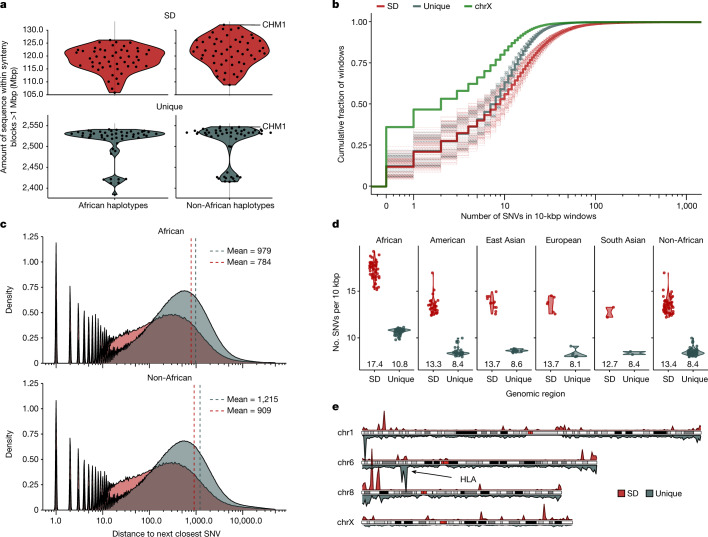
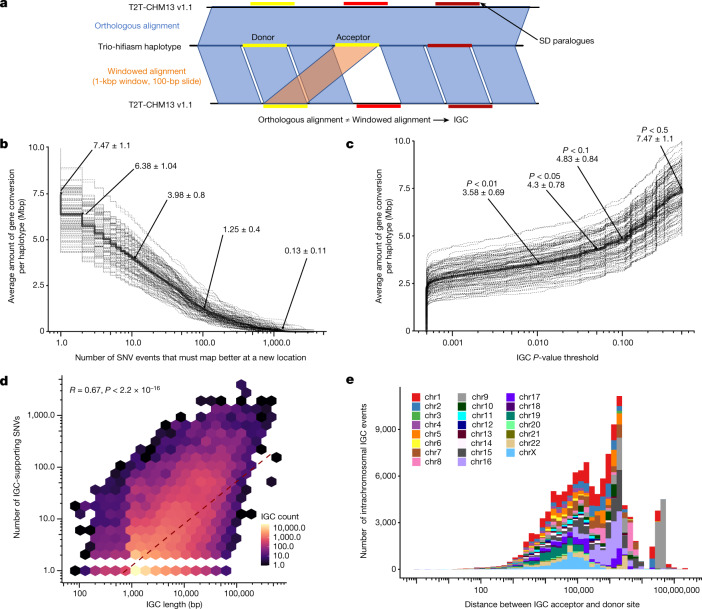
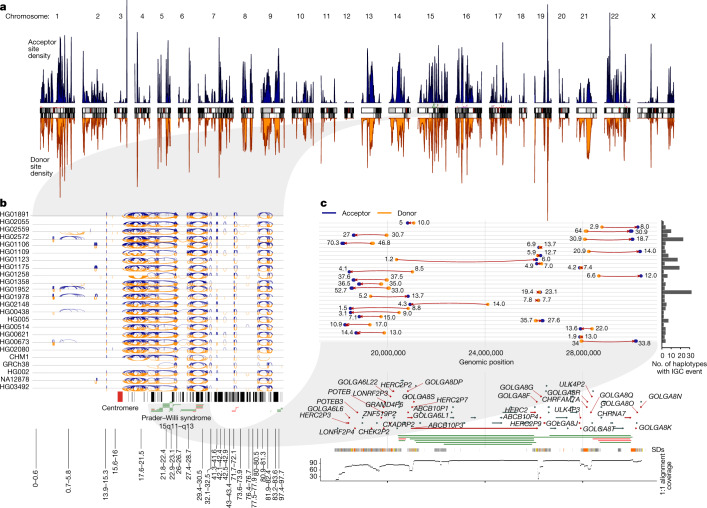
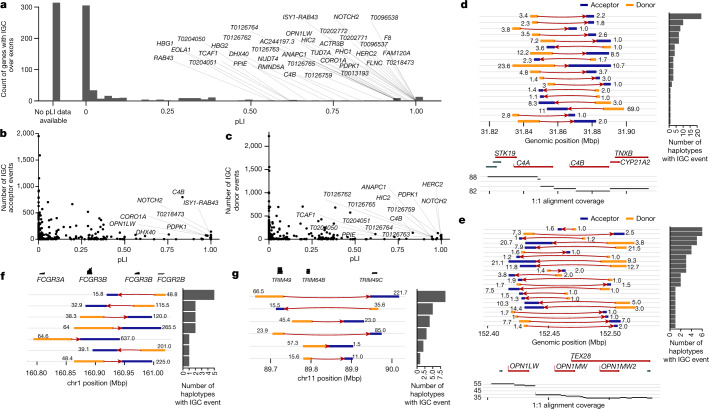
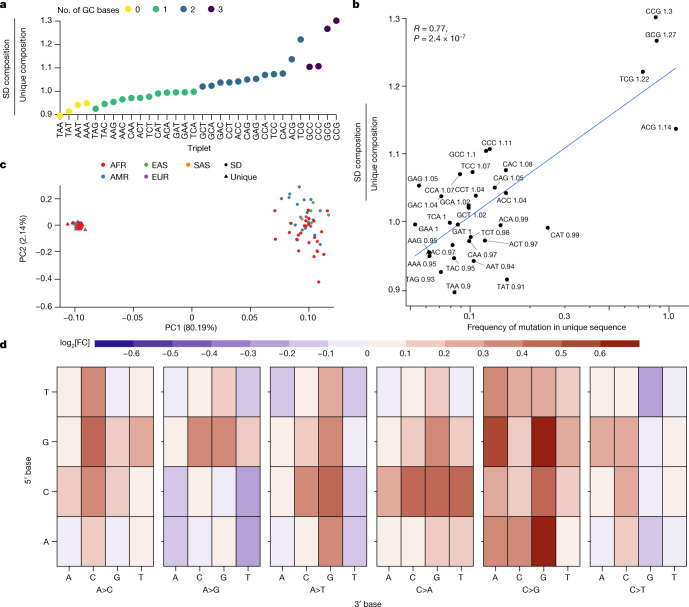
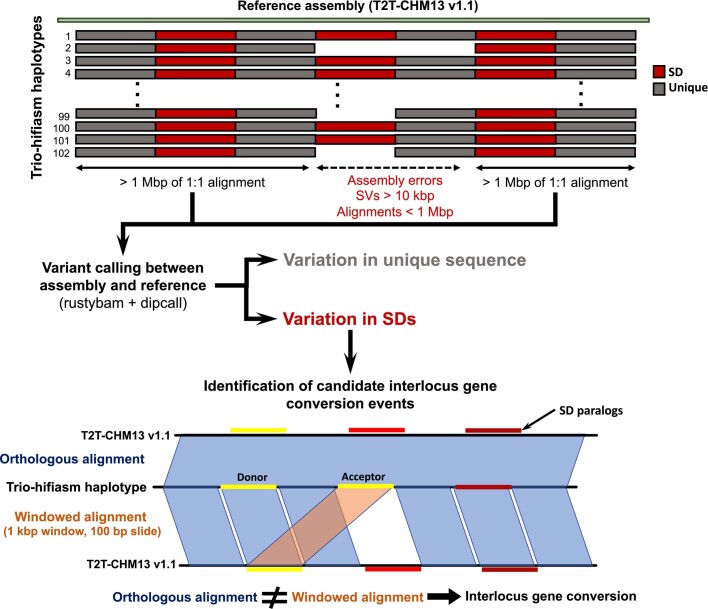
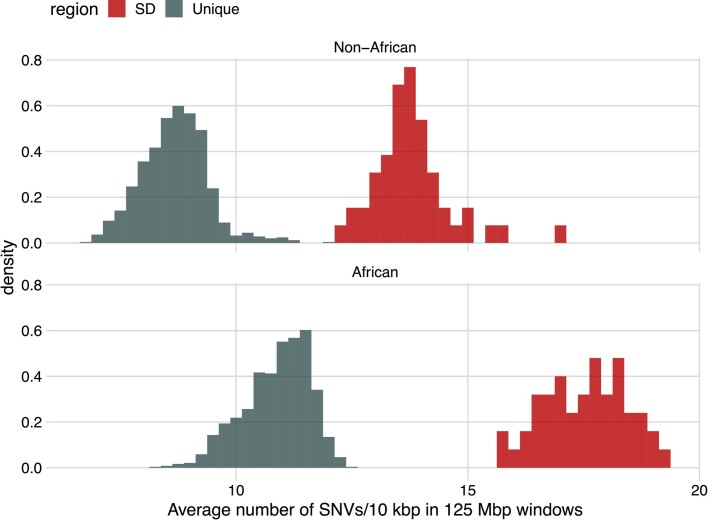
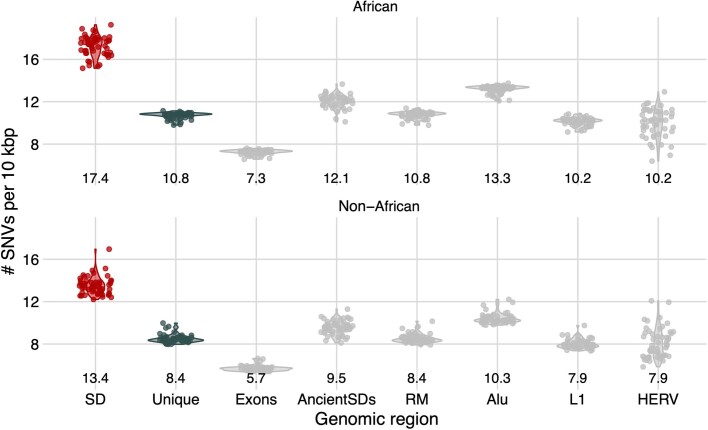
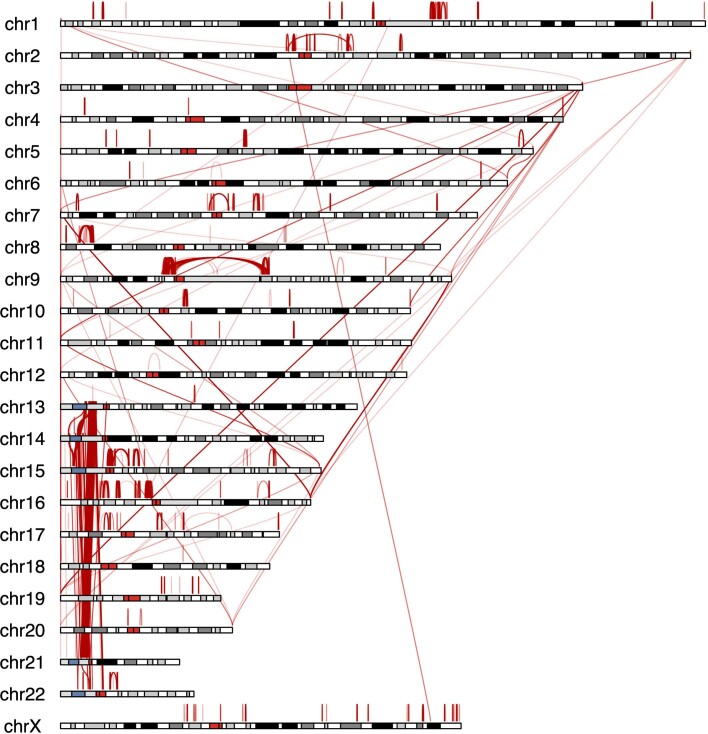
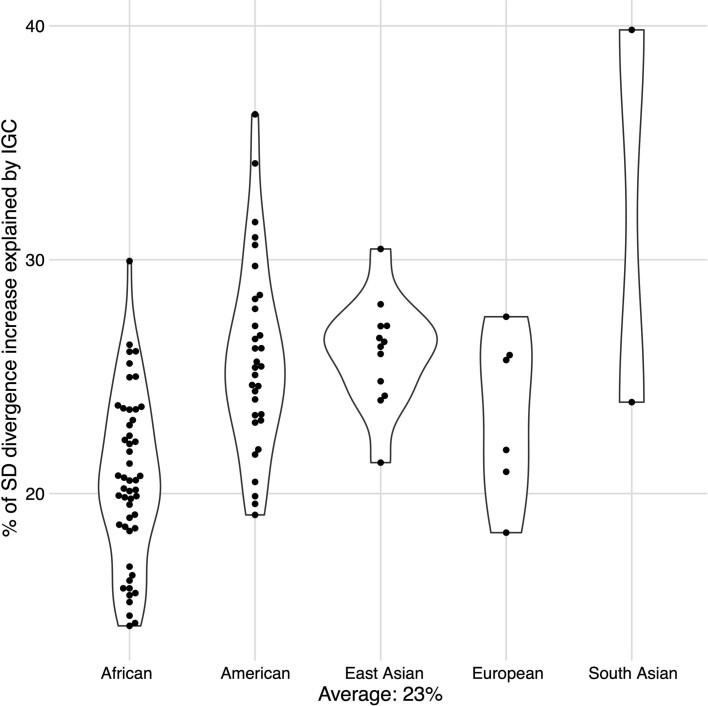
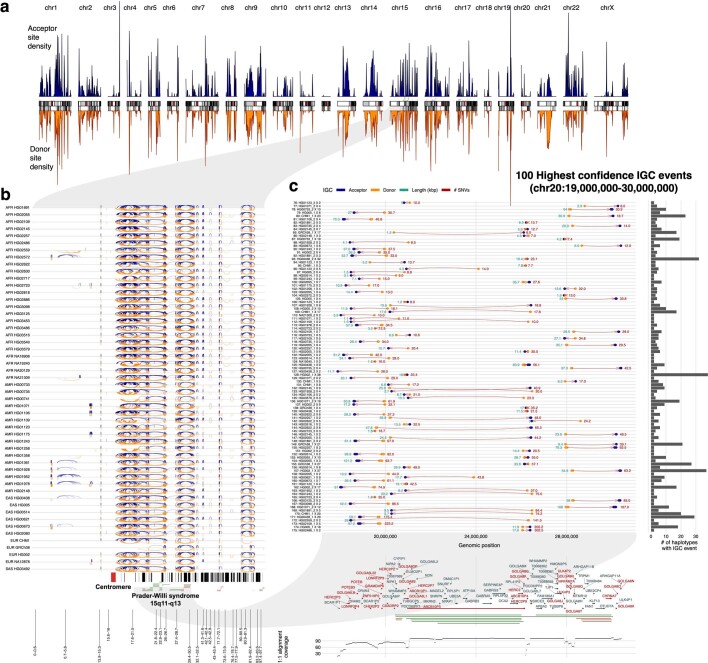
Single-nucleotide variants (SNVs) in segmental duplications (SDs) have not been systematically assessed because of the limitations of mapping short-read sequencing data 1,2 . Here we constructed 1:1 unambiguous alignments spanning high-identity SDs across 102 human haplotypes and compared the pattern of SNVs between unique and duplicated regions 3,4 . We find that human SNVs are elevated 60% in SDs compared to unique regions and estimate that at least 23% of this increase is due to interlocus gene conversion (IGC) with up to 4.3 megabase pairs of SD sequence converted on average per human haplotype. We develop a genome-wide map of IGC donors and acceptors, including 498 acceptor and 454 donor hotspots affecting the exons of about 800 protein-coding genes. These include 171 genes that have ‘relocated’ on average 1.61 megabase pairs in a subset of human haplotypes. Using a coalescent framework, we show that SD regions are slightly evolutionarily older when compared to unique sequences, probably owing to IGC. SNVs in SDs, however, show a distinct mutational spectrum: a 27.1% increase in transversions that convert cytosine to guanine or the reverse across all triplet contexts and a 7.6% reduction in the frequency of CpG-associated mutations when compared to unique DNA. We reason that these distinct mutational properties help to maintain an overall higher GC content of SD DNA compared to that of unique DNA, probably driven by GC-biased conversion between paralogous sequences 5,6 .
Overview
The claims and statistics of this paper haven’t been checked yet.
Run the check — free, no account needed. It reads the open-access text and checks the sources it cites.
Integrity signals
Registry
Cites
Statistics
Figures
Verification
Claims the paper makes
The claims and statistics of this paper haven’t been checked yet.
Run the check — free, no account needed. It reads the open-access text and checks the sources it cites.
Claims other papers make about this one
Each is checked against this paper’s own text: does it say what the citing paper says it does?
The cited source says what the claim attributes to it.
In the citing paper
“Moreover, for KCNE1, we provide calls and frequencies in a 40 kb region, spanning 3 exons, that could not be previously assessed owing to the presence of a false duplication in GRCh38 (Supplementary Fig. 19; see also an associated article53 for genome-wide analysis of interlocus gene conversion).”
From A draft human pangenome reference. (2023) · cites this paper as [53]
The cited source says what the claim attributes to it.
In the citing paper
“Although the focus of this effort was to build a reference resource, highly accurate haplotype-resolved assemblies enabled us to access previously inaccessible regions, highlighting new forms of genetic variation and providing new insights into mutational processes such as interlocus gene conversion53.”
From A draft human pangenome reference. (2023) · cites this paper as [53]
Self-check
Percentages, sums and reported differences re-computed from the paper’s own numbers.
The self-check needs the paper’s full text.
Citations
Cites
The Sequence Alignment/Map format and SAMtools
Li, H., Handsaker, B., Wysoker, A., Fennell, T., Ruan, J., Homer, N., Marth, G., Abecasis, G., Durbin, R., & 1000 Genome Project Data Processing Subgroup (2009) · Bioinformatics · doi:10.1093/bioinformatics/btp352 · Cited by 62,041
Self-citationInitial sequencing and analysis of the human genome
International Human Genome Sequencing Consortium, Whitehead Institute for Biomedical Research, C. F. G. R., Lander, E. S., Linton, L. M., Birren, B., Nusbaum, C., Zody, M. C., Baldwin, J., Devon, K., Dewar, K., et al. (2001) · Nature · doi:10.1038/35057062 · Cited by 24,216
Self-citationTwelve years of SAMtools and BCFtools
Danecek, P., Bonfield, J., Liddle, J., Marshall, J., Ohan, V., Pollard, M., Whitwham, A., Keane, T., McCarthy, S., Davies, R. M., et al. (2021) · GigaScience · doi:10.1093/gigascience/giab008 · Cited by 15,856
Self-citationMinimap2: Pairwise alignment for nucleotide sequences
Li, H. (2018) · Bioinformatics · doi:10.1093/bioinformatics/bty191 · Cited by 14,807
Self-citationThe sequence of the human genome
Venter, J. C., Adams, M. D., Myers, E. W., Li, P. W., Mural, R. J., Sutton, G. G., Smith, H. O., Yandell, M., Evans, C. A., Holt, R. A., et al. (2001) · Science · doi:10.1126/science.1058040 · Cited by 13,909
Analysis of protein-coding genetic variation in 60,706 humans
Exome Aggregation Consortium, Lek, M., Karczewski, K. J., Minikel, E. V., Samocha, K. E., Banks, E., Fennell, T., O’Donnell-Luria, A. H., Ware, J. S., Hill, A. J., et al. (2016) · Nature · doi:10.1038/nature19057 · Cited by 9,587
Tandem repeats finder: a program to analyze DNA sequences
Benson, G. (1999) · Nucleic Acids Research · doi:10.1093/nar/27.2.573 · Cited by 9,374 · cited 1×
“For both SDs and unique regions, variants in tandem repeat elements as identified by Tandem Repeats Finder 52 were excluded because many SNVs called in these regions are ultimately alignment artefacts.”
BackgroundAn integrated map of genetic variation from 1,092 human genomes
The 1000 Genomes Project Consortium (2012) · Nature · doi:10.1038/nature11632 · Cited by 7,711
Self-citationThe International HapMap Project
†The International HapMap Consortium, Genotyping centres: Baylor College of Medicine and ParAllele BioScience, Gibbs, R. A., Belmont, J. W., Hardenbol, P., Willis, T. D., Yu, F., Chinese HapMap Consortium, Yang, H., Ch'ang, L.-Y., et al. (2003) · Nature · doi:10.1038/nature02168 · Cited by 6,057
Haplotype-resolved de novo assembly using phased assembly graphs with hifiasm
Cheng, H., Concepcion, G. T., Feng, X., Zhang, H., & Li, H. (2021) · Nature Methods · doi:10.1038/s41592-020-01056-5 · Cited by 5,859
Self-citation
Research works printed but not linked: 1
- Sudmant, P. H. et al. Diversity of human copy number. Science 11184, 2–7 (2010).
Cited by
Sorted by citations
A draft human pangenome reference.
Liao, W.-W., Asri, M., Ebler, J., Doerr, D., Haukness, M., Hickey, G., Lu, S., Lucas, J. K., Monlong, J., Abel, H. J., et al. (2023) · Nature · doi:10.1038/s41586-023-05896-x · Cited by 1,129
Self-citationGarrison, E., Guarracino, A., Heumos, S., Villani, F., Bao, Z., Tattini, L., Hagmann, J., Vorbrugg, S., Marco-Sola, S., Kubica, C., et al. (2024) · Nature Methods · doi:10.1038/s41592-024-02430-3 · Cited by 277
Self-citationGenome assembly in the telomere-to-telomere era
Li, H., & Durbin, R. M. (2024) · Nature Reviews Genetics · doi:10.1038/s41576-024-00718-w · Cited by 259
“1a), a near-complete assembly can be produced with HiFi and ultra-long data; a small number of gaps may remain in the most challenging regions of the genome, such as ribosome DNA arrays 36,66,67 , satellite repeats 68 and recent long segmental duplications 69 .”
Self-citationLian, Q., Hüettel, B., Walkemeier, B., Mayjonade, B., Lopez‐Roques, C., Gil, L., Roux, F., Schneeberger, K., & Mercier, R. (2024) · Nature Genetics · doi:10.1038/s41588-024-01715-9 · Cited by 156
“…a single reference and have allowed researchers to determine the natural phenotypic variation of a species 15–18 , as recently shown in plant and animal species, including soybean 19 , tomato 20,21 , potato 22 , rice 23–25 , maize 26 , barley 27 , wheat 28 , apple 29 , silkworm 12 and human 30,31 .”
Human de novo mutation rates from a four-generation pedigree reference
Porubskỳ, D., Dashnow, H., Sasani, T. A., Logsdon, G. A., Hallast, P., Noyes, M. D., Kronenberg, Z. N., Mokveld, T., Koundinya, N., Nolan, C., et al. (2025) · Nature · doi:10.1038/s41586-025-08922-2 · Cited by 118
“Further details are provided in Supplementary Note 10.”
InfluentialSelf-citationT2T-YAO: A Telomere-to-Telomere Assembled Diploid Reference Genome for Han Chinese
He, Y., Chu, Y., Guo, S., Hu, J. Y., Li, R., Zheng, Y., Ma, X., Du, Z., Zhao, L., Yu, W., et al. (2023) · Genomics Proteomics & Bioinformatics · doi:10.1016/j.gpb.2023.08.001 · Cited by 62
“Heterochromosome regions, comprised of highly repetitive sequences, are more instable during chromosomal duplication and diverse among individuals than the other parts of the genome, which has been found to contribute to aging, neurodegeneration, and other disorders [9,49,50].”
BackgroundGaps and complex structurally variant loci in phased genome assemblies
Porubsky, D., Vollger, M. R., Harvey, W. T., Rozanski, A. N., Ebert, P., Hickey, G., Hasenfeld, P., Sanders, A. D., Stober, C., Human Pangenome Reference Consortium, et al. (2023) · Genome Research · doi:10.1101/gr.277334.122 · Cited by 58
“mutational processes that shape them (Vollger et al. 2023).”
BackgroundInfluentialSelf-citationReconstruction of the human amylase locus reveals ancient duplications seeding modern-day variation
Yilmaz, F., Karageorgiou, C., Kim, K., Pajic, P., Scheer, K., Beck, C. R., Torregrossa, A., Lee, C., Gökçümen, Ö., Audano, P. A., et al. (2024) · Science · doi:10.1126/science.adn0609 · Cited by 52
Self-citationA 25-year odyssey of genomic technology advances and structural variant discovery
Porubskỳ, D., & Eichler, E. E. (2024) · Cell · doi:10.1016/j.cell.2024.01.002 · Cited by 51
Self-citationPangenome graphs improve the analysis of structural variants in rare genetic diseases
Groza, C., Schwendinger-Schreck, C., Cheung, W., Farrow, E., Thiffault, I., Lake, J. A., Rizzo, W. B., Evrony, G. D., Curran, T., Bourque, G., et al. (2024) · Nature Communications · doi:10.1038/s41467-024-44980-2 · Cited by 54
“We independently con fi rmed some of the unanchored contigs for one offspring via coverage from mapped srWGSsequencingreadsfromthatsampleanditsparents,andvalidate that contigs inherited fromone parent(wheretherewas high coverage from the offspring and only one parent) were unambiguously almost always inherited only fro…”
BackgroundInfluentialSelf-citationIntegrated analysis of the complete sequence of a macaque genome
Zhang, S., Xu, N., Fu, L., Yang, X., Ma, K., Li, Y., Yang, Z., Li, Z., Feng, Y., Jiang, X., et al. (2025) · Nature · doi:10.1038/s41586-025-08596-w · Cited by 48
Self-citationStructural polymorphism and diversity of human segmental duplications
Jeong, H., Dishuck, P. C., Yoo, D., Harvey, W. T., Munson, K. M., Lewis, A. P., Kordosky, J., Garcia, G. H., Yilmaz, F., Hallast, P., et al. (2025) · Nature Genetics · doi:10.1038/s41588-024-02051-8 · Cited by 47
Self-citationGenomic variant benchmark: if you cannot measure it, you cannot improve it
Majidian, S., Agustinho, D. P., Chin, C.-S., Sedlazeck, F. J., & Mahmoud, M. (2023) · Genome biology · doi:10.1186/s13059-023-03061-1 · Cited by 35
“Notably, more than 23% of these differences were attributed to interlocus gene conversion [93].”
BackgroundProtein-altering variants at copy number-variable regions influence diverse human phenotypes
Hujoel, M. L. A., Handsaker, R. E., Sherman, M. A., Kamitaki, N., Barton, A. R., Mukamel, R. E., Terao, C., McCarroll, S. A., & Loh, P. (2024) · Nature Genetics · doi:10.1038/s41588-024-01684-z · Cited by 43
“To enable exploration of common coding copy number variation, including abundant variation within segmental duplications 34 , we developed another approach that first identifies genomic regions that harbor common copy number variation (based on correlated WES read depth among parent–child trios)”
Exploring gene content with pangene graphs
Li, H., Marin, M. G., & Farhat, M. R. (2024) · Bioinformatics · doi:10.1093/bioinformatics/btae456 · Cited by 37
“However, evolution is complex in the presence of convergent/divergent evolution in the long time scale and non-homologous recombinations and non-allelic gene conversions (Vollger et al. 2023) in the short time scale.”
BackgroundSelf-citationComprehensive assessment of 11 de novo HiFi assemblers on complex eukaryotic genomes and metagenomesPreprint
Yu, W., Luo, H., Yang, J., Zhang, S., Jiang, H., Zhao, X., Hui, X., Sun, D., Li, L., Wei, X.-Q., et al. (2024) · Genome Research · doi:10.1101/gr.278232.123 · Cited by 34
“The telomere-to-telomere level assembly of CHM13 and the contigs (>1 Mbp) of CHM1 were used as the “ ground-truth ” genome.”
MethodLong and Accurate: How HiFi Sequencing is Transforming Genomics
Wang, B., Jia, P., Gao, S., Zhao, H., Zheng, G., Xu, L., & Ye, K. (2025) · Genomics Proteomics & Bioinformatics · doi:10.1093/gpbjnl/qzaf003 · Cited by 35
Somatic epimutations cap genetic determinism in the human diploid chromatin epigenomePreprint
Vollger, M. R., Swanson, E. G., Neph, S. J., Mallory, B. J., Dubocanin, D., Ho, C., Cheng, Y. H. H., Ranchalis, J. E., Munson, K. M., Sedeño-Cortés, A. E., et al. (2024) · bioRxiv (Cold Spring Harbor Laboratory) · doi:10.1101/2024.06.14.599122 · Cited by 30
Self-citationAdvances in the discovery and analyses of human tandem repeats
Chaisson, M., Sulovari, A., Valdmanis, P. N., Miller, D. E., & Eichler, E. E. (2023) · Emerging Topics in Life Sciences · doi:10.1042/etls20230074 · Cited by 29
Self-citationEvolution of the Mutation Spectrum Across a Mammalian Phylogeny
Beichman, A. C., Robinson, J. A., Lin, M., Moreno‐Estrada, A., Nigenda‐Morales, S. F., & Harris, K. (2023) · Molecular Biology and Evolution · doi:10.1093/molbev/msad213 · Cited by 29
Self-citationEngelbrecht, E., Rodriguez, O. L., Shields, K. M., Schultze, S., Tieri, D. A., Jana, U., Yaari, G., Lees, W., Smith, M. L., & Watson, C. T. (2024) · Genes and Immunity · doi:10.1038/s41435-024-00279-2 · Cited by 24
Self-citationA draft UAE-based Arab pangenome reference
Nassir, N., Almarri, M. A., Kumail, M., Mohamed, N., Balan, B., Hanif, S., AlObathani, M., Jamalalail, B. A., ElSokary, H. A., Kondaramage, D., et al. (2025) · Nature Communications · doi:10.1038/s41467-025-61645-w · Cited by 33
“According to previous reports 49 , gene duplications are highly active in regions with segmental duplications.”
Envisioning a new era: Complete genetic information from routine, telomere-to-telomere genomes
Miga, K. H., & Eichler, E. E. (2023) · The American Journal of Human Genetics · doi:10.1016/j.ajhg.2023.09.011 · Cited by 23
Self-citationHuman-specific gene expansions contribute to brain evolution
(2025) · doi:10.1016/j.cell.2025.06.037 · Cited by 25
Genome-wide profiling of highly similar paralogous genes using HiFi sequencing
Chen, X., Baker, D., Dolzhenko, E., Devaney, J. M., Noya, J., Berlyoung, A. S., Brandon, R. C., Hruska, K. S., Lochovsky, L., Kruszka, P. S., et al. (2025) · Nature Communications · doi:10.1038/s41467-025-57505-2 · Cited by 21
“However, SDs with multiple copies of highly similar regions are prone to assembly errors, especially in regions of extended sequence homology 10,25 .”
Independent expansion, selection, and hypervariability of the TBC1D3 gene family in humans
Guitart, X., Porubsky, D., Yoo, D., Dougherty, M. L., Dishuck, P. C., Munson, K. M., Lewis, A. P., Hoekzema, K., Knuth, J., Chang, S., et al. (2024) · Genome Research · doi:10.1101/gr.279299.124 · Cited by 14
“New World monkeys, owl monkeys, and marmosets do not have TBC1D3 organized into clusters.”
Self-citationHow repeats rearrange chromosomes: The molecular basis of chromosomal inversions in deer mice
Gozashti, L., Harringmeyer, O. S., & Hoekstra, H. E. (2025) · Cell Reports · doi:10.1016/j.celrep.2025.115644 · Cited by 22
Deciphering the role of structural variation in human evolution: a functional perspective
Karageorgiou, C., Gökçümen, Ö., & Dennis, M. Y. (2024) · Current Opinion in Genetics & Development · doi:10.1016/j.gde.2024.102240 · Cited by 16
Howell, K. B., White, S. M., McTague, A., D’Gama, A. M., Costain, G., Poduri, A., Scheffer, I. E., Chau, V., Smith, L., Stephenson, S. E. M., et al. (2025) · npj Genomic Medicine · doi:10.1038/s41525-025-00474-8 · Cited by 14
Genos: a human-centric genomic foundation model
Lin, A., Xie, B., Cheng, Y., Wang, C., Chen, D., Wang, E., Lü, F., Xue, G.-R., Zhang, H., Zhan, J., et al. (2025) · GigaScience · doi:10.1093/gigascience/giaf132 · Cited by 15
Self-citationJia, H., Tan, S., Cai, Y., Guo, Y., Shen, J., Zhang, Y., Ma, H., Zhang, Q., Chen, J., Qiao, G., et al. (2024) · Nature Communications · doi:10.1038/s41467-024-49992-6 · Cited by 13
Dishuck, P. C., Munson, K. M., Lewis, A. P., Dougherty, M. L., Underwood, J. G., Harvey, W. T., Hsieh, P., Pastinen, T., & Eichler, E. E. (2025) · Cell Genomics · doi:10.1016/j.xgen.2025.100977 · Cited by 14
“As Tajima’s D has not previously been assayable within SDs, which exhibit an increased rate of IGC and mutations in general when compared to the unique regions of the genome, 48 we examined the empirical effect of IGC on Tajima’s D values (Figures S6 and S8).”
Self-citationRocha, J. L., Lou, R. N., & Sudmant, P. H. (2024) · Current Opinion in Genetics & Development · doi:10.1016/j.gde.2024.102233 · Cited by 11
“Exploring this sequence in the context of 102 additional phased human haplotypes, however, revealed distinct patterns of evolution and mutation [46].”
Evolution, genetic diversity, and health
Palma-Martínez, M. J., Posadas‐García, Y. S., Shaukat, A., López-Ángeles, B. E., & Sohail, M. (2025) · Nature Medicine · doi:10.1038/s41591-025-03558-1 · Cited by 13
“…in representing genetic diversity that can subsequently be evaluated in GWASs and enables analysis of genetic variants that were not previously analyzable—such as duplications 56 , translocations 57 and variation in centromeres 58 —all with a potential role in disease development and drug response.”
GWAS advancements to investigate disease associations and biological mechanisms
Omidiran, O., Patel, A., Usman, S., Mhatre, I., Abdelhalim, H., DeGroat, W., Narayanan, R., Singh, K., Mendhe, D., & Ahmed, Z. (2024) · Clinical and Translational Discovery · doi:10.1002/ctd2.296 · Cited by 13
Ghorbani, M., Moosa, S., Siddig, Z., Farhad, R., Naeem, H., Harvey, W. T., Mastrorosa, F. K., Munson, K. M., Razali, R., ALIYEV, E. E., et al. (2025) · Nature Genetics · doi:10.1038/s41588-025-02173-7 · Cited by 13
“This has allowed major gaps in GRCh38 to be filled, especially in complex and repetitive regions 6,8 , capturing previously inaccessible variation 9 and uncovering genome mechanistic insights 9,10 .”
Self-citationEntering the era of precision medicine to treat amyotrophic lateral sclerosis
Theunissen, F., Flynn, L. L., Iacoangeli, A., Khleifat, A. A., Al‐Chalabi, A., Giordano, J. J., Strømme, M., & Akkari, P. A. (2025) · Molecular Neurodegeneration · doi:10.1186/s13024-025-00890-5 · Cited by 12
“Using HiFi sequencing, the human pangenome reference consortium extended variant calling into 120 Mb of additional segmental duplication sequence per genome, identifying ~ 2 million nonredundant SNVs in a gene-rich portion of the genome previously considered largely inaccessible [205].”
Deynze, K. V., Mumm, C., Maltby, C. J., Switzenberg, J. A., Todd, P. K., & Boyle, A. P. (2024) · Nucleic Acids Research · doi:10.1093/nar/gkae1202 · Cited by 9
Telomere-to-telomere assembly using HERRO-corrected Nanopore Simplex reads
Stanojević, D., Lin, D., Nurk, S., de Sessions, P. F., & Šikić, M. (2026) · Nature · doi:10.1038/s41586-026-10563-y · Cited by 75
“However, it is consistent with more recent findings 34 , where authors reported that the percentage of SNVs in segmental duplication regions is around 0.15%.”
InfluentialSelf-citationPorsborg, P. S., Charmouh, A. P., Singh, V. K., Winge, S. B., Hvilsom, C., Pelizzola, M., Laurentino, S., Neuhaus, N., Hobolth, A., Bataillon, T. M., et al. (2024) · bioRxiv (Cold Spring Harbor Laboratory) · doi:10.1101/2024.07.05.601967 · Cited by 7
Gao, Y., Yang, L., Kuhn, K. L., Li, W., Zanton, G. I., Bowman, M., Zhao, P., Zhou, Y., Fang, L., Cole, J. B., et al. (2025) · Journal of Advanced Research · doi:10.1016/j.jare.2025.04.014 · Cited by 8
“In particular, segmental duplications (SDs) are significant catalysts for SV formation [9,11,12].”
Self-citationIntragenomic mutational heterogeneity: structural and functional insights from gene evolution
Hara, Y., & Kuraku, S. (2025) · Trends in Genetics · doi:10.1016/j.tig.2025.03.007 · Cited by 7
A Draft Arab Pangenome ReferencePreprint
Nassir, N., Almarri, M. A., Kumail, M., Mohamed, N., Balan, B., Hanif, S., AlObathani, M., Jamalalail, B. A., ElSokary, H. A., Kondaramage, D., et al. (2024) · SSRN Electronic Journal · doi:10.2139/ssrn.4891977 · Cited by 7
The chromosomal challenge of human embryos: prevalence of aneuploidy and mosaicism
Volodyaev, I., Ivanova, A. D., Korchivaia, E., Surnov, A., Pomerantseva, E. A., Лебедев, И. Н., Semenova, М. L., & Mazunin, I. (2024) · F&S Reviews · doi:10.1016/j.xfnr.2024.100082 · Cited by 6
Engelbrecht, E., Rodriguez, O. L., & Watson, C. T. (2024) · The Journal of Immunology · doi:10.4049/jimmunol.2400131 · Cited by 6
Human pangenome supports analysis of complex genomic regions
Massarat, A. R., Gymrek, M., McStay, B., & Jónsson, H. (2023) · Nature · doi:10.1038/d41586-023-01490-3 · Cited by 6
Ma, W., & Chaisson, M. (2025) · Nature Genetics · doi:10.1038/s41588-025-02346-4 · Cited by 6
“As pangenomes grow, alternative sequences, gene conversions and rearrangements will become more challenging to represent in graphs 12 , motivating the need for new Technical Report https://doi.org/10.1038/s41588-025-02346-4 10 and 100 kb, corresponding to the scale of linkage disequilibrium (LD)…”
InfluentialSelf-citationPorsborg, P. S., Charmouh, A. P., Singh, V. K., Winge, S. B., Hvilsom, C., Oroperv, C., Hansen, L. T., Berner, J. A., Pelizzola, M., Laurentino, S., et al. (2025) · Nature Communications · doi:10.1038/s41467-025-65248-3 · Cited by 5
“The short arms of the acrocentric chromosomes and segmental duplications have previously been shown to often engage in complex interallelic genetic exchanges 16 .”
Noyes, M. D., Sui, Y., Kwon, Y., Koundinya, N., Wong, I., Munson, K. M., Hoekzema, K., Kordosky, J., Garcia, G. H., Knuth, J., et al. (2026) · Nature Communications · doi:10.1038/s41467-026-70342-1 · Cited by 9
“48 , if we combine both the germline and postzygotic rate, we estimate an overall 42% increase in mutation over SDs.”
Self-citationGenetic diversity and regulatory features of human-specific NOTCH2NL duplications
Real, T. D., Hebbar, P., Yoo, D., Antonacci, F., Pačar, I., Dubocanin, D., Diekhans, M., Mikol, G. J., Popoola, O. G., Mallory, B. J., et al. (2026) · Cell Genomics · doi:10.1016/j.xgen.2026.101194 · Cited by 5
“25 Many genes embedded in these regions, including NOTCH2NL , are associated with neurologic and developmental phenotypes, including copy-number-variation syndromes, such as 1q21.”
Self-citationLuo, Y., Mangan, R. J., Weaver, S., Zhao, S. A., Mosti, F., Thomas, M. C., Karra, R., Silver, D. L., Kellis, M., & Lowe, C. B. (2026) · Cell Genomics · doi:10.1016/j.xgen.2026.101363 · Cited by 5
“46,47 We also observe other enrichments for repeat classes that have been associated with high mutation rates, such as simple repeats 48,49 and segmental duplications 45 (Figure 2A).”
Genomes From 117 Vertebrate Species Reveal Rapidly Evolving Segmental-Duplication Landscapes
Aqil, A., Islam, S., Hach, F., Numanagić, I., Masuda, N., & Gökçümen, Ö. (2026) · Genome Biology and Evolution · doi:10.1093/gbe/evag043 · Cited by 6
Zwartkruis, M. M., de Pagter, M. S., Gommers, D., Koopmans, M., Ottenheim, C. P. E., Kortooms, J. V., Albring, M., Elferink, M., Wadman, R. I., Asselman, F., et al. (2025) · Human Molecular Genetics · doi:10.1093/hmg/ddaf035 · Cited by 4
Yang, L., Gao, Y., Kuhn, K. L., Bhowmik, N., Li, W., Zanton, G. I., Fang, L., Cole, J. B., Li, C., Baldwin, R. L., et al. (2026) · Nature Communications · doi:10.1038/s41467-026-68807-4 · Cited by 4
“2a and Supplementary Data 12).”
Self-citationRare disease genomics in an era of human pangenomics and telomere-to-telomere genome references
Folland, C., Monahan, G., Breen, J., Johari, M., Patel, H. R., & Ravenscroft, G. (2026) · European Journal of Human Genetics · doi:10.1038/s41431-026-02125-7 · Cited by 4
“Complex SVs typically reside in low-complexity regions (LCRs) that contain large repeats, tracts of sequence similarity or SDs, de fi ned as inter-or intrachromosomal regions of homology that are over 1 kbp in length and have 90% sequence identity [14, 18, 21, 22].”
InfluentialReconstruction of Segmental Duplication Rates and Associated Genomic Features by Network Analysis
Abdullaev, E. T., Haridoss, D. A., & Arndt, P. F. (2025) · Genome Biology and Evolution · doi:10.1093/gbe/evaf011 · Cited by 4
Nasciben, L. B., Nuytemans, K., Booven, D. J. V., Rajabli, F., Moura, S., Ramírez, A. M., Parker, G. S., Dykxhoorn, D. M., Wang, L., Scott, W. K., et al. (2025) · Alzheimer s & Dementia · doi:10.1002/alz.70500 · Cited by 4
“4 In addition, SDs constitute hotspots of recurrent rearrangement by nonallelic homologous recombination, resulting in high occurrence of copy number variations (CNVs), gene conversion, and structural variants (SVs).”
Strategic targeting of Cas9 nickase induces large segmental duplications
Sugiyama, Y., Okada, S., Daigaku, Y., Kusumoto, E., & Ito, T. (2024) · Cell Genomics · doi:10.1016/j.xgen.2024.100610 · Cited by 4
Vanderzande, S., Peace, C., & Weg, E. W. V. D. (2024) · bioRxiv (Cold Spring Harbor Laboratory) · doi:10.1101/2024.08.08.607141 · Cited by 4
“…and local duplications and genome-rearrangements. and other tools for efficient and informative WGS comparisons already provide sequence information for many apple individuals (Sun et al. 2020; Liao et al. 2023; Vollger et al. 2023; He et al. 2023; Wang et al. 2023; Jonkheer et al. 2024).”
BackgroundNasciben, L. B., Nuytemans, K., Booven, D. V., Rajabli, F., Moura, S., Ramírez, A. M., Dykxhoorn, D. M., Wang, L., Scott, W. K., Davis, D. A., et al. (2024) · bioRxiv (Cold Spring Harbor Laboratory) · doi:10.1101/2024.10.24.619909 · Cited by 4
Jiang, X., Zhang, L., Yang, Z., Yang, X., Ma, K., Yoo, D., Lu, Y., Zhang, S., Chen, J., Nie, Y., et al. (2024) · bioRxiv (Cold Spring Harbor Laboratory) · doi:10.1101/2024.12.12.628057 · Cited by 4
Self-citationSomatic epimutations cap genetic determinism in the human diploid chromatin epigenome
Vollger, M. R., Swanson, E. G., Neph, S. J., Mallory, B. J., Dubocanin, D., Ho, C., Cheng, Y.-H. H., Ranchalis, J., Munson, K. M., Sedeño-Cortés, A. E., et al. (2026) · Cell · doi:10.1016/j.cell.2026.09.034 · Cited by 38
Self-citationQuantifying the Influence of Genetic Context on Duplicated Mammalian Genes
Moffett, A. S., Falcón-Cortés, A., & Pierro, M. D. (2026) · Molecular Biology and Evolution · doi:10.1093/molbev/msag122 · Cited by 3
Huang, Z., Zhang, L., Chen, H., Liu, X., Tan, L., Huang, D., Liu, Y., Wang, Y., Zhang, X., Cheng, A. S. L., et al. (2025) · Cancer Research · doi:10.1158/0008-5472.can-24-2225 · Cited by 3
The human pangenome reference: the beginning of a new era for genomics
Wang, B., Dang, N., Yang, X., Xu, S., & Ye, K. (2023) · 中国科学通报:英文版 · doi:10.1016/j.scib.2023.06.014 · Cited by 3
Choudalakis, M., Bashtrykov, P., & Jeltsch, A. (2024) · Mobile DNA · doi:10.1186/s13100-024-00315-y · Cited by 3
“0 and the Human Pangenome [2, 3, 6, 7], with mounting evidence of sequence exchanges, duplication and evolution in certain genomic areas [6, 8, 9].”
BackgroundPangenome graphs improve the analysis of rare genetic diseasesPreprint
Groza, C., Schwendinger-Schreck, C., Cheung, W., Farrow, E., Thiffault, I., Lake, J. A., Rizzo, W. B., Evrony, G. D., Curran, T., Bourque, G., et al. (2023) · medRxiv · doi:10.1101/2023.05.31.23290808 · Cited by 3
Self-citationrustybam : a composable toolkit for alignment analysis and visualization with SafFire
Mirchandani, C., & Vollger, M. R. (2026) · Bioinformatics · doi:10.64898/2026.02.16.706142 · Cited by 7
“Both tools have been used in T2T Consortium and HPRC publications (Nurk et al. 2022; Vollger, Guitart, et al. 2022; Rautiainen et al. 2023; Rhie et al. 2023; Liao et al. 2023; Vollger et al. 2023), accumulating over 80,000 downloads on Bioconda and crates.io.”
Self-citationYang, Z., Zhang, L., Jiang, X., Yang, X., Ma, K., Yoo, D., Lu, Y., Zhang, S., Chen, J., Nie, Y., et al. (2025) · Cell Genomics · doi:10.1016/j.xgen.2025.101079 · Cited by 7
Self-citationThe SMN locus in the T2T era: Structure, gene conversion, and clinical implications
Gommers, D., Zwartkruis, M. M., van der Pol, W. L., Groen, E. J. N., & van Haaften, G. W. (2026) · Trends in Genetics · doi:10.1016/j.tig.2026.05.009 · Cited by 2
Yang, L., Wang, J., Kuhn, K., Li, W., Zanton, G. I., Neupane, M., Boschiero, C., Cole, J. B., Li, B., Li, C., et al. (2026) · Nature Communications · doi:10.1038/s41467-026-75219-x · Cited by 2
“Among gene biotypes overlapping SVs, Immunoglobulin C region, misc_RNA,ImmunoglobulinVsegment,rRNA,snoRNA,snRNA,ncRNA, and pseudogene had the highest odds ratios (OR) (near or over 2) (Supplementary Data 9).”
Enhancing Variant Calling in Whole-exome Sequencing Data Using Population-matched Reference Genomes
Guo, S., Huang, Z., Zhang, Y., He, Y., Chen, X., Wang, W., Li, L. M., Kang, Y., Gao, Z., Yu, J., et al. (2024) · Genomics Proteomics & Bioinformatics · doi:10.1093/gpbjnl/qzae070 · Cited by 3
“Given the great degree of global genetic variation, reference genomes representative of populations are necessary for effectively performing omics analyses on those populations [14,20–23].”
Diversity of U1 Small Nuclear RNAs and Diagnostic Methods for Their Mutations
Nakashima, T., Miyauchi, T., Takeuchi, R., Sugihara, Y., Funakoshi, Y., Ohka, F., Maeda, S., Hirato, J., Yoshioka, T., Okita, H., et al. (2025) · Cancer Science · doi:10.1111/cas.70110 · Cited by 3
“Ongoing efforts by the HRPC and other consortia are expanding pangenome references with an increasing number of diverse samples, likely enhancing the resolution of genomic analysis [23, 31, 32].”
InfluentialHuman acrocentric chromosome short-arm de novo mutation and recombination
Lin, J., Mastrorosa, F. K., Noyes, M. D., Yoo, D., Rhie, A., Porubskỳ, D., Hoekzema, K., Munson, K. M., Koundinya, N., Watkins, W. S., et al. (2026) · Cell · doi:10.1016/j.cell.2026.05.035 · Cited by 3
Self-citationHidden protein-altering variants influence diverse human phenotypesPreprint
Hujoel, M. L. A., Handsaker, R. E., Sherman, M. A., Kamitaki, N., Barton, A. R., Mukamel, R. E., Terao, C. C., McCarroll, S. A., & Loh, P. (2023) · bioRxiv (Cold Spring Harbor Laboratory) · doi:10.1101/2023.06.07.544066 · Cited by 2
“To enable exploration of common coding copy-number variation—including abundant variation within segmental duplications 34 —we developed another approach that first identifies genomic regions that harbor common copy-number-altering polymorphisms (based on correlated WES read-depth among…”
Graph-based deep reinforcement learning for haplotype assembly with RalphiPreprint
Battistella, E., Maheshwari, A., Ekim, B., Berger, B., & Popic, V. (2025) · Genome Research · doi:10.1101/gr.280569.125 · Cited by 2
“4.1 chemistry) from the ONT Open Data project (https://labs.epi2me.io/ dataindex/), and PacBio HiFi reads from the NCBI Sequence Read Archive (SRA; https://www.ncbi.nlm.nih.gov/sra) (Vollger et al. 2023).”
InfluentialMarkovski, T. (2024) · Cosmological and Astrobiological Review Journal for the Study of the Universe Life and the Natural Sciences · doi:10.65932/car-2024-1-4 · Cited by 1
Pervasive Positive Selection on X-linked Ampliconic Genes in Primates
Diepeveen, E., Riera, M., & Schierup, M. H. (2026) · Genome Biology and Evolution · doi:10.1093/gbe/evag229 · Cited by 1
Lim, D., Lou, R. N., Ioannidis, N. M., & Sudmant, P. H. (2025) · bioRxiv (Cold Spring Harbor Laboratory) · doi:10.64898/2025.12.09.693295 · Cited by 1
“This observation is supported by empirical evidence highlighting meiotic breaks as key drivers of SNV and SV formation 21 , as well as segmental duplications 1,29,30 .”
Marin, M. G., Quinones‐Olvera, N., Jin, H., Harris, M. A., Jeffrey, B. M., Rosenthal, A., Murphy, K. C., Sassetti, C. M., Li, H., & Farhat, M. R. (2026) · bioRxiv (Cold Spring Harbor Laboratory) · doi:10.64898/2026.02.26.708061 · Cited by 1
“This bias is consistent with the observation in many species that mismatch repair dynamics during recombination-associated DNA synthesis differ from those operating during DNA replication (35, 59) .”
Self-citationA diverse and inclusive human pangenome
Attwaters, M. (2023) · Nature Reviews Genetics · doi:10.1038/s41576-023-00634-5
Du, D., Li, M., Zhu, C., Li, X., Wu, F., Zhang, W., Cheng, X., Zhong, F., & Liu, L. (2024) · Research Square · doi:10.21203/rs.3.rs-4800291/v1
Jalilzadeh, S., Walker, V., Leggatt, G., & Hatchwell, E. (2024) · BioTechniques · doi:10.1080/07366205.2024.2387993
Long-Read Sequencing Increases Diagnostic Yield for Pediatric Sensorineural Hearing LossPreprint
Redfield, S. E., Shao, W., Sun, T., Pastolero, A., Rowell, W. J., French, C. E., Nolan, C., Holt, J., Saunders, C. T., Fanslow, C., et al. (2024) · medRxiv · doi:10.1101/2024.09.30.24314377
Fornezza, S., & Giannuzzi, G. (2025) · bioRxiv (Cold Spring Harbor Laboratory) · doi:10.1101/2025.07.09.663898 · Cited by 1
HiFi sequencing accurately identifies clinically relevant variants in paralogous genes
van der Sanden, B. P. G. H., Betz, C., Herzog, K. S., Schamschula, E., Wimmer, K., Vater, I., Balachandran, S., Chen, X., Corominas, J., Timmermans, R., et al. (2026) · The American Journal of Human Genetics · doi:10.1016/j.ajhg.2026.04.014 · Cited by 1
Choudalakis, M., Bashtrykov, P., & Jeltsch, A. (2024) · Figshare · doi:10.6084/m9.figshare.25538624
Choudalakis, M., Bashtrykov, P., & Jeltsch, A. (2024) · Figshare · doi:10.6084/m9.figshare.26701657
Additional file 1 of Genomic variant benchmark: if you cannot measure it, you cannot improve it
Majidian, S., Agustinho, D. P., Chin, C.-S., Sedlazeck, F. J., & Mahmoud, M. (2023) · Figshare · doi:10.6084/m9.figshare.24257470
Choudalakis, M., Bashtrykov, P., & Jeltsch, A. (2024) · Figshare · doi:10.6084/m9.figshare.25538515
Benchmarking within-sample minority variant detection with short-read sequencing in M. tuberculosisPreprint
Mulaudzi, S., Kulkarni, S. G., Marin, M. G., & Farhat, M. R. (2026) · bioRxiv (Cold Spring Harbor Laboratory) · doi:10.64898/2026.02.13.704885 · Cited by 1
“…variants in these regions include variant calling against a personal or closely related reference genome and/or ultra deep short-read sequencing (500-1000x) or combined short and long-read sequencing (Rhoads and Au 2015, Schmid et al. 2018, Cechova 2020, Marin et al. 2022, Vollger et al. 2023).”
Graw, J. (2026) · Springer eBooks · doi:10.1007/978-3-662-72246-6_1
Suzuki, Y., Owa, C., Kobayashi, H., Nakabayashi, R., McNulty, B., Violich, I., Paten, B., Miga, K. H., & Morishita, S. (2026) · Nature Communications · doi:10.1038/s41467-026-73461-x
“4a, and “ Methods ” ) 17 .”
InfluentialSelf-citationProdanov, T., Byun, S. Y., & Bansal, V. (2026) · Human Genetics and Genomics Advances · doi:10.1016/j.xhgg.2026.100653
“Paralogous genes reside in segmental duplications that vary widely in copy number, sequence similarity, and gene conversion 5,30 ; aggregate variant calling using short reads is most useful for genes or genic subregions with high sequence similarity or those with gene conversion that limit standard…”
Pangenome discovery and characterization of human protein-coding duplicated genesPreprint
Ren, L., Yoo, D., Vlajic, K., Dishuck, P. C., Guitart, X., Kwon, Y., Lin, J., Munson, K. M., Hoekzema, K., Stergachis, A. B., et al. (2026) · bioRxiv (Cold Spring Harbor Laboratory) · doi:10.64898/2026.08.05.743125
Self-citationContrasting selective pressures shape human pepsinogen A gene copy-number variation across EurasiaPreprint
Chen, Q., Wang, F., Liu, A., Zhu, Z., Wang, H., Li, X., Wu, D., & Zhang, G. (2026) · bioRxiv (Cold Spring Harbor Laboratory) · doi:10.64898/2026.08.17.745382
“Large-segment interlocus gene conversion was excluded, as no such event was detected across the region outside the PGA genes themselves ( 43 ).”
Bingöl, Z., Şahin, B., Zambaku, K., Román-Brenes, R., Koliogeorgi, K., Fırtına, C., Mutlu, O., & Alkan, C. (2026) · Briefings in Bioinformatics · doi:10.1093/bib/bbag440
“Since the efforts to collect more data to improve the diversity representation on pangenomes are building up rapidly [ 14– 17], there is an urgent need to enhance the computational methods by understanding their performance bottlenecks to optimize them for handling future pangenome data loads.”
Sequence architecture shapes human allele frequencies through ectopic gene conversionPreprint
Steyaert, W. (2026) · bioRxiv (Cold Spring Harbor Laboratory) · doi:10.64898/2026.08.26.747289
Chen, D., Cohen, K. A., Nguyen, K., Jam, H. Z., Eveloff, R. J., Wang, Y., Guevara, J., Sanches, T. M., Mortazavi, M., Munro, D. B., et al. (2026) · bioRxiv (Cold Spring Harbor Laboratory) · doi:10.64898/2026.09.10.750683
Metadata
- Authors
- Vollger, M. R., Dishuck, P. C., Harvey, W. T., DeWitt, W. S., Guitart, X., Goldberg, M. E., Rozanski, A. N., Lucas, J., Asri, M., Human Pangenome Reference Consortium, Abel, H. J., Antonacci-Fulton, L. L., Baid, G., Baker, C. A., Belyaeva, A., Billis, K., Bourque, G., Buonaiuto, S., Carroll, A., Chaisson, M. J. P., Chang, P.-C., Chang, X. H., Cheng, H., Chu, J., Cody, S., Colonna, V., Cook, D. E., Cook-Deegan, R. M., Cornejo, O. E., Diekhans, M., Doerr, D., Ebert, P., Ebler, J., Eizenga, J. M., Fairley, S., Fedrigo, O., Felsenfeld, A. L., Feng, X., Fischer, C., Flicek, P., Formenti, G., Frankish, A., Fulton, R. S., Gao, Y., Garg, S., Garrison, E., Garrison, N. A., Giron, C. G., Green, R. E., Groza, C., Guarracino, A., Haggerty, L., Hall, I. M., Haukness, M., Haussler, D., Heumos, S., Hickey, G., Hourlier, T., Howe, K., Jain, M., Jarvis, E. D., Ji, H. P., Kenny, E. E., Koenig, B. A., Kolesnikov, A., Korbel, J. O., Kordosky, J., Koren, S., Lee, H., Li, H., Liao, W.-W., Lu, S., Lu, T.-Y., Lucas, J. K., Magalhães, H., Marco-Sola, S., Marijon, P., Markello, C., Marschall, T., Martin, F. J., McCartney, A., McDaniel, J., Miga, K. H., Mitchell, M. W., Monlong, J., Mountcastle, J., Mwaniki, M. N., Nattestad, M., Novak, A. M., Nurk, S., Olsen, H. E., Olson, N. D., Paten, B., Pesout, T., Phillippy, A. M., Popejoy, A. B., Prins, P., Puiu, D., Rautiainen, M., Regier, A. A., Rhie, A., Sacco, S., Sanders, A. D., Schneider, V. A., Schultz, B. I., Shafin, K., Sibbesen, J. A., Sirén, J., Smith, M. W., Sofia, H. J., Abou Tayoun, A. N., Thibaud-Nissen, F., Tomlinson, C., Tricomi, F. F., Villani, F., Vollger, M. R., Wagner, J., Walenz, B., Wang, T., Wood, J. M. D., Zimin, A. V., Zook, J. M., Munson, K. M., Lewis, A. P., Hoekzema, K., Logsdon, G. A., Porubsky, D., Paten, B., Harris, K., Hsieh, P., & Eichler, E. E.
- Affiliations
- University of Washington (US)
- University of California, Santa Cruz (US)
- Washington University in St. Louis (US)
- Google (United States) (US)
- European Bioinformatics Institute (GB)
- Kyoto University (JP)
- Institute of Genetics and Biophysics (IT)
- University of Southern California (US)
- Harvard University (US)
- Dana-Farber Cancer Institute (US)
- University of Tennessee Health Science Center (US)
- Washington Center (US)
- Heinrich Heine University Düsseldorf (DE)
- Rockefeller University (US)
- National Institutes of Health (US)
- Children's Hospital of Philadelphia (US)
- Novo Nordisk Foundation (DK)
- University of California, Los Angeles (US)
- McGill University (CA)
- Yale University (US)
- Howard Hughes Medical Institute (US)
- Quantitative Biology Center (DE)
- Wellcome Sanger Institute (GB)
- Northeastern University (US)
- Stanford Medicine (US)
- Icahn School of Medicine at Mount Sinai (US)
- University of California, San Francisco (US)
- National Institute of Standards and Technology (US)
- Coriell Institute For Medical Research (US)
- University of Pisa (IT)
- University of California, Davis (US)
- Johns Hopkins University (US)
- Max Delbrück Center (DE)
- University of Copenhagen (DK)
- Corresponding author
- Eichler, Evan E.
- ORCID
- Dishuck, Philip C.
- Harvey, William T.
- DeWitt, William S.
- Guitart, Xavi
- Goldberg, Michael E.
- Rozanski, Allison N.
- Asri, Mobin
- Abel, Haley J.
- Baid, Gunjan
- Belyaeva, Anastasiya
- Billis, Konstantinos
- Bourque, Guillaume
- Buonaiuto, Silvia
- Carroll, Andrew
- Chaisson, Mark J. P.
- Chang, Pi-Chuan
- Chang, Xian H.
- Cheng, Haoyu
- Chu, Justin
- Colonna, Vincenza
- Cook, Daniel E.
- Cook-Deegan, Robert M.
- Cornejo, Omar E.
- Diekhans, Mark
- Doerr, Daniel
- Ebert, Peter
- Ebler, Jana
- Eizenga, Jordan M.
- Fairley, Susan
- Fedrigo, Olivier
- Feng, Xiaowen
- Fischer, Christian
- Flicek, Paul
- Formenti, Giulio
- Frankish, Adam
- Fulton, Robert S.
- Gao, Yan
- Garg, Shilpa
- Garrison, Erik
- Garrison, Nanibaa’ A.
- Green, Richard E.
- Groza, Cristian
- Guarracino, Andrea
- Haggerty, Leanne
- Hall, Ira M.
- Haukness, Marina
- Haussler, David
- Heumos, Simon
- Hickey, Glenn
- Hourlier, Thibaut
- Howe, Kerstin
- Jain, Miten
- Jarvis, Erich D.
- Ji, Hanlee P.
- Kenny, Eimear E.
- Koenig, Barbara A.
- Kolesnikov, Alexey
- Korbel, Jan O.
- Koren, Sergey
- Lee, HoJoon
- Li, Heng
- Liao, Wen-Wei
- Lu, Shuangjia
- Lu, Tsung-Yu
- Magalhães, Hugo
- Marijon, Pierre
- Markello, Charles
- Marschall, Tobias
- Martin, Fergal J.
- McDaniel, Jennifer
- Miga, Karen H.
- Mitchell, Matthew W.
- Monlong, Jean
- Mountcastle, Jacquelyn
- Mwaniki, Moses Njagi
- Nattestad, Maria
- Novak, Adam M.
- Nurk, Sergey
- Olsen, Hugh E.
- Olson, Nathan D.
- Pesout, Trevor
- Phillippy, Adam M.
- Popejoy, Alice B.
- Prins, Pjotr
- Puiu, Daniela
- Rautiainen, Mikko
- Regier, Allison A.
- Rhie, Arang
- Sacco, Samuel
- Sanders, Ashley D.
- Shafin, Kishwar
- Sibbesen, Jonas A.
- Sirén, Jouni
- Smith, Michael W.
- Sofia, Heidi J.
- Tomlinson, Chad
- Tricomi, Francesca Floriana
- Villani, Flavia
- Wagner, Justin
- Walenz, Brian
- Wang, Ting
- Wood, Jonathan M. D.
- Zimin, Aleksey V.
- Zook, Justin M.
- Munson, Katherine M.
- Lewis, Alexandra P.
- Hoekzema, Kendra
- Logsdon, Glennis A.
- Porubsky, David
- Harris, Kelley
- Hsieh, PingHsun
- Eichler, Evan E.
- Venue
- Nature
- Published
- 2023-05-10
- Volume
- 617
- Issue
- 7960
- Pages
- 325-334
- ISSN
- 0028-0836 (ISSN-L)
- 1476-4687
- PMC
- PMC10172114
- OpenAlex
- W4376133061
- Cited by
- 104
- References
- 76
- Citations by year
- 2026: 29 · 2025: 26 · 2024: 35 · 2023: 14
- FWCI
- 17.07
- Type
- journal article
- Language
- en
- Open access
- hybrid
- doi.org
- Locations
- Nature (publishedVersion, cc-by)
- PubMed Central (publishedVersion, cc-by)
- PubMed (publishedVersion)
- MDC Repository (Max-Delbrueck-Center for Molecular Medicine) (acceptedVersion)
- RePEc: Research Papers in Economics (submittedVersion)
- eScholarship (California Digital Library) (submittedVersion, cc-by)
- Technical University of Denmark, DTU Orbit (Technical University of Denmark, DTU) (submittedVersion, cc-by)
- UPCommons institutional repository (Universitat Politècnica de Catalunya) (submittedVersion, cc-by-nc-nd)
- Funders
- Howard Hughes Medical Institute
- James S. McDonnell Foundation
- National Institutes of Health (5r00hg011041-04)
- National Human Genome Research Institute (R01HG010485, U01HG010973, U01HG010971, R00 HG011041, K99HG011041, R01HG002385, U24HG007234, U24HG010262)
- National Institute of General Medical Sciences (R35GM133428, T32GM007454)
- National Institute of Allergy and Infectious Diseases (F31AI150163)
- Topics
- Life Sciences › Biochemistry, Genetics and Molecular Biology › Genetics › Genomic variations and chromosomal abnormalities
- Life Sciences › Biochemistry, Genetics and Molecular Biology › Genetics › Chromosomal and Genetic Variations
- Life Sciences › Biochemistry, Genetics and Molecular Biology › Genetics › Genome Rearrangement Algorithms
- Keywords
- segmental duplication, single nucleotide variants, mutation spectrum, transversions, GC content, paralogs, coalescent analysis, genome rearrangement
- MeSH terms
- Cytosine, Exons, Gene Conversion, Guanine, Haplotypes, Humans, Mutation, Genome, Human, CpG Islands, Polymorphism, Single Nucleotide, Segmental Duplications, Genomic
About these checks
Registry, retraction, Cites and statistics results are computed, not judged, with one exception: a printed reference that no index lists is read once by a model before it counts as a citation error. Claims are extracted by a model and kept only when their quote appears verbatim in the text; each cited source is then checked, with a model’s help, for whether it says what the claim relies on. Those verdicts can be wrong — read the claim’s quote and the cited source before relying on one.
Statistics and arithmetic are recomputed, not judged.
Confidence bands are shown only for fields calibrated on our annotated test set. None is calibrated yet, so no band is shown.
What counts as a claim ›How we measure confidence ›How we check this ›
Are you an author, or do you see a problem with this page? Request a review
