

Terahertz electric-field-driven dynamical multiferroicity in SrTiO3
Open accessThe DOI matches its Crossref record; 64 of the 70 references it cites were found in a registry or an index; 34 of the 50 sources its claims cite were checked for support.
Abstract
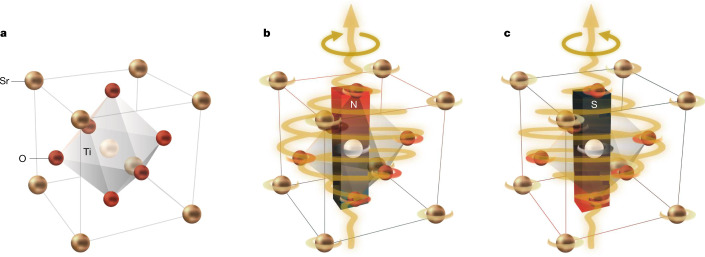
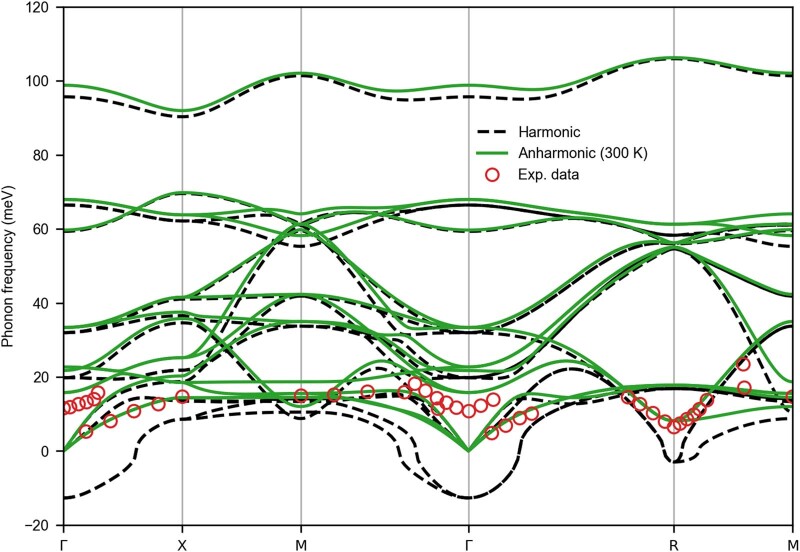
The emergence of collective order in matter is among the most fundamental and intriguing phenomena in physics. In recent years, the dynamical control and creation of novel ordered states of matter not accessible in thermodynamic equilibrium is receiving much attention 1–6. The theoretical concept of dynamical multiferroicity has been introduced to describe the emergence of magnetization due to time-dependent electric polarization in non-ferromagnetic materials 7,8. In simple terms, the coherent rotating motion of the ions in a crystal induces a magnetic moment along the axis of rotation. Here we provide experimental evidence of room-temperature magnetization in the archetypal paraelectric perovskite SrTiO 3 due to this mechanism. We resonantly drive the infrared-active soft phonon mode with an intense circularly polarized terahertz electric field and detect the time-resolved magneto-optical Kerr effect. A simple model, which includes two coupled nonlinear oscillators whose forces and couplings are derived with ab initio calculations using self-consistent phonon theory at a finite temperature 9, reproduces qualitatively our experimental observations. A quantitatively correct magnitude was obtained for the effect by also considering the phonon analogue of the reciprocal of the Einstein–de Haas effect, which is also called the Barnett effect, in which the total angular momentum from the phonon order is transferred to the electronic one. Our findings show a new path for the control of magnetism, for example, for ultrafast magnetic switches, by coherently controlling the lattice vibrations with light.
Overview
CoChat Summary
## TL;DR
The paper reports time-resolved magneto-optical Kerr signals in SrTiO3 driven by intense circularly polarized terahertz pulses and interprets them as evidence of room-temperature magnetization from dynamical multiferroicity. The observed signal qualitatively matches coupled-phonon and Kerr-effect modeling, but the experimentally inferred magnetic moment is about four orders of magnitude larger than the pure-phonon estimate.
## Key findings
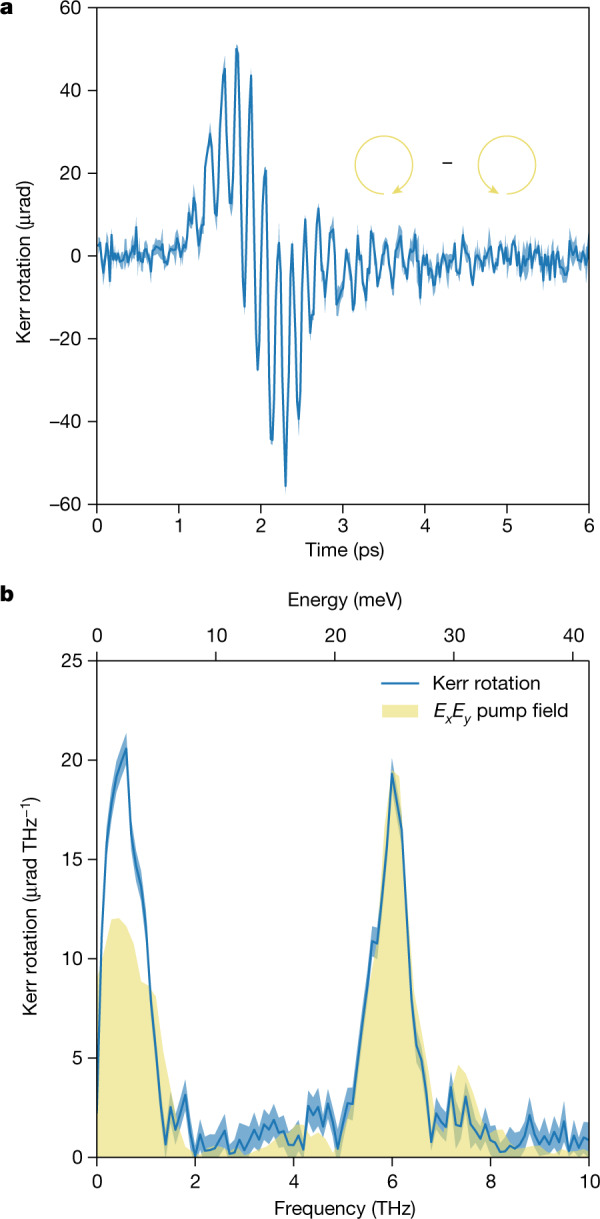
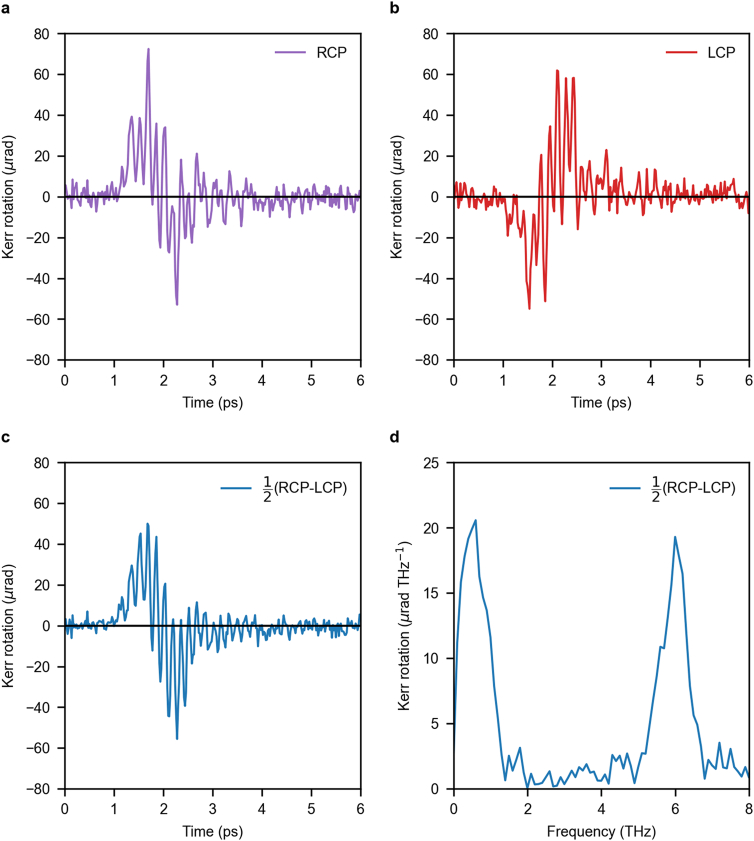
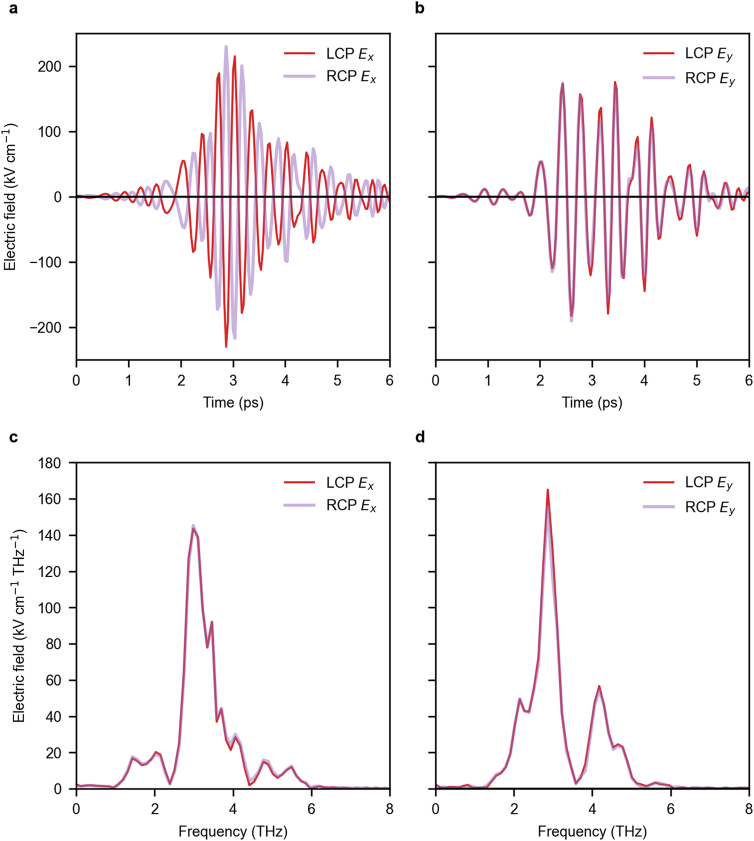
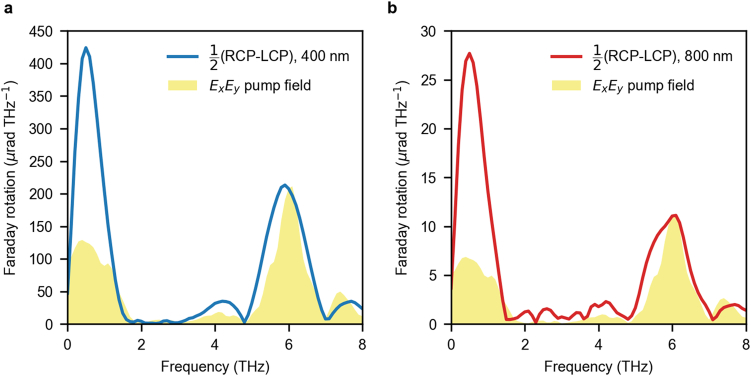
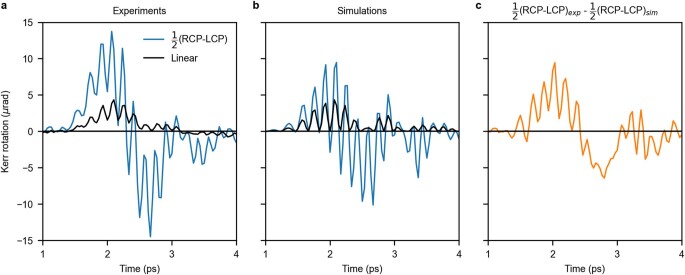
- Using ~3 THz, 0.5 THz-bandwidth circularly polarized terahertz pulses with peak fields of about 200–300 kV cm−1 on SrTiO3, the authors observed a Kerr-rotation difference signal with two Fourier components: one centered at approximately 0.6 THz and another at around 6 THz.
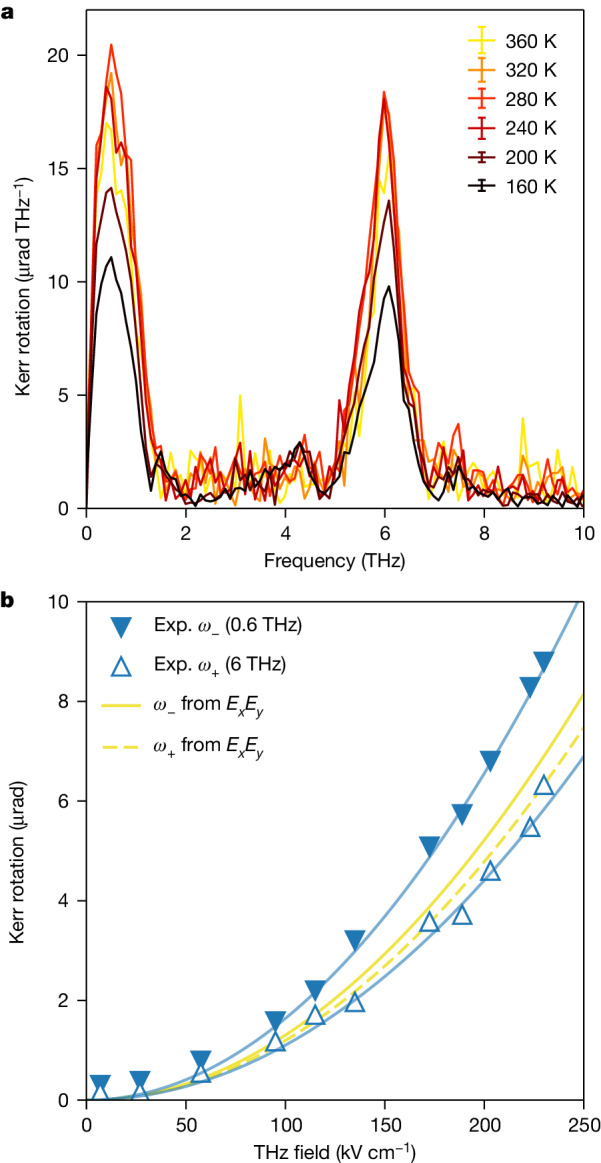
- The Kerr-response amplitudes at 300 K showed a clear quadratic dependence on terahertz field amplitude for both frequency components.
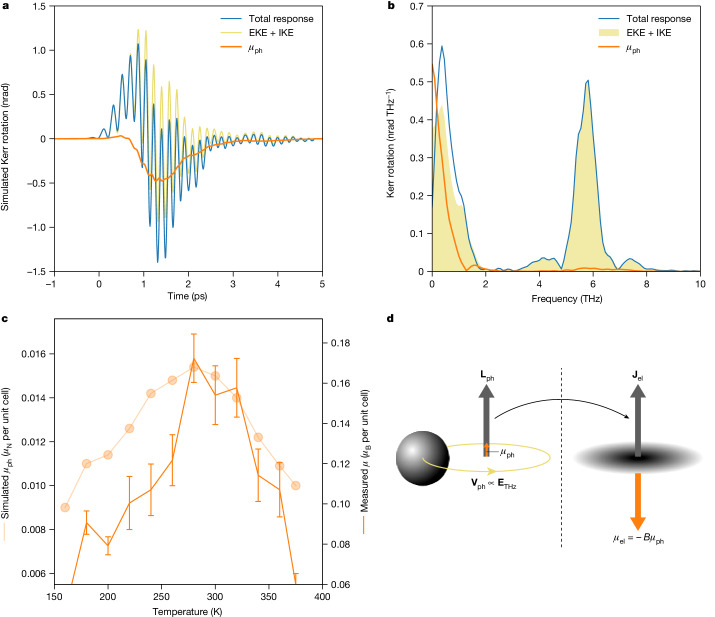
- The response varied with temperature from 160 to 360 K, with the overall signal largest near 280 K and decreasing away from that temperature; the calculated dynamical multiferroicity response showed a peaked behavior near resonance of the soft phonon with the pump.
- The calculated magnetic moment from dynamical multiferroicity was of order 10−2 μN per unit cell, whereas the estimate from the measured Kerr signal corresponded to about 10−1 μB per unit cell, i.e. roughly four orders of magnitude larger than the theoretical phonon-only value.
## Methods
- Experimental design: a SrTiO3 crystal (10 mm × 10 mm × 500 μm) was pumped by broadband single-cycle terahertz radiation generated by optical rectification in DSTMS, then filtered to a narrowband 3 THz pulse and converted to circular polarization with a terahertz quarter-wave plate; the probe was a 400 nm, 40 fs pulse used in time-resolved magneto-optical Kerr measurements.
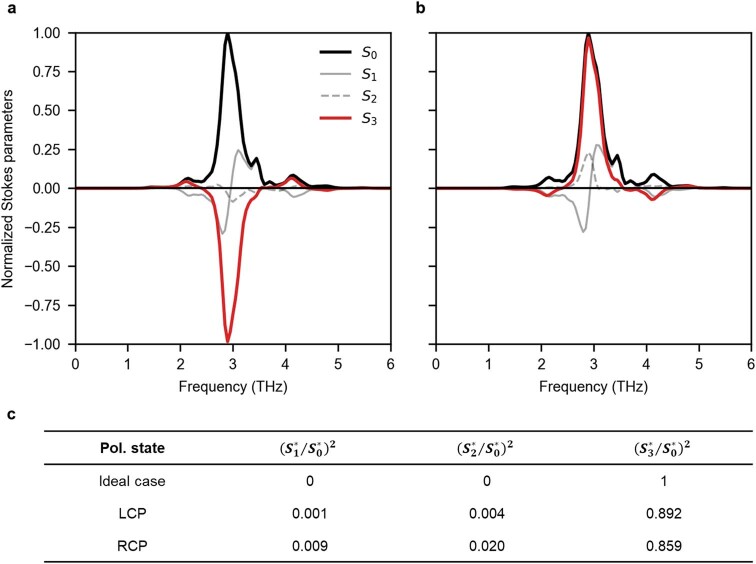
- Sample and field characterization: the terahertz electric field at the sample was measured by electro-optic sampling in GaP; the authors report a maximum broadband field of about 1.15 MV cm−1 and a typical filtered field of 200–300 kV cm−1, with circular polarization characterized as 85–90% in the relevant band.
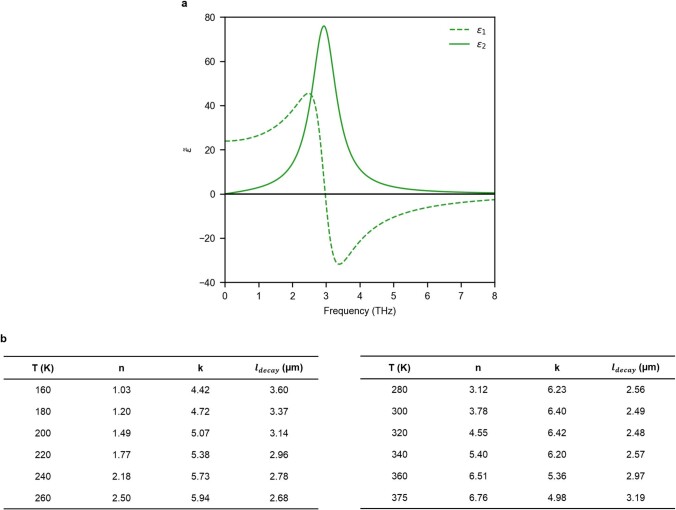
- Analysis/modeling: they combined FFT analysis of Kerr-rotation traces with self-consistent phonon and DFT-based ab initio calculations for cubic SrTiO3, a phenomenological model of two anharmonically coupled oscillators, and modeling of the electronic and ionic Kerr contributions; the Kerr rotation was used to estimate the induced magnetic field via the Verdet constant.
- Computational details: DFT calculations used VASP with HSE06, a 550 eV cutoff, and a 12 × 12 × 12 k-point mesh; self-consistent phonon calculations were performed with ALAMODE using 2 × 2 × 2 supercells and fourth-order interatomic force constants.
## Limitations
- The paper explicitly states that the calculated magnetic moment from dynamical multiferroicity is much smaller than the experimental estimate by about four orders of magnitude, indicating “an additional and key mechanism” is needed to explain the data quantitatively.
- The authors state that a rigorous ab initio estimate of the effective nonlinear coupling between electronic and ionic Kerr contributions would require a state-of-the-art extension of DFT codes and was beyond the scope of the work.
- Evident from the text: the magnetic field and moment are inferred indirectly from Kerr rotation and the Verdet constant rather than measured directly; the authors also note that the data cannot distinguish orbital from spin contributions to the induced angular momentum.
Model-written summary. Check it against the paper before relying on it.
Integrity signals
Registry
Cites
Statistics
Figures
Verification
Claims the paper makes
25 Valid · 2 Not valid · 10 Not checked · 50 Own results and interpretations
Every source the paper cites for this claim was checked and supports it.
In the paper
“A simple model, which includes two coupled nonlinear oscillators whose forces and couplings are derived with ab initio calculations using self-consistent phonon theory at a finite temperature9, reproduces qualitatively our experimental observations.”
§ Terahertz electric-field-driven dynamical multiferroicity in SrTiO3 > Abstract The emergence of collective order in matter is among the most fundamental and intriguing phenomena in physics. In recent years, the dynamical control and creation of novel ordered states of matter not accessible in thermodynamic equilibrium is receiving much attention1–6. The theoretical concept of dynamical multiferroicity has been introduced to describe the emergence of magnetization due to time-dependent electric polarization in non-ferromagnetic materials7,8. In simple terms, the coherent rotating motion of the ions in a crystal induces a magnetic moment along the axis of rotation. Here we provide experimental evidence of room-temperature magnetization in the archetypal paraelectric perovskite SrTiO3 due to this mechanism. We resonantly drive the infrared-active soft phonon mode with an intense circularly polarized terahertz electric field and detect the time-resolved magneto-optical Kerr effect. A simple model, which includes two coupled nonlinear oscillators whose forces and couplings are derived with ab initio calculations using self-consistent phonon theory at a finite temperature9, reproduces qualitatively our experimental observations. A quantitatively correct magnitude was obtained for the effect by also considering the phonon analogue of the reciprocal of the Einstein–de Haas effect, which is also called the Barnett effect, in which the total angular momentum from the phonon order is transferred to the electronic one. Our findings show a new path for the control of magnetism, for example, for ultrafast magnetic switches, by coherently controlling the lattice vibrations with light.
What the sources say
- Supportedcites [9] Oba, Y., Tadano, T., Akashi, R. & Tsuneyuki, S. First-principles study of phonon anharmonicity and negative thermal expansion in ScF 3. Phys. Rev. Mater. 3, 033601 (2019). source
The citation is attached to the ab initio, finite-temperature self-consistent phonon approach, not to the citing authors’ simple model or their experimental observations. The cited paper’s Force constant calculation section describes extracting anharmonic force constants from first-principles calculations, and its Self-consistent phonon theory section describes calculating temperature-dependent phonon frequencies and anharmonic couplings. Page numbers are unavailable in our copy. (LLM, conf=0.85)
plainstates an association- Asserted: passes — The authors put it forward as true.
- Checkable: passes — It can be checked against evidence.
- Load-bearing: passes — The paper’s conclusions depend on it.
- Based: passes — The paper gives a reason why it holds.
- Supported
Every source the paper cites for this claim was checked and supports it.
In the paper
“We anticipate here that the theory predicts an effect proportional to the product of the Ex and Ey components of the incident terahertz field, as we show in Fig. 2b and in the Methods.”
§ Terahertz electric-field-driven dynamical multiferroicity in SrTiO3 > Main
What the sources say
- Supportedcites [23] Basini, M. et al. Terahertz ionic Kerr effect: two-phonon contribution to the nonlinear optical response in insulators. Phys. Rev. B 109, 024309 (2024). source
Section III (Electronic Kerr Effect, Eq. 6; page unavailable) includes a term proportional to the product of two orthogonal terahertz pump-field components. Section II (Eq. 1; page unavailable) relates those components to the x and y axes, supporting the claimed product dependence. The paper does not say the entire response consists only of that term. (LLM, conf=0.86)
hedgedstates an association- Asserted: passes — The authors put it forward as true.
- Checkable: passes — It can be checked against evidence.
- Load-bearing: passes — The paper’s conclusions depend on it.
- Based: passes — The paper gives a reason why it holds.
- Supported
Every source the paper cites for this claim was checked and supports it.
In the paper
“It is important to stress that in the original dynamical multiferroicity theory7, no anharmonic effects were taken into account.”
§ Terahertz electric-field-driven dynamical multiferroicity in SrTiO3 > Main
What the sources say
- Supportedcites [7] Juraschek, D. M., Fechner, M., Balatsky, A. V. & Spaldin, N. A. Dynamical multiferroicity. Phys. Rev. Mater. 1, 014401 (2017). source
In “Resonant magnon excitation by optically driven phonons” (page unavailable), the authors explicitly say they can neglect nonlinear phononics in their analysis, despite noting that anharmonic coupling can be relevant at high pulse intensities. The Discussion (page unavailable) likewise says the phenomena described are not driven by nonlinear phononic effects. (LLM, conf=0.92)
plain- Asserted: passes — The authors put it forward as true.
- Checkable: passes — It can be checked against evidence.
- Load-bearing: passes — The paper’s conclusions depend on it.
- Based: passes — The paper gives a reason why it holds.
- Supported
The cited sources support only part of this claim — read each source’s verdict below.
In the paper
“Two peaks of comparable amplitudes are, on the other hand, expected when accounting for the electronic nonlinear response associated with χ(3), namely the third-order susceptibility tensor22.”
§ Terahertz electric-field-driven dynamical multiferroicity in SrTiO3 > Main
What the sources say
- Partly supportedcites [22] Udina, M., Cea, T. & Benfatto, L. Theory of coherent-oscillations generation in terahertz pump–probe spectroscopy: from phonons to electronic collective modes. Phys. Rev. B 100, 165131 (2019). sourceExperimental — accuracy not yet measured
Section I (page unavailable) describes the nonlinear electronic current as controlled by a third-order tensor, supporting the χ(3) characterization. It also identifies peaks in the squared pump-field spectrum, but does not predict that two peaks in the electronic nonlinear response have comparable amplitudes; their response depends on the nonlinear kernel and resonance conditions. (LLM, conf=0.85)
plainstates an association- Asserted: passes — The authors put it forward as true.
- Checkable: passes — It can be checked against evidence.
- Load-bearing: passes — The paper’s conclusions depend on it.
- Based: passes — The paper gives a reason why it holds.
- Partly supported
Every source the paper cites for this claim was checked and supports it.
In the paper
“On the other hand, from symmetry considerations, the permutation of space and time t, and of electric and magnetic fields, a magnetization M of the form is expected to appear in the presence of a time-dependent polarization7.”
§ Terahertz electric-field-driven dynamical multiferroicity in SrTiO3 > Main
What the sources say
- Supportedcites [7] Juraschek, D. M., Fechner, M., Balatsky, A. V. & Spaldin, N. A. Dynamical multiferroicity. Phys. Rev. Mater. 1, 014401 (2017). source
The Introduction derives from symmetry that a magnetization M ∼ P × ∂tP develops in the presence of an appropriate dynamical polarization. Section II describes this as the counterpart of polarization induced by a spatially varying magnetization. (LLM, conf=0.92)
plainstates a possible cause- Asserted: passes — The authors put it forward as true.
- Checkable: passes — It can be checked against evidence.
- Load-bearing: passes — The paper’s conclusions depend on it.
- Based: passes — The paper gives a reason why it holds.
- Supported
37 more claims · 6 with their cited sources checked
Create a free account to see all 87 claims and every source verdict.
- Probably not a substantial claim. 24
- It may state two separate claims as one. 29
Citations
Cites
Efficient iterative schemes for ab initio total-energy calculations using a plane-wave basis set
Kresse, G., & Furthmüller, J. (1996) · Physical Review B · doi:10.1103/physrevb.54.11169 · Cited by 123,652
From ultrasoft pseudopotentials to the projector augmented-wave method
Kresse, G., & Joubert, D. (1999) · Physical Review B · doi:10.1103/physrevb.59.1758 · Cited by 85,307
Hybrid functionals based on a screened Coulomb potential
Heyd, J., Scuseria, G. E., & Ernzerhof, M. (2003) · The Journal of Chemical Physics · doi:10.1063/1.1564060 · Cited by 19,629
Anisotropic Superexchange Interaction and Weak Ferromagnetism
Moriya, T. (1960) · Physical Review · doi:10.1103/physrev.120.91 · Cited by 7,234 · cited 1×
“The fundamental microscopic mechanism is the Dzyaloshinskii–Moriya interaction, which has the form S i × S j for spins S at sites i and j and which is known to promote noncollinear magnetic order 11–13 .”
Spin Current and Magnetoelectric Effect in Noncollinear Magnets
Katsura, H., Nagaosa, N., & Balatsky, A. V. (2005) · Physical Review Letters · doi:10.1103/physrevlett.95.057205 · Cited by 2,204 · cited 2×
“10.”
Self-citationTerahertz-field-induced insulator-to-metal transition in vanadium dioxide metamaterial
Liu, M., Hwang, H. Y., Tao, H., Strikwerda, A. C., Fan, K., Keiser, G. R., Sternbach, A. J., West, K. G., Kittiwatanakul, S., Lu, J., et al. (2012) · Nature · doi:10.1038/nature11231 · Cited by 1,408 · cited 5×
“The magneto-optical Kerr effect has been shown to be sensitive to an effective magnetic field driven by optical phonons in antiferromagnetic ErFeO 3 at low temperatures 21 .”
InfluentialNew Mechanism of Anisotropic Superexchange Interaction
Moriya, T. (1960) · Physical Review Letters · doi:10.1103/physrevlett.4.228 · Cited by 1,364
Light-Induced Superconductivity in a Stripe-Ordered Cuprate
Fausti, D., Tobey, R. I., Dean, N., Kaiser, S., Dienst, A., Hoffmann, M. C., Pyon, S., Takayama, T., Takagi, H., & Cavalleri, A. (2011) · Science · doi:10.1126/science.1197294 · Cited by 1,203
Self-citationTadano, T., Gohda, Y., & Tsuneyuki, S. (2014) · Journal of Physics: Condensed Matter · doi:10.1088/0953-8984/26/22/225402 · Cited by 663
Self-citationTadano, T., & Tsuneyuki, S. (2015) · Physical Review B · doi:10.1103/physrevb.92.054301 · Cited by 640
Self-citation
Research works printed but not linked: 2
- Dzyaloshinskii, I. E. Thermodynamic theory of ‘weak’ ferromagnetism in antiferromagnetic substances. Sov. J. Exp. Theor. Phys. 5, 1259–1272 (1957).
- Born, M. & Wolf, E. Principles of Optics (Cambridge Univ. Press, 1999).
Cited by
Phononic Switching of Magnetization by the Ultrafast Barnett Effect
Davies, C. S., Fennema, F. G. N., Tsukamoto, A., Razdolski, I., Kimel, A. V., & Kirilyuk, A. (2023) · arXiv · doi:10.48550/arxiv.2305.11551 · Cited by 106
Phononic switching of magnetization by the ultrafast Barnett effect
Davies, C. S., Fennema, F. G. N., Tsukamoto, A., Razdolski, I., Kimel, A. V., & Kirilyuk, A. I. (2024) · Nature · doi:10.1038/s41586-024-07200-x · Cited by 179
Observation of interplay between phonon chirality and electronic band topology
Hernandez, F. G. G., Baydin, A., Chaudhary, S., Tay, F., Katayama, I., Takeda, J., Nojiri, H., Okazaki, A. K., Rappl, P. H. O., Abramof, E., et al. (2023) · Science Advances · doi:10.1126/sciadv.adj4074 · Cited by 65
“Larger values compatible with experiments can be obtained when electronic contributions are considered ( 25 – 27 ).”
BackgroundJuraschek, D. M., Geilhufe, R. M., Zhu, H., Basini, M., Baum, P., Baydin, A., Chaudhary, S., Fechner, M., Flebus, B., Grissonnanche, G., et al. (2025) · Nature Physics · doi:10.1038/s41567-025-03001-9 · Cited by 168
“This effect has been described using various notations in recent years, including dynamical multiferroicity 6,23,25,62 , the ultrafast Barnett effect 26 and the phonon inverse Faraday effect 21,24,63 .”
Self-citationPhoto-induced chirality in a nonchiral crystal
Zeng, Z., Först, M., Fechner, M., Buzzi, M., Amuah, E. B., Putzke, C. M., Moll, P. J. W., Prabhakaran, D., Radaelli, P. G., & Cavalleri, A. (2025) · Science · doi:10.1126/science.adr4713 · Cited by 94
Giant effective magnetic moments of chiral phonons from orbit-lattice coupling
Chaudhary, S., Juraschek, D. M., Rodriguez-Vega, M., & Fiete, G. A. (2024) · Physical review. B./Physical review. B · doi:10.1103/physrevb.110.094401 · Cited by 98
“Furthermore, very recent pump-probe experiments have shown that coherently driven ∗ swati.chaudhary@austin.utexas.edu chiral phonons produce effective magnetizations in non-magnetic materials [28] and paramagnets [29, 30] that are compatible with phonon magnetic moments on the Bohr magneton scale.”
BackgroundMagnetic field expulsion in optically driven YBa2Cu3O6.48
Fava, S., Vecchi, G. D., Jotzu, G., Buzzi, M., Gebert, T., Liu, Y., Keimer, B., & Cavalleri, A. (2024) · Nature · doi:10.1038/s41586-024-07635-2 · Cited by 85
Magnetic Order Induced Chiral Phonons in a Ferromagnetic Weyl Semimetal
Che, M., Liang, J., Cui, Y., Li, H., Lu, B., Sang, W., Li, X., Dong, X., Zhao, L., Zhang, S., et al. (2025) · Physical Review Letters · doi:10.1103/physrevlett.134.196906 · Cited by 66
Measurement of phonon angular momentum
Zhang, H., Peshcherenko, N., Yang, F., Ward, T. Z., Raghuvanshi, P. R., Lindsay, L., Felser, C., Zhang, Y., Yan, J., & Miao, H. (2025) · Nature Physics · doi:10.1038/s41567-025-02952-3 · Cited by 43
“The AM transfer between fundamental particles, phonons and other elementary excitations can enable novel transducing mechanisms 10–13 , thermal manipulation of magnetism 6–8,21, 22”
Tang, X., Hu, Z., Koval, V., et al. (2025) · Journal of Materiomics · doi:10.1016/j.jmat.2025.101052 · Cited by 23
Phonon-Induced Geometric Chirality
Romao, C. P., & Juraschek, D. M. (2024) · ACS Nano · doi:10.1021/acsnano.4c05978 · Cited by 44
Multiferroicity in plastically deformed SrTiO3
Wang, X., Kundu, A., Xu, B., Hameed, S., Rothem, N., Rabkin, S., Rogić, L., Thompson, L., McLeod, A. S., Greven, M., et al. (2024) · Nature Communications · doi:10.1038/s41467-024-51615-z · Cited by 23
“Another idea for paramagnetism in STO is that coherent virtual fluctuations of the FE order induce paramagnetic fluctuations near the FE quantum critical point via an analog of Faraday’s law [31, 43, 44].”
BackgroundPhonon Inverse Faraday Effect from Electron-Phonon Coupling
Shabala, N., & Geilhufe, R. M. (2024) · Physical Review Letters · doi:10.1103/physrevlett.133.266702 · Cited by 55
“Here, we use two assumptions.”
InfluentialChoi, I. H., Jeong, S. G., Song, S., Park, S., Shin, D. B., Choi, W. S., & Lee, J. S. (2024) · Nature Nanotechnology · doi:10.1038/s41565-024-01719-w · Cited by 35
“This facilitates the detection of chiral phonons through the induced phonon magnetic moment in the non-magnetic layer 17,18 .”
InfluentialPolar topological materials and devices: Prospects and challenges
Han, H., Ma, J., Wang, J., Xu, E., Xu, Z., Huang, H., Shen, Y., Nan, C.-W., & J, J. (2025) · Progress in Materials Science · doi:10.1016/j.pmatsci.2025.101489 · Cited by 26
Origin of Large Effective Phonon Magnetic Moments in Monolayer MoS2
Mustafa, H., Nnokwe, C., Ye, G., Fang, M., Chaudhary, S., Yan, J.-A., Wu, K., Cunningham, C. J., Hemesath, C. M., Stollenwerk, A. J., et al. (2025) · ACS Nano · doi:10.1021/acsnano.4c18906 · Cited by 41
Light-induced magnetization from magnonic rectification
Kahana, T., Lopez, D. A. B., & Juraschek, D. M. (2024) · Science Advances · doi:10.1126/sciadv.ado0722 · Cited by 34
Light-induced orbital magnetism in metals via inverse Faraday effect
Sharma, P., & Balatsky, A. V. (2024) · Physical review. B./Physical review. B · doi:10.1103/physrevb.110.094302 · Cited by 23
Self-citationQuantum Metal‐Organic Frameworks
Huang, Z., & Geilhufe, R. M. (2024) · Small Science · doi:10.1002/smsc.202400161 · Cited by 27
Magnetic Switching of Phonon Angular Momentum in a Ferrimagnetic Insulator
Wu, F., Zhou, J., Bao, S., Li, L., Wen, J., Wan, Y., & Zhang, Q. (2025) · Physical Review Letters · doi:10.1103/gcgl-9sbb · Cited by 32
“They play a pivotal role in a variety of magnetic dynamics, including ultrafast demagnetization processes[4, 5], phonon-induced macroscopic magnetization[6–11], and phonon-mediated exchange interactions[12, 13], as well as in non-reciprocal phonon propagation[14, 15] and heat transport[2, 16].”
Merlin, R. D. (2024) · Physical review. B./Physical review. B · doi:10.1103/physrevb.110.094312 · Cited by 27
Zhang, T., Sun, S., Yin, C., et al. (2024) · Ceramics International · doi:10.1016/j.ceramint.2024.09.102 · Cited by 12
Colossal Terahertz Emission with Ultrafast Tunability Based on Van der Waals Ferroelectric NbOI2
Subedi, S., Liu, W., Fang, W., Fox, C., Zhai, Z., Fei, F., Ping, Y., Lv, B., & Xiao, J. (2025) · Advanced Optical Materials · doi:10.1002/adom.202403471 · Cited by 18
Chiral phonons in polar LiNbO3
Ueda, H., Nag, A., Romao, C. P., García‐Fernández, M., Zhou, K., & Staub, U. (2025) · Nature Communications · doi:10.1038/s41467-025-66911-5 · Cited by 24
Photo-induced nonvolatile rewritable ferroaxial switching
Zeng, Z., Först, M., Fechner, M., Prabhakaran, D., Radaelli, P. G., & Cavalleri, A. (2025) · Science · doi:10.1126/science.adz5230 · Cited by 37
Time-domain study of coupled collective excitations in quantum materials
Xu, C., & Zong, A. (2025) · npj Quantum Materials · doi:10.1038/s41535-025-00726-x · Cited by 27
Dynamically Induced Multiferroic Polarization
Paiva, C., Fechner, M., & Juraschek, D. M. (2025) · Physical Review Letters · doi:10.1103/7lm1-wm3y · Cited by 22
“Recent studies have shown however that this picture un-derestimates the phonon magnetic moment by up to four orders of magnitude due to the neglect of electron-phonon coupling [53, 54, 80–84].”
BackgroundManipulating Ferroelectric Topological Polar Structures with Twisted Light
Nazirkar, N. P., Tran, V., Bassène, P., Ndiaye, A., Barringer, J., Jiang, J., Cha, W., Harder, R., Shi, J. Z., N’Gom, M., et al. (2025) · Advanced Materials · doi:10.1002/adma.202415231 · Cited by 11
“Moreover, the interaction of twisted light with ferroelectrics potentially opens new avenues for research into the dynamical twist-multiferroics [ 47 ] and the braiding of polar 1D structures.”
Generation of ultrafast magnetic steps for coherent control
Vecchi, G. D., Jotzu, G., Buzzi, M., Fava, S., Gebert, T., Fechner, M., Kimel, A. V., & Cavalleri, A. (2025) · Nature Photonics · doi:10.1038/s41566-025-01651-y · Cited by 13
Chen, L., Li, Z., Li, Q., Zheng, Q., & Zhao, J. (2025) · Advanced Optical Materials · doi:10.1002/adom.202403069 · Cited by 12
Ultrafast entropy production in pump-probe experiments
Caprini, L., Löwen, H., & Geilhufe, R. M. (2024) · Nature Communications · doi:10.1038/s41467-023-44277-w · Cited by 19
Ultrafast space-time optical merons in momentum-energy space
Yessenov, М., Dorrah, A. H., Guo, C., Hall, L. A., Park, J., Free, J., Johnson, E. G., Capasso, F., Fan, S., & Abouraddy, A. F. (2025) · Nature Communications · doi:10.1038/s41467-025-63641-6 · Cited by 19
“Fourth,theversatilityofopticallysynthesizing3D polarization texture may be the basis for transferring this polarization texture from light to matter 44,67 , thereby exciting topological quasi-particle structures in material systems; for example, by laser-induced magnetization 68 for next-generation…”
Tunable Spatiotemporal Orders in Driven Insulators
Kaplan, D., Volkov, P. A., Chakraborty, A., Zhuang, Z., & Chandra, P. (2025) · Physical Review Letters · doi:10.1103/physrevlett.134.066902 · Cited by 11
Magnetophononics and the chiral phonon misnomer
Merlin, R. D. (2024) · PNAS Nexus · doi:10.1093/pnasnexus/pgaf002 · Cited by 22
Epsilon-near-zero regime for ultrafast opto-spintronics
Davies, C. S., & Kirilyuk, A. I. (2024) · npj Spintronics · doi:10.1038/s44306-024-00025-4 · Cited by 12
Terahertz-Induced Second-Harmonic Generation in Quantum Paraelectrics: Hot-Phonon Effect
Yang, F., Li, X., Talbayev, D., & Chen, L. (2025) · Physical Review Letters · doi:10.1103/74d5-4hsw · Cited by 18
Phonon-Driven Multipolar Dynamics in a Spin-Orbit Coupled Mott Insulator
Hart, K., Sutcliffe, R., Refael, G., & Paramekanti, A. (2025) · Physical Review Letters · doi:10.1103/1rmw-pd6n · Cited by 14
Revolutions of multiferroic materials
Yu, P. (2025) · npj Spintronics · doi:10.1038/s44306-025-00077-0 · Cited by 7
Gauge theory of giant phonon magnetic moment in doped Dirac semimetals
Chen, W., Zhang, X., Su, Y., Cao, T., Xiao, D., & Lin, S. (2025) · Physical review. B./Physical review. B · doi:10.1103/physrevb.111.035126 · Cited by 19
On‐Demand Generation and Control of Giant Terahertz Nonlinearity with Metasurfaces
Wang, C., Wen, Y., Tan, Y., Zhao, S., Yu, K., Sun, J., & Zhou, J. (2024) · Laser & Photonics Review · doi:10.1002/lpor.202401224 · Cited by 7
Polar phonons and magnetic excitations in the antiferromagnet CoF 2
Dubrovin, R. M., Tellez-Mora, A., Garcia-Castro, A. C., Siverin, N. V., Novikova, N. N., Boldyrev, K. N., Mashkovich, E. A., Romero, A. H., & Писарев, Р. В. (2024) · Physical review. B./Physical review. B · doi:10.1103/physrevb.109.224312 · Cited by 7
Superradiant terahertz free-electron laser driven by electron microbunch trains
Liang, Y., Li, T., Sun, J., Liu, Z., Yang, J., Wang, X., Yu, Y., Tian, Q., He, Z., HongFei, W. A. N. G., et al. (2026) · Light Science & Applications · doi:10.1038/s41377-025-02156-7 · Cited by 12
Quantum printing and induced vorticity in superconductors II: Laguerre-Gaussian beam
Yeh, T.-T., Yerzhakov, H., Horn, L. B.-V., Raghu, S., & Balatsky, A. V. (2025) · Physical Review Research · doi:10.1103/dqv7-w2w4 · Cited by 13
“…physics, recent progress in optical control of materials includes now control of chiral phonon dynamics by the spin angular momentum (SAM) coupling [10– 12], orbital angular momentum (OAM) transfer to mag-nets [13], induction of skyrmions [14], induction of spiral Higgs waves [15], creation of…”
Self-citationQuantum printing and induced vorticity in superconductors I: Linearly polarized light
Yeh, T.-T., Yerzhakov, H., Horn, L. B.-V., Raghu, S., & Balatsky, A. V. (2025) · Physical Review Research · doi:10.1103/k9m4-h474 · Cited by 11
“Examples include light spin angular momentum transfer to phonons [5–7], orbital angular momentum transfer to magnets [8], and spiral Higgs waves [9], Kapitza engineering in superconducting (SC) device controlling [10], induction of skyrmions [11] and polariton vortices [12, 13].”
Self-citationTheory of spin Seebeck effect activated by acoustic chiral phonons
Nishimura, N., Funato, T., Matsuo, M., & Kato, T. (2025) · Journal of Magnetism and Magnetic Materials · doi:10.1016/j.jmmm.2025.173386 · Cited by 16
Generation of Circularly Polarized Strong-Field Terahertz Waves
李, J.-H. 江. L., 熊, H.-T. 虹. X., Kong, D., 赵, W.-P. 蔚. Z., Liu, S., 全, B.-G. 保. Q., & 吴, X.-J. 晓. W. (2024) · Chinese Physics Letters · doi:10.1088/0256-307x/41/12/124201 · Cited by 6
Theory of nonlinear terahertz susceptibility in ferroelectrics
Zhu, Y., Chen, T., Ross, A., Wang, B., Guo, X., Gopalan, V., Chen, L., & Hu, J. (2024) · Physical review. B./Physical review. B · doi:10.1103/physrevb.110.054311 · Cited by 7
Advancing Characterization for Magnetic Materials via Magneto‐Optical Kerr Effect Microscopy
Huang, T., Dong, J., Huang, T., et al. (2025) · Small · doi:10.1002/smll.202510608 · Cited by 5
Terahertz control of linear and nonlinear Magno-phononics
Luo, T., Ning, H., Ilyas, B., von Hoegen, A., Boström, E. V., Park, J., Kim, J., Park, J., Juraschek, D. M., Rubio, Á., et al. (2025) · Nature Communications · doi:10.1038/s41467-025-62091-4 · Cited by 17
“Con fi ning excitation exclusively to nonlinear pathways may constrain the attainable amplitude of lattice vibrations and hinders a detailed control over lattice oscillation patterns, thereby limiting the scope of phononic control of magnetic properties.”
Phonon Edelstein effect in chiral metals
Yokoyama, T. (2025) · Physical review. B./Physical review. B · doi:10.1103/lsv4-z14s · Cited by 11
Measurement of phonon angular momentum
Zhang, H., Peshcherenko, N., Yang, F., et al. (2025) · MPG.PuRe (Max Planck Society) · Cited by 5
Ultrafast Pseudomagnetic Fields from Electron-Nuclear Quantum Geometry
Klebl, L., Schobert, A., Eckstein, M., Sangiovanni, G., Balatsky, A. V., & Wehling, T. O. (2025) · Physical Review Letters · doi:10.1103/physrevlett.134.016705 · Cited by 28
Self-citationLight makes atoms behave like electromagnetic coils
Romao, C. P., & Juraschek, D. M. (2024) · Nature · doi:10.1038/d41586-024-00889-w · Cited by 11
Review of intense terahertz generation and its emerging applications
Song, L. S. L., Wu, X., Li, H., Leng, Y., Tian, Y., & Li, R. (2026) · Applied Physics Reviews · doi:10.1063/5.0306279 · Cited by 14
Bao, S., Liao, J., Huang, Z., Shangguan, Y., Ma, Z., Zhang, B., Cheng, S., Xu, H., Song, Z., Dong, S., et al. (2026) · Physical Review Letters · doi:10.1103/pq5m-32wj · Cited by 10
Simple THz Phase Retarder Based on Mach–Zehnder Interferometer for Polarization Control
Ueda, H., Pashkin, A., Uykur, E., Helm, M., & Winnerl, S. F. (2025) · Journal of Infrared Millimeter and Terahertz Waves · doi:10.1007/s10762-025-01045-9 · Cited by 6
Light‐Induced Hysteresis of Electronic Polarization in Anti‐Ferromagnet FePS3
Sim, K. I., Park, B. C., Kim, T. S., Cho, B. W., Kim, J. H., Choi, E., & Lee, Y. H. (2025) · Advanced Materials · doi:10.1002/adma.202413484 · Cited by 4
Xi, Q., Yang, J. Z., Xie, J., et al. (2025) · The Journal of Physical Chemistry Letters · doi:10.1021/acs.jpclett.4c03138 · Cited by 4
Spin–Spin Interaction Mediated by Chiral Phonons
Yokoyama, T. (2024) · Journal of the Physical Society of Japan · doi:10.7566/jpsj.93.123705 · Cited by 8
Spatiotemporal determination of photoinduced strain in a Weyl semimetal
Wu, J., Prasad, A. K., Balatsky, A. V., & Weissenrieder, J. (2024) · Structural Dynamics · doi:10.1063/4.0000263 · Cited by 6
Self-citationNoncollinear ferrielectricity in a van der Waals crystal
Fu, J., Wang, G., Qi, Y., He, W. M., Fang, Y., Tang, G., Peng, Y. Z., Wang, D., Guan, Z., Sun, X., et al. (2026) · Nature Communications · doi:10.1038/s41467-026-70975-2 · Cited by 4
Disentangling Electronic and Ionic Nonlinear Polarization Effects in Bulk THz Kerr Response
Shen, C., Frenzel, M., Maehrlein, S. F., & Alpichshev, Z. (2026) · Physical Review Letters · doi:10.1103/1c5k-9z82 · Cited by 3
“The advent of tabletop sources of intense terahertz (THz) pulses has made it possible to directly explore low-energy modes while keeping electronic degrees of freedom largely unaffected [1 – 5].”
Observation of angular momentum transfer among crystal lattice modes
Minakova, O., Paiva, C., Frenzel, M., Spencer, M. S., Urban, J. R., Ringkamp, C., Wolf, M., Mußler, G., Juraschek, D. M., & Maehrlein, S. F. (2026) · RWTH Publications (RWTH Aachen) · Cited by 3
Orbital Inverse Faraday and Cotton-Mouton Effects in Hall Fluids
Cardoso, G., Syljuåsen, E., & Balatsky, A. V. (2026) · Physical Review Letters · doi:10.1103/z4db-gt69 · Cited by 6
Self-citationNonequilibrium quantum dynamics in SrTiO 3 under impulsive THz radiation with machine learning
Libbi, F., Johansson, A., Kozinsky, B., & Monacelli, L. (2025) · Science Advances · doi:10.1126/sciadv.adw1634 · Cited by 18
Atomic and interatomic orbital magnetization induced in SrTiO 3 by chiral phonons
Urazhdin, S. (2025) · Physical review. B./Physical review. B · doi:10.1103/m73s-fxdp · Cited by 9
Wang, C., Chen, D., Wang, Y., & Meng, S. (2025) · Physical Review X · doi:10.1103/physrevx.15.021053 · Cited by 14
Soft phonon and the central peak at the cubic-to-tetragonal phase transition in SrTiO 3
Maity, A., Habicht, K., Merz, M., Said, A., Guguschev, C., Kojda, D., Ryll, B., Hoffmann, J.-E., Dittmar, A., Keller, T., et al. (2025) · Physical review. B./Physical review. B · doi:10.1103/physrevb.111.134108 · Cited by 5
Einstein-de Haas effect: a bridge linking mechanics, magnetism, and topology
Nie, X., & Yao, D. (2024) · 中国科学通报:英文版 · doi:10.1016/j.scib.2024.12.006 · Cited by 8
“To date, phonon magnetic moment has been found in paramagnetic [21], ferromagnetic [22], and non-magnetic materials [17], and various explanations have been given for this phenomenon.”
BackgroundMultiferroic-like Quasiparticles in Ferroelectrics
Tang, P. Y., & Bauer, G. E. W. (2026) · Physical Review Letters · doi:10.1103/gm7n-8ftp · Cited by 12
Ultrafast holographic chiroptical microscopy
Hörmann, M., Visentin, F., Gessner, J. A., Kollenz, P., Liu, S., Heindl, M. W., Deschler, F., Cerullo, G., & Camargo, F. V. A. (2026) · Nature Photonics · doi:10.1038/s41566-025-01824-9 · Cited by 6
Lattice Excitations with Finite Polarization and Magnetization
Pols, M., Romao, C. P., & Juraschek, D. M. (2026) · Physical Review Letters · doi:10.1103/2sj3-33ky · Cited by 11
“The size of the magnetic moment associated with multiferrons depends on the effective charges of the ions, making oxide perovskites [41, 57] or other materials with large phonon magnetic moments such as Pb 1 − x Sn x Te [46, 47] attractive candidates for large multiferronic effects.”
Manipulating Ferroelectricity Without Electrical Bias: A Perspective
Yan, B., Gillioz, V., Efe, İ., & Trassin, M. (2026) · Advanced Physics Research · doi:10.1002/apxr.202500224 · Cited by 2
“Besides visible and UV light, other frequency domains, particularly THz [ 139, 140 ], have revealed the possibility of robust control over ferroelectric polarization or even the induction of dynamic polarization.”
Wiechert, V., Wang, H., Legrand, W., Gambardella, P., Breitbach, D., Pirro, P., Lammel, M., Meo, A., Finocchio, G., & Bossini, D. (2026) · Nature Communications · doi:10.1038/s41467-025-66707-7 · Cited by 3
Multicolor Phonon Excitation in Terahertz Cavities
Yaniv, O., & Juraschek, D. M. (2025) · Physical Review Letters · doi:10.1103/fwr7-6jj6 · Cited by 5
Theory of terahertz pulse transmission through ferroelectric nanomembranes
Zhu, Y., Ross, A., Guo, X., Gopalan, V., Chen, L., & Hu, J. (2025) · Physical review. B./Physical review. B · doi:10.1103/7wnn-j6nc · Cited by 3
“…a shift in the Fermi surface in the topological material Bi 2 Te 3 [6], the insulator-to-metal transition in VO 2 -based metamaterials [7], a non-thermal spin switching in antiferromagnetic Sm 0.7 Er 0.3 FeO 3 [8], and the excitation of a magnetoelectric oscillation in multiferroic TbMnO 3 [9].”
InfluentialPerspective: an X-ray view of the coherent driving of materials
Johnson, S. L., & Staub, U. (2025) · npj Quantum Materials · doi:10.1038/s41535-025-00799-8 · Cited by 7
Peng, D., Yu, Z., Zhao, S., Luo, J., Shen, L. F., & Fang, W. (2025) · The Journal of Physical Chemistry Letters · doi:10.1021/acs.jpclett.5c00980 · Cited by 2
Zhou, Z. P., Shen, L., Xing, X., et al. (2025) · Journal of Materiomics · doi:10.1016/j.jmat.2025.101068 · Cited by 2
Ultrafast entropy production in nonequilibrium magnets
Tietjen, F., & Geilhufe, R. M. (2025) · PNAS Nexus · doi:10.1093/pnasnexus/pgaf055 · Cited by 6
“Today, the spin dynamics of magnetic materials can be excited and probed on subpicosecond time-scales (2), involving ultrafast demagnetization (3 – 6), ultrafast magnetic switching (7), and nonlinear magnonic effects (8).”
Origin of oxygen partial pressure-dependent conductivity in SrTiO3
Cai, Z., & Ma, C. (2025) · Applied Physics Letters · doi:10.1063/5.0245820 · Cited by 2
Anomalous phonon magnetic moments
Chaudhary, S., Romao, C. P., & Juraschek, D. M. (2026) · Physical Review Research · doi:10.1103/xzgb-33w5 · Cited by 8
“Real phonon angular momentum has been associated with the generation of magnetic fields [3, 21, 23, 33– 37], whereas PAM has been shown to be important for selection rules in light-and electron-phonon scattering [1, 4, 5, 11, 38].”
Chiba, U., Tsuji, S., Oritani, G., et al. (2026) · ACS Photonics · doi:10.1021/acsphotonics.6c00372 · Cited by 1
Observation of angular momentum transfer among crystal lattice modes
Minakova, O., Paiva, C., Frenzel, M., Spencer, M. S., Urban, J. R., Ringkamp, C., Wolf, M., Mußler, G., Juraschek, D. M., & Maehrlein, S. F. (2026) · Nature Physics · doi:10.1038/s41567-026-03274-8 · Cited by 27
Nonadiabatic origin of quantum-metric effects via momentum-space metric tensor
Ren, Y. (2026) · Physical review. B./Physical review. B · doi:10.1103/k7yb-5c9t · Cited by 8
Terahertz-Driven Parametric Excitation of Raman-Active Phonons in LaAlO 3
Basini, M., Unikandanunni, V., Gabriele, F., Cross, M., Derrico, A. M., Gray, A. X., Hoffmann, M. C., Forte, F., Cuoco, M., & Bonetti, S. (2026) · Physical Review Letters · doi:10.1103/57p8-7mh9 · Cited by 6
Self-citationAngular Momentum Fluctuations in the Phonon Vacuum of Symmetric Crystals
Yi, R., Williams, V., & Flebus, B. (2026) · Physical Review Letters · doi:10.1103/hdpn-xm69 · Cited by 3
“(10) of the main text : In the long-wavelength limit, a 2D monatomic lattice is well approximated by two acoustic branches, σ = L, T , with isotropic dispersions ω σ ( k ) = c σ k .”
Derrico, A. M., Basini, M., Unikandanunni, V., Paudel, J. R., Kareev, M., Terilli, M., Wu, T., Alostaz, A., Klewe, C., Shafer, P., et al. (2025) · Advanced Materials · doi:10.1002/adma.202512328 · Cited by 3
Self-citationMAGNETOELECTRIC MULTIFERROICS: FROM FUNDAMENTALS TO TRANSFORMATIVE APPLICATIONS – A MINI REVIEW
Wanic, M. (2025) · Physics for Economy · doi:10.7862/rf.2025.pfe.4 · Cited by 1
“Ongoing research aims to further reduce noise and enhance ME coefficients at room temperature, leveraging materials like YIG-BTO composites to meet the demands of next-generation RF technologies [33].”
Properties of YIG for engineering applications: a review
Askarzadeh, N., & Shokrollahi, H. (2025) · Journal of Materials Science Materials in Electronics · doi:10.1007/s10854-025-16082-2 · Cited by 6
Khadeeva, P. A., Shakhova, V. M., Lomachuk, Y. V., et al. (2025) · Molecular Physics · doi:10.1080/00268976.2025.2483881 · Cited by 1
Atomic-vibration-induced nonlinear electronic polarization for terahertz detection
Li, Z., Irshad, H., Gu, Y., Mutailipu, M., Iitaka, T., Su, H., & Wan, X. (2025) · Physical review. B./Physical review. B · doi:10.1103/physrevb.111.085201 · Cited by 2
High-power femtosecond mid-IR source with tunable center frequency and chirp
Boie, L., Strudwick, B. H., Winkler, R. T., Deng, Y., & Johnson, S. L. (2025) · Applied Physics Letters · doi:10.1063/5.0234867 · Cited by 1
Sun, L., Lv, X., Xu, Y., Lin, X., & Zhang, Y. (2025) · Journal of Superconductivity and Novel Magnetism · doi:10.1007/s10948-025-06926-7 · Cited by 1
Terahertz electro-optic Kerr effect in LaAlO 3
Kovalev, S., Zhu, C., Reinold, A., Koch, M., Wang, Z., Pilch, P., Ghalgaoui, A., Duan, S., Li, C., Zhang, J., et al. (2025) · Optics Letters · doi:10.1364/ol.551339 · Cited by 2
Electric-field switching of g-wave phonon chirality in ferroelectric BaTiO3
Grimes, M., Ueda, H., Allington, C. J., Romao, C. P., Kummer, K., Kaur, P., Wang, L.-S., Chang, Y., Yang, J.-C., Huang, S., et al. (2026) · Nature Materials · doi:10.1038/s41563-026-02737-w · Cited by 3
Ultrafast Faraday rotation probe of chiral phonon-polaritons in LiNbO 3
Biggs, M. F., Ho, S.-H. E., Alejandro, A., Lutz, M. J., Moss, C. D., & Johnson, J. A. (2026) · Science Advances · doi:10.1126/sciadv.aec8970 · Cited by 13
“However, our sample and experimentation differ from these previous works in novel and important ways: firstly, the LiNbO 3 sample is a ferroelectric material where E-symmetry modes couple with light to form phonon-polaritons that propagate into the depth of the material [15], creating truly chiral…”
InfluentialShaping and Driving Quantum Matter with Strong-Field Terahertz Transients
Wang, Y., Liu, Y., Wang, F., Tao, Z., Zhou, S., & Tian, C. (2026) · Fundamental Research · doi:10.1016/j.fmre.2026.09.006
Effective electron coupling to phonon mechanical angular momentum in helical systems
Anonymous, Yokoshi, N., & Kishine, J. (2026) · Physical review. B./Physical review. B · doi:10.1103/kr19-7s6q · Cited by 3
Geometric origin of phonon magnetic moment in Dirac materials
Anonymous, Zhang, X., Cao, T., Lin, S., & Xiao, D. (2026) · Physical review. B./Physical review. B · doi:10.1103/jyxm-6lyd · Cited by 8
Metadata
- Authors
- Basini, M., Pancaldi, M., Wehinger, B., Udina, M., Unikandanunni, V., Tadano, T., Hoffmann, M. C., Balatsky, A. V., & Bonetti, S.
- Affiliations
- Stockholm University (SE)
- Ca' Foscari University of Venice (IT)
- Sapienza University of Rome (IT)
- National Institute for Materials Science (JP)
- SLAC National Accelerator Laboratory (US)
- Nordic Institute for Theoretical Physics (SE)
- Corresponding author
- Bonetti, S.
- ORCID
- Venue
- Nature
- Published
- 2024-04-10
- Volume
- 628
- Issue
- 8008
- Pages
- 534-539
- ISSN
- 0028-0836 (ISSN-L)
- 1476-4687
- PMC
- PMC11023939
- OpenAlex
- W4394675913
- Cited by
- 143
- References
- 70
- Citations by year
- 2026: 51 · 2025: 65 · 2024: 26
- FWCI
- 11.06
- Type
- journal article
- Language
- en
- Open access
- hybrid
- doi.org
- Licence
- cc-by
- creativecommons.org/licenses/by/4.0 (tdm)
- creativecommons.org/licenses/by/4.0 (vor)
- Locations
- Nature (publishedVersion, cc-by)
- PubMed Central (publishedVersion, cc-by)
- PubMed (publishedVersion)
- IRIS Research product catalog (Sapienza University of Rome) (submittedVersion, cc-by)
- ARCA (Università Ca' Foscari Venezia) (submittedVersion, other-oa)
- OSTI OAI (U.S. Department of Energy Office of Scientific and Technical Information) (submittedVersion, other-oa)
- NIMS Materials Data Repository (submittedVersion, cc-by)
- Funders
- University of Connecticut
- European Commission (951215, 810451)
- Knut och Alice Wallenbergs Stiftelse (2017.0158, 2019.0068)
- Stockholms Universitet
- Japan Society for the Promotion of Science (21K03424)
- Topics
- Physical Sciences › Materials Science › Electronic, Optical and Magnetic Materials › Multiferroics and related materials
- Physical Sciences › Materials Science › Electronic, Optical and Magnetic Materials › Magnetic and transport properties of perovskites and related materials
- Physical Sciences › Physics and Astronomy › Condensed Matter Physics › Advanced Condensed Matter Physics
- Keywords
- SrTiO3, terahertz electric field, soft mode, circularly polarized light, time-resolved magneto-optical Kerr effect, room-temperature magnetization, self-consistent phonon theory, coupled nonlinear oscillators, Einstein-de Haas effect, Barnett effect, ultrafast magnetic switching, lattice vibrations
About these checks
Registry, retraction, Cites and statistics results are computed, not judged, with one exception: a printed reference that no index lists is read once by a model before it counts as a citation error. Claims are extracted by a model and kept only when their quote appears verbatim in the text; each cited source is then checked, with a model’s help, for whether it says what the claim relies on. Those verdicts can be wrong — read the claim’s quote and the cited source before relying on one.
The claim verdicts this report counts are experimental: their accuracy is not yet measured.
A language model drew the claims from the paper on 2026-10-11, under version 3 of the claim definition (model deepseek-v4.1-flash, prompt extract-v3).
A second model labelled each claim on 2026-10-11 (model jev-1.13-20260917, definition revision gold-guideline-v0.2).
Cited sources are checked with a language model’s help (gpt-6-sol).
Statistics and arithmetic are recomputed, not judged.
Confidence bands are shown only for fields calibrated on our annotated test set. None is calibrated yet, so no band is shown.
What counts as a claim ›How we measure confidence ›How we check this ›
Are you an author, or do you see a problem with this page? Request a review
Data sources
Bibliographic data: Semantic Scholar, OpenAlex, Crossref.
Contains information from the Semantic Scholar Academic Graph Datasets, made available under the ODC Attribution License (ODC-BY 1.0).
Semantic Scholar’s data is described in: Kinney, R., et al. (2023). The Semantic Scholar Open Data Platform. arXiv:2301.10140.
