

CTLA4 blockade abrogates KEAP1/STK11-related resistance to PD-(L)1 inhibitors
Open accessThe DOI matches its Crossref record; 77 of the 77 references it cites were found in a registry or an index.
Abstract
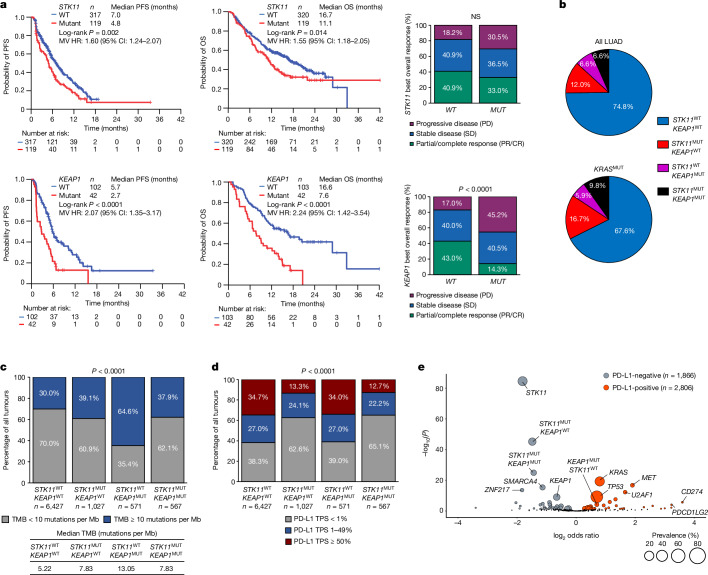
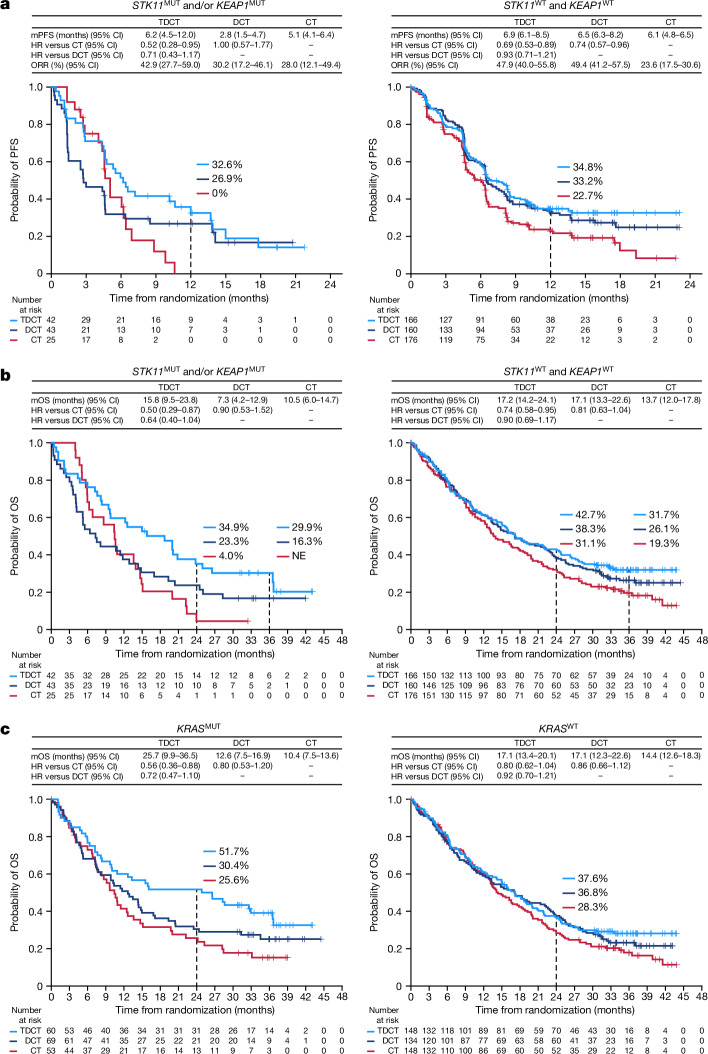
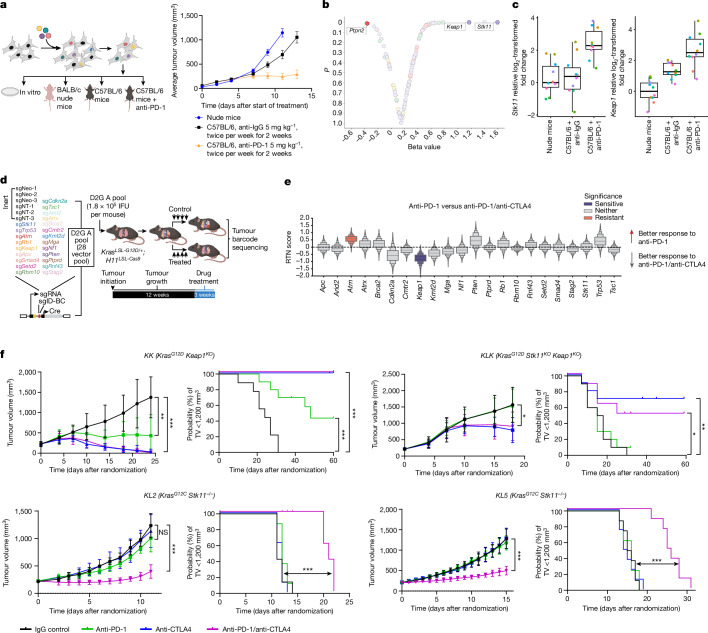
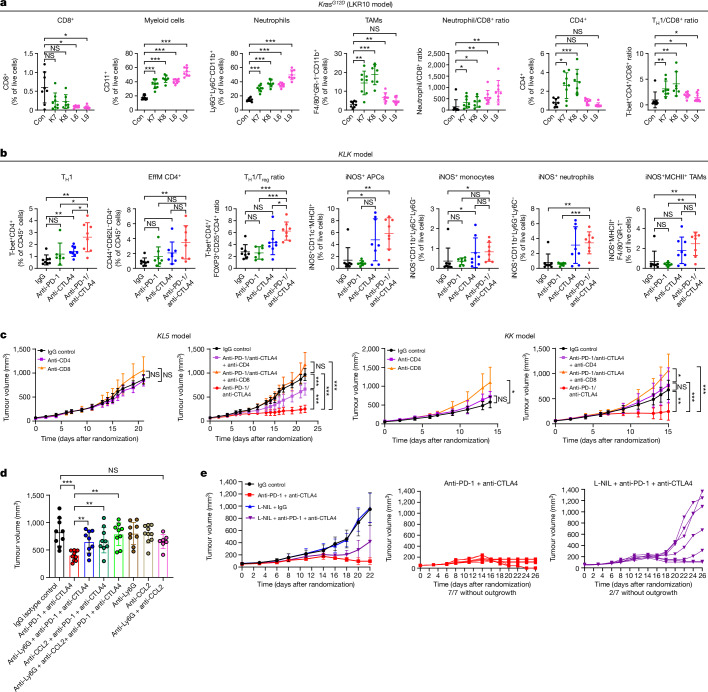
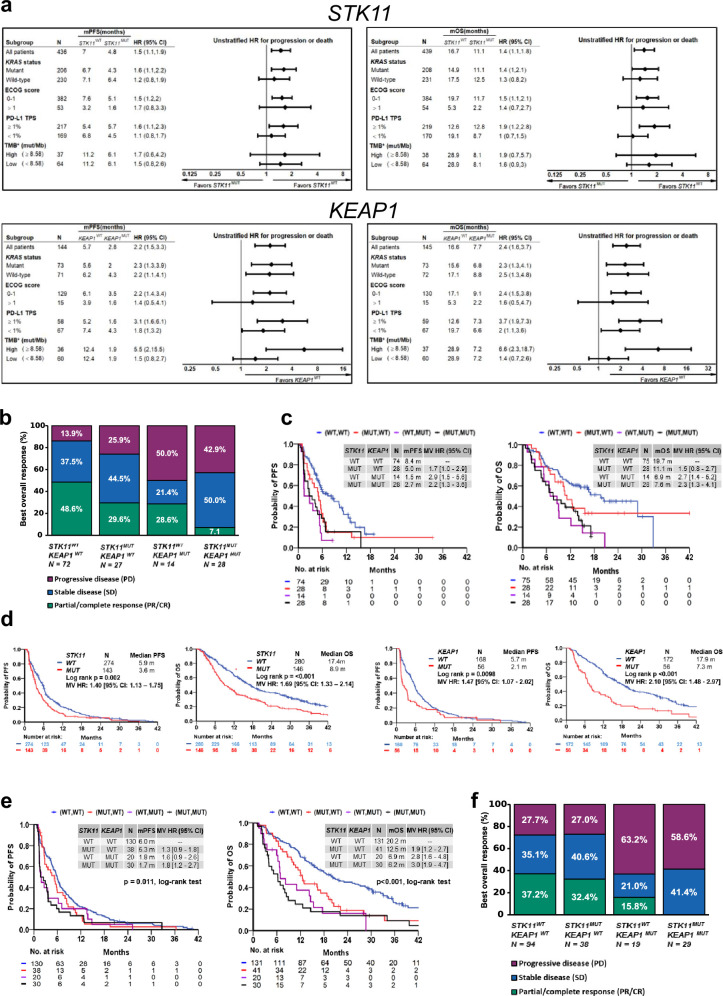
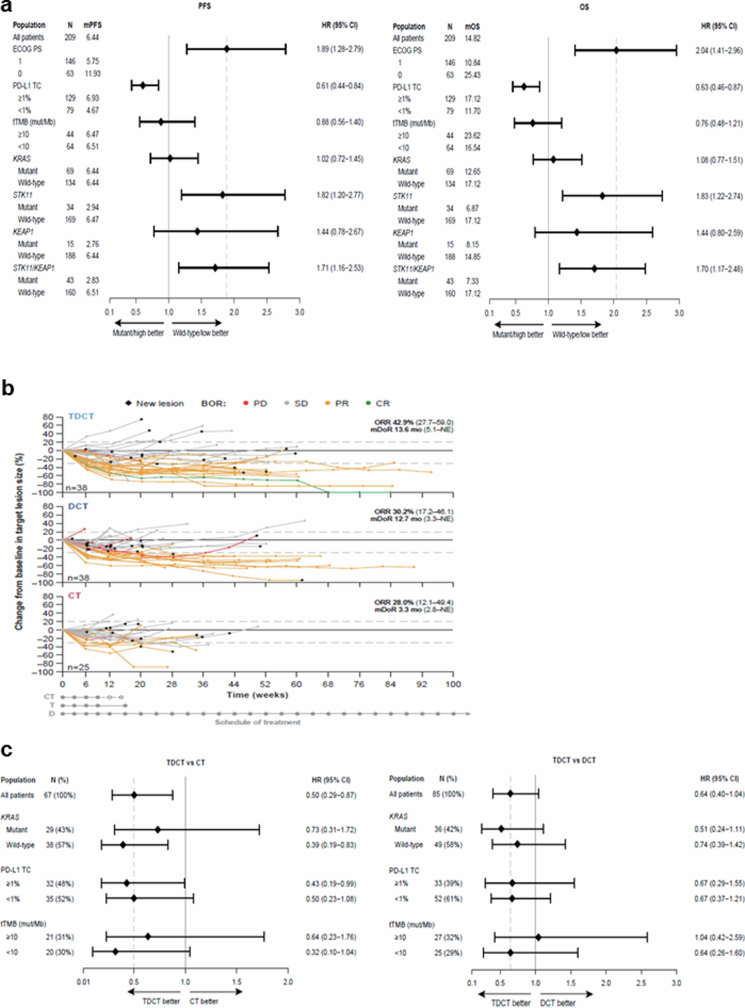
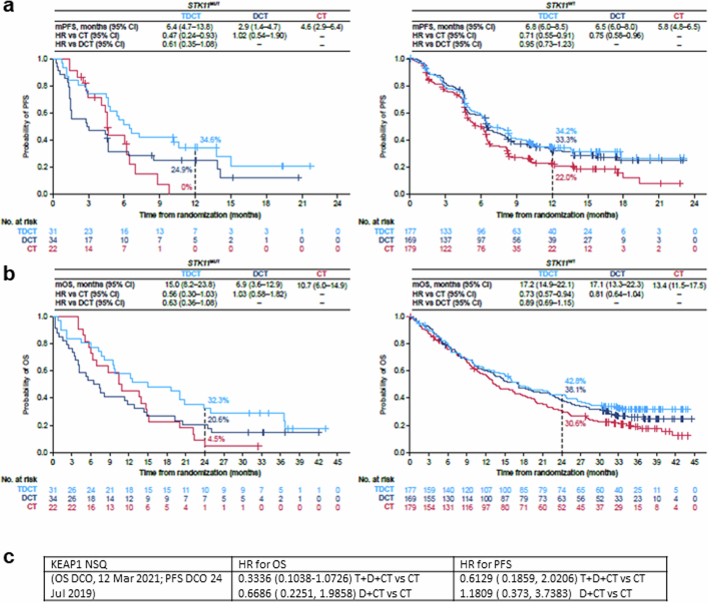
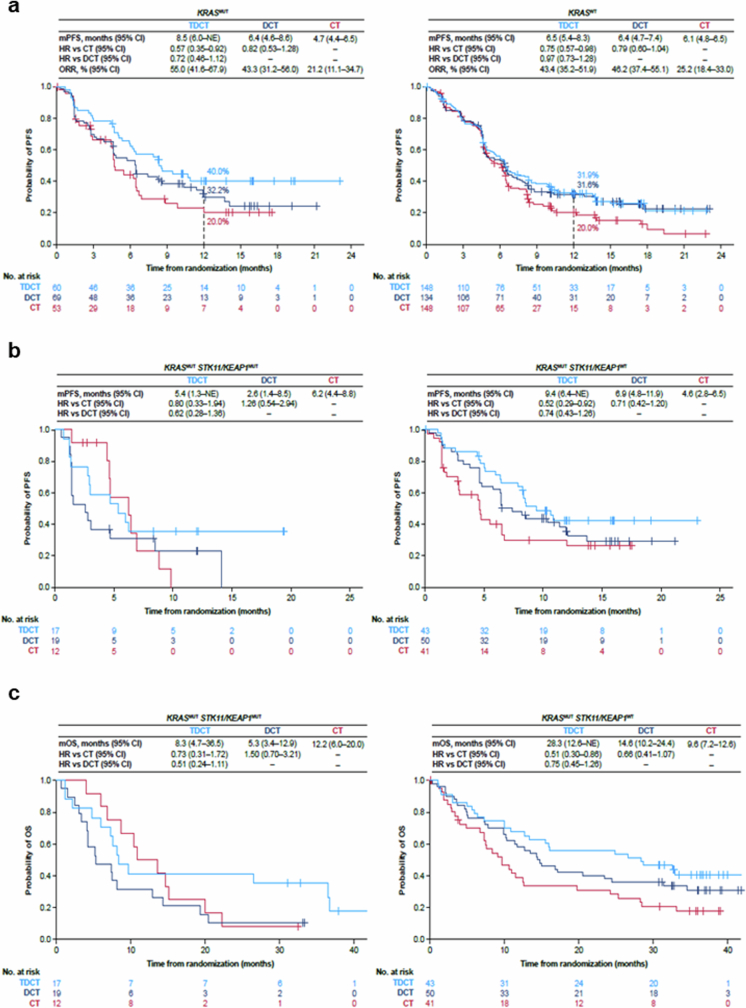
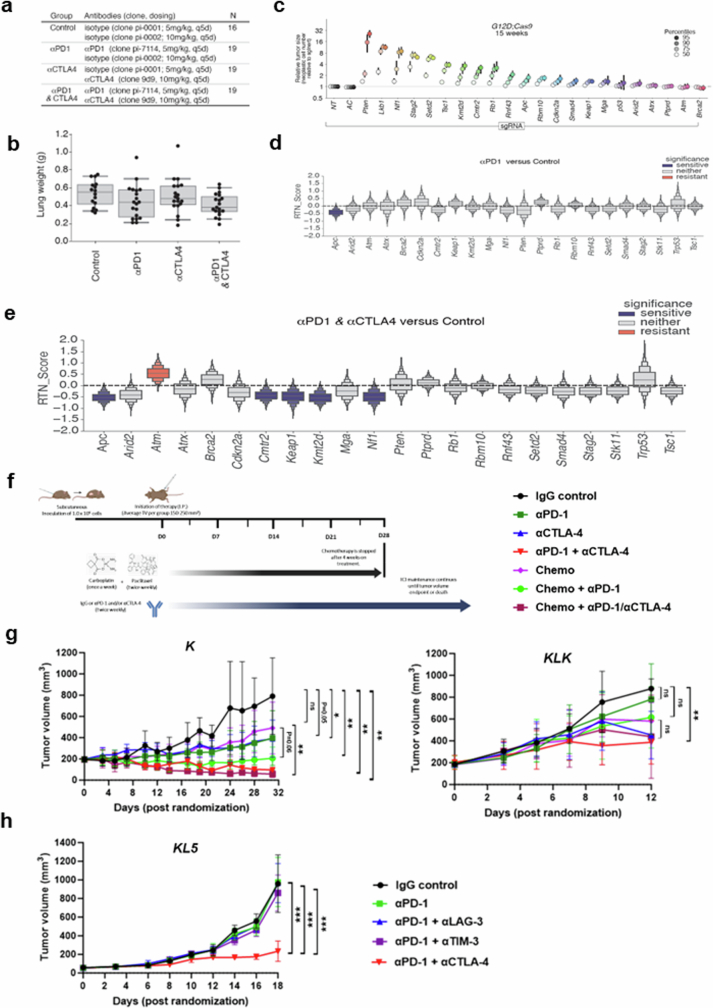
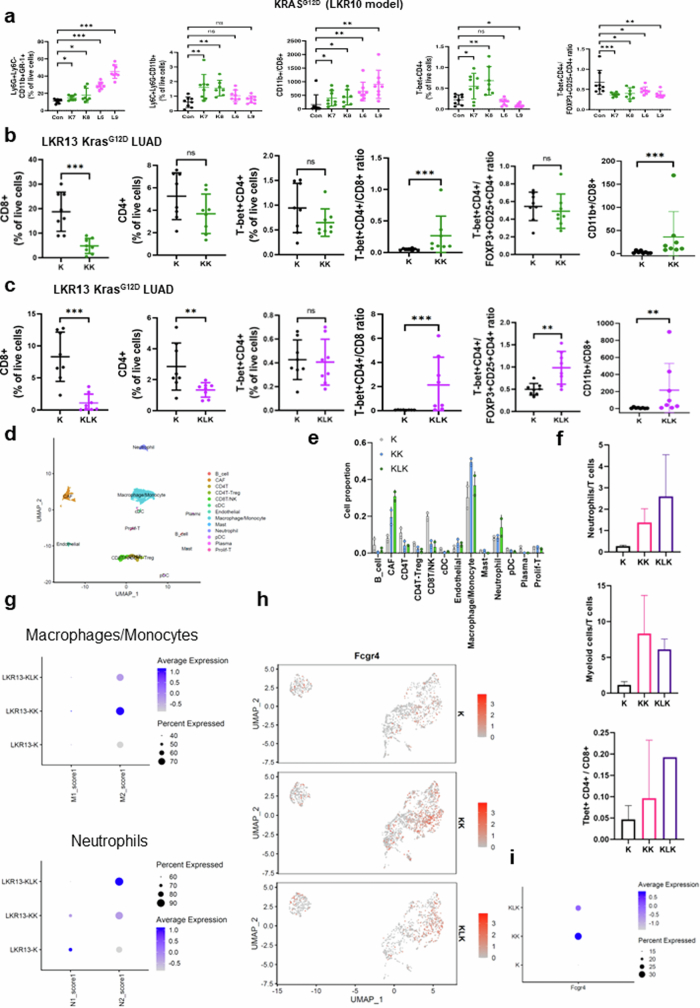
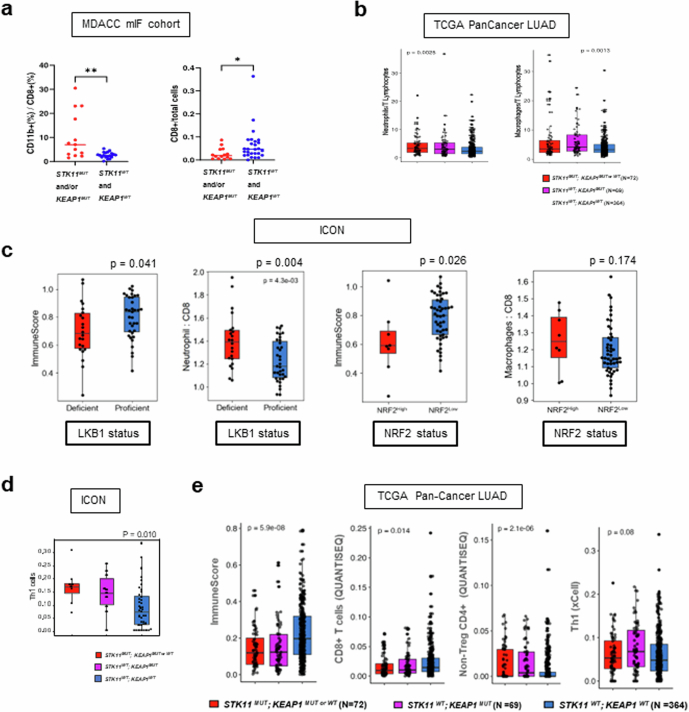
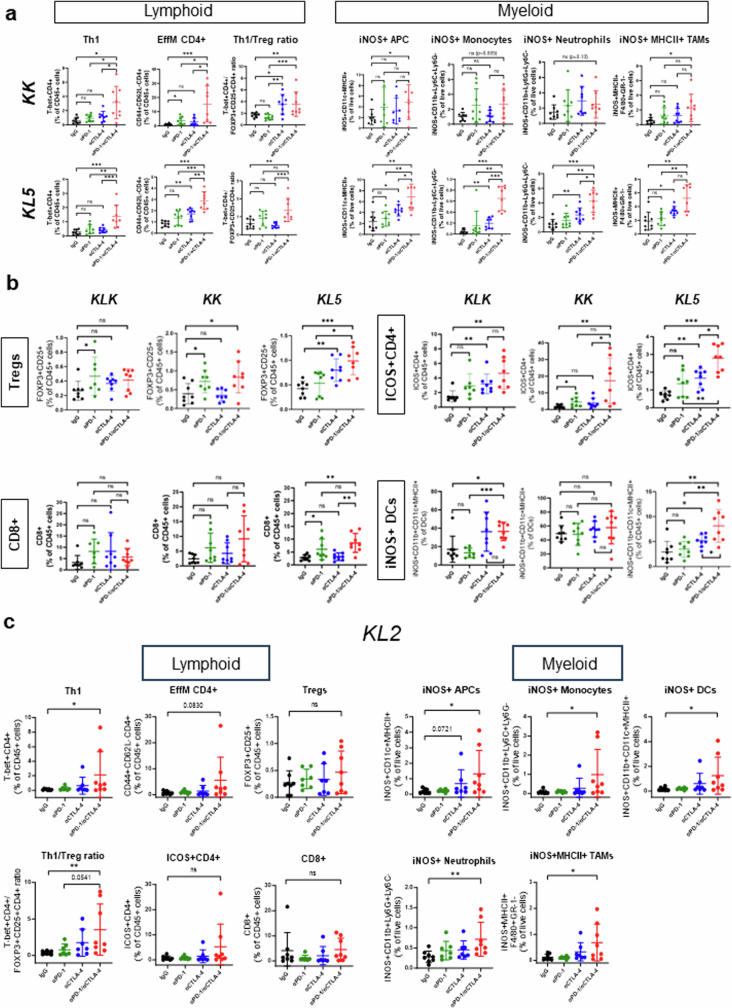
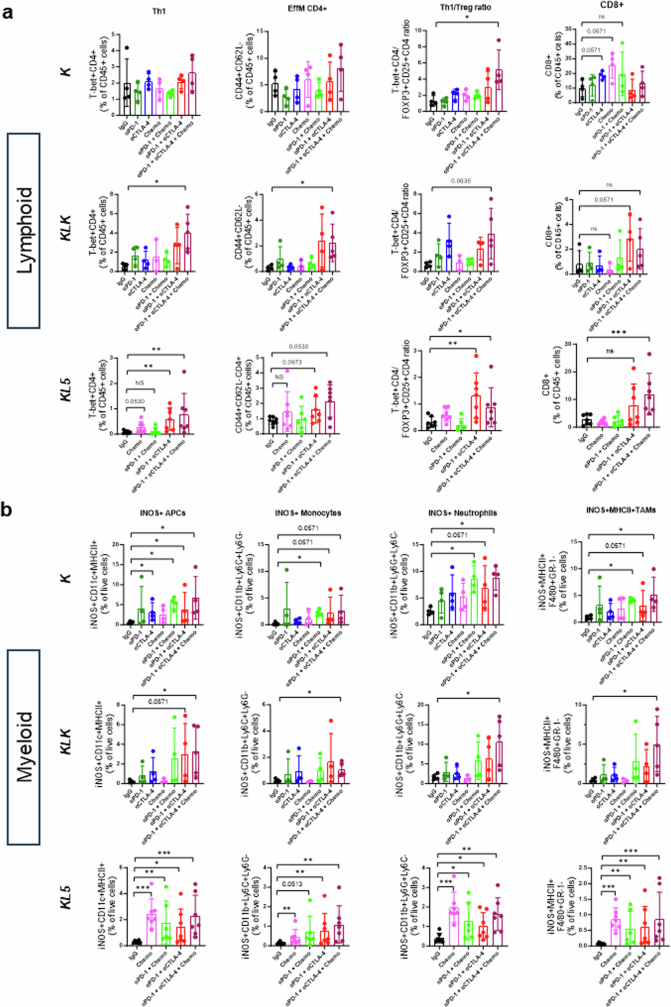
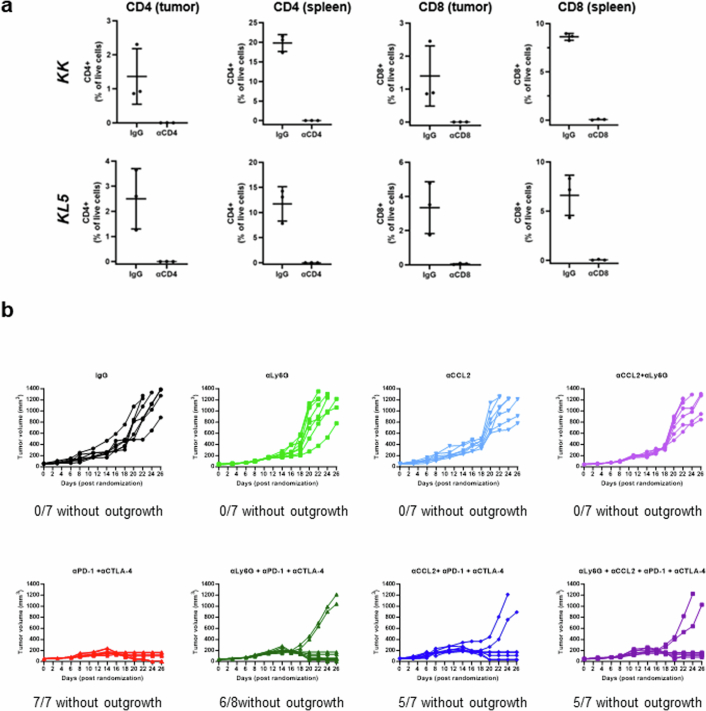
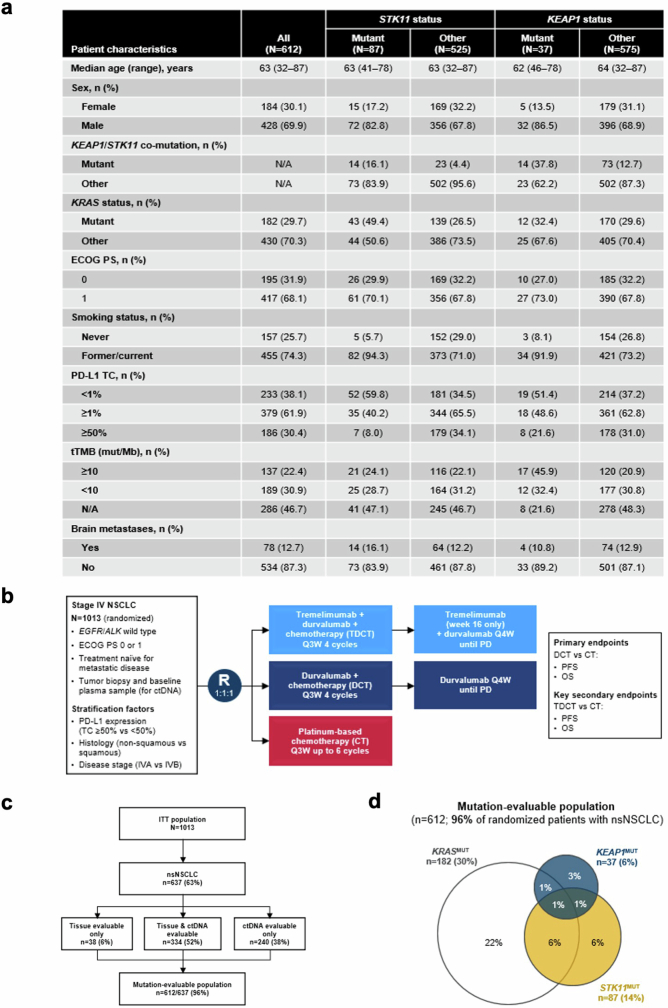
For patients with advanced non-small-cell lung cancer (NSCLC), dual immune checkpoint blockade (ICB) with CTLA4 inhibitors and PD-1 or PD-L1 inhibitors (hereafter, PD-(L)1 inhibitors) is associated with higher rates of anti-tumour activity and immune-related toxicities, when compared with treatment with PD-(L)1 inhibitors alone. However, there are currently no validated biomarkers to identify which patients will benefit from dual ICB1,2. Here we show that patients with NSCLC who have mutations in the STK11 and/or KEAP1 tumour suppressor genes derived clinical benefit from dual ICB with the PD-L1 inhibitor durvalumab and the CTLA4 inhibitor tremelimumab, but not from durvalumab alone, when added to chemotherapy in the randomized phase III POSEIDON trial3. Unbiased genetic screens identified loss of both of these tumour suppressor genes as independent drivers of resistance to PD-(L)1 inhibition, and showed that loss of Keap1 was the strongest genomic predictor of dual ICB efficacy—a finding that was confirmed in several mouse models of Kras-driven NSCLC. In both mouse models and patients, KEAP1 and STK11 alterations were associated with an adverse tumour microenvironment, which was characterized by a preponderance of suppressive myeloid cells and the depletion of CD8+ cytotoxic T cells, but relative sparing of CD4+ effector subsets. Dual ICB potently engaged CD4+ effector cells and reprogrammed the tumour myeloid cell compartment towards inducible nitric oxide synthase (iNOS)-expressing tumoricidal phenotypes that—together with CD4+ and CD8+ T cells—contributed to anti-tumour efficacy. These data support the use of chemo-immunotherapy with dual ICB to mitigate resistance to PD-(L)1 inhibition in patients with NSCLC who have STK11 and/or KEAP1 alterations. Alterations in the tumour suppressor genes STK11 and/or KEAP1 can identify patients with advanced non-small-cell lung cancer who are likely to benefit from combinations of PD-(L)1 and CTLA4 immune checkpoint inhibitors added to chemotherapy.
Overview
The claims and statistics of this paper haven’t been checked yet.
Free: it reads the open-access text and checks the first 5 claims that cite a source we can check. Create a free account to check every claim.
Integrity signals
Registry
Cites
Statistics
Figures
Verification
Claims the paper makes
The claims and statistics of this paper haven’t been checked yet.
Free: it reads the open-access text and checks the first 5 claims that cite a source we can check. Create a free account to check every claim.
Claims other papers make about this one
Each is checked against this paper’s own text: does it say what the citing paper says it does?
The source backs part of the claim, not all of it — or backs it for a different population, condition or comparison.
In the citing paper
“Previously, we conducted an in vivo CRISPR screen in the MC38 mouse model to identify genes that, when knocked out, drove immune evasion and resistance to anti–PD-1 treatment. STK11 was one of several identified genes in the screen that caused resistance to immune checkpoint blockade (20).”
From TNG260 Is a Small-Molecule CoREST Inhibitor That Sensitizes STK11 -Mutant Tumors to Anti–PD-1 Immunotherapy (2025) · cites this paper as [20]
Experimental — accuracy not yet measuredThe source backs part of the claim, not all of it — or backs it for a different population, condition or comparison.
In the citing paper
“In the MC38 syngeneic model, which is KRAS wild-type, loss of STK11 alone is sufficient to drive resistance to anti–PD-1 (20).”
From TNG260 Is a Small-Molecule CoREST Inhibitor That Sensitizes STK11 -Mutant Tumors to Anti–PD-1 Immunotherapy (2025) · cites this paper as [20]
Experimental — accuracy not yet measuredThe cited source says what the claim attributes to it.
In the citing paper
“STK11/LKB1 loss and KEAP1 mutations may contribute to lack of response to different therapies including anti-PD-(L)1 immune checkpoint inhibitors9,10 and KRASG12C inhibitors3,4.”
From LKB1 regulates JNK-dependent stress signaling and apoptotic dependency of KRAS-mutant lung cancers (2025) · cites this paper as [10]
The cited source says what the claim attributes to it.
In the citing paper
“STK11/LKB1 and KEAP1 mutations can reshape a colder TME and suppress the infiltration of T cells [157].”
From Differential Response and Resistance to KRAS-Targeted Therapy (2025) · cites this paper as [157]
Self-check
Percentages, sums and reported differences re-computed from the paper’s own numbers.
The self-check needs the paper’s full text.
Citations
Cites
PD-1 and PD-L1 Immune Checkpoint Blockade to Treat Breast Cancer
Hartkopf, A. D., Taran, F.-A., Wallwiener, M., Walter, C. B., Krämer, B., Grischke, E.-M., & Brucker, S. Y. (2016) · Breast Care · doi:10.1159/000453569 · Cited by 30,845
Integrative Analysis of Complex Cancer Genomics and Clinical Profiles Using the cBioPortal
Gao, J., Aksoy, B. A., Dogrusoz, U., Dresdner, G., Gross, B., Sumer, S. O., Sun, Y., Jacobsen, A., Sinha, R., Larsson, E., et al. (2013) · Science Signaling · doi:10.1126/scisignal.2004088 · Cited by 15,160 · cited 1×
“Paired WES, RNA-seq and clinical data from patients with LUAD from the TCGA PanCancer Atlas cohort were downloaded from the cBio-Portal for Cancer Genomics repository 59 .”
Mutational landscape determines sensitivity to PD-1 blockade in non–small cell lung cancer
Rizvi, N. A., Hellmann, M. D., Snyder, A., Kvistborg, P., Makarov, V., Havel, J. J., Lee, W., Yuan, J., Wong, P., Ho, T. S., et al. (2015) · Science · doi:10.1126/science.aaa1348 · Cited by 7,802
Self-citationPembrolizumab plus chemotherapy in metastatic non–small-cell lung cancer
Gandhi, L., Rodríguez-Abreu, D., Gadgeel, S., Esteban, E., Felip, E., De Angelis, F., Domine, M., Clingan, P., Hochmair, M. J., Powell, S. F., et al. (2018) · New England Journal of Medicine · doi:10.1056/nejmoa1801005 · Cited by 6,607 · cited 1×
“%) levels 4 .”
Self-citationImproved vectors and genome-wide libraries for CRISPR screening
Sanjana, N. E., Shalem, O., & Zhang, F. (2014) · Nature Methods · doi:10.1038/nmeth.3047 · Cited by 5,239 · cited 1×
“Eleven per cent of the sgRNAs included in the library represented non-targeting controls. sgRNA oligos were cloned into a lentiCRISPR v2 plasmid 61 , using Gibson assembly.”
TIMER2.0 for analysis of tumor-infiltrating immune cells
Li, T., Fu, J., Zeng, Z., Cohen, D., Li, J., Chen, Q., Li, B., & Liu, X. S. (2020) · Nucleic Acids Research · doi:10.1093/nar/gkaa407 · Cited by 5,209 · cited 1×
“0 60 , which provides standardized output from six different immune estimation methods.”
Optimized sgRNA design to maximize activity and minimize off-target effects of CRISPR-Cas9
Doench, J. G., Fusi, N., Sullender, M., Hegde, M., Vaimberg, E. W., Donovan, K. F., Smith, I., Tothova, Z., Wilen, C., Orchard, R., et al. (2016) · Nature Biotechnology · doi:10.1038/nbt.3437 · Cited by 4,637 · cited 1×
“First, all possible 20-bp sgRNAs (using an NGG PAM) targeting each gene of interest were identified and scored for predicted on-target cutting efficiency using an available sgRNA design/scoring algorithm 68 .”
xCell: digitally portraying the tissue cellular heterogeneity landscape
Aran, D., Hu, Z., & Butte, A. J. (2017) · Genome Biology · doi:10.1186/s13059-017-1349-1 · Cited by 4,397 · cited 10×
“C57BL/6J mice were treated by intraperitoneal injection with anti-mPD-1 (BioXCell, BE0146) or anti-IgG2a (BioXCell, BE0089) at 5 mg per kg or 10 mg per kg, twice per week for two weeks.”
InfluentialAnalysis of 100,000 human cancer genomes reveals the landscape of tumor mutational burden
Chalmers, Z. R., Connelly, C. F., Fabrizio, D., Gay, L., Ali, S. M., Ennis, R., Schrock, A., Campbell, B., Shlien, A., Chmielecki, J., et al. (2017) · Genome Medicine · doi:10.1186/s13073-017-0424-2 · Cited by 3,519 · cited 2×
“TMB was measured by Foundation Medicine as described previously 52 .”
Nivolumab plus ipilimumab in lung cancer with a high tumor mutational burden
Hellmann, M. D., Ciuleanu, T.-E., Pluzanski, A., Lee, J. S., Otterson, G. A., Audigier-Valette, C., Minenza, E., Linardou, H., Burgers, S., Salman, P., et al. (2018) · New England Journal of Medicine · doi:10.1056/nejmoa1801946 · Cited by 3,063
Self-citation
Cited by
Advances in molecular pathology and therapy of non-small cell lung cancer
Huang, Q., Li, Y., Huang, Y., Wu, J., Bao, W., Xue, C., Li, X., Dong, S., Dong, Z., & Hu, S. (2025) · Signal Transduction and Targeted Therapy · doi:10.1038/s41392-025-02243-6 · Cited by 197
Tumour and microenvironment crosstalk in NSCLC progression and response to therapy
Rahal, Z., Darzi, R. E., Moghaddam, S. J., Cascone, T., & Kadara, H. N. (2025) · Nature Reviews Clinical Oncology · doi:10.1038/s41571-025-01021-1 · Cited by 122
Self-citationGong, Z., Du, M., Li, Y., Ye, B., Huang, Y., Gong, H., Wang, W., Chen, L., Ding, Z., & Zhang, P. (2025) · npj Digital Medicine · doi:10.1038/s41746-025-02172-2 · Cited by 87
“For example, blocking immune checkpoint molecules such as CTLA-4 and PD-1 can activate the anti-tumor cytotoxicity of T cells 14 .”
Wang, Y., Safi, M., Hirsch, F. R., Lu, S., Peters, S., Govindan, R., Rosell, R., Park, K., & Zhang, J. J. (2025) · Nature Reviews Clinical Oncology · doi:10.1038/s41571-024-00979-8 · Cited by 84
“…with NSCLC harbouring mutations in KEAP1 and/or STK11 are more likely to derive benefit from the addition of an anti-CTLA4 antibody to an anti-PD-(L)1 antibody plus chemotherapy 63–66 , leading to the ongoing phase IIIb TRITON trial, which is designed to definitively address this question 67 .”
Self-citationMariniello, A., Borgeaud, M., WEINER, M. H., Frisone, D., Kim, F., & Addeo, A. (2025) · BioDrugs · doi:10.1007/s40259-024-00700-2 · Cited by 79
“In a post-hoc exploratory analysis of the POSEIDON trial, Skoulidis et al. showed that patients with KEAP1 and/or STK11 mutations seemed to derive some benefit from the addition of CTLA-4 blockade to anti-PD-L1 and chemotherapy [142].”
Targeting KRAS mutations: orchestrating cancer evolution and therapeutic challenges
Choucair, K., Imtiaz, H., Uddin, M. H., Nagasaka, M., Al-Hallak, M. N., Philip, P. A., El-Rayes, B., Pasche, B., & Azmi, A. S. (2025) · Signal Transduction and Targeted Therapy · doi:10.1038/s41392-025-02473-8 · Cited by 83
“203 More recent work has further investigated the mechanisms of acquired resistance (reviewed in ref.”
Treatment of NSCLC after chemoimmunotherapy — are we making headway?
Reck, M., Frost, N., Peters, S., Fox, B. A., Ferrara, R., Savai, R., & Barlési, F. (2025) · Nature Reviews Clinical Oncology · doi:10.1038/s41571-025-01061-7 · Cited by 70
Self-citationFederico, A. D., Stumpo, S., Mantuano, F., Giglio, A. D., Bianco, F. L., Pecci, F., Alessi, J. V., Wang, X., Sperandi, F., Melotti, B., et al. (2025) · The Lancet Oncology · doi:10.1016/s1470-2045(25)00429-2 · Cited by 68
Self-citationThe heterogeneity of neutrophils in cancer and its implication for therapeutic targeting
Eruslanov, E. B., Nefedova, Y., & Gabrilovich, D. I. (2025) · Nature Immunology · doi:10.1038/s41590-024-02029-y · Cited by 63
“The therapeutic effect of this combination therapy was abolished by the depletion of neutrophils, suggesting that these repolarized cells contributed directly to antitumor activity 138 .”
Yu, J., Kong, X., & Feng, Y. (2025) · Cancer Drug Resistance · doi:10.20517/cdr.2025.14 · Cited by 73
Paredes, R., Borea, R., Drago, F., Russo, A., Nigita, G., & Rolfo, C. D. (2025) · Journal for ImmunoTherapy of Cancer · doi:10.1136/jitc-2025-012288 · Cited by 44
Beyond T-cell subsets: stemness and adaptation redefining immunity and immunotherapy
Zou, D., Li, X. C., & Chen, W. (2025) · Cellular and Molecular Immunology · doi:10.1038/s41423-025-01321-7 · Cited by 41
“However, dual ICB is often associated with increased immune-related adverse events [113], necessitating a careful balance between enhanced therapeutic ef fi cacy and potential toxicity.”
Galán‐Cobo, A., Vokes, N. I., Qian, Y., Molkentine, D. P., Ramkumar, K., Paula, A. G., Pisegna, M. A., McGrail, D. J., Poteete, A., Cho, S.-N., et al. (2025) · Cancer Cell · doi:10.1016/j.ccell.2025.06.011 · Cited by 38
Self-citationDong, S., Li, X., Huang, Q., Li, Y., Li, J., Zhu, X., Xue, C., Chen, R., Zeng, Y., Wu, J., et al. (2025) · Drug Resistance Updates · doi:10.1016/j.drup.2025.101215 · Cited by 29
Gandhi, M. M., Elkrief, A., Moore, C. G., Ricciuti, B., Alessi, J. V., Richards, A. L., Tischfield, S. E., Williams, J. N., Lamberti, G., Pecci, F., et al. (2025) · Journal of Thoracic Oncology · doi:10.1016/j.jtho.2025.01.016 · Cited by 30
Self-citationRocca, A., Crinò, L., Braga, L., Salton, F., Ruaro, B., Confalonieri, M., Generali, D., & Confalonieri, P. (2025) · British Journal of Cancer · doi:10.1038/s41416-025-03139-6 · Cited by 30
“The latter are sensitive to anti-CTLA4, and the combination of an anti-CTLA4 with an anti-PD-1 or anti-PD-L1 induces suppressive myeloid cells reprogramming into inducible nitric oxide synthase-expressing tumoricidal phenotypes and recruits circulating neutrophils [53].”
KRAS mutated NSCLC: past, present, and future directions in a rapidly evolving landscape
Frisch, A., Martin, E., Kim, S. Y., Riess, J. W., Sen, T., & Karim, N. A. (2025) · The Oncologist · doi:10.1093/oncolo/oyaf153 · Cited by 27
Self-citationShort-chain fatty acids in the tumor microenvironment: from molecular mechanisms to cancer therapy
Xiang, Y., Du, A., Wang, Z., Pan, H., & Yuan, K. (2025) · Theranostics · doi:10.7150/thno.119304 · Cited by 27
“Myeloid-derived suppressor cells (MDSCs), a heterogeneous myeloid cell population linked to chronic inflammation, exhibit potent immunosuppressive properties [67,68].”
Kang, K., Liu, S., Yao, Z., Xue, J., & Lu, Y. (2025) · Cell Reports Medicine · doi:10.1016/j.xcrm.2025.102315 · Cited by 27
Mascaux, C., Sen, T., Sánchez‐Céspedes, M., Ortiz‐Cuaran, S., Bossé, Y., Dammeijer, F. F., Cavic, M. R., Barr, M. P., Arulananda, S., Armisén, R., et al. (2025) · Journal of Thoracic Oncology · doi:10.1016/j.jtho.2025.05.024 · Cited by 23
Self-citationCarbone, D. P., Hirsch, F. R., Osarogiagbon, R. U., Nishimura, K. K., Tsao, M., Travis, W. D., Yang, D., Yang, S., Yatabe, Y., Araujo, L. H., et al. (2025) · Journal of Thoracic Oncology · doi:10.1016/j.jtho.2025.06.025 · Cited by 22
Self-citationReprogramming the immune microenvironment in lung cancer
Chen, K., Luo, L., Li, Y., & Ge, Y. (2025) · Frontiers in Immunology · doi:10.3389/fimmu.2025.1684889 · Cited by 25
Zhao, X., Liu, B., William, W. N., Tsanov, K. M., Ho, Y.-J., Barriga, F. M., Lim, R. J., Trifas, M., Khandekar, A., Du, Y., et al. (2024) · Journal of Thoracic Oncology · doi:10.1016/j.jtho.2024.12.020 · Cited by 20
Trained immunity modulators: A new frontier in immunoregulation and disease intervention
Chen, J., Wang, C., Chen, S., Cai, H., Wang, M., Chang, J., Cai, X., Yang, J., & Cao, P. (2025) · Journal of Advanced Research · doi:10.1016/j.jare.2025.09.029 · Cited by 20
Khan, S., Upadhyay, S., Kauser, S., Hasan, G. M., Lu, W., Waters, M., Hassan, M. I., & Sohal, S. S. (2025) · Journal of Clinical Medicine · doi:10.3390/jcm14228021 · Cited by 21
Amato, L., Rosa, C. D., Guida, G. D., Sepe, F., Ariano, A., Capaldo, S., Haq, F. U., Liello, A. D., Tuccillo, C., Lucà, S., et al. (2025) · Cell Death and Disease · doi:10.1038/s41419-025-07636-7 · Cited by 19
“Additionally, STK11/LKB1 inactivation is a major genetic driver of primary resistance to anti-PD-1 agents and co-mutation of STK11 and KEAP1 genes has been correlated to higher sensitivity to dual immunotherapy with anti-CTLA4 and anti-PD-1 agents versus anti-PD1 alone [5, 6].”
Bian, Y., Shan, G., Bi, G., Xu, Z., Liang, J., Yan, Y., Guo, W., Sui, Q., Yi, Y., Shi, H., et al. (2025) · Nature Communications · doi:10.1038/s41467-025-65441-4 · Cited by 17
Reuss, J. E., Bazhenova, L. A., Ismaila, N., Rous, F. A., Ahluwalia, A., Alluri, K. C., Azar, I. H., Campbell, T., Durm, G. A., Feldman, J., et al. (2026) · Journal of Clinical Oncology · doi:10.1200/jco-25-02825 · Cited by 24
Self-citationAndersen, M. H. (2026) · Signal Transduction and Targeted Therapy · doi:10.1038/s41392-026-02710-8 · Cited by 20
Ghazali, N., Garassino, M. C., Leighl, N. B., & Bestvina, C. M. (2025) · Therapeutic Advances in Medical Oncology · doi:10.1177/17588359251323985 · Cited by 19
“41 Adding CTLA4 blockade to PD-(L)1 inhibition might mitigate this resistance.”
InfluentialSelf-citationMapping intratumor heterogeneity across layers for advancing immunotherapy
Marine, J., Bartok, O., Sagie, S., Vitiello, P. P., Bardelli, A., Weller, C., Chang, T., Tonelli, C., Spranger, S., Ruppin, E., et al. (2026) · Cell · doi:10.1016/j.cell.2026.03.025 · Cited by 16
“158 Besides a lack of DC or effector T cell infiltration, tumor-cell-intrinsic signaling can cause active recruitment of immune inhibitory cell populations, which subsequently actively suppress the cytotoxic anti-tumor immune response.”
Minor, A. C., Couser, E., & Eichner, L. J. (2025) · Trends in Pharmacological Sciences · doi:10.1016/j.tips.2025.06.008 · Cited by 16
Wang, Y., Xiang, Y., Chen, X.-W., Zhang, T., Wang, J.-Y., Liu, W.-Y., Deng, L., Wang, L.-H., Gao, S., & Bi, N. (2026) · Military Medical Research · doi:10.1186/s40779-025-00679-z · Cited by 14
“Given that KEAP1 mutations frequently occur alongside other alterations (co-mutations) [39, 40], we further investigated the effect of co-occurring KEAP1 and other mutations on disease progression.”
Gregorc, V., Majem, M., Russo, G. L., Maio, M., Salvagni, S., Calderón, V. G., Gonzalez-Cao, M., Contreras, S. S., Koumarianou, A. A., Bearz, A., et al. (2026) · The Lancet Oncology · doi:10.1016/s1470-2045(25)00764-8 · Cited by 14
Global advances and future directions in lung cancer care: expert consensus and strategic priorities
Meyer, M.-L., Peters, S., Janne, P. A., Mok, T. S., Bunn, P. A., Karim, N. A., Altorki, N. K., Arrieta, O., Bar, J., Cappuzzo, F., et al. (2026) · ESMO Open · doi:10.1016/j.esmoop.2025.106034 · Cited by 13
“60,61 The TRITON phase IIIb trial is evaluating dual ICIs plus chemotherapy in this subgroup (NCT06008093).”
Self-citationYing, S., Liu, H., Zhang, Y., & Mei, Y. (2025) · Vaccines · doi:10.3390/vaccines13050496 · Cited by 14
“Clinical investigations revealed that Tremelimumab exhibited notable anti-tumor activity, with patients achieving a median OS of one year [112].”
50 Years of Progress in NSCLC: A New Fellow’s Guide in the Clinic
Naidoo, J., Niroula, A., Uprety, D., Smeltzer, M. P., Geissen, N. M., Osarogiagbon, R. U., Mino-Kenudson, M. A., Yatabe, Y., Higgins, K. A., Desai, A. P., et al. (2025) · Journal of Thoracic Oncology · doi:10.1016/j.jtho.2025.06.028 · Cited by 13
Mitchell, K. G., Lee, Y., Deboever, N., Negrao, M. V., Tran, H. T., Parra, E., Byers, L., Reuben, A., Federico, L., Bernatchez, C., et al. (2025) · Journal for ImmunoTherapy of Cancer · doi:10.1136/jitc-2025-011458 · Cited by 14
Self-citationLiterature review of advances and challenges in KRAS G12C mutant non-small cell lung cancer
Yuan, J.-X., Yue, H., Dai, X.-Z., Hong, J. H., Chen, C., Huo, Z.-X., Zhu, J. X., & Wang, Q. (2025) · Translational Lung Cancer Research · doi:10.21037/tlcr-2025-164 · Cited by 14
“It is encouraging that dual immune checkpoint inhibition—using the PD-L1 inhibitor durvalumab and the CTLA-4 inhibitor tremelimumab—has shown efficacy in overcoming resistance to PD-(L)1 blockade, as demonstrated in the recently published phase III POSEIDON trial (NCT03164616) (49).”
Tumor immune organoids in immunotherapy resistance and drug screening
Zhang, M., Li, L., Pu, H., Yan, W., Zhang, X., Guo, X., Zhao, Y., Meng, Q., & Yin, M. (2026) · Drug Resistance Updates · doi:10.1016/j.drup.2026.101360 · Cited by 12
LKB1 regulates JNK-dependent stress signaling and apoptotic dependency of KRAS-mutant lung cancers
Li, C., Syed, M. U., Nimbalkar, A., Shen, Y., Vieira, M. D., Fraser, C., Inde, Z., Qin, X., Ouyang, J., Kreuzer, J., et al. (2025) · Nature Communications · doi:10.1038/s41467-025-58753-y · Cited by 11
“For instance, STK11 /LKB1 loss and KEAP1 mutations may contribute to lack of response to different therapies including anti-PD-(L)1 immune checkpoint inhibitors 9,10 and KRAS G12C inhibitors 3,4 .”
WEE1 confers resistance to KRASG12C inhibitors in non-small cell lung cancer
Yamamoto, G., Tanaka, K., Kamata, R., Saito, H., Yamamori-Morita, T., Nakao, T., Liu, J., Mori, S., Yagishita, S., Hamada, A., et al. (2025) · Cancer Letters · doi:10.1016/j.canlet.2024.217414 · Cited by 11
The Current State of Tumor Microenvironment-Specific Therapies for Non-Small Cell Lung Cancer
Chandra, R., Ehab, J., Hauptmann, E., Gunturu, N. S., Karalis, J. D., Kent, D. O., Heid, C. A., Reznik, S. I., Sarkaria, I. S., Huang, H., et al. (2025) · Cancers · doi:10.3390/cancers17111732 · Cited by 13
“Coordination between medical oncology and thoracic surgery teams is central to the conduct of these trials with respect to the timing of neoadjuvant therapy and resection and for harvesting of biospecimens to facilitate evaluation of predictive biomarkers and precision oncology efforts [9,13].”
Gemelli, M. T., Cortinovis, D. L., Carola, G., Moretti, L., Piazza, F., Calza, S., Ricotta, R., Grisanti, S., & Rota, M. (2025) · Lung Cancer · doi:10.1016/j.lungcan.2025.108621 · Cited by 13
Molecular Profiling Across 80,000 Patients With Lung Cancer
Russo, A., Javey, M., Huang, R. S. P., Yaung, S. J., Kaplan, B., Hiemenz, M., Arcila, M. E., López‐Ríos, F., & Rolfo, C. D. (2026) · Journal of Thoracic Oncology · doi:10.1016/j.jtho.2026.103695 · Cited by 11
Adaptive resistance in cancer immunotherapy
Yang, K. E., Yang, C., Xiong, K., Hao, J., & Ye, L. (2026) · Cellular and Molecular Immunology · doi:10.1038/s41423-026-01424-9 · Cited by 13
“The phase III POSEIDON trial con fi rmed that adding durvalumab and tremelimumab to chemotherapy, but not durvalumab alone, improved outcomes in this subgroup, supporting initial combination immunotherapy in genomically de fi ned high-risk patients [395].”
A Roadmap to Precision Immunotherapy for Early-Stage Non–Small Cell Lung Cancer
Vaccaro, A., Rahal, Z., Kadara, H. N., & Cascone, T. (2025) · Cancer Discovery · doi:10.1158/2159-8290.cd-25-0262 · Cited by 11
Self-citationNRF2 activation in cancer cells suppresses immune infiltration into the tumor microenvironment
Wen, H., Suzuki, T., Zhang, A., Sato, M., Matsumoto, M., Takahashi, Y., Takahashi, Y., & Yamamoto, M. P. (2025) · iScience · doi:10.1016/j.isci.2025.113519 · Cited by 12
“34–36 In this study, therefore, we challenged the establishment of the 3LL syngeneic mouse model, which is the only reproducible syngeneic murine model for lung cancer.”
Shi, X., Deng, W., Pan, Y., Chen, Y., Wang, Y., & Wu, J. (2025) · Frontiers in Immunology · doi:10.3389/fimmu.2025.1691980 · Cited by 10
Xu, Y., Shen, H., Shang, D., & Zhu, C. (2026) · Frontiers in Oncology · doi:10.3389/fonc.2025.1665239 · Cited by 10
“Similarly, subgroup analyses of the POSEIDON and MYSTIC studies demonstrated that durvalumab plus tremelimumab partially restored immune activation and clinical bene fi t in these genomically de fi ned subsets (194).”
Wu, K., Zhang, Z., Qin, X., Feng, G., Li, H., Guo, R., Hu, Y., Ji, Y., Wang, Y., Yan, M., et al. (2026) · Journal for ImmunoTherapy of Cancer · doi:10.1136/jitc-2025-013958 · Cited by 10
Ahronian, L. G., Sahu, S., Zhang, M., Patel, A. S., Geng, K., Bhattacharya, R., Falchook, G. S., Goldman, J. W., Spira, A. I., Punekar, S. R., et al. (2025) · Cancer Research · doi:10.1158/0008-5472.can-25-0998 · Cited by 9
“STK11 was one of several identified genes in the screen that caused resistance to immune checkpoint blockade (20).”
Self-citationSong, Z., Wang, Q., Xiong, H., Xiao, J., Zhou, Z., Li, T., Sun, Q., Qiu, L., Tan, Y., Liu, X., et al. (2025) · Journal of Nanobiotechnology · doi:10.1186/s12951-025-03404-z · Cited by 9
“So far, some measures have been taken to enhance the sensitivity of STK11 mutant lung cancer to ICIs, such as metformin [25, 26], PD-1/PD-L1 inhibitors in combination with chemotherapy and/or cytotoxic T lymphocyte-associated antigen-4 (CTLA-4) inhibitors [27], inhibitor of STAT3 [10] and so on.”
van der Geest, D., Vliet, A. V., Peeper, D. S., Haanen, J. B. A. G., Smit, E. F., & Theelen, W. S. M. E. (2025) · Journal for ImmunoTherapy of Cancer · doi:10.1136/jitc-2025-013110 · Cited by 9
“…NSCLC with serine-threonine kinase 11 (STK11) and/or Kelch-like ECH-associated protein 1 (KEAP1) mutation experienced clinical benefit from this combination compared with PD-L1 inhibition (both combined with chemotherapy), 76 emphasizing the importance of correct patient selection in these trials.”
LKB1–AMPK Signaling Pathway in Cardiovascular and Other Diseases
Chen, Z., Yang, Q., & He, G. (2026) · MedComm · doi:10.1002/mco2.70601 · Cited by 10
“I inhibition plus ferroptosis induction with autophagy ‑initiation blockade; in immunosuppressed tumors, combine strategies that lower PD ‑L1 stability or restore antigen presentation with checkpoint blockade [ 161, 171 ].”
Current and future immunotherapies for NSCLC
Zhou, C.-Y., Qi, Y., Li, H.-J., Zhang, C. J., Lin, B.-X., Lin, J., Wu, Y.-L., Zheng, M.-M., & Zhong, W. (2026) · Journal of Hematology & Oncology · doi:10.1186/s13045-026-01791-w · Cited by 9
“…and/ or KEAP1 mutations derived significant clinical benefit from the combination of the PD-L1 inhibitor dur-valumab and the CTLA-4 inhibitor tremelimumab plus chemotherapy, with significantly improved ORR and prolonged duration of response compared with dur-valumab plus chemotherapy alone [133].”
Khalil, M., & Tsao, M. (2025) · Cancers · doi:10.3390/cancers17132199 · Cited by 10
“For instance, in NSCLC with STK11/KEAP1 mutations resistant to PD-(L)1 inhibitors, adding CTLA-4 blockade may restore responses, implying compensatory CTLA-4 upregulation [45].”
Wang, Y., Li, C., Zhang, T., Wang, J., Liu, W., Deng, L., Jiang, Y., Duan, J., Wang, L., Ge, H., et al. (2025) · View · doi:10.1002/viw.20240145 · Cited by 11
Tertiary lymphoid structures in esophageal cancer: a novel target for immunotherapy
Zhai, K., Ma, Y., Gao, X., Ru, K., & Zhao, M. (2025) · Frontiers in Immunology · doi:10.3389/fimmu.2025.1543322 · Cited by 9
Oxidative Stress and DNA Epigenetic Modifications in Cancer: Mechanisms and Targeted Therapeutics
Yang, X., Chen, Q., Yu, Y., Zang, Y., Zheng, R., Zhang, Z., Lu, S., & Zhou, L. (2026) · MedComm – Oncology · doi:10.1002/mog2.70065 · Cited by 12
Self-citationDifferential Response and Resistance to KRAS-Targeted Therapy
Liu, Z., Lenz, H., Yu, J., & Zhang, L. (2025) · Molecular Carcinogenesis · doi:10.1002/mc.23908 · Cited by 7
Skoulidis, F., Borghaei, H., Garon, E. B., Leal, T. A. B., Kaufman, J., Liu, S. V., Nadler, E., Patel, S. P., Peters, S., Ricciuti, B., et al. (2025) · Therapeutic Advances in Medical Oncology · doi:10.1177/17588359251386611 · Cited by 8
Self-citationImmune checkpoint inhibitors have limited efficacy in SMARCA4-deficient non-small cell lung cancer
Han, Y., Wang, J., Pang, B., Zhang, J., Zhao, X., Hao, S., Zhang, Q., Ren, X., & Sun, L. (2025) · Translational Lung Cancer Research · doi:10.21037/tlcr-2025-921 · Cited by 8
“Therefore, dual ICB therapy may be an effective treatment for improving the prognosis of SD-NSCLC (28).”
Self-citationLi, X., Wang, Z., Mao, S., Zhao, Y., Ye, J., Liang, B., Peng, J., Xie, X., Pan, J., Xiao, C., et al. (2026) · iScience · doi:10.1016/j.isci.2025.114607 · Cited by 7
“T cell exhaustion and adaptive resistance to PD-1/PD-L1 inhibitors Cheng et al. 25 ; Skoulidis et al. 26 CTLA-4 inhibiting DC co-stimulation.”
Gariazzo, E., Colamartini, F., Ubaldi, M., Santo, V., Brunetti, L., Tomarelli, C., Ognissanti, D., Nassar, J., Costabile, S., Romano, L., et al. (2026) · ImmunoTargets and Therapy · doi:10.2147/itt.s567238 · Cited by 8
“28 Beyond KEAP1 and STK11 , other genomic alterations can also shape the immune landscape of KRAS -mutant NSCLC.”
Self-citationDual immune checkpoint blockade strategies for cancer therapy
Liu, Y., Yadav, U. P., Chen, C., & Wang, P. (2026) · Cell investigation. · doi:10.1016/j.clnves.2026.100064 · Cited by 7
Tanaka, H., Makiguchi, T., Tozuka, T., Kawashima, Y., Oba, T., Tsugitomi, R., Koyama, J., Tambo, Y., Ogusu, S., Saiki, M., et al. (2024) · European Journal of Cancer · doi:10.1016/j.ejca.2024.115117 · Cited by 8
Voruganti, T., Marar, R. I., Bleiberg, B. A., Garbo, E., Ricciuti, B., Parikh, K., & Aggarwal, C. (2025) · American Society of Clinical Oncology Educational Book · doi:10.1200/edbk-25-472804 · Cited by 7
Self-citationLi, J., Xu, N., Hu, L., Xu, J., Huang, Y., Wang, D., Chen, F., Wang, Y., Jiang, J., Hong, Y., et al. (2025) · Cancer Immunology Immunotherapy · doi:10.1007/s00262-025-04071-7 · Cited by 7
Cantor, D. J., Nimeiri, H. S., Horn, L., West, M., Ben‐Shachar, R., Huerga, I., Patel, J. D., & Aggarwal, C. (2025) · Clinical Lung Cancer · doi:10.1016/j.cllc.2025.05.007 · Cited by 8
Self-citationDong, Z., Zuo, R., Guo, Y., Wen, X., Zhao, G., & Jiang, Z. (2025) · Translational Lung Cancer Research · doi:10.21037/tlcr-2025-305 · Cited by 7
“STK11/KEAP1 co-mutations have also been identified as critical biomarkers associated with poor immunotherapy outcomes (26).”
Giglio, A. D., Zullo, L., Federico, A. D., Cani, M., Aldea, M. D., Soldato, D., Dall’Olio, F. G., Mantuano, F., Sperandi, F., Favorito, V., et al. (2025) · ESMO Open · doi:10.1016/j.esmoop.2025.105897 · Cited by 6
“23 Additionally, an inadequate pre-treatment density of tumor-infiltrating lymphocytes and the presence of immunosuppressive cell populations within the tumor microenvironment have been associated with ICI resistance.”
Self-citationJohn, F., Ruge, L., Verheyen, M., Scharpenseel, H., Michels, S. Y. F., Riedel, R. F., Fischer, R. N., Jakob, C. E. M., Siemanowski, J., Fassunke, J., et al. (2025) · Clinical Cancer Research · doi:10.1158/1078-0432.ccr-25-2581 · Cited by 6
Self-citationCDK10 suppresses nucleic acid sensors-mediated antitumor immunity
Xu, G., Guo, F., He, C., Wang, X., Xiang, B., Fan, L., Chen, B., Peng, J., Sun, Y., Shi, J., et al. (2026) · Nature Cancer · doi:10.1038/s43018-025-01100-3 · Cited by 7
“Furthermore, STK11 deficiency can induce therapeutically exploitable metabolic vulnerabilities 42 , and dual ICB may overcome resistance in STK11 -mutant cancers 43 .”
Self-citationTargeting AKR1B1 reprograms tumor-associated macrophages to enhance antitumor immunity
Liu, Y., Zhou, C., Tang, Y., Lei, H., Aihemaiti, A., Liu, H., Zou, P., Xie, J., Guo, X., Xia, R., et al. (2026) · Journal for ImmunoTherapy of Cancer · doi:10.1136/jitc-2025-014043 · Cited by 7
Yunlong, Z., Xie, L. X., Liu, B., Deng, Y., Li, P., Dai, Y., Liu, J., & Yi, C. (2025) · Biochemical and Biophysical Research Communications · doi:10.1016/j.bbrc.2025.151970 · Cited by 6
Harel, M., Dahan, N., Lahav, C., Jacob, E., Elon, Y., Puzanov, I. J., Kelly, R. J., Shaked, Y., Leibowitz‐Amit, R., Carbone, D. P., et al. (2025) · Journal for ImmunoTherapy of Cancer · doi:10.1136/jitc-2024-011427 · Cited by 6
Self-citationZheng, J., Lin, H., Ye, W., Du, M., Huang, C., & Fan, J. (2025) · Frontiers in Immunology · doi:10.3389/fimmu.2025.1634830 · Cited by 6
“Immune checkpoint inhibitors such as PD-1/ PD-L1 and CTLA-4 antibodies reactivate the body ’ s anti-tumor immune response by relieving tumor cell suppression of the immune system (15, 16).”
Zhou, L., Uemura, T., Abbar, B., & Deng, S. (2025) · Translational Lung Cancer Research · doi:10.21037/tlcr-2025-754 · Cited by 6
“The landmark study published in Nature in 2024 confirmed for the first time that dual ICB (anti-CTLA-4 + anti-PD-L1) can effectively overcome STK11/KEAP1-related drug resistance (72).”
Hassan, W. A. (2025) · Science Progress · doi:10.1177/00368504251383055 · Cited by 7
Sisca, L., Cascetta, P., Aijaz, A., Catania, C., Facchinetti, F., Naqash, A. R., Ricciuti, B., & Cortellini, A. (2025) · Translational Lung Cancer Research · doi:10.21037/tlcr-2025-463 · Cited by 6
“…evidence suggests that patients harboring STK11 co-mutations may derive particular benefit from combined programmed cell death protein 1 (PD-1) and cytotoxic T-lymphocyte-associated protein 4 (CTLA-4) inhibition, which could partially overcome their otherwise immunosuppressive phenotype (18).”
Self-citationZhuang, H., Chen, Y., & Huang, S. (2025) · Frontiers in Immunology · doi:10.3389/fimmu.2025.1560322 · Cited by 5
Geçgel, A., Çelik, B. Ş., Peker, P., Gökdere, Z. S., Koca, D., Karaca, B., Nart, D., & Göker, E. (2025) · Journal of Clinical Medicine · doi:10.3390/jcm14196826 · Cited by 5
“This supports rational combinatorial strategies such as CTLA-4 inhibition [19].”
Improving neoadjuvant and perioperative therapy in non-small-cell lung cancer
Garitaonaindía, Y., Wakelee, H. A., Reck, M., Forde, P. M., Cascone, T., Spicer, J. D., & Provencio, M. (2026) · Nature Reviews Clinical Oncology · doi:10.1038/s41571-026-01174-7 · Cited by 8
“Several dual-targeted”
Self-citationImmunogenomic precision medicine: a personalized approach based on immunogenomic cancer evolution
Momoi, Y., Kumagai, S., & Nishikawa, H. (2025) · International Immunology · doi:10.1093/intimm/dxaf020 · Cited by 5
Fan, Y., Li, M., Li, M., Zhu, S., Li, Y., Qin, X., Chang, J., Li, Y., Wu, L., Li, K., et al. (2026) · Materials Today · doi:10.1016/j.mattod.2026.01.001 · Cited by 4
Advances on drug therapy for KRAS-mutant non-small-cell lung cancer
Tian, T., & Li, W. (2026) · Translational Oncology · doi:10.1016/j.tranon.2026.102668 · Cited by 4
“In ICIs-resistant NSCLC patients carrying STK11 and/or KEAP1 mutations, the OS is higher when treated with anti-PD-L1 antibody durvalumab combined with anti-CTLA4 antibody tremelimumab compared to chemotherapy with docetaxel or chemotherapy alone[52].”
Castro, N., Labiano, I., Martínez-Aguillo, M., Huerta, A. E., Morilla, I., Teijeira, L., Serrano, D., Caseda, I., Lecumberri, A., Amat, I., et al. (2026) · Translational Oncology · doi:10.1016/j.tranon.2026.102755 · Cited by 4
“Combination regimens with chemotherapy or dual immune checkpoint blockade with CTLA-4 inhibitors may further remodel the myeloid compartment[51].”
Winslow, M. M., Ahmed, M. A., Berg, C. D., Black, J. R., Downward, J., Govindan, R., Herbst, R. S., Heymach, J. V., Jaffee, E. M., Kraut, N., et al. (2026) · Cancer Discovery · doi:10.1158/2159-8290.cd-25-2318 · Cited by 4
“The variable success of immunotherapies in patients with lung cancer underscores the critical need to better understand immunotherapy responses (23).”
Self-citationWang, Y., Zhang, M., Zhang, T., Zhang, S., Ji, F., Qin, J., Li, H., & Jiao, J. (2025) · Molecular Psychiatry · doi:10.1038/s41380-025-02969-3 · Cited by 4
“As the main ligand for PD-1, PD-L1 is essential in regulating PD-1 signaling [22 – 25].”
Cai, L., Rogers, T. J., Jafarabad, R. M., Vu, H. S., Yang, C., Novaresi, N., Galán‐Cobo, A., Girard, L., Ostrin, E. J., Fahrmann, J. F., et al. (2025) · Cancers · doi:10.3390/cancers17101681 · Cited by 5
“Given previous reports linking KEAP1/STK11 co-mutations to an immune cold phenotype in LUAD [67], we sought to explore the relationship between KYNU expression and tumor immune infiltration.”
InfluentialSelf-citationOresti, S., Salomone, F., Nuccio, A., Ogliari, F. R., Riva, S. T., Mollica, L., Bulotta, A., Viganò, M. G., Venanzi, F. M., Passaretti, F., et al. (2025) · EClinicalMedicine · doi:10.1016/j.eclinm.2025.103482 · Cited by 5
“Recently, mutations in KEAP1 or STK11 genes have been associated with potential benefit from the addition of anti-CTLA-4 agents, 33 however, DoR stratified according to KEAP1 and STK11 mutations were not available from RCTs to test the impact of CTLA-4 inhibition on acquired resistance in such…”
Self-citationSposito, M., Belluomini, L., Nocini, R., Insolda, J., Scaglione, I. M., Menis, J., Simbolo, M., Lugini, A., Buzzacchino, F., Verderame, F., et al. (2025) · Scientific Reports · doi:10.1038/s41598-025-18662-y · Cited by 4
“When analyzing the prognostic effects of individual genes, according to existing data 12 , we found that some TSGAs, such as STK11 and KEAP1, had a negative prognostic role.”
InfluentialWei, J., Zhang, P., Hu, Q., Cheng, X., Shen, C., Chen, Z., Zhuang, W., Yin, Y., Zhang, B., Gou, H., et al. (2025) · Frontiers in Immunology · doi:10.3389/fimmu.2025.1519545 · Cited by 4
Emerging Frontiers in the Treatment of Non-small Cell Lung Cancer: Innovations and Clinical Advances
An, Y., Zu, C., Zhuang, X., Zheng, X., Yasuda, Y., & Tang, M. (2025) · Journal of Clinical Question · doi:10.69854/jcq.2025.0024 · Cited by 5
Preda, A. C., Todor, N., Cârlan, B., Kubelac-Varro, A. D., Iancu, D. I., Mocan, C., Vasilică, M., Kubelac, P. M., Vlad, C. I., & Ciuleanu, T. (2025) · International Journal of Molecular Sciences · doi:10.3390/ijms26073403 · Cited by 3
Chan, A. A., Sankar, K. N., Reckamp, K. L., Díaz, B., & Lee, D. J. (2025) · Scientific Reports · doi:10.1038/s41598-025-11897-9 · Cited by 3
“STK11 and KEAP1 mutations have been shown to confer primary resistance to anti-PD-L1/PD-1 immune checkpoint inhibitor (ICI) therapy in the presence of KRAS mutation 4 , although the combination with CTLA4 blockade shows promising results 5 .”
Lin, D., & Shen, K. (2025) · Cancer Research · doi:10.1158/0008-5472.can-25-4003 · Cited by 3
Gang, X., Sun, Y., Hao, J., Zhao, S., Wang, Y., Yang, X., Li, H., & Zhao, M. (2026) · Lung Cancer · doi:10.1016/j.lungcan.2026.108930 · Cited by 3
Xu, G., Wang, B., & Giovannetti, E. (2026) · Biomolecules · doi:10.3390/biom16030400 · Cited by 3
Metadata
- Authors
- Skoulidis, F., Araujo, H. A., Do, M. T., Qian, Y., Sun, X., Galan-Cobo, A., Le, J. T., Montesion, M., Palmer, R., Jahchan, N., Juan, J. M., Min, C., Yu, Y., Pan, X., Arbour, K. C., Vokes, N., Schmidt, S. T., Molkentine, D., Owen, D. H., Memmott, R., Patil, P. D., Marmarelis, M. E., Awad, M. M., Murray, J. C., Hellyer, J. A., Gainor, J. F., Dimou, A., Bestvina, C. M., Shu, C. A., Riess, J. W., Blakely, C. M., Pecot, C. V., Mezquita, L., Tabbó, F., Scheffler, M., Digumarthy, S., Mooradian, M. J., Sacher, A. G., Lau, S. C. M., Saltos, A. N., Rotow, J., Johnson, R. P., Liu, C., Stewart, T., Goldberg, S. B., Killam, J., Walther, Z., Schalper, K., Davies, K. D., Woodcock, M. G., Anagnostou, V., Marrone, K. A., Forde, P. M., Ricciuti, B., Venkatraman, D., Van Allen, E. M., Cummings, A. L., Goldman, J. W., Shaish, H., Kier, M., Katz, S., Aggarwal, C., Ni, Y., Azok, J. T., Segal, J., Ritterhouse, L., Neal, J. W., Lacroix, L., Elamin, Y. Y., Negrao, M. V., Le, X., Lam, V. K., Lewis, W. E., Kemp, H. N., Carter, B., Roth, J. A., Swisher, S., Lee, R., Zhou, T., Poteete, A., Kong, Y., Takehara, T., Paula, A. G., Parra Cuentas, E. R., Behrens, C., Wistuba, I. I., Zhang, J., Blumenschein, G. R., Gay, C., Byers, L. A., Gibbons, D. L., Tsao, A., Lee, J. J., Bivona, T. G., Camidge, D. R., Gray, J. E., Leighl, N. B., Levy, B., Brahmer, J. R., Garassino, M. C., Gandara, D. R., Garon, E. B., Rizvi, N. A., Scagliotti, G. V., Wolf, J., Planchard, D., Besse, B., Herbst, R. S., Wakelee, H. A., Pennell, N. A., Shaw, A. T., Jänne, P. A., Carbone, D. P., Hellmann, M. D., Rudin, C. M., Albacker, L., Mann, H., Zhu, Z., Lai, Z., Stewart, R., Peters, S., Johnson, M. L., Wong, K. K., Huang, A., Winslow, M. M., Rosen, M. J., Winters, I. P., Papadimitrakopoulou, V. A., Cascone, T., Jewsbury, P., & Heymach, J. V.
- Affiliations
- The University of Texas MD Anderson Cancer Center (US)
- Foundation Medicine (United States) (US)
- Tango Therapeutics (United States) (US)
- Memorial Sloan Kettering Cancer Center (US)
- The Ohio State University Comprehensive Cancer Center – Arthur G. James Cancer Hospital and Richard J. Solove Research Institute (US)
- Cleveland Clinic (US)
- University of Pennsylvania (US)
- Dana-Farber Cancer Institute (US)
- Johns Hopkins University (US)
- Stanford University (US)
- Massachusetts General Hospital (US)
- Mayo Clinic (US)
- University of Chicago (US)
- Columbia University (US)
- UC Davis Comprehensive Cancer Center (US)
- University of California, San Francisco (US)
- UNC Lineberger Comprehensive Cancer Center (US)
- Hospital Clínic de Barcelona (ES)
- University Hospital Cologne (DE)
- Princess Margaret Cancer Centre (CA)
- NYU Langone’s Laura and Isaac Perlmutter Cancer Center (US)
- Moffitt Cancer Center (US)
- University of California San Diego (US)
- Yale University (US)
- North Shore University Hospital (US)
- University of Colorado Anschutz (US)
- University of California, Los Angeles (US)
- Icahn School of Medicine at Mount Sinai (US)
- Institut Gustave Roussy (FR)
- University of Colorado Cancer Center (US)
- Synthekine (US)
- University of Turin (IT)
- AstraZeneca (United States) (US)
- AstraZeneca (United Kingdom) (GB)
- Centre Hospitalier Universitaire Vaudois (CH)
- Sarah Cannon (US)
- Pfizer (United States) (US)
- Corresponding author
- Skoulidis, Ferdinandos
- Heymach, John V.
- ORCID
- Skoulidis, Ferdinandos
- Qian, Yu
- Galan-Cobo, Ana
- Le, John T.
- Montesion, Meagan
- Jahchan, Nadine
- Juan, Joseph M.
- Min, Chengyin
- Yu, Yi
- Pan, Xuewen
- Arbour, Kathryn C.
- Vokes, Natalie
- Schmidt, Stephanie T.
- Molkentine, David
- Owen, Dwight H.
- Patil, Pradnya D.
- Marmarelis, Melina E.
- Awad, Mark M.
- Murray, Joseph C.
- Hellyer, Jessica A.
- Gainor, Justin F.
- Bestvina, Christine M.
- Shu, Catherine A.
- Riess, Jonathan W.
- Blakely, Collin M.
- Pecot, Chad V.
- Mezquita, Laura
- Tabbó, Fabrizio
- Scheffler, Matthias
- Digumarthy, Subba
- Mooradian, Meghan J.
- Sacher, Adrian G.
- Lau, Sally C. M.
- Saltos, Andreas N.
- Rotow, Julia
- Liu, Corinne
- Stewart, Tyler
- Goldberg, Sarah B.
- Walther, Zenta
- Schalper, Kurt
- Davies, Kurtis D.
- Woodcock, Mark G.
- Anagnostou, Valsamo
- Marrone, Kristen A.
- Forde, Patrick M.
- Ricciuti, Biagio
- Venkatraman, Deepti
- Cummings, Amy L.
- Goldman, Jonathan W.
- Shaish, Hiram
- Kier, Melanie
- Katz, Sharyn
- Ni, Ying
- Segal, Jeremy
- Ritterhouse, Lauren
- Neal, Joel W.
- Lacroix, Ludovic
- Elamin, Yasir Y.
- Negrao, Marcelo V.
- Le, Xiuning
- Lam, Vincent K.
- Lewis, Whitney E.
- Roth, Jack A.
- Swisher, Stephen
- Lee, Richard
- Zhou, Teng
- Poteete, Alissa
- Takehara, Tomohiro
- Parra Cuentas, Edwin R.
- Behrens, Carmen
- Wistuba, Ignacio I.
- Zhang, Jianjun
- Blumenschein, George R.
- Gay, Carl
- Byers, Lauren A.
- Gibbons, Don L.
- Tsao, Anne
- Lee, J. Jack
- Bivona, Trever G.
- Camidge, D. Ross
- Levy, Benjamin
- Brahmer, Julie R.
- Garassino, Marina C.
- Gandara, David R.
- Garon, Edward B.
- Rizvi, Naiyer A.
- Scagliotti, Giorgio Vittorio
- Wolf, Jürgen
- Planchard, David
- Besse, Benjamin
- Herbst, Roy S.
- Wakelee, Heather A.
- Pennell, Nathan A.
- Shaw, Alice T.
- Jänne, Pasi A.
- Carbone, David P.
- Hellmann, Matthew D.
- Rudin, Charles M.
- Albacker, Lee
- Mann, Helen
- Lai, Zhongwu
- Stewart, Ross
- Peters, Solange
- Johnson, Melissa L.
- Wong, Kwok K.
- Huang, Alan
- Winslow, Monte M.
- Rosen, Michael J.
- Winters, Ian P.
- Papadimitrakopoulou, Vassiliki A.
- Cascone, Tina
- Heymach, John V.
- Venue
- Nature
- Published
- 2024-10-09
- Volume
- 635
- Issue
- 8038
- Pages
- 462-471
- ISSN
- 0028-0836 (ISSN-L)
- 1476-4687
- PMC
- PMC11560846
- OpenAlex
- W4403243250
- Cited by
- 194
- References
- 77
- Citations by year
- 2026: 97 · 2025: 92 · 2024: 5
- FWCI
- 33.22
- Type
- journal article
- Language
- en
- Update notices
- correction (2025-02-27)
- Open access
- hybrid
- doi.org
- Licence
- cc-by-nc-nd
- creativecommons.org/licenses/by-nc-nd/4.0 (tdm)
- creativecommons.org/licenses/by-nc-nd/4.0 (vor)
- Locations
- Nature (publishedVersion, cc-by-nc-nd)
- PubMed Central (publishedVersion, cc-by-nc-nd)
- PubMed (publishedVersion)
- Digital Commons-TMC (Texas Medical Center) (submittedVersion)
- RePEc: Research Papers in Economics (submittedVersion)
- eScholarship (California Digital Library) (submittedVersion, cc-by-nc-nd)
- IRIS (submittedVersion, cc-by-nc-nd)
- SERVAL (Université de Lausanne) (submittedVersion, cc-by-nc-nd)
- Funders
- National Institutes of Health (5r01ca205150-04, 1s10od024977-01, UL1TR001863)
- National Cancer Institute (R01-CA205150, P50CA070907, P30CA008748, R01CA262469, R01CA276917, T32CA009172, P30CA016672, R01CA279452, P30CA016058, P30CA016042)
- National Center for Advancing Translational Sciences
- Topics
- Health Sciences › Medicine › Oncology › Cancer Immunotherapy and Biomarkers
- Health Sciences › Medicine › Pulmonary and Respiratory Medicine › Lung Cancer Treatments and Mutations
- Life Sciences › Immunology and Microbiology › Immunology › Immunotherapy and Immune Responses
- Keywords
- CTLA-4 blockade, PD-L1 inhibitors, Keap1, STK11, non-small cell lung cancer, immune checkpoint blockade, durvalumab, tremelimumab, drug resistance, tumor microenvironment, myeloid cells, CD4+ T cells, CD8+ T cells, inducible nitric oxide synthase, chemoimmunotherapy, predictive biomarkers
- MeSH terms
- Kelch-Like ECH-Associated Protein 1, Immune Checkpoint Inhibitors, AMP-Activated Protein Kinase Kinases, Animals, Antibodies, Monoclonal, Carcinoma, Non-Small-Cell Lung, Female, Humans, Lung Neoplasms, Male, Mutation, T-Lymphocytes, Genes, Tumor Suppressor, Clinical Trials, Phase III as Topic, Protein Serine-Threonine Kinases, Drug Resistance, Neoplasm, Tumor Suppressor Proteins, Mice, Nitric Oxide Synthase Type II, Tumor Microenvironment, B7-H1 Antigen, CTLA-4 Antigen, Antibodies, Monoclonal, Humanized
About these checks
Registry, retraction, Cites and statistics results are computed, not judged, with one exception: a printed reference that no index lists is read once by a model before it counts as a citation error. Claims are extracted by a model and kept only when their quote appears verbatim in the text; each cited source is then checked, with a model’s help, for whether it says what the claim relies on. Those verdicts can be wrong — read the claim’s quote and the cited source before relying on one.
Statistics and arithmetic are recomputed, not judged.
Confidence bands are shown only for fields calibrated on our annotated test set. None is calibrated yet, so no band is shown.
What counts as a claim ›How we measure confidence ›How we check this ›
Are you an author, or do you see a problem with this page? Request a review
Data sources
Bibliographic data: Semantic Scholar, OpenAlex, Crossref.
Contains information from the Semantic Scholar Academic Graph Datasets, made available under the ODC Attribution License (ODC-BY 1.0).
Semantic Scholar’s data is described in: Kinney, R., et al. (2023). The Semantic Scholar Open Data Platform. arXiv:2301.10140.
