

Learning high-accuracy error decoding for quantum processors
Open accessThe DOI matches its Crossref record; 115 of the 115 references it cites were found in a registry or an index.
Abstract
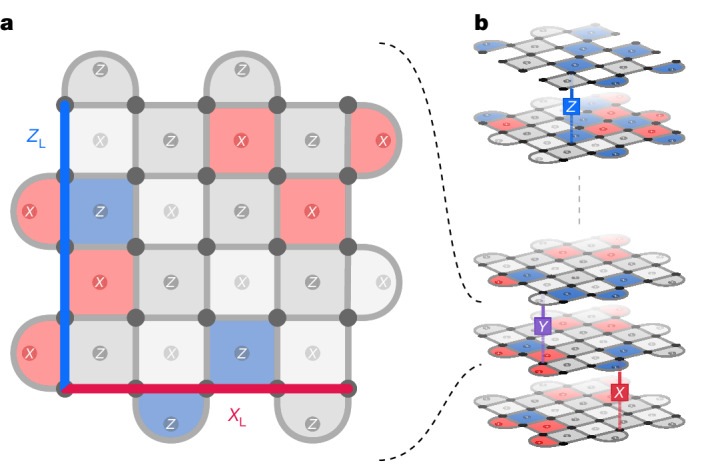
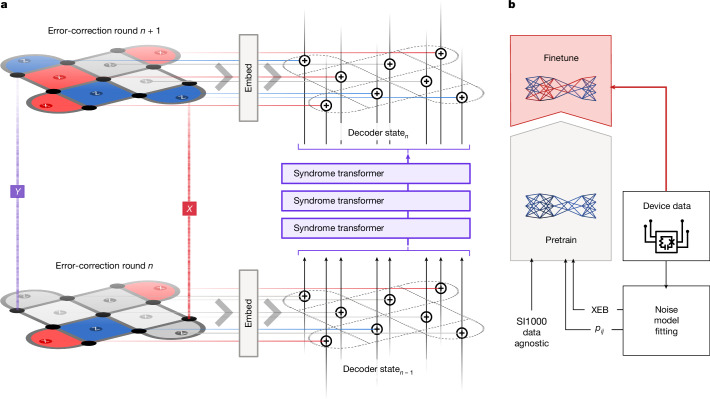
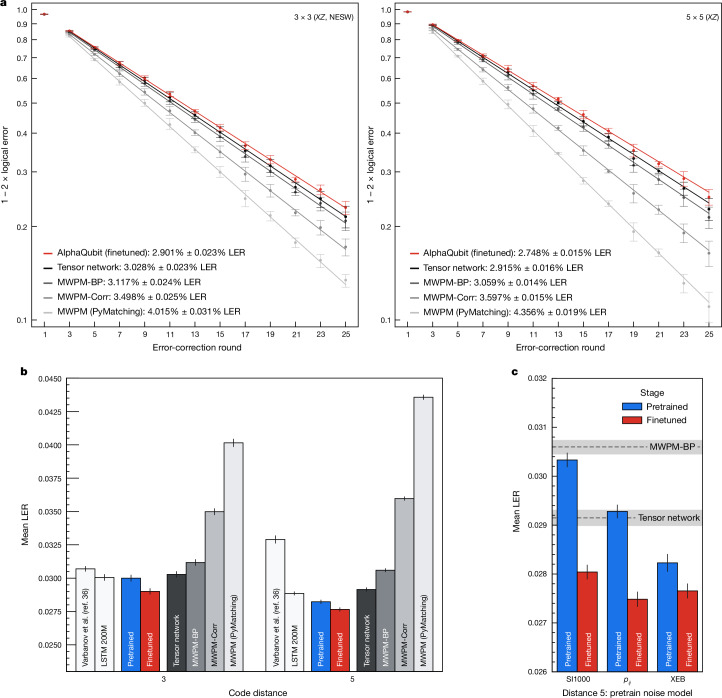
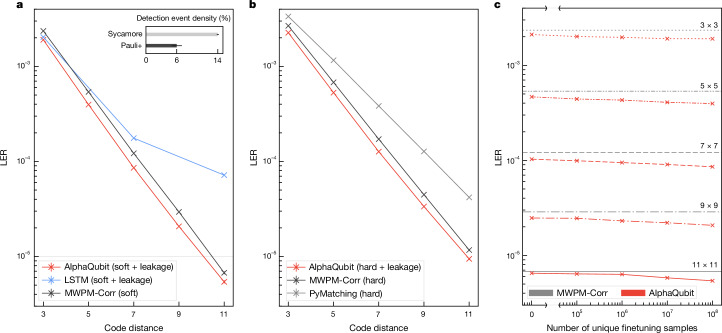
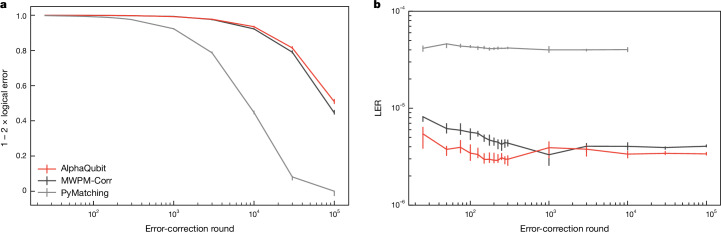
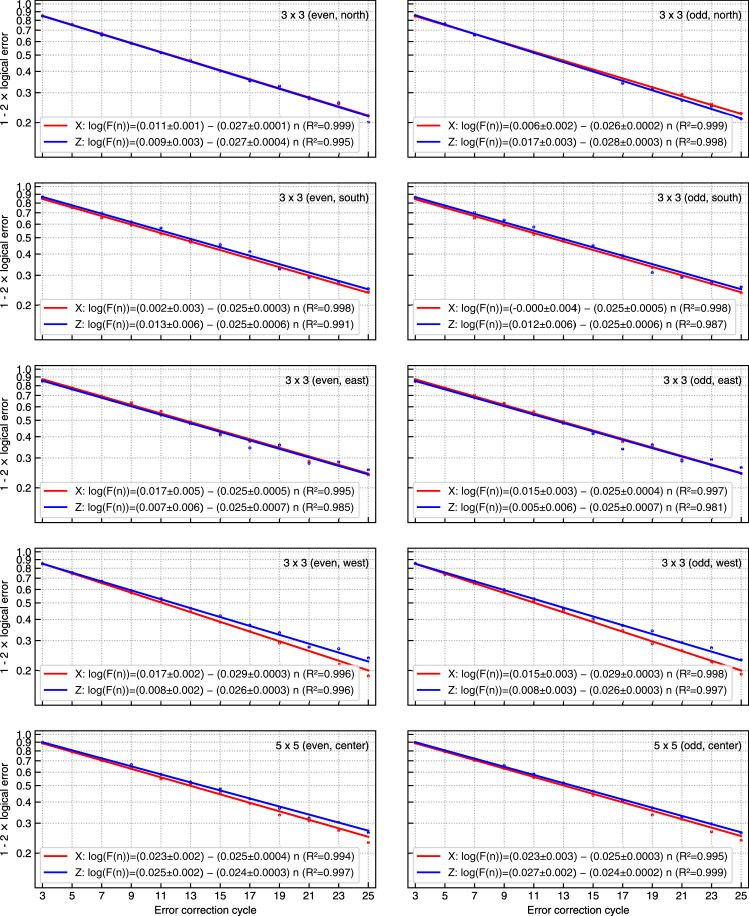
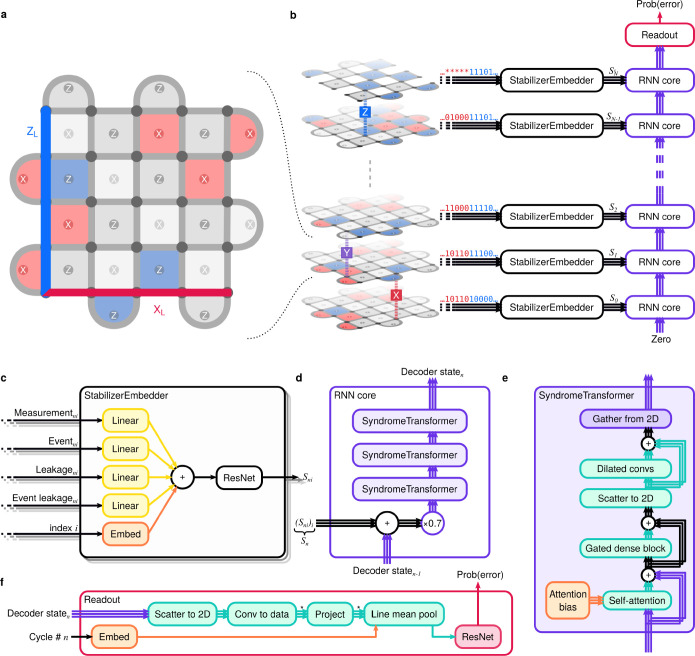
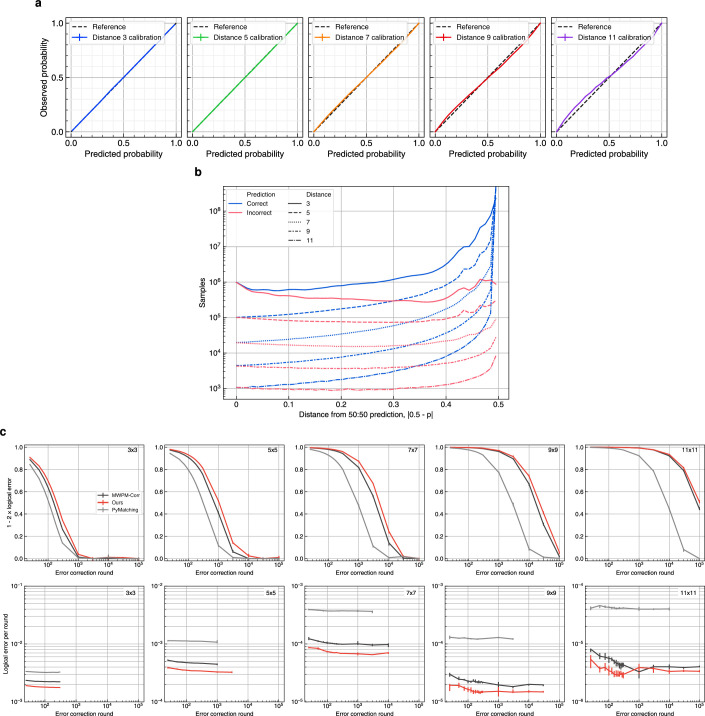
Building a large-scale quantum computer requires effective strategies to correct errors that inevitably arise in physical quantum systems 1 . Quantum error-correction codes 2 present a way to reach this goal by encoding logical information redundantly into many physical qubits. A key challenge in implementing such codes is accurately decoding noisy syndrome information extracted from redundancy checks to obtain the correct encoded logical information. Here we develop a recurrent, transformer-based neural network that learns to decode the surface code, the leading quantum error-correction code 3 . Our decoder outperforms other state-of-the-art decoders on real-world data from Google’s Sycamore quantum processor for distance-3 and distance-5 surface codes 4 . On distances up to 11, the decoder maintains its advantage on simulated data with realistic noise including cross-talk and leakage, utilizing soft readouts and leakage information. After training on approximate synthetic data, the decoder adapts to the more complex, but unknown, underlying error distribution by training on a limited budget of experimental samples. Our work illustrates the ability of machine learning to go beyond human-designed algorithms by learning from data directly, highlighting machine learning as a strong contender for decoding in quantum computers.
Overview
The claims and statistics of this paper haven’t been checked yet.
Free: it reads the open-access text and checks the first 5 claims that cite a source we can check. Create a free account to check every claim.
Integrity signals
Registry
Cites
Statistics
Figures
Verification
Claims the paper makes
The claims and statistics of this paper haven’t been checked yet.
Free: it reads the open-access text and checks the first 5 claims that cite a source we can check. Create a free account to check every claim.
Claims other papers make about this one
Each is checked against this paper’s own text: does it say what the citing paper says it does?
The source backs part of the claim, not all of it — or backs it for a different population, condition or comparison.
In the citing paper
“It requires a throughput of less than 1.1 μs per cycle compared with the 24 μs per cycle of the neural network26.”
From Quantum error correction below the surface code threshold (2025) · cites this paper as [26]
Experimental — accuracy not yet measuredThe cited source says what the claim attributes to it.
In the citing paper
“With a neural-network decoder (AlphaQubit)51, we obtain Λ3/5 = 1.56(4) and ε5 = 0.0110(2).”
From Scaling and logic in the colour code on a superconducting quantum processor (2025) · cites this paper as [51]
Self-check
Percentages, sums and reported differences re-computed from the paper’s own numbers.
The self-check needs the paper’s full text.
Citations
Cites
Breiman, L. (2001) · Machine Learning · doi:10.1023/a:1010933404324 · Cited by 133,538 · cited 1×
“It is possible to combine multiple classifiers to obtain a more accurate prediction by ensembling 27,75 .”
Vaswani, A., Shazeer, N., Parmar, N., Uszkoreit, J., Jones, L., Gomez, A. N., Kaiser, L., & Polosukhin, I. (2017) · arXiv · doi:10.48550/arxiv.1706.03762 · Cited by 120,404
Highly accurate protein structure prediction with AlphaFold
Jumper, J., Evans, R., Pritzel, A., Green, T., Figurnov, M., Ronneberger, O., Tunyasuvunakool, K., Bates, R., Žídek, A., Potapenko, A., et al. (2021) · Nature · doi:10.1038/s41586-021-03819-2 · Cited by 43,764
Self-citationFocal Loss for Dense Object Detection
Lin, T.-Y., Goyal, P., Girshick, R., He, K., & Dollar, P. (2017) · 2017 IEEE International Conference on Computer Vision (ICCV) · doi:10.1109/iccv.2017.324 · Cited by 30,581 · cited 1×
“Another approach that might improve sample efficiency is the concept of ‘hard sample mining’ 91,92 , where difficult examples are collected (for example, by finding examples whose predictions are incorrect, or not confidently correct, for some decoder) or constructed.”
Language Models are Few-Shot Learners
Brown, T. B., Mann, B., Ryder, N., Subbiah, M., Kaplan, J., Dhariwal, P., Neelakantan, A., Shyam, P., Sastry, G., Askell, A., et al. (2020) · arXiv · doi:10.48550/arxiv.2005.14165 · Cited by 23,372 · cited 1×
“At the heart of our RNN block architecture is the Syndrome Transformer, a self-attention architecture based on the Transformer [97] which has seen recent success in a variety of problems [17, 49].”
MobileNets: Efficient Convolutional Neural Networks for Mobile Vision Applications
Howard, A. G., Zhu, M., Chen, B., Kalenichenko, D., Wang, W., Weyand, T., Andreetto, M., & Adam, H. (2017) · arXiv · doi:10.48550/arxiv.1704.04861 · Cited by 19,015 · cited 1×
“Then we train a smaller ‘student’ network whose architecture is tuned for inference speed 81 .”
Distilling the Knowledge in a Neural Network
Hinton, G., Vinyals, O., & Dean, J. (2015) · arXiv · doi:10.48550/arxiv.1503.02531 · Cited by 14,204 · cited 1×
“Secondly, techniques such as distillation [45], lower precision inference and weight pruning can be applied to achieve similar performance with less computation.”
LoRA: Low-Rank Adaptation of Large Language Models
Hu, E. J., Shen, Y., Wallis, P., Allen-Zhu, Z., Li, Y., Wang, S., Wang, L., & Chen, W. (2021) · arXiv · doi:10.48550/arxiv.2106.09685 · Cited by 13,453
A fast quantum mechanical algorithm for database search
Grover, L. K. (1996) · Proceedings of the twenty-eighth annual ACM symposium on Theory of computing - STOC '96 · doi:10.1145/237814.237866 · Cited by 8,830 · cited 5×
“2b) and distances beyond 5, we explore the performance of our decoder on simulated data (in place of experimental samples) at code distances 3, 5, 7, 9 and 11 (17–241 physical qubits).”
InfluentialQuantum supremacy using a programmable superconducting processor
Arute, F., Arya, K., Babbush, R., Bacon, D., Bardin, J. C., Barends, R., Biswas, R., Boixo, S., Brandao, F. G. S. L., Buell, D. A., et al. (2019) · Nature · doi:10.1038/s41586-019-1666-5 · Cited by 7,720
Self-citation
Research works printed but not linked: 3
- Gottesman, D. E. Stabilizer Codes and Quantum Error Correction. PhD thesis, California Institute of Technology (1997).
- Sank, T. Fast, Accurate State Measurement in Superconducting Qubits. PhD thesis, Univ. California, Santa Barbara (2014). 24877923
- Finn, C., Abbeel, P. & Levine, S. Model-agnostic meta-learning for fast adaptation of deep networks. In International Conference on Machine Learning Vol. 70, 1126–1135 (ACM, 2017).
Cited by
Quantum error correction below the surface code threshold
Collaborators, G. Q. A. A., Acharya, R., Abanin, D. A., Aghababaie-Beni, L., Aleiner, I., Andersen, T. I., Ansmann, M., Arute, F., Arya, K., Asfaw, A., et al. (2025) · Nature · doi:10.1038/s41586-024-08449-y · Cited by 778
“Teal: weight-4 detection probabilities (distance-7, averaged over 250 cycles). c , Logical error probability, p L , for a range of memory experiment durations.”
Self-citationScaling and logic in the colour code on a superconducting quantum processor
Lacroix, N., Bourassa, A., Heras, F. J. H., Zhang, L. M., Bausch, J., Senior, A. W., Edlich, T., Shutty, N., Sivak, V., Bengtsson, A., et al. (2025) · Nature · doi:10.1038/s41586-025-09061-4 · Cited by 51
“Therefore, we employ novel decoding strategies [42, 52, 55, 64] to infer whether logical errors have occurred; see Appendix E for an overview of the different decoders used in this work.”
Self-citationArtificial intelligence for quantum computing
Alexeev, Y., Farag, M. H., Patti, T. L., Wolf, M. E., Ares, N., Aspuru‐Guzik, A., Benjamin, S. C., Cai, Z., Cao, S., Chamberland, C., et al. (2025) · Nature Communications · doi:10.1038/s41467-025-65836-3 · Cited by 140
“The following sections explore how AI may improve the demanding decoders needed to run QEC and help accelerate the discovery of more ef fi cient QEC codes 166 .”
InfluentialArtificial Intelligence‐Driven Approaches in Semiconductor Research
Zheng, Y., Xu, H., Li, Z., Li, L., Yu, Y., Jiang, P., Shi, Y., Zhang, J., Huang, Y., Luo, Q., et al. (2025) · Advanced Materials · doi:10.1002/adma.202504378 · Cited by 66
Beyond NISQ: The Megaquop Machine
Preskill, J. P. (2025) · ACM Transactions on Quantum Computing · doi:10.1145/3723153 · Cited by 151
“Google DeepMind has shown that a decoder trained by reinforcement learning can achieve a lower logical error rate than a decoder constructed by humans [8], but it’s unclear whether that will work at scale because the cost of training rises steeply with code distance.”
Superconducting quantum computers: who is leading the future?
AbuGhanem, M. (2025) · EPJ Quantum Technology · doi:10.1140/epjqt/s40507-025-00405-7 · Cited by 61
Qiskit Code Assistant: Training LLMs for generating Quantum Computing Code
Dupuis, N., Buratti, L., Vishwakarma, S., Forrat, A. V., Kremer, D., Faro, I., Puri, R., & Cruz-Benito, J. (2024) · IEEE LLM Aided Design Workshop (LAD) · doi:10.1109/lad62341.2024.10691762 · Cited by 61
“…become apparent that the majority of research and development efforts in this area have been focused on devising novel quantum algorithms for artificial intelligence [11]–[17] or integrating classical AI features with quantum systems to optimize specific domains or processes [14], [15], [18]–[20].”
BackgroundData-driven decoding of quantum error correcting codes using graph neural networks
Lange, M., Havström, P., Srivastava, B., Bengtsson, I., Bergentall, V., Hammar, K., Heuts, O., van Nieuwenburg, E., & Granath, M. (2025) · Physical Review Research · doi:10.1103/physrevresearch.7.023181 · Cited by 76
“The software code for the project can be found at [116].”
Tensor networks for quantum computing
Berezutskii, A. V., Liu, M., Acharya, A., Ellerbrock, R., Gray, J., Haghshenas, R., He, Z., Khan, A., Kuzmin, V., Lyakh, D. I., et al. (2025) · Nature Reviews Physics · doi:10.1038/s42254-025-00853-1 · Cited by 123
“The alternative could be using artificial intelligence for decoding 235,236 , which may benefit from noisy simulations using TNs for model training.”
Neural network decoder for near-term surface-code experiments
Varbanov, B. M., Serra-Peralta, M., Byfield, D., & Terhal, B. M. (2025) · Physical Review Research · doi:10.1103/physrevresearch.7.013029 · Cited by 20
Language models for quantum simulation
Melko, R. G., & Carrasquilla, J. (2024) · Nature Computational Science · doi:10.1038/s43588-023-00578-0 · Cited by 31
Machine learning message-passing for the scalable decoding of QLDPC codes
Maan, A. S., & Paler, A. (2025) · npj Quantum Information · doi:10.1038/s41534-025-01033-w · Cited by 58
Bridging paradigms: Designing for HPC-Quantum convergence
Shehata, A., Groszkowski, P., Naughton, T. J., Meena, M. G., Wong, E., Claudino, D., da Silva, R. F., & Beck, T. L. (2025) · Future Generation Computer Systems · doi:10.1016/j.future.2025.107980 · Cited by 58
“Although researchers previously believed that the decoding process would require substantial classical resources, recent studies [17, 30] suggest that dedicated FPGA / ASIC hardware may su ffi ce, and HPC-level ecosystems will likely not be directly utilized for syndrome decoding.”
Quantum Artificial Intelligence Scalability in the NISQ Era: Pathways to Quantum Utility
Moreau, G. S., Pisani, L., Profir, M., Podda, C., Leoni, L., & Cao, G. (2025) · Advanced Quantum Technologies · doi:10.1002/qute.202400716 · Cited by 27
AlphaEvolve: A coding agent for scientific and algorithmic discovery
Novikov, A., Vũ, N., Eisenberger, M., Dupont, E., Huang, P.-S., Wagner, A. Z., Shirobokov, S., Kozlovskii, B., Ruiz, F. J. R., Mehrabian, A., et al. (2025) · arXiv · doi:10.48550/arxiv.2506.13131 · Cited by 15
“Over the last decade, AI systems have been applied to a wide range of scientific disciplines and tasks, from protein structure prediction [46] to quantum physics [6, 84] to climate sciences [53].”
Self-citationKundu, S., Gupta, T., Sardar, A., Bandyopadhyay, A., Swain, S., & Mallik, S. (2025) · Franklin Open · doi:10.1016/j.fraope.2025.100371 · Cited by 23
Leveraging Qubit Loss Detection in Fault-Tolerant Quantum Algorithms
Baranes, G., Cain, M., Ataides, J. P. B., Bluvstein, D., Sinclair, J., Vuletić, V., Zhou, H., & Lukin, M. D. (2026) · Physical Review X · doi:10.1103/ycwc-3myc · Cited by 66
“For example, one may use a MLE decoder, minimum weight perfect matching (MWPM) for topological codes [9, 49, 54], belief propagation with ordered statistics decoding (BP+OSD) for sparse codes [55], or machine learning-based decoders [9, 56].”
Hockings, E. T., Doherty, A. C., & Harper, R. (2025) · PRX Quantum · doi:10.1103/prxquantum.6.010334 · Cited by 37
“Recent experimental progress has begun to demonstrate the utility of fault-tolerance and quantum error correction and progress is currently rapid [26–33].”
Quantum Game Theory-Based Cloud Resource Allocation: A Novel Approach
Bandyopadhyay, A., Choudhary, U., Tiwari, V., Mukherjee, K., Turjya, S. M., Ahmad, N., Haleem, A., & Mallik, S. (2025) · Mathematics · doi:10.3390/math13091392 · Cited by 12
Scaling up to problem sizes: an environmental life cycle assessment of quantum computing
Cordier, S., Thibault, K., Arpin, M.-L., & Amor, B. (2025) · Quantum Science and Technology · doi:10.1088/2058-9565/adc0ba · Cited by 17
“QEC is crucial for solving industrial-scale problems, potentially requiring more computation time, energy, and electronic components compared to initial laboratory-scale quantum experiments.”
Learning to decode logical circuits
Zhou, Y., Wan, C., Xu, Y., Zhou, J. P., Weinberger, K. Q., & Kim, E.-A. (2025) · Nature Computational Science · doi:10.1038/s43588-025-00897-4 · Cited by 15
“Second, it avoids degradation in decoding accuracy 20 due to mismatches between the physical noise process 𝒩𝒩 and the assumed prior noise model for the decoder ̃𝒩𝒩 (Fig.”
Saghafi, M., & Mili, L. (2025) · IEEE Access · doi:10.1109/access.2025.3546259 · Cited by 11
A Cryo-CMOS DAC-Based 40-Gb/s PAM4 Wireline Transmitter for Quantum Computing
Fakkel, N., Mortazavi, M., Overwater, R. W. J., Sebastiano, F., & Babaie, M. (2024) · IEEE Journal of Solid-State Circuits · doi:10.1109/jssc.2024.3364968 · Cited by 7
“…“1”), 1 the uplink data rate 1 Some decoding algorithms need the entire measured data stream of in-phase and quadrature analog-to-digital converters (ADCs) of the readout chain [33], thus requiring a substantially higher uplink data rate. can be estimated by where N is the number of logical qubits.”
BackgroundThresholds for Postselected Quantum Error Correction from Statistical Mechanics
English, L., Williamson, D. J., & Bartlett, S. D. (2025) · Physical Review Letters · doi:10.1103/nh49-52y2 · Cited by 25
Shaking Up Quantum Simulators with Fuzzing and Rigour
Klimis, V., Bensoussan, A., Chachkarova, E., Even-Mendoza, K., Fortz, S., & Lenihan, C. (2025) · Proceedings of the ACM on Programming Languages · doi:10.1145/3763100 · Cited by 12
Harnessing Quantum Computing for Energy Materials: Opportunities and Challenges
Kim, S., Suh, I., Humble, T. S., Beck, T. L., lee, E., & Luo, T. (2026) · ACS Energy Letters · doi:10.1021/acsenergylett.5c04009 · Cited by 10
“60,61 − 64 ■ OPPORTUNITIES: QUANTUM COMPUTING FOR”
Neural Decoders for Universal Quantum Algorithms
Ataides, J. P. B., Gu, A., Yelin, S. F., & Lukin, M. D. (2026) · PRX Intelligence · doi:10.1103/vjn1-mbxl · Cited by 28
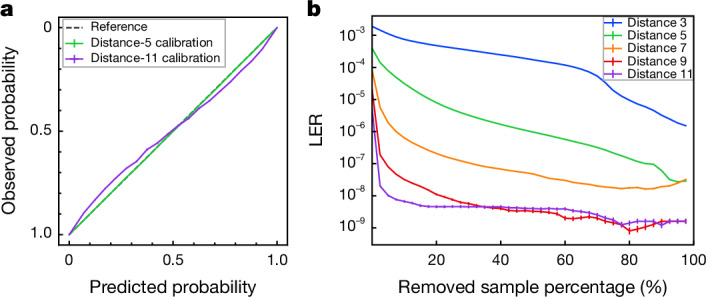
“The network is trained to output well-calibrated probabilities that can be used both for error correction decisions and for confidence estimation in downstream applications [22,29].”
InfluentialLi, A.-Q., 田, C.-W. 策. T., Xu, X., Ma, H., & Liang, J. (2025) · Chinese Physics B · doi:10.1088/1674-1056/adab63 · Cited by 8
Compiling the surface code to crossbar spin qubit architectures
Pataki, D., & Pályi, A. (2025) · Physical review. B./Physical review. B · doi:10.1103/physrevb.111.115307 · Cited by 8
Synchronization for Fault-Tolerant Quantum Computers
Maurya, S., & Tannu, S. (2025) · Proceedings - International Symposium on Computer Architecture/Proceedings · doi:10.1145/3695053.3730991 · Cited by 19
Introduction to quantum error correction with stabilizer codes
Bradshaw, Z. P., Dale, J. J., & Evans, E. N. (2026) · Annals of Physics · doi:10.1016/j.aop.2026.170353 · Cited by 4
Experimentally informed decoding of stabilizer codes based on syndrome correlations
Remm, A., Lacroix, N., Bödeker, L., Genois, É., Hellings, C., Swiadek, F., Norris, G. J., Eichler, C., Blais, A., Müller, M., et al. (2026) · Physical Review Research · doi:10.1103/z1ng-wg3k · Cited by 15
Enhancing Wholesale Management Through Machine Learning-Based Customer Behavior Analysis
Ajibade, S.-S. M., Jasser, M. B., ALDharhani, G. S., San, L. W., Ayodele, A., Adediran, A. O., Tabuena, A. C., Akintoye, K. A., & Bassey, M. A. (2025) · International Conference on Emerging Trends in Networks and Computer Communications (ETNCC) · doi:10.1109/etncc66224.2025.11299779 · Cited by 4
“One issue is noise accumulation, where errors in estimating multiple parameters build up, reducing the reliability of predictions [16].”
Efficient Near-Optimal Decoding of the Surface Code through Ensembling
Shutty, N., Newman, M., & Villalonga, B. (2026) · Physical Review Letters · doi:10.48550/arxiv.2401.12434 · Cited by 42
“There are several efficient (i.e. polynomial-time) decoding algorithms [diFO + 23].”
BackgroundMethodSelf-citationScalability analysis for transmon-based quantum computers
Zhang, S. (2025) · Micro and Nano Engineering · doi:10.1016/j.mne.2025.100327 · Cited by 2
“First, significant efforts including addressing noise and decoherence [24,25], engineering architecture [26] and working on coding/decoding strategies [27,28] have been devoted to substantially reducing the number of physical qubits per logical qubit.”
Opportunities in full-stack design of low-overhead fault-tolerant quantum computation
Zhou, H., Cain, M., & Lukin, M. D. (2025) · Nature Computational Science · doi:10.1038/s43588-025-00895-6 · Cited by 15
“These decoders can be further improved by incorporating error correlations using belief-propagation pre-processing 69 or machine learning techniques 70–76 .”
Saravanan, V., Maragathavalli, P., Ramya, V. S., Shobana, D., Al-Naimi, F. A. M., & Shubangi, J. (2025) · International Conference on Electronics and Computing, Communication Networking Automation Technologies (ICEC2NT) · doi:10.1109/icec2nt65402.2025.11379950 · Cited by 2
“In contrast to rule-based decoders, ML-based decoders can utilize enormous training sets of simulated or experimental quantum error syndromes to distinguish between different errors and offer near-optimal correction suggestions [8].”
Multi Perspective Effect Analysis of Quantum Computing in the Rise of Artificial Intelligence
Gungor, S. N., & Karaköse, M. (2026) · doi:10.1109/it67293.2026.11435787 · Cited by 2
Optimal number of stabilizer measurement rounds in an idling surface code patch
Márton, Á., & Asbóth, J. K. (2025) · Quantum · doi:10.22331/q-2025-06-12-1767 · Cited by 9
“We note that other decoders may offer better performance than minimum weight perfect matching [26, 27, 28, 29], but we expect qualitatively similar results with them.”
Quantum computing: physics–AI collaboration quashes quantum errors
Haider, N. (2024) · Nature · doi:10.1038/d41586-024-03557-1 · Cited by 5
A Case for Elastic Quantum Error Correction Decoders
Maurya, S., Molavi, A., Albarghouthi, A., & Tannu, S. (2026) · European Conference on Computer Systems · doi:10.1145/3767295.3803584 · Cited by 23
Self-attention U-Net decoder for toric codes
Zhang, W., Xia, Z., Zhao, W., Pan, W., & Shi, H. (2025) · Physical Review Applied · doi:10.1103/xmp9-bh84 · Cited by 3
“Most modern data-driven QEC strategies now utilize sophisticated architectures like Convolutional neural networks (CNN) [23] and trans-former [24, 25], which have shown effectiveness in quantum error correction.”
Refining quantum fidelity: approaches in quantum error correction
Thakur, V. S., Kumar, A., & Dev, K. (2025) · Quantum Information Processing · doi:10.1007/s11128-025-04809-3 · Cited by 3
“Complementing this hardware progress, Google DeepMind and Quantum AI developed AlphaQubit, an AI-based decoder that takes advantage of machine learning to improve both the speed and accuracy of quantum error decoding [43].”
Quantum Computing-The Underlying Principle Behind it
Chawla, A., Mathur, S., Rao, H., Mudgal, N., & Bhardwaj, V. (2025) · Prabha Materials Science Letters · doi:10.33889/pmsl.2025.4.2.020 · Cited by 1
DevQCC: Device-Aware Quantum Circuit Cutting framework with applications in quantum machine learning
Sahu, H., Gupta, H. P., Puvvada, V. V., & Mishra, R. (2025) · Quantum Machine Intelligence · doi:10.1007/s42484-025-00313-0 · Cited by 3
“Qubit implementation techniques, which harness quantum behavior for computing, are sensitive to environmental interactions (Bausch et al. 2024; Resch and Karpuzcu 2021).”
Yamada, S., Kobayashi, T., Takahata, M., Nitta, H., Isobe, H., Kawakami, T., Yamanaka, S., Okumura, M., & Yamaguchi, K. (2025) · Chemistry · doi:10.3390/chemistry7050164 · Cited by 3
Patti, T. L., Nguyen, T., Lietz, J. G., McCaskey, A., & Khailany, B. (2025) · International Conference for High Performance Computing, Networking, Storage and Analysis (SC) · doi:10.1145/3712285.3759871 · Cited by 7
“In Google’s recent AlphaQubit work [7], moderately-sized experimental datasets and massive Clifford simulator-based datasets were used to train an AI decoder, a training paradigm that we hope to simplify and expand by supplementing more traditional data modalities with large amounts of data from…”
InfluentialNoise tolerance via reinforcement: learning a reinforced quantum dynamics
Ramezanpour, A. (2025) · Journal of Statistical Mechanics Theory and Experiment · doi:10.1088/1742-5468/ae1a4c · Cited by 2
“Additionally, artifi-cial neural networks and machine learning methods have shown promise in predicting and correcting such errors [21–25].”
Manna, A. L. C., & Goswami, R. S. (2025) · Engineering Research Express · doi:10.1088/2631-8695/ae282a · Cited by 1
Systematic Review on the Influence of Classical and Quantum Machine Learning in the Financial Sector
Murugaraj, G., Krishnan, R., Harikrishnan, L., & Kandasamy, M. S. (2026) · Data Science and Management · doi:10.1016/j.dsm.2026.01.001 · Cited by 6
Quantum artificial intelligence: A comprehensive survey
Jiang, H., Pan, Y., Chen, J., Liu, Z., Sun, L., Li, Q., Zhang, L., Zhu, D., Wang, X., Liu, W., et al. (2026) · Meta-Radiology · doi:10.1016/j.metrad.2026.100205 · Cited by 3
Real‐Time Decoding For Surface Code
Li, J.-N., Tian-hao, W. E. I., Mei, Z.-H., Zhou, Q., Kong, W.-C., Zhang, J., Wu, Y.-C., & Guo, G. (2026) · Advanced Quantum Technologies · doi:10.1002/qute.202500806 · Cited by 1
“[ 62 ] developed a neural network decoder based on recurrent Transformers, named AlphaQubit.”
Resgru: Syndrome decoder for heavy-hexagon quantum error correction code
Kumar, A., Haghparast, M., & Kettunen, L. (2026) · Physica Scripta · doi:10.1088/1402-4896/ae87e2 · Cited by 1
“A prominent example is the AlphaQubit decoder by Google [5], which uses a recurrent-transformer hybrid model to decode a rotated surface code using simulated as well as real world experiment data from Google’s Sycamore quantum processor.”
Utility-Scale Quantum Computational Chemistry
Castaldo, D., & Reiher, M. (2026) · The Journal of Physical Chemistry Letters · doi:10.1021/acs.jpclett.6c00888 · Cited by 5
“(v) The Quantum Intermediate Repre-sentations (QIR) comprise a middle layer of operations which enable a compiler friendly and hardware-agnostic procedure to translate from the source code to the machine language.”
Artificial intelligence for representing and characterizing quantum systems
Du, Y., Zhu, Y., Zhang, Y., Hsieh, M.-H., Rebentrost, P., Gao, W., You, Y., Eisert, J., Chiribella, G., Tao, D., et al. (2026) · Nature Reviews Physics · doi:10.1038/s42254-026-00962-5 · Cited by 21
“An ongoing effort to apply AI in fault-tolerant quantum computing focuses on effectively learning the decoder of a surface code in the context of realistic noise models [22, 160, 260].”
Reducing the Error Rate of a Superconducting Logical Qubit using Analog Readout Information
Ali, H. A., Marques, J., Crawford, O., Majaniemi, J., Serra-Peraltal, M., Byfield, D., Varbanov, B., Terhal, B. M., DiCarlo, L., & Campbell, E. T. (2024) · IEEE International Conference on Quantum Computing and Engineering (QCE) · doi:10.1109/qce60285.2024.10316 · Cited by 3
Soft information decoding with superconducting qubits
Hanisch, M. D., Hetényi, B., & Wootton, J. R. (2026) · APS Open Science · doi:10.1103/y9fh-4x6n · Cited by 4
QuantumACES.jl: design noise characterisation experiments for quantum computers
Hockings, E. T. (2025) · The Journal of Open Source Software · doi:10.21105/joss.07707 · Cited by 5
“They can also be used to generate simulated data for training more accurate decoders, such as in (Bausch et al., 2024), to verify appropriate device calibration, and to inform the co-design of quantum error correcting codes, decoders, fault-tolerant circuits, and quantum devices.”
On the Interpretability of Neural Network Decoders
Bödeker, L., Kusters, L. J. B., & Müller, M. (2025) · Advanced Quantum Technologies · doi:10.1002/qute.202500158 · Cited by 1
The Fundamentals of Quantum Computing: A Journey into the Future
Moon, K. (2025) · Advances in computers · doi:10.1016/bs.adcom.2025.06.004 · Cited by 1
Developing a quantum computing model for sequence annotation of interferon protein
Li, B., Yu, Y., Ma, F., Dong, Z., & Zhang, L. (2025) · Computational and Structural Biotechnology Journal · doi:10.1016/j.csbj.2025.11.027 · Cited by 1
Graph Neural Network Decoding of Surface Codes with Diagonally Correlated Two-Qubit Z Errors
Ge, Y., Wang, S., & Li, M. (2025) · International Symposium on Computer and Information Processing Technology (ISCIPT) · doi:10.1109/iscipt67144.2025.11265469
FPGA-Accelerated Early-Exit Neural Decoder for Quantum Error Correction
Huo, R., & Nunez-Yanez, J. L. (2025) · Euromicro Conference on Digital System Design (DSD) · doi:10.1109/dsd67783.2025.00090 · Cited by 1
“Recurrent Neural Networks (RNNs) have also been explored in several studies [18], [19], showing promising accuracy over multiple measurement rounds for small code distances.”
Simulation of thermal-relaxation noise for quantum error correction
Garner, S. R., Myers, N. M., Wang, M., Stein, S., Liu, C., & Li, A. (2026) · Physical Review Research · doi:10.1103/hgnj-v4j7 · Cited by 2
Quantum Machine Learning: Where Are We and What Is Next?
Farhani, Y. (2025) · doi:10.1145/3764923.3777403 · Cited by 1
“Advances in quantum error correction, particularly those enhanced by machine learning, such as the AlphaQubit decoder developed by DeepMind and Google Quantum AI, are also shaping the future of QML by reducing noise and improving training stability [Bausch et al. 2024].”
Stein, S., Kan, S., Liu, C., Harkness, A., Garner, S. R., Du, Z., Ding, Y., Mao, Y., & Li, A. (2026) · Physical Review Research · doi:10.1103/ftdh-t3yg · Cited by 3
Learning Sequential Measurements Protocols for Quantum Sensing via Reinforcement Learning
Yang, Y. (2025) · International Conference on Electronic Information Engineering and Computer Technology (EIECT) · doi:10.1109/eiect68017.2025.11331835
“These capabilities of machine learning techniques have already been successfully deployed across diverse quantum tasks, including machine learning for quantum noise suppression [11], adaptive measurement strategies for quantum sensing and metrology [12].”
Ashhab, S. (2026) · New Journal of Physics · doi:10.1088/1367-2630/ae4135
“Another idea that is being discussed in similar contexts is the possible use of hybrid classical-quantum algorithms, where the quantum evolution is determined using a quantum processor while the optimization task is handled by a classical processor [35].”
Kuruba, V., Shivaleela, E. S., & Srinivas, T. (2025) · IEEE Pune Section International Conference (PuneCon) · doi:10.1109/punecon67554.2025.11378723
“This work demonstrates that a two-level decoding framework using FFNN and GNN outperforms the MWPM decoder for rotated surface codes at distances d = 3 , 5 , 7 competitive with 2024-2025 benchmarks like AlphaQubit’s 6-30% reductions [9].”
Zhang, H., Guo, Y., Xu, G., Feng, Y., Zhang, J.-N., Yu, H., & Zhao, S. P. (2026) · Physical Review Applied · doi:10.1103/j3d6-wr9v · Cited by 2
Yang, J., Cai, Q., Guo, J., & Deng, G. (2026) · Acta Physica Sinica · doi:10.7498/aps.75.20251792
Reinforcement Learning for Enhanced Advanced QEC Architecture Decoding
Zhou, Y., Kong, L., Peng, Y., & Liang, Z. (2026) · Asia and South Pacific Design Automation Conference (ASP-DAC) · doi:10.1109/asp-dac66049.2026.11420491 · Cited by 1
“RL has emerged as a promising paradigm for QEC, for surface codes and subsequently extended to more complex architectures [9], [10].”
Decoding the surface code with a spatio-temporal transformer
Joo, R. S. (2026) · EPJ Quantum Technology · doi:10.1140/epjqt/s40507-026-00492-0 · Cited by 1
Accelerated Characterization of Two‐Level Systems in Superconducting Qubits Via Machine Learning
Pathapati, A., Mansikkamäki, O., Tyner, A. C., & Balatsky, A. V. (2026) · Advanced Quantum Technologies · doi:10.1002/qute.202500868 · Cited by 1
“This method enables swift, automated characterization of faulty qubits and is particularly effective in identifying faulty ones among large qubit arrays, thereby accelerating the cycle of designing better quantum chips.”
Constraint-optimal driven allocation for scalable quantum error correction decoder scheduling
Kim, D., Seo, J., Han, Y., & Kim, Y. (2026) · Physical Review A · doi:10.1103/1zc1-wpjp
Systematic Review of Artificial Intelligence Decoders for Topological Quantum Error CorrectionPreprint
Amponsah, E., Agyemang, J. O., Boakye, G. M. A., & Kponyo, J. J. (2026) · Research Square · doi:10.21203/rs.3.rs-9435708/v1
A Model Context Protocol Server for Quantum Execution in Hybrid Quantum-HPC Environments
Shiraishi, M., Hamamura, I., Ishigaki, T., & Kadowaki, T. (2026) · International Conference on Quantum Communications, Networking, and Computing (QCNC) · doi:10.1109/qcnc69040.2026.00145 · Cited by 5
“…solutions to combinatorial optimization problems by minimizing the expectation value of a cost Hamiltonian H C , which encodes the objective function of the "openqasm_code": "#include \"qelib1.inc\";\\nqreg q [3];\\ ncreg c[3];\\nh q[0];\\ncx q[0], q[1];\\ncx q[0], q [2];\\nmeasure q -> c;"”
InfluentialZhang, J., Lv, X., An, H., Li, J. W., Han, P., & Huang, Z. (2026) · Nature Communications · doi:10.1038/s41467-026-73853-z
“…language processing, Transformer architectures have demonstrated broad applicability across various scienti fi c domains, including biology 30 , medicine 31 , and quantum computing 32 , enabling breakthroughs in tasks, such as protein folding, clinical diagnosis, and quantum error correction.”
Optimal Compilation of Syndrome Extraction Circuits for General Quantum LDPC Codes
Zhang, K., Gao, D., Yang, Z., Zhou, R., Liu, F., Ji, Z., & Chen, J. (2026) · Design, Automation, and Test in Europe · doi:10.23919/date69613.2026.11539585 · Cited by 10
Beyond Classical Limits: Quantum Computing Advances in Post-Binary Era
Gupta, D., Gayratovich, E. N., Isaev, F., Ulugbek, U., Gulamov, I., Jurayeva, S., & Ishnazarov, A. (2026) · Advances in computational intelligence and robotics book series · doi:10.4018/979-8-2600-0156-1.ch002
When Noisy Quantum Order Finding Remains Recoverable for Shor's Algorithm
Yang, Q., & Markidis, S. (2026) · International Conference on Supercomputing · doi:10.1145/3774895.3815552
Building Hybrid Quantum–Classical Computing Ecosystems: A Survey
Bharadwaj, D., Hou, Y., Knapen, A., Kwun, G., Zhitkov, N., & Ravi, G. S. (2026) · Communications in computer and information science · doi:10.1007/978-981-95-7829-0_13 · Cited by 1
Anonymous, van der Meer, S. L. M., Serra-Peralta, M., Vroomans, T. H. F., Finkel, M. I., Veen, H. M., Beekman, M., & DiCarlo, L. (2026) · PRX Quantum · doi:10.1103/y66v-988s · Cited by 11
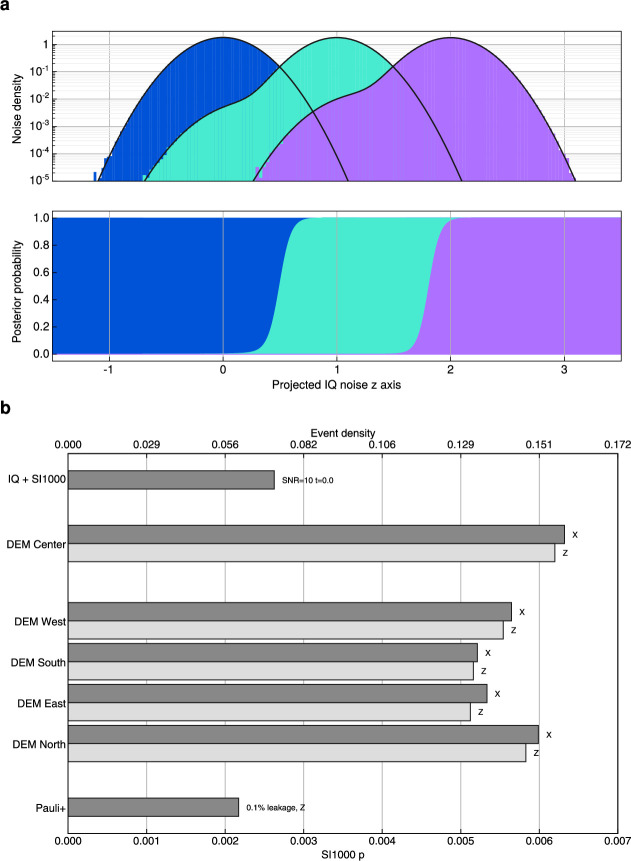
“Note also that no leakage information is provided in the memory experiments for the data qubit measurements at the end, for essentially the same reason [S4, S10].”
Disambiguating Pauli Noise in Quantum Computers
Chen, E. H., Chen, S., Fischer, L. E., Eddins, A., Govia, L. C. G., Mitchell, B., He, A., Kim, Y., Jiang, L., & Seif, A. (2026) · PRX Quantum · doi:10.1103/69wc-gzl6 · Cited by 23
“More accurate noise models of such non-unitary operations are also essential for optimizing the performance of decoders needed to actively correct errors in large-scale, fault-tolerant quantum computers [4,68].”
28-nm Cryo-CMOS Mixer-First Reflectometer for the FDM Readout of Transmon Qubits
Geng, Y., Xu, Z., Dong, T., Chen, Y., Wang, W., Yang, Y., Sun, Z., Wu, R., Lin, H., Deng, M., et al. (2026) · IEEE Transactions on Microwave Theory and Techniques · doi:10.1109/tmtt.2026.3712115 · Cited by 1
“Since some QEC algorithms need the IQ constellation [63], instead of the qubit state | 0 (cid:105) or | 1 (cid:105) , the two tones of RF reflection are mapped to the IQ plane and stored in the on-chip register first.”
Simple, Efficient, and Generic Postselection Decoding for qLDPC Codes
Anonymous, Yoshioka, N., Tsubouchi, K., & Li, Y. (2026) · Physical Review Letters · doi:10.1103/sv11-f78l · Cited by 20
“We first introduce our method in the context of maximum-likelihood decoding and then apply it to two representative practical decoders: MWPM and BP-type (such as BP-OSD and Relay-BP).”
InfluentialJiménez, C. B. (2026) · Revista Estado Paz y Sistema Internacional · doi:10.25062/2981-3034.5104 · Cited by 1
A Streaming Architecture for Quantum Error Syndrome Compression at 4 Kelvin
Papanikolaou, P., Hou, R., Volk, J. E., & Tzimpragos, G. (2026) · Proceedings - International Symposium on Computer Architecture/Proceedings · doi:10.1109/isca66397.2026.00071 · Cited by 2
“The first configuration is commonly used in device-agnostic circuit noise studies, including transformer-based decoder pretraining [6], recent surface code analyses [13], [22], and community decoder benchmarks [42].”
Cheaper Qubits by Bounded Belief Matching: A Practical Per-Shot Decoder for Quantum Error CorrectionPreprint
Bousabaa, A. (2026) · SSRN Electronic Journal · doi:10.2139/ssrn.7236858
A Mixture of Experts Vision Transformer for High-Fidelity Surface Code Decoding
Viet, N. H., Hùng, N. M., Ta, H., Vu, V. K., & Chee, Y. M. (2026) · IEEE International Symposium on Information Theory (ISIT) · doi:10.1109/isit62367.2026.11653737 · Cited by 2
“Recently, Google’s AlphaQubit integrated a ML-based decoder into a realistic superconducting qubit platform [19], demonstrating the practical advantages of learning based decoders over classical approaches.”
New AI for Quantum Computing: From Quantum Optimization to Quantum Intelligence
Tian, Y., Liu, X., Lin, F., Li, L., Na, X., Werbos, P. J., & Wendin, S. N. (2026) · IEEE/CAA Journal of Automatica Sinica · doi:10.1109/jas.2026.125765
Machine Learning Enhanced Post-selection in Quantum Networks
Lin, H., & Ji, Z. (2026) · doi:10.1145/3833409.3833445 · Cited by 1
Sarma, B., Tiwari, H., Llamas‐Garro, I., Tripathi, R., & Mishra, S. K. (2026) · Laser & Photonics Review · doi:10.1002/lpor.71837
Kumar, S., & Biswal, P. K. (2026) · Physica Scripta · doi:10.1088/1402-4896/aea656
QEC lake: Data Lake for AI-Enhanced Quantum Error Correction
Patwardhan, A., de Groot, M., Ilinescu, A., Shankar, A., Wang, Y., Sun, W., Geerts, F., & Hai, R. (2026) · Proceedings of the VLDB Endowment · doi:10.14778/3827998.3828069
Rao, G. S., Kumar, G. S., Kumar, M. N. V. S. S., Yegireddy, N. K., & Jagadeesh, G. (2026) · IEEE Access · doi:10.1109/access.2026.3734085
AI-Driven Quantum Signal Detection and Noise Suppression Using RNN and LSTM
Philip-Kpae, F. O., Farhaoui, Y., Imoize, A. L., Nna, E. M., & Clement, O. S. (2026) · Lecture notes in networks and systems · doi:10.1007/978-3-032-28100-5_44
Pêlαγos: An Adaptive GPU Decoder for Error Correction Simulations of Quantum LDPC Codes
Diamantopoulos, D., von Niederhäusern, L., Anghel, A. S., Pletka, R. A., Kayi, A., Müller, T., Papandreou, N., Blanuša, J., Sarafijanović, S., Gonzalez, N. M., et al. (2026) · IEEE International Conference on Quantum Software (QSW) · doi:10.1109/qsw72780.2026.00025 · Cited by 1
“…Relay-BP · FPGA · ~24 ns/iter Ferraz et al. ('25) [29] GPU BP · qLDPC · <63 μ s Maurya et al. ('25) [46] FPGA · qLDPC · Relay/OSD/UF Chamberland ('18) [35] DNN · surface code Overwater ('22) [34] Neural · surface code AlphaQubit ('24) [36] Transformer · surface · TPU PyMatching ('22) [20]”
Quantum Error Correction Survey
Mahmud, M.-E.-H., Jain, R. K., Yang, Z., Tian, C., Kompella, R. R., Nejabati, R., Kaur, E., Erbad, A., & Abdallah, M. M. (2026) · IEEE Access · doi:10.1109/access.2026.3737721
“The main costs are training and re-tuning, potential distribution mismatch between simulated and live correlated/leaky noise, limited generalization across distances or hardware revisions, and tail latency or on-chip power overheads that complicate strict real-time guarantees [97], [117].”
InfluentialSingh, A., Shukla, V. K., Dhelim, S., & Singh, C. (2026) · Advanced Quantum Technologies · doi:10.1002/qute.70495
“…[ 29–33 ] to scalable syndrome models [ 34 ], hardware tests on IBM processors [ 35 ], high-accuracy decoding of experimental surface-code data [ 36 ], graph-neural-network decoding of quantum low-density parity-check (QLDPC) codes [ 37 ], circuit-level decoding of bivariate bicycle codes [ 38…”
Metadata
- Authors
- Bausch, J., Senior, A. W., Heras, F. J. H., Edlich, T., Davies, A., Newman, M., Jones, C., Satzinger, K., Niu, M. Y., Blackwell, S., Holland, G., Kafri, D., Atalaya, J., Gidney, C., Hassabis, D., Boixo, S., Neven, H., & Kohli, P.
- Affiliations
- Google DeepMind (United Kingdom) (GB)
- Google (United States) (US)
- Corresponding author
- Bausch, Johannes
- Senior, Andrew W.
- ORCID
- Venue
- Nature
- Published
- 2024-11-20
- Volume
- 635
- Issue
- 8040
- Pages
- 834-840
- ISSN
- 0028-0836 (ISSN-L)
- 1476-4687
- PMC
- PMC11602728
- OpenAlex
- W4404566610
- Cited by
- 106
- References
- 91
- Citations by year
- 2026: 53 · 2025: 47 · 2024: 6
- FWCI
- 15.61
- Type
- journal article
- Language
- en
- Open access
- hybrid
- doi.org
- Licence
- cc-by
- creativecommons.org/licenses/by/4.0 (tdm)
- creativecommons.org/licenses/by/4.0 (vor)
- Locations
- Nature (publishedVersion, cc-by)
- PubMed Central (publishedVersion, cc-by)
- PubMed (publishedVersion)
- arXiv (Cornell University) (submittedVersion)
- RePEc: Research Papers in Economics (submittedVersion)
- arXiv (Cornell University)
- Funders
- DeepMind
- Topics
- Physical Sciences › Computer Science › Artificial Intelligence › Quantum Computing Algorithms and Architecture
- Physical Sciences › Physics and Astronomy › Atomic and Molecular Physics, and Optics › Quantum many-body systems
- Physical Sciences › Physics and Astronomy › Atomic and Molecular Physics, and Optics › Quantum Information and Cryptography
- Keywords
- quantum error correction, surface code, error decoding, syndrome decoding, recurrent transformer, leakage, crosstalk, synthetic data training
About these checks
Registry, retraction, Cites and statistics results are computed, not judged, with one exception: a printed reference that no index lists is read once by a model before it counts as a citation error. Claims are extracted by a model and kept only when their quote appears verbatim in the text; each cited source is then checked, with a model’s help, for whether it says what the claim relies on. Those verdicts can be wrong — read the claim’s quote and the cited source before relying on one.
Statistics and arithmetic are recomputed, not judged.
Confidence bands are shown only for fields calibrated on our annotated test set. None is calibrated yet, so no band is shown.
What counts as a claim ›How we measure confidence ›How we check this ›
Are you an author, or do you see a problem with this page? Request a review
Data sources
Bibliographic data: Semantic Scholar, OpenAlex, Crossref.
Contains information from the Semantic Scholar Academic Graph Datasets, made available under the ODC Attribution License (ODC-BY 1.0).
Semantic Scholar’s data is described in: Kinney, R., et al. (2023). The Semantic Scholar Open Data Platform. arXiv:2301.10140.
