

Human de novo mutation rates from a four-generation pedigree reference
Open accessPublished version of a preprint
The DOI matches its Crossref record; 123 of the 123 references it cites were found in a registry or an index; none of the 82 sources its claims cite is checked for support yet.
Abstract
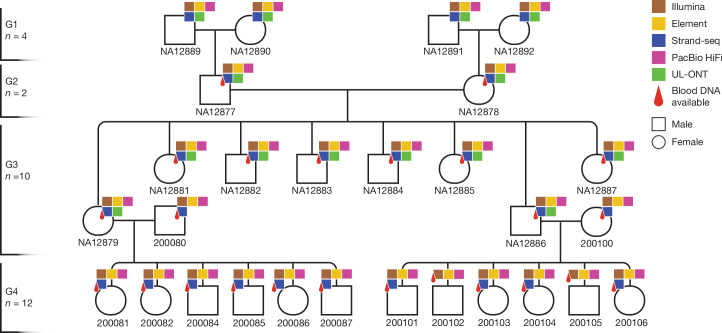
Understanding the human de novo mutation (DNM) rate requires complete sequence information 1 . Here using five complementary short-read and long-read sequencing technologies, we phased and assembled more than 95% of each diploid human genome in a four-generation, twenty-eight-member family (CEPH 1463). We estimate 98–206 DNMs per transmission, including 74.5 de novo single-nucleotide variants, 7.4 non-tandem repeat indels, 65.3 de novo indels or structural variants originating from tandem repeats, and 4.4 centromeric DNMs. Among male individuals, we find 12.4 de novo Y chromosome events per generation. Short tandem repeats and variable-number tandem repeats are the most mutable, with 32 loci exhibiting recurrent mutation through the generations. We accurately assemble 288 centromeres and six Y chromosomes across the generations and demonstrate that the DNM rate varies by an order of magnitude depending on repeat content, length and sequence identity. We show a strong paternal bias (75–81%) for all forms of germline DNM, yet we estimate that 16% of de novo single-nucleotide variants are postzygotic in origin with no paternal bias, including early germline mosaic mutations. We place all this variation in the context of a high-resolution recombination map (~3.4 kb breakpoint resolution) and find no correlation between meiotic crossover and de novo structural variants. These near-telomere-to-telomere familial genomes provide a truth set to understand the most fundamental processes underlying human genetic variation.
Overview
CoChat Summary
TL;DR
This study uses a four-generation, 28-member CEPH 1463 pedigree and five sequencing technologies to build phased, near-telomere-to-telomere assemblies and estimate human de novo mutation rates across variant classes. It reports 98–206 DNMs per transmission (average 152), strong paternal bias, 16% postzygotic SNVs, and elevated mutation in repeats, centromeres, and Y heterochromatin.
Key findings
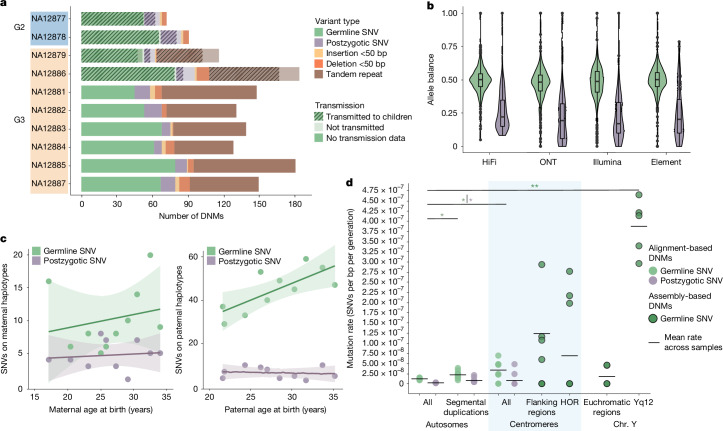
- Across transmissions, the authors estimate 98–206 DNMs per transmission (average 152), including 74.5 de novo SNVs, 7.4 non-tandem repeat indels, 65.3 de novo indels or SVs from tandem repeats, and 4.4 centromeric DNMs; among male individuals, 12.4 de novo Y chromosome events per generation.
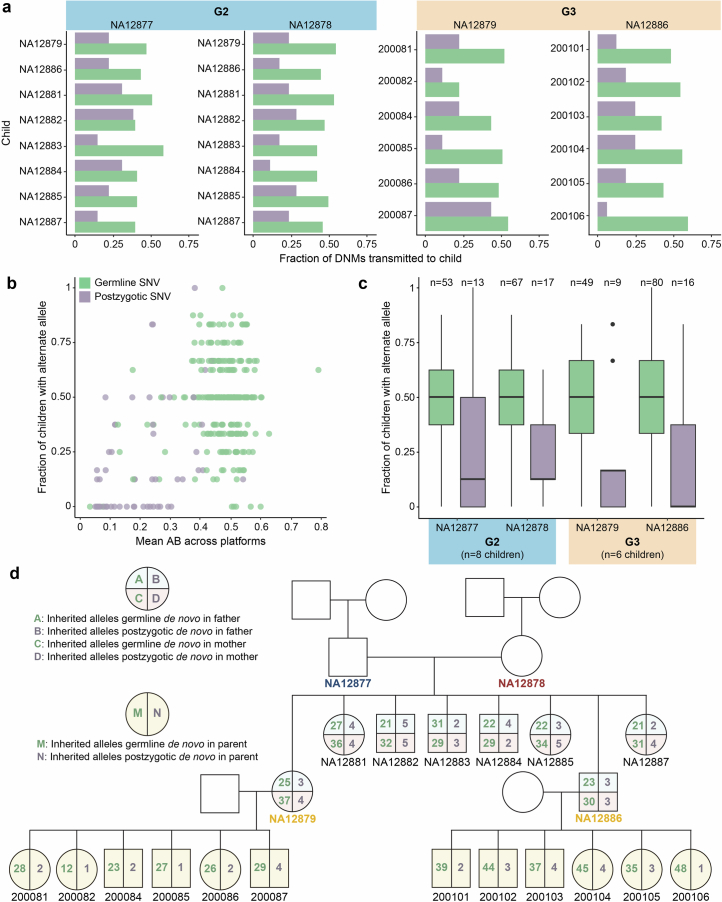
- Germline DNMs show a strong paternal bias of 75–81% for all forms, with a paternal age effect of +1.55 germline DNMs per year (two-sided t-test, P = 0.013); 16% of de novo SNVs (119/745) are postzygotic in origin and show no paternal bias.
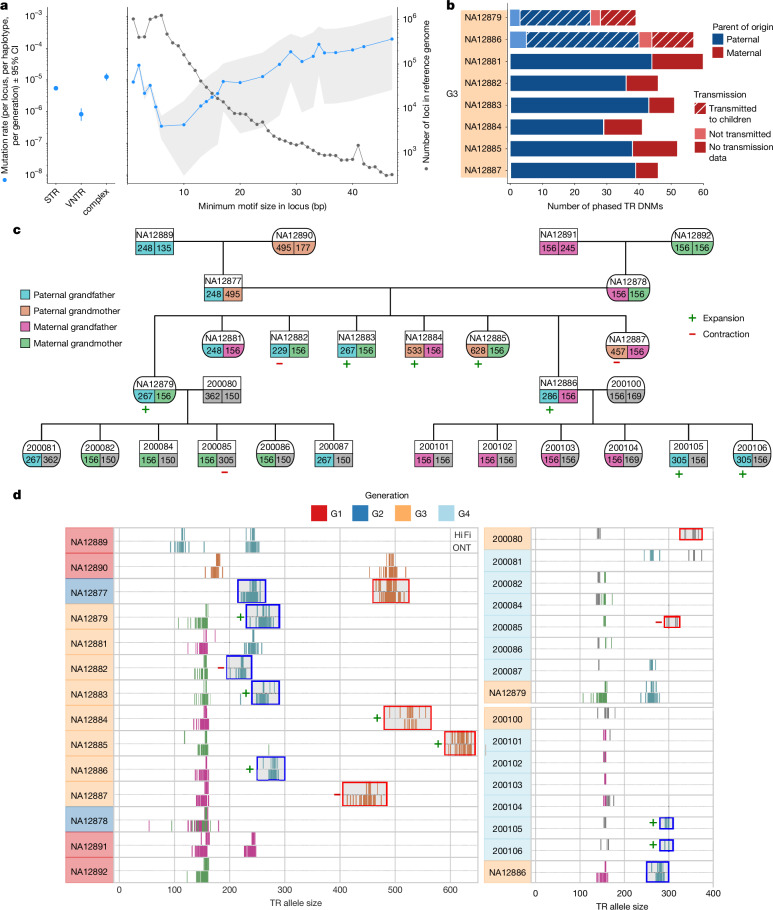
- Tandem repeats are highly mutable: 32 loci show recurrent mutation, the TR DNM rate is 4.74 × 10⁻⁶ per locus per haplotype per generation (STR 5.50 × 10⁻⁶; VNTR 0.83 × 10⁻⁶), and 75.0% of phased de novo TR alleles are paternal.
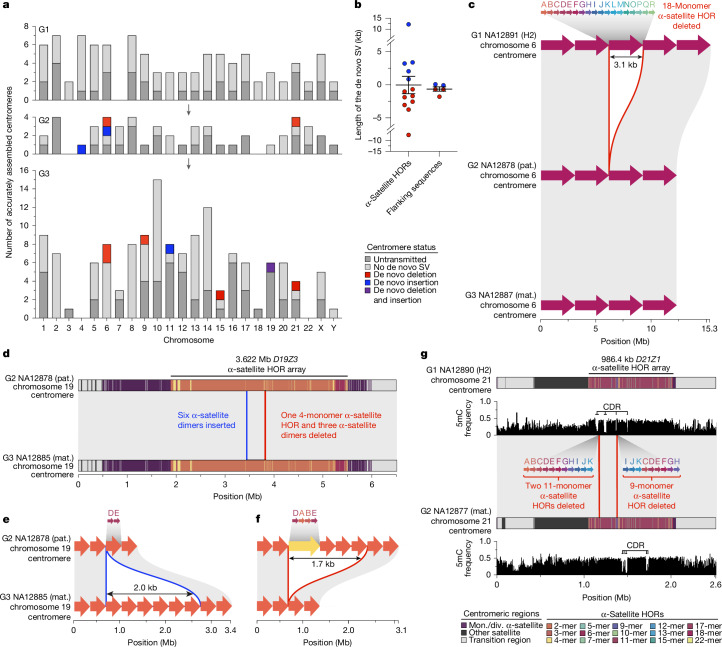
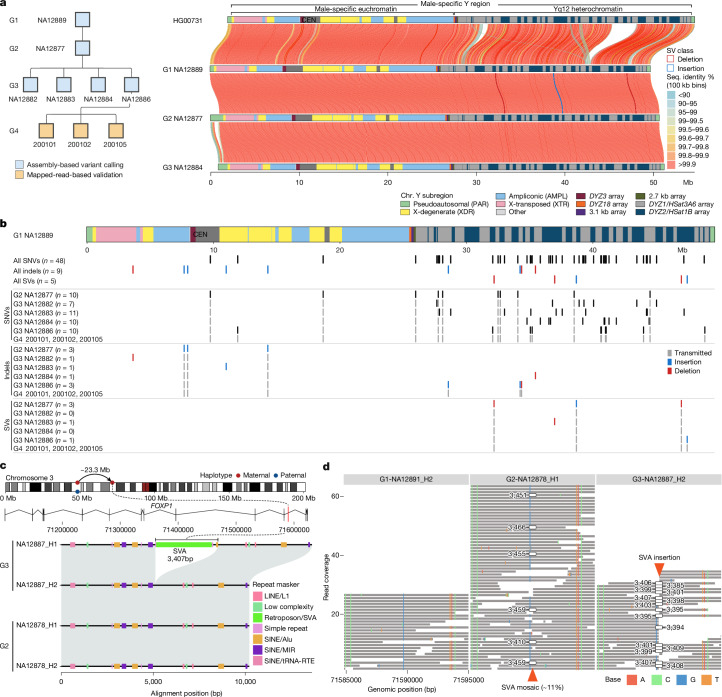
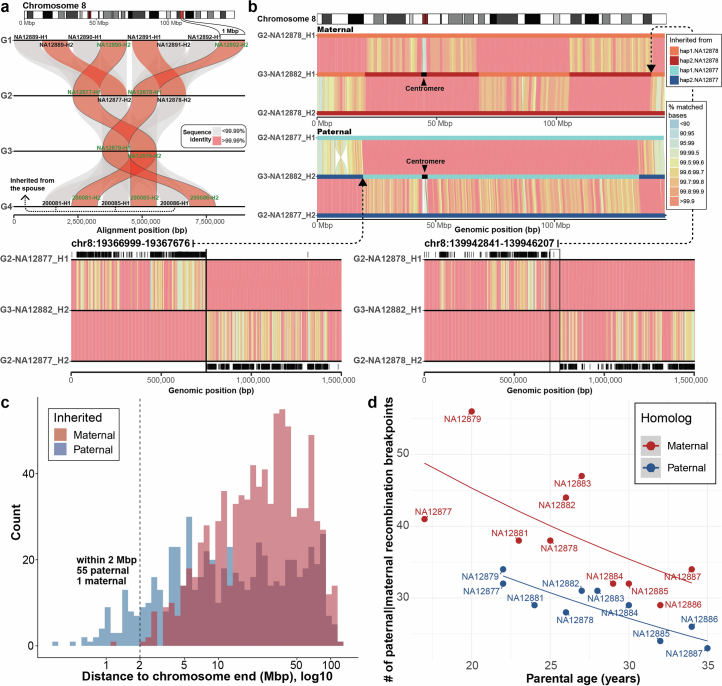
- The authors assemble 288 centromeres and six Y chromosomes, identify 18 de novo SVs among 150 centromere transmissions, estimate a centromeric SNV rate of 4.94 × 10⁻⁸ and a Y MSY SNV rate of 1.99 × 10⁻⁷, and find no correlation between meiotic crossover and de novo SVs.
Methods
- The study sequenced the four-generation, 28-member CEPH 1463 family with five technologies: PacBio HiFi, ultra-long Oxford Nanopore Technologies, Strand-seq, Illumina, and Element AVITI; blood-derived DNA was used for variant discovery, with cell lines used for UL-ONT and Strand-seq.
- Phased genome assemblies were generated with Verkko and hifiasm, phasing and assembling more than 95% of each diploid genome; 288 centromeres and six Y chromosomes were assembled, and variants were validated using Mendelian consistency and transmission across generations.
- DNM discovery used HiFi reads aligned to T2T-CHM13 with orthogonal ONT, Illumina, and Element validation; TRs were genotyped with TRGT and TRGT-denovo; recombination breakpoints were mapped using Strand-seq, inheritance vectors, and trio-based phased assemblies; mutation rates were calculated per callable base pair or locus.
Limitations
- The paper states that homopolymers remain challenging even with Element data, acrocentric regions could not be characterized, and DNM discovery was limited to the first three generations of one multigenerational family, with G4 used mainly for validation.
- The authors state that familial variation depends on genetic background and that many more families will be required for reliable mutation-rate estimates, especially in complex genomic regions.
- The text makes evident that small sample sizes limit power for some comparisons, such as de novo versus postzygotic mutational spectra and transmitted PZM enrichment in SDs; it also notes that blood-derived sequencing cannot demonstrate that every PZM is present in multiple tissues, and that five intragenerational recurrent TR events may reflect parental germline mosaicism rather than recurrent mutation.
Model-written summary. Check it against the paper before relying on it.
Integrity signals
Registry
Cites
Statistics
Figures
Verification
Claims the paper makes
0 Valid · 0 Not valid · 48 Not checked · 191 Own results and interpretations
In the paper
“We identified a total of 5.95 million single-nucleotide variants (SNVs) and indels and 35,662 structural variants (SVs)—all of which are Mendelian consistent across the second and third generations (Methods, Supplementary Table 5, Supplementary Fig. 13 and Data availability)18.”
§ Human de novo mutation rates from a four-generation pedigree reference > A multigenerational variant callset
What the sources say
- Not checked yetcites [18] Kronenberg, Z. et al. The Platinum Pedigree: a long-read benchmark for genetic variants. Preprint at bioRxiv10.1101/2024.10.02.616333 (2024). PMC12533576 40759746 source
plainSingle case- Asserted: passes — The authors put it forward as true.
- Checkable: passes — It can be checked against evidence.
- Load-bearing: passes — The paper’s conclusions depend on it.
- Based: passes — The paper gives a reason why it holds.
- Rests on an assumption not shown here.
A result the paper reports from its own data — it cites no other source for it, so there is none to check. The quote shows it is in the paper.
In the paper
“We estimate 98–206 DNMs per transmission, including 74.5 de novo single-nucleotide variants, 7.4 non-tandem repeat indels, 65.3 de novo indels or structural variants originating from tandem repeats, and 4.4 centromeric DNMs.”
§ Human de novo mutation rates from a four-generation pedigree reference > Abstract
hedged- Asserted: passes — The authors put it forward as true.
- Checkable: passes — It can be checked against evidence.
- Load-bearing: passes — The paper’s conclusions depend on it.
- Based: passes — The paper gives a reason why it holds.
- Rests on an assumption not shown here.
A result the paper reports from its own data — it cites no other source for it, so there is none to check. The quote shows it is in the paper.
In the paper
“We accurately assemble 288 centromeres and six Y chromosomes across the generations and demonstrate that the DNM rate varies by an order of magnitude depending on repeat content, length and sequence identity.”
§ Human de novo mutation rates from a four-generation pedigree reference > Abstract
plain- Asserted: passes — The authors put it forward as true.
- Checkable: passes — It can be checked against evidence.
- Load-bearing: passes — The paper’s conclusions depend on it.
- Based: passes — The paper gives a reason why it holds.
- Rests on an assumption not shown here.
A result the paper reports from its own data — it cites no other source for it, so there is none to check. The quote shows it is in the paper.
In the paper
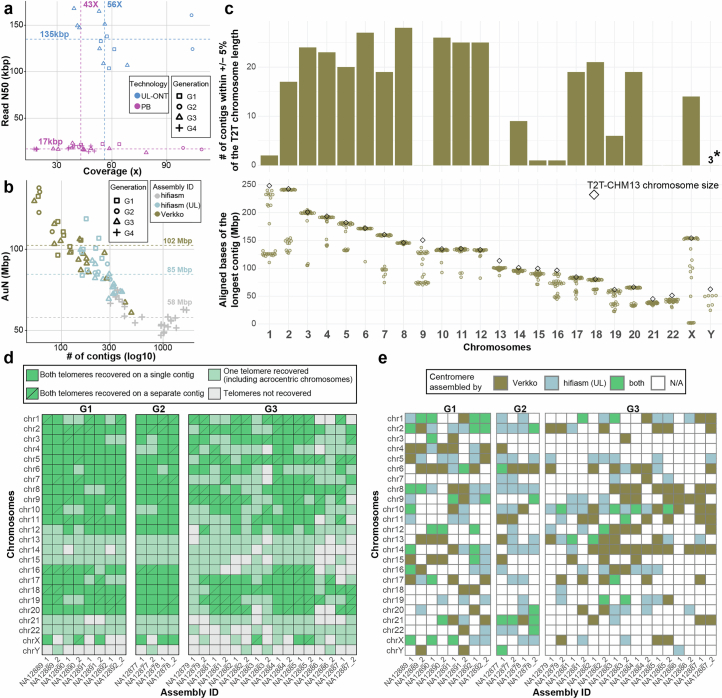
“Moreover, 42.3% (213 out of 504) of non-acrocentric chromosomes are spanned in a single contig with canonical telomere repeats at each end (Methods, Extended Data Fig. 1d, Supplementary Fig. 3 and Supplementary Table 3).”
§ Human de novo mutation rates from a four-generation pedigree reference > Genome sequence and assembly
plain- Asserted: passes — The authors put it forward as true.
- Checkable: passes — It can be checked against evidence.
- Load-bearing: unclear — It is unclear whether the paper’s conclusions depend on it.
- Based: passes — The paper gives a reason why it holds.
A result the paper reports from its own data — it cites no other source for it, so there is none to check. The quote shows it is in the paper.
In the paper
“Short tandem repeats and variable-number tandem repeats are the most mutable, with 32 loci exhibiting recurrent mutation through the generations.”
§ Human de novo mutation rates from a four-generation pedigree reference > Abstract
plainstates an associationSingle case- Asserted: passes — The authors put it forward as true.
- Checkable: passes — It can be checked against evidence.
- Load-bearing: passes — The paper’s conclusions depend on it.
- Based: passes — The paper gives a reason why it holds.
- Rests on an assumption not shown here.
99 more claims
Create a free account to see all 239 claims and to verify the 82 references still open.
- Probably not a substantial claim. 75
- It may state two separate claims as one. 86
Self-check
Percentages, sums and reported differences re-computed from the paper’s own numbers.
Each contradiction between two passages listed here was confirmed by an independent check.
Rated minor: it would not touch a result — a value no result rests on, a p-value that stays on the same side of the significance level, or a conflict that is clerical, resolved elsewhere in the paper, or outside its own findings.
In the paper
§ Human de novo mutation rates from a four-generation pedigree reference > Centromere transmission and de novo SVs
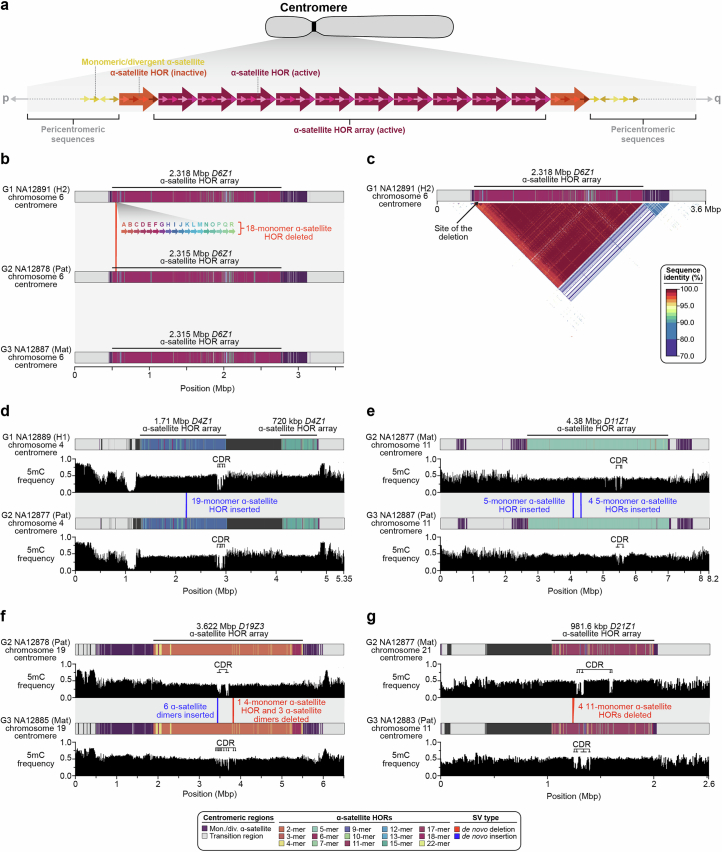
“One transmission from chromosome 9 involves both a gain of 2,052 bp (six dimer α-satellite HOR units) and a loss of 1,710 bp (one 4-mer α-satellite HOR and three α-satellite dimer units) in a single G2-to-G3 transmission (Fig. 4d–f).”
§ Human de novo mutation rates from a four-generation pedigree reference > Centromere transmission and de novo SVs
“d, An example of a de novo insertion and deletion in the chromosome 19 α-satellite HOR array of G3-NA12885.”
Rated minor: it would not touch a result — a value no result rests on, a p-value that stays on the same side of the significance level, or a conflict that is clerical, resolved elsewhere in the paper, or outside its own findings.
In the paper
§ Human de novo mutation rates from a four-generation pedigree reference > Methods > Y-chromosomal analysis
“Detailed analysis of Y-chromosomal DNMs focused on seven male individuals”
§ Human de novo mutation rates from a four-generation pedigree reference > Methods > Y-chromosomal analysis
“G1-NA12889, G2-NA12877, G3-NA12882, G3-NA12883, G3-NA12884 and G3-NA12886”
Rated minor: it would not touch a result — a value no result rests on, a p-value that stays on the same side of the significance level, or a conflict that is clerical, resolved elsewhere in the paper, or outside its own findings.
In the paper
§ Human de novo mutation rates from a four-generation pedigree reference > Y chromosome mutations
“from G3-NA12866 to his three male descendants in G4”
§ Human de novo mutation rates from a four-generation pedigree reference > Y chromosome mutations
“from G3-NA12886 to his male descendants in G4”
Citations
Cites
The Sequence Alignment/Map format and SAMtools
Li, H., Handsaker, B., Wysoker, A., Fennell, T., Ruan, J., Homer, N., Marth, G., Abecasis, G., Durbin, R., & 1000 Genome Project Data Processing Subgroup (2009) · Bioinformatics · doi:10.1093/bioinformatics/btp352 · Cited by 62,041
MAFFT Multiple Sequence Alignment Software Version 7: Improvements in Performance and Usability
Katoh, K., & Standley, D. M. (2013) · Molecular Biology and Evolution · doi:10.1093/molbev/mst010 · Cited by 46,209
MUSCLE: multiple sequence alignment with high accuracy and high throughput
Edgar, R. C. (2004) · Nucleic Acids Research · doi:10.1093/nar/gkh340 · Cited by 44,662
RAxML version 8: a tool for phylogenetic analysis and post-analysis of large phylogenies
Stamatakis, A. (2014) · Bioinformatics · doi:10.1093/bioinformatics/btu033 · Cited by 32,291
BEDTools: a flexible suite of utilities for comparing genomic features
Quinlan, A. R., & Hall, I. M. (2010) · Bioinformatics · doi:10.1093/bioinformatics/btq033 · Cited by 27,437
Self-citationMAFFT: a novel method for rapid multiple sequence alignment based on fast Fourier transform
Katoh, K. (2002) · Nucleic Acids Research · doi:10.1093/nar/gkf436 · Cited by 17,027
The variant call format and VCFtools
Danecek, P., Auton, A., Abecasis, G., Albers, C. A., Banks, E., DePristo, M. A., Handsaker, R. E., Lunter, G., Marth, G. T., Sherry, S. T., et al. (2011) · Bioinformatics · doi:10.1093/bioinformatics/btr330 · Cited by 16,200
Robinson, J. T., Thorvaldsdóttir, H., Winckler, W., Guttman, M., Lander, E. S., Getz, G., & Mesirov, J. P. (2011) · Nature Biotechnology · doi:10.1038/nbt.1754 · Cited by 15,390
Twelve years of SAMtools and BCFtools
Danecek, P., Bonfield, J. K., Liddle, J., Marshall, J., Ohan, V., Pollard, M. O., Whitwham, A., Keane, T., McCarthy, S. A., Davies, R. M., et al. (2021) · GigaScience · doi:10.1093/gigascience/giab008 · Cited by 15,343 · cited 1×
“BCFtools 101,102 (v.1.16) was used with a minimum base quality 20, mapping quality 20 and ploidy 1.”
InfluentialMinimap2: Pairwise alignment for nucleotide sequences
Li, H. (2018) · Bioinformatics · doi:10.1093/bioinformatics/bty191 · Cited by 14,807
Cited by
Complex genetic variation in nearly complete human genomes
Logsdon, G. A., Ebert, P., Audano, P. A., Loftus, M. G., Porubskỳ, D., Ebler, J., Yilmaz, F., Hallast, P., Prodanov, T., Yoo, D., et al. (2025) · Nature · doi:10.1038/s41586-025-09140-6 · Cited by 213
“25 and 26).”
Self-citationSperm sequencing reveals extensive positive selection in the male germline
Neville, M. D. C., Lawson, A. R. J., Sanghvi, R., Abascal, F., Pham, M. H., Cagan, A., Nicola, P. A., Bayzetinova, T., Baez‐Ortega, A., Roberts, K., et al. (2025) · Nature · doi:10.1038/s41586-025-09448-3 · Cited by 65
“Although long-read sequencing studies have begun to explore these in sperm 57 and trios 58 , further work is needed to capture the full range of human germline variation and its impact on offspring.”
Toward clinical long-read genome sequencing for rare diseases
Eisfeldt, J., Ek, M., Nordenskjöld, M., & Lindstrand, A. (2025) · Nature Genetics · doi:10.1038/s41588-025-02160-y · Cited by 55
Antipov, D., Rautiainen, M., Nurk, S., Walenz, B. P., Solar, S. J., Phillippy, A. M., & Koren, S. (2025) · Genome Research · doi:10.1101/gr.280383.124 · Cited by 52
“Existing reference-free tools such as Flagger (Liao et al. 2023) and NucFrec (Vollger et al. 2019) produce a high number of false-positive predictions and are not always consistent with each other (Porubsky et al. 2025), making it challenging to use them without manual curation of their results.”
The Platinum Pedigree: a long-read benchmark for genetic variants
Kronenberg, Z. N., Nolan, C., Porubskỳ, D., Mokveld, T., Rowell, W. J., Lee, S. Y., Dolzhenko, E., Chang, P.-C., Holt, J., Saunders, C. T., et al. (2025) · Nature Methods · doi:10.1038/s41592-025-02750-y · Cited by 51
“In a recent study the four-generation CEPH-1463 pedigree was sequenced using multiple technologies (Supplementary Table 1) and analyzed to study the de novo mutation rate for SNVs, indels, TRs and SVs 11 .”
InfluentialSelf-citationSaunders, C. T., Holt, J., Baker, D. N., Lake, J. A., Belyeu, J. R., Kronenberg, Z. N., Rowell, W. J., & Eberle, M. A. (2025) · Bioinformatics · doi:10.1093/bioinformatics/btaf136 · Cited by 46
Self-citationA global view of human centromere variation and evolution
Gao, S., Oshima, K. K., Chuang, S.-C., Loftus, M. G., Potapova, T., Montanari, A., Gordon, D., Yang, Z., Ashraf, H., Audano, P. A., et al. (2026) · Nature · doi:10.1038/s41586-026-10841-9 · Cited by 43
Self-citationInsights into DNA repeat expansions among 900,000 biobank participants
Hujoel, M. L. A., Handsaker, R. E., Tang, D. S.-H., Kamitaki, N., Mukamel, R. E., Rubinacci, S., Palamara, P. F., McCarroll, S. A., & Loh, P. (2026) · Nature · doi:10.1038/s41586-025-09886-z · Cited by 36
“…analytical tools that we have developed here for biobank-scale WGS analysis provide a useful complement to studying repeat instability in families 8–10 and in patient cohorts using targeted sequencing techniques 18,62 , and combining these approaches should provide opportunities for further…”
Mapping single-cell diploid chromatin fiber architectures using DAF-seq
Swanson, E. G., Mao, Y., Mallory, B. J., Vollger, M. R., Bohaczuk, S. C., Oliveira, C. B., Lyon, D. B., Ranchalis, J., Parmalee, N. L., Cohen, B. A., et al. (2025) · Nature Biotechnology · doi:10.1038/s41587-025-02914-3 · Cited by 34
Weisburd, B., Dolzhenko, E., Bennett, M. F., Danzi, M. C., Xu, I. R. L., Tanudisastro, H. A., Gu, B., English, A. C., Hiatt, L., Mokveld, T., et al. (2026) · The American Journal of Human Genetics · doi:10.1016/j.ajhg.2026.03.020 · Cited by 28
Self-citationPopulation size interacts with reproductive longevity to shape the germline mutation rate
Zhu, L., Beichman, A. C., & Harris, K. (2025) · Proceedings of the National Academy of Sciences · doi:10.1073/pnas.2423311122 · Cited by 24
Highly accurate assembly polishing with DeepPolisher
Mastoras, M., Asri, M., Brambrink, L., Hebbar, P., Kolesnikov, A., Cook, D. E., Nattestad, M., Lucas, J., Won, S. T., Chang, P.-C., et al. (2025) · Genome Research · doi:10.1101/gr.280149.124 · Cited by 23
Corcoran, M., Narang, S., Kaduk, M., Chernyshev, M., Färnert, A., Sundling, C., & Hedestam, G. B. K. (2026) · Immunity · doi:10.1016/j.immuni.2026.01.026 · Cited by 23
Common variation in meiosis genes shapes human recombination and aneuploidy
Carioscia, S. A., Biddanda, A., Starostik, M. R., Tang, X., Hoffmann, E. R., Demko, Z., & McCoy, R. C. (2026) · Nature · doi:10.1038/s41586-025-09964-2 · Cited by 21
“Previous literature offers conflicting evidence about the relationship between counts of meiotic crossovers and maternal age, with some studies reporting a positive association 14,15,23 and others reporting a negative association 24 .”
Advances in haplotype phasing and genotype imputation
Sun, Q., & Li, Y. (2025) · Nature Reviews Genetics · doi:10.1038/s41576-025-00895-2 · Cited by 19
“1a), which is essential for various genetic analyses, including the calculation of population genetics statistics 1–6 , identification of compound heterozygous events 7 and inferences and analyses incorporating local ancestry 8–12 .”
CiFi: accurate long-read chromosome conformation capture with low-input requirements
McGinty, S. P., Kaya, G., Sim, S. B., Makunin, A., Corpuz, R. L., Quail, M. A., Abuelanin, M., Lawniczak, M., Geib, S. M., Korlach, J., et al. (2025) · Nature Communications · doi:10.1038/s41467-025-66918-y · Cited by 19
“14 and 15).”
InfluentialA telomere-to-telomere map of somatic mutation burden and functional impact in a cancer
Sohn, M.-H., Dubocanin, D., Vollger, M. R., Kwon, Y., Minkina, A., Munson, K. M., Hart, S. F. M., Ranchalis, J., Parmalee, N. L., Sedeño-Cortés, A. E., et al. (2026) · Cell · doi:10.1016/j.cell.2026.09.033 · Cited by 19
Self-citationPopulation-scale variability at short tandem repeat loci reveals pathogenicity signature
Danzi, M. C., Xu, I. R. L., Fazal, S., Dolzhenko, E., Pellerin, D., Weisburd, B., Van de Vondel, L., Reuter, C., Sampson, J. B., Folland, C., et al. (2025) · doi:10.1101/2025.01.06.631535 · Cited by 18
Self-citationComplete chromosome 21 centromere sequencing of families with Down syndrome
Mastrorosa, F. K., Daponte, A., de Gennaro, L., Chuang, S.-C., Lin, J., Sui, Y., Porubskỳ, D., Oshima, K. K., Wertz, J., Rozanski, A. N., et al. (2026) · The American Journal of Human Genetics · doi:10.1016/j.ajhg.2026.05.010 · Cited by 18
“13,23 Overall, we do not have evidence that the condition arose from a pre-existing kinetochore defect in the mothers, reinforcing the hypothesis that centromere asymmetry might be a risk factor for nondisjunction but only for a minority of families.”
Self-citationThe 1000 Chinese Pangenome empowers medical and population genetics
Wang, Y., Duan, Z., Chen, D., Shi, D., Ding, Y., Wang, Z., Li, B., Wang, Z., Guo, M., Yang, W., et al. (2026) · Nature · doi:10.1038/s41586-026-10315-y · Cited by 17
“Notably, TRs were disproportionately enriched in non-reference regions, a finding consistent with their high mutation rate 18 , which probably drives the formation of non-reference sequences (Fig.”
Self-citationUsing the linear references from the pangenome to discover missing autism variants
Sui, Y., Lin, J., Noyes, M. D., Kwon, Y., Wong, I., Koundinya, N., Harvey, W. T., Wu, M., Hoekzema, K., Munson, K. M., et al. (2026) · Nature Communications · doi:10.1038/s41467-026-68378-4 · Cited by 16
“Finally, we evaluated rare biallelic inherited homozygous SVs for potential pathogenicity because of the unique capability of LRS to phase almost all variants 33 .”
InfluentialSelf-citationA Pedigree-Based Map of Crossovers and Noncrossovers in Aye-Ayes (Daubentonia madagascariensis)
Versoza, C. J., Lloret‐Villas, A., Jensen, J. D., & Pfeifer, S. P. (2025) · Genome Biology and Evolution · doi:10.1093/gbe/evaf072 · Cited by 16
Germline mutation rates and fine-scale recombination parameters in zebra finch
Prentout, D., Bykova, D., Hoge, C., Hooper, D. M., McDiarmid, C. S., Wu, F. L., Griffith, S. C., de Manuel, M., & Przeworski, M. (2025) · PLoS Genetics · doi:10.1371/journal.pgen.1011661 · Cited by 15
Čechová, M., Potapova, T., Rechtsteiner, A., Hickey, G., Mari, R. S., Mastoras, M., Menendez, J. M., Polakova, N., Hebbar, P., Ryabov, F., et al. (2025) · bioRxiv (Cold Spring Harbor Laboratory) · doi:10.64898/2025.12.14.693655 · Cited by 13
“For example, the Platinum Pedigree study (Porubsky et al. 2025; Kronenberg et al. 2025) established that near-T2T methods can resolve inheritance and de novo mutation rates across four generations, despite incomplete coverage of regions such as the acrocentric p-arms.”
InfluentialSelf-citationNoyes, M. D., Sui, Y., Kwon, Y., Koundinya, N., Wong, I., Munson, K. M., Hoekzema, K., Kordosky, J., Garcia, G. H., Knuth, J., et al. (2026) · Nature Communications · doi:10.1038/s41467-026-70342-1 · Cited by 12
“Indeed, population genetic and DNM studies on single families have con fi rmed increased rates of DNM with distinct mutational signatures potentially consistent with the action of inter-locus gene conversion, but to date there have been few studies from a diversityoffamilies 11,21 – 23 .”
InfluentialSelf-citationMosaicism in Short Tandem Repeat Disorders: A Clinical Perspective
Doss, R. M., Lopez-Ignacio, S., Dischler, A. M., Hiatt, L., Dashnow, H., Breuss, M. W., & Dias, C. (2025) · Genes · doi:10.3390/genes16020216 · Cited by 12
Self-citationA maternal germline mutator phenotype in a family affected by heritable colorectal cancer
Young, C., Beichman, A. C., Mas-Ponte, D., Hemker, S. L., Zhu, L., Kitzman, J. O., Shirts, B. H., & Harris, K. (2024) · Genetics · doi:10.1093/genetics/iyae166 · Cited by 12
A global map for introgressed structural variation and selection in humans
Hsieh, P., Soisangwan, N., Gordon, D., Javidh, A., Harvey, W. T., Porubskỳ, D., Hoekzema, K., Baker, C. A., Munson, K. M., Kinipi, C., et al. (2026) · Science · doi:10.1126/science.adz7518 · Cited by 11
“Compared to the mutation rate for the euchromatic portion of the human genome (67, 68), our estimated mutation rate for α -satellite HORs is up to 5.96-fold higher, reflecting a 35.4% increase from recent estimates (64, 69).”
InfluentialSelf-citationLimitations of serial cloning in mammals
Wakayama, S., Ito, D., Inoue, R., Ooga, M., Toshishige, M., Satoh, Y., Shiura, H., Kohda, T., Uchimura, A., & Wakayama, T. (2026) · Nature Communications · doi:10.1038/s41467-026-69765-7 · Cited by 11
“…two factorsappear central to the collapse of long-termclonalpropagation: (1) the emergence of LSVs, which are rarely seen in the germline 37,38 , and (2) the absence of chromosomal recombination in clonal reproduction, which prevents effective purifying selection and allows all classes…”
Small nuclear RNA genes in Mendelian disorders
Antonarakis, S. E. (2025) · Nature Genetics · doi:10.1038/s41588-025-02440-7 · Cited by 10
“The fact that most de novo pathogenic variants occur in the maternally inherited allele is of considerable interest, and the underlying mechanisms need investigation, as, in protein-coding genes and the genome in general, most de novo variants occur in the paternally derived allele 81,82 .”
Near-perfect genome sequencing in medical genetics
Sabbagh, Q., Gilissen, C., Yntema, H. G., Vissers, L. E. L. M., & Hoischen, A. (2026) · Nature Genetics · doi:10.1038/s41588-026-02645-4 · Cited by 9
“Haplotype-aware long-read analysis can identify abnormal haplotype configurations, such as the emergence of a third haplotype or unexpected allelic imbalance, enabling mosaic variant detection beyond short-read capabilities 14,60,61 .”
Human acrocentric chromosome short-arm de novo mutation and recombination
Lin, J., Mastrorosa, F. K., Noyes, M. D., Yoo, D., Rhie, A., Porubskỳ, D., Hoekzema, K., Munson, K. M., Koundinya, N., Watkins, W. S., et al. (2026) · Cell · doi:10.1016/j.cell.2026.05.035 · Cited by 9
Self-citationA pangenomic method for establishing a synthetic somatic variant resource in HapMap mixtures
Kong, N., Tang, Z., Ruttenberg, A., Macias-Velasco, J. F., Li, Z., Zhang, W., Miao, B., Xin, Z., Fu, Q., Park, H., et al. (2026) · Cell Genomics · doi:10.1016/j.xgen.2026.101358 · Cited by 9
“69,70 Consequently, the regions most likely to harbor newly arising SVs may also be those in which current detection methods remain least sensitive.”
Soni, V., Pfeifer, S. P., & Jensen, J. D. (2025) · American Journal of Primatology · doi:10.1002/ajp.70105 · Cited by 9
What sets the mutation rate of a cell type in an animal species?
de Manuel, M., Przeworski, M., Spisak, N., & Stolyarova, A. V. (2026) · PLoS Biology · doi:10.1371/journal.pbio.3003799 · Cited by 9
“Designs include sequencing of DNA from sperm, which directly samples the paternal germline [31–33], and sequencing blood-derived DNA of twins, siblings, or three-generation pedigrees, which improves sensitivity to early embryonic mutations [34–36].”
Charlesworth, B., & Charlesworth, D. (2025) · Genome Biology and Evolution · doi:10.1093/gbe/evaf195 · Cited by 9
Protamine lacunae preserve the paternal chromatin landscape in spermPreprint
Tullius, T. W., Heuer, R. A., Bohaczuk, S. C., Mallory, B. J., Dubocanin, D., Ranchalis, J., Ayaz, A., Mason, C. E., Seli, E. U., Phillippy, A. M., et al. (2025) · bioRxiv (Cold Spring Harbor Laboratory) · doi:10.1101/2025.10.03.680364 · Cited by 9
Self-citationAntipov, D., Rautiainen, M., Nurk, S., Walenz, B. P., Solar, S. J., Phillippy, A. M., & Koren, S. (2024) · bioRxiv (Cold Spring Harbor Laboratory) · doi:10.1101/2024.12.20.629807 · Cited by 8
Gu, B., Peng, D., LaFlamme, C. W., Bennett, M. F., Bahlo, M., Weisburd, B., Mefford, H. C., & Chaisson, M. (2024) · bioRxiv (Cold Spring Harbor Laboratory) · doi:10.1101/2024.08.07.607105 · Cited by 8
“The CEPH1463 family study [15] reported an average of 65.3 de novo TRs per sample and estimated a genome-wide TR mutation rate of 4 .”
InfluentialPorubskỳ, D., Yoo, D., Koundinya, N., Souche, E. L., Dishuck, P. C., Dierckxsens, N., Harvey, W. T., Munson, K. M., Hoekzema, K., Chan, D. D., et al. (2026) · Nature Communications · doi:10.1038/s41467-026-71905-y · Cited by 8
“42).”
Self-citationRare k-mers reveal centromere haplogroups underlying human diversity and cancer translocations
Shiraishi, Y., Ochi, Y., Sugawa, M., Sakamoto, Y., 木村, 敬., Tsujimura, T., Okada, A., Okuda, R., Namba, S., Hori, T., et al. (2026) · Cell · doi:10.1016/j.cell.2026.08.053 · Cited by 8
Self-citationPajic, P., & Gökçümen, Ö. (2025) · Genome Biology and Evolution · doi:10.1093/gbe/evaf250 · Cited by 7
Overcoming limitations to customize DeepVariant for domesticated animals with TrioTrain
Kalleberg, J., Rissman, J., & Schnabel, R. D. (2025) · Genome Research · doi:10.1101/gr.279542.124 · Cited by 7
“Without LRS for other species, this feature could potentially improve genotyping accuracy for the single-sample variant callers given validated de novo variation (Porubsky et al. 2025).”
Germline de novo mutation rate of the highly heterozygous amphioxus genome
Xue, J., Lei, T., Cao, J., Wu, L., Li, G., & Li, C. (2026) · Molecular Biology and Evolution · doi:10.1093/molbev/msag017 · Cited by 7
A Telomere-to-telomere Diploid Reference Genome and Centromere Structure of the Chinese Quartet
Wang, B., Jia, P., Bush, S. J., Wang, X., Yang, Y., Zhang, Y., Wan, S., Yang, X., Zhang, P., Zheng, Y., et al. (2025) · Genomics Proteomics & Bioinformatics · doi:10.1093/gpbjnl/qzaf118 · Cited by 7
Estimating Gene Conversion Tract Length and Rate From PacBio HiFi Data
Charmouh, A. P., Porsborg, P. S., Hansen, L. T., Besenbacher, S., Winge, S. B., Almstrup, K., Hobolth, A., Bataillon, T. M., & Schierup, M. H. (2025) · Molecular Biology and Evolution · doi:10.1093/molbev/msaf019 · Cited by 7
Aardvark: sifting through differences in a mound of variants
Holt, J., Kronenberg, Z. N., Saunders, C. T., Dolzhenko, E., Krusche, P., Olson, N. D., Zook, J. M., & Eberle, M. A. (2026) · Genome biology · doi:10.1186/s13059-026-04165-0 · Cited by 6
“We demonstrate the versatility of Aardvark by testing multiple combinations of publicly available truth benchmarks [22, 20, 15, 11] in conjunction with query datasets [1, 18] generated from a diverse set of sequencing technologies and variant calling pipelines (see Supplemental Materials).”
Self-citationRare disease genomics in an era of human pangenomics and telomere-to-telomere genome references
Folland, C., Monahan, G., Breen, J., Johari, M., Patel, H. R., & Ravenscroft, G. (2026) · European Journal of Human Genetics · doi:10.1038/s41431-026-02125-7 · Cited by 6
“Porubsky et al. utilised LRS, SRS and Strand-seq to generate comprehensive genomic data for members of a four-generation family [55].”
Unprecedented female mutation bias in the aye-aye, a highly unusual lemur from Madagascar
Wang, R. J., Peña-García, Y., Raveendran, M., Harris, R. A., Nguyen, T. H. D., Gingras, M., Wu, Y., Perez, L. M., Yoder, A. D., Simmons, J. H., et al. (2025) · PLoS Biology · doi:10.1371/journal.pbio.3003015 · Cited by 6
Tandem repeats in human brain evolution and disease susceptibility
Lee, H., & An, J. (2026) · Molecules and Cells · doi:10.1016/j.mocell.2026.100363 · Cited by 5
Rocha, J. L., Lou, R. N., Adam, C. D. L., Hebbar, P., Ferguson, S., Bolognini, D., Killilea, A. N., Hoekzema, K., Guarracino, A., Deng, Y., et al. (2026) · bioRxiv (Cold Spring Harbor Laboratory) · doi:10.64898/2026.06.06.730619 · Cited by 5
Self-citationGenome-wide selection inference at short tandem repeats
Huang, B. B., Durvasula, A., Mousavi, N., Jam, H. Z., Maksimov, M., Lohmueller, K. E., & Gymrek, M. (2025) · PLoS Genetics · doi:10.1371/journal.pgen.1011959 · Cited by 5
Happ, H. C., Sasani, T. A., Warner, D., Neklason, D. W., & Quinlan, A. R. (2026) · Genome biology · doi:10.1186/s13059-026-04099-7 · Cited by 5
“Sixteen members of the pedigree were also sequenced on an Illumina platform as part of the Platinum Pedigree consortium [30].”
InfluentialSelf-citationDonor-specific assemblies enhance somatic structural variant detection in complex genomic regions
Mack, T., Lin, J., Ren, L., Sohn, M.-H., Minkina, A., Kwon, Y., Yoo, D., Sui, Y., Munson, K. M., Hoekzema, K., et al. (2026) · Genome Research · doi:10.64898/2026.02.20.707061 · Cited by 5
Self-citationHallast, P., Rhie, A., Loftus, M. G., Mazzetto, M., Ebert, P., Gao, S., Martino, G. V., Audano, P. A., Ashraf, H., Pál, K., et al. (2026) · bioRxiv (Cold Spring Harbor Laboratory) · doi:10.64898/2026.06.03.729890 · Cited by 5
Self-citationMultidimensional variation and population stratification across 8000 complete human centromeresPreprint
Sun, Y., Wan, S., Nie, L., Yu, D., Zhou, F., Yang, Y., Yang, X., Liu, A., Chen, Q., Fu, K., et al. (2026) · bioRxiv (Cold Spring Harbor Laboratory) · doi:10.64898/2026.07.22.740206 · Cited by 5
“However, it is important to note the relative substitution rates we estimated have a broad range of variation (>100-fold) across chromosomes, which requires more pedigree-based assemblies to quantify accurate intergenerational substitution rates 63 .”
Amos, W., & Elhaik, E. (2025) · bioRxiv (Cold Spring Harbor Laboratory) · doi:10.1101/2024.12.31.630954 · Cited by 4
Saxena, A. S., & Baer, C. F. (2026) · Genome Biology and Evolution · doi:10.1093/gbe/evag145 · Cited by 4
“Variant calls were intersected with genomic features using bedtools (Quinlan and Hall 2010), allowing for systematic classification.”
Toward the clinical application of long-read sequencing in repeat-expansion disorders
Benarroch, L., Pešović, J., Rossato, M., Chen, Z., Lucas, M. C., Cogan, G., Rajan‐Babu, I., Prokosch, V., Zarouchlioti, C., Carlomagno, M., et al. (2026) · Nature Genetics · doi:10.1038/s41588-026-02694-9 · Cited by 4
Wang, X., Zhang, C., Wang, H., Reid, K., & Merilä, J. (2026) · Heredity · doi:10.1038/s41437-026-00852-7 · Cited by 4
“This result is in contrast to those of earlier studies, which have estimated higher numbers for LRS than for SRS data (Noyes et al., 2022; Porubsky et al., 2025).”
InfluentialThe evolution of mutation rates in the light of development and cell-lineage selectionPreprint
Majic, P., Srivastava, M., & Crocker, J. (2025) · bioRxiv (Cold Spring Harbor Laboratory) · doi:10.1101/2025.01.16.633395 · Cited by 4
Versoza, C. J., Kr, B., Jensen, J. D., & Pfeifer, S. P. (2026) · Genome Biology and Evolution · doi:10.1093/gbe/evag186 · Cited by 4
A comprehensive assessment of tandem repeat genotyping methods for Nanopore long-read genomes
Aliyev, E. E., Avvaru, A. K., Coster, W. D., Arner, G. M., Nyaga, D. M., Gibson, S. B., Weisburd, B., Gu, B., Gonzaga-Jauregui, C. G., Gustafson, J. A., et al. (2026) · Genome biology · doi:10.1186/s13059-026-04210-y · Cited by 4
“Because the de novo mutation (DNM) rate for TRs is estimated to be on the order of 10 –5 per locus per generation [1–4], we would expect fewer than 1 DNM per generation from our catalog of 43,009 loci, meaning that the vast majority of apparent DNMs are likely to be errors.”
Self-citationA high-resolution human pangenome structural variant resource for improved disease associationPreprint
Lin, J., Gustafson, J. A., Wertz, J., Sui, Y., Yoo, D., Porubskỳ, D., Luo, C., Wong, I., Garimella, K. V., Li, Q., et al. (2026) · medRxiv · doi:10.64898/2026.08.21.26361050 · Cited by 4
“The model is trained on HiFi and ONT alignment features from a set of transmitted SVs in a four-generation pedigree 90 .”
Self-citationAutism Spectrum Disorder: Integrating Genetic and Environmental Risk
Kamijo, S., Miwa, H., & Ikeda, K. (2026) · Cells · doi:10.3390/cells15110985 · Cited by 3
“The human genome acquires approximately 74.5 de novo single-nucleotide mutations per transmission [57].”
InfluentialStrand-seq and the future of personalized genomics
Hanlon, V. C. T., & Lansdorp, P. M. (2026) · Nature Genetics · doi:10.1038/s41588-026-02548-4 · Cited by 3
“The most commonly used methods 4,11 are related to the one-pot Strand-seq protocol 23,34 , performing fragmentation and adaptor ligation in separate steps (discussed in more detail below).”
InfluentialSelf-citationVAMPIRE: Analyzing variation and motif pattern in tandem repeatsPreprint
Yang, Z., Zhang, S., Logsdon, G. A., & Mao, Y. (2025) · bioRxiv (Cold Spring Harbor Laboratory) · doi:10.1101/2025.06.15.659631 · Cited by 3
Self-citationGibson, S. B., Damaraju, N., Gustafson, J. (., Balton, E. V., Chanprasert, S., Glass, I. A., Horike-Pyne, M. J., Kumar, R. D., Leppig, K. A., Lundberg, C., et al. (2026) · medRxiv · doi:10.64898/2026.04.30.26352103 · Cited by 3
“Tandem repeats are sequences of short DNA motifs repeated in direct, head-to-tail succession and are among the most polymorphic and mutationally dynamic elements in the human genome 2,3 .”
Self-citationHOROSCOPE: Decoding human centromere architecture from short reads using k -mer signaturesPreprint
Hain, C., Rausch, T., & Korbel, J. O. (2026) · bioRxiv (Cold Spring Harbor Laboratory) · doi:10.64898/2026.06.10.731283 · Cited by 3
Huang, S. (2025) · BioCosmos · doi:10.2478/biocosmos-2025-0009 · Cited by 3
Role of common host genome variants in Childhood Acute Lymphoblastic Leukemia
Mikkelsen, T. B., Helenius, M. U., Αmpatzidou, Μ., Attarbaschi, A., Andrés‐Jensen, L., Borkhardt, A., Cuevas, N. C., Escherich, G., Hagleitner, M. M., Halsey, C., et al. (2025) · Leukemia · doi:10.1038/s41375-025-02804-2 · Cited by 3
“…other participants in large human genetic data sets (gnomAD being the largest) [62], though new estimates suggest this number could be even higher [63]. gnomAD data analyses recently showed that childhood cancers, including ALL, have left some parts of modern humans ’ genomes constrained, i.e.,…”
Paoli, F. D., Nicora, G., Galanti, K., Gonzales, C. S., Mangili, F., Smedley, D. P., Appuswamy, R., Kawasawa, Y. I., Somers, V. K., Limongelli, I., et al. (2026) · Circulation Genomic and Precision Medicine · doi:10.1161/circgen.125.005447 · Cited by 3
Mutation rate variation as the neutral byproduct of developmental and life-history diversification
Majic, P., Srivastava, M., Herrera‐Álvarez, S., & Crocker, J. (2026) · Evolution · doi:10.1093/evolut/qpag122 · Cited by 3
Integrated map of somatic mosaicism across human tissues in 25 individualsPreprint
the Somatic Mosaicism across Human Tissues Network, Sedlazeck, F. J., Coorens, T. H. H., Park, P. J., & Stergachis, A. B. (2026) · bioRxiv (Cold Spring Harbor Laboratory) · doi:10.64898/2026.09.01.748636 · Cited by 3
“Donor specific assemblies (DSAs) have the potential to overcome many of these artifacts by providing an accurate diploid germline reference for read mapping 57,59 .”
Frantz, L. (2025) · Science · doi:10.1126/science.aea6151 · Cited by 3
Inference of elevated mutation rates and variant effects using 700k exomesPreprint
Kar, P., Moldovan, M. A., Guez, J., Nazeen, S., Goodrich, J. K., Karani, T., Samocha, K. E., Karczewski, K. J., Koch, E. M., Seplyarskiy, V. B., et al. (2026) · bioRxiv (Cold Spring Harbor Laboratory) · doi:10.64898/2026.06.09.730991 · Cited by 2
Pangenome-based identification of cryptic pathogenic variants in undiagnosed rare disease patientsPreprint
Jang, S., Kim, S., Lee, S., Kim, S. Y., Moon, J., Kim, J., & Chae, J. (2025) · medRxiv · doi:10.1101/2025.07.08.25330875 · Cited by 2
The selective dynamics of interruptions at short tandem repeats
Goldberg, M. E., Dashnow, H., Harris, K., & Quinlan, A. R. (2026) · Genetics · doi:10.1093/genetics/iyag080 · Cited by 2
“Loci differ considerably in their mutation rate associated with a number of local features such as GC content, motif length, and allele length (Sun et al. 2012; Ananda et al. 2013; Willems et al. 2017; McGinty and Sunyaev 2023; Porubsky et al. 2025).”
InfluentialSelf-citationA family portrait of the genomic factors shaping tandem repeat mutagenesisPreprint
Sasani, T. A., Goldberg, M. E., Avvaru, A. K., Nicholas, T. J., Neklason, D. W., Dolzhenko, E., Mokveld, T., Munson, K. M., Hoekzema, K., Ayllon, M., et al. (2026) · bioRxiv (Cold Spring Harbor Laboratory) · doi:10.64898/2026.03.06.710071 · Cited by 2
“%) occurred at complex loci comprising more than one unique tandem repeat motif. a) We previously created a catalog of approximately 7.8 million tandem repeat (TR) loci [16] using Tandem Repeats Finder [47] and TRSolve [43].”
InfluentialSelf-citationAdam, C. D. L., Rocha, J. L., Sudmant, P. H., & Rohlfs, R. V. (2026) · bioRxiv (Cold Spring Harbor Laboratory) · doi:10.64898/2026.01.20.700717 · Cited by 2
“We estimated TR-specific mutation rates based on TR divergence between humans and chimpanzees under a simple single-step mutation model (SMM) and selective neutrality, yielding results similar to those from trio-based average de novo mutation rate estimates 4 .”
Dong, S., Xing, X., Čechová, M., Loucks, H., Vijayalingam, S., Neilson, A., Sentmanat, M. F., Macias-Velasco, J. F., Liu, T. C., Dong, Z., et al. (2026) · bioRxiv (Cold Spring Harbor Laboratory) · doi:10.64898/2026.02.14.705860 · Cited by 2
“19 ), with notable exceptions including PAN028 Mat/Pat chr1, PAN028 Mat/Pat chr18, and PAN028 Pat chr20, which remained highly methylated as in iPSCs ( Supplementary Figs.”
Sex-aware genome-wide assessment of de novo variants in autism across coding and noncoding regions
Turner, T. N. (2026) · Human Genomics · doi:10.1186/s40246-026-00961-8 · Cited by 2
“In one trio with NA12877 as the child, the previous publication [22] reported 72 DNVs identified across three sequencing technologies: PacBio, Illumina, and ONT.”
InfluentialFeistel, R. (2025) · Biosystems · doi:10.1016/j.biosystems.2025.105598 · Cited by 2
MASTR-seq enables multiplexed analysis of short tandem repeats with sequencing
Chuanbin, S., Ryu, H.-S., Chandradoss, K. R., Malachowski, T., Boya, R., Zhou, L., Nguyen, H. E., Mazzoni, E. O., Brennand, K., & Phillips‐Cremins, J. E. (2026) · Cell Reports Methods · doi:10.1016/j.crmeth.2026.101341 · Cited by 2
Low mutation rate but high male-bias in the germline of a short-lived opossum
Peña-García, Y., Wang, R. J., Raveendran, M., Harris, R. A., Samollow, P. B., Rogers, J., & Hahn, M. W. (2025) · Genetics · doi:10.1093/genetics/iyaf177 · Cited by 2
Complete and haplotype-resolved maps of genomic and epigenetic discordance in monozygotic twinsPreprint
Lou, T., Fang, D., Lin, G., Jia, Z., Qin, Y., Tian, Y., Qiu, L., Jin, X., Cheng, L., Wu, D., et al. (2025) · bioRxiv (Cold Spring Harbor Laboratory) · doi:10.1101/2025.10.24.684490 · Cited by 2
A sibling study of variation in parental mutation ratesPreprint
Getseva, V., POYRAZ, P., Stolyarova, A. V., Agarwal, I., & Przeworski, M. (2026) · bioRxiv (Cold Spring Harbor Laboratory) · doi:10.64898/2026.05.10.724105 · Cited by 2
Aging alters DNA structure–induced genetic instability in mice
Li, T. T., Wang, G., D’Amico, A. M., Christensen, L. A., & Vásquez, K. M. (2026) · Proceedings of the National Academy of Sciences · doi:10.1073/pnas.2600482123 · Cited by 1
“A recent telomere - to - telomere (T2T) genome sequencing study comparing parental genomes against the offspring also found a strong paternal bias in de novo mutations including single nucleotide variants (SNVs), small indels, and tandem repeat instabilities (47).”
Distinct mechanisms of CNV formation at the human 15q13.3 locus
Höps, W., Porubskỳ, D., Yoo, D., de Groot, M., den Ouden, A., Derks, R. C., Hoekzema, K., Neveling, K., Hoischen, A., Yntema, H. G., et al. (2026) · Nature Communications · doi:10.64898/2026.03.03.709017 · Cited by 1
“Ancestry-stratified carrier frequencies were expressed per 10,000 individuals with 95% Wilson score confidence intervals.”
Self-citationGPatch enables chromosome-scale, gap-free pseudoassemblies from fragmented draft genomesPreprint
Diehl, A. G., & Boyle, A. P. (2025) · bioRxiv (Cold Spring Harbor Laboratory) · doi:10.1101/2025.05.22.655567 · Cited by 1
Li, S., Gozashti, L., Connelly, C., Goubert, C., Aston, K. I., Gleeson, J. G., Quinlan, A. R., Yang, X., & Sudmant, P. H. (2025) · bioRxiv (Cold Spring Harbor Laboratory) · doi:10.1101/2025.10.25.684559 · Cited by 1
“However, family studies can only assess inherited mutations which are compatible with life.”
Self-citationGenes shielded, repeats exposed: mutation bias in the midge Chironomus riparius
Nieto‐Blázquez, M. E., & Pfenninger, M. (2026) · G3 Genes Genomes Genetics · doi:10.1093/g3journal/jkag092 · Cited by 1
“Consequently, mutations are frequently found to accumulate at a higher rate near the physical termini (telomeres) and the central structural regions (centromeres) of chromosomes (Porubsky et al. 2025).”
Ramos, S., & Marchetti, F. (2026) · Archives of Toxicology · doi:10.1007/s00204-026-04540-7 · Cited by 1
“…have enabled precise measurements of baseline germline mutation rates and the systematic identification of DNMs in the offspring (Camp - bell and Eichler 2013 ; Conrad et al. 2011 ; Gudbjartsson et al. 2015; Kessler et al. 2020; Kong et al. 2012 ; Porubsky et al. 2025 ; Roach et al. 2010).”
InfluentialUnravelling genome-wide mosaic microsatellite mutations at single-cell resolutionPreprint
Wang, C., Fan, W., Wang, W., Xia, Y., Lu, J., Ma, X., Yu, J., Zheng, Y., Yang, Q., Lin, M., et al. (2026) · bioRxiv (Cold Spring Harbor Laboratory) · doi:10.64898/2026.02.04.703915 · Cited by 1
“STR regions are vastly overrepresented in the human genome 2 , and their intrinsic hypermutability—occurring at a rate roughly 100 times that of non-repeat regions 3 — renders them particularly vulnerable to mutations.”
SVUPP: Pre-phasing long reads improves structural variant genotyping
Li, Z., Stæger, F. F., Davies, R. W., Moltke, I., & Albrechtsen, A. (2022) · Bioinformatics · doi:10.1093/bioinformatics/btaf587 · Cited by 1
“Using the recent benchmarking truth set from Platinum pedigree (Kronenberg et al. 2025, Porubsky et al. 2025), we show that SVUPP has lower genotype discordance rate than kan-pig , cuteSV2 , and Sniffles2 with both ONT and PacBio HiFi data.”
Clonal dynamics of monozygotic twinning in early human embryogenesisPreprint
Yoon, S.-S., Nam, C. H., Lee, S. M., Choi, E. S., Bae, J. H., Kim, H., Jung, Y. M., Lim, J., Kim, R., Derom, C. A., et al. (2025) · bioRxiv (Cold Spring Harbor Laboratory) · doi:10.1101/2025.10.05.680569 · Cited by 1
Recalibrating the human mutation rate: insights from trios, tissues, and new technologies
Harris, K. (2026) · Current Opinion in Genetics & Development · doi:10.1016/j.gde.2026.102554 · Cited by 1
Evolutionary genetic approaches to analyze mucins
Pajic, P., & Gökçümen, Ö. (2026) · Methods in enzymology on CD-ROM/Methods in enzymology · doi:10.1016/bs.mie.2026.03.009 · Cited by 1
A Statistical Framework to Infer the Mutation Model of Tandem Repeat VariantsPreprint
Luna, L. G. F., Iturbe, S., Adam, C. D. L., Pope, N. S., Vecchyo, D. O., & Rohlfs, R. V. (2026) · bioRxiv (Cold Spring Harbor Laboratory) · doi:10.64898/2026.01.21.700917 · Cited by 1
Vulnerability of human ontogenesis
Saifitdinova, A. F. (2025) · Integrative Physiology · doi:10.33910/2687-1270-2025-6-3-226-238 · Cited by 1
Metadata
- Authors
- Porubsky, D., Dashnow, H., Sasani, T. A., Logsdon, G. A., Hallast, P., Noyes, M. D., Kronenberg, Z. N., Mokveld, T., Koundinya, N., Nolan, C., Steely, C. J., Guarracino, A., Dolzhenko, E., Harvey, W. T., Rowell, W. J., Grigorev, K., Nicholas, T. J., Goldberg, M. E., Oshima, K. K., Lin, J., Ebert, P., Watkins, W. S., Leung, T. Y., Hanlon, V. C. T., McGee, S., Pedersen, B. S., Happ, H. C., Jeong, H., Munson, K. M., Hoekzema, K., Chan, D. D., Wang, Y., Knuth, J., Garcia, G. H., Fanslow, C., Lambert, C., Lee, C., Smith, J. D., Levy, S., Mason, C. E., Garrison, E., Lansdorp, P. M., Neklason, D. W., Jorde, L. B., Quinlan, A. R., Eberle, M. A., & Eichler, E. E.
- Affiliations
- University of Utah (US)
- University of Washington (US)
- The Jackson Laboratory for Genomic Medicine (US)
- Pacific Biosciences (United States) (US)
- University of Kentucky (US)
- University of Tennessee Health Science Center (US)
- Ames Research Center (US)
- University of Pennsylvania (US)
- Düsseldorf University Hospital (DE)
- BC Cancer Agency (CA)
- Elements Biosciences (United States) (US)
- Weill Cornell Medicine (US)
- Howard Hughes Medical Institute (US)
- Corresponding author
- Eichler, Evan E.
- ORCID
- Porubsky, David
- Dashnow, Harriet
- Sasani, Thomas A.
- Logsdon, Glennis A.
- Hallast, Pille
- Noyes, Michelle D.
- Kronenberg, Zev N.
- Mokveld, Tom
- Koundinya, Nidhi
- Nolan, Cillian
- Steely, Cody J.
- Guarracino, Andrea
- Dolzhenko, Egor
- Harvey, William T.
- Rowell, William J.
- Grigorev, Kirill
- Nicholas, Thomas J.
- Goldberg, Michael E.
- Oshima, Keisuke K.
- Lin, Jiadong
- Ebert, Peter
- Watkins, W. Scott
- Hanlon, Vincent C. T.
- McGee, Sean
- Pedersen, Brent S.
- Happ, Hannah C.
- Jeong, Hyeonsoo
- Munson, Katherine M.
- Hoekzema, Kendra
- Wang, Yanni
- Knuth, Jordan
- Garcia, Gage H.
- Lee, Charles
- Smith, Joshua D.
- Levy, Shawn
- Mason, Christopher E.
- Garrison, Erik
- Lansdorp, Peter M.
- Neklason, Deborah W.
- Jorde, Lynn B.
- Quinlan, Aaron R.
- Eberle, Michael A.
- Eichler, Evan E.
- Venue
- Nature
- Published
- 2025-04-23
- Volume
- 643
- Issue
- 8071
- Pages
- 427-436
- ISSN
- 0028-0836 (ISSN-L)
- 1476-4687
- PMC
- PMC12240836
- OpenAlex
- W4409729484
- Cited by
- 151
- References
- 120
- Citations by year
- 2026: 102 · 2025: 45
- FWCI
- 48.94
- Type
- journal article
- Language
- en
- Open access
- hybrid
- doi.org
- Licence
- cc-by
- creativecommons.org/licenses/by/4.0 (tdm)
- creativecommons.org/licenses/by/4.0 (vor)
- Locations
- Nature (publishedVersion, cc-by)
- bioRxiv (Cold Spring Harbor Laboratory) (submittedVersion, cc-by-nc-nd)
- Europe PMC (PubMed Central) (publishedVersion, cc-by)
- PubMed Central (publishedVersion, cc-by)
- PubMed (publishedVersion)
- PubMed Central (submittedVersion, cc-by-nc-nd)
- PubMed (submittedVersion)
- Funders
- Howard Hughes Medical Institute
- Simons Foundation (810018EE)
- Simons Foundation Autism Research Initiative (810018EE)
- National Institutes of Health (GM12878, 1s10od034321-01, HG007497, GM147352, UM1TR004409, RC2TR004391)
- Canadian Institutes of Health Research (159787)
- National Institute on Aging (P30AG072946)
- National Institute of Mental Health (R01MH101221)
- National Human Genome Research Institute (R00HG011657, K99HG012796, R01HG002385, R00HG012796, T32HG008962, R01HG010169, U24HG007497)
- National Institute of General Medical Sciences (GM12878, GM12884, K99GM147352, R35GM118335, R00GM147352)
- National Center for Advancing Translational Sciences
- Topics
- Life Sciences › Biochemistry, Genetics and Molecular Biology › Genetics › Genomic variations and chromosomal abnormalities
- Life Sciences › Biochemistry, Genetics and Molecular Biology › Genetics › Genomics and Rare Diseases
- Life Sciences › Biochemistry, Genetics and Molecular Biology › Molecular Biology › Genomics and Phylogenetic Studies
- Keywords
- germline mutations, diploid genome assembly, centromere, Y chromosome, microsatellite markers, variable number tandem repeats, structural variants, postzygotic mutation, germline mosaicism, crossover, human genetic variation
- MeSH terms
- Centromere, Female, Humans, Male, Pedigree, Genome, Human, Germ-Line Mutation, Polymorphism, Single Nucleotide, Chromosomes, Human, Y, INDEL Mutation, Mutation Rate
About these checks
Registry, retraction, Cites and statistics results are computed, not judged, with one exception: a printed reference that no index lists is read once by a model before it counts as a citation error. Claims are extracted by a model and kept only when their quote appears verbatim in the text; each cited source is then checked, with a model’s help, for whether it says what the claim relies on. Those verdicts can be wrong — read the claim’s quote and the cited source before relying on one.
A language model drew the claims from the paper on 2026-11-28, under version 3 of the claim definition (model deepseek-v4.1-flash, prompt extract-v3).
A second model labelled each claim on 2026-11-28 (model jev-1.13-20260917, definition revision gold-guideline-v0.2).
Statistics and arithmetic are recomputed, not judged.
Confidence bands are shown only for fields calibrated on our annotated test set. None is calibrated yet, so no band is shown.
What counts as a claim ›How we measure confidence ›How we check this ›
Are you an author, or do you see a problem with this page? Request a review
Data sources
Bibliographic data: Semantic Scholar, OpenAlex, Crossref.
Contains information from the Semantic Scholar Academic Graph Datasets, made available under the ODC Attribution License (ODC-BY 1.0).
Semantic Scholar’s data is described in: Kinney, R., et al. (2023). The Semantic Scholar Open Data Platform. arXiv:2301.10140.
