

The DOI matches its Crossref record; 105 of the 106 references it cites were found in a registry or an index.
Functional, metabolic and transcriptional maturation of human pancreatic islets derived from stem cells
Open accessPublished version of a preprint
Abstract
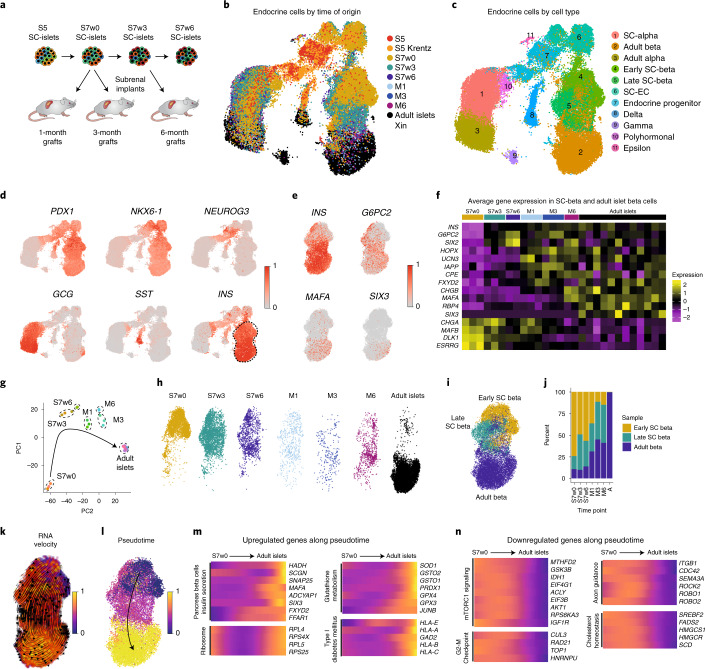
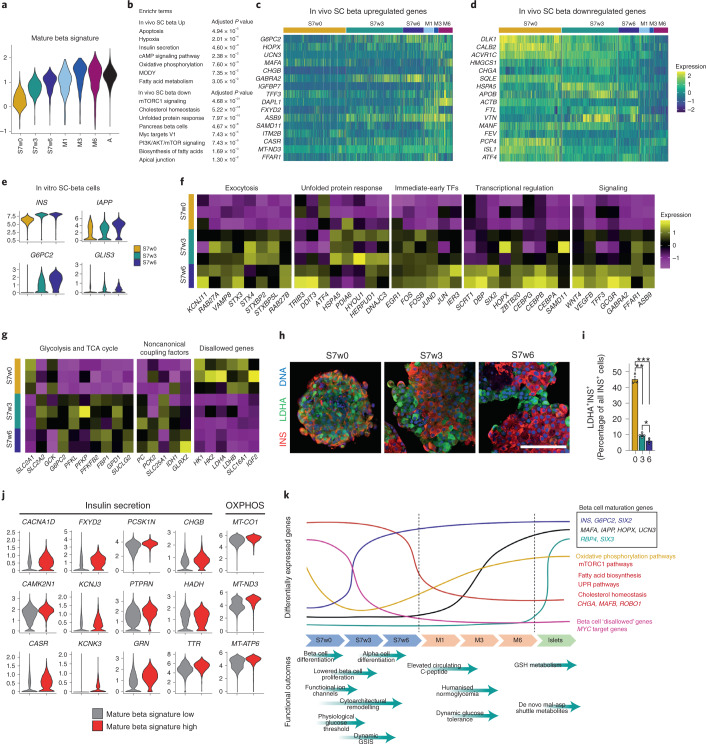
Transplantation of pancreatic islet cells derived from human pluripotent stem cells is a promising treatment for diabetes. Despite progress in the generation of stem-cell-derived islets (SC-islets), no detailed characterization of their functional properties has been conducted. Here, we generated functionally mature SC-islets using an optimized protocol and benchmarked them comprehensively against primary adult islets. Biphasic glucose-stimulated insulin secretion developed during in vitro maturation, associated with cytoarchitectural reorganization and the increasing presence of alpha cells. Electrophysiology, signaling and exocytosis of SC-islets were similar to those of adult islets. Glucose-responsive insulin secretion was achieved despite differences in glycolytic and mitochondrial glucose metabolism. Single-cell transcriptomics of SC-islets in vitro and throughout 6 months of engraftment in mice revealed a continuous maturation trajectory culminating in a transcriptional landscape closely resembling that of primary islets. Our thorough evaluation of SC-islet maturation highlights their advanced degree of functionality and supports their use in further efforts to understand and combat diabetes.
Overview
The claims and statistics of this paper haven’t been checked yet.
Run the check — free, no account needed. It reads the open-access text and checks the sources it cites.
Integrity signals
Registry
Cites
Statistics
Figures
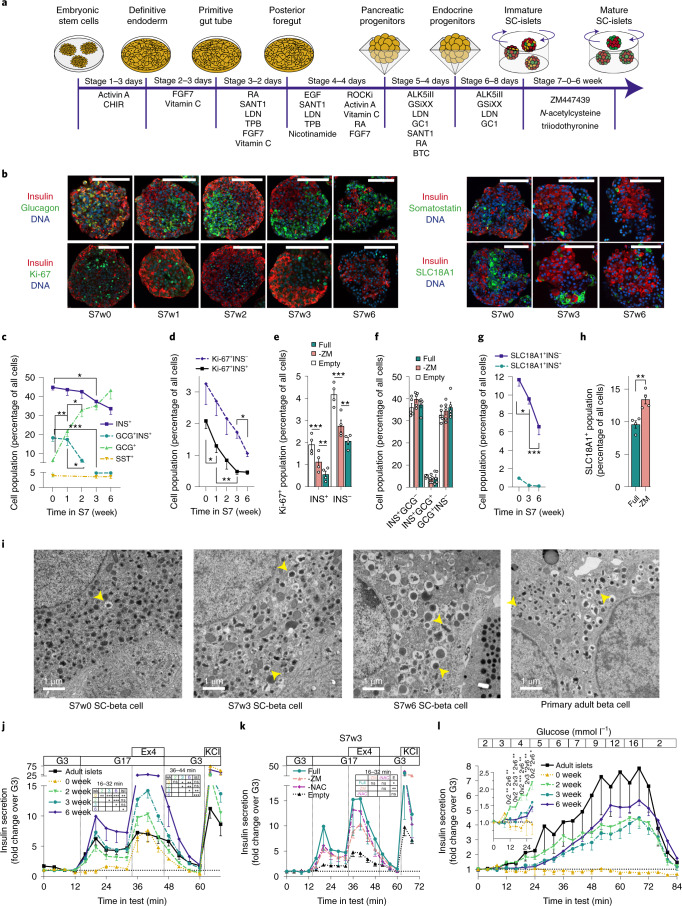
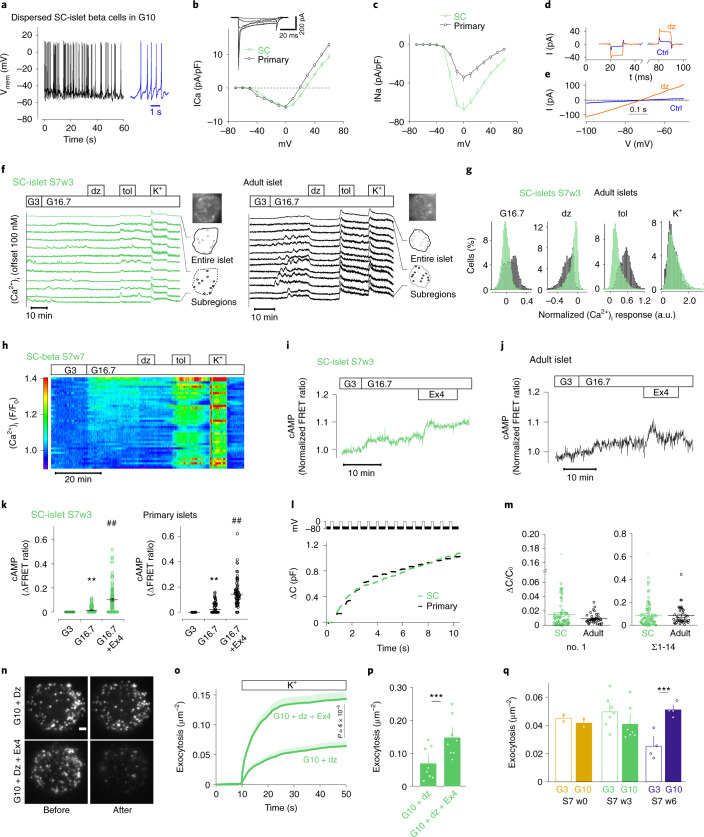
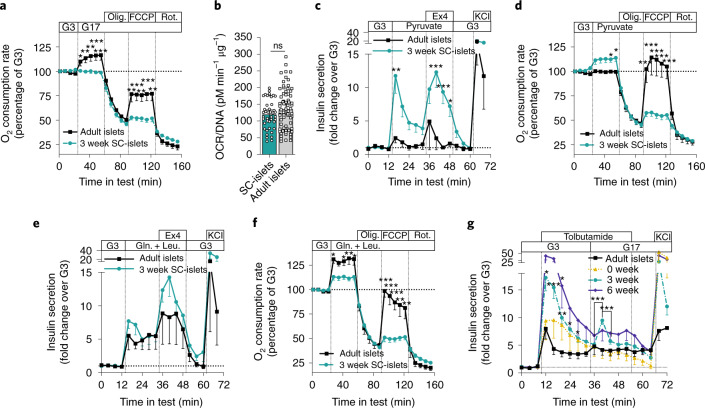
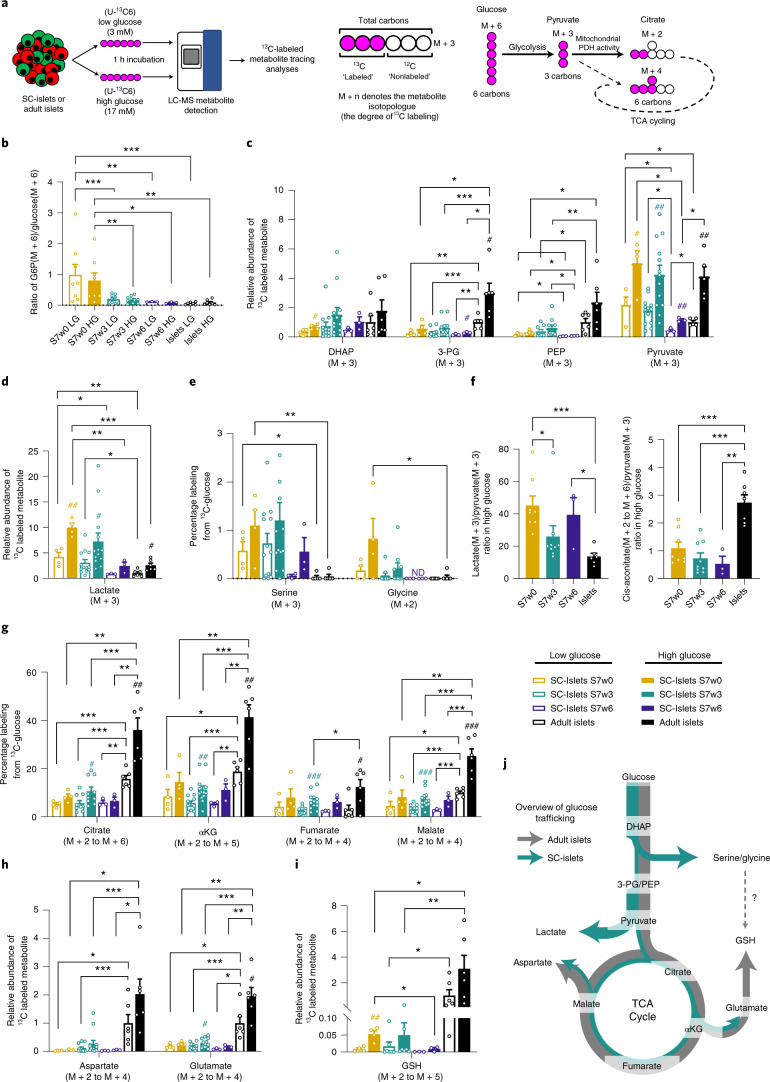
Verification
Claims the paper makes
The claims and statistics of this paper haven’t been checked yet.
Run the check — free, no account needed. It reads the open-access text and checks the sources it cites.
Claims other papers make about this one
Each is checked against this paper’s own text: does it say what the citing paper says it does?
The source backs part of the claim, not all of it — or backs it for a different population, condition or comparison.
In the citing paper
“These cells have been subsequently identified in SC-islets generated from various differentiation protocols and stem cell lines by multiple groups.”
From Developments in stem cell-derived islet replacement therapy for treating type 1 diabetes (2023) · cites this paper as [43]
Experimental — accuracy not yet measuredThe source backs part of the claim, not all of it — or backs it for a different population, condition or comparison.
In the citing paper
“Specifically, known markers of β cell maturation, such as INS, MAFA, IAPP, MNX1, and G6PC2, became more highly expressed in a greater proportion of SC-islet cells after transplantation.”
From Developments in stem cell-derived islet replacement therapy for treating type 1 diabetes (2023) · cites this paper as [43]
Experimental — accuracy not yet measuredThe source backs part of the claim, not all of it — or backs it for a different population, condition or comparison.
In the citing paper
“Transplantation of SC-islets into mice improves their insulin secretion and glucose responsiveness, suggesting that SC-islet immaturity can be resolved.”
From Developments in stem cell-derived islet replacement therapy for treating type 1 diabetes (2023) · cites this paper as [43]
Experimental — accuracy not yet measuredThe source backs part of the claim, not all of it — or backs it for a different population, condition or comparison.
In the citing paper
“These transcriptional changes appeared to occur temporally, as some genes (e.g., G6PC2) increased in expression shortly after transplantation, while others (e.g., MAFA) took several months to upregulate.”
From Developments in stem cell-derived islet replacement therapy for treating type 1 diabetes (2023) · cites this paper as [43]
Experimental — accuracy not yet measuredThe source backs part of the claim, not all of it — or backs it for a different population, condition or comparison.
In the citing paper
“Overall, comparison of scRNA-seq and snATAC-seq data from transplanted SC-islets and primary islets has indicated that SC-islets become more similar to human islets overtime in vivo in terms of both their transcriptional and chromatin accessibility profiles, though some important differences still remain.”
From Developments in stem cell-derived islet replacement therapy for treating type 1 diabetes (2023) · cites this paper as [43]
Experimental — accuracy not yet measured
The cited source says what the claim attributes to it.
In the citing paper
“These cells have been shown to improve glycemic control in diabetic mice, highlighting their potential utility in vivo.36,37,39–44”
From Developments in stem cell-derived islet replacement therapy for treating type 1 diabetes (2023) · cites this paper as [43]
The cited source says what the claim attributes to it.
In the citing paper
“and recent advances in single-cell sequencing technologies have allowed for unprecedented characterization of these cells to further elucidate ways to refine SC-β cell differentiation strategies.43,47,50,51”
From Developments in stem cell-derived islet replacement therapy for treating type 1 diabetes (2023) · cites this paper as [43]
The cited source says what the claim attributes to it.
In the citing paper
“scRNA-seq analysis of transplanted SC-islets revealed that improved function corresponded with transcriptional maturation.”
From Developments in stem cell-derived islet replacement therapy for treating type 1 diabetes (2023) · cites this paper as [43]
The cited source says what the claim attributes to it.
In the citing paper
“This differentiation methodology takes approximately a month or more to complete, and functional maturation can continue for months once the cells are transplanted in vivo.43,51”
From Developments in stem cell-derived islet replacement therapy for treating type 1 diabetes (2023) · cites this paper as [43]
The cited source says what the claim attributes to it.
In the citing paper
“Despite transcriptional improvements, SC-islets nonetheless had significantly reduced activity of metabolic pathways compared to primary islets.”
From Developments in stem cell-derived islet replacement therapy for treating type 1 diabetes (2023) · cites this paper as [43]
Self-check
Percentages, sums and reported differences re-computed from the paper’s own numbers.
The self-check needs the paper’s full text.
Citations
Cites
Metascape provides a biologist-oriented resource for the analysis of systems-level datasets
Zhou, Y., Zhou, B., Pache, L., Chang, M., Khodabakhshi, A. H., Tanaseichuk, O., Benner, C., & Chanda, S. K. (2019) · Nature Communications · doi:10.1038/s41467-019-09234-6 · Cited by 14,611
Integrating single-cell transcriptomic data across different conditions, technologies, and species
Butler, A., Hoffman, P., Smibert, P., Papalexi, E., & Satija, R. (2018) · Nature Biotechnology · doi:10.1038/nbt.4096 · Cited by 13,174
Enrichr: a comprehensive gene set enrichment analysis web server 2016 update
Kuleshov, M. V., Jones, M. R., Rouillard, A. D., Fernandez, N. F., Duan, Q., Wang, Z., Koplev, S., Jenkins, S. L., Jagodnik, K. M., Lachmann, A., et al. (2016) · Nucleic Acids Research · doi:10.1093/nar/gkw377 · Cited by 10,799
Fast, sensitive and accurate integration of single-cell data with Harmony
Korsunsky, I., Millard, N., Fan, J., Slowikowski, K., Zhang, F., Wei, K., Baglaenko, Y., Brenner, M., Loh, P.-R., & Raychaudhuri, S. (2019) · Nature Methods · doi:10.1038/s41592-019-0619-0 · Cited by 10,488
Trapnell, C., Cacchiarelli, D., Grimsby, J., Pokharel, P., Li, S., Morse, M., Lennon, N. J., Livak, K. J., Mikkelsen, T. S., & Rinn, J. L. (2014) · Nature Biotechnology · doi:10.1038/nbt.2859 · Cited by 7,314
La Manno, G., Soldatov, R., Zeisel, A., Braun, E., Hochgerner, H., Petukhov, V., Lidschreiber, K., Kastriti, M. E., Lönnerberg, P., Furlan, A., et al. (2018) · Nature · doi:10.1038/s41586-018-0414-6 · Cited by 4,118
Efremova, M., Vento-Tormo, M., Teichmann, S. A., & Vento-Tormo, R. (2020) · Nature Protocols · doi:10.1038/s41596-020-0292-x · Cited by 3,449
Finak, G., McDavid, A., Yajima, M., Deng, J., Gersuk, V., Shalek, A. K., Slichter, C. K., Miller, H. W., McElrath, M. J., Prlic, M., et al. (2015) · Genome Biology · doi:10.1186/s13059-015-0844-5 · Cited by 3,159
Generalizing RNA velocity to transient cell states through dynamical modeling
Bergen, V., Lange, M., Peidli, S., Wolf, F. A., & Theis, F. J. (2020) · Nature Biotechnology · doi:10.1038/s41587-020-0591-3 · Cited by 2,951
Biodiversity on the Rocks: Macrofauna Inhabiting Authigenic Carbonate at Costa Rica Methane Seeps
Levin, L. A., Mendoza, G., Grupe, B., Gonzalez, J. P., Jellison, B. M., Rouse, G. W., Thurber, A. R., & Warén, A. (2015) · PLoS ONE · doi:10.1371/journal.pone.0131080 · Cited by 2,166
Cited by
Sorted by citations
Items 201–300 of 441
Allogeneic Islet Transplantation: Chronicle of a Death Foretold?
Berney, T., Thaunat, O., & Berishvili, E. (2025) · Transplant International · doi:10.3389/ti.2025.14598 · Cited by 4
Hu, R., Ma, Q., Kong, Y., Wang, Z., Xu, M., Chen, X., Su, Y., Xiao, T., He, Q. H., Wang, X., et al. (2025) · Advanced Science · doi:10.1002/advs.202413161 · Cited by 4
Misra, P. S., McGaugh, E. C., Huang, H., Cho, A., Lin, J., Sarangi, F., Oakie, A., Sambathkumar, R., Song, Y., Fabriciova, V., et al. (2026) · Nature Communications · doi:10.1038/s41467-026-70666-y · Cited by 5
Wu, S., Chandel, S., Bryzgalova, G., Efstathopoulos, P., Blust, K., Zhao, C., Erbil, E., Falk, A., Hedhammar, M., Berggren, P., et al. (2026) · Stem Cell Reports · doi:10.1016/j.stemcr.2026.102892 · Cited by 4
Lin, H., Makhlouf, A., Echegaray, C. V., Zawada, D. M., & Simões, F. C. (2023) · Development · doi:10.1242/dev.202300 · Cited by 4
Kalnytska, O., Qvist, P., Kunz, S., Conrad, T., Willnow, T. E., & Schmidt, V. (2023) · iScience · doi:10.1016/j.isci.2023.108725 · Cited by 4
van Allen, K. A., Gang, N., Hoyeck, M. P., Perera, I., Zhang, D., Atlas, E., Lynn, F. C., & Bruin, J. E. (2024) · Islets · doi:10.1080/19382014.2024.2361996 · Cited by 5
Resolving human α versus β cell fate allocation for the generation of stem cell-derived islets
Canan, M. A., Cozzitorto, C., Sterr, M., Saber, L., Setyono, E. S. A., Dema, A., Kozawa, K., Wang, X., Merl‐Pham, J., Greisle, T., et al. (2026) · Nature Communications · doi:10.1038/s41467-026-75255-7 · Cited by 4
Carroll, D. T., Miller, A., Fuhr, J. D., Elsakr, J. M., RICCIARDI, V. F., Bene, A. N. D., Stephens, S., Krystofiak, E., Lindsley, S. R., Kirigiti, M. A., et al. (2024) · Frontiers in Endocrinology · doi:10.3389/fendo.2024.1417437 · Cited by 4
Single cell glucose-stimulated insulin secretion assay using nanowell-in-microwell plates
Jang, D., Matthews, K., Deng, P., Berryman, S. G., Nian, C., Duffy, S. P., Lynn, F. C., & Ma, H. (2024) · Lab on a Chip · doi:10.1039/d4lc00413b · Cited by 4
Yamasaki, M., Maki, T., Mochida, T., Hamada, T., Watanabe-Matsumoto, S., Konagaya, S., Kaneko, M., Ito, R., Ueno, H., & Toyoda, T. (2024) · Cell Transplantation · doi:10.1177/09636897241288932 · Cited by 4
Stem cell islet replacement in type 1 diabetes: From “shelf” to “self”
de Koning, E. J. P., & Carlotti, F. (2024) · Cell stem cell · doi:10.1016/j.stem.2024.11.011 · Cited by 5
Gilglioni, E. H., Bansal, M., St‐Pierre‐Wijckmans, W., Talamantes, S., Kasarinaite, A., Hay, D. C., & Gurzov, E. N. (2025) · Obesity Reviews · doi:10.1111/obr.13899 · Cited by 4
Adapting Physiology in Functional Human Islet Organogenesis
Yoshihara, E. (2022) · Frontiers in Cell and Developmental Biology · doi:10.3389/fcell.2022.854604 · Cited by 4
Zhao, K., Shi, Y., Yu, J. H., Yu, L., Köhler, M. G., Mael, A. A., Kolton, A., Joyce, T., Odorico, J. S., Berggren, P., et al. (2023) · Biomedicines · doi:10.3390/biomedicines11030807 · Cited by 4
Truncated CD19 as a selection marker for the isolation of stem cell-derived β-cells
Huang, H., Gao, R., Zhang, D., Nian, C., Martzke, W., Shapiro, A. M. J., Kin, T., Tahamtani, Y., & Lynn, F. C. (2025) · Disease Models & Mechanisms · doi:10.1242/dmm.052376 · Cited by 5
Xu, X., Chen, J., Zhao, H., Pi, Y., Lin, G., & Hu, L. (2023) · Stem Cell Reviews and Reports · doi:10.1007/s12015-023-10598-y · Cited by 4
Unger, L., Ghila, L., & Chera, S. (2023) · Methods in molecular biology · doi:10.1007/7651_2023_498 · Cited by 4
The past, present, and future promise of pluripotent stem cells
Seo, J., Saha, S., & Brown, M. E. (2024) · Journal of Immunology and Regenerative Medicine · doi:10.1016/j.regen.2024.100077 · Cited by 4
Predicting the Key Regulators of Cell Identity in Human Adult PancreasPreprint
Vanheer, L., Fantuzzi, F., To, S.-K., Schiavo, A., Haele, M. V., Haesen, T., Yi, X., Janiszewski, A., Chappell, J., Rihoux, A., et al. (2020) · bioRxiv · doi:10.1101/2020.09.23.310094 · Cited by 2
Rosenstein, A. H., Sambathkumar, R., Murareanu, B. M., Dhaliwal, N. K., Sun, F., Zhao, X., Dadvar, A., Al-attar, R., Chai, A., Gulati, N., et al. (2024) · bioRxiv (Cold Spring Harbor Laboratory) · doi:10.1101/2024.05.23.595541 · Cited by 5
Lietzke, A. C., Walker, E. M., Bealer, E. J., Crumley, K. M., King, J., Stendahl, A. M., Zhu, J., Pearson, G. L., Levi-D’Ancona, E., Henry-Kanarek, B. A., et al. (2024) · bioRxiv (Cold Spring Harbor Laboratory) · doi:10.1101/2024.07.26.605318 · Cited by 4
Brassard, J. A., Sidharthan, D. S., Orimi, H. E., Vdovenko, D., Rioux, Y., Wang, H., Champion, K. S., Lemaire, F., Moeun, B. N., Zhao, J., et al. (2024) · bioRxiv (Cold Spring Harbor Laboratory) · doi:10.1101/2024.09.29.615298 · Cited by 4
Mardamshina, M., Dorka, N., Thielert, M., Björklund, F., Navarro, F. B., Casals, A. M., Kovács, F., Fox, J. E. M., Horváth, P., MacDonald, P. E., et al. (2025) · bioRxiv (Cold Spring Harbor Laboratory) · doi:10.1101/2025.04.27.650857 · Cited by 4
Reconstructing human pancreatic gene networks enhances stem cell-derived β cell induction
Yu, X., Wang, X., Yang, L., He, M., Wang, X., Wang, Y., Li, K., & Xu, C. (2025) · Developmental Cell · doi:10.1016/j.devcel.2025.09.018 · Cited by 3
DEC1 regulates human β cell functional maturation and circadian rhythm
Preza, S., Zheng, B., Gao, Z., Biju, A., Liu, M., Cheng, Z., Choi, M., & Alvarez‐Dominguez, J. R. (2025) · Cell Reports · doi:10.1016/j.celrep.2025.116666 · Cited by 4
Hogrebe, N. J., Schmidt, M. D., Augsornworawat, P., Gale, S. E., Shunkarova, M., & Millman, J. R. (2026) · Nature Communications · doi:10.1038/s41467-026-71324-z · Cited by 5
Wang, Z., Xu, M., Hu, R., Chen, X., Wang, X., Shi, G., Lu, S., Yang, Y., Su, Y., Gong, M., et al. (2026) · Cell stem cell · doi:10.1016/j.stem.2026.03.004 · Cited by 5
Nutrient and non-nutrient regulators of insulin secretion
Kolic, J., Assaf, N., & Johnson, J. D. (2026) · Nature Reviews Endocrinology · doi:10.1038/s41574-026-01281-6 · Cited by 8
Xu, Y., Xu, T., Huang, Y. H., Wan, J., & Jiang, Z. (2023) · Experimental Cell Research · doi:10.1016/j.yexcr.2023.113879 · Cited by 3
Pulli, K., Saarimäki‐Vire, J., Ahonen, P., Liu, X., Ibrahim, H., Chandra, V., Santambrogio, A., Wang, Y., Vaaralahti, K., Iivonen, A.-P., et al. (2024) · JCI Insight · doi:10.1172/jci.insight.167598 · Cited by 4
Self-citationMa, H., Xu, L., Wu, S., Wang, S., Li, J., Ai, S.-F., Yang, Z., Mo, R., Lin, L., Li, Y., et al. (2024) · Bioactive Materials · doi:10.1016/j.bioactmat.2024.07.007 · Cited by 4
IGFBP7 is upregulated in islets from T2D donors and reduces insulin secretion
Westholm, E., Karagiannopoulos, A., Kattner, N., Al-Selwi, Y., Merces, G., Shaw, J., Wendt, A., & Eliasson, L. (2024) · iScience · doi:10.1016/j.isci.2024.110767 · Cited by 3
O'Brien, S. M., Li, C., Trana, R., Hoesli, C. A., & Moraes, C. (2025) · ACS Biomaterials Science & Engineering · doi:10.1021/acsbiomaterials.5c00372 · Cited by 3
Jang, S., Shin, S., Jeong, Y., & Lim, D. (2023) · Organoid · doi:10.51335/organoid.2023.3.e16 · Cited by 3
Kato, H., Chen, H., Shang, K., Izumi, K., Koba, N., Tsuchiya, T., Kawazoe, N., Quijano, J. C., Omori, K., Orr, C., et al. (2024) · Cell Transplantation · doi:10.1177/09636897241249556 · Cited by 3
Zanfrini, E., Bandral, M., Jarc, L., Ramirez-Torres, M. A., Pezzolla, D., Kufrin, V., Rodríguez-Aznar, E., Mojica-Avila, A. K., Cohrs, C. M., Speier, S., et al. (2024) · Scientific Reports · doi:10.1038/s41598-024-69645-4 · Cited by 3
DGCR2 targeting affibody molecules for delivery of drugs and imaging reagents to human beta cells
Cheung, P., Persson, J., Zhang, B., Vasylovska, S., Lau, J., Invast, S., Korsgren, O., Ståhl, S., Löfblom, J., & Eriksson, O. (2025) · Scientific Reports · doi:10.1038/s41598-024-84574-y · Cited by 3
Self-citationImada, T., Sasaki, S., Yamaguchi, H., Ueda, A., Kawamori, D., Katakami, N., & Shimomura, I. (2025) · Journal of Diabetes Investigation · doi:10.1111/jdi.14410 · Cited by 3
Sharmine, S., Legøy, T. A., Unger, L., Paulo, J. A., Ghila, L., & Chera, S. (2025) · Acta Physiologica · doi:10.1111/apha.70121 · Cited by 3
Stem cell-derived β cells go in monkeys
Grapin‐Botton, A., & Ludwig, B. (2022) · Cell stem cell · doi:10.1016/j.stem.2022.03.010 · Cited by 3
Cefalu, W. T., Andersen, D. K., Arreaza-Rubín, G., Pin, C. L., Sato, S. M., Verchere, C. B., Woo, M., Rosenblum, N. D., Rosenblum, N. D., Cefalu, W. T., et al. (2021) · Canadian Journal of Diabetes · doi:10.1016/j.jcjd.2021.09.126 · Cited by 3
Dadheech, N., de León, M. B., Cuesta‐Gomez, N., Jasra, I. T., Pawlick, R. L., Marfil‐Garza, B. A., Verhoeff, K. K., Sapkota, S., Razavy, H., Anwar, P., et al. (2023) · bioRxiv (Cold Spring Harbor Laboratory) · doi:10.1101/2023.08.09.552676 · Cited by 3
Human pancreatic organoids derived from pluripotent stem cells recapitulate pancreatic organogenesisPreprint
Brassard, J. A., Tornabene, P., Kechele, D. O., Deng, L., Sneddon, J. B., Krishnamurthy, M., & Wells, J. M. (2025) · bioRxiv (Cold Spring Harbor Laboratory) · doi:10.1101/2025.10.31.685661 · Cited by 3
Lee, S. H., Kim, M., Lee, E. J., Ahn, S. M., Ahn, Y., Choi, J., Kang, J. T., & Kim, H. (2024) · Discover Nano · doi:10.1186/s11671-024-03964-3 · Cited by 2
Thorngren, J., Vasylovska, S., Blanc, J., Wu, L., Manukyan, L., Mihranyan, A., & Lau, J. (2024) · Frontiers in Membrane Science and Technology · doi:10.3389/frmst.2024.1338366 · Cited by 2
Self-citationButrym, M., Byvald, F., Blanter, M., Ringqvist, E. E., Vasylovska, S., Marjomäki, V., Lau, J., Stone, V. M., & Flodström‐Tullberg, M. (2024) · Antiviral Research · doi:10.1016/j.antiviral.2024.106021 · Cited by 2
Self-citationCollagen nanofiber reinforced alginate hydrogel tube microbioreactors for cell culture
Wu, X., Yang, Y., Pan, Y., Wang, Y., Lian, X. L., Dong, C., Wang, S., Wang, A., Zhu, W., Liu, W., et al. (2026) · Frontiers in Bioengineering and Biotechnology · doi:10.3389/fbioe.2026.1730541 · Cited by 2
Traba, S. A., Bacigalupo, L. D. S., Fradin, D., Talón, I., Heidenreich, A. C., Muraro, D., Garcia‐Bernardo, J., Gribben, C., Lugtu, F., Burgos, J. I., et al. (2025) · Development · doi:10.1242/dev.204361 · Cited by 2
Gang, N., van Allen, K. A., Willmore, W. G., Lynn, F. C., & Bruin, J. E. (2025) · Islets · doi:10.1080/19382014.2025.2526871 · Cited by 3
Navigating challenges in human pluripotent stem cell-derived islet therapy for type 1 diabetes
Usama, M., Deng, Y., Chen, Y., Milland, T., Malleshaiah, M. K., & Aghazadeh, Y. (2025) · Frontiers in Immunology · doi:10.3389/fimmu.2025.1625439 · Cited by 4
Singh, T., Kalamajski, S., Cunha, J. G. D., Hladkou, S., Roberts, F. L., Gheibi, S., Soltanian, A., Farahmand, K. Y., Ekström, O., Mamidi, A., et al. (2025) · Journal of Pineal Research · doi:10.1111/jpi.70073 · Cited by 3
Cen, J., Ivis, A., Vasylovska, S., Adjieva, K., Lindsay, R. S., Westermark, G. T., & Lau, J. (2025) · Diabetologia · doi:10.1007/s00125-025-06582-5 · Cited by 2
Self-citationNair, A. K., Barkho, K., Ponnanna, K., Traurig, M. T., Sutherland, J. R., Anup, D., Bogardus, C., & Baier, L. J. (2025) · Diabetologia · doi:10.1007/s00125-025-06605-1 · Cited by 2
Lin, H., Liu, X., Zhang, F., Chen, D., Xie, X., Dong, Q., Yan, J., Yin, J., Bi, Z., Dou, Z., et al. (2025) · Nature Communications · doi:10.1038/s41467-025-67635-2 · Cited by 3
A new form of diabetes caused by INS mutations defined by zygosity, stem cell and population data
Tong, Y., Becker, M., Schierloh, U. H. E., da Silva, F. N., Haataja, L., Cai, Y., Patel, K., Kobaisi, F., Mirshahi, U. L., Colclough, K., et al. (2026) · EMBO Molecular Medicine · doi:10.1038/s44321-025-00362-9 · Cited by 2
Self-citationType 1 Diabetes and Islet Encapsulation: From Historical Milestones to Cutting-Edge Advances
Mukherjee, S., Mandal, S., Oberholzer, J., & Omid Veiseh, A. (2026) · Annual Review of Biomedical Engineering · doi:10.1146/annurev-bioeng-110824-024435 · Cited by 2
A micro-organ based microfluidic biosensor for continuous monitoring of glucose levels in vivo
Puginier, E., Pirog, A., de Gannes, F. P., Gaitan, J., Hurtier, A., Chapeau, D., Monchablon, M., Raoux, M., Renaud, S., & Lang, J. (2026) · npj Biosensing · doi:10.1038/s44328-025-00077-4 · Cited by 2
CD133/CD49a discriminate between human pluripotent stem cell-derived pancreatic beta and alpha cells
Tian, C., Di, Y., Muhammad, A., & Semb, H. (2026) · Stem Cell Reports · doi:10.1016/j.stemcr.2026.102828 · Cited by 2
MicroRNAs in Islet Biology and Diabetes: Progress, Gaps, and Opportunities
Calvo, T. R., & Martínez-Sánchez, A. (2026) · Diabetes · doi:10.2337/db25-0977 · Cited by 2
Modeling immune responses to autologous and allogeneic human stem cell–derived islet grafts in vivo
Genzano, C. B., Zanetti, G., Du, Traum, D., Lahori, D., Downes, G. M., Bhatele, S., Ding, X., Apley, K. D., Firdessa-Fite, R., et al. (2026) · JCI Insight · doi:10.1172/jci.insight.200738 · Cited by 2
Regenerative macrophages enhance stem cell–derived β cell function and engraftment
Freitas, B. F. A., Fox, S. A., Orban, P. C., Velghe, J., Mojibian, M., Dai, D., Soukhatcheva, G., Lynn, F. C., Levings, M. K., & Verchere, C. B. (2026) · Science Advances · doi:10.1126/sciadv.aed4221 · Cited by 3
Halliez, C., Ibrahim, H., Otonkoski, T., & Mallone, R. (2023) · Frontiers in Endocrinology · doi:10.3389/fendo.2022.1076683 · Cited by 3
Self-citationSafety Issues Related to Pluripotent Stem Cell-Based Therapies: Tumour Risk
Hillenius, S., Montilla‐Rojo, J., Eleveld, T. F., Salvatori, D. C. F., & Looijenga, L. H. J. (2023) · Springer eBooks · doi:10.1007/978-3-031-41943-0_18 · Cited by 2
Morisseau, L., Tokito, F., Lucas, M., Poulain, S., Kim, S. H., Plaisance, V., Pawlowski, V., Legallais, C., Jellali, R., Sakai, Y., et al. (2024) · Gene · doi:10.1016/j.gene.2024.148441 · Cited by 2
Pollock, S. D., Galicia-Silva, I. M., Liu, M., Gruskin, Z. L., & Alvarez‐Dominguez, J. R. (2024) · Methods in molecular biology · doi:10.1007/978-1-0716-3854-5_4 · Cited by 2
Mohammadian, S., Hosseni, S. J., Dehbashi, F. N., & Dayer, D. (2025) · PubMed Central · doi:10.30476/ijms.2024.101162.3378 · Cited by 2
Wang, Y., Gulati, N., Regeenes, R., Migliorini, A., Oakie, A., Nostro, M. C., & Rocheleau, J. V. (2025) · ACS Omega · doi:10.1021/acsomega.5c00761 · Cited by 2
Pancreatic islet organoids and organoids on-chip for type 1 diabetes
Mehanović, M., Lopes, M., Coffy, S., Pitaval, A., Freida, D., Gidrol, X., & Tubbs, E. (2025) · La Presse Médicale · doi:10.1016/j.lpm.2025.104302 · Cited by 2
Differentiation of Human Pluripotent Stem Cells into Insulin-Producing Islet Clusters
Zhao, J., Liang, S., Braam, M. J. S., Baker, R. K., Iworima, D. G., Quiskamp, N., & Kieffer, T. J. (2023) · Journal of Visualized Experiments · doi:10.3791/64840 · Cited by 2
Developments in endoderm and pancreatic β-cell differentiation from human pluripotent stem cells
Lee, D. H., Choo, H., Choi, H. Y., & Lee, S. H. (2024) · Organoid · doi:10.51335/organoid.2024.4.e5 · Cited by 2
Cuozzo, F., Viloria, K., Shilleh, A. H., Nasteska, D., Frazer-Morris, C., Jiao, Z., Boufersaoui, A., Marzullo, B. P., Smith, H., Bonner, C., et al. (2022) · bioRxiv (Cold Spring Harbor Laboratory) · doi:10.1101/2022.12.21.521364 · Cited by 2
Hogrebe, N. J., Schmidt, M. D., Augsornworawat, P., Gale, S. E., Shunkarova, M., & Millman, J. R. (2024) · bioRxiv (Cold Spring Harbor Laboratory) · doi:10.1101/2024.10.21.618465 · Cited by 2
Endocrine-enriched stem cell-derived islets improve long-term safety in vivoPreprint
Setyono, E. S. A., Rogers, N. K., Scheibner, K., Schirge, S., Reich, H., Sterr, M., Öztürk, T., Franzenburg, S., Lithovius, V., & Lickert, H. (2025) · bioRxiv (Cold Spring Harbor Laboratory) · doi:10.1101/2025.08.22.671768 · Cited by 2
Self-citationModelling of Beta Cell Pathophysiology Using Stem Cell-Derived Islets
Barsby, T., Montaser, H., Lithovius, V., Ibrahim, H., Vähäkangas, E., Muralidharan, S., Chandra, V., Saarimäki‐Vire, J., & Otonkoski, T. (2023) · Springer eBooks · doi:10.1007/978-3-031-41943-0_24 · Cited by 1
Self-citationOlaniru, O. E., Toczyska, K., Guccio, N., Giera, S., Piao, X., King, A., Jones, P. M., & Persaud, S. J. (2025) · Cellular and Molecular Life Sciences · doi:10.1007/s00018-025-05659-z · Cited by 1
Divergent cell-type specific hypoxia responses in human stem cell-derived and primary islets
Bradley, K., Moore, C., Ishahak, M., Maestas, M. M., Veronese-Paniagua, D., & Millman, J. R. (2026) · Scientific Reports · doi:10.1038/s41598-026-52074-w · Cited by 2
Deciphering the epigenetic role of KDM4A in pancreatic β-like cell differentiation from iPSCs
Arroyave, F., Méndez-Castillo, L., & Lizcano, F. (2025) · Frontiers in Endocrinology · doi:10.3389/fendo.2025.1697097 · Cited by 1
La thérapie cellulaire du diabète en France
Gmyr, V., Hübert, T., Chetboun, M., Thévenet, J., Delalleau, N., Pasquetti, G., Vantyghem, M., Pattou, F. N., & Kerr-Conte, J. A. (2025) · médecine/sciences · doi:10.1051/medsci/2025161 · Cited by 1
Jeyagaran, A., & Schenke‐Layland, K. (2025) · Advanced Drug Delivery Reviews · doi:10.1016/j.addr.2025.115766 · Cited by 1
Vandenbempt, V., Negueruela, J., Ribeiro-Costa, F., Nunes, M., Traini, L., Eski, S. E., St‐Pierre‐Wijckmans, W., Demine, S., Baeyens, N., Ibrahim, H., et al. (2026) · Stem Cell Research & Therapy · doi:10.1186/s13287-025-04892-4 · Cited by 2
Self-citationDarden, C. M., Kuncha, J., Kirkland, J. T., MATTKE, J. D., Vasu, S., Saravanan, P. B., Naziruddin, B., & Lawrence, M. C. (2026) · Frontiers in Transplantation · doi:10.3389/frtra.2026.1740314 · Cited by 1
Lim, E. X. H., Ong, G., Ang, D. A., & Teo, A. K. K. (2026) · Cell Death and Disease · doi:10.1038/s41419-026-08529-z · Cited by 1
Bennett-Brown, H. A., Willemsen, N., Yuan, Y., Kranck, A. N., & Sancho, R. (2026) · Current Opinion in Genetics & Development · doi:10.1016/j.gde.2026.102466 · Cited by 1
Barsukova, A. D., Weng, L., Szymanska-Vandendriessche, K. J., Scott, M., Langer, R., & Traverso, G. (2026) · Journal of Controlled Release · doi:10.1016/j.jconrel.2026.114914 · Cited by 1
Li, Z., Kang, Y., & Niu, Y. (2026) · Animal Models and Experimental Medicine · doi:10.1002/ame2.70211 · Cited by 1
Automated stem cell-derived organoid platforms for disease modeling
Mou, X., Dale, N., Ramnarine, K., & Cipriani, F. (2026) · Trends in biotechnology · doi:10.1016/j.tibtech.2026.04.013 · Cited by 1
Bai, L., & Su, J. (2026) · Biomedical Technology · doi:10.1016/j.bmt.2026.100152 · Cited by 1
Stem cell therapies for treatment of diabetes mellitus
Guo, F., Song, Y., & Qin, G. (2026) · Chinese Medical Journal · doi:10.1097/cm9.0000000000004150 · Cited by 1
TRANSPLANTE DE ILHOTAS DE LANGERHANS COMO TRATAMENTO PARA DIABETES MELLITUS TIPO I
Fróes, B. M. (2023) · Ensaios USF · doi:10.24933/e-usf.v7i1.335 · Cited by 1
Reprogramming of pancreatic islet cells for regeneration and rejuvenation
Hirano, M., & Yamada, Y. (2023) · Current Opinion in Genetics & Development · doi:10.1016/j.gde.2023.102099 · Cited by 1
Pancreatic Stem Cells and Regenerative Medicine of Endocrine Pancreas
Mantovani, M. D. C., Silva, I. B. B., Lojudice, F. H., Kossugue, P. M., & Sogayar, M. C. (2023) · Elsevier eBooks · doi:10.1016/b978-0-443-15289-4.00013-5 · Cited by 1
Ratiu, J. J., Southard, S. M., & Rust, W. L. (2023) · Medical Research Archives · doi:10.18103/mra.v11i12.4797 · Cited by 1
Greasing the machinery toward maturation of stem cell-derived β cells
Karampelias, C., & Lickert, H. (2024) · Cell stem cell · doi:10.1016/j.stem.2024.05.001 · Cited by 1
Epigenetic modulation of cell fate during pancreas development.
Bele, S. D., Wokasch, A. S., & GANNON, M. A. (2023) · PubMed · Cited by 1
Analysis of Clinical Data on the Treatment of Type 2 Diabetes with BMPRP
Liu, B., Gao, X., Chen, Y., Zheng, R., Dong, Q., & Wang, J. (2024) · American Journal of Bioscience and Bioengineering · doi:10.11648/j.bio.20241206.14 · Cited by 1
Bal, T. (2025) · BMC Endocrine Disorders · doi:10.1186/s12902-025-01919-y · Cited by 2
Stem cell-derived pancreatic beta cells for the study and treatment of diabetes
Barra, J. M., & Russ, H. A. (2023) · IntechOpen eBooks · doi:10.5772/intechopen.1001444 · Cited by 1
Cuesta‐Gomez, N., Verhoeff, K. K., Dadheech, N., Pawlick, R. L., Marfil‐Garza, B. A., Razavy, H., & Shapiro, A. M. J. (2023) · bioRxiv (Cold Spring Harbor Laboratory) · doi:10.1101/2023.05.11.538780 · Cited by 1
Jaffredo, M., Krentz, N. A. J., Champon, B., Duff, C. E., Nawaz, S., Beer, N., Honoré, C., Clark, A., Rorsman, P., Lang, J., et al. (2023) · bioRxiv · doi:10.1101/2023.10.17.561014 · Cited by 3
Metadata
- Authors
- Balboa, D., Barsby, T., Lithovius, V., Saarimäki-Vire, J., Omar-Hmeadi, M., Dyachok, O., Montaser, H., Lund, P.-E., Yang, M., Ibrahim, H., Näätänen, A., Chandra, V., Vihinen, H., Jokitalo, E., Kvist, J., Ustinov, J., Nieminen, A. I., Kuuluvainen, E., Hietakangas, V., Katajisto, P., Lau, J., Carlsson, P.-O., Barg, S., Tengholm, A., & Otonkoski, T.
- Affiliations
- University of Helsinki (FI)
- Uppsala University (SE)
- Institute for Molecular Medicine Finland (FI)
- Corresponding author
- Otonkoski, Timo
- ORCID
- Balboa, Diego
- Barsby, Tom
- Lithovius, Väinö
- Saarimäki-Vire, Jonna
- Omar-Hmeadi, Muhmmad
- Dyachok, Oleg
- Montaser, Hossam
- Lund, Per-Eric
- Yang, Mingyu
- Ibrahim, Hazem
- Chandra, Vikash
- Vihinen, Helena
- Jokitalo, Eija
- Kvist, Jouni
- Nieminen, Anni I.
- Kuuluvainen, Emilia
- Hietakangas, Ville
- Katajisto, Pekka
- Lau, Joey
- Carlsson, Per-Ola
- Barg, Sebastian
- Tengholm, Anders
- Otonkoski, Timo
- Venue
- Nature Biotechnology
- Published
- 2022-03-03
- Volume
- 40
- Issue
- 7
- Pages
- 1042-1055
- ISSN
- 0733-222X (ISSN-L)
- 1087-0156
- 1546-1696
- PMC
- PMC9287162
- OpenAlex
- W4214950345
- Cited by
- 433
- References
- 106
- Citations by year
- 2026: 95 · 2025: 96 · 2024: 113 · 2023: 88 · 2022: 35
- FWCI
- 81.41
- Type
- journal article
- Language
- en
- Open access
- hybrid
- doi.org
- Locations
- Nature Biotechnology (publishedVersion, cc-by)
- bioRxiv (Cold Spring Harbor Laboratory) (acceptedVersion)
- PubMed Central (publishedVersion, cc-by)
- PubMed (publishedVersion)
- KTH Publication Database DiVA (KTH Royal Institute of Technology) (submittedVersion, other-oa)
- Työväentutkimus Vuosikirja (submittedVersion)
- Repositori digital de la UPF (Universitat Pompeu Fabra) (submittedVersion, cc-by)
- Funders
- Leona M. and Harry B. Helmsley Charitable Trust (115797)
- European Federation of Pharmaceutical Industries and Associations (115797)
- University of Alberta
- Academy of Finland (297466, 312437)
- Novo Nordisk
- Vetenskapsrådet
- Barndiabetesfonden
- Sigrid Juséliuksen Säätiö
- Stiftelsen Familjen Ernfors Fond
- Novo Nordisk Fonden (NNF20OC0063654, NNF15OC0016260, NNF20OC0064000, NNF19OC0057286, NNF18OC0034450, NNF14OC0010001, NNF17OC0027344)
- Innovative Medicines Initiative (115797], 945268)
- Diabetes Wellness Suomi Säätiö
- Biocenter Finland
- Helsinki Institute of Life Science, Helsingin Yliopisto
- Topics
- Health Sciences › Medicine › Endocrinology, Diabetes and Metabolism › Pancreatic function and diabetes
- Life Sciences › Biochemistry, Genetics and Molecular Biology › Molecular Biology › Pluripotent Stem Cells Research
- Life Sciences › Biochemistry, Genetics and Molecular Biology › Genetics › Diabetes and associated disorders
- Keywords
- islet maturation, diabetes mellitus, glucose-stimulated insulin secretion, alpha cells, exocytosis, glycolytic metabolism, single-cell transcriptomics, islet engraftment, islet transplantation, pluripotent stem cells
- MeSH terms
- Animals, Glucose, Humans, Insulin, Islets of Langerhans, Islets of Langerhans Transplantation, Pluripotent Stem Cells, Mice
About these checks
Registry, retraction, Cites and statistics results are computed, not judged, with one exception: a printed reference that no index lists is read once by a model before it counts as a citation error. Claims are extracted by a model and kept only when their quote appears verbatim in the text; each cited source is then checked, with a model’s help, for whether it says what the claim relies on. Those verdicts can be wrong — read the claim’s quote and the cited source before relying on one.
Statistics and arithmetic are recomputed, not judged.
Confidence bands are shown only for fields calibrated on our annotated test set. None is calibrated yet, so no band is shown.
What counts as a claim ›How we measure confidence ›How we check this ›
Are you an author, or do you see a problem with this page? Request a review
