

The DOI matches its Crossref record; 105 of the 106 references it cites were found in a registry or an index.
Functional, metabolic and transcriptional maturation of human pancreatic islets derived from stem cells
Open accessPublished version of a preprint
Abstract
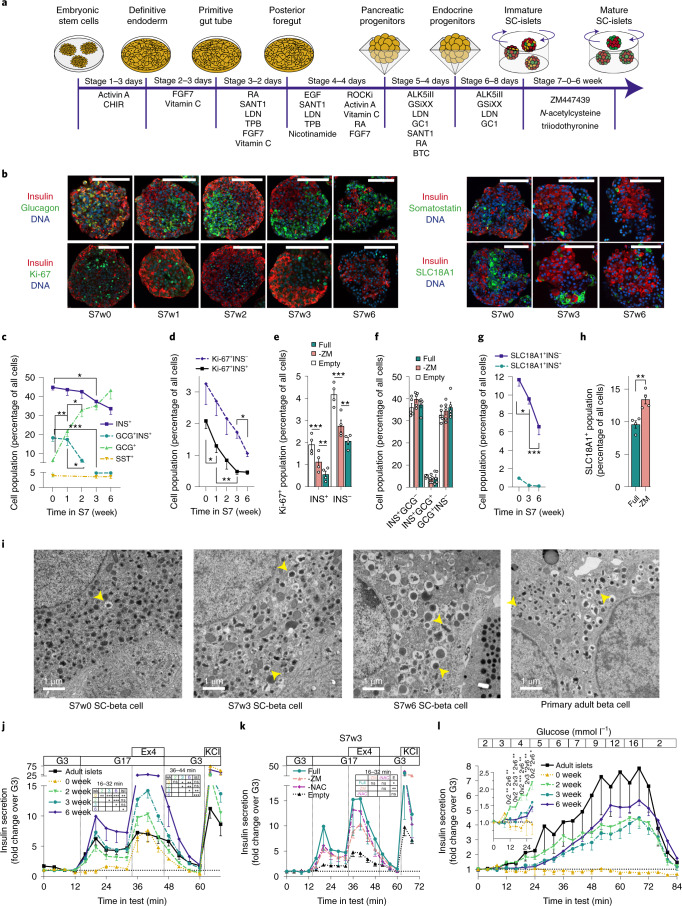
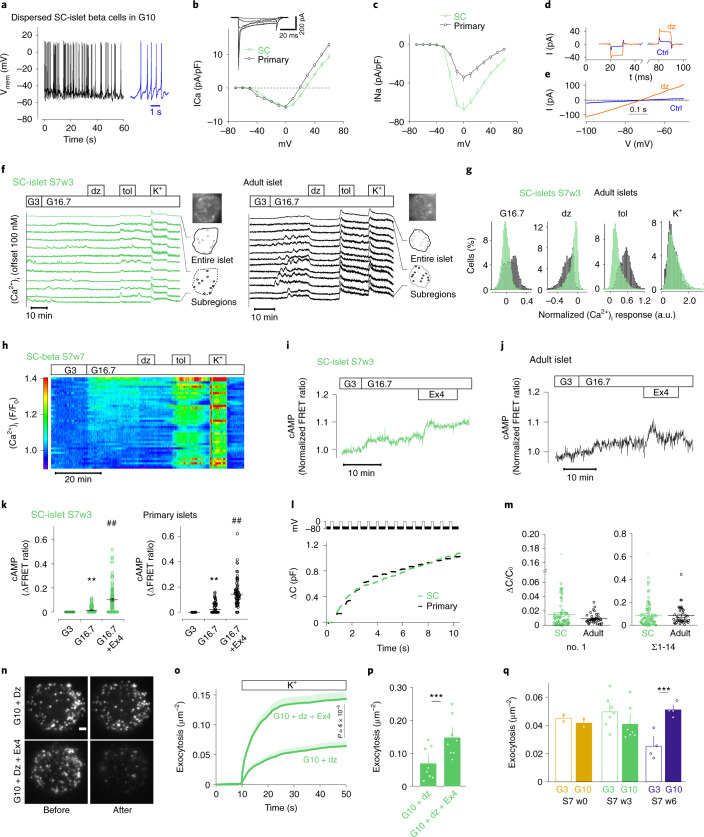
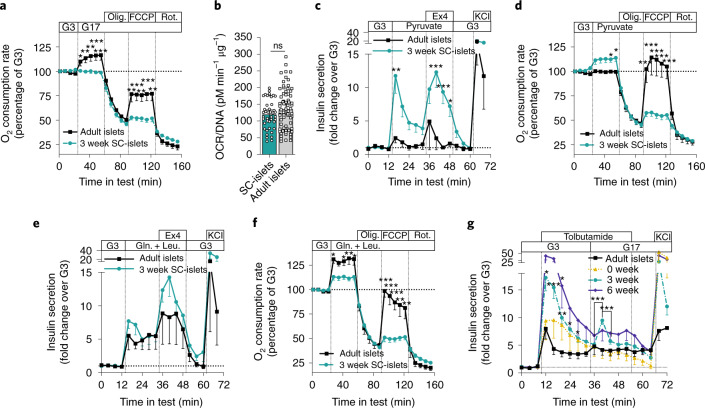
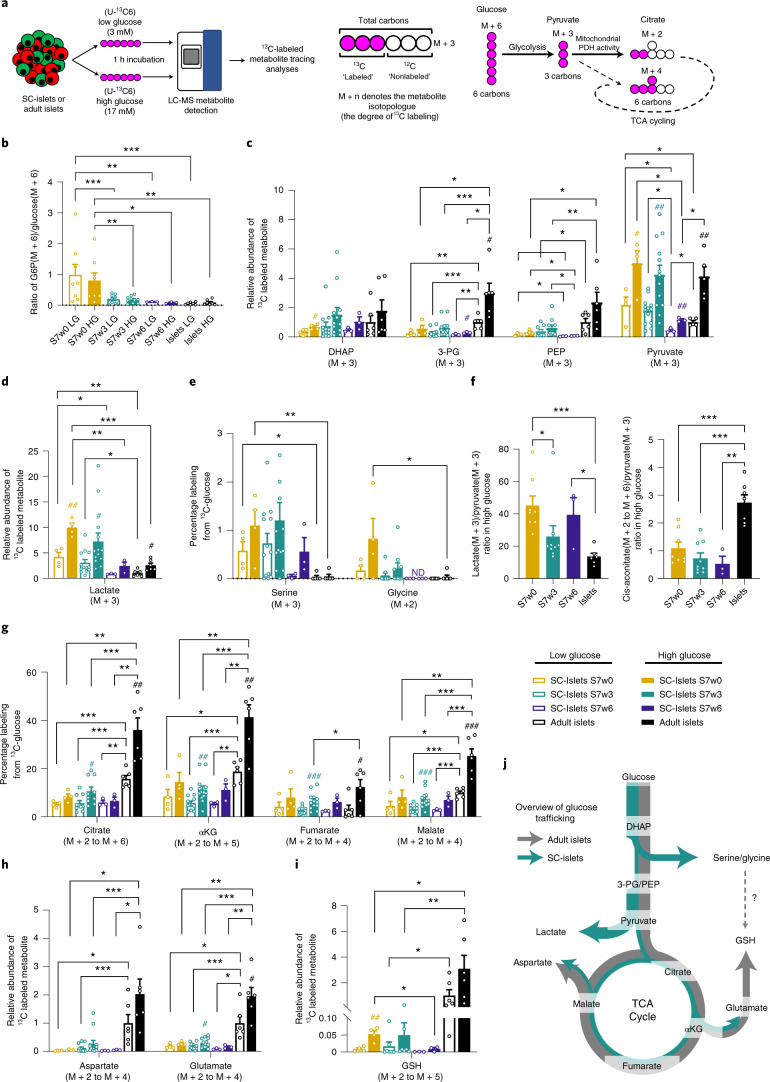
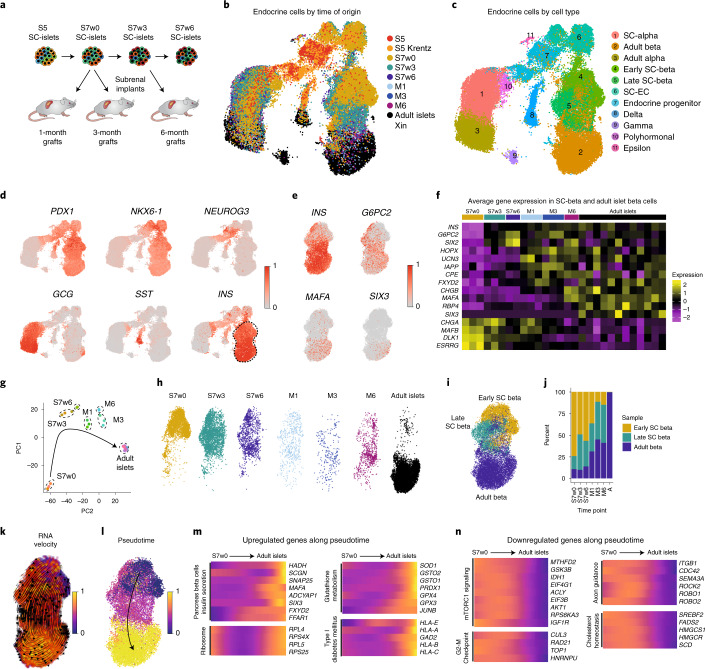
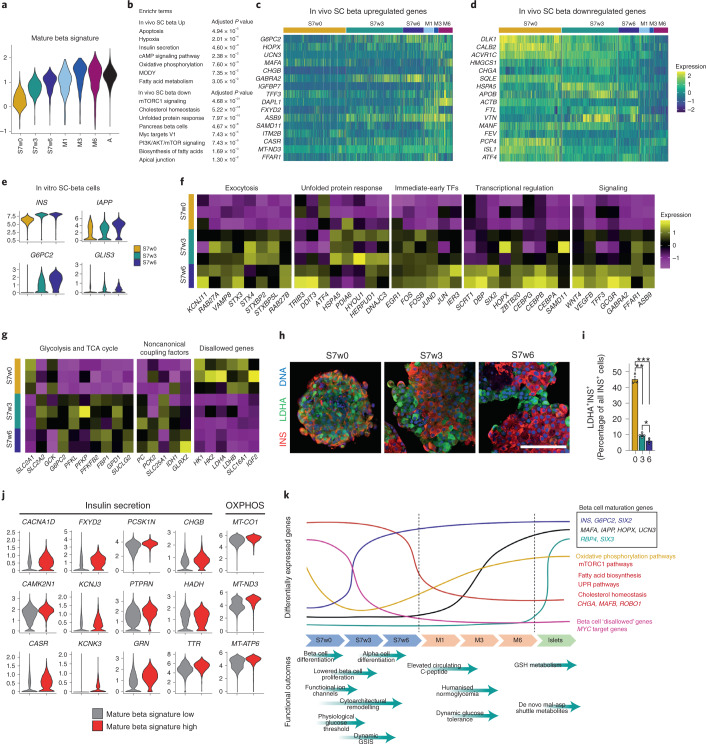
Transplantation of pancreatic islet cells derived from human pluripotent stem cells is a promising treatment for diabetes. Despite progress in the generation of stem-cell-derived islets (SC-islets), no detailed characterization of their functional properties has been conducted. Here, we generated functionally mature SC-islets using an optimized protocol and benchmarked them comprehensively against primary adult islets. Biphasic glucose-stimulated insulin secretion developed during in vitro maturation, associated with cytoarchitectural reorganization and the increasing presence of alpha cells. Electrophysiology, signaling and exocytosis of SC-islets were similar to those of adult islets. Glucose-responsive insulin secretion was achieved despite differences in glycolytic and mitochondrial glucose metabolism. Single-cell transcriptomics of SC-islets in vitro and throughout 6 months of engraftment in mice revealed a continuous maturation trajectory culminating in a transcriptional landscape closely resembling that of primary islets. Our thorough evaluation of SC-islet maturation highlights their advanced degree of functionality and supports their use in further efforts to understand and combat diabetes.
Overview
The claims and statistics of this paper haven’t been checked yet.
Run the check — free, no account needed. It reads the open-access text and checks the sources it cites.
Integrity signals
Registry
Cites
Statistics
Figures
Verification
Claims the paper makes
The claims and statistics of this paper haven’t been checked yet.
Run the check — free, no account needed. It reads the open-access text and checks the sources it cites.
Claims other papers make about this one
Each is checked against this paper’s own text: does it say what the citing paper says it does?
The source backs part of the claim, not all of it — or backs it for a different population, condition or comparison.
In the citing paper
“These cells have been subsequently identified in SC-islets generated from various differentiation protocols and stem cell lines by multiple groups.”
From Developments in stem cell-derived islet replacement therapy for treating type 1 diabetes (2023) · cites this paper as [43]
Experimental — accuracy not yet measuredThe source backs part of the claim, not all of it — or backs it for a different population, condition or comparison.
In the citing paper
“Specifically, known markers of β cell maturation, such as INS, MAFA, IAPP, MNX1, and G6PC2, became more highly expressed in a greater proportion of SC-islet cells after transplantation.”
From Developments in stem cell-derived islet replacement therapy for treating type 1 diabetes (2023) · cites this paper as [43]
Experimental — accuracy not yet measuredThe source backs part of the claim, not all of it — or backs it for a different population, condition or comparison.
In the citing paper
“Transplantation of SC-islets into mice improves their insulin secretion and glucose responsiveness, suggesting that SC-islet immaturity can be resolved.”
From Developments in stem cell-derived islet replacement therapy for treating type 1 diabetes (2023) · cites this paper as [43]
Experimental — accuracy not yet measuredThe source backs part of the claim, not all of it — or backs it for a different population, condition or comparison.
In the citing paper
“These transcriptional changes appeared to occur temporally, as some genes (e.g., G6PC2) increased in expression shortly after transplantation, while others (e.g., MAFA) took several months to upregulate.”
From Developments in stem cell-derived islet replacement therapy for treating type 1 diabetes (2023) · cites this paper as [43]
Experimental — accuracy not yet measuredThe source backs part of the claim, not all of it — or backs it for a different population, condition or comparison.
In the citing paper
“Overall, comparison of scRNA-seq and snATAC-seq data from transplanted SC-islets and primary islets has indicated that SC-islets become more similar to human islets overtime in vivo in terms of both their transcriptional and chromatin accessibility profiles, though some important differences still remain.”
From Developments in stem cell-derived islet replacement therapy for treating type 1 diabetes (2023) · cites this paper as [43]
Experimental — accuracy not yet measured
The cited source says what the claim attributes to it.
In the citing paper
“These cells have been shown to improve glycemic control in diabetic mice, highlighting their potential utility in vivo.36,37,39–44”
From Developments in stem cell-derived islet replacement therapy for treating type 1 diabetes (2023) · cites this paper as [43]
The cited source says what the claim attributes to it.
In the citing paper
“and recent advances in single-cell sequencing technologies have allowed for unprecedented characterization of these cells to further elucidate ways to refine SC-β cell differentiation strategies.43,47,50,51”
From Developments in stem cell-derived islet replacement therapy for treating type 1 diabetes (2023) · cites this paper as [43]
The cited source says what the claim attributes to it.
In the citing paper
“scRNA-seq analysis of transplanted SC-islets revealed that improved function corresponded with transcriptional maturation.”
From Developments in stem cell-derived islet replacement therapy for treating type 1 diabetes (2023) · cites this paper as [43]
The cited source says what the claim attributes to it.
In the citing paper
“This differentiation methodology takes approximately a month or more to complete, and functional maturation can continue for months once the cells are transplanted in vivo.43,51”
From Developments in stem cell-derived islet replacement therapy for treating type 1 diabetes (2023) · cites this paper as [43]
The cited source says what the claim attributes to it.
In the citing paper
“Despite transcriptional improvements, SC-islets nonetheless had significantly reduced activity of metabolic pathways compared to primary islets.”
From Developments in stem cell-derived islet replacement therapy for treating type 1 diabetes (2023) · cites this paper as [43]
Self-check
Percentages, sums and reported differences re-computed from the paper’s own numbers.
The self-check needs the paper’s full text.
Citations
Cites
Metascape provides a biologist-oriented resource for the analysis of systems-level datasets
Zhou, Y., Zhou, B., Pache, L., Chang, M., Khodabakhshi, A. H., Tanaseichuk, O., Benner, C., & Chanda, S. K. (2019) · Nature Communications · doi:10.1038/s41467-019-09234-6 · Cited by 14,611
Integrating single-cell transcriptomic data across different conditions, technologies, and species
Butler, A., Hoffman, P., Smibert, P., Papalexi, E., & Satija, R. (2018) · Nature Biotechnology · doi:10.1038/nbt.4096 · Cited by 13,174
Enrichr: a comprehensive gene set enrichment analysis web server 2016 update
Kuleshov, M. V., Jones, M. R., Rouillard, A. D., Fernandez, N. F., Duan, Q., Wang, Z., Koplev, S., Jenkins, S. L., Jagodnik, K. M., Lachmann, A., et al. (2016) · Nucleic Acids Research · doi:10.1093/nar/gkw377 · Cited by 10,799
Fast, sensitive and accurate integration of single-cell data with Harmony
Korsunsky, I., Millard, N., Fan, J., Slowikowski, K., Zhang, F., Wei, K., Baglaenko, Y., Brenner, M., Loh, P.-R., & Raychaudhuri, S. (2019) · Nature Methods · doi:10.1038/s41592-019-0619-0 · Cited by 10,488
Trapnell, C., Cacchiarelli, D., Grimsby, J., Pokharel, P., Li, S., Morse, M., Lennon, N. J., Livak, K. J., Mikkelsen, T. S., & Rinn, J. L. (2014) · Nature Biotechnology · doi:10.1038/nbt.2859 · Cited by 7,314
La Manno, G., Soldatov, R., Zeisel, A., Braun, E., Hochgerner, H., Petukhov, V., Lidschreiber, K., Kastriti, M. E., Lönnerberg, P., Furlan, A., et al. (2018) · Nature · doi:10.1038/s41586-018-0414-6 · Cited by 4,118
Efremova, M., Vento-Tormo, M., Teichmann, S. A., & Vento-Tormo, R. (2020) · Nature Protocols · doi:10.1038/s41596-020-0292-x · Cited by 3,449
Finak, G., McDavid, A., Yajima, M., Deng, J., Gersuk, V., Shalek, A. K., Slichter, C. K., Miller, H. W., McElrath, M. J., Prlic, M., et al. (2015) · Genome Biology · doi:10.1186/s13059-015-0844-5 · Cited by 3,159
Generalizing RNA velocity to transient cell states through dynamical modeling
Bergen, V., Lange, M., Peidli, S., Wolf, F. A., & Theis, F. J. (2020) · Nature Biotechnology · doi:10.1038/s41587-020-0591-3 · Cited by 2,951
Biodiversity on the Rocks: Macrofauna Inhabiting Authigenic Carbonate at Costa Rica Methane Seeps
Levin, L. A., Mendoza, G., Grupe, B., Gonzalez, J. P., Jellison, B. M., Rouse, G. W., Thurber, A. R., & Warén, A. (2015) · PLoS ONE · doi:10.1371/journal.pone.0131080 · Cited by 2,166
Cited by
Sorted by citations
Induced pluripotent stem cells (iPSCs): molecular mechanisms of induction and applications
Cerneckis, J., Cai, H., & Shi, Y. (2024) · Signal Transduction and Targeted Therapy · doi:10.1038/s41392-024-01809-0 · Cited by 452
Developments in stem cell-derived islet replacement therapy for treating type 1 diabetes
Hogrebe, N. J., Ishahak, M., & Millman, J. R. (2023) · Cell Stem Cell · doi:10.1016/j.stem.2023.04.002 · Cited by 210
Single-cell transcriptomic and spatial landscapes of the developing human pancreas
Olaniru, O. E., Kadolsky, U. D., Kannambath, S., Vaikkinen, H., Fung, K., Dhami, P., & Persaud, S. J. (2022) · Cell Metabolism · doi:10.1016/j.cmet.2022.11.009 · Cited by 144
Encapsulated stem cell–derived β cells exert glucose control in patients with type 1 diabetes
Keymeulen, B., Groot, K. D., Jacobs-Tulleneers-Thevissen, D., Thompson, D. M., Bellin, M., Kroon, E. J., Daniels, M., Wang, R. M., Jaiman, M. S., Kieffer, T., et al. (2023) · Nature Biotechnology · doi:10.1038/s41587-023-02055-5 · Cited by 117
Ribezzi, D., Gueye, M., Florczak, S., Dusi, F., de Vos, D., Manente, F., Hierholzer, A., Fussenegger, M., Caiazzo, M., Blunk, T., et al. (2023) · Advanced Materials · doi:10.1002/adma.202301673 · Cited by 97
Grattoni, A., Korbutt, G., Tomei, A. A., García, A. J., Pepper, A. R., Stabler, C., Brehm, M., Papas, K., Citro, A., Shirwan, H., et al. (2025) · Nature Reviews Endocrinology · doi:10.1038/s41574-024-01029-0 · Cited by 92
Augsornworawat, P., Hogrebe, N. J., Ishahak, M., Schmidt, M. D., Marquez, E., Maestas, M. M., Veronese-Paniagua, D., Gale, S. E., Miller, J. R., Velazco-Cruz, L., et al. (2023) · Nature Cell Biology · doi:10.1038/s41556-023-01150-8 · Cited by 91
Why does the immune system destroy pancreatic β-cells but not α-cells in type 1 diabetes?
Eizirik, D. L., Szymczak, F., & Mallone, R. (2023) · Nature Reviews Endocrinology · doi:10.1038/s41574-023-00826-3 · Cited by 89
Zhu, H., Wang, G., Nguyen-Ngoc, K.-V., Kim, D., Miller, M., Goss, G., Kovsky, J., Harrington, A. R., Saunders, D. C., Hopkirk, A. L., et al. (2023) · Developmental Cell · doi:10.1016/j.devcel.2023.03.011 · Cited by 88
Towards a better understanding of diabetes mellitus using organoid models
Beydag-Tasöz, B. S., Yennek, S., & Grapin‐Botton, A. (2023) · Nature Reviews Endocrinology · doi:10.1038/s41574-022-00797-x · Cited by 91
Deciphering early human pancreas development at the single-cell level
Ma, Z., Zhang, X., Zhong, W., Yi, H., Chen, X., Zhao, Y., Ma, Y., Song, E., & Xu, T. (2023) · Nature Communications · doi:10.1038/s41467-023-40893-8 · Cited by 85
Wakeling, M. N., Owens, N. D. L., Hopkinson, J. R., Johnson, M. B., Houghton, J., Dastamani, A., Flaxman, C. S., Wyatt, R. C., Hewat, T. I., Hopkins, J. J., et al. (2022) · Nature Genetics · doi:10.1038/s41588-022-01204-x · Cited by 64
Proteomic predictors of individualized nutrient-specific insulin secretion in health and disease
Kolic, J., Sun, W. G., Cen, H. H., Ewald, J., Rogalski, J. C., Sasaki, S., Sun, H., Rajesh, V., Xia, Y. H., Moravcova, R., et al. (2024) · Cell Metabolism · doi:10.1016/j.cmet.2024.06.001 · Cited by 65
Maturation of beta cells: lessons from in vivo and in vitro models
Barsby, T., & Otonkoski, T. (2022) · Diabetologia · doi:10.1007/s00125-022-05672-y · Cited by 68
Self-citationLiang, Z., Sun, D., Lu, S., Lei, Z., Wang, S., Luo, Z., Zhan, J., Wu, S., Jiang, Y., Lu, Z., et al. (2023) · Nature Metabolism · doi:10.1038/s42255-022-00713-7 · Cited by 59
Differentiating functional human islet-like aggregates from pluripotent stem cells
Barsby, T., Ibrahim, H., Lithovius, V., Montaser, H., Balboa, D., Vähäkangas, E., Chandra, V., Saarimäki‐Vire, J., & Otonkoski, T. (2022) · STAR Protocols · doi:10.1016/j.xpro.2022.101711 · Cited by 58
Self-citationThe type 1 diabetes gene TYK2 regulates β-cell development and its responses to interferon-α
Chandra, V., Ibrahim, H., Halliez, C., Prasad, R. B., Vecchio, F., Dwivedi, O. P., Kvist, J., Balboa, D., Saarimäki‐Vire, J., Montaser, H., et al. (2022) · Nature Communications · doi:10.1038/s41467-022-34069-z · Cited by 56
Self-citationEpigenetic dosage identifies two major and functionally distinct β cell subtypes
Dror, E., Fagnocchi, L., Wegert, V., Apostle, S., Grimaldi, B., Gruber, T., Panzeri, I., Heyne, S., Höffler, K. D., Kreiner, V., et al. (2023) · Cell Metabolism · doi:10.1016/j.cmet.2023.03.008 · Cited by 57
On some generalized routing problems
Drexl, M., & Sebastian, H. (2007) · RWTH Publications (RWTH Aachen) · Cited by 54
Primate-specific ZNF808 is essential for pancreatic development in humans
Franco, E. D., Owens, N. D. L., Montaser, H., Wakeling, M. N., Saarimäki‐Vire, J., Triantou, A., Ibrahim, H., Balboa, D., Caswell, R. C., Jennings, R. E., et al. (2023) · Nature Genetics · doi:10.1038/s41588-023-01565-x · Cited by 49
Self-citationHigh-resolution analysis of the cytosolic Ca 2+ events in β cell collectives in situ
Postić, S., Sarikas, S., Pfabe, J. U., Pohorec, V., Bombek, L. K., Sluga, N., Klemen, M. S., Dolenšek, J., Korošak, D., Stožer, A., et al. (2022) · American Journal of Physiology-Endocrinology and Metabolism · doi:10.1152/ajpendo.00165.2022 · Cited by 55
Identification of unique cell type responses in pancreatic islets to stress
Maestas, M. M., Ishahak, M., Augsornworawat, P., Veronese-Paniagua, D., Maxwell, K. G., Velazco-Cruz, L., Marquez, E., Sun, J., Shunkarova, M., Gale, S. E., et al. (2024) · Nature Communications · doi:10.1038/s41467-024-49724-w · Cited by 53
Wu, C., Huang, Z., Chen, J., Li, N., Cai, Y., Chen, J., Ruan, G., Han, W., Ding, C., & Lu, Y. (2024) · Biomaterials · doi:10.1016/j.biomaterials.2024.122720 · Cited by 46
Fantuzzi, F., Toivonen, S., Schiavo, A. A., Chae, H., Mohammad, T., Sawatani, T., Pachera, N., Cai, Y., Vinci, C., Virgilio, E., et al. (2022) · Frontiers in Cell and Developmental Biology · doi:10.3389/fcell.2022.967765 · Cited by 42
Sung, T., Wang, T., Liu, Q., Ling, Q., Kumar, S. S., Renuka, R. R., Hsu, S.-T., Umezawa, A., & Higuchi, A. (2023) · Journal of Materials Chemistry B · doi:10.1039/d2tb02601e · Cited by 45
Mitochondrial bioenergetics, metabolism, and beyond in pancreatic β-cells and diabetes
Nieves, A. M. R., Wauford, B. M., & Fu, A. (2024) · Frontiers in Molecular Biosciences · doi:10.3389/fmolb.2024.1354199 · Cited by 52
Characterization of stem-cell-derived islets during differentiation and after implantation
Cuesta-Gomez, N., Verhoeff, K., Jasra, I. T., Pawlick, R., Dadheech, N., & Shapiro, A. M. J. (2022) · Cell Reports · doi:10.1016/j.celrep.2022.111238 · Cited by 41
Szymczak, F., Alvelos, M. I., Marín‐Cañas, S., Castela, Â., Demine, S., Colli, M. L., Beeck, A. O. D., Thomaidou, S., Marselli, L., Zaldumbide, A., et al. (2022) · Science Advances · doi:10.1126/sciadv.abn5732 · Cited by 42
Organoid-guided precision hepatology for metabolic liver disease
Osonoi, S., & Takebe, T. (2024) · Journal of Hepatology · doi:10.1016/j.jhep.2024.01.002 · Cited by 40
Type 1 diabetes and engineering enhanced islet transplantation
Jeyagaran, A., Lu, C., Zbinden, A., Birkenfeld, A. L., Brucker, S. Y., & Layland, S. L. (2022) · Advanced Drug Delivery Reviews · doi:10.1016/j.addr.2022.114481 · Cited by 42
Mitochondrial metabolism and dynamics in pancreatic beta cell glucose sensing
Rutter, G. A., Sidarala, V., Kaufman, B. A., & Soleimanpour, S. A. (2023) · Biochemical Journal · doi:10.1042/bcj20230167 · Cited by 41
Increasing intracellular dNTP levels improves prime editing efficiency
Liu, P., Ponnienselvan, K., Nyalile, T., Oikemus, S., Joynt, A. T., Iyer, S., Kelly, K. L., Guo, D., Kyawe, P. P., Vanderleeden, E., et al. (2024) · Nature Biotechnology · doi:10.1038/s41587-024-02405-x · Cited by 45
Determinants and dynamics of pancreatic islet architecture
Adams, M. T., & Blum, B. (2022) · Islets · doi:10.1080/19382014.2022.2030649 · Cited by 44
Iworima, D. G., Baker, R. K., Ellis, C. E., Sherwood, C., Zhan, L., Rezania, A., Piret, J. M., & Kieffer, T. J. (2024) · Stem Cell Research & Therapy · doi:10.1186/s13287-023-03574-3 · Cited by 36
Hydrogel-Encapsulated Pancreatic Islet Cells as a Promising Strategy for Diabetic Cell Therapy
Huan, Z., Li, J., Luo, Z., Yu, Y., & Li, L. (2024) · Research · doi:10.34133/research.0403 · Cited by 42
A Century-long Journey From the Discovery of Insulin to the Implantation of Stem Cell–derived Islets
Ramzy, A., Belmonte, P. J., Braam, M. J. S., Ida, S., Wilts, E. M., Levings, M. K., Rezania, A., & Kieffer, T. J. (2022) · Endocrine Reviews · doi:10.1210/endrev/bnac021 · Cited by 37
The Current Status of Allogenic Islet Cell Transplantation
Czarnecka, Z., Dadheech, N., Razavy, H., Pawlick, R. L., & Shapiro, A. M. J. (2023) · Cells · doi:10.3390/cells12202423 · Cited by 41
Pancreatic β-cell failure, clinical implications, and therapeutic strategies in type 2 diabetes
Cui, D., Feng, X., Lei, S., Zhang, H., Hu, W., Yang, S., Yu, X., & Su, Z. (2024) · Chinese Medical Journal · doi:10.1097/cm9.0000000000003034 · Cited by 40
Jun, Y., Nguyen-Ngoc, K.-V., Sai, S., Bender, R. H. F., Gong, W., Kravets, V. V., Zhu, H., Hatch, C. J., Schlichting, M., Gaetani, R., et al. (2022) · Developmental Cell · doi:10.1016/j.devcel.2025.04.024 · Cited by 43
Cefalu, W. T., Andersen, D. K., Arreaza-Rubín, G., Pin, C. L., Sato, S. M., Verchere, C. B., Woo, M., & Rosenblum, N. D. (2021) · Diabetes Care · doi:10.2337/dci21-0051 · Cited by 36
GLP-1R agonists demonstrate potential to treat Wolfram syndrome in human preclinical models
Gorgogietas, V. A., Rajaei, B., Heeyoung, C., Santacreu, B. J., Marín‐Cañas, S., Salpea, P., Sawatani, T., Musuaya, A., Arroyo, M. N., Moreno‐Castro, C., et al. (2023) · Diabetologia · doi:10.1007/s00125-023-05905-8 · Cited by 36
Andersson-Rolf, A., Groot, K., Korving, J., Begthel, H., Hanegraaf, M. A. J., VanInsberghe, M. A., Salmén, F., van den Brink, S., López‐Iglesias, C., Peters, P. J., et al. (2024) · Cell · doi:10.1016/j.cell.2024.10.044 · Cited by 35
Metabolic mechanisms of species-specific developmental tempo
Iwata, R., & Vanderhaeghen, P. (2024) · Developmental Cell · doi:10.1016/j.devcel.2024.05.027 · Cited by 32
Cuozzo, F., Viloria, K., Shilleh, A. H., Nasteska, D., Frazer-Morris, C., Tong, J., Jiao, Z., Boufersaoui, A., Marzullo, B. P., Rosoff, D. B., et al. (2024) · Cell Reports · doi:10.1016/j.celrep.2024.114047 · Cited by 33
Embryonic macrophages support endocrine commitment during human pancreatic differentiation
Migliorini, A., Ge, S., Atkins, M. H., Oakie, A., Sambathkumar, R., Kent, G., Huang, H., Sing, A., Chua, C., Gehring, A. J., et al. (2024) · Cell stem cell · doi:10.1016/j.stem.2024.09.011 · Cited by 36
Zhu, D., Chen, Z., Guo, K., Xie, Q., Zou, Y., Mou, Q., Zhou, Z., & Jin, G. (2025) · Cell stem cell · doi:10.1016/j.stem.2025.02.001 · Cited by 31
A spectacular year for islet and stem cell transplantation
Shapiro, A. M. J., & Verhoeff, K. (2023) · Nature Reviews Endocrinology · doi:10.1038/s41574-022-00790-4 · Cited by 34
Schmidt, M. D., Ishahak, M., Augsornworawat, P., & Millman, J. R. (2024) · BMC Genomics · doi:10.1186/s12864-024-10013-x · Cited by 28
Encapsulation and immune protection for type 1 diabetes cell therapy
Kioulaphides, S., & Garcı́a, A. J. (2024) · Advanced Drug Delivery Reviews · doi:10.1016/j.addr.2024.115205 · Cited by 37
Panagaki, T., Pecze, L., Randi, E. B., Nieminen, A. I., & Szabó, C. (2022) · Redox Biology · doi:10.1016/j.redox.2022.102416 · Cited by 30
Self-citationBioprinting of bespoke islet-specific niches to promote maturation of stem cell-derived islets
Kim, M., Cho, S., Hwang, D. G., Shim, I. K., Kim, S. C., Jang, J., & Jang, J. (2025) · Nature Communications · doi:10.1038/s41467-025-56665-5 · Cited by 32
Karpov, D. S., Sosnovtseva, A. O., Pylina, S. V., Bastrich, A., Petrova, D. A., Kovalev, M. A., Shuvalova, A. I., Константиновна, Е. А., & Mokrysheva, N. G. (2023) · International Journal of Molecular Sciences · doi:10.3390/ijms242417320 · Cited by 30
Aizenshtadt, A., Wang, C., Abadpour, S., Menezes, P. D., Wilhelmsen, I., Dalmao‐Fernández, A., Stokowiec, J., Golovin, A., Johnsen, M., Combriat, T. M. D., et al. (2024) · Advanced Healthcare Materials · doi:10.1002/adhm.202303785 · Cited by 35
Pancreatic Organoids for Regenerative Medicine and Cancer Research
Casamitjana, J., Espinet, E., & Rovira, M. (2022) · Frontiers in Cell and Developmental Biology · doi:10.3389/fcell.2022.886153 · Cited by 29
Decoding pancreatic endocrine cell differentiation and β cell regeneration in zebrafish
Mi, J., Liu, K., & Andersson, O. (2023) · Science Advances · doi:10.1126/sciadv.adf5142 · Cited by 28
ISL1 controls pancreatic alpha cell fate and beta cell maturation
Bohuslavová, R., Fabriciova, V., Lebrón‐Mora, L., Malfatti, J., Smolík, O., Valihrach, L., Benesova, S., Žucha, D., Berková, Z., Saudek, F., et al. (2023) · Cell & Bioscience · doi:10.1186/s13578-023-01003-9 · Cited by 28
Stem cell therapies for diabetes
Chen, J. T., Dadheech, N., Tan, E. H. P., Ng, N. H. J., Koh, M., Shapiro, A. M. J., & Teo, A. K. K. (2025) · Nature Medicine · doi:10.1038/s41591-025-03767-8 · Cited by 26
Stepwise differentiation of functional pancreatic β cells from human pluripotent stem cells
Jin, W., & Jiang, W. (2022) · Cell Regeneration · doi:10.1186/s13619-022-00125-8 · Cited by 35
Pancreas agenesis mutations disrupt a lead enhancer controlling a developmental enhancer cluster
Miguel-Escalada, I., Maestro, M. Á., Balboa, D., Elek, A., Bernal, A., Bernardo, E., Grau, V., García-Hurtado, J., Sebé-Pedrós, A., & Ferrer, J. P. (2022) · Developmental Cell · doi:10.1016/j.devcel.2022.07.014 · Cited by 22
Self-citationTixi, W., Maldonado, M., Chang, Y., Chiu, A., Yeung, W., Parveen, N., Nelson, M. S., Hart, R. G., Wang, S., Hsu, W. J., et al. (2023) · eLife · doi:10.7554/elife.90006 · Cited by 25
Hua, H., Wang, Y., Wang, X., Wang, S., Zhou, Y., Liu, Y., Liang, Z., Ren, H., Lu, S., Wu, S., et al. (2024) · Cell stem cell · doi:10.1016/j.stem.2024.04.010 · Cited by 25
RFX6 haploinsufficiency predisposes to diabetes through impaired beta cell function
Ibrahim, H., Balboa, D., Saarimäki‐Vire, J., Montaser, H., Dyachok, O., Lund, P.-E., Omar‐Hmeadi, M., Kvist, J., Dwivedi, O. P., Lithovius, V., et al. (2024) · Diabetologia · doi:10.1007/s00125-024-06163-y · Cited by 25
Self-citationIntegrating single-cell RNA-seq datasets with substantial batch effectsPreprint
Hrovatin, K., Moinfar, A. A., Zappia, L., Tejada-Lapuerta, A., Lengerich, B. J., Kellis, M., & Theis, F. J. (2023) · bioRxiv (Cold Spring Harbor Laboratory) · doi:10.1101/2023.11.03.565463 · Cited by 24
Qadir, M. M. F., Elgamal, R. M., Song, K., Kudtarkar, P., Sakamuri, S. S. V. P., Katakam, P. V. G., El-Dahr, S. S., Kolls, J. K., Gaulton, K. J., & Mauvais‐Jarvis, F. (2024) · The EMBO Journal · doi:10.1038/s44318-024-00313-z · Cited by 25
Parveen, N., Wang, J. K., Bhattacharya, S., Cuala, J., Rajkumar, M. S., Butler, A. E., Wu, X., Shih, H.-P., Georgia, S. K., & Dhawan, S. (2023) · Diabetes · doi:10.2337/db22-0506 · Cited by 23
Liang, S., Zhao, J., Baker, R. K., Tran, E., Zhan, L., & Kieffer, T. J. (2023) · Cell Reports Methods · doi:10.1016/j.crmeth.2023.100466 · Cited by 27
Aberrant metabolite trafficking and fuel sensitivity in human pluripotent stem cell-derived islets
Barsby, T., Vähäkangas, E., Ustinov, J., Montaser, H., Ibrahim, H., Lithovius, V., Kuuluvainen, E., Chandra, V., Saarimäki‐Vire, J., Katajisto, P., et al. (2023) · Cell Reports · doi:10.1016/j.celrep.2023.112970 · Cited by 20
Self-citationPancreas organoid models of development and regeneration
Grapin‐Botton, A., & Kim, Y. H. (2022) · Development · doi:10.1242/dev.201004 · Cited by 22
Exploring pancreatic beta-cell subgroups and their connectivity
Rutter, G. A., Gresch, A., Delgadillo-Silva, L. F., & Benninger, R. K. P. (2024) · Nature Metabolism · doi:10.1038/s42255-024-01097-6 · Cited by 27
Cefalu, W. T., Andersen, D. K., Arreaza-Rubín, G., Pin, C. L., Sato, S. M., Verchere, C. B., Woo, M., & Rosenblum, N. D. (2021) · Diabetes · doi:10.2337/db21-0777 · Cited by 20
Meng, G., Gu, J., Liew, S. Y., Cao, J., Wang, Z., Ma, C., Fu, Z., Zhou, H., Wang, J., Wang, S., et al. (2025) · Cell stem cell · doi:10.1016/j.stem.2025.07.006 · Cited by 20
Direct reprogramming of human fibroblasts into insulin-producing cells using transcription factors
Fontcuberta-PiSunyer, M., García-Alamán, A., Prades, È., Téllez, N., Alves-Figueiredo, H., Ramos-Rodríguez, M., Enrich, C., Fernández-Ruiz, R., Cervantes, S., Clua, L., et al. (2023) · Communications Biology · doi:10.1038/s42003-023-04627-2 · Cited by 16
Pollock, S. D., Galicia-Silva, I. M., Liu, M., Gruskin, Z. L., & Alvarez‐Dominguez, J. R. (2023) · STAR Protocols · doi:10.1016/j.xpro.2023.102580 · Cited by 20
Bioengineering and vascularization strategies for islet organoids: advancing toward diabetes therapy
Yang, J., Yan, Y., Yin, X., Liu, X., Reshetov, I. V., Karalkin, P. A., Li, Q., & Huang, R. (2024) · Metabolism · doi:10.1016/j.metabol.2024.155786 · Cited by 22
USP7 controls NGN3 stability and pancreatic endocrine lineage development
Manea, T., Nelson, J. K., Garrone, C. M., Hansson, K., Evans, I. M., Behrens, A., & Sancho, R. (2023) · Nature Communications · doi:10.1038/s41467-023-38146-9 · Cited by 20
Chen, S., Wang, W., Shen, L., Liu, H., Luo, J. C., Ren, Y., Cui, S., Ye, Y., Shi, G., Cheng, F., et al. (2024) · Biomaterials · doi:10.1016/j.biomaterials.2024.122947 · Cited by 19
Vascularizing organoids-on-chip for perfused and personalized models
Menzani, B., Gea, P. D., Gidrol, X., & Tubbs, E. (2026) · Lab on a Chip · doi:10.1039/d5lc00890e · Cited by 20
The progress of pluripotent stem cell-derived pancreatic β-cells regeneration for diabetic therapy
Wang, X., Gao, M., Wang, Y., & Zhang, Y. (2022) · Frontiers in Endocrinology · doi:10.3389/fendo.2022.927324 · Cited by 20
Validating expression of beta cell maturation-associated genes in human pancreas development
Tremmel, D. M., Mikat, A. E., Gupta, S., Mitchell, S. A., Curran, A. M., Menadue, J. A., Odorico, J. S., & Sackett, S. D. (2023) · Frontiers in Cell and Developmental Biology · doi:10.3389/fcell.2023.1103719 · Cited by 18
Khatun, M., Lundin, K., Naillat, F., Loog, L., Saarela, U., Tuuri, T., Salumets, A., Piltonen, T., & Tapanainen, J. S. (2023) · Stem Cell Reviews and Reports · doi:10.1007/s12015-023-10627-w · Cited by 20
Cell reprogramming: methods, mechanisms and applications
Zhu, F., & Nie, G. (2025) · Cell Regeneration · doi:10.1186/s13619-025-00229-x · Cited by 26
Dadheech, N., de León, M. B., Czarnecka, Z., Cuesta‐Gomez, N., Jasra, I. T., Pawlick, R. L., Marfil‐Garza, B. A., Sapkota, S., Verhoeff, K. K., Razavy, H., et al. (2025) · npj Regenerative Medicine · doi:10.1038/s41536-025-00409-y · Cited by 17
Bernardo, E., Vas, M. G. D., Balboa, D., Cuenca-Ardura, M., Bonàs‐Guarch, S., Planas-Fèlix, M., Mollandin, F., Torrens-Dinarès, M., Maestro, M. A., García-Hurtado, J., et al. (2025) · Cell Metabolism · doi:10.1016/j.cmet.2025.07.007 · Cited by 16
Self-citationFluorescent GLP1R/GIPR dual agonist probes reveal cell targets in the pancreas and brain
de Bray, A., Roberts, A. G., Armour, S. L., Tong, J., Huhn, C., Gatin‐Fraudet, B., Roßmann, K., Shilleh, A. H., Jiang, W., Burgos, N. S. F., et al. (2025) · Nature Metabolism · doi:10.1038/s42255-025-01342-6 · Cited by 20
Stem cell-based multi-tissue platforms to model human autoimmune diabetes
Leavens, K. F., Alvarez‐Dominguez, J. R., Vo, L. T., Russ, H. A., & Parent, A. V. (2022) · Molecular Metabolism · doi:10.1016/j.molmet.2022.101610 · Cited by 18
Braam, M., Zhao, J., Liang, S., Ida, S., Kloostra, N. K., Iworima, D., Tang, M., Baker, R. K., Quiskamp, N., Piret, J., et al. (2023) · Scientific Reports · doi:10.1038/s41598-023-35716-1 · Cited by 18
Shilleh, A. H., Beard, S., & Russ, H. (2023) · Stem Cell Reports · doi:10.1016/j.stemcr.2023.05.010 · Cited by 14
Jasra, I. T., Cuesta‐Gomez, N., Verhoeff, K. K., Marfil‐Garza, B. A., Dadheech, N., & Shapiro, A. M. J. (2023) · Frontiers in Endocrinology · doi:10.3389/fendo.2023.1236472 · Cited by 17
Huang, Q., Trumpff, C., Monzel, A. S., Rausser, S., Devine, J., Liu, C. C., Kelly, C. A., Kurade, M., Li, S., Engelstad, K., et al. (2024) · Molecular Genetics and Metabolism · doi:10.1016/j.ymgme.2025.109179 · Cited by 18
Localized GLP1 receptor pre-internalization directs pancreatic alpha cell to beta cell communication
Tong, J. C. L., Frazer-Morris, C., Shilleh, A. H., Viloria, K., de Bray, A., Nair, A. M., Johnson, P., Spiers, R. M., Kobiita, A., Olaniru, O. E., et al. (2025) · Cell Metabolism · doi:10.1016/j.cmet.2025.06.009 · Cited by 20
Integrating single-cell RNA-seq datasets with substantial batch effects
Hrovatin, K., Moinfar, A. A., Zappia, L., Parikh, S., Tejada-Lapuerta, A., Lengerich, B. J., Kellis, M., & Theis, F. J. (2025) · BMC Genomics · doi:10.1186/s12864-025-12126-3 · Cited by 47
Mu-u-min, R., Diané, A., Allouch, A., & Al-Siddiqi, H. (2023) · Biomedicines · doi:10.3390/biomedicines11061577 · Cited by 17
Verhoeff, K., Cuesta-Gomez, N., Maghera, J., Dadheech, N., Pawlick, R., Smith, N., O’Gorman, D., Razavy, H., Marfil-Garza, B., Young, L. G., et al. (2025) · Transplantation · doi:10.1097/tp.0000000000005108 · Cited by 16
Challenges in Beta Cell Replacement for Type 1 Diabetes
Lemos, J. R. N., & Skyler, J. S. (2024) · Hormone Research in Paediatrics · doi:10.1159/000542206 · Cited by 18
HAMSAB diet ameliorates dysfunctional signaling in pancreatic islets in autoimmune diabetes
Vandenbempt, V., Eski, S. E., Brahma, M. K., Li, A., Negueruela, J., Bruggeman, Y., Demine, S., Xiao, P., Cardozo, A. K., Baeyens, N., et al. (2023) · iScience · doi:10.1016/j.isci.2023.108694 · Cited by 15
ISR inhibition reverses pancreatic β-cell failure in Wolfram syndrome models
Hu, R., Chen, X., Su, Q., Wang, Z., Wang, X., Gong, M., Xu, M., Le, R., Gao, Y., Dai, P., et al. (2024) · Cell Death and Differentiation · doi:10.1038/s41418-024-01258-w · Cited by 16
RNA-binding proteins as versatile metabolic regulators
Koletsou, E., & Huppertz, I. (2025) · npj Metabolic Health and Disease · doi:10.1038/s44324-024-00044-z · Cited by 17
The Last Mile in Beta-Cell Replacement Therapy for Type 1 Diabetes: Time to Grow Up
Piemonti, L. (2025) · Transplant International · doi:10.3389/ti.2025.14565 · Cited by 16
Shilleh, A. H., & Russ, H. A. (2023) · Cells · doi:10.3390/cells12050698 · Cited by 16
Importance of multiple endocrine cell types in islet organoids for type 1 diabetes treatment
Heaton, E. S., & Jin, S. (2022) · Translational research · doi:10.1016/j.trsl.2022.06.014 · Cited by 15
Metadata
- Authors
- Balboa, D., Barsby, T., Lithovius, V., Saarimäki-Vire, J., Omar-Hmeadi, M., Dyachok, O., Montaser, H., Lund, P.-E., Yang, M., Ibrahim, H., Näätänen, A., Chandra, V., Vihinen, H., Jokitalo, E., Kvist, J., Ustinov, J., Nieminen, A. I., Kuuluvainen, E., Hietakangas, V., Katajisto, P., Lau, J., Carlsson, P.-O., Barg, S., Tengholm, A., & Otonkoski, T.
- Affiliations
- University of Helsinki (FI)
- Uppsala University (SE)
- Institute for Molecular Medicine Finland (FI)
- Corresponding author
- Otonkoski, Timo
- ORCID
- Balboa, Diego
- Barsby, Tom
- Lithovius, Väinö
- Saarimäki-Vire, Jonna
- Omar-Hmeadi, Muhmmad
- Dyachok, Oleg
- Montaser, Hossam
- Lund, Per-Eric
- Yang, Mingyu
- Ibrahim, Hazem
- Chandra, Vikash
- Vihinen, Helena
- Jokitalo, Eija
- Kvist, Jouni
- Nieminen, Anni I.
- Kuuluvainen, Emilia
- Hietakangas, Ville
- Katajisto, Pekka
- Lau, Joey
- Carlsson, Per-Ola
- Barg, Sebastian
- Tengholm, Anders
- Otonkoski, Timo
- Venue
- Nature Biotechnology
- Published
- 2022-03-03
- Volume
- 40
- Issue
- 7
- Pages
- 1042-1055
- ISSN
- 0733-222X (ISSN-L)
- 1087-0156
- 1546-1696
- PMC
- PMC9287162
- OpenAlex
- W4214950345
- Cited by
- 433
- References
- 106
- Citations by year
- 2026: 95 · 2025: 96 · 2024: 113 · 2023: 88 · 2022: 35
- FWCI
- 81.41
- Type
- journal article
- Language
- en
- Open access
- hybrid
- doi.org
- Locations
- Nature Biotechnology (publishedVersion, cc-by)
- bioRxiv (Cold Spring Harbor Laboratory) (acceptedVersion)
- PubMed Central (publishedVersion, cc-by)
- PubMed (publishedVersion)
- KTH Publication Database DiVA (KTH Royal Institute of Technology) (submittedVersion, other-oa)
- Työväentutkimus Vuosikirja (submittedVersion)
- Repositori digital de la UPF (Universitat Pompeu Fabra) (submittedVersion, cc-by)
- Funders
- Leona M. and Harry B. Helmsley Charitable Trust (115797)
- European Federation of Pharmaceutical Industries and Associations (115797)
- University of Alberta
- Academy of Finland (297466, 312437)
- Novo Nordisk
- Vetenskapsrådet
- Barndiabetesfonden
- Sigrid Juséliuksen Säätiö
- Stiftelsen Familjen Ernfors Fond
- Novo Nordisk Fonden (NNF20OC0063654, NNF15OC0016260, NNF20OC0064000, NNF19OC0057286, NNF18OC0034450, NNF14OC0010001, NNF17OC0027344)
- Innovative Medicines Initiative (115797], 945268)
- Diabetes Wellness Suomi Säätiö
- Biocenter Finland
- Helsinki Institute of Life Science, Helsingin Yliopisto
- Topics
- Health Sciences › Medicine › Endocrinology, Diabetes and Metabolism › Pancreatic function and diabetes
- Life Sciences › Biochemistry, Genetics and Molecular Biology › Molecular Biology › Pluripotent Stem Cells Research
- Life Sciences › Biochemistry, Genetics and Molecular Biology › Genetics › Diabetes and associated disorders
- Keywords
- islet maturation, diabetes mellitus, glucose-stimulated insulin secretion, alpha cells, exocytosis, glycolytic metabolism, single-cell transcriptomics, islet engraftment, islet transplantation, pluripotent stem cells
- MeSH terms
- Animals, Glucose, Humans, Insulin, Islets of Langerhans, Islets of Langerhans Transplantation, Pluripotent Stem Cells, Mice
About these checks
Registry, retraction, Cites and statistics results are computed, not judged, with one exception: a printed reference that no index lists is read once by a model before it counts as a citation error. Claims are extracted by a model and kept only when their quote appears verbatim in the text; each cited source is then checked, with a model’s help, for whether it says what the claim relies on. Those verdicts can be wrong — read the claim’s quote and the cited source before relying on one.
Statistics and arithmetic are recomputed, not judged.
Confidence bands are shown only for fields calibrated on our annotated test set. None is calibrated yet, so no band is shown.
What counts as a claim ›How we measure confidence ›How we check this ›
Are you an author, or do you see a problem with this page? Request a review
