

Scalable genetic screening for regulatory circuits using compressed Perturb-seq
Open accessThe DOI matches its Crossref record; 93 of the 93 references it cites were found in a registry or an index.
Abstract
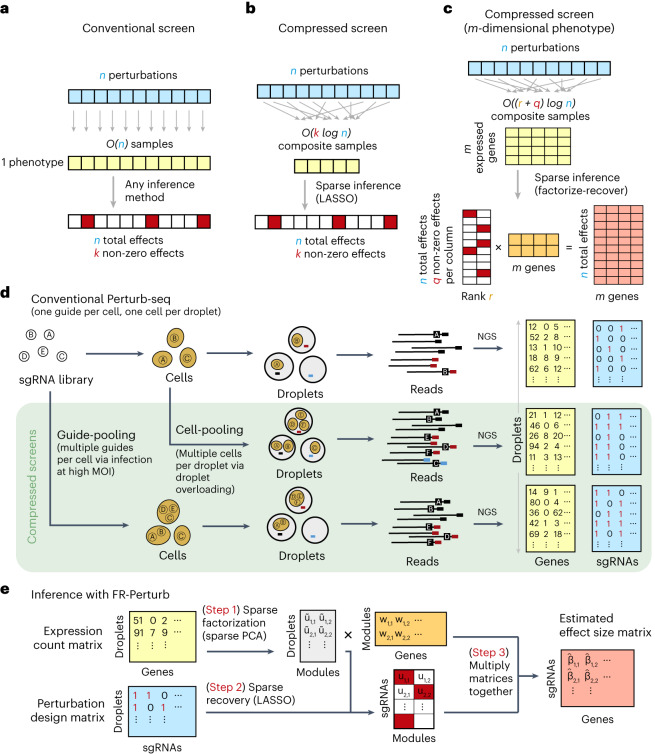
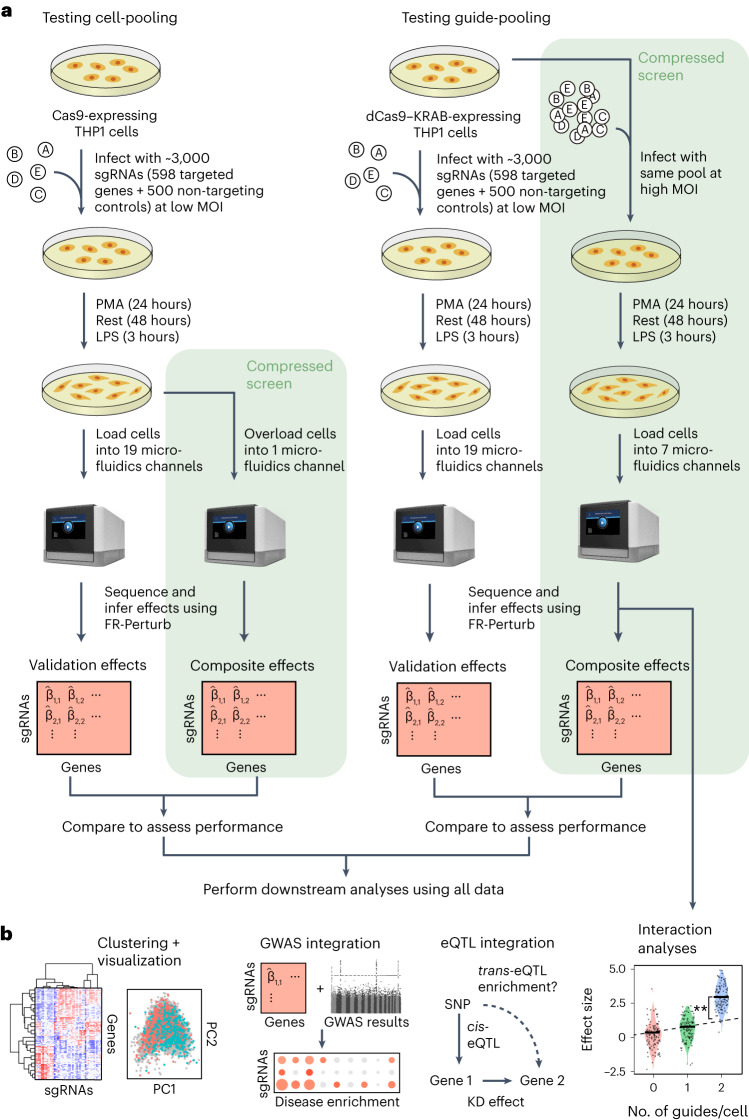
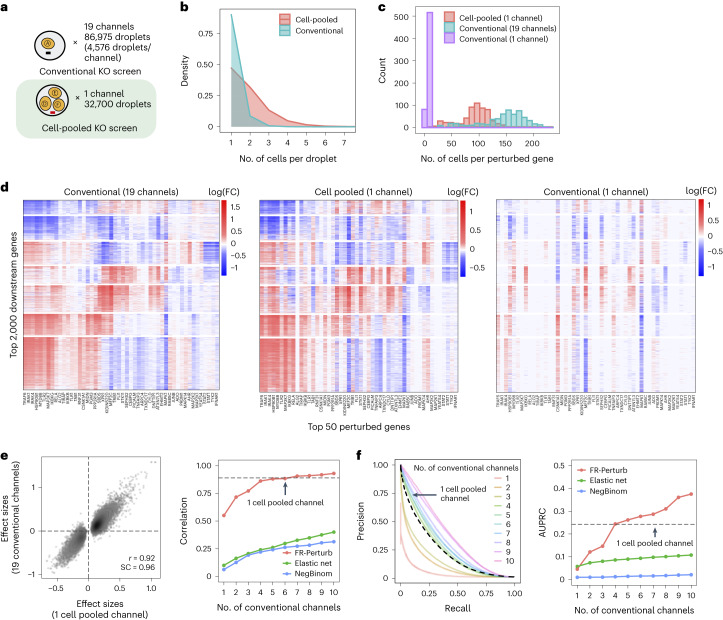
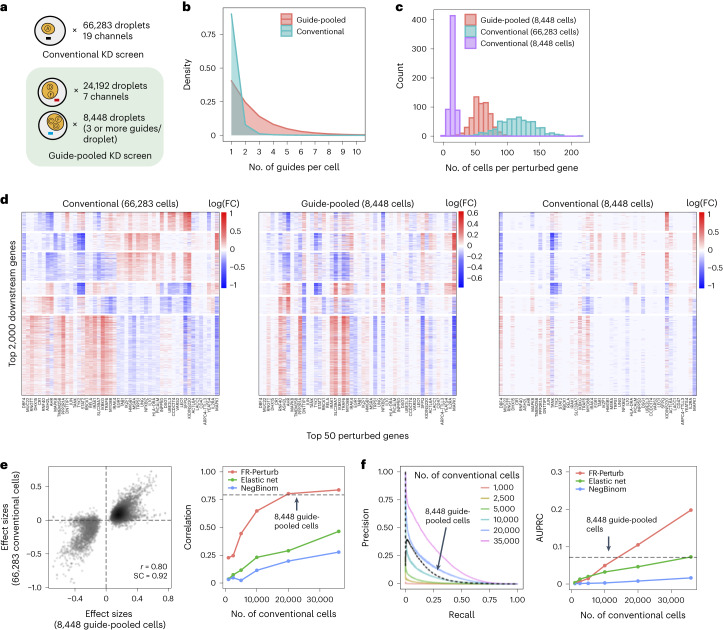
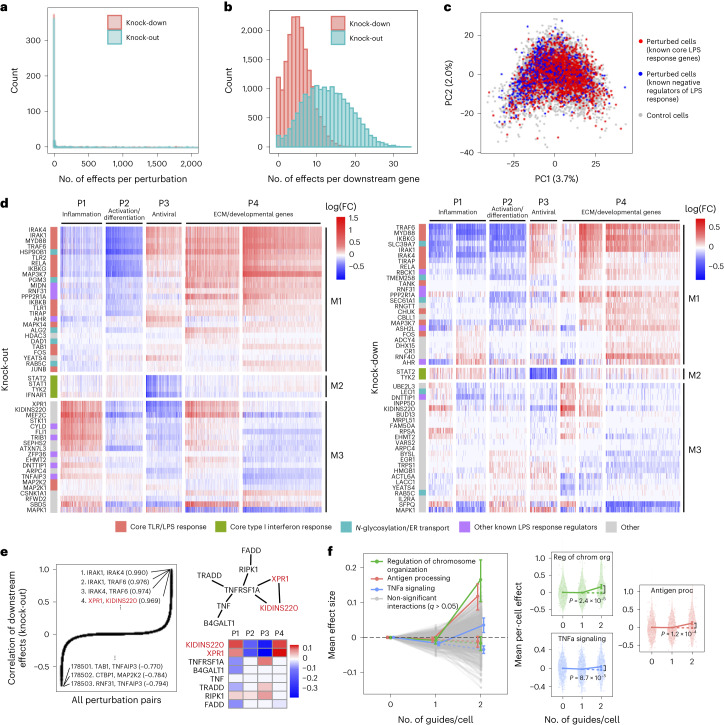
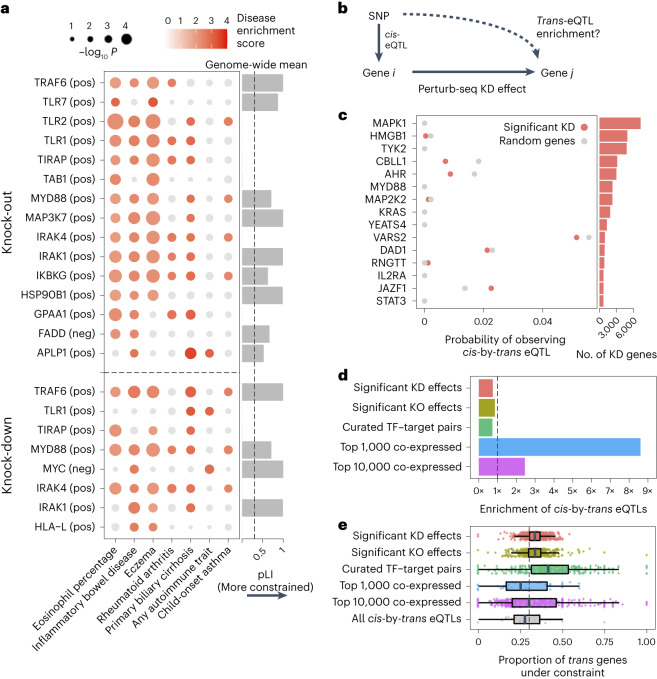
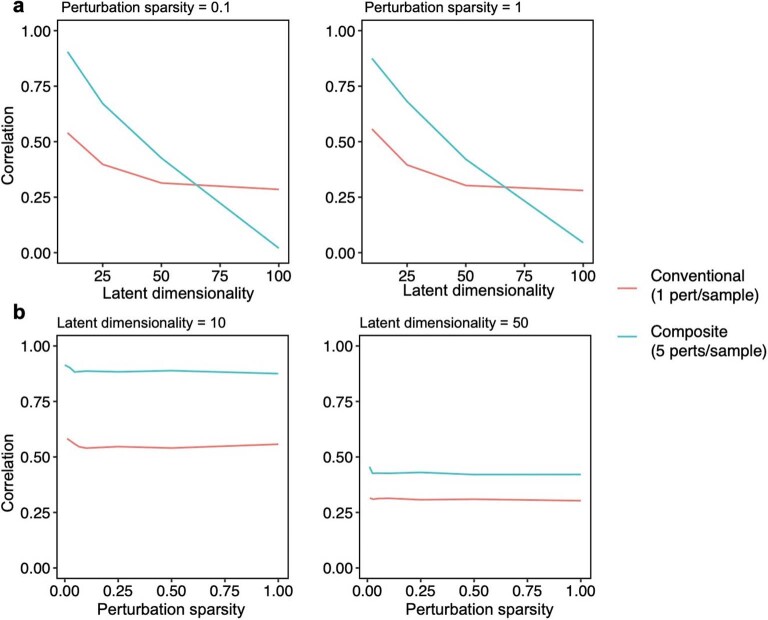
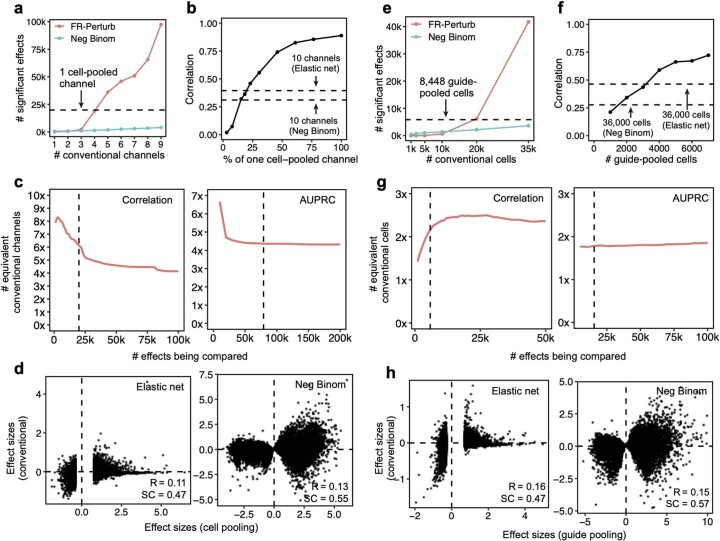
Pooled CRISPR screens with single-cell RNA sequencing readout (Perturb-seq) have emerged as a key technique in functional genomics, but they are limited in scale by cost and combinatorial complexity. In this study, we modified the design of Perturb-seq by incorporating algorithms applied to random, low-dimensional observations. Compressed Perturb-seq measures multiple random perturbations per cell or multiple cells per droplet and computationally decompresses these measurements by leveraging the sparse structure of regulatory circuits. Applied to 598 genes in the immune response to bacterial lipopolysaccharide, compressed Perturb-seq achieves the same accuracy as conventional Perturb-seq with an order of magnitude cost reduction and greater power to learn genetic interactions. We identified known and novel regulators of immune responses and uncovered evolutionarily constrained genes with downstream targets enriched for immune disease heritability, including many missed by existing genome-wide association studies. Our framework enables new scales of interrogation for a foundational method in functional genomics.
Overview
The claims and statistics of this paper haven’t been checked yet.
Free: it reads the open-access text and checks the first 5 claims that cite a source we can check. Create a free account to check every claim.
Integrity signals
Registry
Cites
Statistics
Figures
Verification
Claims the paper makes
The claims and statistics of this paper haven’t been checked yet.
Free: it reads the open-access text and checks the first 5 claims that cite a source we can check. Create a free account to check every claim.
Claims other papers make about this one
Each is checked against this paper’s own text: does it say what the citing paper says it does?
In the citing paper
“For example, high multiplicity-of-infection CRISPR screens with multiple targets per cell can complicate the calculation of distances5,53,54.”
From scPerturb: harmonized single-cell perturbation data (2024) · cites this paper as [53]
Self-check
Percentages, sums and reported differences re-computed from the paper’s own numbers.
The self-check needs the paper’s full text.
Citations
Cites
clusterProfiler: an R Package for Comparing Biological Themes Among Gene Clusters
Yu, G., Wang, L.-G., Han, Y., & He, Q.-Y. (2012) · OMICS: A Journal of Integrative Biology · doi:10.1089/omi.2011.0118 · Cited by 36,259 · cited 1×
“GO enrichment analysis of the genes in the resulting clusters was performed with the ClusterProfiler package 82 with gene sets obtained from the C2 (curated gene sets) and C5 (ontology gene sets) collections of the Molecular Signatures Database 83 .”
PLINK: a tool set for whole-genome association and population-based linkage analyses.
Purcell, S., Neale, B., Todd-Brown, K., Thomas, L., Ferreira, M. A. R., Bender, D., Maller, J., Sklar, P., de Bakker, P. I. W., Daly, M. J., et al. (2007) · The American Journal of Human Genetics · doi:10.1086/519795 · Cited by 34,089 · cited 1×
“For each cis – trans gene pair, plink 89 was used to compute marginal association statistics of all SNPs within 1 megabase (Mb) of the promoter of the cis gene with the expression of both the cis gene and the trans gene.”
Donoho, D. L. (2006) · IEEE Transactions on Information Theory · doi:10.1109/tit.2006.871582 · Cited by 23,994
Candes, E. J., Romberg, J., & Tao, T. (2006) · IEEE Transactions on Information Theory · doi:10.1109/tit.2005.862083 · Cited by 15,639 · cited 1×
“When the phenotype is single valued (for example, fitness), O ( k log n ) composite samples suffice to accurately recover the effects of n perturbations 18,19 , where k is the number of non-zero elements among the n perturbation effects (Fig.”
Comprehensive Integration of Single-Cell Data
Stuart, T., Butler, A., Hoffman, P., Hafemeister, C., Papalexi, E., Mauck, W. M., Hao, Y., Stoeckius, M., Smibert, P., & Satija, R. (2019) · Cell · doi:10.1016/j.cell.2019.05.031 · Cited by 15,453
An Introduction To Compressive Sampling
Candes, E. J., & Wakin, M. B. (2008) · IEEE Signal Processing Magazine · doi:10.1109/msp.2007.914731 · Cited by 10,017 · cited 2×
“We propose an alternative approach to greatly increase the efficiency and power of Perturb-seq for both single and combinatorial perturbation screens, inspired by theoretical results from compressed sensing 17–19 that apply to the sparse and modular nature of regulatory circuits in cells.”
Analysis of protein-coding genetic variation in 60,706 humans
Exome Aggregation Consortium, Lek, M., Karczewski, K. J., Minikel, E. V., Samocha, K. E., Banks, E., Fennell, T., O’Donnell-Luria, A. H., Ware, J. S., Hill, A. J., et al. (2016) · Nature · doi:10.1038/nature19057 · Cited by 9,587 · cited 1×
“7a), making them challenging to directly connect to disease through GWASs 52 owing to fewer common variants in or around the gene 53,54 .”
The mutational constraint spectrum quantified from variation in 141,456 humans
Karczewski, K. J., Francioli, L. C., Tiao, G., Cummings, B. B., Alföldi, J., Wang, Q., Collins, R. L., Laricchia, K. M., Ganna, A., Birnbaum, D. P., et al. (2020) · Nature · doi:10.1038/s41586-020-2308-7 · Cited by 9,434 · cited 3×
“6e), suggesting that our power to detect cis -by- trans eQTLs was affected by selection-induced depletion of SNPs affecting the trans genes 54,68 (Supplementary Note, section 12).”
GCTA: a tool for genome-wide complex trait analysis
Yang, J., Lee, S. H., Goddard, M. E., & Visscher, P. M. (2011) · The American Journal of Human Genetics · doi:10.1016/j.ajhg.2010.11.011 · Cited by 8,279 · cited 2×
“Bivariate Haseman–Elston regression as implemented in the GCTA software tool 66 was also used to compute the genetic correlation between the expression of the cis gene and the trans gene when restricting to the region 1 Mb around the promoter of the cis gene.”
Molecular signatures database (MSigDB) 3.0
Liberzon, A., Subramanian, A., Pinchback, R., Thorvaldsdóttir, H., Tamayo, P., & Mesirov, J. P. (2011) · Bioinformatics · doi:10.1093/bioinformatics/btr260 · Cited by 7,111 · cited 1×
“GO enrichment analysis of the genes in the resulting clusters was performed with the ClusterProfiler package 82 with gene sets obtained from the C2 (curated gene sets) and C5 (ontology gene sets) collections of the Molecular Signatures Database 83 .”
Research works printed but not linked: 2
- Sharan, V., Tai, K. S., Bailis, P. & Valiant, G. Compressed factorization: fast and accurate low-rank factorization of compressively-sensed data. In Proc. of the 36th International Conference on Machine Learning 5690–5700 (PMLR, 2019).
- Mairal, J., Bach, F., Ponce, J. & Sapiro, G. Online learning for matrix factorization and sparse coding. J. Mach. Learn. Res. 11, 19–60 (2010).
Cited by
scPerturb: harmonized single-cell perturbation data
Peidli, S., Green, T. D., Shen, C., Gross, T., Min, J., Garda, S., Yuan, B., Schumacher, L. J., Taylor-King, J. P., Marks, D. S., et al. (2024) · Nature Methods · doi:10.1038/s41592-023-02144-y · Cited by 194
“We anticipate that recent technological advances will decrease experimental costs and result in more new datasets, with additional experiment-specific analysis methods needed to convert from new highly multiplexed readouts into a standardized format 53 .”
Binan, L., Jiang, A., Danquah, S. A., Valakh, V., Simonton, B., Bezney, J., Manguso, R. T., Yates, K. B., Nehme, R., Cleary, B., et al. (2025) · Cell · doi:10.1016/j.cell.2025.02.012 · Cited by 133
“The effects of perturbations in THP1s were determined using our published tool FR-Perturb, 18 using a rank of 34, lambda1 and lambda2 of 0, and log_exp_baseline of 2.7 and the total number of transcripts per cell as a covariate.”
InfluentialSelf-citationBinan, L., Danquah, S., Valakh, V., Simonton, B., Bezney, J., Nehme, R., Cleary, B., & Farhi, S. L. (2023) · doi:10.1101/2023.11.30.569494 · Cited by 139
Self-citationRood, J. E., Hupalowska, A., & Regev, A. (2024) · Cell · doi:10.1016/j.cell.2024.07.035 · Cited by 139
Self-citationEpigenome editing technologies for discovery and medicine
McCutcheon, S. R., Rohm, D., Iglesias, N., & Gersbach, C. A. (2024) · Nature Biotechnology · doi:10.1038/s41587-024-02320-1 · Cited by 143
“Innovative scaling strategies 116 as well as decreasing costs will continue to catalyze larger-scale noncoding screens.”
Metadata
- Authors
- Yao, D., Binan, L., Bezney, J., Simonton, B., Freedman, J., Frangieh, C. J., Dey, K., Geiger-Schuller, K., Eraslan, B., Gusev, A., Regev, A., & Cleary, B.
- Affiliations
- Harvard University (US)
- Broad Institute (US)
- Memorial Sloan Kettering Cancer Center (US)
- Genentech (US)
- Boston University (US)
- Corresponding author
- Cleary, Brian
- ORCID
- Venue
- Nature Biotechnology
- Published
- 2023-10-23
- Volume
- 42
- Issue
- 8
- Pages
- 1282-1295
- ISSN
- 0733-222X (ISSN-L)
- 1087-0156
- 1546-1696
- PMC
- PMC11035494
- OpenAlex
- W4387880996
- Semantic Scholar
- f9d0ef8bd0414404c9bacd700be7259ec4d7d3c2
- Cited by
- 101
- References
- 91
- Citations by year
- 2026: 34 · 2025: 43 · 2024: 24
- FWCI
- 9.00
- Type
- journal article
- Language
- en
- Open access
- hybrid
- doi.org
- Licence
- cc-by
- creativecommons.org/licenses/by/4.0 (tdm)
- creativecommons.org/licenses/by/4.0 (vor)
- Locations
- Nature Biotechnology (publishedVersion, cc-by)
- PubMed Central (publishedVersion, cc-by)
- PubMed (publishedVersion)
- Digital Access to Scholarship at Harvard (DASH) (Harvard University) (submittedVersion, cc-by)
- Funders
- National Science Foundation (1745303)
- U.S. Department of Health & Human Services | National Institutes of Health (R00HG012203, P30 CA008748, HG006399)
- Josie Robertson Investigators Program
- U.S. Department of Health & Human Services | NIH | National Human Genome Research Institute (RM1HG006193)
- Broad Fellows program Merkin Institute Fellowship
- Topics
- Life Sciences › Biochemistry, Genetics and Molecular Biology › Molecular Biology › CRISPR and Genetic Engineering
- Life Sciences › Biochemistry, Genetics and Molecular Biology › Molecular Biology › Single-cell and spatial transcriptomics
- Life Sciences › Biochemistry, Genetics and Molecular Biology › Molecular Biology › Gene Regulatory Network Analysis
- Keywords
- Perturb-seq, CRISPR screen, single-cell RNA sequencing, regulatory circuits, genetic interactions, cost reduction, sparse structure, functional genomics
- MeSH terms
- Algorithms, Genetic Testing, Humans, Sequence Analysis, RNA, Genomics, Gene Regulatory Networks, Genome-Wide Association Study, Single-Cell Analysis, CRISPR-Cas Systems
About these checks
Registry, retraction, Cites and statistics results are computed, not judged, with one exception: a printed reference that no index lists is read once by a model before it counts as a citation error. Claims are extracted by a model and kept only when their quote appears verbatim in the text; each cited source is then checked, with a model’s help, for whether it says what the claim relies on. Those verdicts can be wrong — read the claim’s quote and the cited source before relying on one.
Statistics and arithmetic are recomputed, not judged.
Confidence bands are shown only for fields calibrated on our annotated test set. None is calibrated yet, so no band is shown.
What counts as a claim ›How we measure confidence ›How we check this ›
Are you an author, or do you see a problem with this page? Request a review
Data sources
Bibliographic data: Semantic Scholar, OpenAlex, Crossref.
Contains information from the Semantic Scholar Academic Graph Datasets, made available under the ODC Attribution License (ODC-BY 1.0).
Semantic Scholar’s data is described in: Kinney, R., et al. (2023). The Semantic Scholar Open Data Platform. arXiv:2301.10140.
