

Scalable genetic screening for regulatory circuits using compressed Perturb-seq
Open accessThe DOI matches its Crossref record; 93 of the 93 references it cites were found in a registry or an index.
Abstract
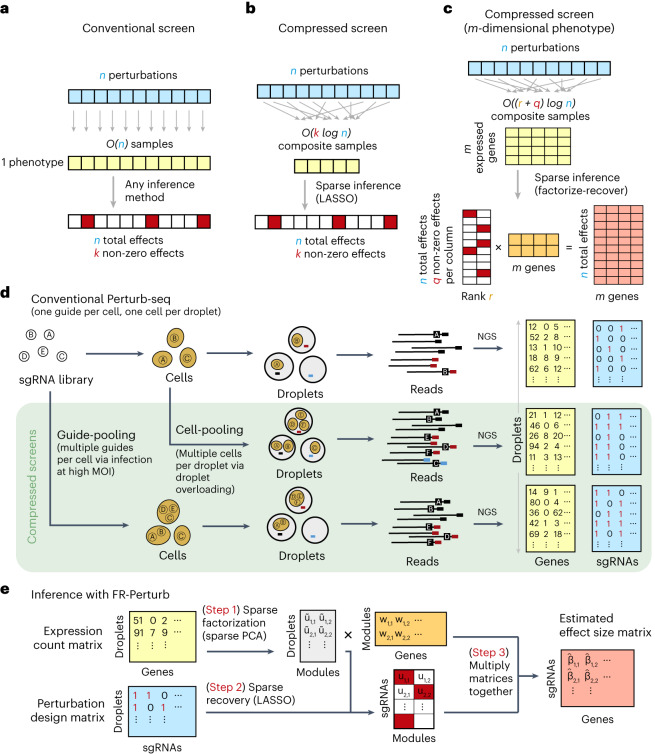
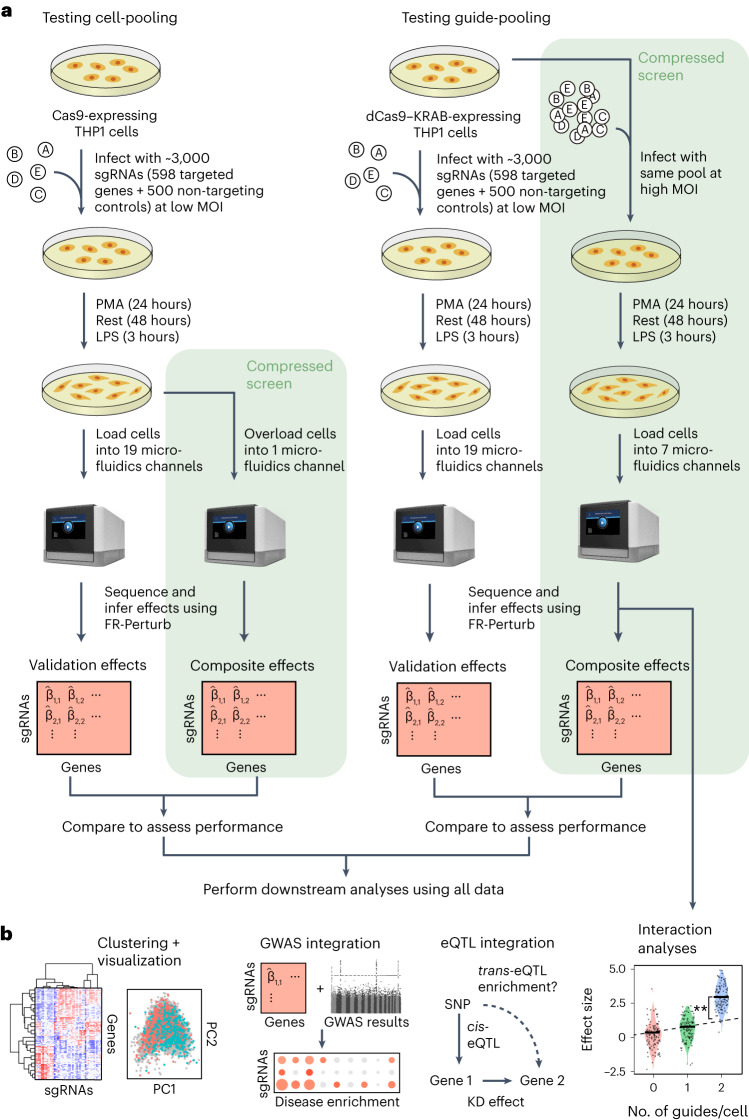
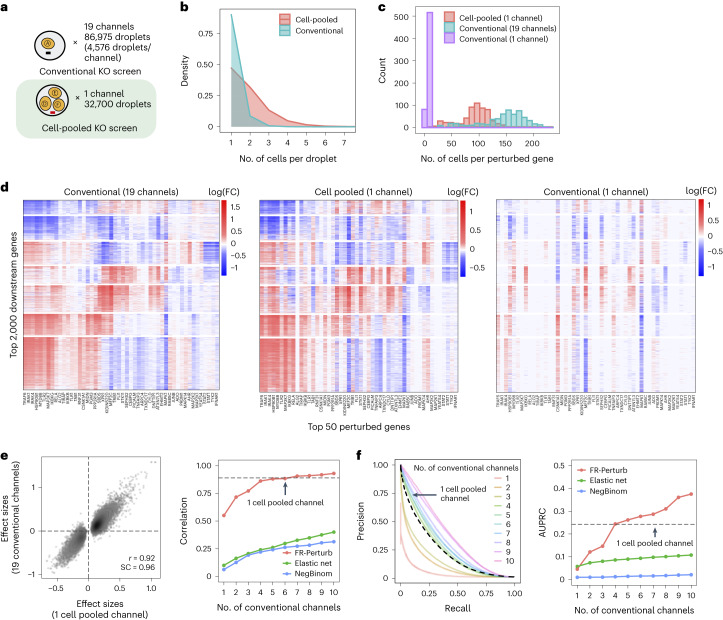
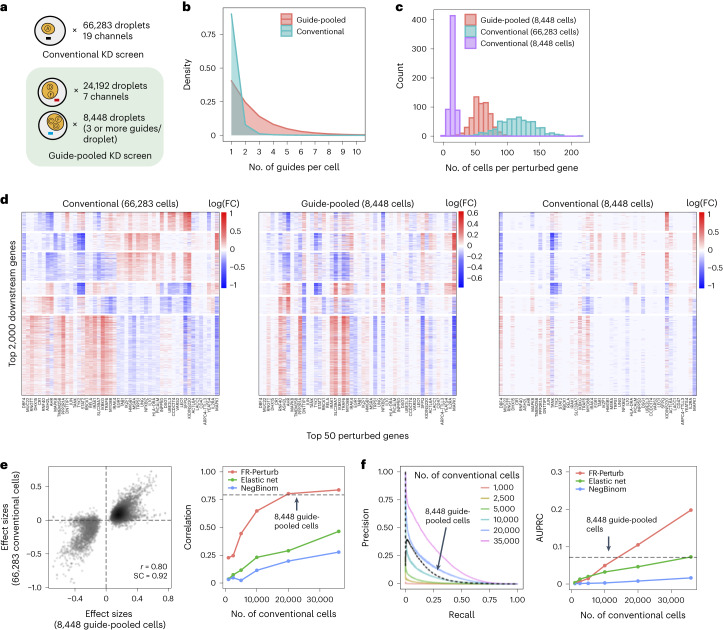
Pooled CRISPR screens with single-cell RNA sequencing readout (Perturb-seq) have emerged as a key technique in functional genomics, but they are limited in scale by cost and combinatorial complexity. In this study, we modified the design of Perturb-seq by incorporating algorithms applied to random, low-dimensional observations. Compressed Perturb-seq measures multiple random perturbations per cell or multiple cells per droplet and computationally decompresses these measurements by leveraging the sparse structure of regulatory circuits. Applied to 598 genes in the immune response to bacterial lipopolysaccharide, compressed Perturb-seq achieves the same accuracy as conventional Perturb-seq with an order of magnitude cost reduction and greater power to learn genetic interactions. We identified known and novel regulators of immune responses and uncovered evolutionarily constrained genes with downstream targets enriched for immune disease heritability, including many missed by existing genome-wide association studies. Our framework enables new scales of interrogation for a foundational method in functional genomics.
Overview
The claims and statistics of this paper haven’t been checked yet.
Free: it reads the open-access text and checks the first 5 claims that cite a source we can check. Create a free account to check every claim.
Integrity signals
Registry
Cites
Statistics
Figures
Verification
Claims the paper makes
The claims and statistics of this paper haven’t been checked yet.
Free: it reads the open-access text and checks the first 5 claims that cite a source we can check. Create a free account to check every claim.
Claims other papers make about this one
Each is checked against this paper’s own text: does it say what the citing paper says it does?
In the citing paper
“For example, high multiplicity-of-infection CRISPR screens with multiple targets per cell can complicate the calculation of distances5,53,54.”
From scPerturb: harmonized single-cell perturbation data (2024) · cites this paper as [53]
Self-check
Percentages, sums and reported differences re-computed from the paper’s own numbers.
The self-check needs the paper’s full text.
Citations
Cites
clusterProfiler: an R Package for Comparing Biological Themes Among Gene Clusters
Yu, G., Wang, L.-G., Han, Y., & He, Q.-Y. (2012) · OMICS: A Journal of Integrative Biology · doi:10.1089/omi.2011.0118 · Cited by 36,259 · cited 1×
“GO enrichment analysis of the genes in the resulting clusters was performed with the ClusterProfiler package 82 with gene sets obtained from the C2 (curated gene sets) and C5 (ontology gene sets) collections of the Molecular Signatures Database 83 .”
PLINK: a tool set for whole-genome association and population-based linkage analyses.
Purcell, S., Neale, B., Todd-Brown, K., Thomas, L., Ferreira, M. A. R., Bender, D., Maller, J., Sklar, P., de Bakker, P. I. W., Daly, M. J., et al. (2007) · The American Journal of Human Genetics · doi:10.1086/519795 · Cited by 34,089 · cited 1×
“For each cis – trans gene pair, plink 89 was used to compute marginal association statistics of all SNPs within 1 megabase (Mb) of the promoter of the cis gene with the expression of both the cis gene and the trans gene.”
Donoho, D. L. (2006) · IEEE Transactions on Information Theory · doi:10.1109/tit.2006.871582 · Cited by 23,994
Candes, E. J., Romberg, J., & Tao, T. (2006) · IEEE Transactions on Information Theory · doi:10.1109/tit.2005.862083 · Cited by 15,639 · cited 1×
“When the phenotype is single valued (for example, fitness), O ( k log n ) composite samples suffice to accurately recover the effects of n perturbations 18,19 , where k is the number of non-zero elements among the n perturbation effects (Fig.”
Comprehensive Integration of Single-Cell Data
Stuart, T., Butler, A., Hoffman, P., Hafemeister, C., Papalexi, E., Mauck, W. M., Hao, Y., Stoeckius, M., Smibert, P., & Satija, R. (2019) · Cell · doi:10.1016/j.cell.2019.05.031 · Cited by 15,453
An Introduction To Compressive Sampling
Candes, E. J., & Wakin, M. B. (2008) · IEEE Signal Processing Magazine · doi:10.1109/msp.2007.914731 · Cited by 10,017 · cited 2×
“We propose an alternative approach to greatly increase the efficiency and power of Perturb-seq for both single and combinatorial perturbation screens, inspired by theoretical results from compressed sensing 17–19 that apply to the sparse and modular nature of regulatory circuits in cells.”
Analysis of protein-coding genetic variation in 60,706 humans
Exome Aggregation Consortium, Lek, M., Karczewski, K. J., Minikel, E. V., Samocha, K. E., Banks, E., Fennell, T., O’Donnell-Luria, A. H., Ware, J. S., Hill, A. J., et al. (2016) · Nature · doi:10.1038/nature19057 · Cited by 9,587 · cited 1×
“7a), making them challenging to directly connect to disease through GWASs 52 owing to fewer common variants in or around the gene 53,54 .”
The mutational constraint spectrum quantified from variation in 141,456 humans
Karczewski, K. J., Francioli, L. C., Tiao, G., Cummings, B. B., Alföldi, J., Wang, Q., Collins, R. L., Laricchia, K. M., Ganna, A., Birnbaum, D. P., et al. (2020) · Nature · doi:10.1038/s41586-020-2308-7 · Cited by 9,434 · cited 3×
“6e), suggesting that our power to detect cis -by- trans eQTLs was affected by selection-induced depletion of SNPs affecting the trans genes 54,68 (Supplementary Note, section 12).”
GCTA: a tool for genome-wide complex trait analysis
Yang, J., Lee, S. H., Goddard, M. E., & Visscher, P. M. (2011) · The American Journal of Human Genetics · doi:10.1016/j.ajhg.2010.11.011 · Cited by 8,279 · cited 2×
“Bivariate Haseman–Elston regression as implemented in the GCTA software tool 66 was also used to compute the genetic correlation between the expression of the cis gene and the trans gene when restricting to the region 1 Mb around the promoter of the cis gene.”
Molecular signatures database (MSigDB) 3.0
Liberzon, A., Subramanian, A., Pinchback, R., Thorvaldsdóttir, H., Tamayo, P., & Mesirov, J. P. (2011) · Bioinformatics · doi:10.1093/bioinformatics/btr260 · Cited by 7,111 · cited 1×
“GO enrichment analysis of the genes in the resulting clusters was performed with the ClusterProfiler package 82 with gene sets obtained from the C2 (curated gene sets) and C5 (ontology gene sets) collections of the Molecular Signatures Database 83 .”
Research works printed but not linked: 2
- Sharan, V., Tai, K. S., Bailis, P. & Valiant, G. Compressed factorization: fast and accurate low-rank factorization of compressively-sensed data. In Proc. of the 36th International Conference on Machine Learning 5690–5700 (PMLR, 2019).
- Mairal, J., Bach, F., Ponce, J. & Sapiro, G. Online learning for matrix factorization and sparse coding. J. Mach. Learn. Res. 11, 19–60 (2010).
Cited by
scPerturb: harmonized single-cell perturbation data
Peidli, S., Green, T. D., Shen, C., Gross, T., Min, J., Garda, S., Yuan, B., Schumacher, L. J., Taylor-King, J. P., Marks, D. S., et al. (2024) · Nature Methods · doi:10.1038/s41592-023-02144-y · Cited by 194
“We anticipate that recent technological advances will decrease experimental costs and result in more new datasets, with additional experiment-specific analysis methods needed to convert from new highly multiplexed readouts into a standardized format 53 .”
Binan, L., Jiang, A., Danquah, S. A., Valakh, V., Simonton, B., Bezney, J., Manguso, R. T., Yates, K. B., Nehme, R., Cleary, B., et al. (2025) · Cell · doi:10.1016/j.cell.2025.02.012 · Cited by 133
“The effects of perturbations in THP1s were determined using our published tool FR-Perturb, 18 using a rank of 34, lambda1 and lambda2 of 0, and log_exp_baseline of 2.7 and the total number of transcripts per cell as a covariate.”
InfluentialSelf-citationBinan, L., Danquah, S., Valakh, V., Simonton, B., Bezney, J., Nehme, R., Cleary, B., & Farhi, S. L. (2023) · doi:10.1101/2023.11.30.569494 · Cited by 139
Self-citationRood, J. E., Hupalowska, A., & Regev, A. (2024) · Cell · doi:10.1016/j.cell.2024.07.035 · Cited by 139
Self-citationEpigenome editing technologies for discovery and medicine
McCutcheon, S. R., Rohm, D., Iglesias, N., & Gersbach, C. A. (2024) · Nature Biotechnology · doi:10.1038/s41587-024-02320-1 · Cited by 143
“Innovative scaling strategies 116 as well as decreasing costs will continue to catalyze larger-scale noncoding screens.”
Pertpy: an end-to-end framework for perturbation analysis
Heumos, L., Ji, Y., May, L. T., Green, T. D., Peidli, S., Zhang, X., Wu, X., Ostner, J., Schumacher, A., Hrovatin, K., et al. (2025) · Nature Methods · doi:10.1038/s41592-025-02909-7 · Cited by 112
“Current perturbation analysis frameworks such as MUSIC 6 , ScMAGeCK 7 , SCEPTRE 8 , GSFA 9 and FR-Perturb 10 primarily focus on CRISPR perturbation analysis, neglecting other perturbation data types and perturbation analysis steps.”
Saunders, R. A., Allen, W. E., Pan, X., Sandhu, J., Lu, J., Lau, T. K., Smolyar, K., Sullivan, Z. A., Dulac, C. G., Weissman, J. S., et al. (2025) · Cell · doi:10.1016/j.cell.2025.05.022 · Cited by 99
Multiplexed, image-based pooled screens in primary cells and tissues with PerturbView
Kudo, T., Meireles, A. M., Moncada, R., Chen, Y., Wu, P., Gould, J., Hu, X., Kornfeld, O., Jesudason, R., Foo, C., et al. (2025) · Nature Biotechnology · doi:10.1038/s41587-024-02391-0 · Cited by 74
“In another example, following IL-1β stimulation, Ccl4 contributed to calling a separate set of impact-ful perturbations than Ripk2 , Gbp2 or other features, consistent with a recent Perturb-Seq study 51 reporting Ripk2 and Gbp2 as part of the same gene program distinct from Ccl4 .”
Self-citationTranscriptome-wide analysis of differential expression in perturbation atlases
Nadig, A., Replogle, J. M., Pogson, A. N., Murthy, M., McCarroll, S. A., Weissman, J. S., Robinson, E. B., & O’Connor, L. J. (2025) · Nature Genetics · doi:10.1038/s41588-025-02169-3 · Cited by 70
“Combined with developments in screen compression 47 and cheaper sequencing technologies 48 , our method suggests a productive path toward massive scale perturbational atlases.”
Engineered CRISPR-Cas12a for higher-order combinatorial chromatin perturbations
Hsiung, C. C. ‐., Wilson, C. M., Sambold, N. A., Dai, R., Chen, Q., Teyssier, N., Misiukiewicz, S., Arab, A., O’Loughlin, T. A., Cofsky, J. C., et al. (2024) · Nature Biotechnology · doi:10.1038/s41587-024-02224-0 · Cited by 57
“Group testing may also be combined with compressed sensing 90,91 to facilitate screens with multidimensional phenotypic readouts 92–99 .”
Causal modelling of gene effects from regulators to programs to traits
Ota, M., Spence, J. P., Zeng, T., Dann, E., Milind, N., Marson, A., & Pritchard, J. K. (2025) · Nature · doi:10.1038/s41586-025-09866-3 · Cited by 60
Comprehensive transcription factor perturbations recapitulate fibroblast transcriptional states
Southard, K. M., Ardy, R. C., Tang, A., O'Sullivan, D., Metzner, E., Guruvayurappan, K., & Norman, T. M. (2025) · Nature Genetics · doi:10.1038/s41588-025-02284-1 · Cited by 49
“Prior approaches include superinfecting cells with multiple guides 48–50 or ‘overloading’ 49,51,52 scRNA-seq assays to measure multiplets (droplets containing two or more cells) instead of singlets (Fig.”
Gene regulation technologies for gene and cell therapy
Butterfield, G. L., Reisman, S. J., Iglesias, N., & Gersbach, C. A. (2025) · Molecular Therapy · doi:10.1016/j.ymthe.2025.04.004 · Cited by 48
Jiang, J., Chen, S., Tsou, T., McGinnis, C. S., Khazaei, T., Zhu, Q., Park, J. H., Strazhnik, I.-M., Vielmetter, J., Gong, Y., et al. (2026) · Cell · doi:10.1016/j.cell.2026.04.028 · Cited by 37
Modeling and predicting single-cell multi-gene perturbation responses with scLAMBDAPreprint
Wang, G., Liu, T., Zhao, J., Cheng, Y., & Zhao, H. (2024) · bioRxiv (Cold Spring Harbor Laboratory) · doi:10.1101/2024.12.04.626878 · Cited by 46
“Despite these advancements, conducting large-scale genetic perturbation screens for numer-28 ous target genes and their combinations remains a labor-intensive and resource-demanding endeavor [7].”
Scalable, compressed phenotypic screening using pooled perturbations
Liu, N., Kattan, W. E., Mead, B. E., Kummerlowe, C., Cheng, T. N. H., Ingabire, S., Cheah, J. H., Soule, C. K., Vrcic, A., McIninch, J. K., et al. (2024) · Nature Biotechnology · doi:10.1038/s41587-024-02403-z · Cited by 38
“Furthermore, most genetic hits require follow-up pharmacologic development, disrupting the chain of translatability 4,7 .”
Self-citationMethods and applications of in vivo CRISPR screening
Santinha, A. J., Strano, A., & Platt, R. J. (2025) · Nature Reviews Genetics · doi:10.1038/s41576-025-00873-8 · Cited by 34
“…approaches have been developed to deconvolve the effect of individual perturbations from the composite effects measured in cells receiving random combinations of multiple gRNAs, provided that assumptions about sparse perturbation effects and the extent of higher order interactions are met 166,167 .”
Exploring CRISPR-Cas: The transformative impact of gene editing in molecular biology
Pandey, V. P., Sharma, S., & Pokharel, Y. R. (2025) · Molecular Therapy — Nucleic Acids · doi:10.1016/j.omtn.2025.102717 · Cited by 34
GenePert: Leveraging GenePT Embeddings for Gene Perturbation PredictionPreprint
Chen, Y. T., & Zou, J. (2024) · bioRxiv (Cold Spring Harbor Laboratory) · doi:10.1101/2024.10.27.620513 · Cited by 31
“However, given the large number of genes in the genome, as well as the number of possible gene perturbations, large-scale Perturb-seq screens remain expensive [Yao et al., 2023].”
BackgroundBarry, T., Mason, K., Roeder, K., & Katsevich, E. (2024) · Genome Biology · doi:10.1186/s13059-024-03254-2 · Cited by 28
“In cases where perturbations are expected to have weak effects (like regulatory-element-targeting screens), perturbations also can be introduced at high-MOI (with many perturbations per cell) to increase scalability [3–5, 11, 12].”
Walton, R. T., Qin, Y., Kirby, B., Andrews, J. O., Taipale, M., Kang, B., & Blainey, P. C. (2024) · bioRxiv (Cold Spring Harbor Laboratory) · doi:10.1101/2024.03.17.585235 · Cited by 31
“In principle, single-perturbation vectors can enable random sampling of perturbation combinations in pooled screens, via either high multiplicity of infection (MOI) (with limited control of multiplicity) or serial transduction and selection 12,13 .”
Wong, D. R., Hill, A. S., & Moccia, R. (2025) · Bioinformatics · doi:10.1093/bioinformatics/btaf317 · Cited by 27
“This can be done at scale, facilitating the surge of data in the single-cell discipline 5–7 .”
Ciren, D., Zebell, S. G., & Lippman, Z. B. (2024) · PLoS Genetics · doi:10.1371/journal.pgen.1011174 · Cited by 28
CRISPR/Cas technologies for cancer drug discovery and treatment
Wang, K. C., Zheng, T., & Hubbard, B. P. (2025) · Trends in Pharmacological Sciences · doi:10.1016/j.tips.2025.02.009 · Cited by 26
Pan, Q., Ding, L., Hladyshau, S., Yao, X., Zhou, J., Yan, L., Dhungana, Y., Shi, H., Qian, C., Dong, X., et al. (2025) · Nature Communications · doi:10.1038/s41467-025-59620-6 · Cited by 29
“…by performing differential expression analysis of scRNA-seq pro fi les of cells with CRISPR knock-out (CRISPR-KO), interference (CRISPRi), or activation (CRISPRa) vs. NT perturbations for each TF. ROC analysis for the global TF network inferred from a CRISPR-KO Perturb-seq dataset 59 (Fig.”
Gene regulatory network structure informs the distribution of perturbation effects
Aguirre, M., Spence, J. P., Sella, G., & Pritchard, J. K. (2025) · PLoS Computational Biology · doi:10.1371/journal.pcbi.1013387 · Cited by 30
Design of microbial catalysts for two-stage processes
Shabestary, K., Klamt, S., Link, H., Mahadevan, R., Steuer, R., & Hudson, E. P. (2024) · Nature Reviews Bioengineering · doi:10.1038/s44222-024-00225-x · Cited by 25
“In particular, combining CRISPR-based perturbations and single-cell RNA sequencing is an emerging methodology for screening and inferring regulatory circuits from perturbed cellular states 232,233 .”
CRISPR-based genetic tools for the study of host-microbe interactions
Galindo, M. E., & Lai, Y. (2025) · Infection and Immunity · doi:10.1128/iai.00510-24 · Cited by 20
“…functionally characterize host factors facilitating severe acute respiratory syndrome coronavirus 2 infection (103), to identify host factors promoting endosymbiosis during Toxoplasma gondii infection (104), and to analyze immune cell activation in response to bacterial lipopolysaccharides (105).”
Scalable and universal prediction of cellular phenotypes enables in silico experimentsPreprint
Ji, Y., Tejada-Lapuerta, A., Schmacke, N. A., Zheng, Z., Zhang, X., Khan, S., Rothenaigner, I., Tschuck, J., Hadian, K., Hornung, V., et al. (2024) · bioRxiv (Cold Spring Harbor Laboratory) · doi:10.1101/2024.08.12.607533 · Cited by 21
“Given the immense combinatorial space inherent to biological experimentation, accurate in silico modeling is needed to guide the selection of relevant future experiments and reduce the number of early-stage experiments needed to yield new biological insights(13).”
Feng, C., Peets, E. M., Zhou, Y., Crepaldi, L., Usluer, S., Dunham, A. S., Braunger, J. M., Su, J., Strauß, M. E., Muraro, D., et al. (2025) · Cell Genomics · doi:10.1016/j.xgen.2025.101076 · Cited by 18
Badia-i-Mompel, P., Casals-Franch, R., Wessels, L., Müller‐Dott, S., Trimbour, R., Yang, Y., Flores, R. O. R., & Sáez-Rodríguez, J. (2024) · bioRxiv (Cold Spring Harbor Laboratory) · doi:10.1101/2024.12.20.629764 · Cited by 15
Littman, R., Levine, J., Maleki, S., Lee, Y., Ermakov, V. Y., Qiu, L., Wu, A. P., Huang, K., Lopez, R., Scalia, G., et al. (2025) · bioRxiv (Cold Spring Harbor Laboratory) · doi:10.1101/2025.06.03.657653 · Cited by 19
Self-citationGPerturb: Gaussian process modelling of single-cell perturbation data
Xing, H., & Yau, C. (2025) · Nature Communications · doi:10.1038/s41467-025-61165-7 · Cited by 19
“12 uses a variant of the “ factorize-recover" algorithm to infer perturbation effects from composite sample phenotypes from compressed Perturb-seq experimental data using combination of sparse principal components analysis and LASSO regression.”
Breinig, M., Lomakin, A., Heidari, E., Ritter, M. A., Rukhovich, G. D., Böse, L., Butthof, L., Wendler-Link, L., Wiethoff, H., Poth, T., et al. (2025) · Nature Biomedical Engineering · doi:10.1038/s41551-025-01437-1 · Cited by 17
“First, it is straightforward to adjust combinatorial complexity and exchange the alterations to additional cancer drivers 1 and other perturbations, potentially within a compressed screening framework 16 .”
InfluentialUnderstanding ubiquitination in neurodevelopment by integrating insights across space and time
Ambrozkiewicz, M. C., & Lorenz, S. (2024) · Nature Structural & Molecular Biology · doi:10.1038/s41594-024-01422-3 · Cited by 12
Functional Neurogenomics to Dissect Disease Mechanisms Across Models
Zheng, X., Li, J., & Jin, X. (2025) · Annual Review of Genomics and Human Genetics · doi:10.1146/annurev-genom-120823-125811 · Cited by 11
Podlesny‐Drabiniok, A., Romero‐Molina, C., Patel, T., See, W. Y., Liu, Y., Marcora, E. M., & Goate, A. (2025) · Cell Reports · doi:10.1016/j.celrep.2025.115909 · Cited by 14
Shang, E., Wei, Y., & Roeder, K. (2025) · Proceedings of the National Academy of Sciences · doi:10.1073/pnas.2525268122 · Cited by 18
Murine cochlear damage models in the context of hair cell regeneration research
Maraslioglu-Sperber, A., Blanc, F., & Heller, S. (2024) · Hearing Research · doi:10.1016/j.heares.2024.109021 · Cited by 11
Liu, S., Hamilton, M. C., Cowart, T., Barrera, A., Bounds, L. R., Nelson, A. C., Dornbaum, S. F., Riley, J. W., Doty, R. W., Allen, A. S., et al. (2025) · Cell Genomics · doi:10.1016/j.xgen.2025.100766 · Cited by 12
Schaefer, N. K., Pavlovic, B. J., Schmitz, M. T., & Pollen, A. A. (2026) · Cell Genomics · doi:10.1016/j.xgen.2026.101275 · Cited by 12
“72 Given the risks of demultiplexing 31 errors and biological misin-terpretation 31,33 due to ambient RNA contamination, CellBouncer’s genotype-based demultiplexing program and its accompanying ambient RNA inference tool offer a valuable advance over existing methods.”
AI-powered programmable virtual humans toward human physiologically-based drug discovery
Wu, Y., Bourne, P. E., & Xie, L. (2025) · Drug Discovery Today · doi:10.1016/j.drudis.2025.104497 · Cited by 12
Endogenous fine-mapping and prioritization of functional regulatory elements in complex genetic loci
Zhao, K., Zhou, Y., Wang, X., Wang, Z., Xu, X., Chen, Y., Zhao, L., Wu, C., Wang, J., Yao, H., et al. (2025) · Cell Genomics · doi:10.1016/j.xgen.2025.100982 · Cited by 10
Computational modeling of single-cell dynamics data
Guo, W., Chen, Z., & Gu, J. (2025) · Briefings in Bioinformatics · doi:10.1093/bib/bbaf305 · Cited by 10
Jung, H., Devant, P., Ching, C., Ota, M., Dann, E., Zhu, R., Modak, C., Vasquez-Ibarra, A., Hamilton, J. R., Steinhart, Z., et al. (2026) · Nature Biotechnology · doi:10.1038/s41587-026-03258-2 · Cited by 8
Systems immunology approaches to study T cells in health and disease
Yang, A., & Poholek, A. C. (2024) · npj Systems Biology and Applications · doi:10.1038/s41540-024-00446-1 · Cited by 8
Decoding Vascular Cell Diversity: Single-Cell Approaches to Mechanisms of Vascular Disease
Schwartzman, W. E., Jiang, J., Rao, J. S., Schnitzler, G. R., Maurya, M., Widdup, L., Pepin, M. E., Kang, H. Y., Zheng, C. X., & Gupta, R. M. (2026) · Circulation Research · doi:10.1161/circresaha.125.326001 · Cited by 6
MIC-Drop-seq: scalable single-cell phenotyping of mutant vertebrate embryos
Carey, C. M., Parvez, S., Brandt, Z. J., Bisgrove, B. W., Yates, C. J., Peterson, R. T., & Gagnon, J. A. (2026) · Nature Communications · doi:10.1038/s41467-026-70989-w · Cited by 5
AI and network biology for rational polypharmacology in signaling drug design: a review
Li, X.-H., Wu, Z.-Q., Fang, T., Li, J., Li, D., Zhang, X., Liu, L., & Wang, L.-M. (2026) · npj Precision Oncology · doi:10.1038/s41698-026-01407-z · Cited by 5
Causal effect estimation from trans-regulatory single-cell CRISPR screens
Christensen, O. P., Markham, A., Kang, H., Gabriel, E., & Pers, T. H. (2026) · Cell Genomics · doi:10.1016/j.xgen.2026.101251 · Cited by 5
“For statistical inference, FR-perturb relies on permutation testing.”
InfluentialLibby, A. R. G., Rito, T., Radley, A., & Briscoe, J. (2025) · Development · doi:10.1242/dev.204591 · Cited by 5
A model for accurate quantification of CRISPR effects in pooled FACS screensPreprint
Pimentel, H., Freimer, J. W., Arce, M. M., Garrido, C. M., Marson, A., & Pritchard, J. K. (2024) · bioRxiv (Cold Spring Harbor Laboratory) · doi:10.1101/2024.06.17.599448 · Cited by 6
“Consistent with other recent reports 25–27 , we demonstrate that increasing the MOI greatly reduces the number of uninfected input cells that are thrown away during screening, while having a similar sensitivity as the low MOI screen.”
Multiplexed perturbation enables scalable pooled screens
Oberlin, S., Tay, N. Q., Xue, A., Mosadeghi, R., Pimentel, H., & McManus, M. T. (2026) · Nature Methods · doi:10.1038/s41592-026-03095-w · Cited by 4
“Here, screen compression can be achieved by multiplexing of sgRNA expression cassettes using high MOI infections 22 .”
Shining a light on cell biology of the nucleus with single-cell sequencing
van den Berg, J., & Zeller, P. J. (2025) · Current Opinion in Cell Biology · doi:10.1016/j.ceb.2025.102468 · Cited by 4
High-throughput CRISPR approaches: New solutions for challenging problems
Bindal, G., Misra, C. S., Singh, M. K., Rangu, S. S., Pandey, N., & Rath, D. (2025) · TrAC Trends in Analytical Chemistry · doi:10.1016/j.trac.2025.118245 · Cited by 5
Co-fluctuations of genes in single cells predict transcriptome-wide outcomes to perturbationsPreprint
Kuznets-Speck, B., Kumari, N., Senthilkumar, I., Jung, J., Rios, H. M. L., Schwartz, L., Sun, H., Anisetti, V. R., Wang, C., Wang, Q., et al. (2025) · bioRxiv (Cold Spring Harbor Laboratory) · doi:10.1101/2025.06.27.661814 · Cited by 4
“Other interpretable methods use matrix factorization (e.g., SVD, NMF, SMAF) to perform dimensionality reduction and identify gene programs or modules that respond coherently to perturbations 18,19 .”
Lee, H., Sun, H., Cao, X., Karaahmet, B., Li, Z., Ulrich-Klein, H., Taga, M. F., Wang, G., Jager, P. L. D., Bennett, D. A., et al. (2025) · bioRxiv (Cold Spring Harbor Laboratory) · doi:10.1101/2025.09.24.678397 · Cited by 4
Self-citationFunctional Annotation of the Major Histocompatibility Complex LocusPreprint
Bounds, L. R., Barrera, A., ter Weele, M. A., Liu, S., Wu, E. Y., Li, S., Venukuttan, R., Rai, R., Mu, W., Iglesias, N., et al. (2026) · bioRxiv (Cold Spring Harbor Laboratory) · doi:10.64898/2026.02.01.703124 · Cited by 4
Kudo, T., Lopez, R., Meireles, A. M., Rios, A., Coelho, P. P., Chandrasekar, V., Lam, D. C., Huetter, J.-C., Ota, M., Rozenblatt–Rosen, O., et al. (2026) · bioRxiv (Cold Spring Harbor Laboratory) · doi:10.64898/2026.05.27.728345 · Cited by 4
Self-citationWang, D., Gazzara, M. R., Jewell, S., Wales-McGrath, B. D., Yang, K., Brown, C. D., Choi, P. S., & Barash, Y. (2025) · The American Journal of Human Genetics · doi:10.1016/j.ajhg.2025.10.012 · Cited by 3
Revisiting retinal and macular degeneration in the genomics era
Swaroop, A., & Roska, B. (2026) · Nature Reviews Genetics · doi:10.1038/s41576-026-00960-4 · Cited by 3
“High-resolution genome topology and proteogenomic maps, as well as CRISPR screens for relevant human tissues and cell types, would greatly facilitate functional characterization of AMD-associated variants 87,104,105,180–184 .”
Investigating mobile element variations by statistical genetics
Kojima, S. (2024) · Human Genome Variation · doi:10.1038/s41439-024-00280-1 · Cited by 3
Every cell every gene all at once: Systems genetic approaches toward corticogenesis
Wu, B., Li, J., & Jin, X. (2025) · Current Opinion in Neurobiology · doi:10.1016/j.conb.2025.103034 · Cited by 3
PerTurboAgent: A Self-Planning Agent for Boosting Sequential Perturb-seq ExperimentsPreprint
Hao, M., Lee, Y., Wang, H., Scalia, G., & Regev, A. (2025) · bioRxiv (Cold Spring Harbor Laboratory) · doi:10.1101/2025.05.25.656020 · Cited by 3
“…sparse and modular, it should, in principle, be possible to use the information drawn from perturbation experiments to train models that generalize to the full perturbation space, without exhaustively testing all perturbations in the lab (Yeung & Ruzzo, 2001; Brunet et al., 2004; Yao et al., 2024).”
Self-citationNext-generation CRISPR screens enable causal systems immunology
Shi, H., & Chi, H. (2026) · The Journal of Experimental Medicine · doi:10.1084/jem.20241266 · Cited by 2
Multiomic single-cell perturbation screens reveal critical lncRNA regulators of senescence
Zhu, S., Ying, S., Cai, D., Ren, Y., Wang, L., Qi, Z., Gorbunova, V., & Han, J. J. (2026) · Nature Aging · doi:10.1038/s43587-026-01100-7 · Cited by 5
CRISPR in the Tumor Microenvironment: From Diagnostic Profiling to Precision Therapy
Zhou, L., Mu, M., Yang, M., Liu, X., Zou, G., & Liu, C. (2026) · Cancer Biome and Targeted Therapy · doi:10.66505/cbtt.v1i1.12 · Cited by 2
Mukherjee, A. M. (2026) · Journal of Rare Diseases · doi:10.1007/s44162-026-00220-3 · Cited by 2
“Recent advances in compressed Perturb-seq architectures have substantially increased the throughput and interpretability of pooled CRISPR screening platforms, thereby facilitating large-scale reconstruction of regulatory circuits and cellular response networks [33].”
Discovering mechanisms of human genetic variation and controlling cell states at scale
Frenkel, M. P. C., & Raman, S. (2024) · Trends in Genetics · doi:10.1016/j.tig.2024.03.010 · Cited by 2
Inference of heterogeneous effects in single-cell genetic perturbation screensPreprint
Fu, Z., & Hou, L. (2024) · bioRxiv (Cold Spring Harbor Laboratory) · doi:10.1101/2024.05.28.596224 · Cited by 2
A framework for expanding discovery efforts with compressed phenotypic screens
(2024) · Nature Biotechnology · doi:10.1038/s41587-024-02404-y · Cited by 1
Understanding human embryogenesis by building programmable stem cell-based models
Guiltinan, C., Lodewijk, G. A., Kozuki, S., & Shariati, S. A. (2025) · Trends in Cell Biology · doi:10.1016/j.tcb.2025.08.003 · Cited by 1
“Precise gene expression manipulations followed by single-cell transcriptomics will be critical to ascertain the determinants of successful early development [12].”
Integrative analysis of pooled CRISPR screens provide functional insights into AD GWAS risk genes
Wang, R. Y., Wozniak, G. G., Wang, X., Mustafa, M., Khatib, M. E., Kahn, E., Heutink, P., Long, H., Kenkare-Mitra, S., Rosenthal, A., et al. (2026) · iScience · doi:10.1101/2025.07.17.660041 · Cited by 1
“However, limited sequencing depth is a common problem in Perturb-seq studies, owing to the high cost of reagents and sequencing 61 .”
Exploiting tumor lineage features for precision cancer therapy
Kelly, L. M., Fenouille, N., Wood, K. C., & Puissant, A. (2026) · Trends in cancer · doi:10.1016/j.trecan.2025.12.004 · Cited by 1
Proteomics‐Driven Strategies for Proximity‐Inducing Drug Discovery
Fan, R., Ni, J., Zhou, T., Jiang, H. Q., Zhao, W., & Tan, M. (2026) · Angewandte Chemie International Edition · doi:10.1002/anie.3307512 · Cited by 1
Genetic Convergence Analysis of CRISPR Perturbations Deciphers Gene Functional SimilarityPreprint
Zhang, T., Shang, E., & Roeder, K. (2025) · bioRxiv (Cold Spring Harbor Laboratory) · doi:10.1101/2025.11.13.688060 · Cited by 3
“Aggregated XConTest was applied to the data reported in [20] to investigate the functional similarities of 598 genes involved in the immune response to bacterial lipopolysaccharide.”
InfluentialCao, Z., Guo, T., Cheng, L., Zhang, F., Lü, P., Gu, C., Guo, F., & Gao, G. (2025) · bioRxiv (Cold Spring Harbor Laboratory) · doi:10.1101/2025.11.20.689377 · Cited by 2
Street, L. A., Majumdar, M., Rothamel, K. L., Gogus, E., Brar, G. A., Yeo, G. W.-M., Rube, T., & Jovanović, M. (2025) · bioRxiv (Cold Spring Harbor Laboratory) · doi:10.1101/2025.11.21.689547 · Cited by 1
“34 Several studies have applied pooled testing strategies and compressed sensing for biological measurement, for example proposing to identify rare alleles using pooled DNA sequencing 35 and COVID-19 cases using pooled RT-PCR, 36 and boosting the throughput of RNA-seq and Perturb-seq 37,38 .”
Kahlani, M., Mesner, L. D., Madhu, V., Wagner, L., Kupkova, K., Pitas, H. J., Gebbia, M., Kazemi, M., Belarbi, C., Mello, A. C., et al. (2026) · bioRxiv (Cold Spring Harbor Laboratory) · doi:10.64898/2026.02.11.705362 · Cited by 1
A Multi-modal LLM-Knowledge Fusion Framework for Predicting Single-cell Genetic Perturbation EffectsPreprint
Lu, M., You, N., Zhang, H., Zheng, L., Li, B., Jiang, W., Zhang, Y., Sun, H., & Zhou, Y. (2026) · bioRxiv (Cold Spring Harbor Laboratory) · doi:10.64898/2026.04.24.720560 · Cited by 1
“With the rapid development of single-cell sequencing technologies 7-9 , we can now observe cellular changes under drug or genetic perturbations with unprecedented resolution, opening new possibilities for understanding cellular response mechanisms 4, 10, 11 .”
PerturbPlan: An analytical framework for designing Perturb-seq experimentsPreprint
Niu, Z., He, Y., Galante, J., Gschwind, A. R., Ray, J., Steinmetz, L. M., Engreitz, J., & Katsevich, E. (2026) · bioRxiv (Cold Spring Harbor Laboratory) · doi:10.64898/2026.05.22.727199 · Cited by 1
Yeung, J., Tan, J., Wang, L., Wu, D., Carlos, S. M., Kageyama, J., Kamm, J., Chu, B. B., Mayba, O., Forrest, W. F., et al. (2026) · bioRxiv (Cold Spring Harbor Laboratory) · doi:10.64898/2026.07.10.737863 · Cited by 1
“Loading multiple guides into each cell has emerged as a practical strategy for reducing the cost of targeted genetic [14] and enhancer Perturb-seq screens [6, 12].”
InfluentialRen, L., Debnath, I., & Duren, Z. (2026) · bioRxiv (Cold Spring Harbor Laboratory) · doi:10.2139/ssrn.7088360 · Cited by 1
Gillotay, P., Bangru, S., Shen, J., Moore, B., Ou, J., Stewart, R. M., & Poss, K. D. (2026) · bioRxiv (Cold Spring Harbor Laboratory) · doi:10.64898/2026.09.07.749713 · Cited by 1
Caravaca, J. C. (2024) · Preprints.org · doi:10.20944/preprints202410.2607.v1
Decoy-seq unlocks scalable genetic screening for regulatory small noncoding RNAsPreprint
Choi, B. G., Sobti, S., Soto, L. M., Charbonneau, T., Sababi, A. M., Navickas, A., Najafabadi, H. S., & Goodarzi, H. (2025) · bioRxiv (Cold Spring Harbor Laboratory) · doi:10.1101/2025.01.25.634869
A review on single-cell perturbation data analysis
Fu, Z., Yang, M., & Hou, L. (2025) · Scientia Sinica Mathematica · doi:10.1360/ssm-2024-0315
Identification of Target Genes Using Innovative Screening Systems
Sugita, K., & Kurata, M. (2025) · Pathology International · doi:10.1111/pin.70019
The Metacontinuum: Bridging cellular composition to cognitive functions in brain organization
Guzmán, G., Magaña-Cuevas, E., Hernández-Rizo, R., López-Medina, L. M., Cano-Garcia, O., & Paredes, O. (2025) · Biosystems · doi:10.1016/j.biosystems.2025.105550 · Cited by 1
Fluctuation structure predicts genome-wide perturbation outcomesPreprint
Goyal, Y., Kuznets-Speck, B., Schwartz, L., Sun, H., Melzer, M. E., Kumari, N., Haley, B., Prashnani, E., & Vaikuntanathan, S. (2025) · Research Square · doi:10.21203/rs.3.rs-7304871/v1 · Cited by 3
Differences between in vivo and ex vivo models drive divergent perturbation outcomesPreprint
Geetha, A. R. S. J., del Valle, C., Esser‐Skala, W., Lara‐Astiaso, D., & Fortelny, N. (2025) · bioRxiv (Cold Spring Harbor Laboratory) · doi:10.1101/2025.09.02.673692
Combinatorial group testing for efficient scaling across biological applications
Talamanca, L., & Trouillon, J. (2026) · Nature Communications · doi:10.1038/s41467-026-77055-5
Stock, M. E., Colomé‐Tatché, M., & München, T. U. (2025)
Direct detection of CRISPR mutations and transcriptional responses at single cell resolution in vivoPreprint
Hawkins, J. A., Redhai, S., Leible, S., Lopez, M. O., Ozgur, H., Wang, T., Holzem, M., Boutros, M., & Stegle, O. (2025) · bioRxiv (Cold Spring Harbor Laboratory) · doi:10.64898/2025.12.23.696319
Qoku, A., Stickel, T., AmeriFar, S., Oellerich, T., Wolf, S., & Buettner, F. (2026) · bioRxiv (Cold Spring Harbor Laboratory) · doi:10.64898/2026.03.20.713295
“For example, Factorize-Recover for Perturb-seq analysis (FR-Perturb) first identifies modules via a sparse PCA and, in a second step, links modules to perturbations via LASSO [Yao et al., 2024].”
Decoding Single-Cell Omics of Perturbation Responses Using DeSCOPEPreprint
Wu, P., Wei, H., Li, Y., Zheng, X., Zhou, C., Hu, X. S., & Wang, C. (2026) · bioRxiv (Cold Spring Harbor Laboratory) · doi:10.64898/2026.04.13.718147
“Although high-throughput CRISPR screening has matured considerably, scaling these assays remains prohibitively costly and time-consuming 24 , spurring the development of computational methods to circumvent experimental bottlenecks.”
Ge, C., & Li, H. (2026) · bioRxiv (Cold Spring Harbor Laboratory) · doi:10.64898/2026.04.20.719759
“These challenges have created growing demand for methods that are intrinsically compatible with high-MOI screening data [9].”
Kuznetsov, I. A., Li, K., Yang, Y., Zhao, W., Zhou, W., Zhu, W., Liang, J., Li, J., Edwards, J. J., & Arany, Z. (2026) · bioRxiv (Cold Spring Harbor Laboratory) · doi:10.64898/2026.06.01.729445
Unleashing innovative cross-organ fibrosis therapies by harnessing the omics revolution
Lebeaupin, C., Donahue, K. L., Dower, K., Wynn, T. A., Hart, K. M., & Fabre, T. (2026) · JCI Insight · doi:10.1172/jci.insight.200155
“The next wave of datasets from perturbation (gene-editing or drug based) screening in vitro and ex vivo from clinical trials will improve the foundation of knowledge needed to build better predictions (148, 149, 173–176).”
Charting the computational landscape of single-cell genetic perturbation
Zhang, Y., Huang, J., Li, Y., Liu, T., Ren, L., Huang, J. H., Lin, H., Feng, J., & Zhang, Y. (2026) · Journal of Advanced Research · doi:10.1016/j.jare.2026.06.012 · Cited by 1
Metadata
- Authors
- Yao, D., Binan, L., Bezney, J., Simonton, B., Freedman, J., Frangieh, C. J., Dey, K., Geiger-Schuller, K., Eraslan, B., Gusev, A., Regev, A., & Cleary, B.
- Affiliations
- Harvard University (US)
- Broad Institute (US)
- Memorial Sloan Kettering Cancer Center (US)
- Genentech (US)
- Boston University (US)
- Corresponding author
- Cleary, Brian
- ORCID
- Venue
- Nature Biotechnology
- Published
- 2023-10-23
- Volume
- 42
- Issue
- 8
- Pages
- 1282-1295
- ISSN
- 0733-222X (ISSN-L)
- 1087-0156
- 1546-1696
- PMC
- PMC11035494
- OpenAlex
- W4387880996
- Semantic Scholar
- f9d0ef8bd0414404c9bacd700be7259ec4d7d3c2
- Cited by
- 101
- References
- 91
- Citations by year
- 2026: 34 · 2025: 43 · 2024: 24
- FWCI
- 9.00
- Type
- journal article
- Language
- en
- Open access
- hybrid
- doi.org
- Licence
- cc-by
- creativecommons.org/licenses/by/4.0 (tdm)
- creativecommons.org/licenses/by/4.0 (vor)
- Locations
- Nature Biotechnology (publishedVersion, cc-by)
- PubMed Central (publishedVersion, cc-by)
- PubMed (publishedVersion)
- Digital Access to Scholarship at Harvard (DASH) (Harvard University) (submittedVersion, cc-by)
- Funders
- National Science Foundation (1745303)
- U.S. Department of Health & Human Services | National Institutes of Health (R00HG012203, P30 CA008748, HG006399)
- Josie Robertson Investigators Program
- U.S. Department of Health & Human Services | NIH | National Human Genome Research Institute (RM1HG006193)
- Broad Fellows program Merkin Institute Fellowship
- Topics
- Life Sciences › Biochemistry, Genetics and Molecular Biology › Molecular Biology › CRISPR and Genetic Engineering
- Life Sciences › Biochemistry, Genetics and Molecular Biology › Molecular Biology › Single-cell and spatial transcriptomics
- Life Sciences › Biochemistry, Genetics and Molecular Biology › Molecular Biology › Gene Regulatory Network Analysis
- Keywords
- Perturb-seq, CRISPR screen, single-cell RNA sequencing, regulatory circuits, genetic interactions, cost reduction, sparse structure, functional genomics
- MeSH terms
- Algorithms, Genetic Testing, Humans, Sequence Analysis, RNA, Genomics, Gene Regulatory Networks, Genome-Wide Association Study, Single-Cell Analysis, CRISPR-Cas Systems
About these checks
Registry, retraction, Cites and statistics results are computed, not judged, with one exception: a printed reference that no index lists is read once by a model before it counts as a citation error. Claims are extracted by a model and kept only when their quote appears verbatim in the text; each cited source is then checked, with a model’s help, for whether it says what the claim relies on. Those verdicts can be wrong — read the claim’s quote and the cited source before relying on one.
Statistics and arithmetic are recomputed, not judged.
Confidence bands are shown only for fields calibrated on our annotated test set. None is calibrated yet, so no band is shown.
What counts as a claim ›How we measure confidence ›How we check this ›
Are you an author, or do you see a problem with this page? Request a review
Data sources
Bibliographic data: Semantic Scholar, OpenAlex, Crossref.
Contains information from the Semantic Scholar Academic Graph Datasets, made available under the ODC Attribution License (ODC-BY 1.0).
Semantic Scholar’s data is described in: Kinney, R., et al. (2023). The Semantic Scholar Open Data Platform. arXiv:2301.10140.
