

Long-read RNA sequencing atlas of human microglia isoforms elucidates disease-associated genetic regulation of splicing
Open accessThe DOI matches its Crossref record; 111 of the 112 references it cites were found in a registry or an index; 4 of the 56 sources its claims cite were checked for support.
Overview
CoChat Summary
TL;DR
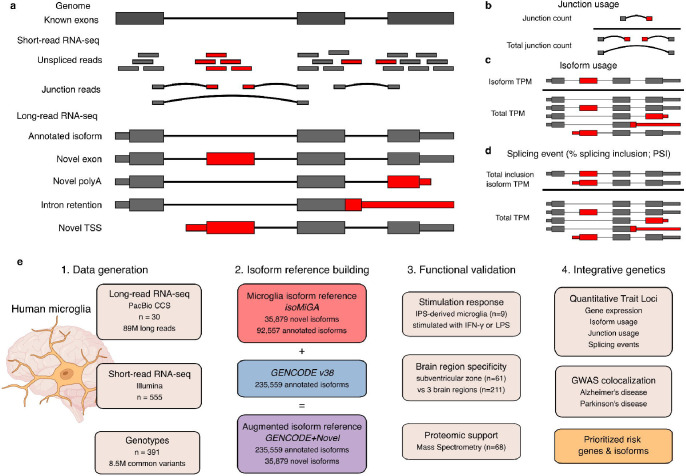
The paper presents isoMiGA, a long-read RNA-seq atlas of human microglia identifying 35,879 novel isoforms and 2,238 novel genes, then quantifies known and novel isoforms in 555 short-read samples from 391 donors. It maps eQTLs and multiple sQTL types, finding novel isoform/splicing associations that colocalize with Alzheimer’s and Parkinson’s disease GWAS loci.
Key findings
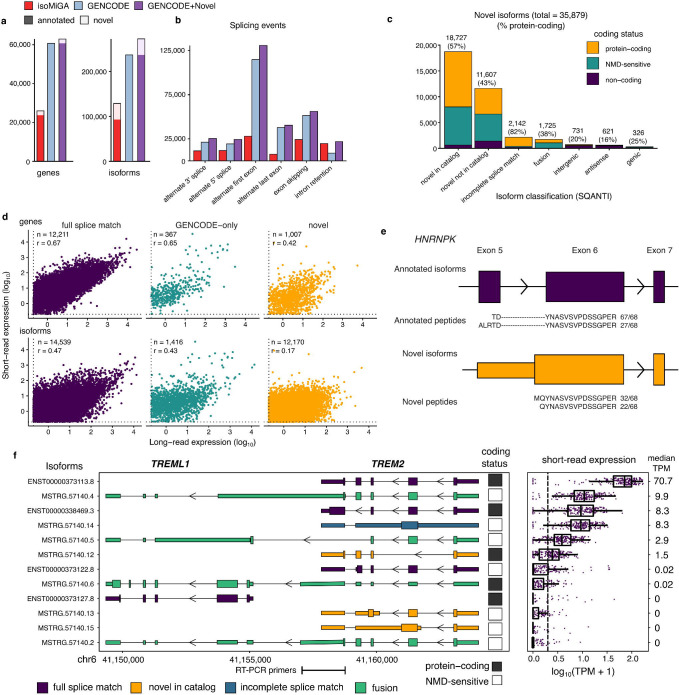
- Long-read sequencing of 30 microglia samples yielded 89,285,858 full-length reads (99.73% uniquely aligned) and assembled 128,436 isoforms in 25,956 genes; 35,879 isoforms and 2,238 genes were novel versus GENCODE v38.
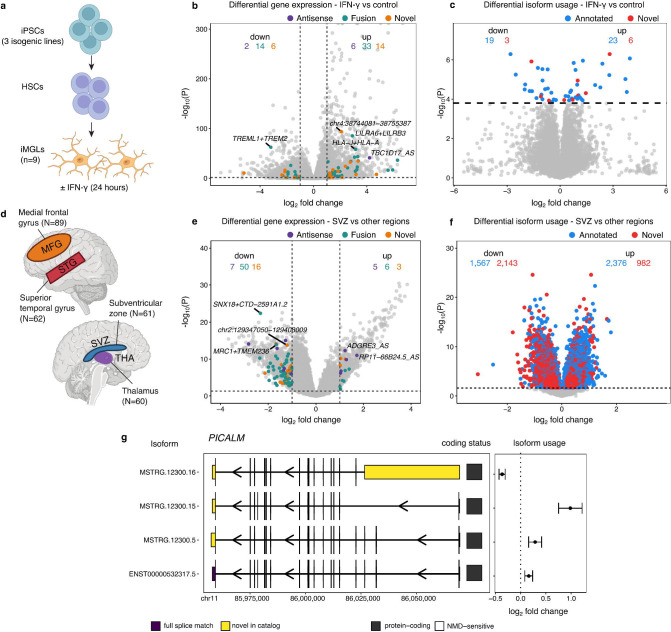
- Novel isoforms showed stimulation and brain-region specificity: IFN-γ altered 75 novel genes and LPS 28 novel genes; SVZ microglia had 87 novel genes differentially expressed and 3,125 novel isoforms differentially used (FDR < 0.05).
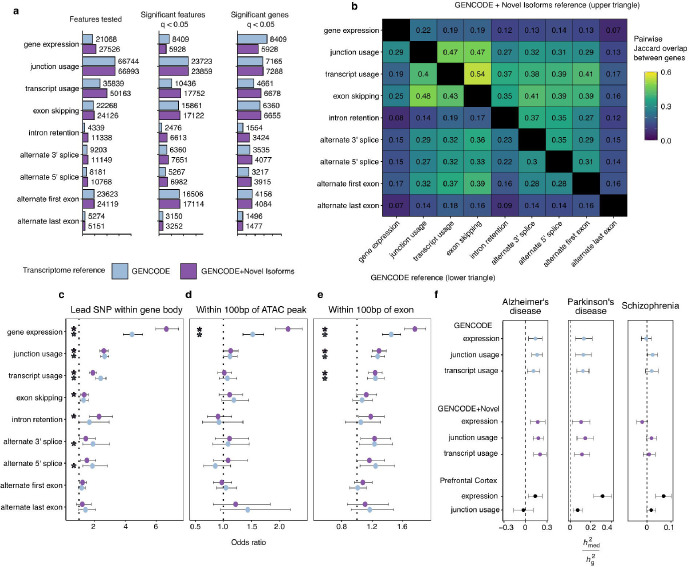
- In the multi-ethnic meta-analysis of 555 short-read samples from 391 donors, the augmented GENCODE+Novel reference identified 456 novel genes with eQTLs and 5,658 novel isoforms in 3,545 genes with tuQTLs at q < 0.05.
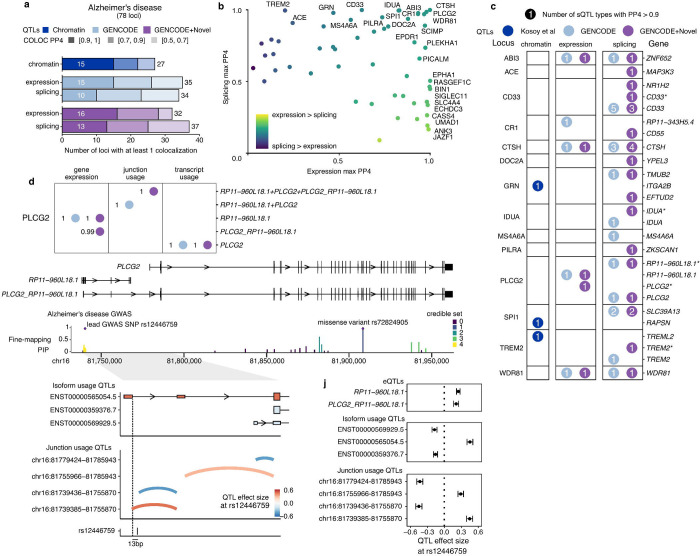
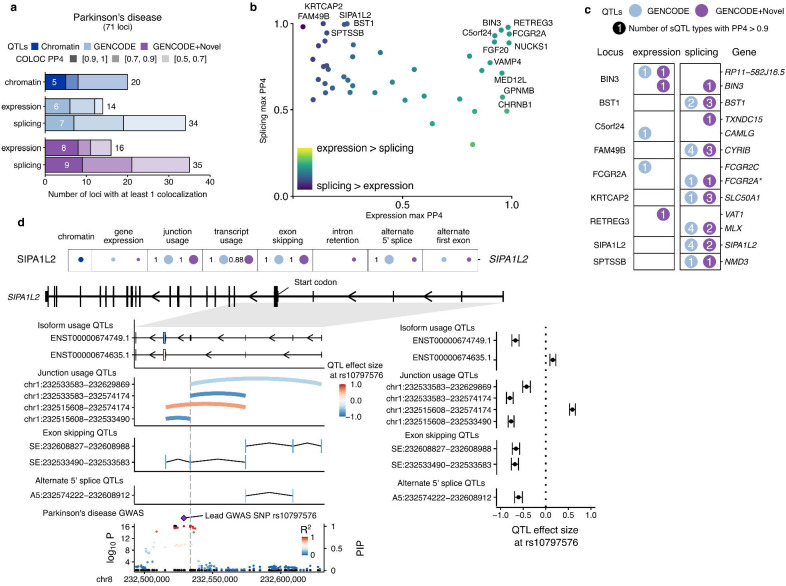
- Colocalization with AD GWAS found 32–37 of 78 loci with expression/splicing QTLs; PD had more sQTL colocalizations (34–35) than eQTL colocalizations (14–16). MESC showed non-zero mediation of AD and PD heritability by microglia QTLs, but not schizophrenia.
Methods
- Long-read RNA-seq: PacBio IsoSeq Sequel II CCS on 30 postmortem microglia samples; hybrid assembly with Stringtie2 and short reads, SQANTI v3 classification/filtering, ORF prediction with GeneMarks.
- Short-read RNA-seq: 555 purified microglia samples from 391 donors (three published cohorts plus 121 new samples); Salmon quantification against GENCODE v38 or GENCODE+Novel; differential expression/usage with DESeq2/edgeR, DREAM, and satuRn.
- QTL mapping: six paired genotype-phenotype cohorts; tensorQTL per cohort and mmQTL random-effects multi-ancestry meta-analysis; eQTLs, Leafcutter juQTLs, transcript-usage QTLs, and SUPPA splicing-event QTLs; Coloc colocalization with AD and PD GWAS and MESC heritability mediation.
Limitations
- The paper states imperfect short- vs long-read isoform correlation, ongoing challenges in long-read isoform assembly, and pseudoalignment errors with increasing isoform length/complexity; little peptide support for novel isoforms due to trypsin digestion disfavoring exon-junction peptides.
- The paper states meta-analysis imposes a lower minor allele frequency limit and assumes shared effects across cohorts; colocalization implies shared genetic effects but does not directly test causality, and splicing variant validation remains challenging.
- Evident from the text: long-read discovery used 30 samples, mostly prefrontal cortex/medial frontal gyrus and mixed diagnoses, and Stringtie2 vs Bambu had low exact replication for novel isoforms (4,725 novel isoforms matched exactly).
Model-written summary. Check it against the paper before relying on it.
Integrity signals
Registry
Cites
Statistics
Figures
Verification
Claims the paper makes
2 Valid · 0 Not valid · 31 Not checked · 111 Own results and interpretations
The cited sources support only part of this claim — read each source’s verdict below.
In the paper
“The past decade has seen increasing genetic evidence, from both rare variants found in sequencing studies and common variants found in genome-wide association studies (GWAS), implicating the myeloid cell lineage in the pathogenesis of multiple neurodegenerative diseases, chief among them Alzheimer’s disease (AD) and Parkinson’s disease (PD)”
§ Long-read RNA-seq atlas of novel microglia isoforms elucidates disease-associated genetic regulation of splicing > Introduction
What the sources say
- Partly supportedcites Guerreiro et al. 2013 matched to “TREM2 Variants in Alzheimer's Disease” (2013) sourceExperimental — accuracy not yet measured
Our copy supports the Alzheimer's part: the Abstract/CONCLUSIONS and Discussion show that heterozygous rare variants in TREM2 — the myeloid/microglial receptor — raise AD risk (OR 5.05, 95% CI 2.77–9.16 for R47H), with TREM2 expression localized to plaque-associated microglia (Results, p. ~4; Discussion, p. ~8), and it also notes homozygous TREM2 mutations presenting as a frontotemporal-dementia-like syndrome (Abstract intro). However, no passage in our copy genetically implicates microglia/myeloid variants in Parkinson's disease; the only PD-related content is incidental pathology ('two of the samples showed some mild Lewy-body disease', Results), which is not a genetic association. So the 'chief among them ... Parkinson's disease' portion of the attributed claim is not supported by this source. (LLM, conf=0.78)
- Partly supportedcites Lambert et al. 2013 matched to “Meta-Analysis of 74,046 Individuals Identifies 11 New Susceptibility Loci for Alzheimer’s Disease” (2013) sourceExperimental — accuracy not yet measured
Our copy supports the Alzheimer's part: the discussion passage (section 'Statistical analysis.', p. n/a) states that new pathways 'could include ... microglial and myeloid cell function (INPP5D)', and the Abstract notes immune/inflammation enrichment (HLA-DRB5-DRB1, INPP5D, MEF2C). However, the only Parkinson's content in our copy is the Abstract statement that the HLA-DRB5-DRB1 region is associated with risk of both multiple sclerosis and Parkinson disease (refs. 12,13) — a shared-locus observation, not a claim that microglia or the myeloid lineage are genetically implicated in Parkinson's or in 'multiple neurodegenerative diseases'. The extension of the microglial/myeloid genetic implication beyond Alzheimer's is therefore not supported by this source. (LLM, conf=0.72)
- Partly supportedcites Towfique Raj et al. 2014 matched to “Polarization of the Effects of Autoimmune and Neurodegenerative Risk Alleles in Leukocytes” (2014) sourceExperimental — accuracy not yet measured
Our copy supports the common-variant half of the sentence: the Results ('Alzheimer's disease (AD), Parkinson's disease (PD), lipid traits, and type 2 diabetes susceptibility alleles are enriched in monocyte-specific effects... the AD susceptibility alleles are significant eQTLs only in monocytes') and the closing discussion ('we suggest that the inflammatory component of susceptibility to neurodegenerative diseases may be more strongly driven by the myeloid compartment') tie GWAS susceptibility alleles for AD and PD to monocytes/myeloid cells. Two parts attributed to this source are not in it: (a) 'rare variants found in sequencing studies' — our copy contains no sequencing-based rare-variant evidence (searched: rare coding variants, exome sequencing, PGRN/TREM2), its variants are NIH GWAS-catalog SNPs and 1000 Genomes-imputed eQTL SNPs; (b) the paraphrase's leap to microglia and to 'pathogenesis' — the same discussion passage explicitly hedges that monocytes 'are likely to be proxies for the infiltrating macrophages... and/or resident microglia' and that the study, done in young healthy donors, supports a role only in the prodromal phase. The source is also hedged ('we suggest... may be'), where the citing sentence states established evidence. (LLM, conf=0.72)
plainstates an association- Asserted: passes — The authors put it forward as true.
- Checkable: passes — It can be checked against evidence.
- Load-bearing: passes — The paper’s conclusions depend on it.
- Based: passes — The paper gives a reason why it holds.
- Partly supported
Every source the paper cites for this claim was checked and supports it.
In the paper
“Combining multiple matched genotype and transcriptomic cohorts increases discovery of cis-genetic regulatory associations”
§ Long-read RNA-seq atlas of novel microglia isoforms elucidates disease-associated genetic regulation of splicing > Results > Novel isoforms enhance splicing QTL discovery
What the sources say
- Supportedcites Kosoy et al. 2022 matched to “Genetics of the human microglia regulome refines Alzheimer’s disease risk loci” (2022) source
The Results section 'Co-regulation of chromatin accessibility and gene expression' reports that eQTL detection in the single 101-donor microglia cohort yielded 1,603 eQTLs at 5% FDR, whereas meta-analysis of the three matched microglia genotype/transcriptome cohorts (this study plus Young et al. and Lopes et al.) yielded 7,302 meta-eQTLs — a clear increase in discovered cis-associations (cis defined as 500 kb/50 kb around the feature in Methods 'eQTL and caQTL detection'). The Methods 'Meta-QTL analysis' states the purpose explicitly: 'To improve the statistical power in QTL detection, we applied mmQTL... to integrate QTL among datasets'. The one caveat is that the parallel meta-caQTL combined chromatin-accessibility data with macrophage (non-microglia) datasets, but the transcriptome (eQTL) meta-analysis is exactly the matched-cohort combination the claim describes. (LLM, conf=0.85)
plainstates a causen = 391- Asserted: passes — The authors put it forward as true.
- Checkable: passes — It can be checked against evidence.
- Load-bearing: passes — The paper’s conclusions depend on it.
- Based: passes — The paper gives a reason why it holds.
- Supported
A result the paper reports from its own data — it cites no other source for it, so there is none to check. The quote shows it is in the paper.
In the paper
“with 17,522 annotated and 872 novel isoforms expressed with a median TPM > 0.1.”
§ Long-read RNA-seq atlas of novel microglia isoforms elucidates disease-associated genetic regulation of splicing > Results > Novel isoforms have stimulation, region and subtype specificity
plain- Asserted: passes — The authors put it forward as true.
- Checkable: passes — It can be checked against evidence.
- Load-bearing: unclear — It is unclear whether the paper’s conclusions depend on it.
- Based: passes — The paper gives a reason why it holds.
A result the paper reports from its own data — it cites no other source for it, so there is none to check. The quote shows it is in the paper.
In the paper
“Of the 17,522 annotated and 872 genes tested, we observed 1,217 annotated and 87 novel genes to be differentially expressed (|LFC| > 1; FDR < 0.05)”
§ Long-read RNA-seq atlas of novel microglia isoforms elucidates disease-associated genetic regulation of splicing > Results > Novel isoforms have stimulation, region and subtype specificity
plainstates an associationn = 211- Asserted: passes — The authors put it forward as true.
- Checkable: passes — It can be checked against evidence.
- Load-bearing: passes — The paper’s conclusions depend on it.
- Based: passes — The paper gives a reason why it holds.
A result the paper reports from its own data — it cites no other source for it, so there is none to check. The quote shows it is in the paper.
In the paper
“and that compared to the GENCODE reference, intron retention events were highly abundant”
§ Long-read RNA-seq atlas of novel microglia isoforms elucidates disease-associated genetic regulation of splicing > Results > Long-read RNA sequencing of human microglia identifies novel isoforms
plain- Asserted: passes — The authors put it forward as true.
- Checkable: passes — It can be checked against evidence.
- Load-bearing: unclear — It is unclear whether the paper’s conclusions depend on it.
- Based: passes — The paper gives a reason why it holds.
44 more claims
Create a free account to see all 144 claims and to verify the 50 references still open.
- It may state two separate claims as one. 71
- Probably not a substantial claim. 40
Self-check
Percentages, sums and reported differences re-computed from the paper’s own numbers.
Each contradiction between two passages listed here was confirmed by an independent check.
Rated minor: it would not touch a result — a value no result rests on, a p-value that stays on the same side of the significance level, or a conflict that is clerical, resolved elsewhere in the paper, or outside its own findings.
In the paper
§ Long-read RNA-seq atlas of novel microglia isoforms elucidates disease-associated genetic regulation of splicing > Results > Novel isoforms have stimulation, region and subtype specificity
“We generated induced pluripotent stem cell-derived microglia (iMGLs) from 3 isogenic lines harboring a Parkinson’s disease linked mutation (G2019S) in the LRRK2 gene generated from a single human donor”
§ Long-read RNA-seq atlas of novel microglia isoforms elucidates disease-associated genetic regulation of splicing > Methods > Induced microglia cells
“Isogenic induced pluripotent stem cell (iPSC) lines for a single donor with LRRK2 G2019S wild-type, heterozygous, and homozygous variants were provided by the Cookson Lab (NIH).”
Citations
Cites
STAR: ultrafast universal RNA-seq aligner
Dobin, A., Davis, C. A., Schlesinger, F., Drenkow, J., Zaleski, C., Jha, S., Batut, P., Chaisson, M., & Gingeras, T. R. (2013) · Bioinformatics · doi:10.1093/bioinformatics/bts635 · Cited by 51,709
Robinson, M. D., McCarthy, D. J., & Smyth, G. K. (2010) · Bioinformatics · doi:10.1093/bioinformatics/btp616 · Cited by 41,364
Minimap2: Pairwise alignment for nucleotide sequences
Li, H. (2018) · Bioinformatics · doi:10.1093/bioinformatics/bty191 · Cited by 14,807
Salmon provides fast and bias-aware quantification of transcript expression
Patro, R., Duggal, G., Love, M. I., Irizarry, R. A., & Kingsford, C. (2017) · Nature Methods · doi:10.1038/nmeth.4197 · Cited by 12,700
QuPath: Open source software for digital pathology image analysis
Bankhead, P., Loughrey, M. B., Fernández, J. A., Dombrowski, Y., McArt, D. G., Dunne, P. D., McQuaid, S., Gray, R. T., Murray, L. J., Coleman, H. G., et al. (2017) · Scientific Reports · doi:10.1038/s41598-017-17204-5 · Cited by 8,908
GCTA: a tool for genome-wide complex trait analysis
Yang, J., Lee, S. H., Goddard, M. E., & Visscher, P. M. (2011) · The American Journal of Human Genetics · doi:10.1016/j.ajhg.2010.11.011 · Cited by 8,279
voom: precision weights unlock linear model analysis tools for RNA-seq read counts
Law, C. W., Chen, Y., Shi, W., & Smyth, G. K. (2014) · Genome Biology · doi:10.1186/gb-2014-15-2-r29 · Cited by 6,155
The GTEx Consortium atlas of genetic regulatory effects across human tissues
The GTEx Consortium, Aguet, F., Anand, S., Ardlie, K. G., Gabriel, S., Getz, G. A., Graubert, A., Hadley, K., Handsaker, R. E., Huang, K. H., et al. (2020) · Science · doi:10.1126/science.aaz1776 · Cited by 5,547
Meta-Analysis of 74,046 Individuals Identifies 11 New Susceptibility Loci for Alzheimer’s Disease
(EADI), E. A. D. I., Lambert, J.-C., (GERAD), G. A. E. R. I. A. D., Alzheimer's Disease Genetic Consortium (ADGC), (CHARGE), C. F. H. A. A. R. I. G. E., Ibrahim-Verbaas, C. A., Harold, D., Naj, A. C., Sims, R., Bellenguez, C., et al. (2013) · Nature Genetics · doi:10.1038/ng.2802 · Cited by 4,336
Self-citationGiambartolomei, C., Vukcevic, D., Schadt, E. E., Franke, L., Hingorani, A. D., Wallace, C., & Plagnol, V. (2014) · PLoS Genetics · doi:10.1371/journal.pgen.1004383 · Cited by 4,261
Cited by
Jang, B., Kailash, B. P., Tokolyi, A., Dredge, W. H., Ravi, A., Jung, S., Naito, T., Kim, B., Kim, M. S., Cho, M., et al. (2026) · Nature Genetics · doi:10.1038/s41588-026-02541-x · Cited by 40
Self-citationElucidating the coordination of RNA processing using short-read and long-read RNA-sequencing methods
Alfonso-Gonzalez, C., & Hilgers, V. (2025) · Nature Reviews Molecular Cell Biology · doi:10.1038/s41580-025-00895-4 · Cited by 16
Genomic analyses reveal new insights into Alzheimer's diseasePreprint
Uffelmann, E., Wightman, D. P., Bahrami, S., Shadrin, A. A., Fominykh, V., Ojima, T., Jiang, C., Benner, C., Moreno, E., Campos, A. I., et al. (2025) · medRxiv · doi:10.1101/2025.10.10.25337470 · Cited by 14
Beyond the gene: decoding alternative isoforms
Mattioli, K., & Bulyk, M. L. (2025) · Trends in Genetics · doi:10.1016/j.tig.2025.11.003 · Cited by 11
Perplexity as a metric for isoform diversity in the human transcriptome
Schertzer, M. D., Park, S. H., Su, J., Reese, F., Sheynkman, G. M., & Knowles, D. A. (2026) · Genome biology · doi:10.1186/s13059-026-04260-2 · Cited by 10
Metadata
- Authors
- Humphrey, J., Brophy, E., Kosoy, R., Zeng, B., Coccia, E., Mattei, D., Ravi, A., Naito, T., Efthymiou, A. G., Navarro, E., De Sanctis, C., Flores-Almazan, V., Muller, B. Z., Snijders, G. J. L. J., Allan, A., Münch, A., Kitata, R. B., Kleopoulos, S. P., Argyriou, S., Malakates, P., Psychogyiou, K., Shao, Z., Francoeur, N., Tsai, C.-F., Gritsenko, M. A., Monroe, M. E., Paurus, V. L., Weitz, K. K., Shi, T., Sebra, R., Liu, T., de Witte, L. D., Goate, A. M., Bennett, D. A., Haroutunian, V., Hoffman, G. E., Fullard, J. F., Roussos, P., & Raj, T.
- Affiliations
- Icahn School of Medicine at Mount Sinai (US)
- Universidad Complutense de Madrid (ES)
- Pacific Northwest National Laboratory (US)
- Rush University Medical Center (US)
- James J. Peters VA Medical Center (US)
- Corresponding author
- Roussos, Panos
- Raj, Towfique
- ORCID
- Humphrey, Jack
- Kosoy, Roman
- Coccia, Elena
- Mattei, Daniele
- Ravi, Ashvin
- Naito, Tatsuhiko
- Efthymiou, Anastasia G.
- Navarro, Elisa
- Muller, Benjamin Z.
- Snijders, Gijsje J. L. J.
- Allan, Amanda
- Münch, Alexandra
- Kitata, Reta Birhanu
- Kleopoulos, Steven P.
- Argyriou, Stathis
- Malakates, Periklis
- Psychogyiou, Konstantina
- Shao, Zhiping
- Francoeur, Nancy
- Tsai, Chia-Feng
- Gritsenko, Marina A.
- Monroe, Matthew E.
- Paurus, Vanessa L.
- Weitz, Karl K.
- Shi, Tujin
- Sebra, Robert
- Liu, Tao
- de Witte, Lot D.
- Goate, Alison M.
- Bennett, David A.
- Haroutunian, Vahram
- Hoffman, Gabriel E.
- Fullard, John F.
- Roussos, Panos
- Raj, Towfique
- Venue
- Nature Genetics
- Published
- 2025-03
- Volume
- 57
- Issue
- 3
- Pages
- 604-615
- ISSN
- 1061-4036 (ISSN-L)
- 1546-1718
- PMC
- PMC10705658
- OpenAlex
- W4408119775
- Cited by
- 44
- References
- 109
- Citations by year
- 2026: 33 · 2025: 11
- FWCI
- 8.66
- Type
- journal article
- Language
- en
- Open access
- green
- doi.org
- Licence
- cc-by-nc-nd
- www.springernature.com/gp/researchers/text-and-data-mining (tdm)
- www.springernature.com/gp/researchers/text-and-data-mining (vor)
- Locations
- Nature Genetics (publishedVersion)
- medRxiv (submittedVersion, cc-by-nc-nd)
- PubMed (publishedVersion)
- PubMed Central (submittedVersion, cc-by-nc-nd)
- PubMed (submittedVersion)
- Funders
- Foundation for the National Institutes of Health (R21-AG063130, R01-AG054005, U01-AG068880, U01-AG058635)
- Topics
- Life Sciences › Biochemistry, Genetics and Molecular Biology › Molecular Biology › RNA Research and Splicing
- Life Sciences › Neuroscience › Neurology › Neuroinflammation and Neurodegeneration Mechanisms
- Life Sciences › Biochemistry, Genetics and Molecular Biology › Molecular Biology › Single-cell and spatial transcriptomics
- Keywords
- microglia, alternative splicing, long-read RNA sequencing, disease-associated variants, Alzheimer's disease, Parkinson's disease, neurodegenerative diseases, brain region specificity
- MeSH terms
- Alzheimer Disease, Brain, Gene Expression Regulation, Humans, Parkinson Disease, RNA Splicing, Alternative Splicing, Sequence Analysis, RNA, Microglia, Genetic Predisposition to Disease, Protein Isoforms
About these checks
Registry, retraction, Cites and statistics results are computed, not judged, with one exception: a printed reference that no index lists is read once by a model before it counts as a citation error. Claims are extracted by a model and kept only when their quote appears verbatim in the text; each cited source is then checked, with a model’s help, for whether it says what the claim relies on. Those verdicts can be wrong — read the claim’s quote and the cited source before relying on one.
The claim verdicts this report counts are experimental: their accuracy is not yet measured.
A language model drew the claims from the paper on 2026-11-24, under version 3 of the claim definition (model deepseek-v4.1-flash, prompt extract-v3).
A second model labelled each claim on 2026-11-24 (model jev-1.13-20260917, definition revision gold-guideline-v0.2).
Cited sources are checked with a language model’s help (qwen3.8-omni-flash).
Statistics and arithmetic are recomputed, not judged.
Confidence bands are shown only for fields calibrated on our annotated test set. None is calibrated yet, so no band is shown.
What counts as a claim ›How we measure confidence ›How we check this ›
Are you an author, or do you see a problem with this page? Request a review
Data sources
Bibliographic data: Semantic Scholar, OpenAlex, Crossref.
Contains information from the Semantic Scholar Academic Graph Datasets, made available under the ODC Attribution License (ODC-BY 1.0).
Semantic Scholar’s data is described in: Kinney, R., et al. (2023). The Semantic Scholar Open Data Platform. arXiv:2301.10140.
