

Long-read RNA sequencing atlas of human microglia isoforms elucidates disease-associated genetic regulation of splicing
Open accessThe DOI matches its Crossref record; 111 of the 112 references it cites were found in a registry or an index; 3 of the 56 sources its claims cite were checked for support.
Overview
CoChat Summary
TL;DR
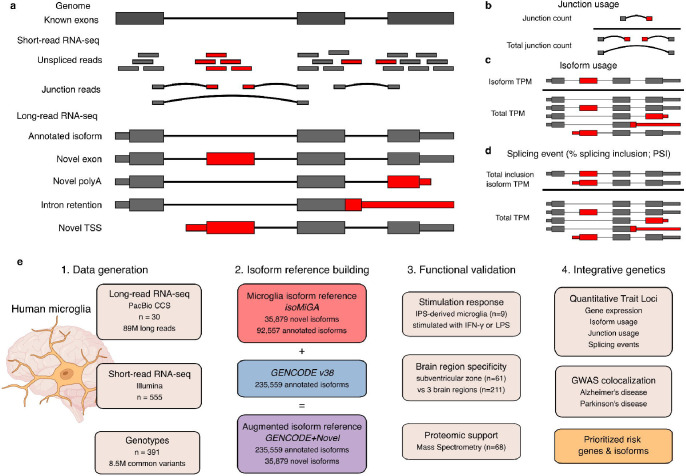
The paper presents isoMiGA, a long-read RNA-seq atlas of human microglia identifying 35,879 novel isoforms and 2,238 novel genes, then quantifies known and novel isoforms in 555 short-read samples from 391 donors. It maps eQTLs and multiple sQTL types, finding novel isoform/splicing associations that colocalize with Alzheimer’s and Parkinson’s disease GWAS loci.
Key findings
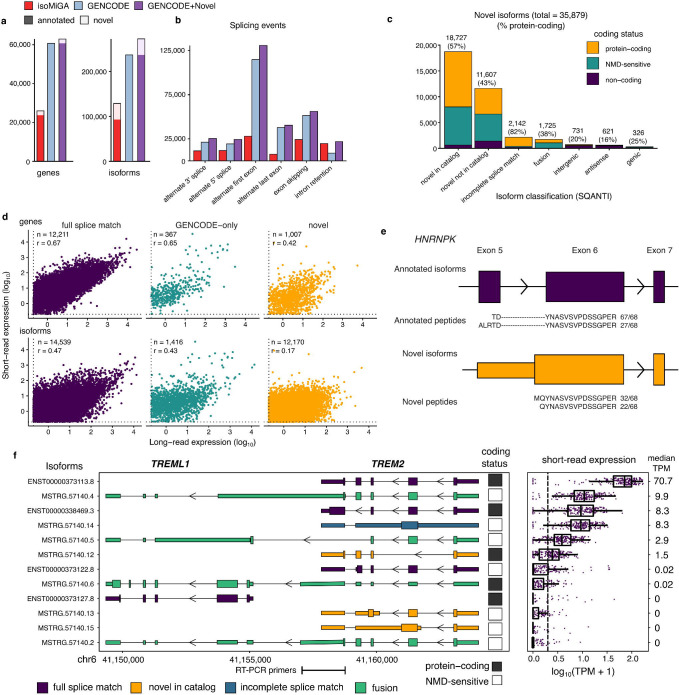
- Long-read sequencing of 30 microglia samples yielded 89,285,858 full-length reads (99.73% uniquely aligned) and assembled 128,436 isoforms in 25,956 genes; 35,879 isoforms and 2,238 genes were novel versus GENCODE v38.
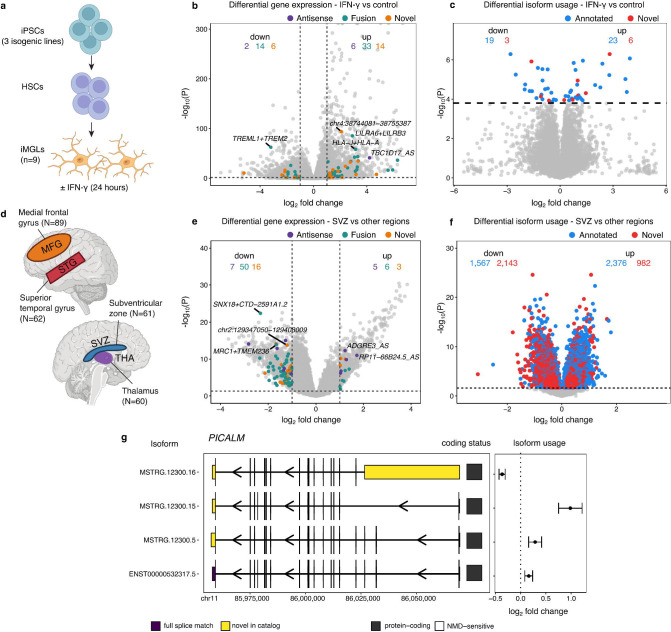
- Novel isoforms showed stimulation and brain-region specificity: IFN-γ altered 75 novel genes and LPS 28 novel genes; SVZ microglia had 87 novel genes differentially expressed and 3,125 novel isoforms differentially used (FDR < 0.05).
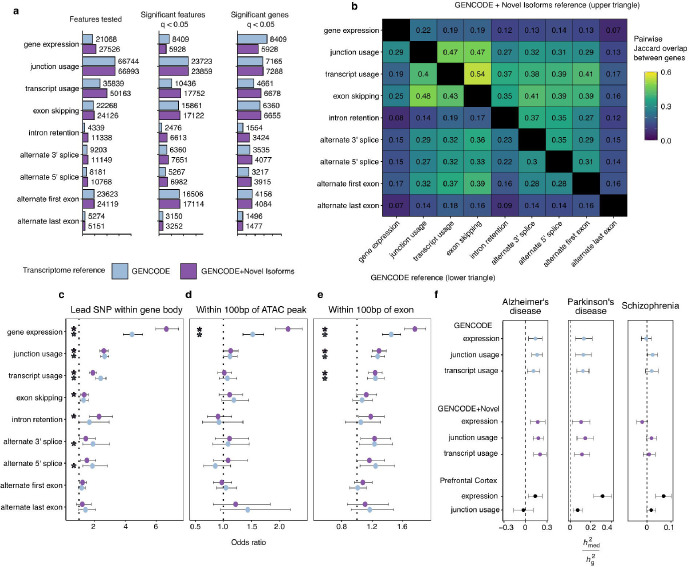
- In the multi-ethnic meta-analysis of 555 short-read samples from 391 donors, the augmented GENCODE+Novel reference identified 456 novel genes with eQTLs and 5,658 novel isoforms in 3,545 genes with tuQTLs at q < 0.05.
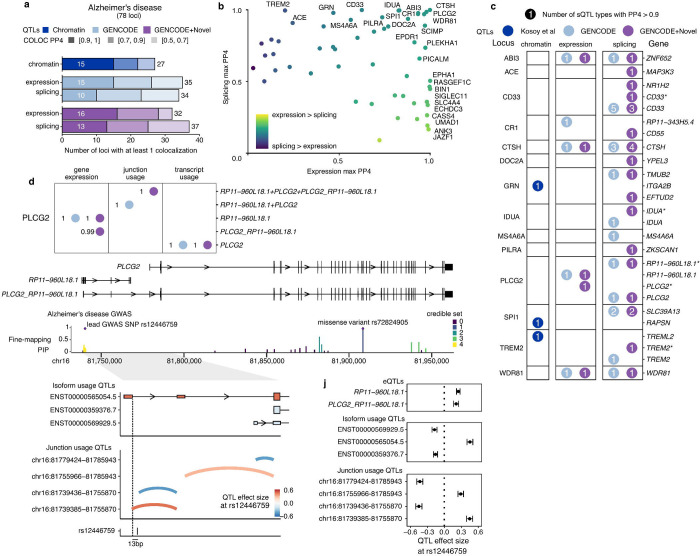
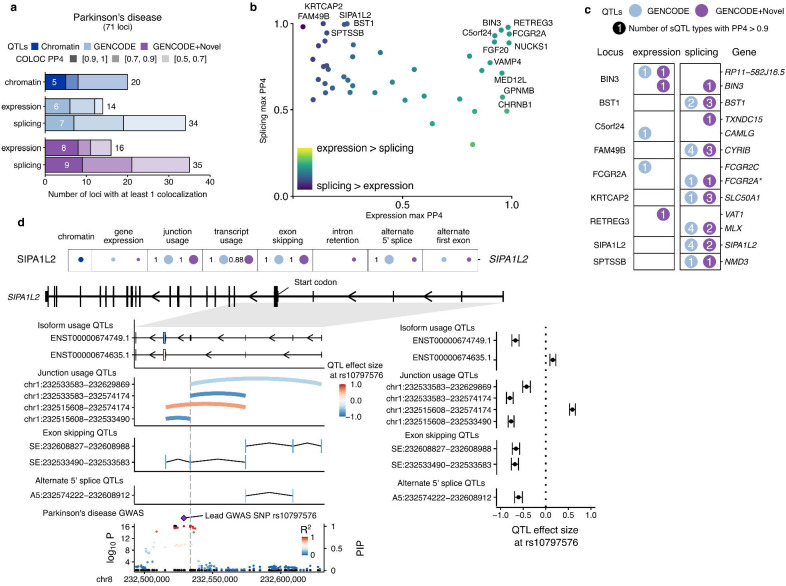
- Colocalization with AD GWAS found 32–37 of 78 loci with expression/splicing QTLs; PD had more sQTL colocalizations (34–35) than eQTL colocalizations (14–16). MESC showed non-zero mediation of AD and PD heritability by microglia QTLs, but not schizophrenia.
Methods
- Long-read RNA-seq: PacBio IsoSeq Sequel II CCS on 30 postmortem microglia samples; hybrid assembly with Stringtie2 and short reads, SQANTI v3 classification/filtering, ORF prediction with GeneMarks.
- Short-read RNA-seq: 555 purified microglia samples from 391 donors (three published cohorts plus 121 new samples); Salmon quantification against GENCODE v38 or GENCODE+Novel; differential expression/usage with DESeq2/edgeR, DREAM, and satuRn.
- QTL mapping: six paired genotype-phenotype cohorts; tensorQTL per cohort and mmQTL random-effects multi-ancestry meta-analysis; eQTLs, Leafcutter juQTLs, transcript-usage QTLs, and SUPPA splicing-event QTLs; Coloc colocalization with AD and PD GWAS and MESC heritability mediation.
Limitations
- The paper states imperfect short- vs long-read isoform correlation, ongoing challenges in long-read isoform assembly, and pseudoalignment errors with increasing isoform length/complexity; little peptide support for novel isoforms due to trypsin digestion disfavoring exon-junction peptides.
- The paper states meta-analysis imposes a lower minor allele frequency limit and assumes shared effects across cohorts; colocalization implies shared genetic effects but does not directly test causality, and splicing variant validation remains challenging.
- Evident from the text: long-read discovery used 30 samples, mostly prefrontal cortex/medial frontal gyrus and mixed diagnoses, and Stringtie2 vs Bambu had low exact replication for novel isoforms (4,725 novel isoforms matched exactly).
Model-written summary. Check it against the paper before relying on it.
Integrity signals
Registry
Cites
Statistics
Figures
Verification
Claims the paper makes
1 Valid · 0 Not valid · 32 Not checked · 111 Own results and interpretations
The cited sources support only part of this claim — read each source’s verdict below.
In the paper
“The past decade has seen increasing genetic evidence, from both rare variants found in sequencing studies and common variants found in genome-wide association studies (GWAS), implicating the myeloid cell lineage in the pathogenesis of multiple neurodegenerative diseases, chief among them Alzheimer’s disease (AD) and Parkinson’s disease (PD)”
§ Long-read RNA-seq atlas of novel microglia isoforms elucidates disease-associated genetic regulation of splicing > Introduction
What the sources say
- Partly supportedcites Guerreiro et al. 2013 matched to “TREM2 Variants in Alzheimer's Disease” (2013) sourceExperimental — accuracy not yet measured
Our copy supports the Alzheimer's part: the Abstract/CONCLUSIONS and Discussion show that heterozygous rare variants in TREM2 — the myeloid/microglial receptor — raise AD risk (OR 5.05, 95% CI 2.77–9.16 for R47H), with TREM2 expression localized to plaque-associated microglia (Results, p. ~4; Discussion, p. ~8), and it also notes homozygous TREM2 mutations presenting as a frontotemporal-dementia-like syndrome (Abstract intro). However, no passage in our copy genetically implicates microglia/myeloid variants in Parkinson's disease; the only PD-related content is incidental pathology ('two of the samples showed some mild Lewy-body disease', Results), which is not a genetic association. So the 'chief among them ... Parkinson's disease' portion of the attributed claim is not supported by this source. (LLM, conf=0.78)
- Partly supportedcites Lambert et al. 2013 matched to “Meta-Analysis of 74,046 Individuals Identifies 11 New Susceptibility Loci for Alzheimer’s Disease” (2013) sourceExperimental — accuracy not yet measured
Our copy supports the Alzheimer's part: the discussion passage (section 'Statistical analysis.', p. n/a) states that new pathways 'could include ... microglial and myeloid cell function (INPP5D)', and the Abstract notes immune/inflammation enrichment (HLA-DRB5-DRB1, INPP5D, MEF2C). However, the only Parkinson's content in our copy is the Abstract statement that the HLA-DRB5-DRB1 region is associated with risk of both multiple sclerosis and Parkinson disease (refs. 12,13) — a shared-locus observation, not a claim that microglia or the myeloid lineage are genetically implicated in Parkinson's or in 'multiple neurodegenerative diseases'. The extension of the microglial/myeloid genetic implication beyond Alzheimer's is therefore not supported by this source. (LLM, conf=0.72)
- Partly supportedcites Towfique Raj et al. 2014 matched to “Polarization of the Effects of Autoimmune and Neurodegenerative Risk Alleles in Leukocytes” (2014) sourceExperimental — accuracy not yet measured
Our copy supports the common-variant half of the sentence: the Results ('Alzheimer's disease (AD), Parkinson's disease (PD), lipid traits, and type 2 diabetes susceptibility alleles are enriched in monocyte-specific effects... the AD susceptibility alleles are significant eQTLs only in monocytes') and the closing discussion ('we suggest that the inflammatory component of susceptibility to neurodegenerative diseases may be more strongly driven by the myeloid compartment') tie GWAS susceptibility alleles for AD and PD to monocytes/myeloid cells. Two parts attributed to this source are not in it: (a) 'rare variants found in sequencing studies' — our copy contains no sequencing-based rare-variant evidence (searched: rare coding variants, exome sequencing, PGRN/TREM2), its variants are NIH GWAS-catalog SNPs and 1000 Genomes-imputed eQTL SNPs; (b) the paraphrase's leap to microglia and to 'pathogenesis' — the same discussion passage explicitly hedges that monocytes 'are likely to be proxies for the infiltrating macrophages... and/or resident microglia' and that the study, done in young healthy donors, supports a role only in the prodromal phase. The source is also hedged ('we suggest... may be'), where the citing sentence states established evidence. (LLM, conf=0.72)
plainstates an association- Asserted: passes — The authors put it forward as true.
- Checkable: passes — It can be checked against evidence.
- Load-bearing: passes — The paper’s conclusions depend on it.
- Based: passes — The paper gives a reason why it holds.
- Partly supported
A result the paper reports from its own data — it cites no other source for it, so there is none to check. The quote shows it is in the paper.
In the paper
“with 17,522 annotated and 872 novel isoforms expressed with a median TPM > 0.1.”
§ Long-read RNA-seq atlas of novel microglia isoforms elucidates disease-associated genetic regulation of splicing > Results > Novel isoforms have stimulation, region and subtype specificity
plain- Asserted: passes — The authors put it forward as true.
- Checkable: passes — It can be checked against evidence.
- Load-bearing: unclear — It is unclear whether the paper’s conclusions depend on it.
- Based: passes — The paper gives a reason why it holds.
A result the paper reports from its own data — it cites no other source for it, so there is none to check. The quote shows it is in the paper.
In the paper
“Of the 17,522 annotated and 872 genes tested, we observed 1,217 annotated and 87 novel genes to be differentially expressed (|LFC| > 1; FDR < 0.05)”
§ Long-read RNA-seq atlas of novel microglia isoforms elucidates disease-associated genetic regulation of splicing > Results > Novel isoforms have stimulation, region and subtype specificity
plainstates an associationn = 211- Asserted: passes — The authors put it forward as true.
- Checkable: passes — It can be checked against evidence.
- Load-bearing: passes — The paper’s conclusions depend on it.
- Based: passes — The paper gives a reason why it holds.
A result the paper reports from its own data — it cites no other source for it, so there is none to check. The quote shows it is in the paper.
In the paper
“and that compared to the GENCODE reference, intron retention events were highly abundant”
§ Long-read RNA-seq atlas of novel microglia isoforms elucidates disease-associated genetic regulation of splicing > Results > Long-read RNA sequencing of human microglia identifies novel isoforms
plain- Asserted: passes — The authors put it forward as true.
- Checkable: passes — It can be checked against evidence.
- Load-bearing: unclear — It is unclear whether the paper’s conclusions depend on it.
- Based: passes — The paper gives a reason why it holds.
A result the paper reports from its own data — it cites no other source for it, so there is none to check. The quote shows it is in the paper.
In the paper
“We further explored the PLGC2 locus, where we observed colocalization with gene expression, junction usage and isoform usage”
§ Long-read RNA-seq atlas of novel microglia isoforms elucidates disease-associated genetic regulation of splicing > Results > Novel isoforms explain new colocalizations with disease GWAS
plainstates an association- Asserted: passes — The authors put it forward as true.
- Checkable: passes — It can be checked against evidence.
- Load-bearing: passes — The paper’s conclusions depend on it.
- Based: passes — The paper gives a reason why it holds.
44 more claims
Create a free account to see all 144 claims and to verify the 50 references still open.
- It may state two separate claims as one. 71
- Probably not a substantial claim. 40
Self-check
Percentages, sums and reported differences re-computed from the paper’s own numbers.
Each contradiction between two passages listed here was confirmed by an independent check.
Rated minor: it would not touch a result — a value no result rests on, a p-value that stays on the same side of the significance level, or a conflict that is clerical, resolved elsewhere in the paper, or outside its own findings.
In the paper
§ Long-read RNA-seq atlas of novel microglia isoforms elucidates disease-associated genetic regulation of splicing > Results > Novel isoforms have stimulation, region and subtype specificity
“We generated induced pluripotent stem cell-derived microglia (iMGLs) from 3 isogenic lines harboring a Parkinson’s disease linked mutation (G2019S) in the LRRK2 gene generated from a single human donor”
§ Long-read RNA-seq atlas of novel microglia isoforms elucidates disease-associated genetic regulation of splicing > Methods > Induced microglia cells
“Isogenic induced pluripotent stem cell (iPSC) lines for a single donor with LRRK2 G2019S wild-type, heterozygous, and homozygous variants were provided by the Cookson Lab (NIH).”
Citations
Cites
STAR: ultrafast universal RNA-seq aligner
Dobin, A., Davis, C. A., Schlesinger, F., Drenkow, J., Zaleski, C., Jha, S., Batut, P., Chaisson, M., & Gingeras, T. R. (2013) · Bioinformatics · doi:10.1093/bioinformatics/bts635 · Cited by 51,709
Robinson, M. D., McCarthy, D. J., & Smyth, G. K. (2010) · Bioinformatics · doi:10.1093/bioinformatics/btp616 · Cited by 41,364
Minimap2: Pairwise alignment for nucleotide sequences
Li, H. (2018) · Bioinformatics · doi:10.1093/bioinformatics/bty191 · Cited by 14,807
Salmon provides fast and bias-aware quantification of transcript expression
Patro, R., Duggal, G., Love, M. I., Irizarry, R. A., & Kingsford, C. (2017) · Nature Methods · doi:10.1038/nmeth.4197 · Cited by 12,700
QuPath: Open source software for digital pathology image analysis
Bankhead, P., Loughrey, M. B., Fernández, J. A., Dombrowski, Y., McArt, D. G., Dunne, P. D., McQuaid, S., Gray, R. T., Murray, L. J., Coleman, H. G., et al. (2017) · Scientific Reports · doi:10.1038/s41598-017-17204-5 · Cited by 8,908
GCTA: a tool for genome-wide complex trait analysis
Yang, J., Lee, S. H., Goddard, M. E., & Visscher, P. M. (2011) · The American Journal of Human Genetics · doi:10.1016/j.ajhg.2010.11.011 · Cited by 8,279
voom: precision weights unlock linear model analysis tools for RNA-seq read counts
Law, C. W., Chen, Y., Shi, W., & Smyth, G. K. (2014) · Genome Biology · doi:10.1186/gb-2014-15-2-r29 · Cited by 6,155
The GTEx Consortium atlas of genetic regulatory effects across human tissues
The GTEx Consortium, Aguet, F., Anand, S., Ardlie, K. G., Gabriel, S., Getz, G. A., Graubert, A., Hadley, K., Handsaker, R. E., Huang, K. H., et al. (2020) · Science · doi:10.1126/science.aaz1776 · Cited by 5,547
Meta-Analysis of 74,046 Individuals Identifies 11 New Susceptibility Loci for Alzheimer’s Disease
(EADI), E. A. D. I., Lambert, J.-C., (GERAD), G. A. E. R. I. A. D., Alzheimer's Disease Genetic Consortium (ADGC), (CHARGE), C. F. H. A. A. R. I. G. E., Ibrahim-Verbaas, C. A., Harold, D., Naj, A. C., Sims, R., Bellenguez, C., et al. (2013) · Nature Genetics · doi:10.1038/ng.2802 · Cited by 4,336
Self-citationGiambartolomei, C., Vukcevic, D., Schadt, E. E., Franke, L., Hingorani, A. D., Wallace, C., & Plagnol, V. (2014) · PLoS Genetics · doi:10.1371/journal.pgen.1004383 · Cited by 4,261
Differential analyses for RNA-seq: transcript-level estimates improve gene-level inferences
Soneson, C., Love, M. I., & Robinson, M. D. (2015) · F1000Research · doi:10.12688/f1000research.7563.1 · Cited by 3,929 · cited 1×
“Transcript abundances were summarized as both estimated read counts and normalized TPM. Total gene expression was calculated by tximport (v.1.24) 77 , which sums transcript expression in counts or TPM from each transcript for each gene.”
InfluentialTREM2 Variants in Alzheimer's Disease
Guerreiro, R., Wojtas, A., Bras, J., Carrasquillo, M., Rogaeva, E., Majounie, E., Cruchaga, C., Sassi, C., Kauwe, J. S. K., Younkin, S., et al. (2013) · New England Journal of Medicine · doi:10.1056/nejmoa1211851 · Cited by 3,020
Self-citationPredicting splicing from primary sequence with deep learning
Jaganathan, K., Kyriazopoulou Panagiotopoulou, S., McRae, J. F., Darbandi, S. F., Knowles, D., Li, Y. I., Kosmicki, J. A., Arbelaez, J., Cui, W., Schwartz, G. B., et al. (2019) · Cell · doi:10.1016/j.cell.2018.12.015 · Cited by 2,853
New insights into the genetic etiology of Alzheimer’s disease and related dementias
Bellenguez, C., Küçükali, F., Jansen, I. E., Kleineidam, L., Moreno-Grau, S., Amin, N., Naj, A. C., Campos-Martin, R., Grenier-Boley, B., Andrade, V., et al. (2022) · Nature Genetics · doi:10.1038/s41588-022-01024-z · Cited by 2,498
Nalls, M. A., Blauwendraat, C., Vallerga, C. L., Heilbron, K., Bandres-Ciga, S., Chang, D., Tan, M., Kia, D. A., Noyce, A. J., Xue, A., et al. (2019) · The Lancet Neurology · doi:10.1016/s1474-4422(19)30320-5 · Cited by 2,454
The positive false discovery rate: a Bayesian interpretation and the q-value
Storey, J. D. (2003) · The Annals of Statistics · doi:10.1214/aos/1074290335 · Cited by 2,204
Transcriptome assembly from long-read RNA-seq alignments with StringTie2
Kovaka, S., Zimin, A. V., Pertea, G. M., Razaghi, R., Salzberg, S. L., & Pertea, M. (2019) · Genome Biology · doi:10.1186/s13059-019-1910-1 · Cited by 1,967
GeneMark.hmm: new solutions for gene finding
Lukashin, A. (1998) · Nucleic Acids Research · doi:10.1093/nar/26.4.1107 · Cited by 1,538
RNA virus interference via CRISPR/Cas13a system in plants
Aman, R., Ali, Z., Butt, H., Mahas, A., Aljedaani, F., Khan, M. Z., Ding, S., & Mahfouz, M. (2018) · Genome Biology · doi:10.1186/s13059-017-1381-1 · Cited by 1,497
iPSC-derived human microglia-like cells to study neurological diseases
Abud, E. M., Ramirez, R. N., Martinez, E. S., Healy, L. M., Nguyen, C. H. H., Newman, S. A., Yeromin, A. V., Scarfone, V. M., Marsh, S. E., Fimbres, C., et al. (2017) · Neuron · doi:10.1016/j.neuron.2017.03.042 · Cited by 1,154
GFF Utilities: GffRead and GffCompare
Pertea, G., & Pertea, M. (2020) · F1000Research · doi:10.12688/f1000research.23297.2 · Cited by 1,152
Microglial brain region-dependent diversity and selective regional sensitivities to aging
Grabert, K., Michoel, T., Karavolos, M. H., Clohisey, S., Baillie, J. K., Stevens, M. P., Freeman, T. C., Summers, K. M., & McColl, B. W. (2016) · Nature Neuroscience · doi:10.1038/nn.4222 · Cited by 1,151
Stegle, O., Parts, L., Piipari, M., Winn, J., & Durbin, R. (2012) · Nature Protocols · doi:10.1038/nprot.2011.457 · Cited by 1,049
ARUK Consortium, Sims, R., GERAD/PERADES, C., van der Lee, S. J., Naj, A. C., Bellenguez, C., Badarinarayan, N., Jakobsdottir, J., Kunkle, B. W., Boland, A., et al. (2017) · Nature Genetics · doi:10.1038/ng.3916 · Cited by 1,012
Annotation-free quantification of RNA splicing using LeafCutter
Li, Y. I., Knowles, D. A., Humphrey, J., Barbeira, A. N., Dickinson, S. P., Im, H. K., & Pritchard, J. K. (2018) · Nature Genetics · doi:10.1038/s41588-017-0004-9 · Cited by 765
Self-citationSingle cell RNA sequencing of human microglia uncovers a subset associated with Alzheimer’s disease
Olah, M., Menon, V., Habib, N., Taga, M. F., Ma, Y., Yung, C. J., Cimpean, M., Khairallah, A., Coronas-Samano, G., Sankowski, R., et al. (2020) · Nature Communications · doi:10.1038/s41467-020-19737-2 · Cited by 722 · cited 1×
“Article https://doi.org/10.1038/s41588-025-02099-0 further our understanding of the relationship between isoform expression and the multiple states that microglia can occupy 59 .”
InfluentialSelf-citationA single-molecule long-read survey of the human transcriptome
Sharon, D., Tilgner, H., Grubert, F., & Snyder, M. (2013) · Nature Biotechnology · doi:10.1038/nbt.2705 · Cited by 701 · cited 1×
“Long-read RNA sequencing (RNA-seq) captures entire mRNA molecules in a single sequencing read, promising the ability to identify novel isoforms and open reading frames (ORFs) 30–32 .”
Trincado, J. L., Entizne, J. C., Hysenaj, G., Singh, B., Skalic, M., Elliott, D. J., & Eyras, E. (2018) · Genome Biology · doi:10.1186/s13059-018-1417-1 · Cited by 701
Brain cell type–specific enhancer–promoter interactome maps and disease - risk association
Nott, A., Holtman, I. R., Coufal, N. G., Schlachetzki, J. C. M., Yu, M., Hu, R., Han, C. Z., Pena, M., Xiao, J., Wu, Y., et al. (2019) · Science · doi:10.1126/science.aay0793 · Cited by 699
RNA splicing is a primary link between genetic variation and disease
Li, Y. I., van de Geijn, B., Raj, A., Knowles, D. A., Petti, A. A., Golan, D., Gilad, Y., & Pritchard, J. K. (2016) · Science · doi:10.1126/science.aad9417 · Cited by 660 · cited 1×
“As opposed to directly affecting gene expression, multiple GWAS loci have been associated with intron splicing, promoter choice and polyadenylation 20–25 . sQTLs can thus provide additional genetic evidence linking genes and cell types to disease.”
DNase I sensitivity QTLs are a major determinant of human expression variation
Degner, J. F., Pai, A. A., Pique-Regi, R., Veyrieras, J.-B., Gaffney, D. J., Pickrell, J. K., De Leon, S., Michelini, K., Lewellen, N., Crawford, G. E., et al. (2012) · Nature · doi:10.1038/nature10808 · Cited by 633
A more accurate method for colocalisation analysis allowing for multiple causal variants
Wallace, C. (2021) · PLOS Genetics · doi:10.1371/journal.pgen.1009440 · Cited by 567
Late onset Alzheimer’s disease genetics implicates microglial pathways in disease risk
Efthymiou, A. G., & Goate, A. M. (2017) · Molecular Neurodegeneration · doi:10.1186/s13024-017-0184-x · Cited by 562
Self-citationSchwartzentruber, J., Cooper, S., Liu, J. Z., Barrio-Hernandez, I., Bello, E., Kumasaka, N., Young, A. M. H., Franklin, R. J. M., Johnson, T., Estrada, K., et al. (2021) · Nature Genetics · doi:10.1038/s41588-020-00776-w · Cited by 532
Polarization of the Effects of Autoimmune and Neurodegenerative Risk Alleles in Leukocytes
Raj, T., Rothamel, K., Mostafavi, S., Ye, C., Lee, M. N., Replogle, J. M., Feng, T., Lee, M., Asinovski, N., Frohlich, I., et al. (2014) · Science · doi:10.1126/science.1249547 · Cited by 506 · cited 2×
“To confirm whether any of our potentially protein-coding isoforms produced functional proteins, we generated mass spectrometry proteomics data on 68 human microglia samples, producing 137,704 unique trypsin-digested peptides (Supplementary Table 4).”
Self-citationImproved transcriptome assembly using a hybrid of long and short reads with StringTie
Shumate, A., Wong, B., Pertea, G., & Pertea, M. (2022) · PLOS Computational Biology · doi:10.1371/journal.pcbi.1009730 · Cited by 478
Tardaguila, M., de la Fuente, L., Marti, C., Pereira, C., Pardo-Palacios, F. J., del Risco, H., Ferrell, M., Mellado, M., Macchietto, M., Verheggen, K., et al. (2018) · Genome Research · doi:10.1101/gr.222976.117 · Cited by 454
Myers, T. A., Chanock, S. J., & Machiela, M. J. (2020) · Frontiers in Genetics · doi:10.3389/fgene.2020.00157 · Cited by 429
A common haplotype lowers PU.1 expression in myeloid cells and delays onset of Alzheimer's disease
The International Genomics of Alzheimer's Project, Huang, K.-L., Initiative, T. A. D. N., Marcora, E., Pimenova, A. A., Di Narzo, A. F., Kapoor, M., Jin, S. C., Harari, O., Bertelsen, S., et al. (2017) · Nature Neuroscience · doi:10.1038/nn.4587 · Cited by 423
Self-citationRaj, T., Li, Y. I., Wong, G., Humphrey, J., Wang, M., Ramdhani, S., Wang, Y.-C., Ng, B., Gupta, I., Haroutunian, V., et al. (2018) · Nature Genetics · doi:10.1038/s41588-018-0238-1 · Cited by 410 · cited 2×
“As opposed to directly affecting gene expression, multiple GWAS loci have been associated with intron splicing, promoter choice and polyadenylation 20–25 . sQTLs can thus provide additional genetic evidence linking genes and cell types to disease.”
Self-citationFunctionally informed fine-mapping and polygenic localization of complex trait heritability
Weissbrod, O., Hormozdiari, F., Benner, C., Cui, R., Ulirsch, J., Gazal, S., Schoech, A. P., van de Geijn, B., Reshef, Y., Márquez-Luna, C., et al. (2020) · Nature Genetics · doi:10.1038/s41588-020-00735-5 · Cited by 364
Corces, M. R., Shcherbina, A., Kundu, S., Gloudemans, M. J., Frésard, L., Granja, J. M., Louie, B. H., Eulalio, T., Shams, S., Bagdatli, S. T., et al. (2020) · Nature Genetics · doi:10.1038/s41588-020-00721-x · Cited by 358
Dream: powerful differential expression analysis for repeated measures designs
Hoffman, G. E., & Roussos, P. (2021) · Bioinformatics · doi:10.1093/bioinformatics/btaa687 · Cited by 319
Self-citationBryois, J., Calini, D., Macnair, W., Foo, L., Urich, E., Ortmann, W., Iglesias, V. A., Selvaraj, S., Nutma, E., Marzin, M., et al. (2022) · Nature Neuroscience · doi:10.1038/s41593-022-01128-z · Cited by 311
van der Poel, M., Ulas, T., Mizee, M. R., Hsiao, C.-C., Miedema, S. S. M., Adelia, Schuurman, K. G., Helder, B., Tas, S. W., Schultze, J. L., et al. (2019) · Nature Communications · doi:10.1038/s41467-019-08976-7 · Cited by 306 · cited 1×
“If any of our novel microglia isoforms play a functional role in microglia, we would expect to see variation in their expression in response to exter-nal stimuli and between different regions of the brain 40,41 .”
Transcriptome variation in human tissues revealed by long-read sequencing
Glinos, D. A., Garborcauskas, G., Hoffman, P., Ehsan, N., Jiang, L., Gokden, A., Dai, X., Aguet, F., Brown, K. L., Garimella, K., et al. (2022) · Nature · doi:10.1038/s41586-022-05035-y · Cited by 306
Scaling computational genomics to millions of individuals with GPUs
Taylor-Weiner, A., Aguet, F., Haradhvala, N. J., Gosai, S., Anand, S., Kim, J., Ardlie, K., Van Allen, E. M., & Getz, G. (2019) · Genome Biology · doi:10.1186/s13059-019-1836-7 · Cited by 298
Quantifying genetic effects on disease mediated by assayed gene expression levels
Yao, D. W., O’Connor, L. J., Price, A. L., & Gusev, A. (2020) · Nature Genetics · doi:10.1038/s41588-020-0625-2 · Cited by 298
Predicting RNA splicing from DNA sequence using Pangolin
Zeng, T., & Li, Y. I. (2022) · Genome Biology · doi:10.1186/s13059-022-02664-4 · Cited by 283 · cited 2×
“We used the deep learning models spliceAI 52 and Pangolin 53 , which produce predictions of variant effects on splice-site usage (Supplementary Table 11).”
InfluentialLopes, K. D. P., Snijders, G. J. L., Humphrey, J., Allan, A., Sneeboer, M. A. M., Navarro, E., Schilder, B. M., Vialle, R. A., Parks, M., Missall, R., et al. (2022) · Nature Genetics · doi:10.1038/s41588-021-00976-y · Cited by 273 · cited 5×
“We and others previously used Leafcutter to identify sQTLs in human microglia colo-calizing with AD GWAS 13,14 , and FAM49B/CYRIB in human monocytes colocalizing with PD risk 10 .”
InfluentialSelf-citationAccurate isoform discovery with IsoQuant using long reads
Prjibelski, A. D., Mikheenko, A., Joglekar, A., Smetanin, A., Jarroux, J., Lapidus, A. L., & Tilgner, H. U. (2023) · Nature Biotechnology · doi:10.1038/s41587-022-01565-y · Cited by 264
Genetic control of RNA splicing and its distinct role in complex trait variation
Qi, T., Wu, Y., Fang, H., Zhang, F., Liu, S., Zeng, J., & Yang, J. (2022) · Nature Genetics · doi:10.1038/s41588-022-01154-4 · Cited by 247
Andreone, B. J., Przybyla, L., Llapashtica, C., Rana, A., Davis, S. S., van Lengerich, B., Lin, K., Shi, J., Mei, Y., Astarita, G., et al. (2020) · Nature Neuroscience · doi:10.1038/s41593-020-0650-6 · Cited by 233 · cited 1×
“50), was previously associated with AD risk through a rare missense coding variant 51 , and was recently identified in the latest AD GWAS 48 to contain common risk variants, the lead SNP rs12446759 sitting upstream of the canonical PLCG2 TSS, overlapping a long noncoding RNA RP11-960L18.”
A spatially resolved brain region- and cell type-specific isoform atlas of the postnatal mouse brain
Joglekar, A., Prjibelski, A., Mahfouz, A., Collier, P., Lin, S., Schlusche, A. K., Marrocco, J., Williams, S. R., Haase, B., Hayes, A., et al. (2021) · Nature Communications · doi:10.1038/s41467-020-20343-5 · Cited by 229 · cited 1×
“By quantifying full-length isoforms in single cells 56–58 , future work could modalities. b , Comparing the maximum expression and splicing PP4 for each locus across both references.”
Molecular and functional variation in iPSC-derived sensory neurons
HIPSCI Consortium, Schwartzentruber, J., Foskolou, S., Kilpinen, H., Rodrigues, J., Alasoo, K., Knights, A. J., Patel, M., Goncalves, A., Ferreira, R., et al. (2018) · Nature Genetics · doi:10.1038/s41588-017-0005-8 · Cited by 223
Systematic assessment of long-read RNA-seq methods for transcript identification and quantification
Pardo-Palacios, F. J., Wang, D., Reese, F., Diekhans, M., Carbonell-Sala, S., Williams, B., Loveland, J. E., De María, M., Adams, M. S., Balderrama-Gutierrez, G., et al. (2024) · Nature Methods · doi:10.1038/s41592-024-02298-3 · Cited by 222
Self-citationNovikova, G., Kapoor, M., TCW, J., Abud, E. M., Efthymiou, A. G., Chen, S. X., Cheng, H., Fullard, J. F., Bendl, J., Liu, Y., et al. (2021) · Nature Communications · doi:10.1038/s41467-021-21823-y · Cited by 214 · cited 2×
“By integrating GWAS data with eQTLs and epigenetic annotations, multiple risk loci have been shown to influence gene expression through modification of microglia-specific enhancers 9,11–19 .”
Self-citationA Map of Transcriptional Heterogeneity and Regulatory Variation in Human Microglia
Young, A. M. H., Kumasaka, N., Calvert, F., Hammond, T. R., Knights, A., Panousis, N., Park, J. S., Schwartzentruber, J., Liu, J., Kundu, K., et al. (2021) · Nature Genetics · doi:10.1038/s41588-021-00875-2 · Cited by 213
Cotto, K. C., Feng, Y.-Y., Ramu, A., Richters, M. M., Freshour, S. L., Skidmore, Z. L., Xia, H., McMichael, J. F., Kunisaki, J., Campbell, K. M., et al. (2023) · Nature Communications · doi:10.1038/s41467-023-37266-6 · Cited by 199
High-throughput RNA isoform sequencing using programmed cDNA concatenation
Al’Khafaji, A. M., Smith, J. T., Garimella, K. V., Babadi, M., Popic, V., Sade-Feldman, M., Gatzen, M., Sarkizova, S., Schwartz, M. A., Blaum, E. M., et al. (2024) · Nature Biotechnology · doi:10.1038/s41587-023-01815-7 · Cited by 196
Context-aware transcript quantification from long-read RNA-seq data with Bambu
Chen, Y., Sim, A., Wan, Y. K., Yeo, K., Lee, J. J. X., Ling, M. H., Love, M. I., & Göke, J. (2023) · Nature Methods · doi:10.1038/s41592-023-01908-w · Cited by 191
Leung, S. K., Jeffries, A. R., Castanho, I., Jordan, B. T., Moore, K., Davies, J. P., Dempster, E. L., Bray, N. J., O’Neill, P., Tseng, E., et al. (2021) · Cell Reports · doi:10.1016/j.celrep.2021.110022 · Cited by 175
Cell subtype-specific effects of genetic variation in the Alzheimer’s disease brain
Fujita, M., Gao, Z., Zeng, L., McCabe, C., White, C. C., Ng, B., Green, G. S., Rozenblatt-Rosen, O., Phillips, D., Amir-Zilberstein, L., et al. (2024) · Nature Genetics · doi:10.1038/s41588-024-01685-y · Cited by 173
Self-citationGenetics of the human microglia regulome refines Alzheimer’s disease risk loci
Kosoy, R., Fullard, J. F., Zeng, B., Bendl, J., Dong, P., Rahman, S., Kleopoulos, S. P., Shao, Z., Girdhar, K., Humphrey, J., et al. (2022) · Nature Genetics · doi:10.1038/s41588-022-01149-1 · Cited by 168 · cited 5×
“We overlapped the transcript start coordinates of our isoforms with assay for transposase-accessible chromatin sequencing (ATAC-seq) data from postmortem human microglia 15 (Table 1) to evaluate whether the transcription start site (TSS) positions overlapped putative promoter sequences.”
InfluentialSelf-citationGarrido-Martín, D., Borsari, B., Calvo, M., Reverter, F., & Guigó, R. (2021) · Nature Communications · doi:10.1038/s41467-020-20578-2 · Cited by 164
Enzymatic Dissociation Induces Transcriptional and Proteotype Bias in Brain Cell Populations
Mattei, D., Ivanov, A., van Oostrum, M., Pantelyushin, S., Richetto, J., Mueller, F., Beffinger, M., Schellhammer, L., vom Berg, J., Wollscheid, B., et al. (2020) · International Journal of Molecular Sciences · doi:10.3390/ijms21217944 · Cited by 145
Self-citationRaj, T., Ryan, K. J., Replogle, J. M., Chibnik, L. B., Rosenkrantz, L., Tang, A., Rothamel, K., Stranger, B. E., Bennett, D. A., Evans, D. A., et al. (2014) · Human Molecular Genetics · doi:10.1093/hmg/ddt666 · Cited by 144
Self-citationEnzymatic dissociation induces transcriptional and proteotype bias in brain cell populations
Mattei, D., Ivanov, A., van Oostrum, M., Pantelyushin, S., Richetto, J., Mueller, F., Beffinger, M. M., Schellhammer, L., vom Berg, J., Wollscheid, B., et al. (2020) · doi:10.1101/2020.05.14.095422 · Cited by 143
Self-citationPrioritizing Parkinson’s disease genes using population-scale transcriptomic data
Li, Y. I., Wong, G., Humphrey, J., & Raj, T. (2019) · Nature Communications · doi:10.1038/s41467-019-08912-9 · Cited by 143
Self-citationFunctional Regulatory Variants Implicate Distinct Transcriptional Networks in Dementia
Cooper, Y. A., Teyssier, N., Dräger, N. M., Guo, Q., Davis, J. E., Sattler, S. M., Yang, Z., Patel, A., Wu, S., Kosuri, S., et al. (2022) · Science · doi:10.1126/science.abi8654 · Cited by 126
The rough sound of salience enhances aversion through neural synchronisation
Arnal, L. H., Kleinschmidt, A. K., Spinelli, L., Giraud, A., & Mégevand, P. (2019) · Nature Communications · doi:10.1038/s41467-019-11626-7 · Cited by 122
Identification of genetic variants associated with alternative splicing using sQTLseekeR
Monlong, J., Calvo, M., Ferreira, P. G., & Guigó, R. (2014) · Nature Communications · doi:10.1038/ncomms5698 · Cited by 118
Expression of Conjoined Genes: Another Mechanism for Gene Regulation in Eukaryotes
Prakash, T., Sharma, V. K., Adati, N., Ozawa, R., Kumar, N., Nishida, Y., Fujikake, T., Takeda, T., & Taylor, T. D. (2010) · PLoS ONE · doi:10.1371/journal.pone.0013284 · Cited by 102
Single-cell isoform analysis in human immune cells
Volden, R., & Vollmers, C. (2022) · Genome biology · doi:10.1186/s13059-022-02615-z · Cited by 98
Wang, X., Codreanu, S. G., Wen, B., Li, K., Chambers, M. C., Liebler, D. C., & Zhang, B. (2018) · Molecular & Cellular Proteomics · doi:10.1074/mcp.ra117.000155 · Cited by 97 · cited 1×
“Although we observed little peptide support for our novel isoforms, as previously observed 65 , this is likely due in part to the technical disfavoring of peptides that span exon junctions 66 .”
Zeng, B., Bendl, J., Kosoy, R., Fullard, J. F., Hoffman, G. E., & Roussos, P. (2022) · Nature Genetics · doi:10.1038/s41588-021-00987-9 · Cited by 96
Self-citationArtifacts and biases of the reverse transcription reaction in RNA sequencing
Verwilt, J., Mestdagh, P., & Vandesompele, J. (2023) · RNA · doi:10.1261/rna.079623.123 · Cited by 96
Association of a common genetic variant with Parkinson’s disease is mediated by microglia
Langston, R. G., Beilina, A., Reed, X., Kaganovich, A., Singleton, A. B., Blauwendraat, C., Gibbs, J. R., & Cookson, M. R. (2022) · Science Translational Medicine · doi:10.1126/scitranslmed.abp8869 · Cited by 93 · cited 1×
“This included the AD risk gene PICALM , where four isoforms were differentially used, with a novel protein-coding isoform MSTRG.12300.16, lacking coding exons 2–4 being downregulated in SVZ microglia relative to the rest of the isoforms (Fig.”
InfluentialGlobal impact of unproductive splicing on human gene expression
Fair, B., Buen Abad Najar, C. F., Zhao, J., Lozano, S., Reilly, A., Mossian, G., Staley, J. P., Wang, J., & Li, Y. I. (2024) · Nature Genetics · doi:10.1038/s41588-024-01872-x · Cited by 88
Genetics of CD33 in Alzheimer's disease and acute myeloid leukemia
Malik, M., Chiles, J., Xi, H. S., Medway, C., Simpson, J., Potluri, S., Howard, D., Liang, Y., Paumi, C. M., Mukherjee, S., et al. (2015) · Human Molecular Genetics · doi:10.1093/hmg/ddv092 · Cited by 82
Alternative Polyadenylation Mediates Genetic Regulation of Gene Expression
Mittleman, B. E., Pott, S., Warland, S., Zeng, T., Mu, Z., Kaur, M., Gilad, Y., & Li, Y. (2020) · eLife · doi:10.7554/elife.57492 · Cited by 78
The impact of cell type and context-dependent regulatory variants on human immune traits
Mu, Z., Wei, W., Fair, B., Miao, J., Zhu, P., & Li, Y. I. (2021) · Genome Biology · doi:10.1186/s13059-021-02334-x · Cited by 73
Genetics of PICALM Expression and Alzheimer's Disease
Parikh, I., Fardo, D. W., & Estus, S. (2014) · PLoS ONE · doi:10.1371/journal.pone.0091242 · Cited by 70
Zhang, D., Guelfi, S., Garcia-Ruiz, S., Costa, B., Reynolds, R. H., D’Sa, K., Liu, W., Courtin, T., Peterson, A., Jaffe, A. E., et al. (2020) · Science Advances · doi:10.1126/sciadv.aay8299 · Cited by 66
Kerimov, N., Tambets, R., Hayhurst, J. D., Rahu, I., Kolberg, P., Raudvere, U., Kuzmin, I., Chowdhary, A., Vija, A., Teras, H. J., et al. (2023) · PLOS Genetics · doi:10.1371/journal.pgen.1010932 · Cited by 65
Genetic effects on promoter usage are highly context-specific and contribute to complex traits
Alasoo, K., Rodrigues, J., Danesh, J., Freitag, D. F., Paul, D. S., & Gaffney, D. J. (2019) · eLife · doi:10.7554/elife.41673 · Cited by 65
Regional Variation of Splicing QTLs in Human Brain
Zhang, Y., Yang, H. T., Kadash-Edmondson, K. E., Pan, Y., Pan, Z., Davidson, B. L., & Xing, Y. (2020) · The American Journal of Human Genetics · doi:10.1016/j.ajhg.2020.06.002 · Cited by 61
Heritability Enrichment Implicates Microglia in Parkinson's Disease Pathogenesis
Andersen, M. S., Bandres‐Ciga, S., Reynolds, R. H., Hardy, J., Ryten, M., Krohn, L., Gan‐Or, Z., Holtman, I. R., Pihlstrøm, L., & the International Parkinson's Disease Genomics Consortium (2021) · Annals of Neurology · doi:10.1002/ana.26032 · Cited by 60
Systematic assessment of long-read RNA-seq methods for transcript identification and quantificationPreprint
Pardo-Palacios, F. J., Reese, F., Sala, S. C., Diekhans, M., Liang, C., Wang, D., Williams, B. A., Adams, M. S., Behera, A. K., Lagarde, J., et al. (2021) · Research Square · doi:10.21203/rs.3.rs-777702/v1 · Cited by 58
Dysregulation of mitochondrial and proteolysosomal genes in Parkinson’s disease myeloid cells
Navarro, E., Udine, E., Lopes, K. D. P., Parks, M., Riboldi, G., Schilder, B. M., Humphrey, J., Snijders, G. J. L., Vialle, R. A., Zhuang, M., et al. (2021) · Nature Aging · doi:10.1038/s43587-021-00110-x · Cited by 57
Self-citationBampton, A., Gatt, A., Humphrey, J., Cappelli, S., Bhattacharya, D., Foti, S., Brown, A.-L., Asi, Y., Low, Y. H., Foiani, M., et al. (2021) · Acta Neuropathologica · doi:10.1007/s00401-021-02340-0 · Cited by 52
Self-citationGilis, J., Vitting‐Seerup, K., den Berge, K. V., & Clement, L. (2021) · F1000Research · doi:10.12688/f1000research.51749.1 · Cited by 50
Long-read sequencing for 29 immune cell subsets reveals disease-linked isoforms
Inamo, J., Suzuki, A., Ueda, M. T., Yamaguchi, K., Nishida, H., Suzuki, K., Kaneko, Y., Takeuchi, T., Hatano, H., Ishigaki, K., et al. (2024) · Nature Communications · doi:10.1038/s41467-024-48615-4 · Cited by 42
Fine-mapping of Parkinson’s disease susceptibility loci identifies putative causal variants
Schilder, B. M., & Raj, T. (2022) · Human Molecular Genetics · doi:10.1093/hmg/ddab294 · Cited by 38
Self-citationCell-subtype specific effects of genetic variation in the aging and Alzheimer cortex
Fujita, M., Gao, Z., Zeng, L., McCabe, C., White, C. C., Ng, B., Green, G. S., Rozenblatt-Rosen, O., Phillips, D., Amir-Zilberstein, L., et al. (2022) · doi:10.1101/2022.11.07.515446 · Cited by 36
Self-citationCastaldi, P. J., Abood, A., Farber, C. R., & Sheynkman, G. M. (2022) · Human Molecular Genetics · doi:10.1093/hmg/ddac196 · Cited by 32
Kiianitsa, K., Kurtz, I., Beeman, N., Matsushita, M., Chien, W.-M., Raskind, W. H., & Korvatska, O. (2021) · Journal of Leukocyte Biology · doi:10.1002/jlb.2hi0720-463rr · Cited by 28
Abood, A., Mesner, L. D., Jeffery, E. D., Murali, M., Lehe, M. D., Saquing, J., Farber, C. R., & Sheynkman, G. (2024) · The American Journal of Human Genetics · doi:10.1016/j.ajhg.2024.07.003 · Cited by 25
An Alternatively Spliced TREM2 Isoform Lacking the Ligand Binding Domain is Expressed in Human Brain
Shaw, B. C., Snider, H. C., Turner, A. K., Zajac, D. J., Simpson, J. F., & Estus, S. (2022) · Journal of Alzheimer's Disease · doi:10.3233/jad-215602 · Cited by 23
Roy, K. R., & Chanfreau, G. F. (2020) · Methods · doi:10.1016/j.ymeth.2019.05.016 · Cited by 18
Abood, A., Mesner, L., Jeffery, E. D., Murali, M., Lehe, M. D., Saquing, J., Farber, C., & Sheynkman, G. M. (2023) · bioRxiv · doi:10.1101/2023.03.17.531557 · Cited by 16
Navarro, E., Efthymiou, A. G., Mattei, D., Parks, M., Riboldi, G. M., Vialle, R. A., Udine, E., Muller, B. Z., Humphrey, J., Allan, A., et al. (2026) · Journal of Neuroinflammation · doi:10.1186/s12974-026-03967-0 · Cited by 5
Self-citationNavarro, E., Efthymiou, A. G., Parks, M., Riboldi, G. M., Vialle, R. A., Udine, E., Muller, B. Z., Humphrey, J., Allan, A., Argyrou, C. C., et al. (2024) · doi:10.1101/2024.05.27.594821 · Cited by 5
Self-citationRajLabMSSM/downstream-QTL: publication_v2.1
Humphrey, J., Jang, B., & Kailash, B. P. (2024) · Zenodo (CERN European Organization for Nuclear Research) · doi:10.5281/zenodo.13864728 · Cited by 2
Self-citationRajLabMSSM/mmQTL-pipeline: publication_v2.0
Kailash, B. P., Humphrey, J., Jang, B., Brophy, E., & Naito, T. (2024) · Zenodo (CERN European Organization for Nuclear Research) · doi:10.5281/zenodo.13864734 · Cited by 2
Self-citationAbood, A., Mesner, L. L., Jeffery, E. D., Murali, M., Lehe, M. D., Saquing, J., Farber, C. R., & Sheynkman, G. (2023) · Zenodo (CERN European Organization for Nuclear Research) · doi:10.5281/zenodo.7603850 · Cited by 1
isoMiGA: Isoform and gene-level counts and TPM in short-read human microglia
Humphrey, J., & Raj, T. (2023) · Zenodo (CERN European Organization for Nuclear Research) · doi:10.5281/zenodo.8291210 · Cited by 1
Self-citationisoMIGA: Expression and Splicing QTL Summary Statistics in Human Microglia
Humphrey, J., & Raj, T. (2023) · Zenodo (CERN European Organization for Nuclear Research) · doi:10.5281/zenodo.8250770 · Cited by 1
Self-citationisoMiGA: Long-read isoforms discovered in human microglia
Humphrey, J., & Raj, T. (2023) · Zenodo (CERN European Organization for Nuclear Research) · doi:10.5281/zenodo.8290955 · Cited by 1
Self-citationRajLabMSSM/isoMiGA: Publication version
Humphrey, J. (2024) · Zenodo (CERN European Organization for Nuclear Research) · doi:10.5281/zenodo.13864719 · Cited by 1
Self-citationRajLabMSSM/isoseq-pipeline: publication
Humphrey, J. (2024) · Zenodo (CERN European Organization for Nuclear Research) · doi:10.5281/zenodo.13864730 · Cited by 1
Self-citationRajLabMSSM/Genotype_QC_Pipeline_2.0: publication
Humphrey, J., & Muller, B. (2024) · Zenodo (CERN European Organization for Nuclear Research) · doi:10.5281/zenodo.13864726 · Cited by 1
Self-citation
Cited by
Jang, B., Kailash, B. P., Tokolyi, A., Dredge, W. H., Ravi, A., Jung, S., Naito, T., Kim, B., Kim, M. S., Cho, M., et al. (2026) · Nature Genetics · doi:10.1038/s41588-026-02541-x · Cited by 40
Self-citationElucidating the coordination of RNA processing using short-read and long-read RNA-sequencing methods
Alfonso-Gonzalez, C., & Hilgers, V. (2025) · Nature Reviews Molecular Cell Biology · doi:10.1038/s41580-025-00895-4 · Cited by 16
Genomic analyses reveal new insights into Alzheimer's diseasePreprint
Uffelmann, E., Wightman, D. P., Bahrami, S., Shadrin, A. A., Fominykh, V., Ojima, T., Jiang, C., Benner, C., Moreno, E., Campos, A. I., et al. (2025) · medRxiv · doi:10.1101/2025.10.10.25337470 · Cited by 14
Beyond the gene: decoding alternative isoforms
Mattioli, K., & Bulyk, M. L. (2025) · Trends in Genetics · doi:10.1016/j.tig.2025.11.003 · Cited by 11
Perplexity as a metric for isoform diversity in the human transcriptome
Schertzer, M. D., Park, S. H., Su, J., Reese, F., Sheynkman, G. M., & Knowles, D. A. (2026) · Genome biology · doi:10.1186/s13059-026-04260-2 · Cited by 10
Metadata
- Authors
- Humphrey, J., Brophy, E., Kosoy, R., Zeng, B., Coccia, E., Mattei, D., Ravi, A., Naito, T., Efthymiou, A. G., Navarro, E., De Sanctis, C., Flores-Almazan, V., Muller, B. Z., Snijders, G. J. L. J., Allan, A., Münch, A., Kitata, R. B., Kleopoulos, S. P., Argyriou, S., Malakates, P., Psychogyiou, K., Shao, Z., Francoeur, N., Tsai, C.-F., Gritsenko, M. A., Monroe, M. E., Paurus, V. L., Weitz, K. K., Shi, T., Sebra, R., Liu, T., de Witte, L. D., Goate, A. M., Bennett, D. A., Haroutunian, V., Hoffman, G. E., Fullard, J. F., Roussos, P., & Raj, T.
- Affiliations
- Icahn School of Medicine at Mount Sinai (US)
- Universidad Complutense de Madrid (ES)
- Pacific Northwest National Laboratory (US)
- Rush University Medical Center (US)
- James J. Peters VA Medical Center (US)
- Corresponding author
- Roussos, Panos
- Raj, Towfique
- ORCID
- Humphrey, Jack
- Kosoy, Roman
- Coccia, Elena
- Mattei, Daniele
- Ravi, Ashvin
- Naito, Tatsuhiko
- Efthymiou, Anastasia G.
- Navarro, Elisa
- Muller, Benjamin Z.
- Snijders, Gijsje J. L. J.
- Allan, Amanda
- Münch, Alexandra
- Kitata, Reta Birhanu
- Kleopoulos, Steven P.
- Argyriou, Stathis
- Malakates, Periklis
- Psychogyiou, Konstantina
- Shao, Zhiping
- Francoeur, Nancy
- Tsai, Chia-Feng
- Gritsenko, Marina A.
- Monroe, Matthew E.
- Paurus, Vanessa L.
- Weitz, Karl K.
- Shi, Tujin
- Sebra, Robert
- Liu, Tao
- de Witte, Lot D.
- Goate, Alison M.
- Bennett, David A.
- Haroutunian, Vahram
- Hoffman, Gabriel E.
- Fullard, John F.
- Roussos, Panos
- Raj, Towfique
- Venue
- Nature Genetics
- Published
- 2025-03
- Volume
- 57
- Issue
- 3
- Pages
- 604-615
- ISSN
- 1061-4036 (ISSN-L)
- 1546-1718
- PMC
- PMC10705658
- OpenAlex
- W4408119775
- Cited by
- 44
- References
- 109
- Citations by year
- 2026: 33 · 2025: 11
- FWCI
- 8.66
- Type
- journal article
- Language
- en
- Open access
- green
- doi.org
- Licence
- cc-by-nc-nd
- www.springernature.com/gp/researchers/text-and-data-mining (tdm)
- www.springernature.com/gp/researchers/text-and-data-mining (vor)
- Locations
- Nature Genetics (publishedVersion)
- medRxiv (submittedVersion, cc-by-nc-nd)
- PubMed (publishedVersion)
- PubMed Central (submittedVersion, cc-by-nc-nd)
- PubMed (submittedVersion)
- Funders
- Foundation for the National Institutes of Health (R21-AG063130, R01-AG054005, U01-AG068880, U01-AG058635)
- Topics
- Life Sciences › Biochemistry, Genetics and Molecular Biology › Molecular Biology › RNA Research and Splicing
- Life Sciences › Neuroscience › Neurology › Neuroinflammation and Neurodegeneration Mechanisms
- Life Sciences › Biochemistry, Genetics and Molecular Biology › Molecular Biology › Single-cell and spatial transcriptomics
- Keywords
- microglia, alternative splicing, long-read RNA sequencing, disease-associated variants, Alzheimer's disease, Parkinson's disease, neurodegenerative diseases, brain region specificity
- MeSH terms
- Alzheimer Disease, Brain, Gene Expression Regulation, Humans, Parkinson Disease, RNA Splicing, Alternative Splicing, Sequence Analysis, RNA, Microglia, Genetic Predisposition to Disease, Protein Isoforms
About these checks
Registry, retraction, Cites and statistics results are computed, not judged, with one exception: a printed reference that no index lists is read once by a model before it counts as a citation error. Claims are extracted by a model and kept only when their quote appears verbatim in the text; each cited source is then checked, with a model’s help, for whether it says what the claim relies on. Those verdicts can be wrong — read the claim’s quote and the cited source before relying on one.
The claim verdicts this report counts are experimental: their accuracy is not yet measured.
A language model drew the claims from the paper on 2026-11-24, under version 3 of the claim definition (model deepseek-v4.1-flash, prompt extract-v3).
A second model labelled each claim on 2026-11-24 (model jev-1.13-20260917, definition revision gold-guideline-v0.2).
Cited sources are checked with a language model’s help (qwen3.8-omni-flash).
Statistics and arithmetic are recomputed, not judged.
Confidence bands are shown only for fields calibrated on our annotated test set. None is calibrated yet, so no band is shown.
What counts as a claim ›How we measure confidence ›How we check this ›
Are you an author, or do you see a problem with this page? Request a review
Data sources
Bibliographic data: Semantic Scholar, OpenAlex, Crossref.
Contains information from the Semantic Scholar Academic Graph Datasets, made available under the ODC Attribution License (ODC-BY 1.0).
Semantic Scholar’s data is described in: Kinney, R., et al. (2023). The Semantic Scholar Open Data Platform. arXiv:2301.10140.
