

MDMA-assisted therapy for severe PTSD: a randomized, double-blind, placebo-controlled phase 3 study
Open accessThe DOI matches its Crossref record; 37 of the 37 references it cites were found in a registry or an index; 10 of the 38 sources its claims cite were checked for support.
Abstract
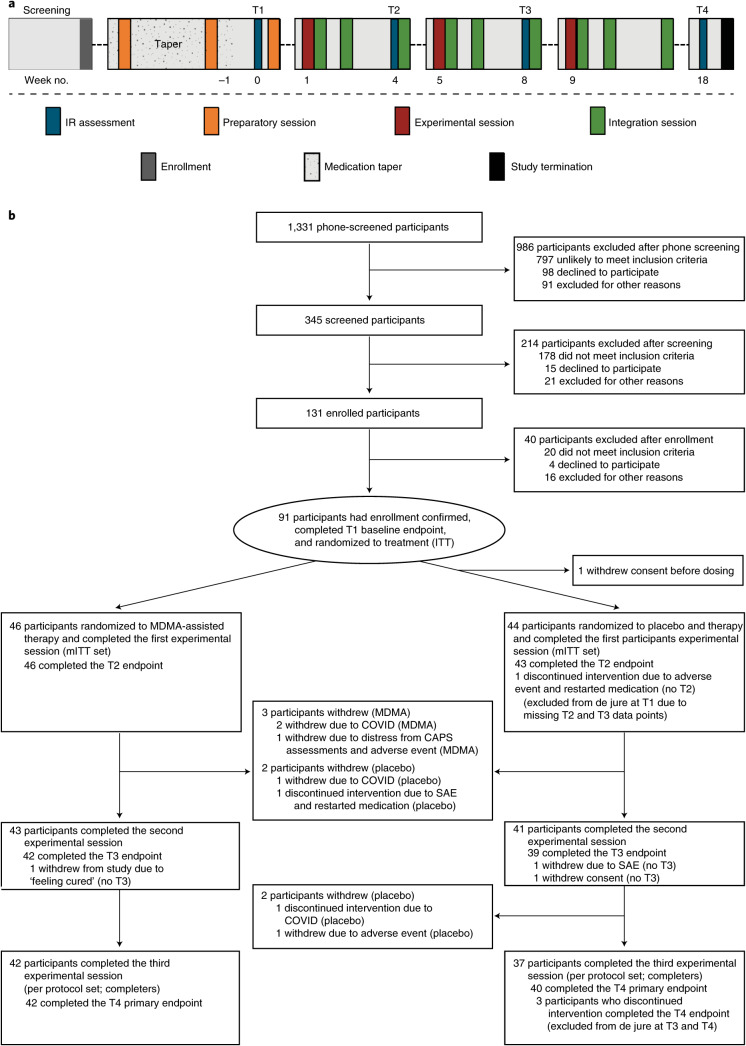
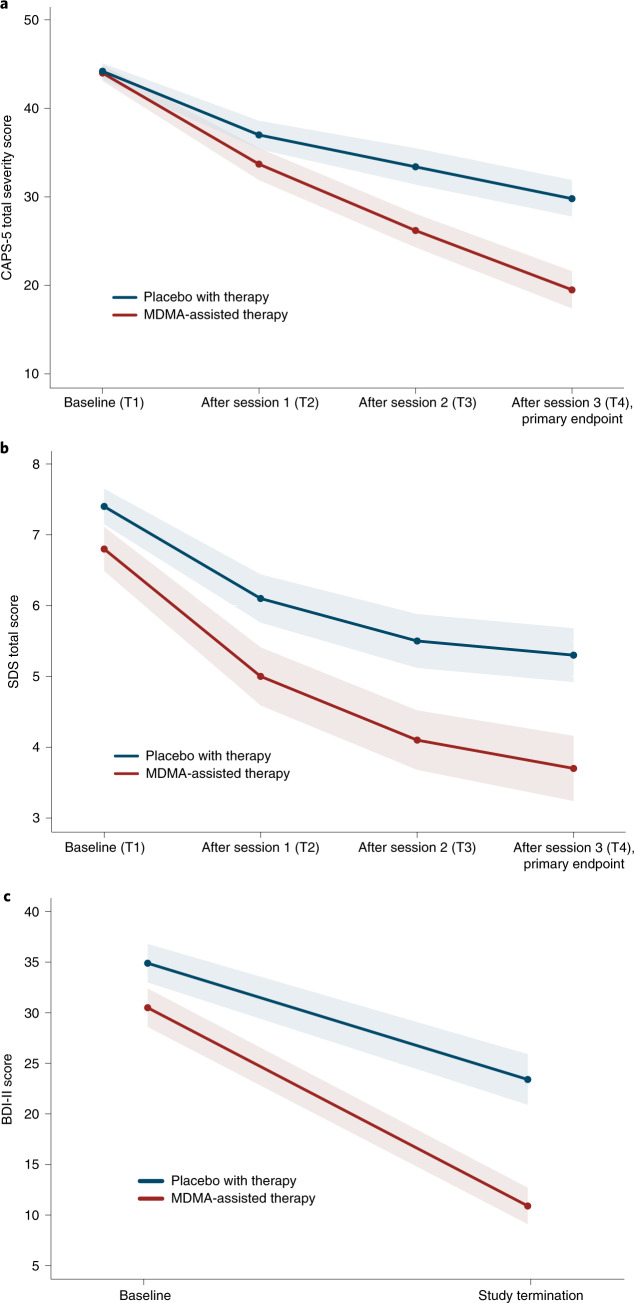
Post-traumatic stress disorder (PTSD) presents a major public health problem for which currently available treatments are modestly effective. We report the findings of a randomized, double-blind, placebo-controlled, multi-site phase 3 clinical trial (NCT03537014) to test the efficacy and safety of 3,4-methylenedioxymethamphetamine (MDMA)-assisted therapy for the treatment of patients with severe PTSD, including those with common comorbidities such as dissociation, depression, a history of alcohol and substance use disorders, and childhood trauma. After psychiatric medication washout, participants (n = 90) were randomized 1:1 to receive manualized therapy with MDMA or with placebo, combined with three preparatory and nine integrative therapy sessions. PTSD symptoms, measured with the Clinician-Administered PTSD Scale for DSM-5 (CAPS-5, the primary endpoint), and functional impairment, measured with the Sheehan Disability Scale (SDS, the secondary endpoint) were assessed at baseline and at 2 months after the last experimental session. Adverse events and suicidality were tracked throughout the study. MDMA was found to induce significant and robust attenuation in CAPS-5 score compared with placebo (P < 0.0001, d = 0.91) and to significantly decrease the SDS total score (P = 0.0116, d = 0.43). The mean change in CAPS-5 scores in participants completing treatment was -24.4 (s.d. 11.6) in the MDMA group and -13.9 (s.d. 11.5) in the placebo group. MDMA did not induce adverse events of abuse potential, suicidality or QT prolongation. These data indicate that, compared with manualized therapy with inactive placebo, MDMA-assisted therapy is highly efficacious in individuals with severe PTSD, and treatment is safe and well-tolerated, even in those with comorbidities. We conclude that MDMA-assisted therapy represents a potential breakthrough treatment that merits expedited clinical evaluation.
Overview
CoChat Summary
TL;DR
This randomized, double-blind, placebo-controlled phase 3 trial found that MDMA-assisted therapy significantly reduced PTSD severity and functional impairment over 18 weeks in people with severe PTSD. The treatment also showed benefits for depressive symptoms and did not increase suicidality or major safety problems in the MDMA arm.
Key findings
- Among 91 randomized participants (46 MDMA, 44 placebo; one participant did not provide post-dose data), MDMA produced a greater reduction in CAPS-5 PTSD severity than placebo: between-group difference = 11.9, 95% CI 6.3–17.4, P < 0.0001; effect size d = 0.91.
- Functional impairment also improved more with MDMA than placebo on the SDS: P = 0.0116; effect size d = 0.43.
- In completers, CAPS-5 change from baseline to 18 weeks was −24.4 (s.d. 11.6) with MDMA versus −13.9 (s.d. 11.5) with placebo.
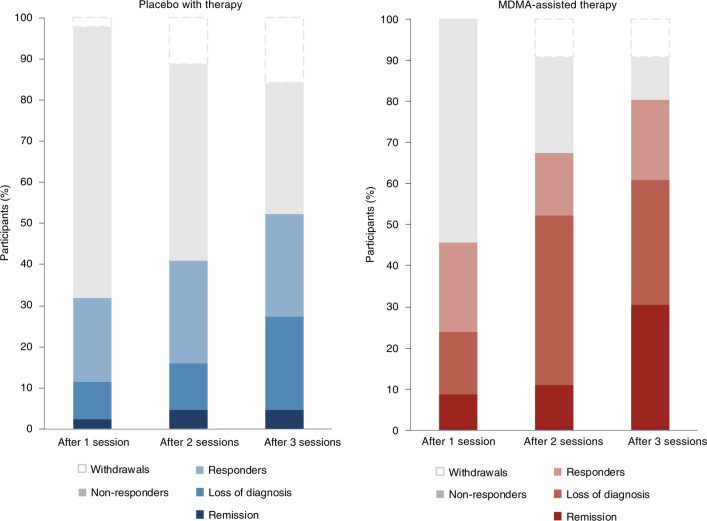
- Exploratory results showed greater reduction in depressive symptoms on the BDI-II with MDMA (mean Δ = −19.7, s.d. 14.0; placebo mean Δ = −10.8, s.d. 11.3; P = 0.0026; d = 0.67), and at 18 weeks 67% (28/42) of MDMA participants no longer met PTSD criteria versus 32% (12/37) on placebo; remission was 33% (14/42) versus 5% (2/37).
Methods
- Multisite randomized, double-blind, placebo-controlled phase 3 trial at 15 sites in the United States, Canada, and Israel; participants received MDMA-assisted therapy or placebo with identical manualized therapy.
- Adults with current DSM-5 PTSD for at least 6 months and baseline CAPS-5 severity ≥35 were enrolled after psychiatric medication washout; 90 participants were included in the modified intent-to-treat analysis, and 42 MDMA/37 placebo were completers.
- Primary and secondary outcomes (CAPS-5 and SDS) were assessed by blinded independent raters using MMRM, with a de jure estimand for efficacy; safety events, suicidality, and adverse events were tracked throughout.
Limitations
- The paper states that the participant population was smaller than originally planned because of the COVID-19 pandemic, although it argues the study still had sufficient power.
- The population was relatively homogeneous and lacked racial and ethnic diversity, which the authors say should be addressed in future trials.
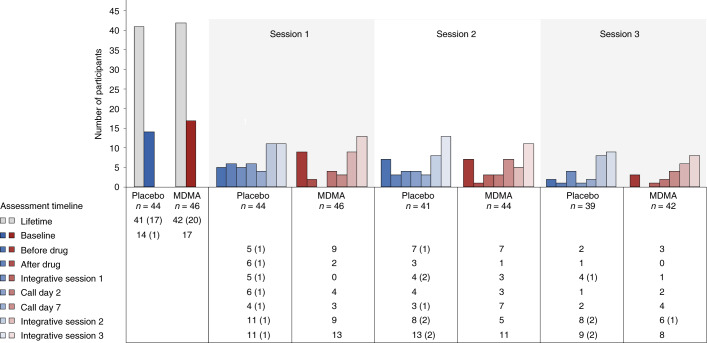
- The authors note that safety data were collected by site therapists, which may have limited blinding; they also say participant blinding was challenging because of MDMA’s subjective effects, and at unblinding at least 10% guessed incorrectly (at least 7/44 placebo participants thought they received MDMA; at least 2/46 MDMA participants thought they received placebo).
Model-written summary. Check it against the paper before relying on it.
Integrity signals
Registry
Cites
Statistics
Figures
Verification
Claims the paper makes
7 Valid · 2 Not valid · 18 Not checked · 86 Own results and interpretations
Every source the paper cites for this claim was checked and supports it.
In the paper
“Pooled analysis of six phase 2 trials of MDMA-assisted therapy for PTSD have now shown promising safety and efficacy findings15.”
§ MDMA-assisted therapy for severe PTSD: a randomized, double-blind, placebo-controlled phase 3 study > Main
What the sources say
- Supportedcites [15] Mithoefer MC MDMA-assisted psychotherapy for treatment of PTSD: study design and rationale for phase 3 trials based on pooled analysis of six phase 2 randomized controlled trials Psychopharmacology 2019 236 2735 2745 10.1007/s00213-019-05249-5 31065731 PMC6695343 source
The Conclusions (p. 1 of that section) state verbatim what the claim attributes: 'Based on the promising safety and efficacy results from these six phase 2 trials...', and the Discussion opens by reporting that pooling data across six phase 2 trials yielded significant symptom reductions with active-dose MDMA plus psychotherapy, with the treatment described as 'safe and efficacious' for civilians and veterans/first responders with chronic PTSD. Safety specifics (favorable safety outcomes, low TEAE rates, no related deaths or suicidal behaviour) appear in the Discussion, and the Abstract Methods/Statistical analysis confirm the pooled sample is six randomized, double-blind, controlled phase 2 trials. One caveat for the citing authors rather than a mismatch: our copy of this source carries a 'RETRACTED ARTICLE' designation, so the pooled findings it reports should not be presented as settled fact. (LLM, conf=0.90)
plainstates an association- Asserted: passes — The authors put it forward as true.
- Checkable: passes — It can be checked against evidence.
- Load-bearing: passes — The paper’s conclusions depend on it.
- Based: passes — The paper gives a reason why it holds.
- Supported
The cited sources support only part of this claim — read each source’s verdict below.
In the paper
“By contrast, the effect size of 0.91 demonstrated in this study between MDMA-assisted therapy and placebo with therapy was larger than that for any other previously identified PTSD pharmacotherapy16–18.”
§ MDMA-assisted therapy for severe PTSD: a randomized, double-blind, placebo-controlled phase 3 study > Discussion
What the sources say
- Partly supportedcites [16] Feduccia AA Breakthrough for trauma treatment: safety and efficacy of MDMA-assisted psychotherapy compared to paroxetine and sertraline Front. Psychiatry 2019 10 650 10.3389/fpsyt.2019.00650 31572236 PMC6751381 sourceExperimental — accuracy not yet measured
The Phase 2 Trials section reports a between-group effect size of 0.9 for MDMA-assisted psychotherapy, and the Comparison: SSRIs vs. MDMA section shows smaller effect sizes for sertraline and paroxetine. The source does not establish that this effect exceeded that of every previously identified PTSD pharmacotherapy; its MDMA controls also included low-dose MDMA plus psychotherapy, not solely placebo plus therapy. The copy provides 0.9 rather than the claimed 0.91. (LLM, conf=0.85)
- Partly supportedcites [17] Lee DJ Psychotherapy versus pharmacotherapy for posttraumatic stress disorder: systematic review and meta-analyses to determine first-line treatments Depress. Anxiety 2016 33 792 806 10.1002/da.22511 27126398 sourceExperimental — accuracy not yet measured
Our copy of Lee et al. (2016) supplies the pharmacotherapy benchmark the citing sentence leans on — the 'Pre-/Posteffects for Monoagent Pharmacotherapy and Psychotherapy' section reports that versus control 'effect sizes were uniformly lower than those observed in pre-/postcomparisons,' that most agents (brofaromine, bupropion, citalopram, divalproex, mirtazapine, risperidone, tiagabine, topiramate, adjunctive aripiprazole/guanfacine/olanzapine) 'never achieved significance against control,' and that the only medications demonstrating large effects were sertraline, venlafaxine, and nefazodone (with 'effect sizes greater than 0.8 considered large' per STATISTICAL ANALYSIS). However, no passage states or benchmarks a maximum pharmacotherapy effect size, and the paper never mentions MDMA-assisted therapy or a 0.91 between-group effect, so the comparative conclusion that 0.91 exceeded 'any other previously identified PTSD pharmacotherapy' is not attributable to this source. The numeric tables (Tables 3 and 4) that would settle the ceiling are not present as text in our copy. (LLM, conf=0.70)
- Partly supportedcites [18] Feduccia, A. A., Jerome, L., Mithoefer, M. C. & Holland, J. Discontinuation of medications classified as reuptake inhibitors affects treatment response of MDMA-assisted psychotherapy. Psychopharmacology (Berl.) 238, 581–588 (2021). PMC7826309 33221932 sourceExperimental — accuracy not yet measured
The Introduction (page unavailable) reports a large between-group effect for MDMA-assisted psychotherapy versus the same psychotherapy with placebo/control. It gives Cohen’s d as 0.8, not 0.91, and does not compare that effect with every previously identified PTSD pharmacotherapy. (LLM, conf=0.88)
plain- Asserted: passes — The authors put it forward as true.
- Checkable: passes — It can be checked against evidence.
- Load-bearing: passes — The paper’s conclusions depend on it.
- Based: passes — The paper gives a reason why it holds.
- Partly supported
Every source the paper cites for this claim was checked and supports it.
In the paper
“Similarly, comparison of change in CAPS score between paroxetine and placebo showed effect sizes of 0.56, 0.45 and 0.09 (ref. 16).”
§ MDMA-assisted therapy for severe PTSD: a randomized, double-blind, placebo-controlled phase 3 study > Discussion
What the sources say
- Supportedcites [16] Feduccia AA Breakthrough for trauma treatment: safety and efficacy of MDMA-assisted psychotherapy compared to paroxetine and sertraline Front. Psychiatry 2019 10 650 10.3389/fpsyt.2019.00650 31572236 PMC6751381 source
Table 3 (Comparison: SSRIs vs. MDMA, p. ~7) lists paroxetine placebo-subtracted CAPS-2 change with effect sizes of 0.56 (Study 1, −14 units), 0.45 (Study 2, −11 units) and 0.09 (Study 3, −6 units), exactly the three values the claim attributes. The adjacent text and the Paroxetine Phase 3 Trials section corroborate the corresponding mean differences (roughly 6–14 units across the three studies), noting the effect sizes were derived by the authors rather than reported in the FDA statistical package. (LLM, conf=0.90)
plain- Asserted: passes — The authors put it forward as true.
- Checkable: passes — It can be checked against evidence.
- Load-bearing: passes — The paper’s conclusions depend on it.
- Based: passes — The paper gives a reason why it holds.
- Supported
The cited sources support only part of this claim — read each source’s verdict below.
In the paper
“human neuroimaging studies have demonstrated that MDMA is associated with attenuated amygdalar BOLD activity during presentation of negative emotional stimuli25.”
§ MDMA-assisted therapy for severe PTSD: a randomized, double-blind, placebo-controlled phase 3 study > Discussion
What the sources say
- Partly supportedcites [25] Bedi G Phan KL Angstadt M de Wit H Effects of MDMA on sociability and neural response to social threat and social reward Psychopharmacology 2009 207 73 83 10.1007/s00213-009-1635-z 19680634 PMC3328967 sourceExperimental — accuracy not yet measured
The RESULTS (and Abstract RESULTS) of Bedi et al. 2009 do report attenuated amygdalar BOLD response on MDMA versus placebo to a negative social stimulus — 'MDMA attenuated amygdala activation to angry, but not fearful, faces', with left amygdala activation (angry vs neutral) lower on 1.5 mg/kg than PBO (extracted BOLD t(8)=3.34, p<.05). But the attenuation was emotion-specific: the same passage states 'There was no effect of drug on amygdala reactivity to fear versus neutral faces', so the claim's blanket 'negative emotional stimuli' overreaches what this source shows. The DISCUSSION also frames the finding as preliminary (N=9, single study, cluster only p=.052 after small-volume correction) and cautions that MDMA's cerebrovascular actions (reduced left amygdala rCBF independent of task, Gamma et al. 2000) could confound the BOLD signal, so 'human neuroimaging studies have demonstrated' attributes more breadth and certainty than this paper carries. (LLM, conf=0.78)
boostedstates an association- Asserted: passes — The authors put it forward as true.
- Checkable: passes — It can be checked against evidence.
- Load-bearing: passes — The paper’s conclusions depend on it.
- Based: passes — The paper gives a reason why it holds.
- Partly supported
The cited sources that could be checked couldn’t confirm or dispute this claim.
In the paper
“MDMA enhances the extinction of fear memories in mice through increased expression of brain-derived neurotrophic factor in the amygdala”
§ MDMA-assisted therapy for severe PTSD: a randomized, double-blind, placebo-controlled phase 3 study > Discussion
What the sources say
- Could not verifycites [25] Bedi G Phan KL Angstadt M de Wit H Effects of MDMA on sociability and neural response to social threat and social reward Psychopharmacology 2009 207 73 83 10.1007/s00213-009-1635-z 19680634 PMC3328967 sourceExperimental — accuracy not yet measured
Our copy of Bedi et al. (2009) is a human fMRI study in nine healthy volunteers with past ecstasy use, examining acute MDMA (0.75 and 1.5 mg/kg) effects on self-reported sociability and on amygdala and ventral striatum BOLD responses to angry, fearful and happy faces (Abstract > MATERIALS AND METHODS; RESULTS). No passage addresses mice, fear-memory extinction, or brain-derived neurotrophic factor; searches for 'extinction of fear memories BDNF brain-derived neurotrophic factor mice' and 'amygdala fear conditioning extinction learning rodents' returned only the facial-expression/amygdala-activation passages. The nearest content — MDMA attenuating left amygdala reactivity to angry, but not fearful, faces (RESULTS; Abstract > RESULTS) — concerns acute neural response to social threat, not extinction of fear memories, so it neither supports nor contradicts the attributed mechanism. (LLM, conf=0.72)
plainstates a cause- Asserted: passes — The authors put it forward as true.
- Checkable: passes — It can be checked against evidence.
- Load-bearing: unclear — It is unclear whether the paper’s conclusions depend on it.
- Based: passes — The paper gives a reason why it holds.
- Could not verify
47 more claims · 2 with their cited sources checked
Create a free account to see all 113 claims and to verify the 28 references still open.
- It may state two separate claims as one. 36
- Probably not a substantial claim. 34
Claims other papers make about this one
Each is checked against this paper’s own text: does it say what the citing paper says it does?
The source backs part of the claim, not all of it — or backs it for a different population, condition or comparison.
In the citing paper
“Clinical trials indicate that MDMA-AT enhances key factors necessary for a robust therapeutic alliance, including self-compassion, emotional awareness, and relational capacities (158).”
From Psychoanalytically informed MDMA-assisted therapy for pathological narcissism: a novel theoretical approach (2025) · cites this paper as [158]
Experimental — accuracy not yet measuredThe source backs part of the claim, not all of it — or backs it for a different population, condition or comparison.
In the citing paper
“MDMA’s unique pharmacological properties may facilitate alliance formation by increasing compassion, empathy, and emotional engagement, which contribute to deeper therapeutic work (6, 158).”
From Psychoanalytically informed MDMA-assisted therapy for pathological narcissism: a novel theoretical approach (2025) · cites this paper as [158]
Experimental — accuracy not yet measuredThe source backs part of the claim, not all of it — or backs it for a different population, condition or comparison.
In the citing paper
“The therapeutic alliance is a well-established predictor of positive treatment outcomes across a range of psychotherapeutic modalities (158–160), including psychoanalytic psychotherapy (161) and the treatment of personality disorders such as PN (162, 163).”
From Psychoanalytically informed MDMA-assisted therapy for pathological narcissism: a novel theoretical approach (2025) · cites this paper as [158]
Experimental — accuracy not yet measuredThe source backs part of the claim, not all of it — or backs it for a different population, condition or comparison.
In the citing paper
“MDMA-AT has also been most extensively tested in the treatment of post-traumatic stress disorder (PTSD) and has shown to result in large effect size differences compared to placebo controls in Phase II and Phase 3 trials (18–21).”
From MDMA-Assisted Therapy as a Means to Alter Affective, Cognitive, Behavioral, and Neurological Systems Underlying Social Dysfunction in Social Anxiety Disorder (2021) · cites this paper as [19]
Experimental — accuracy not yet measuredThe cited source says what the claim attributes to it.
In the citing paper
“In addition, both phase II (19) and the existing phase 3 study (20) suggest excellent safety and low abuse potential when MDMA is used under controlled conditions.”
1 more claim about this paper
Create a free account to see every claim other papers make about this one.
Citations
Cites
2 retracted
Mithoefer, M. C., Feduccia, A. A., Jerome, L., Mithoefer, A., Wagner, M., Walsh, Z., Hamilton, S., Yazar-Klosinski, B., Emerson, A., & Doblin, R. (2019) · Psychopharmacology · doi:10.1007/s00213-019-05249-5 · Cited by 359
RetractedFeduccia, A. A., Jerome, L., Mithoefer, M. C., & Holland, J. (2021) · Psychopharmacology · doi:10.1007/s00213-020-05710-w · Cited by 40
Self-citationRetractedPosttraumatic Stress Disorder in the National Comorbidity Survey
Kessler, R. C. (1995) · Archives of General Psychiatry · doi:10.1001/archpsyc.1995.03950240066012 · Cited by 10,379
Lesch, K.-P., Bengel, D., Heils, A., Sabol, S. Z., Greenberg, B. D., Petri, S., Benjamin, J., Müller, C. R., Hamer, D. H., & Murphy, D. L. (1996) · Science · doi:10.1126/science.274.5292.1527 · Cited by 5,162
Serotonin transporter genetic variation and the response of the human amygdala.
Hariri, A. R., Mattay, V. S., Tessitore, A., Kolachana, B., Fera, F., Goldman, D., Egan, M. F., & Weinberger, D. R. (2002) · Science · doi:10.1126/science.1071829 · Cited by 2,340
Weathers, F. W., Bovin, M. J., Lee, D. J., Sloan, D. M., Schnurr, P. P., Kaloupek, D. G., Keane, T. M., & Marx, B. P. (2018) · Psychological Assessment · doi:10.1037/pas0000486 · Cited by 1,799
Psychotherapy for Military-Related PTSD: A Review of Randomized Clinical Trials
Steenkamp, M. M., Litz, B. T., Hoge, C. W., & Marmar, C. R. (2015) · JAMA · doi:10.1001/jama.2015.8370 · Cited by 958
Posttraumatic stress disorder in abused and neglected children grown up
Widom, C. S. (1999) · American Journal of Psychiatry · doi:10.1176/ajp.156.8.1223 · Cited by 945
Psychological therapies for chronic post-traumatic stress disorder (PTSD) in adults
Bisson, J. I., Roberts, N. P., Andrew, M., Cooper, R., & Lewis, C. (2013) · Cochrane Database of Systematic Reviews · doi:10.1002/14651858.cd003388.pub4 · Cited by 829
Meta-analysis of dropout in treatments for posttraumatic stress disorder
Imel, Z. E., Laska, K., Jakupcak, M., & Simpson, T. L. (2013) · Journal of Consulting and Clinical Psychology · doi:10.1037/a0031474 · Cited by 633
Cited by
Items 501–600 of 1,000
Trajectories of sentiment in 11,816 psychoactive narratives
Friedman, S. F., & Ballentine, G. (2023) · Human Psychopharmacology Clinical and Experimental · doi:10.1002/hup.2889 · Cited by 6
Exploring the Role of Psychedelics in Modulating Ego and Treating Neuropsychiatric Disorders
Wang, H., & Wang, X. (2025) · ACS Chemical Neuroscience · doi:10.1021/acschemneuro.5c00247 · Cited by 6
Too big to fail? Comparing effect sizes of MDMA assisted therapy to unmasking bias
Szigeti, B., Bradley, E., & Woolley, J. D. (2025) · Psychopharmacology · doi:10.1007/s00213-025-06886-9 · Cited by 6
Self-citationKarabulut, S., Kaur, H., & Gauld, J. W. (2024) · ACS Chemical Neuroscience · doi:10.1021/acschemneuro.3c00677 · Cited by 6
Zhang, W., Zhou, J., Su, H., Zhang, X., Song, W., Wang, Z., Tang, C., Uludağ, K., Zhao, M., Xiong, Z., et al. (2023) · General Psychiatry · doi:10.1136/gpsych-2023-101127 · Cited by 6
Mastina, M., & Nadya, E. (2025) · Jurnal Riset dan Pengabdian Interdisipliner · doi:10.37905/jrpi.v2i3.33777 · Cited by 6
Natural language analysis of the structure of altered states of consciousness
Dikovskaya, D., Desikan, B. S., Frohlich, J., Hossain, N., Panariello, G., Johnson, L., & Murray, C. H. (2025) · Journal of Psychedelic Studies · doi:10.1556/2054.2025.00441 · Cited by 6
Žuljević, M. F., Viđak, M., Vukojević, J., Hren, D., & Peričić, T. P. (2022) · Cochrane Database of Systematic Reviews · doi:10.1002/14651858.cd015345 · Cited by 5
The Evolving Landscape of Social Neuroscience and Its Implications for Psychiatry
Li, S., Kietzman, H. W., Taylor, J. R., & Chang, S. W. C. (2024) · Biological Psychiatry · doi:10.1016/j.biopsych.2024.06.004 · Cited by 5
Psychedelics for military and Veteran communities? Research, practice, and policy considerations
Shore, R. (2023) · Journal of Military Veteran and Family Health · doi:10.3138/jmvfh.9.5.ed01 · Cited by 5
Psychedelics for Alzheimer's Disease Palliative Care
McManus, K. R., Patrick, R. E., Striepe, M. I., Drury, M. J., Ozonsi, R., Forester, B. P., & Weinberg, M. S. (2022) · Advances in Psychiatry and Behavioral Health · doi:10.1016/j.ypsc.2022.06.001 · Cited by 5
Lysergic Acid Diethylamide Alters the Effects of Brain Stimulation in Rodents
Dwiel, L. L., Henricks, A. M., Bragg, E. M., Nicol, J., Gui, J., & Doucette, W. T. (2023) · Psychedelic Medicine · doi:10.1089/psymed.2022.0014 · Cited by 5
Zhang, J., Lin, C., Lv, X., Zhao, H., & Wang, X. (2026) · Biological Psychiatry · doi:10.1016/j.biopsych.2026.02.011 · Cited by 5
Perspectives of Psychotherapists Regarding Psychedelic Assisted Therapy
Kinahan, S. P., & Wilson, E. J. (2025) · Counselling and Psychotherapy Research · doi:10.1002/capr.12881 · Cited by 5
Lewis, E. C., Jaeger, A. H., Girn, M., Omene, E., Brendle, M., & Argento, E. (2024) · Journal of Psychopharmacology · doi:10.1177/02698811241248395 · Cited by 5
The Psychedelic Renaissance: A Catholic Perspective
Carroll, T. (2024) · The Linacre Quarterly · doi:10.1177/00243639241274818 · Cited by 5
Pharmacological Strategies for Suicide Prevention Based on the Social Pain Model: A Scoping Review
Rajkumar, R. P. (2022) · Psych · doi:10.3390/psych4030038 · Cited by 6
Psychedelics for treating psychiatric disorders: from circuit mechanisms to applications
Li, J., Jiang, Y., Cheng, D., Cheng, J., Ji, H., Wang, X., & Yuan, T. (2024) · 中国科学通报:英文版 · doi:10.1016/j.scib.2024.11.033 · Cited by 5
Psychedelics in Psychiatry: Oh, What A Trip!
Fonzo, G. A., Nemeroff, C. B., & Kalin, N. H. (2025) · American Journal of Psychiatry · doi:10.1176/appi.ajp.20241025 · Cited by 5
Ólafsson, R. P., Kvaran, K., Ketilsdóttir, K., Hallgrímsdóttir, K., Sigurðsson, E. L., & Sigurðsson, E. (2023) · Læknablaðið · doi:10.17992/lbl.2023.11.766 · Cited by 6
Abramsky-Sze, S., Marseille, E. A., Matzopoulos, R., Morlock, R., & Lerer, L. B. (2025) · Frontiers in Psychiatry · doi:10.3389/fpsyt.2025.1508811 · Cited by 5
Ethische Aspekte der Therapie mit Psychedelika
Repantis, D., Koslowski, M., & Fink, S. B. (2024) · Die Psychotherapie · doi:10.1007/s00278-024-00710-z · Cited by 5
The psychedelic experience and treatment‐resistant depression
Goodwin, G. M. (2023) · World Psychiatry · doi:10.1002/wps.21140 · Cited by 5
Kvam, T.-M., Goksøyr, I. W., Rog, J., van de Vooren, I.-T. J., Stewart, L. H., Autran, I., Berthold‐Losleben, M., Mørch-Johnsen, L. E., Holst, R., Røssberg, J. I., et al. (2025) · Journal of Psychiatric Research · doi:10.1016/j.jpsychires.2025.11.030 · Cited by 5
Neuroglia in anxiety disorders
Bonomi, R. E., Pietrzak, R. H., & Cosgrove, K. (2025) · Handbook of clinical neurology · doi:10.1016/b978-0-443-19102-2.00008-9 · Cited by 5
Inner-Directed Therapy in MDMA-Assisted Psychotherapy
Alpert, M. D., Paleos, C. A., & Thomas, C. (2025) · American Journal of Psychiatry · doi:10.1176/appi.ajp.20250554 · Cited by 5
Self-citationBarber, M., Gardner, J., & Carter, A. (2022) · SSM - Qualitative Research in Health · doi:10.1016/j.ssmqr.2022.100202 · Cited by 5
Turkia, M. (2023) · PsyArXiv (OSF Preprints) · doi:10.31234/osf.io/fpb83 · Cited by 5
Methylenedioxymethamphetamine (MDMA)-Assisted Therapy in Hawaii: A Brief Review
Inouye, A. M., & Wolfgang, A. S. (2022) · Cureus · doi:10.7759/cureus.26402 · Cited by 5
Methylone produces antidepressant-relevant actions and prosocial effects
Li, Z., Peng, H., Lee, C., Lin, T., Hsieh, M., Lai, C., Wu, H.-F., Chen, L., Chen, M.-C., & Chou, D. (2023) · Neuropharmacology · doi:10.1016/j.neuropharm.2023.109787 · Cited by 5
Les psychédéliques, nouvelles perspectives pour les thérapies du traumatisme
Josse, É., Baliko, C., & Dubus, Z. (2023) · HEGEL - HEpato-GastroEntérologie Libérale · doi:10.3917/heg.131.0002 · Cited by 5
Editorial: What is up with psychedelics anyway?
Lewis, C. R., McMurray, M. S., Mennenga, S. E., & Tillery, S. H. (2023) · Frontiers in Neuroscience · doi:10.3389/fnins.2023.1161868 · Cited by 5
A mechanistic insight for the biosynthesis of N,N-dimethyltryptamine: An ONIOM theoretical approach
Coutinho, L. P., Silva, S. R. B., de Lima‐Neto, P., & Monteiro, N. D. K. V. (2023) · Biochemical and Biophysical Research Communications · doi:10.1016/j.bbrc.2023.08.043 · Cited by 5
Turkia, M. (2023) · PsyArXiv (OSF Preprints) · doi:10.31234/osf.io/wupvy · Cited by 5
Chasing the Numinous: Hungry Ghosts in the Shadow of the Psychedelic Renaissance
Osterhold, H. M., & Fernandes‐Osterhold, G. (2023) · Journal of Analytical Psychology · doi:10.1111/1468-5922.12949 · Cited by 6
Towards a New Materialism in Psychedelic Studies
Oostveen, D. F. (2023) · Deleuze and Guattari Studies · doi:10.3366/dlgs.2023.0530 · Cited by 5
Орлов, О. В. (2022) · Insight the psychological dimensions of society · doi:10.32999/2663-970x/2022-7-8 · Cited by 5
MDMA-Assisted Psychotherapy for PTSD: A Systematic Review of Randomized Control Trials
Brett, B. A., & Bynum, C. (2025) · Journal of Psychoactive Drugs · doi:10.1080/02791072.2025.2577308 · Cited by 5
Any Questions? A Sober Look at MDMA
Petry, L. G., Sharma, M., Wolfgang, A. S., Ross, D. A., & Cooper, J. J. (2021) · Biological Psychiatry · doi:10.1016/j.biopsych.2021.06.001 · Cited by 5
ROTHBAUM, B. O., & Schnurr, P. P. (2025) · Cognitive and Behavioral Practice · doi:10.1016/j.cbpra.2025.05.001 · Cited by 5
Tang, B. L. (2024) · EXCLI journal · doi:10.17179/excli2024-8023 · Cited by 5
Nikitin, D., Mustafa, R. A., McQueen, B., Zemplényi, A., DiStefano, M. J., Nhan, E., Kayali, Y., Richardson, M., Rind, D. M., Pearson, S. D., et al. (2024) · Journal of Managed Care & Specialty Pharmacy · doi:10.18553/jmcp.2024.30.10.1191 · Cited by 5
Laurin, A., Bottemanne, H., Bulteau, S., Haj, M. E., Sauvaget, A., & Deschamps, T. (2026) · Neuroscience & Biobehavioral Reviews · doi:10.1016/j.neubiorev.2026.106546 · Cited by 4
Hood, A., Corlett, C. E., Alldredge, C. T., & Elkins, G. R. (2024) · Journal of Psychedelic Studies · doi:10.1556/2054.2024.00383 · Cited by 4
Chaplains in Psychedelic Assisted Therapy: Rationale and Competencies
Lewis, S. P., Clark‐Soles, J., Mayorga, O., Sawyer, S. K., Slavet, E., Vidt, B. J., Shanti, S., Wiggins, R., Willis, K., Frey, J., et al. (2026) · Journal of Religion and Health · doi:10.1007/s10943-026-02591-9 · Cited by 4
Ford, C. L., McDonough, A. A., Horie, K., & Young, L. J. (2024) · Neuropharmacology · doi:10.1016/j.neuropharm.2024.109848 · Cited by 4
Maciąg, M., Doszyn, O., Wnorowski, A., Zmorzyńska, J., & Budzyńska, B. (2025) · Journal of Psychopharmacology · doi:10.1177/02698811251324596 · Cited by 4
Maples‐Keller, J. L., & ROTHBAUM, B. O. (2025) · Cognitive and Behavioral Practice · doi:10.1016/j.cbpra.2025.02.001 · Cited by 4
Methylone promotes neurite outgrowth and has long-lasting effects on fear extinction learning
Warner‐Schmidt, J. L., Stogniew, M., Mandell, B., & Kelmendi, B. (2025) · Neuropsychopharmacology · doi:10.1038/s41386-025-02206-z · Cited by 4
Exploring the therapeutic convergence of meditation, psychedelics, and MDMA
Dines, J. T. (2025) · Journal of Psychedelic Studies · doi:10.1556/2054.2025.00435 · Cited by 4
Bender, D. A., & Siegel, J. S. (2024) · Elsevier eBooks · doi:10.1016/b978-0-323-95702-1.00043-9 · Cited by 4
Biba, B.-J., & O’Shea, B. A. (2025) · Journal of Psychoactive Drugs · doi:10.1080/02791072.2025.2511750 · Cited by 4
Is there a place for psychedelics in sports practice?
Portes, M. A. M., Werle, I., & Bertoglio, L. J. (2025) · Acta Neuropsychiatrica · doi:10.1017/neu.2025.13 · Cited by 4
Yong, A. S. J., Brennan, S., Bratuskins, S., Freeburn, A., Bedi, G., Burke, R., Haines, T. P., Hollick, M., Jones, K., Lawrence, A. J., et al. (2025) · Journal of Affective Disorders · doi:10.1016/j.jad.2025.119866 · Cited by 4
Dodds, C., Dawson, R. L., Lim, A., Tye, S. J., & Nasrallah, F. A. (2025) · Therapeutic Advances in Psychopharmacology · doi:10.1177/20451253251396255 · Cited by 4
Eaton, E. M., Capone, C., Gully, B. J., Brown, Z. E., Monnig, M. A., Worden, M. S., Swift, R. M., & Haass‐Koffler, C. L. (2024) · Contemporary Clinical Trials Communications · doi:10.1016/j.conctc.2024.101333 · Cited by 4
Earleywine, M., & Kamilar-Britt, P. (2022) · Journal of Psychedelic Studies · doi:10.1556/2054.2022.00219 · Cited by 4
Cannabis update: Anxiety disorders and post-traumatic stress disorder
Haycraft, A. L. (2023) · Journal of the American Association of Nurse Practitioners · doi:10.1097/jxx.0000000000000864 · Cited by 4
Du, X., Liu, J., & Wang, X. (2025) · Molecular Psychiatry · doi:10.1038/s41380-025-03291-8 · Cited by 4
History, pharmacology and therapeutic mechanisms of 3,4‐methylenedioxymethamphetamine (MDMA)
Casey, A. B., & Heifets, B. D. (2025) · British Journal of Pharmacology · doi:10.1111/bph.70225 · Cited by 4
Traditional Amazonian medicine in addiction treatment: Qualitative results
O’Shaughnessy, D. M., Sarnyai, Z., Quirk, F. H., & Rodd, R. (2022) · SSM - Qualitative Research in Health · doi:10.1016/j.ssmqr.2022.100086 · Cited by 4
Psychedelics and mental health: reimagining care through science, insight, and compassion
Mikellides, G., & Kyriazis, M. (2025) · Frontiers in Pharmacology · doi:10.3389/fphar.2025.1649929 · Cited by 4
Psychedelika in der Psychiatrie: eine offene Debatte
Herwig, U., Schnell, K., Daumann, J., Jungaberle, A., Koller, G., Mertens, L. J., & Borgwardt, S. (2024) · Fortschritte der Neurologie · Psychiatrie · doi:10.1055/a-2453-0910 · Cited by 4
New Billing Codes Offer Opportunity to Investigate Psychedelic Treatment
Ostrovsky, A., & Barnett, B. S. (2024) · Psychedelic Medicine · doi:10.1089/psymed.2023.0071 · Cited by 4
Attitudes of psychedelic users regarding cost of treatment and non-hallucinogenic alternatives
Aday, J. S., Boehnke, K. F., Herberholz, M., & Kruger, D. J. (2024) · Journal of Psychedelic Studies · doi:10.1556/2054.2024.00354 · Cited by 4
Klaus, J., Schneider, F., Schaletzky, R., Sippel, D., & Batra, A. (2025) · SUCHT - Zeitschrift für Wissenschaft und Praxis / Journal of Addiction Research and Practice · doi:10.1024/0939-5911/a000953 · Cited by 4
Making Sense of Psychedelics in the CNS
Fordyce, B. A., & Roth, B. L. (2024) · The International Journal of Neuropsychopharmacology · doi:10.1093/ijnp/pyae007 · Cited by 4
Flynn, L., Rondeau, M., Kršák, M., & Shannon, S. (2025) · Psychedelic Medicine · doi:10.1089/psymed.2024.0050 · Cited by 4
Self-citationPsychedelic Harm Reduction and Integration: A Transtheoretical Model for Clinical Practice
Hu, X., Gorman, I., & Nielson, E. M. (2024) · Current topics in behavioral neurosciences · doi:10.1007/7854_2024_529 · Cited by 4
Self-citationJones, G. M., Lipson, J., & Wang, E. (2023) · Scientific Reports · doi:10.1038/s41598-023-29763-x · Cited by 4
MODERN APPROACHES TO THE THERAPY OF POST-TRAUMATIC STRESS DISORDER (LITERATURE REVIEW)
Klimova, I. Y., & Volnaya, Y. S. (2023) · Sibirskij medicinskij vestnik · doi:10.31549/2541-8289-2023-7-2-35-40 · Cited by 4
Seybert, C., Cotovio, G., Grácio, J., & Oliveira-Maia, A. J. (2021) · Frontiers in Psychology · doi:10.3389/fpsyg.2021.728130 · Cited by 4
Alves, C. L., Ciba, M., Toutain, T. G. L. D. O., Porto, J. A. M., de Sena, E. P., Thielemann, C., & Rodrigues, F. A. (2024) · Journal of Physics Complexity · doi:10.1088/2632-072x/ad1c68 · Cited by 4
Whelan, J., Ward, R. D., & Noller, G. (2024) · Harm Reduction Journal · doi:10.1186/s12954-024-01024-8 · Cited by 4
Louie, E., Towers, E., Morse, A. R., Watt, J., Bryant, Z., Haber, P., & Morley, K. C. (2025) · International Journal of Mental Health Nursing · doi:10.1111/inm.70010 · Cited by 4
Tripping into Treatment: Comparing Initial and Current Motivations for Psychedelic Use
Kruger, D. J., Albrecht, J., Aday, J. S., Barron, J., Herberholz, M., & Boehnke, K. F. (2025) · Journal of Psychoactive Drugs · doi:10.1080/02791072.2025.2461999 · Cited by 4
Jones, J. L. (2023) · Frontiers in Psychiatry · doi:10.3389/fpsyt.2023.1096298 · Cited by 4
A Psychometric Evaluation of the Dutch Revised Mystical Experience Questionnaire
Wirsching, A., Bostoen, T., & Huizink, A. C. (2023) · Journal of Psychoactive Drugs · doi:10.1080/02791072.2023.2272832 · Cited by 4
Thomas, K. L. H., Jesse, R., Mehtani, N. J., Mitchell, J., & Anderson, B. T. (2023) · Journal of Psychoactive Drugs · doi:10.1080/02791072.2023.2201244 · Cited by 4
Self-citationOña, G. (2023) · Quaderns de l'Institut Català d'Antropologia · doi:10.56247/qua.401 · Cited by 4
Johnson, C. B., Walther, D. M., Baggott, M. J., Baker, L. E., & Baumann, M. H. (2024) · Journal of Pharmacology and Experimental Therapeutics · doi:10.1124/jpet.123.001837 · Cited by 4
Swim in the Chiral Pool: MDMA and MDA Enantiomers from Alanine-Derived Precursors
Sherwood, A. M., Burkhartzmeyer, E. K., Williamson, S. E., & Faley, M. T. (2023) · ACS Omega · doi:10.1021/acsomega.3c02358 · Cited by 4
Haggarty, C. J., Bershad, A. K., Kumar, M. K., Lee, R., & de Wit, H. (2024) · European Journal of Neuroscience · doi:10.1111/ejn.16346 · Cited by 4
Veterans and Medical Cannabis: A Perfect Federalism Storm
Mallinson, D. J., & Puello, F. (2023) · Public Administration Quarterly · doi:10.37808/paq.47.3.6 · Cited by 4
Raise‐Abdullahi, P., Rezvani, M., Yousefi, F., Rahmani, S., Meamar, M., Raeis-Abdollahi, E., Vafaei, A. A., Rashidipour, H., & Rashidy‐Pour, A. (2024) · Progress in Neuro-Psychopharmacology and Biological Psychiatry · doi:10.1016/j.pnpbp.2024.111230 · Cited by 4
Out of the night-time and into the day: Ketamine and MDMA as therapies for mental disorders
Davey, C. G. (2021) · Australian & New Zealand Journal of Psychiatry · doi:10.1177/00048674211032112 · Cited by 4
Ethics in Psychedelic Science: Promises and Responsibilities
Sisti, D. A. (2024) · Journal of Clinical Psychopharmacology · doi:10.1097/jcp.0000000000001944 · Cited by 4
Intersectional Identities, Stigma and MDMA/Ecstasy Use
Moore, K. (2022) · Springer eBooks · doi:10.1007/978-3-030-98286-7_2 · Cited by 4
Rhythms of Recovery: Integrative Medicine for PTSD and Complex Trauma
Korn, L. E. (2023) · Routledge eBooks · doi:10.4324/9781003231455 · Cited by 4
Dyck, E., Noorani, T., Langlitz, N., Dymock, A., Schlag, A. K., & Davis, O. (2024) · Frontiers research topics · doi:10.3389/978-2-8325-5048-9 · Cited by 4
Relationality and Ethics in MDMA-Assisted Therapy
Beachy, J., Hall, W., Thomas, C., Gorman, I., & O’Donnell, K. C. (2025) · The American Journal of Bioethics · doi:10.1080/15265161.2024.2433445 · Cited by 4
Self-citationPsychedelics, spirituality, and existential distress in patients at the end of life
Cornish, N., Coles, T., Cheng, M. J., Sotomayor, C. R., Wolfgang, A. S., & Spevak, C. (2025) · Cleveland Clinic Journal of Medicine · doi:10.3949/ccjm.92a.24100 · Cited by 4
Desrochers, S. (2024) · doi:10.11575/prism/47042 · Cited by 4
Pharmacology and Toxicology of Amphetamine-Type Stimulants
Capela, J. P., & Costa, V. M. (2023) · Future Pharmacology · doi:10.3390/futurepharmacol3020032 · Cited by 4
Furquim, A. M., & Marcourakis, T. (2022) · doi:10.11606/003101848 · Cited by 4
Structures of the amphetamine-binding receptor will aid drug discovery
Sitte, H. H. (2023) · Nature · doi:10.1038/d41586-023-03786-w · Cited by 4
Toward Greater Diversity in Psychedelic Science
Hughes, M. (2026) · Psychiatric Services · doi:10.1176/appi.ps.20250169 · Cited by 3
Žuljević, M. F., Viđak, M., Vukojević, J., Hren, D., & Peričić, T. P. (2025) · Current Treatment Options in Psychiatry · doi:10.1007/s40501-025-00369-6 · Cited by 3
A Tragedy of Errors: The State of Psychedelic Research in the Treatment of Alcohol Use Disorder
Srivastava, A. B., & Gold, M. S. (2025) · Brain Sciences · doi:10.3390/brainsci15111190 · Cited by 3
Bershad, A. K., & de Wit, H. (2024) · Biological Psychiatry · doi:10.1016/j.biopsych.2024.09.006 · Cited by 3
Metadata
- Authors
- Mitchell, J. M., Bogenschutz, M., Lilienstein, A., Harrison, C., Kleiman, S., Parker-Guilbert, K., Ot’alora G., M., Garas, W., Paleos, C., Gorman, I., Nicholas, C., Mithoefer, M., Carlin, S., Poulter, B., Mithoefer, A., Quevedo, S., Wells, G., Klaire, S. S., van der Kolk, B., Tzarfaty, K., Amiaz, R., Worthy, R., Shannon, S., Woolley, J. D., Marta, C., Gelfand, Y., Hapke, E., Amar, S., Wallach, Y., Brown, R., Hamilton, S., Wang, J. B., Coker, A., Matthews, R., de Boer, A., Yazar-Klosinski, B., Emerson, A., & Doblin, R.
- Affiliations
- University of California, San Francisco (US)
- New York University (US)
- Multidisciplinary Association for Psychedelic Studies (US)
- University of Colorado Boulder (US)
- Fluent (United States) (US)
- University of Wisconsin–Madison (US)
- Medical University of South Carolina (US)
- British Columbia Centre on Substance Use (CA)
- Sheba Medical Center (IL)
- University of Toronto (CA)
- Stanford Medicine (US)
- Corresponding author
- Mitchell, Jennifer M.
- ORCID
- Mitchell, Jennifer M.
- Bogenschutz, Michael
- Harrison, Charlotte
- Ot’alora G., Marcela
- Gorman, Ingmar
- Nicholas, Christopher
- Mithoefer, Michael
- Poulter, Bruce
- Wells, Gregory
- Klaire, Sukhpreet S.
- Amiaz, Revital
- Shannon, Scott
- Woolley, Joshua D.
- Brown, Randall
- Hamilton, Scott
- Wang, Julie B.
- Coker, Allison
- Emerson, Amy
- Doblin, Rick
- Venue
- Nature Medicine
- Published
- 2021-05-10
- Volume
- 27
- Issue
- 6
- Pages
- 1025-1033
- ISSN
- 1078-8956 (ISSN-L)
- 1546-170X
- PMC
- PMC8205851
- OpenAlex
- W3160990818
- Cited by
- 1,004
- References
- 37
- Citations by year
- 2026: 150 · 2025: 195 · 2024: 215 · 2023: 212 · 2022: 181 · 2021: 48
- FWCI
- 111.06
- Type
- journal article
- Language
- en
- Open access
- hybrid
- doi.org
- Licence
- cc-by
- creativecommons.org/licenses/by/4.0 (tdm)
- creativecommons.org/licenses/by/4.0 (vor)
- Locations
- Nature Medicine (publishedVersion, cc-by)
- PubMed Central (publishedVersion, cc-by)
- PubMed (publishedVersion)
- eScholarship (California Digital Library) (submittedVersion, cc-by)
- Funders
- Multidisciplinary Association for Psychedelic Studies
- Topics
- Social Sciences › Psychology › Clinical Psychology › Psychedelics and Drug Studies
- Social Sciences › Psychology › Clinical Psychology › Posttraumatic Stress Disorder Research
- Social Sciences › Psychology › Clinical Psychology › Psychotherapy Techniques and Applications
- Keywords
- MDMA-assisted psychotherapy, MDMA, post-traumatic stress disorder, psychedelic-assisted psychotherapy, dissociation, depression, substance use disorders, childhood trauma, treatment efficacy, treatment safety, suicidality, QT prolongation, functional disability, comorbidities
- MeSH terms
- Adult, Combined Modality Therapy, Double-Blind Method, Female, Humans, Male, Middle Aged, Stress Disorders, Post-Traumatic, Treatment Outcome, N-Methyl-3,4-methylenedioxyamphetamine, Drug-Related Side Effects and Adverse Reactions
About these checks
Registry, retraction, Cites and statistics results are computed, not judged, with one exception: a printed reference that no index lists is read once by a model before it counts as a citation error. Claims are extracted by a model and kept only when their quote appears verbatim in the text; each cited source is then checked, with a model’s help, for whether it says what the claim relies on. Those verdicts can be wrong — read the claim’s quote and the cited source before relying on one.
The claim verdicts this report counts are experimental: their accuracy is not yet measured.
A language model drew the claims from the paper on 2026-10-11, under version 3 of the claim definition (model deepseek-v4.1-flash, prompt extract-v3).
A second model labelled each claim on 2026-10-11 (model jev-1.13-20260917, definition revision gold-guideline-v0.2).
Cited sources are checked with a language model’s help (qwen3.8-omni-flash and gpt-6-sol).
Statistics and arithmetic are recomputed, not judged.
Confidence bands are shown only for fields calibrated on our annotated test set. None is calibrated yet, so no band is shown.
What counts as a claim ›How we measure confidence ›How we check this ›
Are you an author, or do you see a problem with this page? Request a review
Data sources
Bibliographic data: Semantic Scholar, OpenAlex, Crossref.
Contains information from the Semantic Scholar Academic Graph Datasets, made available under the ODC Attribution License (ODC-BY 1.0).
Semantic Scholar’s data is described in: Kinney, R., et al. (2023). The Semantic Scholar Open Data Platform. arXiv:2301.10140.
