

MDMA-assisted therapy for severe PTSD: a randomized, double-blind, placebo-controlled phase 3 study
Open accessThe DOI matches its Crossref record; 37 of the 37 references it cites were found in a registry or an index; 10 of the 38 sources its claims cite were checked for support.
Abstract
Post-traumatic stress disorder (PTSD) presents a major public health problem for which currently available treatments are modestly effective. We report the findings of a randomized, double-blind, placebo-controlled, multi-site phase 3 clinical trial (NCT03537014) to test the efficacy and safety of 3,4-methylenedioxymethamphetamine (MDMA)-assisted therapy for the treatment of patients with severe PTSD, including those with common comorbidities such as dissociation, depression, a history of alcohol and substance use disorders, and childhood trauma. After psychiatric medication washout, participants (n = 90) were randomized 1:1 to receive manualized therapy with MDMA or with placebo, combined with three preparatory and nine integrative therapy sessions. PTSD symptoms, measured with the Clinician-Administered PTSD Scale for DSM-5 (CAPS-5, the primary endpoint), and functional impairment, measured with the Sheehan Disability Scale (SDS, the secondary endpoint) were assessed at baseline and at 2 months after the last experimental session. Adverse events and suicidality were tracked throughout the study. MDMA was found to induce significant and robust attenuation in CAPS-5 score compared with placebo (P < 0.0001, d = 0.91) and to significantly decrease the SDS total score (P = 0.0116, d = 0.43). The mean change in CAPS-5 scores in participants completing treatment was -24.4 (s.d. 11.6) in the MDMA group and -13.9 (s.d. 11.5) in the placebo group. MDMA did not induce adverse events of abuse potential, suicidality or QT prolongation. These data indicate that, compared with manualized therapy with inactive placebo, MDMA-assisted therapy is highly efficacious in individuals with severe PTSD, and treatment is safe and well-tolerated, even in those with comorbidities. We conclude that MDMA-assisted therapy represents a potential breakthrough treatment that merits expedited clinical evaluation.
Overview
CoChat Summary
TL;DR
This randomized, double-blind, placebo-controlled phase 3 trial found that MDMA-assisted therapy significantly reduced PTSD severity and functional impairment over 18 weeks in people with severe PTSD. The treatment also showed benefits for depressive symptoms and did not increase suicidality or major safety problems in the MDMA arm.
Key findings
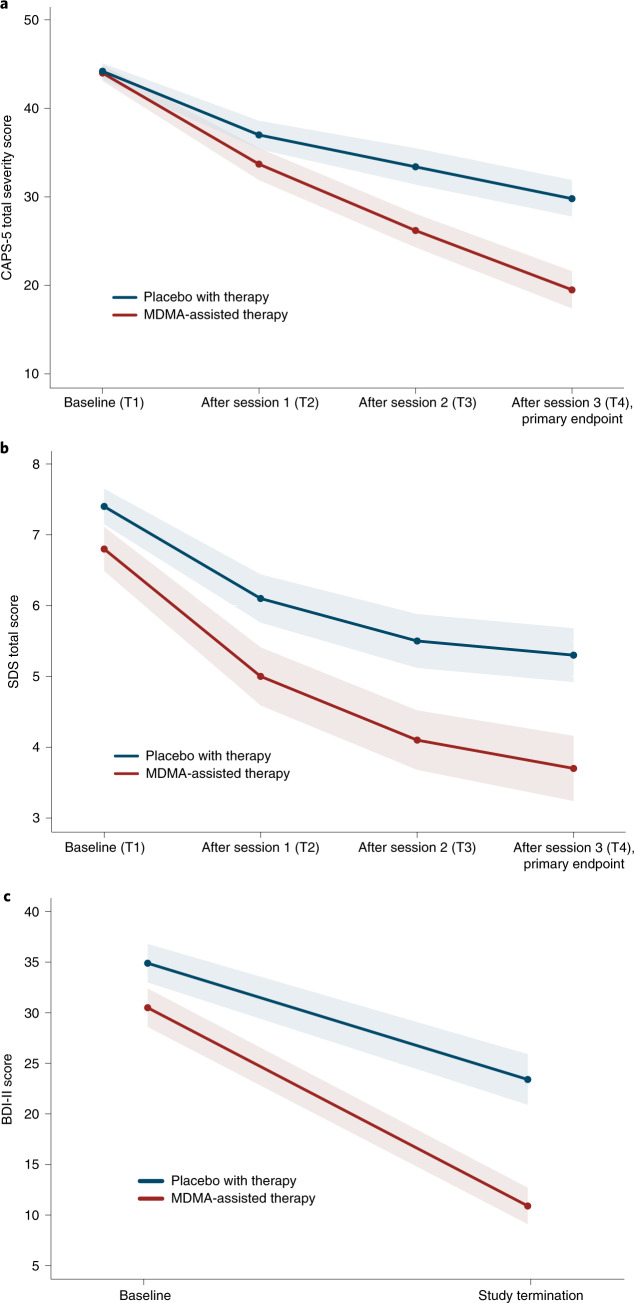
- Among 91 randomized participants (46 MDMA, 44 placebo; one participant did not provide post-dose data), MDMA produced a greater reduction in CAPS-5 PTSD severity than placebo: between-group difference = 11.9, 95% CI 6.3–17.4, P < 0.0001; effect size d = 0.91.
- Functional impairment also improved more with MDMA than placebo on the SDS: P = 0.0116; effect size d = 0.43.
- In completers, CAPS-5 change from baseline to 18 weeks was −24.4 (s.d. 11.6) with MDMA versus −13.9 (s.d. 11.5) with placebo.
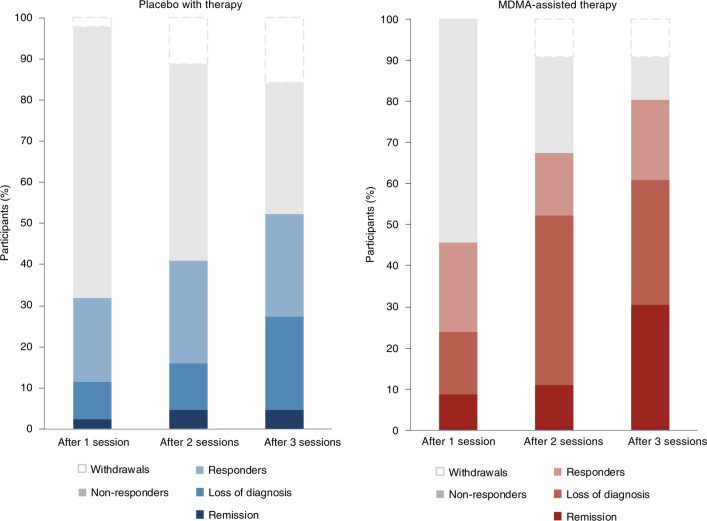
- Exploratory results showed greater reduction in depressive symptoms on the BDI-II with MDMA (mean Δ = −19.7, s.d. 14.0; placebo mean Δ = −10.8, s.d. 11.3; P = 0.0026; d = 0.67), and at 18 weeks 67% (28/42) of MDMA participants no longer met PTSD criteria versus 32% (12/37) on placebo; remission was 33% (14/42) versus 5% (2/37).
Methods
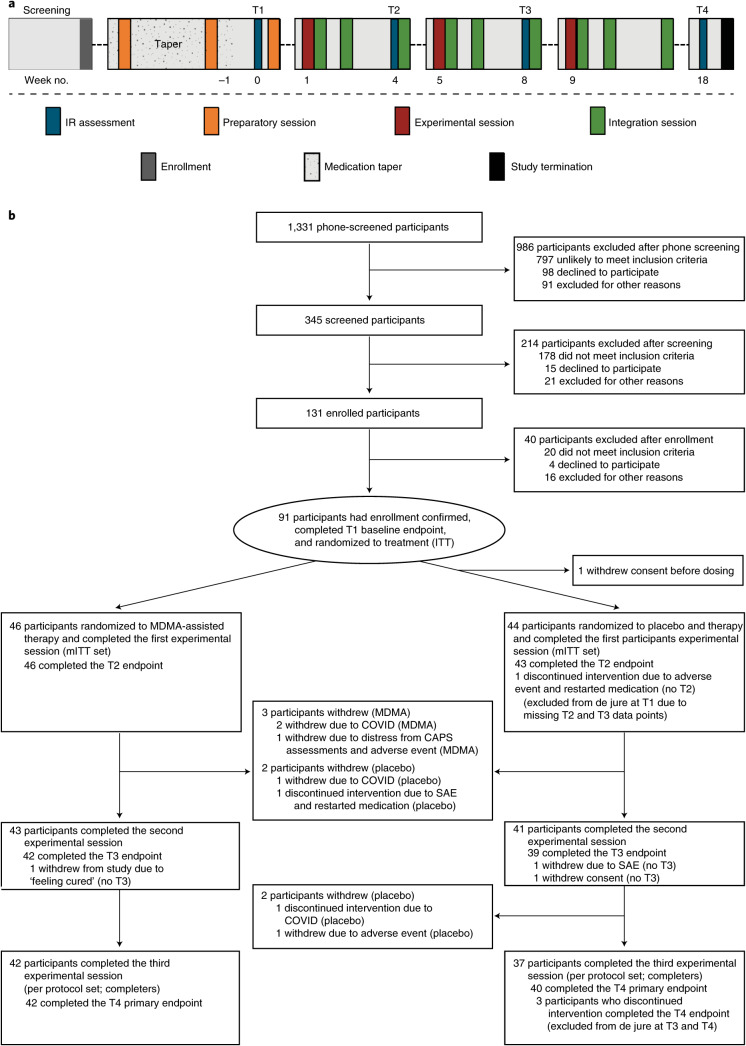
- Multisite randomized, double-blind, placebo-controlled phase 3 trial at 15 sites in the United States, Canada, and Israel; participants received MDMA-assisted therapy or placebo with identical manualized therapy.
- Adults with current DSM-5 PTSD for at least 6 months and baseline CAPS-5 severity ≥35 were enrolled after psychiatric medication washout; 90 participants were included in the modified intent-to-treat analysis, and 42 MDMA/37 placebo were completers.
- Primary and secondary outcomes (CAPS-5 and SDS) were assessed by blinded independent raters using MMRM, with a de jure estimand for efficacy; safety events, suicidality, and adverse events were tracked throughout.
Limitations
- The paper states that the participant population was smaller than originally planned because of the COVID-19 pandemic, although it argues the study still had sufficient power.
- The population was relatively homogeneous and lacked racial and ethnic diversity, which the authors say should be addressed in future trials.
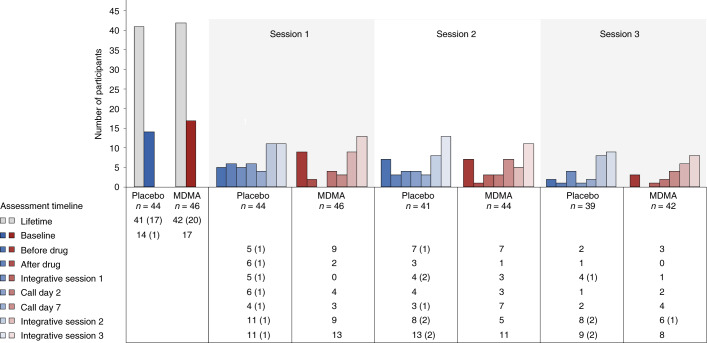
- The authors note that safety data were collected by site therapists, which may have limited blinding; they also say participant blinding was challenging because of MDMA’s subjective effects, and at unblinding at least 10% guessed incorrectly (at least 7/44 placebo participants thought they received MDMA; at least 2/46 MDMA participants thought they received placebo).
Model-written summary. Check it against the paper before relying on it.
Integrity signals
Registry
Cites
Statistics
Figures
Verification
Claims the paper makes
7 Valid · 2 Not valid · 18 Not checked · 86 Own results and interpretations
Every source the paper cites for this claim was checked and supports it.
In the paper
“Pooled analysis of six phase 2 trials of MDMA-assisted therapy for PTSD have now shown promising safety and efficacy findings15.”
§ MDMA-assisted therapy for severe PTSD: a randomized, double-blind, placebo-controlled phase 3 study > Main
What the sources say
- Supportedcites [15] Mithoefer MC MDMA-assisted psychotherapy for treatment of PTSD: study design and rationale for phase 3 trials based on pooled analysis of six phase 2 randomized controlled trials Psychopharmacology 2019 236 2735 2745 10.1007/s00213-019-05249-5 31065731 PMC6695343 source
The Conclusions (p. 1 of that section) state verbatim what the claim attributes: 'Based on the promising safety and efficacy results from these six phase 2 trials...', and the Discussion opens by reporting that pooling data across six phase 2 trials yielded significant symptom reductions with active-dose MDMA plus psychotherapy, with the treatment described as 'safe and efficacious' for civilians and veterans/first responders with chronic PTSD. Safety specifics (favorable safety outcomes, low TEAE rates, no related deaths or suicidal behaviour) appear in the Discussion, and the Abstract Methods/Statistical analysis confirm the pooled sample is six randomized, double-blind, controlled phase 2 trials. One caveat for the citing authors rather than a mismatch: our copy of this source carries a 'RETRACTED ARTICLE' designation, so the pooled findings it reports should not be presented as settled fact. (LLM, conf=0.90)
plainstates an association- Asserted: passes — The authors put it forward as true.
- Checkable: passes — It can be checked against evidence.
- Load-bearing: passes — The paper’s conclusions depend on it.
- Based: passes — The paper gives a reason why it holds.
- Supported
The cited sources support only part of this claim — read each source’s verdict below.
In the paper
“By contrast, the effect size of 0.91 demonstrated in this study between MDMA-assisted therapy and placebo with therapy was larger than that for any other previously identified PTSD pharmacotherapy16–18.”
§ MDMA-assisted therapy for severe PTSD: a randomized, double-blind, placebo-controlled phase 3 study > Discussion
What the sources say
- Partly supportedcites [16] Feduccia AA Breakthrough for trauma treatment: safety and efficacy of MDMA-assisted psychotherapy compared to paroxetine and sertraline Front. Psychiatry 2019 10 650 10.3389/fpsyt.2019.00650 31572236 PMC6751381 sourceExperimental — accuracy not yet measured
The Phase 2 Trials section reports a between-group effect size of 0.9 for MDMA-assisted psychotherapy, and the Comparison: SSRIs vs. MDMA section shows smaller effect sizes for sertraline and paroxetine. The source does not establish that this effect exceeded that of every previously identified PTSD pharmacotherapy; its MDMA controls also included low-dose MDMA plus psychotherapy, not solely placebo plus therapy. The copy provides 0.9 rather than the claimed 0.91. (LLM, conf=0.85)
- Partly supportedcites [17] Lee DJ Psychotherapy versus pharmacotherapy for posttraumatic stress disorder: systematic review and meta-analyses to determine first-line treatments Depress. Anxiety 2016 33 792 806 10.1002/da.22511 27126398 sourceExperimental — accuracy not yet measured
Our copy of Lee et al. (2016) supplies the pharmacotherapy benchmark the citing sentence leans on — the 'Pre-/Posteffects for Monoagent Pharmacotherapy and Psychotherapy' section reports that versus control 'effect sizes were uniformly lower than those observed in pre-/postcomparisons,' that most agents (brofaromine, bupropion, citalopram, divalproex, mirtazapine, risperidone, tiagabine, topiramate, adjunctive aripiprazole/guanfacine/olanzapine) 'never achieved significance against control,' and that the only medications demonstrating large effects were sertraline, venlafaxine, and nefazodone (with 'effect sizes greater than 0.8 considered large' per STATISTICAL ANALYSIS). However, no passage states or benchmarks a maximum pharmacotherapy effect size, and the paper never mentions MDMA-assisted therapy or a 0.91 between-group effect, so the comparative conclusion that 0.91 exceeded 'any other previously identified PTSD pharmacotherapy' is not attributable to this source. The numeric tables (Tables 3 and 4) that would settle the ceiling are not present as text in our copy. (LLM, conf=0.70)
- Partly supportedcites [18] Feduccia, A. A., Jerome, L., Mithoefer, M. C. & Holland, J. Discontinuation of medications classified as reuptake inhibitors affects treatment response of MDMA-assisted psychotherapy. Psychopharmacology (Berl.) 238, 581–588 (2021). PMC7826309 33221932 sourceExperimental — accuracy not yet measured
The Introduction (page unavailable) reports a large between-group effect for MDMA-assisted psychotherapy versus the same psychotherapy with placebo/control. It gives Cohen’s d as 0.8, not 0.91, and does not compare that effect with every previously identified PTSD pharmacotherapy. (LLM, conf=0.88)
plain- Asserted: passes — The authors put it forward as true.
- Checkable: passes — It can be checked against evidence.
- Load-bearing: passes — The paper’s conclusions depend on it.
- Based: passes — The paper gives a reason why it holds.
- Partly supported
Every source the paper cites for this claim was checked and supports it.
In the paper
“Similarly, comparison of change in CAPS score between paroxetine and placebo showed effect sizes of 0.56, 0.45 and 0.09 (ref. 16).”
§ MDMA-assisted therapy for severe PTSD: a randomized, double-blind, placebo-controlled phase 3 study > Discussion
What the sources say
- Supportedcites [16] Feduccia AA Breakthrough for trauma treatment: safety and efficacy of MDMA-assisted psychotherapy compared to paroxetine and sertraline Front. Psychiatry 2019 10 650 10.3389/fpsyt.2019.00650 31572236 PMC6751381 source
Table 3 (Comparison: SSRIs vs. MDMA, p. ~7) lists paroxetine placebo-subtracted CAPS-2 change with effect sizes of 0.56 (Study 1, −14 units), 0.45 (Study 2, −11 units) and 0.09 (Study 3, −6 units), exactly the three values the claim attributes. The adjacent text and the Paroxetine Phase 3 Trials section corroborate the corresponding mean differences (roughly 6–14 units across the three studies), noting the effect sizes were derived by the authors rather than reported in the FDA statistical package. (LLM, conf=0.90)
plain- Asserted: passes — The authors put it forward as true.
- Checkable: passes — It can be checked against evidence.
- Load-bearing: passes — The paper’s conclusions depend on it.
- Based: passes — The paper gives a reason why it holds.
- Supported
The cited sources support only part of this claim — read each source’s verdict below.
In the paper
“human neuroimaging studies have demonstrated that MDMA is associated with attenuated amygdalar BOLD activity during presentation of negative emotional stimuli25.”
§ MDMA-assisted therapy for severe PTSD: a randomized, double-blind, placebo-controlled phase 3 study > Discussion
What the sources say
- Partly supportedcites [25] Bedi G Phan KL Angstadt M de Wit H Effects of MDMA on sociability and neural response to social threat and social reward Psychopharmacology 2009 207 73 83 10.1007/s00213-009-1635-z 19680634 PMC3328967 sourceExperimental — accuracy not yet measured
The RESULTS (and Abstract RESULTS) of Bedi et al. 2009 do report attenuated amygdalar BOLD response on MDMA versus placebo to a negative social stimulus — 'MDMA attenuated amygdala activation to angry, but not fearful, faces', with left amygdala activation (angry vs neutral) lower on 1.5 mg/kg than PBO (extracted BOLD t(8)=3.34, p<.05). But the attenuation was emotion-specific: the same passage states 'There was no effect of drug on amygdala reactivity to fear versus neutral faces', so the claim's blanket 'negative emotional stimuli' overreaches what this source shows. The DISCUSSION also frames the finding as preliminary (N=9, single study, cluster only p=.052 after small-volume correction) and cautions that MDMA's cerebrovascular actions (reduced left amygdala rCBF independent of task, Gamma et al. 2000) could confound the BOLD signal, so 'human neuroimaging studies have demonstrated' attributes more breadth and certainty than this paper carries. (LLM, conf=0.78)
boostedstates an association- Asserted: passes — The authors put it forward as true.
- Checkable: passes — It can be checked against evidence.
- Load-bearing: passes — The paper’s conclusions depend on it.
- Based: passes — The paper gives a reason why it holds.
- Partly supported
The cited sources that could be checked couldn’t confirm or dispute this claim.
In the paper
“MDMA enhances the extinction of fear memories in mice through increased expression of brain-derived neurotrophic factor in the amygdala”
§ MDMA-assisted therapy for severe PTSD: a randomized, double-blind, placebo-controlled phase 3 study > Discussion
What the sources say
- Could not verifycites [25] Bedi G Phan KL Angstadt M de Wit H Effects of MDMA on sociability and neural response to social threat and social reward Psychopharmacology 2009 207 73 83 10.1007/s00213-009-1635-z 19680634 PMC3328967 sourceExperimental — accuracy not yet measured
Our copy of Bedi et al. (2009) is a human fMRI study in nine healthy volunteers with past ecstasy use, examining acute MDMA (0.75 and 1.5 mg/kg) effects on self-reported sociability and on amygdala and ventral striatum BOLD responses to angry, fearful and happy faces (Abstract > MATERIALS AND METHODS; RESULTS). No passage addresses mice, fear-memory extinction, or brain-derived neurotrophic factor; searches for 'extinction of fear memories BDNF brain-derived neurotrophic factor mice' and 'amygdala fear conditioning extinction learning rodents' returned only the facial-expression/amygdala-activation passages. The nearest content — MDMA attenuating left amygdala reactivity to angry, but not fearful, faces (RESULTS; Abstract > RESULTS) — concerns acute neural response to social threat, not extinction of fear memories, so it neither supports nor contradicts the attributed mechanism. (LLM, conf=0.72)
plainstates a cause- Asserted: passes — The authors put it forward as true.
- Checkable: passes — It can be checked against evidence.
- Load-bearing: unclear — It is unclear whether the paper’s conclusions depend on it.
- Based: passes — The paper gives a reason why it holds.
- Could not verify
47 more claims · 2 with their cited sources checked
Create a free account to see all 113 claims and to verify the 28 references still open.
- It may state two separate claims as one. 36
- Probably not a substantial claim. 34
Claims other papers make about this one
Each is checked against this paper’s own text: does it say what the citing paper says it does?
The source backs part of the claim, not all of it — or backs it for a different population, condition or comparison.
In the citing paper
“Clinical trials indicate that MDMA-AT enhances key factors necessary for a robust therapeutic alliance, including self-compassion, emotional awareness, and relational capacities (158).”
From Psychoanalytically informed MDMA-assisted therapy for pathological narcissism: a novel theoretical approach (2025) · cites this paper as [158]
Experimental — accuracy not yet measuredThe source backs part of the claim, not all of it — or backs it for a different population, condition or comparison.
In the citing paper
“MDMA’s unique pharmacological properties may facilitate alliance formation by increasing compassion, empathy, and emotional engagement, which contribute to deeper therapeutic work (6, 158).”
From Psychoanalytically informed MDMA-assisted therapy for pathological narcissism: a novel theoretical approach (2025) · cites this paper as [158]
Experimental — accuracy not yet measuredThe source backs part of the claim, not all of it — or backs it for a different population, condition or comparison.
In the citing paper
“The therapeutic alliance is a well-established predictor of positive treatment outcomes across a range of psychotherapeutic modalities (158–160), including psychoanalytic psychotherapy (161) and the treatment of personality disorders such as PN (162, 163).”
From Psychoanalytically informed MDMA-assisted therapy for pathological narcissism: a novel theoretical approach (2025) · cites this paper as [158]
Experimental — accuracy not yet measuredThe source backs part of the claim, not all of it — or backs it for a different population, condition or comparison.
In the citing paper
“MDMA-AT has also been most extensively tested in the treatment of post-traumatic stress disorder (PTSD) and has shown to result in large effect size differences compared to placebo controls in Phase II and Phase 3 trials (18–21).”
From MDMA-Assisted Therapy as a Means to Alter Affective, Cognitive, Behavioral, and Neurological Systems Underlying Social Dysfunction in Social Anxiety Disorder (2021) · cites this paper as [19]
Experimental — accuracy not yet measuredThe cited source says what the claim attributes to it.
In the citing paper
“In addition, both phase II (19) and the existing phase 3 study (20) suggest excellent safety and low abuse potential when MDMA is used under controlled conditions.”
1 more claim about this paper
Create a free account to see every claim other papers make about this one.
Citations
Cites
2 retracted
Mithoefer, M. C., Feduccia, A. A., Jerome, L., Mithoefer, A., Wagner, M., Walsh, Z., Hamilton, S., Yazar-Klosinski, B., Emerson, A., & Doblin, R. (2019) · Psychopharmacology · doi:10.1007/s00213-019-05249-5 · Cited by 359
RetractedFeduccia, A. A., Jerome, L., Mithoefer, M. C., & Holland, J. (2021) · Psychopharmacology · doi:10.1007/s00213-020-05710-w · Cited by 40
Self-citationRetractedPosttraumatic Stress Disorder in the National Comorbidity Survey
Kessler, R. C. (1995) · Archives of General Psychiatry · doi:10.1001/archpsyc.1995.03950240066012 · Cited by 10,379
Lesch, K.-P., Bengel, D., Heils, A., Sabol, S. Z., Greenberg, B. D., Petri, S., Benjamin, J., Müller, C. R., Hamer, D. H., & Murphy, D. L. (1996) · Science · doi:10.1126/science.274.5292.1527 · Cited by 5,162
Serotonin transporter genetic variation and the response of the human amygdala.
Hariri, A. R., Mattay, V. S., Tessitore, A., Kolachana, B., Fera, F., Goldman, D., Egan, M. F., & Weinberger, D. R. (2002) · Science · doi:10.1126/science.1071829 · Cited by 2,340
Weathers, F. W., Bovin, M. J., Lee, D. J., Sloan, D. M., Schnurr, P. P., Kaloupek, D. G., Keane, T. M., & Marx, B. P. (2018) · Psychological Assessment · doi:10.1037/pas0000486 · Cited by 1,799
Psychotherapy for Military-Related PTSD: A Review of Randomized Clinical Trials
Steenkamp, M. M., Litz, B. T., Hoge, C. W., & Marmar, C. R. (2015) · JAMA · doi:10.1001/jama.2015.8370 · Cited by 958
Posttraumatic stress disorder in abused and neglected children grown up
Widom, C. S. (1999) · American Journal of Psychiatry · doi:10.1176/ajp.156.8.1223 · Cited by 945
Psychological therapies for chronic post-traumatic stress disorder (PTSD) in adults
Bisson, J. I., Roberts, N. P., Andrew, M., Cooper, R., & Lewis, C. (2013) · Cochrane Database of Systematic Reviews · doi:10.1002/14651858.cd003388.pub4 · Cited by 829
Meta-analysis of dropout in treatments for posttraumatic stress disorder
Imel, Z. E., Laska, K., Jakupcak, M., & Simpson, T. L. (2013) · Journal of Consulting and Clinical Psychology · doi:10.1037/a0031474 · Cited by 633
Cited by
Items 101–200 of 1,000
Davis, L. L., & Hamner, M. B. (2024) · Frontiers in Psychiatry · doi:10.3389/fpsyt.2024.1356563 · Cited by 47
Stauffer, C. S., Brown, M. R., Adams, D., Cassity, M., & Sevelius, J. M. (2022) · Frontiers in Psychiatry · doi:10.3389/fpsyt.2022.932605 · Cited by 46
Toward staging differentiation for posttraumatic stress disorder treatment
Nijdam, M. J., Vermetten, E. H. G. J. M., & McFARLANE, A. C. (2022) · Acta Psychiatrica Scandinavica · doi:10.1111/acps.13520 · Cited by 47
Knowledge, Perceptions, and Use of Psychedelics among Individuals with Fibromyalgia
Glynos, N. G., Pierce, J. M., Davis, A. K., McAfee, J., & Boehnke, K. F. (2022) · Journal of Psychoactive Drugs · doi:10.1080/02791072.2021.2022817 · Cited by 46
Peckham, H. (2023) · Frontiers in Psychiatry · doi:10.3389/fpsyt.2023.1103718 · Cited by 45
Inserra, A., Giorgini, G., Lacroix, S., Bertazzo, A., Choo, J. M., Markopolous, A., Grant, E., Abolghasemi, A., Gregorio, D. D., Flamand, N., et al. (2022) · British Journal of Pharmacology · doi:10.1111/bph.15977 · Cited by 44
Validation of a new instrument for assessing attitudes on psychedelics in the general population
Žuljević, M. F., Buljan, I., Leskur, M., Kaliterna, M., Hren, D., & Duplančić, D. (2022) · Scientific Reports · doi:10.1038/s41598-022-23056-5 · Cited by 46
The need for establishing best practices and gold standards in psychedelic medicine
Feduccia, A., Agin-Liebes, G., Price, C. M., Grinsell, N., Paradise, S., & Rabin, D. M. (2023) · Journal of Affective Disorders · doi:10.1016/j.jad.2023.03.083 · Cited by 43
Luquiens, A., Belahda, D., Graux, C., Igounenc, N., Serrand, C., Rochefort, P., Mura, T., & Sergent, F. (2025) · Addiction · doi:10.1111/add.70152 · Cited by 43
Davis, A. K., Xin, Y., Sepeda, N., & Averill, L. A. (2023) · The American Journal of Drug and Alcohol Abuse · doi:10.1080/00952990.2023.2220874 · Cited by 36
Jeste, D. V., Malaspina, D., Bagot, K. S., Barch, D. M., Cole, S. W., Dickerson, F., Dilmore, A. H., Ford, C. L., Karcher, N. R., Luby, J. L., et al. (2023) · Schizophrenia Bulletin · doi:10.1093/schbul/sbad031 · Cited by 43
Exploring mechanisms of psychedelic action using neuroimaging
Erritzøe, D., Timmermann, C., Godfrey, K., Castro-Rodrigues, P., Peill, J. M., Carhart-Harris, R. L., Nutt, D. J., & Wall, M. B. (2024) · Nature Mental Health · doi:10.1038/s44220-023-00172-3 · Cited by 42
(2022) · Springer eBooks · doi:10.1007/978-3-030-98286-7 · Cited by 42
Psychedelics in the treatment of unipolar and bipolar depression
Bosch, O. G., Halm, S., & Seifritz, E. (2022) · International Journal of Bipolar Disorders · doi:10.1186/s40345-022-00265-5 · Cited by 41
Schenberg, E. E. (2021) · Expert Review of Clinical Pharmacology · doi:10.1080/17512433.2021.1951473 · Cited by 41
MDMA enhances empathy-like behaviors in mice via 5-HT release in the nucleus accumbens
Rein, B. A., Raymond, K. B., Boustani, C., Tuy, S., Zhang, J., Laurent, R. S., Pomrenze, M. B., Boroon, P., Heifets, B. D., Smith, M. L., et al. (2024) · Science Advances · doi:10.1126/sciadv.adl6554 · Cited by 41
Psychedelics for treatment resistant depression: are they game changers?
Kalfas, M., Taylor, R. H., Tsapekos, D., & Young, A. H. (2023) · Expert Opinion on Pharmacotherapy · doi:10.1080/14656566.2023.2281582 · Cited by 40
Psychedelics in neuroinflammation: Mechanisms and therapeutic potential
de Deus, J. L., Maia, J. M., Soriano, R. N., Amorim, M. R., & Branco, L. G. S. (2025) · Progress in Neuro-Psychopharmacology and Biological Psychiatry · doi:10.1016/j.pnpbp.2025.111278 · Cited by 40
The Safety and Efficacy of Psychedelic-Assisted Therapies for Older Adults: Knowns and Unknowns
Johnston, C. B., Mangini, M., Grob, C. S., & Anderson, B. T. (2022) · American Journal of Geriatric Psychiatry · doi:10.1016/j.jagp.2022.08.007 · Cited by 40
Predictors of Psychedelic Experience: A Thematic Analysis
McCartney, A., McGovern, H. T., & Foe, A. D. (2022) · Journal of Psychoactive Drugs · doi:10.1080/02791072.2022.2129885 · Cited by 41
Quality of reporting on psychological interventions in psychedelic treatments: a systematic review
Seybert, C., Schimmers, N., Silva, L., Breeksema, J. J., Veraart, J. K. E., Bessa, B. S., d’Orsi, D., Schoevers, R. A., & Oliveira-Maia, A. J. (2024) · The Lancet Psychiatry · doi:10.1016/s2215-0366(24)00333-x · Cited by 39
Presence, Trust, and Empathy: Preferred Characteristics of Psychedelic Carers
Thal, S. B., Engel, L. B., & Bright, S. J. (2022) · Journal of Humanistic Psychology · doi:10.1177/00221678221081380 · Cited by 39
Pharmacological Management of Nightmares Associated with Posttraumatic Stress Disorder
Geldenhuys, C., van den Heuvel, L. L., Steyn, P., & Seedat, S. (2022) · CNS Drugs · doi:10.1007/s40263-022-00929-x · Cited by 39
A Systematic Review of Participant Diversity in Psychedelic-Assisted Psychotherapy Trials
Haft, S. L., Downey, A. E., Raymond‐Flesch, M., Fernandes‐Osterhold, G., Bradley, E., O’Donovan, A., & Woolley, J. D. (2024) · Psychiatry Research · doi:10.1016/j.psychres.2025.116359 · Cited by 39
Self-citationTorre, J. T. L., Mahammadli, M., Faber, S. C., Greenway, K. T., & Williams, M. T. (2023) · International Journal of Mental Health and Addiction · doi:10.1007/s11469-023-01149-0 · Cited by 39
Amphetamine-type Stimulants: Novel Insights into their Actions and use Patterns
Paz-Ramos, M. I., Cruz, S. L., & Violante‐Soria, V. (2023) · Revista de investigaci�n Cl�nica · doi:10.24875/ric.23000110 · Cited by 39
Use of Psychedelics for Pain: A Scoping Review
Goel, A., Rai, Y., Sivadas, S., Diep, C., Clarke, H. A., Shanthanna, H., & Ladha, K. S. (2023) · Anesthesiology · doi:10.1097/aln.0000000000004673 · Cited by 39
Thal, S. B., Baker, P., Marinis, J., Wieberneit, M., Sharbanee, J. M., Bruno, R., Skeffington, P., & Bright, S. J. (2023) · Clinical Psychology & Psychotherapy · doi:10.1002/cpp.2945 · Cited by 38
Kisely, S., Connor, M., Somogyi, A. A., & Siskind, D. (2023) · Australian & New Zealand Journal of Psychiatry · doi:10.1177/00048674221083868 · Cited by 38
Yang, K. H., Han, B. H., & Palamar, J. J. (2022) · Addictive Behaviors · doi:10.1016/j.addbeh.2022.107343 · Cited by 38
Memory Trace for Fear Extinction: Fragile yet Reinforceable
Liu, Y., Ye, S., Li, X.-N., & Li, W. (2023) · Neuroscience Bulletin · doi:10.1007/s12264-023-01129-3 · Cited by 38
Henningfield, J. E., Coe, M. A., Griffiths, R. R., Belouin, S. J., Berger, A. M., Coker, A. R., Comer, S. D., Heal, D. J., Hendricks, P. S., Nichols, C. D., et al. (2022) · Neuropharmacology · doi:10.1016/j.neuropharm.2022.109220 · Cited by 39
Self-citationZeifman, R. J., Kettner, H., Ross, S., Weiss, B., Mithoefer, M. C., Mithoefer, A. T., & Wagner, A. C. (2024) · European Journal of Psychotraumatology · doi:10.1080/20008066.2023.2297536 · Cited by 37
“…(MDMA)-assisted psychotherapy (MDMA-AP) is a promising novel intervention for PTSD, with several randomised controlled (Mitchell et al., 2021; Mithoe-fer et al., 2011, 2018; Oehen et al., 2013; Ot ’ alora et al., 2018) and uncontrolled (Jardim et al., 2021; Monson et…”
BackgroundSelf-citationStokłosa, I., Więckiewicz, G., Stokłosa, M., Piegza, M. J., Pudło, R., & Gorczyca, P. W. (2023) · International Journal of Environmental Research and Public Health · doi:10.3390/ijerph20031870 · Cited by 39
Psychedelic drugs for psychiatric disorders
da Costa, S. C., Oesterle, T., Rummans, T. A., Richelson, E., & Gold, M. S. (2022) · Journal of the Neurological Sciences · doi:10.1016/j.jns.2022.120332 · Cited by 38
A Comprehensive Review of the Current Status of the Cellular Neurobiology of Psychedelics
Banushi, B., & Polito, V. (2023) · Biology · doi:10.3390/biology12111380 · Cited by 37
Wang, E. Y., Mathai, D. S., Gukasyan, N., Nayak, S. M., & Garcia‐Romeu, A. (2024) · Scientific Reports · doi:10.1038/s41598-024-78736-1 · Cited by 37
Kucsera, A., Suppes, T. M., & Haug, N. A. (2023) · Clinical Psychology & Psychotherapy · doi:10.1002/cpp.2880 · Cited by 37
Medical student attitudes and perceptions of psychedelic-assisted therapies
Li, I., Fong, R., Hagen, M. M., & Tabaac, B. J. (2023) · Frontiers in Psychiatry · doi:10.3389/fpsyt.2023.1190507 · Cited by 37
Falchi-Carvalho, M., Wießner, I., Silva, S. R. B., Maia, L. O., Barros, H., Laborde, S., Arichelle, F., Tullman, S., Silva-Costa, N., Assunção, A., et al. (2023) · European Neuropsychopharmacology · doi:10.1016/j.euroneuro.2023.12.006 · Cited by 39
Gradisch, R., Schlögl, K., Lazzarin, E., Niello, M., Maier, J., Mayer, F. P., da Silva, L. A., Skopec, S. M. C., Blakely, R., Sitte, H. H., et al. (2024) · Nature Communications · doi:10.1038/s41467-023-44637-6 · Cited by 37
Lyubomirsky, S. (2022) · Perspectives on Psychological Science · doi:10.1177/17456916211055369 · Cited by 35
A role for the serotonin 2A receptor in the expansion and functioning of human transmodal cortex
Luppi, A. I., Girn, M., Rosas, F. E., Timmermann, C., Roseman, L., Erritzøe, D., Nutt, D. J., Stamatakis, E. A., Spreng, R. N., Xing, L., et al. (2023) · Brain · doi:10.1093/brain/awad311 · Cited by 35
Kelly, T. J., Bonniwell, E. M., Mu, L., Liu, X., Hu, Y., Friedman, V., Yu, H., Su, W., McCorvy, J. D., & Liu, Q.-S. (2023) · Neuropsychopharmacology · doi:10.1038/s41386-023-01744-8 · Cited by 35
Psychedelic-Assisted Therapy for People with Eating Disorders
Gukasyan, N., Schreyer, C. C., Griffiths, R. R., & Guarda, Á. S. (2022) · Current Psychiatry Reports · doi:10.1007/s11920-022-01394-5 · Cited by 35
Greń, J., Tylš, F., Lasocik, M., & Kiraly, C. (2023) · Frontiers in Psychology · doi:10.3389/fpsyg.2023.1054692 · Cited by 37
Bahji, A., Lunsky, I. O., Gutiérrez, G., & Vázquez, G. H. (2023) · Journal of Psychoactive Drugs · doi:10.1080/02791072.2023.2278586 · Cited by 35
A rapid narrative review of the clinical evolution of psychedelic treatment in clinical trials
Kishon, R., Modlin, N. L., Cycowicz, Y. M., Mourtada, H., Wilson, T., Williamson, V., Cleare, A. J., & Rucker, J. (2024) · npj Mental Health Research · doi:10.1038/s44184-024-00068-9 · Cited by 34
A multi-institutional investigation of psilocybin’s effects on mouse behavior
Lu, O., White, K., Raymond, K. B., Liu, C. J., Klein, A. S., Green, N., Vaillancourt, S., Gallagher, A. J., Shindy, L., Li, A., et al. (2026) · Nature Neuroscience · doi:10.1101/2025.04.08.647810 · Cited by 34
Are psychedelic medicines the reset for chronic pain? Preliminary findings and research needs
Zia, F. Z., Baumann, M. H., Belouin, S. J., Dworkin, R. H., Ghauri, M. H., Hendricks, P. S., Henningfield, J. E., Lanier, R. K., Ross, S., & Berger, A. M. (2023) · Neuropharmacology · doi:10.1016/j.neuropharm.2023.109528 · Cited by 34
Rosenfield, P., Jiang, D., & Pauselli, L. (2021) · Schizophrenia Research · doi:10.1016/j.schres.2021.06.005 · Cited by 35
Serotonin-releasing agents with reduced off-target effects
Mayer, F. P., Niello, M., Cintulová, D., Sideromenos, S., Maier, J., Li, Y., Bulling, S., Kudlacek, O., Schicker, K. W., Iwamoto, H., et al. (2022) · Molecular Psychiatry · doi:10.1038/s41380-022-01843-w · Cited by 34
Ching, T. H. W., Williams, M. T., Wang, J. B., Jerome, L., Yazar‐Klosinski, B., Emerson, A., & Doblin, R. (2022) · Journal of Psychopharmacology · doi:10.1177/02698811221104052 · Cited by 34
Self-citationSafety considerations in the evolving legal landscape of psychedelic-assisted psychotherapy
Mocanu, V., Mackay, L., Christie, D., & Argento, E. (2022) · Substance Abuse Treatment Prevention and Policy · doi:10.1186/s13011-022-00468-0 · Cited by 34
Half a Century of Research on Posttraumatic Stress Disorder: A Scientometric Analysis
Sabé, M., Chen, C., El‐Hage, W., Leroy, A., Vaïva, G., Monari, S., Prémand, N., Bartolomei, J., Caiolo, S., Maercker, A., et al. (2023) · Current Neuropharmacology · doi:10.2174/1570159x22666230927143106 · Cited by 33
Lewis, C. R., Tafur, J., Spencer, S., Green, J. M., Harrison, C., Kelmendi, B., Rabin, D. M., Yehuda, R., Yazar‐Klosinski, B., & Cahn, B. R. (2023) · Frontiers in Psychiatry · doi:10.3389/fpsyt.2023.959590 · Cited by 33
Self-citationMolla, H. M., Lee, R., Lyubomirsky, S., & de Wit, H. (2023) · Scientific Reports · doi:10.1038/s41598-023-43156-0 · Cited by 33
Can psychedelics enhance group psychotherapy? A discussion on the therapeutic factors
Ponomarenko, P., Seragnoli, F., Calder, A. E., Oehen, P., & Hasler, G. (2023) · Journal of Psychopharmacology · doi:10.1177/02698811231155117 · Cited by 34
Havenith, M. N., Leidenberger, M., Brasanac, J., Corvacho, M., Figueiredo, I., Schwarz, L., Uthaug, M. V., Rakusa, S., Bernardic, M., Vasquez-Mock, L., et al. (2025) · Communications Psychology · doi:10.1038/s44271-025-00247-0 · Cited by 33
Jones, G. M. (2022) · Journal of Psychopharmacology · doi:10.1177/02698811221127304 · Cited by 33
MDMA for the Treatment of Negative Symptoms in Schizophrenia
Arnovitz, M. D., Spitzberg, A. J., Davani, A. J., Vadhan, N. P., Holland, J. A., Kane, J. M., & Michaels, T. I. (2022) · Journal of Clinical Medicine · doi:10.3390/jcm11123255 · Cited by 33
Peacock, C., Mascaro, J. S., Brauer, E., Zarrabi, A. J., Dunlop, B. W., Maples‐Keller, J. L., Grant, G. H., Raison, C. L., Rab, F., & Palitsky, R. (2024) · PLoS ONE · doi:10.1371/journal.pone.0296071 · Cited by 33
Giving Consent to the Ineffable
Villiger, D. (2024) · Neuroethics · doi:10.1007/s12152-024-09545-6 · Cited by 32
Humphreys, K. N., Korthuis, P. T., Stjepanović, D., & Hall, W. (2024) · Annual Review of Psychology · doi:10.1146/annurev-psych-020124-023532 · Cited by 32
Boehnke, K. F., Cox, K., Weston, C. L., Herberholz, M., Glynos, N. G., Kolbman, N., Fields, C. W., Barron, J., & Kruger, D. J. (2023) · Frontiers in Psychiatry · doi:10.3389/fpsyt.2023.1224551 · Cited by 32
O’Donnell, K. C., Alpert, M., Okano, L., Nicholas, C. R. N., Thomas, C., Poulter, B., Mithoefer, A. T., Mithoefer, M. C., & Marcela Ot’alora, G. (2024) · Frontiers in Psychology · doi:10.3389/fpsyg.2024.1427531 · Cited by 32
Self-citationRediscovering Psilocybin as an Antidepressive Treatment Strategy
Zeiss, R., Gahr, M., & Graf, H. (2021) · Pharmaceuticals · doi:10.3390/ph14100985 · Cited by 32
Urrutia, J., Anderson, B. T., Belouin, S. J., Berger, A. M., Griffiths, R. R., Grob, C. S., Henningfield, J. E., Labate, B. C., Maier, L. J., Maternowska, M. C., et al. (2023) · Journal of Psychoactive Drugs · doi:10.1080/02791072.2023.2258367 · Cited by 31
Acute sleep interventions as an avenue for treatment of trauma-associated disorders
Swift, K. M., Thomas, C. L., Balkin, T. J., Lowery‐Gionta, E. G., & Matson, L. M. (2022) · Journal of Clinical Sleep Medicine · doi:10.5664/jcsm.10074 · Cited by 31
Psychedelic Science of Spirituality and Religion: An Attachment-Informed Agenda Proposal
Cherniak, A. D., Brulin, J. G., Mikulincer, M., Östlind, S., Carhart-Harris, R. L., & Granqvist, P. (2022) · International Journal for the Psychology of Religion · doi:10.1080/10508619.2022.2148061 · Cited by 31
Psychedelic treatments for mental health conditions pose challenges for informed consent
Seybert, C., Cotovio, G., Madeira, L., Ricou, M., Pires, A. M., & Oliveira-Maia, A. J. (2023) · Nature Medicine · doi:10.1038/s41591-023-02378-5 · Cited by 31
Villiger, D. (2024) · International Review of Psychiatry · doi:10.1080/09540261.2024.2357669 · Cited by 31
Soliman, P., Curley, D. E., Capone, C., Eaton, E. M., & Haass‐Koffler, C. L. (2024) · Psychopharmacology · doi:10.1007/s00213-024-06598-6 · Cited by 31
Fear extinction induced by activation of PKA ameliorates anxiety-like behavior in PTSD mice
Gao, F., Wang, J., Yang, S., Ji, M., & Zhu, G. (2022) · Neuropharmacology · doi:10.1016/j.neuropharm.2022.109306 · Cited by 31
Self-citationPrescription Psychedelics: The Road from FDA Approval to Clinical Practice
Lamkin, M. (2021) · The American Journal of Medicine · doi:10.1016/j.amjmed.2021.07.033 · Cited by 31
VanderZwaag, J., Halvorson, T., Dolhan, K., Šimončičová, E., Ben‐Azu, B., & Tremblay, M. (2022) · Neurochemical Research · doi:10.1007/s11064-022-03772-0 · Cited by 30
Qu, Y., Eguchi, A., Ma, L., Wan, X., Mori, C., & Hashimoto, K. (2023) · Neurobiology of Disease · doi:10.1016/j.nbd.2023.106348 · Cited by 30
Pharmacological effects of methylone and MDMA in humans
Poyatos, L., Pérez‐Mañá, C., Hladun, O., Núñez-Montero, M., de la Rosa, G., Martín, S., Barriocanal, A. M., Carabias, L., Kelmendi, B., Taoussi, O., et al. (2023) · Frontiers in Pharmacology · doi:10.3389/fphar.2023.1122861 · Cited by 30
Harrison, T. R. (2023) · Journal of Psychedelic Studies · doi:10.1556/2054.2023.00267 · Cited by 30
Medicinal cannabis for psychiatry-related conditions: an overview of current Australian prescribing
Cairns, E. A., Benson, M. J., Bedoya‐Pérez, M. A., Macphail, S. L., Mohan, A., Cohen, R., Sachdev, P. S., & McGregor, I. S. (2023) · Frontiers in Pharmacology · doi:10.3389/fphar.2023.1142680 · Cited by 29
New Paradigms of Old Psychedelics in Schizophrenia
Mahmood, D., Alenezi, S. K., Anwar, M. J., Azam, F., Qureshi, K. A., & Jaremko, M. (2022) · Pharmaceuticals · doi:10.3390/ph15050640 · Cited by 29
Riaz, K., Suneel, S., Malik, M. H. B. A., Kashif, T., Ullah, I., Waris, A., Nicola, M. D., Mazza, M., Sani, G., Martinotti, G., et al. (2023) · Diseases · doi:10.3390/diseases11040159 · Cited by 29
Avanceña, A. L. V., Kahn, J. G., & Marseille, E. A. (2022) · Clinical Drug Investigation · doi:10.1007/s40261-022-01122-0 · Cited by 29
Hard Boiled: Alcohol Use as a Risk Factor for MDMA-Induced Hyperthermia: a Systematic Review
van Amsterdam, J., Brunt, T. M., Pierce, M., & van den Brink, W. (2021) · Neurotoxicity Research · doi:10.1007/s12640-021-00416-z · Cited by 29
Assessing the quality of publicly available videos on MDMA‐assisted psychotherapy for PTSD
Kyarunts, M., Mansukhani, M. P., Loukianova, L. L., & Kolla, B. P. (2022) · American Journal on Addictions · doi:10.1111/ajad.13325 · Cited by 29
The science of psychedelic medicine
Siegel, J. S., Liston, C. M., Nicol, G. E., Carhart-Harris, R. L., & Bogenschutz, M. P. (2026) · Nature Medicine · doi:10.1038/s41591-025-04194-5 · Cited by 29
Self-citationThe illusion of knowledge in the emerging field of psychedelic research
Oña, G., Kohek, M., & Bouso, J. C. (2022) · New Ideas in Psychology · doi:10.1016/j.newideapsych.2022.100967 · Cited by 28
Bedside to bench: the outlook for psychedelic research
Acero, V. P., Cribas, E. S., Browne, K. D., Rivellini, O. M., Burrell, J. C., O’Donnell, J. C., Das, S., & Cullen, D. K. (2023) · Frontiers in Pharmacology · doi:10.3389/fphar.2023.1240295 · Cited by 28
MDMA-assisted psychotherapy for PTSD in adolescents: rationale, potential, risks, and considerations
Kangaslampi, S., & Zijlmans, J. (2023) · European Child & Adolescent Psychiatry · doi:10.1007/s00787-023-02310-9 · Cited by 28
Psychedelic innovations and the crisis of psychopharmacology
Langlitz, N. (2022) · BioSocieties · doi:10.1057/s41292-022-00294-4 · Cited by 28
Qu, Y., Eguchi, A., Wan, X., Ma, L., Chang, L., Shan, J., Yang, Y. H., Mori, C., & Hashimoto, K. (2022) · Psychiatry Research · doi:10.1016/j.psychres.2022.115020 · Cited by 28
Drăgan, A.-M., Parrilla, M., Cambré, S., Domínguez‐Robles, J., Detamornrat, U., Donnelly, R. F., Oprean, R., Cristea, C., & Wael, K. D. (2023) · Microchemical Journal · doi:10.1016/j.microc.2023.109257 · Cited by 29
How Psychedelics Modulate Multiple Memory Mechanisms in Posttraumatic Stress Disorder
Doss, M. K., DeMarco, A., Dunsmoor, J. E., Cisler, J. M., Fonzo, G. A., & Nemeroff, C. B. (2024) · Drugs · doi:10.1007/s40265-024-02106-4 · Cited by 27
Armstrong, S. B., Xin, Y., Sepeda, N. D., Polanco, M., Averill, L. A., & Davis, A. K. (2023) · Military Psychology · doi:10.1080/08995605.2022.2156200 · Cited by 27
Nutt, D. J., Hunt, P., Schlag, A. K., & Fitzgerald, P. B. (2024) · British Journal of Pharmacology · doi:10.1111/bph.17398 · Cited by 27
Aboharb, F., Davoudian, P. A., Shao, L.-X., Liao, C., Rzepka, G. N., Wojtasiewicz, C., Indajang, J., Dibbs, M., Rondeau, J. A., Sherwood, A. M., et al. (2025) · Nature Communications · doi:10.1038/s41467-025-56850-6 · Cited by 28
Pharmacological and non-pharmacological predictors of the LSD experience in healthy participants
Vizeli, P., Studerus, E., Holze, F., Schmid, Y., Dolder, P. C., Ley, L., Straumann, I., Becker, A., Müller, F., Arikci, D., et al. (2024) · Translational Psychiatry · doi:10.1038/s41398-024-03074-9 · Cited by 27
Viña, S. M. (2024) · Journal of Racial and Ethnic Health Disparities · doi:10.1007/s40615-024-02023-y · Cited by 27
Dworkin, R. H., Anderson, B. T., Andrews, N., Edwards, R. R., Grob, C. S., Ross, S., Satterthwaite, T. D., & Strain, E. C. (2022) · Journal of Pain · doi:10.1016/j.jpain.2022.05.003 · Cited by 27
An Update on Psychotherapy for the Treatment of PTSD
ROTHBAUM, B. O., & Watkins, L. E. (2025) · American Journal of Psychiatry · doi:10.1176/appi.ajp.20250110 · Cited by 27
Metadata
- Authors
- Mitchell, J. M., Bogenschutz, M., Lilienstein, A., Harrison, C., Kleiman, S., Parker-Guilbert, K., Ot’alora G., M., Garas, W., Paleos, C., Gorman, I., Nicholas, C., Mithoefer, M., Carlin, S., Poulter, B., Mithoefer, A., Quevedo, S., Wells, G., Klaire, S. S., van der Kolk, B., Tzarfaty, K., Amiaz, R., Worthy, R., Shannon, S., Woolley, J. D., Marta, C., Gelfand, Y., Hapke, E., Amar, S., Wallach, Y., Brown, R., Hamilton, S., Wang, J. B., Coker, A., Matthews, R., de Boer, A., Yazar-Klosinski, B., Emerson, A., & Doblin, R.
- Affiliations
- University of California, San Francisco (US)
- New York University (US)
- Multidisciplinary Association for Psychedelic Studies (US)
- University of Colorado Boulder (US)
- Fluent (United States) (US)
- University of Wisconsin–Madison (US)
- Medical University of South Carolina (US)
- British Columbia Centre on Substance Use (CA)
- Sheba Medical Center (IL)
- University of Toronto (CA)
- Stanford Medicine (US)
- Corresponding author
- Mitchell, Jennifer M.
- ORCID
- Mitchell, Jennifer M.
- Bogenschutz, Michael
- Harrison, Charlotte
- Ot’alora G., Marcela
- Gorman, Ingmar
- Nicholas, Christopher
- Mithoefer, Michael
- Poulter, Bruce
- Wells, Gregory
- Klaire, Sukhpreet S.
- Amiaz, Revital
- Shannon, Scott
- Woolley, Joshua D.
- Brown, Randall
- Hamilton, Scott
- Wang, Julie B.
- Coker, Allison
- Emerson, Amy
- Doblin, Rick
- Venue
- Nature Medicine
- Published
- 2021-05-10
- Volume
- 27
- Issue
- 6
- Pages
- 1025-1033
- ISSN
- 1078-8956 (ISSN-L)
- 1546-170X
- PMC
- PMC8205851
- OpenAlex
- W3160990818
- Cited by
- 1,004
- References
- 37
- Citations by year
- 2026: 150 · 2025: 195 · 2024: 215 · 2023: 212 · 2022: 181 · 2021: 48
- FWCI
- 111.06
- Type
- journal article
- Language
- en
- Open access
- hybrid
- doi.org
- Licence
- cc-by
- creativecommons.org/licenses/by/4.0 (tdm)
- creativecommons.org/licenses/by/4.0 (vor)
- Locations
- Nature Medicine (publishedVersion, cc-by)
- PubMed Central (publishedVersion, cc-by)
- PubMed (publishedVersion)
- eScholarship (California Digital Library) (submittedVersion, cc-by)
- Funders
- Multidisciplinary Association for Psychedelic Studies
- Topics
- Social Sciences › Psychology › Clinical Psychology › Psychedelics and Drug Studies
- Social Sciences › Psychology › Clinical Psychology › Posttraumatic Stress Disorder Research
- Social Sciences › Psychology › Clinical Psychology › Psychotherapy Techniques and Applications
- Keywords
- MDMA-assisted psychotherapy, MDMA, post-traumatic stress disorder, psychedelic-assisted psychotherapy, dissociation, depression, substance use disorders, childhood trauma, treatment efficacy, treatment safety, suicidality, QT prolongation, functional disability, comorbidities
- MeSH terms
- Adult, Combined Modality Therapy, Double-Blind Method, Female, Humans, Male, Middle Aged, Stress Disorders, Post-Traumatic, Treatment Outcome, N-Methyl-3,4-methylenedioxyamphetamine, Drug-Related Side Effects and Adverse Reactions
About these checks
Registry, retraction, Cites and statistics results are computed, not judged, with one exception: a printed reference that no index lists is read once by a model before it counts as a citation error. Claims are extracted by a model and kept only when their quote appears verbatim in the text; each cited source is then checked, with a model’s help, for whether it says what the claim relies on. Those verdicts can be wrong — read the claim’s quote and the cited source before relying on one.
The claim verdicts this report counts are experimental: their accuracy is not yet measured.
A language model drew the claims from the paper on 2026-10-11, under version 3 of the claim definition (model deepseek-v4.1-flash, prompt extract-v3).
A second model labelled each claim on 2026-10-11 (model jev-1.13-20260917, definition revision gold-guideline-v0.2).
Cited sources are checked with a language model’s help (qwen3.8-omni-flash and gpt-6-sol).
Statistics and arithmetic are recomputed, not judged.
Confidence bands are shown only for fields calibrated on our annotated test set. None is calibrated yet, so no band is shown.
What counts as a claim ›How we measure confidence ›How we check this ›
Are you an author, or do you see a problem with this page? Request a review
Data sources
Bibliographic data: Semantic Scholar, OpenAlex, Crossref.
Contains information from the Semantic Scholar Academic Graph Datasets, made available under the ODC Attribution License (ODC-BY 1.0).
Semantic Scholar’s data is described in: Kinney, R., et al. (2023). The Semantic Scholar Open Data Platform. arXiv:2301.10140.
