

MDMA-assisted therapy for severe PTSD: a randomized, double-blind, placebo-controlled phase 3 study
Open accessThe DOI matches its Crossref record; 37 of the 37 references it cites were found in a registry or an index; 10 of the 38 sources its claims cite were checked for support.
Abstract
Post-traumatic stress disorder (PTSD) presents a major public health problem for which currently available treatments are modestly effective. We report the findings of a randomized, double-blind, placebo-controlled, multi-site phase 3 clinical trial (NCT03537014) to test the efficacy and safety of 3,4-methylenedioxymethamphetamine (MDMA)-assisted therapy for the treatment of patients with severe PTSD, including those with common comorbidities such as dissociation, depression, a history of alcohol and substance use disorders, and childhood trauma. After psychiatric medication washout, participants (n = 90) were randomized 1:1 to receive manualized therapy with MDMA or with placebo, combined with three preparatory and nine integrative therapy sessions. PTSD symptoms, measured with the Clinician-Administered PTSD Scale for DSM-5 (CAPS-5, the primary endpoint), and functional impairment, measured with the Sheehan Disability Scale (SDS, the secondary endpoint) were assessed at baseline and at 2 months after the last experimental session. Adverse events and suicidality were tracked throughout the study. MDMA was found to induce significant and robust attenuation in CAPS-5 score compared with placebo (P < 0.0001, d = 0.91) and to significantly decrease the SDS total score (P = 0.0116, d = 0.43). The mean change in CAPS-5 scores in participants completing treatment was -24.4 (s.d. 11.6) in the MDMA group and -13.9 (s.d. 11.5) in the placebo group. MDMA did not induce adverse events of abuse potential, suicidality or QT prolongation. These data indicate that, compared with manualized therapy with inactive placebo, MDMA-assisted therapy is highly efficacious in individuals with severe PTSD, and treatment is safe and well-tolerated, even in those with comorbidities. We conclude that MDMA-assisted therapy represents a potential breakthrough treatment that merits expedited clinical evaluation.
Overview
CoChat Summary
TL;DR
This randomized, double-blind, placebo-controlled phase 3 trial found that MDMA-assisted therapy significantly reduced PTSD severity and functional impairment over 18 weeks in people with severe PTSD. The treatment also showed benefits for depressive symptoms and did not increase suicidality or major safety problems in the MDMA arm.
Key findings
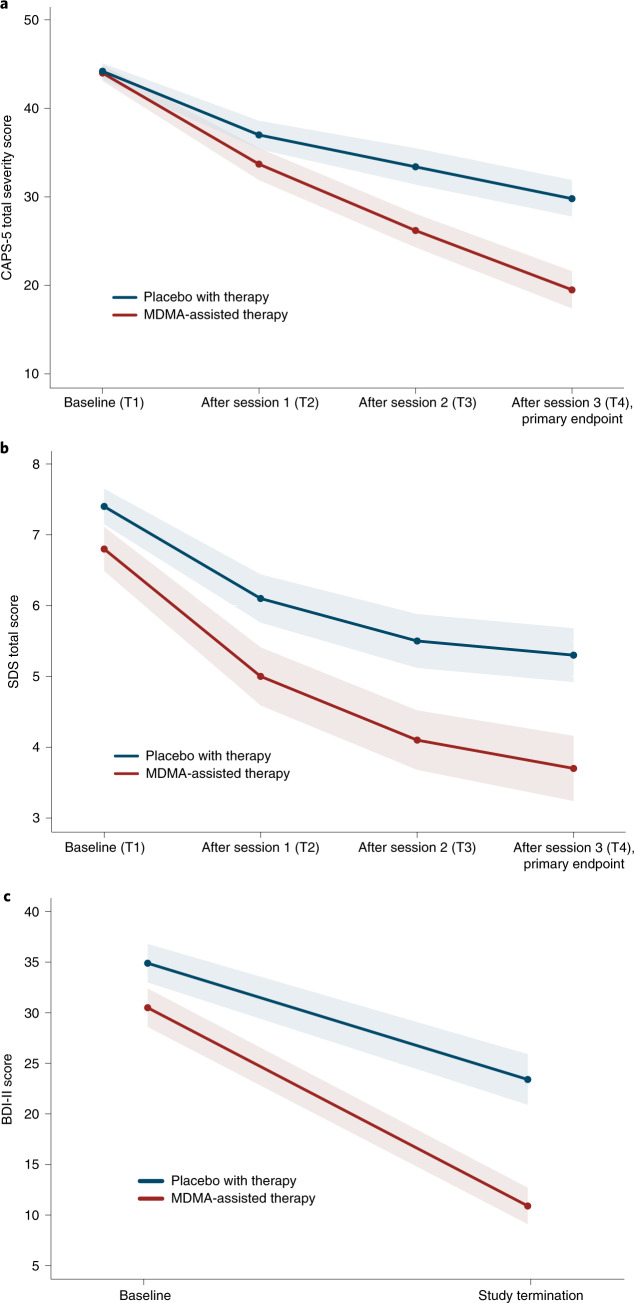
- Among 91 randomized participants (46 MDMA, 44 placebo; one participant did not provide post-dose data), MDMA produced a greater reduction in CAPS-5 PTSD severity than placebo: between-group difference = 11.9, 95% CI 6.3–17.4, P < 0.0001; effect size d = 0.91.
- Functional impairment also improved more with MDMA than placebo on the SDS: P = 0.0116; effect size d = 0.43.
- In completers, CAPS-5 change from baseline to 18 weeks was −24.4 (s.d. 11.6) with MDMA versus −13.9 (s.d. 11.5) with placebo.
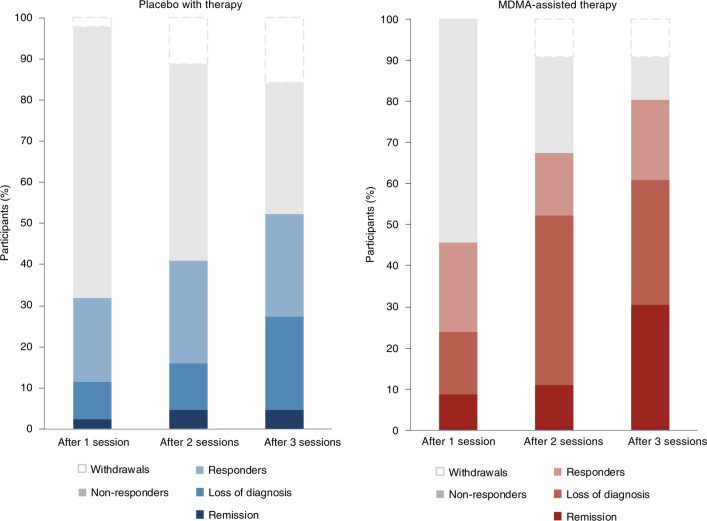
- Exploratory results showed greater reduction in depressive symptoms on the BDI-II with MDMA (mean Δ = −19.7, s.d. 14.0; placebo mean Δ = −10.8, s.d. 11.3; P = 0.0026; d = 0.67), and at 18 weeks 67% (28/42) of MDMA participants no longer met PTSD criteria versus 32% (12/37) on placebo; remission was 33% (14/42) versus 5% (2/37).
Methods
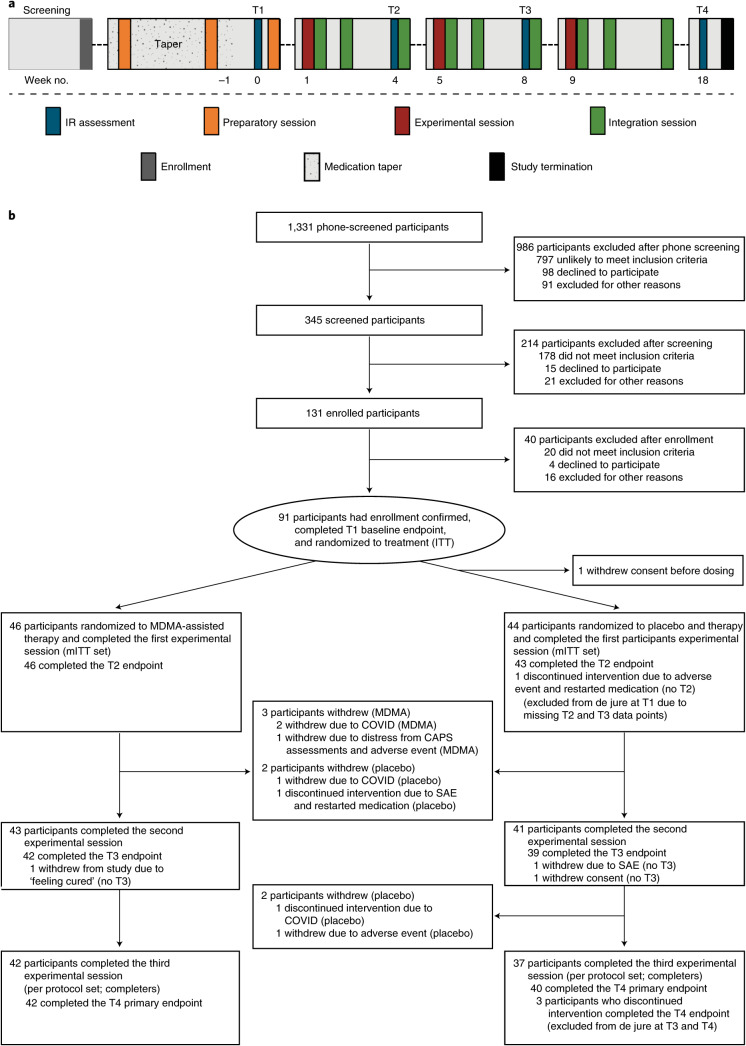
- Multisite randomized, double-blind, placebo-controlled phase 3 trial at 15 sites in the United States, Canada, and Israel; participants received MDMA-assisted therapy or placebo with identical manualized therapy.
- Adults with current DSM-5 PTSD for at least 6 months and baseline CAPS-5 severity ≥35 were enrolled after psychiatric medication washout; 90 participants were included in the modified intent-to-treat analysis, and 42 MDMA/37 placebo were completers.
- Primary and secondary outcomes (CAPS-5 and SDS) were assessed by blinded independent raters using MMRM, with a de jure estimand for efficacy; safety events, suicidality, and adverse events were tracked throughout.
Limitations
- The paper states that the participant population was smaller than originally planned because of the COVID-19 pandemic, although it argues the study still had sufficient power.
- The population was relatively homogeneous and lacked racial and ethnic diversity, which the authors say should be addressed in future trials.
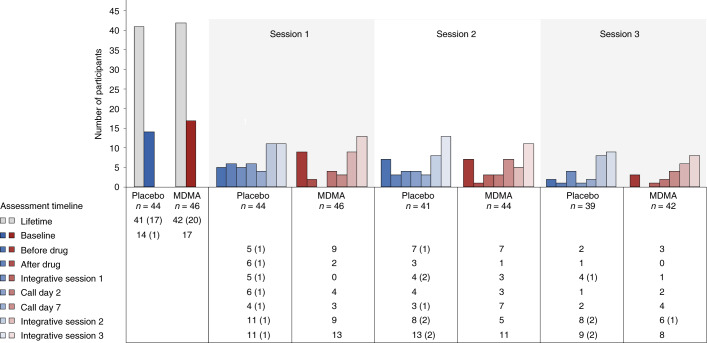
- The authors note that safety data were collected by site therapists, which may have limited blinding; they also say participant blinding was challenging because of MDMA’s subjective effects, and at unblinding at least 10% guessed incorrectly (at least 7/44 placebo participants thought they received MDMA; at least 2/46 MDMA participants thought they received placebo).
Model-written summary. Check it against the paper before relying on it.
Integrity signals
Registry
Cites
Statistics
Figures
Verification
Claims the paper makes
7 Valid · 2 Not valid · 18 Not checked · 86 Own results and interpretations
Every source the paper cites for this claim was checked and supports it.
In the paper
“Pooled analysis of six phase 2 trials of MDMA-assisted therapy for PTSD have now shown promising safety and efficacy findings15.”
§ MDMA-assisted therapy for severe PTSD: a randomized, double-blind, placebo-controlled phase 3 study > Main
What the sources say
- Supportedcites [15] Mithoefer MC MDMA-assisted psychotherapy for treatment of PTSD: study design and rationale for phase 3 trials based on pooled analysis of six phase 2 randomized controlled trials Psychopharmacology 2019 236 2735 2745 10.1007/s00213-019-05249-5 31065731 PMC6695343 source
The Conclusions (p. 1 of that section) state verbatim what the claim attributes: 'Based on the promising safety and efficacy results from these six phase 2 trials...', and the Discussion opens by reporting that pooling data across six phase 2 trials yielded significant symptom reductions with active-dose MDMA plus psychotherapy, with the treatment described as 'safe and efficacious' for civilians and veterans/first responders with chronic PTSD. Safety specifics (favorable safety outcomes, low TEAE rates, no related deaths or suicidal behaviour) appear in the Discussion, and the Abstract Methods/Statistical analysis confirm the pooled sample is six randomized, double-blind, controlled phase 2 trials. One caveat for the citing authors rather than a mismatch: our copy of this source carries a 'RETRACTED ARTICLE' designation, so the pooled findings it reports should not be presented as settled fact. (LLM, conf=0.90)
plainstates an association- Asserted: passes — The authors put it forward as true.
- Checkable: passes — It can be checked against evidence.
- Load-bearing: passes — The paper’s conclusions depend on it.
- Based: passes — The paper gives a reason why it holds.
- Supported
The cited sources support only part of this claim — read each source’s verdict below.
In the paper
“By contrast, the effect size of 0.91 demonstrated in this study between MDMA-assisted therapy and placebo with therapy was larger than that for any other previously identified PTSD pharmacotherapy16–18.”
§ MDMA-assisted therapy for severe PTSD: a randomized, double-blind, placebo-controlled phase 3 study > Discussion
What the sources say
- Partly supportedcites [16] Feduccia AA Breakthrough for trauma treatment: safety and efficacy of MDMA-assisted psychotherapy compared to paroxetine and sertraline Front. Psychiatry 2019 10 650 10.3389/fpsyt.2019.00650 31572236 PMC6751381 sourceExperimental — accuracy not yet measured
The Phase 2 Trials section reports a between-group effect size of 0.9 for MDMA-assisted psychotherapy, and the Comparison: SSRIs vs. MDMA section shows smaller effect sizes for sertraline and paroxetine. The source does not establish that this effect exceeded that of every previously identified PTSD pharmacotherapy; its MDMA controls also included low-dose MDMA plus psychotherapy, not solely placebo plus therapy. The copy provides 0.9 rather than the claimed 0.91. (LLM, conf=0.85)
- Partly supportedcites [17] Lee DJ Psychotherapy versus pharmacotherapy for posttraumatic stress disorder: systematic review and meta-analyses to determine first-line treatments Depress. Anxiety 2016 33 792 806 10.1002/da.22511 27126398 sourceExperimental — accuracy not yet measured
Our copy of Lee et al. (2016) supplies the pharmacotherapy benchmark the citing sentence leans on — the 'Pre-/Posteffects for Monoagent Pharmacotherapy and Psychotherapy' section reports that versus control 'effect sizes were uniformly lower than those observed in pre-/postcomparisons,' that most agents (brofaromine, bupropion, citalopram, divalproex, mirtazapine, risperidone, tiagabine, topiramate, adjunctive aripiprazole/guanfacine/olanzapine) 'never achieved significance against control,' and that the only medications demonstrating large effects were sertraline, venlafaxine, and nefazodone (with 'effect sizes greater than 0.8 considered large' per STATISTICAL ANALYSIS). However, no passage states or benchmarks a maximum pharmacotherapy effect size, and the paper never mentions MDMA-assisted therapy or a 0.91 between-group effect, so the comparative conclusion that 0.91 exceeded 'any other previously identified PTSD pharmacotherapy' is not attributable to this source. The numeric tables (Tables 3 and 4) that would settle the ceiling are not present as text in our copy. (LLM, conf=0.70)
- Partly supportedcites [18] Feduccia, A. A., Jerome, L., Mithoefer, M. C. & Holland, J. Discontinuation of medications classified as reuptake inhibitors affects treatment response of MDMA-assisted psychotherapy. Psychopharmacology (Berl.) 238, 581–588 (2021). PMC7826309 33221932 sourceExperimental — accuracy not yet measured
The Introduction (page unavailable) reports a large between-group effect for MDMA-assisted psychotherapy versus the same psychotherapy with placebo/control. It gives Cohen’s d as 0.8, not 0.91, and does not compare that effect with every previously identified PTSD pharmacotherapy. (LLM, conf=0.88)
plain- Asserted: passes — The authors put it forward as true.
- Checkable: passes — It can be checked against evidence.
- Load-bearing: passes — The paper’s conclusions depend on it.
- Based: passes — The paper gives a reason why it holds.
- Partly supported
Every source the paper cites for this claim was checked and supports it.
In the paper
“Similarly, comparison of change in CAPS score between paroxetine and placebo showed effect sizes of 0.56, 0.45 and 0.09 (ref. 16).”
§ MDMA-assisted therapy for severe PTSD: a randomized, double-blind, placebo-controlled phase 3 study > Discussion
What the sources say
- Supportedcites [16] Feduccia AA Breakthrough for trauma treatment: safety and efficacy of MDMA-assisted psychotherapy compared to paroxetine and sertraline Front. Psychiatry 2019 10 650 10.3389/fpsyt.2019.00650 31572236 PMC6751381 source
Table 3 (Comparison: SSRIs vs. MDMA, p. ~7) lists paroxetine placebo-subtracted CAPS-2 change with effect sizes of 0.56 (Study 1, −14 units), 0.45 (Study 2, −11 units) and 0.09 (Study 3, −6 units), exactly the three values the claim attributes. The adjacent text and the Paroxetine Phase 3 Trials section corroborate the corresponding mean differences (roughly 6–14 units across the three studies), noting the effect sizes were derived by the authors rather than reported in the FDA statistical package. (LLM, conf=0.90)
plain- Asserted: passes — The authors put it forward as true.
- Checkable: passes — It can be checked against evidence.
- Load-bearing: passes — The paper’s conclusions depend on it.
- Based: passes — The paper gives a reason why it holds.
- Supported
The cited sources support only part of this claim — read each source’s verdict below.
In the paper
“human neuroimaging studies have demonstrated that MDMA is associated with attenuated amygdalar BOLD activity during presentation of negative emotional stimuli25.”
§ MDMA-assisted therapy for severe PTSD: a randomized, double-blind, placebo-controlled phase 3 study > Discussion
What the sources say
- Partly supportedcites [25] Bedi G Phan KL Angstadt M de Wit H Effects of MDMA on sociability and neural response to social threat and social reward Psychopharmacology 2009 207 73 83 10.1007/s00213-009-1635-z 19680634 PMC3328967 sourceExperimental — accuracy not yet measured
The RESULTS (and Abstract RESULTS) of Bedi et al. 2009 do report attenuated amygdalar BOLD response on MDMA versus placebo to a negative social stimulus — 'MDMA attenuated amygdala activation to angry, but not fearful, faces', with left amygdala activation (angry vs neutral) lower on 1.5 mg/kg than PBO (extracted BOLD t(8)=3.34, p<.05). But the attenuation was emotion-specific: the same passage states 'There was no effect of drug on amygdala reactivity to fear versus neutral faces', so the claim's blanket 'negative emotional stimuli' overreaches what this source shows. The DISCUSSION also frames the finding as preliminary (N=9, single study, cluster only p=.052 after small-volume correction) and cautions that MDMA's cerebrovascular actions (reduced left amygdala rCBF independent of task, Gamma et al. 2000) could confound the BOLD signal, so 'human neuroimaging studies have demonstrated' attributes more breadth and certainty than this paper carries. (LLM, conf=0.78)
boostedstates an association- Asserted: passes — The authors put it forward as true.
- Checkable: passes — It can be checked against evidence.
- Load-bearing: passes — The paper’s conclusions depend on it.
- Based: passes — The paper gives a reason why it holds.
- Partly supported
The cited sources that could be checked couldn’t confirm or dispute this claim.
In the paper
“MDMA enhances the extinction of fear memories in mice through increased expression of brain-derived neurotrophic factor in the amygdala”
§ MDMA-assisted therapy for severe PTSD: a randomized, double-blind, placebo-controlled phase 3 study > Discussion
What the sources say
- Could not verifycites [25] Bedi G Phan KL Angstadt M de Wit H Effects of MDMA on sociability and neural response to social threat and social reward Psychopharmacology 2009 207 73 83 10.1007/s00213-009-1635-z 19680634 PMC3328967 sourceExperimental — accuracy not yet measured
Our copy of Bedi et al. (2009) is a human fMRI study in nine healthy volunteers with past ecstasy use, examining acute MDMA (0.75 and 1.5 mg/kg) effects on self-reported sociability and on amygdala and ventral striatum BOLD responses to angry, fearful and happy faces (Abstract > MATERIALS AND METHODS; RESULTS). No passage addresses mice, fear-memory extinction, or brain-derived neurotrophic factor; searches for 'extinction of fear memories BDNF brain-derived neurotrophic factor mice' and 'amygdala fear conditioning extinction learning rodents' returned only the facial-expression/amygdala-activation passages. The nearest content — MDMA attenuating left amygdala reactivity to angry, but not fearful, faces (RESULTS; Abstract > RESULTS) — concerns acute neural response to social threat, not extinction of fear memories, so it neither supports nor contradicts the attributed mechanism. (LLM, conf=0.72)
plainstates a cause- Asserted: passes — The authors put it forward as true.
- Checkable: passes — It can be checked against evidence.
- Load-bearing: unclear — It is unclear whether the paper’s conclusions depend on it.
- Based: passes — The paper gives a reason why it holds.
- Could not verify
47 more claims · 2 with their cited sources checked
Create a free account to see all 113 claims and to verify the 28 references still open.
- It may state two separate claims as one. 36
- Probably not a substantial claim. 34
Claims other papers make about this one
Each is checked against this paper’s own text: does it say what the citing paper says it does?
The source backs part of the claim, not all of it — or backs it for a different population, condition or comparison.
In the citing paper
“Clinical trials indicate that MDMA-AT enhances key factors necessary for a robust therapeutic alliance, including self-compassion, emotional awareness, and relational capacities (158).”
From Psychoanalytically informed MDMA-assisted therapy for pathological narcissism: a novel theoretical approach (2025) · cites this paper as [158]
Experimental — accuracy not yet measuredThe source backs part of the claim, not all of it — or backs it for a different population, condition or comparison.
In the citing paper
“MDMA’s unique pharmacological properties may facilitate alliance formation by increasing compassion, empathy, and emotional engagement, which contribute to deeper therapeutic work (6, 158).”
From Psychoanalytically informed MDMA-assisted therapy for pathological narcissism: a novel theoretical approach (2025) · cites this paper as [158]
Experimental — accuracy not yet measuredThe source backs part of the claim, not all of it — or backs it for a different population, condition or comparison.
In the citing paper
“The therapeutic alliance is a well-established predictor of positive treatment outcomes across a range of psychotherapeutic modalities (158–160), including psychoanalytic psychotherapy (161) and the treatment of personality disorders such as PN (162, 163).”
From Psychoanalytically informed MDMA-assisted therapy for pathological narcissism: a novel theoretical approach (2025) · cites this paper as [158]
Experimental — accuracy not yet measuredThe source backs part of the claim, not all of it — or backs it for a different population, condition or comparison.
In the citing paper
“MDMA-AT has also been most extensively tested in the treatment of post-traumatic stress disorder (PTSD) and has shown to result in large effect size differences compared to placebo controls in Phase II and Phase 3 trials (18–21).”
From MDMA-Assisted Therapy as a Means to Alter Affective, Cognitive, Behavioral, and Neurological Systems Underlying Social Dysfunction in Social Anxiety Disorder (2021) · cites this paper as [19]
Experimental — accuracy not yet measuredThe cited source says what the claim attributes to it.
In the citing paper
“In addition, both phase II (19) and the existing phase 3 study (20) suggest excellent safety and low abuse potential when MDMA is used under controlled conditions.”
1 more claim about this paper
Create a free account to see every claim other papers make about this one.
Citations
Cites
2 retracted
Mithoefer, M. C., Feduccia, A. A., Jerome, L., Mithoefer, A., Wagner, M., Walsh, Z., Hamilton, S., Yazar-Klosinski, B., Emerson, A., & Doblin, R. (2019) · Psychopharmacology · doi:10.1007/s00213-019-05249-5 · Cited by 359
RetractedFeduccia, A. A., Jerome, L., Mithoefer, M. C., & Holland, J. (2021) · Psychopharmacology · doi:10.1007/s00213-020-05710-w · Cited by 40
Self-citationRetractedPosttraumatic Stress Disorder in the National Comorbidity Survey
Kessler, R. C. (1995) · Archives of General Psychiatry · doi:10.1001/archpsyc.1995.03950240066012 · Cited by 10,379
Lesch, K.-P., Bengel, D., Heils, A., Sabol, S. Z., Greenberg, B. D., Petri, S., Benjamin, J., Müller, C. R., Hamer, D. H., & Murphy, D. L. (1996) · Science · doi:10.1126/science.274.5292.1527 · Cited by 5,162
Serotonin transporter genetic variation and the response of the human amygdala.
Hariri, A. R., Mattay, V. S., Tessitore, A., Kolachana, B., Fera, F., Goldman, D., Egan, M. F., & Weinberger, D. R. (2002) · Science · doi:10.1126/science.1071829 · Cited by 2,340
Weathers, F. W., Bovin, M. J., Lee, D. J., Sloan, D. M., Schnurr, P. P., Kaloupek, D. G., Keane, T. M., & Marx, B. P. (2018) · Psychological Assessment · doi:10.1037/pas0000486 · Cited by 1,799
Psychotherapy for Military-Related PTSD: A Review of Randomized Clinical Trials
Steenkamp, M. M., Litz, B. T., Hoge, C. W., & Marmar, C. R. (2015) · JAMA · doi:10.1001/jama.2015.8370 · Cited by 958
Posttraumatic stress disorder in abused and neglected children grown up
Widom, C. S. (1999) · American Journal of Psychiatry · doi:10.1176/ajp.156.8.1223 · Cited by 945
Psychological therapies for chronic post-traumatic stress disorder (PTSD) in adults
Bisson, J. I., Roberts, N. P., Andrew, M., Cooper, R., & Lewis, C. (2013) · Cochrane Database of Systematic Reviews · doi:10.1002/14651858.cd003388.pub4 · Cited by 829
Meta-analysis of dropout in treatments for posttraumatic stress disorder
Imel, Z. E., Laska, K., Jakupcak, M., & Simpson, T. L. (2013) · Journal of Consulting and Clinical Psychology · doi:10.1037/a0031474 · Cited by 633
Cited by
MDMA-assisted therapy for moderate to severe PTSD: A randomized, placebo-controlled phase 3 trial
Mitchell, J. M., Ot’alora G., M., van der Kolk, B., Shannon, S., Bogenschutz, M., Gelfand, Y., Paleos, C., Nicholas, C. R., Quevedo, S., Balliett, B., et al. (2023) · Nature Medicine · doi:10.1038/s41591-023-02565-4 · Cited by 455
Self-citationPsychedelics reopen the social reward learning critical period
Nardou, R., Sawyer, E., Song, Y. J., Wilkinson, M., Padovan-Hernandez, Y., de Deus, J. L., Wright, N., Lama, C., Faltin, S., Goff, L. A., et al. (2023) · Nature · doi:10.1038/s41586-023-06204-3 · Cited by 358
Adverse effects of psychedelics: From anecdotes and misinformation to systematic science
Schlag, A. K., Aday, J., Salam, I., Neill, J. C., & Nutt, D. J. (2022) · Journal of Psychopharmacology · doi:10.1177/02698811211069100 · Cited by 325
The neural basis of psychedelic action
Kwan, A. C., Olson, D. E., Preller, K. H., & Roth, B. L. (2022) · Nature Neuroscience · doi:10.1038/s41593-022-01177-4 · Cited by 302
Therapeutic alliance and rapport modulate responses to psilocybin assisted therapy for depression
Murphy, R., Kettner, H., Zeifman, R., Giribaldi, B., Kartner, L., Martell, J., Read, T., Murphy-Beiner, A., Baker-Jones, M., Nutt, D., et al. (2022) · Frontiers in Pharmacology · doi:10.3389/fphar.2021.788155 · Cited by 250
Treatment of Posttraumatic Stress Disorder: A State-of-the-art Review
Burback, L., Brémault-Phillips, S., Nijdam, M. J., McFarlane, A., & Vermetten, E. (2024) · Current Neuropharmacology · doi:10.2174/1570159x21666230428091433 · Cited by 208
Must Psilocybin Always “Assist Psychotherapy”?
Goodwin, G. M., Malievskaia, E., Fonzo, G. A., & Nemeroff, C. B. (2024) · American Journal of Psychiatry · doi:10.1176/appi.ajp.20221043 · Cited by 189
Becker, A. M., Holze, F., Grandinetti, T., Klaiber, A., Toedtli, V. E., Kolaczynska, K. E., Duthaler, U., Varghese, N., Eckert, A., Grünblatt, E., et al. (2022) · Clinical Pharmacology & Therapeutics · doi:10.1002/cpt.2487 · Cited by 184
Psychedelic Drug Legislative Reform and Legalization in the US
Siegel, J. S., Daily, J. E., Perry, D. A., & Nicol, G. E. (2023) · JAMA Psychiatry · doi:10.1001/jamapsychiatry.2022.4101 · Cited by 179
Breeksema, J. J., Kuin, B. W., Kamphuis, J., van den Brink, W., Vermetten, E., & Schoevers, R. A. (2022) · Journal of Psychopharmacology · doi:10.1177/02698811221116926 · Cited by 178
“In total, 10 publications described MDMA-assisted treatment of PTSD (total N = 214 patients): seven RCTs (Mitchell et al., 2021; Mithoefer et al., 2011; 2013b, 2018, 2019; Oehen et al., 2013; Ot’alora et al., 2018), one openlabel trial (Jardim et al., 2020), one case series (Monson et al., 2020;…”
BackgroundResultInfluentialYao, Y., Guo, D., Lu, T., Liu, F.-L., Huang, S., Diao, M.-Q., Li, S., Zhang, X.-J., Kosten, T. R., Shi, J., et al. (2024) · Psychiatry Research · doi:10.1016/j.psychres.2024.115886 · Cited by 175
Psychedelic-Assisted Psychotherapy—A Systematic Review of Associated Psychological Interventions
Cavarra, M., Falzone, A., Ramaekers, J. G., Kuypers, K. P. C., & Mento, C. (2022) · Frontiers in Psychology · doi:10.3389/fpsyg.2022.887255 · Cited by 171
“MDMA-AP (Mithoefer, 2016) is a structured approach to PAT that was developed by the Multidisciplinary Association for Psychedelic Studies (MAPS).”
BackgroundInfluentialSmith, K. W., Sicignano, D. J., Hernández, A. V., & White, C. M. (2021) · The Journal of Clinical Pharmacology · doi:10.1002/jcph.1995 · Cited by 173
Psychedelics and Other Psychoplastogens for Treating Mental Illness.
Vargas, M. V., Meyer, R., Avanes, A. A., Rus, M., & Olson, D. E. (2021) · Frontiers in Psychiatry · doi:10.3389/fpsyt.2021.727117 · Cited by 166
Brewin, C. R., Atwoli, L., Bisson, J. I., Galea, S., Koenen, K. C., & Lewis‐Fernández, R. (2025) · World Psychiatry · doi:10.1002/wps.21269 · Cited by 142
History repeating: guidelines to address common problems in psychedelic science
van Elk, M., & Fried, E. I. (2023) · Therapeutic Advances in Psychopharmacology · doi:10.1177/20451253231198466 · Cited by 137
“94 Despite common claims in the literature that psy-chedelic drugs work, for example, ‘for MDD’ 77 or ‘for PTSD’, 4 the combination of small samples and selection bias does not allow for such conclusions.”
BackgroundInfluentialCase analysis of long-term negative psychological responses to psychedelics
Bremler, R., Katati, N., Shergill, P., Erritzøe, D., & Carhart-Harris, R. L. (2023) · Scientific Reports · doi:10.1038/s41598-023-41145-x · Cited by 137
Biochemical Mechanisms Underlying Psychedelic-Induced Neuroplasticity
Olson, D. E. (2022) · Biochemistry · doi:10.1021/acs.biochem.1c00812 · Cited by 129
Psychedelic therapy in the treatment of addiction: the past, present and future
Zafar, R. R., Siegel, M., Harding, R., Barba, T., Agnorelli, C., Suseelan, S., Roseman, L., Wall, M. B., Nutt, D. J., & Erritzøe, D. (2023) · Frontiers in Psychiatry · doi:10.3389/fpsyt.2023.1183740 · Cited by 127
Mescaline: The forgotten psychedelic
Vamvakopoulou, I. A., Narine, K. A. D., Campbell, I., Dyck, J. R. B., & Nutt, D. J. (2022) · Neuropharmacology · doi:10.1016/j.neuropharm.2022.109294 · Cited by 124
Canalization and plasticity in psychopathology
Carhart-Harris, R. L., Chandaria, S., Erritzøe, D., Gazzaley, A. H., Girn, M., Kettner, H., Mediano, P. A. M., Nutt, D. J., Rosas, F. E., Roseman, L., et al. (2022) · Neuropharmacology · doi:10.1016/j.neuropharm.2022.109398 · Cited by 115
A Public Health Perspective of Post-Traumatic Stress Disorder
Jowf, G. I. A., Ahmed, Z. T., An, N., Reijnders, R. A., Ambrosino, E., Rutten, B. P. F., de Nijs, L., & Eijssen, L. (2022) · International Journal of Environmental Research and Public Health · doi:10.3390/ijerph19116474 · Cited by 112
Correll, C. U., Solmi, M., Cortese, S., Fava, M., Højlund, M., Kraemer, H. C., McIntyre, R. S., Pine, D. S., Schneider, L. S., & Kane, J. M. (2023) · World Psychiatry · doi:10.1002/wps.21056 · Cited by 109
Livne, O., Shmulewitz, D., Walsh, C. A., & Hasin, D. S. (2022) · Addiction · doi:10.1111/add.15987 · Cited by 107
The Psychedelic Future of Post-Traumatic Stress Disorder Treatment
Zaretsky, T. G., Jagodnik, K. M., Barsic, R., Antonio, J. H., Bonanno, P. A., MacLeod, C., Pierce, C., Carney, H., Morrison, M. T., Saylor, C., et al. (2024) · Current Neuropharmacology · doi:10.2174/1570159x22666231027111147 · Cited by 85
Functional neuroimaging in psychiatry and the case for failing better
Nour, M. M., Liu, Y., & Dolan, R. J. (2022) · Neuron · doi:10.1016/j.neuron.2022.07.005 · Cited by 105
Magnesium–ibogaine therapy in veterans with traumatic brain injuries
Cherian, K. N., Keynan, J. N., Anker, L. A., Faerman, A., Brown, R. E., Shamma, A., Keynan, O., Coetzee, J. P., Batail, J.-M. V., Phillips, A., et al. (2024) · Nature Medicine · doi:10.1038/s41591-023-02705-w · Cited by 99
Self-citationAncient Roots of Today’s Emerging Renaissance in Psychedelic Medicine
George, D. R., Hanson, R., Wilkinson, D., & Garcia‐Romeu, A. (2021) · Culture Medicine and Psychiatry · doi:10.1007/s11013-021-09749-y · Cited by 94
Brennan, W., & Belser, A. B. (2022) · Frontiers in Psychology · doi:10.3389/fpsyg.2022.866018 · Cited by 90
Kozłowska, U., Nichols, C. D., Wiatr, K., & Figiel, M. (2021) · Journal of Neurochemistry · doi:10.1111/jnc.15509 · Cited by 89
Drug-drug interactions between psychiatric medications and MDMA or psilocybin: a systematic review
Sarparast, A., Thomas, K., Malcolm, B., & Stauffer, C. S. (2022) · Psychopharmacology · doi:10.1007/s00213-022-06083-y · Cited by 88
Nicholas, C. R. N., Wang, J. B., Coker, A. R., Mitchell, J., Klaire, S. S., Yazar‐Klosinski, B., Emerson, A., Brown, R. T., & Doblin, R. (2022) · Drug and Alcohol Dependence · doi:10.1016/j.drugalcdep.2022.109356 · Cited by 88
Self-citationBrewerton, T. D., Wang, J. B., Lafrance, A., Pamplin, C., Mithoefer, M., Yazar-Klosinki, B., Emerson, A., & Doblin, R. (2022) · Journal of Psychiatric Research · doi:10.1016/j.jpsychires.2022.03.008 · Cited by 86
Self-citationPsychedelics therapeutics: What we know, what we think, and what we need to research
Nutt, D., Spriggs, M., & Erritzoe, D. (2023) · Neuropharmacology · doi:10.1016/j.neuropharm.2022.109257 · Cited by 84
Psychedelic perceptions: mental health service user attitudes to psilocybin therapy
Corrigan, K., Haran, M., McCandliss, C., McManus, R., Cleary, S., Trant, R., Kelly, Y., Ledden, K., Rush, G., O’Keane, V., et al. (2022) · Irish Journal of Medical Science (1971 -) · doi:10.1007/s11845-021-02668-2 · Cited by 84
Raut, S. B., Marathe, P. A., van Eijk, L., Eri, R. D., Ravindran, M., Benedek, D. M., Ursano, R. J., Canales, J. J., & Johnson, L. R. (2022) · Pharmacology & Therapeutics · doi:10.1016/j.pharmthera.2022.108195 · Cited by 84
Levin, A. W., Lancelotta, R., Sepeda, N. D., Gukasyan, N., Nayak, S., Wagener, T. L., Barrett, F. S., Griffiths, R. R., & Davis, A. K. (2024) · PLoS ONE · doi:10.1371/journal.pone.0300501 · Cited by 82
Ethical and Practical Considerations for the Use of Psychedelics in Psychiatry
Barber, G., & Dike, C. C. (2023) · Psychiatric Services · doi:10.1176/appi.ps.20220525 · Cited by 82
The Need for Psychedelic-Assisted Therapy in the Black Community and the Burdens of Its Provision
Smith, D. T., Faber, S. C., Buchanan, N. T., Foster, D., & Green, L. (2022) · Frontiers in Psychiatry · doi:10.3389/fpsyt.2021.774736 · Cited by 81
Psilocybin and MDMA for the treatment of trauma-related psychopathology
Bird, C. I. V., Modlin, N. L., & Rucker, J. J. H. (2021) · International Review of Psychiatry · doi:10.1080/09540261.2021.1919062 · Cited by 80
Therapeutic mechanisms of psychedelics and entactogens
Heifets, B. D., & Olson, D. E. (2023) · Neuropsychopharmacology · doi:10.1038/s41386-023-01666-5 · Cited by 80
Luppi, A. I., Hansen, J. Y., Ram, A., Carhart-Harris, R. L., Roseman, L., Timmermann, C., Golkowski, D., Ranft, A., Ilg, R., Jordan, D., et al. (2023) · Science Advances · doi:10.1126/sciadv.adf8332 · Cited by 76
Olff, M., Hein, I. M., Amstadter, A. B., Armour, C., Birkeland, M. S., Bui, É., Cloître, M., Ehlers, A., Ford, J. D., Greene, T., et al. (2025) · European Journal of Psychotraumatology · doi:10.1080/20008066.2025.2458406 · Cited by 76
Ayahuasca: A review of historical, pharmacological, and therapeutic aspects
Ruffell, S., Crosland‐Wood, M., Palmer, R., Netzband, N., Tsang, W., Weiss, B., Gandy, S., Cowley‐Court, T., Halman, A., McHerron, D., et al. (2023) · Psychiatry and Clinical Neurosciences Reports · doi:10.1002/pcn5.146 · Cited by 76
Psychedelic‐inspired approaches for treating neurodegenerative disorders
Saeger, H. N., & Olson, D. E. (2021) · Journal of Neurochemistry · doi:10.1111/jnc.15544 · Cited by 74
The Emerging Field of Psychedelic Psychotherapy
Barber, G., & Aaronson, S. T. (2022) · Current Psychiatry Reports · doi:10.1007/s11920-022-01363-y · Cited by 74
Oehen, P., & Gasser, P. (2022) · Frontiers in Psychiatry · doi:10.3389/fpsyt.2022.863552 · Cited by 73
Two Models of Legalization of Psychedelic Substances: Reasons for Concern
Smith, W., & Appelbaum, P. S. (2021) · JAMA · doi:10.1001/jama.2021.12481 · Cited by 73
Barnett, B. S., Beaussant, Y., King, F., & Doblin, R. (2021) · Journal of Psychoactive Drugs · doi:10.1080/02791072.2021.1957183 · Cited by 72
Self-citationSabé, M., Sulstarova, A., Glangetas, A., Pieri, M. D., Mallet, L., Curtis, L., Richard-Lepouriel, H., Penzenstadler, L. E., Seragnoli, F., Thorens, G., et al. (2024) · Molecular Psychiatry · doi:10.1038/s41380-024-02800-5 · Cited by 72
Microdosing psilocybin for chronic pain: a case series
Lyes, M., Yang, K. H., Castellanos, J. P., & Furnish, T. J. (2022) · Pain · doi:10.1097/j.pain.0000000000002778 · Cited by 71
Noorani, T. N., Bedi, G., & Muthukumaraswamy, S. D. (2023) · Psychological Medicine · doi:10.1017/s0033291723001289 · Cited by 69
The economics of psychedelic-assisted therapies: A research agenda
Marseille, E. A., Bertozzi, S., & Kahn, J. G. (2022) · Frontiers in Psychiatry · doi:10.3389/fpsyt.2022.1025726 · Cited by 68
Agnorelli, C., Spriggs, M. J., Godfrey, K., Sawicka, G., Bohl, B., Douglass, H. M., Fagiolini, A. M., Hashemi, P., Carhart-Harris, R. L., Nutt, D. J., et al. (2025) · Neuroscience & Biobehavioral Reviews · doi:10.1016/j.neubiorev.2025.106132 · Cited by 69
Psychedelic Commercialization: A Wide-Spanning Overview of the Emerging Psychedelic Industry
Aday, J. S., Barnett, B. S., Grossman, D., Murnane, K. S., Nichols, C. D., & Hendricks, P. S. (2023) · Psychedelic Medicine · doi:10.1089/psymed.2023.0013 · Cited by 68
Jones, G. M., & Nock, M. K. (2022) · Journal of Psychopharmacology · doi:10.1177/02698811211058923 · Cited by 68
Opioid use disorder: current trends and potential treatments
Lee, Y. K., Gold, M. S., Blum, K., Thanos, P. K., Hanna, C., & Fuehrlein, B. (2024) · Frontiers in Public Health · doi:10.3389/fpubh.2023.1274719 · Cited by 69
Singewald, N., Sartori, S. B., Reif, A., & Holmes, A. (2023) · Neuropharmacology · doi:10.1016/j.neuropharm.2023.109418 · Cited by 69
Solmi, M., Chen, C., Dauré, C., Buot, A., Ljuslin, M., Verroust, V., Mallet, L., Khazaal, Y., Rothen, S., Thorens, G., et al. (2022) · European Neuropsychopharmacology · doi:10.1016/j.euroneuro.2022.09.004 · Cited by 66
Entactogens: How the Name for a Novel Class of Psychoactive Agents Originated
Nichols, D. E. (2022) · Frontiers in Psychiatry · doi:10.3389/fpsyt.2022.863088 · Cited by 66
Review of otential sychedelic reatments for PTSD
Henner, R. L., Keshavan, M. S., & Hill, K. P. (2022) · Journal of the Neurological Sciences · doi:10.1016/j.jns.2022.120302 · Cited by 67
Australia to prescribe MDMA and psilocybin for PTSD and depression in world first
Haridy, R. (2023) · Nature · doi:10.1038/d41586-023-02093-8 · Cited by 66
Shahar, O., Botvinnik, A., Esh-Zuntz, N., Brownstien, M., Wolf, R., Lotan, A., Wolf, G., Lerer, B., & Lifschytz, T. (2022) · International Journal of Molecular Sciences · doi:10.3390/ijms232214148 · Cited by 65
Psychedelic Mushrooms in the USA: Knowledge, Patterns of Use, and Association With Health Outcomes
Matzopoulos, R., Morlock, R., Morlock, A., Lerer, B., & Lerer, L. B. (2022) · Frontiers in Psychiatry · doi:10.3389/fpsyt.2021.780696 · Cited by 65
Novel ethical and policy issues in psychiatric uses of psychedelic substances
Smith, W. R., & Appelbaum, P. S. (2022) · Neuropharmacology · doi:10.1016/j.neuropharm.2022.109165 · Cited by 65
Barber, G., Nemeroff, C. B., & Siegel, S. (2022) · American Journal of Psychiatry · doi:10.1176/appi.ajp.22010073 · Cited by 64
MDMA and MDMA-assisted therapy
Wolfgang, A. S., Fonzo, G. A., Gray, J. C., Krystal, J. H., Grzenda, A., Widge, A. S., Kraguljac, N. V., McDonald, W. M., Rodriguez, C. I., & Nemeroff, C. B. (2025) · American Journal of Psychiatry · doi:10.1176/appi.ajp.20230681 · Cited by 62
The challenges ahead for psychedelic ‘medicine’
Muthukumaraswamy, S. D., Forsyth, A., & Sumner, R. L. (2022) · Australian & New Zealand Journal of Psychiatry · doi:10.1177/00048674221081763 · Cited by 62
Essentials of Informed Consent to Psychedelic Medicine
Marks, M., Brendel, R. W., Shachar, C., & Cohen, I. G. (2024) · JAMA Psychiatry · doi:10.1001/jamapsychiatry.2024.0184 · Cited by 61
Falchi-Carvalho, M., Palhano-Fontes, F., Wießner, I., Barros, H., Bolcont, R., Laborde, S., Silva, S. R. B., Montanini, D., Barbosa, D. C., Teixeira, E., et al. (2025) · Neuropsychopharmacology · doi:10.1038/s41386-025-02091-6 · Cited by 61
Belouin, S. J., Averill, L. A., Henningfield, J. E., Xenakis, S. N., Donato, I., Grob, C. S., Berger, A., Magar, V., Danforth, A. L., & Anderson, B. T. (2022) · Neuropharmacology · doi:10.1016/j.neuropharm.2022.109214 · Cited by 59
Naturalistic Psychedelic Use: A World Apart from Clinical Care
Glynos, N. G., Fields, C. W., Barron, J., Herberholz, M., Kruger, D. J., & Boehnke, K. F. (2022) · Journal of Psychoactive Drugs · doi:10.1080/02791072.2022.2108356 · Cited by 59
Psilocybin Facilitates Fear Extinction: Importance of Dose, Context, and Serotonin Receptors
Woodburn, S. C., Levitt, C. M., Koester, A., & Kwan, A. C. (2024) · ACS Chemical Neuroscience · doi:10.1021/acschemneuro.4c00279 · Cited by 58
Caution at psychiatry’s psychedelic frontier
Burke, M. J., & Blumberger, D. M. (2021) · Nature Medicine · doi:10.1038/s41591-021-01524-1 · Cited by 57
Psychedelic therapies reconsidered: compounds, clinical indications, and cautious optimism
Mitchell, J., & Anderson, B. T. (2023) · Neuropsychopharmacology · doi:10.1038/s41386-023-01656-7 · Cited by 57
Self-citationGroup psychedelic therapy: empirical estimates of cost-savings and improved access
Marseille, E. A., Stauffer, C. S., Agrawal, M., Thambi, P. M., Roddy, K., Mithoefer, M. C., Bertozzi, S., & Kahn, J. G. (2023) · Frontiers in Psychiatry · doi:10.3389/fpsyt.2023.1293243 · Cited by 58
Self-citationMacKay, M., Yang, B. H., Dursun, S. M., & Baker, G. B. (2023) · Current Neuropharmacology · doi:10.2174/1570159x21666230222092029 · Cited by 57
Pędzich, B. D., Rubens, S., Sekssaoui, M., Pierre, A., Schuerbeek, A. V., Marin, P., Bockaert, J., Valjent, E., Bécamel, C., & Bundel, D. D. (2022) · Neuropsychopharmacology · doi:10.1038/s41386-022-01324-2 · Cited by 56
Singleton, S. P., Wang, J. B., Mithoefer, M. C., Hanlon, C. A., George, M. S., Mithoefer, A., Mithoefer, O. J., Coker, A. R., Yazar‐Klosinski, B., Emerson, A., et al. (2023) · Frontiers in Psychiatry · doi:10.3389/fpsyt.2022.947622 · Cited by 56
Self-citationEffects of MDMA-assisted therapy for PTSD on self-experience
van der Kolk, B. A., Wang, J. B., Yehuda, R., Bedrosian, L., Coker, A. R., Harrison, C., Mithoefer, M., Yazar-Klosinki, B., Emerson, A., & Doblin, R. (2024) · PLoS ONE · doi:10.1371/journal.pone.0295926 · Cited by 55
“Detailed sample characteristics of the mITT analysis set of n = 90 participants have been described in the primary outcome paper [4].”
BackgroundMethodInfluentialSelf-citationMaples-Keller, J. L., Norrholm, S. D., Burton, M., Reiff, C., Coghlan, C., Jovanovic, T., Yasinski, C., Jarboe, K., Rakofsky, J., Rauch, S., et al. (2022) · Journal of Psychopharmacology · doi:10.1177/02698811211069124 · Cited by 55
Psychedelics in the treatment of eating disorders: Rationale and potential mechanisms
Calder, A. E., Mock, S., Friedli, N., Pasi, P., & Hasler, G. (2023) · European Neuropsychopharmacology · doi:10.1016/j.euroneuro.2023.05.008 · Cited by 55
Perkins, D., Ruffell, S., Day, K., Rubiano, D. P., & Sarris, J. J. (2023) · Frontiers in Neuroscience · doi:10.3389/fnins.2022.879221 · Cited by 54
Yu, Z., Burback, L., Winkler, O., Xu, L., Dennett, L., Vermetten, E. H. G. J. M., Greenshaw, A. J., Li, X., Milne, M., Wang, F., et al. (2024) · Frontiers in Psychiatry · doi:10.3389/fpsyt.2024.1386321 · Cited by 53
The frontiers of new psychedelic therapies: A survey of sociological themes and issues
Andrews, T., & Wright, K. (2022) · Sociology Compass · doi:10.1111/soc4.12959 · Cited by 53
Ethnoracial inclusion in clinical trials of psychedelics: a systematic review
Hughes, M. E., & Garcia‐Romeu, A. (2024) · EClinicalMedicine · doi:10.1016/j.eclinm.2024.102711 · Cited by 52
Brennan, B., Kelman, A. R., & Belser, A. (2023) · Psychedelic Medicine · doi:10.1089/psymed.2023.0007 · Cited by 52
Jones, G. M., & Nock, M. K. (2022) · Scientific Reports · doi:10.1038/s41598-022-18645-3 · Cited by 52
Straumann, I., Ley, L., Holze, F., Becker, A., Klaiber, A., Wey, K., Duthaler, U., Varghese, N., Eckert, A., & Liechti, M. E. (2023) · Neuropsychopharmacology · doi:10.1038/s41386-023-01609-0 · Cited by 52
The Economics of Treatment for Depression
Stecher, C. D., Cloonan, S., & Domino, M. E. (2023) · Annual Review of Public Health · doi:10.1146/annurev-publhealth-061022-040533 · Cited by 51
Vizeli, P., Straumann, I., Duthaler, U., Varghese, N., Eckert, A., Paulus, M. P., Risbrough, V. B., & Liechti, M. E. (2022) · Frontiers in Pharmacology · doi:10.3389/fphar.2022.906639 · Cited by 51
Marseille, E., Mitchell, J. M., & Kahn, J. G. (2022) · PLOS ONE · doi:10.1371/journal.pone.0263252 · Cited by 50
Self-citationMDMA therapy for PTSD rejected by FDA panel
Reardon, S. (2024) · Nature · doi:10.1038/d41586-024-01622-3 · Cited by 50
Side-effects of mdma-assisted psychotherapy: a systematic review and meta-analysis
Colcott, J., Guerin, A. A., Carter, O. L., Meikle, S. E., & Bedi, G. (2024) · Neuropsychopharmacology · doi:10.1038/s41386-024-01865-8 · Cited by 48
Castelhano, J., Lima, G., Teixeira, M., Soares, C., Pais, M. L., & Castelo-Branco, M. S. (2021) · Frontiers in Pharmacology · doi:10.3389/fphar.2021.739053 · Cited by 48
Should we be leery of being Leary? Concerns about psychedelic use by psychedelic researchers
Kious, B., Schwartz, Z., & Lewis, B. (2023) · Journal of Psychopharmacology · doi:10.1177/02698811221133461 · Cited by 47
Sottile, R., & Vida, T. (2022) · Frontiers in Psychiatry · doi:10.3389/fpsyt.2022.991753 · Cited by 48
Psychedelics for acquired brain injury: a review of molecular mechanisms and therapeutic potential
Allen, J., Dames, S., Foldi, C. J., & Shultz, S. R. (2024) · Molecular Psychiatry · doi:10.1038/s41380-023-02360-0 · Cited by 47
MDMA and memory, addiction, and depression: dose-effect analysis
Pantoni, M. M., Kim, J. L., Alstyne, K. R. V., & Anagnostaras, S. (2022) · Psychopharmacology · doi:10.1007/s00213-022-06086-9 · Cited by 47
Brewerton, T. D. (2023) · Frontiers in Psychiatry · doi:10.3389/fpsyt.2023.1149433 · Cited by 46
Metadata
- Authors
- Mitchell, J. M., Bogenschutz, M., Lilienstein, A., Harrison, C., Kleiman, S., Parker-Guilbert, K., Ot’alora G., M., Garas, W., Paleos, C., Gorman, I., Nicholas, C., Mithoefer, M., Carlin, S., Poulter, B., Mithoefer, A., Quevedo, S., Wells, G., Klaire, S. S., van der Kolk, B., Tzarfaty, K., Amiaz, R., Worthy, R., Shannon, S., Woolley, J. D., Marta, C., Gelfand, Y., Hapke, E., Amar, S., Wallach, Y., Brown, R., Hamilton, S., Wang, J. B., Coker, A., Matthews, R., de Boer, A., Yazar-Klosinski, B., Emerson, A., & Doblin, R.
- Affiliations
- University of California, San Francisco (US)
- New York University (US)
- Multidisciplinary Association for Psychedelic Studies (US)
- University of Colorado Boulder (US)
- Fluent (United States) (US)
- University of Wisconsin–Madison (US)
- Medical University of South Carolina (US)
- British Columbia Centre on Substance Use (CA)
- Sheba Medical Center (IL)
- University of Toronto (CA)
- Stanford Medicine (US)
- Corresponding author
- Mitchell, Jennifer M.
- ORCID
- Mitchell, Jennifer M.
- Bogenschutz, Michael
- Harrison, Charlotte
- Ot’alora G., Marcela
- Gorman, Ingmar
- Nicholas, Christopher
- Mithoefer, Michael
- Poulter, Bruce
- Wells, Gregory
- Klaire, Sukhpreet S.
- Amiaz, Revital
- Shannon, Scott
- Woolley, Joshua D.
- Brown, Randall
- Hamilton, Scott
- Wang, Julie B.
- Coker, Allison
- Emerson, Amy
- Doblin, Rick
- Venue
- Nature Medicine
- Published
- 2021-05-10
- Volume
- 27
- Issue
- 6
- Pages
- 1025-1033
- ISSN
- 1078-8956 (ISSN-L)
- 1546-170X
- PMC
- PMC8205851
- OpenAlex
- W3160990818
- Cited by
- 1,004
- References
- 37
- Citations by year
- 2026: 150 · 2025: 195 · 2024: 215 · 2023: 212 · 2022: 181 · 2021: 48
- FWCI
- 111.06
- Type
- journal article
- Language
- en
- Open access
- hybrid
- doi.org
- Licence
- cc-by
- creativecommons.org/licenses/by/4.0 (tdm)
- creativecommons.org/licenses/by/4.0 (vor)
- Locations
- Nature Medicine (publishedVersion, cc-by)
- PubMed Central (publishedVersion, cc-by)
- PubMed (publishedVersion)
- eScholarship (California Digital Library) (submittedVersion, cc-by)
- Funders
- Multidisciplinary Association for Psychedelic Studies
- Topics
- Social Sciences › Psychology › Clinical Psychology › Psychedelics and Drug Studies
- Social Sciences › Psychology › Clinical Psychology › Posttraumatic Stress Disorder Research
- Social Sciences › Psychology › Clinical Psychology › Psychotherapy Techniques and Applications
- Keywords
- MDMA-assisted psychotherapy, MDMA, post-traumatic stress disorder, psychedelic-assisted psychotherapy, dissociation, depression, substance use disorders, childhood trauma, treatment efficacy, treatment safety, suicidality, QT prolongation, functional disability, comorbidities
- MeSH terms
- Adult, Combined Modality Therapy, Double-Blind Method, Female, Humans, Male, Middle Aged, Stress Disorders, Post-Traumatic, Treatment Outcome, N-Methyl-3,4-methylenedioxyamphetamine, Drug-Related Side Effects and Adverse Reactions
About these checks
Registry, retraction, Cites and statistics results are computed, not judged, with one exception: a printed reference that no index lists is read once by a model before it counts as a citation error. Claims are extracted by a model and kept only when their quote appears verbatim in the text; each cited source is then checked, with a model’s help, for whether it says what the claim relies on. Those verdicts can be wrong — read the claim’s quote and the cited source before relying on one.
The claim verdicts this report counts are experimental: their accuracy is not yet measured.
A language model drew the claims from the paper on 2026-10-11, under version 3 of the claim definition (model deepseek-v4.1-flash, prompt extract-v3).
A second model labelled each claim on 2026-10-11 (model jev-1.13-20260917, definition revision gold-guideline-v0.2).
Cited sources are checked with a language model’s help (qwen3.8-omni-flash and gpt-6-sol).
Statistics and arithmetic are recomputed, not judged.
Confidence bands are shown only for fields calibrated on our annotated test set. None is calibrated yet, so no band is shown.
What counts as a claim ›How we measure confidence ›How we check this ›
Are you an author, or do you see a problem with this page? Request a review
Data sources
Bibliographic data: Semantic Scholar, OpenAlex, Crossref.
Contains information from the Semantic Scholar Academic Graph Datasets, made available under the ODC Attribution License (ODC-BY 1.0).
Semantic Scholar’s data is described in: Kinney, R., et al. (2023). The Semantic Scholar Open Data Platform. arXiv:2301.10140.
