

The DOI matches its Crossref record; 17 of the 18 references it cites were found in a registry or an index.
Safety and immunogenicity of SARS-CoV-2 variant mRNA vaccine boosters in healthy adults: an interim analysis
Open accessAbstract
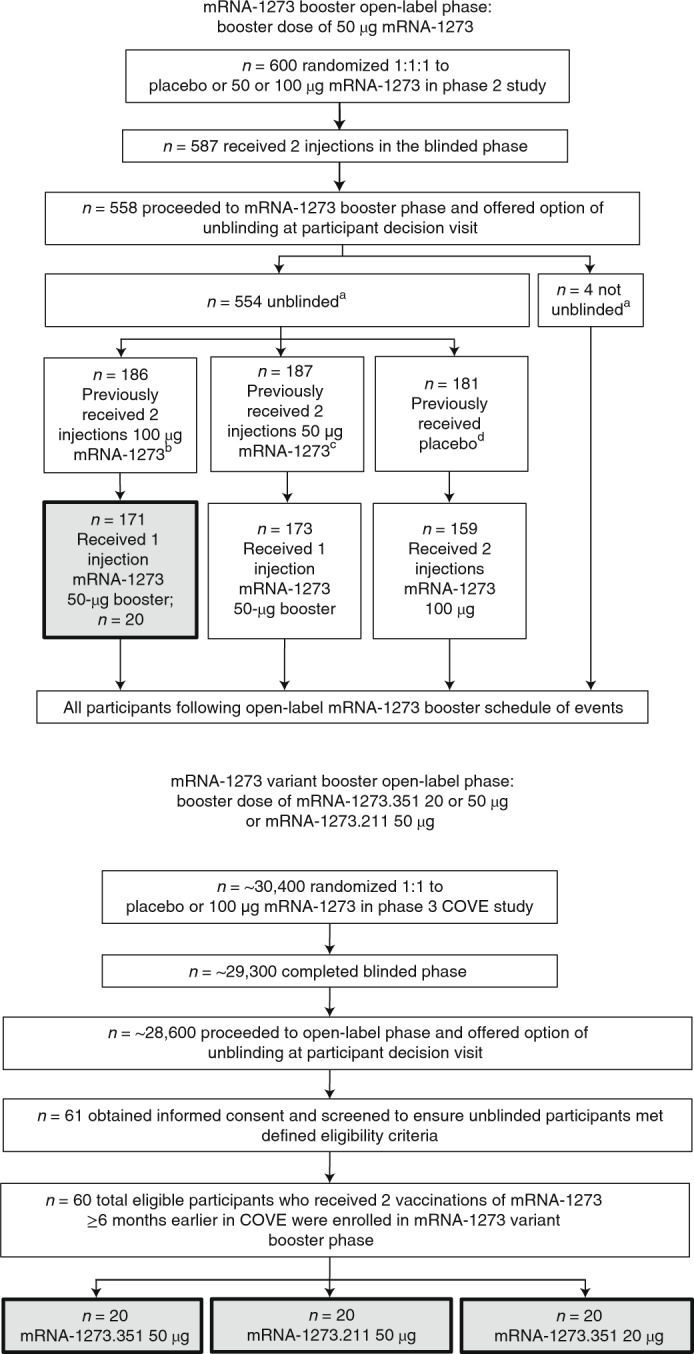
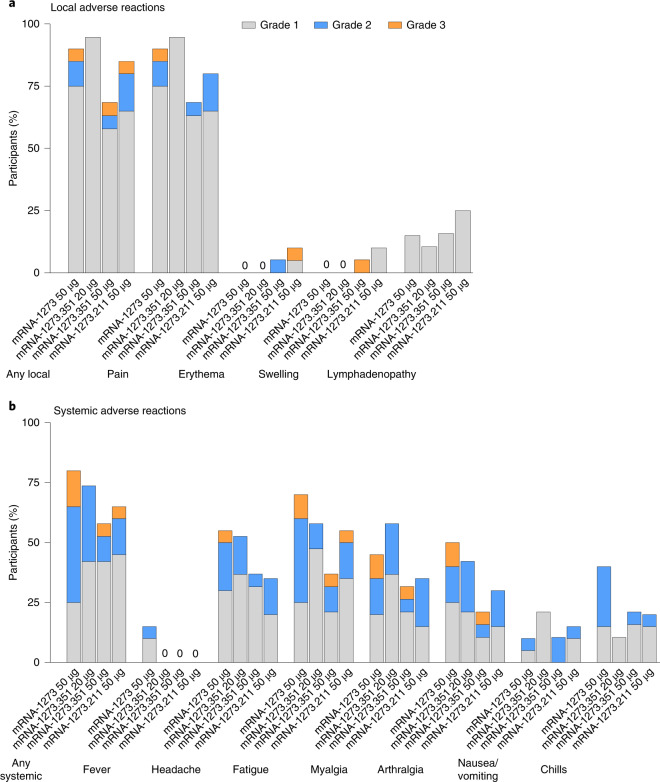
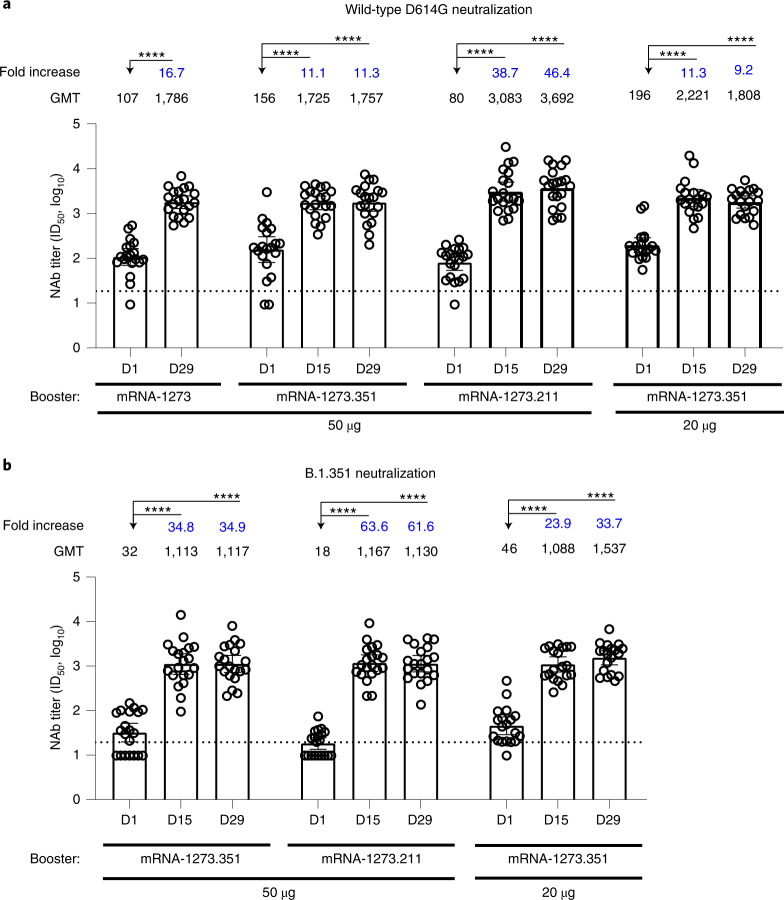
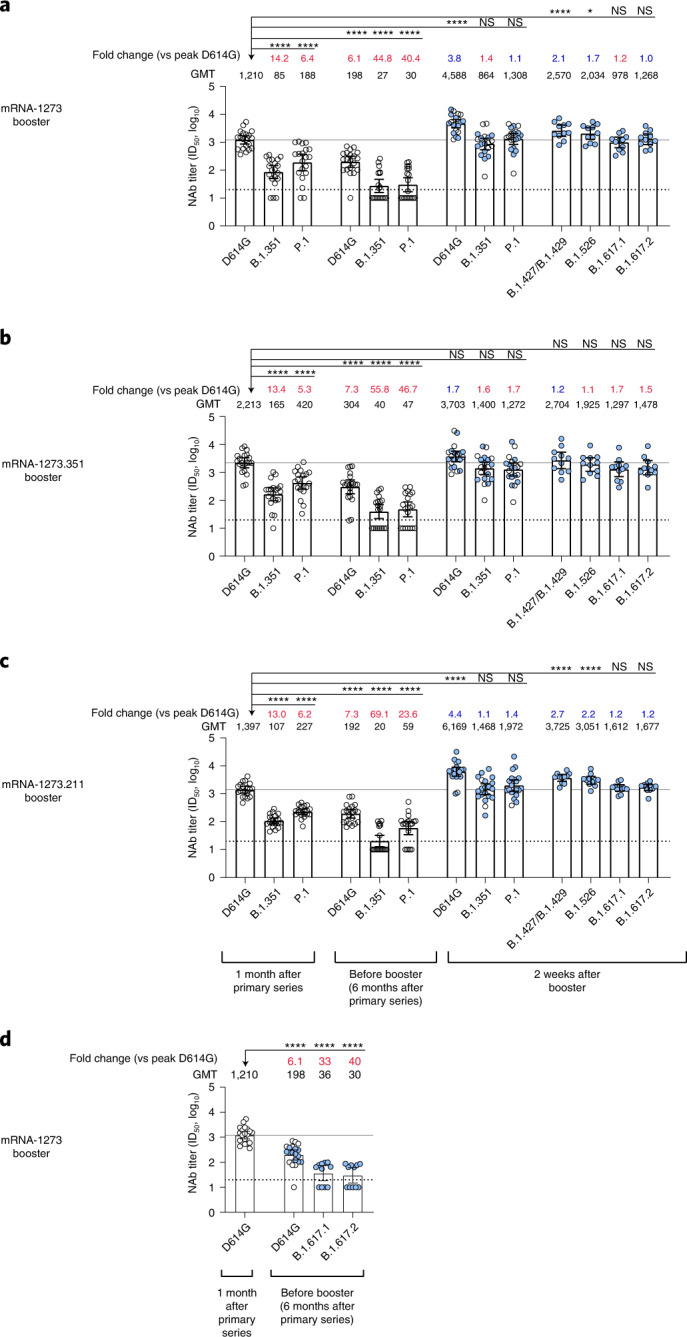
The emergence of SARS-CoV-2 variants of concern (VOCs) and variants of interest (VOIs) with decreased susceptibility to neutralization has generated interest in assessments of booster doses and variant-specific vaccines. Clinical trial participants who received a two-dose primary series of the COVID-19 vaccine mRNA-1273 approximately 6 months earlier entered an open-label phase 2a study ( NCT04405076 ) to evaluate the primary objectives of safety and immunogenicity of a single booster dose of mRNA-1273 or variant-modified mRNAs, including multivalent mRNA-1273.211. As the trial is currently ongoing, this exploratory interim analysis includes preliminary descriptive results only of four booster groups (n = 20 per group). Immediately before the booster dose, neutralizing antibodies against wild-type D614G virus had waned (P < 0.0001) relative to peak titers against wild-type D614G measured 1 month after the primary series, and neutralization titers against B.1.351 (Beta), P.1 (Gamma) and B.1.617.2 (Delta) VOCs were either low or undetectable. Both the mRNA-1273 booster and variant-modified boosters were safe and well-tolerated. All boosters, including mRNA-1273, numerically increased neutralization titers against the wild-type D614G virus compared to peak titers against wild-type D614G measured 1 month after the primary series; significant increases were observed for mRNA-1273 and mRNA-1273.211 (P < 0.0001). In addition, all boosters increased neutralization titers against key VOCs and VOIs, including B.1.351, P.1. and B.1.617.2, that were statistically equivalent to peak titers measured after the primary vaccine series against wild-type D614G virus, with superior titers against some VOIs. This trial is ongoing.
Overview
The claims and statistics of this paper haven’t been checked yet.
Run the check — free, no account needed. It reads the open-access text and checks the sources it cites.
Integrity signals
Registry
Cites
Statistics
Figures
Verification
Claims the paper makes
The claims and statistics of this paper haven’t been checked yet.
Run the check — free, no account needed. It reads the open-access text and checks the sources it cites.
Claims other papers make about this one
Each is checked against this paper’s own text: does it say what the citing paper says it does?
In the citing paper
“The neutralization effect of the booster in each immunization group against SARS-CoV-2 variants Beta, Gamma and Delta reached a level comparable to that observed against the wild-type D614G strain.”
From Advances in COVID-19 mRNA vaccine development (2022) · cites this paper as [415]
In the citing paper
“Among the three booster vaccines evaluated, the multivalent mRNA-1273.211 induced the largest geometric mean titers (GMT) for variants Beta, Gamma and Delta.415,416”
From Advances in COVID-19 mRNA vaccine development (2022) · cites this paper as [415]
In the citing paper
“In an interim analysis of a single booster dose following p-b vaccination, Moderna tested mRNA-1273 and multiple variant-modified versions and found high safety and tolerability, as well as increased neutralization titers against key variants of concern and variants of interest of SARS-CoV-2, including beta (B.1.351), gamma (P.1), delta (B.1.617.2), and omicron (B.1.1.529).86”
From COVID-19 mRNA vaccines: Platforms and current developments (2022) · cites this paper as [86]
In the citing paper
“boosters increased neutralization titers against key variants86”
From COVID-19 mRNA vaccines: Platforms and current developments (2022) · cites this paper as [86]
Self-check
Percentages, sums and reported differences re-computed from the paper’s own numbers.
The self-check needs the paper’s full text.
Citations
Cites
Efficacy and Safety of the mRNA-1273 SARS-CoV-2 Vaccine
Baden, L. R., El Sahly, H. M., Essink, B., Kotloff, K., Frey, S., Novak, R., Diemert, D., Spector, S. A., Rouphael, N., Creech, C. B., et al. (2021) · New England Journal of Medicine · doi:10.1056/nejmoa2035389 · Cited by 10,119
Self-citationKhoury, D. S., Cromer, D., Reynaldi, A., Schlub, T. E., Wheatley, A. K., Juno, J. A., Subbarao, K., Kent, S. J., Triccas, J. A., & Davenport, M. P. (2021) · Nature Medicine · doi:10.1038/s41591-021-01377-8 · Cited by 3,742
An mRNA Vaccine against SARS-CoV-2 — Preliminary Report
Jackson, L. A., Anderson, E. J., Rouphael, N. G., Roberts, P. C., Makhene, M., Coler, R. N., McCullough, M. P., Chappell, J. D., Denison, M. R., Stevens, L. J., et al. (2020) · New England Journal of Medicine · doi:10.1056/nejmoa2022483 · Cited by 3,237
Self-citationGISAID: Global initiative on sharing all influenza data – from vision to reality
Shu, Y., & McCauley, J. (2017) · Eurosurveillance · doi:10.2807/1560-7917.es.2017.22.13.30494 · Cited by 3,039
Safety and Immunogenicity of SARS-CoV-2 mRNA-1273 Vaccine in Older Adults
Anderson, E. J., Rouphael, N. G., Widge, A. T., Jackson, L. A., Roberts, P. C., Makhene, M., Chappell, J. D., Denison, M. R., Stevens, L. J., Pruijssers, A. J., et al. (2020) · New England Journal of Medicine · doi:10.1056/nejmoa2028436 · Cited by 1,523
Self-citationEfficacy of the ChAdOx1 nCoV-19 Covid-19 Vaccine against the B.1.351 Variant
Madhi, S. A., Baillie, V., Cutland, C. L., Voysey, M., Koen, A. L., Fairlie, L., Padayachee, S. D., Dheda, K., Barnabas, S. L., Bhorat, Q. E., et al. (2021) · New England Journal of Medicine · doi:10.1056/nejmoa2102214 · Cited by 1,257
SARS-CoV-2 mRNA vaccines induce persistent human germinal centre responses
Turner, J. S., O’Halloran, J. A., Kalaidina, E., Kim, W., Schmitz, A. J., Zhou, J. Q., Lei, T., Thapa, M., Chen, R. E., Case, J. B., et al. (2021) · Nature · doi:10.1038/s41586-021-03738-2 · Cited by 831
Antibody Persistence through 6 Months after the Second Dose of mRNA-1273 Vaccine for Covid-19
Doria-Rose, N., Suthar, M. S., Makowski, M., O’Connell, S., McDermott, A. B., Flach, B., Ledgerwood, J. E., Mascola, J. R., Graham, B. S., Lin, B. C., et al. (2021) · New England Journal of Medicine · doi:10.1056/nejmc2103916 · Cited by 673
Self-citationEfficacy of NVX-CoV2373 Covid-19 Vaccine against the B.1.351 Variant
Shinde, V., Bhikha, S., Hoosain, Z., Archary, M., Bhorat, Q., Fairlie, L., Lalloo, U., Masilela, M. S. L., Moodley, D., Hanley, S., et al. (2021) · New England Journal of Medicine · doi:10.1056/nejmoa2103055 · Cited by 625
Preliminary Efficacy of the NVX-CoV2373 Covid-19 Vaccine Against the B.1.351 Variant
Shinde, V., Bhikha, S., Hoosain, Z., Archary, M., Bhorat, Q., Fairlie, L., Lalloo, U., Masilela, M. S. L., Moodley, D., Hanley, S., et al. (2021) · doi:10.1101/2021.02.25.21252477 · Cited by 625
Cited by
Sorted by citations
Items 101–200 of 375
COVID-19: Epidemiologie und Mutationen
Hemmer, C. J., Löbermann, M., & Reisinger, E. C. (2021) · Der Radiologe · doi:10.1007/s00117-021-00909-0 · Cited by 33
Kaabi, N. A., Yang, Y. K., Zhang, J., Xu, K., Liang, Y., Kang, Y., Su, J. G., Yang, T., Hussein, S. E., ElDein, M. S., et al. (2022) · Signal Transduction and Targeted Therapy · doi:10.1038/s41392-022-00984-2 · Cited by 32
Radner, H., Sieghart, D., Jorda, A., Fedrizzi, C., Hasenoehrl, T., Zdravkovic, A., Redlberger‐Fritz, M., Puchammer-Stoeckl, E., Anderle, K., Bergmann, F., et al. (2022) · Clinical Microbiology and Infection · doi:10.1016/j.cmi.2022.12.008 · Cited by 32
Wang, Z. J., Fang, Y., Yu, F.-Y., Chan, P. S.-F., Chen, S., & Sun, F. (2022) · Vaccines · doi:10.3390/vaccines10060966 · Cited by 31
Xu, K., Fan, C., Han, Y., Dai, L., & Gao, G. F. (2022) · International Immunology · doi:10.1093/intimm/dxac031 · Cited by 31
Pratama, N. R., Wafa, I. A., Budi, D. S., Sutanto, H., Asmarawati, T. P., Barlian Effendi, G., & Wungu, C. D. K. (2022) · Vaccines · doi:10.3390/vaccines10122180 · Cited by 30
Spencer, A. J., Morris, S. J., Ulaszewska, M., Powers, C., Kailath, R., Bissett, C., Truby, A., Thakur, N., Newman, J., Allen, E. R., et al. (2022) · EBioMedicine · doi:10.1016/j.ebiom.2022.103902 · Cited by 31
The Coming of Age of Nucleic Acid Vaccines during COVID-19
Rando, H. M., Lordan, R., Kolla, L., Sell, E., Lee, A. J., Wellhausen, N., Naik, A. S., Kamil, J. P., Gitter, A., Greene, C. S., et al. (2023) · mSystems · doi:10.1128/msystems.00928-22 · Cited by 30
COVID-19 Vaccine Platforms: Challenges and Safety Contemplations
Al-Jighefee, H. T., Najjar, H., Ahmed, M. N., Qush, A., Awwad, S., & Kamareddine, L. (2021) · Vaccines · doi:10.3390/vaccines9101196 · Cited by 29
Beta RBD boost broadens antibody-mediated protection against SARS-CoV-2 variants in animal models
Sheward, D. J., Mandolesi, M., Urgard, E., Kim, C., Hanke, L., Vidakovics, L. P., Pankow, A. P., Smith, N. L., Dopico, X. C., McInerney, G. M., et al. (2021) · Cell Reports Medicine · doi:10.1016/j.xcrm.2021.100450 · Cited by 28
Wu, J., Li, J., Liu, J., Wang, H., Zhou, G., Li, J., Wu, D., Chen, X., Feng, Y., Qi, X., et al. (2023) · The Lancet Infectious Diseases · doi:10.1016/s1473-3099(23)00199-8 · Cited by 28
Lu, Y., Qian, C., Huang, Y., Ren, T., Xie, W., Xia, N., & Li, S. (2025) · International Journal of Biological Macromolecules · doi:10.1016/j.ijbiomac.2025.145501 · Cited by 28
mRNA vaccines: immunogenicity and quality characteristics
Quan, Y., Yang, H., Li, W., & Li, L. X. (2025) · Journal of Nanobiotechnology · doi:10.1186/s12951-025-03800-5 · Cited by 27
Hsieh, S., Chang, S., Cheng, H., Shih, S., & Lien, C.-E. (2022) · Infectious Diseases and Therapy · doi:10.1007/s40121-022-00652-6 · Cited by 27
Li, Q., Zhang, M., Liang, Z., Zhang, L., Wu, X., Yang, C., An, Y., Tong, J., Liu, S., Li, T., et al. (2022) · MedComm · doi:10.1002/mco2.130 · Cited by 26
Self-citationNaturally occurring spike mutations influence the infectivity and immunogenicity of SARS-CoV-2
Peng, Q., Zhou, R., Liu, N., Wang, H., Xu, H., Zhao, M., Yang, D., Au, K., Huang, H., Liu, L., et al. (2022) · Cellular and Molecular Immunology · doi:10.1038/s41423-022-00924-8 · Cited by 26
de Bruyn, G., Wang, J., Purvis, A., Ruiz, M. S., Adhikarla, H., Alvi, S., Bonaparte, M. I., Brune, D., Bueso, A., Canter, R. M., et al. (2023) · EClinicalMedicine · doi:10.1016/j.eclinm.2023.102109 · Cited by 26
Why promoting a COVID-19 vaccine booster dose?
Loubet, P., Laureillard, D., Martin, A., Larcher, R., & Sotto, A. (2021) · Anaesthesia Critical Care & Pain Medicine · doi:10.1016/j.accpm.2021.100967 · Cited by 27
Κοντοπούλου, Κ., Nakas, C. T., & Papazisis, G. (2022) · Vaccines · doi:10.3390/vaccines10060876 · Cited by 24
Brinkkemper, M., Veth, T. S., Brouwer, P. J. M., Turner, H. L., Poniman, M., Burger, J. A., Bouhuijs, J. H., Olijhoek, W., Bontjer, I., Snitselaar, J. L., et al. (2022) · iScience · doi:10.1016/j.isci.2022.105649 · Cited by 25
Naveed, M., Waseem, M., Aziz, T. A., Hassan, J. U., Makhdoom, S. I., Ali, U., Alharbi, M., & Alsahammari, A. (2023) · Biomedicines · doi:10.3390/biomedicines11041039 · Cited by 24
mRNA delivery technologies: Toward clinical translation
Gómez-Aguado, I., Rodríguez-Castejón, J., Beraza-Millor, M., Rodríguez‐Gascón, A., del Pozo‐Rodríguez, A., & Solinís, M. Á. (2022) · International review of cytology · doi:10.1016/bs.ircmb.2022.04.010 · Cited by 23
Impact of SARS-CoV-2 vaccination on systemic immune responses in people living with HIV
Bessen, C., Plaza‐Sirvent, C., Simsek, A., Bhat, J., Marheinecke, C. S., Urlaub, D., Bonowitz, P., Buße, S., Schumann, S., Blanco, E. V., et al. (2022) · Frontiers in Immunology · doi:10.3389/fimmu.2022.1049070 · Cited by 23
Angkasekwinai, N., Niyomnaitham, S., Sewatanon, J., Phumiamorn, S., Sukapirom, K., Senawong, S., Toh, Z. Q., Umrod, P., Somporn, T., Chumpol, S., et al. (2023) · Asian Pacific Journal of Allergy and Immunology · doi:10.12932/ap-160123-1533 · Cited by 23
Singh, J. A., Kochhar, S., Wolff, J., Atuire, C., Bhan, A., Emanuel, E., Faden, R., Ghimire, P., Greco, D. B., Ho, C. W.-L., et al. (2022) · Vaccine · doi:10.1016/j.vaccine.2022.02.038 · Cited by 23
Angkasekwinai, N., Niyomnaitham, S., Sewatanon, J., Phumiamorn, S., Sukapirom, K., Senawong, S., Toh, Z. Q., Umrod, P., Somporn, T., Chumpol, S., et al. (2021) · medRxiv · doi:10.1101/2021.11.29.21266947 · Cited by 23
Oh, D., Biere, B., Grenz, M., Wolff, T., Schweiger, B., Dürrwald, R., & Reiche, J. (2021) · Microorganisms · doi:10.3390/microorganisms9071508 · Cited by 22
COVID-19 Vaccine: Between Myth and Truth
Piccaluga, P. P., Guardo, A. D., Lagni, A., Lotti, V., Diani, E., Navari, M., & Gibellini, D. (2022) · Vaccines · doi:10.3390/vaccines10030349 · Cited by 22
Neutralization of SARS-CoV-2 Variants by rVSV-ΔG-Spike-Elicited Human Sera
Yahalom-Ronen, Y., Noam Erez, A., Fisher, M., Tamir, H., Politi, B., Achdout, H., Melamed, S., Glinert, I., Weiss, S., Cohen-Gihon, I., et al. (2022) · Vaccines · doi:10.3390/vaccines10020291 · Cited by 22
Lee, R. C., Hu, H., Kawaguchi, E. S., Kim, A. E., Soto, D. W., Shanker, K., Klausner, J. D., Orman, S. V., & Unger, J. B. (2022) · Preventive Medicine Reports · doi:10.1016/j.pmedr.2022.101866 · Cited by 22
Cui, T., Fakhfakh, K., Turney, H. N., Güler-Gane, G., Toloczko, A. D., Hulley, M. E., & Turner, R. (2022) · Biotechnology Progress · doi:10.1002/btpr.3301 · Cited by 22
Wussow, F., Kha, M., Kim, T. H., Ly, M., Yll, M., Kar, S., Lewis, M. G., Chiuppesi, F., & Diamond, D. J. (2023) · npj Vaccines · doi:10.1038/s41541-023-00640-y · Cited by 22
Rational design of a booster vaccine against COVID-19 based on antigenic distance
Hu, Y., Yuen, T. T., Gong, H.-R., Hu, B., Hu, J., Lin, X., Li, R., Zhou, C. L., Chen, L., Wang, X., et al. (2023) · Cell Host & Microbe · doi:10.1016/j.chom.2023.07.004 · Cited by 22
Rechavi, Y., Shashar, M., Lellouche, J., Yana, M., Yakubovich, D., & Sharon, N. (2021) · Vaccines · doi:10.3390/vaccines9090977 · Cited by 21
Zhang, Z., He, Q., Zhao, W., Li, Y., Yang, J., Hu, Z., Chen, X., Peng, H., Fu, Y., Chen, L., et al. (2022) · Journal of Clinical Medicine · doi:10.3390/jcm11144164 · Cited by 22
Deng, X., Evdokimova, M., O’Brien, A., Rowe, C. L., Clark, N. M., Harrington, A., Reid, G., Uprichard, S. L., & Baker, S. C. (2021) · Viruses · doi:10.3390/v13091743 · Cited by 21
Hollstein, M. M., Münsterkötter, L., Schön, M. P., Bergmann, A., Husar, T. M., Abratis, A., Eidizadeh, A., Schaffrinski, M., Zachmann, K., Schmitz, Ä., et al. (2022) · Allergy · doi:10.1111/all.15247 · Cited by 21
van der Velden, Y. U., Grobben, M., Caniels, T. G., Burger, J. A., Poniman, M., Oomen, M., Rijnstra, E. S.-V., Tejjani, K., Guerra, D., Kempers, R., et al. (2022) · Scientific Reports · doi:10.1038/s41598-022-07590-w · Cited by 21
Humoral Immunogenicity of the mRNA-1273 Vaccine in the Phase 3 Coronavirus Efficacy (COVE) Trial
Sahly, H. M. E., Baden, L. R., Essink, B. J., Montefiori, D. C., McDermont, A., Rupp, R. E., Lewis, M., Swaminathan, S., Griffin, C., Fragoso, V. G., et al. (2022) · The Journal of Infectious Diseases · doi:10.1093/infdis/jiac188 · Cited by 21
Self-citationKarsten, H., Cords, L., Westphal, T., Knapp, M., Brehm, T. T., Hermanussen, L., Omansen, T. F., Schmiedel, S., Woost, R., Ditt, V., et al. (2022) · Clinical & Translational Immunology · doi:10.1002/cti2.1410 · Cited by 21
Zhou, X., Wang, S., Zhang, K., Chen, S., Chan, P. S.-F., Fang, Y., Cao, H., Chen, H., Hu, T., Chen, Y., et al. (2022) · Vaccines · doi:10.3390/vaccines10091478 · Cited by 21
Yassini, P., Hutchens, M., Paila, Y. D., Schoch, L., Aunins, A., Siangphoe, U., & Paris, R. (2023) · Human Vaccines & Immunotherapeutics · doi:10.1080/21645515.2023.2190690 · Cited by 21
Self-citationHe, X., Aïd, M., Chandrashekar, A., Yu, J., McMahan, K., Wegmann, F., Jacob-Dolan, C., Maron, J. S., Atyeo, C. G., Wan, H., et al. (2022) · Science Translational Medicine · doi:10.1126/scitranslmed.abm4996 · Cited by 21
Nanthapisal, S., Puthanakit, T., Jaru-Ampornpan, P., Nantanee, R., Sodsai, P., Himananto, O., Sophonphan, J., Suchartlikitwong, P., Hiransuthikul, N., Angkasekwinai, P., et al. (2022) · Vaccine · doi:10.1016/j.vaccine.2022.03.036 · Cited by 21
van den Hoogen, L. L., Verheul, M. K., Vos, E. R. A., van Hagen, C. C. E., van Boven, M., Wong, D., Wijmenga‐Monsuur, A. J., Smits, G. P., Kuijer, M., van Rooijen, D. M., et al. (2022) · Scientific Reports · doi:10.1038/s41598-022-10020-6 · Cited by 21
SARS-CoV-2 Vaccination and the Bridge between First and Fourth Dose: Where Are We?
Stasi, C., Meoni, B., Voller, F., & Silvestri, C. (2022) · Vaccines · doi:10.3390/vaccines10030444 · Cited by 20
mRNA-encoded Cas13 treatment of Influenza via site-specific degradation of genomic RNA
Chaves, L. C. S., Orr‐Burks, N., Vanover, D. A., Mosur, V., Hosking, S. R., K., P. K. E., Jeong, H., Jung, Y., Assumpção, J. A. F., Peck, H. E., et al. (2024) · PLoS Pathogens · doi:10.1371/journal.ppat.1012345 · Cited by 20
Salvagno, G. L., Henry, B. M., Pighi, L., NITTO, S. D., Gianfilippi, G., & Lippi, G. (2022) · Clinical Chemistry and Laboratory Medicine (CCLM) · doi:10.1515/cclm-2022-0212 · Cited by 19
Multiple sclerosis in the era of COVID-19: disease course, DMTs and SARS-CoV2 vaccinations
Pugliatti, M., Berger, T., Hartung, H., Oreja‐Guevara, C., & Bar‐Or, A. (2022) · Current Opinion in Neurology · doi:10.1097/wco.0000000000001066 · Cited by 19
Shinkai, M., Sonoyama, T., Kamitani, A., Shibata, R. Y., Seki, N. M., Omoto, S., Shinoda, M., Sato, T., Ishii, N., Igarashi, K., et al. (2022) · Vaccine · doi:10.1016/j.vaccine.2022.06.032 · Cited by 19
The current status of COVID-19 vaccines. A scoping review
Rueda-Fernández, M., Melguizo‐Rodríguez, L., Costela-Ruiz, V. J., González‐Acedo, A., Ramos‐Torrecillas, J., & Montes, R. I. (2022) · Drug Discovery Today · doi:10.1016/j.drudis.2022.08.004 · Cited by 19
Paine, R., Chasse, R., Halstead, E. S., Nfonoyim, J. M., Park, D. J., Byun, T., Patel, B., Molina-Pallete, G., Harris, E. S., Garner, F., et al. (2022) · Military Medicine · doi:10.1093/milmed/usac362 · Cited by 19
Abduljalil, J. M. A., Elghareib, A. M., Samir, A., Ezat, A. A., & Elfiky, A. A. (2023) · International Journal of Biological Macromolecules · doi:10.1016/j.ijbiomac.2023.125153 · Cited by 19
Wu, J., Nie, J., Zhang, L., Song, H., An, Y., Liang, Z., Yang, J., Ding, R., Liu, S., Li, Q., et al. (2022) · Signal Transduction and Targeted Therapy · doi:10.1038/s41392-022-00874-7 · Cited by 18
Self-citationSung, J. C.-C., Lai, N. C.-Y., Wu, K.-C., Choi, M.-C., Ho-Yi, C., Lin, J., Kuok, C.-N., Leong, W.-L., Lam, W.-K., Hamied, Y. K., et al. (2022) · Vaccines · doi:10.3390/vaccines10071014 · Cited by 18
Self-citationHigashimoto, Y., Kozawa, K., Miura, H., Kawamura, Y., Ihira, M., Hiramatsu, H., Suzuki, R., Haga, K., Takai‐Todaka, R., Sawada, A., et al. (2022) · Human Vaccines & Immunotherapeutics · doi:10.1080/21645515.2022.2105611 · Cited by 18
Hasanpourghadi, M., Novikov, M., Ambrose, R., Chekaoui, A., Newman, D., Ding, J., Giles‐Davis, W., Xiang, Z., Zhou, X., Liu, Q., et al. (2022) · Microbes and Infection · doi:10.1016/j.micinf.2022.105082 · Cited by 18
Méndez, C., Peñaloza, H. F., Schultz, B. M., Piña-Iturbe, A., Ríos, M., Moreno‐Tapia, D., Pereira-Sánchez, P., Leighton, D., Orellana, C., Covarrubias, C., et al. (2023) · EBioMedicine · doi:10.1016/j.ebiom.2023.104563 · Cited by 18
Case, J. B., Sanapala, S., Dillen, C. A., Rhodes, V., Zmasek, C. M., Chicz, T. M., Switzer, C., Scheaffer, S. M., Georgiev, G. P., Jacob-Dolan, C., et al. (2024) · Cell Host & Microbe · doi:10.1016/j.chom.2024.10.016 · Cited by 18
Jing, L., Wu, X., Krist, M. P., Hsiang, T.-Y., Campbell, V. L., McClurkan, C. L., Favors, S. M., Hemingway, L. A., Godornes, C., Tong, D. Q., et al. (2022) · JCI Insight · doi:10.1172/jci.insight.158126 · Cited by 18
Edwards, D. K., & Carfı́, A. (2022) · Current Opinion in Immunology · doi:10.1016/j.coi.2022.102214 · Cited by 18
Self-citationO’Connor, M. A., Hawman, D. W., Meade-White, K. D., Leventhal, S. S., Song, W., Randall, S., Archer, J. F., Lewis, T. B., Brown, B., Fredericks, M., et al. (2023) · PLoS Pathogens · doi:10.1371/journal.ppat.1011298 · Cited by 18
Pasquevich, K. A., Coria, L. M., Ceballos, A., Mazzitelli, B., Rodriguez, J. M., Demaría, A., Castro, C. P., Bruno, L. A., Saposnik, L. M., Salvatori, M., et al. (2023) · Nature Communications · doi:10.1038/s41467-023-40272-3 · Cited by 18
Leung, N., Cheng, S. M. S., Martín-Sánchez, M., Au, N. Y. M., Ng, Y. Y., Luk, L. L. H., Chan, K., Li, J. K. C., Leung, Y. W. Y., Tsang, L. C. H., et al. (2022) · Clinical Infectious Diseases · doi:10.1093/cid/ciac458 · Cited by 17
Bergamaschi, C., Pagoni, M. N., Rosati, M., Angel, M., Tzannou, I., Vlachou, M., Darmani, I., Ullah, A., Bear, J., Devasundaram, S., et al. (2022) · Frontiers in Immunology · doi:10.3389/fimmu.2022.899972 · Cited by 17
Variable loss of antibody potency against SARS-CoV-2 B.1.1.529 (Omicron)Preprint
Sheward, D. J., Kim, C., Ehling, R. A., Pankow, A. P., Dopico, X. C., Martin, D. P., Reddy, S. T., Dillner, J., Hedestam, G. B. K., Albert, J., et al. (2021) · bioRxiv (Cold Spring Harbor Laboratory) · doi:10.1101/2021.12.19.473354 · Cited by 17
Solforosi, L., Costes, L. M. M., Tolboom, J. T. B. M., McMahan, K., Anioke, T., Hope, D. L., Murdza, T., Sciacca, M., Bouffard, E., Barrett, J., et al. (2023) · Nature Communications · doi:10.1038/s41467-023-37715-2 · Cited by 16
Self-citationWhat makes SARS‐CoV‐2 unique? Focusing on the spike protein
Qian, J., Zhang, S.-C., Wang, F., Li, J., & Zhang, J. (2024) · Cell Biology International · doi:10.1002/cbin.12130 · Cited by 16
Lee, D. W., Nasir, A., Elbashir, S. M., Jani, H., Speidel, T., Gorrie, A., Berrueta, D. M., Martin, P., Tan, S., Hou, Y. J., et al. (2025) · Vaccine · doi:10.1016/j.vaccine.2025.126961 · Cited by 16
Self-citationSimulation of future COVID-19 epidemic by vaccination coverage scenarios in Japan
Furuse, Y. (2021) · Journal of Global Health · doi:10.7189/jogh.11.05025 · Cited by 16
Ukey, R., Bruiners, N., Mishra, H. K., Mishra, P. K., McCloskey, D., Onyuka, A., Chen, F., Pinter, A., Weiskopf, D., Sette, A., et al. (2022) · BMC Medicine · doi:10.1186/s12916-022-02252-0 · Cited by 16
Assawakosri, S., Kanokudom, S., Chansaenroj, J., Suntronwong, N., Auphimai, C., Nilyanimit, P., Vichaiwattana, P., Thongmee, T., Duangchinda, T., Chantima, W., et al. (2022) · International Journal of Infectious Diseases · doi:10.1016/j.ijid.2022.07.038 · Cited by 16
Zhang, Y., Zheng, X., Sheng, W., Liang, H., Zhao, Y., Zhu, X., Yang, R., Zhang, Y., Dong, X., Li, W., et al. (2022) · Vaccines · doi:10.3390/vaccines10081208 · Cited by 16
Deliyannis, G., Gherardin, N. A., Wong, C. Y., Grimley, S. L., Cooney, J. P., Redmond, S. J., Ellenberg, P. C., Davidson, K. C., Mordant, F. L., Smith, T., et al. (2023) · EBioMedicine · doi:10.1016/j.ebiom.2023.104574 · Cited by 16
Omma, A., Batırel, A. A., Aydın, M., Karadağ, F. Y., Erden, A., Küçükşahin, O., Armağan, B., Güven, S. C., Karakaş, Ö., Gökdemir, S., et al. (2022) · Human Vaccines & Immunotherapeutics · doi:10.1080/21645515.2022.2122503 · Cited by 15
Bert, F., Scaioli, G., Vola, L., Accortanzo, D., Moro, G. L., & Siliquini, R. (2022) · International Journal of Environmental Research and Public Health · doi:10.3390/ijerph19127233 · Cited by 15
Sui, Y., Li, J., Andersen, H., Zhang, R., Prabhu, S. K., Hoang, T. N., Venzon, D. J., Cook, A., Brown, R., Teow, E., et al. (2022) · PNAS Nexus · doi:10.1093/pnasnexus/pgac091 · Cited by 15
Kugelman, N., Nahshon, C., Shaked‐Mishan, P., Kleifeld, S., Cohen, N., Sher, M. L., Zahran, H., Barsha, H., Assaf, W., Shalabna, E., et al. (2022) · Obstetrics and Gynecology · doi:10.1097/aog.0000000000004867 · Cited by 15
Lee, B., Ko, J., Lee, K. H., Kim, Y. C., Song, Y. G., Park, Y. S., Baek, Y. J., Ahn, J. Y., Choi, J. Y., Song, K., et al. (2022) · Microbiology Spectrum · doi:10.1128/spectrum.02669-22 · Cited by 15
Duarte, N. B. A., & Takahashi, J. A. (2022) · Molecules · doi:10.3390/molecules27238210 · Cited by 15
Farahmand, B., Larijani, M. S., Fotouhi, F., Biglari, A., Sorouri, R., Amiri, F. B., Eslamifar, A., Jalali, T., Salehi-Vaziri, ., Banifazl, M., et al. (2023) · Heliyon · doi:10.1016/j.heliyon.2023.e20555 · Cited by 14
Montoya, B., Melo‐Silva, C. R., Tang, L., Kafle, S., Lidskiy, P., Bajusz, C., Vadovics, M., Muramatsu, H., Ábrahám, E., Lipinszki, Z., et al. (2024) · Molecular Therapy · doi:10.1016/j.ymthe.2024.04.019 · Cited by 14
Immunology of SARS-CoV-2 infections and vaccines
Schenten, D., & Bhattacharya, D. (2021) · Advances in immunology · doi:10.1016/bs.ai.2021.08.002 · Cited by 14
Cibelli, N., Arias, G. F., Figur, M., Khayat, S., Leach, K., Loukinov, I., Shadrick, W. R., Chuenchor, W., Tsybovsky, Y., Development, V. P. P. A., et al. (2022) · Scientific Reports · doi:10.1038/s41598-022-07485-w · Cited by 14
Nguyen, K. G., Mantooth, S. M., Vrabel, M. R., & Zaharoff, D. A. (2022) · Frontiers in Immunology · doi:10.3389/fimmu.2022.858904 · Cited by 14
COVID-19 vaccination challenges: A mini-review
Afshar, Z. M., Barary, M., Hosseinzadeh, R., Karim, B., Ebrahimpour, S., Nazary, K., Sio, T. T. W., Sullman, M. J. M., Carson‐Chahhoud, K., Moudi, E., et al. (2022) · Human Vaccines & Immunotherapeutics · doi:10.1080/21645515.2022.2066425 · Cited by 14
Aleissa, M. M., Little, J. S., Davey, S., Saucier, A., Zhou, G., Gonzalez-Bocco, I. H., Crombie, J. L., Looka, A., Baden, L. R., Issa, N. C., et al. (2023) · Transplantation and Cellular Therapy · doi:10.1016/j.jtct.2023.03.005 · Cited by 14
Wang, F., Huang, B., Deng, Y., Zhang, S., Liu, X., Wang, L., Liu, Q., Zhao, L., Tang, L., Wang, W., et al. (2023) · BMC Medicine · doi:10.1186/s12916-023-02942-3 · Cited by 14
Adenovirus-vectored SARS-CoV-2 vaccine expressing S1-N fusion protein
Khan, M. S., Kim, E. Y., McPherson, A. C., Weisel, F. J., Huang, S., Kenniston, T. W., Percivalle, E., Cassaniti, I., Baldanti, F., Meisel, M., et al. (2022) · Antibody Therapeutics · doi:10.1093/abt/tbac015 · Cited by 13
Limeres, M. J., Gambaro, R. C., Svensson, M., Ghazi, S. F.-E., Pretsch, L., Frank, D., Islan, G. A., Berti, I. R., Bros, M., Tam, Y. K., et al. (2025) · Molecular Therapy · doi:10.1016/j.ymthe.2025.06.027 · Cited by 13
Review of Ribosome Interactions with SARS-CoV-2 and COVID-19 mRNA Vaccine
Wei, J., & Hui, A. (2022) · Life · doi:10.3390/life12010057 · Cited by 13
Rammauro, F., Carrión, F., Olivero‐Deibe, N., Fló, M., Ferreira, A., Pritsch, O., & Bianchi, S. (2022) · Vaccine · doi:10.1016/j.vaccine.2022.07.023 · Cited by 14
Hu, D., Liu, Z., Gong, L., Kong, Y., Liu, H., Wei, C., Wu, X., Zhu, Q., & Guo, Y. (2022) · Vaccines · doi:10.3390/vaccines10081336 · Cited by 13
Kanokudom, S., Assawakosri, S., Suntronwong, N., Chansaenroj, J., Auphimai, C., Nilyanimit, P., Vichaiwattana, P., Thongmee, T., Yorsaeng, R., Duangchinda, T., et al. (2022) · Vaccine · doi:10.1016/j.vaccine.2022.08.033 · Cited by 13
Nantel, S., Sheikh‐Mohamed, S., Chao, G. Y. C., Kurtesi, A., Hu, Q., Wood, H., Colwill, K., Li, Z., Liu, Y., Seifried, L. A., et al. (2024) · Mucosal Immunology · doi:10.1016/j.mucimm.2024.01.004 · Cited by 13
Yuniar, C. T., Pratiwi, B., Ihsan, A. F., Laksono, B. T., Risfayanti, I., Fathadina, A., Jeong, Y., & Kim, E. Y. (2022) · Vaccines · doi:10.3390/vaccines10020313 · Cited by 13
Desikan, R., Linderman, S. L., Davis, C. W., Zarnitsyna, V. I., Ahmed, H., & Antia, R. (2022) · Frontiers in Immunology · doi:10.3389/fimmu.2022.985478 · Cited by 13
Chalkias, S., Schwartz, H., Nestorova, B., Feng, J., Chang, Y., Zhou, H., Dutko, F. J., Edwards, D. K., Montefiori, D. C., Pajón, R., et al. (2022) · medRxiv · doi:10.1101/2022.03.04.22271830 · Cited by 13
Self-citationVaccination after prior COVID-19 infection: Implications for dose sparing and booster shots
Kent, S. J., & Juno, J. A. (2021) · EBioMedicine · doi:10.1016/j.ebiom.2021.103586 · Cited by 12
Kugelman, N., Nahshon, C., Shaked‐Mishan, P., Cohen, N., Sher, M. L., Barsha, H., Shalabna, E., Zolotarevsky, A., Lavie, O., Kedar, R., et al. (2022) · European Journal of Obstetrics & Gynecology and Reproductive Biology · doi:10.1016/j.ejogrb.2022.05.029 · Cited by 12
Metadata
- Authors
- Choi, A., Koch, M., Wu, K., Chu, L., Ma, L., Hill, A., Nunna, N., Huang, W., Oestreicher, J., Colpitts, T., Bennett, H., Legault, H., Paila, Y., Nestorova, B., Ding, B., Montefiori, D., Pajon, R., Miller, J. M., Leav, B., Carfi, A., McPhee, R., & Edwards, D. K.
- Affiliations
- Moderna Therapeutics (United States) (US)
- Benchmark Research (United States) (US)
- Duke University (US)
- Corresponding author
- Edwards, Darin K.
- ORCID
- Venue
- Nature Medicine
- Published
- 2021-09-15
- Volume
- 27
- Issue
- 11
- Pages
- 2025-2031
- ISSN
- 1078-8956 (ISSN-L)
- 1546-170X
- PMC
- PMC8604720
- OpenAlex
- W3200674187
- Cited by
- 396
- References
- 18
- Citations by year
- 2026: 5 · 2025: 27 · 2024: 42 · 2023: 79 · 2022: 202 · 2021: 41
- FWCI
- 28.79
- Type
- journal article
- Language
- en
- Open access
- hybrid
- doi.org
- Locations
- Nature Medicine (publishedVersion, cc-by)
- PubMed Central (publishedVersion, cc-by)
- PubMed (publishedVersion)
- Funders
- Moderna
- Health Science Center, University of Tennessee
- Topics
- Health Sciences › Medicine › Infectious Diseases › SARS-CoV-2 and COVID-19 Research
- Social Sciences › Health › Vaccine Coverage and Hesitancy
- Health Sciences › Medicine › Infectious Diseases › COVID-19 Clinical Research Studies
- Keywords
- SARS-CoV-2, COVID-19 vaccines, mRNA-1273, booster vaccination, vaccine safety, immunogenicity, neutralizing antibodies, variants of concern, variants of interest, Beta variant, P.1, Delta variant, antibody waning, D614G
- MeSH terms
- Immunogenicity, Vaccine, Preliminary Data, COVID-19, SARS-CoV-2, COVID-19 Vaccines, Adult, Aged, Antibodies, Viral, Female, Humans, Immunization, Secondary, Male, Middle Aged, RNA, Messenger, United States, Vaccination, Treatment Outcome, Antibodies, Neutralizing, Healthy Volunteers
About these checks
Registry, retraction, Cites and statistics results are computed, not judged, with one exception: a printed reference that no index lists is read once by a model before it counts as a citation error. Claims are extracted by a model and kept only when their quote appears verbatim in the text; each cited source is then checked, with a model’s help, for whether it says what the claim relies on. Those verdicts can be wrong — read the claim’s quote and the cited source before relying on one.
Statistics and arithmetic are recomputed, not judged.
Confidence bands are shown only for fields calibrated on our annotated test set. None is calibrated yet, so no band is shown.
What counts as a claim ›How we measure confidence ›How we check this ›
Are you an author, or do you see a problem with this page? Request a review
