

Tirzepatide cardiovascular event risk assessment: a pre-specified meta-analysis
Open accessThe DOI matches its Crossref record; 39 of the 39 references it cites were found in a registry or an index.
Abstract
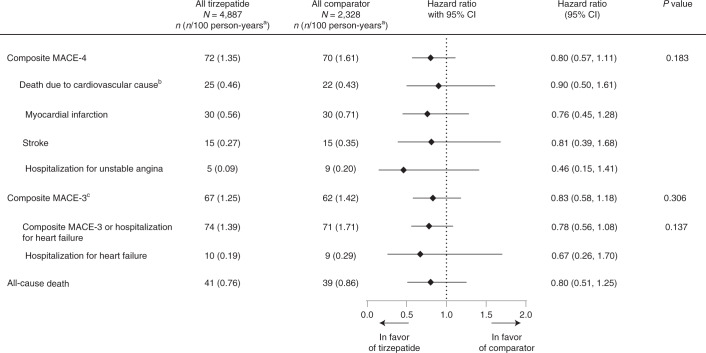
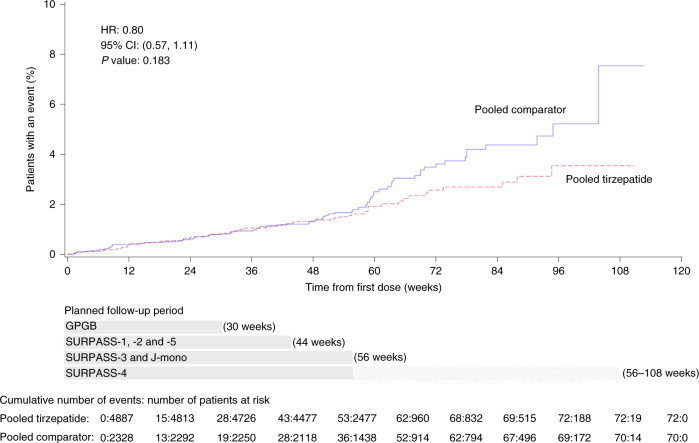
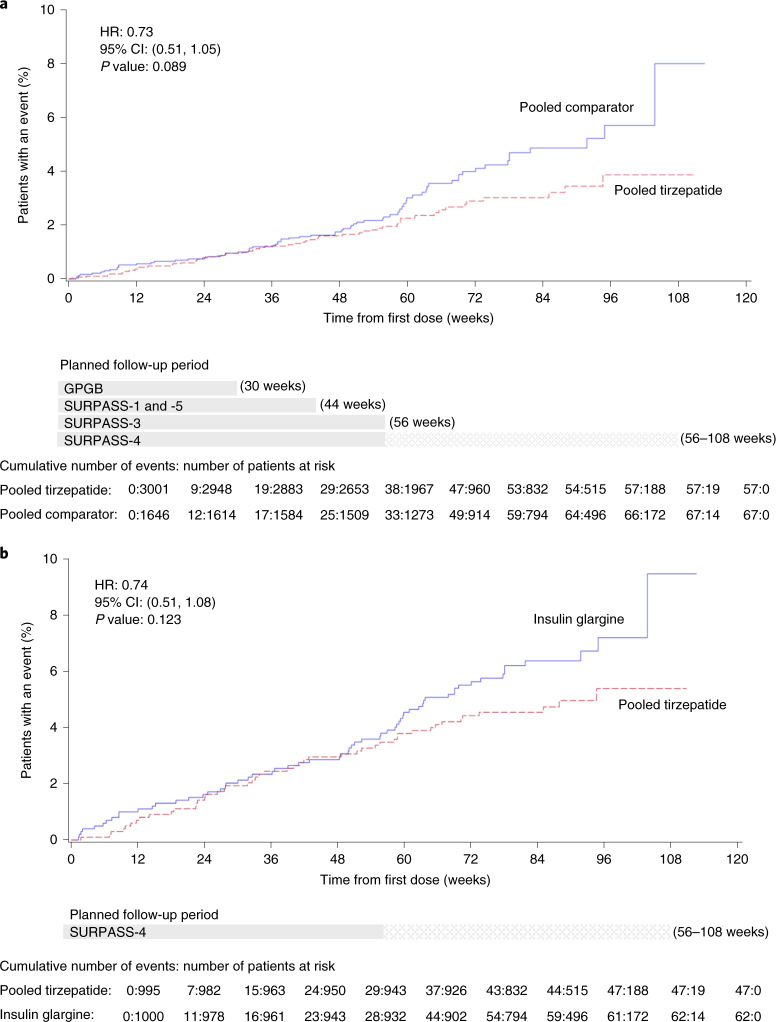
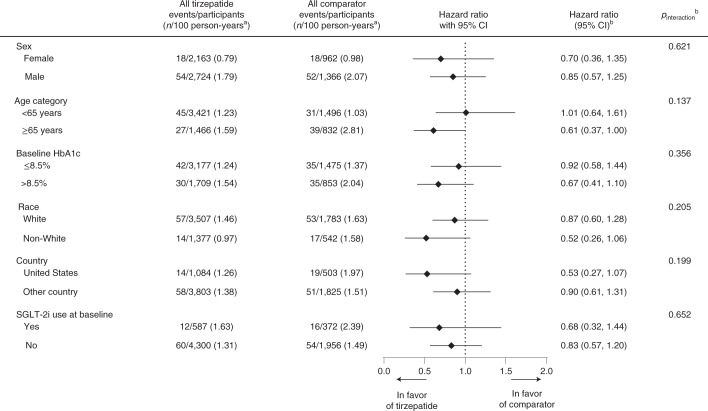
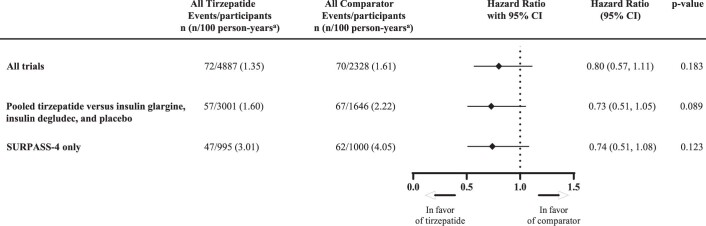
Tirzepatide is a novel, once weekly, dual GIP/GLP-1 receptor agonist and is under development for the treatment of type 2 diabetes (T2D) and obesity. Its association with cardiovascular outcomes requires evaluation. This pre-specified cardiovascular meta-analysis included all seven randomized controlled trials with a duration of at least 26 weeks from the tirzepatide T2D clinical development program, SURPASS. The pre-specified primary objective of this meta-analysis was the comparison of the time to first occurrence of confirmed four-component major adverse cardiovascular events (MACE-4; cardiovascular death, myocardial infarction, stroke and hospitalized unstable angina) between pooled tirzepatide groups and control groups. A stratified Cox proportional hazards model, with treatment as a fixed effect and trial-level cardiovascular risk as the stratification factor, was used for the estimation of hazard ratios (HRs) and confidence intervals (CIs) comparing tirzepatide to control. Data from 4,887 participants treated with tirzepatide and 2,328 control participants were analyzed. Overall, 142 participants, 109 from the trial with high cardiovascular risk and 33 from the six trials with lower cardiovascular risk, had at least one MACE-4 event. The HRs comparing tirzepatide versus controls were 0.80 (95% CI, 0.57–1.11) for MACE-4; 0.90 (95% CI, 0.50–1.61) for cardiovascular death; and 0.80 (95% CI, 0.51–1.25) for all-cause death. No evidence of effect modifications was observed for any subgroups, although the evidence was stronger for participants with high cardiovascular risk. Tirzepatide did not increase the risk of major cardiovascular events in participants with T2D versus controls.
Overview
The claims and statistics of this paper haven’t been checked yet.
Free: it reads the open-access text and checks the first 5 claims that cite a source we can check. Create a free account to check every claim.
Integrity signals
Registry
Cites
Statistics
Figures
Verification
Claims the paper makes
The claims and statistics of this paper haven’t been checked yet.
Free: it reads the open-access text and checks the first 5 claims that cite a source we can check. Create a free account to check every claim.
Claims other papers make about this one
Each is checked against this paper’s own text: does it say what the citing paper says it does?
The source backs part of the claim, not all of it — or backs it for a different population, condition or comparison.
In the citing paper
“Furthermore, in a meta-analysis, which included five phase 3 tirzepatide trials conducted in patients with T2D, tirzepatide did not increase the risk of major cardiovascular events in participants compared with controls (hazard ratio 0.80, 95% CI 0.57-1.11).26”
From Tirzepatide reduces the predicted risk of atherosclerotic cardiovascular disease and improves cardiometabolic risk factors in adults with obesity or overweight: SURMOUNT-1 post hoc analysis (2024) · cites this paper as [26]
Experimental — accuracy not yet measuredThe cited source says what the claim attributes to it.
In the citing paper
“Additionally, current short-term data from RCTs suggest that tirzepatide does not increase the risk of MACE versus comparators; however, robust data on its long-term cardiovascular pro fi le will be”
The cited source says what the claim attributes to it.
In the citing paper
“The ongoing SURPASS trials evaluating tirzepatide also evidenced a trend towards cardiovascular safety with decreased incidence of MACEs (hazard ratio 0.80; 95% CI, 0.57–1.11).62”
From GLP-1 single, dual, and triple receptor agonists for treating type 2 diabetes and obesity: a narrative review (2024) · cites this paper as [62]
The cited source says what the claim attributes to it.
In the citing paper
“Recent results from RCTs with tirzepatide suggest superior effects on glycemic control and weight loss compared to semaglutide [105,116] and a first cardiovascular risk assessment importantly also indicated no increased risk of MACE [123].”
From Obesity and MASLD: Is weight loss the (only) key to treat metabolic liver disease? (2024) · cites this paper as [123]
The cited source says what the claim attributes to it.
In the citing paper
“pooled data from the SURPASS clinical trial programme indicate that tirzepatide does not increase the risk of major cardiovascular events [61]”
3 more claims about this paper
Create a free account to see every claim other papers make about this one.
Self-check
Percentages, sums and reported differences re-computed from the paper’s own numbers.
The self-check needs the paper’s full text.
Citations
Cites
Heart Disease and Stroke Statistics—2017 Update: A Report From the American Heart Association
Benjamin, E. J., Blaha, M. J., Chiuve, S. E., Cushman, M., Das, S. R., Deo, R., de Ferranti, S. D., Floyd, J., Fornage, M., Gillespie, C., et al. (2017) · Circulation · doi:10.1161/cir.0000000000000485 · Cited by 12,591
Empagliflozin, Cardiovascular Outcomes, and Mortality in Type 2 Diabetes
Zinman, B., Wanner, C., Lachin, J. M., Fitchett, D., Bluhmki, E., Hantel, S., Mattheus, M., Devins, T., Johansen, O. E., Woerle, H. J., et al. (2015) · New England Journal of Medicine · doi:10.1056/nejmoa1504720 · Cited by 12,315
Liraglutide and Cardiovascular Outcomes in Type 2 Diabetes
Marso, S. P., Daniels, G. H., Brown-Frandsen, K., Kristensen, P., Mann, J. F. E., Nauck, M. A., Nissen, S. E., Pocock, S., Poulter, N. R., Ravn, L. S., et al. (2016) · New England Journal of Medicine · doi:10.1056/nejmoa1603827 · Cited by 7,629
Heart disease and stroke statistics-2018 update: a report from the american heart association
Benjamin, E. J., Virani, S. S., Callaway, C. W., Chamberlain, A. M., Chang, A. R., Cheng, S., Chiuve, S. E., Cushman, M., Delling, F. N., Deo, R., et al. (2018) · Circulation · doi:10.1161/cir.0000000000000558 · Cited by 7,146
Semaglutide and Cardiovascular Outcomes in Patients with Type 2 Diabetes
Marso, S. P., Bain, S. C., Consoli, A., Eliaschewitz, F. G., Jódar, E., Leiter, L. A., Lingvay, I., Rosenstock, J., Seufert, J., Warren, M. L., et al. (2016) · New England Journal of Medicine · doi:10.1056/nejmoa1607141 · Cited by 6,900
A generalization of sampling without replacement from a finite universe
Horvitz, D. G., & Thompson, D. J. (1952) · Journal of the American Statistical Association · doi:10.1080/01621459.1952.10483446 · Cited by 4,293
Gerstein, H. C., Colhoun, H. M., Dagenais, G. R., Diaz, R., Lakshmanan, M., Pais, P., Probstfield, J., Riesmeyer, J. S., Riddle, M. C., Rydén, L., et al. (2019) · The Lancet · doi:10.1016/s0140-6736(19)31149-3 · Cited by 3,163
Tirzepatide versus Semaglutide Once Weekly in Patients with Type 2 Diabetes
Frías, J. P., Davies, M. J., Rosenstock, J., Pérez Manghi, F. C., Fernández Landó, L., Bergman, B. K., Liu, B., Cui, X., & Brown, K. (2021) · New England Journal of Medicine · doi:10.1056/nejmoa2107519 · Cited by 2,096
Oral Semaglutide and Cardiovascular Outcomes in Patients with Type 2 Diabetes
Husain, M., Birkenfeld, A. L., Donsmark, M., Dungan, K., Eliaschewitz, F. G., Franco, D. R., Jeppesen, O. K., Lingvay, I., Mosenzon, O., Pedersen, S. D., et al. (2019) · New England Journal of Medicine · doi:10.1056/nejmoa1901118 · Cited by 1,997
Meta-analysis of individual participant data: rationale, conduct, and reporting
Riley, R. D., Lambert, P. C., & Abo-Zaid, G. (2010) · BMJ · doi:10.1136/bmj.c221 · Cited by 1,701
Cited by
Items 201–300 of 346
Hypertension in Cardiovascular and Kidney Disease: Recent Trends – Treating Two Diseases as One
Pascalis, A. D., Tomassetti, A., Vetrano, D., Tringali, E., Lullo, L. D., Napoli, M., Manna, G. L., & Cianciolo, G. (2024) · Cardiorenal Medicine · doi:10.1159/000541876 · Cited by 7
Salama, L., & Sinn, L. (2025) · American Journal of Health-System Pharmacy · doi:10.1093/ajhp/zxaf053 · Cited by 9
Ismail, A., Amer, M. S., & Tawheed, A. (2025) · World Journal of Gastrointestinal Pharmacology and Therapeutics · doi:10.4292/wjgpt.v16.i3.107148 · Cited by 7
“%) but higher nausea rates (29% vs 15%)[54,67, 88-90].”
Emanuelsson, F., Nordestgaard, B. G., & Benn, M. (2025) · European Heart Journal · doi:10.1093/eurheartj/ehaf779 · Cited by 6
“11,12 We aimed to investigate the effect of body weight reduction mediated by the GIP/GIP receptor pathway on risk of cardiovascular disease.”
Oikonomou, E. K., Chan, K., Patel, P., Wahome, E., Dangas, K., Desai, R., Sobirov, I., Khera, R., Petersen, S. E., Pugliese, F., et al. (2026) · Journal of the American College of Cardiology · doi:10.1016/j.jacc.2026.02.5116 · Cited by 12
Exploring the Effects of Tirzepatide on Obstructive Sleep Apnea: A Literature Review
Wen, J., Nadora, D., Truong, A., Bernstein, E., How-Volkman, C., Razick, D., Akhtar, M., Razick, A. A., & Frezza, E. (2025) · Cureus · doi:10.7759/cureus.80164 · Cited by 9
“To the best of our knowledge, the current literature does not suggest any increased cardiovascular and respiratory risks with tirzepatide [42].”
Advances in incretin therapies for targeting cardiovascular disease in diabetes
Roberts, T. D., Hutchinson, D. S., Wootten, D. L., Blasio, M. J. D., & Ritchie, R. H. (2025) · Journal of Molecular and Cellular Cardiology · doi:10.1016/j.yjmcc.2025.03.007 · Cited by 7
Adipositastherapie – werden Pharmakotherapien die Alternative zur metabolischen Chirurgie sein?
Müller, T. D., & Blüher, M. (2023) · Die Innere Medizin · doi:10.1007/s00108-023-01530-0 · Cited by 11
Kaore, S. N., Bhavya, B., Khasbage, S. U., & Atal, S. (2024) · Cureus · doi:10.7759/cureus.56939 · Cited by 12
“MACE 3: As per the meta-analysis conducted by Sattar et al. [15], the comparisons among the treatment groups (placebo, semaglutide 1 mg, dulaglutide 1.5 mg, insulin degludec, insulin glargine) for the MACE-3 outcomes showed a hazard ratio (HR) of 0.83 (95% CI, 0.58-1.18) for Tirzepatide for MACE-3…”
BackgroundMethodInfluentialLandgraf, R., Aberle, J., Birkenfeld, A. L., Gallwitz, B., Kellerer, M., Klein, H. H., Müller‐Wieland, D., Nauck, M. A., Wiesner, T., & Siegel, E. G. (2024) · Experimental and Clinical Endocrinology & Diabetes · doi:10.1055/a-2166-6755 · Cited by 7
“A review discusses the potential advantages - SURPASS studies - of this combined peptide over dulaglutide [200].”
Patoulias, D., Karakasis, P., El‐Tanani, M., & Rizzo, M. (2024) · Journal of Diabetes and its Complications · doi:10.1016/j.jdiacomp.2024.108812 · Cited by 6
Rangraze, I. R., Patoulias, D., Karakasis, P., El‐Tanani, M., & Rizzo, M. (2024) · Expert Review of Clinical Pharmacology · doi:10.1080/17512433.2024.2408753 · Cited by 9
“Those beneficial effects are also complimentary to a safe cardiovascular profile [11] and with potential renoprotection [12], at the cost of increased risk for adverse gastrointestinal effects, which are significantly more common with tirzepatide, but generally tolerated and transient [8].”
Choi, H.-I., Jeong, H. C., Jeong, J., Lee, J., Kim, D. H., Ko, K., Chae, Y., & Lee, K. (2025) · Journal of Chromatography B · doi:10.1016/j.jchromb.2025.124836 · Cited by 7
Demidova, T. Y., & Izmaylova, M. Y. (2025) · FOCUS Endocrinology · doi:10.62751/2713-0177-2025-6-3-03 · Cited by 8
Chunduri, S., Bidaoui, G., Hussein, M. H., Patel, M., Abdelmaksoud, A., Mohamed, M., Attia, A. S., Tatum, D. M., Borgi, J., & Toraih, E. A. (2025) · Cardiovascular Drugs and Therapy · doi:10.1007/s10557-025-07757-3 · Cited by 6
“The observed reduction in major adverse cardiovascular events, myocardial infarction, and acute coronary syndromes in our study is consistent with recent studies [15, 17, 18, 24–26], reinforcing the cardiovascular benefit of tirzepatide in T2DM patients.”
Jiménez-Martí, E., Hurtado-Genovés, G., Aguilar-Ballester, M., Martínez‐Hervás, S., & Navarro, H. G. (2022) · Nutrients · doi:10.3390/nu14183775 · Cited by 7
“In the meta-analysis performed by Sattar and colleagues [99,103], a comparison of the time of occurrence for MACE-4, which included four components within the trials, was made among treatments, with the confirmation of no increased cardiovascular risk.”
MethodWang, J., Kang, J., Peng, T., Chen, H., Chen, S., & Lee, M. (2025) · Clinical Obesity · doi:10.1111/cob.70036 · Cited by 5
“In terms of cardiovascular benefits, a 2022 meta-analysis including seven RCTs from the SURPASS program, focusing on patients with diabetes, indicated that tirzepatide does not increase cardiovascular risk [30].”
Fragozo-Ramos, M. C., Schenker, G., Hepprich, M., Gallo‐Villegas, J., Züger, T., & Garcia‐Tirado, J. (2025) · PLoS ONE · doi:10.1371/journal.pone.0335060 · Cited by 6
Kamrul-Hasan, A. B. M., Chatterjee, S., Ashraf, H., Nagendra, L., Dutta, D., & Pappachan, J. M. (2025) · Endocrine Practice · doi:10.1016/j.eprac.2025.11.010 · Cited by 5
GIP in Cardiovascular and Kidney Disease: From Physiology to Pharmacology
Fano, M. D., Haurum, L. L., Andreasen, C. R., Porcellati, F., & Andersen, A. (2026) · Diabetes Obesity and Metabolism · doi:10.1111/dom.70888 · Cited by 5
“A pre-specified meta-analysis of SURPASS-1 to − 5 showed no increase in MACE with tirzepatide and suggested a trend toward fewer events versus comparators [115].”
The mechanistic role of tirzepatide in atherosclerosis: A review
Al-Kuraishy, H. M., Sulaiman, G. M., Mohammed, H. A., Saad, H. M., Waheed, H. J., Jabir, M. S., Al-Gareeb, A. I., & Albuhadily, A. K. (2025) · International Journal of Biological Macromolecules · doi:10.1016/j.ijbiomac.2025.147734 · Cited by 5
Tirzepatide for the Treatment of Heart Failure in Type 2 Diabetes Mellitus: (SUR)PASS, or Not?
Patoulias, D., Dimosiari, A., & Fragakis, N. (2023) · Future Cardiology · doi:10.2217/fca-2022-0112 · Cited by 4
Boutari, C., & Athyros, V. G. (2023) · Angiology · doi:10.1177/00033197231201706 · Cited by 3
“27 The sodium-glucose transport protein 2 inhibitors (SGLT2i) also exert bene fi cial effects on body weight and hepatic fat content.”
BackgroundHu, S., Shi, C., Ma, Y., Wang, S., Gu, S., Qi, C., & Fan, G. (2024) · Diabetes Obesity and Metabolism · doi:10.1111/dom.15645 · Cited by 4
Two Trials of Therapeutics for MASH with Liver Fibrosis
Mei, Z., Pu, J., & Shao, Z. (2024) · New England Journal of Medicine · doi:10.1056/nejmc2411003 · Cited by 4
The association of obesity with cardiovascular disease risk and risk-enhancing factors
Paparodis, R. D., Bantouna, D., Livadas, S., & Angelopoulos, N. (2026) · Journal of clinical lipidology · doi:10.1016/j.jacl.2025.08.018 · Cited by 6
Pharmacologic Treatment of Obesity in the Context of Type 2 Diabetes
Conte, C., & Amaro, A. (2026) · Current Diabetes Reports · doi:10.1007/s11892-026-01626-5 · Cited by 3
Newer and novel antidiabetic drug classes across the cardiovascular–kidney–metabolic continuum
Stefanakis, K., Karakasis, P., Vasdeki, D., Popovic, D. S., Patoulias, D., Rizzo, M., & Mantzoros, C. S. (2026) · Endocrine Reviews · doi:10.1210/endrev/bnag022 · Cited by 6
Dual GLP-1/GIP Agonist Tirzepatide for Diabetes and Obesity: A Review of the Evidence
Wardeh, R., Elbo-Iswadi, T. H., Alsharayri, H. M. H., Rashid, F., Alhashemi, N., & Bashier, A. M. (2023) · Journal of Diabetes and Endocrine Practice · doi:10.1055/s-0043-1775966 · Cited by 6
Fernández, M. G. M., Chamik, E. R. T., Rivera, V. M. L., Delgado, M. C. R., Feijoó, A. C. S., & Aguinsaca, K. F. P. (2023) · Ciencia Latina Revista Científica Multidisciplinar · doi:10.37811/cl_rcm.v7i1.4596 · Cited by 9
SURMOUNT-2: new advances for treating obese type 2 diabetes with tirzepatide
Frandsen, C. S., & Madsbad, S. (2023) · The Lancet · doi:10.1016/s0140-6736(23)01292-8 · Cited by 4
Beyond Blood Sugar: Investigating the Cardiovascular Effects of Antidiabetic Drugs
Ahmad, B. A., Sanghani, I. M., Sayabugari, R., Biju, H., Siddegowda, A., Kinattingal, M. I., Yartha, S. G. R., Gaonkar, P. M., Andrabi, S. S., Vaghamashi, Y., et al. (2023) · Cureus · doi:10.7759/cureus.46373 · Cited by 5
“According to a meta-analysis, tirzepatide was not associated with an increased risk of MACE, cardiovascular death, and MI [88].”
MethodBody Fat Depletion: the Yin Paradigm for Treating Type 2 Diabetes
Zhu, J., & Wilding, J. P. H. (2023) · Current Atherosclerosis Reports · doi:10.1007/s11883-023-01181-4 · Cited by 4
“…October 2024, the pre-specified data from SURPASS 1 to 5 and J-mono suggest that tirzepatide (mean assigned dose: 9.9 mg qw) might potentially decrease the risks of MACE and all-cause mortality in T2DM patients (as evidenced by HR of 0.80, although this did not reach statistical significance) [92].”
Influentialde Silva, R., & Cheng, K. C. (2025) · European Heart Journal · doi:10.1093/eurheartj/ehae909 · Cited by 3
Elbatreek, M. H., Li, Z., Yu, X., Gehred, N., Gromova, T., Chen, J., Muraoka, N., Jensen, M. B., Kartha, V. K., Carrico, C., et al. (2025) · bioRxiv (Cold Spring Harbor Laboratory) · doi:10.1101/2025.09.26.678829 · Cited by 3
Aranishi, T., Igarashi, A., Hara, K., Osumili, B., Cai, Z., Mizogaki, A., Sato, M., Takeuchi, M., Minghetti, A., Hunt, B., et al. (2024) · Diabetes Therapy · doi:10.1007/s13300-024-01675-7 · Cited by 2
“Additionally, tirzepatide did not show any increase in cardiovascular events in a safety meta-analysis across the SURPASS trials [18, 47].”
Xiao, Y., Yu, S. P., Zhang, Y., Chen, J., Yan-qun, L., Liu, X., Sun, C., & Deng, C. (2025) · Diabetes Obesity and Metabolism · doi:10.1111/dom.70105 · Cited by 3
Comparative analysis of LJ-4378 and tirzepatide in mouse models of obesity and weight regain
Kim, H., Kim, S. W., Choi, C., Joo, S., Kim, G., Kim, M., Yang, E., Lee, J., Chung, S., Jeong, L. S., et al. (2025) · Archives of Pharmacal Research · doi:10.1007/s12272-025-01575-9 · Cited by 3
“Clinical studies have reported weight reductions of up to 22.5% over 72 weeks, along with improvements in glycemic control and cardiovascular risk factors (Jastreboff et al. 2022; Sattar et al. 2022).”
InfluentialAhmad, O., Ibrahim, R., Pham, H. N., Abdelnabi, M. H., Elbenawi, H., Salih, M., Farina, J., Bhakta, M. D., Sell‐Dottin, K. A., Yang, E. H., et al. (2025) · International Journal of Cardiology · doi:10.1016/j.ijcard.2025.134042 · Cited by 2
Advancing Cardiorenal Interaction: From Pathophysiological Paradigms to Novel Therapeutic Strategies
Wei, L., He, P., Gao, J., Huang, L., Zhao, L., Zhang, R., Ning, X., & Sun, S. (2025) · Kidney Diseases · doi:10.1159/000548367 · Cited by 2
“A prespecified meta-analysis of cardio-vascular events in 7,215 patients with T2D from the SURPASS trials confirmed tirzepatide’s cardiovascular safety, demonstrating hazard ratios of 0.80 (95% CI: 0.57–1.11) for 4-point MACE and 0.80 (95% CI: 0.51–1.25) for all-cause mortality [112].”
InfluentialCardiorenal outcomes of weight loss interventions in people with CKD and type 2 diabetes
Wilkinson, T. J., Goldney, J., Yates, T. E., Henson, J. J., Zaccardi, F., Khunti, K., Webb, D. R., Papamargaritis, D., & Davies, M. J. (2025) · Nephrology Dialysis Transplantation · doi:10.1093/ndt/gfaf258 · Cited by 3
“Similar results have been reported in a meta-analysis of the SURPASS trials (0.80; 0.51 to 1.25) [48 ], whilst, inter-estingly, the decreased rate of all-cause mortality for tirzepatide versus DPP4i remains larger than that reported in clinical trials, where no statistically significant mortality…”
InfluentialTom-Ayegunle, K., Tom-Ayegunle, O., Okoye, S., Chukwuemeka, U., Adeyina, T., Babarinde, A. O., & Eleam, U. (2026) · Cureus · doi:10.7759/cureus.100947 · Cited by 5
“Preliminary evidence from cardiovascular outcome trials in type 2 diabetes indicates that GLP-1 RAs decrease hospitalizations for heart failure by about 11%, with particularly significant advantages noted for heart failure with preserved ejection fraction (HFpEF) [6,7].”
Shokravi, A., Seth, J., & Mancini, G. J. (2026) · Cardiovascular Diabetology · doi:10.1186/s12933-026-03113-3 · Cited by 8
Chen, D., Wang, Z. Q., Xie, Z., Chen, Y., Luo, S., & Xu, S. (2026) · Frontiers in Pharmacology · doi:10.3389/fphar.2026.1785129 · Cited by 3
Attia, M. S. M., Ahmad, S. F., Nadeem, A., Ansari, M. A., Al‐Hamamah, M. A., Harisa, G. I., Bakheet, S. A., Emran, T. B., Singh, T., & Attia, S. M. (2026) · Metabolic Brain Disease · doi:10.1007/s11011-026-01870-4 · Cited by 4
“Tirzepatide possesses a diverse range of applications, such as reducing levels of glucose in the blood, enhancing the body’s responsiveness to insulin, and protecting against cerebrovascular and cardiovascular diseases (Sattar et al. 2022).”
Tirzepatid: GIP-/GLP-1-Rezeptoragonist zur Therapie des Typ-2-Diabetes – SURPASS-Studienprogramm
Aberle, J., Forst, T. M., Heitmann, E., Görgens, S. W., & Seufert, J. (2023) · Diabetologie und Stoffwechsel · doi:10.1055/a-2078-9491 · Cited by 4
“Die Analysen ergaben eine Hazard Ratio von 0,80 (95%-KI 0,57 – 1,11) für Tirzepatid im Vergleich zu allen Vergleichspräparaten [38]”
BackgroundPredicted but not destined: considerations for obesity-related cardiovascular risk projection
Wang, T., Hung, C., & Yeh, H. (2023) · The Lancet Regional Health - Western Pacific · doi:10.1016/j.lanwpc.2023.100828 · Cited by 2
Tirzepatid - a new hope in the treatment of obesity and a new antidiabetic drug
Prosecký, R., & Vítovec, J. (2023) · Klinická farmakologie a farmacie · doi:10.36290/far.2023.012 · Cited by 2
New Drug: Tirzepatide for type 2 diabetes
(2023) · Australian Prescriber · doi:10.18773/austprescr.2023.028 · Cited by 2
Tomlinson, B., & Chan, P. (2024) · Expert Opinion on Drug Metabolism & Toxicology · doi:10.1080/17425255.2024.2341882 · Cited by 2
“A pre-specified cardiovascular meta-analysis of the seven randomized controlled trials with a duration of at least 26 weeks from the tirzepatide T2D clinical development program showed a non-significant tendency for reduction in major cardiovascular events with tirzepatide compared to controls [8].”
MethodCardiovascular disease risk in people of African ancestry with HIV in the United Kingdom
Ko, S., Domínguez, L., Ottaway, Z. V., Campbell, L. J., Fox, J. M., Burns, F. M., Hamzah, L., Ustianowski, A., Clarke, A. E., Kegg, S., et al. (2024) · HIV Medicine · doi:10.1111/hiv.13706 · Cited by 1
Cardiovascular effects of semaglutide and tirzepatide and their potential for cardioprevention
Cherkashin, D. V., Салухов, В. В., & Khalimov, Y. S. (2025) · Meditsinskiy sovet = Medical Council · doi:10.21518/ms2025-323 · Cited by 2
Tirzépatide : les leçons du programme clinique SURPASS
Bordier, L., Gourdy, P., & Guerci, B. (2023) · Médecine des Maladies Métaboliques · doi:10.1016/j.mmm.2023.07.001 · Cited by 2
Khan, Z., Naeem, M. O., Khan, S. K., Khan, F., Abdullah, M., Attique, I., Muhammad, S. D., & Amin, A. (2023) · Cureus · doi:10.7759/cureus.44314 · Cited by 3
Shang, R., & Rodrigues, B. B. (2025) · Cardiovascular Research · doi:10.1093/cvr/cvaf006 · Cited by 2
Landgraf, R., Aberle, J., Birkenfeld, A. L., Gallwitz, B., Kellerer, M., Klein, H. H., Müller‐Wieland, D., Nauck, M. A., Wiesner, T., & Siegel, E. G. (2023) · Die Diabetologie · doi:10.1007/s11428-023-01047-y · Cited by 2
Les médicaments de l’obésité : état actuel et futures avancées
Lassen, P. B., & Aron‐Wisnewsky, J. (2023) · Cahiers de Nutrition et de Diététique · doi:10.1016/j.cnd.2023.04.005 · Cited by 3
A relação entre obesidade e doenças cardiovasculares: mecanismos fisiopatológicos e intervenções
de Lima, M. S., Souza, G. F. B. D., de Carvalho, C. J. B., Lopes, L. H. D. S., Silveira, É. O. C., Marques, P. C., Nascimento, P. G. D., Guimarães, A. F. C., Fracaro, G. G., Gordilho, P. H. D. G., et al. (2023) · Brazilian Journal of Health Review · doi:10.34119/bjhrv6n4-391 · Cited by 3
Incretins and the metabolic syndrome
Karásek, D. (2024) · Vnitřní lékařství · doi:10.36290/vnl.2024.020 · Cited by 1
Vázquez, L. A., Tofé, S., Bellido, D., Botella-Serrano, M., Soto-González, A., Mezquita‐Raya, P., Delgado, E., Fajardo, C., Morales, C., Causanilles, A., et al. (2024) · Diabetes Therapy · doi:10.1007/s13300-024-01587-6 · Cited by 2
Alicic, R. Z., & Neumiller, J. J. (2025) · Cardiology Clinics · doi:10.1016/j.ccl.2024.12.003 · Cited by 1
Sekhar, M. C., Kavitha, P. N., Shankar, B. N. V. U., Aakula, A., & Boya, D. (2025) · International Journal of Computational and Experimental Science and Engineering · doi:10.22399/ijcesen.2159 · Cited by 2
“Sattar et al. [33] compared to controls, this meta-analysis of tirzepatide's cardiovascular safety in type 2 diabetes revealed no elevated risk of significant cardiovascular events.”
Sind GLP-1-Rezeptor-Agonisten und SGLT2-Inhibitoren auch im höheren Lebensalter geeignet?
Stüdemann, S., & Engeli, S. (2025) · Diabetologie und Stoffwechsel · doi:10.1055/a-2582-5787 · Cited by 1
He, Y., Zeng, C., Zhang, Y., Wu, Q., Xiao-yu, Z., Yan, P., Xu, Y., Guo, M., & Teng, F. (2025) · Diabetes/Metabolism Research and Reviews · doi:10.1002/dmrr.70097 · Cited by 3
A narrative review on tirzepatide’s therapeutic potential in glycemic control and cardioprotection
Thiriveedi, M., Domingo, F. S., Yates, H., Baddam, S., Beblawy, R. E., Nimmana, B., & Patel, S. (2025) · Annals of Medicine and Surgery · doi:10.1097/ms9.0000000000004055 · Cited by 8
“However, this result did not reach statistical significance, largely due to the low number of MACE events and relatively short trial durations, which were primarily designed to assess glycemic and weight endpoints rather than cardiovascular outcomes [ 29 ] .”
Cardiovascular Pharmacotherapy and Glucose Metabolism: The Good, the Bad and the Unsightly
Bianchettin, R. G., Poirier, P., López-Jiménez, F. A., Lavie, C. J., & Piché, M. (2025) · American Journal of Cardiovascular Drugs · doi:10.1007/s40256-025-00777-2 · Cited by 1
Wu, R., Xing, B., Zhou, Z., Yu, L., & Wang, H. (2025) · Neurological Sciences · doi:10.1007/s10072-025-08680-z · Cited by 1
Schmidt, S., Busch, M., & Wolf, G. (2025) · Diabetes aktuell · doi:10.1055/a-2629-3116 · Cited by 1
Mitropoulou, P., Prokšelj, K., Janež, A., Gil, F. R., Verma, S., Jurić, I., Vida, V. L., Gatzoulis, M. Α., & Brida, M. (2026) · European Heart Journal - Quality of Care and Clinical Outcomes · doi:10.1093/ehjqcco/qcag067 · Cited by 3
Wen, S., Wang, C., Xu, Z., Chen, L., He, Y., Ren, Y., Yuan, Y., Li, Y., Dong, M., Gong, M., et al. (2026) · Cardiovascular Diabetology · doi:10.1186/s12933-026-03164-6 · Cited by 1
“The most recent phase (2021–2026) has emphasized precision: SURPASS-CVOT (2025) show-cased dual agonism's superiority in mortality and renal preservation [40], and VESALIUS-CV (2025) extended PCSK9 inhibition to high-risk primary prevention [41].”
Eisa, N., & Barood, O. (2026) · Endocrine Practice · doi:10.1016/j.eprac.2026.04.014 · Cited by 3
On the Noninferiority of Tirzepatide
Kaul, S. (2026) · Journal of the American College of Cardiology · doi:10.1016/j.jacc.2026.03.085 · Cited by 1
Xiao-yu, Z., Deng, C.-H., Zhong, J.-Y., Wu, Q., Chen, Q.-X., Gao, X.-Y., Xu, Y., Jiang, Z., Guo, M., & Teng, F. (2026) · Nutrition Metabolism and Cardiovascular Diseases · doi:10.1016/j.numecd.2026.104859 · Cited by 1
Incretin analogues as cardiovascular agents: a state-of-the-art review
Garaygordobil, D. A., Rico-Fontalvo, J. E., Hernández-Balbuena, B., Vinay, M., & Gonzalez-Arias, M. (2026) · Frontiers in Endocrinology · doi:10.3389/fendo.2026.1898812 · Cited by 1
Beyond glycemic control: clinical cardiovascular effects of tirzepatide—a narrative review
Alawad, A. O., Merghani, T. H., Fadelelmoula, T. E. Y., Elamin, N. A., Satti, S., Edris, A., Hakim, A., El-Hindi, R. F., Alhaj-Ali, A. A., Ibrahim, W. E., et al. (2026) · Therapeutic Advances in Endocrinology and Metabolism · doi:10.1177/20420188261469947 · Cited by 1
“113,114 Clinical evidence: Cardiovascular and metabolic outcomes with tirzepatide TZP is a promising therapy for the management of T2DM and obesity in adults.”
New approaches to reduce recurrent PCI: to angioplasty and beyond!
Sabouret, P. F., Manzo‐Silberman, S., Alasnag, M. A., Fysekidis, M., Gulati, M., Galati, G., Spadafora, L., Banach, M., Biondi‐Zoccai, G., & Bhatt, D. L. (2023) · European Heart Journal Open · doi:10.1093/ehjopen/oead049 · Cited by 2
“placebo.(58,59) The efficacy of tirzepatide compared to dulaglutide in terms of metabolic parameters is being confirmed by an ongoing cardiovascular outcomes trial in participants with type 2 diabetes and increased cardiovascular risk (NCT04255433).”
From a Glycocentric Approach to Prevention of Multi-Organ Damage in Type 2 Diabetes
Grover‐Páez, F., Gómez, A. M., Suárez, A., & Echauri, A. M. (2023) · IntechOpen eBooks · doi:10.5772/intechopen.1002363 · Cited by 2
Landgraf, R., Aberle, J., Birkenfeld, A. L., Gallwitz, B., Kellerer, M., Klein, H. H., Müller‐Wieland, D., Nauck, M. A., Wiesner, T., & Siegel, E. G. (2024) · Die Diabetologie · doi:10.1007/s11428-023-01144-y · Cited by 1
Al‐Omar, H. A., Almodaimegh, H., Omaer, A., Alzubaidi, L. M. Y., Al-Harbi, B., Al-Harbi, I., Hassan, M., & Akhtar, O. (2024) · Journal of Medical Economics · doi:10.1080/13696998.2024.2319458 · Cited by 2
“While both semaglutide and dulaglutide underwent placebo-controlled CV outcomes trials (CVOTs), tirzepatide’s CV safety was assessed as part of a pre-planned meta-analysis of the pivotal SURPASS trials 26 .”
Ojaimi, R. E., Cheisson, G., Cosson, E., Ichaï, C., Jacqueminet, S., Catargi, B., Ouattara, A., Tauveron, I., Valensi, P. E., & Benhamou, D. (2024) · Anaesthesia Critical Care & Pain Medicine · doi:10.1016/j.accpm.2024.101468 · Cited by 1
Next Step in Incretin-Based Therapy: From Single to Dual Agonism
Pramanik, S., & Ray, S. (2022) · EMJ Diabetes · doi:10.33590/emjdiabet/22-00140 · Cited by 2
Kettős inkretinterápia – új lehetőség a 2-es típusú diabetes vércukorcsökkentő kezelésében
Winkler, G., Kis, J. T., & Schandl, L. (2022) · Lege Artis Medicinae · doi:10.33616/lam.32.019 · Cited by 4
Tirzépatide : les leçons du programme clinique SURPASS. Au-delà de l’équilibre glycémique
Guerci, B. (2023) · Médecine des Maladies Métaboliques · doi:10.1016/j.mmm.2023.06.003 · Cited by 2
Enzan, N., Miyazawa, K., Koyama, S., Kurosawa, R., Ieki, H., Yoshida, H., Takechi, F., Fukuyama, M., Osako, R., Tomizuka, K., et al. (2024) · medRxiv · doi:10.1101/2024.11.14.24317249 · Cited by 1
Cardiovascular efficacy of tirzepatide: what real-world evidence promises
Nasoufidou, A., Stachteas, P., Karakasis, P., Fragakis, N., & Patoulias, D. (2025) · Expert Review of Cardiovascular Therapy · doi:10.1080/14779072.2025.2587294 · Cited by 1
“These findings underscore the consistency of tirzepatide’s cardiovascular safety profile, even though cardiovascular superiority was not demonstrated [5].”
Tirzepatide for Type 2 Diabetes Mellitus
McDonald, M., & Farrah, K. (2022) · Canadian Journal of Health Technologies · doi:10.51731/cjht.2022.318 · Cited by 1
Schlienger, J.-L., & Monnier, L. (2022) · Médecine des Maladies Métaboliques · doi:10.1016/j.mmm.2022.12.006 · Cited by 5
Tirzepatide, A New Antidiabetic Drug with Change in the Treatment of Patients with Type 2 Diabetes
Kim, S. K. (2022) · Journal of Korean Diabetes · doi:10.4093/jkd.2022.23.4.213
“Tirzepatide의 심혈관안정성에 대해서는 2상임상시험과 3상임상시험을 메타분석한 결과 주요 심혈관질환(심혈관사 망, 비치명적 심근경색증, 비치명적 뇌졸중, 불안정협심증으 로 인한 입원)을 증가시키지 않았다[9].”
Gastrointestinale Hormone – zunehmende arzneitherapeutische Bedeutung bei Stoffwechselerkrankungen
Gallwitz, B. (2023) · Die Innere Medizin · doi:10.1007/s00108-022-01447-0
Promising outcomes from latest landmark diabetes trials: tirzepatide and finerenone in the spotlight
Sankaran, L., & Curtis, L. R. (2023) · Practical Diabetes · doi:10.1002/pdi.2432
Clinical Potential of Glucagon-like Peptide-1 Analogs in the Management of Diabesity
Sharma, N., & Singh, S. (2023) · Journal of Diabetology · doi:10.4103/jod.jod_102_22
GLP-1-Mimetika — wegweisend zur Behandlung von Diabetes und Adipositas
Stemmer, K., & Müller, T. D. (2023) · BIOspektrum · doi:10.1007/s12268-023-1919-6
Ormoni gastrointestinali e terapia del diabete: dalla fisiologia alle nuove opportunità terapeutiche
Fadini, G. P. (2023) · L Endocrinologo · doi:10.1007/s40619-023-01260-3 · Cited by 2
“randomizzati a placebo o comparatore attivo [33].”
Cutting Edge Developments in Diabetes
Clifton, P. M. (2023) · Diabetology · doi:10.3390/diabetology4030024
La progressione della malattia renale cronica
Manfellotto, D., & Pinna, G. (2023) · Italian Journal of Medicine · doi:10.4081/itjm.q.2023.3
Adipositastherapie – werden Pharmakotherapien die Alternative zur metabolischen Chirurgie sein?
Müller, T. D., & Blüher, M. (2023) · Gynäkologische Endokrinologie · doi:10.1007/s10304-023-00527-0
A relação entre obesidade e doenças cardiovasculares: Mecanismos fisiopatológicos e intervenções
de Lima, M. S., Souza, G. F. B. D., de Carvalho, C. J. B., Lopes, L. H. D. S., Silveira, É. O. C., Marques, P. C., Nascimento, P. G. D., Guimarães, A. F. C., Fracaro, G. G., Gordilho, P. H. D. G., et al. (2023) · Seven International Medical and Nursing Congress · doi:10.56238/iicongressmedicalnursing-152
How to Use Type 2 Diabetes Treatments in Clinical Practice
Karagiannis, T., Liakos, A., & Τσάπας, Α. (2024) · Wiley eBooks · doi:10.1002/9781119697473.ch37
NEW TREATMENTS FOR OBESITY: DOUBLE AGONIST TWO GIP/ GLP-1 RECEPTORS – TIRZEPATIDE
Pinto, G. M., Gonçalves, M. C., Duarte, P. L. S., Mendes, E. A. B. N., Massariol, L. B., Navarro, M. P. T. B. D. M., Burnier, V. D. L., Rosa, J. D. A. A., Fonseca, L. C., Carbone, M., et al. (2024) · International Journal of Health Science · doi:10.22533/at.ed.1594122423011
Dual GIP and GLP-1 agonists and changes in the lipid spectrum
Karásek, D. (2024) · Vnitřní lékařství · doi:10.36290/vnl.2024.006
Metadata
- Authors
- Sattar, N., McGuire, D. K., Pavo, I., Weerakkody, G. J., Nishiyama, H., Wiese, R. J., & Zoungas, S.
- Affiliations
- University of Glasgow (GB)
- Parkland Health & Hospital System (US)
- Eli Lilly (United States) (US)
- Monash University (AU)
- Corresponding author
- Sattar, Naveed
- Zoungas, Sophia
- ORCID
- Venue
- Nature Medicine
- Published
- 2022-02-24
- Volume
- 28
- Issue
- 3
- Pages
- 591-598
- ISSN
- 1078-8956 (ISSN-L)
- 1546-170X
- PMC
- PMC8938269
- OpenAlex
- W4213427170
- Semantic Scholar
- be4d486da9a7734a5116fbef6d641b79ae7e4d10
- Cited by
- 346
- References
- 39
- Citations by year
- 2026: 43 · 2025: 72 · 2024: 93 · 2023: 94 · 2022: 44
- FWCI
- 10.78
- Type
- journal article
- Language
- en
- Open access
- hybrid
- doi.org
- Licence
- cc-by
- creativecommons.org/licenses/by/4.0 (tdm)
- creativecommons.org/licenses/by/4.0 (vor)
- Locations
- Nature Medicine (publishedVersion, cc-by)
- PubMed Central (publishedVersion, cc-by)
- PubMed (publishedVersion)
- ENLIGHTEN (Jurnal Bimbingan dan Konseling Islam) (acceptedVersion, cc-by-sa)
- Funders
- British Heart Foundation (RE/18/6/34217)
- Topics
- Health Sciences › Medicine › Endocrinology, Diabetes and Metabolism › Diabetes Treatment and Management
- Health Sciences › Medicine › Pharmacology (medical) › Pharmacology and Obesity Treatment
- Health Sciences › Medicine › Endocrinology, Diabetes and Metabolism › Diabetes, Cardiovascular Risks, and Lipoproteins
- Keywords
- tirzepatide, major adverse cardiovascular events, cardiovascular safety, type 2 diabetes, obesity, GIP/GLP-1 receptor agonist, cardiovascular mortality, myocardial infarction, stroke, unstable angina, SURPASS trials, effect modification
- MeSH terms
- Glucagon-Like Peptide-1 Receptor Agonists, Tirzepatide, Cardiovascular Diseases, Diabetes Mellitus, Type 2, Gastric Inhibitory Polypeptide, Humans, Hypoglycemic Agents
About these checks
Registry, retraction, Cites and statistics results are computed, not judged, with one exception: a printed reference that no index lists is read once by a model before it counts as a citation error. Claims are extracted by a model and kept only when their quote appears verbatim in the text; each cited source is then checked, with a model’s help, for whether it says what the claim relies on. Those verdicts can be wrong — read the claim’s quote and the cited source before relying on one.
Statistics and arithmetic are recomputed, not judged.
Confidence bands are shown only for fields calibrated on our annotated test set. None is calibrated yet, so no band is shown.
What counts as a claim ›How we measure confidence ›How we check this ›
Are you an author, or do you see a problem with this page? Request a review
Data sources
Bibliographic data: Semantic Scholar, OpenAlex, Crossref.
Contains information from the Semantic Scholar Academic Graph Datasets, made available under the ODC Attribution License (ODC-BY 1.0).
Semantic Scholar’s data is described in: Kinney, R., et al. (2023). The Semantic Scholar Open Data Platform. arXiv:2301.10140.
