

Artificial intelligence-enabled detection and assessment of Parkinson’s disease using nocturnal breathing signals
Open accessThe DOI matches its Crossref record; 55 of the 57 references it cites were found in a registry or an index.
Abstract
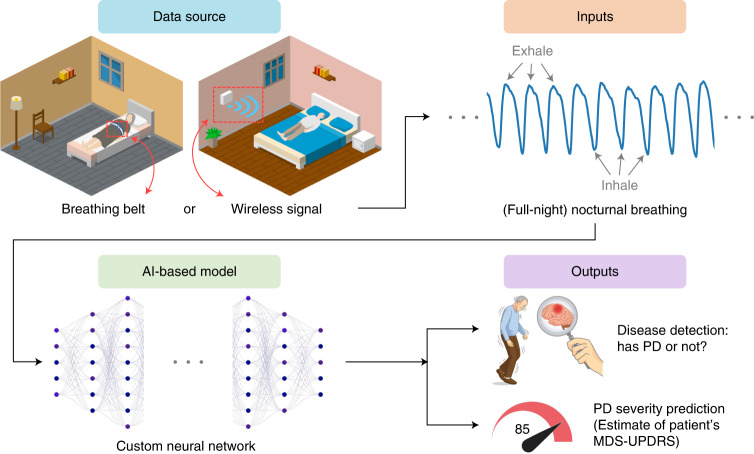
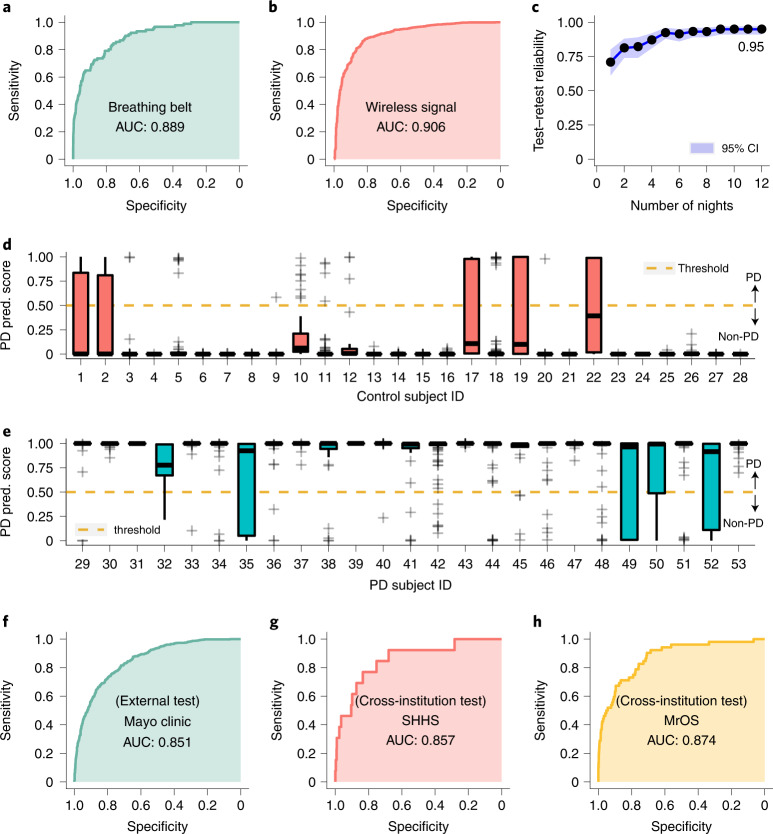
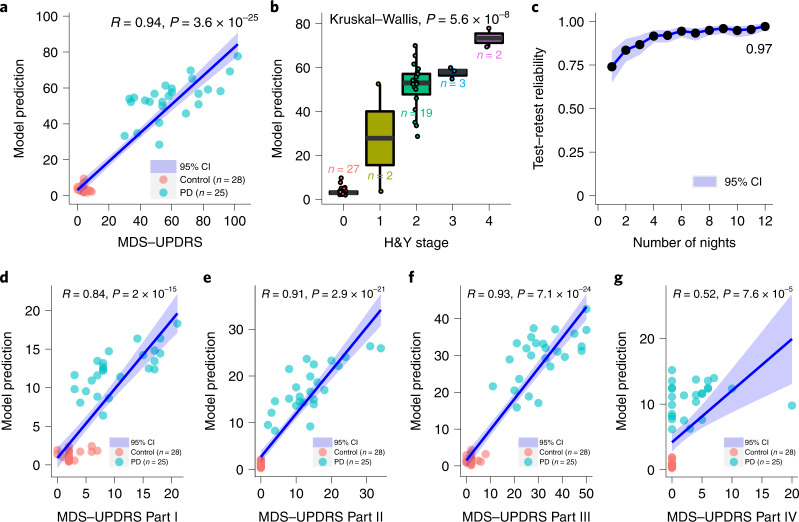
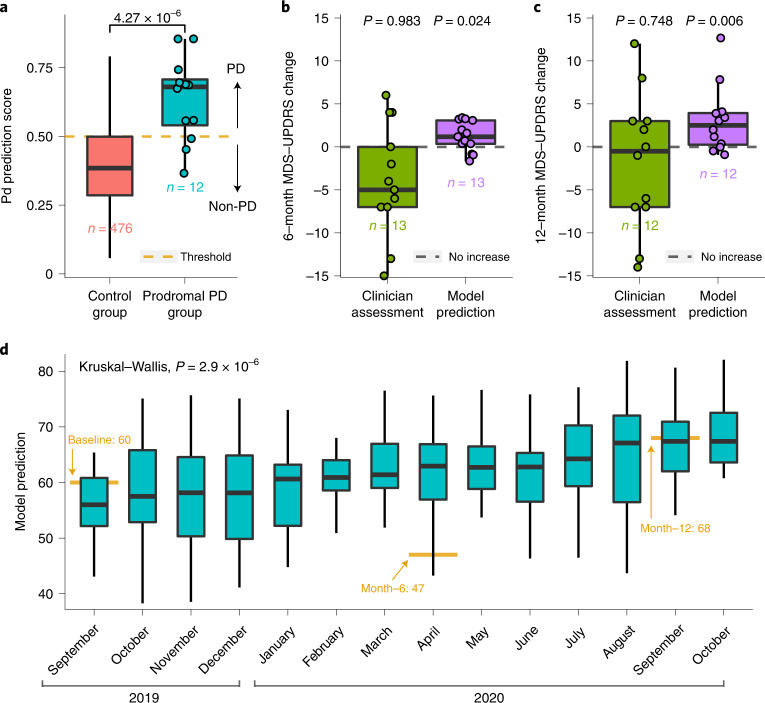
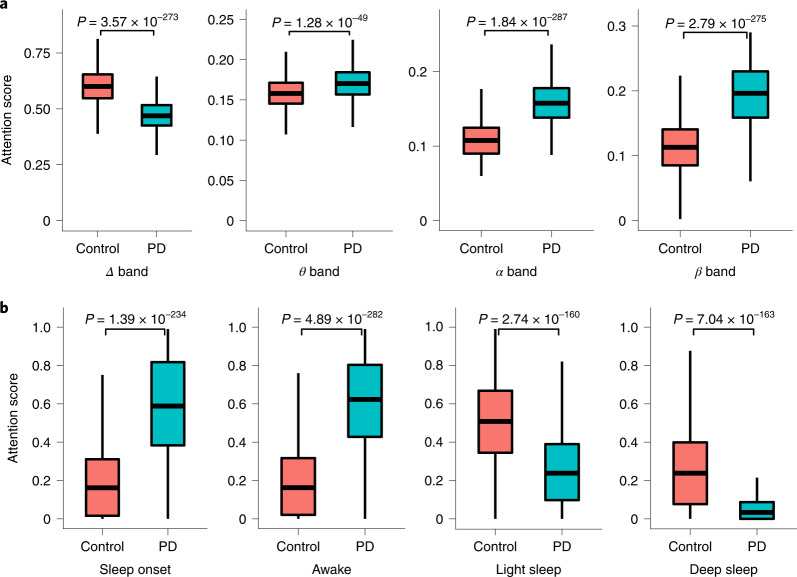
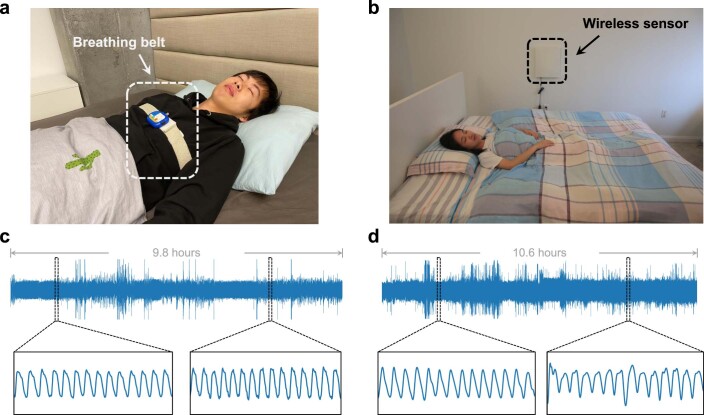
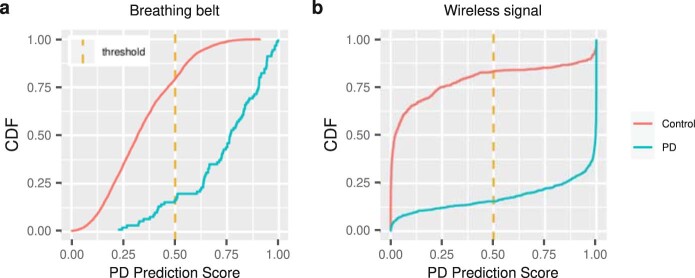
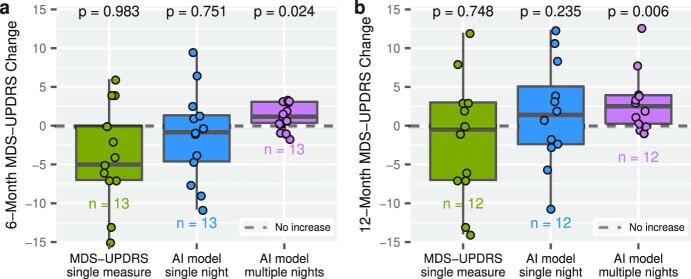
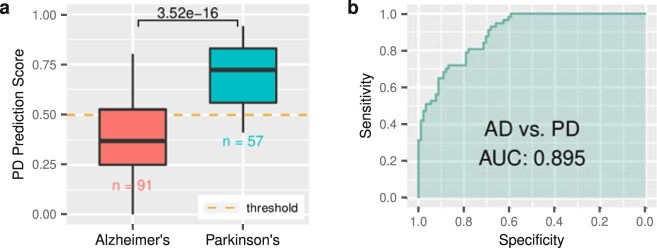
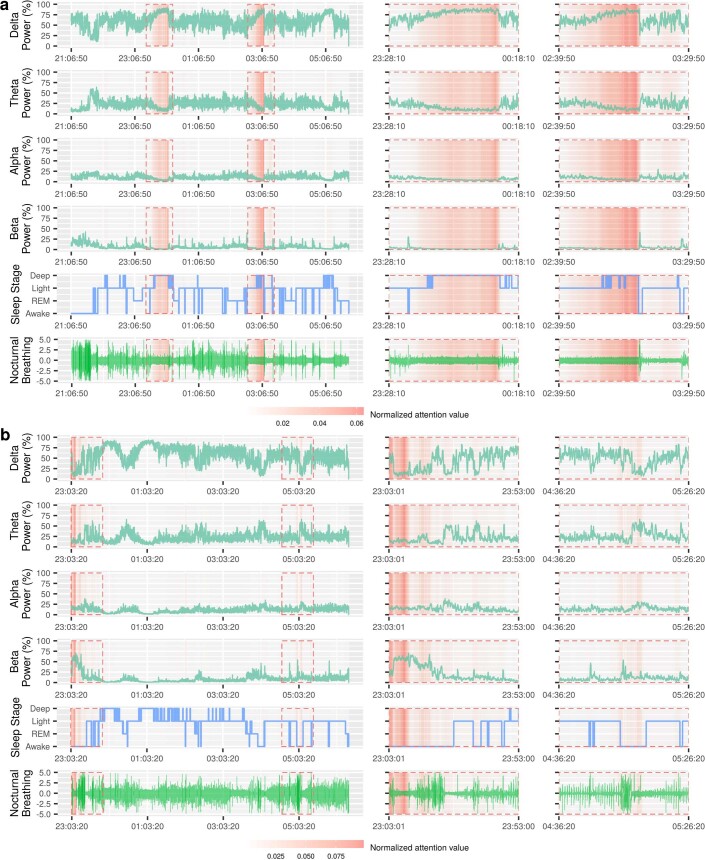
There are currently no effective biomarkers for diagnosing Parkinson’s disease (PD) or tracking its progression. Here, we developed an artificial intelligence (AI) model to detect PD and track its progression from nocturnal breathing signals. The model was evaluated on a large dataset comprising 7,671 individuals, using data from several hospitals in the United States, as well as multiple public datasets. The AI model can detect PD with an area-under-the-curve of 0.90 and 0.85 on held-out and external test sets, respectively. The AI model can also estimate PD severity and progression in accordance with the Movement Disorder Society Unified Parkinson’s Disease Rating Scale ( R = 0.94, P = 3.6 × 10 –25 ). The AI model uses an attention layer that allows for interpreting its predictions with respect to sleep and electroencephalogram. Moreover, the model can assess PD in the home setting in a touchless manner, by extracting breathing from radio waves that bounce off a person’s body during sleep. Our study demonstrates the feasibility of objective, noninvasive, at-home assessment of PD, and also provides initial evidence that this AI model may be useful for risk assessment before clinical diagnosis.
Overview
The claims and statistics of this paper haven’t been checked yet.
Free: it reads the open-access text and checks the first 5 claims that cite a source we can check. Create a free account to check every claim.
Integrity signals
Registry
Cites
Statistics
Figures
Verification
Claims the paper makes
The claims and statistics of this paper haven’t been checked yet.
Free: it reads the open-access text and checks the first 5 claims that cite a source we can check. Create a free account to check every claim.
Self-check
Percentages, sums and reported differences re-computed from the paper’s own numbers.
The self-check needs the paper’s full text.
Citations
Cites
Deep Residual Learning for Image Recognition
He, K., Zhang, X., Ren, S., & Sun, J. (2016) · 2016 IEEE Conference on Computer Vision and Pattern Recognition (CVPR) · doi:10.1109/cvpr.2016.90 · Cited by 235,474
U-Net: Convolutional Networks for Biomedical Image Segmentation
Ronneberger, O., Fischer, P., & Brox, T. (2015) · Lecture notes in computer science · doi:10.1007/978-3-319-24574-4_28 · Cited by 99,404
LeCun, Y., Bengio, Y., & Hinton, G. (2015) · Nature · doi:10.1038/nature14539 · Cited by 84,126
Welch, P. (1967) · IEEE Transactions on Audio and Electroacoustics · doi:10.1109/tau.1967.1161901 · Cited by 12,277
Parkinsonism: onset, progression, and mortality
Hoehn, M. M., & Yahr, M. D. (1967) · Neurology · doi:10.1212/wnl.17.5.427 · Cited by 12,107
A training algorithm for optimal margin classifiers
Boser, B. E., Guyon, I. M., & Vapnik, V. N. (1992) · Proceedings of the fifth annual workshop on Computational learning theory · doi:10.1145/130385.130401 · Cited by 11,992
Staging of brain pathology related to sporadic Parkinson’s disease
Braak, H., Tredici, K. D., Rüb, U., de Vos, R. A. I., Jansen Steur, E. N. H., & Braak, E. (2003) · Neurobiology of Aging · doi:10.1016/s0197-4580(02)00065-9 · Cited by 10,777
Goetz, C. G., Tilley, B. C., Shaftman, S. R., Stebbins, G. T., Fahn, S., Martinez‐Martin, P., Poewe, W., Sampaio, C., Stern, M. B., Dodel, R., et al. (2008) · Movement Disorders · doi:10.1002/mds.22340 · Cited by 7,536
Parkinson's disease: clinical features and diagnosis
Jankovic, J. (2008) · Journal of Neurology, Neurosurgery & Psychiatry · doi:10.1136/jnnp.2007.131045 · Cited by 5,720 · cited 1×
“Currently, diagnosis of PD is based on the presence of clinical motor symptoms 6 , which are estimated to develop after 50–80% of dopaminergic neurons have already degenerated 43 .”
Two-sided confidence intervals for the single proportion: comparison of seven methods
Newcombe, R. G. (1998) · Statistics in Medicine · doi:10.1002/(sici)1097-0258(19980430)17:8<857::aid-sim777>3.0.co;2-e · Cited by 5,107
Research works printed but not linked: 2
- Yang, Y., Zha, K., Chen, Y-C., Wang, H. & Katabi, D. Delving into deep imbalanced regression. In Proc. 38th International Conference on Machine Learning, Vol. 139 (Eds. Meila, M. & Zhang, T.) 11842–11851 (PMLR, 2021).
- Zhao M Learning sleep stages from radio signals: a conditional adversarial architecture Proc. 34th Int. Conf. Mach. Learn. (ICML) 2017 70 4100 4109
Cited by
The next generation of evidence-based medicine
Subbiah, V. (2023) · Nature Medicine · doi:10.1038/s41591-022-02160-z · Cited by 544
Digital health for aging populations
Chen, C., Ding, S., & Wang, J. (2023) · Nature Medicine · doi:10.1038/s41591-023-02391-8 · Cited by 491
Applied body-fluid analysis by wearable devices
Brasier, N., Wang, J., Gao, W., Sempionatto, J. R., Dincer, C., Ates, H. C., Güder, F., Olenik, S., Schauwecker, I., Schaffarczyk, D., et al. (2024) · Nature · doi:10.1038/s41586-024-08249-4 · Cited by 298
Artificial intelligence-powered electronic skin
Xu, C., Solomon, S. A., & Gao, W. (2023) · Nature Machine Intelligence · doi:10.1038/s42256-023-00760-z · Cited by 259
“For diseases such as Parkinson’s disease where no known effective biomarker is available, ML has the potential to unveil underlying correlations from the multi-dimensional data 14 .”
Big data in basic and translational cancer research
Jiang, P., Sinha, S., Aldape, K., Hannenhalli, S., Sahinalp, C., & Ruppin, E. (2022) · Nature Reviews Cancer · doi:10.1038/s41568-022-00502-0 · Cited by 254
Emerging Trends in Machine Learning: A Polymer Perspective
Martin, T. B., & Audus, D. J. (2023) · ACS Polymers Au · doi:10.1021/acspolymersau.2c00053 · Cited by 187
Forrest, I. S., Petrazzini, B. O., Duffy, Á., Park, J. K., Marquez-Luna, C., Jordan, D. M., Rocheleau, G., Cho, J. H., Rosenson, R. S., Narula, J., et al. (2023) · The Lancet · doi:10.1016/s0140-6736(22)02079-7 · Cited by 179
The neuropathobiology of multiple sclerosis
Woo, M. S., Engler, J. B., & Friese, M. A. (2024) · Nature Reviews Neuroscience · doi:10.1038/s41583-024-00823-z · Cited by 175
“Treatment of EAE mice with the ubiquitin-specific peptidase 14 (USP14) inhibitor IU1 (which enhances proteasome activity) increased BSN clearance and was neuroprotective 104 , and application of IU1-47, a chemically modified IU1 with higher potency, reduced Box 3”
Wearable movement-tracking data identify Parkinson’s disease years before clinical diagnosis
Schalkamp, A.-K., Peall, K. J., Harrison, N. A., & Sandor, C. (2023) · Nature Medicine · doi:10.1038/s41591-023-02440-2 · Cited by 168
“Previous work has already explored the use of digital gait markers for diagnosing PD 13,14,23 .”
BackgroundAI in Rehabilitation Medicine: Opportunities and Challenges
Lanotte, F., O’Brien, M. K., & Jayaraman, A. (2023) · Annals of Rehabilitation Medicine · doi:10.5535/arm.23131 · Cited by 148
A multimodal sleep foundation model for disease prediction
Thapa, R., Kjær, M. R., He, B. D., Covert, I., Moore, H. E., Hanif, U., Ganjoo, G., Westover, M. B., Jennum, P., Brink-Kjær, A., et al. (2026) · Nature Medicine · doi:10.1038/s41591-025-04133-4 · Cited by 138
Demographic bias of expert-level vision-language foundation models in medical imaging
Yang, Y., Liu, Y., Liu, X., Gulhane, A., Mastrodicasa, D., Wu, W., Wang, E. J., Sahani, D. V., & Patel, S. (2025) · Science Advances · doi:10.1126/sciadv.adq0305 · Cited by 127
Self-citationArtificial intelligence in neurology: opportunities, challenges, and policy implications
Voigtlaender, S., Pawelczyk, J., Geiger, M., Vaios, E., Karschnia, P., Cudkowicz, M., Dietrich, J., Haraldsen, I., Feigin, V. L., Owolabi, M. O., et al. (2024) · Journal of Neurology · doi:10.1007/s00415-024-12220-8 · Cited by 127
Explainable artificial intelligence to diagnose early Parkinson’s disease via voice analysis
Shen, M., Mortezaagha, P., & Rahgozar, A. (2025) · Scientific Reports · doi:10.1038/s41598-025-96575-6 · Cited by 121
Liu, Y., Zhang, G., Tarolli, C. G., Hristov, R., Jensen-Roberts, S., Waddell, E. M., Myers, T. L., Pawlik, M. E., Soto, J. M., Wilson, R. M., et al. (2022) · Science Translational Medicine · doi:10.1126/scitranslmed.adc9669 · Cited by 115
Self-citationCalderone, A., Latella, D., Bonanno, M., Quartarone, A., Mojdehdehbaher, S., Celesti, A., & Calabrò, R. S. (2024) · Biomedicines · doi:10.3390/biomedicines12102415 · Cited by 111
SensorLM: Learning the Language of Wearable Sensors
Zhang, Y., Ayush, K., Qiao, S., Heydari, A. A., Narayanswamy, G., Xu, M. A., Metwally, A. A., Xu, S., Garrison, J., Xu, X., et al. (2025) · neural information processing systems · doi:10.52202/085713-1559 · Cited by 109
Self-citationDigital biomarkers for precision diagnosis and monitoring in Parkinson’s disease
Sun, Y.-M., Wang, Z.-Y., Liang, Y.-Y., Hao, C.-W., & Shi, C.-H. (2024) · npj Digital Medicine · doi:10.1038/s41746-024-01217-2 · Cited by 103
Practical AI application in psychiatry: historical review and future directions
Sun, J., Lu, T., Shao, X., Han, Y., Xia, Y., Zheng, Y., Wang, Y., Li, X., Ravindran, A. V., Fan, L., et al. (2025) · Molecular Psychiatry · doi:10.1038/s41380-025-03072-3 · Cited by 100
Predicting patients with Parkinson's disease using Machine Learning and ensemble voting technique
Saleh, S., Cherradi, B., Gannour, O. E., Hamida, S., & Bouattane, O. (2023) · Multimedia Tools and Applications · doi:10.1007/s11042-023-16881-x · Cited by 99
Experimental models of Parkinson's disease: Challenges and Opportunities
Lal, R., Singh, A., watts, S., & Chopra, K. (2024) · European Journal of Pharmacology · doi:10.1016/j.ejphar.2024.176819 · Cited by 95
Parkinson’s Disease is Predominantly a Genetic Disease
Lim, S., & Klein, C. (2024) · Journal of Parkinson s Disease · doi:10.3233/jpd-230376 · Cited by 90
Artificial intelligence in Parkinson's disease: Early detection and diagnostic advancements
Reddy, A. P., Reddy, R. P., Roghani, A. K., Garcia, R. I., Khemka, S., Pattoor, V., Jacob, M., Reddy, P. H., & Sehar, U. (2024) · Ageing Research Reviews · doi:10.1016/j.arr.2024.102410 · Cited by 89
Butler, P. M., Yang, J. F., Brown, R. Z., Hobbs, M., Becker, A., Penalver-Andres, J. A., Syz, P., Muller, S., Cosne, G., Juraver, A., et al. (2025) · Nature Medicine · doi:10.1038/s41591-024-03475-9 · Cited by 86
Shcherbak, A., Kovalenko, E., & Somov, A. (2023) · IEEE Transactions on Instrumentation and Measurement · doi:10.1109/tim.2023.3284944 · Cited by 81
Alzheimer's disease digital biomarkers multidimensional landscape and AI model scoping review
Qi, W., Zhu, X., Wang, B., Shi, Y., Dong, C., Shen, S., Li, J., Zhang, K., He, Y., Zhao, M., et al. (2025) · npj Digital Medicine · doi:10.1038/s41746-025-01640-z · Cited by 78
Bösel, J., Mathur, R., Cheng, L., Varelas, M. S., Hobert, M. A., & Suárez, J. I. (2025) · Neurological Research and Practice · doi:10.1186/s42466-025-00367-2 · Cited by 68
SimPer: Simple Self-Supervised Learning of Periodic TargetsPreprint
Yang, Y., Liu, X., Wu, J., Borac, S., Katabi, D., Poh, M., & McDuff, D. (2022) · arXiv (Cornell University) · doi:10.48550/arxiv.2210.03115 · Cited by 64
Self-citationApplying AI to Structured Real-World Data for Pharmacovigilance Purposes: Scoping Review
Dimitsaki, S., Natsiavas, P., & Jaulent, M. (2024) · Journal of Medical Internet Research · doi:10.2196/57824 · Cited by 65
Exhaled Breath Analysis: From Laboratory Test to Wearable Sensing
Heng, W., Yin, S., Chen, Y., & Gao, W. (2024) · IEEE Reviews in Biomedical Engineering · doi:10.1109/rbme.2024.3481360 · Cited by 57
Self-citationAlsobhi, M., Sachdev, H. S., Chevidikunnan, M. F., Basuodan, R., K U, D. K., & Khan, F. (2022) · International Journal of Environmental Research and Public Health · doi:10.3390/ijerph192315919 · Cited by 53
An Apple a Day to Keep the Parkinson's Disease Doctor Away?
Bloem, B. R., Post, E., & Hall, D. A. (2023) · Annals of Neurology · doi:10.1002/ana.26612 · Cited by 53
Generalizable electroencephalographic classification of Parkinson's disease using deep learning
Sugden, R. J., & Diamandis, P. (2023) · Informatics in Medicine Unlocked · doi:10.1016/j.imu.2023.101352 · Cited by 52
Vitazkova, D., Kosnacova, H., Turonova, D., Foltan, E., Jagelka, M., Berki, M., Micjan, M., Kokavec, O., Gerhat, F., & Vavrinský, E. (2025) · Biosensors · doi:10.3390/bios15020117 · Cited by 53
Towards intelligent and miniaturized drug delivery devices
Wei, X., Buse, J. B., Chen, H., Desai, T. A., Stevens, M. M., Traverso, G., Langer, R., & Gu, Z. (2026) · Nature · doi:10.1038/s41586-026-10221-3 · Cited by 51
Artificial intelligence and neuroscience: An update on fascinating relationships
Gopinath, N. (2022) · Process Biochemistry · doi:10.1016/j.procbio.2022.12.011 · Cited by 49
Allebawi, M. F., Dhieb, T., Néji, M., Farhat, N., Smaoui, E., Hamdani, T. M., Damak, M., Mhiri, C., Neji, B., Beyrouthy, T., et al. (2024) · IEEE Access · doi:10.1109/access.2024.3387342 · Cited by 49
Zhao, L., Lyu, R., Lei, H., Lin, Q., Zhou, A., Ma, H., Wang, J., Meng, X., Shao, C., Tang, Y., et al. (2024) · Proceedings of the ACM on Interactive Mobile Wearable and Ubiquitous Technologies · doi:10.1145/3678550 · Cited by 47
In‐Sensor Touch Analysis for Intent Recognition
Xu, Y., Yu, S., Liu, L., Lin, W., Cao, Z., Hu, Y., Duan, J., Huang, Z., Wei, C., Guo, Z., et al. (2024) · Advanced Functional Materials · doi:10.1002/adfm.202411331 · Cited by 46
Unveiling the drives behind tetracycline adsorption capacity with biochar through machine learning
Zhang, P., Liu, C., Lao, D., Nguyen, X. C., Balasubramanian, P., Qian, X., Inyinbor, A. A., Hu, X., You, Y., & Li, F. (2023) · Scientific Reports · doi:10.1038/s41598-023-38579-8 · Cited by 44
Li, Q., Ding, X., Chang, Z., Fan, X., Pan, J., Yang, Y., Li, X., Jiang, W., & Fan, K. (2023) · Advanced Healthcare Materials · doi:10.1002/adhm.202303454 · Cited by 43
Self-citationCritical review of self‐diagnosis of mental health conditions using artificial intelligence
Wimbarti, S., Kairupan, B. H. R., & Tallei, T. E. (2024) · International Journal of Mental Health Nursing · doi:10.1111/inm.13303 · Cited by 42
Aborode, A. T., Emmanuel, O. A., Onifade, I. A., Olotu, E., Otorkpa, O. J., Mehmood, M. Q., Abdulai, S. I., Jamiu, A. T., Osinuga, A., Oko, C. I., et al. (2025) · NeuroMarkers. · doi:10.1016/j.neumar.2024.100034 · Cited by 44
Clinically Informed Automated Assessment of Finger Tapping Videos in Parkinson’s Disease
Yu, T., Park, K. W., McKeown, M. J., & Wang, Z. J. (2023) · Sensors · doi:10.3390/s23229149 · Cited by 41
A Review and Tutorial on Machine Learning-Enabled Radar-Based Biomedical Monitoring
Krauss, D., Engel, L., Ott, T., Bräunig, J., Richer, R., Gambietz, M., Albrecht, N. C., Hille, E. M., Ullmann, I., Braun, M., et al. (2024) · IEEE Open Journal of Engineering in Medicine and Biology · doi:10.1109/ojemb.2024.3397208 · Cited by 42
Recent Progress in Long-Term Sleep Monitoring Technology
Yin, J., Xu, J., & Ren, T. (2023) · Biosensors · doi:10.3390/bios13030395 · Cited by 40
The Role of Artificial Intelligence in Deciphering Diet–Disease Relationships: Case Studies
Cohen, Y., Valdés‐Mas, R., & Elinav, E. (2023) · Annual Review of Nutrition · doi:10.1146/annurev-nutr-061121-090535 · Cited by 38
Barriers to translating continuous monitoring technologies for preventative medicine
Chen, J., Jastrzebska‐Perfect, P., Chai, P. R., Say, M. G., Tu, J., Gao, W. F., Halperin, F., Korzenik, J., Huang, H., Katabi, D., et al. (2025) · Nature Biomedical Engineering · doi:10.1038/s41551-025-01520-7 · Cited by 36
Self-citationIdentifying Subtle Motor Deficits Before Parkinson’s Disease is Diagnosed: What to Look for?
Maetzler, W., Mirelman, A., Pilotto, A., & Bhidayasiri, R. (2024) · Journal of Parkinson s Disease · doi:10.3233/jpd-230350 · Cited by 35
Neural network-assisted personalized handwriting analysis for Parkinson’s disease diagnostics
Chen, G., Tat, T., Zhou, Y., Duan, Z., Zhang, J., Scott, K., Zhao, X., Liu, Z., Wang, W. W., Li, S., et al. (2025) · Nature Chemical Engineering · doi:10.1038/s44286-025-00219-5 · Cited by 35
Atrial fibrillation detection via contactless radio monitoring and knowledge transfer
Yuan, Y., Chen, J., Zhang, D., Geng, R., Gong, H., Xu, G., Pu, Y., Lu, Z., Hu, Y., Zhang, D., et al. (2025) · Nature Communications · doi:10.1038/s41467-025-59482-y · Cited by 34
Self-citationThe Potential of Artificial Intelligence in Unveiling Healthcare's Future
Khanam, M., Akther, S., Mizan, I., Islam, F., Chowdhury, S. M. M. H., Ahsan, N. M., Barua, D., & Hasan, S. (2024) · Cureus · doi:10.7759/cureus.71625 · Cited by 34
Early and High‐Accuracy Diagnosis of Parkinson’s Disease: Outcomes of a New Model
Doumari, S. A., Berahmand, K., & Ebadi, M. J. (2023) · Computational and Mathematical Methods in Medicine · doi:10.1155/2023/1493676 · Cited by 35
Huang, J., Wang, H., Wu, Q., Yin, J., Zhou, H., & He, Y. (2024) · Interdisciplinary medicine · doi:10.1002/inmd.20230037 · Cited by 32
Self-citationDiabetes and Parkinson’s Disease: Understanding Shared Molecular Mechanisms
König, A., & Outeiro, T. F. (2024) · Journal of Parkinson s Disease · doi:10.3233/jpd-230104 · Cited by 34
Tracing the Flu Symptom Progression via a Smart Face Mask
Zhao, T., Xiao, X., Wu, Y., Ma, J., Li, Y., Lu, C., Shokoohi, C., Xu, Y., Zhang, X., Zhang, Y., et al. (2023) · Nano Letters · doi:10.1021/acs.nanolett.3c02492 · Cited by 32
Self-citationGuo, Y., Huo, P., Huang, S., Gou, G., & Li, Q. (2025) · Advanced Healthcare Materials · doi:10.1002/adhm.202502901 · Cited by 31
Current and Potential Applications of Ambient Artificial Intelligence
Nahar, J. K., & Kachnowski, S. (2023) · Mayo Clinic Proceedings Digital Health · doi:10.1016/j.mcpdig.2023.05.003 · Cited by 31
Hu, S., Liu, J., Wang, Y., Fu, C., Zhu, J., Yu, H. J., & Yang, C. (2025) · Nature Communications · doi:10.1038/s41467-025-62864-x · Cited by 30
Adnan, T., Abdelkader, A., Liu, Z., Hossain, E., Park, S., Islam, M. S., & Hoque, M. E. (2025) · npj Parkinson's Disease · doi:10.1038/s41531-025-00956-7 · Cited by 31
Technology for measuring freezing of gait: Current state of the art and recommendations
Mancini, M., McKay, J. L., Cockx, H., D’Cruz, N., Esper, C. D., Filtjens, B., Heimler, B., MacKinnon, C. D., Palmerini, L., Roerdink, M., et al. (2025) · Journal of Parkinson s Disease · doi:10.1177/1877718x241301065 · Cited by 29
Huang, L., Chen, Z., Yáng, Z., & Huang, W. (2024) · BME Frontiers · doi:10.34133/bmef.0062 · Cited by 29
Arora, R., & Baldi, A. (2024) · Current Pharmaceutical Design · doi:10.2174/0113816128284824240328071911 · Cited by 28
Skin Sensing and Wearable Technology as Tools to Measure Atopic Dermatitis Severity
Khan, Y. W., Todorov, A. R., Torah, R. N., Beeby, S., & Ardern‐Jones, M. R. (2024) · Skin Health and Disease · doi:10.1002/ski2.449 · Cited by 28
Ibrahim, A., Högl, B., & Stefani, A. (2024) · Clinical and Translational Neuroscience · doi:10.3390/ctn8010011 · Cited by 27
Zhao, Y., Wang, X., Peng, X., Li, Z., Nan, F., Zhou, M., Qi, J., Yang, Y., Zhao, Z., Xu, L., et al. (2024) · IEEE Journal of Selected Areas in Sensors · doi:10.1109/jsas.2024.3432714 · Cited by 27
Self-citationArtificial Intelligence as a Tool for the Diagnosis and Treatment of Neurodegenerative Diseases
Stefano, G. B. (2023) · Brain Sciences · doi:10.3390/brainsci13060938 · Cited by 26
An update on new-age potential biomarkers for Parkinson’s disease
Soni, R., Mathur, K., & Shah, J. (2024) · Ageing Research Reviews · doi:10.1016/j.arr.2024.102208 · Cited by 26
Zhao, A., Liu, Y., Yu, X., Xing, X., & Zhou, H. (2025) · Information Fusion · doi:10.1016/j.inffus.2025.103175 · Cited by 25
Self-citationArtificial Intelligence in Gerontology: Data-Driven Health Management and Precision Medicine
Zhang, S., Wu, L., Zhao, Z., Fernández, J. R., & Chen, M. (2024) · Advances in Gerontology · doi:10.1134/s2079057024600691 · Cited by 24
An innovative approach for parkinson’s disease diagnosis using CNN, NCA, and SVM
Doğan, Y. (2024) · Neural Computing and Applications · doi:10.1007/s00521-024-10299-8 · Cited by 24
The Role of Artificial Intelligence in Biomaterials Science: A Review
Martelli, A., Bellucci, D., & Cannillo, V. (2025) · Polymers · doi:10.3390/polym17192668 · Cited by 24
Deep Learning and Geriatric Mental Health
Aizenstein, H. J., Moore, R. C., Vahia, I. V., & Ciarleglio, A. (2023) · American Journal of Geriatric Psychiatry · doi:10.1016/j.jagp.2023.11.008 · Cited by 23
Valerio, J., Vera, G. D. J. A., Gomez, M. P. F., Zumaeta, J., & Alvarez-Pinzon, A. M. (2025) · Brain Sciences · doi:10.3390/brainsci15050494 · Cited by 24
Mansour, A., Eldin, M. H., & El-sherbiny, I. M. (2025) · Journal of Materials Chemistry B · doi:10.1039/d4tb02428a · Cited by 24
RF-GymCare: Introducing Respiratory Prior for RF Sensing in Gym Environments
Wang, J., Zhang, D., Zhang, B., Chen, J., Hu, Y., & Chen, Y. (2024) · Proceedings of the ACM on Interactive Mobile Wearable and Ubiquitous Technologies · doi:10.1145/3678568 · Cited by 23
Self-citationSelf-Interpretable Time Series Prediction with Counterfactual ExplanationsPreprint
Yan, J., & Wang, H. (2023) · arXiv (Cornell University) · doi:10.48550/arxiv.2306.06024 · Cited by 23
Self-citationHaloi, R., Chanda, D., Hazarika, J., & Barman, A. K. (2023) · International Journal of experimental research and review · doi:10.52756/10.52756/ijerr.2023.v31spl.014 · Cited by 23
Programmable Polymeric‐Interface for Voiceprint Biometrics
Babu, A., Raoul, E., Kassahun, G., Dufour, I., Mandal, D., & Thuau, D. (2023) · Advanced Materials Technologies · doi:10.1002/admt.202301551 · Cited by 22
Accessible, At-Home Detection of Parkinson’s Disease via Multi-Task Video Analysis
Islam, M. S., Adnan, T., Freyberg, J., Lee, S., Abdelkader, A., Pawlik, M. E., Schwartz, C., Jaffe, K., Schneider, R. B., Dorsey, R., et al. (2025) · Proceedings of the AAAI Conference on Artificial Intelligence · doi:10.1609/aaai.v39i27.35031 · Cited by 22
Self-citationAnisotropic Hydrogels with Multiscale Hierarchy Based on Ionic Conductivity for Flexible Sensors
Fu, X., Tong, H., Zhang, X., Zhang, K., Douadji, L., Kang, S., Luo, J., Pan, Z., & Lu, W. (2023) · ACS Applied Polymer Materials · doi:10.1021/acsapm.3c01626 · Cited by 22
Accelerating Parkinson’s Disease drug development with federated learning approaches
Khanna, A., Adams, J., Antoniades, C., Bloem, B. R., Carroll, C., Cedarbaum, J., Cosman, J., Dexter, D. T., Dockendorf, M. F., Edgerton, J., et al. (2024) · npj Parkinson's Disease · doi:10.1038/s41531-024-00837-5 · Cited by 21
Self-citationAir‐Permeable Textile Bioelectronics for Wearable Energy Harvesting and Active Sensing
Zhao, X., Chang, A., Li, J., Xu, J. H., Hollister, J., Che, Z., Wan, X., Yin, J., Wang, S., Lee, S., et al. (2023) · Advanced Materials Technologies · doi:10.1002/admt.202201703 · Cited by 21
Global joint information extraction convolution neural network for Parkinson’s disease diagnosis
Zhao, Y., Liu, Y., Li, J., Wang, X., Yang, R., Lian, C., Shan, P., Wang, Y., Zhan, Z., & Fu, C. (2023) · Expert Systems with Applications · doi:10.1016/j.eswa.2023.122837 · Cited by 21
Self-citationPredictive capability of rough set machine learning in tetracycline adsorption using biochar
Balasubramanian, P., Prabhakar, M. R., Liu, C., Zhang, P., & Li, F. (2024) · Carbon Research · doi:10.1007/s44246-024-00129-w · Cited by 21
Toward Personalized Medicine Approaches for Parkinson Disease Using Digital Technologies
Khanna, A., & Jones, G. B. (2023) · JMIR Formative Research · doi:10.2196/47486 · Cited by 21
LeFusion: Controllable Pathology Synthesis via Lesion-Focused Diffusion Models
Zhang, H., Liu, Y., Yang, J., Wan, S., Wang, X., Peng, W., & Fua, P. (2025) · International Conference on Learning Representations · doi:10.48550/arxiv.2403.14066 · Cited by 21
Self-citationWang, H., Zhang, M., Chu, D., Huang, X., Shi, Y., Zhao, Y. Y., Qu, H., Li, D., Xu, Z., Wang, X., et al. (2025) · Carbon · doi:10.1016/j.carbon.2025.120152 · Cited by 19
Self-citationAn end-to-end memristive hardware system based on single-spike coding for human–machine interfaces
Tiw, P. J., Yuan, R., Zhang, T., Yu, L., & Yang, Y. (2026) · Nature Electronics · doi:10.1038/s41928-025-01544-6 · Cited by 19
Self-citationAn AI-Enhanced Electronic Health Record Could Boost Primary Care Productivity
Harris, J. E. (2023) · JAMA · doi:10.1001/jama.2023.14525 · Cited by 19
Machine learning-based clustering and classification of mouse behaviors via respiratory patterns
Janke, E., Zhang, M. Y., Ryu, S. E., Bhattarai, J. P., Schreck, M. R., Moberly, A. H., Luo, W., Ding, L., Wesson, D. W., & Ma, M. (2022) · iScience · doi:10.1016/j.isci.2022.105625 · Cited by 19
Xu, W., Liang, X., Chen, L., Hong, W., & Hu, X. (2024) · Heliyon · doi:10.1016/j.heliyon.2024.e32063 · Cited by 19
Hyeon, B., Shin, J., Lee, J., Kim, W., Kwon, J., Lee, H., Kim, D., Kim, C. Y., Choi, S., Jeong, J., et al. (2025) · Nature Communications · doi:10.1038/s41467-025-63025-w · Cited by 19
Reshma, S., Chennakesavulu, M., Patil, S. S., & Lamani, M. R. (2024) · International Journal of Information Technology · doi:10.1007/s41870-024-01886-y · Cited by 19
A Review of Artificial Intelligence-Based Gait Evaluation and Rehabilitation in Parkinson’s Disease
Jadhwani, P. L., & Harjpal, P. L. (2023) · Cureus · doi:10.7759/cureus.47118 · Cited by 18
Hammoud, M., Kovalenko, E., Somov, A., Витальевна, Б. Е., & Baldycheva, A. V. (2023) · Internet of Things · doi:10.1016/j.iot.2023.100914 · Cited by 18
Han, F., Zhong, G., Zhi, S., Han, N., Jiang, Y., Tan, J., Zhong, L., Zhou, S., & Yang, B. (2024) · Diseases of the Colon & Rectum · doi:10.1097/dcr.0000000000003547 · Cited by 18
Saleh, S., Alouani, Z., Daanouni, O., Hamida, S., Cherradi, B., & Bouattane, O. (2024) · Intelligence-Based Medicine · doi:10.1016/j.ibmed.2024.100184 · Cited by 18
Umar, T. P., Jain, N., Papageorgakopoulou, M. A., Shaheen, R. S., AlSamhori, J. F., Muzzamil, M., & Kostiks, A. (2024) · Amyotrophic Lateral Sclerosis and Frontotemporal Degeneration · doi:10.1080/21678421.2024.2334836 · Cited by 17
Application of Artificial Intelligence in Medical Imaging: Current Status and Future Directions
Yang, Y., Ye, L., & Feng, Z. (2025) · iRadiology · doi:10.1002/ird3.70008 · Cited by 17
Self-citation
Metadata
- Authors
- Yang, Y., Yuan, Y., Zhang, G., Wang, H., Chen, Y.-C., Liu, Y., Tarolli, C. G., Crepeau, D., Bukartyk, J., Junna, M. R., Videnovic, A., Ellis, T. D., Lipford, M. C., Dorsey, R., & Katabi, D.
- Affiliations
- Massachusetts Institute of Technology (US)
- Rutgers, The State University of New Jersey (US)
- University of Rochester Medicine (US)
- Mayo Clinic (US)
- Boston University (US)
- Corresponding author
- Yang, Yuzhe
- Yuan, Yuan
- ORCID
- Venue
- Nature Medicine
- Published
- 2022-08-22
- Volume
- 28
- Issue
- 10
- Pages
- 2207-2215
- ISSN
- 1078-8956 (ISSN-L)
- 1546-170X
- PMC
- PMC9556299
- OpenAlex
- W4299293190
- Cited by
- 296
- References
- 57
- Citations by year
- 2026: 51 · 2025: 89 · 2024: 87 · 2023: 58 · 2022: 11
- FWCI
- 17.79
- Type
- journal article
- Language
- en
- Open access
- hybrid
- doi.org
- Licence
- cc-by
- creativecommons.org/licenses/by/4.0 (tdm)
- creativecommons.org/licenses/by/4.0 (vor)
- Locations
- Nature Medicine (publishedVersion, cc-by)
- PubMed Central (publishedVersion, cc-by)
- PubMed (publishedVersion)
- Funders
- National Science Foundation (2014391)
- Michael J. Fox Foundation for Parkinson's Research
- National Institutes of Health
- National Institute of Neurological Disorders and Stroke (P50NS108676)
- Topics
- Physical Sciences › Engineering › Biomedical Engineering › Non-Invasive Vital Sign Monitoring
- Health Sciences › Medicine › Clinical Neurology › Parkinson's Disease Mechanisms and Treatments
- Health Sciences › Health Professions › Health Information Management › Artificial Intelligence in Healthcare
- Keywords
- Parkinson's disease, disease progression, Unified Parkinson's Disease Rating Scale, attention mechanism, interpretability, home-based assessment, biomarkers, non-invasive diagnosis, risk assessment
- MeSH terms
- Artificial Intelligence, Humans, Parkinson Disease, Severity of Illness Index, Sleep
About these checks
Registry, retraction, Cites and statistics results are computed, not judged, with one exception: a printed reference that no index lists is read once by a model before it counts as a citation error. Claims are extracted by a model and kept only when their quote appears verbatim in the text; each cited source is then checked, with a model’s help, for whether it says what the claim relies on. Those verdicts can be wrong — read the claim’s quote and the cited source before relying on one.
Statistics and arithmetic are recomputed, not judged.
Confidence bands are shown only for fields calibrated on our annotated test set. None is calibrated yet, so no band is shown.
What counts as a claim ›How we measure confidence ›How we check this ›
Are you an author, or do you see a problem with this page? Request a review
Data sources
Bibliographic data: Semantic Scholar, OpenAlex, Crossref.
Contains information from the Semantic Scholar Academic Graph Datasets, made available under the ODC Attribution License (ODC-BY 1.0).
Semantic Scholar’s data is described in: Kinney, R., et al. (2023). The Semantic Scholar Open Data Platform. arXiv:2301.10140.
