

Artificial intelligence-enabled detection and assessment of Parkinson’s disease using nocturnal breathing signals
Open accessThe DOI matches its Crossref record; 55 of the 57 references it cites were found in a registry or an index.
Abstract
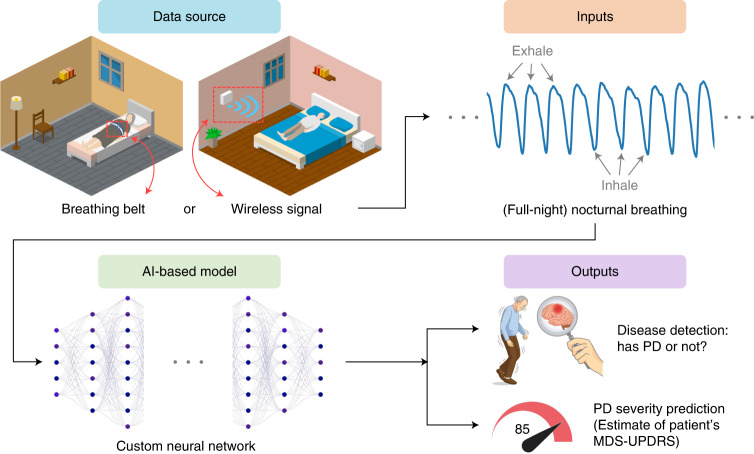
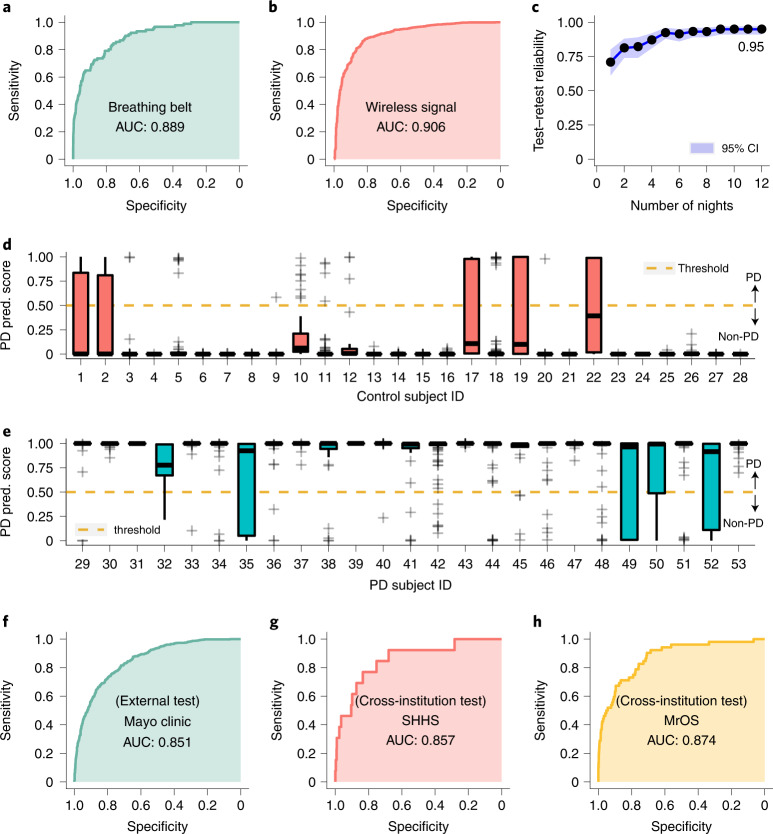
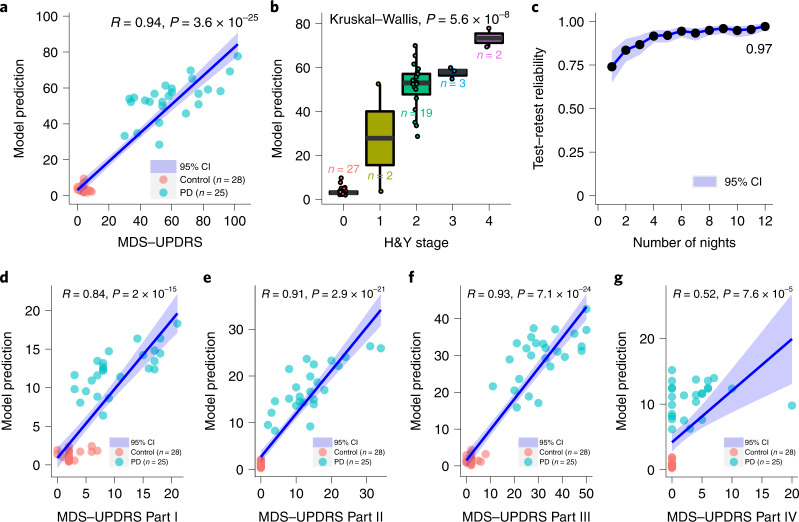
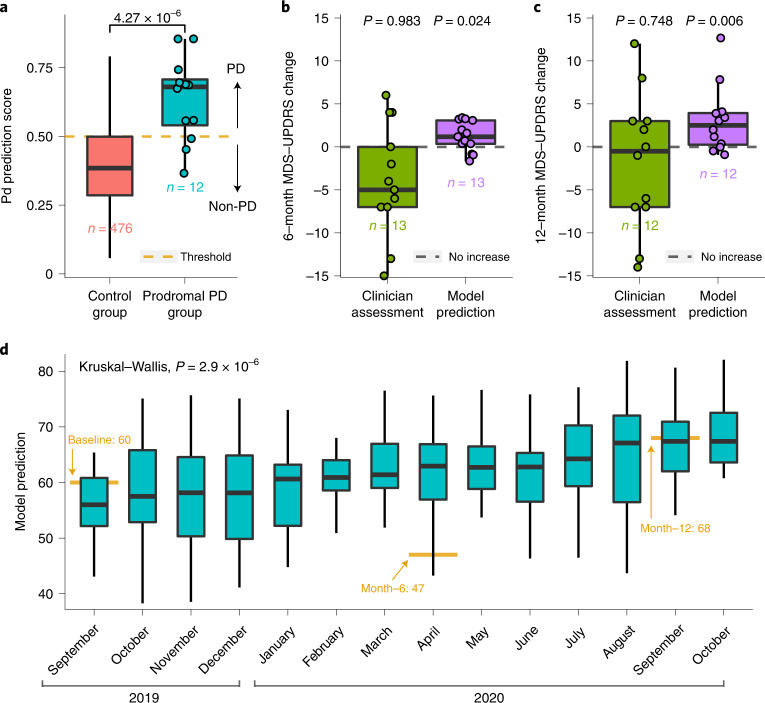
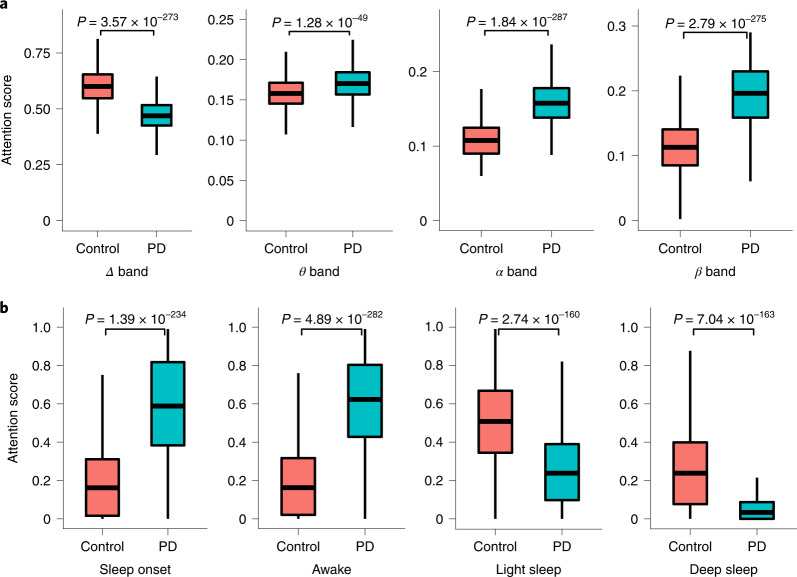
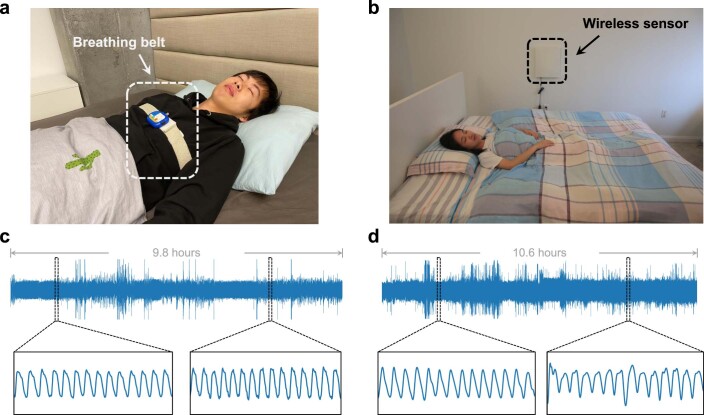
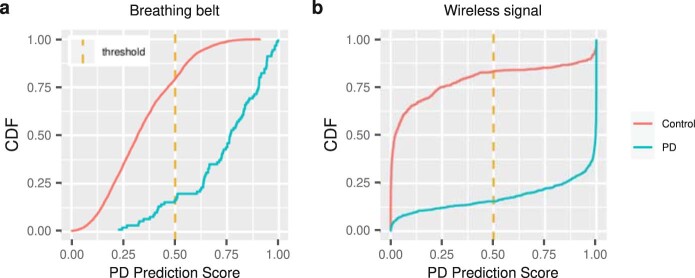
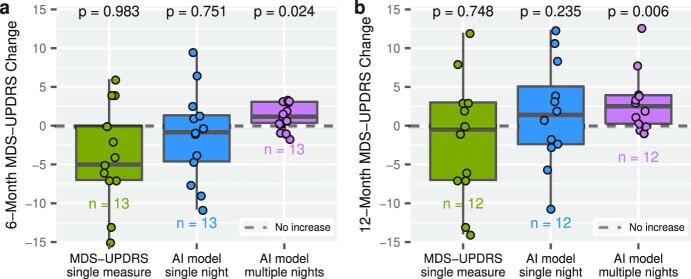
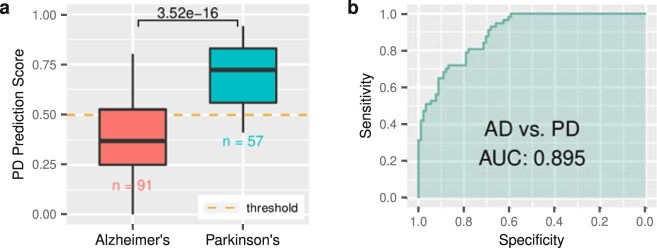
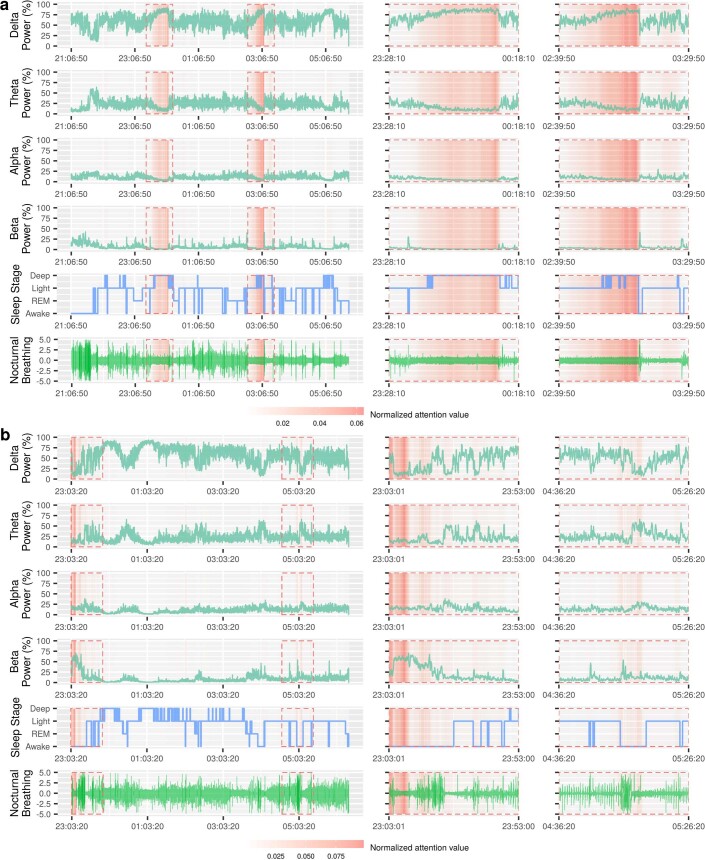
There are currently no effective biomarkers for diagnosing Parkinson’s disease (PD) or tracking its progression. Here, we developed an artificial intelligence (AI) model to detect PD and track its progression from nocturnal breathing signals. The model was evaluated on a large dataset comprising 7,671 individuals, using data from several hospitals in the United States, as well as multiple public datasets. The AI model can detect PD with an area-under-the-curve of 0.90 and 0.85 on held-out and external test sets, respectively. The AI model can also estimate PD severity and progression in accordance with the Movement Disorder Society Unified Parkinson’s Disease Rating Scale ( R = 0.94, P = 3.6 × 10 –25 ). The AI model uses an attention layer that allows for interpreting its predictions with respect to sleep and electroencephalogram. Moreover, the model can assess PD in the home setting in a touchless manner, by extracting breathing from radio waves that bounce off a person’s body during sleep. Our study demonstrates the feasibility of objective, noninvasive, at-home assessment of PD, and also provides initial evidence that this AI model may be useful for risk assessment before clinical diagnosis.
Overview
The claims and statistics of this paper haven’t been checked yet.
Free: it reads the open-access text and checks the first 5 claims that cite a source we can check. Create a free account to check every claim.
Integrity signals
Registry
Cites
Statistics
Figures
Verification
Claims the paper makes
The claims and statistics of this paper haven’t been checked yet.
Free: it reads the open-access text and checks the first 5 claims that cite a source we can check. Create a free account to check every claim.
Self-check
Percentages, sums and reported differences re-computed from the paper’s own numbers.
The self-check needs the paper’s full text.
Citations
Cites
Deep Residual Learning for Image Recognition
He, K., Zhang, X., Ren, S., & Sun, J. (2016) · 2016 IEEE Conference on Computer Vision and Pattern Recognition (CVPR) · doi:10.1109/cvpr.2016.90 · Cited by 235,474
U-Net: Convolutional Networks for Biomedical Image Segmentation
Ronneberger, O., Fischer, P., & Brox, T. (2015) · Lecture notes in computer science · doi:10.1007/978-3-319-24574-4_28 · Cited by 99,404
LeCun, Y., Bengio, Y., & Hinton, G. (2015) · Nature · doi:10.1038/nature14539 · Cited by 84,126
Welch, P. (1967) · IEEE Transactions on Audio and Electroacoustics · doi:10.1109/tau.1967.1161901 · Cited by 12,277
Parkinsonism: onset, progression, and mortality
Hoehn, M. M., & Yahr, M. D. (1967) · Neurology · doi:10.1212/wnl.17.5.427 · Cited by 12,107
A training algorithm for optimal margin classifiers
Boser, B. E., Guyon, I. M., & Vapnik, V. N. (1992) · Proceedings of the fifth annual workshop on Computational learning theory · doi:10.1145/130385.130401 · Cited by 11,992
Staging of brain pathology related to sporadic Parkinson’s disease
Braak, H., Tredici, K. D., Rüb, U., de Vos, R. A. I., Jansen Steur, E. N. H., & Braak, E. (2003) · Neurobiology of Aging · doi:10.1016/s0197-4580(02)00065-9 · Cited by 10,777
Goetz, C. G., Tilley, B. C., Shaftman, S. R., Stebbins, G. T., Fahn, S., Martinez‐Martin, P., Poewe, W., Sampaio, C., Stern, M. B., Dodel, R., et al. (2008) · Movement Disorders · doi:10.1002/mds.22340 · Cited by 7,536
Parkinson's disease: clinical features and diagnosis
Jankovic, J. (2008) · Journal of Neurology, Neurosurgery & Psychiatry · doi:10.1136/jnnp.2007.131045 · Cited by 5,720 · cited 1×
“Currently, diagnosis of PD is based on the presence of clinical motor symptoms 6 , which are estimated to develop after 50–80% of dopaminergic neurons have already degenerated 43 .”
Two-sided confidence intervals for the single proportion: comparison of seven methods
Newcombe, R. G. (1998) · Statistics in Medicine · doi:10.1002/(sici)1097-0258(19980430)17:8<857::aid-sim777>3.0.co;2-e · Cited by 5,107
Overdependence on degraded gist memory in Alzheimer's disease.
Gallo, D. A., Shahid, K. R., Olson, M. A., Solomon, T. M., Schacter, D. L., & Budson, A. E. (2006) · Neuropsychology · doi:10.1037/0894-4105.20.6.625 · Cited by 4,732
What is a support vector machine?
Noble, W. S. (2006) · Nature Biotechnology · doi:10.1038/nbt1206-1565 · Cited by 4,301
Adams, J. L., Dinesh, K., Xiong, M., Tarolli, C. G., Sharma, S., Sheth, N., Aranyosi, A. J., Zhu, W., Goldenthal, S., Biglan, K. M., et al. (2017) · Digital Biomarkers · doi:10.1159/000479018 · Cited by 3,171
Self-citationDiagnosis and Treatment of Parkinson Disease: A Review
Armstrong, M. J., & Okun, M. S. (2020) · JAMA · doi:10.1001/jama.2019.22360 · Cited by 2,924
The Emerging Evidence of the Parkinson Pandemic
Dorsey, E. R., Sherer, T., Okun, M. S., & Bloem, B. R. (2018) · Journal of Parkinson’s Disease · doi:10.3233/jpd-181474 · Cited by 1,977
Parkinson, J. (2002) · The Journal of Neuropsychiatry and Clinical Neurosciences · doi:10.1176/jnp.14.2.223 · Cited by 1,628
The Sleep Heart Health Study: Design, Rationale, and Methods
(1997) · Sleep · doi:10.1093/sleep/20.12.1077 · Cited by 1,331
Platt, J. C. (2000) · Advances in Large-Margin Classifiers · doi:10.7551/mitpress/1113.003.0008 · Cited by 1,156
A Basis for Analyzing Test-Retest Reliability
Guttman, L. (1945) · Psychometrika · doi:10.1007/bf02288892 · Cited by 1,122
Prevalence of Parkinson’s disease across North America
Marras, C., Beck, J. C., Bower, J. H., Roberts, E., Ritz, B., Ross, G. W., Abbott, R. D., Savica, R., Van Den Eeden, S. K., Willis, A. W., et al. (2018) · npj Parkinson's Disease · doi:10.1038/s41531-018-0058-0 · Cited by 968
Smart Homes that Monitor Breathing and Heart Rate
Adib, F., Mao, H., Kabelac, Z., Katabi, D., & Miller, R. C. (2015) · Proceedings of the 33rd Annual ACM Conference on Human Factors in Computing Systems · doi:10.1145/2702123.2702200 · Cited by 916 · cited 10×
“MIT dataset.”
BackgroundMethodInfluentialSelf-citationCSF and blood biomarkers for Parkinson's disease
Parnetti, L., Gaetani, L., Eusebi, P., Paciotti, S., Hansson, O., El-Agnaf, O., Mollenhauer, B., Blennow, K., & Calabresi, P. (2019) · The Lancet Neurology · doi:10.1016/s1474-4422(19)30024-9 · Cited by 673
Current and projected future economic burden of Parkinson’s disease in the U.S.
Yang, W., Hamilton, J. L., Kopil, C., Beck, J. C., Tanner, C. M., Albin, R. L., Ray Dorsey, E., Dahodwala, N., Cintina, I., Hogan, P., et al. (2020) · npj Parkinson's Disease · doi:10.1038/s41531-020-0117-1 · Cited by 657
Neurologist care in Parkinson disease: A utilization, outcomes, and survival study
Willis, A. W., Schootman, M., Evanoff, B. A., Perlmutter, J. S., & Racette, B. A. (2011) · Neurology · doi:10.1212/wnl.0b013e31822c9123 · Cited by 303
Hauser, R. A., Friedlander, J., Zesiewicz, T. A., Adler, C. H., Seeberger, L. C., O'Brien, C. F., Molho, E. S., & Factor, S. A. (2000) · Clinical Neuropharmacology · doi:10.1097/00002826-200003000-00003 · Cited by 300
Simple Recurrent Units for Highly Parallelizable Recurrence
Lei, T., Zhang, Y., Wang, S. I., Dai, H., & Artzi, Y. (2018) · Proceedings of the 2018 Conference on Empirical Methods in Natural Language Processing · doi:10.18653/v1/d18-1477 · Cited by 289
Slowing of EEG in Parkinson's disease
Soikkeli, R., Partanen, J., Soininen, H., Pääkkönen, A., & Riekkinen, P. (1991) · Electroencephalography and Clinical Neurophysiology · doi:10.1016/0013-4694(91)90134-p · Cited by 283
Breathing as a fundamental rhythm of brain function.
Heck, D. H., McAfee, S. S., Liu, Y., Babajani-Feremi, A., Rezaie, R., Freeman, W. J., Wheless, J. W., Papanicolaou, A. C., Ruszinkó, M., Sokolov, Y., et al. (2017) · Frontiers in Neural Circuits · doi:10.3389/fncir.2016.00115 · Cited by 272 · cited 1×
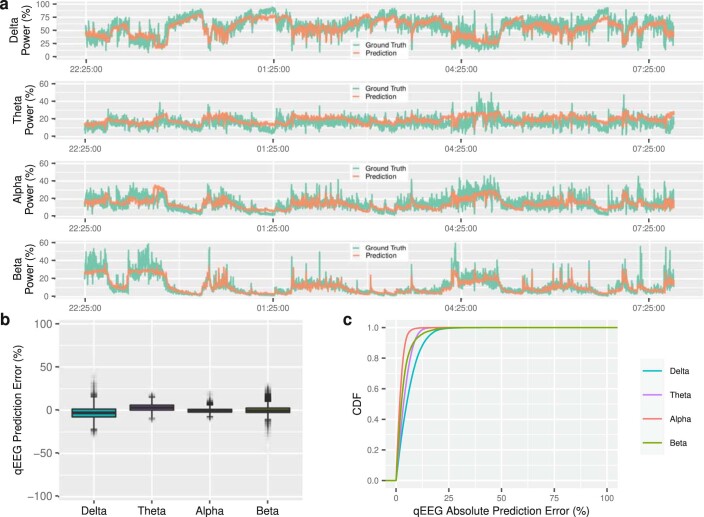
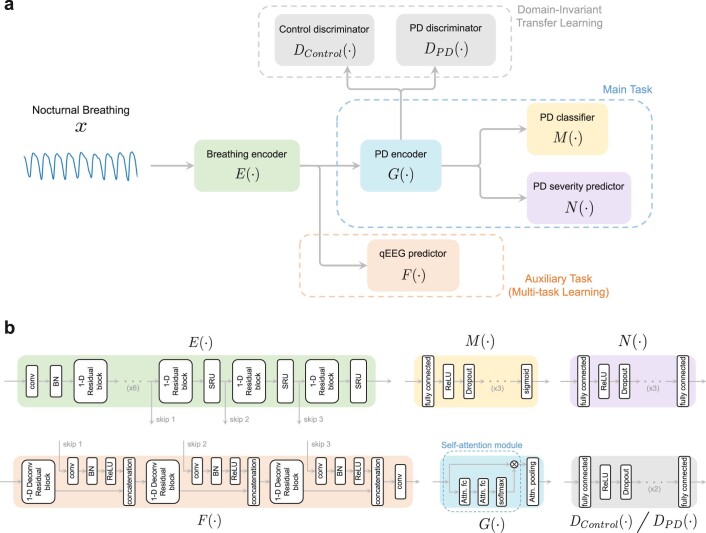
“We chose qEEG prediction as our auxiliary task because EEG is related to both PD 37,38 and breathing 47 .”
MethodSelf-citationThe ongoing pursuit of neuroprotective therapies in Parkinson disease
Athauda, D., & Foltynie, T. (2015) · Nature Reviews Neurology · doi:10.1038/nrneurol.2014.226 · Cited by 269
MultiSense: Enabling Multi-person Respiration Sensing with Commodity WiFi
Zeng, Y., Wu, D., Xiong, J., Liu, J., Liu, Z., & Zhang, D. (2020) · Proceedings of the ACM on Interactive, Mobile, Wearable and Ubiquitous Technologies · doi:10.1145/3411816 · Cited by 227
Regnault, A., Boroojerdi, B., Meunier, J., Bani, M., Morel, T., & Cano, S. (2019) · Journal of Neurology · doi:10.1007/s00415-019-09348-3 · Cited by 226
Quantitative EEG as a predictive biomarker for Parkinson disease dementia
Klassen, B. T., Hentz, J. G., Shill, H. A., Driver-Dunckley, E., Evidente, V. G. H., Sabbagh, M. N., Adler, C. H., & Caviness, J. N. (2011) · Neurology · doi:10.1212/wnl.0b013e318224af8d · Cited by 214
Blackwell, T., Yaffe, K., Ancoli‐Israel, S., Redline, S., Ensrud, K. E., Stefanick, M. L., Laffan, A., Stone, K. L., & for the Osteoporotic Fractures in Men Study Group (2011) · Journal of the American Geriatrics Society · doi:10.1111/j.1532-5415.2011.03731.x · Cited by 206
Measuring Parkinson's disease over time: The real‐world within‐subject reliability of the MDS‐UPDRS
Evers, L. J. W., Krijthe, J. H., Meinders, M. J., Bloem, B. R., & Heskes, T. M. (2019) · Movement Disorders · doi:10.1002/mds.27790 · Cited by 199
Extracting Multi-Person Respiration from Entangled RF Signals
Yue, S., He, H., Wang, H., Rahul, H., & Katabi, D. (2018) · Proceedings of the ACM on Interactive, Mobile, Wearable and Ubiquitous Technologies · doi:10.1145/3214289 · Cited by 196
Self-citationBiomarkers in Parkinson's disease: Advances and strategies
Delenclos, M., Jones, D. R., McLean, P. J., & Uitti, R. J. (2016) · Parkinsonism & Related Disorders · doi:10.1016/j.parkreldis.2015.09.048 · Cited by 188
Cerebrospinal fluid β‐glucocerebrosidase activity is reduced in parkinson's disease patients
Parnetti, L., Paciotti, S., Eusebi, P., Dardis, A., Zampieri, S., Chiasserini, D., Tasegian, A., Tambasco, N., Bembi, B., Calabresi, P., et al. (2017) · Movement Disorders · doi:10.1002/mds.27136 · Cited by 178
Parkinson’s Disease Subtypes: Critical Appraisal and Recommendations
Mestre, T., Fereshtehnejad, S.-M., Berg, D., Bohnen, N. I., Dujardin, K., Erro, R., Espay, A. J., Halliday, G. M., van Hilten, J. J., Hu, M. T., et al. (2021) · Journal of Parkinson s Disease · doi:10.3233/jpd-202472 · Cited by 161
Abnormal ventilatory control in Parkinson's disease—Further evidence for non-motor dysfunction
Seccombe, L. M., Giddings, H. L., Rogers, P. G., Corbett, A. J., Hayes, M. W., Peters, M. J., & Veitch, E. M. (2011) · Respiratory Physiology & Neurobiology · doi:10.1016/j.resp.2011.09.012 · Cited by 113
BodyCompass: Monitoring Sleep Posture with Wireless Signals
Yue, S., Yang, Y., Wang, H., Rahul, H., & Katabi, D. (2020) · Proceedings of the ACM on Interactive, Mobile, Wearable and Ubiquitous Technologies · doi:10.1145/3397311 · Cited by 112
Self-citationRespiratory Dysfunction in Parkinson'S Disease
Torsney, K., & Forsyth, D. R. (2017) · The Journal of the Royal College of Physicians of Edinburgh · doi:10.4997/jrcpe.2017.108 · Cited by 102
Brunner, H., Wetter, T. C., Hogl, B., Yassouridis, A., Trenkwalder, C., & Friess, E. (2002) · Movement Disorders · doi:10.1002/mds.10242 · Cited by 99
Depletion of ventromedullary NK-1 receptor-immunoreactive neurons in multiple system atrophy
Benarroch, E. E., Schmeichel, A. M., Low, P. A., & Parisi, J. E. (2003) · Brain · doi:10.1093/brain/awg220 · Cited by 93
Longitudinal assessment of tau and amyloid beta in cerebrospinal fluid of Parkinson disease
The Parkinson Study Group DATATOP Investigators, Zhang, J., Mattison, H. A., Liu, C., Ginghina, C., Auinger, P., McDermott, M. P., Stewart, T., Kang, U. J., Cain, K. C., et al. (2013) · Acta Neuropathologica · doi:10.1007/s00401-013-1121-x · Cited by 89
Wang, Y., Shao, W.-B., Gao, L., Lu, J., Gu, H., Sun, L., Tan, Y. L., & Zhang, Y. (2014) · PLoS ONE · doi:10.1371/journal.pone.0116123 · Cited by 87
Early occurrence of inspiratory muscle weakness in Parkinson’s disease
Baille, G., Perez, T., Devos, D., Deken, V., Defebvre, L., & Moreau, C. (2018) · PLoS ONE · doi:10.1371/journal.pone.0190400 · Cited by 84
The Neurophysiology of Sleep in Parkinson's Disease
Zahed, H., Zuzuárregui, J. R. P., Gilron, R., Denison, T., Starr, P. A., & Little, S. J. (2021) · Movement Disorders · doi:10.1002/mds.28562 · Cited by 83
Ellis, T. D., Cavanaugh, J. T., Earhart, G. M., Ford, M. P., Foreman, K. B., Thackeray, A., Thiese, M. S., & Dibble, L. E. (2016) · Parkinsonism & Related Disorders · doi:10.1016/j.parkreldis.2016.02.006 · Cited by 79
Self-citationVentilatory Dysfunction in Parkinson’s Disease
Baille, G., Jesus, A. M. D., Perez, T., Devos, D., Dujardin, K., Charley, C. M., Defebvre, L., & Moreau, C. (2016) · Journal of Parkinson s Disease · doi:10.3233/jpd-160804 · Cited by 77
Identifying the presence of Parkinson’s disease using low-frequency fluctuations in BOLD signals
Tang, Y., Li, M., Wan, C.-M., Liu, Z., Liao, W., Yan, X., Wang, X., Tang, B., & Guo, J. (2017) · Neuroscience Letters · doi:10.1016/j.neulet.2017.02.056 · Cited by 75
Budget-Based Classification of Parkinson's Disease From Resting State EEG
Railo, H., Suuronen, I., Kaasinen, V., Murtojärvi, M., Pahikkala, T., & Airola, A. (2023) · IEEE Journal of Biomedical and Health Informatics · doi:10.1109/jbhi.2023.3235040 · Cited by 75
Respiratory Function and Dysfunction in Parkinson-Type Neurodegeneration
Pokusa, M., Hajdúchová, D., Budaj, T., & Trancikova, A. K. (2020) · Physiological Research · doi:10.33549/physiolres.934405 · Cited by 34
Analysis of Sleep Macrostructure in Patients Diagnosed with Parkinson’s Disease
Naranjo, J. E. G., Alfonso, M. A., Grass-Fernández, D., Chacón, L. M. M., Ibáñez, I. P., de la Fé, Y. R., & Sánchez, A. P. (2019) · Behavioral Sciences · doi:10.3390/bs9010006 · Cited by 17
Resting state EEG as a biomarker of Parkinson’s disease: Influence of measurement conditionsPreprint
Railo, H., Suuronen, I., Kaasinen, V., et al. (2020) · bioRxiv (Cold Spring Harbor Laboratory) · doi:10.1101/2020.05.08.084343 · Cited by 17
Kieburtz, K. D., Katz, R. G., & Olanow, C. W. (2017) · Movement Disorders · doi:10.1002/mds.27220 · Cited by 13
Research works printed but not linked: 2
- Yang, Y., Zha, K., Chen, Y-C., Wang, H. & Katabi, D. Delving into deep imbalanced regression. In Proc. 38th International Conference on Machine Learning, Vol. 139 (Eds. Meila, M. & Zhang, T.) 11842–11851 (PMLR, 2021).
- Zhao M Learning sleep stages from radio signals: a conditional adversarial architecture Proc. 34th Int. Conf. Mach. Learn. (ICML) 2017 70 4100 4109
Cited by
The next generation of evidence-based medicine
Subbiah, V. (2023) · Nature Medicine · doi:10.1038/s41591-022-02160-z · Cited by 544
Digital health for aging populations
Chen, C., Ding, S., & Wang, J. (2023) · Nature Medicine · doi:10.1038/s41591-023-02391-8 · Cited by 491
Applied body-fluid analysis by wearable devices
Brasier, N., Wang, J., Gao, W., Sempionatto, J. R., Dincer, C., Ates, H. C., Güder, F., Olenik, S., Schauwecker, I., Schaffarczyk, D., et al. (2024) · Nature · doi:10.1038/s41586-024-08249-4 · Cited by 298
Artificial intelligence-powered electronic skin
Xu, C., Solomon, S. A., & Gao, W. (2023) · Nature Machine Intelligence · doi:10.1038/s42256-023-00760-z · Cited by 259
“For diseases such as Parkinson’s disease where no known effective biomarker is available, ML has the potential to unveil underlying correlations from the multi-dimensional data 14 .”
Big data in basic and translational cancer research
Jiang, P., Sinha, S., Aldape, K., Hannenhalli, S., Sahinalp, C., & Ruppin, E. (2022) · Nature Reviews Cancer · doi:10.1038/s41568-022-00502-0 · Cited by 254
Metadata
- Authors
- Yang, Y., Yuan, Y., Zhang, G., Wang, H., Chen, Y.-C., Liu, Y., Tarolli, C. G., Crepeau, D., Bukartyk, J., Junna, M. R., Videnovic, A., Ellis, T. D., Lipford, M. C., Dorsey, R., & Katabi, D.
- Affiliations
- Massachusetts Institute of Technology (US)
- Rutgers, The State University of New Jersey (US)
- University of Rochester Medicine (US)
- Mayo Clinic (US)
- Boston University (US)
- Corresponding author
- Yang, Yuzhe
- Yuan, Yuan
- ORCID
- Venue
- Nature Medicine
- Published
- 2022-08-22
- Volume
- 28
- Issue
- 10
- Pages
- 2207-2215
- ISSN
- 1078-8956 (ISSN-L)
- 1546-170X
- PMC
- PMC9556299
- OpenAlex
- W4299293190
- Cited by
- 296
- References
- 57
- Citations by year
- 2026: 51 · 2025: 89 · 2024: 87 · 2023: 58 · 2022: 11
- FWCI
- 17.79
- Type
- journal article
- Language
- en
- Open access
- hybrid
- doi.org
- Licence
- cc-by
- creativecommons.org/licenses/by/4.0 (tdm)
- creativecommons.org/licenses/by/4.0 (vor)
- Locations
- Nature Medicine (publishedVersion, cc-by)
- PubMed Central (publishedVersion, cc-by)
- PubMed (publishedVersion)
- Funders
- National Science Foundation (2014391)
- Michael J. Fox Foundation for Parkinson's Research
- National Institutes of Health
- National Institute of Neurological Disorders and Stroke (P50NS108676)
- Topics
- Physical Sciences › Engineering › Biomedical Engineering › Non-Invasive Vital Sign Monitoring
- Health Sciences › Medicine › Clinical Neurology › Parkinson's Disease Mechanisms and Treatments
- Health Sciences › Health Professions › Health Information Management › Artificial Intelligence in Healthcare
- Keywords
- Parkinson's disease, disease progression, Unified Parkinson's Disease Rating Scale, attention mechanism, interpretability, home-based assessment, biomarkers, non-invasive diagnosis, risk assessment
- MeSH terms
- Artificial Intelligence, Humans, Parkinson Disease, Severity of Illness Index, Sleep
About these checks
Registry, retraction, Cites and statistics results are computed, not judged, with one exception: a printed reference that no index lists is read once by a model before it counts as a citation error. Claims are extracted by a model and kept only when their quote appears verbatim in the text; each cited source is then checked, with a model’s help, for whether it says what the claim relies on. Those verdicts can be wrong — read the claim’s quote and the cited source before relying on one.
Statistics and arithmetic are recomputed, not judged.
Confidence bands are shown only for fields calibrated on our annotated test set. None is calibrated yet, so no band is shown.
What counts as a claim ›How we measure confidence ›How we check this ›
Are you an author, or do you see a problem with this page? Request a review
Data sources
Bibliographic data: Semantic Scholar, OpenAlex, Crossref.
Contains information from the Semantic Scholar Academic Graph Datasets, made available under the ODC Attribution License (ODC-BY 1.0).
Semantic Scholar’s data is described in: Kinney, R., et al. (2023). The Semantic Scholar Open Data Platform. arXiv:2301.10140.
