

The DOI matches its Crossref record; 52 of the 54 references it cites were found in a registry or an index.
Long-term neurologic outcomes of COVID-19
Open accessPublished version of a preprint
Abstract
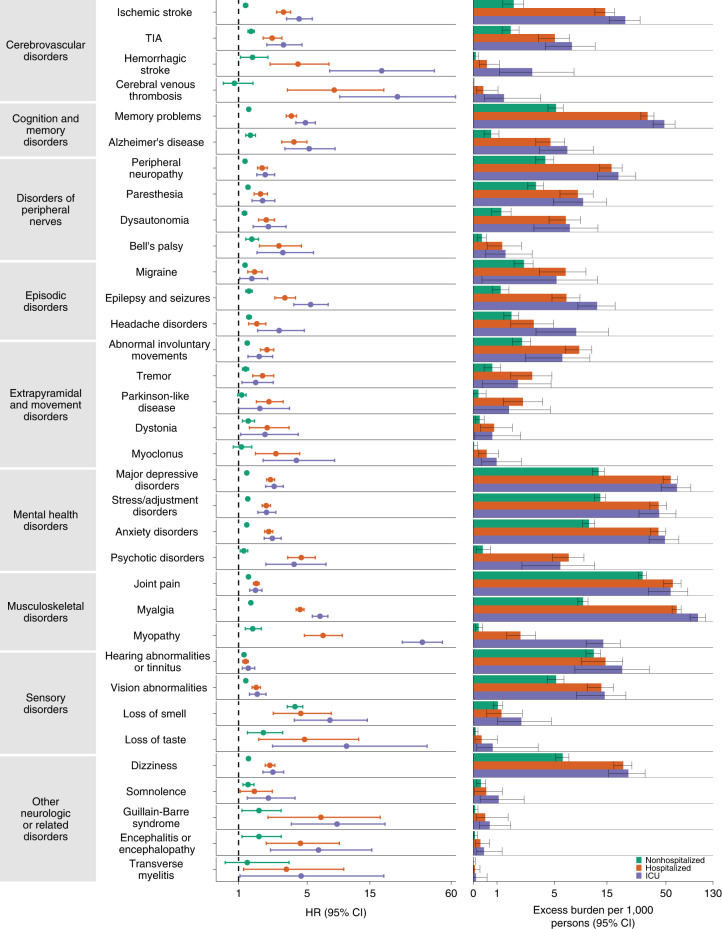
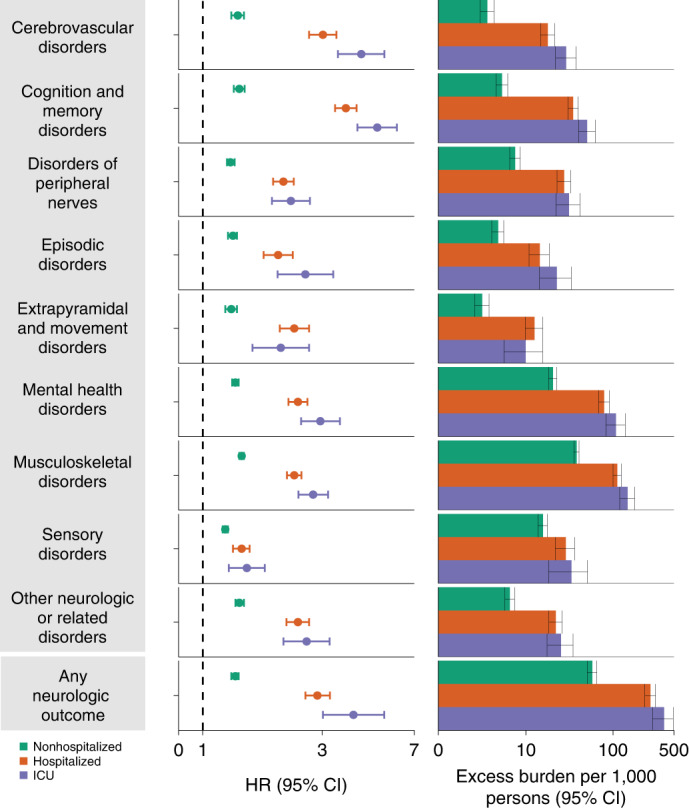
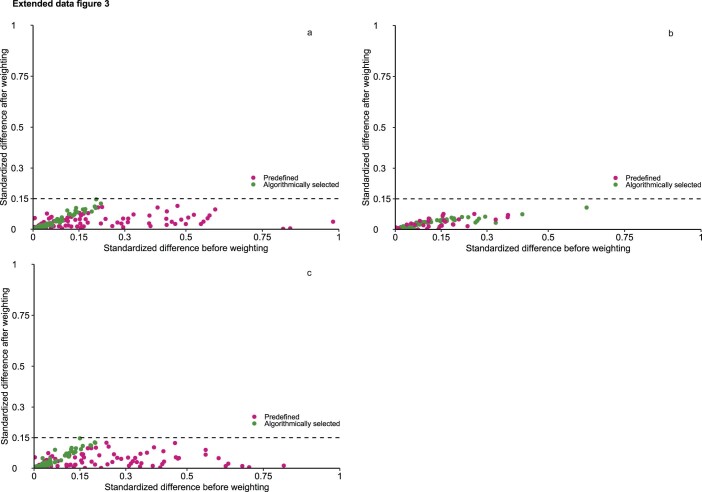
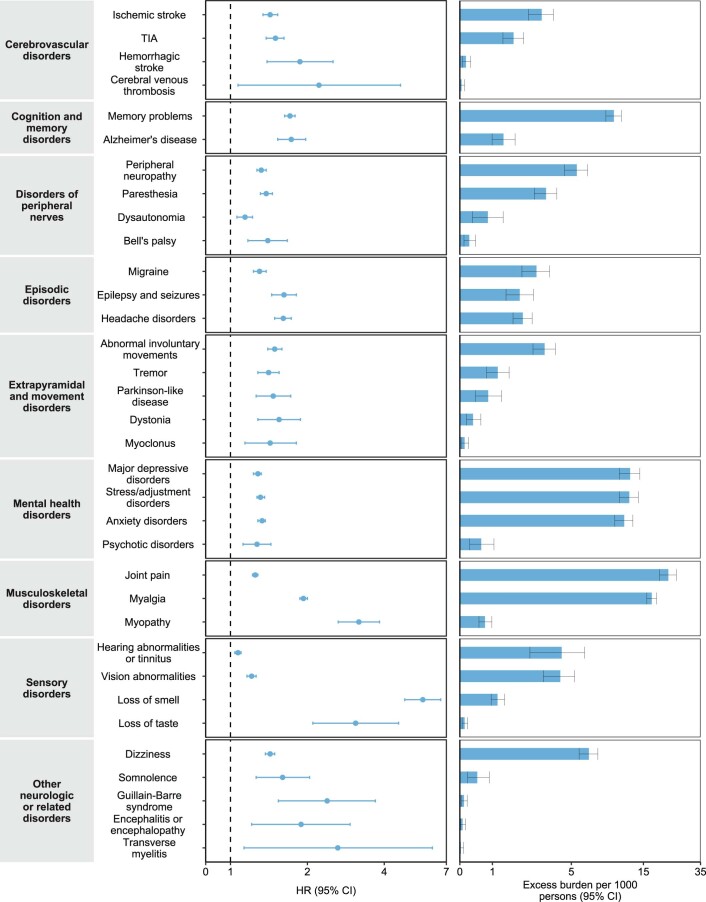
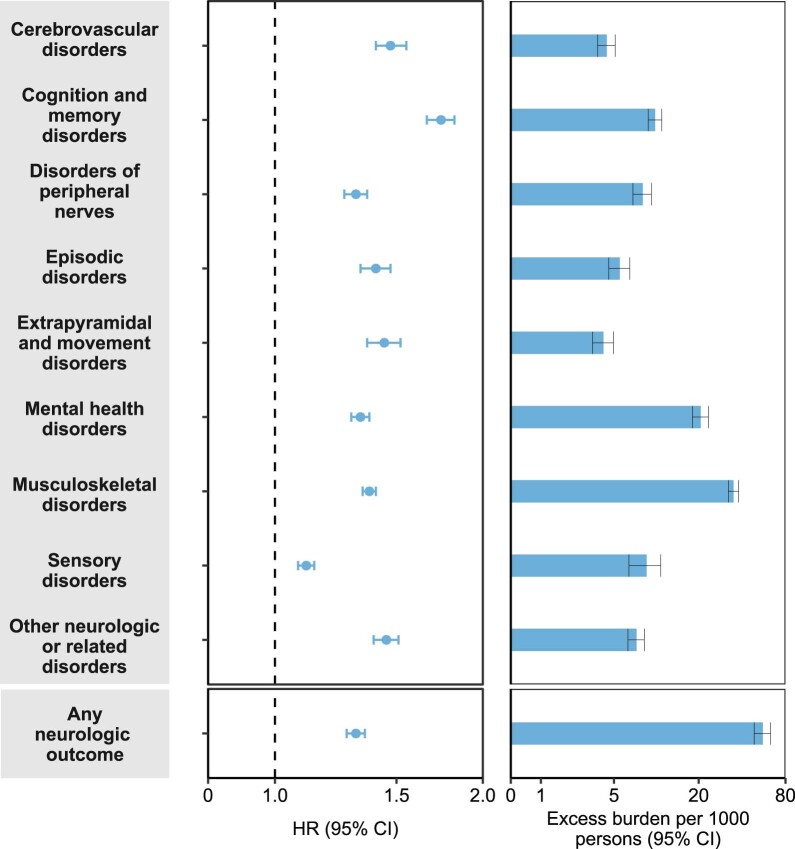
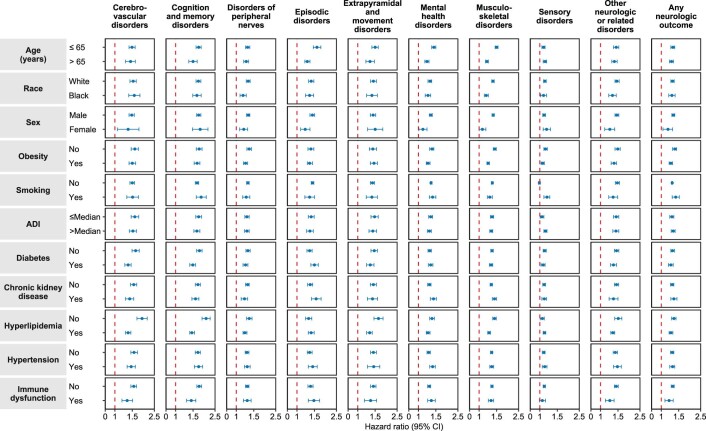
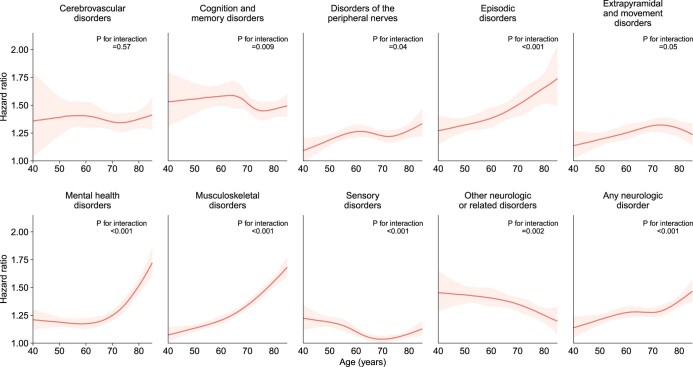
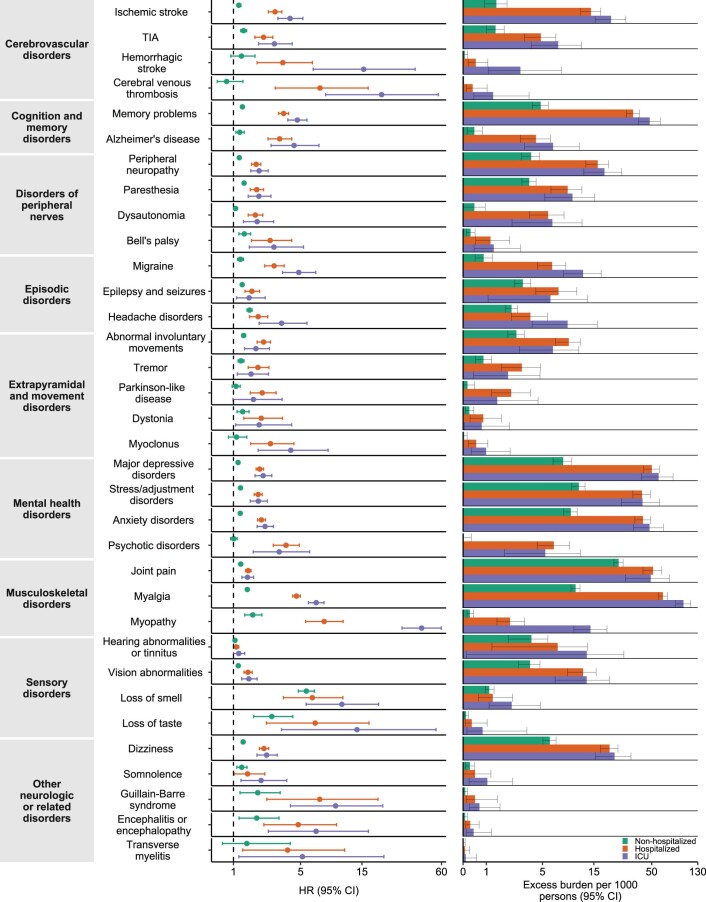
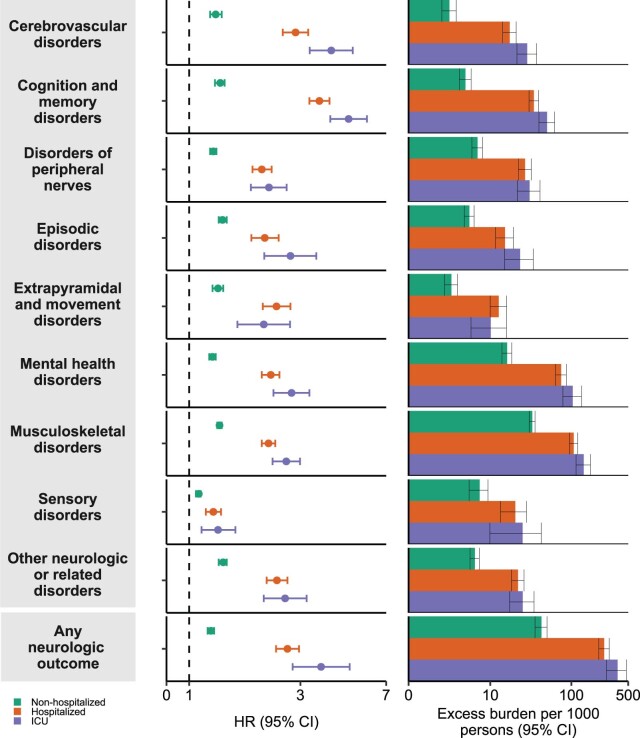
The neurologic manifestations of acute COVID-19 are well characterized, but a comprehensive evaluation of postacute neurologic sequelae at 1 year has not been undertaken. Here we use the national healthcare databases of the US Department of Veterans Affairs to build a cohort of 154,068 individuals with COVID-19, 5,638,795 contemporary controls and 5,859,621 historical controls; we use inverse probability weighting to balance the cohorts, and estimate risks and burdens of incident neurologic disorders at 12 months following acute SARS-CoV-2 infection. Our results show that in the postacute phase of COVID-19, there was increased risk of an array of incident neurologic sequelae including ischemic and hemorrhagic stroke, cognition and memory disorders, peripheral nervous system disorders, episodic disorders (for example, migraine and seizures), extrapyramidal and movement disorders, mental health disorders, musculoskeletal disorders, sensory disorders, Guillain–Barré syndrome, and encephalitis or encephalopathy. We estimated that the hazard ratio of any neurologic sequela was 1.42 (95% confidence intervals 1.38, 1.47) and burden 70.69 (95% confidence intervals 63.54, 78.01) per 1,000 persons at 12 months. The risks and burdens were elevated even in people who did not require hospitalization during acute COVID-19. Limitations include a cohort comprising mostly White males. Taken together, our results provide evidence of increased risk of long-term neurologic disorders in people who had COVID-19.
Overview
The claims and statistics of this paper haven’t been checked yet.
Run the check — free, no account needed. It reads the open-access text and checks the sources it cites.
Integrity signals
Registry
Cites
Statistics
Figures
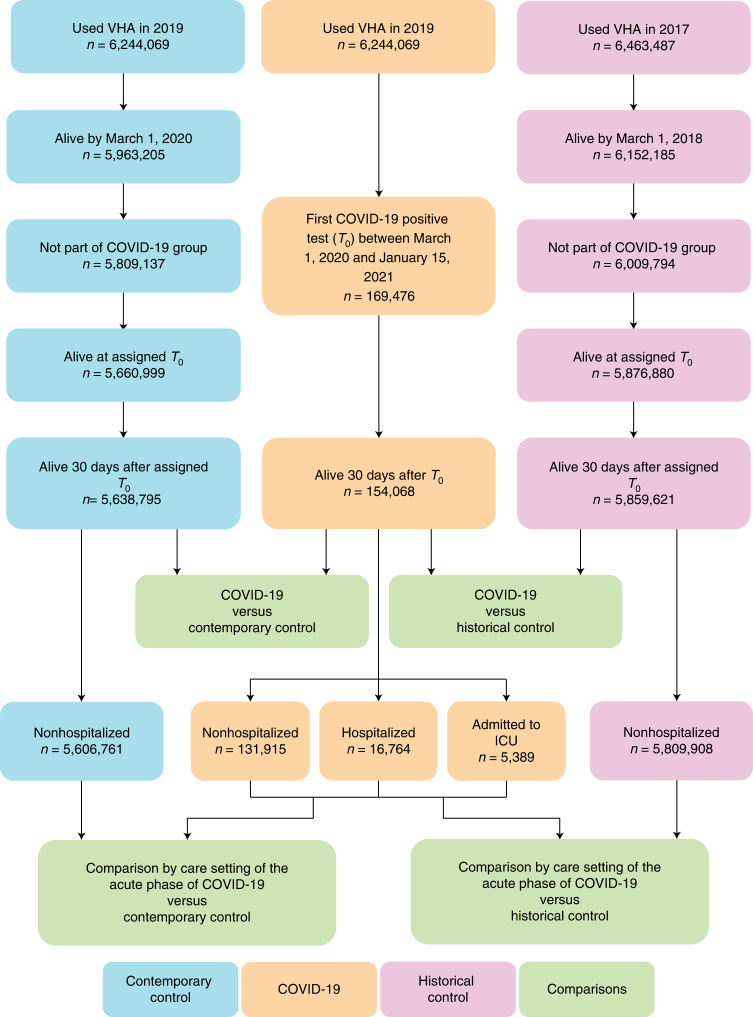
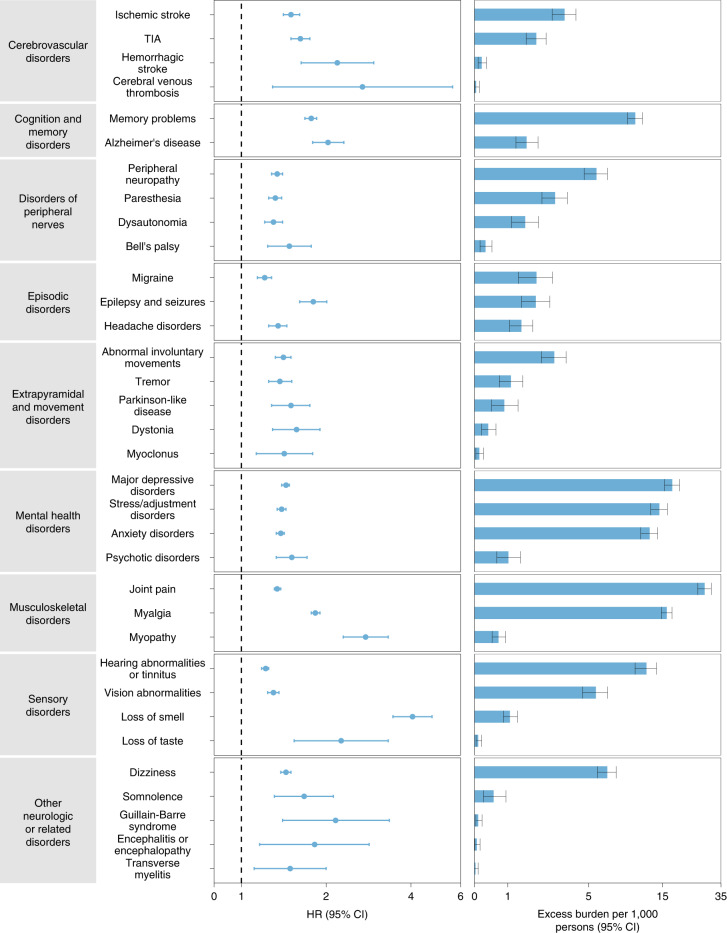
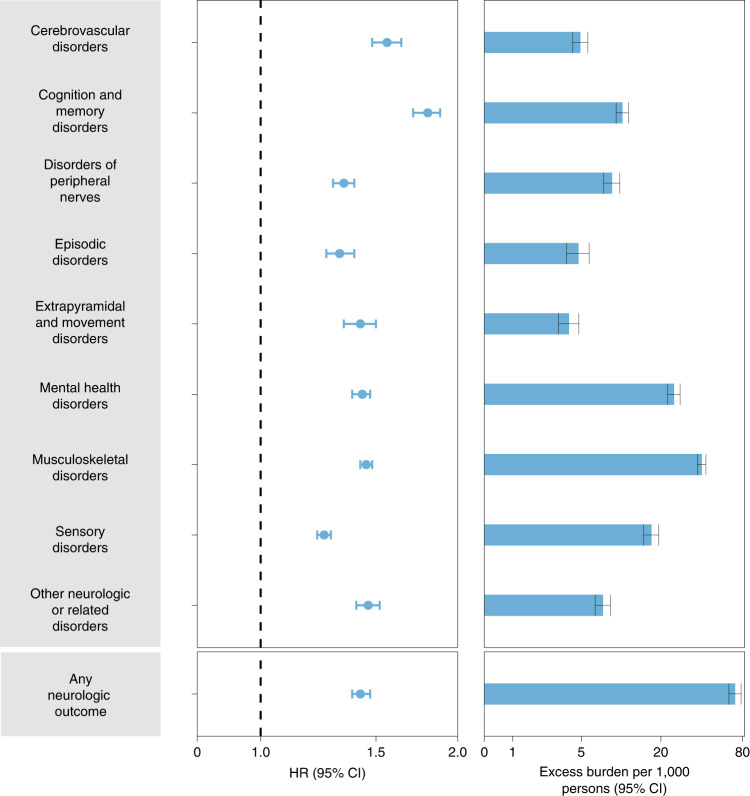
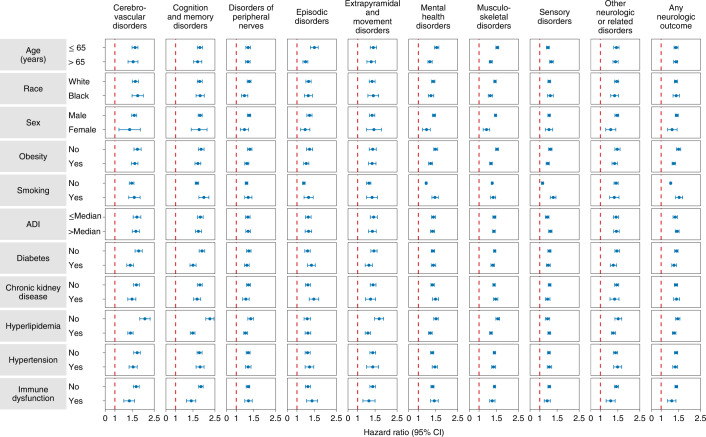
Verification
Claims the paper makes
The claims and statistics of this paper haven’t been checked yet.
Run the check — free, no account needed. It reads the open-access text and checks the sources it cites.
Claims other papers make about this one
Each is checked against this paper’s own text: does it say what the citing paper says it does?
The cited source says what the claim attributes to it.
In the citing paper
“There also appears to be an increased risk of MDD as well as other mental disorders121.”
From Comorbidity between major depressive disorder and physical diseases: a comprehensive review of epidemiology, mechanisms and management (2023) · cites this paper as [121]
Self-check
Percentages, sums and reported differences re-computed from the paper’s own numbers.
The self-check needs the paper’s full text.
Citations
Cites
1 retracted
RETRACTED: 6-month consequences of COVID-19 in patients discharged from hospital: a cohort study
Huang, C., Huang, L., Wang, Y., Li, X., Ren, L., Gu, X., Kang, L., Guo, L., Liu, M., Zhou, X., et al. (2021) · The Lancet · doi:10.1016/s0140-6736(20)32656-8 · Cited by 4,084
RetractedEndothelial cell infection and endotheliitis in COVID-19
Varga, Z., Flammer, A. J., Steiger, P., Haberecker, M., Andermatt, R., Zinkernagel, A. S., Mehra, M. R., Schuepbach, R. A., Ruschitzka, F., & Moch, H. (2020) · The Lancet · doi:10.1016/s0140-6736(20)30937-5 · Cited by 6,358
Nalbandian, A., Sehgal, K., Gupta, A., Madhavan, M. V., McGroder, C., Stevens, J. S., Cook, J. R., Nordvig, A. S., Shalev, D., Sehrawat, T. S., et al. (2021) · Nature Medicine · doi:10.1038/s41591-021-01283-z · Cited by 4,862
Persistent Symptoms in Patients After Acute COVID-19
Carfì, A., Bernabei, R., Landi, F., & for the Gemelli Against COVID-19 Post-Acute Care Study Group (2020) · JAMA · doi:10.1001/jama.2020.12603 · Cited by 4,561
Austin, P. C., & Stuart, E. A. (2015) · Statistics in Medicine · doi:10.1002/sim.6607 · Cited by 4,495
Making Neighborhood-Disadvantage Metrics Accessible — The Neighborhood Atlas
Kind, A. J. H., & Buckingham, W. R. (2018) · New England Journal of Medicine · doi:10.1056/nejmp1802313 · Cited by 3,310
Characterizing long COVID in an international cohort: 7 months of symptoms and their impact
Davis, H. E., Assaf, G. S., McCorkell, L., Wei, H., Low, R. J., Re'em, Y., Redfield, S., Austin, J. P., & Akrami, A. (2021) · eClinicalMedicine · doi:10.1016/j.eclinm.2021.101019 · Cited by 2,881
Constructing Inverse Probability Weights for Marginal Structural Models
Cole, S. R., & Hernan, M. A. (2008) · American Journal of Epidemiology · doi:10.1093/aje/kwn164 · Cited by 2,796
Taquet, M., Geddes, J. R., Husain, M., Luciano, S., & Harrison, P. J. (2021) · The Lancet Psychiatry · doi:10.1016/s2215-0366(21)00084-5 · Cited by 2,189
Long-term cardiovascular outcomes of COVID-19
Xie, Y., Xu, E., Bowe, B. C., & Al‐Aly, Z. (2022) · Nature Medicine · doi:10.1038/s41591-022-01689-3 · Cited by 2,125
Self-citation
Research works printed but not linked: 2
- Xie, Y., Xu, E., Bowe, B. & Al-Aly, Z. Long-term cardiovascular outcomes of COVID-19. Nat. Med. 28, 583–590 (2022). · DOI
- Hernán, M. A. & Robins, J. M. Causal Inference: What If (Chapman & Hall/CRC, 2020).
Cited by
Sorted by citations
Items 501–519 of 519
Wen, J., Chen, Y., Zhang, J., Tan, Z., Xia, Z., Yang, S., & Liu, H. (2026) · Medicine · doi:10.1097/md.0000000000049310
Evaluation of neuronal and immunological biomarkers in post-COVID-19 condition
Fonseca, G. D. S., Carpes, R. D. M., Pereira, M. E. P., & de Barros, C. M. (2026) · Journal of Neuroimmunology · doi:10.1016/j.jneuroim.2026.579031
Mapping 2-Year Psychiatric and Neurologic Risks After Infections Across Body Systems and Age Groups
Taquet, M., Oliver, P., Mezher, A. F., Robertson, C., Handford, C., Pollak, T. A., Ostinelli, E. G., Efthimiou, O., Cipriani, A., & Harrison, P. J. (2026) · JAMA Psychiatry · doi:10.1001/jamapsychiatry.2026.1904
Ruan, X., Yuan, Y., Wang, Y., Zhang, Y., Li, J., Liu, J., Zhang, Z., Zhang, X., Li, Z., Zhang, X., et al. (2026) · Research Square · doi:10.21203/rs.3.rs-10177729/v1
Meehan, A. D., Dzialanski, Z., Hjelmqvist, H., Julin, P., Thunberg, P., & Freund‐Levi, Y. (2026) · BMJ Open · doi:10.1136/bmjopen-2026-116689
Kelly, S. P., Liang, C., Zhang, C., Edwards, T., Graf, L., Wu, J., Begier, E. M., Judy, J., Rubino, H., Russo, L. J., et al. (2026) · Neuroepidemiology · doi:10.1159/000553572
Fernández‐Sanlés, A., Goudswaard, L. J., Williams, D. M., Raman, B., Thompson, E. J., Orini, M., Jones, S. H., Jamieson, A., Howes, L. H., Wong, A., et al. (2026) · EClinicalMedicine · doi:10.1016/j.eclinm.2026.104104
Divergent trends in Alzheimer’s disease burden: a comparative analysis of the US and G20 nations
Zou, Y., Wang, Q., Zhang, Q., & Cheng, X. (2026) · International Journal of Public Health · doi:10.3389/ijph.2026.1609525
Infectious Diseases of the Nervous System
Grill, M. F. (2026) · Springer eBooks · doi:10.1007/978-3-032-13040-2_12
Wilson, M. J., Hill, C. M., Thornton, D. M., & Stanley, N. S. (2026) · Brain and Cognition · doi:10.1016/j.bandc.2026.106474
Flint, C., Spreckelsen, C., Otto, C. A., Mikolajczyk, R., Frost, J., Claaß, L. V., Fasshauer, J. M., Scholz, M. R., Buschmann, L., Rübsamen, N., et al. (2026) · medRxiv · doi:10.64898/2026.09.09.26362611
Pu, J., Chen, W., 蒋航成, & Yang, H. (2026) · Frontiers in Neurology · doi:10.3389/fneur.2026.1844317
Singer, D., Wang, Y., La, E. M., Wu, A., Gerber, S. I., & Betts, K. A. (2026) · Human Vaccines & Immunotherapeutics · doi:10.1080/21645515.2026.2720988
Bralić, M., Silconi, F.-I., Vuletić, V., & Kovačić, S. (2026) · Journal of Clinical Medicine · doi:10.3390/jcm15187163
The paradigm shift in the use of natural products for the treatment of neuropathologies
Khalid, K., Lim, H. X., Ming, L. C., & Abdullah, A. D. I. (2026) · Studies in natural products chemistry · doi:10.1016/b978-0-443-51072-4.00004-1
Differential prolonged multiomic responses to mRNA and inactivated virus COVID-19 vaccines
Tun, H. M., Zhao, S., Chen, C., Chen, Y., Peng, Y., Lv, H., Zhu, J., Tang, Y. S., Chan, K. K., Ip, B. Y., et al. (2026) · Cellular and Molecular Life Sciences · doi:10.1007/s00018-026-06455-z
Bawne, G., & Lorenowicz, M. J. (2026) · Extracellular Vesicles and Circulating Nucleic Acids · doi:10.20517/evcna.2026.54
da Silva, A. M. P., & Santos, D. H. (2026) · Alzheimer Disease & Associated Disorders · doi:10.1097/wad.0000000000000765
Metadata
- Authors
- Xu, E., Xie, Y., & Al-Aly, Z.
- Affiliations
- VA St. Louis Health Care System (US)
- Venue
- Nature Medicine
- Published
- 2022-09-22
- Volume
- 28
- Issue
- 11
- Pages
- 2406-2415
- ISSN
- 1078-8956 (ISSN-L)
- 1546-170X
- PMC
- PMC9671811
- OpenAlex
- W4296806570
- Cited by
- 530
- References
- 54
- Citations by year
- 2026: 61 · 2025: 107 · 2024: 168 · 2023: 166 · 2022: 27
- FWCI
- 61.58
- Type
- journal article
- Language
- en
- Open access
- hybrid
- doi.org
- Locations
- Nature Medicine (publishedVersion, cc-by)
- Research Square (acceptedVersion, cc-by)
- PubMed Central (publishedVersion, cc-by)
- PubMed (publishedVersion)
- Digital Commons@Becker (Washington University School of Medicine) (submittedVersion, cc-by)
- Funders
- U.S. Department of Veterans Affairs
- American Society of Nephrology
- Topics
- Health Sciences › Medicine › Clinical Neurology › Long-Term Effects of COVID-19
- Health Sciences › Medicine › Infectious Diseases › COVID-19 Clinical Research Studies
- Health Sciences › Medicine › Infectious Diseases › Infectious Encephalopathies and Encephalitis
- Keywords
- COVID-19 pandemic, SARS-CoV-2, long-term neurologic outcome, stroke, cognitive impairment, Guillain-Barré syndrome, encephalitis, migraine, seizures, movement disorders, mental illness, peripheral nerve disorders, veterans
- MeSH terms
- COVID-19, SARS-CoV-2, Brain Diseases, Humans, Male, Nervous System Diseases, Guillain-Barre Syndrome
About these checks
Registry, retraction, Cites and statistics results are computed, not judged, with one exception: a printed reference that no index lists is read once by a model before it counts as a citation error. Claims are extracted by a model and kept only when their quote appears verbatim in the text; each cited source is then checked, with a model’s help, for whether it says what the claim relies on. Those verdicts can be wrong — read the claim’s quote and the cited source before relying on one.
Statistics and arithmetic are recomputed, not judged.
Confidence bands are shown only for fields calibrated on our annotated test set. None is calibrated yet, so no band is shown.
What counts as a claim ›How we measure confidence ›How we check this ›
Are you an author, or do you see a problem with this page? Request a review
