

Divarasib plus cetuximab in KRAS G12C-positive colorectal cancer: a phase 1b trial
Open accessThe DOI matches its Crossref record; 30 of the 37 references it cites were found in a registry or an index; 39 of the 54 sources its claims cite were checked for support.
Abstract
KRAS G12C mutation is prevalent in ~4% of colorectal cancer (CRC) and is associated with poor prognosis. Divarasib, a KRAS G12C inhibitor, has shown modest activity as a single agent in KRA S G12C -positive CRC at 400 mg. Epidermal growth factor receptor has been recognized as a major upstream activator of RAS–MAPK signaling, a proposed key mechanism of resistance to KRAS G12C inhibition in CRC. Here, we report on divarasib plus cetuximab (epidermal growth factor receptor inhibitor) in patients with KRA S G12C -positive CRC ( n = 29) from arm C of an ongoing phase 1b trial. The primary objective was to evaluate safety. Secondary objectives included preliminary antitumor activity. The safety profile of this combination was consistent with those of single-agent divarasib and cetuximab. Treatment-related adverse events led to divarasib dose reductions in four patients (13.8%); there were no treatment withdrawals. The objective response rate was 62.5% (95% confidence interval: 40.6%, 81.2%) in KRAS G12C inhibitor-naive patients ( n = 24). The median duration of response was 6.9 months. The median progression-free survival was 8.1 months (95% confidence interval: 5.5, 12.3). As an exploratory objective, we observed a decline in KRA S G12C variant allele frequency associated with response and identified acquired genomic alterations at disease progression that may be associated with resistance. The manageable safety profile and encouraging antitumor activity of divarasib plus cetuximab support the further investigation of this combination in KRA S G12C -positive CRC. ClinicalTrials.gov identifier: NCT04449874
Overview
CoChat Summary
TL;DR
In arm C of a phase 1b trial, divarasib plus cetuximab was tolerable and showed encouraging activity in KRAS G12C-positive colorectal cancer. Among KRAS G12C inhibitor-naive patients, confirmed ORR was 62.5% and median PFS was 8.1 months.
Key findings
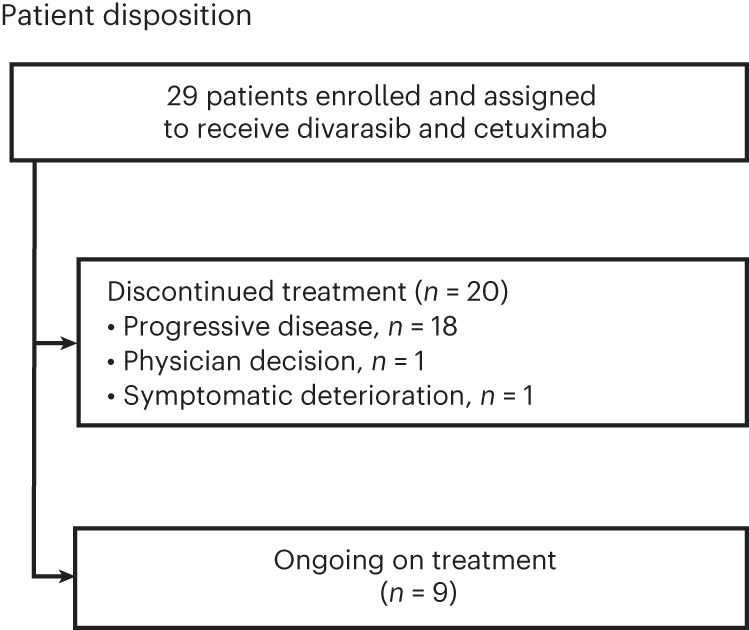
- Safety: no dose-limiting toxicities were reported; all 29 patients had at least one treatment-related adverse event (TRAE), mostly grade 1–2 (91.6%). Grade 3 TRAEs occurred in 37.9%, grade 4 in 6.9%, and no grade 5 TRAEs occurred. TRAEs led to divarasib dose reductions in 13.8% and no divarasib withdrawals.
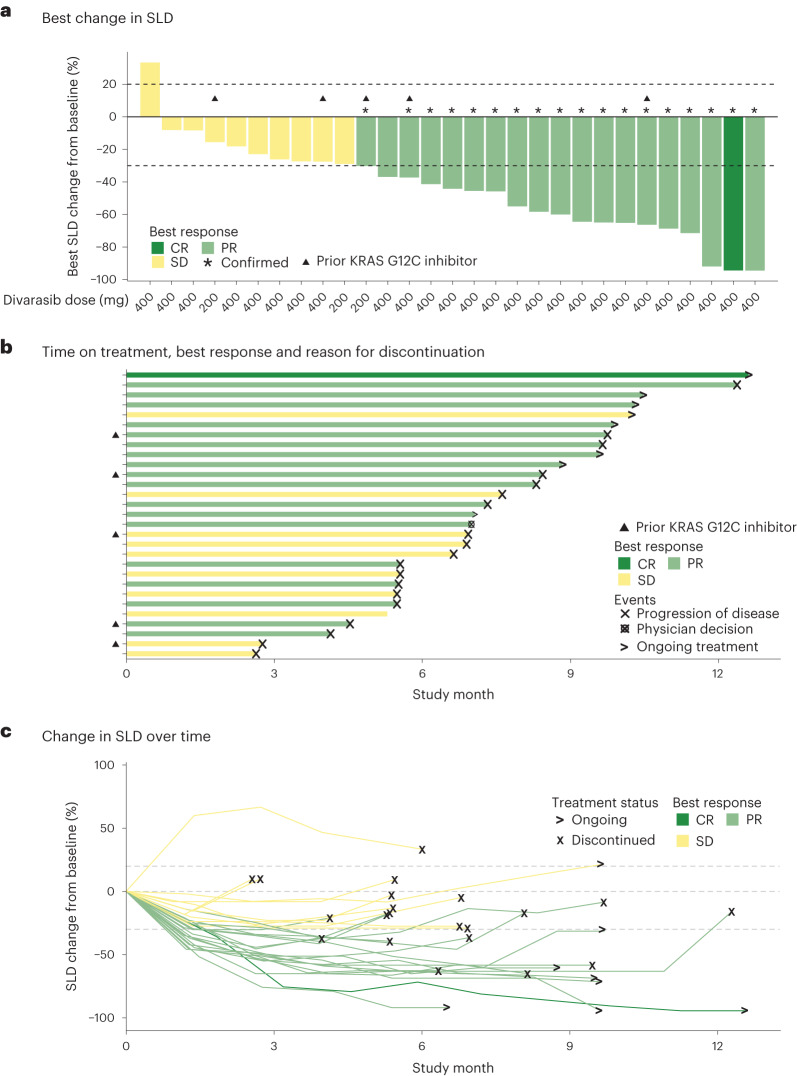
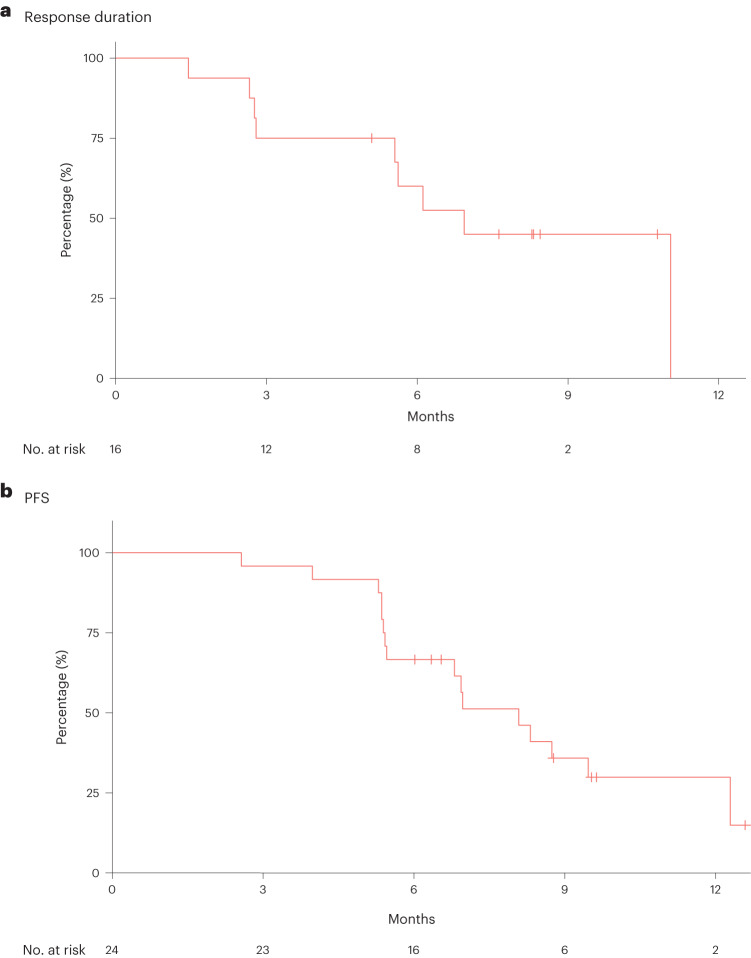
- Antitumor activity: among 24 KRAS G12C inhibitor-naive patients, confirmed ORR was 62.5% (95% CI: 40.6%, 81.2%), with 1 complete response, 15 partial responses, and 8 stable disease. Median duration of response was 6.9 months and median PFS was 8.1 months (95% CI: 5.5, 12.3). Among 5 patients with prior KRAS G12C inhibitor treatment, 3 (60.0%) had a partial response.
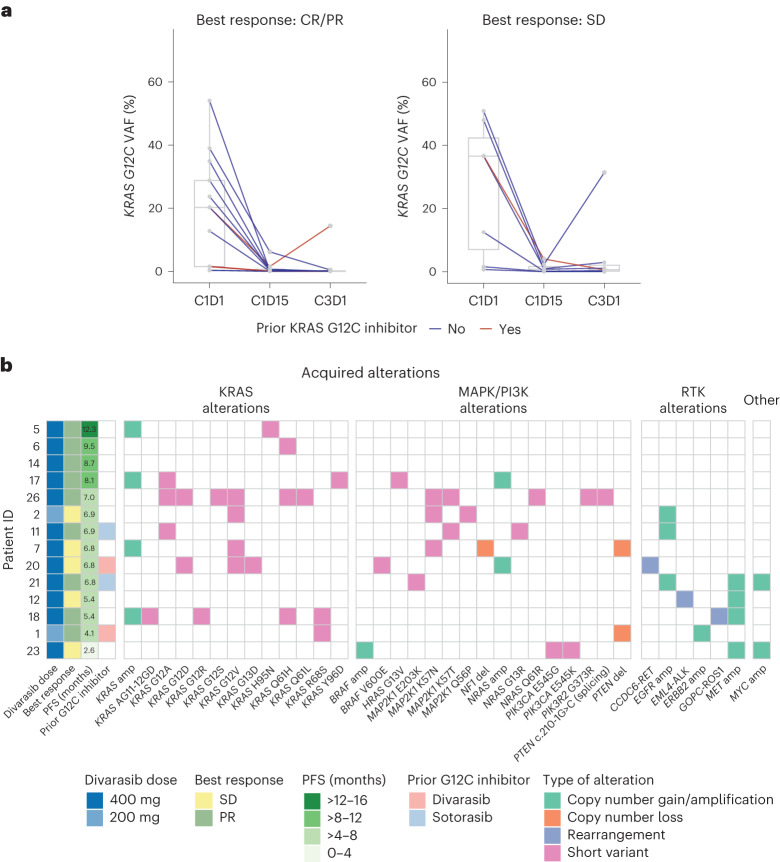
- Biomarker analysis: KRAS G12C variant allele frequency declined with response or stable disease; at C3D1, VAF was <0.5% in 17 of 22 evaluated patients (77.3%). At end of treatment, 13 of 14 profiled patients (92.9%) had at least one acquired genomic alteration that may be associated with resistance.
Methods
- Phase 1b, open-label, multicenter dose-escalation and dose-expansion study; arm C enrolled 29 patients with advanced or metastatic KRAS G12C-positive colorectal cancer from 17 sites in 10 countries between 28 July 2021 and 07 October 2022.
- Patients received oral divarasib 200 mg (n = 3) or 400 mg (n = 26) once daily plus intravenous cetuximab (400 mg/m² on C1D1, then 250 mg/m² once weekly) in 21-day cycles.
- Safety was assessed in all treated patients; preliminary antitumor activity was investigator-assessed per RECIST v1.1, with confirmed ORR summarized using Clopper–Pearson 95% CIs and time-to-event endpoints summarized by Kaplan–Meier. Exploratory ctDNA profiling was performed on longitudinal plasma samples.
Limitations
- Stated: the study was limited by the small number of patients enrolled into this arm and the lack of comparison of divarasib plus cetuximab to a standard-of-care treatment in KRAS G12C-positive colorectal cancer; cross-trial comparisons are difficult due to differences in patient populations.
- Evident: this is a single-arm, nonrandomized trial without a control group. Activity outcomes are reported for the KRAS G12C inhibitor-naive subset (n = 24), while safety includes all 29 patients.
- Evident: biomarker analyses of response and acquired resistance were exploratory and retrospective, with resistance profiling based on 14 patients who had end-of-treatment samples.
Model-written summary. Check it against the paper before relying on it.
Integrity signals
Registry
Cites
Statistics
Figures
Verification
Claims the paper makes
20 Valid · 0 Not valid · 4 Not checked · 43 Own results and interpretations
The cited sources support only part of this claim — read each source’s verdict below.
In the paper
“In contrast, patients who previously received single-agent adagrasib therapy showed no additional responses when subsequently treated with adagrasib plus cetuximab combination therapy20.”
§ Divarasib plus cetuximab in KRAS G12C-positive colorectal cancer: a phase 1b trial > Discussion
What the sources say
- Partly supportedcites [20] Yaeger R Adagrasib with or without cetuximab in colorectal cancer with mutated KRAS G12C N. Engl. J. Med. 2023 388 44 54 10.1056/NEJMoa2212419 36546659 PMC9908297 sourceExperimental — accuracy not yet measured
The Results > Clinical Activity section reports that six patients crossed over from adagrasib monotherapy to adagrasib plus cetuximab. It directs readers to supplementary Table S5 for their response outcomes, but our copy does not state whether those patients had additional responses. (LLM, conf=0.78)
plain- Asserted: passes — The authors put it forward as true.
- Checkable: passes — It can be checked against evidence.
- Load-bearing: unclear — It is unclear whether the paper’s conclusions depend on it.
- Based: passes — The paper gives a reason why it holds.
- Partly supported
Every source the paper cites for this claim was checked and supports it.
In the paper
“Single-agent divarasib treatment at 400 mg achieved a confirmed objective response rate (ORR) of 56.4% in patients with non-small cell lung cancer and 35.9% in patients with CRC, with a median progression-free survival (PFS) of 13.1 and 6.9 months, respectively11.”
§ Divarasib plus cetuximab in KRAS G12C-positive colorectal cancer: a phase 1b trial > Main
What the sources say
- Supportedcites [11] Sacher A Single-agent divarasib (GDC-6036) in solid tumors with a KRAS G12C mutation N. Engl. J. Med. 2023 389 710 721 10.1056/NEJMoa2303810 37611121 source
The Discussion states that 35.9% of patients with colorectal cancer had a confirmed response to divarasib at 400 mg daily. The colorectal-cancer results also report a confirmed response in 35.9% of the 39 patients who received that dose. (LLM, conf=0.95)
plainstates a cause- Asserted: passes — The authors put it forward as true.
- Checkable: passes — It can be checked against evidence.
- Load-bearing: unclear — It is unclear whether the paper’s conclusions depend on it.
- Based: passes — The paper gives a reason why it holds.
- Supported
Every source the paper cites for this claim was checked and supports it.
In the paper
“Preclinical studies have identified EGFR as a major mediator of adaptive feedback, and concomitant blockade of EGFR has been shown to enhance the antitumor activity of KRAS G12C inhibition12,15.”
§ Divarasib plus cetuximab in KRAS G12C-positive colorectal cancer: a phase 1b trial > Main
What the sources say
- Supportedcites [12] Amodio V EGFR blockade reverts resistance to KRASG12C inhibition in colorectal cancer Cancer Discov. 2020 10 1129 1139 10.1158/2159-8290.CD-20-0187 32430388 PMC7416460 source
In the CRC cell-line experiments (p. 6), cetuximab combined with the KRAS G12C inhibitor AMG510 synergistically suppressed growth and increased cell death compared with single-agent treatment. The Introduction (p. 4) also reports that combined blockade overcame adaptive resistance in cell lines and patient-derived models. These preclinical findings support the attributed claim. (LLM, conf=0.93)
- Supportedcites [15] Lito P Solomon M Li LS Hansen R Rosen N Allele-specific inhibitors inactivate mutant KRAS G12C by a trapping mechanism Science 2016 351 604 608 10.1126/science.aad6204 26841430 PMC4955282 source
The Abstract-labeled passage (page not supplied; Fig. 4D and fig. S7I) reports that concurrent EGFR inhibition potentiated the KRAS G12C inhibitor ARS853 in two cancer cell lines, enhancing growth inhibition and caspase activity. This supports the claimed benefit of concomitant EGFR blockade in the preclinical setting studied. (LLM, conf=0.91)
boostedstates a cause- Asserted: passes — The authors put it forward as true.
- Checkable: passes — It can be checked against evidence.
- Load-bearing: passes — The paper’s conclusions depend on it.
- Based: passes — The paper gives a reason why it holds.
- Supported
The cited sources support only part of this claim — read each source’s verdict below.
In the paper
“Clinical studies of other KRAS G12C inhibitors, such as sotorasib and adagrasib, support this hypothesis, with higher response rates observed when used in combination with an EGFR inhibitor compared to when used as single-agent treatment in patients with CRC16–20.”
§ Divarasib plus cetuximab in KRAS G12C-positive colorectal cancer: a phase 1b trial > Main
What the sources say
- Not checked — no full text of the sourcecites [16] Fakih MG Sotorasib for previously treated colorectal cancers with KRASG12C mutation (CodeBreaK100): a prespecified analysis of a single-arm, phase 2 trial Lancet Oncol. 2022 23 115 124 10.1016/S1470-2045(21)00605-7 34919824 source
- Not checked — no full text of the sourcecites [17] Fakih, M. G. et al. Sotorasib plus panitumumab in refractory colorectal cancer with mutated KRAS G12C. N. Engl. J. Med.10.1056/NEJMoa2308795 (2023). 37870968 source
- Partly supportedcites [18] Hong DS KRASG12C inhibition with sotorasib in advanced solid tumors N. Engl. J. Med. 2020 383 1207 1217 10.1056/NEJMoa1917239 32955176 PMC7571518 sourceExperimental — accuracy not yet measured
The Results > Efficacy section reports a 7.1% response rate with sotorasib monotherapy in patients with colorectal cancer. The Discussion suggests that combining sotorasib with therapies targeting other pathways may be viable, but this paper does not report clinical response rates for a KRAS G12C inhibitor combined with an EGFR inhibitor or establish that they were higher than with monotherapy. The supplied copy has no page numbers. (LLM, conf=0.87)
- Partly supportedcites [19] Ou SI First-in-human phase I/Ib dose-finding study of adagrasib (MRTX849) in patients with advanced KRASG12C solid tumors (KRYSTAL-1) J. Clin. Oncol. 2022 40 2530 2538 10.1200/JCO.21.02752 35167329 PMC9362872 sourceExperimental — accuracy not yet measured
The Results > Antitumor Activity section reports a response in one of two patients with KRAS G12C-mutant colorectal cancer treated with adagrasib alone. The Discussion mentions an ongoing trial of adagrasib plus cetuximab, but gives no combination response rate or comparison with single-agent treatment. Page numbers are unavailable in our copy. (LLM, conf=0.86)
- Supportedcites [20] Yaeger R Adagrasib with or without cetuximab in colorectal cancer with mutated KRAS G12C N. Engl. J. Med. 2023 388 44 54 10.1056/NEJMoa2212419 36546659 PMC9908297 source
The Discussion reports a 46% response with adagrasib plus cetuximab versus 19% with adagrasib alone. It also reports 30% with sotorasib plus panitumumab versus 10% with sotorasib alone. The paper cautions that its nonrandomized adagrasib cohorts cannot be directly compared, but the citing sentence claims only that higher response rates were observed. (LLM, conf=0.92)
plainstates an association- Asserted: passes — The authors put it forward as true.
- Checkable: passes — It can be checked against evidence.
- Load-bearing: passes — The paper’s conclusions depend on it.
- Based: passes — The paper gives a reason why it holds.
Every source the paper cites for this claim was checked and supports it.
In the paper
“Single-agent divarasib treatment at 400 mg achieved a confirmed objective response rate (ORR) of 56.4% in patients with non-small cell lung cancer and 35.9% in patients with CRC, with a median progression-free survival (PFS) of 13.1 and 6.9 months, respectively11.”
§ Divarasib plus cetuximab in KRAS G12C-positive colorectal cancer: a phase 1b trial > Main
What the sources say
- Supportedcites [11] Sacher A Single-agent divarasib (GDC-6036) in solid tumors with a KRAS G12C mutation N. Engl. J. Med. 2023 389 710 721 10.1056/NEJMoa2303810 37611121 source
The Results report that among 39 patients receiving 400 mg divarasib, median progression-free survival was 6.9 months. The Discussion identifies these patients as having colorectal cancer and repeats the 6.9-month figure. (LLM, conf=0.94)
plainstates a cause- Asserted: passes — The authors put it forward as true.
- Checkable: passes — It can be checked against evidence.
- Load-bearing: unclear — It is unclear whether the paper’s conclusions depend on it.
- Based: passes — The paper gives a reason why it holds.
- Supported
39 more claims · 6 with their cited sources checked
Create a free account to see all 67 claims and every source verdict.
- It may state two separate claims as one. 14
- Probably not a substantial claim. 9
- The quote only partly states this claim. 1
Claims other papers make about this one
Each is checked against this paper’s own text: does it say what the citing paper says it does?
The source backs part of the claim, not all of it — or backs it for a different population, condition or comparison.
In the citing paper
“Recent studies have identified several mechanisms of resistance to this combination, including secondary KRAS mutations, alterations in genes upstream or downstream of KRAS, and alterations in other RAS homologs.7,17,18”
From Paneth-like transition drives resistance to dual targeting of KRAS and EGFR in colorectal cancer (2026) · cites this paper as [7]
Experimental — accuracy not yet measuredThe source backs part of the claim, not all of it — or backs it for a different population, condition or comparison.
In the citing paper
“Notably, multiple resistance mutations often emerge in relapsed tumors within the same patient,7,17,18 which poses challenges to targeting heterogenous resistance mechanisms at the time of progressing disease.”
From Paneth-like transition drives resistance to dual targeting of KRAS and EGFR in colorectal cancer (2026) · cites this paper as [7]
Experimental — accuracy not yet measuredThe source backs part of the claim, not all of it — or backs it for a different population, condition or comparison.
In the citing paper
“While KRAS and EGFR dual targeting holds promise in KRAS-mutant CRC, responses are often short-lived; most patients relapse within months due to acquired resistance.”
From Paneth-like transition drives resistance to dual targeting of KRAS and EGFR in colorectal cancer (2026) · cites this paper as [7]
Experimental — accuracy not yet measuredThe source backs part of the claim, not all of it — or backs it for a different population, condition or comparison.
In the citing paper
“While dual KRAS and epidermal growth factor receptor (EGFR) inhibition shows promise in treating KRAS-mutant colorectal cancer (CRC), resistance remains a major challenge.”
From Paneth-like transition drives resistance to dual targeting of KRAS and EGFR in colorectal cancer (2026) · cites this paper as [7]
Experimental — accuracy not yet measuredIn the citing paper
“Similar results were observed in other studies investigating KRAS G12C inhibitors, such as adagrasib, 16 sotorasib, 11 and divarasib, 32 as monotherapy and combination therapy.”
Self-check
Percentages, sums and reported differences re-computed from the paper’s own numbers.
Each contradiction between two passages listed here was confirmed by an independent check.
Rated minor: it would not touch a result — a value no result rests on, a p-value that stays on the same side of the significance level, or a conflict that is clerical, resolved elsewhere in the paper, or outside its own findings.
In the paper
§ Divarasib plus cetuximab in KRAS G12C-positive colorectal cancer: a phase 1b trial > Abstract
“Treatment-related adverse events led to divarasib dose reductions in four patients (13.8%); there were no treatment withdrawals.”
§ Divarasib plus cetuximab in KRAS G12C-positive colorectal cancer: a phase 1b trial > Results > Safety
“TRAEs led to cetuximab dose modifications (interruption, reduction or withdrawal) in 11 patients (37.9%), with cetuximab dose interruptions in 9 patients (31.0%), cetuximab dose reductions in 4 patients (13.8%) and cetuximab withdrawal in 1 patient (3.4%).”
Citations
Cites
ESMO consensus guidelines for the management of patients with metastatic colorectal cancer
Van Cutsem, E., Cervantes, A., Adam, R., Sobrero, A., Van Krieken, J. H., Aderka, D., Aranda Aguilar, E., Bardelli, A., Benson, A., Bodoky, G., et al. (2016) · Annals of Oncology · doi:10.1093/annonc/mdw235 · Cited by 3,421 · cited 1×
“Patients with CRC who have tumors harboring a KRAS mutation (including KRAS G12C ) do not benefit and thus are not eligible for anti-epidermal growth factor receptor-based therapies 8,9 .”
BackgroundSelf-citationSotorasib for Lung Cancers with KRAS p.G12C Mutation
Skoulidis, F., Li, B. T., Dy, G. K., Price, T. J., Falchook, G. S., Wolf, J., Italiano, A., Schuler, M., Borghaei, H., Barlesi, F., et al. (2021) · New England Journal of Medicine · doi:10.1056/nejmoa2103695 · Cited by 1,849 · cited 1×
“%) compared with sotorasib (37% in a phase 2 trial and 28% in a phase 3 trial) and adagrasib (43% in a phase 2 trial) 11,23–25 .”
BackgroundSelf-citationKRAS G12C Inhibition with Sotorasib in Advanced Solid Tumors
Hong, D. S., Fakih, M. G., Strickler, J. H., Desai, J., Durm, G. A., Shapiro, G. I., Falchook, G. S., Price, T. J., Sacher, A., Denlinger, C. S., et al. (2020) · New England Journal of Medicine · doi:10.1056/nejmoa1917239 · Cited by 1,733
Self-citationComprehensive review of targeted therapy for colorectal cancer
Xie, Y.-H., Chen, Y.-X., & Fang, J.-Y. (2020) · Signal Transduction and Targeted Therapy · doi:10.1038/s41392-020-0116-z · Cited by 1,687 · cited 1×
“Current first-line standard of care for KRAS G12C -positive CRC includes 5-FU-based chemotherapy with irinotecan, oxaliplatin and/or capecitabine, but is limited by low tumor-specific selectivity and systemic toxicity 21 .”
BackgroundAcquired Resistance to KRAS G12C Inhibition in Cancer
Awad, M. M., Liu, S., Rybkin, I. I., Arbour, K. C., Dilly, J., Zhu, V. W., Johnson, M. L., Heist, R. S., Patil, T., Riely, G. J., et al. (2021) · New England Journal of Medicine · doi:10.1056/nejmoa2105281 · Cited by 1,247
Self-citationAllegra, C. J., Jessup, J. M., Somerfield, M. R., Hamilton, S. R., Hammond, E. H., Hayes, D. F., McAllister, P. K., Morton, R. F., & Schilsky, R. L. (2009) · Journal of Clinical Oncology · doi:10.1200/jco.2009.21.9170 · Cited by 1,156 · cited 1×
“Patients with CRC who have tumors harboring a KRAS mutation (including KRAS G12C ) do not benefit and thus are not eligible for anti-epidermal growth factor receptor-based therapies 8,9 .”
BackgroundRAS-targeted therapies: is the undruggable drugged?
Moore, A. R., Rosenberg, S. C., McCormick, F., & Malek, S. (2020) · Nature Reviews Drug Discovery · doi:10.1038/s41573-020-0068-6 · Cited by 1,103 · cited 1×
“…G12C -positive CRC. ClinicalTrials.gov identifier: NCT04449874 The Kirsten rat sarcoma virus oncogene homologue (KRAS) protein is a guanosine triphosphatase (GTPase) that cycles between the active GTP-bound and inactive GDP-bound states to regulate cell proliferation, migration and survival 1,2 .”
BackgroundAdagrasib in Non–Small-Cell Lung Cancer Harboring a KRAS G12C Mutation
Jänne, P. A., Riely, G. J., Gadgeel, S. M., Heist, R. S., Ou, S.-H. I., Pacheco, J. M., Johnson, M. L., Sabari, J. K., Leventakos, K., Yau, E., et al. (2022) · New England Journal of Medicine · doi:10.1056/nejmoa2204619 · Cited by 1,061
Self-citationAllele-specific inhibitors inactivate mutant KRAS G12C by a trapping mechanism
Lito, P., Solomon, M., Li, L.-S., Hansen, R., & Rosen, N. (2016) · Science · doi:10.1126/science.aad6204 · Cited by 691 · cited 1×
“Preclinical studies have identified EGFR as a major mediator of adaptive feedback, and concomitant blockade of EGFR has been shown to enhance the antitumor activity of KRAS G12C inhibition 12,15 .”
Backgroundde Langen, A. J., Johnson, M. L., Mazieres, J., Dingemans, A.-M. C., Mountzios, G., Pless, M., Wolf, J., Schuler, M., Lena, H., Skoulidis, F., et al. (2023) · The Lancet · doi:10.1016/s0140-6736(23)00221-0 · Cited by 619 · cited 1×
“%) compared with sotorasib (37% in a phase 2 trial and 28% in a phase 3 trial) and adagrasib (43% in a phase 2 trial) 11,23–25 .”
BackgroundSelf-citationAdagrasib with or without Cetuximab in Colorectal Cancer with Mutated KRAS G12C
Yaeger, R., Weiss, J., Pelster, M. S., Spira, A. I., Barve, M., Ou, S.-H. I., Leal, T. A., Bekaii-Saab, T. S., Paweletz, C. P., Heavey, G. A., et al. (2023) · New England Journal of Medicine · doi:10.1056/nejmoa2212419 · Cited by 527 · cited 5×
“…PFS of 8.1 months with divarasib observed in this trial is the longest reported for a KRAS G12C inhibitor combined with an EGFR inhibitor in patients with CRC (5.6 months (95% CI: 4.2, 6.3) with sotorasib plus panitumumab and 6.9 months (95% CI: 5.4, 8.1) for adagrasib plus cetuximab) 17,20 .”
BackgroundResultInfluentialSelf-citationEGFR Blockade Reverts Resistance to KRASG12C Inhibition in Colorectal Cancer.
Amodio, V., Yaeger, R., Arcella, P., Cancelliere, C., Lamba, S., Lorenzato, A., Arena, S., Montone, M., Mussolin, B., Bian, Y., et al. (2020) · Cancer Discovery · doi:10.1158/2159-8290.cd-20-0187 · Cited by 504 · cited 2×
“Preclinical studies have identified EGFR as a major mediator of adaptive feedback, and concomitant blockade of EGFR has been shown to enhance the antitumor activity of KRAS G12C inhibition 12,15 .”
BackgroundVertical Pathway Inhibition Overcomes Adaptive Feedback Resistance to KRASG12C Inhibition
Ryan, M. B., Fece de la Cruz, F., Phat, S., Myers, D. T., Wong, E., Shahzade, H. A., Hong, C. B., & Corcoran, R. B. (2020) · Clinical Cancer Research · doi:10.1158/1078-0432.ccr-19-3523 · Cited by 496 · cited 1×
“%) and included diarrhea ( n = 3), increased lipase inhibition in CRC, occurs frequently and ultimately limits efficacy 12–14 .”
BackgroundAdaptive mutability of colorectal cancers in response to targeted therapies
Russo, M., Crisafulli, G., Sogari, A., Reilly, N. M., Arena, S., Lamba, S., Bartolini, A., Amodio, V., Magrì, A., Novara, L., et al. (2019) · Science · doi:10.1126/science.aav4474 · Cited by 433
Self-citationSotorasib plus Panitumumab in Refractory Colorectal Cancer with Mutated KRAS G12C
Fakih, M. G., Salvatore, L., Esaki, T., Modest, D. P., Lopez-Bravo, D. P., Taieb, J., Karamouzis, M. V., Ruiz-Garcia, E., Kim, T.-W., Kuboki, Y., et al. (2023) · New England Journal of Medicine · doi:10.1056/nejmoa2308795 · Cited by 398 · cited 3×
“%) and adagrasib plus cetuximab (46%), as well as single-agent treatment of patients with CRC (35.9% for divarasib, 9.7% for sotorasib and 19% for adagrasib) 16,17,20 .”
BackgroundInfluentialSelf-citationSingle-Agent Divarasib (GDC-6036) in Solid Tumors with a KRAS G12C Mutation
Sacher, A., LoRusso, P., Patel, M. R., Miller, W. H., Garralda, E., Forster, M. D., Santoro, A., Falcon, A., Kim, T. W., Paz-Ares, L., et al. (2023) · New England Journal of Medicine · doi:10.1056/nejmoa2303810 · Cited by 328 · cited 8×
“The most common AEs observed in this study were low-grade gastrointestinal AEs and rash, which were consistent with single-agent divarasib and cetuximab safety profiles, respectively 11,22 .”
BackgroundResultInfluentialSelf-citationOu, S.-H. I., Jänne, P. A., Leal, T. A., Rybkin, I. I., Sabari, J. K., Barve, M. A., Bazhenova, L., Johnson, M. L., Velastegui, K. L., Cilliers, C., et al. (2022) · Journal of Clinical Oncology · doi:10.1200/jco.21.02752 · Cited by 322
Self-citationFakih, M. G., Kopetz, S., Kuboki, Y., Kim, T. W., Munster, P. N., Krauss, J. C., Falchook, G. S., Han, S.-W., Heinemann, V., Muro, K., et al. (2022) · The Lancet Oncology · doi:10.1016/s1470-2045(21)00605-7 · Cited by 320 · cited 2×
“%) and adagrasib plus cetuximab (46%), as well as single-agent treatment of patients with CRC (35.9% for divarasib, 9.7% for sotorasib and 19% for adagrasib) 16,17,20 .”
BackgroundResultInfluentialSelf-citationDistribution of KRAS G12C Somatic Mutations across Race, Sex, and Cancer Type
Nassar, A. H., Adib, E., & Kwiatkowski, D. J. (2021) · New England Journal of Medicine · doi:10.1056/nejmc2030638 · Cited by 210
Lee, J. K., Sivakumar, S., Schrock, A. B., Madison, R., Fabrizio, D., Gjoerup, O., Ross, J. S., Frampton, G. M., Napalkov, P., Montesion, M., et al. (2022) · npj Precision Oncology · doi:10.1038/s41698-022-00334-z · Cited by 187
Self-citationRAS-mediated oncogenic signaling pathways in human malignancies
Khan, A. Q., Kuttikrishnan, S., Siveen, K. S., Prabhu, K. S., Shanmugakonar, M., Al- Naemi, H. A., Haris, M., Dermime, S., & Uddin, S. (2019) · Seminars in Cancer Biology · doi:10.1016/j.semcancer.2018.03.001 · Cited by 179 · cited 1×
“…G12C -positive CRC. ClinicalTrials.gov identifier: NCT04449874 The Kirsten rat sarcoma virus oncogene homologue (KRAS) protein is a guanosine triphosphatase (GTPase) that cycles between the active GTP-bound and inactive GDP-bound states to regulate cell proliferation, migration and survival 1,2 .”
BackgroundKRASG12C-independent feedback activation of wild-type RAS constrains KRASG12C inhibitor efficacy
Ryan, M. B., Coker, O., Sorokin, A., Fella, K., Barnes, H., Wong, E., Kanikarla, P., Gao, F., Zhang, Y., Zhou, L., et al. (2022) · Cell Reports · doi:10.1016/j.celrep.2022.110993 · Cited by 177
Jones, R. P., Sutton, P. A., Evans, J. P., Clifford, R., McAvoy, A., Lewis, J., Rousseau, A., Mountford, R., McWhirter, D., & Malik, H. Z. (2017) · British Journal of Cancer · doi:10.1038/bjc.2017.37 · Cited by 166 · cited 1×
“The KRAS G12C mutation is associated with worse overall survival in patients with CRC and is readily identified through standard-of-care testing, thus highlighting an area of need for more effective and targeted therapeutic approaches 4 .”
BackgroundMolecular Characterization of Acquired Resistance to KRASG12C–EGFR Inhibition in Colorectal Cancer
Yaeger, R., Mezzadra, R., Sinopoli, J., Bian, Y., Marasco, M., Kaplun, E., Gao, Y., Zhao, H., Paula, A. D. C., Zhu, Y., et al. (2023) · Cancer Discovery · doi:10.1158/2159-8290.cd-22-0405 · Cited by 144 · cited 1×
“%) of patients profiled had at least one genomic alteration that may be associated with treatment resistance similarly to two previous reports 26,27 , which is higher than that of patients treated with divarasib (30.2”
ResultInfluentialAbstract ND11: Discovery of GDC-6036, a clinical stage treatment for KRAS G12C-positive cancers
Purkey, H. (2022) · Cancer Research · doi:10.1158/1538-7445.am2022-nd11 · Cited by 69 · cited 2×
“…by the small number of patients enrolled into this arm and the lack of comparison of this divarasib and cetuximab combination to a standard-of-care treatment in KRAS G12C -positive CRC. Divarasib has been shown to be 5 to 20 times more potent in vitro as compared to sotorasib and adagrasib 10 .”
BackgroundKRAS G12C Metastatic Colorectal Cancer: Specific Features of a New Emerging Target Population
Schirripa, M., Nappo, F., Cremolini, C., Salvatore, L., Rossini, D., Bensi, M., Businello, G., Pietrantonio, F., Randon, G., Fucà, G., et al. (2020) · Clinical Colorectal Cancer · doi:10.1016/j.clcc.2020.04.009 · Cited by 66 · cited 1×
“Oncogenic KRAS G12C mutations occur in ~4% of patients with CRC, and are associated with poor prognosis 3–7 .”
BackgroundSelf-citationComprehensive Clinical and Molecular Characterization of KRASG12C-Mutant Colorectal Cancer
Henry, J. T., Coker, O., Chowdhury, S., Shen, J. P., Morris, V. K., Dasari, A., Raghav, K., Nusrat, M., Kee, B., Parseghian, C., et al. (2021) · JCO Precision Oncology · doi:10.1200/po.20.00256 · Cited by 66 · cited 1×
“Oncogenic KRAS G12C mutations occur in ~4% of patients with CRC, and are associated with poor prognosis 3–7 .”
BackgroundLi, B. T., Velcheti, V., Price, T. J., Hong, D. S., Fakih, M., Kim, D.-W., Falchook, G. S., Delord, J.-P., Dy, G. K., Ramalingam, S. S., et al. (2022) · Journal of Clinical Oncology · doi:10.1200/jco.2022.40.16_suppl.102 · Cited by 27 · cited 1×
“%) or other KRAS G12C inhibitors as single agent 11,28,29 .”
BackgroundSelf-citationReview Editor, B. (2004) · PharmaDeals Review · doi:10.3833/pdr.v2004i51.783 · Cited by 16
Hong, D. S., Kuboki, Y., Yaeger, R., Strickler, J. H., Masuishi, T., Langer, C., Shergill, A., Kim, E., Hindoyan, A., Tran, Q., et al. (2023) · Cancer Research · doi:10.1158/1538-7445.am2023-2308 · Cited by 8 · cited 1×
“%) of patients profiled had at least one genomic alteration that may be associated with treatment resistance similarly to two previous reports 26,27 , which is higher than that of patients treated with divarasib (30.2”
ResultInfluential
Cited by
Singhal, A., Li, B. T., & O’Reilly, E. M. (2024) · Nature Medicine · doi:10.1038/s41591-024-02903-0 · Cited by 332
“Recent clinical datasets, primarily from NSCLC and CRC, provide early insights into genetic mechanisms contributing to resistance to KRAS G12C inhibitors 39,49–52 .”
InfluentialRAS signaling in carcinogenesis, cancer therapy and resistance mechanisms
Yang, X., & Wu, H. K. (2024) · Journal of Hematology & Oncology · doi:10.1186/s13045-024-01631-9 · Cited by 146
KRAS G12C inhibitor combination therapies: current evidence and challenge
Miyashita, H., Kato, S., & Hong, D. S. (2024) · Frontiers in Oncology · doi:10.3389/fonc.2024.1380584 · Cited by 85
A Classical Epithelial State Drives Acute Resistance to KRAS Inhibition in Pancreatic Cancer
Singhal, A., Styers, H. C., Rub, J., Li, Z., Torborg, S. R., Kim, J. Y., Grbovic-Huezo, O., Feng, H., Tarcan, Z. C., Sahin Ozkan, H., et al. (2024) · Cancer Discovery · doi:10.1158/2159-8290.cd-24-0740 · Cited by 84
MYC and KRAS cooperation: from historical challenges to therapeutic opportunities in cancer
Casacuberta‐Serra, S., González-Larreategui, Í., Capitán-Leo, D., & Soucek, L. (2024) · Signal Transduction and Targeted Therapy · doi:10.1038/s41392-024-01907-z · Cited by 100
“388,389 To address these bypass resistance mechanisms and improve treatment outcomes, combination approaches that target the complex RAS pathway are being explored.”
Background
Metadata
- Authors
- Desai, J., Alonso, G., Kim, S. H., Cervantes, A., Karasic, T., Medina, L., Shacham-Shmueli, E., Cosman, R., Falcon, A., Gort, E., Guren, T., Massarelli, E., Miller, W. H., Paz-Ares, L., Prenen, H., Amatu, A., Cremolini, C., Kim, T. W., Moreno, V., Ou, S.-H. I., Passardi, A., Sacher, A., Santoro, A., Stec, R., Ulahannan, S., Arbour, K., Lorusso, P., Luo, J., Patel, M. R., Choi, Y., Shi, Z., Mandlekar, S., Lin, M. T., Royer-Joo, S., Chang, J., Jun, T., Dharia, N. V., Schutzman, J. L., GO42144 Investigator and Study Group, & Han, S.-W.
- Affiliations
- The University of Melbourne (AU)
- Seoul National University Bundang Hospital (KR)
- Abramson Cancer Center (US)
- Instituto de Investigación Biomédica de Málaga (ES)
- UNSW Sydney (AU)
- University Medical Center Utrecht (NL)
- Oslo University Hospital (NO)
- City Of Hope National Medical Center (US)
- Jewish General Hospital (CA)
- Universidad Complutense de Madrid (ES)
- Antwerp University Hospital (BE)
- Azienda Socio Sanitaria Territoriale Grande Ospedale Metropolitano Niguarda (IT)
- University of Pisa (IT)
- Asan Medical Center (KR)
- University of California, Irvine (US)
- Istituto Scientifico Romagnolo per lo Studio e la Cura dei Tumori (IT)
- University Health Network (CA)
- Humanitas University (IT)
- Sarah Cannon (US)
- Memorial Sloan Kettering Cancer Center (US)
- Yale Cancer Center (US)
- Harvard University (US)
- Genentech (US)
- Seoul National University Hospital (KR)
- Corresponding author
- Desai, Jayesh
- Han, Sae-Won
- ORCID
- Desai, Jayesh
- Kim, Se Hyun
- Cervantes, Andres
- Karasic, Thomas
- Medina, Laura
- Cosman, Rasha
- Falcon, Alejandro
- Gort, Eelke
- Guren, Tormod
- Massarelli, Erminia
- Miller, Wilson H.
- Paz-Ares, Luis
- Prenen, Hans
- Amatu, Alessio
- Cremolini, Chiara
- Kim, Tae Won
- Moreno, Victor
- Ou, Sai-Hong I.
- Passardi, Alessandro
- Sacher, Adrian
- Santoro, Armando
- Ulahannan, Susanna
- Arbour, Kathryn
- Lorusso, Patricia
- Luo, Jia
- Patel, Manish R.
- Choi, Yoonha
- Shi, Zhen
- Chang, Julie
- Jun, Tomi
- Dharia, Neekesh V.
- Schutzman, Jennifer L.
- Han, Sae-Won
- Venue
- Nature Medicine
- Published
- 2023-12-05
- Volume
- 30
- Issue
- 1
- Pages
- 271-278
- ISSN
- 1078-8956 (ISSN-L)
- 1546-170X
- PMC
- PMC10803265
- OpenAlex
- W4389338940
- Cited by
- 144
- References
- 37
- Citations by year
- 2026: 42 · 2025: 62 · 2024: 40
- FWCI
- 18.23
- Type
- journal article
- Language
- en
- Open access
- hybrid
- doi.org
- Licence
- cc-by
- creativecommons.org/licenses/by/4.0 (tdm)
- creativecommons.org/licenses/by/4.0 (vor)
- Locations
- Nature Medicine (publishedVersion, cc-by)
- PubMed Central (publishedVersion, cc-by)
- PubMed (publishedVersion)
- CINECA IRIS Institutial research information system (University of Pisa) (submittedVersion)
- Utrecht University Repository (Utrecht University) (submittedVersion, other-oa)
- Minerva Access (University of Melbourne) (submittedVersion, cc-by)
- Funders
- Genentech
- Topics
- Health Sciences › Medicine › Oncology › Colorectal Cancer Treatments and Studies
- Health Sciences › Medicine › Pulmonary and Respiratory Medicine › Lung Cancer Treatments and Mutations
- Health Sciences › Medicine › Oncology › Colorectal Cancer Surgical Treatments
- Keywords
- divarasib, cetuximab, KRAS G12C mutation, colorectal cancer, KRAS G12C inhibitors, EGFR inhibitors, combination therapy, RAS/MAPK pathway, acquired resistance, variant allele frequency, treatment safety, anticancer activity
- MeSH terms
- Cetuximab, Progression-Free Survival, Humans, Mutation, Colorectal Neoplasms, Proto-Oncogene Proteins p21(ras), ErbB Receptors
About these checks
Registry, retraction, Cites and statistics results are computed, not judged, with one exception: a printed reference that no index lists is read once by a model before it counts as a citation error. Claims are extracted by a model and kept only when their quote appears verbatim in the text; each cited source is then checked, with a model’s help, for whether it says what the claim relies on. Those verdicts can be wrong — read the claim’s quote and the cited source before relying on one.
The claim verdicts this report counts are experimental: their accuracy is not yet measured.
A language model drew the claims from the paper on 2026-10-10, under version 3 of the claim definition (model deepseek-v4.1-flash, prompt extract-v3).
A second model labelled each claim on 2026-10-10 (model jev-1.13-20260917, definition revision gold-guideline-v0.2).
Cited sources are checked with a language model’s help (gpt-6-sol).
Statistics and arithmetic are recomputed, not judged.
Confidence bands are shown only for fields calibrated on our annotated test set. None is calibrated yet, so no band is shown.
What counts as a claim ›How we measure confidence ›How we check this ›
Are you an author, or do you see a problem with this page? Request a review
Data sources
Bibliographic data: Semantic Scholar, OpenAlex, Crossref.
Contains information from the Semantic Scholar Academic Graph Datasets, made available under the ODC Attribution License (ODC-BY 1.0).
Semantic Scholar’s data is described in: Kinney, R., et al. (2023). The Semantic Scholar Open Data Platform. arXiv:2301.10140.
