

Highly accurate blood test for Alzheimer's disease is similar or superior to clinical cerebrospinal fluid tests
Open accessThe DOI matches its Crossref record; 72 of the 72 references it cites were found in a registry or an index; 55 of the 70 sources its claims cite were checked for support.
Abstract
With the emergence of Alzheimer's disease (AD) disease-modifying therapies, identifying patients who could benefit from these treatments becomes critical. In this study, we evaluated whether a precise blood test could perform as well as established cerebrospinal fluid (CSF) tests in detecting amyloid-β (Aβ) plaques and tau tangles. Plasma %p-tau217 was analyzed by mass spectrometry in the Swedish BioFINDER-2 cohort (n=1,422) and the US Knight ADRC cohort (n=337). Matched CSF samples were analyzed with clinically used and FDA-approved automated immunoassays for Aβ42/40 and p-tau181/Aβ42.
Overview
CoChat Summary
TL;DR
Plasma %p-tau217, measured by mass spectrometry, performed as well as or better than clinically used FDA-approved CSF tests for identifying Aβ and tau PET positivity in two independent cohorts. In cognitively impaired participants, performance improved further with a two-cutoffs approach, reaching about 95% accuracy/PPV for Aβ status in most patients.
Key findings
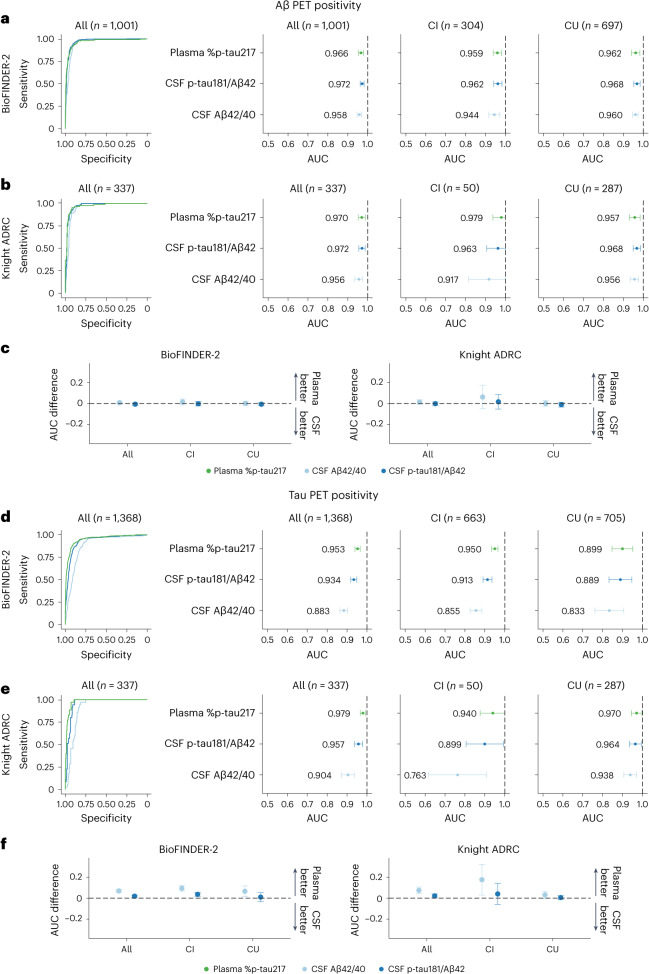
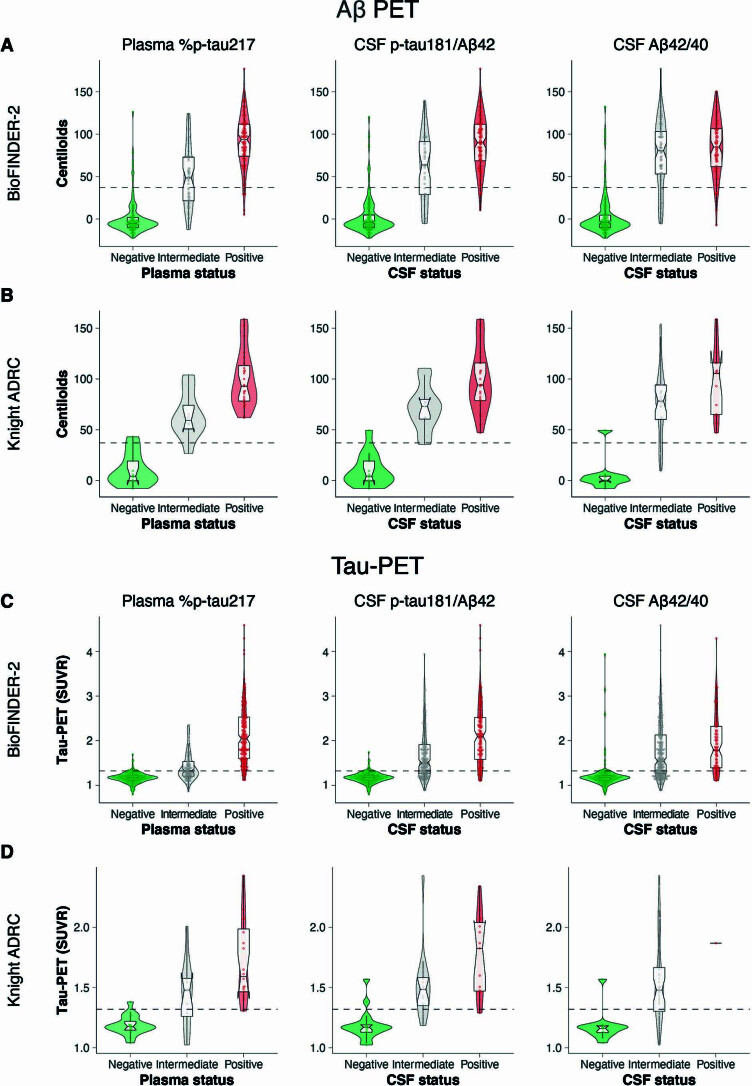
- In the full cohorts, plasma %p-tau217 classified Aβ PET status with very high accuracy: AUC 0.97 in BioFINDER-2 and 0.97 in Knight ADRC, clinically equivalent to CSF biomarker ratios.
- For tau PET status, plasma %p-tau217 was superior to CSF tests in the full cohorts: AUC 0.95 vs 0.93/0.88 in BioFINDER-2 and 0.98 vs 0.96/0.90 in Knight ADRC.
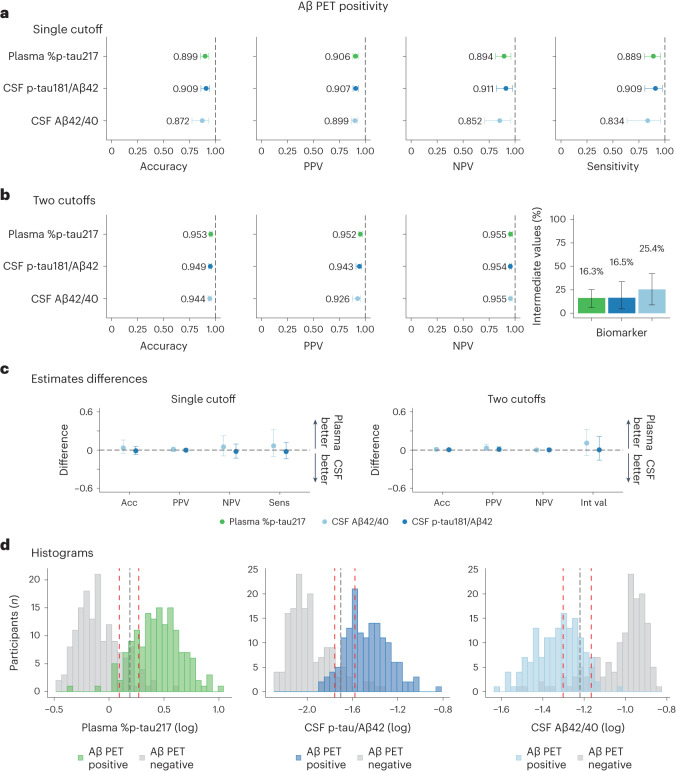
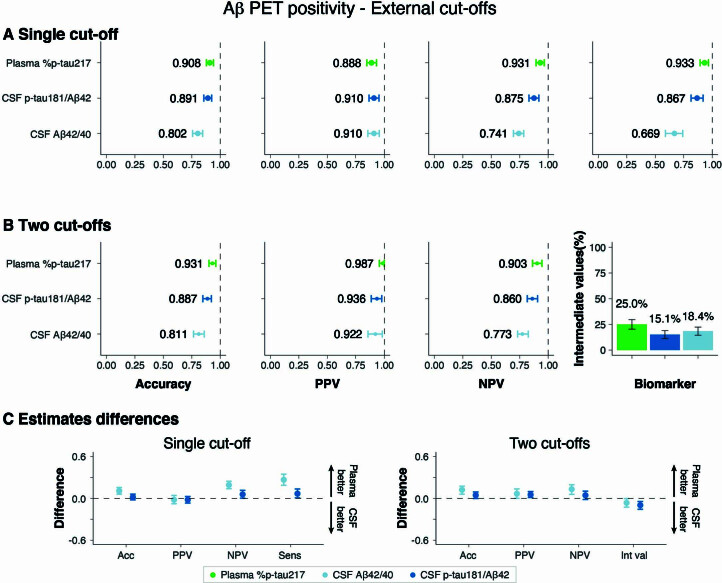
- In cognitively impaired participants, plasma %p-tau217 predicted Aβ PET status with 90% accuracy in BioFINDER-2 and 94% accuracy in Knight ADRC, with PPV/NPV around 89%/89% or higher; it was clinically equivalent to CSF tests for Aβ.
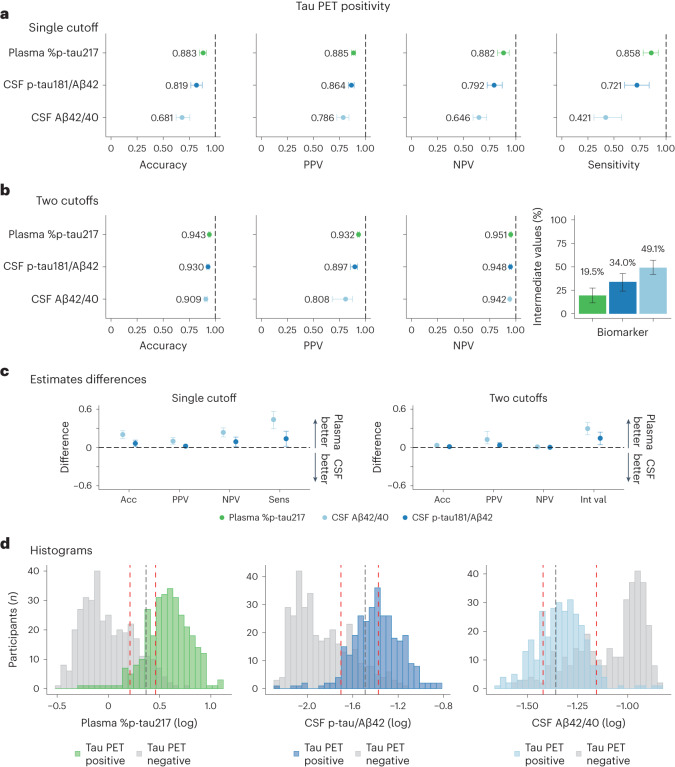
- Using two cutoffs improved Aβ PET prediction in cognitively impaired BioFINDER-2 participants to 95% accuracy, 95% PPV, and 96% NPV for plasma %p-tau217, with 16% intermediate values; for tau PET, plasma %p-tau217 reached 94% accuracy and was superior to CSF tests.
Methods
- Observational comparison across two independent cohorts: BioFINDER-2 (n = 1,422) in Sweden and Knight ADRC (n = 337) in the US; main analyses focused on cognitively impaired participants, including MCI and dementia.
- Plasma %p-tau217 was measured by LC–MS/HRMS; CSF biomarkers were measured with clinical/FDA-approved automated immunoassays (Roche Elecsys in BioFINDER-2, Fujirebio Lumipulse in Knight ADRC).
- Diagnostic performance was evaluated against Aβ PET positivity, tau PET positivity, and clinical AD diagnosis using ROC curves/AUC, plus accuracy, PPV, and NPV; equivalence was defined by 95% CI of the mean difference including zero.
Limitations
- The paper states that the Knight ADRC cognitive-impairment subgroup was relatively small, and there was no sufficiently large group with both antemortem biomarker data and postmortem data.
- The paper states that minoritized populations were not well enough represented, and that future studies should test broader primary care populations.
- Evident from the text: the study is observational and uses PET/clinical diagnosis as reference standards, so it does not test whether using the blood assay improves patient outcomes.
Model-written summary. Check it against the paper before relying on it.
Integrity signals
Registry
Cites
Statistics
Figures
Verification
Claims the paper makes
26 Valid · 2 Not valid · 3 Not checked · 66 Own results and interpretations
The cited sources support only part of this claim — read each source’s verdict below.
In the paper
“Additionally, PET and CSF can identify cognitively unimpaired individuals at high risk of future cognitive decline and progression to AD dementia14,15.”
§ Highly accurate blood test for Alzheimer’s disease is similar or superior to clinical cerebrospinal fluid tests > Main
What the sources say
- Partly supportedcites [14] Donohue, M. C. et al. Association between elevated brain amyloid and subsequent cognitive decline among cognitively normal persons. JAMA 317, 2305–2316 (2017). sourceExperimental — accuracy not yet measured
The Methods and Discussion (page numbers unavailable) show that PET or CSF amyloid measures identified cognitively normal people more likely to experience subsequent cognitive decline. The measured progression outcomes were cognitive symptoms and MCI, not AD dementia; the Discussion says predictive value for the dementia stage requires further follow-up. (LLM, conf=0.88)
- Not checked — no full text of the sourcecites [15] Fagan, A. M. et al. Cerebrospinal fluid tau/β-amyloid42 ratio as a prediction of cognitive decline in nondemented older adults. Arch. Neurol. 64, 343–349 (2007). source
plainstates an association- Asserted: passes — The authors put it forward as true.
- Checkable: passes — It can be checked against evidence.
- Load-bearing: unclear — It is unclear whether the paper’s conclusions depend on it.
- Based: passes — The paper gives a reason why it holds.
- Partly supported
The cited sources support only part of this claim — read each source’s verdict below.
In the paper
“The presence of Aβ pathology can be determined by positron emission tomography (PET), which visualizes Aβ deposition in the brain, or cerebrospinal fluid (CSF) assays, which measure CSF levels of Aβ42 as a ratio with Aβ40, phosphorylated tau (p-tau) or total tau4,9–11.”
§ Highly accurate blood test for Alzheimer’s disease is similar or superior to clinical cerebrospinal fluid tests > Main
What the sources say
- Not checked — no full text of the sourcecites [4] Hansson, O. Biomarkers for neurodegenerative diseases. Nat. Med. 27, 954–963 (2021). source
- Partly supportedcites [9] Shaw, L. M. et al. Appropriate use criteria for lumbar puncture and cerebrospinal fluid testing in the diagnosis of Alzheimer’s disease. Alzheimers Dement. 14, 1505–1521 (2018). sourceExperimental — accuracy not yet measured
The Discussion of the evidence (section 3.5; page unavailable) says amyloid PET assesses brain amyloid status and that the CSF Aβ42/Aβ40 ratio can identify or rule out brain amyloidosis. It also reports results for tau measured in ratios with Aβ42, but does not establish that p-tau or total tau alone determines the presence of Aβ pathology; it describes those markers as reflecting tangles and neuronal injury, respectively. (LLM, conf=0.83)
- Partly supportedcites [10] Johnson, K. A. et al. Appropriate use criteria for amyloid PET: a report of the Amyloid Imaging Task Force, the Society of Nuclear Medicine and Molecular Imaging, and the Alzheimer’s Association. Alzheimers Dement. 9, e1–e16 (2013). sourceExperimental — accuracy not yet measured
Section 11.2 says that CSF measures of amyloid peptides and tau have been investigated to establish the presence of Alzheimer’s pathology; the paper also addresses amyloid PET as an imaging method. It does not specify an Aβ42/Aβ40 ratio or distinguish phosphorylated from total tau as the citing sentence does. The indexed passage has no page number. (LLM, conf=0.86)
- Supportedcites [11] Schindler, S. E. & Atri, A. The role of cerebrospinal fluid and other biomarker modalities in the Alzheimer’s disease diagnostic revolution. Nat. Aging 3, 460–462 (2023). source
The “Roles of molecular imaging, BBBM, and CSF biomarkers” section says PET radioligands visualize amyloid pathology in the brain. The “Clinical use of CSF testing” section describes CSF tests measuring Aβ42, Aβ40, total tau and p-tau181, and says ratios including Aβ42 predict amyloid PET status. (LLM, conf=0.91)
plainstates an association- Asserted: passes — The authors put it forward as true.
- Checkable: passes — It can be checked against evidence.
- Load-bearing: passes — The paper’s conclusions depend on it.
- Based: passes — The paper gives a reason why it holds.
The cited sources support only part of this claim — read each source’s verdict below.
In the paper
“Notably, Aβ PET and tau PET are not perfectly accurate in detection of neuropathology45,46”
§ Highly accurate blood test for Alzheimer’s disease is similar or superior to clinical cerebrospinal fluid tests > Discussion
What the sources say
- Partly supportedcites [45] Bucci, M. et al. A multisite analysis of the concordance between visual image interpretation and quantitative analysis of [18F]flutemetamol amyloid PET images. Eur. J. Nucl. Med. Mol. Imaging 48, 2183–2199 (2021). sourceExperimental — accuracy not yet measured
The Introduction (page unavailable) reports that [18F]flutemetamol amyloid PET was validated against pathology measures, with sensitivity and specificity over 90%—high, but not perfect. The paper does not address tau PET accuracy, so it supports only the amyloid PET part of the claim. (LLM, conf=0.90)
- Partly supportedcites [46] Chen, C. D. et al. Comparing tau PET visual interpretation with tau PET quantification, cerebrospinal fluid biomarkers, and longitudinal clinical assessment. J. Alzheimers Dis. 93, 765–77 (2023). sourceExperimental — accuracy not yet measured
The Results > Conclusions (page unavailable) describe limitations of 18F-flortaucipir tau PET: some NFT deposition may be missed by SUVR quantification, and non-AD conditions can produce uptake. The Aβ PET Methods section describes how scans were acquired and quantified but does not assess their accuracy against neuropathology. The paper therefore supports the tau PET part, not the claim about Aβ PET. (LLM, conf=0.83)
plain- Asserted: passes — The authors put it forward as true.
- Checkable: passes — It can be checked against evidence.
- Load-bearing: passes — The paper’s conclusions depend on it.
- Based: passes — The paper gives a reason why it holds.
- Partly supported
Every source the paper cites for this claim was checked and supports it.
In the paper
“but in one large study the test classified Aβ PET status with an AUC of 0.97 (ref. 44).”
§ Highly accurate blood test for Alzheimer’s disease is similar or superior to clinical cerebrospinal fluid tests > Discussion
What the sources say
- Supportedcites [44] Barthélemy, N. R. et al. CSF tau phosphorylation occupancies at T217 and T205 represent improved biomarkers of amyloid and tau pathology in Alzheimer’s disease. Nat. Aging 3, 391–401 (2023). source
The CSF measures and amyloid PET section describes a large cohort (n = 750). The paper reports that Lumipulse CSF Aβ42/Aβ40 distinguished amyloid PET status with an AUC of 0.97. The printed citing sentence attributes that study result to the source; it does not attribute the FDA-approval description to it. (LLM, conf=0.94)
plainstates an association- Asserted: passes — The authors put it forward as true.
- Checkable: passes — It can be checked against evidence.
- Load-bearing: unclear — It is unclear whether the paper’s conclusions depend on it.
- Based: passes — The paper gives a reason why it holds.
- Supported
The cited sources support only part of this claim — read each source’s verdict below.
In the paper
“Despite BBMs being used in clinical practice in some countries, including the United States, they have not been recommended as standalone diagnostic tests due to a lack of studies demonstrating their equivalence to clinically used CSF and PET methods16,35–37.”
§ Highly accurate blood test for Alzheimer’s disease is similar or superior to clinical cerebrospinal fluid tests > Main
What the sources say
- Partly supportedcites [16] Hampel, H. et al. Blood-based biomarkers for Alzheimer’s disease: current state and future use in a transformed global healthcare landscape. Neuron 111, 2781–2799 (2023). sourceExperimental — accuracy not yet measured
The paper’s Future directions and conclusions section says blood-based biomarkers do not currently provide a standalone AD diagnosis. Its Diagnosis section discusses comparisons with CSF and PET, but the cited passages do not say that a lack of studies demonstrating equivalence is the reason standalone tests have not been recommended. (LLM, conf=0.85)
- Supportedcites [35] Hansson, O. et al. The Alzheimer’s Association appropriate use recommendations for blood biomarkers in Alzheimer’s disease. Alzheimers Dement. 18, 2669–2686 (2022). source
In its research priorities for specialized memory clinics (page unavailable), the paper says studies are still needed to determine whether BBM-based approaches are non-inferior to CSF and PET and can be used alone to support an Alzheimer’s diagnosis. Its clinical-practice section also says BBMs should be an adjunct to, not a substitute for, clinical evaluation. This supports the claim about not recommending BBMs as standalone diagnostic tests, although the paper reports promising performance for some individual biomarkers. (LLM, conf=0.86)
- Could not verifycites [36] Hu, Y. et al. Assessment of a plasma amyloid probability score to estimate amyloid positron emission tomography findings among adults with cognitive impairment. JAMA Netw. Open 5, e228392 (2022). sourceExperimental — accuracy not yet measured
The Discussion uses amyloid PET as the study’s reference standard, and the Conclusions say the blood test could aid physicians evaluating patients. Neither section addresses recommendations against standalone blood-biomarker diagnosis or attributes such recommendations to a lack of studies showing equivalence to CSF and PET methods. Searches for standalone use, recommendations, and equivalence found no passage making that point. (LLM, conf=0.73)
- Could not verifycites [37] Monane, M. et al. A blood biomarker test for brain amyloid impacts the clinical evaluation of cognitive impairment. Ann. Clin. Transl. Neurol. 10, 1738–1748 (2023). sourceExperimental — accuracy not yet measured
The Introduction reports studies comparing a blood biomarker test with amyloid PET, and the Discussion describes its potential to support clinical diagnosis. Neither section states that blood biomarkers are not recommended as standalone diagnostic tests or attributes such a recommendation to a lack of equivalence studies with CSF and PET. Searches for standalone-use recommendations and equivalence found no passage addressing that claim. (LLM, conf=0.74)
plain- Asserted: passes — The authors put it forward as true.
- Checkable: passes — It can be checked against evidence.
- Load-bearing: passes — The paper’s conclusions depend on it.
- Based: passes — The paper gives a reason why it holds.
- Partly supported
51 more claims · 6 with their cited sources checked
Create a free account to see all 97 claims and to verify the 6 references still open.
- Probably not a substantial claim. 20
- It may state two separate claims as one. 26
Claims other papers make about this one
Each is checked against this paper’s own text: does it say what the citing paper says it does?
The source backs part of the claim, not all of it — or backs it for a different population, condition or comparison.
In the citing paper
“Research has shown, however, that plasma biomarkers tend to differentiate AD cases and controls less effectively than CSF biomarkers, with the exception of some recent highly accurate tests, which means further research is required to identify potentially clinically relevant plasma biomarkers.”
From A genetic and proteomic comparison of key AD biomarkers across tissues (2024) · cites this paper as [9]
Experimental — accuracy not yet measured
Self-check
Percentages, sums and reported differences re-computed from the paper’s own numbers.
Each contradiction between two passages listed here was confirmed by an independent check.
Rated major: it would touch a result — a value a result rests on, reported and recomputed p-values on opposite sides of the significance level, two passages that conflict with no sign which is right, or a cited work retracted before this paper was published.
In the paper
§ Highly accurate blood test for Alzheimer’s disease is similar or superior to clinical cerebrospinal fluid tests > Results > Study participants
“702 (49.3%) were cognitively impaired as defined by either MCI or dementia”
§ Highly accurate blood test for Alzheimer’s disease is similar or superior to clinical cerebrospinal fluid tests > Abstract
“In cognitively impaired subcohorts (BioFINDER-2: n = 720; Knight ADRC: n = 50), plasma %p-tau217 had an accuracy, a positive predictive value and a negative predictive value of 89–90% for Aβ PET and 87–88% for tau PET status,”
Citations
Cites
Diagnostic and Statistical Manual of Mental Disorders
American Psychiatric Association (2013) · doi:10.1176/appi.books.9780890425596 · Cited by 116,369
McKhann, G. M., Knopman, D. S., Chertkow, H., Hyman, B. T., Jack, C. R., Kawas, C. H., Klunk, W. E., Koroshetz, W. J., Manly, J. J., Mayeux, R., et al. (2011) · Alzheimer's & Dementia · doi:10.1016/j.jalz.2011.03.005 · Cited by 18,657 · cited 1×
“Participants were assessed with the Clinical Dementia Rating (CDR) 60 , and individuals included in the current study were either cognitively unimpaired (CDR = 0) or cognitively impaired (CDR > 0) with a clinical syndrome typical of AD (either MCI or dementia) based on standard criteria 61 .”
MethodSelf-citationpROC: an open-source package for R and S+ to analyze and compare ROC curves
Robin, X., Turck, N., Hainard, A., Tiberti, N., Lisacek, F., Sanchez, J.-C., & Müller, M. (2011) · BMC Bioinformatics · doi:10.1186/1471-2105-12-77 · Cited by 13,697 · cited 1×
“To evaluate the performance of the three fluid biomarkers in predicting the main outcomes (Aβ and tau PET status and clinical AD diagnosis), we used receiver operating characteristic (ROC) curves ( pROC package 72 ).”
MethodThe Clinical Dementia Rating (CDR): Current version and scoring rules
Morris, J. C. (1993) · Neurology · doi:10.1212/wnl.43.11.2412-a · Cited by 9,882
Self-citationLecanemab in early Alzheimer's disease
van Dyck, C. H., Swanson, C. J., Aisen, P., Bateman, R. J., Chen, C., Gee, M., Kanekiyo, M., Li, D., Reyderman, L., Cohen, S., et al. (2023) · New England Journal of Medicine · doi:10.1056/nejmoa2212948 · Cited by 5,678 · cited 2×
“Recently, lecanemab received traditional approval from the US Food & Drug Administration (FDA) for treatment of patients with MCI and mild dementia with biomarker-proven Aβ pathology 8 , and other immunotherapies are expected to follow.”
BackgroundSelf-citationDonanemab in Early Symptomatic Alzheimer Disease: The TRAILBLAZER-ALZ 2 Randomized Clinical Trial
Sims, J. R., Zimmer, J. A., Evans, C. D., Lu, M., Ardayfio, P., Sparks, J., Wessels, A. M., Shcherbinin, S., Wang, H., Monkul Nery, E. S., et al. (2023) · JAMA · doi:10.1001/jama.2023.13239 · Cited by 2,932 · cited 3×
“Secondary outcomes included the classification of brain tau aggregates as determined by tau PET imaging, which has also been used by some trials in the selection of patients suitable for anti-amyloid immunotherapy 7,38 , and agreement with a clinical AD diagnosis.”
MethodInfluentialSelf-citationNichols, E., Szoeke, C. E. I., Vollset, S. E., Abbasi, N., Abd-Allah, F., Abdela, J., Aichour, M. T. E., Akinyemi, R. O., Alahdab, F., Asgedom, S. W., et al. (2019) · The Lancet Neurology · doi:10.1016/s1474-4422(18)30403-4 · Cited by 2,412
Donanemab in Early Alzheimer’s Disease
Mintun, M. A., Lo, A. C., Duggan Evans, C., Wessels, A. M., Ardayfio, P. A., Andersen, S. W., Shcherbinin, S., Sparks, J., Sims, J. R., Brys, M., et al. (2021) · New England Journal of Medicine · doi:10.1056/nejmoa2100708 · Cited by 1,728
Improvements on Cross-Validation: The 632+ Bootstrap Method
Efron, B., & Tibshirani, R. (1997) · Journal of the American Statistical Association · doi:10.1080/01621459.1997.10474007 · Cited by 1,636
Palmqvist, S., Janelidze, S., Quiroz, Y. T., Zetterberg, H., Lopera, F., Stomrud, E., Su, Y., Chen, Y., Serrano, G. E., Leuzy, A., et al. (2020) · JAMA · doi:10.1001/jama.2020.12134 · Cited by 1,603 · cited 5×
“Plasma levels of p-tau are strongly associated with PET and CSF biomarkers of AD pathology 19–25 , neuropathological changes associated with AD 20,23,26,27 and the subsequent development of AD dementia 20,23,28 .”
BackgroundMethodInfluentialSelf-citation
Cited by
Items 101–200 of 442
Rosenbloom, M. H., O’Donohue, T., Zhou-Clark, D., Mala, D., Frazier, A., Tarrant, M., Modrijan, M., Riveira, M. C., Chapman, D., Griffin, Y., et al. (2024) · CNS Drugs · doi:10.1007/s40263-024-01097-w · Cited by 26
Ashton, N. J., Keshavan, A., Brum, W. S., et al. (2024) · medRxiv · doi:10.1101/2024.08.22.24312244 · Cited by 19
Self-citationLombardi, G., Pancani, S., Manca, R., Mitolo, M., Baiardi, S., Massa, F., Coppola, L., Franzese, M., Nicolai, E., Guerini, F. R., et al. (2024) · International Journal of Molecular Sciences · doi:10.3390/ijms252312916 · Cited by 23
Aye, S., Handels, R. L. H., Winblad, B. G., & Jönsson, L. (2024) · The Journal of Prevention of Alzheimer s Disease · doi:10.14283/jpad.2024.67 · Cited by 21
Etkin, A., Powell, J. J., & Savitz, A. J. (2024) · Neuropsychopharmacology · doi:10.1038/s41386-024-01970-8 · Cited by 26
Emerging Pharmacological Approaches for Psychosis and Agitation in Alzheimer’s Disease
Imbimbo, C., Ramusino, M. C., Leone, S., Mazzacane, F., Franco, V. D., Gatti, A., Perini, G., & Costa, A. C. (2024) · CNS Drugs · doi:10.1007/s40263-024-01133-9 · Cited by 23
Fluid biomarkers for neurodegenerative diseases: a comprehensive update
Valletta, M., Briel, N., Yuksekel, I., Barboure, M. C., Coward, A. R., Houwer, J. F. H. D., Fawad, A., González-Mayoral, A., Iaccarino, G., Martínez‐Dubarbie, F., et al. (2025) · Alzheimer s Research & Therapy · doi:10.1186/s13195-025-01919-z · Cited by 26
“In AD research, mass spectrometry has been used to quantify plasma biomarkers such as p-tau, Aβ peptides, and NfL [37, 45, 48, 49, 146, 147].”
Fu, W., & Ho, P. C. (2026) · Ageing Research Reviews · doi:10.1016/j.arr.2026.103058 · Cited by 21
Tailoring thresholds for interpreting plasma p-tau217 levels
Ahn, J., Lee, E. H., Yoo, H., Shin, D., Kang, H., Yim, S., Kim, S., Kim, K., Yoon, S., Zetterberg, H., et al. (2025) · Journal of Neurology Neurosurgery & Psychiatry · doi:10.1136/jnnp-2025-335830 · Cited by 17
Fully Integrated Wearable Biosensor for Multiple In Situ Phosphorylated Tau Protein Detection
Sun, X., Zhong, G., Zeng, Y., Xu, T., & Liu, Y. (2025) · Analytical Chemistry · doi:10.1021/acs.analchem.5c02541 · Cited by 17
Gong, K., Timsina, J., Ali, M., Chen, Y., Liu, M., Wang, C., Pottier, C. P., Feld, G. K., Heo, G., Benzinger, T. L. S., et al. (2025) · Molecular Neurodegeneration · doi:10.1186/s13024-025-00909-x · Cited by 34
“Blood-based biomarkers are attractive due to the simplicity of sample collection and the potential for widespread adoption [48–50].”
Self-citationKobayashi, G., Hirata, K., Ono, M., Kasuga, K., & Takado, Y. (2026) · Frontiers in Dementia · doi:10.3389/frdem.2026.1736297 · Cited by 26
Kang, Y., Feng, Z., Zhang, Q., Liu, M., Li, Y., Yang, H., Zheng, L., Cheng, C., Zhou, W., Lou, D., et al. (2024) · Alzheimer s & Dementia · doi:10.1002/alz.14443 · Cited by 16
“11,12 Notably, the plasma amyloid β protein (A β )42/40 ratio, 13,14 phospho-tau181, 15,16 phospho-tau217, 17,18 neurofilament light chain (NfL) 19,20 and glial fibrillary acidic protein (GFAP) 21,22 stand out as the most cutting-edge biological-based markers (BBMs) developed to diagnose and…”
Self-citationGiacomucci, G., Crucitti, C., Ingannato, A., Moschini, V., Bagnoli, S., Pozzi, F. E., Marcantelli, E., Padiglioni, S., Morinelli, C., Mazzeo, S., et al. (2025) · Alzheimer s & Dementia Diagnosis Assessment & Disease Monitoring · doi:10.1002/dad2.70116 · Cited by 32
“6,32 To evaluate the real-world applicability of plasma p-tau217 as a peripheral marker of AD pathology, we tested two different approaches.”
InfluentialGonzález‐Ortiz, F., Kirsebom, B., Yakoub, Y., Gundersen, J. K., Pålhaugen, L., Waterloo, K. K., Selnes, P., Jarholm, J. A., Gísladóttir, B., Rongve, A., et al. (2025) · Neurology · doi:10.1212/wnl.0000000000213676 · Cited by 21
Potential utility of plasma pTau217 for assessing amyloid and tau biomarker profiles
Shin, D., Jang, H., Yoo, H., Kim, K., Zetterberg, H., Blennow, K., González‐Ortiz, F., Ashton, N. J., Lee, E. H., Yun, J., et al. (2025) · European Journal of Nuclear Medicine and Molecular Imaging · doi:10.1007/s00259-025-07457-y · Cited by 18
“Previous studies [ 13 , 15, 30 ] have mostly focused on using pTau217 for distinguishing Aβ positivity in binary mod - els, with less emphasis on its ability to capture regional Aβ distribution.”
Mattsson, N., Palmqvist, S., Horie, K., Barthélemy, N. R., Salvadó, G., Binette, A. P., Tideman, P., Morris, J. C., Benzinger, T. L. S., Perrin, R. J., et al. (2026) · The Lancet Neurology · doi:10.1016/s1474-4422(26)00029-3 · Cited by 30
Self-citationKrix, S., Wilczynski, E., Falgàs, N., Sánchez‐Valle, R., Yoles, E., Nevo, U., Baruch, K., & Fröhlich, H. (2024) · Frontiers in Immunology · doi:10.3389/fimmu.2024.1343900 · Cited by 23
Antonioni, A., Raho, E. M., Manzoli, L., Koch, G., Flacco, M. E., & Lorenzo, F. D. (2025) · Alzheimer s & Dementia Diagnosis Assessment & Disease Monitoring · doi:10.1002/dad2.70068 · Cited by 24
Longitudinal trajectory of plasma p-tau217 in cognitively unimpaired subjects
Martínez‐Dubarbie, F., Guerra-Ruiz, A. R., López‐García, S., Lage, C., Fernández‐Matarrubia, M., Pozueta‐Cantudo, A., García‐Martínez, M., Corrales‐Pardo, A., Bravo, M., López‐Hoyos, M., et al. (2024) · Alzheimer s Research & Therapy · doi:10.1186/s13195-024-01642-1 · Cited by 19
Paving the way for Alzheimer's disease blood‐based biomarkers in primary care
Erickson, C. M., Largent, E. A., & O’Brien, K. S. (2024) · Alzheimer s & Dementia · doi:10.1002/alz.14203 · Cited by 18
“41 FDA clearance or approval of AD BBBM tests would strengthen the case for insurance coverage.”
A Wearable In‐Pad Diagnostic for the Detection of Disease Biomarkers in Menstruation Blood
Dosnon, L., Rduch, T., Meyer, C., & Herrmann, I. K. (2025) · Advanced Science · doi:10.1002/advs.202505170 · Cited by 23
“4] Traditionally, blood testing has been confined to laboratory environments, necessitated by the requirement for sample pre-processing, intricate analytical methods, and specialized instrumentation.”
Kjærgaard, D., Nielsen, T. R., Stomrud, E., Palmqvist, S., Bali, D., Dolado, A. O., Janelidze, S., Hansson, O., Waldemar, G., & Simonsen, A. H. (2025) · Alzheimer s & Dementia · doi:10.1002/alz.70315 · Cited by 19
Self-citationPlasma phosphorylated tau 217 and amyloid‑β 42/40 for amyloid risk in subgroups
Kang, H., Yoo, H., Lee, J., Yoon, S., Zetterberg, H., Blennow, K., González‐Ortiz, F., Ashton, N. J., Day, T. A., Kang, S. H., et al. (2025) · Alzheimer s Research & Therapy · doi:10.1186/s13195-025-01826-3 · Cited by 17
Towards pharmacological prevention of Alzheimer disease
Llibre‐Guerra, J. J., McDade, E., Schindler, S. E., Clifford, D. B., Supnet, C. B., Atri, A., & Bateman, R. J. (2025) · Nature Reviews Neurology · doi:10.1038/s41582-025-01154-y · Cited by 20
Self-citationChaubey, K., Vázquez‐Rosa, E., Tripathi, S. J., Shin, M., Yu, Y., Dhar, M., Chakraborty, S., Yamakawa, M., Wang, X., Sridharan, P. S., et al. (2025) · Cell Reports Medicine · doi:10.1016/j.xcrm.2025.102535 · Cited by 32
Blood-Based Biomarkers for Alzheimer Disease—Ready for Primary Care?
VandeVrede, L. A., & Rabinovici, G. D. (2024) · JAMA Neurology · doi:10.1001/jamaneurol.2024.2801 · Cited by 14
Self-citationLecanemab approval in EU: what should we be ready for?– the EANM perspective
Yakushev, I. Y., Verger, A., Brendel, M., Cecchin, D., Fernandez, P. A., Fraioli, F., Grimmer, T., Tolboom, N., Traub‐Weidinger, T., Guedj, É., et al. (2025) · European Journal of Nuclear Medicine and Molecular Imaging · doi:10.1007/s00259-025-07066-9 · Cited by 20
Biofluid-based staging of Alzheimer’s disease
Lantero‐Rodriguez, J., Montoliu‐Gaya, L., Ashton, N. J., Pola, I., Therriault, J., Rahmouni, N., Brum, W. S., Servaes, S., Stevenson, J., Molfetta, G. D., et al. (2025) · Acta Neuropathologica · doi:10.1007/s00401-025-02863-w · Cited by 17
ApoE-calypse tau: ApoE–tau synergy in Alzheimer’s disease
Lennol, M. P., Bordier, C., Kamelher, L., Ulrich, J. D., Holtzman, D. M., & Gratuze, M. (2025) · The Journal of Experimental Medicine · doi:10.1084/jem.20250965 · Cited by 15
Jiang, T., Ma, W., Dong, W., Zhou, H., & Mao, X. (2025) · Experimental & Molecular Medicine · doi:10.1038/s12276-025-01611-0 · Cited by 19
“A β plaques consist of aggregated A β peptides, which are neurotoxic, while neuro fi brillary tangles are composed of hyperphosphorylated tau protein, which disrupts normal microtubule function in neurons 77 .”
Gramkow, M. H., Waldemar, G., & Frederiksen, K. S. (2024) · Nature Reviews Neurology · doi:10.1038/s41582-024-01033-y · Cited by 17
Göschel, L., Dell’Orco, A., Fillmer, A., Aydın, S., Ittermann, B., Riemann, L. T., Lehmann, S., Cano, S., Melin, J., Pendrill, L., et al. (2024) · Alzheimer s & Dementia · doi:10.1002/alz.14318 · Cited by 16
“Second, changes in plasma biomarker concentrations in early stages seem to be subtle 65,69 and therefore some associations might require larger datasetstoreachsignificance.”
Sandhof, C. A., Murray, H. F. B., Silva, M. C., & Haggarty, S. J. (2024) · Neurotherapeutics · doi:10.1016/j.neurot.2024.e00499 · Cited by 14
Luo, C., Zhu, X., Zhang, Y., Wen, Y., Wan, L., & Qian, Z. (2025) · Talanta · doi:10.1016/j.talanta.2025.128009 · Cited by 16
Rodda, J. E., Kuchenbecker, L. A., Borelli, W. V., DeMarco, M. L., Castilhos, R. M., Cawston, E. E., Chabrashvili, T., Budelier, M. M., Duran-Aniotz, C. A., Udeh‐Momoh, C. T., et al. (2025) · Alzheimer s & Dementia · doi:10.1002/alz.70201 · Cited by 15
Cognitive impairment and p‐tau217 are high in a vascular patient cohort
French, S. R., Arias, J. C., Zahra, S., Ally, M., Escareno, C., Heitkamp, E., Vazquez, F., Hillis, M., Wiskoski, H. E., Ainapurapu, K., et al. (2025) · Alzheimer s & Dementia · doi:10.1002/alz.70565 · Cited by 17
“20,22,50,51 The distribution of p-tau217 was skewed right (above published cutoff values for positivity) with 55% of the cohort having high p-tau217 values (Figure 2).”
Yang, H. Y., Anzai, J. A. U., Yau, W. W., Healy, B. C., Viera, A. M. R., Maa, C., Kirn, D. R., Properzi, M. J., Bellier, J., Schultz, A. P., et al. (2026) · Nature Communications · doi:10.1038/s41467-026-71269-3 · Cited by 21
“Elevated plasma pTau217 is AD-speci fi c 6,7 , and elevated plasma %pTau217 was highly correlated with A β and tau PET, showing equivalent to superior performance compared to the widely used CSF tests 8 .”
Serrano‐Pozo, A., Escott‐Price, V., Grinberg, L. T., Pascoal, T. A., Suárez‐Calvet, M., Dubois, B., & Sperling, R. A. (2026) · The Lancet · doi:10.1016/s0140-6736(26)00198-4 · Cited by 22
Skirrow, C., Meepegama, U., Weston, J., Miller, M. J., Nosheny, R. L., Albala, B., Weiner, M. W., Fristed, E., & Initiative, A. D. N. (2024) · Alzheimer s & Dementia · doi:10.1002/alz.14206 · Cited by 17
Assessing polyomic risk to predict Alzheimer's disease using a machine learning model
Ngai, T., Willett, J., Waqas, M., Fishbein, L., Choi, Y., Hahn, G., Mullin, K., Lange, C., Hecker, J., Tanzi, R. E., et al. (2024) · Alzheimer s & Dementia · doi:10.1002/alz.14319 · Cited by 12
Moss, D. E., & Perez, R. G. (2024) · Journal of Alzheimer s Disease · doi:10.1177/13872877241289602 · Cited by 16
Yuwen, Z., Zou, T., He, Z., Su, Z. M., Gong, Y., Liu, H., & Yang, R. (2024) · Analytical Chemistry · doi:10.1021/acs.analchem.4c05550 · Cited by 12
Anton, P. E., Maphis, N. M., Linsenbardt, D. N., & Coleman, L. G. (2025) · Advances in experimental medicine and biology · doi:10.1007/978-3-031-81908-7_10 · Cited by 13
Bolton, C. J., Rostamzadeh, A., Chin, N. A., Fowler, N. R., Heidebrink, J. L., Rahman‐Filipiak, A., Romano, R. R., & Clark, L. R. (2025) · The Journal of Prevention of Alzheimer s Disease · doi:10.1016/j.tjpad.2025.100310 · Cited by 12
Jack, C. R., Graf, A., Burnham, S. C., Doty, E. G., Moebius, H. J., Montenigro, P. H., Siemers, E., Sink, K. M., Shaw, L. M. J., Hansen, C. T., et al. (2024) · Alzheimer s & Dementia Translational Research & Clinical Interventions · doi:10.1002/trc2.70013 · Cited by 19
“30 Inotherstudies, BBMs have also been compared with their neuropathologic correlates, showing that high-performing assays of plasma p-tau217 and A β 42/40arepromisingoptimalcombinationsforassessingAD-related pathology in vivo.”
Iwatsubo, T., Sperling, R. A., Algeciras‐Schimnich, A., Arai, H., Barron, A. M., Benzinger, T. L. S., Carrillo, M. C., Chen, C., Choi, S. H., Fontana, I. C., et al. (2025) · Alzheimer s & Dementia · doi:10.1002/alz.70536 · Cited by 13
Self-citationLan, W., Zhao, J., Zhai, X., Gu, C., Jiang, T., & Wang, J. (2025) · Colloids and Surfaces B Biointerfaces · doi:10.1016/j.colsurfb.2025.114665 · Cited by 12
Thomas, K., Spin, P. J., Sir, N., Hou, K. Y., Ashton, N. J., Zetterberg, H., Miller, S., Pringle, C., Stefanacci, R. G., Wischik, C. M., et al. (2025) · Journal of Alzheimer s Disease Reports · doi:10.1177/25424823251379878 · Cited by 22
Trudel, L., Therriault, J., Macedo, A. C., Servaes, S., Hosseini, S. A., Bezgin, G., Aumont, É., Rahmouni, N., Arias, J. F., Zheng, Y., et al. (2025) · Neurology · doi:10.1212/wnl.0000000000214111 · Cited by 14
Lv, X., Ye, T., Liao, X., Li, Q., Fang, Z., Lin, X., Chen, M., Dai, C., Zhan, L., Zhuo, L., et al. (2025) · Gut Microbes · doi:10.1080/19490976.2025.2605768 · Cited by 12
“31 According to the results of AT8 immunohistochemical staining, B. coccoides treatment significantly increased the level of Tau phosphorylation in P301s mice ( p 0.05, Figure 1J and K).”
InfluentialMir, P. A., Kumar, N. G., Bhutia, G. T., Chaudhary, P., Kaur, G., & Gupta, S. K. (2026) · GeroScience · doi:10.1007/s11357-025-02062-1 · Cited by 15
Blood‐based biomarkers of Alzheimer's disease: Standardization and comprehensiveness
Liu, Y., Guo, Y., & Yu, J. (2024) · Neuroprotection/Neuroprotection (Chichester, England. Print) · doi:10.1002/nep3.58 · Cited by 11
Musso, G., Gabelli, C., Puthenparampil, M., Cosma, C., Cagnin, A., Gallo, P., Sorarú, G., Pegoraro, E., Zaninotto, M., Antonini, A., et al. (2024) · Clinica Chimica Acta · doi:10.1016/j.cca.2024.120014 · Cited by 11
Sleep Patterns and Human Brain Health
Fjell, A. M., & Walhovd, K. B. (2025) · The Neuroscientist · doi:10.1177/10738584241309850 · Cited by 14
“Furthermore, blood-based biomarkers of brain health are increasingly accurate, approaching what can be obtained with much more invasive or expensive measures (Barthelemy and others 2024).”
Zhang, J., Zhao, Y., Li, X., Gu, M., Xu, L., Zhao, J., & Zhang, H. (2025) · Talanta · doi:10.1016/j.talanta.2025.128439 · Cited by 12
Plasma p-tau217 predicting brain-wide tau accumulation in preclinical AD
Moon, H., & Chen, X. (2025) · The Journal of Prevention of Alzheimer s Disease · doi:10.1016/j.tjpad.2025.100252 · Cited by 14
Hirota, Y., Sakakibara, Y., Morishima, M., Sano, T., Hara, M., Arakawa, A., Takao, M., Murayama, S., Saito, Y., Sekiya, M., et al. (2025) · Cell Reports · doi:10.1016/j.celrep.2025.116203 · Cited by 17
Stuebs, J., Langballe, E. M., Livingston, G., Anstey, K. J., Deckers, K., Mathews, F. E., Kivimäki, M., Strand, B. H., Rokstad, A. M. M., Krokstad, S., et al. (2025) · The Journal of Prevention of Alzheimer s Disease · doi:10.1016/j.tjpad.2025.100326 · Cited by 15
Accuracy of plasma biomarkers to detect Alzheimer's disease proteinopathy prior to dementia
Cody, K. A., Du, L., Studer, R. L., Jonaitis, E. M., Asthana, S., Christian, B. T., Chin, N. A., Kirmess, K. M., Meyer, M. R., Yarasheski, K. E., et al. (2025) · Alzheimer s & Dementia · doi:10.1002/alz.14570 · Cited by 15
Biomarkers in Alzheimer’s disease: Emerging trends and clinical implications
Lian, P., Guo, Y., & Yu, J. (2025) · Chinese Medical Journal · doi:10.1097/cm9.0000000000003579 · Cited by 9
“[19] The plasma NfL concentration correlates well with the CSF NfL concentration, thus making it a promising alternative for monitoring neurodegeneration, predicting disease progression, and assessing the risk of AD in symptomatic as well as in cognitively unimpaired individuals.”
Frost, B. E., Rowe, J. B., Akinyemi, R., Abisambra, J. F., Ashton, N. J., Brendel, M., Buée, L., Butler, D., Carrillo, M. C., Chung, P. S., et al. (2025) · Alzheimer s & Dementia · doi:10.1002/alz.70078 · Cited by 12
Self-citationMattke, S., Chen, J., Hanson, M., Johnson, K. G., Leahy, C., Merrill, D. A., Shada, V., & Ruiz, J. G. (2025) · The Journal of Prevention of Alzheimer s Disease · doi:10.1016/j.tjpad.2025.100219 · Cited by 11
Ren, C., Hu, T., Zhu, J., Chu, H., & Guo, Q. (2025) · BMC Public Health · doi:10.1186/s12889-025-23512-7 · Cited by 10
“Age-related Alzheimer’s disease (AD) is the most prevalent form of dementia, marked by progressive cognitive and behavioral abnormalities that impair memory and learning skills, lower quality of life, and place a significant burden on families and nations [2, 3].”
Higher Educational Attainment and Accelerated Tau Accumulation in Alzheimer Disease
Cai, Y. Q., Fang, L., Yang, J., Zhou, X. Y., Liu, L., Li, A., Sun, P., Lan, G., He, Z., Zhu, Y., et al. (2025) · JAMA Neurology · doi:10.1001/jamaneurol.2025.1801 · Cited by 12
Self-citationHeiskanen, M. A., Mykkänen, J., Pahkala, K., Juonala, M., Kähönen, M. A. P., Lehtimäki, T. J., Laitinen, T. P., Jokinen, E., Tossavainen, P. H., Linko-Parvinen, A., et al. (2025) · The Lancet Healthy Longevity · doi:10.1016/j.lanhl.2025.100717 · Cited by 11
Sehrawat, A., Zeng, X., Abrahamson, E. E., Deek, R. A., Gogola, A., Kamboh, M. I., Pascoal, T. A., Villemagne, V. L., López, O. L., Ikonomović, M. D., et al. (2025) · Alzheimer s & Dementia · doi:10.1002/alz.70409 · Cited by 11
Suárez‐Calvet, M., Ruiz, C. A., Alcolea, D. A., Mendióroz, M., Balasa, M., Morenas‐Rodríguez, E., Puig‐Pijoan, A., Sánchez‐Juan, P., Villarejo‐Galende, A., & Sánchez‐Valle, R. (2024) · Neurología · doi:10.1016/j.nrl.2024.08.002 · Cited by 12
Brendel, M., Parvizi, T., Gnörich, J. S., Topfstedt, C. E., Büerger, K., Janowitz, D., Rauchmann, B., Perneczky, R., Kurz, C., Mehrens, D., et al. (2024) · Alzheimer s & Dementia Diagnosis Assessment & Disease Monitoring · doi:10.1002/dad2.70031 · Cited by 15
“29 Quantification of A β PET imaging and further standardization of collected data to reduce variability across tracers and sites (i.e., Centiloid Project) 32 may be of benefit in the future.”
Sercek, I., Sampathila, N., Taşçı, İ., Ekmekyapar, T., Taşçı, B., Barua, P. D., Bayğın, M., Doğan, Ş., Tuncer, T., Tan, R., et al. (2025) · Cognitive Neurodynamics · doi:10.1007/s11571-025-10249-7 · Cited by 14
“Approximately 6–25% of individuals with MCI progress to AD annually (Barthe´lemy et al. 2024).”
Braudeau, J., Souchet, B., & Streel, E. (2025) · NeuroMarkers. · doi:10.1016/j.neumar.2025.100107 · Cited by 12
Suárez‐Calvet, M., Ruiz, C. A., Alcolea, D. A., Mendióroz, M., Balasa, M., Morenas‐Rodríguez, E., Puig‐Pijoan, A., Sánchez‐Juan, P., Villarejo‐Galende, A., & Sánchez‐Valle, R. (2025) · Neurología (English Edition) · doi:10.1016/j.nrleng.2025.07.004 · Cited by 17
“21 ,”
Zhao, X., Zhang, H., Wang, Y., Liao, M., Liu, S., Yu, B., Yi, X., Xiong, M., & Zhang, X. (2025) · Science China Chemistry · doi:10.1007/s11426-025-2839-0 · Cited by 8
Chatterjee, P., Ivanic, S., Southon, A. G., McCarthy, C., Patel, S. K., Christensen, M., Darby, D., Bush, A. I., Ayton, S., Werden, E., et al. (2025) · Journal of Alzheimer s Disease · doi:10.1177/13872877251376694 · Cited by 10
Collij, L. E., Mattsson, N., Janelidze, S., Ossenkoppele, R., & Hansson, O. (2025) · Alzheimer s & Dementia · doi:10.1002/alz.70763 · Cited by 10
Self-citationEvaluation of Copathology and Clinical Trajectories in Individuals With Tau-Clinical Mismatch
Brown, C. A., Mundada, N. S., Cousins, K. A. Q., Sadeghpour, N., Lyu, X., McGrew, E., Korecka, M., Chen‐Plotkin, A. S., Xie, L., Wisse, L. E. M., et al. (2025) · JAMA Neurology · doi:10.1001/jamaneurol.2025.4974 · Cited by 21
Zhang, L., Du, X., Zhang, T., Chen, Q., Zhang, Q., Su, Y., Zhang, M., & Luo, H. (2026) · Sensors and Actuators B Chemical · doi:10.1016/j.snb.2025.139417 · Cited by 8
Roh, H. W., Chang, Y. Y., Kim, K. Y., Jeon, S. Y., Wang, S., Kim, E., Bae, J. N., & Ryu, S. (2026) · Psychiatry Investigation · doi:10.30773/pi.2025.0400 · Cited by 12
“…via conventional technique (such as ELISA or xMAP) showed mixed results, 2 recent studies presented high accuracy comparable to PET or CSF. 3,59,60 This development is owing to the introduction of new assay techniques, such as immunoprecipitation mass spectrometry (IP/MS), single molecule…”
Targeting tau in Alzheimer’s Disease: rationale, approach and challenges
Aslanyan, A., Foiani, M. S., Giovannucci, T. A., McDade, E., Duff, K., Mummery, C. J., Schöll, M., Wildsmith, K. R., & Paterson, R. W. (2026) · Molecular Neurodegeneration · doi:10.1186/s13024-026-00925-5 · Cited by 11
“Multiple studies showed that plasma tau tests are similar or even superior to their CSF counterparts [297–299].”
Recent advances in Alzheimer’s disease: From molecular mechanisms to therapeutic strategies
Rudman, M. D., Ulrich, J. D., & Holtzman, D. M. (2026) · Cell · doi:10.1016/j.cell.2026.06.006 · Cited by 20
Fluid Biomarkers in Dementia Diagnosis
Quinn, J. F., & Gray, N. E. (2024) · CONTINUUM Lifelong Learning in Neurology · doi:10.1212/con.0000000000001497 · Cited by 8
Juday, T. R., Holub, A. A., Mattke, S., Betts, K. A., Kitchen, S. A., Liu, H., Batrla, R., Frech, F. H., & Khachaturian, A. S. (2024) · Journal of Alzheimer s Disease · doi:10.1177/13872877241297128 · Cited by 7
Bamford, A. R., Parkin, G. M., Corey‐Bloom, J., & Thomas, E. A. (2025) · Journal of Neurology · doi:10.1007/s00415-024-12785-4 · Cited by 9
Arranz, J., Ferrer, R., Zhu, N., Rubio‐Guerra, S., Rodríguez‐Baz, Í., Arriola‐Infante, J. E., Maure‐Blesa, L., Castro, J. G., Selma‐González, J., Carmona‐Iragui, M., et al. (2025) · Alzheimer s Research & Therapy · doi:10.1186/s13195-025-01779-7 · Cited by 8
Musso, G., Fiorenzato, E., Misenti, V., Cauzzo, S., Biundo, R., Fogliano, C. A., Bonato, G., Meissner, W. G., Campagnolo, M., Carecchio, M., et al. (2025) · Frontiers in Neurology · doi:10.3389/fneur.2025.1638852 · Cited by 12
Advancing Early Detection of Alzheimer Disease in the Primary Care Setting in the United States
Mielke, M. M., Kurzman, H. R., Hu, Y. H., Cho, M., Liss, J., Burns, J. M., Obisesan, T. O., Hornbecker, M., Pallay, A., Smith, S. R., et al. (2025) · Neurology Clinical Practice · doi:10.1212/cpj.0000000000200568 · Cited by 13
Thakur, A., Rana, M., Vanjani, S., Liou, K.-C., Taliyan, R., Nepali, K., & Yang, C. (2026) · Medicinal Research Reviews · doi:10.1002/med.70047 · Cited by 12
Unexpected Low Rate of Amyloid‐β Pathology in Multiple Sclerosis Patients
Brier, M. R., Schindler, S. E., Salter, A. R., Perantie, D. C., Shelley, N., Judge, B., Keefe, S., Kirmess, K. M., Verghese, P. B., Yarasheski, K. E., et al. (2024) · Annals of Neurology · doi:10.1002/ana.27027 · Cited by 10
Self-citationAlzheimer’s Disease Diagnosis and Management in the Age of Amyloid Monoclonal Antibodies
Hales, C. M. (2024) · Medical Clinics of North America · doi:10.1016/j.mcna.2024.10.003 · Cited by 7
Plasma p-tau217 predicts cognitive impairments up to ten years before onset in normal older adultsPreprint
Yakoub, Y., González‐Ortiz, F., Ashton, N. J., Déry, C., Strikwerda‐Brown, C., St‐Onge, F., Ourry, V., Schöll, M., Geddes, M. R., Ducharme, S., et al. (2024) · medRxiv · doi:10.1101/2024.05.09.24307120 · Cited by 7
van Gils, A. M., Tolonen, A. J., van Harten, A. C., Vigneswaran, S., Barkhof, F., Visser, L. N. C., Koikkalainen, J. R., Herukka, S., Hasselbalch, S. G., Mecocci, P., et al. (2024) · Alzheimer s Research & Therapy · doi:10.1186/s13195-024-01614-5 · Cited by 8
Non-Coding RNAs: lncRNA, piRNA, and snoRNA as Robust Plasma Biomarkers of Alzheimer’s Disease
Xin, R., Kim, E., Li, W. T., Wang‐Rodriguez, J., & Ongkeko, W. M. (2025) · Biomolecules · doi:10.3390/biom15060806 · Cited by 9
Arnsten, A. F. T., Perone, I., Wang, M., Yang, S., Uchendu, S., Bolat, D., & Datta, D. (2025) · Frontiers in Aging Neuroscience · doi:10.3389/fnagi.2025.1610350 · Cited by 7
“Tau phosphorylated at pT217Tau is of special interest as it is an emerging plasma biomarker that is evident very early and indicates that there is soluble pTau arising in the human brain at earlier stages than previously expected (Barthélemy et al., 2024; Palmqvist et al., 2020).”
Foley, T., Perry, M., & Robinson, L. A. (2025) · The Lancet Primary Care · doi:10.1016/j.lanprc.2025.100061 · Cited by 10
Association of plasma p-tau and p-tau/Aβ ratio with Alzheimer's pathology
Chen, X., Jiang, M., Zhang, L., Zhu, J., Li, A., He, Z., Zhou, X., Zhu, Y., Zhang, C., Wang, C., et al. (2026) · The Journal of Prevention of Alzheimer s Disease · doi:10.1016/j.tjpad.2025.100472 · Cited by 8
“Evidence from independent cohorts has shown that the diagnostic performance of plasma p-tau217 is comparable to that of CSF AD biomarkers [20,14].”
Gong, X., Li, C., Zhou, Z., Yu, R., Chen, Y., Tong, J., Liu, Y., Qing, T., Wu, Z., Liu, T., et al. (2026) · Analytical Chemistry · doi:10.1021/acs.analchem.5c06515 · Cited by 8
A genetic and proteomic comparison of key AD biomarkers across tissues
Marsh, T. W., Western, D., Timsina, J., Gorijala, P., Yang, C., Pastor, P., Liu, M., Morris, J. C., Bateman, R. J., Schindler, S. E., et al. (2024) · Alzheimer's & Dementia · doi:10.1002/alz.14139 · Cited by 6
Self-citationPredicting CDR status over 36 months with a recall‐based digital cognitive biomarker
Bruno, D., Zinkunegi, A. J., Bock, J. R., & Initiative, A. D. N. (2024) · Alzheimer s & Dementia · doi:10.1002/alz.14213 · Cited by 5
Aye, S., Frisell, O., Zetterberg, H., Skillbäck, T. B., Kern, S., Eriksdotter, M., Aho, E., Xia, X., Winblad, B. G., Wimo, A. B., et al. (2024) · PharmacoEconomics · doi:10.1007/s40273-024-01443-2 · Cited by 10
Studart‐Neto, A., Barbosa, B. J. A. P., Coutinho, A. M., de Souza, L. C., Schilling, L. P., da Silva, M. N. M., Castilhos, R. M., Bertolucci, P. H. F., Borelli, W. V., Gomes, H. R., et al. (2024) · Dementia & Neuropsychologia · doi:10.1590/1980-5764-dn-2024-c001 · Cited by 18
Metadata
- Authors
- Barthélemy, N. R., Salvadó, G., Schindler, S. E., He, Y., Janelidze, S., Collij, L. E., Saef, B., Henson, R. L., Chen, C. D., Gordon, B. A., Li, Y., La Joie, R., Benzinger, T. L. S., Morris, J. C., Mattsson-Carlgren, N., Palmqvist, S., Ossenkoppele, R., Rabinovici, G. D., Stomrud, E., Bateman, R. J., & Hansson, O.
- Affiliations
- Washington University in St. Louis (US)
- Lund University (SE)
- University of California, San Francisco (US)
- Corresponding author
- Bateman, Randall J.
- Hansson, Oskar
- ORCID
- Barthélemy, Nicolas R.
- Salvadó, Gemma
- Schindler, Suzanne E.
- He, Yingxin
- Janelidze, Shorena
- Collij, Lyduine E.
- Henson, Rachel L.
- Chen, Charles D.
- Gordon, Brian A.
- Li, Yan
- La Joie, Renaud
- Benzinger, Tammie L. S.
- Morris, John C.
- Palmqvist, Sebastian
- Ossenkoppele, Rik
- Rabinovici, Gil D.
- Stomrud, Erik
- Bateman, Randall J.
- Hansson, Oskar
- Venue
- Nature Medicine
- Published
- 2024-02-21
- Volume
- 30
- Issue
- 4
- Pages
- 1085-1095
- ISSN
- 1078-8956 (ISSN-L)
- 1546-170X
- PMC
- PMC11031399
- OpenAlex
- W4392013406
- Cited by
- 448
- References
- 72
- Citations by year
- 2026: 146 · 2025: 197 · 2024: 105
- FWCI
- 131.02
- Type
- journal article
- Language
- en
- Open access
- hybrid
- doi.org
- Licence
- cc-by
- creativecommons.org/licenses/by/4.0 (tdm)
- creativecommons.org/licenses/by/4.0 (vor)
- Locations
- Nature Medicine (publishedVersion, cc-by)
- PubMed Central (publishedVersion, cc-by)
- PubMed (publishedVersion)
- Pure Amsterdam UMC (publishedVersion, cc-by)
- eScholarship (California Digital Library) (submittedVersion, cc-by)
- Digital Commons@Becker (Washington University School of Medicine) (submittedVersion, cc-by)
- Lund University Publications (Lund University) (submittedVersion)
- Amsterdam UMC (VU Amsterdam) - Institutional Repository (submittedVersion, other-oa)
- Funders
- Alzheimer's Association (AARF-22-972612, ZEN24-1069572, AARF-22, ZEN-21-848216, SG-23-1061717)
- Cure Alzheimer's Fund
- Australian Government (2022-Projekt0080)
- GHR Foundation (2022-00775)
- Alzheimer's Research Trust
- European Commission (HORIZON2020)
- Lunds Universitet (AF-980907)
- Knut och Alice Wallenbergs Stiftelse ((2022-0231), 2022-Projekt0080, 2022-00775, AF-980907, 2022-1259, FO2021-0293, 2020-O000028, 1412/22)
- Vetenskapsrådet (ERAPERMED2021-184, 2022-00775, 2022-Projekt0080, FO2021-0293, AF-980907, 1412/22, 2020-O000028, 2022-1259)
- Konung Gustaf V:s och Drottning Victorias Frimurarestiftelse (2020-O000028)
- Alzheimerfonden (AF-980942, AF‐980907)
- Skånes universitetssjukhus (2022-1259, 2020-O000028, 2022-Projekt0080)
- National Institutes of Health
- Parkinsonfonden (1412/22)
- Avid Radiopharmaceuticals
- Charles F. and Joanne Knight Alzheimer Disease Research Center, Washington University in St. Louis (P30 AG066444, P01AG003991, P01AG026276)
- National Institute on Aging (AG057195, U01AG057195, R56AG061900, P01AG003991, AG062422, RF1AG061900, P30AG066444, P30AG062422, R01AG083740, R35AG072362, R01AG070941, P01AG026276)
- HORIZON EUROPE Marie Sklodowska-Curie Actions (101061836)
- HORIZON EUROPE European Research Council (101096455)
- Topics
- Health Sciences › Medicine › Psychiatry and Mental health › Dementia and Cognitive Impairment Research
- Life Sciences › Neuroscience › Cellular and Molecular Neuroscience › Alzheimer's disease research and treatments
- Health Sciences › Medicine › Clinical Neurology › Cerebrospinal fluid and hydrocephalus
- Keywords
- Alzheimer's disease, blood biomarkers, plasma p-tau217, cerebrospinal fluid biomarkers, amyloid-beta, tau pathology, amyloid PET, tau PET, mild cognitive impairment, mild dementia, diagnostic accuracy
- MeSH terms
- Alzheimer Disease, Hematologic Tests, Humans, Biomarkers, Amyloid beta-Peptides, tau Proteins, Positron-Emission Tomography, Cognitive Dysfunction
About these checks
Registry, retraction, Cites and statistics results are computed, not judged, with one exception: a printed reference that no index lists is read once by a model before it counts as a citation error. Claims are extracted by a model and kept only when their quote appears verbatim in the text; each cited source is then checked, with a model’s help, for whether it says what the claim relies on. Those verdicts can be wrong — read the claim’s quote and the cited source before relying on one.
The claim verdicts this report counts are experimental: their accuracy is not yet measured.
A language model drew the claims from the paper on 2026-10-10, under version 3 of the claim definition (model deepseek-v4.1-flash, prompt extract-v3).
A second model labelled each claim on 2026-10-10 (model jev-1.13-20260917, definition revision gold-guideline-v0.2).
Cited sources are checked with a language model’s help (gpt-6-sol).
Statistics and arithmetic are recomputed, not judged.
Confidence bands are shown only for fields calibrated on our annotated test set. None is calibrated yet, so no band is shown.
What counts as a claim ›How we measure confidence ›How we check this ›
Are you an author, or do you see a problem with this page? Request a review
Data sources
Bibliographic data: Semantic Scholar, OpenAlex, Crossref.
Contains information from the Semantic Scholar Academic Graph Datasets, made available under the ODC Attribution License (ODC-BY 1.0).
Semantic Scholar’s data is described in: Kinney, R., et al. (2023). The Semantic Scholar Open Data Platform. arXiv:2301.10140.
