

Highly accurate blood test for Alzheimer's disease is similar or superior to clinical cerebrospinal fluid tests
Open accessThe DOI matches its Crossref record; 72 of the 72 references it cites were found in a registry or an index; 55 of the 70 sources its claims cite were checked for support.
Abstract
With the emergence of Alzheimer's disease (AD) disease-modifying therapies, identifying patients who could benefit from these treatments becomes critical. In this study, we evaluated whether a precise blood test could perform as well as established cerebrospinal fluid (CSF) tests in detecting amyloid-β (Aβ) plaques and tau tangles. Plasma %p-tau217 was analyzed by mass spectrometry in the Swedish BioFINDER-2 cohort (n=1,422) and the US Knight ADRC cohort (n=337). Matched CSF samples were analyzed with clinically used and FDA-approved automated immunoassays for Aβ42/40 and p-tau181/Aβ42.
Overview
CoChat Summary
TL;DR
Plasma %p-tau217, measured by mass spectrometry, performed as well as or better than clinically used FDA-approved CSF tests for identifying Aβ and tau PET positivity in two independent cohorts. In cognitively impaired participants, performance improved further with a two-cutoffs approach, reaching about 95% accuracy/PPV for Aβ status in most patients.
Key findings
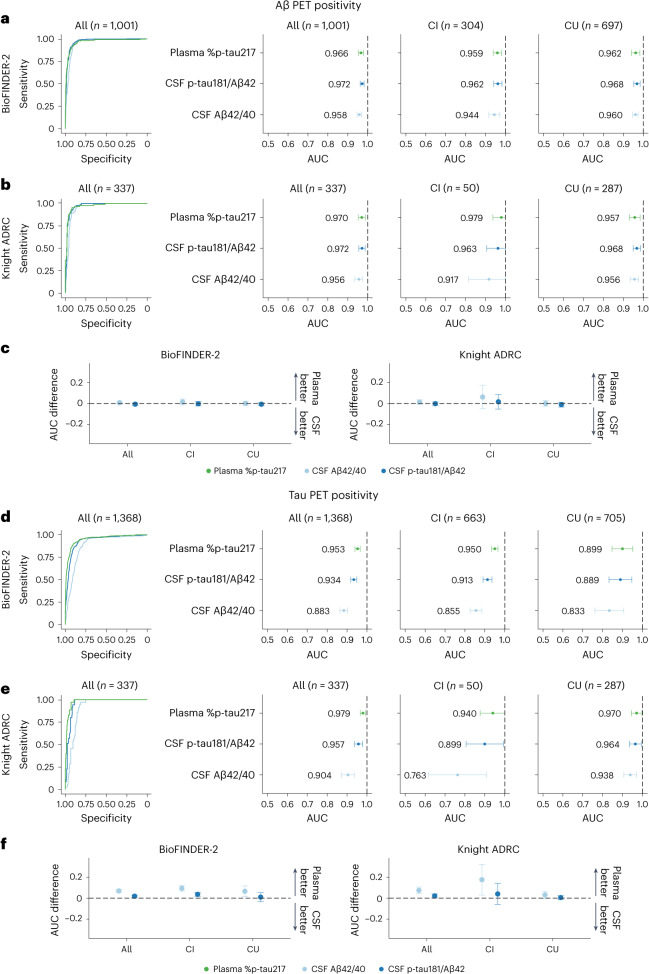
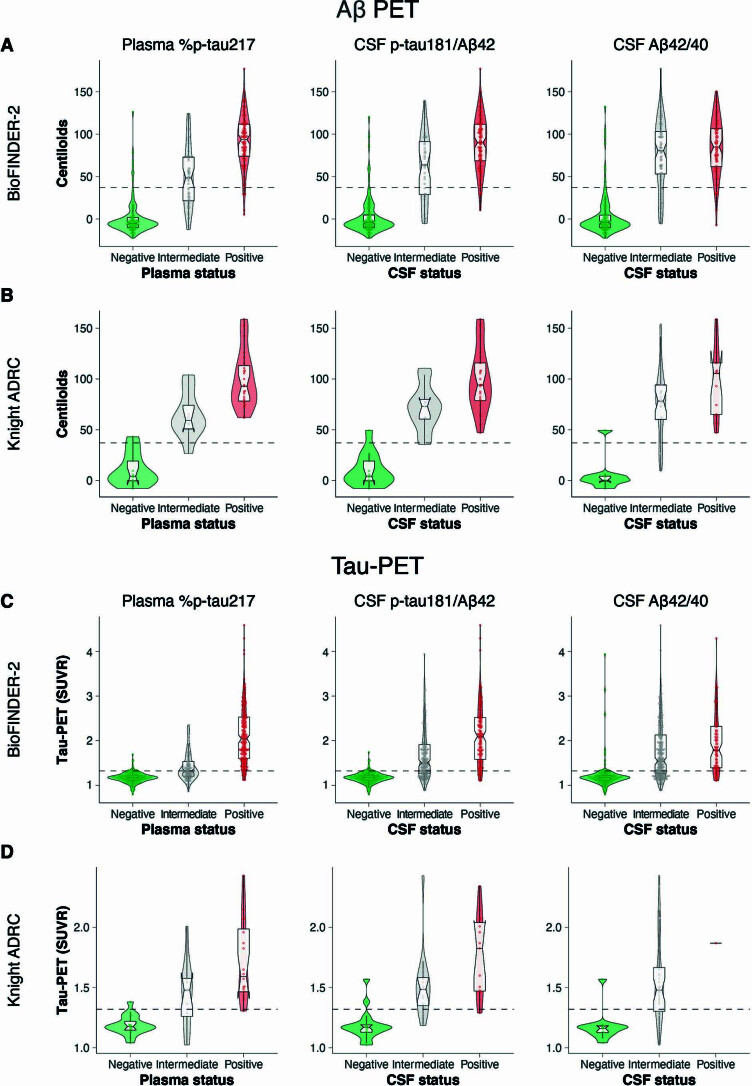
- In the full cohorts, plasma %p-tau217 classified Aβ PET status with very high accuracy: AUC 0.97 in BioFINDER-2 and 0.97 in Knight ADRC, clinically equivalent to CSF biomarker ratios.
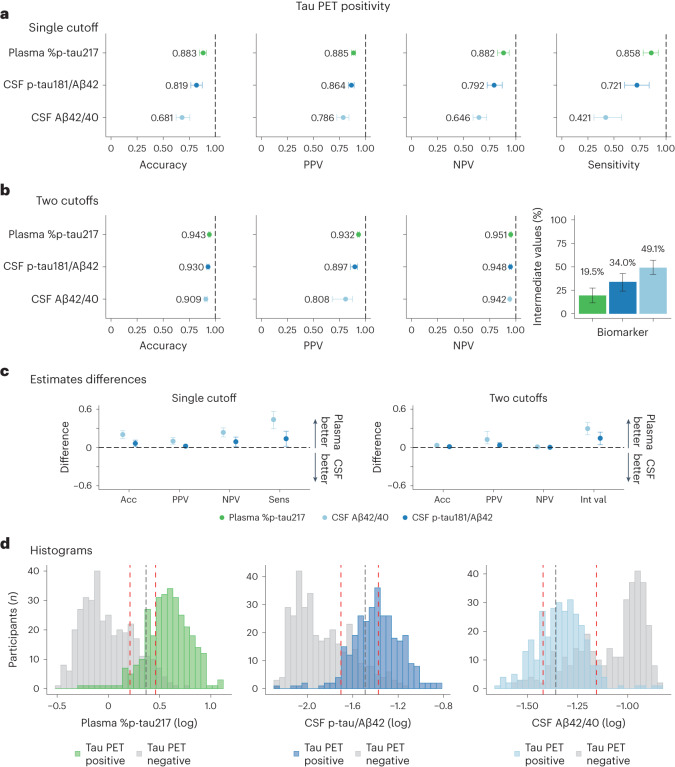
- For tau PET status, plasma %p-tau217 was superior to CSF tests in the full cohorts: AUC 0.95 vs 0.93/0.88 in BioFINDER-2 and 0.98 vs 0.96/0.90 in Knight ADRC.
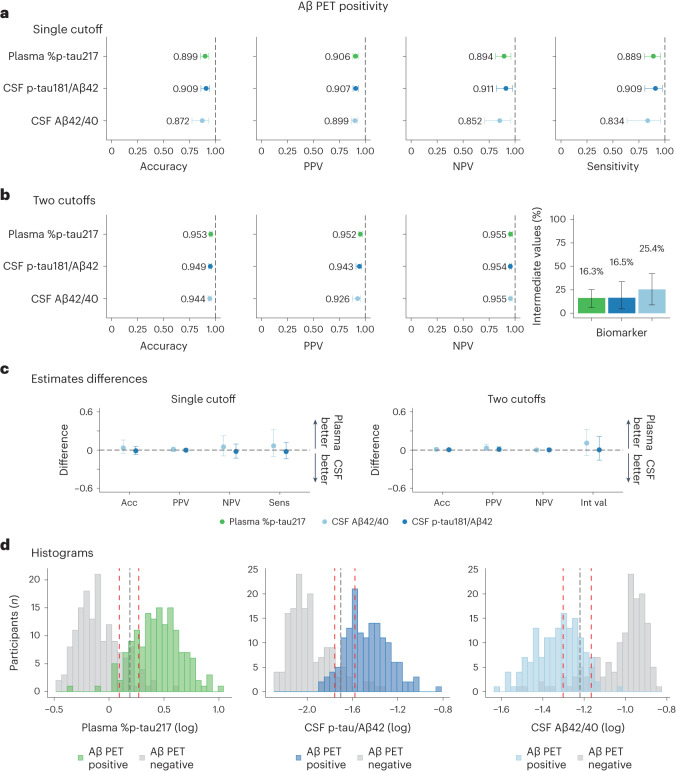
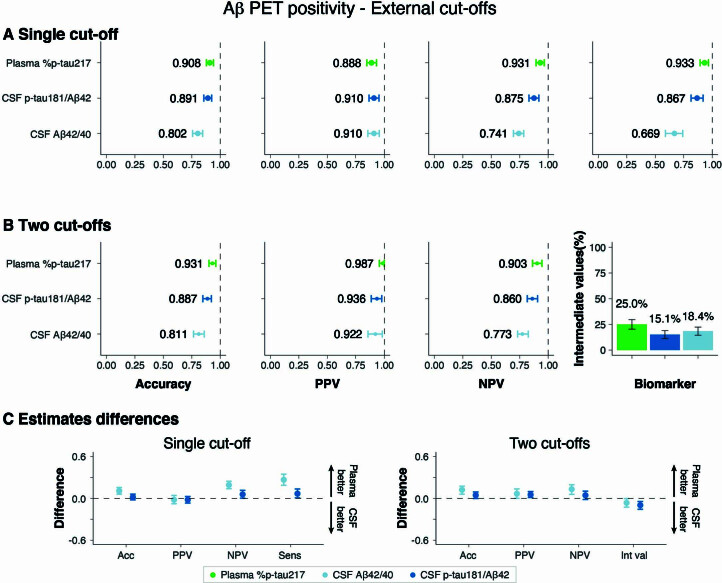
- In cognitively impaired participants, plasma %p-tau217 predicted Aβ PET status with 90% accuracy in BioFINDER-2 and 94% accuracy in Knight ADRC, with PPV/NPV around 89%/89% or higher; it was clinically equivalent to CSF tests for Aβ.
- Using two cutoffs improved Aβ PET prediction in cognitively impaired BioFINDER-2 participants to 95% accuracy, 95% PPV, and 96% NPV for plasma %p-tau217, with 16% intermediate values; for tau PET, plasma %p-tau217 reached 94% accuracy and was superior to CSF tests.
Methods
- Observational comparison across two independent cohorts: BioFINDER-2 (n = 1,422) in Sweden and Knight ADRC (n = 337) in the US; main analyses focused on cognitively impaired participants, including MCI and dementia.
- Plasma %p-tau217 was measured by LC–MS/HRMS; CSF biomarkers were measured with clinical/FDA-approved automated immunoassays (Roche Elecsys in BioFINDER-2, Fujirebio Lumipulse in Knight ADRC).
- Diagnostic performance was evaluated against Aβ PET positivity, tau PET positivity, and clinical AD diagnosis using ROC curves/AUC, plus accuracy, PPV, and NPV; equivalence was defined by 95% CI of the mean difference including zero.
Limitations
- The paper states that the Knight ADRC cognitive-impairment subgroup was relatively small, and there was no sufficiently large group with both antemortem biomarker data and postmortem data.
- The paper states that minoritized populations were not well enough represented, and that future studies should test broader primary care populations.
- Evident from the text: the study is observational and uses PET/clinical diagnosis as reference standards, so it does not test whether using the blood assay improves patient outcomes.
Model-written summary. Check it against the paper before relying on it.
Integrity signals
Registry
Cites
Statistics
Figures
Verification
Claims the paper makes
26 Valid · 2 Not valid · 3 Not checked · 66 Own results and interpretations
The cited sources support only part of this claim — read each source’s verdict below.
In the paper
“Additionally, PET and CSF can identify cognitively unimpaired individuals at high risk of future cognitive decline and progression to AD dementia14,15.”
§ Highly accurate blood test for Alzheimer’s disease is similar or superior to clinical cerebrospinal fluid tests > Main
What the sources say
- Partly supportedcites [14] Donohue, M. C. et al. Association between elevated brain amyloid and subsequent cognitive decline among cognitively normal persons. JAMA 317, 2305–2316 (2017). sourceExperimental — accuracy not yet measured
The Methods and Discussion (page numbers unavailable) show that PET or CSF amyloid measures identified cognitively normal people more likely to experience subsequent cognitive decline. The measured progression outcomes were cognitive symptoms and MCI, not AD dementia; the Discussion says predictive value for the dementia stage requires further follow-up. (LLM, conf=0.88)
- Not checked — no full text of the sourcecites [15] Fagan, A. M. et al. Cerebrospinal fluid tau/β-amyloid42 ratio as a prediction of cognitive decline in nondemented older adults. Arch. Neurol. 64, 343–349 (2007). source
plainstates an association- Asserted: passes — The authors put it forward as true.
- Checkable: passes — It can be checked against evidence.
- Load-bearing: unclear — It is unclear whether the paper’s conclusions depend on it.
- Based: passes — The paper gives a reason why it holds.
- Partly supported
The cited sources support only part of this claim — read each source’s verdict below.
In the paper
“The presence of Aβ pathology can be determined by positron emission tomography (PET), which visualizes Aβ deposition in the brain, or cerebrospinal fluid (CSF) assays, which measure CSF levels of Aβ42 as a ratio with Aβ40, phosphorylated tau (p-tau) or total tau4,9–11.”
§ Highly accurate blood test for Alzheimer’s disease is similar or superior to clinical cerebrospinal fluid tests > Main
What the sources say
- Not checked — no full text of the sourcecites [4] Hansson, O. Biomarkers for neurodegenerative diseases. Nat. Med. 27, 954–963 (2021). source
- Partly supportedcites [9] Shaw, L. M. et al. Appropriate use criteria for lumbar puncture and cerebrospinal fluid testing in the diagnosis of Alzheimer’s disease. Alzheimers Dement. 14, 1505–1521 (2018). sourceExperimental — accuracy not yet measured
The Discussion of the evidence (section 3.5; page unavailable) says amyloid PET assesses brain amyloid status and that the CSF Aβ42/Aβ40 ratio can identify or rule out brain amyloidosis. It also reports results for tau measured in ratios with Aβ42, but does not establish that p-tau or total tau alone determines the presence of Aβ pathology; it describes those markers as reflecting tangles and neuronal injury, respectively. (LLM, conf=0.83)
- Partly supportedcites [10] Johnson, K. A. et al. Appropriate use criteria for amyloid PET: a report of the Amyloid Imaging Task Force, the Society of Nuclear Medicine and Molecular Imaging, and the Alzheimer’s Association. Alzheimers Dement. 9, e1–e16 (2013). sourceExperimental — accuracy not yet measured
Section 11.2 says that CSF measures of amyloid peptides and tau have been investigated to establish the presence of Alzheimer’s pathology; the paper also addresses amyloid PET as an imaging method. It does not specify an Aβ42/Aβ40 ratio or distinguish phosphorylated from total tau as the citing sentence does. The indexed passage has no page number. (LLM, conf=0.86)
- Supportedcites [11] Schindler, S. E. & Atri, A. The role of cerebrospinal fluid and other biomarker modalities in the Alzheimer’s disease diagnostic revolution. Nat. Aging 3, 460–462 (2023). source
The “Roles of molecular imaging, BBBM, and CSF biomarkers” section says PET radioligands visualize amyloid pathology in the brain. The “Clinical use of CSF testing” section describes CSF tests measuring Aβ42, Aβ40, total tau and p-tau181, and says ratios including Aβ42 predict amyloid PET status. (LLM, conf=0.91)
plainstates an association- Asserted: passes — The authors put it forward as true.
- Checkable: passes — It can be checked against evidence.
- Load-bearing: passes — The paper’s conclusions depend on it.
- Based: passes — The paper gives a reason why it holds.
The cited sources support only part of this claim — read each source’s verdict below.
In the paper
“Notably, Aβ PET and tau PET are not perfectly accurate in detection of neuropathology45,46”
§ Highly accurate blood test for Alzheimer’s disease is similar or superior to clinical cerebrospinal fluid tests > Discussion
What the sources say
- Partly supportedcites [45] Bucci, M. et al. A multisite analysis of the concordance between visual image interpretation and quantitative analysis of [18F]flutemetamol amyloid PET images. Eur. J. Nucl. Med. Mol. Imaging 48, 2183–2199 (2021). sourceExperimental — accuracy not yet measured
The Introduction (page unavailable) reports that [18F]flutemetamol amyloid PET was validated against pathology measures, with sensitivity and specificity over 90%—high, but not perfect. The paper does not address tau PET accuracy, so it supports only the amyloid PET part of the claim. (LLM, conf=0.90)
- Partly supportedcites [46] Chen, C. D. et al. Comparing tau PET visual interpretation with tau PET quantification, cerebrospinal fluid biomarkers, and longitudinal clinical assessment. J. Alzheimers Dis. 93, 765–77 (2023). sourceExperimental — accuracy not yet measured
The Results > Conclusions (page unavailable) describe limitations of 18F-flortaucipir tau PET: some NFT deposition may be missed by SUVR quantification, and non-AD conditions can produce uptake. The Aβ PET Methods section describes how scans were acquired and quantified but does not assess their accuracy against neuropathology. The paper therefore supports the tau PET part, not the claim about Aβ PET. (LLM, conf=0.83)
plain- Asserted: passes — The authors put it forward as true.
- Checkable: passes — It can be checked against evidence.
- Load-bearing: passes — The paper’s conclusions depend on it.
- Based: passes — The paper gives a reason why it holds.
- Partly supported
Every source the paper cites for this claim was checked and supports it.
In the paper
“but in one large study the test classified Aβ PET status with an AUC of 0.97 (ref. 44).”
§ Highly accurate blood test for Alzheimer’s disease is similar or superior to clinical cerebrospinal fluid tests > Discussion
What the sources say
- Supportedcites [44] Barthélemy, N. R. et al. CSF tau phosphorylation occupancies at T217 and T205 represent improved biomarkers of amyloid and tau pathology in Alzheimer’s disease. Nat. Aging 3, 391–401 (2023). source
The CSF measures and amyloid PET section describes a large cohort (n = 750). The paper reports that Lumipulse CSF Aβ42/Aβ40 distinguished amyloid PET status with an AUC of 0.97. The printed citing sentence attributes that study result to the source; it does not attribute the FDA-approval description to it. (LLM, conf=0.94)
plainstates an association- Asserted: passes — The authors put it forward as true.
- Checkable: passes — It can be checked against evidence.
- Load-bearing: unclear — It is unclear whether the paper’s conclusions depend on it.
- Based: passes — The paper gives a reason why it holds.
- Supported
The cited sources support only part of this claim — read each source’s verdict below.
In the paper
“Despite BBMs being used in clinical practice in some countries, including the United States, they have not been recommended as standalone diagnostic tests due to a lack of studies demonstrating their equivalence to clinically used CSF and PET methods16,35–37.”
§ Highly accurate blood test for Alzheimer’s disease is similar or superior to clinical cerebrospinal fluid tests > Main
What the sources say
- Partly supportedcites [16] Hampel, H. et al. Blood-based biomarkers for Alzheimer’s disease: current state and future use in a transformed global healthcare landscape. Neuron 111, 2781–2799 (2023). sourceExperimental — accuracy not yet measured
The paper’s Future directions and conclusions section says blood-based biomarkers do not currently provide a standalone AD diagnosis. Its Diagnosis section discusses comparisons with CSF and PET, but the cited passages do not say that a lack of studies demonstrating equivalence is the reason standalone tests have not been recommended. (LLM, conf=0.85)
- Supportedcites [35] Hansson, O. et al. The Alzheimer’s Association appropriate use recommendations for blood biomarkers in Alzheimer’s disease. Alzheimers Dement. 18, 2669–2686 (2022). source
In its research priorities for specialized memory clinics (page unavailable), the paper says studies are still needed to determine whether BBM-based approaches are non-inferior to CSF and PET and can be used alone to support an Alzheimer’s diagnosis. Its clinical-practice section also says BBMs should be an adjunct to, not a substitute for, clinical evaluation. This supports the claim about not recommending BBMs as standalone diagnostic tests, although the paper reports promising performance for some individual biomarkers. (LLM, conf=0.86)
- Could not verifycites [36] Hu, Y. et al. Assessment of a plasma amyloid probability score to estimate amyloid positron emission tomography findings among adults with cognitive impairment. JAMA Netw. Open 5, e228392 (2022). sourceExperimental — accuracy not yet measured
The Discussion uses amyloid PET as the study’s reference standard, and the Conclusions say the blood test could aid physicians evaluating patients. Neither section addresses recommendations against standalone blood-biomarker diagnosis or attributes such recommendations to a lack of studies showing equivalence to CSF and PET methods. Searches for standalone use, recommendations, and equivalence found no passage making that point. (LLM, conf=0.73)
- Could not verifycites [37] Monane, M. et al. A blood biomarker test for brain amyloid impacts the clinical evaluation of cognitive impairment. Ann. Clin. Transl. Neurol. 10, 1738–1748 (2023). sourceExperimental — accuracy not yet measured
The Introduction reports studies comparing a blood biomarker test with amyloid PET, and the Discussion describes its potential to support clinical diagnosis. Neither section states that blood biomarkers are not recommended as standalone diagnostic tests or attributes such a recommendation to a lack of equivalence studies with CSF and PET. Searches for standalone-use recommendations and equivalence found no passage addressing that claim. (LLM, conf=0.74)
plain- Asserted: passes — The authors put it forward as true.
- Checkable: passes — It can be checked against evidence.
- Load-bearing: passes — The paper’s conclusions depend on it.
- Based: passes — The paper gives a reason why it holds.
- Partly supported
51 more claims · 6 with their cited sources checked
Create a free account to see all 97 claims and to verify the 6 references still open.
- Probably not a substantial claim. 20
- It may state two separate claims as one. 26
Claims other papers make about this one
Each is checked against this paper’s own text: does it say what the citing paper says it does?
The source backs part of the claim, not all of it — or backs it for a different population, condition or comparison.
In the citing paper
“Research has shown, however, that plasma biomarkers tend to differentiate AD cases and controls less effectively than CSF biomarkers, with the exception of some recent highly accurate tests, which means further research is required to identify potentially clinically relevant plasma biomarkers.”
From A genetic and proteomic comparison of key AD biomarkers across tissues (2024) · cites this paper as [9]
Experimental — accuracy not yet measured
Self-check
Percentages, sums and reported differences re-computed from the paper’s own numbers.
Each contradiction between two passages listed here was confirmed by an independent check.
Rated major: it would touch a result — a value a result rests on, reported and recomputed p-values on opposite sides of the significance level, two passages that conflict with no sign which is right, or a cited work retracted before this paper was published.
In the paper
§ Highly accurate blood test for Alzheimer’s disease is similar or superior to clinical cerebrospinal fluid tests > Results > Study participants
“702 (49.3%) were cognitively impaired as defined by either MCI or dementia”
§ Highly accurate blood test for Alzheimer’s disease is similar or superior to clinical cerebrospinal fluid tests > Abstract
“In cognitively impaired subcohorts (BioFINDER-2: n = 720; Knight ADRC: n = 50), plasma %p-tau217 had an accuracy, a positive predictive value and a negative predictive value of 89–90% for Aβ PET and 87–88% for tau PET status,”
Citations
Cites
Diagnostic and Statistical Manual of Mental Disorders
American Psychiatric Association (2013) · doi:10.1176/appi.books.9780890425596 · Cited by 116,369
McKhann, G. M., Knopman, D. S., Chertkow, H., Hyman, B. T., Jack, C. R., Kawas, C. H., Klunk, W. E., Koroshetz, W. J., Manly, J. J., Mayeux, R., et al. (2011) · Alzheimer's & Dementia · doi:10.1016/j.jalz.2011.03.005 · Cited by 18,657 · cited 1×
“Participants were assessed with the Clinical Dementia Rating (CDR) 60 , and individuals included in the current study were either cognitively unimpaired (CDR = 0) or cognitively impaired (CDR > 0) with a clinical syndrome typical of AD (either MCI or dementia) based on standard criteria 61 .”
MethodSelf-citationpROC: an open-source package for R and S+ to analyze and compare ROC curves
Robin, X., Turck, N., Hainard, A., Tiberti, N., Lisacek, F., Sanchez, J.-C., & Müller, M. (2011) · BMC Bioinformatics · doi:10.1186/1471-2105-12-77 · Cited by 13,697 · cited 1×
“To evaluate the performance of the three fluid biomarkers in predicting the main outcomes (Aβ and tau PET status and clinical AD diagnosis), we used receiver operating characteristic (ROC) curves ( pROC package 72 ).”
MethodThe Clinical Dementia Rating (CDR): Current version and scoring rules
Morris, J. C. (1993) · Neurology · doi:10.1212/wnl.43.11.2412-a · Cited by 9,882
Self-citationLecanemab in early Alzheimer's disease
van Dyck, C. H., Swanson, C. J., Aisen, P., Bateman, R. J., Chen, C., Gee, M., Kanekiyo, M., Li, D., Reyderman, L., Cohen, S., et al. (2023) · New England Journal of Medicine · doi:10.1056/nejmoa2212948 · Cited by 5,678 · cited 2×
“Recently, lecanemab received traditional approval from the US Food & Drug Administration (FDA) for treatment of patients with MCI and mild dementia with biomarker-proven Aβ pathology 8 , and other immunotherapies are expected to follow.”
BackgroundSelf-citationDonanemab in Early Symptomatic Alzheimer Disease: The TRAILBLAZER-ALZ 2 Randomized Clinical Trial
Sims, J. R., Zimmer, J. A., Evans, C. D., Lu, M., Ardayfio, P., Sparks, J., Wessels, A. M., Shcherbinin, S., Wang, H., Monkul Nery, E. S., et al. (2023) · JAMA · doi:10.1001/jama.2023.13239 · Cited by 2,932 · cited 3×
“Secondary outcomes included the classification of brain tau aggregates as determined by tau PET imaging, which has also been used by some trials in the selection of patients suitable for anti-amyloid immunotherapy 7,38 , and agreement with a clinical AD diagnosis.”
MethodInfluentialSelf-citationNichols, E., Szoeke, C. E. I., Vollset, S. E., Abbasi, N., Abd-Allah, F., Abdela, J., Aichour, M. T. E., Akinyemi, R. O., Alahdab, F., Asgedom, S. W., et al. (2019) · The Lancet Neurology · doi:10.1016/s1474-4422(18)30403-4 · Cited by 2,412
Donanemab in Early Alzheimer’s Disease
Mintun, M. A., Lo, A. C., Duggan Evans, C., Wessels, A. M., Ardayfio, P. A., Andersen, S. W., Shcherbinin, S., Sparks, J., Sims, J. R., Brys, M., et al. (2021) · New England Journal of Medicine · doi:10.1056/nejmoa2100708 · Cited by 1,728
Improvements on Cross-Validation: The 632+ Bootstrap Method
Efron, B., & Tibshirani, R. (1997) · Journal of the American Statistical Association · doi:10.1080/01621459.1997.10474007 · Cited by 1,636
Palmqvist, S., Janelidze, S., Quiroz, Y. T., Zetterberg, H., Lopera, F., Stomrud, E., Su, Y., Chen, Y., Serrano, G. E., Leuzy, A., et al. (2020) · JAMA · doi:10.1001/jama.2020.12134 · Cited by 1,603 · cited 5×
“Plasma levels of p-tau are strongly associated with PET and CSF biomarkers of AD pathology 19–25 , neuropathological changes associated with AD 20,23,26,27 and the subsequent development of AD dementia 20,23,28 .”
BackgroundMethodInfluentialSelf-citation
Cited by
Items 301–400 of 442
Diagnosis of Alzheimer's disease: Recommendations from the French Federation of Memory Clinics
Dumurgier, J., Defontaines, B., Gallouj, K., Garcin, B., Garnier‐Crussard, A., Lagarde, J., Pauly, J.-M., Sillaire, A. R., Rouch‐Leroyer, I., Sarazin, M., et al. (2025) · Revue Neurologique · doi:10.1016/j.neurol.2025.09.004 · Cited by 4
Li, Q., Degan, S., Galeffi, F., Colton, C. A., & Turner, D. A. (2025) · Journal of Cerebral Blood Flow & Metabolism · doi:10.1177/0271678x251383112 · Cited by 1
Towards an AI biomedical scientist: Accelerating discoveries in neurodegenerative disease
Roberts, K. F., Landsness, E. C., Reese, J., Elbert, D., Strobel, G., Wu, E., Chen, Y., Lai, A., Abrams, Z. B., Zhu, M., et al. (2026) · The Journal of Prevention of Alzheimer's Disease · doi:10.1016/j.tjpad.2025.100398 · Cited by 1
“More than a century after its initial description by Alois Alz-heimer, research has advanced significantly, leading to the development of highly accurate diagnostic biomarkers and modestly effective disease-modifying therapies [1 – 3].”
Self-citationClinical validation of new alzheimer disease diagnosis tools based on plasma p-Tau217
Navia, A. M., Álvarez‐Sánchez, L., Ferré‐González, L., López, A., Peña‐Bautista, C., Balaguer, Á., Pedrosa, N. R., Vico, H., Baquero, M., & Cháfer‐Pericás, C. (2025) · Scientific Reports · doi:10.1038/s41598-025-31613-x · Cited by 1
“These discrepancies are largely driven by heterogeneity in assay platforms, participant selection criteria, and analytical variables 32 .”
InfluentialFernandes, M. G. F., Pinard, M., Sokullu, E., Tremblay, C., Gagnon, J., Calon, F., Coulombe, B., & Brouillette, J. (2026) · The Journals of Gerontology Series A · doi:10.1093/gerona/glag009 · Cited by 1
Li, B., Liu, C., Gu, C., Wei, S., Li, S., Liu, Z., Zhao, D., Tang, Q., Chen, Y., & Chen, Z. (2026) · Biosensors · doi:10.3390/bios16020113 · Cited by 2
“Currently, diagnosis relies on imaging such as positron emission tomography, or on biomarker analysis in blood or cerebrospinal fluid [10–15].”
Cánovas, R., Fowler, C. J., Feizpour, A., Doré, V., Bourgeat, P., Saad, Z. S., Triana‐Baltzer, G., Kolb, H. C., Vandijck, M. L. J., Kollmorgen, G., et al. (2026) · Alzheimer s & Dementia · doi:10.1002/alz.71145 · Cited by 4
Datta, D., Wang, M., & Arnsten, A. F. T. (2026) · Frontiers in Cellular Neuroscience · doi:10.3389/fncel.2026.1750092 · Cited by 1
Bermudez, C. L., Hofrenning, E. I., Fought, A. J., Gunter, J. L., Cogswell, P. M., Jones, D. T., Schwarz, C. G., Lowe, V., Elder, B. D., Petersen, R. C., et al. (2026) · Fluids and Barriers of the CNS · doi:10.1186/s12987-026-00789-3 · Cited by 1
“Concentrations (pg/mL) of Aβ42, Aβ40, p-tau217 and np-tau217 were determined by immunoprecipitation mass spectrometry as previously described [19, 20].”
James, L. M., Stratigopoulos, G., Leuthold, A. C., & Georgopoulos, A. P. (2026) · Scientific Reports · doi:10.1038/s41598-026-44894-7 · Cited by 1
Chaulagain, B., Gothwal, A., Mahanta, A. K., Jarajapu, Y. P. R., & Singh, J. (2026) · ACS Chemical Neuroscience · doi:10.1021/acschemneuro.5c01009 · Cited by 1
From comorbidity to continuum: Alzheimer’s disease and epilepsy are connected-now what?
Alves, S. S., Manzine, P. R., dos Santos, F. M., Migliaccio, M. M., Alves, L. D. C., da Silva-Júnior, R. M. P., Becerra-Hernández, L. V., González-Acosta, C. A., Buriticá, E., Cominetti, M. R., et al. (2026) · Neuroscience & Biobehavioral Reviews · doi:10.1016/j.neubiorev.2026.106682 · Cited by 1
Predictive Ability of Plasma p‐tau217 for β‐Amyloid Status: A Prospective Multicenter Study
Massons, M., Guillén, N., Sarto, J., Falgàs, N., Borrego‐Écija, S., Esteller, D., Castellví, M., Tort‐Merino, A., Pérez‐Millan, A., Antonell, A., et al. (2026) · Annals of Clinical and Translational Neurology · doi:10.1002/acn3.70387 · Cited by 1
Kurihara, M., Ihara, R., Sato, K., & Iwata, A. (2026) · The Journal of Prevention of Alzheimer s Disease · doi:10.1016/j.tjpad.2026.100572 · Cited by 1
“Although confirmatory diagnosis using BBMs remains a matter of debate, recent reports have highlighted that some BBMs are non-inferior or may even be superior to currently used confirmatory CSF tests [6,20, 21].”
Biofouling-resistant functionalized capacitive biosensor for rapid detection of zoonotic influenza
Ghumra, D. P., Xu, M., Benegal, A., Vahey, M. D., Joshi, A., Seehra, K., Boon, A. C. M., & Chakrabarty, R. K. (2026) · npj Biosensing · doi:10.1038/s44328-026-00092-z · Cited by 3
Donmez, T. B., & MohammedMansour (2026) · Journal of Proteomics · doi:10.1016/j.jprot.2026.105698 · Cited by 1
Chen, Y., Wang, Z., Chen, H., Li, H., Zhang, Z., Cui, H., Li, S., & Initiative, A. D. N. (2026) · Journal of Neurology · doi:10.1007/s00415-026-13954-3 · Cited by 2
Kurz, C., Hattenkofer, D., Pihale-Haug, M., Hufnagel, A., Guersel, S., Brendel, M., Rauchmann, B., Levin, J., Höglinger, G. U., & Perneczky, R. (2026) · Aging Clinical and Experimental Research · doi:10.1007/s40520-026-03420-5 · Cited by 2
“[10 , 19 , 20 ].”
Prior Traumatic Brain Injury and Alzheimer Disease Blood Biomarkers
Lang, Y. R., Vrillon, A., Pasternak, S., Blazhenets, G., Soleimani‐Meigooni, D. N., Rabinovici, G. D., Weiner, M. W., Hantke, N. C., Silbert, L. C., Schwartz, D. L., et al. (2026) · JAMA Neurology · doi:10.1001/jamaneurol.2026.2042 · Cited by 1
Self-citationProteoform-specific enrichment of phosphopeptide isomers by polymer-based synthetic receptors
İncel, A., Shinde, S., Díez, I. A., Stollenwerk, M. M., Xu, J., Ravnsborg, T., Jakobsson, M. E., Jensen, O. N., & Sellergren, B. (2026) · Nature Chemical Biology · doi:10.1038/s41589-026-02274-2 · Cited by 1
“Hence, robust and specific enrichment techniques that can be tailored to positional isomers or specific biomarkers are lacking despite their link to many diseases such as cancers 15 , Alzheimer disease 39 , Parkinson disease and heart disease 40 .”
Savage, N. J. (2024) · Nature · doi:10.1038/d41586-024-03456-5 · Cited by 1
Neuropathology meets chemical and genetic pathology head-on: a personal perspective
Masters, C. L. (2024) · Pathology · doi:10.1016/j.pathol.2024.11.001 · Cited by 1
Advances in dementia research and clinical care in 2024
Benzinger, T. L. S. (2024) · The Lancet Neurology · doi:10.1016/s1474-4422(24)00484-8 · Cited by 1
Self-citationFan, X., Ye, X., Xu, J., Mao, T., Zhang, R., Zhou, X., Yeung, C. C. K. A., Li, C., Chang, R. C., Lin, H., et al. (2025) · Advanced Science · doi:10.1002/advs.202509376 · Cited by 3
Wang, N., Chen, L., Kong, W., Hsu, C. Y., & Tzeng, I. (2024) · Frontiers in Neuroscience · doi:10.3389/fnins.2024.1396702 · Cited by 2
“Similarly, Hansson et al. demonstrated the clinical efficacy of blood plasma p-tau217 for AD pathology detection, surpassing FDA-approved CSF tests (Barthélemy et al., 2024).”
MethodShima, S., Ohdake, R., Mizutani, Y., Tatebe, H., Koike, R., Kasai, A., Bagarinao, E., Ueda, A., Ito, M., Jun'ichi, H., et al. (2024) · medRxiv · doi:10.1101/2024.05.01.24306489 · Cited by 2
“Not only p-tau181 but also plasma phospho-tau, such as p-tau217 and p-tau231, have become available[25] and can predict amyloid PET and tau PET stages[26].”
BackgroundImpact of clinical severity on plasma p-tau performance in predementia Alzheimer’s diseasePreprint
González‐Ortiz, F., Kirsebom, B., Yakoub, Y., Gundersen, J. K., Pålhaugen, L., Waterloo, K. K., Selnes, P., Jarholm, J. A., Gísladóttir, B., Rongve, A., et al. (2024) · medRxiv · doi:10.1101/2024.08.06.24311532 · Cited by 2
Diagnostic performance of Alzheimer’s disease blood biomarkers in a Brazilian cohortPreprint
Borelli, W. V., Ferreira, P. C. L., Brum, W. S., Ferrari‐Souza, J. P., Carello‐Collar, G., Holz, M. R., Souza, V. T., Strelow, M. Z., Formoso, C., Chaves, M. L. F., et al. (2025) · medRxiv · doi:10.1101/2025.02.23.24319116 · Cited by 1
“In both primary and secondary care, p-tau217 stands out as the most promising biomarker for clinical implementation 17, 18 due to its diagnostic performance comparable to well-established CSF biomarkers 19, 20 .”
Human whole-epigenome modelling for clinical applications with PleiadesPreprint
Niki, P., Nalmpantis, C., Ganbat, J.-O., Byrne, D., Kathail, P., Fang, C., Wong, A., Karailiev, A., Babikir, H. A., Jhutty, A., et al. (2025) · bioRxiv (Cold Spring Harbor Laboratory) · doi:10.1101/2025.07.16.665231 · Cited by 3
Yakoub, Y., Qiu, T., Peyrot, C., Salvadó, G., Villeneuve, S., Binette, A. P., & Initiative, A. D. N. (2025) · medRxiv · doi:10.1101/2025.09.30.25337003 · Cited by 4
Self-citationZapater‐Fajarí, M., Bucci, M., Chiotis, K., Almkvist, O., Wall, A. E., Eriksson, J., Antoni, G., Pola, I., Tan, K., Traichel, W., et al. (2025) · medRxiv · doi:10.64898/2025.12.17.25342292 · Cited by 1
A Decade of Protecting Progress: Ethics Review
Rosen, A. C., Lavacot, J. A., Klee, V., Luria, Y., & Rumbaugh, M. C. (2024) · Journal of Alzheimer s Disease · doi:10.3233/jad-240634
“With the increasing ease and precision of detecting evidence of brain pathology underlying AD with blood tests, e.g. 19 , and the development of drugs to reduce that pathology, 20 – 22 the field of neurode-generation is poised for a transformation.”
Neuroligin fragments as blood-based biomarkers for early detection of Alzheimer’s diseasePreprint
Fernandes, M. G. F., Pinard, M., Sokullu, E., et al. (2024) · medRxiv · doi:10.1101/2024.09.05.24313143
“We compared the plasma concentrations of NLGN fragments and their potential as biomarkers for aMCI and early AD with those of phosphorylated Tau (pTau) at various epitopes (pTau181, pTau217, and pTau231), which have been identified as promising early biomarkers of AD 21 .”
Wang, S., Liu, D., Li, H., Jia, X., Zhou, H., Yu, W., Li, T., Pan, L., Chen, B., Wang, Y., et al. (2024) · medRxiv · doi:10.1101/2024.12.25.24319645
Wen, Y., Cannistra, M., Saccà, V., Ma, L., Liang, F., Xie, Z., & Kong, J. (2025) · Brain Research · doi:10.1016/j.brainres.2025.149478
A comprehensive view of the molecular features within the serum and serum EV of Alzheimer's disease
Zhang, J., Cheng, X., Hu, A., Zhang, X., Zhang, M., Zhang, L., Dai, J., Yan, G., Shen, H., & Fei, G. (2025) · The Analyst · doi:10.1039/d4an01018c
Clinical relevance of plasma ADAM-17 with cognition and neurodegeneration in Alzheimer's disease
Chen, Z.-Q., Wang, M. T., Tan, C., Huang, S., Zhou, F., Shen, Y., Zeng, G., Fan, D., & Wang, Y. (2025) · Journal of Alzheimer s Disease · doi:10.1177/13872877251317659
Biomarkers in dementia disorders – a narrative review
Hasselbalch, S. G. (2025) · Danish Medical Journal · doi:10.61409/a09240634 · Cited by 1
Redefining disease in the age of blood-based biomarkers
Reddy, N. K. (2025) · Frontiers in Sociology · doi:10.3389/fsoc.2025.1533429 · Cited by 1
Classification of Alzheimer’s disease in a mixed clinical cohort using biofluid Raman spectroscopyPreprint
Devitt, G., Michopoulou, S. K., Kadalayil, L., et al. (2025) · medRxiv · doi:10.1101/2025.02.23.25322672
Paulsen, A., Driscoll, I. F., Breidenbach, B. M., Glittenberg, M., Lose, S., Ma, Y., Sager, M. A., Carlsson, C., Gallagher, C., Hermann, B. P., et al. (2025) · medRxiv · doi:10.1101/2025.03.03.25323245
Wang, J., Fan, D., Huang, S., et al. (2025) · medRxiv · doi:10.1101/2025.03.09.25323608
Self-citationFindeisen, P. (2025) · Trillium Diagnostik · doi:10.47184/td.2025.01.07
Challenges and perspectives in dementia diagnosis
Lochman, I., Novobilský, R., & Kušnierová, P. (2025) · Klinická biochemie a metabolismus · doi:10.61568/kbm.2025.007
Hu, J., Lu, S., Zhang, Q., Rehman, H., Zhu, C., Farrell, J. J., Au, R., Farrer, L. A., Qiu, W. Q., Chen, J., et al. (2025) · SSRN Electronic Journal · doi:10.2139/ssrn.5272191
Niwa, M., Noda, K., Kobayashi, Y., Kageyama, I., & Kodama, K. (2025) · Bioanalysis · doi:10.1080/17576180.2025.2515011
Ma, S. L., Gao, R., Lee, A. T. C., & LAM, L. C. W. (2025) · medRxiv · doi:10.1101/2025.06.08.25329239
Musto, H., Stamate, D., Reeves, D., Morgan, C., Hutanu, R., Mavromati, K., Cadar, D., & Stahl, D. R. (2025) · IFIP advances in information and communication technology · doi:10.1007/978-3-031-96235-6_18
“Furthermore, this work supports the continued e(cid:27)orts by clinical researchers to validate blood-based proteomics data as a diagnostic tool for dementia in general and Alzheimer’s Disease in particular [6].”
Imaging Markers of Amyloid and Tau in Alzheimer Disease
Tarawneh, R. M. (2025) · Springer eBooks · doi:10.1007/978-3-031-80849-4_20
Shchegoleva, N., Tonka, P., & Zalutskaya, N. M. (2025) · Lecture notes in computer science · doi:10.1007/978-3-031-97648-3_23
Degan, S., Feng, Y., Colton, C. A., Schmidt, S. L., Peterchev, A. V., & Turner, D. A. (2025) · Neuromodulation Technology at the Neural Interface · doi:10.1016/j.neurom.2025.06.002 · Cited by 1
Zhou, S.-Y., Lin, H., Tang, J., Yao, Q.-Y., Hu, J.-W., Long, W.-J., Dai, W.-Z., Ma, T., & Zhu, X. (2025) · Current Alzheimer Research · doi:10.2174/0115672050397092250823195514
Predictive Value of Plasma Biomarkers in Tau‐ PET Transitions
Graff‐Radford, J., Syrjanen, J. A., Vemuri, P., Lowe, V. J., Schwarz, C. G., Wiste, H. J., Kremers, W. K., Algeciras‐Schimnich, A., Binette, A. P., Smith, R. A., et al. (2025) · Annals of Neurology · doi:10.1002/ana.78003 · Cited by 5
Self-citationAnalytical considerations and clinical utility of plasma phosphorylated Tau217
Frykman, H. (2025) · Critical Reviews in Clinical Laboratory Sciences · doi:10.1080/10408363.2025.2551648 · Cited by 1
“The CSF Aβ42/Aβ40 ratio measurement is a sturdy biomarker in detecting Aβ pathology and AD diagnosis [10].”
Keshavan, A., Wiltshire, K., Wee, R. W. S., et al. (2025) · medRxiv · doi:10.1101/2025.09.08.25335317
Caregivers' perspectives on lecanemab use for Alzheimer's disease: A national survey in China
Liu, S., Fan, S., Gan, J., Liao, W., Chen, Q., Li, X., Zhang, J., Chen, X., & Ji, Y. (2025) · Alzheimer s & Dementia · doi:10.1002/alz.70680 · Cited by 4
The biological diagnosis of Alzheimer’s disease using blood-based biomarkers: a Canadian prospective
Kumar, P., Mousavi, A., & Frykman, H. (2025) · Clinical Biochemistry · doi:10.1016/j.clinbiochem.2025.111015 · Cited by 1
Balogun, W. G., Zeng, X., Triana‐Baltzer, G., et al. (2025) · medRxiv · doi:10.1101/2025.10.02.25331921
Beyond amyloid and tau: synaptic and neurodegenerative biomarkers shape MCI progression
Delaby, C., Schraen‐Maschke, S., Paquet, C., Blanc, F., Vidal, J., Hirtz, C., Assou, S., Allinquant, B., Bombois, S., Gabelle, A., et al. (2026) · Molecular Psychiatry · doi:10.1038/s41380-026-03708-y · Cited by 2
Porras, G. R. G., Brison, A., Becker, A., Calvé, S. L., David, M., Ulrich, G., Mazan, V., Schmutz, M., Bigo−Simon, A., Mertz, D., et al. (2025) · ACS Applied Nano Materials · doi:10.1021/acsanm.5c03459
Dybala, A., Pils, M., Bannach, O., Tamgüney, G., & Riesner, D. (2025) · Biotechnology and Applied Biochemistry · doi:10.1002/bab.70083
“An advanced test does exist for detecting AD-specific tau phosphorylated at amino acid 217 in plasma [17, 18].”
Ackley, S. F., Joie, R. L., Caunca, M. R., Mukherjee, S., Choi, S., Trittschuh, E. H., Crane, P. K., Hayes‐Larson, E., & Initiative, T. A. D. N. (2025) · medRxiv · doi:10.1101/2025.11.06.25339696
“As a result, measures of plasma p-tau, particularly the 217 isoform, have emerged as a key, ubiquitously used blood-based marker, with growing evidence for its use for screening and diagnosis (22,23).”
Self-citationHortsch, S., Domenico, A. D., Borlinghaus, N., et al. (2025) · medRxiv · doi:10.1101/2025.11.07.25339760
Raich, L., Könken, M., Grochowska, K. M., Puig, B., Mayer, C., Hadjilaou, A., Schlemm, E., Shafiq, M., Thomalla, G., Magnus, T. U., et al. (2025) · bioRxiv (Cold Spring Harbor Laboratory) · doi:10.1101/2025.11.27.690912
“This finding highlights the potential utility of biomarker ratios, which can provide normalized measures of compartmental distribution and have proven valuable for other amyloid-associated 12,28,29 and, more recently, synaptic biomarkers 16 .”
Tau's two faces: From structural scaffold to pathological destroyer
Licinio, J. (2025) · Genomic psychiatry : · doi:10.61373/gp025d.0128
Multimodal Deep Learning–Based EEG Health Scoring Model for Mild Cognitive Impairment
Wu, X., Huang, Q., Liu, Y., Dong, X., Liu, H., & Wen, D. (2025) · IFAC-PapersOnLine · doi:10.1016/j.ifacol.2025.12.560
Effect of prior traumatic brain injury on Alzheimer’s disease blood biomarkers in Vietnam VeteransPreprint
Lang, Y. R., Vrillon, A., Pasternak, S., Blazhenets, G., Soleimani-Meigooni, D., Rabinovici, G. D., Weiner, M. W., Hantke, N. C., Silbert, L. C., Schwartz, D. L., et al. (2026) · medRxiv · doi:10.64898/2026.01.13.26344009
Self-citationCross-Validation of Neurodegeneration Biomarkers in Blood and CSF for Dementia Classification
Ochneva, A., Abramova, O. V., Zorkina, Y., Morozova, I., Ushakova, V. M., Ka, P., Andreyuk, D., Zubkov, E., Andryushchenko, A. V., Tsurina, A. M., et al. (2026) · Clinical and Translational Neuroscience · doi:10.3390/ctn10010002
“Further, in both subgroups, the concentration of several neurodegenerative parameters of blood plasma was analyzed, which revealed potential differences between the groups [26–28].”
Sánchez‐Juan, P., Baz, P. G., Arrieta, E., Novick, D., Díaz-Cerezo, S., Cotton, S. E., Walker, C., Trueba-Sáiz, Á., & Nuñez, M. G. (2026) · Frontiers in Neurology · doi:10.3389/fneur.2025.1702805
Huang, Y.-Y., Li, L.-L., Yao, R., Dong, J. Z., Gan, Y., Chen, Y., Chen, K., Chen, S.-F., Yuan, M.-Y., Xin, J.-W., et al. (2026) · The Innovation · doi:10.1016/j.xinn.2026.101272
“8,9 12 However, most prior studies evaluating the diagnostic performance of plasma p-tau217 have been conducted in controlled research settings or highly selected patient cohorts with strict inclusion and exclusion criteria.”
Wang, S., Wang, C., Hong, H., Tang, C., Yu, J., & Wang, Q. (2026) · Journal of Alzheimer s Disease · doi:10.1177/13872877261418263
“59 Compared with the above three AD detection methods, ocular assessment has multiple advantages, such as non invasiveness, high cost-effectiveness, and easy repeatability in routine ophthalmic examinations.”
Blood-based biomarkers and early diagnosis of Alzheimer’s disease
Cui, Z., Li, G., Wei, S., Cheng, Q., Yu, Q., Zong, S., Zhang, P., Chen, H., Yu, S., Wu, S., et al. (2026) · Neural Regeneration Research · doi:10.4103/nrr.nrr-d-25-00759 · Cited by 1
A Two‐Stage Plasma Biomarker Algorithm Reduces Amyloid PET Use and the p‐Tau217 Gray Zone
Parankusham, H. S., Vanderlip, C. R., Birkenbihl, C., Krishna, E., Ugboaja, C., Budson, A. E., Frank, B. E., & Initiative, A. D. N. (2026) · Annals of Clinical and Translational Neurology · doi:10.64898/2026.02.03.26345302 · Cited by 1
Xie, Y., Cai, W., Zhao, X., & Li, R. (2026) · Organ medicine. · doi:10.1002/orm2.70032 · Cited by 1
Abraham, M. K., Indongo, G., Rajeevan, G., Arathy, B. K., Dhahir, D. M., & George, S. (2026) · ChemNanoMat · doi:10.1002/cnma.202500738
E3 Ubiquitin Ligases in Alzheimer’s Disease
Gavilán, E. (2026) · Springer eBooks · doi:10.1007/978-981-95-6099-8_10
Chen, Y., Wang, Z., Chen, H., Cui, H., Li, S., & Initiative, A. D. N. (2026) · Journal of Neurology · doi:10.1007/s00415-026-13726-z · Cited by 1
Zhang, W., Jing, P., Li, X., Ji, Y., Liu, Y., & Kung, S. (2026) · Information Processing & Management · doi:10.1016/j.ipm.2026.104718
Rice, M., Willoughby-Dudley, K. A., Lin, M., Wang, H., Davalos, D. B., & Initiative, A. D. N. (2026) · Journal of Alzheimer s Disease · doi:10.1177/13872877261424407
Xu, J., Chen, H., Wang, Y., Hu, Z., Ke, Z., Huang, L., Mo, Y., Yang, D., Mao, C., Chen, Y., et al. (2026) · Brain Communications · doi:10.1093/braincomms/fcag080 · Cited by 3
“19,74,75 Third, the single-centre, relatively homogeneous Chinese elderly sample may limit generalizability, and replication in larger, multi-ethnic multi-centre cohorts is needed.”
Koenig, L. N., Huber, H., Chongtham, A., Molfetta, G. D., Andrews, R. D., Lukic, A., Shafiian, N., Fillit, H. M., Blennow, K., Ashton, N. J., et al. (2026) · Brain Communications · doi:10.1093/braincomms/fcag074
Hortsch, S., Domenico, A. D., Borlinghaus, N., Caley, D., Kaminioti-Dumont, L., Jeppesen, S. B., González‐Escalante, A., Ritchie, C. W., Frederiksen, K. S., & Suárez‐Calvet, M. (2026) · The Journal of Prevention of Alzheimer s Disease · doi:10.1016/j.tjpad.2026.100534 · Cited by 2
“The AUCs for discriminative performance of the pTau217 plasma immunoassay observed in this study were comparable to published data for other pTau217 assays [7,8,33 – 36], and to those reported for CSF biomarker tests [37,38].”
Qiu, Q., Qian, W., Zhao, W., Xie, H., Cao, L., Ye, L., & Initiative, A. D. N. (2026) · Journal of Alzheimer s Disease Reports · doi:10.1177/25424823261439687
Combining p‐tau217 and digital cognitive testing to predict cognitive decline
Kim, H., Soberanes, D., Jutten, R. J., Dubbelman, M. A., Yang, H., Marshall, G. A., Johnson, K. A., Betensky, R. A., Kivisäkk, P., Arnold, S. E., et al. (2026) · Alzheimer s & Dementia · doi:10.1002/alz.71328
“To assess baseline cognition and annual cognitive trajectories, we utilized a Preclinical Alzheimer’s Cognitive Composite–5 (PACC5), a composite score where higher values indicate better cognitive performance.”
Van, K. T. (2025) · theses.fr (ABES) · doi:10.70675/32a1a6cez5dd3z42c0za2eaz2e57807081a6
Novel biomarker identification for blood diseases using PCA-enhanced Multiscale neural framework
Harishna, S., & Duraisamy, G. (2026) · Neural Computing and Applications · doi:10.1007/s00521-026-11983-7 · Cited by 1
Zakaria, J. A. D., & Vassar, R. J. (2026) · Topics in medicinal chemistry · doi:10.1007/7355_2026_188
Rizzi, L., Ribeiro, I. C., Silva, M. C. D. R., Aventurato, Í. K., Santos, L. E., Silva, A. M. D. S., Pinheiro, T., Fernandes, G. B. P., Felice, F. G. D., & Balthazar, M. L. F. (2026) · Frontiers in Aging Neuroscience · doi:10.3389/fnagi.2026.1773606 · Cited by 1
“The diagnostic performance observed in our study (AUC 0.88– 0.89) aligns with earlier studies (Barthélemy et al., 2024; Brickman et al., 2021; Olvera-Rojas et al., 2025).”
InfluentialGebril, N. M., Elettreby, A. M., Younis, A. H., Moawad, M. H. E. D., Hafez, A. M., Elsayed, T. G., Abdelrahman, K. M., & El-Kot, S. M. (2026) · Molecular Neurobiology · doi:10.1007/s12035-026-05864-2 · Cited by 1
Hirota, Y., Yamamoto, J., Takatori, S., Sakakibara, Y., Takei, K., 佐治多美子, Sekiya, M., Tomita, T., & Iijima, K. (2026) · Molecular Neurodegeneration Advances · doi:10.1186/s44477-026-00032-1 · Cited by 1
EARWAX, SALIVA AND SKIN – NEW ERA OF DIAGNOSIS OF NEUROLOGICAL DISEASES?
Ołdak, W., Sobczak, M., Nowakowska-Kotas, M. M., Błaźniak, B., Michalak, M., & Linczar, J. (2026) · Issues of Rehabilitation Orthopaedics Neurophysiology and Sport Promotion – IRONS · doi:10.5114/irons/216438
“In ambiguous cases, specialized tests are recommended, such as amyloid [13] and tau positron emission tomography (PET) [14,15].”
Bailey-Taylor, M. J., Morrow, P., Hendrix, J., Galluzzi, K. E., & Sharafsaleh, G. (2026) · Clinical Interventions in Aging · doi:10.2147/cia.s585263
“32 45–47 The US FDA recently cleared the use of a plasma P-tau217/Aβ42 ratio in specialized care settings to facilitate early detection of amyloid plaques in individuals with signs and symptoms of AD.”
Juday, T. R., Holub, A., Mattke, S., Betts, K. A., Kitchen, S. A., Liu, H., Frech, F. H., & Khachaturian, A. S. (2026) · American Journal of Alzheimer s Disease & Other Dementias® · doi:10.1177/15333175261433309
Ma, X., Hansra, G. K., Jayasena, T., Crawford, J. D., Poljak, A., & Sachdev, P. S. (2026) · medRxiv · doi:10.64898/2026.05.14.26353162
Zhao, H., Zhu, T., Erabadda, B., Leonenko, G., Maurya, R., Lim, D., Mavromati, K., Quinn, T., Koychev, I. G., Escott‐Price, V., et al. (2026) · bioRxiv (Cold Spring Harbor Laboratory) · doi:10.64898/2026.05.20.726478
“GNPC version 1.1 contributor C also included participants assessed by cerebrospinal fluid (CSF) amyloid ratio and amyloid PET status [20, 29].”
InfluentialClemens, S. G., Hobbs, D. A., McKay, N. S., Millar, P. R., Morris, J. C., Hassenstab, J. J., Zacks, J. M., Balota, D. A., & Gordon, B. A. (2026) · Brain Communications · doi:10.1093/braincomms/fcag167
Self-citationBlood biomarkers for Alzheimer's disease: from detection to decisions
Suárez‐Calvet, M., Salvadó, G., de Fortuny, B. B., & del Campo, M. (2026) · The Lancet · doi:10.1016/s0140-6736(26)00909-8
Self-citationBian, X., (163589), J. Z., Liu, Z., Zhang, W.-P., Liu, X., Cao, Y., Liu, J.-G., Zhao, D., Zhang, H., Chen, H., et al. (2026) · Sensors and Actuators B Chemical · doi:10.1016/j.snb.2026.140322 · Cited by 1
Chai, L., Zhan, Y., Huang, Y., Tian, M., Zhao, G., Ni, J., Xiong, X., Huang, J., & Lin, B. (2026) · Alzheimer s Research & Therapy · doi:10.1186/s13195-026-02104-6 · Cited by 2
“Currently, the clinical implementation of amyloid-β-targeting disease-modifying therapies, such as lecanemab and donanemab, has made the precise diagnosis of AD a therapeutic imperative [5–7].”
Development of a serum-based microRNA panel for Alzheimer's disease diagnosis
Qin, Q., Xia, X., Zhang, X., Yang, S., 赵国栋, Su, C., & Tang, Y. (2026) · Journal of Translational Internal Medicine · doi:10.1515/jtim-2026-0038 · Cited by 1
Metadata
- Authors
- Barthélemy, N. R., Salvadó, G., Schindler, S. E., He, Y., Janelidze, S., Collij, L. E., Saef, B., Henson, R. L., Chen, C. D., Gordon, B. A., Li, Y., La Joie, R., Benzinger, T. L. S., Morris, J. C., Mattsson-Carlgren, N., Palmqvist, S., Ossenkoppele, R., Rabinovici, G. D., Stomrud, E., Bateman, R. J., & Hansson, O.
- Affiliations
- Washington University in St. Louis (US)
- Lund University (SE)
- University of California, San Francisco (US)
- Corresponding author
- Bateman, Randall J.
- Hansson, Oskar
- ORCID
- Barthélemy, Nicolas R.
- Salvadó, Gemma
- Schindler, Suzanne E.
- He, Yingxin
- Janelidze, Shorena
- Collij, Lyduine E.
- Henson, Rachel L.
- Chen, Charles D.
- Gordon, Brian A.
- Li, Yan
- La Joie, Renaud
- Benzinger, Tammie L. S.
- Morris, John C.
- Palmqvist, Sebastian
- Ossenkoppele, Rik
- Rabinovici, Gil D.
- Stomrud, Erik
- Bateman, Randall J.
- Hansson, Oskar
- Venue
- Nature Medicine
- Published
- 2024-02-21
- Volume
- 30
- Issue
- 4
- Pages
- 1085-1095
- ISSN
- 1078-8956 (ISSN-L)
- 1546-170X
- PMC
- PMC11031399
- OpenAlex
- W4392013406
- Cited by
- 448
- References
- 72
- Citations by year
- 2026: 146 · 2025: 197 · 2024: 105
- FWCI
- 131.02
- Type
- journal article
- Language
- en
- Open access
- hybrid
- doi.org
- Licence
- cc-by
- creativecommons.org/licenses/by/4.0 (tdm)
- creativecommons.org/licenses/by/4.0 (vor)
- Locations
- Nature Medicine (publishedVersion, cc-by)
- PubMed Central (publishedVersion, cc-by)
- PubMed (publishedVersion)
- Pure Amsterdam UMC (publishedVersion, cc-by)
- eScholarship (California Digital Library) (submittedVersion, cc-by)
- Digital Commons@Becker (Washington University School of Medicine) (submittedVersion, cc-by)
- Lund University Publications (Lund University) (submittedVersion)
- Amsterdam UMC (VU Amsterdam) - Institutional Repository (submittedVersion, other-oa)
- Funders
- Alzheimer's Association (AARF-22-972612, ZEN24-1069572, AARF-22, ZEN-21-848216, SG-23-1061717)
- Cure Alzheimer's Fund
- Australian Government (2022-Projekt0080)
- GHR Foundation (2022-00775)
- Alzheimer's Research Trust
- European Commission (HORIZON2020)
- Lunds Universitet (AF-980907)
- Knut och Alice Wallenbergs Stiftelse ((2022-0231), 2022-Projekt0080, 2022-00775, AF-980907, 2022-1259, FO2021-0293, 2020-O000028, 1412/22)
- Vetenskapsrådet (ERAPERMED2021-184, 2022-00775, 2022-Projekt0080, FO2021-0293, AF-980907, 1412/22, 2020-O000028, 2022-1259)
- Konung Gustaf V:s och Drottning Victorias Frimurarestiftelse (2020-O000028)
- Alzheimerfonden (AF-980942, AF‐980907)
- Skånes universitetssjukhus (2022-1259, 2020-O000028, 2022-Projekt0080)
- National Institutes of Health
- Parkinsonfonden (1412/22)
- Avid Radiopharmaceuticals
- Charles F. and Joanne Knight Alzheimer Disease Research Center, Washington University in St. Louis (P30 AG066444, P01AG003991, P01AG026276)
- National Institute on Aging (AG057195, U01AG057195, R56AG061900, P01AG003991, AG062422, RF1AG061900, P30AG066444, P30AG062422, R01AG083740, R35AG072362, R01AG070941, P01AG026276)
- HORIZON EUROPE Marie Sklodowska-Curie Actions (101061836)
- HORIZON EUROPE European Research Council (101096455)
- Topics
- Health Sciences › Medicine › Psychiatry and Mental health › Dementia and Cognitive Impairment Research
- Life Sciences › Neuroscience › Cellular and Molecular Neuroscience › Alzheimer's disease research and treatments
- Health Sciences › Medicine › Clinical Neurology › Cerebrospinal fluid and hydrocephalus
- Keywords
- Alzheimer's disease, blood biomarkers, plasma p-tau217, cerebrospinal fluid biomarkers, amyloid-beta, tau pathology, amyloid PET, tau PET, mild cognitive impairment, mild dementia, diagnostic accuracy
- MeSH terms
- Alzheimer Disease, Hematologic Tests, Humans, Biomarkers, Amyloid beta-Peptides, tau Proteins, Positron-Emission Tomography, Cognitive Dysfunction
About these checks
Registry, retraction, Cites and statistics results are computed, not judged, with one exception: a printed reference that no index lists is read once by a model before it counts as a citation error. Claims are extracted by a model and kept only when their quote appears verbatim in the text; each cited source is then checked, with a model’s help, for whether it says what the claim relies on. Those verdicts can be wrong — read the claim’s quote and the cited source before relying on one.
The claim verdicts this report counts are experimental: their accuracy is not yet measured.
A language model drew the claims from the paper on 2026-10-10, under version 3 of the claim definition (model deepseek-v4.1-flash, prompt extract-v3).
A second model labelled each claim on 2026-10-10 (model jev-1.13-20260917, definition revision gold-guideline-v0.2).
Cited sources are checked with a language model’s help (gpt-6-sol).
Statistics and arithmetic are recomputed, not judged.
Confidence bands are shown only for fields calibrated on our annotated test set. None is calibrated yet, so no band is shown.
What counts as a claim ›How we measure confidence ›How we check this ›
Are you an author, or do you see a problem with this page? Request a review
Data sources
Bibliographic data: Semantic Scholar, OpenAlex, Crossref.
Contains information from the Semantic Scholar Academic Graph Datasets, made available under the ODC Attribution License (ODC-BY 1.0).
Semantic Scholar’s data is described in: Kinney, R., et al. (2023). The Semantic Scholar Open Data Platform. arXiv:2301.10140.
