

Effects of semaglutide with and without concomitant SGLT2 inhibitor use in participants with type 2 diabetes and chronic kidney disease in the FLOW trial
Open accessThe DOI matches its Crossref record; 24 of the 24 references it cites were found in a registry or an index; 18 of the 27 sources its claims cite were checked for support.
Abstract
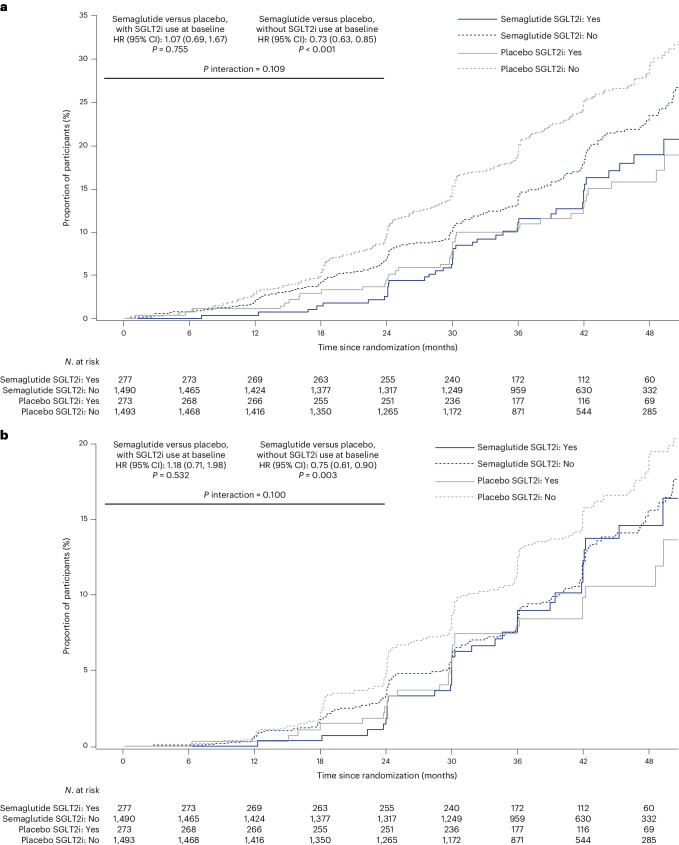
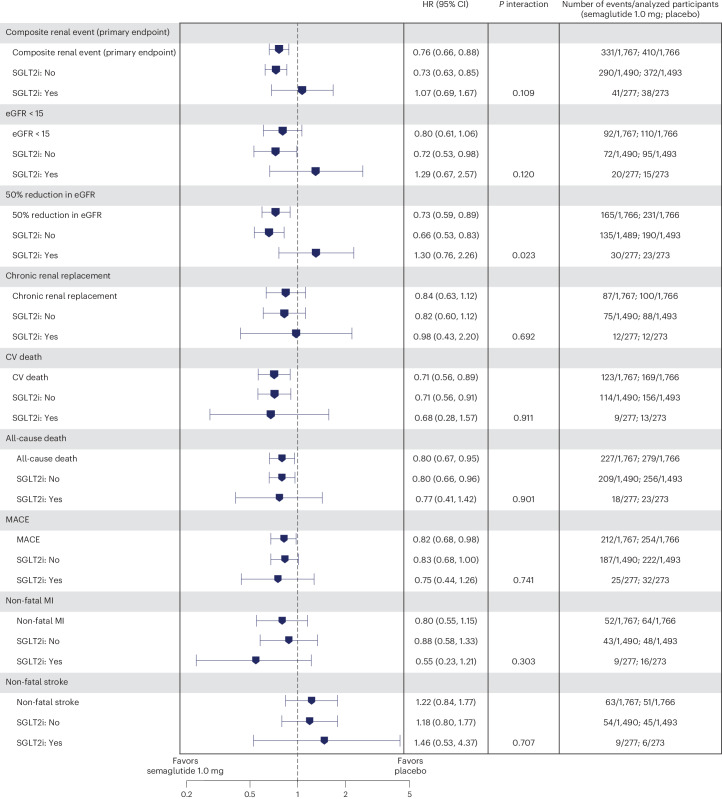
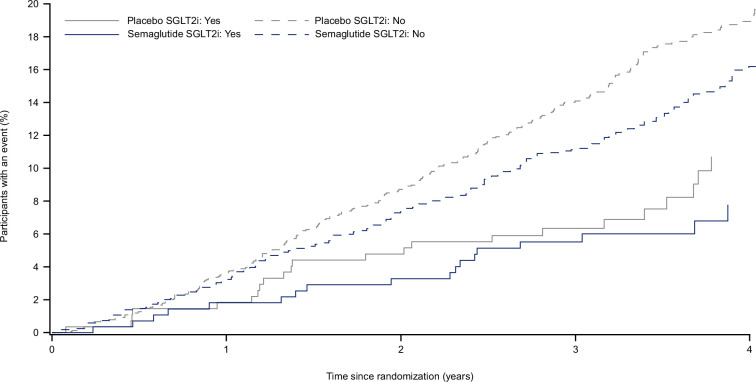
People with type 2 diabetes and chronic kidney disease have a high risk for kidney failure and cardiovascular (CV) complications. Glucagon-like peptide-1 receptor agonists and sodium-glucose cotransporter-2 inhibitors (SGLT2i) independently reduce CV and kidney events. The effect of combining both is unclear. FLOW trial participants with type 2 diabetes and chronic kidney disease were stratified by baseline SGLT2i use ( N = 550) or no use ( N = 2,983) and randomized to semaglutide/placebo. The primary outcome was a composite of kidney failure, ≥50% estimated glomerular filtration rate reduction, kidney death or CV death. The risk of the primary outcome was 24% lower in all participants treated with semaglutide versus placebo (95% confidence interval: 34%, 12%). The primary outcome occurred in 41/277 (semaglutide) versus 38/273 (placebo) participants on SGLT2i at baseline (hazard ratio 1.07; 95% confidence interval: 0.69, 1.67; P = 0.755) and in 290/1,490 versus 372/1,493 participants not taking SGLT2i at baseline (hazard ratio 0.73; 0.63, 0.85; P < 0.001; P interaction 0.109). Three confirmatory secondary outcomes were predefined. Treatment differences favoring semaglutide for total estimated glomerular filtration rate slope (ml min −1 /1.73 m 2 /year) were 0.75 (−0.01, 1.5) in the SGLT2i subgroup and 1.25 (0.91, 1.58) in the non-SGLT2i subgroup, P interaction 0.237. Semaglutide benefits on major CV events and all-cause death were similar regardless of SGLT2i use ( P interaction 0.741 and 0.901, respectively). The benefits of semaglutide in reducing kidney outcomes were consistent in participants with/without baseline SGLT2i use; power was limited to detect smaller but clinically relevant effects. ClinicalTrials.gov identifier: NCT03819153 .
Overview
CoChat Summary
TL;DR
In a prespecified FLOW trial analysis, semaglutide reduced kidney and cardiovascular outcomes in participants with type 2 diabetes and chronic kidney disease, with no clear heterogeneity by baseline SGLT2 inhibitor use. The SGLT2i subgroup was small, so the analysis was underpowered to detect smaller but clinically relevant interactions.
Key findings
- The primary composite outcome occurred in 41/277 (14.8%) semaglutide vs 38/273 (13.9%) placebo participants on baseline SGLT2i (HR 1.07; 95% CI 0.69, 1.67; P = 0.755), and in 290/1,490 (19.5%) vs 372/1,493 (24.9%) without baseline SGLT2i (HR 0.73; 95% CI 0.63, 0.85; P < 0.001; P interaction 0.109).
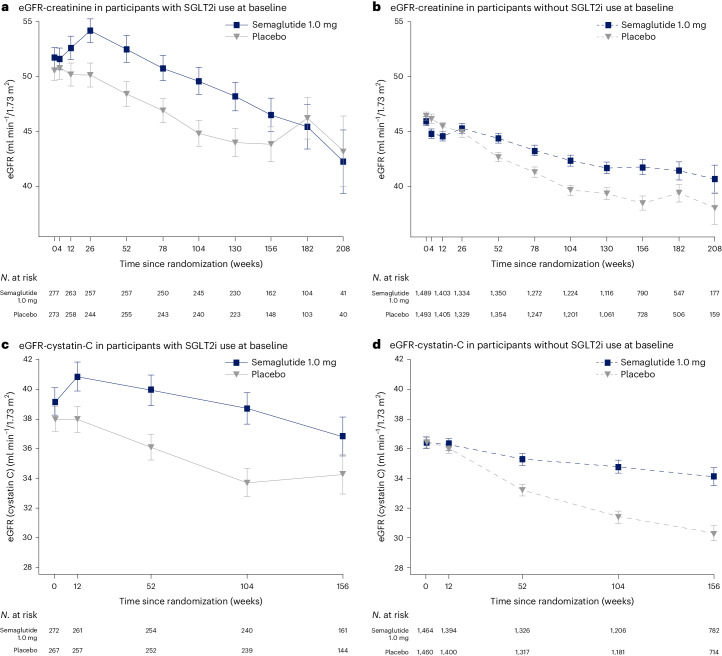
- Treatment differences favoring semaglutide for total eGFR-creatinine slope were 0.75 ml min−1/1.73 m2/year (95% CI −0.01, 1.50) with baseline SGLT2i and 1.25 ml min−1/1.73 m2/year (95% CI 0.91, 1.58) without baseline SGLT2i (P interaction 0.237).
- Semaglutide benefits on MACE and all-cause death were similar regardless of baseline SGLT2i use (P interaction 0.741 and 0.901, respectively).
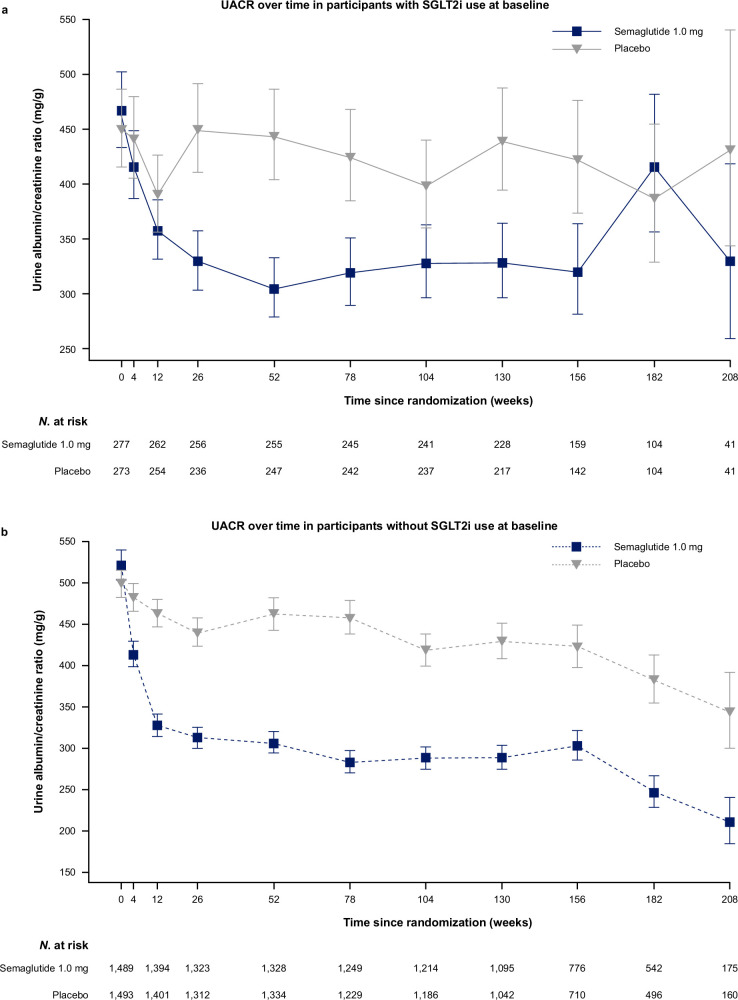
- UACR was lowered by semaglutide vs placebo at week 104 by 24% (95% CI 4%, 39%) with baseline SGLT2i and 34% (95% CI 26%, 40%) without baseline SGLT2i (P interaction 0.279).
Methods
- Prespecified analysis of the FLOW trial, a randomized, double-blind, placebo-controlled, international, multicenter kidney outcomes trial in participants with type 2 diabetes and chronic kidney disease.
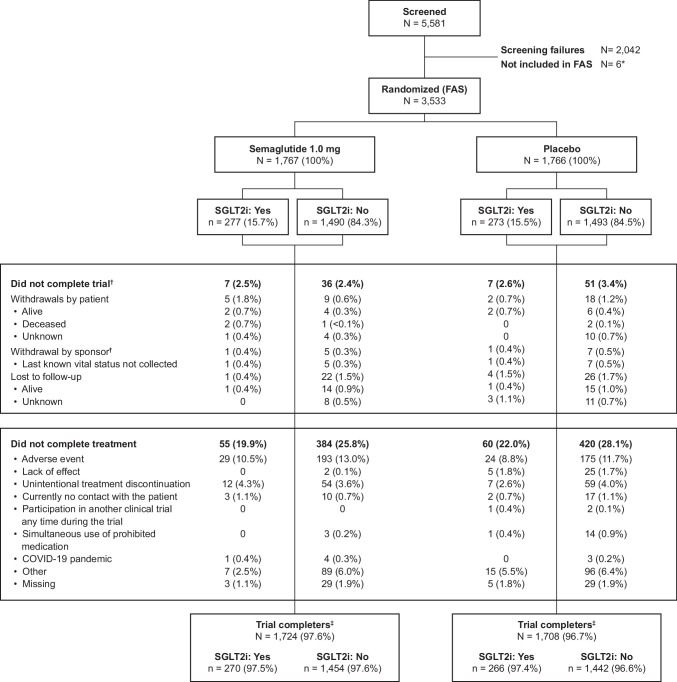
- 3,533 participants were randomized to semaglutide 1.0 mg once weekly or placebo; randomization was stratified by baseline SGLT2i use: 550 reported baseline SGLT2i use (277 semaglutide, 273 placebo) and 2,983 did not.
- Time-to-event outcomes used stratified Cox proportional hazards models with treatment and SGLT2i subgroup interaction terms; eGFR slopes used linear random regression, and continuous endpoints used ANCOVA with multiple imputation for missing values.
Limitations
- The paper states that power was limited because only 15.6% of randomized participants used SGLT2i at baseline, so small but clinically relevant interactions may not have been detected; the study was not designed to test specific subgroups.
- The paper states that post-baseline SGLT2i initiations were not controlled and more participants initiated SGLT2i in the placebo group.
- The text makes evident that no adjustment for multiplicity or alpha-protection was performed, and the median follow-up of 3.4 years may be too short to examine kidney outcomes beyond eGFR and UACR in the relatively small baseline SGLT2i cohort.
Model-written summary. Check it against the paper before relying on it.
Integrity signals
Registry
Cites
Statistics
Figures
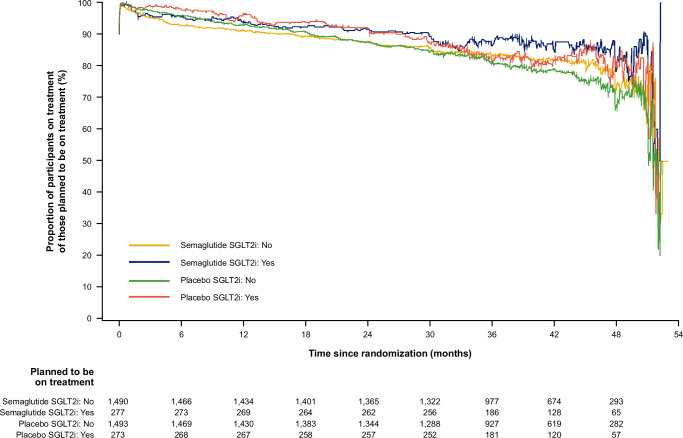
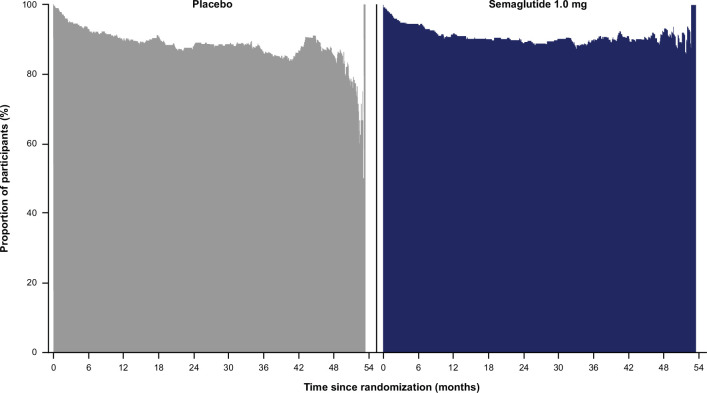
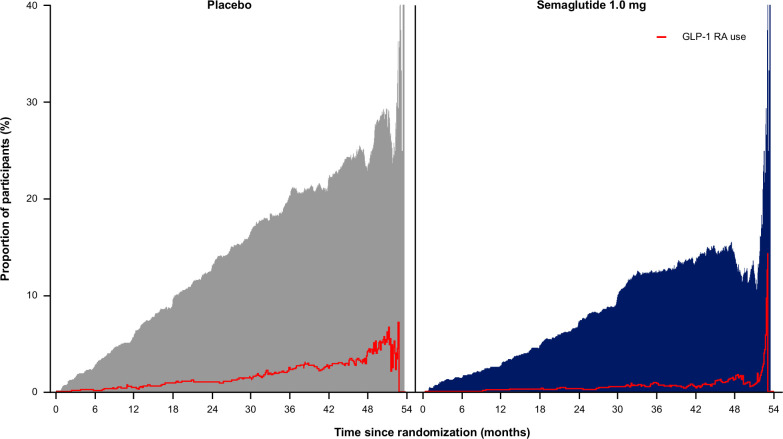
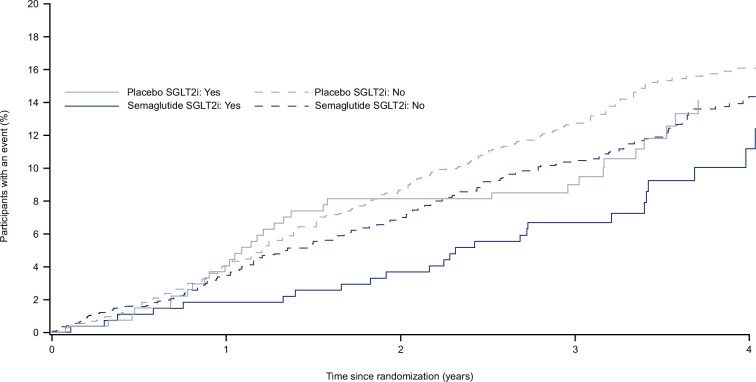
Verification
Claims the paper makes
13 Valid · 1 Not valid · 4 Not checked · 65 Own results and interpretations
The sources with a verdict support this claim; the rest weren’t checked yet, have no full text we could read, or their verdicts aren’t rated yet.
In the paper
“Glucagon-like peptide-1 receptor agonists and sodium-glucose cotransporter-2 inhibitors (SGLT2i) independently reduce CV and kidney events.”
§ Effects of semaglutide with and without concomitant SGLT2 inhibitor use in participants with type 2 diabetes and chronic kidney disease in the FLOW trial > Abstract
What the sources say
- Supportedcites [1] Sattar, N. et al. Cardiovascular, mortality, and kidney outcomes with GLP-1 receptor agonists in patients with type 2 diabetes: a systematic review and meta-analysis of randomised trials. Lancet Diabetes Endocrinol. 9, 653–662 (2021). 34425083 source
The Added value of this study section reports that GLP-1 receptor agonists reduced major adverse cardiovascular events and a composite kidney outcome in patients with type 2 diabetes. This supports the part of the citing sentence attributed to this source. (LLM, conf=0.94)
- Not checked yetcites [2] Tuttle, K. R. et al. Clinical outcomes by albuminuria status with dulaglutide versus insulin glargine in participants with diabetes and CKD: AWARD-7 exploratory analysis. Kidney360 2, 254–262 (2021). 35373017 PMC8740994 source
Checked before — its earlier verdict is held back until a new check runs.
plainstates a cause- Asserted: passes — The authors put it forward as true.
- Checkable: passes — It can be checked against evidence.
- Load-bearing: passes — The paper’s conclusions depend on it.
- Based: passes — The paper gives a reason why it holds.
- Supported
The cited sources that could be checked couldn’t confirm or dispute this claim.
In the paper
“The FLOW trial8 recently reported that in participants with T2D and CKD, semaglutide 1.0 mg once weekly reduced the risk of major kidney disease events by 24% and blunted eGFR decline by 1.16 ml min−1/1.73 m2/year4.”
§ Effects of semaglutide with and without concomitant SGLT2 inhibitor use in participants with type 2 diabetes and chronic kidney disease in the FLOW trial > Discussion
What the sources say
- Not checked — no full text of the sourcecites [4] Perkovic, V. et al. Effect of semaglutide on kidney, cardiovascular, and mortality outcomes in people with type 2 diabetes and chronic kidney disease. N. Engl. J. Med.10.1056/NEJMoa2403347 (2024). source
- Could not verifycites [8] Rossing, P. et al. The rationale, design and baseline data of FLOW, a kidney outcomes trial with once-weekly semaglutide in people with type 2 diabetes and chronic kidney disease. Nephrol. Dial. Transpl. 38, 2041–2051 (2023). PMC10469096 36651820 sourceExperimental — accuracy not yet measured
The Abstract and Results report FLOW’s design and baseline characteristics, not treatment outcomes. Statistical considerations identifies annual eGFR change as a planned endpoint, but our copy does not report the claimed 1.16 ml/min/1.73 m²/year difference (searched for that value and the eGFR slope treatment difference). (LLM, conf=0.75)
plainstates a cause- Asserted: passes — The authors put it forward as true.
- Checkable: passes — It can be checked against evidence.
- Load-bearing: passes — The paper’s conclusions depend on it.
- Based: passes — The paper gives a reason why it holds.
Every source the paper cites for this claim was checked and supports it.
In the paper
“Glucagon-like peptide-1 receptor agonists and sodium-glucose cotransporter-2 inhibitors (SGLT2i) independently reduce CV and kidney events.”
- Also stated in: § Main · boosted
“Later, three independent trials with SGLT2i in persons with and without T2D and CKD defined kidney outcomes as primary and demonstrated substantial kidney benefits of SGLT2i3.”
§ Effects of semaglutide with and without concomitant SGLT2 inhibitor use in participants with type 2 diabetes and chronic kidney disease in the FLOW trial > Abstract
What the sources say
- Supportedcites [3] Nuffield Department of Population Health Renal Studies Group. SGLT2 inhibitor Meta-Analysis Cardio-Renal Trialists’ Consortium. Impact of diabetes on the effects of sodium glucose co-transporter-2 inhibitors on kidney outcomes: collaborative meta-analysis of large placebo-controlled trials. Lancet 400, 1788–1801 (2022). 36351458 PMC7613836 source
The Results report that SGLT2 inhibitors reduced cardiovascular death or hospitalisation for heart failure compared with placebo. They also report reduced kidney disease progression in the chronic kidney disease trials. These findings support the attributed claim about SGLT2 inhibitors; this verdict does not assess the sentence’s separate claim about GLP-1 receptor agonists. (LLM, conf=0.93)
boostedstates a cause- Asserted: passes — The authors put it forward as true.
- Checkable: passes — It can be checked against evidence.
- Load-bearing: passes — The paper’s conclusions depend on it.
- Based: passes — The paper gives a reason why it holds.
- Also stated in: § Main · boosted
The cited sources support only part of this claim — read each source’s verdict below.
In the paper
“In the three kidney outcomes trials examining SGLT2i, the use of GLP-1 RAs was rare, below 5%12–14.”
§ Effects of semaglutide with and without concomitant SGLT2 inhibitor use in participants with type 2 diabetes and chronic kidney disease in the FLOW trial > Discussion
What the sources say
- Partly supportedcites [12] Beernink, J. M. et al. Efficacy of dapagliflozin by baseline diabetes medications: a prespecified analysis from the DAPA-CKD study. Diabetes Care 46, 602–607 (2023). 36662635 PMC10020024 sourceExperimental — accuracy not yet measured
The Conclusions state that GLP-1 receptor agonist use in DAPA-CKD was low. Our copy does not establish that use was below 5% in DAPA-CKD or report GLP-1 receptor agonist use across all three kidney outcomes trials. (LLM, conf=0.86)
- Could not verifycites [13] Perkovic, V. et al. Canagliflozin and renal outcomes in type 2 diabetes and nephropathy. N. Engl. J. Med. 380, 2295–2306 (2019). 30990260 sourceExperimental — accuracy not yet measured
The Methods and Patients sections identify CREDENCE as a kidney-outcomes trial of an SGLT2 inhibitor, but the baseline characteristics shown in our copy do not report GLP-1 receptor agonist use. Searches for GLP-1 receptor agonists, baseline use, and the below-5% figure found no passage establishing that rate for CREDENCE or the three trials. (LLM, conf=0.73)
- Could not verifycites [14] Herrington, W. G. et al. Empagliflozin in patients with chronic kidney disease. N. Engl. J. Med. 388, 117–127 (2023). 36331190 PMC7614055 sourceExperimental — accuracy not yet measured
The Discussion identifies EMPA-KIDNEY alongside CREDENCE and DAPA-CKD as three CKD trials of SGLT2 inhibitors, but it gives no GLP-1 receptor agonist use rates. Searches for GLP-1, glucagon-like peptide-1 receptor agonists, and baseline medication use found no passage establishing the claimed below-5% figure. (LLM, conf=0.73)
plain- Asserted: passes — The authors put it forward as true.
- Checkable: passes — It can be checked against evidence.
- Load-bearing: unclear — It is unclear whether the paper’s conclusions depend on it.
- Based: passes — The paper gives a reason why it holds.
- Partly supported
The cited sources support only part of this claim — read each source’s verdict below.
In the paper
“The authors concluded that the combination of both drug classes was associated with a lower risk of MACE and serious kidney disease events compared with either drug class alone.”
- Also stated in: § Discussion · plain
“That conclusion is supported by other reviews and meta-analyses10,11.”
§ Effects of semaglutide with and without concomitant SGLT2 inhibitor use in participants with type 2 diabetes and chronic kidney disease in the FLOW trial > Discussion
What the sources say
- Supportedcites [9] Simms-Williams, N. et al. Effect of combination treatment with glucagon-like peptide-1 receptor agonists and sodium-glucose cotransporter-2 inhibitors on incidence of cardiovascular and serious renal events: population based cohort study. BMJ 385, e078242 (2024). 38663919 PMC11043905 source
The paper’s Conclusions state that the combination was associated with lower risks of major adverse cardiovascular events and serious renal events than either drug class alone. The Results qualify the renal comparison with SGLT-2 inhibitors alone: its confidence interval was wide and included no difference. (LLM, conf=0.93)
- Not checked — no full text of the sourcecites [10] van Raalte, D. H. et al. Combination therapy for kidney disease in people with diabetes mellitus. Nat. Rev. Nephrol.20, 433–446 (2024). 38570632 source
- Partly supportedcites [11] Ahmad, A. & Sabbour, H. Effectiveness and safety of the combination of sodium–glucose transport protein 2 inhibitors and glucagon-like peptide-1 receptor agonists in patients with type 2 diabetes mellitus: a systematic review and meta-analysis of observational studies. Cardiovasc. Diabetol. 23, 99 (2024). 38500154 PMC10949729 sourceExperimental — accuracy not yet measured
The Introduction and Discussion report lower MACE risk with combination therapy than with monotherapy, although the paper attributes that finding to earlier studies rather than to its own pooled analysis. The Results (Renal outcomes; page not provided) report eGFR and albuminuria findings, but do not establish a lower risk of serious kidney disease events compared with either drug class alone. Thus the claimed conclusion is only partly supported. (LLM, conf=0.86)
plainstates an association- Asserted: passes — The authors put it forward as true.
- Checkable: passes — It can be checked against evidence.
- Load-bearing: passes — The paper’s conclusions depend on it.
- Based: passes — The paper gives a reason why it holds.
- Also stated in: § Discussion · plain
36 more claims · 1 with their cited sources checked
Create a free account to see all 83 claims and to verify the 3 references still open.
- It may state two separate claims as one. 28
- Probably not a substantial claim. 15
Claims other papers make about this one
Each is checked against this paper’s own text: does it say what the citing paper says it does?
The source backs part of the claim, not all of it — or backs it for a different population, condition or comparison.
In the citing paper
“semaglutide can reduce the progression of chronic kidney disease in patients with and without diabetes and even in those taking SGLT2 inhibitors [12–14].”
From New drugs for the treatment of obesity: do we need approaches to preserve muscle mass? (2025) · cites this paper as [14]
Experimental — accuracy not yet measuredThe cited source says what the claim attributes to it.
In the citing paper
“Concomitant use of SGLT2 inhibitor with GLP-1 RA did not affect the overall benefits of semaglutide on kidney and cardiovascular outcomes in participants with type 2 diabetes and CKD in a prespecified analysis of the FLOW trial; however, the limited use of SGLT2 inhibitors at baseline may have affected these results (147).”
From 11. Chronic Kidney Disease and Risk Management: Standards of Care in Diabetes—2026 (2026) · cites this paper as [147]
Citations
Cites
Canagliflozin and Renal Outcomes in Type 2 Diabetes and Nephropathy
Perkovic, V., Jardine, M. J., Neal, B., Bompoint, S., Heerspink, H. J. L., Charytan, D. M., Edwards, R., Agarwal, R., Bakris, G., Bull, S., et al. (2019) · New England Journal of Medicine · doi:10.1056/nejmoa1811744 · Cited by 6,189
Self-citation(2013) · Kidney International Supplements · doi:10.1038/kisup.2012.73 · Cited by 3,206
Empagliflozin in Patients with Chronic Kidney Disease
The EMPA-KIDNEY Collaborative Group (2023) · New England Journal of Medicine · doi:10.1056/nejmoa2204233 · Cited by 2,754 · cited 1×
“In the three kidney outcomes trials examining SGLT2i, the use of GLP-1 RAs was rare, below 5% 12–14 .”
BackgroundEffects of Semaglutide on Chronic Kidney Disease in Patients with Type 2 Diabetes.
Perkovic, V., Tuttle, K. R., Rossing, P., Mahaffey, K. W., Mann, J. F. E., Bakris, G., Baeres, F. M. M., Idorn, T., Bosch-Traberg, H., Lausvig, N. L., et al. (2024) · New England Journal of Medicine · doi:10.1056/nejmoa2403347 · Cited by 2,099
Self-citationKristensen, S. L., Rørth, R., Jhund, P. S., Docherty, K. F., Sattar, N., Preiss, D., Køber, L., Petrie, M. C., & McMurray, J. J. V. (2019) · The Lancet Diabetes & Endocrinology · doi:10.1016/s2213-8587(19)30249-9 · Cited by 1,663
Sattar, N., Lee, M. M. Y., Kristensen, S. L., Branch, K. R. H., Del Prato, S., Khurmi, N. S., Lam, C. S. P., Lopes, R. D., McMurray, J. J. V., Pratley, R. E., et al. (2021) · The Lancet Diabetes & Endocrinology · doi:10.1016/s2213-8587(21)00203-5 · Cited by 1,599 · cited 2×
“Notably, GLP-1 RAs, including semaglutide, also provide substantial benefits for CV and CKD outcomes, death 1,2 and heart failure 5 .”
BackgroundSelf-citationBaigent, C., Emberson, J., Haynes, R., Herrington, W. G., Judge, P., Landray, M. J., Mayne, K. J., Ng, S. Y. A., Preiss, D., Roddick, A. J., et al. (2022) · The Lancet · doi:10.1016/s0140-6736(22)02074-8 · Cited by 1,020
Self-citationMolecular mechanisms and therapeutic targets for diabetic kidney disease
Tuttle, K. R., Agarwal, R., Alpers, C. E., Bakris, G. L., Brosius, F. C., Kolkhof, P., & Uribarri, J. (2022) · Kidney International · doi:10.1016/j.kint.2022.05.012 · Cited by 668 · cited 1×
“Since the molecular mechanisms of action of both drug classes on the CV system and the kidney may be complementary and largely independent of glucose lowering 6 , it has been speculated that the combination might further improve clinical outcomes.”
BackgroundSelf-citationDiabetic Nephropathy: Update on Pillars of Therapy Slowing Progression
Naaman, S. C., & Bakris, G. L. (2023) · Diabetes Care · doi:10.2337/dci23-0030 · Cited by 292
Self-citationRossing, P., Caramori, M. L., Chan, J. C. N., Heerspink, H. J. L., Hurst, C., Khunti, K., Liew, A., Michos, E. D., Navaneethan, S. D., Olowu, W. A., et al. (2022) · Kidney International · doi:10.1016/j.kint.2022.06.013 · Cited by 274
Self-citation
Research works printed but not linked: 1
- Neuen, B. Efficacy and safety of SGLT2 inhibitors with and without GLP-1 receptor agonists: a SMART-C collaborative meta-analysis. Nephrol. Dial. Transpl. 39, e061807 (2024). 38991584
Cited by
Items 101–194 of 194
GLP-1 Receptor Agonists for CKD: Remaining Issues or Mission Complete?
Kosjerina, V., & Rossing, P. R. (2025) · American Journal of Kidney Diseases · doi:10.1053/j.ajkd.2025.03.001 · Cited by 2
Self-citation6. Cardio-renal protection in type 2 diabetes
Colagiuri, S., & Ceriello, A. (2025) · Diabetes Research and Clinical Practice · doi:10.1016/j.diabres.2025.112150 · Cited by 6
Neves, J. S., Vale, C., Leite, A. R., & Ferreira, J. P. (2025) · Diabetes Obesity and Metabolism · doi:10.1111/dom.16603 · Cited by 2
Elenjickal, E. J., Valson, A. T., Varughese, S., Vincent, L., Fernando, E. M., & Natarajan, G. (2024) · Frontiers in Pharmacology · doi:10.3389/fphar.2024.1531748 · Cited by 2
Neuen, B. L., & Solomon, S. D. (2024) · Journal of the American College of Cardiology · doi:10.1016/j.jacc.2024.07.002 · Cited by 2
Optimizing kidney and cardiovascular protection in an era of multiple effective treatments
Taal, M. W. (2024) · Current Opinion in Nephrology & Hypertension · doi:10.1097/mnh.0000000000001019 · Cited by 1
Khan, H. K., Ashfaq, Z., Jamil, H., Yaqoob, H., Anthony, N., Dilawar, R., Ahmad, S. B., Nabi, S., Rania, S. A., Saleem, F., et al. (2025) · Cureus · doi:10.7759/cureus.80932 · Cited by 3
“Similarly, GLP-1 RAs, as seen in the LEADER [19] and SUSTAIN-6 [20] trials, effectively reduced MACE, consistent with the findings of the AMPLITUDE-O [9] and FLOW [10] trials in this review.”
Theodorakis, N., Kreouzi, M., & Nikolaou, M. (2025) · Heart Failure Reviews · doi:10.1007/s10741-025-10506-1 · Cited by 3
“Notably, In a prespecified analysis of the FLOW trial, the efficacy of semaglutide on reducing renal and cardiovascular endpoints in participants with diabetic nephropathy was not influenced by the concomitant use of a sodium-glucose cotransporter-2 inhibitor (SGLT2i) [47].”
GLP-1-RA – „New kid on the block“ in der Nephrologie?
Kraft, L., Schanz, M., & Latus, J. (2025) · DMW - Deutsche Medizinische Wochenschrift · doi:10.1055/a-2420-6176 · Cited by 1
Spolnik, M., Mallawaarachchi, I. V., Sharma, B., Ellwood, M. R., Ma, J. Z., Lyman, J. A., & Scialla, J. J. (2025) · Kidney360 · doi:10.34067/kid.0000000922 · Cited by 3
Ahmad, M., Sikandar, A., Aziz, A., Sumodi, W. B. A., Hans, A., & Usman, M. (2025) · Cureus · doi:10.7759/cureus.89514 · Cited by 2
“However, this review builds upon those foundational results by focusing specifically on newer formulations, including oral semaglutide, and expanded patient populations such as those with CKD, HFpEF, and those receiving concomitant SGLT2 inhibitors [18].”
CHENG, A. Y. Y., Mottl, A. K., & MAGWIRE, M. L. (2025) · Diabetes Therapy · doi:10.1007/s13300-025-01796-7 · Cited by 5
Zhao, W., Niu, X., Zhou, X., Shi, R., & Zhou, X. (2025) · Elsevier eBooks · doi:10.1016/b978-0-443-33885-4.00007-x · Cited by 1
Zhao, K., Zhu, H., Zheng, L., Wang, W., Liu, P., Yu, R., & Ma, X. (2025) · Frontiers in Pharmacology · doi:10.3389/fphar.2025.1690036 · Cited by 3
Funck, K. L., Borregaard, B., Egstrup, K., Fredslund, E. K., Hansen, T. W., Kallestrup, P., Olsen, M. H., Reventlow, S. D., Rossing, P. R., Sandbæk, A., et al. (2025) · BMJ Open · doi:10.1136/bmjopen-2025-106018 · Cited by 3
Self-citationRossing, P. R., Lindhardt, M. K., Tikkanen, C. K., Menon, J., Cattin, J., Hunt, B., Malkin, S. J. P., Chubb, B., Damgaard, T., & Borg, R. (2025) · Cardiovascular Diabetology · doi:10.1186/s12933-025-03002-1 · Cited by 5
Self-citationSemaglutide Hype or Hope: Evidence-based Review in Diabesity
Gupta, S., Makkar, B. M., Kesavadev, J., & Kumar, A. M. V. (2026) · Journal of the Association of Physicians of India · doi:10.59556/japi.74.1439 · Cited by 1
Handelsman, Y., Cheng, A. Y. Y., Fadini, G. P., Kushner, P. R., Bonnet, F., Fioretto, P., Kadowaki, T., Kanumilli, N., Cos, X., Frese, T., et al. (2026) · Advances in Therapy · doi:10.1007/s12325-026-03559-7 · Cited by 1
“While no studies explicitly investigated sub-groups by BMI strata, seven out of 27 primary studies reported an average BMI > 30 kg/m 2 [15, 19, 22, 35, 37, 39, 44].”
InfluentialSelf-citationJansz, T. T., McGovern, A. P., Young, K., Dinsdale, M. M., Cardoso, P., Shields, B. M., Hattersley, A. T., Jones, A. G., Pearson, E. R., Bingham, C., et al. (2026) · The Lancet Primary Care · doi:10.1016/j.lanprc.2026.100139 · Cited by 5
Remission in diabetic kidney disease: current evidence and future directions
Reaume, M., & Tangri, N. (2026) · Current Opinion in Nephrology & Hypertension · doi:10.1097/mnh.0000000000001197 · Cited by 2
Stamouli, E., Trakatelli, C., Sarigianni, M., Kitsios, K., & Kotsis, V. (2026) · Cardiovascular Diabetology · doi:10.1186/s12933-026-03239-4 · Cited by 3
“The FLOW trial similarly reported that cardiovascular event rates were similar irrespective of SGLT2 inhibitor use [14]; approximately 16% of FLOW participants were receiving an SGLT2 inhibitor at baseline.”
InfluentialPorterfield, L. R., Nadeem, S., Swanson, D., Hayek, S. S., & Vaughan, E. M. (2026) · Current Atherosclerosis Reports · doi:10.1007/s11883-026-01448-6 · Cited by 2
Mann, J. F. E., Badve, S. V., Baeres, F. M. M., Belmar, N., Brown‐Frandsen, K., Buse, J. B., Colhoun, H. M., Deanfield, J. E., Engelmann, M. D. M., Hovingh, G. K., et al. (2026) · The Lancet Diabetes & Endocrinology · doi:10.1016/s2213-8587(26)00134-8 · Cited by 8
Self-citationLee, J. Y., Zhu, C., Boldridge, M. A., Stark, R. L., Bonilla, G. M., Watari, K., Papa, C., Xu, L., Gonzãlez, F., Tang, X., et al. (2026) · Science Advances · doi:10.1126/sciadv.aed3119 · Cited by 3
“This type of multi-targeting combinatorial approach has recently been explored in early preclinical and clinical studies, especially in disease areas beyond diabetes and weight management, such as fatty liver diseases ( 82 – 84 ).”
Gastaldelli, A., Choi, E., Conde‐Knape, K., Göransson, O., Krook, A., Lehtonen, S. H., Roden, M., Schrauwen, P., Sparks, L. M., & Heni, M. (2026) · Diabetologia · doi:10.1007/s00125-026-06853-9 · Cited by 2
Davies, M. J., Aroda, V. R., Bajaj, M. S., ElSayed, N. A., Giorgino, F., Green, J., Kalyani, R. R., Maruthur, N. M., Mathieu, C., Rosas, S. E., et al. (2026) · Diabetologia · doi:10.1007/s00125-026-06855-7 · Cited by 1
Self-citationThe GLP-1 receptor agonist revolution comes to nephrology
Thomas, M. C., & Cooper, M. E. (2024) · Nature Reviews Nephrology · doi:10.1038/s41581-024-00876-4 · Cited by 2
Diabetic kidney disease: The fourth pharmacological pillar may be semaglutide
Giugliano, D., Esposito, K., & Nicola, L. D. (2024) · Diabetes Obesity and Metabolism · doi:10.1111/dom.15892 · Cited by 1
“21 ; this result did not differ in patients under SGLT2i.”
Mehta, S., Surapaneni, A., Pandit, K., Xu, Y., Horwitz, L. I., Blecker, S., Blum, M. F., Chang, A. R., Shin, J., & Grams, M. E. (2024) · Journal of the American Society of Nephrology · doi:10.1681/asn.0000000585 · Cited by 1
Taal, M. W., Eldehni, M. T., & Selby, N. M. (2025) · American Journal of Kidney Diseases · doi:10.1053/j.ajkd.2025.05.005 · Cited by 1
GLP-1-receptoragonisten en renoprotectie in type 2-diabetes
Muskiet, M. H. A., & Apperloo, E. M. (2024) · Nederlands Tijdschrift voor Diabetologie · doi:10.1007/s12467-024-1567-6
Role of intestinal glucagon-like peptide-1 in hypoglycemia response impairment in type 1 diabetes
Cheng, C., Hao, W., & Cheng, T. (2024) · World Journal of Diabetes · doi:10.4239/wjd.v15.i11.2237
Welchen Einfluss hat Semaglutid auf die chronische Nierenkrankheit bei Patienten mit Typ-2-Diabetes?
Feldkamp, T. (2024) · Die Nephrologie · doi:10.1007/s11560-024-00805-3
In memoriam: George L. Bakris (1952–2024)
Tsioufis, K. P., Sarafidis, P. A., Kalaitzidis, R., Stergiou, G. S., Thomopoulos, C., Dimitriadis, K. S., Manolis, A. J., Boletis, J., Tatakis, F., Filippatos, G. S., et al. (2024) · Hellenic Journal of Cardiology · doi:10.1016/j.hjc.2024.11.001
wu, Z., Yu, T. Y., Yan, L., Zhen, M., Liang, Y., Guo, T., & He, Y. (2025) · SSRN Electronic Journal · doi:10.2139/ssrn.5124705
Ikizler, T. A. (2025) · Kidney International · doi:10.1016/j.kint.2024.11.032 · Cited by 1
Sridhar, V. S., Kugathasan, L., Lovblom, L. E., et al. (2025) · Journal of the American Society of Nephrology · doi:10.1681/asn.0000000668
Self-citationMarkham‐Lee, Z., Bhagat‐Jones, S., Carlton, J., Frankel, A., Fraser, S., Habte‐Asres, H. H., Hill, C., Kanumilli, N., Karalliedde, J. J., Maskell, A., et al. (2025) · Diabetic Medicine · doi:10.1111/dme.70013 · Cited by 2
Factores de riesgo y enfermedad cardiovascular
Teixidor, M. D., Vallvé, B. S., & Guerra, M. J. G. (2025) · Actualización en Medicina de Familia · doi:10.55783/amf.210210
Kraft, L., Latus, J., & Schanz, M. (2025) · Die Nephrologie · doi:10.1007/s11560-025-00844-4
Prescribing Peritoneal Dialysis for Elderly Patients Starting Peritoneal Dialysis
Davenport, A. (2025) · Kidney and Dialysis · doi:10.3390/kidneydial5020013
“Although there have been some recent advances in the management of CKD designed to slow progression [2,3], these will be outweighed by the increasing prevalence of obesity, diabetes, and cardiovascular disease in the ageing population.”
Hoffmann, C. M., & Bendel, M. A. (2025) · International Medical Case Reports Journal · doi:10.2147/imcrj.s513630
Mo, Q., Adam, T. J., Johnson, S., Moheet, A. A., & Pieczkiewicz, D. S. (2025) · Scientific Reports · doi:10.1038/s41598-025-10299-1
Néphropathies non diabétiques au cours du diabète
Gosset, C., & Rigalleau, V. (2025) · Médecine des Maladies Métaboliques · doi:10.1016/j.mmm.2025.09.005
Jin, T., Meng, Y., Ren, L., & Wang, Y. (2025) · Journal of Clinical Question · doi:10.69854/jcq.2025.0032
Medications for the Management of Chronic Kidney Disease
Tran, E. (2025) · American Diabetes Association eBooks · doi:10.2337/9781580408462-ch25 · Cited by 1
Андреевна, К. Е., Анатольевна, Г. А., Егоровна, С. Е., & Tukish, O. V. (2025) · South Russian Journal of Therapeutic Practice · doi:10.21886/2712-8156-2025-6-4-7-15
Lixandru, N., Gaiţă, L., Popescu, S. D., Herascu, A., Timar, B., & Timar, R. Z. (2025) · Journal of Clinical Medicine · doi:10.3390/jcm15010152
“…class of antihyperglycemic agents is related to renal protection, as their use has been associated with a reduction in albuminuria and a slower decrease in kidney function, as shown in the FLOW trial (once-weekly injectable semaglutide), the first dedicated kidney trial with a GLP-1 RA [12,13].”
Semaglutide: Scoping Review with ☸️SAIMSARA
SAIMSARA (2026) · SAIMSARA Journal · doi:10.62487/saimsara45190890
Targeting GLP1 receptor for reducing global cardiovascular risk
Curcio, A., Meringolo, F., Marincolo, C., Polimeni, A., & Costanzo, S. (2026) · Journal of Translational Medicine · doi:10.1186/s12967-026-07736-8 · Cited by 2
Gerdes, C., & Wolf, G. (2026) · Diabetes aktuell · doi:10.1055/a-2759-5230
Zhou, H., Li, X., Zheng, Z., Tang, W., Wu, X., & Fan, C. (2026) · Journal of the Renin-Angiotensin-Aldosterone System · doi:10.1177/14703203261427139 · Cited by 1
Marx-Schütt, K. (2026) · Elsevier eBooks · doi:10.1016/b978-0-323-87862-3.00016-1
Halimi, S. (2026) · Médecine des Maladies Métaboliques · doi:10.1016/j.mmm.2026.03.003
Ciarloni, A., Salvio, G., Bordoni, M., Giacchetti, G., & Balercia, G. (2026) · Biomedicines · doi:10.3390/biomedicines14040778
“In the FLOW trial, semaglutide in T2D patients with chronic kidney disease reduced renal outcomes in comparison to placebo with or without concomitant SGLT2 inhibitors treatment [42].”
AbdelMagid, A. M., Kamel, A. M., & Farid, S. F. (2026) · Pharmacotherapy The Journal of Human Pharmacology and Drug Therapy · doi:10.1002/phar.70142
Cardiovascular prevention at the crossroads
Farkouh, M. E., & Pham, J. (2026) · European Journal of Preventive Cardiology · doi:10.1093/eurjpc/zwag222
Nephroprotektion – Diabetes und Adipositas
Boger, L. (2026) · Nephrologie aktuell · doi:10.1055/a-2748-5160
张, 一. (2026) · Asian Case Reports in Emergency Medicine · doi:10.12677/acrem.2026.142032
Handelsman, Y., Cheng, A. Y. Y., Fadini, G. P., Kushner, P. R., Bonnet, F., Fioretto, P., KADOWAKI, T., Kanumilli, N., Cos, X., Frese, T., et al. (2026) · Advances in Therapy · doi:10.1007/s12325-026-03618-z
Self-citationMatsushita, T., Wada, Y., Saburi, M., Kobayashi, K., Tsukamoto, S., Kawanami, D., Suzuki, D., Tsuriya, D., Wakui, H., Kanasaki, K., et al. (2026) · Hypertension Research · doi:10.1038/s41440-026-02695-5
Zarei, M., & Hajiani, Y. (2026) · Diabetology & Metabolic Syndrome · doi:10.1186/s13098-026-02196-y
“These benefits were observed regardless of concomitant SGLT2 inhibitor use, although the number of patients receiving SGLT2 inhibitors was limited [113].”
Nephroprotektion – Diabetes und Adipositas
Boger, L. (2026) · Diabetes aktuell · doi:10.1055/a-2881-6950
Chiang, P., Chen, S. C., & Hung, P. (2026) · Research Square · doi:10.21203/rs.3.rs-9573853/v1
The Biomolecules Journal Club: Highlights on Recent Papers
Hoekstra, M., Vallianou, N. G., Tolbatov, I., Dai, J., Liu, C., Kim, A., Yang, S.-Y., Lee, S., & Migliaccio, A. R. (2026) · Biomolecules · doi:10.3390/biom16070973
“Glucagon-like peptide 1 receptor agonists (GLP1-RAs), like liraglutide in the LEADER study and semaglutide in the SUSTAIN-6 and FLOW studies, have also shown positive kidney outcomes [9].”
Chen, J., Liu, K.-W., Huang, Y., Meyerowitz‐Katz, G., Tsai, T., & Su, P. (2026) · Therapeutic Advances in Endocrinology and Metabolism · doi:10.1177/20420188261460592 · Cited by 1
A New Era in the Management of Patients with Diabetic Kidney Disease using Four Pillars of Therapy
Kourtidou, C., Georgianos, P. I., Liakopoulos, V., Savvopoulos, C., & Τζιόμαλος, Κ. (2026) · Journal of Atherosclerosis Prevention and Treatment · doi:10.4103/aptj.aptj_27_26
Pagel, P. S., Hang, D., Freed, J. K., & Crystal, G. J. (2026) · Journal of Cardiothoracic and Vascular Anesthesia · doi:10.1053/j.jvca.2026.07.032
Rapidly changing landscape of diabetic kidney disease management: recent advances and the road ahead
Wang, S. S. Y., Chan, Y. Z., Luo, X. R., Tan, N. A. M. R., Klein, M., & Javaid, M. M. (2026) · Singapore Medical Journal · doi:10.4103/singaporemedj.smj-2025-240
Chronic Kidney Disease-Associated Cardiomyopathy: Mechanisms and Therapeutic Strategies
Grigoriou, K., Lamprou, V., Chatzichidiroglou, A., Theofilis, P., Iliakis, P., Apostolos, A., Ktenopoulos, N., Karagiannidis, E., Antoniadis, A. P., Fragakis, N., et al. (2026) · British Journal of Hospital Medicine · doi:10.31083/bjhm51534
The therapeutic approach to cardiovascular–kidney–metabolic syndrome
Rangaswami, J., Lo, K. B., & Ndumele, C. E. (2026) · Nature Reviews Nephrology · doi:10.1038/s41581-026-01109-6 · Cited by 4
Zhang, Z., Li, L., Yang, M., Chen, W., Xiao, L., Sun, L., & Agarwal, R. (2026) · Nephrology Dialysis Transplantation · doi:10.1093/ndt/gfag179
Immunosenescence in Cardiovascular-Kidney-Metabolic Syndrome: A Unifying Mechanistic Framework
Sano, M. (2026) · International Journal of Heart Failure · doi:10.36628/ijhf.2026.0060
Organ crosstalk in kidney diseases: Insights from metabolic, hormonal and nervous regulation
Lin, S., Zhu, S., & Fu, Y. (2026) · Life Sciences · doi:10.1016/j.lfs.2026.124637
Macía-Heras, M., Hernández-Marrero, D. J., Martínez‐Alberto, C. E., Siverio-Morales, O., & Donate‐Correa, J. (2026) · BMC Nephrology · doi:10.1186/s12882-026-05304-2
Banerjee, M., Basu, M., Mukhopadhyay, P., & Ghosh, S. K. (2026) · Endocrine · doi:10.1007/s12020-026-04752-y
Gabriela Ana, P. U. H. A., & LUNGU, I. (2026) · Medicine and Materials · doi:10.36868/medmater.2026.06.02.07
Casper, J., Doricic, J., Tian, Z., Willerding, J. M., Glammeier, M., Melk, A., Schmidt-Ott, K. M., & Schmidt, B. M. W. (2026) · Nephrology Dialysis Transplantation · doi:10.1093/ndt/gfag198
Ghafoury, R., Naghshbandi, M., Malek, M., Kalra, S., Ismail‐Beigi, F., & Khamseh, M. E. (2026) · Diabetes Therapy · doi:10.1007/s13300-026-01911-2 · Cited by 1
Elsayed, A., Ayoub, W. J., ELSAYED, N., Stephens, J. P., Udongwo, N., Elsayed, Y. A.-E., & Ghali, J. K. (2026) · Cardiovascular Diabetology – Endocrinology Reports · doi:10.1186/s40842-026-00322-3
“Secondary outcomes included 18% MACE reduction (HR 0.82; 95% CI 0.68–0.98), 20% all-cause mortality reduction (HR 0.80; 95% CI 0.67–0.95), and 1.16 mL/ min/1.73 m 2 /year slower eGFR decline versus placebo [5, 15].”
InfluentialMamach, A., Woźniak, A., Sobantka, P., Mokrzecki, S., Król, M., Aleksandrowicz, K., Grodzka, Z., Meszka, M., Bełc, E., & Brzezińska, K. (2026) · International Journal of Innovative Technologies in Social Science · doi:10.31435/ijitss.2(50).2026.6653
Branigan, P., Duong, V. N. Y., & Branigan, S. (2026) · Cureus · doi:10.7759/cureus.116039
“In the FLOW trial population, semaglutide effects were additionally examined according to concomitant SGLT2 inhibitor use [26].”
Marqués-Vidas, M., Quiroga, B., Portolés, J. M., Ortíz, A., Fernández‐Fernández, B., Horrillo, A. S., Soler, M. J., García-Carro, C., Morales, E., & Bajo, M. A. (2026) · Journal of Clinical Medicine · doi:10.3390/jcm15187201
“Post hoc analyses from FLOW and real-world cohorts suggest additive benefits, including greater reductions in weight, HbA1c, albuminuria, and improved eGFR trajectories, with no safety concerns [116,117].”
Zhou, Z., Fu, L., Chen, D., Yu, P., Xu, G., Wu, Q., Wu, T., & Yang, P. (2026) · Diabetes Obesity and Metabolism · doi:10.1111/dom.71305
Ahmed, M. J., Ahmad, A. M., Naqvi, S., Ahmed, K., Ahmed, A., & Naqvi, Z. (2026) · Cureus · doi:10.7759/cureus.116699
Yue, H., Wang, Y., Guo, X., Sun, Y., Cheng, Y., Yan, P., Tan, Z., Han, C., & Wang, B. (2026) · Biochemical Pharmacology · doi:10.1016/j.bcp.2026.118495
Mayne, K. J., Lee, M. M. Y., Sattar, N. A., & Herrington, W. G. (2026) · European Journal of Internal Medicine · doi:10.1016/j.ejim.2026.107193
Beyond efficacy: the treatment lifecycle of incretin and multi-receptor agonists
Rabbani, S. A., El-Tanani, M., Matalka, I. I., & Rizzo, M. (2026) · Frontiers in Endocrinology · doi:10.3389/fendo.2026.1902185
Wang, S., DONG, B., & Shen, Z. (2026) · Diabetes Therapy · doi:10.1007/s13300-026-01915-y
Pedagogos, E., Chen, R., Nelson, A. J., Badve, S. V., Rasalam, R. R., & MacIsaac, R. J. (2026) · Internal Medicine Journal · doi:10.1111/imj.70647
GLP-1 receptor agonists—a potential therapy for chronic kidney disease?
Boeckhaus, J., Sayer, J. A., & Mabillard, H. R. (2026) · Clinical Science · doi:10.1042/cs20261312
Miceli, G., Basso, M. G., Cuffaro, M., Marchese, A., & Tuttolomondo, A. (2026) · Medicina · doi:10.3390/medicina62101905
Shi, X., Fu, K., Hu, M., Li, R., Li, H., & Xu, S. (2026) · Medicine · doi:10.1097/md.0000000000050957
Gong, C., Luo, Q., & Li, Q. (2026) · Medicine · doi:10.1097/md.0000000000051019
“[16,17] These mechanisms provide biological plausibility for the observed short-term changes, but the present study did not include longitudinal eGFR or urinary albumin-to-creatinine ratio and was not designed to evaluate hard renal outcomes.”
Metadata
- Authors
- Mann, J. F. E., Rossing, P., Bakris, G., Belmar, N., Bosch-Traberg, H., Busch, R., Charytan, D. M., Hadjadj, S., Gillard, P., Górriz, J. L., Idorn, T., Ji, L., Mahaffey, K. W., Perkovic, V., Rasmussen, S., Schmieder, R. E., Pratley, R. E., & Tuttle, K. R.
- Affiliations
- Friedrich-Alexander-Universität Erlangen-Nürnberg (DE)
- University of Copenhagen (DK)
- University of Chicago (US)
- Novo Nordisk (Denmark) (DK)
- Albany Medical Center Hospital (US)
- NYU Langone Health (US)
- Centre National de la Recherche Scientifique (FR)
- KU Leuven (BE)
- Universitat de València (ES)
- Peking University People's Hospital (CN)
- Stanford Medicine (US)
- UNSW Sydney (AU)
- AdventHealth Orlando (US)
- University of Washington (US)
- Corresponding author
- Mann, Johannes F. E.
- ORCID
- Venue
- Nature Medicine
- Published
- 2024-06-24
- Volume
- 30
- Issue
- 10
- Pages
- 2849-2856
- ISSN
- 1078-8956 (ISSN-L)
- 1546-170X
- PMC
- PMC11485243
- OpenAlex
- W4399940216
- Cited by
- 200
- References
- 23
- Citations by year
- 2026: 78 · 2025: 87 · 2024: 35
- FWCI
- 65.42
- Type
- journal article
- Language
- en
- Open access
- hybrid
- doi.org
- Licence
- cc-by
- creativecommons.org/licenses/by/4.0 (tdm)
- creativecommons.org/licenses/by/4.0 (vor)
- Locations
- Nature Medicine (publishedVersion, cc-by)
- PubMed Central (publishedVersion, cc-by)
- PubMed (publishedVersion)
- Research at the University of Copenhagen (University of Copenhagen) (publishedVersion, cc-by)
- HAL (submittedVersion, cc-by)
- Lirias (KU Leuven) (submittedVersion, cc-by)
- Repository of Digital Objects for Teaching Research and Culture (University of Valencia) (submittedVersion, other-oa)
- Funders
- Novo Nordisk
- Topics
- Health Sciences › Medicine › Endocrinology, Diabetes and Metabolism › Diabetes Treatment and Management
- Health Sciences › Medicine › Nephrology › Chronic Kidney Disease and Diabetes
- Health Sciences › Medicine › Cardiology and Cardiovascular Medicine › Heart Failure Treatment and Management
- Keywords
- semaglutide, SGLT2 inhibitors, type 2 diabetes, chronic kidney disease, GLP-1 receptor agonists, renal failure, estimated glomerular filtration rate decline, cardiovascular events, all-cause mortality, combination therapy, FLOW trial, drug interactions, cardiovascular safety, renal safety, glycemic control, blood pressure
- MeSH terms
- Sodium-Glucose Transporter 2 Inhibitors, Semaglutide, Aged, Cardiovascular Diseases, Diabetes Mellitus, Type 2, Glucagon-Like Peptides, Female, Glomerular Filtration Rate, Humans, Hypoglycemic Agents, Male, Middle Aged, Treatment Outcome, Renal Insufficiency, Chronic
About these checks
Registry, retraction, Cites and statistics results are computed, not judged, with one exception: a printed reference that no index lists is read once by a model before it counts as a citation error. Claims are extracted by a model and kept only when their quote appears verbatim in the text; each cited source is then checked, with a model’s help, for whether it says what the claim relies on. Those verdicts can be wrong — read the claim’s quote and the cited source before relying on one.
The claim verdicts this report counts are experimental: their accuracy is not yet measured.
A language model drew the claims from the paper on 2026-10-16, under version 3 of the claim definition (model deepseek-v4.1-flash, prompt extract-v3).
A second model labelled each claim on 2026-10-16 (model jev-1.13-20260917, definition revision gold-guideline-v0.2).
Cited sources are checked with a language model’s help (gpt-6-sol).
Statistics and arithmetic are recomputed, not judged.
Confidence bands are shown only for fields calibrated on our annotated test set. None is calibrated yet, so no band is shown.
What counts as a claim ›How we measure confidence ›How we check this ›
Are you an author, or do you see a problem with this page? Request a review
Data sources
Bibliographic data: Semantic Scholar, OpenAlex, Crossref.
Contains information from the Semantic Scholar Academic Graph Datasets, made available under the ODC Attribution License (ODC-BY 1.0).
Semantic Scholar’s data is described in: Kinney, R., et al. (2023). The Semantic Scholar Open Data Platform. arXiv:2301.10140.
