

AI-based automation of enrollment criteria and endpoint assessment in clinical trials in liver diseases
Open accessThe DOI matches its Crossref record; 48 of the 48 references it cites were found in a registry or an index.
Abstract
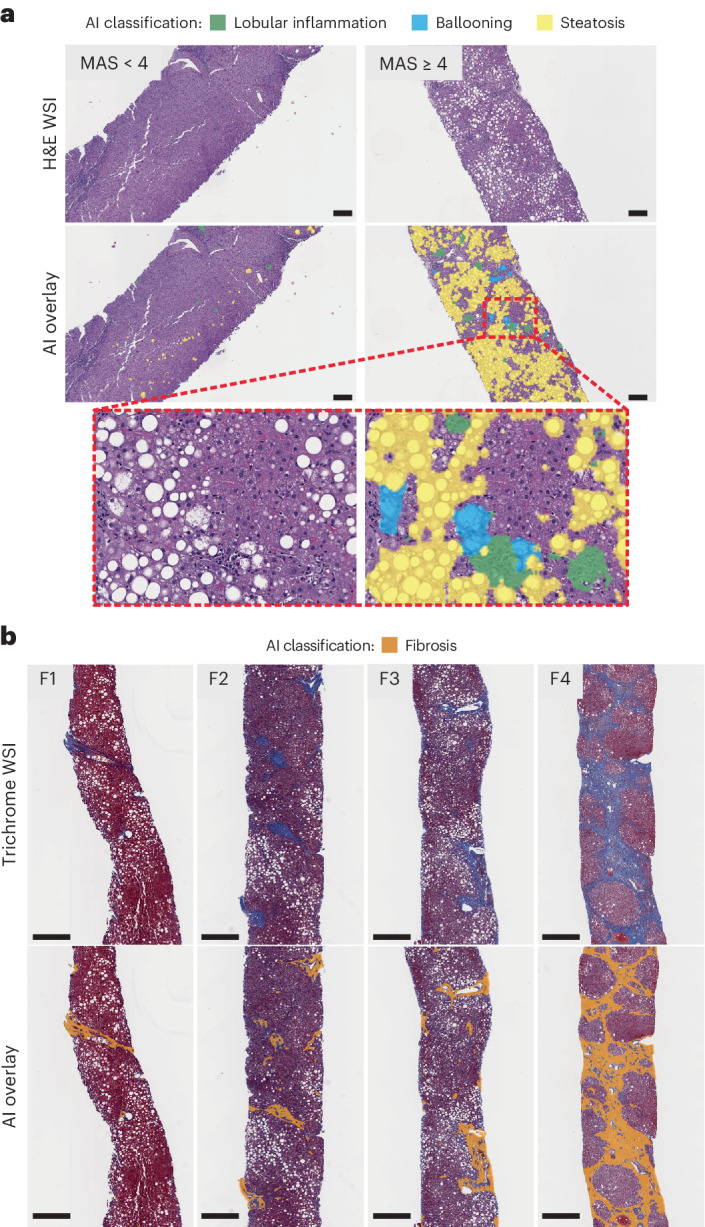
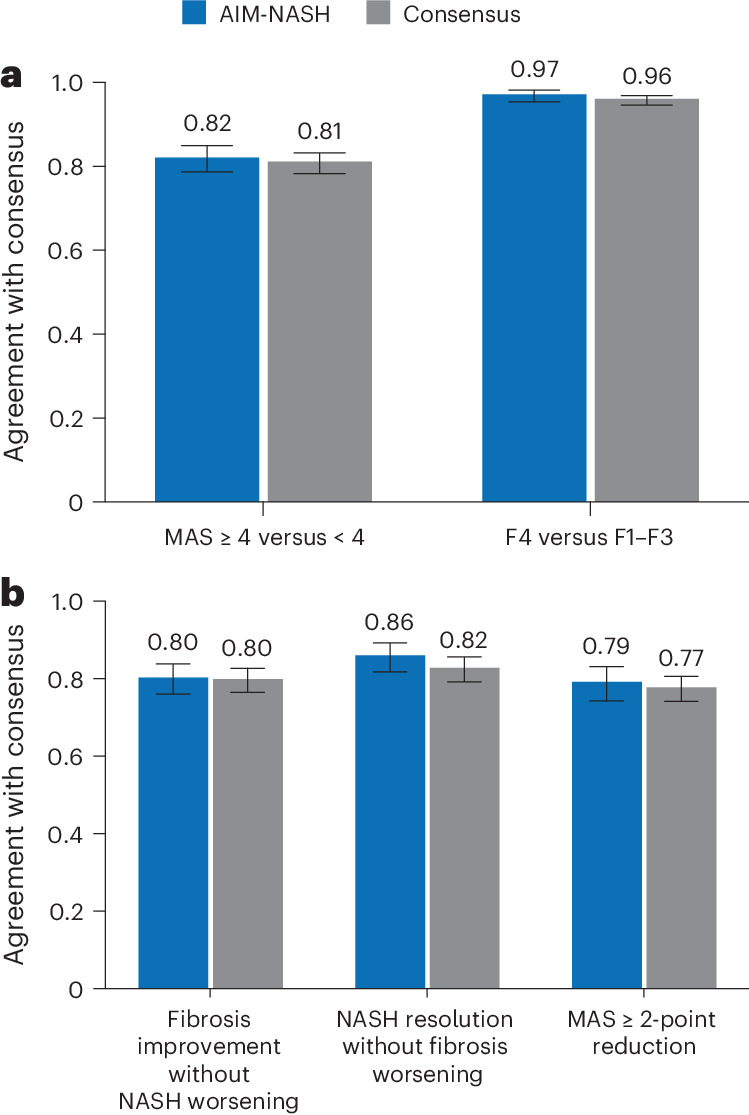
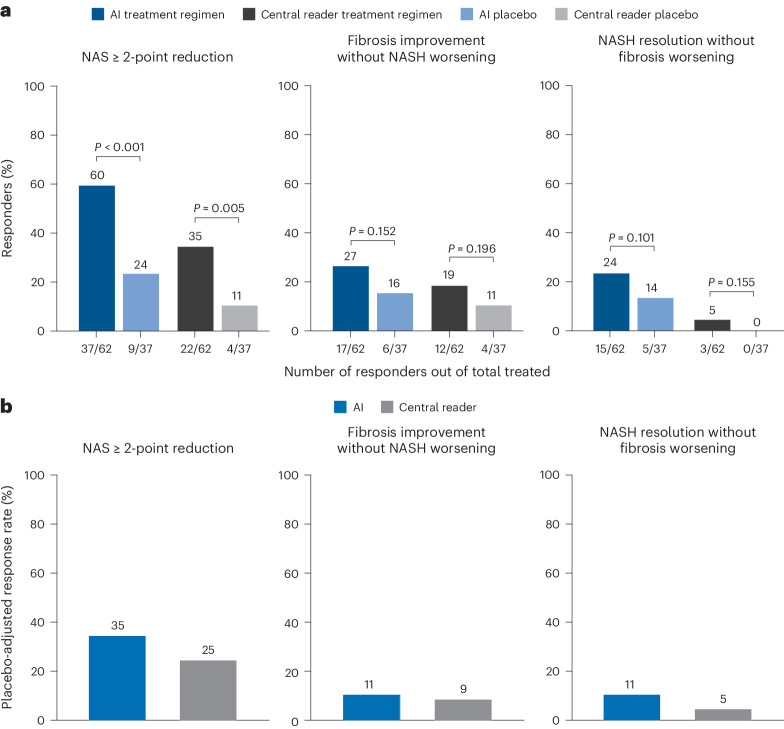
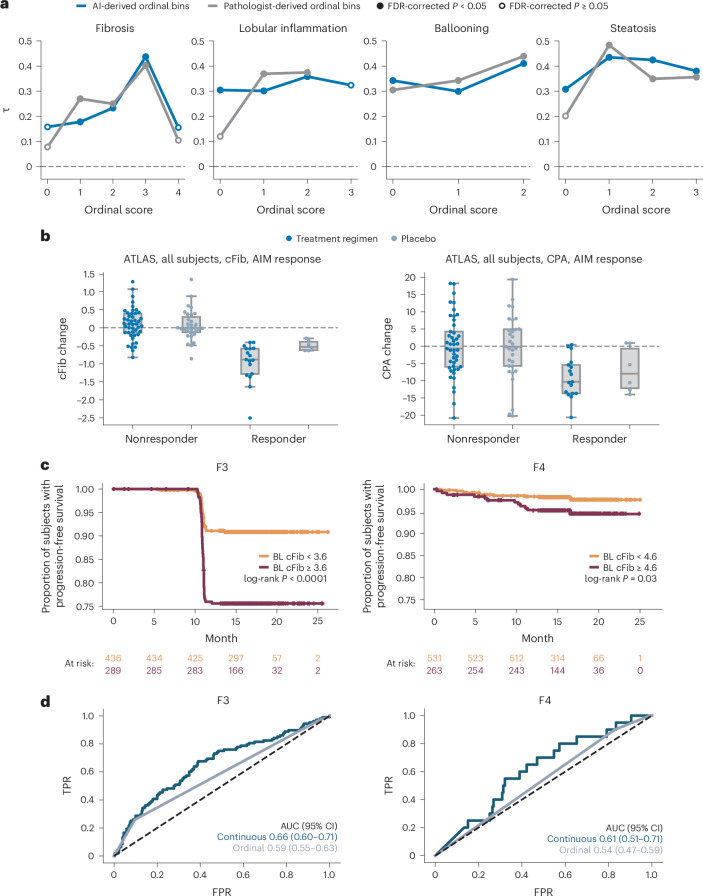
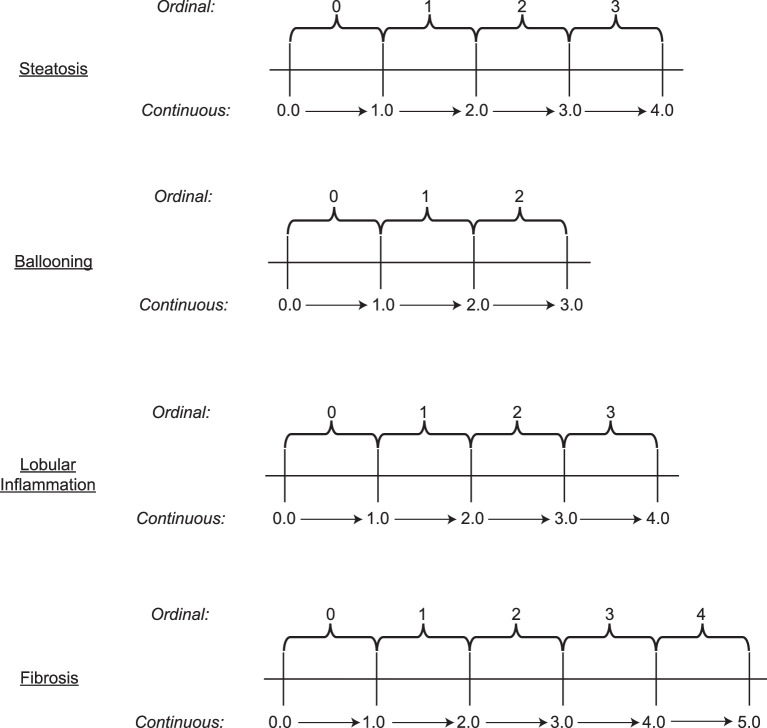
Clinical trials in metabolic dysfunction-associated steatohepatitis (MASH, formerly known as nonalcoholic steatohepatitis) require histologic scoring for assessment of inclusion criteria and endpoints. However, variability in interpretation has impacted clinical trial outcomes. We developed an artificial intelligence-based measurement (AIM) tool for scoring MASH histology (AIM-MASH). AIM-MASH predictions for MASH Clinical Research Network necroinflammation grades and fibrosis stages were reproducible ( κ = 1) and aligned with expert pathologist consensus scores ( κ = 0.62–0.74). The AIM-MASH versus consensus agreements were comparable to average pathologists for MASH Clinical Research Network scores (82% versus 81%) and fibrosis (97% versus 96%). Continuous scores produced by AIM-MASH for key histological features of MASH correlated with mean pathologist scores and noninvasive biomarkers and strongly predicted progression-free survival in patients with stage 3 ( P < 0.0001) and stage 4 ( P = 0.03) fibrosis. In a retrospective analysis of the ATLAS trial (NCT03449446), responders receiving study treatment showed a greater continuous change in fibrosis compared with placebo ( P = 0.02). Overall, these results suggest that AIM-MASH may assist pathologists in histologic review of MASH clinical trials, reducing inter-rater variability on trial outcomes and offering a more sensitive and reproducible measure of patient responses.
Overview
The claims and statistics of this paper haven’t been checked yet.
Free: it reads the open-access text and checks the first 5 claims that cite a source we can check. Create a free account to check every claim.
Integrity signals
Registry
Cites
Statistics
Figures
Verification
Claims the paper makes
The claims and statistics of this paper haven’t been checked yet.
Free: it reads the open-access text and checks the first 5 claims that cite a source we can check. Create a free account to check every claim.
Claims other papers make about this one
Each is checked against this paper’s own text: does it say what the citing paper says it does?
The source backs part of the claim, not all of it — or backs it for a different population, condition or comparison.
In the citing paper
“Janani et al. introduced an AI driven scoring instrument for MASH histology whose assessments of necrosis, inflammatory grade and fibrosis stage were concordant with consensus pathologist evaluations [226].”
From Constructing biomimetic microenvironments for liver regeneration (2025) · doi:10.1186/s12951-025-03729-9 · cites this paper as [226]
Experimental — accuracy not yet measured
Self-check
Percentages, sums and reported differences re-computed from the paper’s own numbers.
The self-check needs the paper’s full text.
Citations
Cites
Design and validation of a histological scoring system for nonalcoholic fatty liver disease†
Kleiner, D. E., Brunt, E. M., Van Natta, M., Behling, C., Contos, M. J., Cummings, O. W., Ferrell, L. D., Liu, Y., Torbenson, M. S., Unalp‐Arida, A., et al. (2005) · Hepatology · doi:10.1002/hep.20701 · Cited by 10,791 · cited 3×
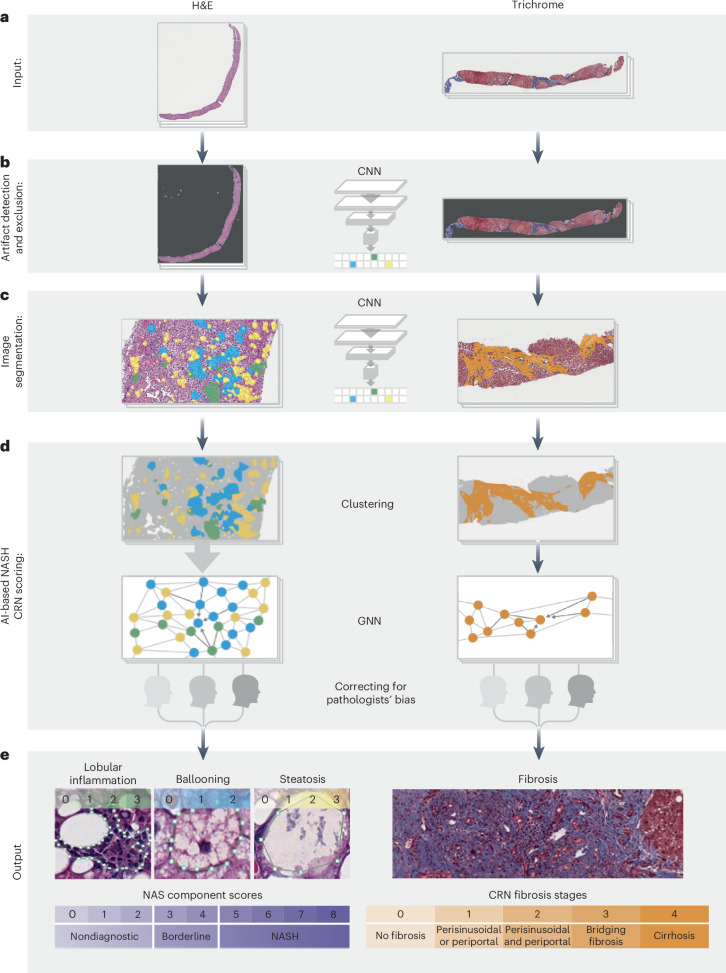
“Summaries of each model and their respective objectives are included in Supplementary Table 6, and detailed descriptions of each model’s purpose, input and output, as well as training parameters, can be found in Supplementary Tables 7–9.”
Self-citationImproving neural networks by preventing co-adaptation of feature detectors
Hinton, G. E., Srivastava, N., Krizhevsky, A., Sutskever, I., & Salakhutdinov, R. R. (2012) · arXiv · doi:10.48550/arxiv.1207.0580 · Cited by 6,382 · cited 1×
“The artifact, H&E tissue and MT tissue CNNs were trained using pathologist annotations comprising 8–12 blocks of compound layers with a topology inspired by residual networks and inception networks with a softmax loss 44–46 .”
mixup: Beyond Empirical Risk Minimization
Zhang, H., Cisse, M., Dauphin, Y. N., & Lopez-Paz, D. (2017) · arXiv · doi:10.48550/arxiv.1710.09412 · Cited by 5,831 · cited 1×
“Input-and feature-level mix-up 49,50 was also employed (as a regularization technique to further increase model robustness).”
Mechanisms of NAFLD development and therapeutic strategies
Friedman, S. L., Neuschwander-Tetri, B. A., Rinella, M., & Sanyal, A. J. (2018) · Nature Medicine · doi:10.1038/s41591-018-0104-9 · Cited by 4,354 · cited 2×
“Achieving the surrogate biopsy-based endpoints recommended by regulatory bodies for MASH clinical trials has been exceedingly difficult, in part owing to the slow rate at which MASH progresses and regresses 37 .”
InfluentialSelf-citationSpatial Pyramid Pooling in Deep Convolutional Networks for Visual Recognition
He, K., Zhang, X., Ren, S., & Sun, J. (2014) · Lecture Notes in Computer Science · doi:10.1007/978-3-319-10578-9_23 · Cited by 3,034
Powell, E. E., Cooksley, G. W. E., Hanson, R., Searle, J., Halliday, J. W., & Powell, L. W. (1990) · Hepatology · doi:10.1002/hep.1840110114 · Cited by 1,473
RhizoDB: A Bounded Activation-Flow Architecture for Graph-Based Memory Systems
Guberte, J. A. (2026) · Zenodo (CERN European Organization for Nuclear Research) · doi:10.5281/zenodo.20695702 · Cited by 866
Loomba, R., Lawitz, E., Mantry, P. S., Jayakumar, S., Caldwell, S. H., Arnold, H., Diehl, A. M., Djedjos, C. S., Han, L., Myers, R. P., et al. (2018) · Hepatology · doi:10.1002/hep.29514 · Cited by 549
Self-citationCaldwell, S. H., & Crespo, D. M. (2004) · Journal of Hepatology · doi:10.1016/j.jhep.2004.02.013 · Cited by 501 · cited 1×
“…correlated with collagen proportionate area (CPA) by morphometry, but in opposite directions (continuous fibrosis stage: τ : 0.56, P < 0.001; continuous steatosis grade: τ : −0.16, P < 0.001), consistent with previously reported reductions in steatosis with progression of fibrosis in MASH 26–29 .”
Influential
Research works printed but not linked: 5
- Pedregosa, F., Bach, F. & Gramfort, A. On the consistency of ordinal regression methods. J. Mach. Learn. Res. 18, 1–35 (2017).
- Iyer, J. S. et al. Artificial intelligence-based measurement of NASH histology (AIM-NASH) recapitulates primary results from phase 3 study of resmetirom for treatment of NASH/MASH. Hepatology 79, E56–E57 (2023).
- Cable, E. E., McWherter, C. A., Choi, Y. J., Shah, S. & Carrasco-Zevallos, O. M. Quantitative assessment of NASH pathologies in 152 baseline H&E slides from a phase 2 trial using the PathAI machine learning algorithm. NASH-TAG Proceedings 5, 5 (2021).
- Shevell, D. E. et al. Comparison of manual vs. machine learning approaches to liver biopsy scoring for NASH and fibrosis: a post-hoc analysis of the FALCON 1 study. Hepatology 74, 1415A (2021).
- Krizhevsky, A., Sutskever, I. & Hinton, G. ImageNet classification with deep convolutional neural networks. in Advances In Neural Information Processing Systems (eds Pereira, F., et al.) vol. 25 (Curran Associates, 2012).
Cited by
Serrano, D. R., Luciano, F. C., Anaya, B. J., Ongoren, B., Kara, A., Molina, G., Ramirez, B. I., Sánchez-Guirales, S. A., Simon, J. A., Tomietto, G., et al. (2024) · Pharmaceutics · doi:10.3390/pharmaceutics16101328 · Cited by 488
“…by improving patient recruitment, monitoring, and enhanced data analysis considering that advanced algorithms will enable the identification of suitable candidates based on genetic and phenotypic profiles ensuring that trials are conducted with the most appropriate cohort of participants [149–159].”
BackgroundPulaski, H., Harrison, S. A., Mehta, S. S., Sanyal, A. J., Vitali, M. C., Manigat, L. C., Hou, H., Christudoss, S. P. M., Hoffman, S. M., Stanford-Moore, S. A., et al. (2024) · Nature Medicine · doi:10.1038/s41591-024-03301-2 · Cited by 94
“The development of AIM-MASH is further described by Iyer et al. 21 .”
InfluentialSelf-citationDecoding organ fibrosis: mechanistic insights and emerging therapeutic strategies
Chen, X., Zhang, J., Guo, L., Wu, C., Zhou, J., Xu, M., Mo, L., Li, Y., & He, J. (2026) · Signal Transduction and Targeted Therapy · doi:10.1038/s41392-025-02532-0 · Cited by 59
Crucial functions of gut microbiota on gut–liver repair
Wang, Y., Yan, H., Zheng, Q., & Sun, X. (2025) · hLife · doi:10.1016/j.hlife.2025.01.001 · Cited by 42
“Previously referred to as non-alcoholic steatohepatitis (NASH), MASH is a severe kind of fatty liver disease that is linked to metabolic syndrome [14,15].”
Wong, V. W., Amin, N. B., Takahashi, H., Darekar, A., Tacke, F., Kiszko, J., Rodriguez, H., Nakajima, A., Alkhouri, N., Charlton, M., et al. (2025) · The Lancet. Gastroenterology & hepatology · doi:10.1016/s2468-1253(25)00128-1 · Cited by 40
Howard, A., Reza, N., Green, P. L., Mo, Y., Duffy, E. M., Mwandumba, H. C., Gerada, A., & Hope, W. W. (2025) · The Lancet Infectious Diseases · doi:10.1016/s1473-3099(25)00313-5 · Cited by 41
Mechanism-guided drug development and treatment for liver fibrosis: a clinical perspective
Zeng, X., Huang, D., Zhu, Z., Cai, Q., Yang, Y., Lu, H., & Chen, J. (2025) · Frontiers in Pharmacology · doi:10.3389/fphar.2025.1574385 · Cited by 38
“…has been developed for histopathological scoring, which has been compared in several drug clinical evaluations and shown to be consistent with expert pathologist consensus scores, with higher reproducibility and sensitivity (Ratziu et al., 2024a; Iyer et al., 2024; Ratziu et al., 2024c).”
The barriers to uptake of artificial intelligence in hepatology and how to overcome them
Clusmann, J., Balaguer‐Montero, M., Bassegoda, O., Schneider, C. V., Seraphin, T. P., Paintsil, E. K., Luedde, T., Pérez-López, R., Caldéraro, J., Gilbert, S., et al. (2025) · Journal of Hepatology · doi:10.1016/j.jhep.2025.07.003 · Cited by 34
RetractedA phase IIb randomised-controlled trial of the FFAR1/FFAR4 agonist icosabutate in MASH
Harrison, S. A., Alkhouri, N., Ortiz‐Lasanta, G., Rudraraju, M., Tai, D., Wack, K., Shah, A., Besuyen, R., Steineger, H. H., Fraser, D. A., et al. (2025) · Journal of Hepatology · doi:10.1016/j.jhep.2025.01.032 · Cited by 30
Self-citationChen, Z., Wang, C., & Wang, F. (2025) · World Journal of Gastroenterology · doi:10.3748/wjg.v31.i24.108021 · Cited by 26
“…predicted progression-free survival of fibrosis patients ( P < 0.05), providing a highly sensitive method for clinical trial endpoint assessment[130]; in the analysis of pathomechanisms, AI-based digital pathology combined with second harmonic generation/two-photon excited fluorescence…”
InfluentialThe Role of Artificial Intelligence in Chronic Liver Diseases and Liver Transplantation
Spann, A., Strauss, A. T., Davis, S. E., & Bhat, M. (2025) · Gastroenterology · doi:10.1053/j.gastro.2025.05.012 · Cited by 24
Endoplasmic reticulum stress at the forefront of fatty liver diseases and cancer
Karin, M., & Kim, J. Y. (2025) · Pharmacological Reviews · doi:10.1016/j.pharmr.2025.100096 · Cited by 28
“296,297 In a reanalysis of histological specimens from a phase 2 clinical trial (NCT02970942), the AI-powered PathAI platform achieved high reproducibility in the identification of key histological features, yielding results concordant with those obtained through traditional pathological evaluation.”
Eskandar, K. (2025) · iLiver · doi:10.1016/j.iliver.2025.100205 · Cited by 14
“30,31 32-34 Although many studies remain single-center, recent multisite validations confirm AI – consensus reproducibility approaching human pathologist performance, reinforcing AI's augmentative clinical potential (Table 2).”
Fujiwara, N., Matsushita, Y., Tempaku, M., Tachi, Y., Kimura, G., Izuoka, K., Hayata, Y., Kawamura, S., Eguchi, A., Nakatsuka, T., et al. (2025) · Hepatology · doi:10.1097/hep.0000000000001360 · Cited by 14
Zhang, X., Zhou, H., Chen, Q., Wang, X., Fu, Y., Jin, C., Zhou, F., Wang, J.-P., Cai, Q.-Y., Wang, J., et al. (2025) · EClinicalMedicine · doi:10.1016/j.eclinm.2025.103557 · Cited by 13
Constructing biomimetic microenvironments for liver regeneration
(2025) · doi:10.1186/s12951-025-03729-9 · Cited by 11
Hernández-Almonacid, P. G., & Marín-Quintero, X. (2026) · World Journal of Gastroenterology · doi:10.3748/wjg.v32.i2.111737 · Cited by 10
“This enhances patient selection for clinical trials, allows for the exploration of new clinical endpoints, and provides a more accurate assessment of responses to both behavioral and pharmacological interventions[83,84].”
Alwahaibi, N., & Alwahaibi, M. (2025) · Frontiers in Medicine · doi:10.3389/fmed.2025.1678753 · Cited by 10
Digital Pathology Tailored for Assessment of Liver Biopsies
Onoiu, A.-I., Parada, D., & Joven, J. (2025) · Biomedicines · doi:10.3390/biomedicines13040846 · Cited by 8
Lou, J.-J., & Zeng, J. (2025) · World Journal of Gastroenterology · doi:10.3748/wjg.v31.i47.111900 · Cited by 10
“…work, such as an AI-based measurement (AIM) tool for scoring MASH (formerly known as nonalcoholic steatohepatitis) histology, shows excellent reproducibility and alignment with expert consensus for histologic endpoints in MASH trials and yields continuous scores that correlate with outcomes[39].”
Wang, L. Y., & Wang, Y. (2026) · International Journal of General Medicine · doi:10.2147/ijgm.s593387 · Cited by 8
Analyzing MASLD interventional clinical trial registration based on the ClinicalTrials.gov database
Du, H., Huang, J., Wang, Y., Wang, C., Wang, Y., Hou, L., Li, Y., Li, Y., & Su, Q. (2025) · BMC Gastroenterology · doi:10.1186/s12876-025-03732-2 · Cited by 7
“Relevant research results suggest that AIM-MASH may assist pathologists in histologic review of MASH clinical trials, reducing inter-rater variability on trial outcomes and offering a more sensitive and reproducible measure of patient responses [21, 22].”
Pirola, C. J., & Sookoian, S. (2025) · Clinical and Molecular Hepatology · doi:10.3350/cmh.2025.0960 · Cited by 8
“The goal of this integration is to achieve precision medicine in MASLD, ensuring that therapeutic interventions are tailored to an individual patient's unique molecular profile and risk trajectory 80,84,85 .”
Chen, Y., Yu, H., Kai, X., Yin, R., Ouyang, Z., Wei, Y., & Zhang, C. (2026) · Biochemical Pharmacology · doi:10.1016/j.bcp.2026.117702 · Cited by 6
Wojciechowska, M., Thing, M., Hu, Y., Mazzoni, G., Harder, L. M., Werge, M. P., Kimer, N., Das, V., Moreno, J., Prada‐Medina, C. A., et al. (2026) · Hepatology · doi:10.1097/hep.0000000000001811 · Cited by 6
Harada, K., Nomura, Y., Komura, D., Ishikawa, S., & Sakashita, S. (2025) · Cancer Science · doi:10.1111/cas.70288 · Cited by 4
Two Trials of Therapeutics for MASH with Liver Fibrosis
Mei, Z., Pu, J., & Shao, Z. (2024) · New England Journal of Medicine · doi:10.1056/nejmc2411003 · Cited by 4
Sjögren, A., Bodahl, S., Hughes, V., Turkiewicz, A., Aspberg, A., Hellberg, I., Karjalainen, V., Ali, N., Önnerfjord, P., & Englund, M. (2025) · Osteoarthritis and Cartilage Open · doi:10.1016/j.ocarto.2025.100734 · Cited by 3
“Advanced AI techniques have been applied to histological scoring in liver disease and similar approaches could be established for OA [48].”
Opportunities and challenges of artificial intelligence in hepatology
Morel, S. M. G., Wu, S., Kendall, T. J., Guha, I. N., & Fallowfield, J. A. (2026) · npj gut and liver. · doi:10.1038/s44355-025-00052-w · Cited by 2
“Within digital histopathology, AIM-MASH automated eligibility and endpoint scoring with agreement comparable to expert consensus, also detecting a greaterproportionof treatment respondersthan centralreaders 115 .”
Lim, D. Y. Z., Leow, W. Q., Allende, D. S., Chan, W., Wong, V. W.-S., & Goh, G. B. (2026) · Clinical and Molecular Hepatology · doi:10.3350/cmh.2026.0321 · Cited by 2
“Two contemporary platforms that we discuss are FibroSight by HistoIndex [23], and AIM-NASH by PathAI[24].”
Drug Development for MASH ‐Related Compensated Cirrhosis: Past, Present and Future
Zeng, R., Shao, Y. C., Lin, R.-T., Shen, X.-T., Sun, Q., Xin, X., Liu, P., Fan, J., Hu, Y., & Feng, Q. (2026) · Liver International · doi:10.1111/liv.70784 · Cited by 2
“A retrospective artificial intelligence-based analysis nonetheless suggested possible antifibrotic potential for this combination [57].”
MAFLD/MASLD: Past, Present, and Future
Wong, V. W. (2026) · Journal of Gastroenterology and Hepatology · doi:10.1111/jgh.70619 · Cited by 2
AI-based tool for scoring MASH histology
Hindson, J. (2024) · Nature Reviews Gastroenterology & Hepatology · doi:10.1038/s41575-024-00987-0 · Cited by 1
Ruane, S., Sirinukunwattana, K., Kotańska, A., & Aberdeen, A. (2025) · Diagnostic histopathology · doi:10.1016/j.mpdhp.2025.03.003 · Cited by 1
The utility of artificial intelligence in ophthalmic clinical trials
Nath, S., Rahimy, E., Kras, A., & Korot, E. (2025) · Current Opinion in Ophthalmology · doi:10.1097/icu.0000000000001172 · Cited by 1
Improving Patient-Clinical Trial Matching Using Convolution Neural Networks
Salman, Y. A. Y., Mohammed, E., & Hui, C. (2025) · doi:10.21428/594757db.aa7d2deb · Cited by 1
Ratziu, V., Petitjean, L., Pais, R., Aron‐Wisnewsky, J., Charlotte, F., Bédossa, P., Thabut, D., Kara, L., Clément, K., & Petitjean, M. M. (2026) · Hepatology Communications · doi:10.1097/hc9.0000000000000900 · Cited by 1
Automated segmentation and quantification of histological liver features for MASH/MASLD scoring
Spirgath, K. S., Huang, B., Safraou, Y., Dahami, M., Kraftberger, M., Kiehl, T., Stockburger, C. H. F., Bayerl, C., Ludwig, J., Jaitner, N., et al. (2026) · Scientific Reports · doi:10.1038/s41598-026-76675-7 · Cited by 1
Rastogi, A. (2026) · Journal of Clinical and Experimental Hepatology · doi:10.1016/j.jceh.2026.103608 · Cited by 1
Peng, N., Wang, M. Y., Song, S. J., Lai, J. C., Hui, V. W., Wong, V. W., Wong, G. L., Bhat, M., & Yip, T. C. (2026) · Clinical and Molecular Hepatology · doi:10.3350/cmh.2026.0258 · Cited by 1
Gerardin, Y., Stanford-Moore, A., Patel, N., Zhang, Y., Zhang, J., Mistry, P. N., Kartik, D., Liu, Y., Indorf, N., Fahy, D., et al. (2025) · medRxiv · doi:10.1101/2025.06.12.25328580 · Cited by 1
“Convolutional neural network models were trained for nucleus detection and cell and fibrosis subtype classification using pathologist annotations as previously described [14,17].”
InfluentialSelf-citationOnoiu, A.-I., Murray, L., Gerardin, Y., Singh, G., Egger, R., González-Serrano, S., Cambra-Cortés, V., Jiménez-Franco, A., Guilarte, C., Parada, D., et al. (2026) · Research Square · doi:10.21203/rs.3.rs-8725050/v1 · Cited by 1
Self-citationLin, H., Wang, H., Yang, K., Li, M., Wang, Y., Yip, T. C., & Kim, S. U. (2026) · Clinical and Molecular Hepatology · doi:10.3350/cmh.2026.0398 · Cited by 1
Zhou, C.-C., Liu, Z., Li, X., Nai, S., Zhang, J., Lan, Y., Li, L., Liu, Y., Wang, B., & Liu, Y. (2024) · Research Square · doi:10.21203/rs.3.rs-5262065/v1
Cirrhose métabolique : une entité en plein essor
Ratziu, V. (2024) · Bulletin de l Académie Nationale de Médecine · doi:10.1016/j.banm.2024.11.012
AI in fatty liver diseases: insights from recent research trends
Wang, S., Ji, Y., Chi, Y., & Chen, M. (2025) · Hepatology International · doi:10.1007/s12072-025-10933-0
Identification of technical and non-technical barriers related to the implementation of IS
Skoulou, V., Krzemiński, P., Erceg, A., Anastasovski, A., Erceg, B. Č., Sekuloska, J. D., Dosoretz, C., Lehmann, T., Giacomi, E., Refalo, P., et al. (2025) · Repository@Hull (Worktribe) (University of Hull)
[Diagnosis and treatment of liver diseases in the era of artificial intelligence].
Ren, L. Y., Chen, D. B., & Chen, H. S. (2025) · PubMed Central · doi:10.3760/cma.j.cn501113-20250910-00376
Thinking like a pathologist: anatomy-anchored artificial intelligence for liver pathology
Deshpande, V. (2025) · Journal of Clinical Pathology · doi:10.1136/jcp-2025-210519
刘, 颜. (2026) · Advances in Clinical Medicine · doi:10.12677/acm.2026.163981
Transformative Roles of Artificial Intelligence in Clinical Trials
Jie, C. H. E. N. (2026) · Statistics in Biosciences · doi:10.1007/s12561-026-09517-9
Research Automation in Healthcare: Scoping Review with ☸️SAIMSARA
SAIMSARA (2026) · SAIMSARA Journal · doi:10.62487/saimsaraed91d2be
AI redefines fibrosis patterns in steatotic liver disease: Opportunities and challenges
Zhou, X., Yilmaz, Y., & Zheng, M. (2026) · Hepatology forum/Hepatology forum (Online) · doi:10.14744/hf.2026.86430
“[13] Traditional histologic scoring often lacks sensitivity to detect subtle changes or regional effects of interventions.”
He, X.-L., Yang, R.-X., & Fan, J.-G. (2026) · Hepatoma Research · doi:10.20517/2394-5079.2026.32
Meroueh, C., Ibrahim, S. H., Tizhoosh, H., Noh, Y., Kim, I. Y., Lucas, P., & Shah, V. H. (2026) · Journal of Pathology Informatics · doi:10.1016/j.jpi.2026.100712
“27,29 The relevant use could be assisted adjudication, in which the model identi fi es a small number of high-con fi dence discordant cases that warrant pathologist or hepatologist re-review, leaving the fi nal etiological judgment with the clinician.”
Digital pathology, image analysis, and artificial intelligence in liver disease
McGenity, C., Treanor, D. E., Slavík, T., & Goldin, R. D. (2026) · The Lancet Digital Health · doi:10.1016/j.landig.2026.101017
Liu, Y., Li, S.-Y., Zhang, S.-T., & Zhu, Z.-X. (2026) · World Journal of Hepatology · doi:10.4254/wjh.125990
Application of artificial intelligence in hepatology
Hu, Z., Lin, Y., Gao, H., Shuai, L., Tong, Z., Nie, C., Yang, Z., & Zhao, J. (2026) · Frontiers in Digital Health · doi:10.3389/fdgth.2026.1851723
Faa, G., Fraschini, M., Faa, A., Piras, M., Lastretti, M., Piludu, M., Dessì, A., & Fanos, V. (2026) · Gastroenterology Insights · doi:10.3390/gastroent17030053
How to apply artificial intelligence (AI) to facilitate and enhance MASH trials
Lim, D. Y. Z., Leow, W. Q., Allende, D. S., Seto, W., Yip, T. C., & Goh, G. B. (2026) · Hepatology International · doi:10.1007/s12072-026-11150-z
Zhu, M., Aschenaki, Y., Zhang, X., Sali, R., Lin, Z., Dixon, C. M., & Zhang, D. Y. (2026) · BMJ Oncology · doi:10.1136/bmjonc-2026-001208
Zhu, G., Huang, Y., Huang, Y., & 杨文龙 (2026) · Frontiers in Endocrinology · doi:10.3389/fendo.2026.1962068
AI integration for transforming care of patients with liver diseases
Rudra, O. S., Karthik, E. N., & Bhat, M. (2026) · Hepatology International · doi:10.1007/s12072-026-11156-7
Reframing QSP : AI ‐Driven Multi‐Modal Data as a New Measurement Layer
Knöchel, J. (2026) · CPT Pharmacometrics & Systems Pharmacology · doi:10.1002/psp4.70373
Wang, Q., Qu, H., Jin, S., Wang, J., Li, Z., Zhao, G., Liu, J., Huang, Y., Ji, X., & Pan, X. (2026) · Signal Transduction and Targeted Therapy · doi:10.1038/s41392-026-03081-w
Authors' reply to: Correlation is not agreement: validating AI liver histology for the clinic
Windell, D., Breen, J., Davis, T., Magness, A. J., Brears, H. T., Fleming, K., Fryer, E., Kendall, T. J., Bédossa, P., & Goldin, R. D. (2026) · Journal of Clinical Pathology · doi:10.1136/jcp-2026-211037
Metadata
- Authors
- Iyer, J. S., Juyal, D., Le, Q., Shanis, Z., Pokkalla, H., Pouryahya, M., Pedawi, A., Stanford-Moore, S. A., Biddle-Snead, C., Carrasco-Zevallos, O., Lin, M., Egger, R., Hoffman, S., Elliott, H., Leidal, K., Myers, R. P., Chung, C., Billin, A. N., Watkins, T. R., Patterson, S. D., Resnick, M., Wack, K., Glickman, J., Burt, A. D., Loomba, R., Sanyal, A. J., Glass, B., Montalto, M. C., Taylor-Weiner, A., Wapinski, I., & Beck, A. H.
- Affiliations
- PathAI (United States) (US)
- Harvard University (US)
- Gilead Sciences (United States) (US)
- Rhode Island Hospital (US)
- Newcastle University (GB)
- University of California San Diego (US)
- Virginia Commonwealth University (US)
- Amgen (United States) (US)
- Corresponding author
- Beck, Andrew H.
- ORCID
- Venue
- Nature Medicine
- Published
- 2024-08-07
- Volume
- 30
- Issue
- 10
- Pages
- 2914-2923
- ISSN
- 1078-8956 (ISSN-L)
- 1546-170X
- PMC
- PMC11485234
- OpenAlex
- W4401397580
- Cited by
- 54
- References
- 45
- Citations by year
- 2026: 23 · 2025: 25 · 2024: 6
- FWCI
- 16.48
- Type
- journal article
- Language
- en
- Open access
- hybrid
- doi.org
- Licence
- cc-by
- creativecommons.org/licenses/by/4.0 (tdm)
- creativecommons.org/licenses/by/4.0 (vor)
- Locations
- Nature Medicine (publishedVersion, cc-by)
- PubMed Central (publishedVersion, cc-by)
- PubMed (publishedVersion)
- eScholarship (California Digital Library) (submittedVersion, cc-by)
- Newcastle University ePrints (Newcastle Univesity) (cc-by)
- Funders
- National Institutes of Health (UL1TR001442)
- National Institute on Alcohol Abuse and Alcoholism (U01AA029019)
- National Heart, Lung, and Blood Institute (P01HL147835)
- National Institute of Diabetes and Digestive and Kidney Diseases (R01DK124318, R01DK121378, R01DK106419, P30DK120515, U01DK061734, U01DK130190)
- National Center for Advancing Translational Sciences
- Topics
- Health Sciences › Medicine › Hepatology › Liver Disease Diagnosis and Treatment
- Health Sciences › Medicine › Health Informatics › Artificial Intelligence in Healthcare and Education
- Health Sciences › Medicine › Radiology, Nuclear Medicine and Imaging › Radiomics and Machine Learning in Medical Imaging
- Keywords
- artificial intelligence, histologic scoring, nonalcoholic steatohepatitis, liver fibrosis, clinical trial endpoints, interobserver variability, ATLAS trial, progression-free survival, liver disease
- MeSH terms
- Artificial Intelligence, Automation, Clinical Trials as Topic, Female, Humans, Liver Cirrhosis, Liver Diseases, Male, Retrospective Studies, Reproducibility of Results, Patient Selection, Endpoint Determination, Non-alcoholic Fatty Liver Disease
About these checks
Registry, retraction, Cites and statistics results are computed, not judged, with one exception: a printed reference that no index lists is read once by a model before it counts as a citation error. Claims are extracted by a model and kept only when their quote appears verbatim in the text; each cited source is then checked, with a model’s help, for whether it says what the claim relies on. Those verdicts can be wrong — read the claim’s quote and the cited source before relying on one.
Statistics and arithmetic are recomputed, not judged.
Confidence bands are shown only for fields calibrated on our annotated test set. None is calibrated yet, so no band is shown.
What counts as a claim ›How we measure confidence ›How we check this ›
Are you an author, or do you see a problem with this page? Request a review
Data sources
Bibliographic data: Semantic Scholar, OpenAlex, Crossref.
Contains information from the Semantic Scholar Academic Graph Datasets, made available under the ODC Attribution License (ODC-BY 1.0).
Semantic Scholar’s data is described in: Kinney, R., et al. (2023). The Semantic Scholar Open Data Platform. arXiv:2301.10140.
