

Autologous macrophage therapy for liver cirrhosis: a phase 2 open-label randomized controlled trial
Open accessThe DOI matches its Crossref record; 50 of the 51 references it cites were found in a registry or an index.
Abstract
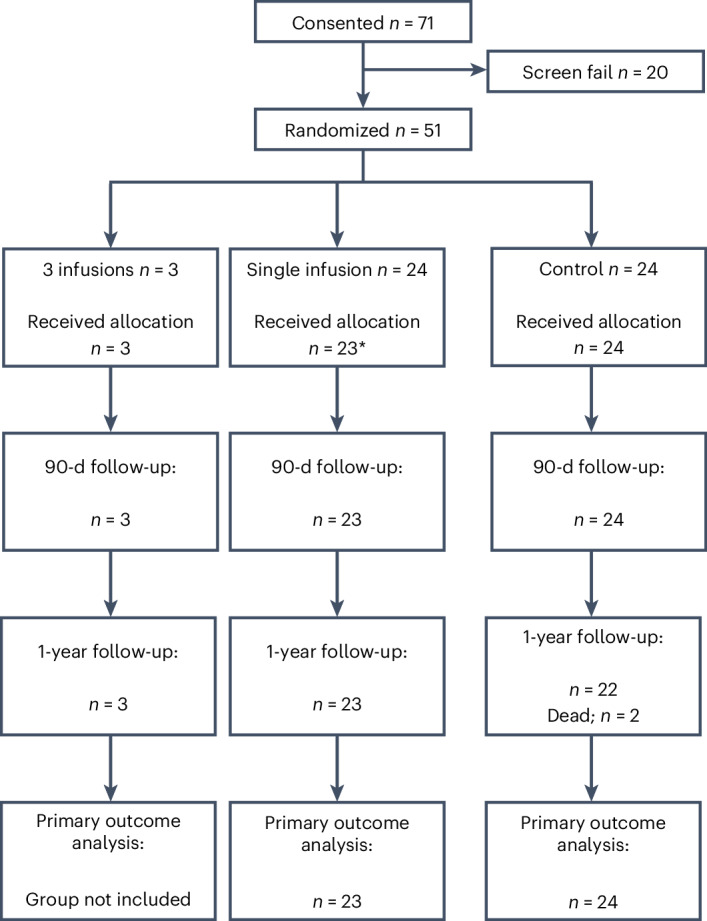
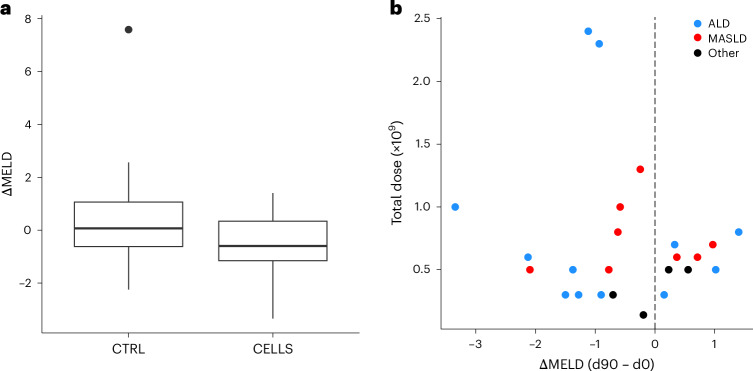
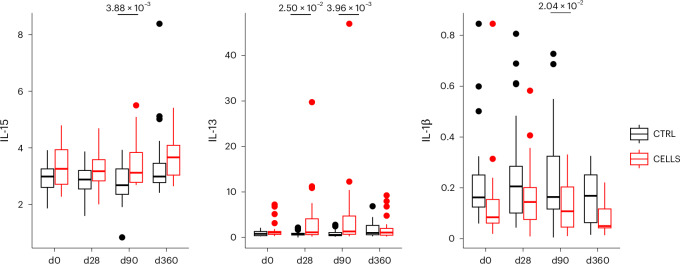
Cirrhosis is a major cause of morbidity and mortality; however, there are no approved therapies except orthotopic liver transplantation. Preclinical studies showed that bone-marrow-derived macrophage injections reduce inflammation, resolve fibrosis and stimulate liver regeneration. In a multicenter, open-label, parallel-group, phase 2 randomized controlled trial ( ISRCTN10368050 ) in n = 51 adult patients with compensated cirrhosis and Model for End-Stage Liver Disease (MELD) score ≥10 and ≤17, we evaluated the efficacy of autologous monocyte-derived macrophage therapy ( n = 27) compared to standard medical care ( n = 24). The primary endpoint was the difference in baseline to day 90 change in MELD score (ΔMELD) between treatment and control groups (ΔΔMELD). Secondary endpoints included adverse clinical outcomes, non-invasive fibrosis biomarkers and health-related quality of life (HRQoL) at 90 d, 180 d and 360 d. The ΔΔMELD between day 0 and day 90 in the treatment group compared to controls was −0.87 (95% confidence interval: −1.79, 0.0; P = 0.06); therefore, the primary endpoint was not met. During 360-d follow-up, five of 24 participants in the control group developed a total of 10 severe adverse events, four of which were liver related, and three deaths (two liver related), whereas no liver-related severe adverse events or deaths occurred in the treatment group. Although no differences were observed in biomarkers or HRQoL, exploratory analysis showed anti-inflammatory serum cytokine profiles after macrophage infusion. This study reinforces the safety and potential efficacy of macrophage therapy in cirrhosis, supporting further investigation.
Overview
The claims and statistics of this paper haven’t been checked yet.
Free: it reads the open-access text and checks the first 5 claims that cite a source we can check. Create a free account to check every claim.
Integrity signals
Registry
Cites
Statistics
Figures
Verification
Claims the paper makes
The claims and statistics of this paper haven’t been checked yet.
Free: it reads the open-access text and checks the first 5 claims that cite a source we can check. Create a free account to check every claim.
Claims other papers make about this one
Each is checked against this paper’s own text: does it say what the citing paper says it does?
The cited source doesn’t support the claim as written.
In the citing paper
“recent clinical trials have provided evidence that the administration of autologous macrophage therapy for liver fibrosis is safe, although the nature of these trials precluded efficacy assessment (52, 53).”
From Impaired TIM4-mediated efferocytosis by liver macrophages contributes to fibrosis in metabolic dysfunction–associated steatohepatitis (2025) · cites this paper as [53]
Checked by a reasoning model — may be wrong.
Experimental — accuracy not yet measuredThe source backs part of the claim, not all of it — or backs it for a different population, condition or comparison.
In the citing paper
“as longer-term results showed that treated patients developed fewer liver-related adverse effects and improved survival compared to the control group, suggesting potential clinical benefits (180, 181).”
From Targeting macrophages in liver fibrosis (2026) · cites this paper as [181]
Experimental — accuracy not yet measuredThe source backs part of the claim, not all of it — or backs it for a different population, condition or comparison.
In the citing paper
“A phase II trial reported that infusion of bone marrow–derived monocytes did not significantly improve liver function, although circulating pro-inflammatory cytokines were reduced (213).”
From Strategies to promote liver fibrosis amelioration with involvement of restorative macrophages (2026) · cites this paper as [213]
Experimental — accuracy not yet measuredThe source backs part of the claim, not all of it — or backs it for a different population, condition or comparison.
In the citing paper
“Nonetheless, the treatment group showed good safety and an increase in serum anti-inflammatory cytokines (IL-10, IL-13) (75).”
From Macrophage duality in liver diseases: heterogeneity, plasticity, and the quest for precision therapeutics (2026) · cites this paper as [75]
Experimental — accuracy not yet measuredThe cited source says what the claim attributes to it.
In the citing paper
“Although preclinical results were encouraging, randomized clinical trials in cirrhotic patients have shown inconsistent benefits.”
From Strategies to promote liver fibrosis amelioration with involvement of restorative macrophages (2026) · cites this paper as [213]
3 more claims about this paper
Create a free account to see every claim other papers make about this one.
Self-check
Percentages, sums and reported differences re-computed from the paper’s own numbers.
The self-check needs the paper’s full text.
Citations
Cites
D'Amico, G., Garcia-Tsao, G., & Pagliaro, L. (2006) · Journal of Hepatology · doi:10.1016/j.jhep.2005.10.013 · Cited by 2,687 · cited 1×
“Hepatic decompensation represents a clear inflection point in the trajectory of CLD, with median survival dropping from over 12 years in patients with compensated cirrhosis to approximately 2 years for patients with decompensated cirrhosis 5 .”
Global burden of liver disease: 2023 update
Devarbhavi, H., Asrani, S. K., Arab, J. P., Nartey, Y. A., Pose, E., & Kamath, P. S. (2023) · Journal of Hepatology · doi:10.1016/j.jhep.2023.03.017 · Cited by 2,267
Berzigotti, A., Tsochatzis, E., Boursier, J., Castera, L., Cazzagon, N., Friedrich-Rust, M., Petta, S., & Thiele, M. (2021) · Journal of Hepatology · doi:10.1016/j.jhep.2021.05.025 · Cited by 1,925
Marcellin, P., Gane, E., Buti, M., Afdhal, N., Sievert, W., Jacobson, I. M., Washington, M. K., Germanidis, G., Flaherty, J. F., Schall, R. A., et al. (2013) · The Lancet · doi:10.1016/s0140-6736(12)61425-1 · Cited by 1,788 · cited 1×
“Successful etiological treatment, such as antiviral therapy or sustained alcohol abstinence, can induce substantial fibrosis regression in patients with cirrhosis 8 with potential improvement in portal hypertension 9,10 , liver function and even ‘recompensation’ of decompensated cirrhosis 11–13 .”
Selective depletion of macrophages reveals distinct, opposing roles during liver injury and repair
Duffield, J. S., Forbes, S. J., Constandinou, C. M., Clay, S., Partolina, M., Vuthoori, S., Wu, S., Lang, R., & Iredale, J. P. (2005) · Journal of Clinical Investigation · doi:10.1172/jci200522675 · Cited by 1,649 · cited 1×
“Macrophages have been shown to have a pivotal role in the regression of organ fibrosis 22–25 .”
Self-citationLiver fibrosis and repair: Immune regulation of wound healing in a solid organ
Pellicoro, A., Ramachandran, P., Iredale, J. P., & Fallowfield, J. A. (2014) · Nature Reviews Immunology · doi:10.1038/nri3623 · Cited by 1,310 · cited 1×
“Cirrhosis is end-stage scarring (fibrosis) that can be caused by any form of chronic liver injury and is characterized by disruption of the normal liver architecture, organ dysfunction and high blood pressure in the portal vein and its branches (portal hypertension) 4 .”
Self-citationRamachandran, P., Pellicoro, A., Vernon, M. A., Boulter, L., Aucott, R. L., Ali, A., Hartland, S. N., Snowdon, V. K., Cappon, A., Gordon-Walker, T. T., et al. (2012) · Proceedings of the National Academy of Sciences · doi:10.1073/pnas.1119964109 · Cited by 1,001
Self-citationGlobal epidemiology of cirrhosis — aetiology, trends and predictions
Huang, D. Q., Terrault, N. A., Tacke, F., Gluud, L. L., Arrese, M., Bugianesi, E., & Loomba, R. (2023) · Nature Reviews Gastroenterology & Hepatology · doi:10.1038/s41575-023-00759-2 · Cited by 839 · cited 1×
“Globally, in 2017, there were 10.6 million prevalent cases of decompensated cirrhosis and 112 million prevalent cases of compensated cirrhosis 2 .”
InfluentialBoulter, L., Govaere, O., Bird, T. G., Radulescu, S., Ramachandran, P., Pellicoro, A., Ridgway, R. A., Seo, S. S., Spee, B., Van Rooijen, N., et al. (2012) · Nature Medicine · doi:10.1038/nm.2667 · Cited by 747
Self-citationYounossi, Z. M., Guyatt, G., Kiwi, M., Boparai, N., & King, D. (1999) · Gut · doi:10.1136/gut.45.2.295 · Cited by 670
Cited by
Macrophages: Subtypes, Distribution, Polarization, Immunomodulatory Functions, and Therapeutics
Peng, M., Li, N., Wang, H., Li, Y., Liu, H., Luo, Y., Lang, B., Zhang, W., Li, S., Tian, L., et al. (2025) · MedComm · doi:10.1002/mco2.70304 · Cited by 122
(2025) · doi:10.1038/s41423-025-01313-7 · Cited by 97
“Restorative macrophages play a key role in degrading the extracellular matrix and restoring normal liver architecture via their high expression of matrix metalloproteinases [271 – 274].”
The spatial and temporal activation of macrophages during fibrosis
Behmoaras, J. V., Mulder, K., Ginhoux, F., & Petretto, E. G. (2025) · Nature reviews. Immunology · doi:10.1038/s41577-025-01186-x · Cited by 86
“Also, a recent report highlighted the potential value of autologous monocyte-derived macrophage therapy for cirrhosis 209 , which is supported by preclinical studies in mice 210 .”
Spatially resolved multi-omics of human metabolic dysfunction-associated steatotic liver disease
Li, Z., Luo, G., Gan, C., Zhang, H., Li, L., Zhang, X., Xing, X., Hu, S., Tan, X., Ding, J., et al. (2025) · Nature Genetics · doi:10.1038/s41588-025-02407-8 · Cited by 91
“These findings highlight the therapeutic potential of manipulating LAM phenotypes and abundance either through molecular drug interventions or direct injections of bone marrow-derived macrophages 52 .”
Antifibrotic therapies for metabolic dysfunction-associated steatotic liver disease
Schwabe, R. F., Tacke, F., Sugimoto, A., & Friedman, S. L. (2025) · JHEP Reports · doi:10.1016/j.jhepr.2025.101421 · Cited by 70
“42,43 In preclinical models, cell therapy with alternatively activated macrophages resolved necrosis following acute liver injury, and even ameliorated fi brosis.”
Harnessing chimeric antigen receptor macrophages against solid tumors
Wang, M., Qin, Z., Bian, X., & Shi, Y. (2025) · 癌症:英文版 · doi:10.1002/cac2.70053 · Cited by 38
“Although no significant efficacy was observed, this and subsequent trials established the safety profile of adoptive macrophage transfer [74–77], supporting the feasibility of CAR-M clinical investigations.”
Cell therapy for liver disorders: past, present and future
Ortuño‐Costela, M. D. C., Pinzani, M., & Vallier, L. (2025) · Nature Reviews Gastroenterology & Hepatology · doi:10.1038/s41575-025-01050-2 · Cited by 42
“However, after its completion, the primary endpoint for differences in terms of end-stage liver disease score was not met, although an anti-inflammatory serum cytokine profile was demonstrated 191 (Table 2).”
Shi, H., Wang, X., Sloas, C., Gerlach, B., Yurdagul, A., Moore, M. P., Jung, E. J., Mirshahi, F., Ronzoni, L., Sanyal, A. J., et al. (2025) · Science Translational Medicine · doi:10.1126/scitranslmed.adv2106 · Cited by 30
Cheng, J., Gao, R., Lyu, Y., Xiong, Z. L., Yang, K., Zhao, X., Huang, X., Xu, L., Guo, L., Wang, W., et al. (2025) · ACS Nano · doi:10.1021/acsnano.5c05068 · Cited by 25
Reviewing the function of macrophages in liver disease
Chen, L., Guillot, A., & Tacke, F. (2025) · Expert Review of Gastroenterology & Hepatology · doi:10.1080/17474124.2025.2508963 · Cited by 17
“In comparison to standard of care ( n = 24), individuals that received macrophage therapy ( n = 27) had fewer decompensation events and deaths in the 360-day follow-up period, indicating potential clinical benefits from this macrophage cell therapy [168].”
Macrophage heterogeneity and plasticity in liver injury and repair mechanisms
Zhang, T., Horn, P., Peiseler, M., & Tacke, F. (2025) · Stem Cells · doi:10.1093/stmcls/sxaf072 · Cited by 16
Macrophages and Tissue Homeostasis: From Physiological Functions to Disease Onset
Li, Y., Chen, H., & Zhou, S. (2025) · Frontiers in Bioscience-Landmark · doi:10.31083/fbl42706 · Cited by 14
TNC‑targeted CAR‑macrophage therapy alleviates liver fibrosis in mice
Chen, K., Lin, Z., Chen, L., Zhou, Y., Zhang, W., Wan, H., Huo, Y., Fu, Q., Gao, Z., Cheng, H., et al. (2025) · Military Medical Research · doi:10.1186/s40779-025-00667-3 · Cited by 11
“Recent phase I and phase II clinical trials have high-lighted the clinical therapeutic prospects of macrophage therapy [45, 46].”
Zhang, J., Xie, Z., Zhu, X., Xu, C., Lin, J., Zhao, M., & Cheng, Y. (2025) · International Immunopharmacology · doi:10.1016/j.intimp.2025.114864 · Cited by 12
Immunometabolic integration in therapeutic strategies for managing MASLD
González-Serrano, S., Onoiu, A.-I., Camps, J., & Joven, J. (2025) · Frontiers in Pharmacology · doi:10.3389/fphar.2025.1693753 · Cited by 8
Irf5 Knockdown in Bone Marrow-Derived Macrophages Favors M1-to-M2 Transition
Petrova, E., Sherstyukova, E. A., Kandrashina, S., Inozemtsev, V. A., Tsitrina, A. A., Fedorova, V. V., Shvedov, M., Kuzovlev, A. N., Dokukin, M., Kotelevtsev, Y. V., et al. (2026) · Cells · doi:10.3390/cells15030238 · Cited by 10
“Recently transplantation of autologous macrophages was shown to be safe and efficacious in the phase I and phase II clinical trials [67].”
Macrophage-specific circular RNA circHIPK2, inflammation, and fibrosis after myocardial infarction
Jung, M., Schmidt, A., Sansonetti, M., Soodi, B. A., Thum, S., Pfanne, A., Just, A., Xiao, K., Huang, C.-K., Erschow, S., et al. (2026) · European Heart Journal · doi:10.1093/eurheartj/ehaf1116 · Cited by 9
“58–61 Our findings suggest that circHIPK2-silenced iPSCDMs hold translational potential as macrophage-based cell therapy.”
Extracorporeal Photopheresis Stimulates Tissue Repair after Transplantation
Arella, F., Schlitt, H. J., & Riquelme, P. (2025) · Transplantation Direct · doi:10.1097/txd.0000000000001812 · Cited by 10
“37 An alternative therapeutic approach involves nanoparticle-encapsulated drugs to modify macrophages in vivo.”
Biomaterial scaffolds for therapeutic immune cell engineering and delivery
Wolter, T., & Hu, Q. (2025) · Journal of Controlled Release · doi:10.1016/j.jconrel.2025.114072 · Cited by 8
He, K., Zhu, X., Shi, Y.-P., Huang, W., Yang, T., Xi, Z., Li, Q., Sun, H., Qian, L., Chen, X., et al. (2025) · Cell Discovery · doi:10.1038/s41421-025-00831-y · Cited by 11
“The fi ndings of macrophage therapy underscore the emerging feasibility of cell-based cirrhosis interventions, while our HepLPC fi ndings advance this fi eld by demonstrating another safety-supported, biologically plausible regenerative option 23 .”
Brennan, P. N., Kilpatrick, A. M., Glover, A., Campana, L., Turner, M., Elliott, A., Duncan, A., Lachlan, N. J., Dillon, J. F., Fallowfield, J. A., et al. (2026) · Cell stem cell · doi:10.1016/j.stem.2026.04.016 · Cited by 9
Self-citationOuyang, R., Li, X., Hao, J., Lin, J., Lan, H. Y., Peng, J., Li, X., Tian, Z., & Sun, Y. (2025) · Frontiers in Pharmacology · doi:10.3389/fphar.2025.1708240 · Cited by 5
Mesineni, S., Arun, S., Bose, U., Jaisankar, P. V., Shah, K. P., & Harikumar, A. (2025) · Discoveries · doi:10.15190/d.2025.17 · Cited by 6
“These strategies could help restore and address the multi-organ complications of cirrhosis 142 .”
The gene regulatory networks shaping macrophage plasticity and altered function in fibrosis
Kolostyák, Z., & Nagy, L. (2026) · Frontiers in Immunology · doi:10.3389/fimmu.2026.1767954 · Cited by 6
“Monocyte-derived macrophages have been developed as a Good Manufacturing Practice compatible product, and it has been shown that monocytes from patients with cirrhosis can be differentiated ex vivo into macrophages with a phenotype comparable to those from healthy donors (243).”
InfluentialNot the end of the road for macrophage therapy in liver cirrhosis
Maher, J. J. (2025) · Nature Medicine · doi:10.1038/s41591-025-03490-4 · Cited by 6
Role of IL ‐34 in Tumors and Its Application to Regulate Inflammation
Igarashi, Y., & Seino, K.-I. (2025) · Cancer Science · doi:10.1111/cas.70020 · Cited by 4
“Furthermore, promising results regarding its therapeutic efficacy have also been reported [48].”
Mechanisms of innate immune cells in Metabolic dysfunction-associated steatotic liver disease
Yao, Y., Wu, Q., Fan, B., Peng, X., Sheng, M., & Wang, F. (2025) · Frontiers in Immunology · doi:10.3389/fimmu.2025.1599748 · Cited by 6
Current therapeutic landscape and future treatment perspectives of MASH
Gallage, S., Govaere, O., Anstee, Q. M., Shulman, G. I., Tacke, F., & Heikenwälder, M. F. (2026) · Nature · doi:10.1038/s41586-026-10672-8 · Cited by 7
“A phase II trial using autologous CD14 + monocytes differentiated into a restorative phenotype showed safety and modest improvement in patients with cirrhosis, although the long-term efficacy is uncertain 143,144 .”
Targeting macrophages in liver fibrosis
González del Barrio, L., Ipsen, D. H., Pfister, D. R., Hancz, D., & Scott, C. L. (2026) · Frontiers in Immunology · doi:10.3389/fimmu.2026.1835489 · Cited by 3
“…may re fl ect the limitations of the study design rather than a lack of biological activity, as longer-term results showed that treated patients developed fewer liver-related adverse effects and improved survival compared to the control group, suggesting potential clinical bene fi ts (180, 181).”
Huang, G., & Li, D. (2026) · Frontiers in Medicine · doi:10.3389/fmed.2026.1751290 · Cited by 6
“Patients in the treatment group exhibited elevated serum IL-15 levels and decreased IL-1 β levels, presenting an anti-inflammatory cytokine profile (170), which lays the clinical foundation for macrophages as “living drugs” in the treatment of advanced liver disease.”
Therapeutic approaches for liver fibrosis/cirrhosis by targeting pyroptosis
Qiao, G., Li, P., Wang, M., Li, C., Wang, Y., Xin, S., & Liu, H. (2025) · Open Life Sciences · doi:10.1515/biol-2025-1092 · Cited by 3
“Brennan et al. con fi rmed the safety and potential e ffi cacy of autologous macrophage therapy in the treatment of liver cirrhosis through a Phase II randomized controlled trial [99].”
Liu, S., Ye, T., Wei, X., Qiu, F., Yan, X., Li, H., & Hu, X. (2025) · Immunological Investigations · doi:10.1080/08820139.2025.2542198 · Cited by 2
Ge, F., Wang, X., Li, Z., Su, G., Li, L., Yu, J. H., Miao, W., Ma, Y., Liang, H., & Ren, Z. (2025) · Phytomedicine · doi:10.1016/j.phymed.2025.157586 · Cited by 3
Palmer, O., Perreard, L., Kolling, F., Pioli, P. A., & Goods, B. A. (2025) · BMC Biotechnology · doi:10.1186/s12896-025-01071-4 · Cited by 2
“The maintenance of macrophage phenotypes ex vivo is essential to support cell therapy approaches, mechanistic models with human cells, and for applications in regenerative medicine [33–35].”
Paasch, D., Schevel, H., Riehle, A., Costa, B., Toufaili, H., Gehnen, T., Dahlmann, J., Pavlou, A., Neehus, A., Nguyen, A. H. H., et al. (2026) · Clinical & Translational Immunology · doi:10.1002/cti2.70071 · Cited by 2
“Recent clinical studies have set the focus on macrophage-based cell therapies, as evidenced by the successful therapeutic application against liver fibrosis 16,17 and cancer.”
In vivo generation of fibrolytic macrophages via LNP-CSF1 mRNA attenuates liver fibrosis
Cao, X., Shao, M., Su, S., Gong, Y., Wu, Z., Shu, Y., Ma, T., (91136), H. Y., Zeng, Y., Zhu, Z., et al. (2026) · Journal of Nanobiotechnology · doi:10.1186/s12951-026-04632-7 · Cited by 2
“…CSF1 [11, 12]; while this cell-based therapy did not meet the primary endpoint in a Phase II trial, it improved liver function and attenuated fibrosis in preclinical models [11–13], supporting the translational relevance of targeting monocyte-derived macrophages for anti-fibrotic therapy.”
InfluentialFallowfield, J. A., Ramachandran, P., & Kendall, T. J. (2026) · Journal of Hepatology · doi:10.1016/j.jhep.2026.05.026 · Cited by 2
Self-citationChen, L., Chen, Y., Zhao, M., Yang, X., Sutte, K., Lu, M., Chen, J., Zheng, X., Yang, D., & Liu, J. (2026) · Frontiers in Immunology · doi:10.3389/fimmu.2026.1814879 · Cited by 1
Strategies to promote liver fibrosis amelioration with involvement of restorative macrophages
Aquino, J. B. (2026) · Frontiers in Immunology · doi:10.3389/fimmu.2026.1792423 · Cited by 1
“A phase II trial reported that infusion of bone marrow – derived monocytes did not signi fi cantly improve liver function, although circulating pro-in fl ammatory cytokines were reduced (213).”
Baer, H. U., Sulaiman, A. S., Wahyuni, N. T., Sutedja, B., Limas, P. I., Marcelina, O., Lheman, J., Nuraeni, Drew, C., & Hendrawan, S. (2025) · Journal of Liver Transplantation · doi:10.1016/j.liver.2025.100314 · Cited by 1
Sonoimmunology in cancer therapy: expanding crosstalk among ultrasound-materials-immune system
Liu, Z., Wu, P., & Yuan, L. (2026) · Materials & Design · doi:10.1016/j.matdes.2026.116179 · Cited by 1
Advancing hepatocyte-based therapies: A translational perspective
Sun, Z. X., Zhang, L., & Hui, L. (2026) · Cell stem cell · doi:10.1016/j.stem.2026.04.007 · Cited by 1
Szkolnicka, D., del Barrio, L. G., Calderón, C. D. Q., Kowal, J. M., Sampath, S., Dudley, G., Sörensen, J., Karlsen, A. E., & Hay, D. C. (2026) · Cells · doi:10.3390/cells15100905 · Cited by 1
“Excitingly, some of those therapies are in clinical trials, showing early signs of safety and efficacy in patients with established cirrhosis [6].”
Yang, X., Steffani, M., Nadella, S., Sheppard, D., Rieder, F., Rinkevich, Y., Kramann, R., Tuveson, D. A., & Schwabe, R. F. (2026) · JCI Insight · doi:10.1172/jci.insight.202529 · Cited by 1
“Finally, macrophage-mediated restoration has entered clinical trials in the liver and may represent a powerful strategy to improve fibrosis and regeneration,and return organs, such as the liver, to homeostatic states (250).”
Mosallanejad, K., Hubeau, C., Sterman, A. S., & Tan, Y. (2026) · Cells · doi:10.3390/cells15151412 · Cited by 4
“…of autologous bone marrow-derived macrophages (RTX001; Resolution Therapeutics) was well tolerated and showed encouraging efficacy in a phase 2 clinical trial for cirrhosis in the United Kingdom (MATCH trial) and is advancing into a phase 1/2 trial in the United States (EMERALD trial) [163–165].”
Lee, H., Sim, S.-J., Han, D.-M., Kim, S.-Y., Lee, R., Jeon, Y., Kim, H., Park, J. I., Park, J., Randolph, G., et al. (2026) · Cellular and Molecular Gastroenterology and Hepatology · doi:10.1016/j.jcmgh.2026.101871 · Cited by 1
“34,35 Our findings suggest that infusion of tolerized macrophages—rather than general macrophage populations—may offer superior therapeutic benefit by dampening hepatic inflammation and fibrosis in chronic MASH.”
Macrophage therapy and liver regeneration: Results and perspectives
Lanthier, N., & Spahr, L. (2025) · Clinics and Research in Hepatology and Gastroenterology · doi:10.1016/j.clinre.2025.102569 · Cited by 1
Autologous macrophage therapy for compensated cirrhosis, some hope at the horizon
Rudler, M. (2025) · Journal of Hepatology · doi:10.1016/j.jhep.2025.04.021
MASH and the race for liver antifibrotics
Wills, Q. (2026) · Frontiers in Gastroenterology · doi:10.3389/fgstr.2025.1704078 · Cited by 1
“Cell-based therapies have demonstrated promise, with a recent phase II study of autologous macrophage therapy in cirrhosis demonstrating improvement in transplant-free survival (26).”
Liver Cirrhosis: Evolving Challenges and the Frontier of Emerging Technologies
Sarfraz, A. R., Aslam, E., Amjad, M., Sarfraz, F., Rao, L. S., Umer, M., Siddique, L., Arshad, F., Farooq, A., Shamaas, M. H., et al. (2026) · IntechOpen eBooks · doi:10.5772/intechopen.1012482
Research Progress on the Recompensation of Liver Cirrhosis
高, 源. (2026) · Advances in Clinical Medicine · doi:10.12677/acm.2026.1631071
Zhang, R., Liu, J., Shan, W., Wang, H., Gao, L., Li, Y., Fan, L., Yang, C., Li, G., & Liu, J. (2026) · Cellular and Molecular Life Sciences · doi:10.1007/s00018-026-06266-2
Optimizing macrophage-targeted intracellular delivery systems for safe and effective immunotherapies
Goemaere, I., Velder, M. D., Smedt, S. C. D., Lentacker, I., Vos, W. H. D., & Braeckmans, K. (2026) · Advanced Drug Delivery Reviews · doi:10.1016/j.addr.2026.115924
Huang, L., Wu, C.-G., Zhu, T., Li, Q.-L., Yu, Q., Zhang, Q., & Shen, Y. (2026) · World Journal of Hepatology · doi:10.4254/wjh.122262
Long-term lessons from MATCH01 macrophage therapy in cirrhosis
Ding, B., Yang, B., & Cao, Z. (2026) · Cell stem cell · doi:10.1016/j.stem.2026.05.016
Monittola, F., Perla, E., Libetti, D., Antonelli, A., Graciotti, L., Torre, D., Pierigè, F., Ricci, A., Magnani, M., Bianchi, M., et al. (2026) · bioRxiv (Cold Spring Harbor Laboratory) · doi:10.64898/2026.07.08.736353
Tacke, F., & Newsome, P. N. (2026) · Journal of Hepatology · doi:10.1016/j.jhep.2026.06.041
Cell Therapy in Advanced Cirrhosis: From Preclinical Evidence to Clinical Application
Thirlwell, K. L., Reis, M., Llewellyn, J., Brass, C. A., & Campana, L. (2026) · Gastro Hep Advances · doi:10.1016/j.gastha.2026.101053
“58 2) Alternative dosing strategies could be considered to enhance anti-inflammatory effects beyond 90 days, such as engineering for enhanced potency and/or a multiple dose regime, thereby enabling treatment of decompensated patients.”
Dysfunctional macrophages along the gut-liver axis: a driver of infection in cirrhosis
Aslan, D., Korf, H., Dumarey, A., Smets, L., Ghallab, A., Hengstler, J. G., Marques, P. E., & der Merwe, V. (2026) · Frontiers in Immunology · doi:10.3389/fimmu.2026.1870116
Wu, A., & Sun, L.-Y. (2026) · Chinese Journal of Integrative Medicine · doi:10.1007/s11655-026-3852-2
Therapeutic applications of stem cells in human diseases
Hao, C., Bolideei, M., Alshorman, J., Tembo, K. M., Yekta, M. M., Mehran, M. J., & Zhang, Z. (2026) · Stem Cell Research & Therapy · doi:10.1186/s13287-026-05203-1 · Cited by 1
“Because macrophages can contribute to fibrosis resolution, extracellular-matrix remodelling, and tissue repair, defined macrophage products are being investigated as potential modulators of the injured hepatic microenvironment [98, 99].”
Spatial immune niche remodeling of the neutrophil-macrophage axis inchronic liver disease
Ding, J., Xiong, X., Zhang, C., Fang, H., & Li, S. (2026) · Frontiers in Cell and Developmental Biology · doi:10.3389/fcell.2026.1902627
“Building dynamically upon this cellular foundation, a milestone Phase II clinical trial published by Brennan et al. (2025) demonstrated that gene-edited or phenotype-optimized macrophage preparations can target and aggregate at the site of liver injury, significantly reduce local severe…”
Mechanotransduction Pathways in Liver Fibrosis: a Comprehensive Narrative Review
Jehangir, M., kashmiri, K., Tayyab, M., Kakhramonov, R., & Alvi, A. D. (2026) · Letters in Applied NanoBioScience · doi:10.33263/lianbs152.083
“Research has demonstrated that long-term mental stress can worsen liver damage and fibrosis [19-22].”
Liu, H., Zhang, M., & Tacke, F. (2026) · Drug Design Development and Therapy · doi:10.2147/dddt.s543657
“151 Such elaborate cell-based therapies may find a place in advanced stages such as liver cirrhosis.”
Autologe makrofager mot levercirrhose
Wilhelmsen, M. F. (2026) · Tidsskrift for Den norske legeforening · doi:10.4045/tidsskr.26.0488
Tissue-Resident Macrophages: Linking Physiology and Inflammation in Infection
Cardozo, M. E., Cirilo, T. M., Duval, I. D. B., de Oliveira, A. L. G., Magalhães, L. M. D., Bueno, L. L., Dumonteil, E., & Fujiwara, R. T. (2026) · Clinical Reviews in Allergy & Immunology · doi:10.1007/s12016-026-09195-x
Context-Dependent Roles of Liver Macrophages in MASH
Horn, P., & Tacke, F. (2026) · Seminars in Liver Disease · doi:10.1055/a-2954-5433
Die mit metabolischer Dysfunktion assoziierte Fettlebererkrankung
Roeb, E. (2026) · Gastroenterologie up2date · doi:10.1055/a-2658-4302
van der Walle, C. F. (2026) · Elsevier eBooks · doi:10.1016/b978-0-443-45791-3.00006-8
Feng, Z., Li, X., Li, Z., Yan, X., & Wei, J. (2026) · Nephrology Dialysis Transplantation · doi:10.1093/ndt/gfag236
Metadata
- Authors
- Brennan, P. N., MacMillan, M., Manship, T., Moroni, F., Glover, A., Troland, D., MacPherson, I., Graham, C., Aird, R., Semple, S. I. K., Morris, D. M., Fraser, A. R., Pass, C., McGowan, N. W. A., Turner, M. L., Manson, L., Lachlan, N. J., Dillon, J. F., Kilpatrick, A. M., Campbell, J. D. M., Fallowfield, J. A., & Forbes, S. J.
- Affiliations
- University of Dundee (GB)
- MRC Centre for Regenerative Medicine (GB)
- Edinburgh Royal Infirmary (GB)
- Aberdeen Royal Infirmary (GB)
- Scottish National Blood Transfusion Service (GB)
- University of Edinburgh (GB)
- Glasgow Royal Infirmary (GB)
- Centre for Inflammation Research (GB)
- Corresponding author
- Forbes, Stuart J.
- ORCID
- Venue
- Nature Medicine
- Published
- 2025-01-10
- Volume
- 31
- Issue
- 3
- Pages
- 979-987
- ISSN
- 1078-8956 (ISSN-L)
- 1546-170X
- PMC
- PMC11922741
- OpenAlex
- W4406231919
- Cited by
- 66
- References
- 51
- Citations by year
- 2026: 35 · 2025: 31
- FWCI
- 37.10
- Type
- journal article
- Language
- en
- Open access
- hybrid
- doi.org
- Licence
- cc-by
- creativecommons.org/licenses/by/4.0 (tdm)
- creativecommons.org/licenses/by/4.0 (vor)
- Locations
- Nature Medicine (publishedVersion, cc-by)
- PubMed Central (publishedVersion, cc-by)
- PubMed (publishedVersion)
- Discovery Research Portal (University of Dundee) (publishedVersion, cc-by)
- Edinburgh Research Explorer (University of Edinburgh) (submittedVersion, other-oa)
- Funders
- RCUK | Medical Research Council (MR/M007588/1)
- Topics
- Health Sciences › Medicine › Hepatology › Liver Disease and Transplantation
- Health Sciences › Medicine › Hepatology › Liver physiology and pathology
- Health Sciences › Medicine › Hepatology › Liver Disease Diagnosis and Treatment
- Keywords
- liver cirrhosis, monocyte-derived macrophages, bone marrow-derived macrophages, MELD score, liver fibrosis, liver regeneration, anti-inflammatory cytokines, health-related quality of life, adverse events, compensated cirrhosis
- MeSH terms
- Adult, Aged, Female, Humans, Liver Cirrhosis, Macrophages, Male, Middle Aged, Quality of Life, Transplantation, Autologous, Biomarkers, Treatment Outcome
About these checks
Registry, retraction, Cites and statistics results are computed, not judged, with one exception: a printed reference that no index lists is read once by a model before it counts as a citation error. Claims are extracted by a model and kept only when their quote appears verbatim in the text; each cited source is then checked, with a model’s help, for whether it says what the claim relies on. Those verdicts can be wrong — read the claim’s quote and the cited source before relying on one.
Statistics and arithmetic are recomputed, not judged.
Confidence bands are shown only for fields calibrated on our annotated test set. None is calibrated yet, so no band is shown.
What counts as a claim ›How we measure confidence ›How we check this ›
Are you an author, or do you see a problem with this page? Request a review
Data sources
Bibliographic data: Semantic Scholar, OpenAlex, Crossref.
Contains information from the Semantic Scholar Academic Graph Datasets, made available under the ODC Attribution License (ODC-BY 1.0).
Semantic Scholar’s data is described in: Kinney, R., et al. (2023). The Semantic Scholar Open Data Platform. arXiv:2301.10140.
