

Autologous macrophage therapy for liver cirrhosis: a phase 2 open-label randomized controlled trial
Open accessThe DOI matches its Crossref record; 50 of the 51 references it cites were found in a registry or an index.
Abstract
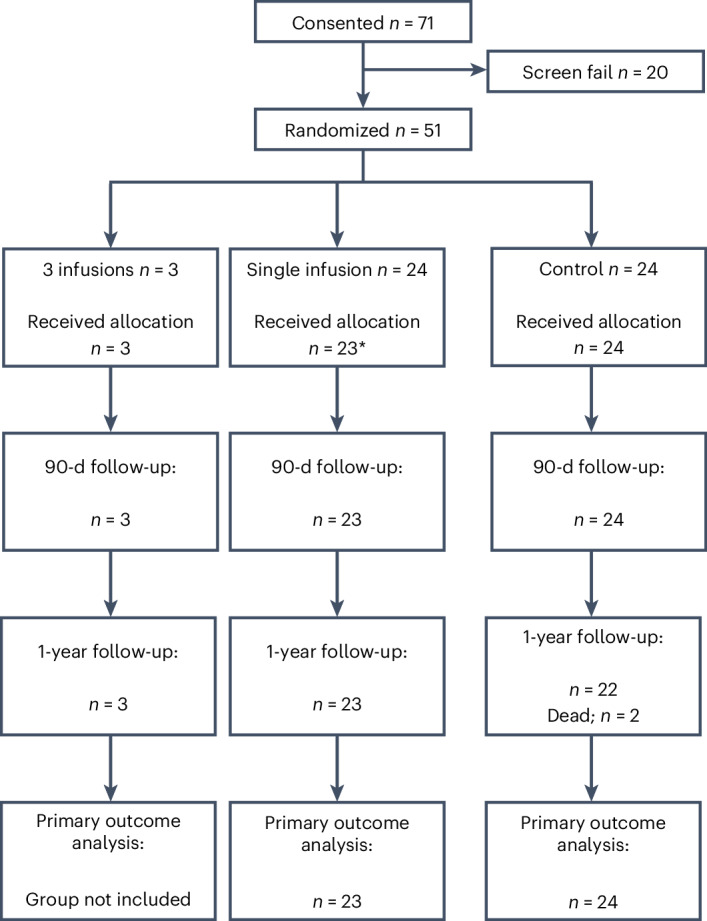
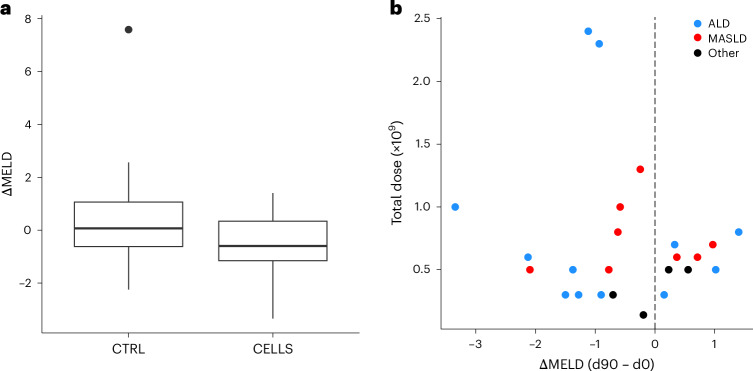
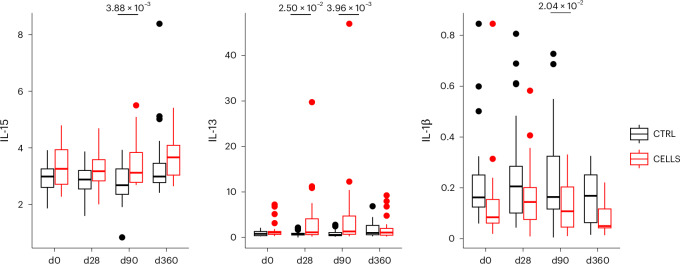
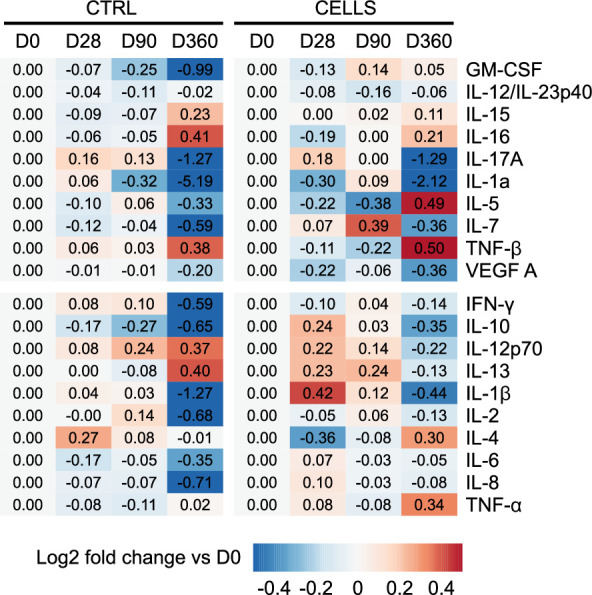
Cirrhosis is a major cause of morbidity and mortality; however, there are no approved therapies except orthotopic liver transplantation. Preclinical studies showed that bone-marrow-derived macrophage injections reduce inflammation, resolve fibrosis and stimulate liver regeneration. In a multicenter, open-label, parallel-group, phase 2 randomized controlled trial ( ISRCTN10368050 ) in n = 51 adult patients with compensated cirrhosis and Model for End-Stage Liver Disease (MELD) score ≥10 and ≤17, we evaluated the efficacy of autologous monocyte-derived macrophage therapy ( n = 27) compared to standard medical care ( n = 24). The primary endpoint was the difference in baseline to day 90 change in MELD score (ΔMELD) between treatment and control groups (ΔΔMELD). Secondary endpoints included adverse clinical outcomes, non-invasive fibrosis biomarkers and health-related quality of life (HRQoL) at 90 d, 180 d and 360 d. The ΔΔMELD between day 0 and day 90 in the treatment group compared to controls was −0.87 (95% confidence interval: −1.79, 0.0; P = 0.06); therefore, the primary endpoint was not met. During 360-d follow-up, five of 24 participants in the control group developed a total of 10 severe adverse events, four of which were liver related, and three deaths (two liver related), whereas no liver-related severe adverse events or deaths occurred in the treatment group. Although no differences were observed in biomarkers or HRQoL, exploratory analysis showed anti-inflammatory serum cytokine profiles after macrophage infusion. This study reinforces the safety and potential efficacy of macrophage therapy in cirrhosis, supporting further investigation.
Overview
The claims and statistics of this paper haven’t been checked yet.
Free: it reads the open-access text and checks the first 5 claims that cite a source we can check. Create a free account to check every claim.
Integrity signals
Registry
Cites
Statistics
Figures
Verification
Claims the paper makes
The claims and statistics of this paper haven’t been checked yet.
Free: it reads the open-access text and checks the first 5 claims that cite a source we can check. Create a free account to check every claim.
Claims other papers make about this one
Each is checked against this paper’s own text: does it say what the citing paper says it does?
The cited source doesn’t support the claim as written.
In the citing paper
“recent clinical trials have provided evidence that the administration of autologous macrophage therapy for liver fibrosis is safe, although the nature of these trials precluded efficacy assessment (52, 53).”
From Impaired TIM4-mediated efferocytosis by liver macrophages contributes to fibrosis in metabolic dysfunction–associated steatohepatitis (2025) · cites this paper as [53]
Checked by a reasoning model — may be wrong.
Experimental — accuracy not yet measuredThe source backs part of the claim, not all of it — or backs it for a different population, condition or comparison.
In the citing paper
“as longer-term results showed that treated patients developed fewer liver-related adverse effects and improved survival compared to the control group, suggesting potential clinical benefits (180, 181).”
From Targeting macrophages in liver fibrosis (2026) · cites this paper as [181]
Experimental — accuracy not yet measuredThe source backs part of the claim, not all of it — or backs it for a different population, condition or comparison.
In the citing paper
“A phase II trial reported that infusion of bone marrow–derived monocytes did not significantly improve liver function, although circulating pro-inflammatory cytokines were reduced (213).”
From Strategies to promote liver fibrosis amelioration with involvement of restorative macrophages (2026) · cites this paper as [213]
Experimental — accuracy not yet measuredThe source backs part of the claim, not all of it — or backs it for a different population, condition or comparison.
In the citing paper
“Nonetheless, the treatment group showed good safety and an increase in serum anti-inflammatory cytokines (IL-10, IL-13) (75).”
From Macrophage duality in liver diseases: heterogeneity, plasticity, and the quest for precision therapeutics (2026) · cites this paper as [75]
Experimental — accuracy not yet measuredThe cited source says what the claim attributes to it.
In the citing paper
“Although preclinical results were encouraging, randomized clinical trials in cirrhotic patients have shown inconsistent benefits.”
From Strategies to promote liver fibrosis amelioration with involvement of restorative macrophages (2026) · cites this paper as [213]
3 more claims about this paper
Create a free account to see every claim other papers make about this one.
Self-check
Percentages, sums and reported differences re-computed from the paper’s own numbers.
The self-check needs the paper’s full text.
Citations
Cites
D'Amico, G., Garcia-Tsao, G., & Pagliaro, L. (2006) · Journal of Hepatology · doi:10.1016/j.jhep.2005.10.013 · Cited by 2,687 · cited 1×
“Hepatic decompensation represents a clear inflection point in the trajectory of CLD, with median survival dropping from over 12 years in patients with compensated cirrhosis to approximately 2 years for patients with decompensated cirrhosis 5 .”
Global burden of liver disease: 2023 update
Devarbhavi, H., Asrani, S. K., Arab, J. P., Nartey, Y. A., Pose, E., & Kamath, P. S. (2023) · Journal of Hepatology · doi:10.1016/j.jhep.2023.03.017 · Cited by 2,267
Berzigotti, A., Tsochatzis, E., Boursier, J., Castera, L., Cazzagon, N., Friedrich-Rust, M., Petta, S., & Thiele, M. (2021) · Journal of Hepatology · doi:10.1016/j.jhep.2021.05.025 · Cited by 1,925
Marcellin, P., Gane, E., Buti, M., Afdhal, N., Sievert, W., Jacobson, I. M., Washington, M. K., Germanidis, G., Flaherty, J. F., Schall, R. A., et al. (2013) · The Lancet · doi:10.1016/s0140-6736(12)61425-1 · Cited by 1,788 · cited 1×
“Successful etiological treatment, such as antiviral therapy or sustained alcohol abstinence, can induce substantial fibrosis regression in patients with cirrhosis 8 with potential improvement in portal hypertension 9,10 , liver function and even ‘recompensation’ of decompensated cirrhosis 11–13 .”
Selective depletion of macrophages reveals distinct, opposing roles during liver injury and repair
Duffield, J. S., Forbes, S. J., Constandinou, C. M., Clay, S., Partolina, M., Vuthoori, S., Wu, S., Lang, R., & Iredale, J. P. (2005) · Journal of Clinical Investigation · doi:10.1172/jci200522675 · Cited by 1,649 · cited 1×
“Macrophages have been shown to have a pivotal role in the regression of organ fibrosis 22–25 .”
Self-citationLiver fibrosis and repair: Immune regulation of wound healing in a solid organ
Pellicoro, A., Ramachandran, P., Iredale, J. P., & Fallowfield, J. A. (2014) · Nature Reviews Immunology · doi:10.1038/nri3623 · Cited by 1,310 · cited 1×
“Cirrhosis is end-stage scarring (fibrosis) that can be caused by any form of chronic liver injury and is characterized by disruption of the normal liver architecture, organ dysfunction and high blood pressure in the portal vein and its branches (portal hypertension) 4 .”
Self-citationRamachandran, P., Pellicoro, A., Vernon, M. A., Boulter, L., Aucott, R. L., Ali, A., Hartland, S. N., Snowdon, V. K., Cappon, A., Gordon-Walker, T. T., et al. (2012) · Proceedings of the National Academy of Sciences · doi:10.1073/pnas.1119964109 · Cited by 1,001
Self-citationGlobal epidemiology of cirrhosis — aetiology, trends and predictions
Huang, D. Q., Terrault, N. A., Tacke, F., Gluud, L. L., Arrese, M., Bugianesi, E., & Loomba, R. (2023) · Nature Reviews Gastroenterology & Hepatology · doi:10.1038/s41575-023-00759-2 · Cited by 839 · cited 1×
“Globally, in 2017, there were 10.6 million prevalent cases of decompensated cirrhosis and 112 million prevalent cases of compensated cirrhosis 2 .”
InfluentialBoulter, L., Govaere, O., Bird, T. G., Radulescu, S., Ramachandran, P., Pellicoro, A., Ridgway, R. A., Seo, S. S., Spee, B., Van Rooijen, N., et al. (2012) · Nature Medicine · doi:10.1038/nm.2667 · Cited by 747
Self-citationYounossi, Z. M., Guyatt, G., Kiwi, M., Boparai, N., & King, D. (1999) · Gut · doi:10.1136/gut.45.2.295 · Cited by 670
Fallowfield, J. A., Mizuno, M., Kendall, T. J., Constandinou, C. M., Benyon, R. C., Duffield, J. S., & Iredale, J. P. (2007) · The Journal of Immunology · doi:10.4049/jimmunol.178.8.5288 · Cited by 479
Self-citationLy6Chi monocytes direct alternatively activated profibrotic macrophage regulation of lung fibrosis
Gibbons, M. A., MacKinnon, A. C., Ramachandran, P., Dhaliwal, K., Duffin, R., Phythian-Adams, A. T., van Rooijen, N., Haslett, C., Howie, S. E., Simpson, A. J., et al. (2011) · American Journal of Respiratory and Critical Care Medicine · doi:10.1164/rccm.201010-1719oc · Cited by 466 · cited 1×
“Macrophages have been shown to have a pivotal role in the regression of organ fibrosis 22–25 .”
Self-citationArroyo, V., Angeli, P., Moreau, R., Jalan, R., Clària, J., Trebicka, J., Fernández, J., Gustot, T., Caraceni, P., & Bernardi, M. (2021) · Journal of Hepatology · doi:10.1016/j.jhep.2020.11.048 · Cited by 458 · cited 1×
“Inflammatory mediators may underpin and potentiate nitric oxide–mediated capillary dysfunction, direct immunocytopathy and induce significant metabolic derangement with redistribution of essential nutrient precursors 20 .”
Cirrhosis-associated immune dysfunction
Albillos, A., Martin-Mateos, R., Van der Merwe, S., Wiest, R., Jalan, R., & Álvarez-Mon, M. (2022) · Nature Reviews Gastroenterology & Hepatology · doi:10.1038/s41575-021-00520-7 · Cited by 447
Selvaraj, E. A., Mózes, F. E., Jayaswal, A. N. A., Zafarmand, M. H., Vali, Y., Lee, J. A., Levick, C. K., Young, L. A. J., Palaniyappan, N., Liu, C.-H., et al. (2021) · Journal of Hepatology · doi:10.1016/j.jhep.2021.04.044 · Cited by 376 · cited 1×
“However, despite the promising phase 1 results, we did not observe significant improvements in these markers in the phase 2 study, although we note the relatively small sample size and challenge with use in cirrhosis, for which their utility is less clear 33,34 .”
Thomas, J. A., Pope, C., Wojtacha, D., Robson, A. J., Gordon-Walker, T. T., Hartland, S., Ramachandran, P., Van Deemter, M., Hume, D. A., Iredale, J. P., et al. (2011) · Hepatology · doi:10.1002/hep.24315 · Cited by 346 · cited 4×
“This has led to their testing as a cell therapy in preclinical models of liver fibrosis 18,27–29 and acute liver injury 30 .”
InfluentialSelf-citationCell therapy for liver disease: From liver transplantation to cell factory
Forbes, S. J., Gupta, S., & Dhawan, A. (2015) · Journal of Hepatology · doi:10.1016/j.jhep.2015.02.040 · Cited by 325 · cited 1×
“…for patients with CLD, including hepatocyte transplantation and infusion of mesenchymal stem cells or hematopoietic lineages to stimulate liver regeneration and/or augment liver functional reserve, have demonstrated variable outcomes, particularly in patients with established cirrhosis 15,16 .”
Self-citationVorobioff, J., Groszmann, R., Picabea, E., Gamen, M., Villavicencio, R., Bordato, J., Morel, I., Audano, M., Tanno, H., Lerner, E., et al. (1996) · Gastroenterology · doi:10.1053/gast.1996.v111.pm8780575 · Cited by 322 · cited 1×
“Successful etiological treatment, such as antiviral therapy or sustained alcohol abstinence, can induce substantial fibrosis regression in patients with cirrhosis 8 with potential improvement in portal hypertension 9,10 , liver function and even ‘recompensation’ of decompensated cirrhosis 11–13 .”
Interleukin-1 participates in the progression from liver injury to fibrosis
Gieling, R. G., Wallace, K., & Han, Y.-P. (2009) · American Journal of Physiology-Gastrointestinal and Liver Physiology · doi:10.1152/ajpgi.90564.2008 · Cited by 281 · cited 1×
“IL1β is a potent pro-inflammatory moiety involved directly and indirectly in potentiating fibrogenesis 40 as part of activation of the inflammasome and represents a target for numerous liver pharmacotherapies.”
Yao, F. Y., Terrault, N. A., Freise, C., Maslow, L., & Bass, N. M. (2001) · Hepatology · doi:10.1053/jhep.2001.26512 · Cited by 268 · cited 1×
“Successful etiological treatment, such as antiviral therapy or sustained alcohol abstinence, can induce substantial fibrosis regression in patients with cirrhosis 8 with potential improvement in portal hypertension 9,10 , liver function and even ‘recompensation’ of decompensated cirrhosis 11–13 .”
Mózes, F. E., Lee, J. A., Vali, Y., Alzoubi, O., Staufer, K., Trauner, M., Paternostro, R., Stauber, R. E., Holleboom, A. G., van Dijk, A.-M., et al. (2023) · The Lancet Gastroenterology & Hepatology · doi:10.1016/s2468-1253(23)00141-3 · Cited by 214 · cited 1×
“However, despite the promising phase 1 results, we did not observe significant improvements in these markers in the phase 2 study, although we note the relatively small sample size and challenge with use in cirrhosis, for which their utility is less clear 33,34 .”
Pavlides, M., Banerjee, R., Sellwood, J., Kelly, C. J., Robson, M. D., Booth, J. C., Collier, J., Neubauer, S., & Barnes, E. (2016) · Journal of Hepatology · doi:10.1016/j.jhep.2015.10.009 · Cited by 212
Alternatively activated macrophages promote resolution of necrosis following acute liver injury
Starkey Lewis, P., Campana, L., Aleksieva, N., Cartwright, J. A., Mackinnon, A., O'Duibhir, E., Kendall, T., Vermeren, M., Thomson, A., Gadd, V., et al. (2020) · Journal of Hepatology · doi:10.1016/j.jhep.2020.02.031 · Cited by 209 · cited 1×
“This has led to their testing as a cell therapy in preclinical models of liver fibrosis 18,27–29 and acute liver injury 30 .”
Self-citationSafety profile of autologous macrophage therapy for liver cirrhosis
Moroni, F., Dwyer, B. J., Graham, C., Pass, C., Bailey, L., Ritchie, L., Mitchell, D., Glover, A., Laurie, A., Doig, S., et al. (2019) · Nature Medicine · doi:10.1038/s41591-019-0599-8 · Cited by 202 · cited 6×
“PRO-C3 and C3M are serum biomarkers that detect the formation and degradation of fibrillar type III collagen, respectively.”
InfluentialSelf-citationVillanueva, C., Torres, F., Sarin, S. K., Shah, H. A., Tripathi, D., Brujats, A., Rodrigues, S. G., Bhardwaj, A., Azam, Z., Hayes, P. C., et al. (2022) · Journal of Hepatology · doi:10.1016/j.jhep.2022.05.021 · Cited by 186 · cited 1×
“…cirrhosis in whom cure or suppression of the primary disease is not possible, standard medical care is limited to the use of non-selective beta-blockers to mitigate risk of decompensation and death 14 , treatment of incident cirrhosis-related complications and liver transplantation if indicated.”
Bird, T. G., Lu, W.-Y., Boulter, L., Gordon-Keylock, S., Ridgway, R. A., Williams, M. J., Taube, J., Thomas, J. A., Wojtacha, D., Gambardella, A., et al. (2013) · Proceedings of the National Academy of Sciences · doi:10.1073/pnas.1302168110 · Cited by 166 · cited 2×
“Beyond their role in fibrosis, macrophages orchestrate signaling to the liver epithelial compartment and have pleiotropic effects on liver regeneration 17,26 .”
Self-citationNewsome, P. N., Fox, R., King, A. L., Barton, D., Than, N.-N., Moore, J., Corbett, C., Townsend, S., Thomas, J., Guo, K., et al. (2018) · The Lancet Gastroenterology & Hepatology · doi:10.1016/s2468-1253(17)30326-6 · Cited by 162 · cited 1×
“…for patients with CLD, including hepatocyte transplantation and infusion of mesenchymal stem cells or hematopoietic lineages to stimulate liver regeneration and/or augment liver functional reserve, have demonstrated variable outcomes, particularly in patients with established cirrhosis 15,16 .”
Self-citationPredictors of health‐related quality of life in patients with chronic liver disease
AFENDY, A., KALLMAN, J. B., STEPANOVA, M., YOUNOSZAI, Z., AQUINO, R. D., BIANCHI, G., MARCHESINI, G., & YOUNOSSI, Z. M. (2009) · Alimentary Pharmacology & Therapeutics · doi:10.1111/j.1365-2036.2009.04061.x · Cited by 161
Barber, K., Madden, S., Allen, J., Collett, D., Neuberger, J., & Gimson, A. (2011) · Transplantation · doi:10.1097/tp.0b013e318225db4d · Cited by 158
Huo, T.-I., Wu, J.-C., Lin, H.-C., Lee, F.-Y., Hou, M.-C., Lee, P.-C., Chang, F.-Y., & Lee, S.-D. (2005) · Journal of Hepatology · doi:10.1016/j.jhep.2005.01.019 · Cited by 143 · cited 1×
“The MELD score, and particularly the change in MELD score (ΔMELD), predicts 3-month mortality in cirrhosis 35 .”
Clinical outcomes of patients undergoing antiviral therapy while awaiting liver transplantation
Pascasio, J. M., Vinaixa, C., Ferrer, M. T., Colmenero, J., Rubín, Á., Castells, L., Manzano, M. L., Lorente, S., Testillano, M., Xiol, X., et al. (2017) · Journal of Hepatology · doi:10.1016/j.jhep.2017.08.008 · Cited by 129
Scott, T., Lewis, C., Zhu, M., Wang, C., Samuel, C. S., Drummond, G. R., & Kemp‐Harper, B. K. (2023) · Scientific Reports · doi:10.1038/s41598-023-46237-2 · Cited by 117 · cited 1×
“Serum IL-13 was increased in macrophage-treated patients versus controls; this anti-inflammatory cytokine also induces an ‘M2 like' phenotype in macrophages 41 .”
Chimeric antigen receptor-modified macrophages ameliorate liver fibrosis in preclinical models
Dai, H., Zhu, C., Huai, Q., Xu, W., Zhu, J., Zhang, X., Zhang, X., Sun, B., Xu, H., Zheng, M., et al. (2024) · Journal of Hepatology · doi:10.1016/j.jhep.2024.01.034 · Cited by 114 · cited 1×
“This has led to their testing as a cell therapy in preclinical models of liver fibrosis 18,27–29 and acute liver injury 30 .”
Loomba, R., Huang, D. Q., Sanyal, A. J., Anstee, Q. M., Trauner, M., Lawitz, E. J., Ding, D., Ma, L., Jia, C., Billin, A., et al. (2023) · Gut · doi:10.1136/gutjnl-2022-327777 · Cited by 110
Liver transplantation in the United Kingdom
Neuberger, J. (2016) · Liver Transplantation · doi:10.1002/lt.24462 · Cited by 93 · cited 1×
“Unfortunately, a substantial proportion of those referred for liver transplant assessment are ineligible, and, in the UK, approximately 12% die annually while on the waiting list 21 .”
Pose, E., Torrents, A., Reverter, E., Pérez‐Campuzano, V., Campos‐Varela, I., Avitabile, E., Gratacós‐Ginès, J., Castellote, J., Castells, L., Colmenero, J., et al. (2021) · Journal of Hepatology · doi:10.1016/j.jhep.2021.02.033 · Cited by 88 · cited 1×
“Successful etiological treatment, such as antiviral therapy or sustained alcohol abstinence, can induce substantial fibrosis regression in patients with cirrhosis 8 with potential improvement in portal hypertension 9,10 , liver function and even ‘recompensation’ of decompensated cirrhosis 11–13 .”
Day, J., Patel, P., Parkes, J., & Rosenberg, W. (2019) · The Journal of Applied Laboratory Medicine · doi:10.1373/jalm.2018.027359 · Cited by 73 · cited 1×
“Indeed, a change in ELF score of 0.5 correlates with a single stage change in the Ishak fibrosis staging system 45 .”
InfluentialPierce, T. T., Ozturk, A., Sherlock, S. P., Cunha, G. M., Wang, X. J., Li, Q., Hunt, D. D., Middleton, M. S., Martin, M., Corey, K. E., et al. (2024) · Radiology · doi:10.1148/radiol.233094 · Cited by 60 · cited 1×
“Therefore, we would caution against over-interpretation of VCTE within this context 37,38 .”
Human Induced Pluripotent Stem Cell-Derived Macrophages Ameliorate Liver Fibrosis
Pouyanfard, S., Meshgin, N., Cruz, L. S., Diggle, K., Hashemi, H., Pham, T. V., Fierro, M., Tamayo, P., Fanjul, A., Kisseleva, T., et al. (2021) · Stem Cells · doi:10.1002/stem.3449 · Cited by 59
Haideri, S. S., McKinnon, A. C., Taylor, A. H., Kirkwood, P., Starkey Lewis, P. J., O’Duibhir, E., Vernay, B., Forbes, S., & Forrester, L. M. (2017) · npj Regenerative Medicine · doi:10.1038/s41536-017-0017-0 · Cited by 55 · cited 1×
“This has led to their testing as a cell therapy in preclinical models of liver fibrosis 18,27–29 and acute liver injury 30 .”
Self-citationMoore, J. K., Mackinnon, A. C., Wojtacha, D., Pope, C., Fraser, A. R., Burgoyne, P., Bailey, L., Pass, C., Atkinson, A., Mcgowan, N. W. A., et al. (2015) · Cytotherapy · doi:10.1016/j.jcyt.2015.07.016 · Cited by 51 · cited 4×
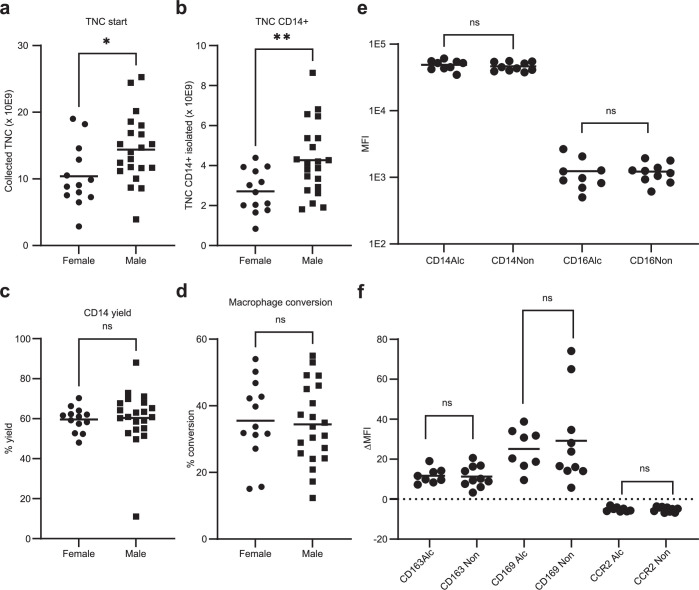
“These ex vivo matured autologous monocyte-derived macrophages exhibit a mature phenotype (CD14 + /high 25F9 expression) plus the retention of high levels of markers associated with tissue repair and inflammation resolution (CD206, CD163 and CD169) 32 .”
InfluentialSelf-citationFraser, A. R., Pass, C., Burgoyne, P., Atkinson, A., Bailey, L., Laurie, A., W.A. McGowan, N., Hamid, A., Moore, J. K., Dwyer, B. J., et al. (2017) · Cytotherapy · doi:10.1016/j.jcyt.2017.05.009 · Cited by 44
Self-citationBrennan, P. N., MacMillan, M., Manship, T., Moroni, F., Glover, A., Graham, C., Semple, S., Morris, D. M., Fraser, A. R., Pass, C., et al. (2021) · BMJ Open · doi:10.1136/bmjopen-2021-053190 · Cited by 41
Self-citationInterleukin-15 receptor α on hepatic stellate cells regulates hepatic fibrogenesis in mice
Jiao, J., Ooka, K., Fey, H., Fiel, M. I., Rahmman, A. H., Kojima, K., Hoshida, Y., Chen, X., de Paula, T., Vetter, D., et al. (2016) · Journal of Hepatology · doi:10.1016/j.jhep.2016.04.020 · Cited by 39 · cited 1×
“Notably, IL-15Rα signaling in hepatic stellate cells was shown to mediate a direct anti-fibrotic effect in mice 39 .”
Emerging synthetic drugs for the treatment of liver cirrhosis
Fallowfield, J. A., Jimenez-Ramos, M., & Robertson, A. (2021) · Expert Opinion on Emerging Drugs · doi:10.1080/14728214.2021.1918099 · Cited by 38 · cited 1×
“There are no approved medicines for the treatment of cirrhosis 7 .”
Self-citationBrennan, P., Tavabie, O. D., Li, W., Marjot, T., Corless, L., Fallowfield, J. A., Jarvis, H., Mansour, D., McPherson, S., Rosenberg, W. M., et al. (2024) · The Lancet. Gastroenterology & hepatology · doi:10.1016/s2468-1253(23)00453-3 · Cited by 27 · cited 15×
“Such heterogeneity might introduce an additional source of variation as distinct CLD etiologies exhibit different natural history profiles.”
InfluentialSelf-citationNielsen, M. J., Dolman, G. E., Harris, R., Frederiksen, P., Chalmers, J., Grove, J. I., Irving, W. L., Karsdal, M. A., Patel, K., Leeming, D. J., et al. (2023) · JHEP Reports · doi:10.1016/j.jhepr.2023.100743 · Cited by 26 · cited 1×
“Notably, PRO-C3 is an independent predictor of clinical outcomes in patients with advanced liver disease 46 .”
Manosuthi, W., Kawkitinarong, K., Suwanpimolkul, G., Chokbumrungsuk, C., Jirawattanapisal, T., Ruxrungtham, K., & Akksilp, S. (2012) · PubMed · Cited by 9
Bradley, C. R., Cox, E. F., Palaniyappan, N., Aithal, G. P., Francis, S. T., & Guha, I. N. (2022) · European Radiology Experimental · doi:10.1186/s41747-022-00303-y · Cited by 8 · cited 1×
“Therefore, we would caution against over-interpretation of VCTE within this context 37,38 .”
Brennan, P., Macpherson, I., Troland, D., Kilpatrick, A. M., Manship, T., McGowan, N., Campbell, J., Fraser, A., Pass, C., Moroni, F., et al. (2024) · Journal of Hepatology · doi:10.1016/s0168-8278(24)00574-9 · Cited by 3
Self-citation
Cited by
Macrophages: Subtypes, Distribution, Polarization, Immunomodulatory Functions, and Therapeutics
Peng, M., Li, N., Wang, H., Li, Y., Liu, H., Luo, Y., Lang, B., Zhang, W., Li, S., Tian, L., et al. (2025) · MedComm · doi:10.1002/mco2.70304 · Cited by 122
(2025) · doi:10.1038/s41423-025-01313-7 · Cited by 97
“Restorative macrophages play a key role in degrading the extracellular matrix and restoring normal liver architecture via their high expression of matrix metalloproteinases [271 – 274].”
The spatial and temporal activation of macrophages during fibrosis
Behmoaras, J. V., Mulder, K., Ginhoux, F., & Petretto, E. G. (2025) · Nature reviews. Immunology · doi:10.1038/s41577-025-01186-x · Cited by 86
“Also, a recent report highlighted the potential value of autologous monocyte-derived macrophage therapy for cirrhosis 209 , which is supported by preclinical studies in mice 210 .”
Spatially resolved multi-omics of human metabolic dysfunction-associated steatotic liver disease
Li, Z., Luo, G., Gan, C., Zhang, H., Li, L., Zhang, X., Xing, X., Hu, S., Tan, X., Ding, J., et al. (2025) · Nature Genetics · doi:10.1038/s41588-025-02407-8 · Cited by 91
“These findings highlight the therapeutic potential of manipulating LAM phenotypes and abundance either through molecular drug interventions or direct injections of bone marrow-derived macrophages 52 .”
Antifibrotic therapies for metabolic dysfunction-associated steatotic liver disease
Schwabe, R. F., Tacke, F., Sugimoto, A., & Friedman, S. L. (2025) · JHEP Reports · doi:10.1016/j.jhepr.2025.101421 · Cited by 70
“42,43 In preclinical models, cell therapy with alternatively activated macrophages resolved necrosis following acute liver injury, and even ameliorated fi brosis.”
Metadata
- Authors
- Brennan, P. N., MacMillan, M., Manship, T., Moroni, F., Glover, A., Troland, D., MacPherson, I., Graham, C., Aird, R., Semple, S. I. K., Morris, D. M., Fraser, A. R., Pass, C., McGowan, N. W. A., Turner, M. L., Manson, L., Lachlan, N. J., Dillon, J. F., Kilpatrick, A. M., Campbell, J. D. M., Fallowfield, J. A., & Forbes, S. J.
- Affiliations
- University of Dundee (GB)
- MRC Centre for Regenerative Medicine (GB)
- Edinburgh Royal Infirmary (GB)
- Aberdeen Royal Infirmary (GB)
- Scottish National Blood Transfusion Service (GB)
- University of Edinburgh (GB)
- Glasgow Royal Infirmary (GB)
- Centre for Inflammation Research (GB)
- Corresponding author
- Forbes, Stuart J.
- ORCID
- Venue
- Nature Medicine
- Published
- 2025-01-10
- Volume
- 31
- Issue
- 3
- Pages
- 979-987
- ISSN
- 1078-8956 (ISSN-L)
- 1546-170X
- PMC
- PMC11922741
- OpenAlex
- W4406231919
- Cited by
- 66
- References
- 51
- Citations by year
- 2026: 35 · 2025: 31
- FWCI
- 37.10
- Type
- journal article
- Language
- en
- Open access
- hybrid
- doi.org
- Licence
- cc-by
- creativecommons.org/licenses/by/4.0 (tdm)
- creativecommons.org/licenses/by/4.0 (vor)
- Locations
- Nature Medicine (publishedVersion, cc-by)
- PubMed Central (publishedVersion, cc-by)
- PubMed (publishedVersion)
- Discovery Research Portal (University of Dundee) (publishedVersion, cc-by)
- Edinburgh Research Explorer (University of Edinburgh) (submittedVersion, other-oa)
- Funders
- RCUK | Medical Research Council (MR/M007588/1)
- Topics
- Health Sciences › Medicine › Hepatology › Liver Disease and Transplantation
- Health Sciences › Medicine › Hepatology › Liver physiology and pathology
- Health Sciences › Medicine › Hepatology › Liver Disease Diagnosis and Treatment
- Keywords
- liver cirrhosis, monocyte-derived macrophages, bone marrow-derived macrophages, MELD score, liver fibrosis, liver regeneration, anti-inflammatory cytokines, health-related quality of life, adverse events, compensated cirrhosis
- MeSH terms
- Adult, Aged, Female, Humans, Liver Cirrhosis, Macrophages, Male, Middle Aged, Quality of Life, Transplantation, Autologous, Biomarkers, Treatment Outcome
About these checks
Registry, retraction, Cites and statistics results are computed, not judged, with one exception: a printed reference that no index lists is read once by a model before it counts as a citation error. Claims are extracted by a model and kept only when their quote appears verbatim in the text; each cited source is then checked, with a model’s help, for whether it says what the claim relies on. Those verdicts can be wrong — read the claim’s quote and the cited source before relying on one.
Statistics and arithmetic are recomputed, not judged.
Confidence bands are shown only for fields calibrated on our annotated test set. None is calibrated yet, so no band is shown.
What counts as a claim ›How we measure confidence ›How we check this ›
Are you an author, or do you see a problem with this page? Request a review
Data sources
Bibliographic data: Semantic Scholar, OpenAlex, Crossref.
Contains information from the Semantic Scholar Academic Graph Datasets, made available under the ODC Attribution License (ODC-BY 1.0).
Semantic Scholar’s data is described in: Kinney, R., et al. (2023). The Semantic Scholar Open Data Platform. arXiv:2301.10140.
