

The DOI matches its Crossref record; 21 of the 21 references it cites were found in a registry or an index.
A socially assistive robot to support mental wellbeing in LGBTQ+ young people at risk of self-harm: a randomized controlled trial
Abstract
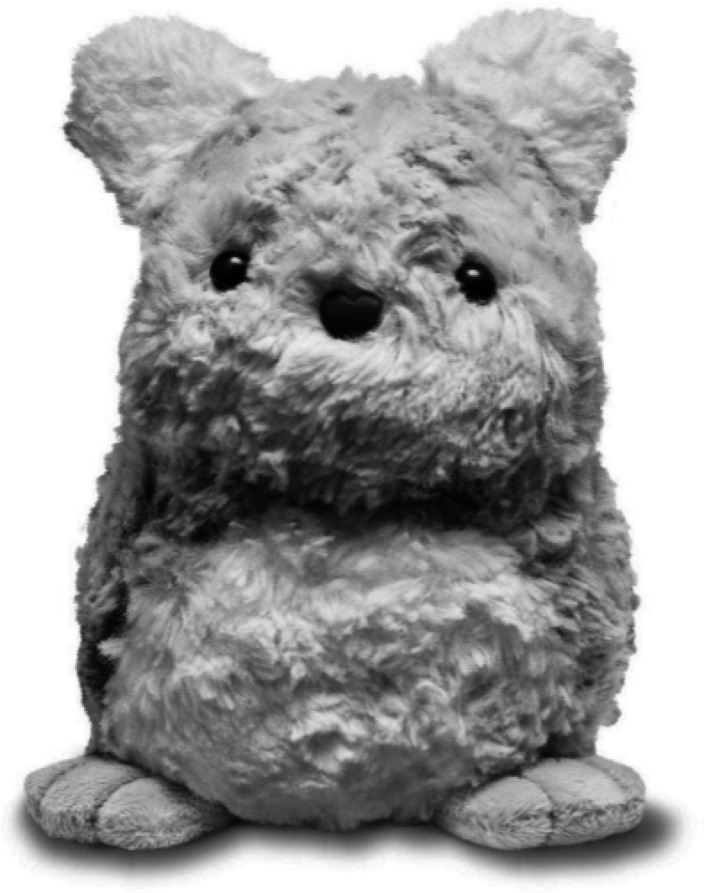
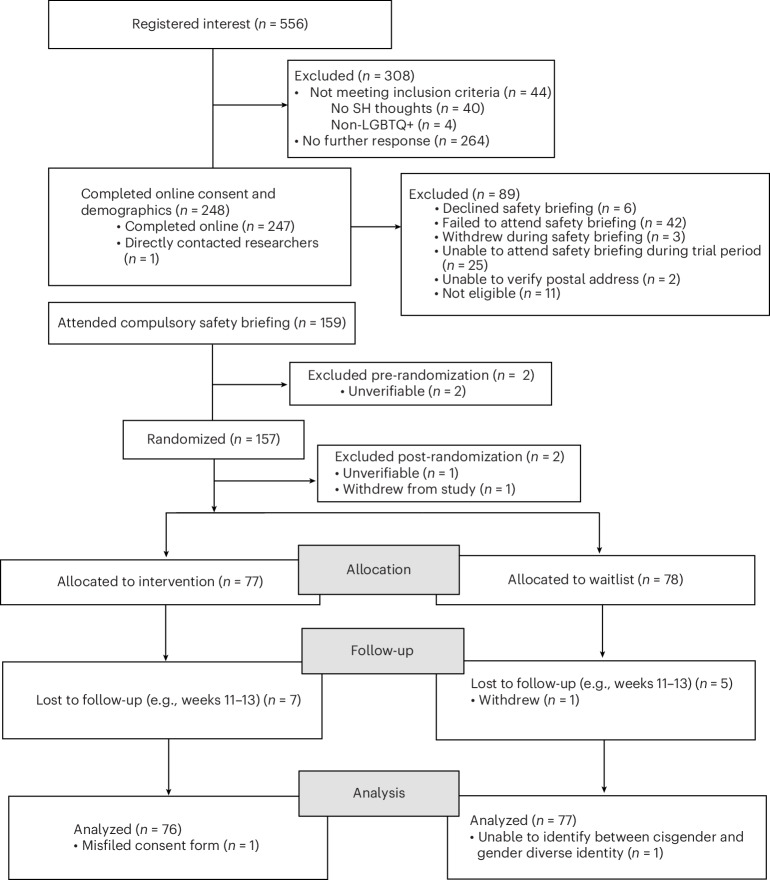
LGBTQ+ youth commonly have unmet mental health needs and are at elevated risk for self-harm, yet many face persistent institutional barriers to accessing support. One impactful way to reduce risk and promote wellbeing is by supporting emotion regulation; that is, the process by which individuals can influence which emotions they feel, when they feel them and how they experience or express these emotions. This universal, modifiable process is widely considered a key transdiagnostic target for mental ill-health prevention and intervention efforts. We conducted a randomized controlled trial using Purrble, a socially assistive robot designed to provide in-the-moment emotion regulation support through intuitive tactile interaction. Between 12 January and 1 September 2024, 153 LGBTQ+ youth with self-harm ideation were randomized 1:1 to receive Purrble and safety planning (Purrble + SP) or safety planning alone (SP-Only), stratified by gender identity (50.3% transgender/gender diverse). Data were collected over 13 weeks, with data collection closing on 22 October 2024. The primary outcome was perceived emotion regulation difficulties at follow-up, adjusted for baseline, gender identity and age. Participants allocated to the Purrble intervention reported fewer emotion regulation difficulties at follow-up than those allocated to safety planning alone (adjusted mean difference: –3.04; 95% confidence interval (CI): −4.92 to −1.16; P = 0.002; partial η 2 = 0.07). For secondary outcomes, participants in the Purrble intervention also reported significantly lower symptoms of anxiety and depression, but no significant main effect was observed for self-harm. No serious Purrble-related adverse events were observed. Purrble may offer a scalable intervention to complement existing therapeutic approaches to support LGBTQ+ youth to enhance their emotion regulation. ClinicalTrials.gov: NCT06025942 .
Overview
The claims and statistics of this paper haven’t been checked yet.
Run the check — free, no account needed. It reads the open-access text and checks the sources it cites.
Integrity signals
Registry
Cites
Statistics
Figures
Verification
Claims the paper makes
The claims and statistics of this paper haven’t been checked yet.
Run the check — free, no account needed. It reads the open-access text and checks the sources it cites.
Claims other papers make about this one
Each is checked against this paper’s own text: does it say what the citing paper says it does?
The cited source says what the claim attributes to it.
In the citing paper
“Results published in Nature Medicine (Williams et al., 2026) showed that the Purrble group reported significantly fewer emotion regulation difficulties and lower anxiety and depression compared to the control group, though no significant effect on selfharm itself was detected.”
From Artificial intelligence and immersive technologies for LGBTQ+ youth: a narrative review (2026) · cites this paper as Williams et al., 2026
In the citing paper
“Williams et al. (2026) conducted a large preregistered randomized controlled trial in the United Kingdom using Purrble, a socially assistive robot designed to support emotion regulation.”
From Artificial intelligence and immersive technologies for LGBTQ+ youth: a narrative review (2026) · cites this paper as Williams et al., 2026
In the citing paper
“Results published in Nature Medicine (Williams et al., 2026) showed that the Purrble group reported significantly fewer emotion regulation difficulties and lower anxiety and depression compared to the control group, though no significant effect on selfharm itself was detected.”
From Artificial intelligence and immersive technologies for LGBTQ+ youth: a narrative review (2026) · cites this paper as Williams et al., 2026
In the citing paper
“The trial recruited 153 LGBTQ+ youth with self-harm ideation, of whom over 50% identified as transgender or gender diverse.”
From Artificial intelligence and immersive technologies for LGBTQ+ youth: a narrative review (2026) · cites this paper as Williams et al., 2026
In the citing paper
“Gender identity was used as a stratification variable in randomization, and the condition by gender identity interaction on the primary outcome was not statistically significant, indicating that the benefit did not differ detectably between transgender or gender diverse and cisgender participants.”
From Artificial intelligence and immersive technologies for LGBTQ+ youth: a narrative review (2026) · cites this paper as Williams et al., 2026
In the citing paper
“The Williams et al. (2026) RCT published in Nature Medicine is a notable exception: a preregistered and adequately powered trial showing benefit for emotion regulation, anxiety, and depression, though not for selfharm itself.”
From Artificial intelligence and immersive technologies for LGBTQ+ youth: a narrative review (2026) · cites this paper as Williams et al. (2026)
Self-check
Percentages, sums and reported differences re-computed from the paper’s own numbers.
The self-check needs the paper’s full text.
Citations
Cites
The PHQ-9: Validity of a brief depression severity measure
Kroenke, K., Spitzer, R. L., & Williams, J. B. W. (2001) · Journal of General Internal Medicine · doi:10.1046/j.1525-1497.2001.016009606.x · Cited by 44,910
Emotion Regulation Flexibility
Aldao, A., Sheppes, G., & Gross, J. J. (2015) · Cognitive Therapy and Research · doi:10.1007/s10608-014-9662-4 · Cited by 981
Self-citationBeetz, A., Uvnäs-Moberg, K., Julius, H., & Kotrschal, K. (2012) · Frontiers in Psychology · doi:10.3389/fpsyg.2012.00234 · Cited by 904 · cited 1×
“…regulation: attentional deployment, by redirecting participant focus toward soothing interactions with the toy 28,31,90,91 , and response modulation, facilitating emotional downregulation through tactile engagement analogous to interactions observed in human−animal emotional regulation 92–97 .”
Emotion regulation: taking stock and moving forward
Gross, J. J. (2013) · Emotion · doi:10.1037/a0032135 · Cited by 864
Self-citationEmotion dysregulation and non-suicidal self-injury: a systematic review and meta-analysis
Wolff, J. C., Thompson, E., Thomas, S. A., Nesi, J., Bettis, A. H., Ransford, B., Scopelliti, K., Frazier, E. A., & Liu, R. T. (2019) · European Psychiatry · doi:10.1016/j.eurpsy.2019.03.004 · Cited by 512
An overview of and recommendations for more accessible digital mental health services
Lattie, E. G., Stiles-Shields, C., & Graham, A. K. (2022) · Nature Reviews Psychology · doi:10.1038/s44159-021-00003-1 · Cited by 446
Schleider, J. L., & Weisz, J. R. (2017) · Journal of the American Academy of Child & Adolescent Psychiatry · doi:10.1016/j.jaac.2016.11.007 · Cited by 424
McManus, S., Gunnell, D., Cooper, C., Bebbington, P. E., Howard, L. M., Brugha, T., Jenkins, R., Hassiotis, A., Weich, S., & Appleby, L. (2019) · The Lancet Psychiatry · doi:10.1016/s2215-0366(19)30188-9 · Cited by 415
Jacobson, N. S., & Truax, P. (1992) · Methodological issues & strategies in clinical research. · doi:10.1037/10109-042 · Cited by 384
Grist, R., Croker, A., Denne, M., & Stallard, P. (2019) · Clinical Child and Family Psychology Review · doi:10.1007/s10567-018-0271-8 · Cited by 287 · cited 1×
“A medium effect size of 0.4 was selected as a preliminary exploration based on previous intervention research with and without Purrble 21,42,98–101 , given the uncertainty of the intervention within this population.”
InfluentialSafety planning-type interventions for suicide prevention: meta-analysis
Nuij, C., van Ballegooijen, W., de Beurs, D., Juniar, D., Erlangsen, A., Portzky, G., O'Connor, R. C., Smit, J. H., Kerkhof, A., & Riper, H. (2021) · The British Journal of Psychiatry · doi:10.1192/bjp.2021.50 · Cited by 270
di Giacomo, E., Krausz, M., Colmegna, F., Aspesi, F., & Clerici, M. (2018) · JAMA Pediatrics · doi:10.1001/jamapediatrics.2018.2731 · Cited by 253
Body image in transgender young people: Findings from a qualitative, community based study
McGuire, J. K., Doty, J. L., Catalpa, J. M., & Ola, C. (2016) · Body Image · doi:10.1016/j.bodyim.2016.06.004 · Cited by 205
Moltrecht, B., Deighton, J., Patalay, P., & Edbrooke-Childs, J. (2021) · European Child & Adolescent Psychiatry · doi:10.1007/s00787-020-01498-4 · Cited by 179
Interventions for self-harm in children and adolescents
Witt, K. G., Hetrick, S. E., Rajaram, G., Hazell, P., Taylor Salisbury, T. L., Townsend, E., & Hawton, K. (2021) · Cochrane Database of Systematic Reviews · doi:10.1002/14651858.cd013667.pub2 · Cited by 149
Self-citationSocially Assistive Robots as Mental Health Interventions for Children: A Scoping Review
Kabacińska, K., Prescott, T. J., & Robillard, J. M. (2021) · International Journal of Social Robotics · doi:10.1007/s12369-020-00679-0 · Cited by 113
Gilbey, D., Morgan, H., Lin, A., & Perry, Y. (2020) · Journal of Medical Internet Research · doi:10.2196/20158 · Cited by 112 · cited 1×
“In total, 248 youth completed the consent and demographics form, with 159 attending the compulsory safety planning session conducted by a doctoral-level member of the research team who had completed a 2-day Applied youth, such interventions are generally rated as feasible and acceptable 14 .”
Kelders, S. M., Kip, H., & Greeff, J. (2020) · Journal of Medical Internet Research · doi:10.2196/17757 · Cited by 88
Steinert, C., Stadter, K., Stark, R., & Leichsenring, F. (2017) · Clinical Psychology & Psychotherapy · doi:10.1002/cpp.2032 · Cited by 83
Albaum, C., Irwin, S. H., Muha, J., Schumacher, A., Clarissa, S., Finkelstein, Y., Bridge, J. A., & Korczak, D. J. (2025) · JAMA Pediatrics · doi:10.1001/jamapediatrics.2025.1012 · Cited by 40 · cited 1×
“All participants engaged in a structured safety planning session at baseline, mirroring many real-world care pathways in which youth are offered a single episode of safety planning with little or no structured follow-up 38,41 .”
Witt, K., de Moraes, D. P., Salisbury, T. T., Arensman, E., Gunnell, D., Hazell, P., Townsend, E., van Heeringen, K., & Hawton, K. (2018) · Journal of Affective Disorders · doi:10.1016/j.jad.2018.04.025 · Cited by 31 · cited 1×
“Future trials would benefit from more active control conditions, such as clearly documented treatment-as-usual comparators 55 or, where feasible, attention-matched or placebo device controls that more stringently test the added value of the socially assistive components of Purrble.”
Self-citation
Research works printed but not linked: 83
- McDermott, E., Hughes, E. & Rawlings, V. Norms and normalisation: understanding lesbian, gay, bisexual, transgender and queer youth, suicidality and help-seeking. Cult. Health Sex 20, 156–172 (2018). · DOI
- O’Shea, J., Jenkins, R., Nicholls, D., Downs, J. & Hudson, L. D. Prevalence, severity and risk factors for mental disorders among sexual and gender minority young people: a systematic review of systematic reviews and meta-analyses. Eur. Child Adolesc. Psychiatry 34, 959–982 (2025). · DOI
- Liu, R. T. et al. Prevalence and correlates of non-suicidal self-injury among lesbian, gay, bisexual, and transgender individuals: a systematic review and meta-analysis. Clin. Psychol. Rev. 74, 101783 (2019). · DOI
- Marchi, M. et al. Self-harm and suicidality among LGBTIQ people: a systematic review and meta-analysis. Int. Rev. Psychiatry 34, 240–256 (2022). · DOI
- Jadva, V., Guasp, A., Bradlow, J. H., Bower-Brown, S. & Foley, S. Predictors of self-harm and suicide in LGBT youth: the role of gender, socio-economic status, bullying and school experience. J. Public Health 45, 102–108 (2023). · DOI
- Hughes, E., Rawlings, V. & McDermott, E. Mental health staff perceptions and practice regarding self-harm, suicidality and help-seeking in LGBTQ youth: findings from a cross-sectional survey in the UK. Issues Ment. Health Nurs. 39, 30–36 (2018). · DOI
- McIntyre, J. et al. Systems-level barriers in accessing supportive mental health services for sexual and gender minorities: insights from the provider’s perspective. Can. J. Community Ment. Health 30, 173–186 (2011). · DOI
- Whaibeh, E., Mahmoud, H. & Vogt, E. L. Reducing the treatment gap for LGBT mental health needs: the potential of telepsychiatry. J. Behav. Health Serv. Res. 47, 424–431 (2020). · DOI
- Brown, A., Rice, S. M., Rickwood, D. J. & Parker, A. G. Systematic review of barriers and facilitators to accessing and engaging with mental health care among at-risk young people. Asia Pac. Psychiatry 8, 3–22 (2016). · DOI · Paper page
- Michelmore, L. & Hindley, P. Help-seeking for suicidal thoughts and self-harm in young people: a systematic review. Suicide Life Threat. Behav. 42, 507–524 (2012). · DOI · Paper page
- Liu, Y., Wu, Y. C., Fu, H., Guo, W. Y. & Wang, X. Digital intervention in improving the outcomes of mental health among LGBTQ+ youth: a systematic review. Front. Psychol. 14, 1242928 (2023). · DOI · Paper page
- Lipschitz, J., Hogan, T. P., Bauer, M. S. & Mohr, D. C. Closing the research-to-practice gap in digital psychiatry: the need to integrate implementation science. J. Clin. Psychiatry 80, 8712 (2019). · DOI
- Theofanopoulou, N., Isbister, K., Edbrooke-Childs, J. & Slovák, P. A smart toy intervention to promote emotion regulation in middle childhood: feasibility study. JMIR Ment. Health 6, e14029 (2019). · DOI
- Papadopoulos, I. et al. A systematic review of socially assistive robots in pre-tertiary education. Comput. Educ. 155, 103924 (2020). · DOI
- Crossman, M. K., Kazdin, A. E. & Kitt, E. R. Influence of a socially assistive robot on mood, anxiety and arousal in children. Prof. Psychol. Res. Pract.49, 48–56 (2018). · DOI
- Williams, A. J. et al. Feasibility, perceived impact, and acceptability of a socially assistive robot to support emotion regulation with highly anxious university students: mixed methods open trial. JMIR Ment. Health 10, e46826 (2023). · DOI
- Šabanović, S., Chang, W. L., Bennett, C. C., Piatt, J. A. & Hakken, D. A robot of my own: participatory design of socially assistive robots for independently living older adults diagnosed with depression. in Human Aspects of IT for the Aged Population 104−114 (Springer, 2015). · DOI · Paper page
- Slovák, P. et al. ‘I just let him cry’: designing socio-technical interventions in families to prevent mental health disorders. Proc. of the ACM on Human-Computer Interaction (eds Karahalios, K., Monroy-Hernández, A., Lampinen, A. & Fitzpatrick, G.) 1–34 (Association for Computing Machinery, 2018). · DOI
- Gross, J. J. & Jazaieri, H. Emotion, emotion regulation, and psychopathology: an affective science perspective. Clin. Psychol. Sci. 2, 387–401 (2014). · DOI · Paper page
- Gross, J. J., Sheppes, G. & Urry, H. L. Taking one’s lumps while doing the splits: a big-tent perspective on emotion generation and emotion regulation. Cogn. Emot. 25, 789–793 (2011). · DOI
- Rottenberg, J. & Gross, J. J. When emotion goes wrong: realizing the promise of affective science. In Emotion and Psychopathology: Bridging Affective and Clinical Science (eds Rottenberg, J. & Johnson, S. L.) 3–24 (The Guilford Press, 2007). · DOI
- Gross, J. J. Emotion regulation: current status and future prospects. Psychol. Inq. 26, 1–26 (2015). · DOI · Paper page
- Quoidbach, J., Dunn, E. W., Hansenne, M. & Bustin, G. The price of abundance: how a wealth of experiences impoverishes savoring. Pers. Soc. Psychol. Bull. 41, 393–404 (2015). · DOI
- Sheppes, G. & Gross, J. J. Is timing everything? Temporal considerations in emotion regulation. Pers. Soc. Psychol. Rev. 15, 319–331 (2011). · DOI
- Webb, T. L., Miles, E. & Sheeran, P. Dealing with feeling: a meta-analysis of the effectiveness of strategies derived from the process model of emotion regulation. Psychol. Bull. 138, 775–808 (2012). · DOI · Paper page
- Fernandez, K. C., Jazaieri, H. & Gross, J. J. Emotion regulation: a transdiagnostic perspective on a new RDoC domain. Cogn. Ther. Res. 40, 426–440 (2016). · DOI · Paper page
- Williams, A. J. et al. Investigating the feasibility, acceptability and appropriation of a socially assistive robot among minority youth at risk of self-harm: results of two mixed methods pilot studies. JMIR Form. Res. 7, e52336 (2023). · DOI
- Stanley, B. & Brown, G. K. Safety planning intervention: a brief intervention to mitigate suicide risk. Cogn. Behav. Pract. 19, 256–264 (2012). · DOI · Paper page
- Stanley, B. et al. Comparison of the safety planning intervention with follow-up vs usual care of suicidal patients treated in the emergency department. JAMA Psychiatry 75, 894–900 (2018). · DOI · Paper page
- Fish, J. N. Future directions in understanding and addressing mental health among LGBTQ youth. J. Clin. Child Adolesc. Psychol. 49, 943–956 (2020). · DOI · Paper page
- Tsiachristas, A. et al. General hospital costs in England of medical and psychiatric care for patients who self-harm: a retrospective analysis. Lancet Psychiatry 4, 759–767 (2017). · DOI
- Ford, B. Q. & Gross, J. J. Emotion regulation: why beliefs matter. Can. Psychol. 59, 1–14 (2018). · DOI
- Bochicchio, L., Reeder, K., Ivanoff, A., Pope, H. & Stefancic, A. Psychotherapeutic interventions for LGBTQ+ youth: a systematic review. J. LGBT Youth 19, 152–179 (2022). · DOI
- Gillig, T. K., Miller, L. C. & Cox, C. M. ‘She finally smiles… for real’: reducing depressive symptoms and bolstering resilience through a camp intervention for LGBTQ youth. J. Homosex. 66, 368–388 (2019). · DOI
- Jones, B. A., Pierre Bouman, W., Haycraft, E. & Arcelus, J. Gender congruence and body satisfaction in nonbinary transgender people: a case control study. Int. J. Transgend. 20, 263–274 (2019). · DOI
- Radford, G., Byrne, J. E., Staiger, P. K. & Karantzas, G. C. Cisnormativity and the frustration of core emotional needs among transgender and gender diverse individuals. Psychol. Psychother. 98, 934−959 (2025). · DOI
- Young Minds. Increases in young people waiting over a year for mental health support. https://www.youngminds.org.uk/about-us/media-centre/press-releases/increase-in-young-people-waiting-over-a-year-for-mental-health-support/
- McGarry, J. et al. The clinical effectiveness of a brief consultation and advisory approach compared to treatment as usual in child and adolescent mental health services. Clin. Child Psychol. Psychiatry 13, 365–376 (2008). · DOI
- Valentine, A. Z., Hall, S. S., Sayal, K. & Hall, C. L. Waiting-list interventions for children and young people using child and adolescent mental health services: a systematic review. BMJ Ment. Health 27, e300844 (2024). · DOI
- Schulz, K. F., Altman, D. G. & Moher, D. CONSORT 2010 statement: updated guidelines for reporting parallel group randomised trials. J. Pharmacol. Pharmacother. 1, 100–107 (2010). · DOI · Paper page
- Williams, A. J. et al. Enhancing emotion regulation with an in situ socially assistive robot among LGBTQ+ youth with self-harm ideation: protocol for a randomised controlled trial. BMJ Open 14, e0798014 (2024). · DOI · Paper page
- Arnett, J. J. Emerging adulthood: a theory of development from the late teens through the twenties. Am. Psychol. 55, 469 (2000). · DOI · Paper page
- Griffin, E. et al. Increasing rates of self-harm among children, adolescents and young adults: a 10-year national registry study 2007–2016. Soc. Psychiatry Psychiatr. Epidemiol. 53, 663–671 (2018). · DOI
- Nock, M. K., Prinstein, M. J. & Sterba, S. K. Revealing the form and function of self-injurious thoughts and behaviors: a real-time ecological assessment study among adolescents and young adults. Psychol. Violence https://psycnet.apa.org/doi/10.1037/2152-0828.1.S.36 (2010). · DOI
- Williams, A. J., Arcelus, J., Townsend, E. & Michail, M. Feasibility and acceptability of experience sampling among LGBTQ+ young people with self-harmful thoughts and behaviours. Front. Psychiatry 13, 916164 (2022). · DOI
- Glenn, C. R. et al. Feasibility and acceptability of ecological momentary assessment with high-risk suicidal adolescents following acute psychiatric care. J. Clin. Child Adolesc. Psychol. 51, 32–48 (2022). · DOI · Paper page
- Wadman, R. et al. An interpretative phenomenological analysis of the experience of self-harm repetition and recovery in young adults. J. Health Psychol. 22, 1631–1641 (2017). · DOI
- Williams, A. J., Kloess, J. A., Gill, C. & Michail, M. Assessing and responding to suicide risk in children and young people: understanding views and experiences of helpline staff. Int. J. Environ. Res. Public Health19, 10887 (2022). · DOI
- Williams, A. J., Arcelus, J., Townsend, E. & Michail, M. Understanding the processes underlying self-harm ideation and behaviors within LGBTQ+ young people: a qualitative study. Arch. Suicide Res. 27, 380–396 (2023). · DOI
- Devilly, G. J. & Borkovec, T. D. Psychometric properties of the credibility/expectancy questionnaire. J. Behav. Ther. Exp. Psychiatry 31, 73–86 (2000). · DOI · Paper page
- Penner, F., Steinberg, L. & Sharp, C. The development and validation of the Difficulties in Emotion Regulation Scale-8: providing respondents with a uniform context that elicits thinking about situations requiring emotion regulation. J. Pers. Assess. 105, 657–666 (2023). · DOI
- Akbulut, Ö. F., Okur, S. & Akat, M. Maladaptive thinking styles and suicide cognitions: serial mediation of difficulties in emotion regulation and loneliness. Psychiatr. Q. 96, 481−496 (2025). · DOI
- Ougrin, D. & Boege, I. Brief report: the Self Harm Questionnaire: a new tool designed to improve identification of self harm in adolescents. J. Adolesc. 36, 221–225 (2013). · DOI
- Ougrin, D. et al. Supported discharge service versus inpatient care evaluation (SITE): a randomised controlled trial comparing effectiveness of an intensive community care service versus inpatient treatment as usual for adolescents with severe psychiatric disorders: self-harm, functional impairment, and educational and clinical outcomes. Eur. Child Adolesc. Psychiatry 30, 1427–1436 (2021). · DOI
- Faura-Garcia, J., Orue, I. & Calvete, E. Clinical assessment of non-suicidal self-injury: a systematic review of instruments. Clin. Psychol. Psychother. 28, 739–765 (2021). · DOI
- Tordoff, D. M. et al. Mental health outcomes in transgender and nonbinary youths receiving gender-affirming care. JAMA Netw. Open 5, e220978 (2022). · DOI · Paper page
- Shevlin, M. et al. Measurement invariance of the Patient Health Questionnaire (PHQ-9) and Generalized Anxiety Disorder scale (GAD-7) across four European countries during the COVID-19 pandemic. BMC Psychiatry 22, 154 (2022). · DOI
- Spitzer, R. L., Kroenke, K., Williams, J. B. & Löwe, B. A brief measure for assessing generalized anxiety disorder: the GAD-7. Arch. Intern. Med. 166, 1092–1097 (2006). · DOI · Paper page
- Snyder, C. R. et al. Development and validation of the State Hope Scale. J. Pers. Soc. Psychol. 70, 321–335 (1996). · DOI
- Poteat, V. P., Rivers, I. & Vecho, O. Membership experiences in gender–sexuality alliances (GSAs) predict increased hope and attenuate the effects of victimization. J. Sch. Psychol. 79, 16–30 (2020). · DOI
- McDanal, R., Rubin, A., Fox, K. R. & Schleider, J. L. Associations of LGBTQ+ identities with acceptability and efficacy of online single session youth mental health interventions. Behav. Ther. 53, 376–391 (2022). · DOI · Paper page
- Russell, D. W. UCLA Loneliness Scale (Version 3): reliability, validity, and factor structure. J. Pers. Assess. 66, 20–40 (1996). · DOI · Paper page
- Yang, M. et al. How loneliness is linked to anxiety and depression: a network analysis based on Chinese university students. BMC Public Health 23, 2499 (2023). · DOI
- Alsubheen, S. A., Oliveira, A., Habash, R., Goldstein, R. & Brooks, D. Systematic review of psychometric properties and cross cultural adaptation of the University of California and Los Angeles Loneliness Scale in adults. Curr. Psychol. 42, 11819–11833 (2023). · DOI
- Olderbak, S., Uusberg, A., MacCann, C., Pollak, K. M. & Gross, J. J. The process model of emotion regulation questionnaire: assessing individual differences in strategy stage and orientation. Assessment 30, 2090–2114 (2023). · DOI
- Heekerens, J. B., Olderbak, S., Gross, J. J., Wingenfeld, K. & Roepke, S. The Process Model of Emotion Regulation Scale (PMERQ): psychometric properties and validity of a German version. Eur. J. Psychol. Assess. https://doi.org/10.1027/1015-5759/a000863 (2024). · DOI
- Abbott-Smith, S., Dougall, N. & Ring, N. Suicide prevention: Introducing the Lothian Safekeeping Plan© for parents as a clinical innovation for use alongside safety plans for children and young people. J. Child Adolesc. Psychiatr. Nurs. 37, e12455 (2024). · DOI
- Theofanopoulou, N. & Slovák, P. Exploring technology-mediated parental socialisation of emotion: leveraging an embodied, in-situ intervention for child emotion regulation. In CHI ʼ22: Proc. of the 2022 CHI Conference on Human Factors in Computing Systems (eds Barbosa, S. et al.) 1–16 (Association for Computing Machinery, 2022). · DOI
- Sheppes, G., Brady, W. J. & Samson, A. C. In (visual) search for a new distraction: the efficiency of a novel attentional deployment versus semantic meaning regulation strategies. Front. Psychol. 5, 346 (2014). · DOI
- Farb, N. A., Anderson, A. K., Irving, J. A. & Segal, Z. V. Mindfulness interventions and emotion regulation. In Handbook of Emotion Regulation 2nd edn (ed Gross, J. J.) 548–567 The Guilford Press, (2014).
- Doré, A. & Michalon, J. What makes human–animal relations ‘organizational’? The de-scription of anthrozootechnical agencements. Organization 24, 761–780 (2017). · DOI
- Coan, J. A., Schaefer, H. S. & Davidson, R. J. Lending a hand: social regulation of the neural response to threat. Psychol. Sci. 17, 1032–1039 (2006). · DOI · Paper page
- Crossman, M. K. & Kazdin, A. E. Perceptions of animal-assisted interventions: the influence of attitudes toward companion animals. J. Clin. Psychol. 74, 566–578 (2018). · DOI
- Turkle, S. Authenticity in the age of digital companions. Interact. Stud. 8, 501–517 (2007). · DOI
- Hayashi, R. & Kato, S. Psychological effects of physical embodiment in artificial pet therapy. Artif. Life Robot. 22, 58–63 (2017). · DOI
- Slovak, P. et al. An in situ, child-led intervention to promote emotion regulation competence in middle childhood: protocol for an exploratory randomized controlled trial. JMIR Res. Protoc. 10, e28914 (2021). · DOI
- Craig, S. L. et al. AFFIRM online: utilising an affirmative cognitive–behavioural digital intervention to improve mental health, access, and engagement among LGBTQA+ youth and young adults. Int. J. Environ. Res. Public Health 18, 1541 (2021). · DOI
- Kutner, M. H., Nachtsheim, C. J., Neter. J. & Li, W. Applied Linear Statistical Models 5th edn (McGraw-Hill, 2005).
- Jurs, S. G. & Glass, G. V. The effect of experimental mortality on the internal and external validity of the randomized comparative experiment. J. Exp. Educ. 40, 62–66 (1971). · DOI
- Schisterman, E. F., Cole, S. R. & Platt, R. W. Overadjustment bias and unnecessary adjustment in epidemiologic studies. Epidemiology 20, 488–495 (2009). · DOI · Paper page
- Kraemer, H. C. Messages for clinicians: moderators and mediators of treatment outcome in randomized clinical trials. Am. J. Psychiatry 173, 672–679 (2016). · DOI
- Su, Y. & Zheng, L. Sexual orientation and gender differences in sexual minority identity in China: extension to asexuality. Curr. Psychol. 41, 8678–8691 (2022). · DOI
- Brant, R. Assessing proportionality in the proportional odds model for ordinal logistic regression. Biometrics 46, 1171–1178 (1990). · DOI · Paper page
Cited by
Sorted by citations
Artificial intelligence and immersive technologies for LGBTQ+ youth: a narrative review
Shekarchi, R., Eleuteri, S., Saladino, V., Calaresi, D., Giordano, F., & Prunas, A. (2026) · Frontiers in Psychology · doi:10.3389/fpsyg.2026.2002054
Metadata
- Authors
- Williams, A. J., Rhodes, C. A., Cleare, S., Borschmann, R., Gross, J. J., Petrova, K., Posada, L., Tench, C. R., Chapman-Nisar, A., Martin, L., Hollis, C., Townsend, E., Slovak, P., & on behalf of Digital Youth research team
- Venue
- Nature Medicine
- Published
- 2026-06
- Volume
- 32
- Issue
- 6
- Pages
- 2267-2276
- ISSN
- 1078-8956
- 1546-170X
- PMC
- PMC13279257
- Cited by
- 2
- References
- 21
- Language
- en
- Funders
- RCUK | Medical Research Council (RE23499, RE19205)
About these checks
Registry, retraction, Cites and statistics results are computed, not judged, with one exception: a printed reference that no index lists is read once by a model before it counts as a citation error. Claims are extracted by a model and kept only when their quote appears verbatim in the text; each cited source is then checked, with a model’s help, for whether it says what the claim relies on. Those verdicts can be wrong — read the claim’s quote and the cited source before relying on one.
Statistics and arithmetic are recomputed, not judged.
Confidence bands are shown only for fields calibrated on our annotated test set. None is calibrated yet, so no band is shown.
What counts as a claim ›How we measure confidence ›How we check this ›
Are you an author, or do you see a problem with this page? Request a review
