

Nicheformer: a foundation model for single-cell and spatial omics
Open accessThe DOI matches its Crossref record; 221 of the 223 references it cites were found in a registry or an index.
Abstract
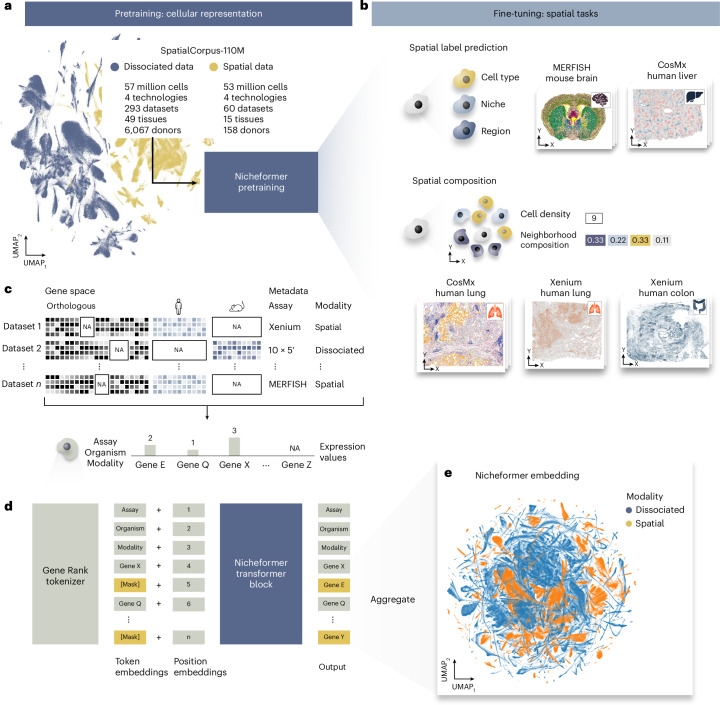
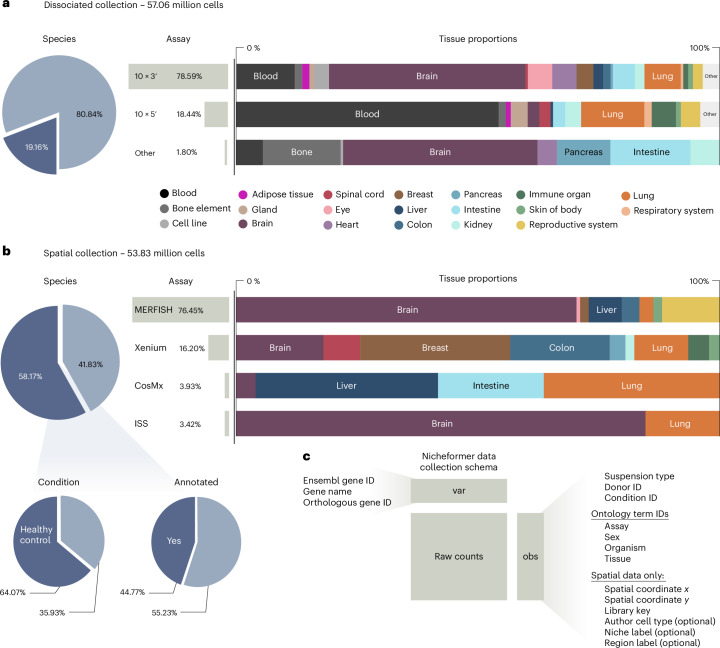
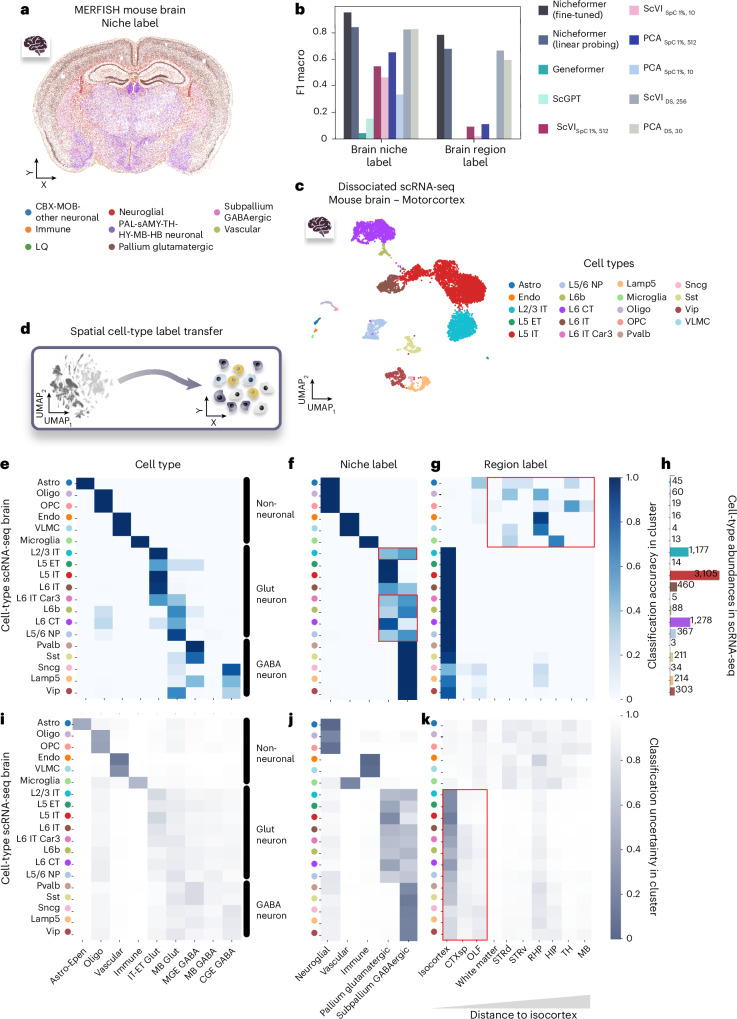
Tissue makeup depends on the local cellular microenvironment. Spatial single-cell genomics enables scalable and unbiased interrogation of these interactions. Here we introduce Nicheformer, a transformer-based foundation model trained on both human and mouse dissociated single-cell and targeted spatial transcriptomics data. Pretrained on SpatialCorpus-110M, a curated collection of over 57 million dissociated and 53 million spatially resolved cells across 73 tissues on cellular reconstruction, Nicheformer learns cell representations that capture spatial context. It excels in linear-probing and fine-tuning scenarios for a newly designed set of downstream tasks, in particular spatial composition prediction and spatial label prediction. Critically, we show that models trained only on dissociated data fail to recover the complexity of spatial microenvironments, underscoring the need for multiscale integration. Nicheformer enables the prediction of the spatial context of dissociated cells, allowing the transfer of rich spatial information to scRNA-seq datasets. Overall, Nicheformer sets the stage for the next generation of machine-learning models in spatial single-cell analysis.
Overview
The claims and statistics of this paper haven’t been checked yet.
Free: it reads the open-access text and checks the first 5 claims that cite a source we can check. Create a free account to check every claim.
Integrity signals
Registry
Cites
Statistics
Figures
Verification
Claims the paper makes
The claims and statistics of this paper haven’t been checked yet.
Free: it reads the open-access text and checks the first 5 claims that cite a source we can check. Create a free account to check every claim.
Claims other papers make about this one
Each is checked against this paper’s own text: does it say what the citing paper says it does?
The source backs part of the claim, not all of it — or backs it for a different population, condition or comparison.
In the citing paper
“Empirical benchmarking studies have documented substantial performance degradation for biological foundation models under cross-platform transfer, preprocessing variability, and rare-population evaluation [20–24].”
From The next paradigm in bioinformatics: a review of multi-agent systems and foundational models for end-to-end scientific discovery (2026) · cites this paper as [21]
Experimental — accuracy not yet measuredThe source backs part of the claim, not all of it — or backs it for a different population, condition or comparison.
In the citing paper
“Foundation models for single-cell and multi-omic biology, such as scGPT [20], Nicheformer [21], and EpiAgent [22, 23], produce high-quality continuous representations of biological entities that support cross-tissue transfer, perturbation inference, and regulatory feature learning.”
From The next paradigm in bioinformatics: a review of multi-agent systems and foundational models for end-to-end scientific discovery (2026) · cites this paper as [21]
Experimental — accuracy not yet measuredThe source backs part of the claim, not all of it — or backs it for a different population, condition or comparison.
In the citing paper
“Recent work suggests that architectural choices, such as generative versus contrastive pretraining objectives, introduce distinct trade-offs between representation flexibility, interpretability, and robustness to experimental variability [20–23, 36].”
From The next paradigm in bioinformatics: a review of multi-agent systems and foundational models for end-to-end scientific discovery (2026) · cites this paper as [21]
Experimental — accuracy not yet measuredThe source backs part of the claim, not all of it — or backs it for a different population, condition or comparison.
In the citing paper
“Empirical benchmarking studies have shown that performance improvements observed in standard evaluation settings can decrease substantially when models are tested across different laboratories, sequencing platforms, or preprocessing pipelines [20–23].”
From The next paradigm in bioinformatics: a review of multi-agent systems and foundational models for end-to-end scientific discovery (2026) · cites this paper as [21]
Experimental — accuracy not yet measuredThe source backs part of the claim, not all of it — or backs it for a different population, condition or comparison.
In the citing paper
“In spatial omics, agentic workflows could integrate imaging data, spatially resolved transcriptomics, and histological annotations to reconstruct tissue microenvironments, with reflection modules monitoring consistency across spatial resolutions and batch effects [16, 21].”
From The next paradigm in bioinformatics: a review of multi-agent systems and foundational models for end-to-end scientific discovery (2026) · cites this paper as [21]
Experimental — accuracy not yet measured
1 more claim about this paper
Create a free account to see every claim other papers make about this one.
Self-check
Percentages, sums and reported differences re-computed from the paper’s own numbers.
The self-check needs the paper’s full text.
Citations
Cites
Items 201–223 of 223
Nutrient restriction synergizes with retinoic acid to induce mammalian meiotic initiation in vitro
Zhang, X., Gunewardena, S., & Wang, N. (2021) · Nature Communications · doi:10.1038/s41467-021-22021-6 · Cited by 43
A Deep Dive into Single-Cell RNA Sequencing Foundation Models
Boiarsky, R., Singh, N., Buendia, A., Getz, G., & Sontag, D. (2023) · bioRxiv (Cold Spring Harbor Laboratory) · doi:10.1101/2023.10.19.563100 · Cited by 43 · cited 1×
“Current results are promising but not entirely replicated in independent benchmarks 26–28 .”
Su, F., Daquinag, A. C., Ahn, S., Saha, A., Dai, Y., Zhao, Z., DiGiovanni, J., & Kolonin, M. G. (2021) · npj Precision Oncology · doi:10.1038/s41698-021-00160-9 · Cited by 42
Modeling uniquely human gene regulatory function via targeted humanization of the mouse genome
Dutrow, E. V., Emera, D., Yim, K., Uebbing, S., Kocher, A. A., Krenzer, M., Nottoli, T., Burkhardt, D. B., Krishnaswamy, S., Louvi, A., et al. (2022) · Nature Communications · doi:10.1038/s41467-021-27899-w · Cited by 42
Man, L., Guahmich, N. L., Kallinos, E., Redhead-Laconte, Z., Liu, S., Schattman, B., Redmond, D., Hancock, K., Zaninović, N., Schattman, G. L., et al. (2020) · Cell Reports · doi:10.1016/j.celrep.2020.108027 · Cited by 37
HER2 drives lung fibrosis by activating a metastatic cancer signature in invasive lung fibroblasts
Liu, X., Geng, Y., Liang, J., Coelho, A. L., Yao, C., Deng, N., Wang, Y., Dai, K., Huang, G., Xie, T., et al. (2022) · The Journal of Experimental Medicine · doi:10.1084/jem.20220126 · Cited by 36 · cited 1×
“This dataset contains samples from five different donors (301,611, 89,975, 227,110, 71,304 and 81,236 cells, respectively) across eight fields of view measured with the 1000-plex CosMx Human Universal Cell Characterization Panel.”
Liu, F., Zhou, Q., Jiang, H., Zhang, T., Miao, C., Xu, X., Wu, J., Yin, S.-L., Shijie, X., Peng, J., et al. (2023) · Journal of Experimental & Clinical Cancer Research · doi:10.1186/s13046-023-02686-1 · Cited by 36
Johnson, K. E., Howard, G. R., Morgan, D., Brenner, E. A., Gardner, A. L., Durrett, R., Mo, W., Al’Khafaji, A. M., Sontag, E. D., Jarrett, A. M., et al. (2020) · Physical Biology · doi:10.1088/1478-3975/abb09c · Cited by 35
Gally, F., Sasse, S. K., Kurche, J. S., Gruca, M. A., Cardwell, J., Okamoto, T., Chu, H. W., Hou, X., Poirion, O., Buchanan, J., et al. (2021) · JCI Insight · doi:10.1172/jci.insight.144294 · Cited by 35
Sfaira accelerates data and model reuse in single cell genomics
Fischer, D. S., Dony, L., König, M., Moeed, A., Zappia, L., Heumos, L., Tritschler, S., Holmberg, O., Aliee, H., & Theis, F. J. (2021) · Genome Biology · doi:10.1186/s13059-021-02452-6 · Cited by 33 · cited 3×
“For additional data acquisition, firstly, we selected human and mouse 10x Genomics technology datasets not present in the lat-est CellXGene patch from the sfaira data zoo 35 and excluded datasets without publicly available raw count matrices.”
Self-citationIntrathymic differentiation of natural antibody-producing plasma cells in human neonates
Cordero, H., King, R. G., Dogra, P., Dufeu, C., See, S. B., Chong, A. M., Uhlemann, A., Ho, S., Kalfa, D. M., BACHA, E. A., et al. (2021) · Nature Communications · doi:10.1038/s41467-021-26069-2 · Cited by 30
Testicular germ cell tumors arise in the absence of sex-specific differentiation
Webster, N. J., Maywald, R. L., Benton, S. M., Dawson, E. P., Murillo, O. D., LaPlante, E. L., Milosavljevic, A., Lanza, D. G., & Heaney, J. D. (2021) · Development · doi:10.1242/dev.197111 · Cited by 29
Lebel, M., Coutelier, M., Galipeau, M., Kleinman, C. L., Moon, J. J., & Melichar, H. J. (2020) · Nature Communications · doi:10.1038/s41467-020-17544-3 · Cited by 21
Foundation Models Meet Imbalanced Single-Cell Data When Learning Cell Type AnnotationsPreprint
Alsabbagh, A. R., Maillo, A., Gómez-Cabrero, D., Kiani, N. A., Khan, S. A., & Tegner, J. N. (2023) · bioRxiv (Cold Spring Harbor Laboratory) · doi:10.1101/2023.10.24.563625 · Cited by 21 · cited 1×
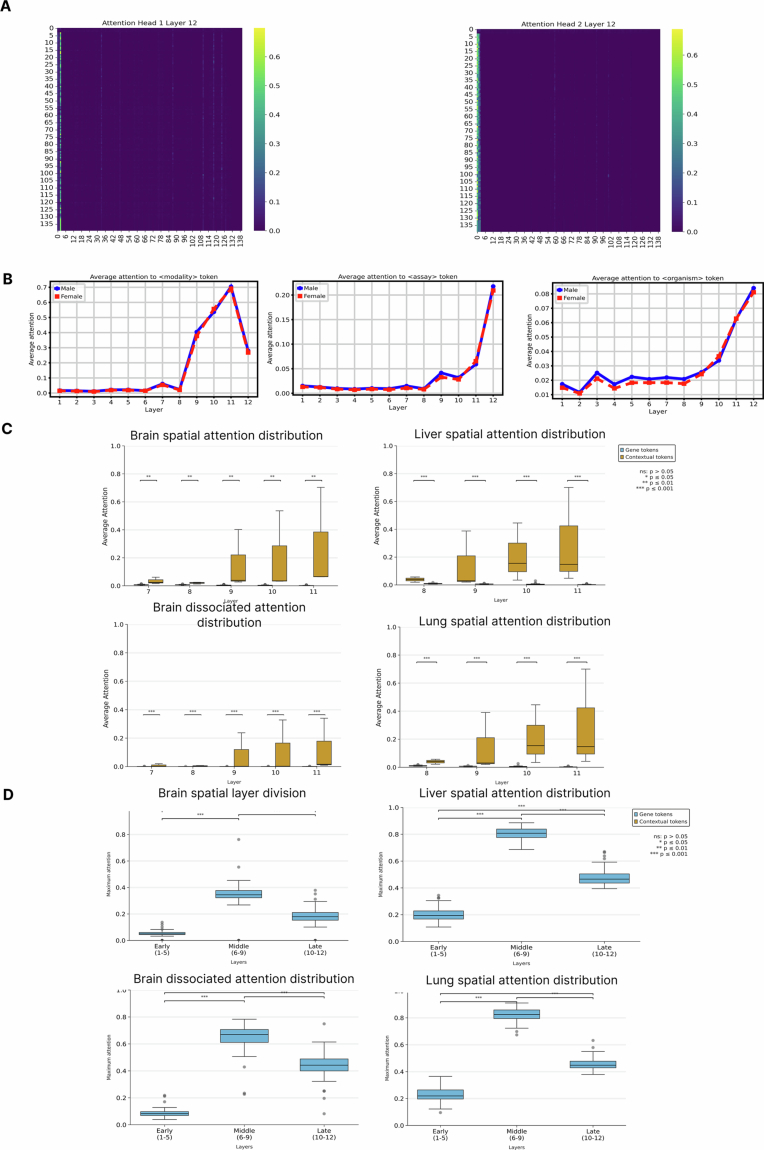
“Only expression data were used during pretraining to train the model to integrate data from dissociated and targeted spatial technologies, both of which show substantial batch effects (Fig.”
A novel cardiomyogenic role for Isl1 + neural crest cells in the inflow tract
Hatzistergos, K. E., Durante, M. A., Valasaki, K., Wanschel, A. C. B. A., Harbour, J. W., & Hare, J. M. (2020) · Science Advances · doi:10.1126/sciadv.aba9950 · Cited by 20
Yang, Y., Osorio, D., Davidson, L. A., Han, H., Mullens, D. A., Jayaraman, A., Safe, S. H., Ivanov, I. V., Cai, J. J., & Chapkin, R. S. (2022) · Cancer Prevention Research · doi:10.1158/1940-6207.capr-21-0378 · Cited by 20
Sex Differences in Metabolic Recuperation After Weight Loss in High Fat Diet-Induced Obese Mice
Guerra-Cantera, S., Frago, L. M., Collado‐Perez, R., Canelles, S., Ros, P., Freire‐Regatillo, A., Jiménez‐Hernáiz, M., Barrios, V., Argente, J., & Chowen, J. A. (2021) · Frontiers in Endocrinology · doi:10.3389/fendo.2021.796661 · Cited by 18 · cited 1×
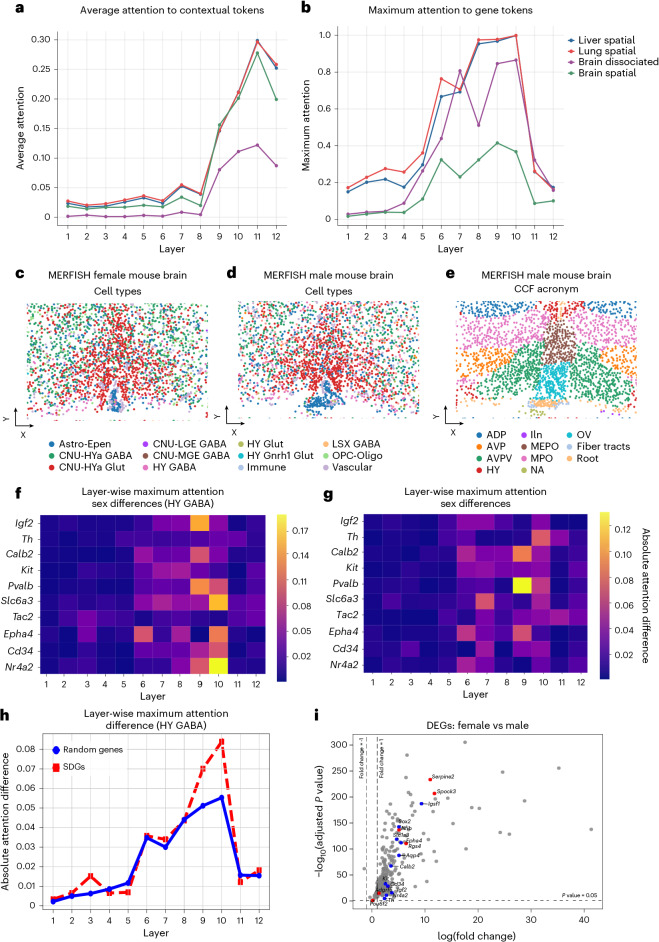
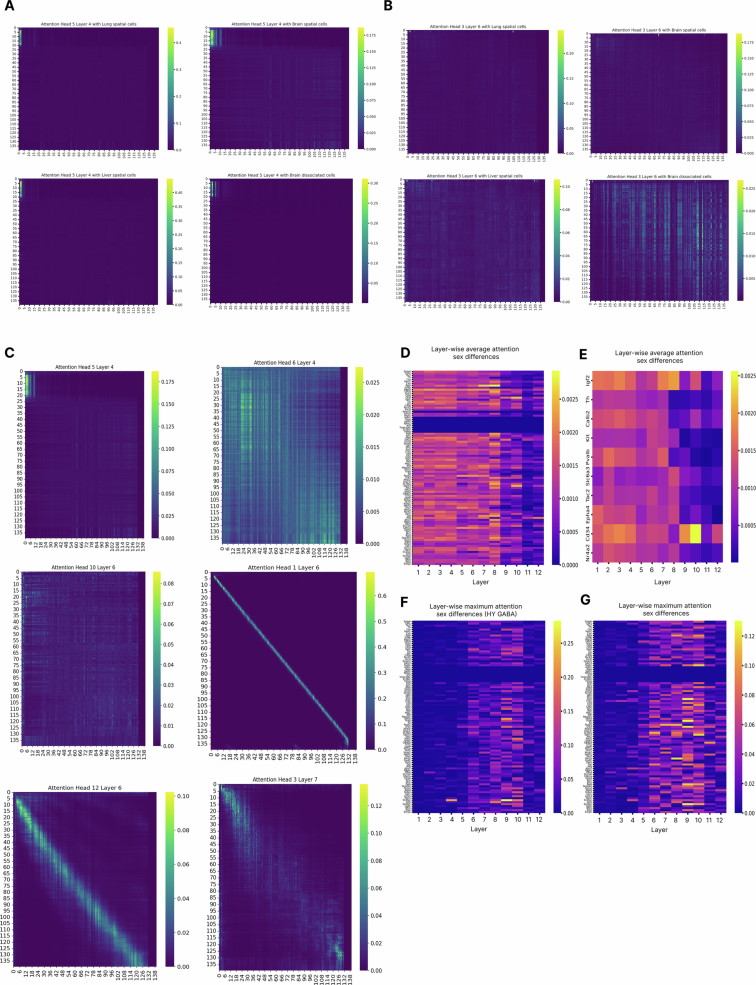
“We analyzed all attention matrices from 2,000 AVPV cells per sex, focusing on ten genes previously reported as sexually dimorphic 49–51 , and comparing the attention paid to the predefined set of genes against the attention paid to 100 randomly selected genes.”
Immenschuh, J., Thalhammer, S. B., Poromaa, I. S., Biegon, A. R., Dumas, S., & Comasco, E. (2023) · Biology of Sex Differences · doi:10.1186/s13293-023-00541-8 · Cited by 17
Lin, V. J. T., Hu, J., Zolekar, A., Salick, M. R., Mittal, P., Bird, J. T., Hoffmann, P., Kaykas, A., Byrum, S. D., & Wang, Y.-C. (2022) · Cell Death and Disease · doi:10.1038/s41419-022-04693-0 · Cited by 16
Robust GABAergic Regulation of the GnRH Neuron Distal Dendron
Liu, X., Porteous, R. W., & Herbison, A. E. (2022) · Endocrinology · doi:10.1210/endocr/bqac194 · Cited by 15 · cited 1×
“We do the analysis both for all cells in the AVPV section and for just HY GABA cells, a small population of cells in the AVPV that modulate the firing of the different glutamatergic neurons in the AVPV that stimulate the synthesis of gonadotropins 52 .”
Wei, Z., Shu, S., Zhang, M., Xie, S., Tang, S., Nie, K., & Li, H. (2021) · Frontiers in Physiology · doi:10.3389/fphys.2021.637924 · Cited by 12
Increasing the efficiency of GEOS-Chem Adjoint model runs using a Python ensemble manager
Perkins, W., Henze, D., & Milford, J. (2021) · UCAR/NCAR · doi:10.5065/0mhs-8q37
Duan, F., Guo, L., Yang, L., Han, Y., Thakur, A., Nilsson-Payant, B. E., Wang, P., Zhang, Z., Ma, C. Y., Zhou, X., et al. (2020) · doi:10.21203/rs.3.rs-62758/v2
Research works printed but not linked: 10
- Dosovitskiy, A. et al. An image is worth 16x16 words: transformers for image recognition at scale. In 9th International Conference on Learning Representations (ICLR, 2021).
- Hartman, A. & Satija, R. Comparative analysis of multiplexed in situ gene expression profiling technologies. eLife 13, RP96949 (2024).
- Gould, R., Ong, E., Ogden, G. & Conmy, A. Successor heads: recurring, interpretable attention heads in the wild. In 9th International Conference on Learning Representations (ICLR, 2024).
- Fischer, D.S., Schaar, A.C. & Theis, F.J. Modeling intercellular communication in tissues using spatial graphs of cells. Nat. Biotechnol. 41, 332–336 (2023). 36302986 PMC10017508 · DOI · Paper page
- Yun, S. et al. Graph transformer networks. Adv. Neural Inf. Process. Syst. 32, 11983–11993 (2019).
- Devlin, J. et al. BERT: pre-training of deep bidirectional transformers for language understanding. In Proc. 2019 Conference North American Chapter of the Association for Computational Linguistics: Human Language Technologies (eds Burstein, J. et al.) vol. 1, 4174–4186 (Association for Computational Linguistics, 2019).
- Loshchilov, I. & Hutter, F. SGDR: stochastic gradient descent with warm restarts. In 5th International Conference on Learning Representations (ICLR, 2017).
- Glorot, X. & Bengio, Y. Understanding the difficulty of training deep feedforward neural networks. In Proceedings of the Thirteenth International Conference on Artificial Intelligence and Statistics (eds. Teh, Y. W. et al.) vol. 9, 249–256 (PMLR, 2010).
- Darcet, T., Oquab, M., Mairal, J. & Bojanowski, P. Vision transformers need registers. In 12th International Conference on Learning Representations (ICLR, 2024).
- Ackermann, M. et al. Single-cell RNA sequencing of perfused human lungs reveals a transcriptional signature of endothelial injury in COVID-19. Am. J. Respir. Crit. Care Med. 203, 638–642 (2021).
Cited by
Advancing bioinformatics with language models: components, applications, and perspectives
Liu, J., Yang, M., Yu, Y., Xu, H., Wang, T., Li, K., & Zhou, X. (2026) · Briefings in Bioinformatics · doi:10.1093/bib/bbag367 · Cited by 72
Wang, X., Xiong, D., Cui, S., Duan, B., Ding, G., Huang, Y., & Wang, Q. (2026) · Frontiers in Immunology · doi:10.3389/fimmu.2026.1732079 · Cited by 29
TranscriptFormer: A generative cell atlas across 1.5 billion years of evolution
Pearce, J. D., Simmonds, S. E., Mahmoudabadi, G., Krishnan, L., Palla, G., Istrate, A.-M., Tarashansky, A. J., Nelson, B. E., Valenzuela, O., Li, D., et al. (2026) · Science · doi:10.1126/science.aec8514 · Cited by 85
Self-citationCellular neighborhoods in cancer
Ma, L., Xiong, B., Liu, M., & Tan, K. (2026) · Nature Cancer · doi:10.1038/s43018-025-01107-w · Cited by 27
Multimodal foundation transformer models for multiscale genomics
Khan, S. A., Martinez‐de‐Morentin, X., Alsabbagh, A. R., Maillo, A., Lagani, V., Gómez-Cabrero, D., Lehmann, R., & Tegner, J. N. (2025) · Nature Methods · doi:10.1038/s41592-025-02918-6 · Cited by 31
Metadata
- Authors
- Tejada-Lapuerta, A., Schaar, A. C., Gutgesell, R., Palla, G., Halle, L., Minaeva, M., Vornholz, L., Dony, L., Drummer, F., Richter, T., Bahrami, M., & Theis, F. J.
- Affiliations
- Helmholtz Munich (DE)
- Corresponding author
- Theis, Fabian J.
- ORCID
- Venue
- Nature Methods
- Published
- 2025-10-30
- Volume
- 22
- Issue
- 12
- Pages
- 2525-2538
- ISSN
- 1548-7091 (ISSN-L)
- 1548-7105
- PMC
- PMC12695652
- OpenAlex
- W4415692570
- Cited by
- 100
- References
- 205
- Citations by year
- 2026: 91 · 2025: 9
- FWCI
- 29.89
- Type
- journal article
- Language
- en
- Open access
- hybrid
- doi.org
- Licence
- cc-by
- creativecommons.org/licenses/by/4.0 (tdm)
- creativecommons.org/licenses/by/4.0 (vor)
- Locations
- Nature Methods (publishedVersion, cc-by)
- PubMed (publishedVersion)
- PubMed Central (publishedVersion, cc-by)
- MPG.PuRe (Max Planck Society) (submittedVersion, cc-by)
- Funders
- Wellcome Trust
- Topics
- Life Sciences › Biochemistry, Genetics and Molecular Biology › Molecular Biology › Single-cell and spatial transcriptomics
- Life Sciences › Biochemistry, Genetics and Molecular Biology › Biophysics › Cell Image Analysis Techniques
- Life Sciences › Biochemistry, Genetics and Molecular Biology › Molecular Biology › Gene expression and cancer classification
- Keywords
- foundation models, spatial transcriptomics, transformer models, spatial context, multiscale integration, dissociated cells, single-cell RNA sequencing, linear probing, fine-tuning
- MeSH terms
- Machine Learning, Animals, Humans, Software, Computational Biology, Gene Expression Profiling, Genomics, Mice, Single-Cell Analysis, Transcriptome, Cellular Microenvironment
About these checks
Registry, retraction, Cites and statistics results are computed, not judged, with one exception: a printed reference that no index lists is read once by a model before it counts as a citation error. Claims are extracted by a model and kept only when their quote appears verbatim in the text; each cited source is then checked, with a model’s help, for whether it says what the claim relies on. Those verdicts can be wrong — read the claim’s quote and the cited source before relying on one.
Statistics and arithmetic are recomputed, not judged.
Confidence bands are shown only for fields calibrated on our annotated test set. None is calibrated yet, so no band is shown.
What counts as a claim ›How we measure confidence ›How we check this ›
Are you an author, or do you see a problem with this page? Request a review
Data sources
Bibliographic data: Semantic Scholar, OpenAlex, Crossref.
Contains information from the Semantic Scholar Academic Graph Datasets, made available under the ODC Attribution License (ODC-BY 1.0).
Semantic Scholar’s data is described in: Kinney, R., et al. (2023). The Semantic Scholar Open Data Platform. arXiv:2301.10140.
