

A motor association area in the depths of the central sulcus
Open accessThe DOI matches its Crossref record; 40 of the 40 references it cites were found in a registry or an index.
Abstract
Cells in the precentral gyrus directly send signals to the periphery to generate movement and are principally organized as a topological map of the body. We find that movement-induced electrophysiological responses from depth electrodes extend this map three-dimensionally throughout the gyrus. Unexpectedly, this organization is interrupted by a previously undescribed motor association area in the depths of the midlateral aspect of the central sulcus. This ‘Rolandic motor association’ (RMA) area is active during movements of different body parts from both sides of the body and may be important for coordinating complex behaviors.
Overview
The claims and statistics of this paper haven’t been checked yet.
Free: it reads the open-access text and checks the first 5 claims that cite a source we can check. Create a free account to check every claim.
Integrity signals
Registry
Cites
Statistics
Figures
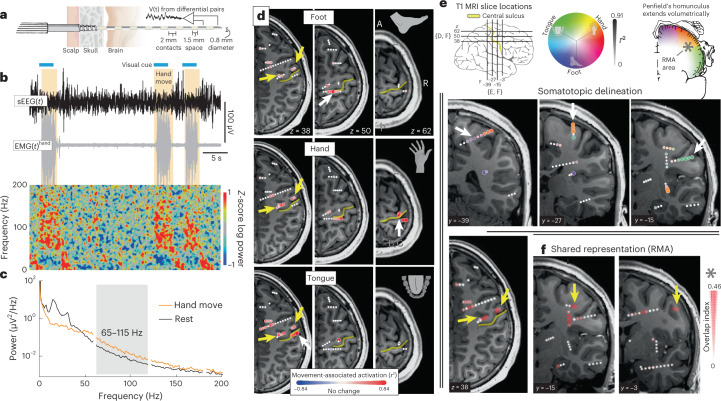
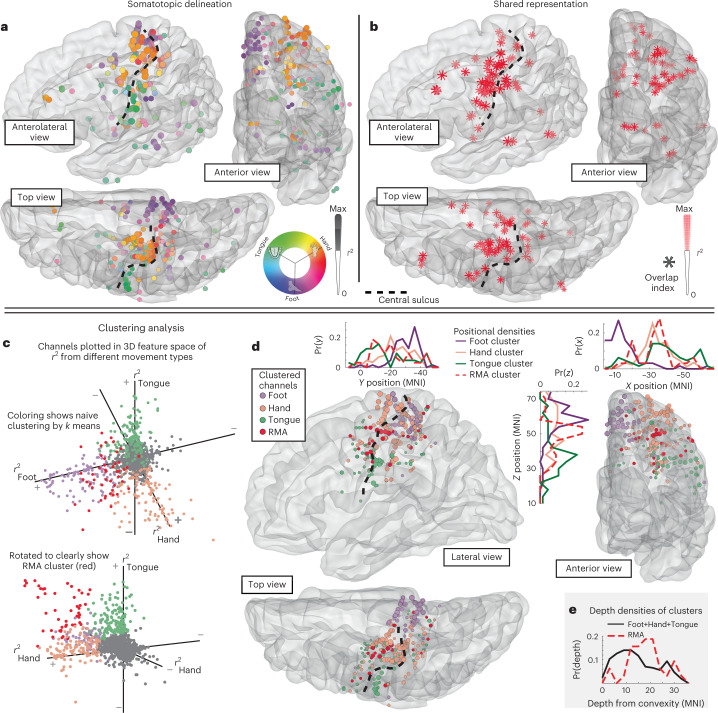
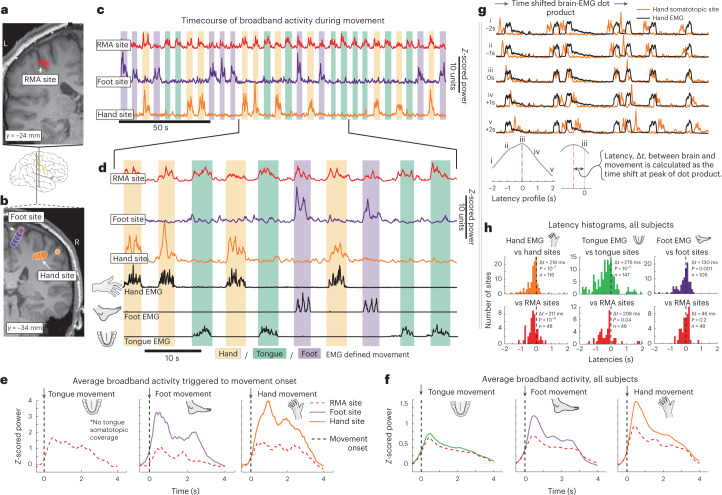
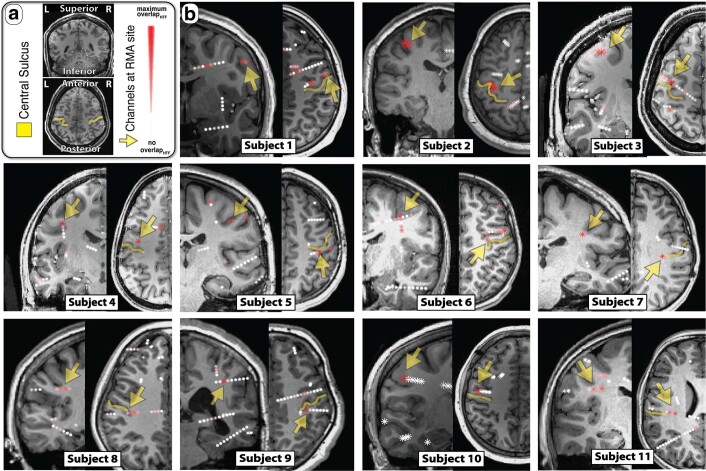
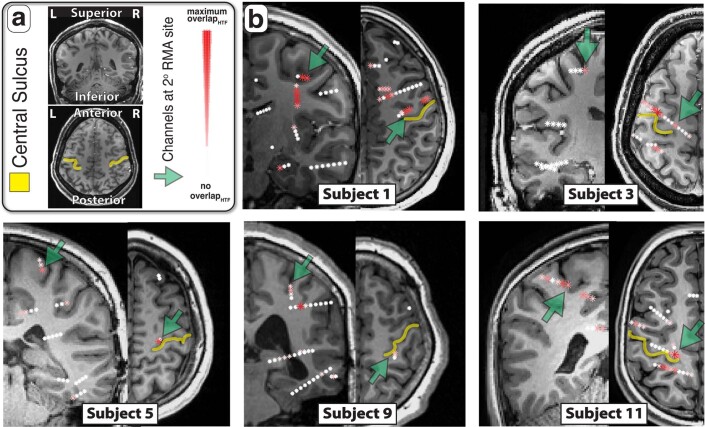
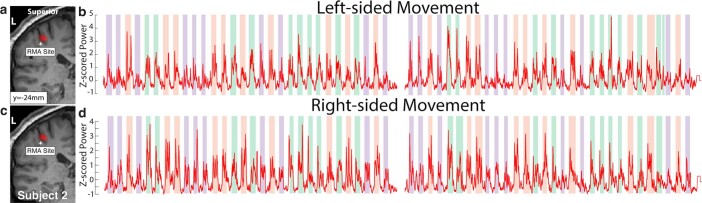
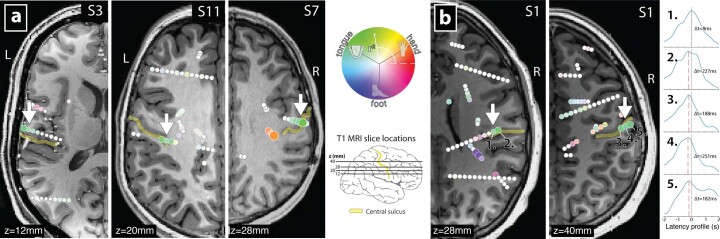
Verification
Claims the paper makes
The claims and statistics of this paper haven’t been checked yet.
Free: it reads the open-access text and checks the first 5 claims that cite a source we can check. Create a free account to check every claim.
Claims other papers make about this one
Each is checked against this paper’s own text: does it say what the citing paper says it does?
The cited source says what the claim attributes to it.
In the citing paper
“Years of work focused on mapping premotor and primary motor representations on the precentral gyrus and central sulcus, revealing a somatotopic organization in which neural control of muscle groups is represented along the ventral–dorsal axis34–38.”
From The speech neuroprosthesis (2024) · cites this paper as [38]
Self-check
Percentages, sums and reported differences re-computed from the paper’s own numbers.
The self-check needs the paper’s full text.
Citations
Cites
Ashburner, J., & Friston, K. J. (2005) · NeuroImage · doi:10.1016/j.neuroimage.2005.02.018 · Cited by 7,507 · cited 1×
“45).”
Event-related EEG/MEG synchronization and desynchronization: basic principles
Pfurtscheller, G., & Lopes da Silva, F. H. (1999) · Clinical Neurophysiology · doi:10.1016/s1388-2457(99)00141-8 · Cited by 7,328 · cited 1×
“To minimize the cross-effects of beta rebound, movement trials of each type were only compared with rest trials that followed that same movement type 41 : where m denotes power samples from movement, r denotes samples from rest and the overline ( ̄ m and ̄ r ) denotes sample mean. m ∪ r represents…”
A multi-modal parcellation of human cerebral cortex
Glasser, M. F., Coalson, T. S., Robinson, E. C., Hacker, C. D., Harwell, J., Yacoub, E., Ugurbil, K., Andersson, J., Beckmann, C. F., Jenkinson, M., et al. (2016) · Nature · doi:10.1038/nature18933 · Cited by 5,111 · cited 2×
“13 and 19–33).”
BackgroundPENFIELD, W., & BOLDREY, E. (1937) · Brain · doi:10.1093/brain/60.4.389 · Cited by 4,188 · cited 6×
“The electrical potential signals measured by sEEG from cortex during behavior show the same general features as ECoG 14,15 , some of which are: event-locked raw voltage deflections, oscillations (rhythms) and broadband (power-law) spectral changes (Fig.”
BackgroundInfluentialFrequency Dependence of Signal Power and Spatial Reach of the Local Field Potential
Leski, S., Lindén, H., Tetzlaff, T., Pettersen, K. H., & Einevoll, G. T. (2013) · PubMed · doi:10.18154/rwth-conv-084442 · Cited by 3,639
BCI2000: A General-Purpose Brain-Computer Interface (BCI) System
Schalk, G., McFarland, D. J., Hinterberger, T., Birbaumer, N., & Wolpaw, J. R. (2004) · IEEE Transactions on Biomedical Engineering · doi:10.1109/tbme.2004.827072 · Cited by 3,024 · cited 2×
“All sEEG and EMG signals were measured in parallel, and delivered to both the clinical system and the research DC amplifier (g.HIAmp system, gTec). sEEG and EMG signals were synchronized with the visual stimuli using the BCI2000 software 37 .”
Self-citationSome windows with very good sidelobe behavior
Nuttall, A. (1981) · IEEE Transactions on Acoustics, Speech, and Signal Processing · doi:10.1109/tassp.1981.1163506 · Cited by 1,057 · cited 1×
“Within each movement trial, averaged power spectral densities (PSDs) were calculated from 1 Hz to 300 Hz every 1 Hz using Welch’s averaged periodogram method with 1 s Hann windows to attenuate edge effects 38 and 0.5 s overlap.”
InfluentialManning, J. R., Jacobs, J., Fried, I., & Kahana, M. J. (2009) · The Journal of Neuroscience · doi:10.1523/jneurosci.2041-09.2009 · Cited by 973 · cited 2×
“16–18).”
Power-Law Scaling in the Brain Surface Electric Potential
Miller, K. J., Sorensen, L. B., Ojemann, J. G., & den Nijs, M. (2009) · PLoS Computational Biology · doi:10.1371/journal.pcbi.1000609 · Cited by 742 · cited 1×
“We normalized the PSDs in this way because brain signals of this type generally follow a 1/ f , power law and https://doi.org/10.1038/s41593-023-01346-z shape 39 , so that lower frequency features dominate if un-normalized.”
MethodInfluentialSelf-citationSpectral Changes in Cortical Surface Potentials during Motor Movement
Miller, K. J., Leuthardt, E. C., Schalk, G., Rao, R. P. N., Anderson, N. R., Moran, D. W., Miller, J. W., & Ojemann, J. G. (2007) · The Journal of Neuroscience · doi:10.1523/jneurosci.3886-06.2007 · Cited by 738 · cited 2×
“No statistical methods were used to predetermine sample sizes, but our sample sizes are similar to those reported in previous publications 3,15 .”
Self-citation
Research works printed but not linked: 7
- Vanderah, T. & Gould, D. Nolte’s The Human Brain E-Book: An Introduction to its Functional Anatomy (Elsevier Health Sciences, 2020).
- Kandel, E. R., Schwartz, J. H. & Jessell, T. M. Principles of Neural Science Vol. 4 (McGraw-Hill, 2000).
- Miller KJ Fine AL Decision-making in stereotactic epilepsy surgery Epilepsia 2022 63 2782 2801 10.1111/epi.17381 35908245 PMC9669234 · DOI
- Miller KJ Spectral changes in cortical surface potentials during motor movement J. Neurosci. 2007 27 2424 2432 10.1523/JNEUROSCI.3886-06.2007 17329441 PMC6673496 · DOI · Paper page
- Miller KJ Broadband changes in the cortical surface potential track activation of functionally diverse neuronal populations Neuroimage 2014 85 711 720 10.1016/j.neuroimage.2013.08.070 24018305 PMC4347924 · DOI · Paper page
- Hartigan JA Wong MA Algorithm AS 136: a k-means clustering algorithm J. R. Stat. Soc. Ser. C Appl. Stat. 1979 28 100 108
- Kodinariya TM Makwana PR Review on determining number of cluster in k-means clustering Int. J. 2013 1 90 95
Cited by
A somato-cognitive action network alternates with effector regions in motor cortex
Gordon, E. M., Chauvin, R. J., Van, A. N., Rajesh, A., Nielsen, A., Newbold, D. J., Lynch, C. J., Seider, N. A., Krimmel, S. R., Scheidter, K. M., et al. (2023) · Nature · doi:10.1038/s41586-023-05964-2 · Cited by 592
Self-citationThe brain’s action-mode network
Dosenbach, N. U. F., Raichle, M. E., & Gordon, E. M. (2025) · Nature Reviews Neuroscience · doi:10.1038/s41583-024-00895-x · Cited by 162
“Fortu-nately, recent human 15,17–19, 35– 37 and animal data 38– 41”
Silva, A. B., Littlejohn, K. T., Liu, J. R., Moses, D. A., & Chang, E. F. (2024) · Nature Reviews Neuroscience · doi:10.1038/s41583-024-00819-9 · Cited by 103
“Years of work focused on mapping premotor and primary motor representations on the precentral gyrus and central sulcus, revealing a somatotopic organization in which neural control of muscle groups is represented along the ventral–dorsal axis 34–38 .”
Parkinson’s disease as a somato-cognitive action network disorder
Ren, J., Zhang, W., Dahmani, L., Gordon, E. M., Li, S., Zhou, Y., Long, Y., Huang, J., Zhu, Y., Guo, N., et al. (2026) · Nature · doi:10.1038/s41586-025-10059-1 · Cited by 55
“…discovery and subsequent verification that SCAN regions, responsible for action implementation, axial movement, arousal and autonomic control, alternate with classical effector-specific primary motor regions along the central sulcus updated our understanding of the brain’s motor systems 6,7,32–36 .”
Large-scale interactions in predictive processing: oscillatory versus transient dynamics
Vinck, M. A., Uran, C., Dowdall, J. R., Rummell, B., & Canales‐Johnson, A. (2024) · Trends in Cognitive Sciences · doi:10.1016/j.tics.2024.09.013 · Cited by 64
Miller, K. J., Müller, K., Valencia, G. O., Huang, H., Gregg, N. M., Worrell, G. A., & Hermes, D. (2023) · PLoS Computational Biology · doi:10.1371/journal.pcbi.1011105 · Cited by 40
Self-citationCombining video telemetry and wearable MEG for naturalistic imaging
O’Neill, G. C., Seymour, R. A., Mellor, S., Alexander, N., Tierney, T. M., Bernachot, L., Hnazaee, M. F., Spedden, M. E., Timms, R. C., Bush, D., et al. (2025) · Imaging Neuroscience · doi:10.1162/imag_a_00495 · Cited by 30
Mapping of the central sulcus using non-invasive ultra-high-density brain recordings
Schreiner, L., Jordan, M., Sieghartsleitner, S., Kapeller, C., Pretl, H., Kamada, K., Asman, P., Ince, N. F., Miller, K. J., & Guger, C. (2024) · Scientific Reports · doi:10.1038/s41598-024-57167-y · Cited by 25
Self-citationEEG of the Dancing Brain: Decoding Sensory, Motor, and Social Processes during Dyadic Dance
Bigand, F., Bianco, R., Abalde, S. F., Nguyen, T., & Novembre, G. (2025) · The Journal of Neuroscience · doi:10.1523/jneurosci.2372-24.2025 · Cited by 21
“…fi ed clusters. as the feet are represented in the deeper, more central regions of the motor cortex, along the inner surface of the longitudinal fi ssure, it is notoriously di ffi cult to di ff erentiate EEG activity evoked by left versus right foot movements (Osman et al., 2005; Jensen et al., 2023).”
White matter connections within the central sulcus subserving the somato-cognitive action network
Skandalakis, G. P., Viganò, L., Neudorfer, C., Rossi, M., Fornia, L., Cerri, G., KINSMAN, K., Bajouri, Z., Tavakkoli, A. D., Koutsarnakis, C., et al. (2025) · Brain · doi:10.1093/brain/awaf022 · Cited by 22
“22 The authors reported the existence of sites in the central sulcus, inter-spersed between foot, hand-and mouth-specific regions, that were non-specifically electrophysiologically active during movement execution with any limb: the feet, hands and mouth.”
A mosaic of whole-body representations on the human precentral gyrus
Deo, D. R., Okorokova, E. V., Pritchard, A. L., Hahn, N. V., Card, N. S., Nason, S. R., Jude, J. J., Hosman, T., Choi, E. Y., Qiu, D., et al. (2026) · Nature · doi:10.1038/s41586-026-10653-x · Cited by 26
“Nature | Vol 656 | 20 August 2026 | 681 deactivation spreading far from the somatotopic hotspot 16,30 , over-lapping receptive fields 14 and intereffector regions with whole-body intermixing 15,31 .”
Boerger, T. F., Pahapill, P. A., Butts, A. M., Arocho-Quinones, E. V., Raghavan, M., & Krucoff, M. O. (2023) · Frontiers in Human Neuroscience · doi:10.3389/fnhum.2023.1170419 · Cited by 18
Andrushko, J. W., Rinat, S., Kirby, E. D., Dahlby, J. S., Ekstrand, C., & Boyd, L. A. (2023) · Scientific Reports · doi:10.1038/s41598-023-44871-4 · Cited by 16
An In Vivo High-Resolution Human Brain Atlas of Synaptic Density
Johansen, A., Beliveau, V., Colliander, E., Raval, N. R., Dam, V. H., Gillings, N., Aznar, S., Svarer, C., Plavén‐Sigray, P., & Knudsen, G. M. (2024) · Journal of Neuroscience · doi:10.1523/jneurosci.1750-23.2024 · Cited by 17
Jensen, M. A., Fine, A. L., Kerezoudis, P., Wong‐Kisiel, L. C., Alden, E., Hermes, D., & Miller, K. J. (2024) · Journal of neurosurgery · doi:10.3171/2024.5.jns24434 · Cited by 10
Self-citationGulyás, D., & Jochumsen, M. (2024) · Sensors · doi:10.3390/s24186004 · Cited by 9
Fascher, M., Nowaczynski, S., & Muehlhan, M. (2024) · Neuroscience & Biobehavioral Reviews · doi:10.1016/j.neubiorev.2024.105712 · Cited by 10
“These inter-effector regions are hypothesised to facilitate complex motor behaviours (Jensen et al., 2023), whole-body action processes, and sympathetic arousal (Gordon et al., 2023), suggesting our clusters may be functionally involved in higher somato-cognitive programmes in SUD, representing a…”
BackgroundZou, Y., Sang, Y., Zheng, M., & Shi, B. (2026) · Cell Reports Medicine · doi:10.1016/j.xcrm.2026.102685 · Cited by 8
Mapping gray matter changes in anorexia nervosa: a functional connectivity network approach
Yang, H., Wang, S., Li, H., Gu, S., Zhang, F., Wang, H., Dai, Z., & Pan, P. (2025) · Frontiers in Nutrition · doi:10.3389/fnut.2025.1667729 · Cited by 7
The role of the motor system in action imagination and comprehension
DuPont, W. H., Madden-Lombardi, C., Perrone‐Bertolotti, M., Palluel-Germain, R., & Lebon, F. (2025) · Neuroscience & Biobehavioral Reviews · doi:10.1016/j.neubiorev.2025.106392 · Cited by 7
Simultaneous speech and gesture decoding for multimodal communication in paralysis
Brosler, S., Liu, J. R., Silva, A. B., Hallinan, I. P., Kurtz-Miott, C. M., Wilker, J. D., Tu-Chan, A., Ganguly, K., & Chang, E. F. (2026) · Nature Neuroscience · doi:10.1038/s41593-026-02446-2 · Cited by 6
“Prior work using ECoG or stereo-electroencephalography, which record local field potentials reflecting the combined activity of thousands of neurons, has also shown partially overlapping upper-limb and orofacial activations in SMC 23,33 .”
A Novel Candidate Neuromarker of Central Motor Dysfunction in Childhood Apraxia of Speech
Anastasopoulou, I., Cheyne, D., Lieshout, P. H. H. M. V., Wilson, P. H., Ballard, K. J., & Johnson, B. W. (2025) · Journal of Neuroscience · doi:10.1523/jneurosci.1471-24.2025 · Cited by 6
A redrawn map for the human motor cortex
Leopold, D. A. (2023) · Nature · doi:10.1038/d41586-023-01350-0 · Cited by 6
Shao, X., Chung, R. S., Cavaleri, J., Campo-Vera, R. M. D., Parra, M., Sundaram, S., Zhang, S., Surabhi, A., McGinn, R. J., Liu, C. Y., et al. (2025) · Scientific Reports · doi:10.1038/s41598-025-14805-3 · Cited by 5
“As such, the ability to record from deep cortical and subcortical brain regions with greater resolution through SEEG enables further investigation into the distributed motor processing networks 12 , with potential for integration into BCI systems.”
Verwoert, M., Ottenhoff, M. C., Tousseyn, S., van Dijk, J. P., Kubben, P., & Herff, C. (2025) · Cell Reports · doi:10.1016/j.celrep.2025.116241 · Cited by 6
Reading about sensations recruits the posterior insula: An intracranial EEG study
Dupont, W., Dornier, V., Palluel-Germain, R., Robin, A., Lachaux, J.-P., Kahane, P., Minotti, L., Vidal, J. R., & Perrone‐Bertolotti, M. (2025) · iScience · doi:10.1016/j.isci.2025.113874 · Cited by 5
“This pattern of results is in line with the view that the motor cortex is not only engaged during direct physical actions but could also be activated during cognitive representations of those actions, 38,39 even through language.”
Kerezoudis, P., Jensen, M. A., Klassen, B. T., Worrell, G. A., Gregg, N. M., Ince, N. F., Gompel, J. J. V., Hermes, D., & Miller, K. J. (2026) · Proceedings of the National Academy of Sciences · doi:10.1073/pnas.2517734123 · Cited by 6
Self-citationSpectral changes in motor thalamus field potentials during movement
Klassen, B. T., Baker, M. R., Jensen, M. A., Valencia, G. O., & Miller, K. J. (2024) · Journal of Neurophysiology · doi:10.1152/jn.00419.2024 · Cited by 4
Self-citationBoerger, T. F., DeGroot, A. L., Schwartz, S. L., Botros, N. E., Schmit, B. D., & Krucoff, M. O. (2024) · Neurosurgery Open · doi:10.1227/neuprac.0000000000000095 · Cited by 3
Li, H., Zhan, X., Zhao, X., Zhou, J., Wu, M., Fan, C., Liu, H., & Jiang, Z. (2025) · Musculoskeletal Science and Practice · doi:10.1016/j.msksp.2025.103410 · Cited by 3
Zhang, F., Wang, Q.-Y., Wei, N.-X., Zhu, X., Wu, L.-B., Shu, Q., Chang, H.-M., Wu, Y., Zheng-jie, L. U. O., Shao, W., et al. (2025) · Cell Reports · doi:10.1016/j.celrep.2025.116734 · Cited by 3
Characterization of the Central Sulcus Pli‐De‐Passage Fronto‐Pariétal Moyen in > 1000 Human Brains
Muellen, A. M., & Schweizer, R. (2026) · Human Brain Mapping · doi:10.1002/hbm.70457 · Cited by 4
Schreiner, L., Sieghartsleitner, S., Kapeller, C., Jordan, M., Scharinger, J., Spataro, R., Pretl, H., & Guger, C. (2026) · Communications Engineering · doi:10.1038/s44172-026-00611-w · Cited by 6
“…such as functional magnetic resonance imaging (fMRI) 1,2 , electroencephalography (EEG) 3 , magnetoencephalography (MEG) 4 , electrocorticography (ECoG) 5 , and stereoelectroencephalography (SEEG) 6,7 have been used to investigate the neural processes underlying the visual system in the brain.”
Balachandar, A., Hernandez-Guillen, A., Dosenbach, N. U. F., Lang, A. E., & Ganos, C. (2026) · Movement Disorders · doi:10.1002/mds.70259 · Cited by 2
“” 7 Together, the SCAN integrates sensorimotor 8 processing for movement control 9 and motor learning, 10 enabling adaptive motor responses shaped by sensory and behavioral context.”
Biophysical modeling of anatomically realistic prenatal cortical folding development
Hou, J., Wu, Z., Jiang, K., Wu, T., Zhang, L., Zhu, D., Gao, W., Razavi, M. J., Liu, T., Ellen Kuhl, A., et al. (2026) · Nature Communications · doi:10.1038/s41467-026-75582-9 · Cited by 3
Tyner, K., McCumber, M., Das, S., Urban, C., Maxin, A. J., Chu, T., Alfatlawi, M., & Gliske, S. (2024) · Neuroimage Reports · doi:10.1016/j.ynirp.2024.100204 · Cited by 2
Sherman, N. E., Elion, O., Kozol, Z., Einat, M., & Frenkel‐Toledo, S. (2024) · PLoS ONE · doi:10.1371/journal.pone.0303459 · Cited by 2
Attenuation of High Gamma Activity by Repetitive Motor Tasks
Sanada, T., Kapeller, C., Jordan, M., Miyauchi, M., Fukuyama, S., Kimura, T., Hiroshima, S., Kinoshita, M., Nakano, N., Guger, C., et al. (2025) · Human Brain Mapping · doi:10.1002/hbm.70153 · Cited by 2
Anastasopoulou, I., Cheyne, D., Lieshout, P. H. H. M. V., Ballard, K. J., Wilson, P. H., & Johnson, B. W. (2023) · bioRxiv (Cold Spring Harbor Laboratory) · doi:10.1101/2023.09.30.560288 · Cited by 3
“The present results from non-invasive MEG neuroimaging dovetail neatly with an emerging neuroscientific consensus which assigns a central role in motor speech coordination to the middle prefrontal gyrus and adjacent regions of the MFG (Gordon et al., 2023; Jensen et al., 2023; Silva et al., 2022).”
BackgroundParieto-frontal circuits underlying motor and cognitive functions
Bonini, L., & Ferrari, P. F. (2024) · Elsevier eBooks · doi:10.1016/b978-0-12-820480-1.00087-5 · Cited by 2
Anastasopoulou, I., Cheyne, D., & Johnson, B. W. (2025) · Journal of Neurophysiology · doi:10.1152/jn.00546.2024 · Cited by 1
Insular motor and error encoding supports self-correcting intracranial brain-computer interface
Weger, P., Gimple, S. S., Ottenhoff, M. C., Verwoert, M., Ostrowski, L. M., Colon, A., Wagner, L., van Dijk, J. P., Temel, Y., Kubben, P., et al. (2026) · Nature Communications · doi:10.1101/2025.11.17.688824 · Cited by 1
Bergeron, D., Barthélemy, D., Hadjinicolaou, A., Bonizzato, M., Martinez, M., Dancause, N., & Weil, A. G. (2026) · Journal of Child Neurology · doi:10.1177/08830738251413830 · Cited by 1
“151,152 In neurotypical adults, the somato-cognitive action networks within the motor cortex include bilateral motor representations for proximal limbs, contrasting with mostly unilateral representation of fi ne distal extremities like fi ngers movements.”
Qiu, Z., Tong, J., Yang, M., He, L., Li, H., Liu, T., & Xu, X. (2026) · Frontiers in Neuroscience · doi:10.3389/fnins.2026.1738646 · Cited by 1
“These regions are fundamental components of the sensorimotor network, responsible for encoding the location and intensity of nociceptive stimuli (Jensen et al., 2023).”
Coburn, R. P., Switzer, A. R., Stierwalt, J. A. G., Botha, H., Jones, L. K., Miller, K. J., & Jones, D. T. (2026) · Cortex · doi:10.1016/j.cortex.2026.03.017 · Cited by 1
Self-citationTemporal responses in sensorimotor cortex during hand movements
Gimple, S. S., Freudenburg, Z. V., Ramsey, N. F., & Branco, M. P. (2026) · PLoS ONE · doi:10.1371/journal.pone.0347647 · Cited by 1
“While the sensorimotor cortex is known for its tight topographical representation of the hand [6], the exact center of each finger can vary across M1 and S1 [61,62].”
Neuropsychological Assessment of Substance Use Disorders
Reichert, R. A., Boos, F. Z., Legal, E. J., de Mello, C. B., de MICHELI, D., & Lopes, F. M. (2025) · Springer eBooks · doi:10.1007/978-3-031-82614-6_7 · Cited by 1
Distinct patterns of whole-body coding in human motor cortex and posterior parietal cortex
KADLEC, K. H., Gamez, J., Aflalo, T., Guan, C., Rosario, E. R., Pejsa, K., Bari, A., Pouratian, N., & Andersen, R. A. (2026) · Neuron · doi:10.1016/j.neuron.2026.09.030 · Cited by 2
Area 55b forms a cortical transition zone for sensorimotor-semantic transformation in human languagePreprint
Wu, G., Wang, X., Lyu, B., & Du, Y. (2026) · Research Square · doi:10.21203/rs.3.rs-9934100/v1 · Cited by 1
Kerezoudis, P., Jensen, M. A., Huang, H., Ojemann, J. G., Klassen, B. T., Ince, N. F., Hermes, D., & Miller, K. J. (2024) · Neuroscience Letters · doi:10.1016/j.neulet.2024.138062
Self-citationInteractively Integrating Reach and Grasp Information in Macaque Premotor Cortex
Chen, J., Sun, G., Zhang, Y., Chen, W., Zheng, X., Zhang, S., & Hao, Y. (2025) · Neuroscience Bulletin · doi:10.1007/s12264-025-01430-3
“Ana-tomically, advances in human electrophysiology [53, 54] and fMRI research [11] have demonstrated that the human motor cortex does not conform to a rigid homunculus body map.”
Gong, B., Shi, T., Qu, Y., Zhou, H., & Gong, A. (2025) · International Conference on Biomedical and Intelligent Systems (IC-BIS) · doi:10.1145/3745034.3745039
“Visual limitations may have forced the brain to enhance the complexity of the precentral gyrus and anterior paracentral lobule [ 8 ] , which are responsible for fine motor control and coordination in the medial aspect of the hemisphere.”
Connectivity-based localization and mapping of central epilepsy semiology
Zhu, M., Song, J., Shi, X., Shen, K., Wang, L., Wang, Z., Liu, L., Wu, Y., Guo, Y., Xiao-lin, Y., et al. (2025) · Epilepsy & Behavior · doi:10.1016/j.yebeh.2025.110662
Elion, O., Kozol, Z., Einat, M., & Frenkel‐Toledo, S. (2025) · Frontiers in Human Neuroscience · doi:10.3389/fnhum.2025.1645986
“Ipsilateral transfer may involve the rolandic motor association (RMA) region within the central sulcus, a motor association area, shown by intracranial sEEG signals to be active during movements of the tongue, hands, and feet (Jensen et al., 2023).”
Exploring the quiet mind of former drug addicts using functional magnetic resonance imaging
Roslan, N., Othman, E. A., Nawawi, N. A. A. M., Nasir, F. M., Abdullah, K. A., Abdullah, M. F. I. L. B., Yusoff, A. N., Mohamad, M., Wahab, N. S. A., Hamid, H. A., et al. (2025) · The Egyptian Journal of Radiology and Nuclear Medicine · doi:10.1186/s43055-025-01625-8
“The PrG is part of the primary motor cortex and is known for controlling the body’s voluntary motor movement [35].”
The Evolution of Corpus Callosotomy: Theory and Practice
Chen, J., Warren, A. E. L., Stone, S. S. D., & Rolston, J. D. (2026) · Springer eBooks · doi:10.1007/978-3-032-04182-1_41
Shen, P., Peng, Z., Chen, Y., Xian, Z., Chen, H., Zou, M., Huang, S., Hao, M., Chen, Z., & Liu, C. (2026) · European journal of medical research · doi:10.1186/s40001-026-04335-7
“The Pr–PoCG serves as a core region for sensorimotor integration, responsible for translating trunk proprioceptive signals into precise motor output commands [7, 21].”
Fu, Z., Wu, Z., Wu, X., Jabban, L., Chen, L., & Zhang, D. (2026) · NeuroImage · doi:10.1016/j.neuroimage.2026.122005
A cortical gradient in area 55b links language and somato-cognitive action networksPreprint
Wu, G., Wang, X., Lv, B., & Du, Y. (2026) · Research Square · doi:10.21203/rs.3.rs-9934100/v2
Wiener, D., Pawlak, M., & Rybakowski, F. (2026) · Pharmacotherapy in Psychiatry and Neurology · doi:10.17219/fpn/221696
Perturbational signature of the somato-cognitive action network in human primary motor cortex
Mancuso, M., Maccarrone, D., Ruocco, G., Collura, A., Pellegrini, S., Spampinato, D. A., Belvisi, D., Berardelli, A., Conte, A., & Leodori, G. (2026) · NeuroImage · doi:10.1016/j.neuroimage.2026.122261
姜淑云, Ushirozako, H., Yosida, G., Hasegawa, T., Banno, T., Arima, H., Oe, S., Yamada, T., Ide, K., Yamaguchi, K., et al. (2026) · Journal of Clinical Monitoring and Computing · doi:10.1007/s10877-026-01505-0
Brain signals and connectomics—computational tools to advance neuromodulation in children
Miller, K. J., & Hermes, D. (2026) · Elsevier eBooks · doi:10.1016/b978-0-443-23540-5.00001-1
Self-citation
Metadata
- Authors
- Jensen, M. A., Huang, H., Valencia, G. O., Klassen, B. T., van den Boom, M. A., Kaufmann, T. J., Schalk, G., Brunner, P., Worrell, G. A., Hermes, D., & Miller, K. J.
- Affiliations
- Mayo Clinic (US)
- Washington University in St. Louis (US)
- Corresponding author
- Jensen, Michael A.
- Miller, Kai J.
- ORCID
- Venue
- Nature Neuroscience
- Published
- 2023-05-18
- Volume
- 26
- Issue
- 7
- Pages
- 1165-1169
- ISSN
- 1097-6256 (ISSN-L)
- 1546-1726
- PMC
- PMC10322697
- OpenAlex
- W4377094722
- Cited by
- 61
- References
- 40
- Citations by year
- 2026: 21 · 2025: 21 · 2024: 16 · 2023: 3
- FWCI
- 9.14
- Type
- journal article
- Language
- en
- Update notices
- correction (2024-06-04)
- Open access
- hybrid
- doi.org
- Licence
- cc-by
- creativecommons.org/licenses/by/4.0 (tdm)
- creativecommons.org/licenses/by/4.0 (vor)
- Locations
- Nature Neuroscience (publishedVersion, cc-by)
- PubMed Central (publishedVersion, cc-by)
- PubMed (publishedVersion)
- Digital Commons@Becker (Washington University School of Medicine) (submittedVersion, cc-by)
- Funders
- Brain Research Foundation
- Georgia Clinical and Translational Science Alliance (KL2 TR002379)
- National Institutes of Health (NIH-R01, EB018783, KL2TR002379)
- National Institute of Neurological Disorders and Stroke (U01NS108916, U24NS109103, U01NS128612)
- National Institute of Biomedical Imaging and Bioengineering (R01EB026439, P41EB018783)
- National Center for Advancing Translational Sciences (CTSA KL2, NCATS CTSA KL2 TR002379)
- Topics
- Life Sciences › Neuroscience › Cognitive Neuroscience › Motor Control and Adaptation
- Life Sciences › Neuroscience › Cognitive Neuroscience › Tactile and Sensory Interactions
- Health Sciences › Medicine › Clinical Neurology › Deep Brain Stimulation and Movement Disorders
- Keywords
- central sulcus, precentral gyrus, somatotopic map, depth electrodes, motor coordination
- MeSH terms
- Brain Mapping, Motor Cortex, Movement
About these checks
Registry, retraction, Cites and statistics results are computed, not judged, with one exception: a printed reference that no index lists is read once by a model before it counts as a citation error. Claims are extracted by a model and kept only when their quote appears verbatim in the text; each cited source is then checked, with a model’s help, for whether it says what the claim relies on. Those verdicts can be wrong — read the claim’s quote and the cited source before relying on one.
Statistics and arithmetic are recomputed, not judged.
Confidence bands are shown only for fields calibrated on our annotated test set. None is calibrated yet, so no band is shown.
What counts as a claim ›How we measure confidence ›How we check this ›
Are you an author, or do you see a problem with this page? Request a review
Data sources
Bibliographic data: Semantic Scholar, OpenAlex, Crossref.
Contains information from the Semantic Scholar Academic Graph Datasets, made available under the ODC Attribution License (ODC-BY 1.0).
Semantic Scholar’s data is described in: Kinney, R., et al. (2023). The Semantic Scholar Open Data Platform. arXiv:2301.10140.
