

Behavioral and brain responses to verbal stimuli reveal transient periods of cognitive integration of the external world during sleep
Open accessThe DOI matches its Crossref record; 73 of the 73 references it cites were found in a registry or an index.
Abstract
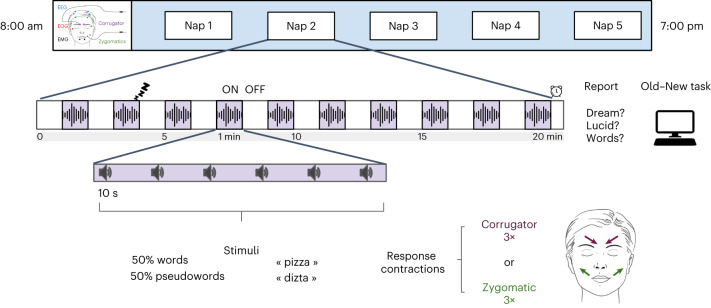
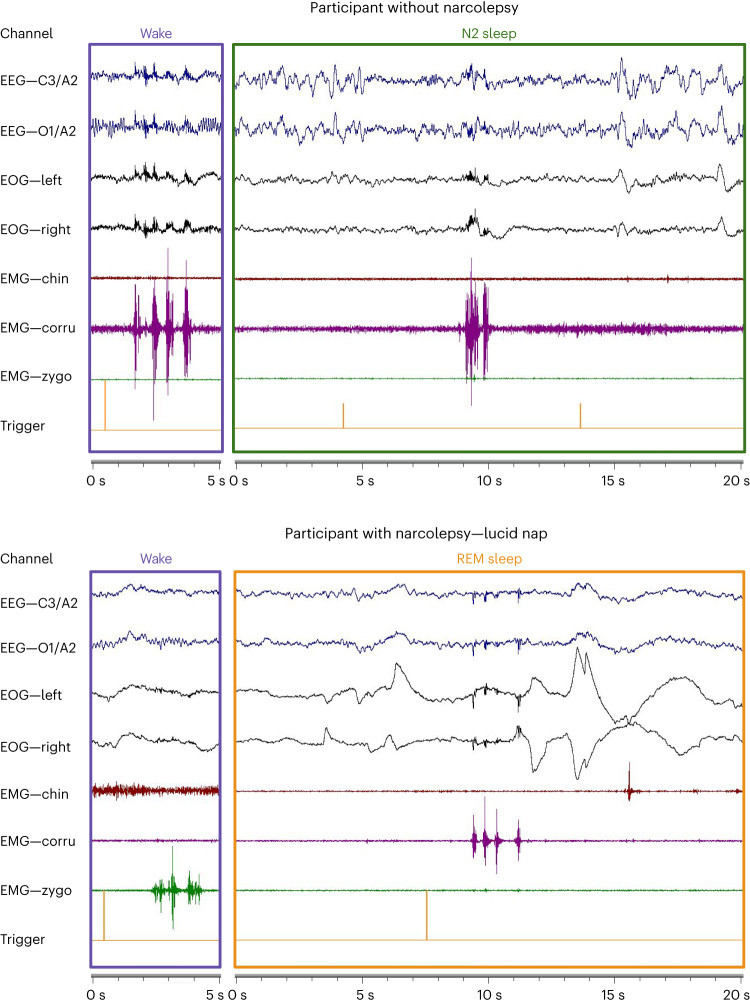
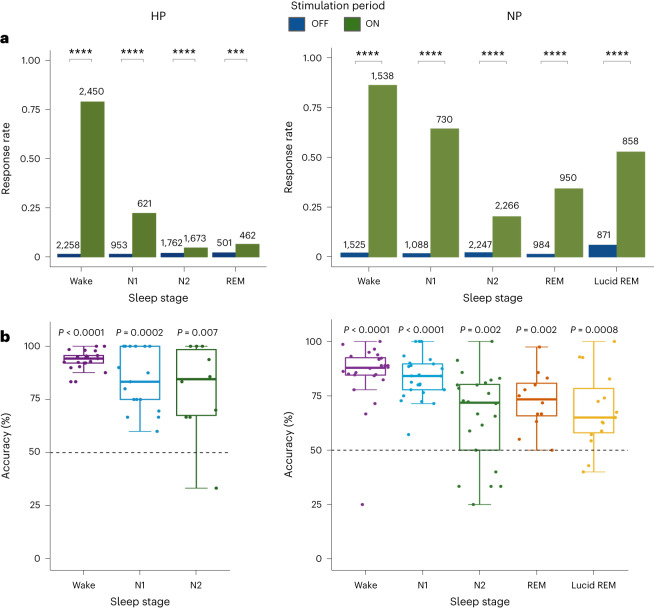
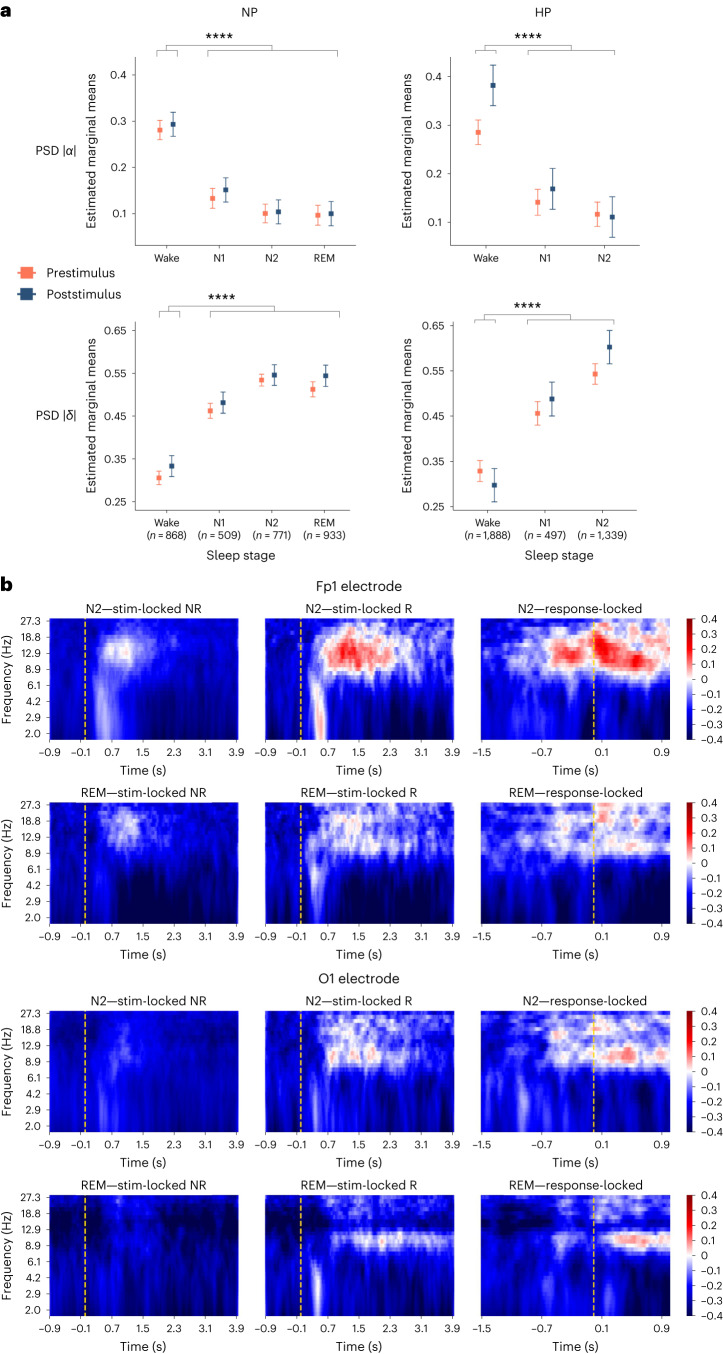
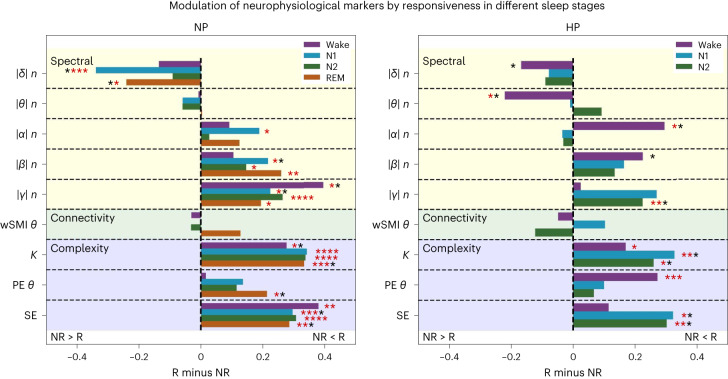
Sleep has long been considered as a state of behavioral disconnection from the environment, without reactivity to external stimuli. Here we questioned this ‘sleep disconnection’ dogma by directly investigating behavioral responsiveness in 49 napping participants (27 with narcolepsy and 22 healthy volunteers) engaged in a lexical decision task. Participants were instructed to frown or smile depending on the stimulus type. We found accurate behavioral responses, visible via contractions of the corrugator or zygomatic muscles, in most sleep stages in both groups (except slow-wave sleep in healthy volunteers). Across sleep stages, responses occurred more frequently when stimuli were presented during high cognitive states than during low cognitive states, as indexed by prestimulus electroencephalography. Our findings suggest that transient windows of reactivity to external stimuli exist during bona fide sleep, even in healthy individuals. Such windows of reactivity could pave the way for real-time communication with sleepers to probe sleep-related mental and cognitive processes.
Overview
The claims and statistics of this paper haven’t been checked yet.
Free: it reads the open-access text and checks the first 5 claims that cite a source we can check. Create a free account to check every claim.
Integrity signals
Registry
Cites
Statistics
Figures
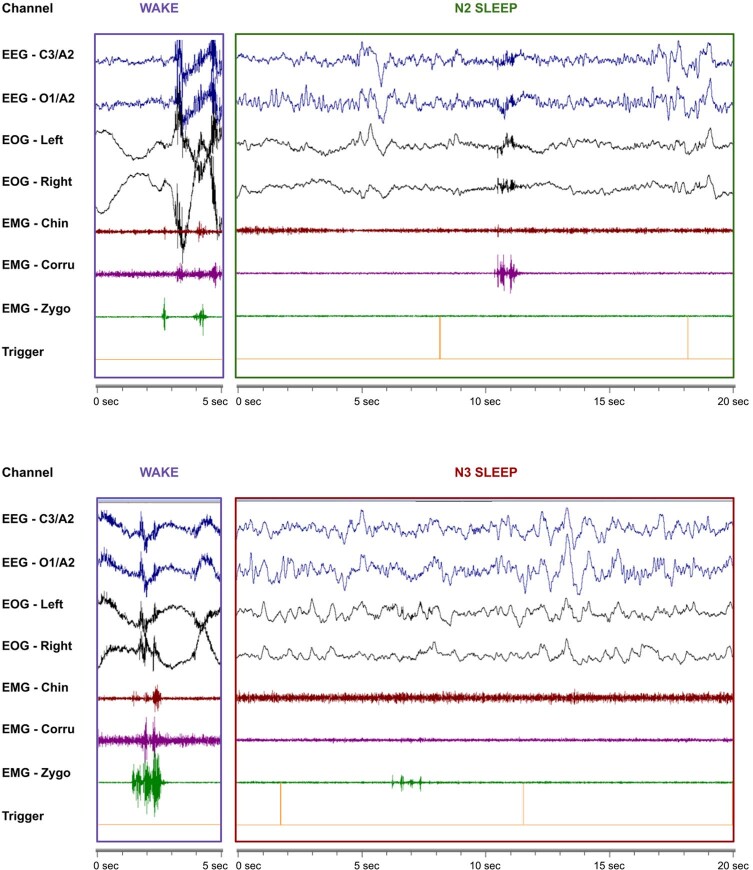
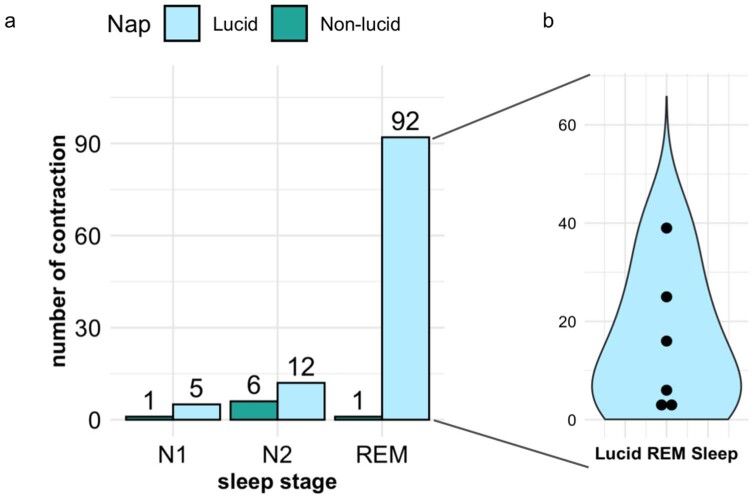
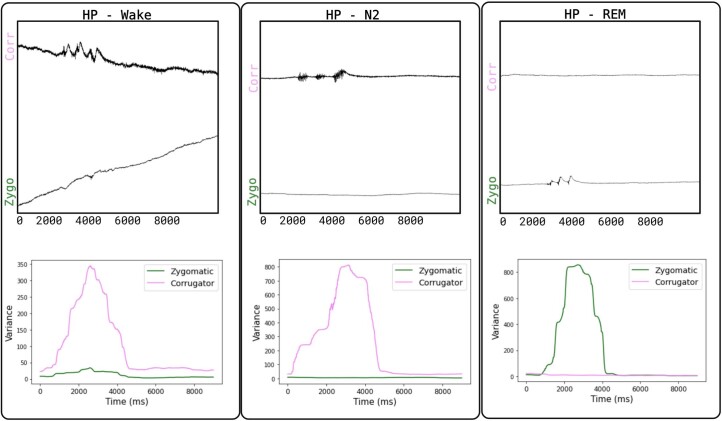
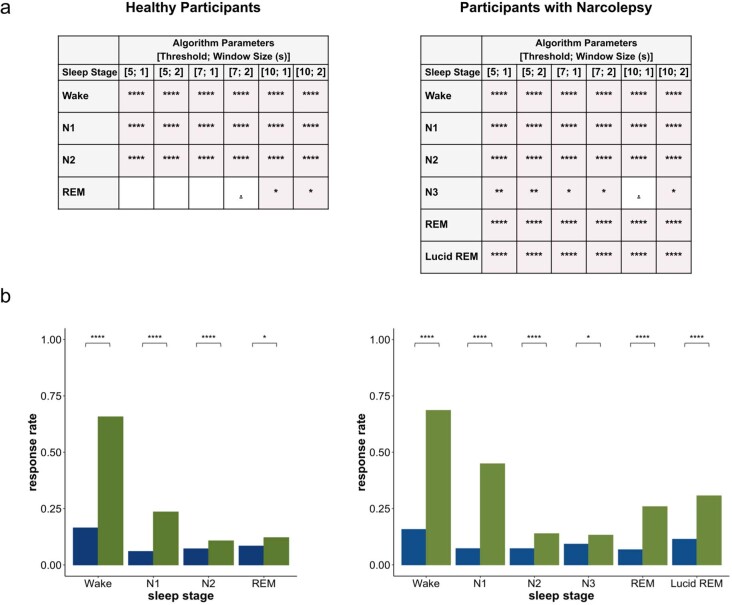
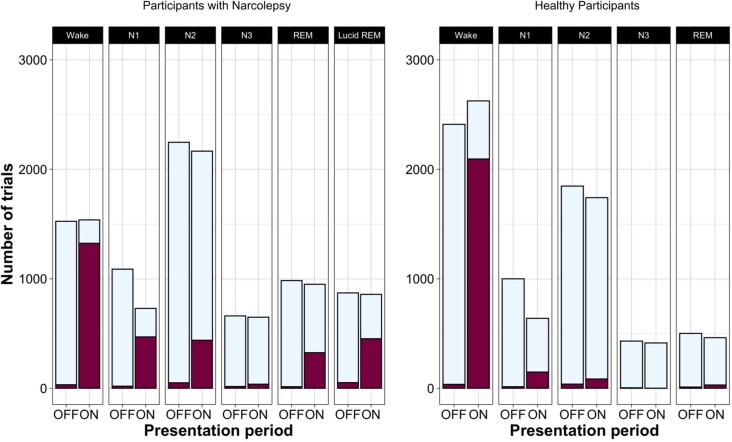
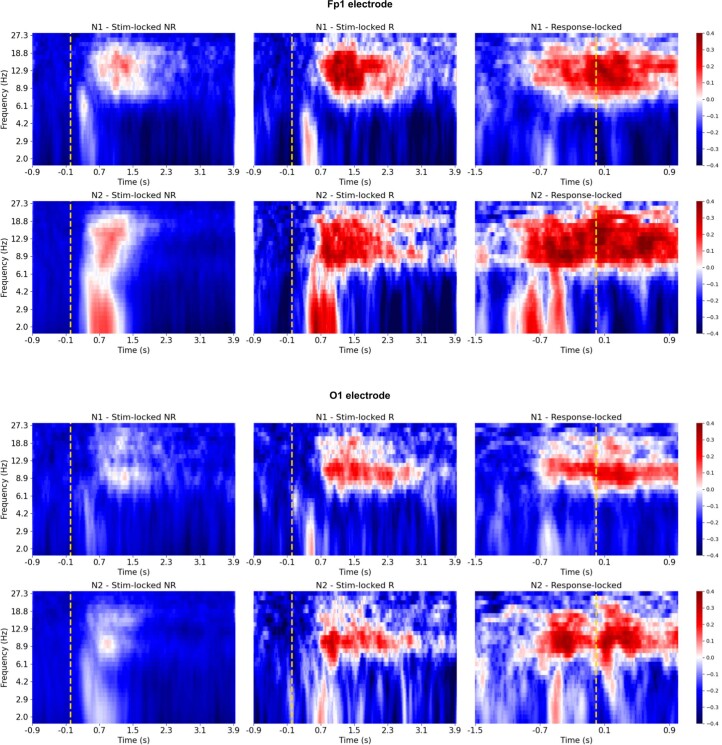
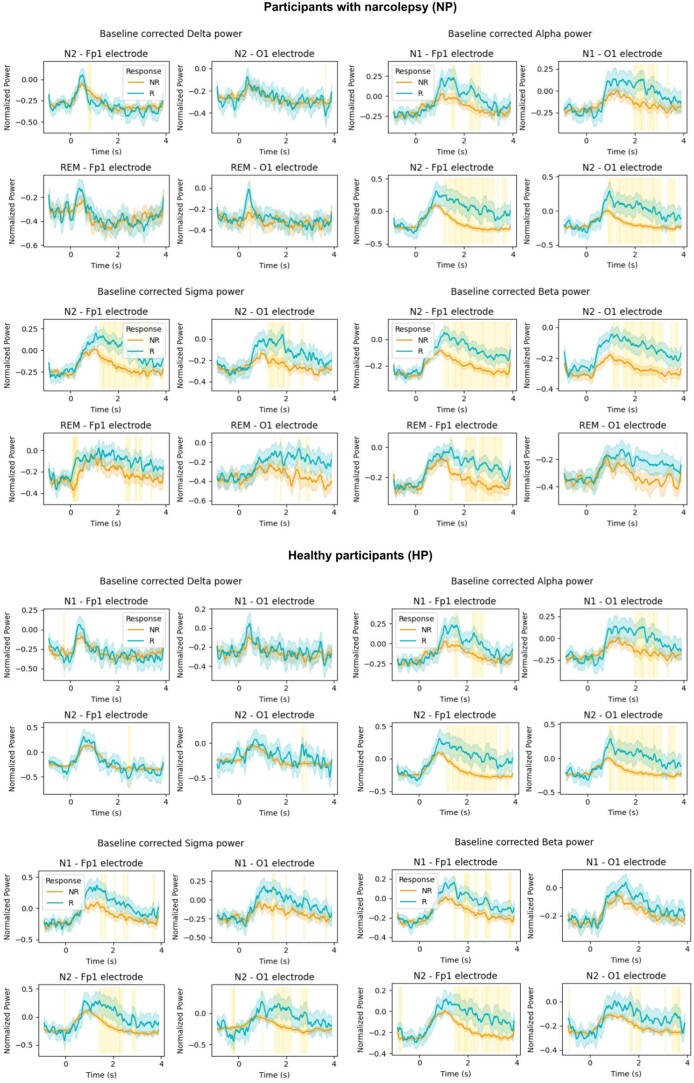
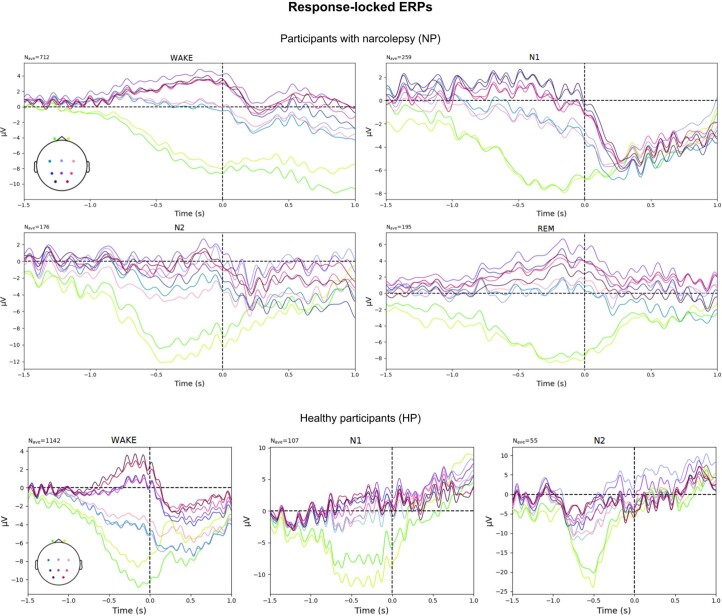
Verification
Claims the paper makes
The claims and statistics of this paper haven’t been checked yet.
Free: it reads the open-access text and checks the first 5 claims that cite a source we can check. Create a free account to check every claim.
Claims other papers make about this one
Each is checked against this paper’s own text: does it say what the citing paper says it does?
The source backs part of the claim, not all of it — or backs it for a different population, condition or comparison.
In the citing paper
“Cognitive control, including the ability to remember at will and to steer the dream narrative in a chosen direction, such as flying, can also be restored.”
From Consciousness and sleep (2024) · cites this paper as [186]
Experimental — accuracy not yet measuredThe source backs part of the claim, not all of it — or backs it for a different population, condition or comparison.
In the citing paper
“What distinguishes lucid dreaming is precisely the return of metacognition, with the ongoing realization that one is dreaming, rather than interacting with the world.”
From Consciousness and sleep (2024) · cites this paper as [186]
Experimental — accuracy not yet measured
Self-check
Percentages, sums and reported differences re-computed from the paper’s own numbers.
The self-check needs the paper’s full text.
Citations
Cites
Fitting Linear Mixed-Effects Models Using lme4
Bates, D., Mächler, M., Bolker, B., & Walker, S. (2015) · Journal of Statistical Software · doi:10.18637/jss.v067.i01 · Cited by 86,835
Scikit-learn: Machine Learning in Python
Pedregosa, F., Varoquaux, G., Gramfort, A., Michel, V., Thirion, B., Grisel, O., Blondel, M., Müller, A., Nothman, J., Louppe, G., et al. (2012) · arXiv · doi:10.48550/arxiv.1201.0490 · Cited by 71,016
SciPy 1.0: fundamental algorithms for scientific computing in Python
Virtanen, P., Gommers, R., Oliphant, T. E., Haberland, M., Reddy, T., Cournapeau, D., Burovski, E., Peterson, P., Weckesser, W., Bright, J., et al. (2020) · Nature Methods · doi:10.1038/s41592-019-0686-2 · Cited by 38,430
Harris, C. R., Millman, K. J., van der Walt, S. J., Gommers, R., Virtanen, P., Cournapeau, D., Wieser, E., Taylor, J., Berg, S., Smith, N. J., et al. (2020) · Nature · doi:10.1038/s41586-020-2649-2 · Cited by 23,826
Brainard, D. H. (1997) · Spatial Vision · doi:10.1163/156856897x00357 · Cited by 19,702 · cited 1×
“To further facilitate sleep onset, we asked participants to sleep about 30% less than usual during the night preceding the experiment (either by going to bed later or waking up earlier) and to avoid stimulants on the day of the experiment.”
Harris, C., Millman, K., van der Walt, S., Gommers, R., Virtanen, P., Cournapeau, D., Wieser, E., Taylor, J., Berg, S., Smith, N., et al. (2020) · RePEc: Research Papers in Economics · Cited by 17,844
SciPy 1.0: fundamental algorithms for scientific computing in Python
Virtanen, P., Gommers, R., Oliphant, T. E., Haberland, M., Reddy, T., Cournapeau, D., Burovski, E., Peterson, P., Weckesser, W., Bright, J., et al. (2019) · Apollo - University of Cambridge Repository · doi:10.17863/cam.64134 · Cited by 10,460
Physiological time-series analysis using approximate entropy and sample entropy
Richman, J. S., & Moorman, J. R. (2000) · American Journal of Physiology-Heart and Circulatory Physiology · doi:10.1152/ajpheart.2000.278.6.h2039 · Cited by 7,880 · cited 1×
“For visualization purposes, we applied a low-pass filter of 10 Hz before plotting the obtained response-locked ERPs.”
International Classification of Sleep Disorders-Third Edition
Sateia, M. J. (2014) · Chest · doi:10.1378/chest.14-0970 · Cited by 3,860
Bayesian Cognitive Modeling: A Practical Course
Lee, M. D., & Wagenmakers, E.-J. (2014) · doi:10.1017/cbo9781139087759 · Cited by 1,795
Research works printed but not linked: 4
- Valli, K. & Hoss, R. (eds.). Dreams: Biology, Psychology and Culture Chapter 7.1, pp. 213–218 (ABC-CLIO, 2019).
- Fernandez-Delgado M Cernadas E Barro S Amorim D Do we need hundreds of classifiers to solve real world classification problems? J. Mach. Learn. Res. 2014 15 3133 3181
- Kelleher, J. D., Namee, B. M. & D’Arcy, A. Fundamentals of Machine Learning for Predictive Data Analytics: Algorithms, Worked Examples, and Case Studies (MIT Press, 2015).
- Fox, J. & Weisberg, S. An R Companion to Applied Regression (SAGE, 2019).
Cited by
Tononi, G., Boly, M., & Cirelli, C. (2024) · Neuron · doi:10.1016/j.neuron.2024.04.011 · Cited by 70
What is sleep exactly? Global and local modulations of sleep oscillations all around the clock
Andrillon, T., & Oudiette, D. (2023) · Neuroscience & Biobehavioral Reviews · doi:10.1016/j.neubiorev.2023.105465 · Cited by 57
Self-citationInfluencing dreams through sensory stimulation: A systematic review
Salvesen, L., Capriglia, E., Dresler, M., & Bernardi, G. (2024) · Sleep Medicine Reviews · doi:10.1016/j.smrv.2024.101908 · Cited by 36
Revisiting the role of computational neuroimaging in the era of integrative neuroscience
Loosen, A. M., Kato, A., & Gu, X. (2024) · Neuropsychopharmacology · doi:10.1038/s41386-024-01946-8 · Cited by 43
“…higher temporal resolution, lends itself for mechanistic, theory-driven (e.g., [36 – 38]) and predictive models investigating temporally sensitive phenomena (e.g., [39 – 41]), while also being particularly valuable for inaccessible populations or settings due to its portability and ease of use.”
BackgroundEmbracing sleep onset complexity
Lacaux, C., Strauss, M., Bekinschtein, T. A., & Oudiette, D. (2023) · Trends in Neurosciences · doi:10.1016/j.tins.2024.02.002 · Cited by 44
Self-citationDynamic modulation of external excitation enhance synchronization in complex neuronal network
Wu, Y., Ding, Q., Huang, W., Hu, X., Ye, Z., & Jia, Y. (2024) · Chaos Solitons & Fractals · doi:10.1016/j.chaos.2024.114896 · Cited by 31
Sleep and the recovery from stress
Yu, X., Nollet, M., Franks, N. P., & Wisden, W. (2025) · Neuron · doi:10.1016/j.neuron.2025.04.028 · Cited by 30
A continuous approach to explain insomnia and subjective-objective sleep discrepancy
Herzog, R. A., Crosbie, F., Aloulou, A., Hanif, U., Chennaoui, M., Léger, D., & Andrillon, T. (2025) · Communications Biology · doi:10.1038/s42003-025-07794-6 · Cited by 33
“Suchmodulationsoffasteroscillationswithinsleephavealsobeen associatedwithparasomnia 58 , dreaming 28 , and cognitive processes during sleep 59 , which suggestslinks betweenlocal modulations of sleep and abroad range of sleep disruptions including insomnia with SOSD 26 .”
Jaramillo, V., Hebron, H., Wong, S., Atzori, G., Bartsch, U., Dijk, D., & Violante, I. R. (2024) · SLEEP · doi:10.1093/sleep/zsae193 · Cited by 16
Behavioral, experiential, and physiological signatures of mind blanking
Musat, E. M., Coz, A. L., Corcoran, A. W., Belloli, L. M. L., Naccache, L., & Andrillon, T. (2025) · Proceedings of the National Academy of Sciences · doi:10.1073/pnas.2510262122 · Cited by 19
Self-citationNew strategies for the cognitive science of dreaming
Mallett, R., Konkoly, K. R., Nielsen, T., Carr, M., & Paller, K. A. (2024) · Trends in Cognitive Sciences · doi:10.1016/j.tics.2024.10.004 · Cited by 14
From Black Holes Entropy to Consciousness: The Dimensions of the Brain Connectome
Bihan, D. L. (2023) · Entropy · doi:10.3390/e25121645 · Cited by 15
The effects on sleep play a critical role in the long-term health consequences of noise exposure
Basner, M., & Smith, M. G. (2024) · SLEEP · doi:10.1093/sleep/zsad314 · Cited by 9
“It analyzes not only sound levels but also sound content during sleep [2].”
BackgroundTalking to sleepwalkers? Response to communication efforts in disorders of arousals
Idir, Y., Lopez, R., Barbier, A., Saint-Auret, S., Morain, E., Vollhardt, R., Kacem, I. B. H., Coz, A. L., Gales, A. Z., Dodet, P., et al. (2024) · SLEEP · doi:10.1093/sleep/zsae272 · Cited by 12
Self-citationANALYSIS OF THE CORRELATION BETWEEN BRAIN AND MUSCLE REACTION IN REST AND LIMB MOVEMENTS
Frischer, R., Krejcar, O., Ghosh, D. K., & NAMAZI, H. (2024) · Fractals · doi:10.1142/s0218348x25500082 · Cited by 9
Episodic long-term memory formation during slow-wave sleep
Schmidig, F. J., Ruch, S., & Henke, K. (2024) · eLife · doi:10.7554/elife.89601 · Cited by 15
Stucky, B. (2025) · Nature and Science of Sleep · doi:10.2147/nss.s506461 · Cited by 7
“198 Real-time communication between a dreamer and the external world is possible even in NREM sleep stages 199 and might be extendable to dreamless awareness.”
Covert Consciousness: Epistemic Limits of Its Definition and Detection
Young, M. J., Nagel, T., Mudrik, L., Roskies, A., Diringer, M., Fischer, D., & Collaborators, T. C. C. C. (2026) · Neurocritical Care · doi:10.1007/s12028-025-02399-7 · Cited by 6
Thalamocortical Dynamics during Rapid Eye Movement Sleep in the Mouse Somatosensory Pathway
Boscher, F., Jumel, K., Dvořáková, T., Gentet, L. J., & Urbain, N. (2024) · Journal of Neuroscience · doi:10.1523/jneurosci.0158-24.2024 · Cited by 11
Content–state dimensions characterize different types of neuronal markers of consciousness
Pérez, P., Manasova, D., Hermann, B., Raimondo, F., Rohaut, B., Bekinschtein, T. A., Naccache, L., Arzi, A., & Sitt, J. D. (2024) · Neuroscience of Consciousness · doi:10.1093/nc/niae027 · Cited by 8
“These markers have been shown to have discriminatory power across the DoC (Sitt et al. 2014, Engemann et al. 2018) and sleep spectra (Strauss et al. 2022, Türker et al. 2023).”
BackgroundSelf-citationPicard‐Deland, C., Cesari, M., Stefani, A., Maranci, J., Högl, B., & Arnulf, I. (2025) · Journal of Sleep Research · doi:10.1111/jsr.70090 · Cited by 4
Self-citationAlanazi, F. I., Bravo, C. A. R., Moreno, J. S. S., Posada, L. F. B., Ladino, L. D., Ríos, A. L. L., & Hutchison, W. D. (2024) · NeuroImage · doi:10.1016/j.neuroimage.2024.120686 · Cited by 4
Zhu, G., Tian, R., Zhou, D., & Qin, X. (2024) · Frontiers in Genetics · doi:10.3389/fgene.2024.1378802 · Cited by 4
Mutti, C., Siclari, F., & Rosenzweig, I. (2024) · Journal of Sleep Research · doi:10.1111/jsr.14338 · Cited by 4
“Studies involving lucid dreamers have provided valuable insights into eye movement generation, environmental disconnection, and time perception in dreams (Erlacher et al., 2014; Konkoly et al., 2021; LaBerge, Baird, & Zimbardo, 2018; Türker et al., 2023).”
Using Real-time Reporting to Investigate Visual Experiences in Dreams
Konkoly, K. R., Al-Youssef, S., Mazurek, C. Y., Mallett, R., Morris, D., Gales, A. Z., Arnulf, I., Oudiette, D., & Paller, K. A. (2026) · Journal of Cognitive Neuroscience · doi:10.1162/jocn.a.107 · Cited by 3
Self-citationCreative problem-solving after experimentally provoking dreams of unsolved puzzles during REM sleep
Konkoly, K. R., Morris, D., Hurka, K. L., Martinez, A. M., Sanders, K. E. G., & Paller, K. A. (2026) · Neuroscience of Consciousness · doi:10.1093/nc/niaf067 · Cited by 4
“Perhaps traits, such as a higher auditory a rousal threshold (Salvesen et al.2024),or states,such as cues being serendipitously presented during times of enhanced processing of the external environment (Türker et al.2023),made some participants’ dreams more malleable to the influence of cues.”
Lee, D., & Kim, S. C. (2024) · Korean journal of urology · doi:10.4111/icu.20240280 · Cited by 2
Episodic long-term memory formation during slow-wave sleepPreprint
Schmidig, F. J., Ruch, S., & Henke, K. (2022) · bioRxiv (Cold Spring Harbor Laboratory) · doi:10.1101/2022.10.24.513503 · Cited by 2
Walter, J., Andrillon, T., & Windt, J. (2025) · Neuroscience of Consciousness · doi:10.1093/nc/niaf022 · Cited by 1
“This has been done in sleep and wakefulness with metrics such as signal complexity or functional connectivity, which can help predict lapses of attention or correct responses (Andrillon et al. 2016, Türker et al. 2023, Musat et al. 2024).”
Did I have a dream last night? White dreaming as metacognitive feelings
Sánchez, A. A. (2026) · Mind & Language · doi:10.1111/mila.70027 · Cited by 1
How sleeping minds decide: State-specific reconfigurations of lexical decision-making
Xia, T., Hu, C.-P., Türker, B., Musat, E. M., Naccache, L., Arnulf, I., Oudiette, D., & Hu, X. (2026) · PLoS Computational Biology · doi:10.1371/journal.pcbi.1014007 · Cited by 1
“Second, although we rigorously excluded micro-arousals and confirmed sleep depth via spectral analysis (Türker et al., 2023) [6], the potential influence of brief, sub-threshold arousals remains a limitation.”
InfluentialSelf-citationDream-like mental states can occur during wakefulness
Decat, N., Coz, A. L., Sénéchal, J., Scellier-Dekens, I., Verville, H. D., Herzog, R. A., Lejeune, F., Arnulf, I., Andrillon, T., & Oudiette, D. (2026) · Cell Reports · doi:10.1016/j.celrep.2026.117237 · Cited by 3
Self-citationAdvanced meditation, sleep, and consciousness science: An emerging frontier
Bonamino, C., Hausen, C., & Sacchet, M. D. (2026) · Neuroscience & Biobehavioral Reviews · doi:10.1016/j.neubiorev.2026.106741 · Cited by 2
Sensory processing reallocation from auditory to cardiac signals in REM sleep
Cataldi, J., Pelentritou, A., Schwartz, S., & Lucia, M. D. (2026) · Current Biology · doi:10.1016/j.cub.2026.07.024 · Cited by 1
The Disputable Costs of Sleeping
Akaârir, M., Nicolau, M. C., Cañellas, F., Díaz, J. Á. R., Barceló, P., Gamundí, A., Martin-Reina, A., & Rial, R. V. (2025) · Biology · doi:10.3390/biology14040352 · Cited by 2
Deep asleep? You can still follow simple commands, study finds
Oza, A. (2023) · Nature · doi:10.1038/d41586-023-03252-7 · Cited by 1
Thalamocortical Spindles occur during Rapid Eye Movement Sleep in Mouse Somatosensory PathwayPreprint
Boscher, F., Jumel, K., Dvořáková, T., Gentet, L. J., & Urbain, N. (2023) · bioRxiv (Cold Spring Harbor Laboratory) · doi:10.1101/2023.10.26.564196
“Indeed, a recent study provided evidence in human of transient windows of sensory connection with the outside world during which external information can be processed in REM 65 .”
BackgroundEpisodic long-term memory formation during slow-wave sleepPreprint
Schmidig, F. J., Ruch, S., & Henke, K. (2024) · eLife · doi:10.7554/elife.89601.2
Fathoni, A. N., & Annisa, A. (2024) · RADINKA JOURNAL OF HEALTH SCIENCE · doi:10.56778/rjhs.v1i4.243
“Perilaku merupakan respons atau reaksi seseorang terhadap stimulus (rangsangan dari luar) (Popescu, 2014); (Türker et al., 2023); (Heimlich & Ardoin, 2008).”
BackgroundEEG entropy reflects both intrinsic and stimulation-induced corticospinal excitabilityPreprint
Ruch, S., Frohlich, J., Keute, M., Tang, G., Keksel, N., & Gharabaghi, A. (2025) · bioRxiv (Cold Spring Harbor Laboratory) · doi:10.1101/2025.05.16.654439
“…signal, or the number of ways in which a signal can be arranged – has found a number of applications in recent years as a marker of sleep state [55–57], conscious state [54], and even diagnosis or prognosis in certain brain disorders [21,58–60]. of er ], Here, instead of relating entropy to…”
The geometry of cortical sound processing in slow wave sleepPreprint
Muller, A., Filipchuk, A., Bagur, S., & Bathellier, B. (2025) · bioRxiv (Cold Spring Harbor Laboratory) · doi:10.1101/2025.06.13.658070
“This is consistent with the demonstration in human subjects that even the extraction of sophisticated auditory features such as word identity continues to operate during sleep 10 all the way up to nonconscious preparation of motor responses 31 .”
Moharam, M. M. R. (2025) · Dirasat Human and Social Sciences · doi:10.35516/hum.v52i6.8141 · Cited by 3
EEG Brain Rhythms During Resting‐State Wakefulness and Sleep in Elderly Expert Meditators
Champetier, P., Hamel, A., André, C., Ourry, V., Lacroix, T., Rehel, S., Chauveau, L., Haudry, S., Bertran, F., Sayette, V. D. L., et al. (2025) · Journal of Sleep Research · doi:10.1111/jsr.70161 · Cited by 1
Live access to the emotional dynamics of REM sleep dreams in lucid dreamers with narcolepsyPreprint
Maranci, J., Champetier, P., Oudiette, D., Chabani, E., Masset, L., Romier, A., Chen, A. C. N., Barbier, A., Pannacci, U., Sapo, F., et al. (2025) · bioRxiv (Cold Spring Harbor Laboratory) · doi:10.1101/2025.08.27.672557
“23 The chances of obtaining such codes from a lucid dream are highest in participants with narcolepsy, 24 a disease whose cardinal symptom is irrepressible daytime sleepiness, leading to naps that often include REM sleep.”
Self-citationImpact of Cognitive Computational Models in Neuroscience
Kakulapati, V., Sadiq, M. J., & Varanasi, A. (2025) · Artificial intelligence · doi:10.5772/intechopen.1011884
The Geometry of Layer 2/3 Cortical Sound Processing in Slow Wave Sleep
Muller, A., Filipchuk, A., Bagur, S., & Bathellier, B. (2025) · Advanced Science · doi:10.1002/advs.202509707 · Cited by 1
Content-State Dimensions Characterize Different Types of Neural Correlates of ConsciousnessPreprint
Pérez, P., Manasova, D., Hermann, B., Raimondo, F., Bekinschtein, T. A., Naccache, L., Arzi, A., & Sitt, J. D. (2023) · PsyArXiv (OSF Preprints) · doi:10.31234/osf.io/xkeuv
Self-citationJeantin, L., Bourdillon, P., Guénot, M., Bastuji, H., Sitt, J. D., & Naccache, L. (2026) · PNAS Nexus · doi:10.1093/pnasnexus/pgag048 · Cited by 1
Self-citationMusic in dreams: Methodology, findings, and future directions
Baselgia, S., & Rasch, B. (2026) · Elsevier eBooks · doi:10.1016/b978-0-443-33651-5.00006-9
George, M., & Andrillon, T. (2026) · Elsevier eBooks · doi:10.1016/b978-0-443-33651-5.00024-0
Prefrontal tDCS modulates behavioural and neural signatures associated with consciousness
Sangaré, A., Musat, E. M., Hermann, B., Hérault, C., Belloli, L. M. L., Breton, M., Borden, A., Salah, A. B., Denis-Valente, M., Demeret, S., et al. (2026) · NeuroImage · doi:10.1016/j.neuroimage.2026.122015
Self-citationOrtega, R. S., & Strauss, M. (2026) · Journal of Sleep Research · doi:10.1111/jsr.70404
Generalizability of EEG-Based Dementia Classifiers: A Multicenter study of Alzheimer’s, MCI, And FTDPreprint
Belloli, L. M. L., Bruno, N. M., Hernandez, H., Cuadros, J., Dellavale, D., Prado, P., Anghinah, R., Güntekin, B., Hanoğlu, L., Parra, M. A., et al. (2026) · medRxiv · doi:10.64898/2026.07.28.26359133
“This framework has also been employed successfully in multicentric disorders of consciousness research (Sitt et al., 2014; Engemann et al., 2018; Pérez et al., 2024; Manasova et al., 2024) and sleep research (Strauss et al., 2022; Türker et al., 2023).”
Self-citationCovert consciousness in behavioral coma
Edlow, B. L., Fecchio, M., Freeman, H. J., Rapalino, O., Cash, S. S., & Young, M. J. (2026) · Cortex · doi:10.1016/j.cortex.2026.07.008
Wang, F., Xue, Y., & Di, H. (2026) · Frontiers in Neurology · doi:10.3389/fneur.2026.1940448
“Evidence from sleep and anesthesia further demonstrates that the brain can retain a certain capacity for processing and integrating external information, producing decodable neural signals even in the absence of explicit subjective awareness (29, 30).”
Sound asleep, yet still listening: auditory processing during human sleep
Oudiette, D., & Andrillon, T. (2026) · Trends in Cognitive Sciences · doi:10.1016/j.tics.2026.09.009
Self-citation
Metadata
- Authors
- Türker, B., Musat, E. M., Chabani, E., Fonteix-Galet, A., Maranci, J.-B., Wattiez, N., Pouget, P., Sitt, J., Naccache, L., Arnulf, I., & Oudiette, D.
- Affiliations
- Centre National de la Recherche Scientifique (FR)
- Inserm (FR)
- Corresponding author
- Oudiette, Delphine
- ORCID
- Venue
- Nature Neuroscience
- Published
- 2023-10-12
- Volume
- 26
- Issue
- 11
- Pages
- 1981-1993
- ISSN
- 1097-6256 (ISSN-L)
- 1546-1726
- PMC
- PMC10620087
- OpenAlex
- W4387568425
- Semantic Scholar
- b72c298e1275b108ea80de81d2fe0d1390768311
- Cited by
- 57
- References
- 72
- Citations by year
- 2026: 14 · 2025: 17 · 2024: 18 · 2023: 7
- FWCI
- 8.37
- Type
- journal article
- Language
- en
- Open access
- hybrid
- doi.org
- Licence
- cc-by
- creativecommons.org/licenses/by/4.0 (tdm)
- creativecommons.org/licenses/by/4.0 (vor)
- Locations
- Nature Neuroscience (publishedVersion, cc-by)
- PubMed Central (publishedVersion, cc-by)
- PubMed (publishedVersion)
- HAL (submittedVersion, other-oa)
- HAL (submittedVersion)
- OSF Preprints (OSF Preprints) (submittedVersion)
- Funders
- Agence Nationale de la Recherche (ANR-20-CE37-0001-01)
- Société Française de Recherche et Médecine du Sommeil
- French Ministry of Higher Education
- Institut National de la Santé et de la Recherche Médicale
- APHP and Sorbonne University
- UNIM
- National Program on Rare Diseases
- Topics
- Life Sciences › Neuroscience › Cognitive Neuroscience › Sleep and Wakefulness Research
- Social Sciences › Psychology › Experimental and Cognitive Psychology › Sleep and related disorders
- Social Sciences › Psychology › Experimental and Cognitive Psychology › Sleep and Work-Related Fatigue
- Keywords
- sleep, narcolepsy, lexical decision, corrugator supercilii, zygomaticus, sleep stages, slow-wave sleep, prestimulus EEG, cognitive states, napping
- MeSH terms
- Brain, Cognition, Electroencephalography, Humans, Sleep, Sleep Stages
About these checks
Registry, retraction, Cites and statistics results are computed, not judged, with one exception: a printed reference that no index lists is read once by a model before it counts as a citation error. Claims are extracted by a model and kept only when their quote appears verbatim in the text; each cited source is then checked, with a model’s help, for whether it says what the claim relies on. Those verdicts can be wrong — read the claim’s quote and the cited source before relying on one.
Statistics and arithmetic are recomputed, not judged.
Confidence bands are shown only for fields calibrated on our annotated test set. None is calibrated yet, so no band is shown.
What counts as a claim ›How we measure confidence ›How we check this ›
Are you an author, or do you see a problem with this page? Request a review
Data sources
Bibliographic data: Semantic Scholar, OpenAlex, Crossref.
Contains information from the Semantic Scholar Academic Graph Datasets, made available under the ODC Attribution License (ODC-BY 1.0).
Semantic Scholar’s data is described in: Kinney, R., et al. (2023). The Semantic Scholar Open Data Platform. arXiv:2301.10140.
