

Behavioral and brain responses to verbal stimuli reveal transient periods of cognitive integration of the external world during sleep
Open accessThe DOI matches its Crossref record; 73 of the 73 references it cites were found in a registry or an index.
Abstract
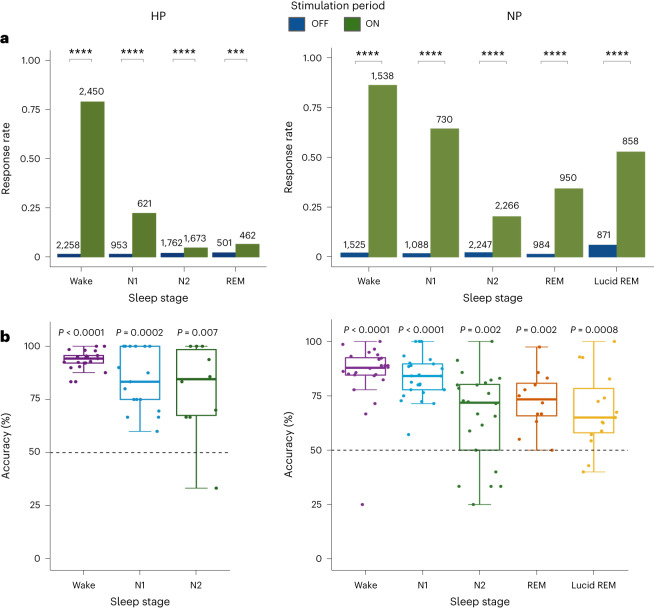
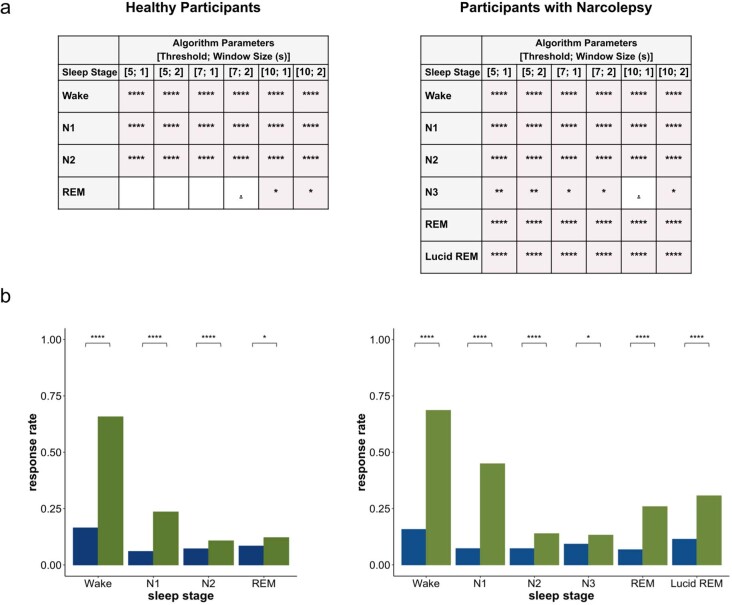
Sleep has long been considered as a state of behavioral disconnection from the environment, without reactivity to external stimuli. Here we questioned this ‘sleep disconnection’ dogma by directly investigating behavioral responsiveness in 49 napping participants (27 with narcolepsy and 22 healthy volunteers) engaged in a lexical decision task. Participants were instructed to frown or smile depending on the stimulus type. We found accurate behavioral responses, visible via contractions of the corrugator or zygomatic muscles, in most sleep stages in both groups (except slow-wave sleep in healthy volunteers). Across sleep stages, responses occurred more frequently when stimuli were presented during high cognitive states than during low cognitive states, as indexed by prestimulus electroencephalography. Our findings suggest that transient windows of reactivity to external stimuli exist during bona fide sleep, even in healthy individuals. Such windows of reactivity could pave the way for real-time communication with sleepers to probe sleep-related mental and cognitive processes.
Overview
The claims and statistics of this paper haven’t been checked yet.
Free: it reads the open-access text and checks the first 5 claims that cite a source we can check. Create a free account to check every claim.
Integrity signals
Registry
Cites
Statistics
Figures
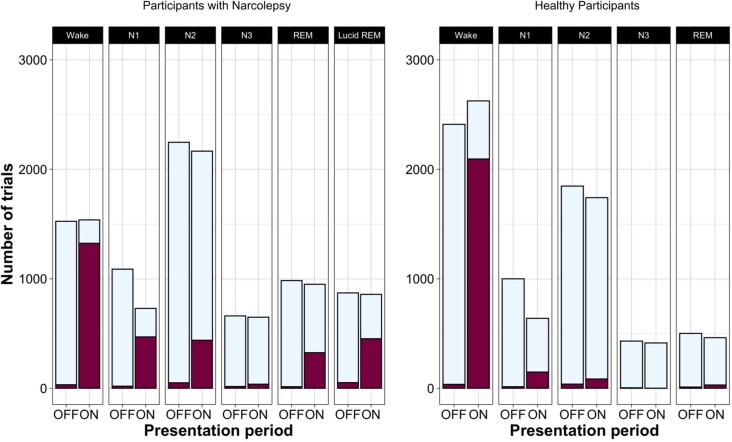
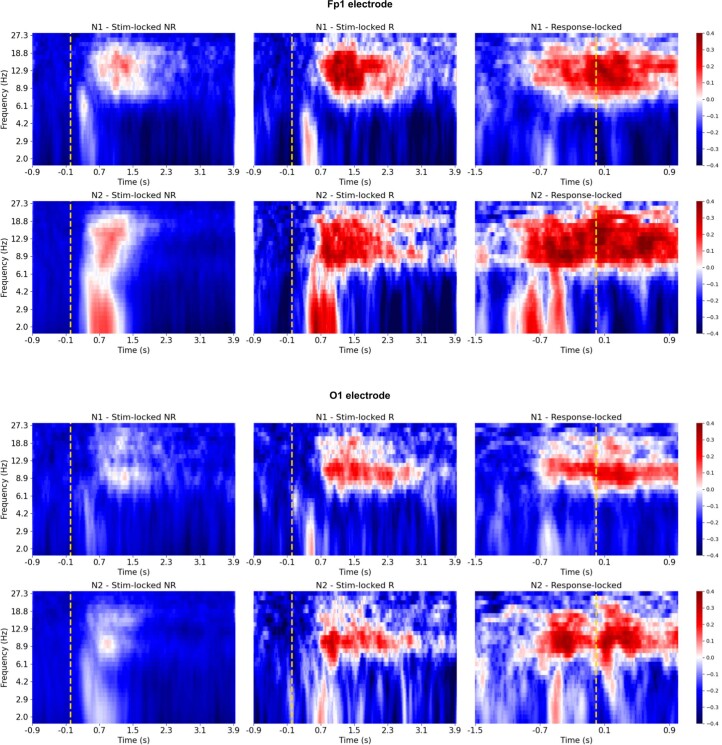
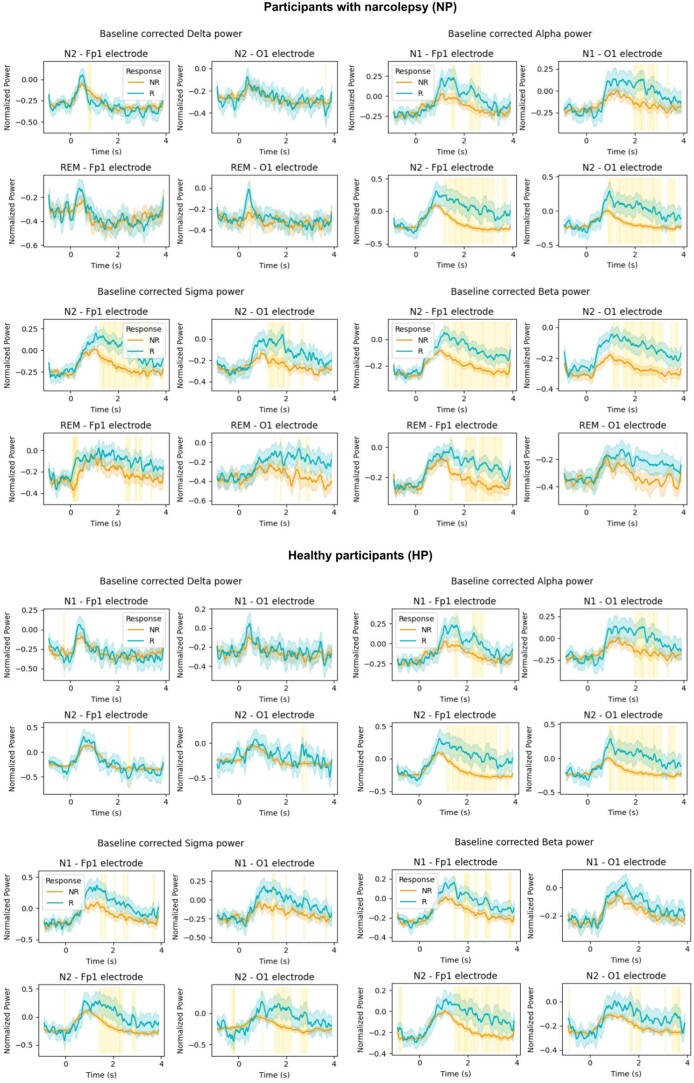
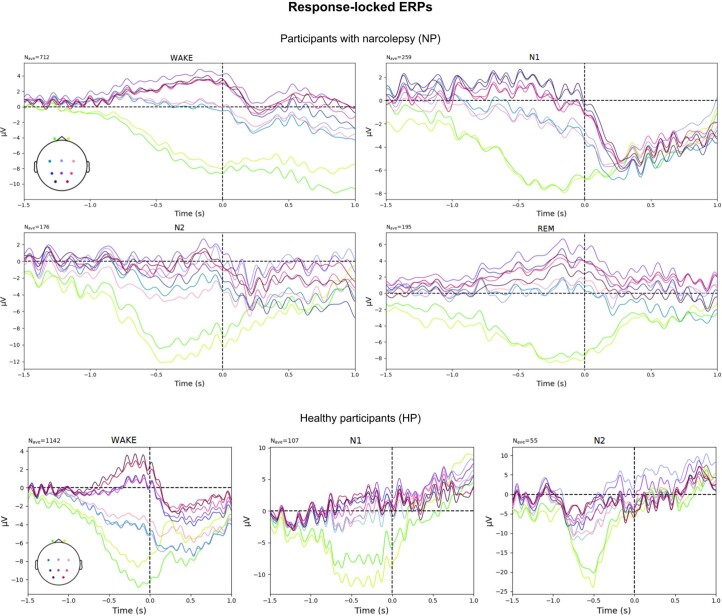
Verification
Claims the paper makes
The claims and statistics of this paper haven’t been checked yet.
Free: it reads the open-access text and checks the first 5 claims that cite a source we can check. Create a free account to check every claim.
Claims other papers make about this one
Each is checked against this paper’s own text: does it say what the citing paper says it does?
The source backs part of the claim, not all of it — or backs it for a different population, condition or comparison.
In the citing paper
“Cognitive control, including the ability to remember at will and to steer the dream narrative in a chosen direction, such as flying, can also be restored.”
From Consciousness and sleep (2024) · cites this paper as [186]
Experimental — accuracy not yet measuredThe source backs part of the claim, not all of it — or backs it for a different population, condition or comparison.
In the citing paper
“What distinguishes lucid dreaming is precisely the return of metacognition, with the ongoing realization that one is dreaming, rather than interacting with the world.”
From Consciousness and sleep (2024) · cites this paper as [186]
Experimental — accuracy not yet measured
Self-check
Percentages, sums and reported differences re-computed from the paper’s own numbers.
The self-check needs the paper’s full text.
Citations
Cites
Fitting Linear Mixed-Effects Models Using lme4
Bates, D., Mächler, M., Bolker, B., & Walker, S. (2015) · Journal of Statistical Software · doi:10.18637/jss.v067.i01 · Cited by 86,835
Scikit-learn: Machine Learning in Python
Pedregosa, F., Varoquaux, G., Gramfort, A., Michel, V., Thirion, B., Grisel, O., Blondel, M., Müller, A., Nothman, J., Louppe, G., et al. (2012) · arXiv · doi:10.48550/arxiv.1201.0490 · Cited by 71,016
SciPy 1.0: fundamental algorithms for scientific computing in Python
Virtanen, P., Gommers, R., Oliphant, T. E., Haberland, M., Reddy, T., Cournapeau, D., Burovski, E., Peterson, P., Weckesser, W., Bright, J., et al. (2020) · Nature Methods · doi:10.1038/s41592-019-0686-2 · Cited by 38,430
Harris, C. R., Millman, K. J., van der Walt, S. J., Gommers, R., Virtanen, P., Cournapeau, D., Wieser, E., Taylor, J., Berg, S., Smith, N. J., et al. (2020) · Nature · doi:10.1038/s41586-020-2649-2 · Cited by 23,826
Brainard, D. H. (1997) · Spatial Vision · doi:10.1163/156856897x00357 · Cited by 19,702 · cited 1×
“To further facilitate sleep onset, we asked participants to sleep about 30% less than usual during the night preceding the experiment (either by going to bed later or waking up earlier) and to avoid stimulants on the day of the experiment.”
Harris, C., Millman, K., van der Walt, S., Gommers, R., Virtanen, P., Cournapeau, D., Wieser, E., Taylor, J., Berg, S., Smith, N., et al. (2020) · RePEc: Research Papers in Economics · Cited by 17,844
SciPy 1.0: fundamental algorithms for scientific computing in Python
Virtanen, P., Gommers, R., Oliphant, T. E., Haberland, M., Reddy, T., Cournapeau, D., Burovski, E., Peterson, P., Weckesser, W., Bright, J., et al. (2019) · Apollo - University of Cambridge Repository · doi:10.17863/cam.64134 · Cited by 10,460
Physiological time-series analysis using approximate entropy and sample entropy
Richman, J. S., & Moorman, J. R. (2000) · American Journal of Physiology-Heart and Circulatory Physiology · doi:10.1152/ajpheart.2000.278.6.h2039 · Cited by 7,880 · cited 1×
“For visualization purposes, we applied a low-pass filter of 10 Hz before plotting the obtained response-locked ERPs.”
International Classification of Sleep Disorders-Third Edition
Sateia, M. J. (2014) · Chest · doi:10.1378/chest.14-0970 · Cited by 3,860
Bayesian Cognitive Modeling: A Practical Course
Lee, M. D., & Wagenmakers, E.-J. (2014) · doi:10.1017/cbo9781139087759 · Cited by 1,795
Pingouin: statistics in Python
Vallat, R. (2018) · Journal of Open Source Software · doi:10.21105/joss.01026 · Cited by 1,780
AASM Scoring Manual Updates for 2017 (Version 2.4)
Berry, R. B., Brooks, R., Gamaldo, C., Harding, S. M., Lloyd, R. M., Quan, S. F., Troester, M. T., & Vaughn, B. V. (2017) · Journal of Clinical Sleep Medicine · doi:10.5664/jcsm.6576 · Cited by 1,596 · cited 5×
“Sleep stages were scored offline by a certified sleep expert according to established guidelines 29 using Profusion software (Compumedics, Medical Data Technology).”
InfluentialOdor cues during slow-wave sleep prompt declarative memory consolidation
Rasch, B., Büchel, C., Gais, S., & Born, J. (2007) · Science · doi:10.1126/science.1138581 · Cited by 1,181 · cited 1×
“Learning-related sensory cues presented during sleep positively impact subsequent recall of cue-related material upon awakening 10–12 .”
Characterizing the dynamics of mental representations: the temporal generalization method
King, J.-R., & Dehaene, S. (2014) · Trends in Cognitive Sciences · doi:10.1016/j.tics.2014.01.002 · Cited by 919 · cited 5×
“This evidence included subjective report (the gold standard for assessing conscious access) and the presence of neural responses previously shown to reflect conscious perception 43–45 (a stable and sustained brain activity in response to stimuli).”
InfluentialTiming of the brain events underlying access to consciousness during the attentional blink
Sergent, C., Baillet, S., & Dehaene, S. (2005) · Nature Neuroscience · doi:10.1038/nn1549 · Cited by 888 · cited 1×
“Several signatures of conscious processing have been described in the literature, including the late P3b component in evoked related potentials 40–42 or the square-like shape pattern in the temporal generalization method 43,44 (such a pattern reflects a late, stable and sustained processing stage…”
Brain Dynamics Underlying the Nonlinear Threshold for Access to Consciousness
Del Cul, A., Baillet, S., & Dehaene, S. (2007) · PLoS Biology · doi:10.1371/journal.pbio.0050260 · Cited by 753 · cited 1×
“Several signatures of conscious processing have been described in the literature, including the late P3b component in evoked related potentials 40–42 or the square-like shape pattern in the temporal generalization method 43,44 (such a pattern reflects a late, stable and sustained processing stage…”
Neural signature of the conscious processing of auditory regularities
Bekinschtein, T. A., Dehaene, S., Rohaut, B., Tadel, F., Cohen, L., & Naccache, L. (2009) · Proceedings of the National Academy of Sciences · doi:10.1073/pnas.0809667106 · Cited by 738
Self-citationSitt, J. D., King, J.-R., El Karoui, I., Rohaut, B., Faugeras, F., Gramfort, A., Cohen, L., Sigman, M., Dehaene, S., & Naccache, L. (2014) · Brain · doi:10.1093/brain/awu141 · Cited by 608 · cited 6×
“The choice of the θ frequency band was based on previously reported results 34,36 , showing that the wSMI calculated on this frequency band was the most efficient in detecting residual consciousness in brain-injured patients with a disorder of consciousness.”
InfluentialSelf-citationAutoreject: Automated artifact rejection for MEG and EEG data
Jas, M., Engemann, D. A., Bekhti, Y., Raimondo, F., & Gramfort, A. (2017) · NeuroImage · doi:10.1016/j.neuroimage.2017.06.030 · Cited by 598
Strengthening Individual Memories by Reactivating Them During Sleep
Rudoy, J. D., Voss, J. L., Westerberg, C. E., & Paller, K. A. (2009) · Science · doi:10.1126/science.1179013 · Cited by 532 · cited 1×
“1–11 for examples).”
Lucid dreaming: a state of consciousness with features of both waking and non-lucid dreaming
Voss, U., Holzmann, R., Tuin, I., & Hobson, A. J. (2009) · Sleep · doi:10.1093/sleep/32.9.1191 · Cited by 445 · cited 2×
“Our results enhance our understanding of the lucid dream phenomenon and of its neural correlates 47,53 .”
Information Sharing in the Brain Indexes Consciousness in Noncommunicative Patients
King, J.-R., Sitt, J. D., Faugeras, F., Rohaut, B., El Karoui, I., Cohen, L., Naccache, L., & Dehaene, S. (2013) · Current Biology · doi:10.1016/j.cub.2013.07.075 · Cited by 370 · cited 4×
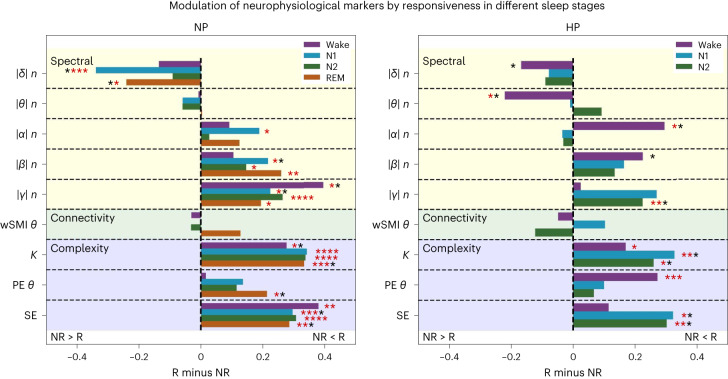
“These markers were previously shown to differentiate patients with unresponsive wakefulness syndrome from patients in a minimally conscious state and HP 34,36,37 , as well as wakefulness and REM sleep from N3 sleep 38 .”
InfluentialSelf-citationUpgrading the sleeping brain with targeted memory reactivation
Oudiette, D., & Paller, K. A. (2013) · Trends in Cognitive Sciences · doi:10.1016/j.tics.2013.01.006 · Cited by 350 · cited 1×
“Learning-related sensory cues presented during sleep positively impact subsequent recall of cue-related material upon awakening 10–12 .”
Self-citationRobust EEG-based cross-site and cross-protocol classification of states of consciousness
Engemann, D. A., Raimondo, F., King, J.-R., Rohaut, B., Louppe, G., Faugeras, F., Annen, J., Cassol, H., Gosseries, O., Fernandez-Slezak, D., et al. (2018) · Brain · doi:10.1093/brain/awy251 · Cited by 329 · cited 1×
“These markers were previously shown to differentiate patients with unresponsive wakefulness syndrome from patients in a minimally conscious state and HP 34,36,37 , as well as wakefulness and REM sleep from N3 sleep 38 .”
Self-citationOgilvie, R. D. (2001) · Sleep Medicine Reviews · doi:10.1053/smrv.2001.0145 · Cited by 310 · cited 1×
“Until now, behavioral responsiveness had only been demonstrated during the sleep onset period 3,21,22 or in the unique case of lucid REM sleep 19 .”
Dresler, M., Wehrle, R., Spoormaker, V. I., Koch, S. P., Holsboer, F., Steiger, A., Obrig, H., Sämann, P. G., & Czisch, M. (2012) · Sleep · doi:10.5665/sleep.1974 · Cited by 271 · cited 1×
“Our results enhance our understanding of the lucid dream phenomenon and of its neural correlates 47,53 .”
Implicit Short-Lived Motor Representations of Space in Brain Damaged and Healthy Subjects
Rossetti, Y. (1998) · Consciousness and Cognition · doi:10.1006/ccog.1998.0370 · Cited by 246 · cited 1×
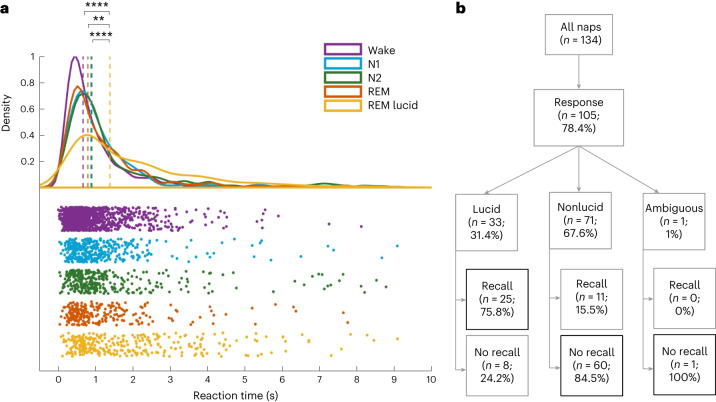
“Finally, reaction times to stimuli largely exceeded the one classically observed for automatic and unconscious processing (typically around 200 ms versus several seconds in our task) 57 .”
Disruption of hierarchical predictive coding during sleep
Strauss, M., Sitt, J. D., King, J.-R., Elbaz, M., Azizi, L., Buiatti, M., Naccache, L., van Wassenhove, V., & Dehaene, S. (2015) · Proceedings of the National Academy of Sciences · doi:10.1073/pnas.1501026112 · Cited by 244 · cited 4×
“However, congruent evidence from event-related potentials (ERPs) 1–3 and intracranial recordings 4,5 has shown that at least low-level sensory processing is preserved across sleep stages.”
InfluentialSelf-citationHumans can learn new information during sleep
Arzi, A., Shedlesky, L., Ben-Shaul, M., Nasser, K., Oksenberg, A., Hairston, I. S., & Sobel, N. (2012) · Nature Neuroscience · doi:10.1038/nn.3193 · Cited by 241 · cited 2×
“Moreover, new associations can be learned during sleep 13 and can even influence participants’ behavior (for example, smoking reduction) a week later 14 .”
Lucid dreaming verified by volitional communication during REM sleep
La Berge, S. P., Nagel, L. E., Dement, W. C., & Zarcone, V. P. (1981) · Perceptual and Motor Skills · doi:10.2466/pms.1981.52.3.727 · Cited by 240
Predicting lapses of attention with sleep-like slow waves
Andrillon, T., Burns, A., Mackay, T., Windt, J., & Tsuchiya, N. (2021) · Nature Communications · doi:10.1038/s41467-021-23890-7 · Cited by 213 · cited 1×
“For example, local sleep-like phenomena can be observed during wake and influence cognitive capacities and behavior 48,49 .”
Bifurcation in brain dynamics reveals a signature of conscious processing independent of report
Sergent, C., Corazzol, M., Labouret, G., Stockart, F., Wexler, M., King, J.-R., Meyniel, F., & Pressnitzer, D. (2021) · Nature Communications · doi:10.1038/s41467-021-21393-z · Cited by 200 · cited 2×
“This evidence included subjective report (the gold standard for assessing conscious access) and the presence of neural responses previously shown to reflect conscious perception 43–45 (a stable and sustained brain activity in response to stimuli).”
REM sleep characteristics in narcolepsy and REM sleep behavior disorder
Dauvilliers, Y., Rompré, S., Gagnon, J.-F., Vendette, M., Petit, D., & Montplaisir, J. (2007) · Sleep · doi:10.1093/sleep/30.7.844 · Cited by 197 · cited 1×
“…with their surroundings while sleeping as an adaptation to their tendency to fall asleep in unconventional situations, (2) a reduced muscle atonia compared to healthy controls 52 and (3) a higher proneness to experience ‘local wake events’ due to narcolepsy-related sleep-wake instability 52 .”
Evoked potentials as a tool for the investigation of human sleep
Bastuji, H., & García-Larrea, L. (1999) · Sleep Medicine Reviews · doi:10.1016/s1087-0792(99)90012-6 · Cited by 166 · cited 1×
“However, congruent evidence from event-related potentials (ERPs) 1–3 and intracranial recordings 4,5 has shown that at least low-level sensory processing is preserved across sleep stages.”
Kurtzberg, D., & Vaughan, H. G. (1982) · Brain Research · doi:10.1016/0006-8993(82)91115-5 · Cited by 156 · cited 1×
“This frontal location is consistent with the known physiology of facial muscles motor preparation and execution 31–33 .”
Neural Markers of Responsiveness to the Environment in Human Sleep
Andrillon, T., Poulsen, A. T., Hansen, L. K., Léger, D., & Kouider, S. (2016) · The Journal of Neuroscience · doi:10.1523/jneurosci.0902-16.2016 · Cited by 155 · cited 2×
“Because behavioral responses have long been assumed to be possible only during wakefulness, they are either rejected from the analysis 8,20 or not collected at all in sleep studies.”
Why and how access consciousness can account for phenomenal consciousness
Naccache, L. (2018) · Philosophical Transactions of the Royal Society B: Biological Sciences · doi:10.1098/rstb.2017.0357 · Cited by 141
Self-citationImpact of the reference choice on scalp EEG connectivity estimation
Chella, F., Pizzella, V., Zappasodi, F., & Marzetti, L. (2016) · Journal of Neural Engineering · doi:10.1088/1741-2560/13/3/036016 · Cited by 140 · cited 1×
“Third, our ten-electrodes montage with a mastoid reference was not ideal for computing the wSMI connectivity measure 46 , making the results of this analysis difficult to interpret.”
The vigilant sleeper: neural mechanisms of sensory (de)coupling during sleep
Andrillon, T., & Kouider, S. (2020) · Current Opinion in Physiology · doi:10.1016/j.cophys.2019.12.002 · Cited by 133
Nir, Y., Vyazovskiy, V. V., Cirelli, C., Banks, M. I., & Tononi, G. (2015) · Cerebral Cortex · doi:10.1093/cercor/bht328 · Cited by 132 · cited 2×
“However, congruent evidence from event-related potentials (ERPs) 1–3 and intracranial recordings 4,5 has shown that at least low-level sensory processing is preserved across sleep stages.”
Real-time dialogue between experimenters and dreamers during REM sleep
Konkoly, K. R., Appel, K., Chabani, E., Mangiaruga, A., Gott, J., Mallett, R., Caughran, B., Witkowski, S., Whitmore, N. W., Mazurek, C. Y., et al. (2021) · Current Biology · doi:10.1016/j.cub.2021.01.026 · Cited by 131 · cited 8×
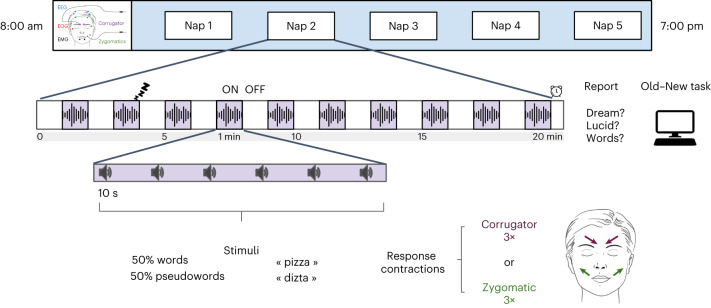
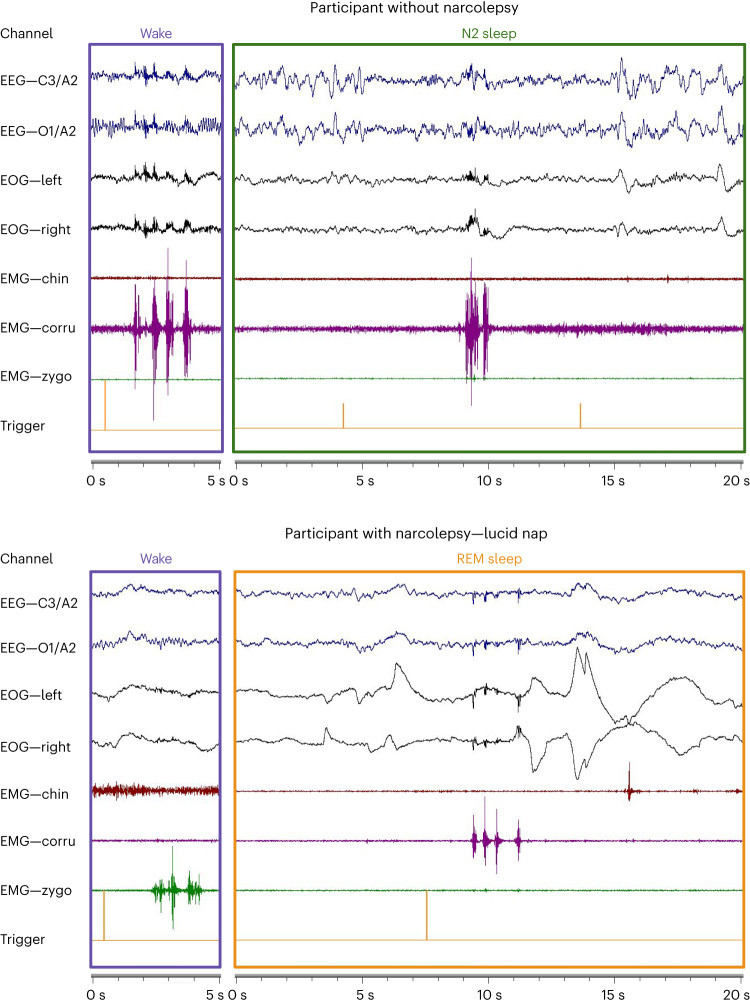
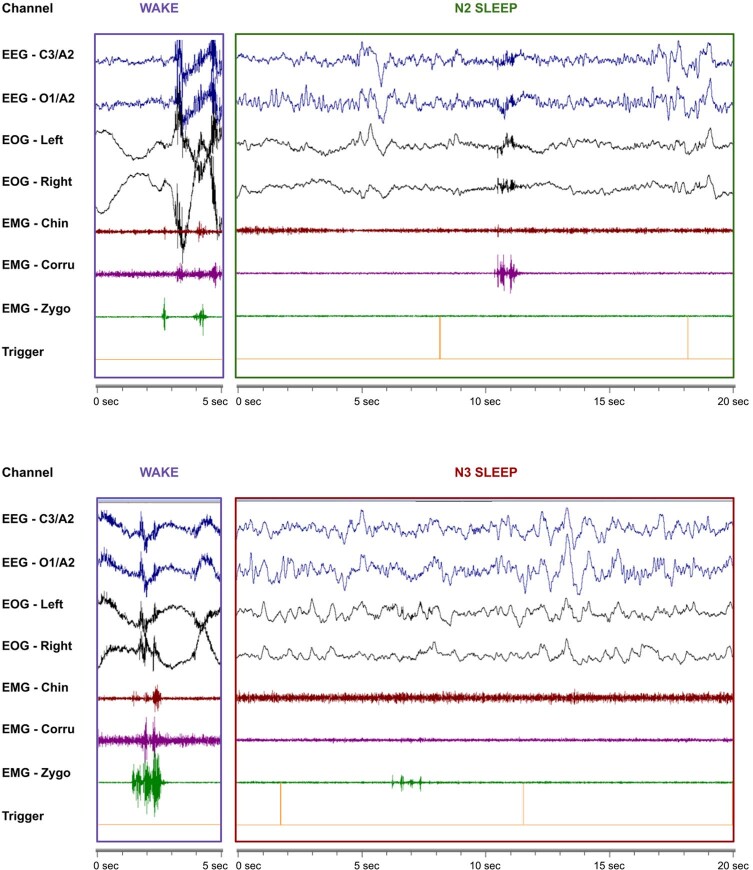
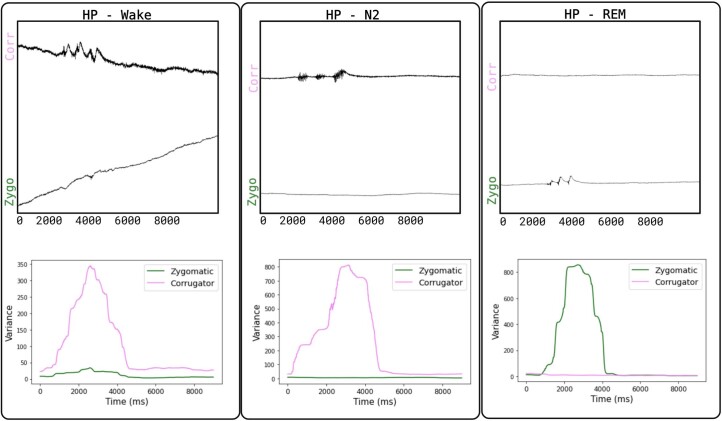
“As we previously showed 19 , such behavioral responses are visible on surface EMG sensors measuring corrugator (frowning) and zygo-matic (smiling) isometric contractions (see Fig.”
InfluentialSelf-citationMeditation Increases the Entropy of Brain Oscillatory Activity
Vivot, R. M., Pallavicini, C., Zamberlán, F., Vigo, D. E., & Tagliazucchi, E. (2020) · Neuroscience · doi:10.1016/j.neuroscience.2020.01.033 · Cited by 130 · cited 2×
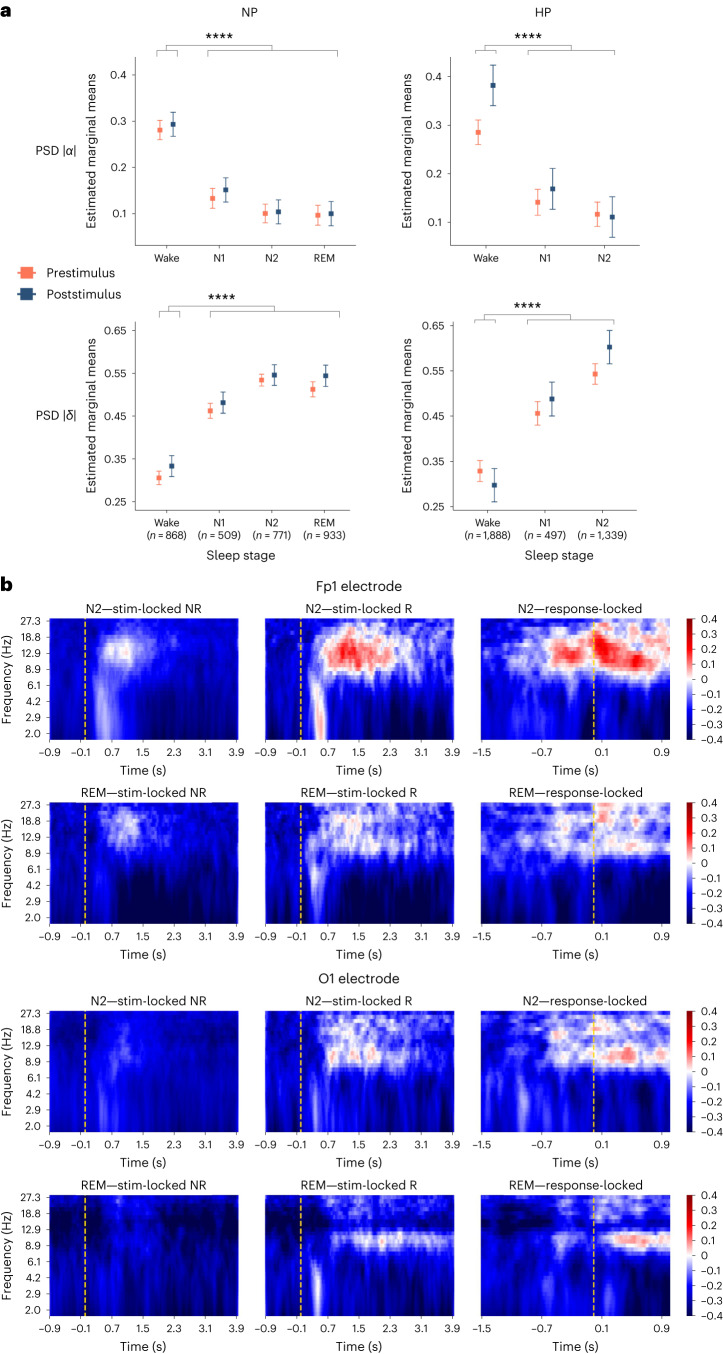
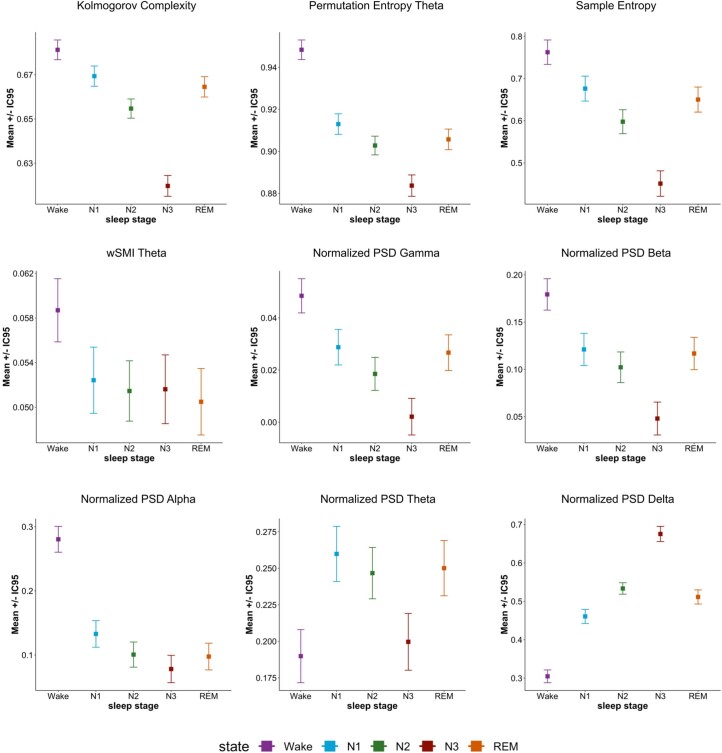
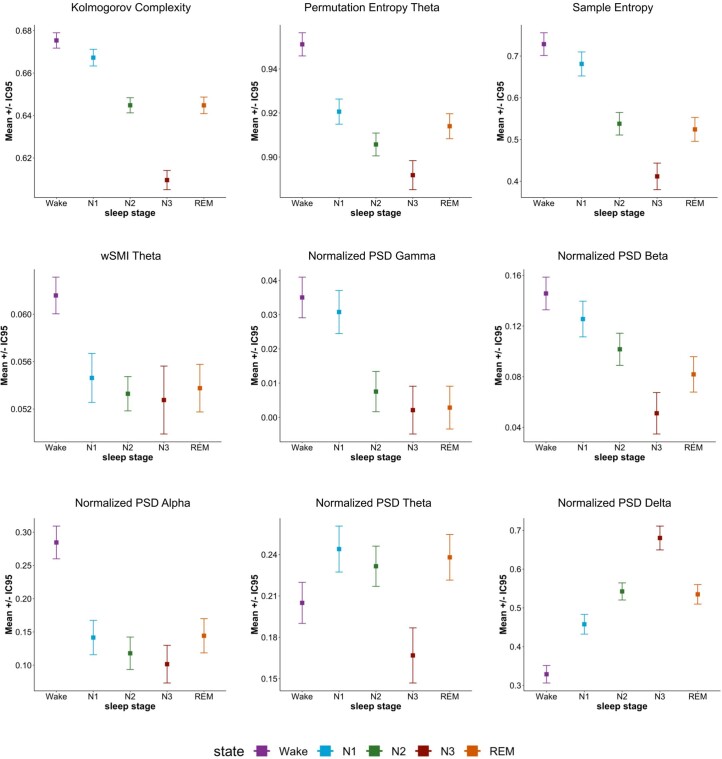
“To explore whether responsiveness during sleep could be explained by an ongoing, richer cognitive state before stimulation in nonlucid participants (NP and HP), we computed electrophysiological markers known for distinguishing high versus low cognitive states 34,35 .”
Andrillon, T., Windt, J., Silk, T., Drummond, S. P. A., Bellgrove, M. A., & Tsuchiya, N. (2019) · Frontiers in Neuroscience · doi:10.3389/fnins.2019.00949 · Cited by 125 · cited 1×
“For example, local sleep-like phenomena can be observed during wake and influence cognitive capacities and behavior 48,49 .”
Dodet, P., Chavez, M., Leu-Semenescu, S., Golmard, J.-L., & Arnulf, I. (2015) · SLEEP · doi:10.5665/sleep.4516 · Cited by 118 · cited 1×
“We recruited 27 participants with narcolepsy, who present excessive daytime sleepiness, a short REM sleep latency and a high frequency of lucid dreams 27 , making them an ideal population to collect multiple lucid dreams in the laboratory 28 .”
Self-citationInducing Task-Relevant Responses to Speech in the Sleeping Brain
Kouider, S., Andrillon, T., Barbosa, L. S., Goupil, L., & Bekinschtein, T. A. (2014) · Current Biology · doi:10.1016/j.cub.2014.08.016 · Cited by 102 · cited 1×
“…at each time point to differentiate stimulus-present versus stimulus-absent epochs and testing its performance for all the other time points (for example, training the classifier at t = 2 and testing its ability to correctly classify at t = 1,2,3,4,5,…, obtaining thus a whole matrix of 7 and 8.”
MEGALEX: A megastudy of visual and auditory word recognition
Ferrand, L., Méot, A., Spinelli, E., New, B., Pallier, C., Bonin, P., Dufau, S., Mathôt, S., & Grainger, J. (2017) · Behavior Research Methods · doi:10.3758/s13428-017-0943-1 · Cited by 101 · cited 1×
“Stimuli were French words and pseudowords pronounced by a female voice, taken from the MEGALEX database 61 .”
Implicit Vocabulary Learning during Sleep Is Bound to Slow-Wave Peaks
Züst, M. A., Ruch, S., Wiest, R., & Henke, K. (2019) · Current Biology · doi:10.1016/j.cub.2018.12.038 · Cited by 98 · cited 2×
“We could also test the extent to which the sleeping brain is able to acquire new information, hence fueling the debate on whether sleep learning is limited to conditioning 13 and implicit memory processes 15 or could extend to the formation of an explicit memory trace.”
Metacognitive Mechanisms Underlying Lucid Dreaming
Filevich, E., Dresler, M., Brick, T. R., & Kühn, S. (2015) · The Journal of Neuroscience · doi:10.1523/jneurosci.3342-14.2015 · Cited by 92
Olfactory Aversive Conditioning during Sleep Reduces Cigarette-Smoking Behavior
Arzi, A., Holtzman, Y., Samnon, P., Eshel, N., Harel, E., & Sobel, N. (2014) · The Journal of Neuroscience · doi:10.1523/jneurosci.2291-14.2014 · Cited by 91 · cited 3×
“Moreover, new associations can be learned during sleep 13 and can even influence participants’ behavior (for example, smoking reduction) a week later 14 .”
Comșa, I. M., Bekinschtein, T. A., & Chennu, S. (2018) · Brain Topography · doi:10.1007/s10548-018-0689-9 · Cited by 88 · cited 1×
“Because behavioral responses have long been assumed to be possible only during wakefulness, they are either rejected from the analysis 8,20 or not collected at all in sleep studies.”
Bourdillon, P., Hermann, B., Guénot, M., Bastuji, H., Isnard, J., King, J.-R., Sitt, J. D., & Naccache, L. (2020) · Scientific Reports · doi:10.1038/s41598-020-70447-7 · Cited by 86 · cited 2×
“These markers were previously shown to differentiate patients with unresponsive wakefulness syndrome from patients in a minimally conscious state and HP 34,36,37 , as well as wakefulness and REM sleep from N3 sleep 38 .”
Self-citationDecoding across sensory modalities reveals common supramodal signatures of conscious perception
Sanchez, G., Hartmann, T., Fuscà, M., Demarchi, G., & Weisz, N. (2020) · Proceedings of the National Academy of Sciences · doi:10.1073/pnas.1912584117 · Cited by 75 · cited 1×
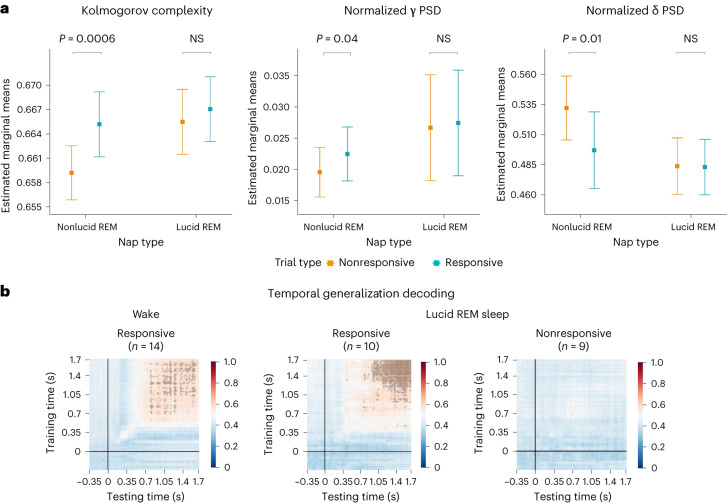
“…including the late P3b component in evoked related potentials 40–42 or the square-like shape pattern in the temporal generalization method 43,44 (such a pattern reflects a late, stable and sustained processing stage that has been previously related to conscious access 43–45 ) Given our…”
Odd Sound Processing in the Sleeping Brain
Ruby, P., Caclin, A., Boulet, S., Delpuech, C., & Morlet, D. (2008) · Journal of Cognitive Neuroscience · doi:10.1162/jocn.2008.20.2.296 · Cited by 74 · cited 1×
“…at each time point to differentiate stimulus-present versus stimulus-absent epochs and testing its performance for all the other time points (for example, training the classifier at t = 2 and testing its ability to correctly classify at t = 1,2,3,4,5,…, obtaining thus a whole matrix of 7 and 8.”
Aperiodic sleep networks promote memory consolidation
Helfrich, R. F., Lendner, J. D., & Knight, R. T. (2021) · Trends in Cognitive Sciences · doi:10.1016/j.tics.2021.04.009 · Cited by 62 · cited 1×
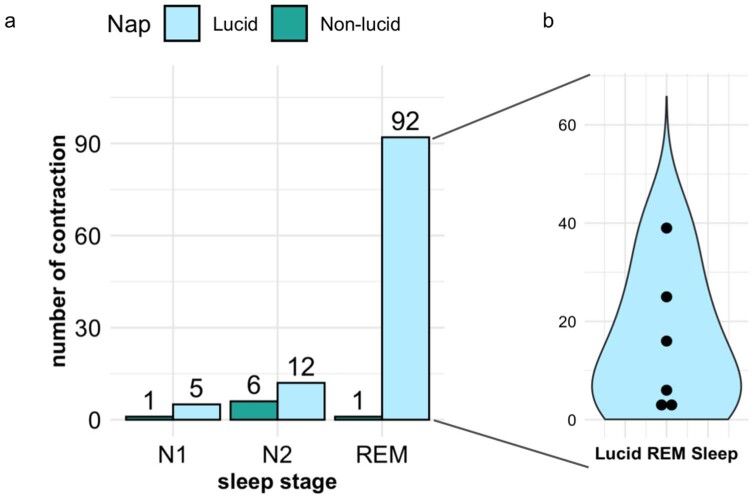
“All these findings hint that lucid participants could consciously integrate and respond to external stimuli during sleep.”
Sleepwalking, sleep terrors, sexsomnia and other disorders of arousal: the old and the new
Idir, Y., Oudiette, D., & Arnulf, I. (2022) · Journal of Sleep Research · doi:10.1111/jsr.13596 · Cited by 61 · cited 1×
“All these findings hint that lucid participants could consciously integrate and respond to external stimuli during sleep.”
Self-citationDecreased Alertness Reconfigures Cognitive Control Networks
Canales‐Johnson, A., Beerendonk, L., Blain, S., Kitaoka, S., Nassar, A. E., Nuiten, S. A., Fahrenfort, J. J., van Gaal, S., & Bekinschtein, T. A. (2020) · Journal of Neuroscience · doi:10.1523/jneurosci.0343-20.2020 · Cited by 55
Altered Neural Responses to Sounds in Primate Primary Auditory Cortex during Slow-Wave Sleep
Issa, E. B., & Wang, X. (2011) · The Journal of Neuroscience · doi:10.1523/jneurosci.4920-10.2011 · Cited by 53 · cited 5×
“However, congruent evidence from event-related potentials (ERPs) 1–3 and intracranial recordings 4,5 has shown that at least low-level sensory processing is preserved across sleep stages.”
InfluentialVolitional components of consciousness vary across wakefulness, dreaming and lucid dreaming
Dresler, M., Eibl, L., Fischer, C. F. J., Wehrle, R., Spoormaker, V. I., Steiger, A., Czisch, M., & Pawlowski, M. (2014) · Frontiers in Psychology · doi:10.3389/fpsyg.2013.00987 · Cited by 52 · cited 1×
“These results show that lucid dreaming is not only characterized by a reemergence of metacognitive and volitional capacities 55,56 but also by a capacity to consciously process external information.”
Updating memories of unwanted emotions during human sleep
Xia, T., Yao, Z., Guo, X., Liu, J., Chen, D., Liu, Q., Paller, K. A., & Hu, X. (2022) · Current Biology · doi:10.1016/j.cub.2022.12.004 · Cited by 52
Decreased Alertness Reconfigures Cognitive Control NetworksPreprint
Canales-Johnson, A., Beerendonk, L., Blain, S., Kitaoka, S., Ezquerro-Nassar, A., Nuiten, S., Fahrenfort, J. J., van Gaal, S., & Bekinschtein, T. A. (2019) · Journal of Neuroscience · doi:10.1101/831727 · Cited by 42
Balaban, C. D., & Weinstein, J. M. (1985) · Brain Research · doi:10.1016/0006-8993(85)90888-1 · Cited by 41
Decreasing Alertness Modulates Perceptual Decision-Making
Jagannathan, S. R., Bareham, C. A., & Bekinschtein, T. A. (2021) · Journal of Neuroscience · doi:10.1523/jneurosci.0182-21.2021 · Cited by 41
Lucid dreaming occurs in activated rapid eye movement sleep, not a mixture of sleep and wakefulness
Baird, B., Tononi, G., & LaBerge, S. (2022) · Sleep · doi:10.1093/sleep/zsab294 · Cited by 41 · cited 1×
“We found modifications in spectral power (increase in normalized PSD of γ and decrease in normalized PSD of δ) as well as an increase in signal complexity (SE) during lucid REM sleep, compared to nonlucid REM sleep, supporting the findings from a recent study 54 .”
Predicting the loss of responsiveness when falling asleep in humans
Strauss, M., Sitt, J. D., Naccache, L., & Raimondo, F. (2022) · NeuroImage · doi:10.1016/j.neuroimage.2022.119003 · Cited by 40 · cited 3×
“Until now, behavioral responsiveness had only been demonstrated during the sleep onset period 3,21,22 or in the unique case of lucid REM sleep 19 .”
Self-citationArnulf, I. (2018) · Current Biology · doi:10.1016/j.cub.2018.09.062 · Cited by 39 · cited 1×
“All these findings hint that lucid participants could consciously integrate and respond to external stimuli during sleep.”
Self-citationREM sleep respiratory behaviours match mental content in narcoleptic lucid dreamers
Oudiette, D., Dodet, P., Ledard, N., Artru, E., Rachidi, I., Similowski, T., & Arnulf, I. (2018) · Scientific Reports · doi:10.1038/s41598-018-21067-9 · Cited by 36 · cited 2×
“Fourth, we used postnap subjective reports to determine lucidity instead of the gold standard, objective signal of lucidity 26,28,47 .”
Self-citationFacial muscle activation during sleep and its relation to the rapid eye movements of REM sleep
RIVERA‐GARCÍA, A. P., RAMÍREZ‐SALADO, I., CORSI‐CABRERA, M., & CALVO, J. M. (2011) · Journal of Sleep Research · doi:10.1111/j.1365-2869.2010.00853.x · Cited by 30 · cited 1×
“Facial muscles, which are less affected by muscle atonia than the limbs 25 , could be more suited for assessing behavioral responsiveness.”
Koroma, M., Elbaz, M., Léger, D., & Kouider, S. (2022) · Frontiers in Neuroscience · doi:10.3389/fnins.2022.801666 · Cited by 24 · cited 1×
“Recent studies suggest that word-association learning during sleep is possible 15,16 and could generalize into wakefulness in a cross-modal manner 17 .”
Recio, G., Shmuilovich, O., & Sommer, W. (2014) · Psychophysiology · doi:10.1111/psyp.12220 · Cited by 22 · cited 1×
“This frontal location is consistent with the known physiology of facial muscles motor preparation and execution 31–33 .”
Real-Time Dialogue between Experimenters and Dreamers During rem SleepPreprint
Konkoly, K. R., Appel, K., Chabani, E., et al. (2020) · SSRN Electronic Journal · doi:10.2139/ssrn.3606772 · Cited by 18
Self-citationPerea, M., Marcet, A., Vergara‐Martínez, M., & Gómez, P. (2016) · Frontiers in Psychology · doi:10.3389/fpsyg.2016.00215 · Cited by 13
Sleep-learning impairs subsequent awake-learning
Ruch, S., Züst, M. A., & Henke, K. (2021) · Neurobiology of Learning and Memory · doi:10.1016/j.nlm.2021.107569 · Cited by 11
Updating memories of unwanted emotions during human sleepPreprint
Xia, T., Yao, Z., Guo, X., Liu, J., Chen, D., Liu, Q., Paller, K. A., & Hu, X. (2022) · bioRxiv (Cold Spring Harbor Laboratory) · doi:10.1101/2022.07.18.500414 · Cited by 4 · cited 1×
“Further studies indicated that sleepers can even process symbolic stimuli at different cognitive levels of representation, including semantic and decisional stages 6–9 .”
Research works printed but not linked: 4
- Valli, K. & Hoss, R. (eds.). Dreams: Biology, Psychology and Culture Chapter 7.1, pp. 213–218 (ABC-CLIO, 2019).
- Fernandez-Delgado M Cernadas E Barro S Amorim D Do we need hundreds of classifiers to solve real world classification problems? J. Mach. Learn. Res. 2014 15 3133 3181
- Kelleher, J. D., Namee, B. M. & D’Arcy, A. Fundamentals of Machine Learning for Predictive Data Analytics: Algorithms, Worked Examples, and Case Studies (MIT Press, 2015).
- Fox, J. & Weisberg, S. An R Companion to Applied Regression (SAGE, 2019).
Cited by
Tononi, G., Boly, M., & Cirelli, C. (2024) · Neuron · doi:10.1016/j.neuron.2024.04.011 · Cited by 70
What is sleep exactly? Global and local modulations of sleep oscillations all around the clock
Andrillon, T., & Oudiette, D. (2023) · Neuroscience & Biobehavioral Reviews · doi:10.1016/j.neubiorev.2023.105465 · Cited by 57
Self-citationInfluencing dreams through sensory stimulation: A systematic review
Salvesen, L., Capriglia, E., Dresler, M., & Bernardi, G. (2024) · Sleep Medicine Reviews · doi:10.1016/j.smrv.2024.101908 · Cited by 36
Revisiting the role of computational neuroimaging in the era of integrative neuroscience
Loosen, A. M., Kato, A., & Gu, X. (2024) · Neuropsychopharmacology · doi:10.1038/s41386-024-01946-8 · Cited by 43
“…higher temporal resolution, lends itself for mechanistic, theory-driven (e.g., [36 – 38]) and predictive models investigating temporally sensitive phenomena (e.g., [39 – 41]), while also being particularly valuable for inaccessible populations or settings due to its portability and ease of use.”
BackgroundEmbracing sleep onset complexity
Lacaux, C., Strauss, M., Bekinschtein, T. A., & Oudiette, D. (2023) · Trends in Neurosciences · doi:10.1016/j.tins.2024.02.002 · Cited by 44
Self-citation
Metadata
- Authors
- Türker, B., Musat, E. M., Chabani, E., Fonteix-Galet, A., Maranci, J.-B., Wattiez, N., Pouget, P., Sitt, J., Naccache, L., Arnulf, I., & Oudiette, D.
- Affiliations
- Centre National de la Recherche Scientifique (FR)
- Inserm (FR)
- Corresponding author
- Oudiette, Delphine
- ORCID
- Venue
- Nature Neuroscience
- Published
- 2023-10-12
- Volume
- 26
- Issue
- 11
- Pages
- 1981-1993
- ISSN
- 1097-6256 (ISSN-L)
- 1546-1726
- PMC
- PMC10620087
- OpenAlex
- W4387568425
- Cited by
- 57
- References
- 72
- Citations by year
- 2026: 14 · 2025: 17 · 2024: 18 · 2023: 7
- FWCI
- 8.37
- Type
- journal article
- Language
- en
- Open access
- hybrid
- doi.org
- Licence
- cc-by
- creativecommons.org/licenses/by/4.0 (tdm)
- creativecommons.org/licenses/by/4.0 (vor)
- Locations
- Nature Neuroscience (publishedVersion, cc-by)
- PubMed Central (publishedVersion, cc-by)
- PubMed (publishedVersion)
- HAL (submittedVersion, other-oa)
- HAL (submittedVersion)
- OSF Preprints (OSF Preprints) (submittedVersion)
- Funders
- Agence Nationale de la Recherche (ANR-20-CE37-0001-01)
- Société Française de Recherche et Médecine du Sommeil
- French Ministry of Higher Education
- Institut National de la Santé et de la Recherche Médicale
- APHP and Sorbonne University
- UNIM
- National Program on Rare Diseases
- Topics
- Life Sciences › Neuroscience › Cognitive Neuroscience › Sleep and Wakefulness Research
- Social Sciences › Psychology › Experimental and Cognitive Psychology › Sleep and related disorders
- Social Sciences › Psychology › Experimental and Cognitive Psychology › Sleep and Work-Related Fatigue
- Keywords
- sleep, narcolepsy, lexical decision, corrugator supercilii, zygomaticus, sleep stages, slow-wave sleep, prestimulus EEG, cognitive states, napping
- MeSH terms
- Brain, Cognition, Electroencephalography, Humans, Sleep, Sleep Stages
About these checks
Registry, retraction, Cites and statistics results are computed, not judged, with one exception: a printed reference that no index lists is read once by a model before it counts as a citation error. Claims are extracted by a model and kept only when their quote appears verbatim in the text; each cited source is then checked, with a model’s help, for whether it says what the claim relies on. Those verdicts can be wrong — read the claim’s quote and the cited source before relying on one.
Statistics and arithmetic are recomputed, not judged.
Confidence bands are shown only for fields calibrated on our annotated test set. None is calibrated yet, so no band is shown.
What counts as a claim ›How we measure confidence ›How we check this ›
Are you an author, or do you see a problem with this page? Request a review
Data sources
Bibliographic data: Semantic Scholar, OpenAlex, Crossref.
Contains information from the Semantic Scholar Academic Graph Datasets, made available under the ODC Attribution License (ODC-BY 1.0).
Semantic Scholar’s data is described in: Kinney, R., et al. (2023). The Semantic Scholar Open Data Platform. arXiv:2301.10140.
