

Rational optimization of a transcription factor activation domain inhibitor
Open accessPublished version of a preprint
The DOI matches its Crossref record; 117 of the 117 references it cites were found in a registry or an index.
Abstract
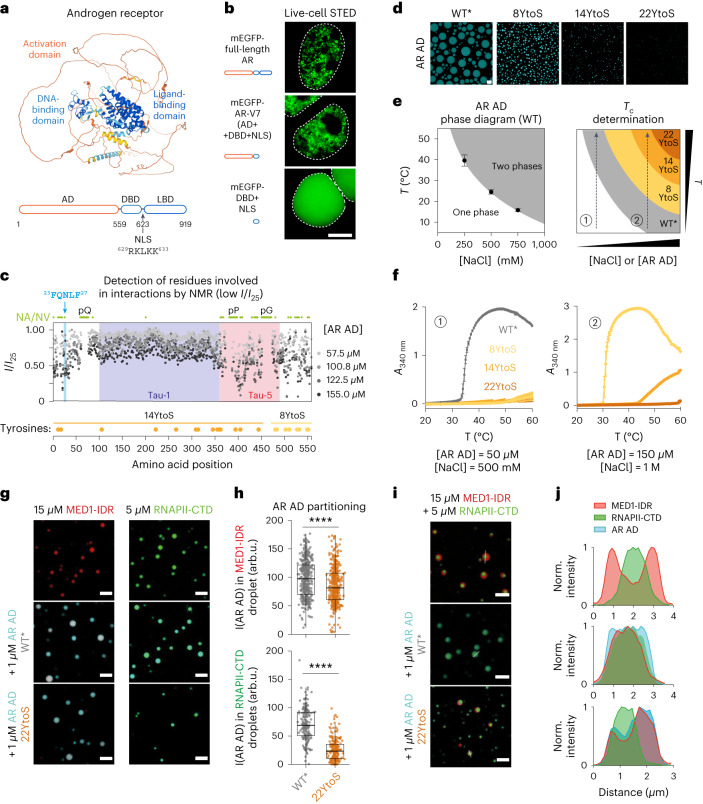
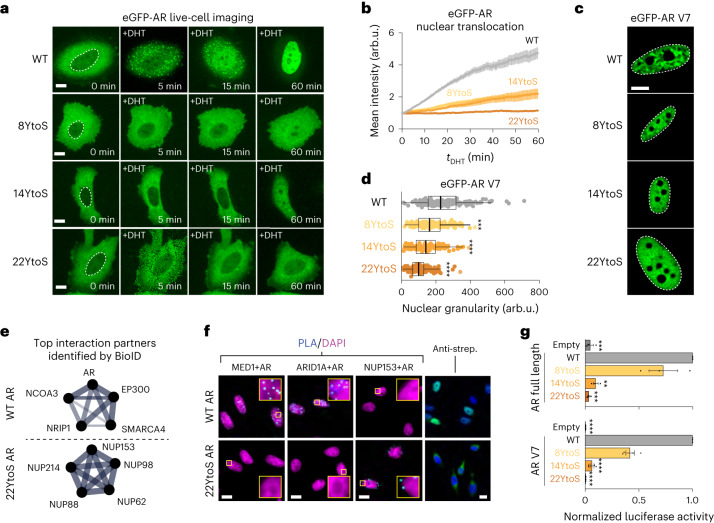
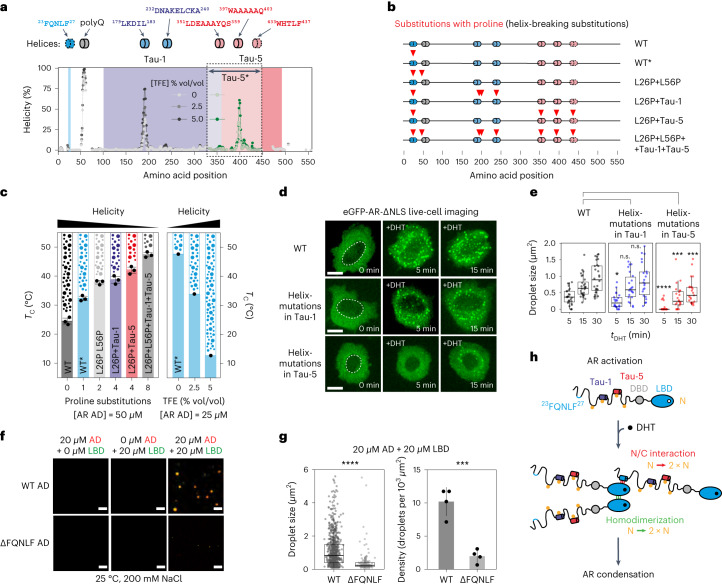
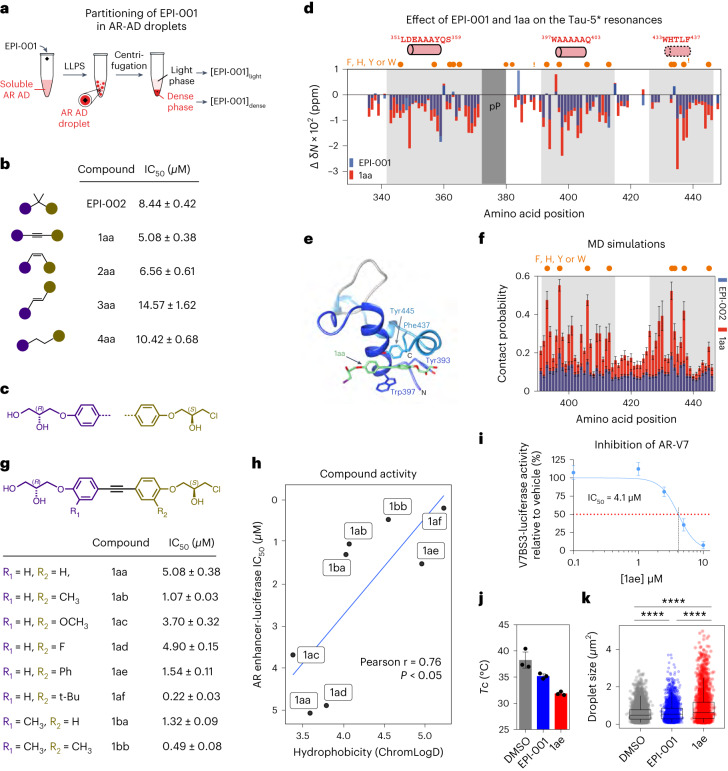
Transcription factors are among the most attractive therapeutic targets but are considered largely ‘undruggable’ in part due to the intrinsically disordered nature of their activation domains. Here we show that the aromatic character of the activation domain of the androgen receptor, a therapeutic target for castration-resistant prostate cancer, is key for its activity as transcription factor, allowing it to translocate to the nucleus and partition into transcriptional condensates upon activation by androgens. On the basis of our understanding of the interactions stabilizing such condensates and of the structure that the domain adopts upon condensation, we optimized the structure of a small-molecule inhibitor previously identified by phenotypic screening. The optimized compounds had more affinity for their target, inhibited androgen-receptor-dependent transcriptional programs, and had an antitumorigenic effect in models of castration-resistant prostate cancer in cells and in vivo. These results suggest that it is possible to rationally optimize, and potentially even to design, small molecules that target the activation domains of oncogenic transcription factors.
Overview
The claims and statistics of this paper haven’t been checked yet.
Free: it reads the open-access text and checks the first 5 claims that cite a source we can check. Create a free account to check every claim.
Integrity signals
Registry
Cites
Statistics
Figures
Verification
Claims the paper makes
The claims and statistics of this paper haven’t been checked yet.
Free: it reads the open-access text and checks the first 5 claims that cite a source we can check. Create a free account to check every claim.
Self-check
Percentages, sums and reported differences re-computed from the paper’s own numbers.
The self-check needs the paper’s full text.
Citations
Cites
Moderated estimation of fold change and dispersion for RNA-seq data with DESeq2
Love, M. I., Huber, W., & Anders, S. (2014) · Genome Biology · doi:10.1186/s13059-014-0550-8 · Cited by 95,106 · cited 3×
“In addition, 3D HNCO and HNCA experiments were acquired for two 15N,13C double labeled AR AD (1-558) samples (25 μM and 100 μM) dissolved in NMR buffer.”
Fiji: an open-source platform for biological-image analysis
Schindelin, J., Arganda-Carreras, I., Frise, E., Kaynig, V., Longair, M., Pietzsch, T., Preibisch, S., Rueden, C., Saalfeld, S., Schmid, B., et al. (2012) · Nature Methods · doi:10.1038/nmeth.2019 · Cited by 66,890
Hallmarks of Cancer: The Next Generation
Hanahan, D., & Weinberg, R. A. (2011) · Cell · doi:10.1016/j.cell.2011.02.013 · Cited by 66,590 · cited 1×
“The rewiring of transcriptional programs is a hallmark of cancer, and oncogenic transcriptional programs of numerous tumor types depend on small subsets of specific TFs 2,4 .”
Subramanian, A., Tamayo, P., Mootha, V. K., Mukherjee, S., Ebert, B. L., Gillette, M. A., Paulovich, A., Pomeroy, S. L., Golub, T. R., Lander, E. S., et al. (2005) · Proceedings of the National Academy of Sciences · doi:10.1073/pnas.0506580102 · Cited by 53,625
STAR: ultrafast universal RNA-seq aligner
Dobin, A., Davis, C. A., Schlesinger, F., Drenkow, J., Zaleski, C., Jha, S., Batut, P., Chaisson, M., & Gingeras, T. R. (2013) · Bioinformatics · doi:10.1093/bioinformatics/bts635 · Cited by 51,709
Abraham, M. J., Murtola, T., Schulz, R., Páll, S., Smith, J. C., Hess, B., & Lindahl, E. (2015) · SoftwareX · doi:10.1016/j.softx.2015.06.001 · Cited by 27,190
Development and testing of a general amber force field
Wang, J., Wolf, R. M., Caldwell, J. W., Kollman, P. A., & Case, D. A. (2004) · Journal of Computational Chemistry · doi:10.1002/jcc.20035 · Cited by 19,506 · cited 1×
“1aa was parameterized using the GAFF 89 for ligand forcefield parameters.”
Self-citationNMRPipe: A multidimensional spectral processing system based on UNIX pipes
Delaglio, F., Grzesiek, S., Vuister, G., Zhu, G., Pfeifer, J., & Bax, A. (1995) · Journal of Biomolecular NMR · doi:10.1007/bf00197809 · Cited by 15,965 · cited 1×
“Data processing was done using qMDD 77 for non-uniform sampled data, and NMRPipe 78 for all uniformly collected experiments.”
The Molecular Signatures Database Hallmark Gene Set Collection
Liberzon, A., Birger, C., Thorvaldsdóttir, H., Ghandi, M., Mesirov, J. P., & Tamayo, P. (2015) · Cell Systems · doi:10.1016/j.cels.2015.12.004 · Cited by 13,807
Biomolecular condensates: organizers of cellular biochemistry
Banani, S. F., Lee, H. O., Hyman, A. A., & Rosen, M. K. (2017) · Nature Reviews Molecular Cell Biology · doi:10.1038/nrm.2017.7 · Cited by 6,100 · cited 1×
“Recent studies have suggested that IDRs in many cellular proteins mediate liquid–liquid phase separation in vitro and the partitioning of proteins into biomolecular condensates in cells 13,14 .”
Cited by
Transcription regulation by biomolecular condensates
Pei, G., Lyons, H., Li, P., & Sabari, B. R. (2024) · Nature Reviews Molecular Cell Biology · doi:10.1038/s41580-024-00789-x · Cited by 197
“Initial progress has been achieved towards developing peptides or small molecules targeting signalling-driven 248 and androgen-receptor-driven 124,249 transcriptional condensates.”
Molecular determinants of condensate composition
Holehouse, A. S., & Alberti, S. (2025) · Molecular Cell · doi:10.1016/j.molcel.2024.12.021 · Cited by 97
Computer-Aided Drug Discovery for Undruggable Targets
Sun, Q., Wang, H., Xie, J., Wang, L., Mu, J., Li, J., Ren, Y., & Lai, L. (2025) · Chemical Reviews · doi:10.1021/acs.chemrev.4c00969 · Cited by 82
Mis-splicing of a neuronal microexon promotes CPEB4 aggregation in ASD
Garcia‐Cabau, C., Bartomeu, A., Tesei, G., Cheung, K. C., Pose‐Utrilla, J., Picó, S., Balaceanu, A., Duran-Arqué, B., Fernández‐Alfara, M., Martín, J., et al. (2024) · Nature · doi:10.1038/s41586-024-08289-w · Cited by 68
Self-citationPicosecond Dynamics of a Small Molecule in Its Bound State with an Intrinsically Disordered Protein
Heller, G. T., Shukla, V. K., Figueiredo, A. M., & Hansen, D. F. (2024) · Journal of the American Chemical Society · doi:10.1021/jacs.3c11614 · Cited by 48
SOURSOP: A Python Package for the Analysis of Simulations of Intrinsically Disordered Proteins
Lalmansingh, J. M., Keeley, A. T., Ruff, K. M., Pappu, R. V., & Holehouse, A. S. (2023) · Journal of Chemical Theory and Computation · doi:10.1021/acs.jctc.3c00190 · Cited by 43
Molecular grammars of predicted intrinsically disordered regions that span the human proteome
Ruff, K. M., King, M. R., Ying, A. W., Liu, V., Pant, A., Lieberman, W. E., Shinn, M. K., Su, X., Kadoch, C., & Pappu, R. V. (2025) · Cell · doi:10.1016/j.cell.2025.10.019 · Cited by 86
Targeting protein disorder: the next hurdle in drug discovery
Lázár, T., Connor, A., DeLisle, C. F., Burger, V., & Tompa, P. (2025) · Nature Reviews Drug Discovery · doi:10.1038/s41573-025-01220-6 · Cited by 53
“The first NTD binder, EPI-001, was discovered by screening a library of marine sponge extracts for AR inhibitors 87 (Table 1), with the binding site uncovered subsequently 61,88 .”
Functional specificity in biomolecular condensates revealed by genetic complementation
Sabari, B. R., Hyman, A. A., & Hnisz, D. (2024) · Nature Reviews Genetics · doi:10.1038/s41576-024-00780-4 · Cited by 41
“For example, in the case of the disordered activation domain of the androgen receptor, transient helices within condensates create binding pockets that could be targeted with small molecules for IDR therapeutics 38,111 .”
InfluentialSelf-citationProbing condensate microenvironments with a micropeptide killswitch
Zhang, Y., Stöppelkamp, I., Fernández‐Pernas, P., Allram, M., Charman, M., Magalhães, A. P., Piédavent, M., Sommer, G., Sung, Y.-C., Meyer, K., et al. (2025) · Nature · doi:10.1038/s41586-025-09141-5 · Cited by 52
“One of the most intriguing predictions about biomolecular conden-sates is that they create microenvironments that facilitate partitioning of other biomolecules into the condensates in a manner not explained by stoichiometric interactions 4,11,12,17 .”
Self-citationAn activity-specificity trade-off encoded in human transcription factors
Naderi, J., Magalhães, A. P., Kibar, G., Stik, G., Zhang, Y., Mackowiak, S. D., Wieler, H. M., Rossi, F., Buschow, R., Christou‐Kent, M., et al. (2024) · Nature Cell Biology · doi:10.1038/s41556-024-01411-0 · Cited by 38
Self-citationCEBPA Phase Separation Links Transcriptional Activity and 3D Chromatin Hubs
Christou‐Kent, M., Cuartero, S., Garcia‐Cabau, C., Rühle, J., Naderi, J., Erber, J., Neguembor, M. V., Plana-Carmona, M., Alcoverro-Bertran, M., de Andrés-Aguayo, L., et al. (2022) · Cell Reports · doi:10.1016/j.celrep.2023.112897 · Cited by 28
Self-citationBorthakur, K., Sisk, T. R., Panei, F. P., Bonomi, M., & Robustelli, P. (2025) · Nature Communications · doi:10.1038/s41467-025-64098-3 · Cited by 46
Self-citationRNA polymerase II partitioning is a shared feature of diverse oncofusion condensates
Lyons, H., Pradhan, P., Prakasam, G., Vashishtha, S., Li, X., Eppert, M., Fornero, C., Tcheuyap, V. T., McGlynn, K., Yu, Z., et al. (2025) · Cell · doi:10.1016/j.cell.2025.04.002 · Cited by 28
Long-range gene regulation in hormone-dependent cancer
Tettey, T. T., Rinaldi, L., & Hager, G. L. (2023) · Nature reviews. Cancer · doi:10.1038/s41568-023-00603-4 · Cited by 25
“As a result, Aniten EPI-7386, an analogue of EPI-001, is currently in phase I/II clinical trials 167,168 to evaluate safety, pharmacokinetics and antitumour activity in patients with CRPC and patients undergoing treatment with the non-steroidal anti-androgen enzalutamide.”
InfluentialThe rheology and interfacial properties of biomolecular condensates
Wang, H., & Shi, Z. (2025) · Biophysical Reviews · doi:10.1007/s12551-025-01326-6 · Cited by 28
“Several studies suggest that the unique chemical environment of a condensate allows selective recruitment or depletion of molecules, which is particularly crucial for condensate targeted drug design (Basu et al. 2023; Dai et al. 2024a; Kilgore et al. 2024; Testa et al. 2021).”
Allosteric communications between domains of nuclear receptors
Rastinejad, F. (2024) · Steroids · doi:10.1016/j.steroids.2024.109551 · Cited by 22
Molecular basis of ligand-dependent Nurr1-RXRα activation
Yu, X., Shang, J., & Kojetin, D. J. (2023) · eLife · doi:10.7554/elife.85039 · Cited by 21
How to drug a cloud? Targeting intrinsically disordered proteins
Uversky, V. N. (2024) · Pharmacological Reviews · doi:10.1124/pharmrev.124.001113 · Cited by 23
Retinoid X receptor heterodimers in hepatic function: structural insights and therapeutic potential
Xu, R., Zhang, L., Pan, H., & Zhang, Y. (2024) · Frontiers in Pharmacology · doi:10.3389/fphar.2024.1464655 · Cited by 24
“Considering the impact of ligand binding to the LBD on DBD-DNA interactions, it may be possible to design selective modulators targeting speci fi c DNA REs to regulate various physiological processes, rather than solely affecting CoAs binding (Basu et al., 2023).”
BackgroundPapadourakis, M., Cournia, Z., Mey, A. S. J. S., & Michel, J. (2024) · Journal of Chemical Theory and Computation · doi:10.1021/acs.jctc.4c00942 · Cited by 16
Lin, S.-C., Cheng, Y., Lin, Y., Nguyen, T. M. H., Chiu, W., Tsai, Y.-C., Chen, H.-Y., Lin, T.-Y., & Lin, S. (2025) · British Journal of Cancer · doi:10.1038/s41416-025-02938-1 · Cited by 13
“Importantly, targeting the IDR of AR, speci fi cally the tau-5 region, with molecules such as EPI001 and lae reduces the number of AR foci [12].”
Toward a unified framework for determining conformational ensembles of disordered proteins
Ghafouri, H., Kadeřávek, P., Melo, A. M., Aspromonte, M. C., Bernadó, P., Cortés, J., Dosztányi, Z., Erdős, G., Feig, M., Janson, G., et al. (2026) · Nature Methods · doi:10.1038/s41592-026-03003-2 · Cited by 26
Galvan, B., Ongena, L., Bruyr, J., Fettweis, G., Lucarelli, E., Lavergne, A., Mariavelle, E., O’Grady, T. M., Hassoun, Z. E. O., Claes, M., et al. (2025) · Nature Communications · doi:10.1038/s41467-025-61725-x · Cited by 10
“For example, we found that the region encompassing the fi rst 63 aa of EWSR1::FLI1 LCD displays some degree of structural organization that could be exploited to develop speci fi c ligands using the most recent targeted drug discovery approaches 98,99 .”
Exploiting the DNA Damage Response for Prostate Cancer Therapy
Stracker, T. H., Osagie, O. I., Escorcia, F. E., & Citrin, D. E. (2023) · Cancers · doi:10.3390/cancers16010083 · Cited by 12
“Recent studies have described new molecules, some derived from EPI-001, which target the AR or AR-V NTD (Figure 1A) [18,20,21,88].”
BackgroundSelf-citationTian, S., Nguyen, H. V., Ye, Z., Rouskin, S., Thirumalai, D., & Trcek, T. (2025) · Nature Communications · doi:10.1038/s41467-025-62973-7 · Cited by 16
“Others, such as Fused in Sarcoma and androgen receptor activation domain, transition to a more com-pactandfoldedstate 22,25 .”
Folded domains impose structural heterogeneity and attenuated dynamics in biomolecular condensates
Wang, L., & Marrink, . J. (2026) · Nature Communications · doi:10.1038/s41467-026-71778-1 · Cited by 13
“Therefore, elucidating the internal structural and dynamic properties of condensates is of primary importance to understand their roles in cellular physiology and potential as therapeutic targets 23 – 26 .”
Borthakur, K., Sisk, T. R., Panei, F. P., Bonomi, M., & Robustelli, P. (2024) · bioRxiv (Cold Spring Harbor Laboratory) · doi:10.1101/2024.10.04.616700 · Cited by 8
Self-citationProtein condensates in the the secretory pathway: Unraveling biophysical interactions and function
Campelo, F., Lillo, J. V., & von Blume, J. (2024) · Biophysical Journal · doi:10.1016/j.bpj.2024.04.031 · Cited by 9
Maristany, M. J., Emelianova, A., Chew, P.-Y., Aguirre, A., Collepardo-Guevara, R., & Joseph, J. A. (2025) · Advances in Physics: X · doi:10.1080/23746149.2025.2592547 · Cited by 20
“Such simulations enabled identification of drugs capable of modulating condensate formation through strong direct interactions with phase-separating regions of Tau-5 [92].”
Bielskutė, S., Mateos, B., Awawdy, M., Garcia‐Cabau, C., Niskanen, H., Sánchez, C., Bracaglia, L., Pierattelli, R., Felli, I. C., Frigolé‐Vivas, M., et al. (2026) · Science Advances · doi:10.1126/sciadv.adz7400 · Cited by 12
“S1F) ( 9 , 15 ).”
InfluentialSelf-citationPhase Separation Mediated Sub-Nuclear Compartmentalization of Androgen Receptors
Yavuz, S., Abraham, T. E., Houtsmuller, A. B., & van Royen, M. E. (2024) · Cells · doi:10.3390/cells13201693 · Cited by 6
“…NTD is further emphasized by the reduced foci formation and inhibited transcriptional activity in agonist-activated ARs treated with small molecule compounds (e.g., EPI-001, its newer derivate EPI-7386 and ET516). regions containing ARE sequences in living cells upon stimulation by androgens [12].”
BackgroundThe androgen receptor amino-terminal domain: structure, function and therapeutic potential
Hunter, I., Jamieson, C., & McEwan, I. J. (2025) · Endocrine Oncology · doi:10.1530/eo-24-0061 · Cited by 11
Zhu, J., & Robustelli, P. (2025) · Journal of Chemical Information and Modeling · doi:10.1021/acs.jcim.5c00833 · Cited by 7
“We initially parametrized CYS:EPI-002 and CYS:EPI-7170 residues as individual peptide moieties with N-terminal acetyl (ACE) and C-terminal N -methyl (NME) capping groups using the general AMBER force field (GAFF1).”
InfluentialSelf-citationBielskutė, S., Mateos, B., Awawdy, M., Garcia‐Cabau, C., Niskanen, H., Sánchez, C., Bracaglia, L., Pierattelli, R., Felli, I. C., Frigolé‐Vivas, M., et al. (2025) · bioRxiv (Cold Spring Harbor Laboratory) · doi:10.1101/2025.03.21.644603 · Cited by 6
“As we previously showed 23 , the aromatic character of the AR AD is key for condensation likely due to the ability of aromatic residues to engage in π - π interactions.”
InfluentialSelf-citationAdvances in the determination of disordered protein ensemble.
Ghafouri, H., Tosatto, S., & Monzon, A. (2025) · Current Opinion in Structural Biology · doi:10.1016/j.sbi.2025.103198 · Cited by 7
MacAinsh, M., Qin, S., & Zhou, H. (2025) · eLife · doi:10.7554/elife.107470 · Cited by 8
“MD simulations have played such a complementary role to CSP in several studies ( Zhao et al., 2021 ; Robustelli et al., 2022 ; Basu et al., 2023 ; Zhu et al., 2022 ).”
InfluentialStructural perspectives on the androgen receptor, the elusive shape-shifter
Johnson, M. J., & Wasmuth, E. V. (2024) · Steroids · doi:10.1016/j.steroids.2024.109501 · Cited by 6
Conformational modulation of intrinsically disordered transactivation domains for cancer therapy
Vosselman, T., Sahin, C., Lane, D. P., Arsenian‐Henriksson, M., Landreh, M., & Lama, D. (2025) · PNAS Nexus · doi:10.1093/pnasnexus/pgaf152 · Cited by 4
“Importantly, ligands that target AR TAD and reduce LLPS also suppress AR transcriptional activity and inhibit tumor growth in vivo (79, 92).”
Tian, S., Nguyen, H. V., Ye, Z., Rouskin, S., Thirumalai, D., & Trcek, T. (2024) · bioRxiv (Cold Spring Harbor Laboratory) · doi:10.1101/2024.05.31.596852 · Cited by 4
Engineering bi-directional chemically-modulated synthetic condensates for cellular control
Zhen, N., Yan, Y., Zhu, G., Zhu, T., Zhang, Q., Chen, Q. H., Guo, Y., Zhu, J., Pan, Q., & Xie, J. (2025) · Nature Communications · doi:10.1038/s41467-025-61877-w · Cited by 3
“DHT binding triggers AR oligomerization 17,19 through N/C interactions 21 (mediated by FQNLF 27 motif) and LBD homodimerization, doubling AR valency without changing aromatic residue interactions — thus reducing the phaseseparationthreshold.”
InfluentialSelf-citationEndocrine Examples of Phase Separation in Biology
Fargason, T., & Liu, X. (2025) · Endocrinology · doi:10.1210/endocr/bqaf158 · Cited by 3
Structural dynamics of plant transcription factors and their functional implications
Wu, S., Huang, W., Zhang, W., Wu, T., & Yan, S. (2026) · The Plant Journal · doi:10.1111/tpj.70693 · Cited by 3
Karatzas, P., Brotzakis, Z. F., & Sarimveis, H. (2025) · Journal of Chemical Theory and Computation · doi:10.1021/acs.jctc.5c00171 · Cited by 5
Zhou, B., Yang, J., Zhang, B., Wang, W., Li, J., & Zhang, Y. (2025) · ChemBioChem · doi:10.1002/cbic.202500545 · Cited by 2
Targeting the assembly of biomolecules: condensate-based drug discovery
Huang, M., Liu, H., Zhu, J., Feng, Z., & Ouyang, Q. (2026) · Trends in Pharmacological Sciences · doi:10.1016/j.tips.2026.03.002 · Cited by 3
Self-citationDrugging the intrinsically disordered transactivation domain of androgen receptor
Obst, J. K., Banuelos, C. A., Jian, K., Tien, A. H., Shkrabak, O. A., Wang, J., Mawji, N. R., Tam, T., Vuckovic, M., Williams, D. E., et al. (2026) · Signal Transduction and Targeted Therapy · doi:10.1038/s41392-026-02642-3 · Cited by 3
“Both blocking N/C interaction 11 and ARTADIs 11,12,46 attenuate the formation of AR transcriptionally active condensates thereby highlighting modulation of liquid-liquid phase separation as a plausible mechanism of action of ARTADIs.”
Self-citationCondensates as Conformation Editors of Disordered Client Proteins
Wang, L., & Marrink, . J. (2026) · Journal of the American Chemical Society · doi:10.1021/jacs.6c00501 · Cited by 5
Biomolecular Condensates Dictate the Folding Landscape of Protein Alpha-Helices
Hess, N., & Joseph, J. A. (2026) · Journal of the American Chemical Society · doi:10.1021/jacs.6c01403 · Cited by 8
Holehouse, A. S., Alston, J. J., & Soranno, A. (2024) · Research Square · doi:10.21203/rs.3.rs-4477977/v1 · Cited by 4
“Nevertheless, designs that repositioned residues NTD SCO230-50 SCO230-50 to the Recent work has suggested that small-molecules that target specific IDR ensembles may provide a route for sequence-specific pharmacological interventions 89,90 .”
Decoy oligodeoxynucleotides targeting STATs in non-cancer gene therapy
Mahjoubin‐Tehran, M., Rezaei, S., Kesharwani, P., Karav, S., & Sahebkar, A. (2025) · Gene · doi:10.1016/j.gene.2025.149482 · Cited by 1
Integrative Strategies to Enhance Enzyme-Protein Interactions for Drug Discovery and Biocatalysis
Satheeskumar, R., Premalatha, V., Krishnan, M. G., Satyanarayana, C. V. V., & Munnangi, S. (2025) · Applied Biochemistry and Biotechnology · doi:10.1007/s12010-025-05462-3 · Cited by 2
Zhu, K., Wang, H., Zhang, J., Hu, R., Jiang, L., Zhang, H., Kang, Y., Hou, T., & Li, D. (2026) · Nature Communications · doi:10.1038/s41467-026-73863-x · Cited by 2
“2c. Compared with the experimental data derived from the Delta2D 60 analysis of chemical shifts 40,61 , the simulated helical content for R1 and R3 was over-estimated, whereas R2 showed underestimation in its N-terminal half and overestimation in its C-terminal half.”
Nuclear magnetic resonance spectroscopy as a tool to probe molecular condensates
Pérez‐Mejías, G., & Zweckstetter, M. (2026) · Current Opinion in Structural Biology · doi:10.1016/j.sbi.2026.103340 · Cited by 1
Monomer binding modes of small molecules that modulate the kinetics of hIAPP amyloid formationPreprint
Garcia, M., Reid, K. M., & Robustelli, P. (2025) · bioRxiv (Cold Spring Harbor Laboratory) · doi:10.1101/2025.09.22.677832 · Cited by 1
“The observation that higher affinity IDP ligands form higher populations of binding modes that engage multiple regions of an IDP target is consistent with previous investigations into the binding mechanisms of androgen receptor activation domain and a -synuclein ligands 64–67 .”
Self-citationLouet, A. A. B., Hummer, G., & Vendruscolo, M. (2025) · bioRxiv (Cold Spring Harbor Laboratory) · doi:10.1101/2025.11.19.688850 · Cited by 2
“…simulations validated by nuclear magnetic resonance (NMR) spectroscopy, small molecules can be identified targeting the disordered N-terminal transactivation domain of the androgen receptor, and shown to induce the formation of compact, a - helical, molten-globule-like conformations 25,26 .”
Kumar, S., Gunaratne, G. S., Cornish, J., Silvey, K. M., Mu, Q., Guan, Z., Heller, G. T., Slama, J. T., Patel, S., & Marchant, J. S. (2026) · bioRxiv (Cold Spring Harbor Laboratory) · doi:10.64898/2026.01.10.698830 · Cited by 2
WITHDRAWN: A Temporal Atlas of the Nuclear Androgen Receptor Proximal InteractomePreprint
Ptak, C. C., Eng, J. K., Radoshevich, L., & Wright, M. E. (2026) · bioRxiv (Cold Spring Harbor Laboratory) · doi:10.64898/2026.08.03.742470 · Cited by 2
A Spatiotemporal Atlas of the Androgen Receptor Proximal InteractomePreprint
Ptak, C. C., O'Rourke, C., Eng, J. K., Radoshevich, L., & Wright, M. E. (2026) · bioRxiv (Cold Spring Harbor Laboratory) · doi:10.64898/2026.08.03.742469 · Cited by 2
Karatzas, P., Brotzakis, Z. F., & Sarimveis, H. (2024) · bioRxiv (Cold Spring Harbor Laboratory) · doi:10.1101/2024.02.23.581804
Pennuto, M., Pradat, P., Sorarù, G., Greensmith, L., Basso, M., Bertolotti, M., de Carvalho, M. A., Fabris, G., Fenu, S., Fratta, P., et al. (2024) · Neuromuscular Disorders · doi:10.1016/j.nmd.2024.03.003
Self-citationLooking back at 30 years of Nature Structural & Molecular Biology
Riddihough, G., Surridge, C. D., Ladurner, A. G., Clyne, R. K., Hodges, M., Heinrichs, A. A. J., Marcinkiewicz, K. M., Ullrich, F., Perdigoto, C. N., Osman, S., et al. (2024) · Nature Structural & Molecular Biology · doi:10.1038/s41594-024-01248-z
Postnatal epigenome-mediated aging control and global trends
Hayano, M. (2024) · Nippon Ronen Igakkai Zasshi Japanese Journal of Geriatrics · doi:10.3143/geriatrics.61.1
AR-V7 condensates drive androgen-independent transcription in castration resistant prostate cancerPreprint
Massah, S., Pinette, N. C., Foo, J., Datta, S., Guo, M., Bell, R. H., Haegert, A. M., Tekoglu, E., Terrado, M., Volik, S. V., et al. (2025) · bioRxiv (Cold Spring Harbor Laboratory) · doi:10.1101/2025.01.08.631986 · Cited by 1
Structural characterization of complexes of Intrinsically Disordered Proteins
Mészáros, A. (2024) · Eötvös Loránd Tudományegyetem · doi:10.15476/elte.2024.142
MacAinsh, M., Qin, S., & Zhou, H. (2025) · eLife · doi:10.7554/elife.107470.2
MacAinsh, M., Qin, S., & Zhou, H. (2025) · eLife · doi:10.7554/elife.107470.1
How small molecules stabilize oligomers of a phase-separating disordered proteinPreprint
Zhu, J., Sisk, T. R., Mateos, B., Bielskutė, S., Salvatella, X., & Robustelli, P. (2025) · bioRxiv (Cold Spring Harbor Laboratory) · doi:10.1101/2025.11.20.689623 · Cited by 1
“…was observed that EPI-001 binds oligomeric states of Tau-5 with higher affinity than monomeric states, reduces the condensation cloud point ( T C ) of Tau-5, rigidifies AR condensates in biophysical assays and reduces the ability of AR condensates to recruit RNA polymerase II in live cells 12,24 .”
InfluentialSelf-citationIglesias, V., Avalos‐Padilla, Y., Bárcenas, O., & Fernàndez‐Busquets, X. (2025) · bioRxiv (Cold Spring Harbor Laboratory) · doi:10.64898/2025.12.10.693351
Biomolecular Condensates Dictate the Folding Landscape of ProteinsPreprint
Hess, N., & Joseph, J. A. (2026) · bioRxiv (Cold Spring Harbor Laboratory) · doi:10.64898/2026.01.12.699095
“We chose three disordered regions on condensate-associated proteins that contain at least one α -helix domain: TDP43 [21], ANXA11 [40], and AR [22, 41, 42] (Fig.”
向, 凤. (2026) · Hans Journal of Medicinal Chemistry · doi:10.12677/hjmce.2026.141005
Targeting phase separation: a new strategy to disrupt the stromal-immune axis in colorectal cancer
Fu, C. Y., Chen, X., Yi, H., Huang, H., Zhang, L., Huang, H., Jiang, F., Lei, F., Yu, H., Liu, J., et al. (2026) · Cell Communication and Signaling · doi:10.1186/s12964-026-02849-5
“…potential:combining with Wnt pathway inhibitors can enhance the inhibitory effect on β-catenin/TCF condensates [181]; combining with immune-checkpoint inhibitors (ICIs) can improve the immune micro-environment and enhance efficacy by mechanisms such as reducing PD-L1 expression [179, 184].”
Raluy, L., Saul, D., Romero-Aristizabal, C., Requena, B., de Llobet, L., Kosinsky, R. L., Youssef, N., Garcia‐Cabau, C., Lewenstein, M., Salvatella, X., et al. (2026) · bioRxiv (Cold Spring Harbor Laboratory) · doi:10.64898/2026.04.21.719910
Self-citationKawagoe, S., Kumeta, H., & Saio, T. (2026) · Angewandte Chemie · doi:10.1002/ange.7340537
Kawagoe, S., Kumeta, H., & Saio, T. (2026) · Angewandte Chemie International Edition · doi:10.1002/anie.7340537
“From a therapeutic perspective, although drug discovery targeting IDRs has garnered significant interest [62, 63], technical challenges remain formidable because IDRs lack well-defined structures.”
Farahi, N., Balatti, G. E., Volkov, A. N., Pancsa, R., Tompa, P., & Loris, R. (2026) · bioRxiv (Cold Spring Harbor Laboratory) · doi:10.64898/2026.05.28.728402
“Full-length AR is known to form nuclear condensates upon androgen stimulation in androgen-sensitive prostate cancer cells (18,20,22).”
InfluentialDrugging the proteome via large-scale chemoproteomics
Li, Y., Wang, J., Wang, T., 柯细松, & 曲翊 (2026) · Trends in Biochemical Sciences · doi:10.1016/j.tibs.2026.06.005
Self-citationInvestigating transcription factor dynamics in health and disease using FRAP
Govindaraj, K., Garzón, C. J. C., Velasco, J. J., & Post, J. N. (2026) · FEBS Letters · doi:10.1002/1873-3468.70405
Liu, W., & Lou, S. (2026) · Biomolecules · doi:10.3390/biom16101381
“The androgen receptor (AR) provides another example in which its disordered activation domain, coactivator interactions, and pharmacological perturbation influence transcriptional assembly [121].”
Binding without Docking: Small-Molecule Binding Paths on Disordered Proteins
Louet, A. A. B., Hummer, G., & Vendruscolo, M. (2026) · Journal of the American Chemical Society · doi:10.1021/jacs.6c05891 · Cited by 1
Grafton, F., Rohani, N., Lim, W. F., Ng, Y. K., Fichera, A., Ali, S., Scappini, V., Speciale, A. A., Chalcraft, R., Garcia-Guerra, A., et al. (2026) · bioRxiv (Cold Spring Harbor Laboratory) · doi:10.64898/2026.09.29.755413
“Previous studies have highlighted that ligand-activated AR can form transcriptionally active condensates through multivalent interactions mediated by its intrinsically disordered NTD 14,16,17,22–24 .”
How do low-complexity domain interactions control transcription?
Guo, J., Han, Q., Nagashima, K., & Chong, S. (2026) · Biochemical Society Transactions · doi:10.1042/bst20250199
Molecular View on the Heterogeneous Structure and Dynamics of a P-Body Condensate
Wang, L., Bozoflu, M., & Marrink, . J. (2026) · ACS Central Science · doi:10.1021/acscentsci.6c01037 · Cited by 1
Metadata
- Authors
- Basu, S., Martínez-Cristóbal, P., Frigolé-Vivas, M., Pesarrodona, M., Lewis, M., Szulc, E., Bañuelos, C. A., Sánchez-Zarzalejo, C., Bielskutė, S., Zhu, J., Pombo-García, K., Garcia-Cabau, C., Zodi, L., Dockx, H., Smak, J., Kaur, H., Batlle, C., Mateos, B., Biesaga, M., Escobedo, A., Bardia, L., Verdaguer, X., Ruffoni, A., Mawji, N. R., Wang, J., Obst, J. K., Tam, T., Brun-Heath, I., Ventura, S., Meierhofer, D., García, J., Robustelli, P., Stracker, T. H., Sadar, M. D., Riera, A., Hnisz, D., & Salvatella, X.
- Affiliations
- Max Planck Institute for Molecular Genetics (DE)
- Institute for Research in Biomedicine (ES)
- Dartmouth College (US)
- National Institutes of Health (US)
- Universitat Autònoma de Barcelona (ES)
- University of British Columbia (CA)
- Institució Catalana de Recerca i Estudis Avançats (ES)
- Corresponding author
- Sadar, Marianne D.
- Hnisz, Denes
- Salvatella, Xavier
- ORCID
- Basu, Shaon
- Martínez-Cristóbal, Paula
- Pesarrodona, Mireia
- Sánchez-Zarzalejo, Carolina
- Bielskutė, Stasė
- Zhu, Jiaqi
- Pombo-García, Karina
- Garcia-Cabau, Carla
- Dockx, Hannes
- Smak, Jordann
- Kaur, Harpreet
- Batlle, Cristina
- Mateos, Borja
- Biesaga, Mateusz
- Escobedo, Albert
- Bardia, Lídia
- Verdaguer, Xavier
- Ruffoni, Alessandro
- Brun-Heath, Isabelle
- Ventura, Salvador
- Meierhofer, David
- García, Jesús
- Robustelli, Paul
- Stracker, Travis H.
- Sadar, Marianne D.
- Riera, Antoni
- Hnisz, Denes
- Salvatella, Xavier
- Venue
- Nature Structural & Molecular Biology
- Published
- 2023-12
- Volume
- 30
- Issue
- 12
- Pages
- 1958-1969
- ISSN
- 1545-9985 (ISSN-L)
- 1545-9993
- PMC
- PMC10716049
- OpenAlex
- W4389312307
- Cited by
- 83
- References
- 117
- Citations by year
- 2026: 27 · 2025: 31 · 2024: 20 · 2023: 4
- FWCI
- 15.03
- Type
- journal article
- Language
- en
- Open access
- hybrid
- doi.org
- Licence
- cc-by
- creativecommons.org/licenses/by/4.0 (tdm)
- creativecommons.org/licenses/by/4.0 (vor, 3 d)
- Locations
- Nature Structural & Molecular Biology (publishedVersion, cc-by)
- bioRxiv (Cold Spring Harbor Laboratory) (acceptedVersion, cc-by-nc-nd)
- PubMed Central (publishedVersion, cc-by)
- PubMed (publishedVersion)
- Dipòsit Digital de Documents de la UAB (Universitat Autònoma de Barcelona) (submittedVersion, cc-by)
- Dipòsit Digital de la Universitat de Barcelona (Universitat de Barcelona) (submittedVersion, cc-by)
- Funders
- Institute for Research in Biomedicine
- European Commission (754558)
- China Scholarship Council
- Ministerio de Ciencia e Innovación (PID2019, PID2020, PID2020-115074GB-I00)
- National Institutes of Health
- Agència de Gestió d'Ajuts Universitaris i de Recerca (2017SGR, 2017 SGR 324)
- National Cancer Institute (R01CA105304, ZIABC012012, P30CA023108, R01CA255044)
- National Institute of General Medical Sciences (R35GM142750)
- H2020 European Research Council (648201)
- Topics
- Life Sciences › Biochemistry, Genetics and Molecular Biology › Cancer Research › Prostate Cancer Treatment and Research
- Life Sciences › Biochemistry, Genetics and Molecular Biology › Molecular Biology › Protein Structure and Dynamics
- Life Sciences › Pharmacology, Toxicology and Pharmaceutics › Drug Discovery › Computational Drug Discovery Methods
- Keywords
- androgen receptor, small molecule inhibitors, intrinsically disordered proteins, aromaticity, transcriptional condensates, castration-resistant prostate cancer, nuclear translocation, phenotypic screening, anti-tumorigenic activity
- MeSH terms
- Protein Domains, Androgens, Humans, Male, Prostatic Neoplasms, Receptors, Androgen, Transcription Factors, Cell Line, Tumor, Prostatic Neoplasms, Castration-Resistant
About these checks
Registry, retraction, Cites and statistics results are computed, not judged, with one exception: a printed reference that no index lists is read once by a model before it counts as a citation error. Claims are extracted by a model and kept only when their quote appears verbatim in the text; each cited source is then checked, with a model’s help, for whether it says what the claim relies on. Those verdicts can be wrong — read the claim’s quote and the cited source before relying on one.
Statistics and arithmetic are recomputed, not judged.
Confidence bands are shown only for fields calibrated on our annotated test set. None is calibrated yet, so no band is shown.
What counts as a claim ›How we measure confidence ›How we check this ›
Are you an author, or do you see a problem with this page? Request a review
Data sources
Bibliographic data: Semantic Scholar, OpenAlex, Crossref.
Contains information from the Semantic Scholar Academic Graph Datasets, made available under the ODC Attribution License (ODC-BY 1.0).
Semantic Scholar’s data is described in: Kinney, R., et al. (2023). The Semantic Scholar Open Data Platform. arXiv:2301.10140.
