

Rational optimization of a transcription factor activation domain inhibitor
Open accessPublished version of a preprint
The DOI matches its Crossref record; 117 of the 117 references it cites were found in a registry or an index.
Abstract
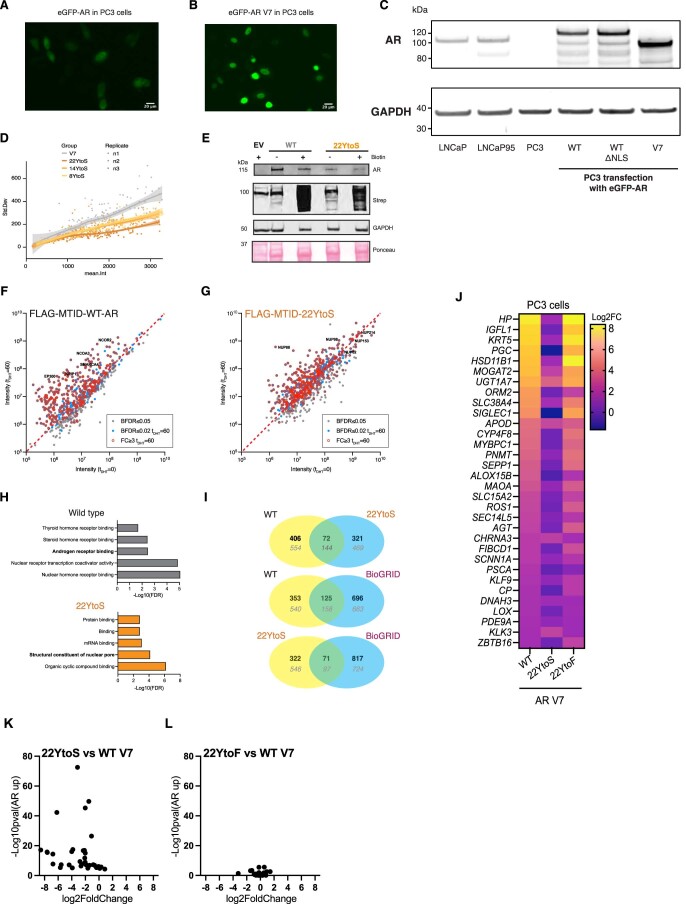
Transcription factors are among the most attractive therapeutic targets but are considered largely ‘undruggable’ in part due to the intrinsically disordered nature of their activation domains. Here we show that the aromatic character of the activation domain of the androgen receptor, a therapeutic target for castration-resistant prostate cancer, is key for its activity as transcription factor, allowing it to translocate to the nucleus and partition into transcriptional condensates upon activation by androgens. On the basis of our understanding of the interactions stabilizing such condensates and of the structure that the domain adopts upon condensation, we optimized the structure of a small-molecule inhibitor previously identified by phenotypic screening. The optimized compounds had more affinity for their target, inhibited androgen-receptor-dependent transcriptional programs, and had an antitumorigenic effect in models of castration-resistant prostate cancer in cells and in vivo. These results suggest that it is possible to rationally optimize, and potentially even to design, small molecules that target the activation domains of oncogenic transcription factors.
Overview
The claims and statistics of this paper haven’t been checked yet.
Free: it reads the open-access text and checks the first 5 claims that cite a source we can check. Create a free account to check every claim.
Integrity signals
Registry
Cites
Statistics
Figures
Verification
Claims the paper makes
The claims and statistics of this paper haven’t been checked yet.
Free: it reads the open-access text and checks the first 5 claims that cite a source we can check. Create a free account to check every claim.
Self-check
Percentages, sums and reported differences re-computed from the paper’s own numbers.
The self-check needs the paper’s full text.
Citations
Cites
Moderated estimation of fold change and dispersion for RNA-seq data with DESeq2
Love, M. I., Huber, W., & Anders, S. (2014) · Genome Biology · doi:10.1186/s13059-014-0550-8 · Cited by 95,106 · cited 3×
“In addition, 3D HNCO and HNCA experiments were acquired for two 15N,13C double labeled AR AD (1-558) samples (25 μM and 100 μM) dissolved in NMR buffer.”
Fiji: an open-source platform for biological-image analysis
Schindelin, J., Arganda-Carreras, I., Frise, E., Kaynig, V., Longair, M., Pietzsch, T., Preibisch, S., Rueden, C., Saalfeld, S., Schmid, B., et al. (2012) · Nature Methods · doi:10.1038/nmeth.2019 · Cited by 66,890
Hallmarks of Cancer: The Next Generation
Hanahan, D., & Weinberg, R. A. (2011) · Cell · doi:10.1016/j.cell.2011.02.013 · Cited by 66,590 · cited 1×
“The rewiring of transcriptional programs is a hallmark of cancer, and oncogenic transcriptional programs of numerous tumor types depend on small subsets of specific TFs 2,4 .”
Subramanian, A., Tamayo, P., Mootha, V. K., Mukherjee, S., Ebert, B. L., Gillette, M. A., Paulovich, A., Pomeroy, S. L., Golub, T. R., Lander, E. S., et al. (2005) · Proceedings of the National Academy of Sciences · doi:10.1073/pnas.0506580102 · Cited by 53,625
STAR: ultrafast universal RNA-seq aligner
Dobin, A., Davis, C. A., Schlesinger, F., Drenkow, J., Zaleski, C., Jha, S., Batut, P., Chaisson, M., & Gingeras, T. R. (2013) · Bioinformatics · doi:10.1093/bioinformatics/bts635 · Cited by 51,709
Abraham, M. J., Murtola, T., Schulz, R., Páll, S., Smith, J. C., Hess, B., & Lindahl, E. (2015) · SoftwareX · doi:10.1016/j.softx.2015.06.001 · Cited by 27,190
Development and testing of a general amber force field
Wang, J., Wolf, R. M., Caldwell, J. W., Kollman, P. A., & Case, D. A. (2004) · Journal of Computational Chemistry · doi:10.1002/jcc.20035 · Cited by 19,506 · cited 1×
“1aa was parameterized using the GAFF 89 for ligand forcefield parameters.”
Self-citationNMRPipe: A multidimensional spectral processing system based on UNIX pipes
Delaglio, F., Grzesiek, S., Vuister, G., Zhu, G., Pfeifer, J., & Bax, A. (1995) · Journal of Biomolecular NMR · doi:10.1007/bf00197809 · Cited by 15,965 · cited 1×
“Data processing was done using qMDD 77 for non-uniform sampled data, and NMRPipe 78 for all uniformly collected experiments.”
The Molecular Signatures Database Hallmark Gene Set Collection
Liberzon, A., Birger, C., Thorvaldsdóttir, H., Ghandi, M., Mesirov, J. P., & Tamayo, P. (2015) · Cell Systems · doi:10.1016/j.cels.2015.12.004 · Cited by 13,807
Biomolecular condensates: organizers of cellular biochemistry
Banani, S. F., Lee, H. O., Hyman, A. A., & Rosen, M. K. (2017) · Nature Reviews Molecular Cell Biology · doi:10.1038/nrm.2017.7 · Cited by 6,100 · cited 1×
“Recent studies have suggested that IDRs in many cellular proteins mediate liquid–liquid phase separation in vitro and the partitioning of proteins into biomolecular condensates in cells 13,14 .”
Replica-exchange molecular dynamics method for protein folding
Sugita, Y., & Okamoto, Y. (1999) · Chemical Physics Letters · doi:10.1016/s0009-2614(99)01123-9 · Cited by 4,514 · cited 3×
“In addition, 3D HNCO and HNCA experiments were acquired for two 15N,13C double labeled AR AD (1-558) samples (25 μM and 100 μM) dissolved in NMR buffer.”
Dose-Response Analysis Using R
Ritz, C., Baty, F., Streibig, J. C., & Gerhard, D. (2015) · PLOS ONE · doi:10.1371/journal.pone.0146021 · Cited by 3,658 · cited 3×
“In addition, 3D HNCO and HNCA experiments were acquired for two 15N,13C double labeled AR AD (1-558) samples (25 μM and 100 μM) dissolved in NMR buffer.”
PLUMED 2: New feathers for an old bird
Tribello, G. A., Bonomi, M., Branduardi, D., Camilloni, C., & Bussi, G. (2014) · Computer Physics Communications · doi:10.1016/j.cpc.2013.09.018 · Cited by 3,479
The CCPN data model for NMR spectroscopy: Development of a software pipeline
Vranken, W. F., Boucher, W., Stevens, T. J., Fogh, R. H., Pajon, A., Llinas, M., Ulrich, E. L., Markley, J. L., Ionides, J., & Laue, E. D. (2005) · Proteins: Structure, Function, and Bioinformatics · doi:10.1002/prot.20449 · Cited by 3,209 · cited 1×
“Data analysis was performed with CcpNmr Analysis 79 .”
Liquid-Liquid Phase Separation in Biology
Hyman, A. A., Weber, C. A., & Jülicher, F. (2014) · Annual Review of Cell and Developmental Biology · doi:10.1146/annurev-cellbio-100913-013325 · Cited by 3,155 · cited 3×
“In addition, 3D HNCO and HNCA experiments were acquired for two 15N,13C double labeled AR AD (1-558) samples (25 μM and 100 μM) dissolved in NMR buffer.”
Discovery and saturation analysis of cancer genes across 21 tumour types
Lawrence, M. S., Stojanov, P., Mermel, C. H., Robinson, J. T., Garraway, L. A., Golub, T. R., Meyerson, M., Gabriel, S. B., Lander, E. S., & Getz, G. (2014) · Nature · doi:10.1038/nature12912 · Cited by 3,096 · cited 9×
“The molecular basis of TF condensation has been dissected for a small number of TFs and, in all cases, substitutions of amino acids in the IDRs that altered phase separation also altered transcriptional activity 15,20–22 .”
InfluentialSelective Inhibition of Tumor Oncogenes by Disruption of Super-Enhancers
Lovén, J., Hoke, H. A., Lin, C. Y., Lau, A., Orlando, D. A., Vakoc, C. R., Bradner, J. E., Lee, T. I., & Young, R. A. (2013) · Cell · doi:10.1016/j.cell.2013.03.036 · Cited by 2,961
Alberti, S., Gladfelter, A., & Mittag, T. (2019) · Cell · doi:10.1016/j.cell.2018.12.035 · Cited by 2,856 · cited 3×
“In addition, 3D HNCO and HNCA experiments were acquired for two 15N,13C double labeled AR AD (1-558) samples (25 μM and 100 μM) dissolved in NMR buffer.”
AR-V7 and Resistance to Enzalutamide and Abiraterone in Prostate Cancer
Antonarakis, E. S., Lu, C., Wang, H., Luber, B., Nakazawa, M., Roeser, J. C., Chen, Y., Mohammad, T. A., Chen, Y., Fedor, H. L., et al. (2014) · New England Journal of Medicine · doi:10.1056/nejmoa1315815 · Cited by 2,710 · cited 3×
“In addition, 3D HNCO and HNCA experiments were acquired for two 15N,13C double labeled AR AD (1-558) samples (25 μM and 100 μM) dissolved in NMR buffer.”
Coactivator condensation at super-enhancers links phase separation and gene control
Sabari, B. R., Dall’Agnese, A., Boija, A., Klein, I. A., Coffey, E. L., Shrinivas, K., Abraham, B. J., Hannett, N. M., Zamudio, A. V., Manteiga, J. C., et al. (2018) · Science · doi:10.1126/science.aar3958 · Cited by 2,595 · cited 1×
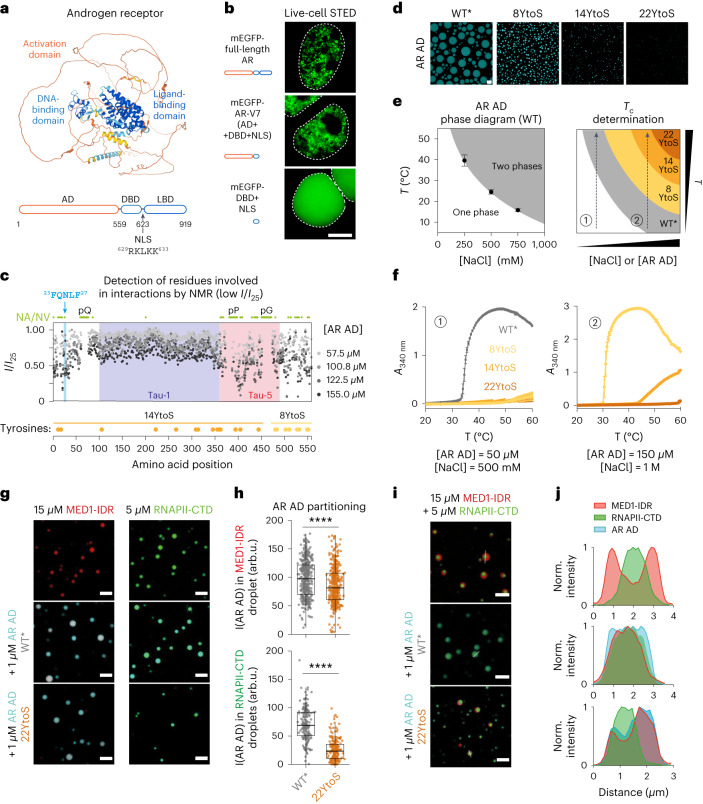
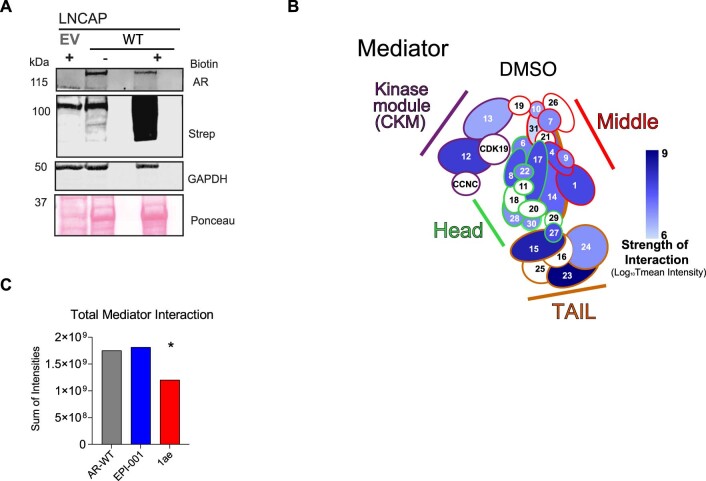
“We incubated AR AD proteins with preassembled droplets formed by purified recombinant MED1 IDR, an in vitro model of Mediator condensates 32 , and droplets formed by purified recombinant RNAPII C-terminal domain (CTD), an in vitro model for RNAPII condensates 33 .”
Self-citationPhase transitions in the assembly of multivalent signalling proteins
Li, P., Banjade, S., Cheng, H.-C., Kim, S., Chen, B., Guo, L., Llaguno, M., Hollingsworth, J. V., King, D. S., Banani, S. F., et al. (2012) · Nature · doi:10.1038/nature10879 · Cited by 2,550 · cited 1×
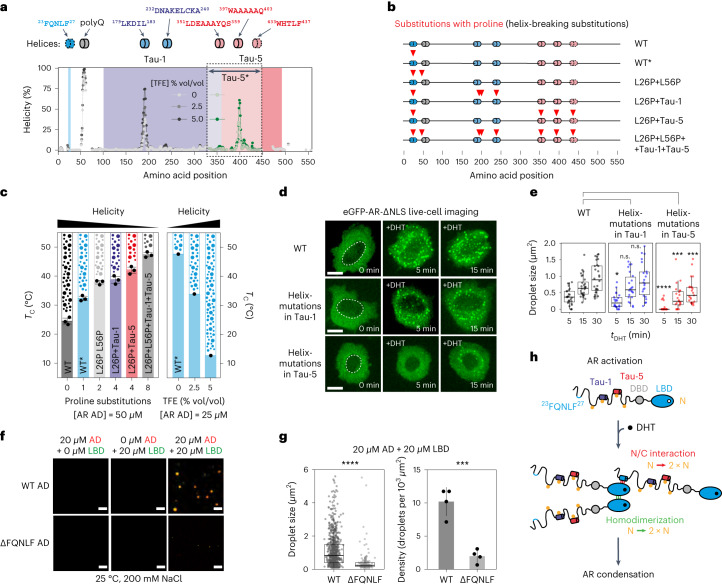
“The N/C interaction, stimulated by hormone binding, also contributes to stabilizing the condensates by increasing the valency of AR 29,46,62 .”
SMARCAD1 ATPase activity is required to silence endogenous retroviruses in embryonic stem cells
Sachs, P., Ding, D., Bergmaier, P., Lamp, B., Schlagheck, C., Finkernagel, F., Nist, A., Stiewe, T., & Mermoud, J. E. (2019) · Nature Communications · doi:10.1038/s41467-019-09078-0 · Cited by 2,384
Development of a second-generation antiandrogen for treatment of advanced prostate cancer.
Tran, C., Ouk, S., Clegg, N. J., Chen, Y., Watson, P. A., Arora, V., Wongvipat, J., Smith-Jones, P. M., Yoo, D., Kwon, A., et al. (2009) · Science · doi:10.1126/science.1168175 · Cited by 2,292 · cited 1×
“Anti-androgens used as first-line therapy against prostate cancer, such as enzalutamide, target the LBD and inhibit activation by androgens 65 .”
Boija, A., Klein, I. A., Sabari, B. R., Dall’Agnese, A., Coffey, E. L., Zamudio, A. V., Li, C. H., Shrinivas, K., Manteiga, J. C., Hannett, N. M., et al. (2018) · Cell · doi:10.1016/j.cell.2018.10.042 · Cited by 1,815 · cited 19×
“The molecular basis of TF condensation has been dissected for a small number of TFs and, in all cases, substitutions of amino acids in the IDRs that altered phase separation also altered transcriptional activity 15,20–22 .”
InfluentialAndrogen Receptor in Prostate Cancer
Heinlein, C. A., & Chang, C. (2004) · Endocrine Reviews · doi:10.1210/er.2002-0032 · Cited by 1,780 · cited 1×
“Nuclear hormone receptors, for example the androgen receptor (AR), are TFs that contain a structured ligand-binding domain (LBD), and anti-androgens targeting the LBD are a first-line therapy for the treatment of AR-driven prostate cancer 7,8 .”
Error estimates on averages of correlated data
Flyvbjerg, H., & Petersen, H. G. (1989) · The Journal of Chemical Physics · doi:10.1063/1.457480 · Cited by 1,517 · cited 1×
“Convergence of simulated properties was assessed by a comparison of the conformational sampling of each simulated replica, as previously reported 51 , and statistical errors were calculated using a blocking analysis following Flyvbjerg and Peterson 91 .”
DOSE: an R/Bioconductor package for disease ontology semantic and enrichment analysis
Yu, G., Wang, L.-G., Yan, G.-R., & He, Q.-Y. (2015) · Bioinformatics · doi:10.1093/bioinformatics/btu684 · Cited by 1,274
Tackling Exascale Software Challenges in Molecular Dynamics Simulations with GROMACS
Páll, S., Abraham, M. J., Kutzner, C., Hess, B., & Lindahl, E. (2015) · Lecture Notes in Computer Science · doi:10.1007/978-3-319-15976-8_1 · Cited by 1,208
Transcription factors as targets for cancer therapy
Darnell, J. E. (2002) · Nature Reviews Cancer · doi:10.1038/nrc906 · Cited by 1,194 · cited 1×
“The genes encoding transcription factors (TFs) are frequently mutated or dysregulated in cancer, and TFs are coveted targets in oncology 1,2 .”
Transcriptional Addiction in Cancer
Bradner, J. E., Hnisz, D., & Young, R. A. (2017) · Cell · doi:10.1016/j.cell.2016.12.013 · Cited by 1,194 · cited 3×
“In addition, 3D HNCO and HNCA experiments were acquired for two 15N,13C double labeled AR AD (1-558) samples (25 μM and 100 μM) dissolved in NMR buffer.”
Self-citationValence and patterning of aromatic residues determine the phase behavior of prion-like domains
Martin, E. W., Holehouse, A. S., Peran, I., Farag, M., Incicco, J. J., Bremer, A., Grace, C. R., Soranno, A., Pappu, R. V., & Mittag, T. (2020) · Science · doi:10.1126/science.aaw8653 · Cited by 1,147 · cited 2×
“The cytosolic and nuclear condensates that AR forms are stabilized by interactions between aromatic residues, similar to condensates formed by various prion-like proteins 28,60 .”
Hu, R., Dunn, T. A., Wei, S., Isharwal, S., Veltri, R. W., Humphreys, E., Han, M., Partin, A. W., Vessella, R. L., Isaacs, W. B., et al. (2009) · Cancer Research · doi:10.1158/0008-5472.can-08-2764 · Cited by 1,077 · cited 3×
“In addition, 3D HNCO and HNCA experiments were acquired for two 15N,13C double labeled AR AD (1-558) samples (25 μM and 100 μM) dissolved in NMR buffer.”
Developing a molecular dynamics force field for both folded and disordered protein states
Robustelli, P., Piana, S., & Shaw, D. E. (2018) · Proceedings of the National Academy of Sciences · doi:10.1073/pnas.1800690115 · Cited by 1,024 · cited 1×
“The AR Tau-5 R2−R3 protein was parameterized using the a99SB-disp force field; water https://doi.org/10.1038/s41594-023-01159-5 molecules were parameterized with the a99SB-disp water model 88 .”
InfluentialSelf-citationImaging dynamic and selective low-complexity domain interactions that control gene transcription
Chong, S., Dugast-Darzacq, C., Liu, Z., Dong, P., Dailey, G. M., Cattoglio, C., Heckert, A., Banala, S., Lavis, L., Darzacq, X., et al. (2018) · Science · doi:10.1126/science.aar2555 · Cited by 966 · cited 3×
“In addition, 3D HNCO and HNCA experiments were acquired for two 15N,13C double labeled AR AD (1-558) samples (25 μM and 100 μM) dissolved in NMR buffer.”
Spatiotemporal Control of Intracellular Phase Transitions Using Light-Activated optoDroplets
Shin, Y., Berry, J., Pannucci, N., Haataja, M. P., Toettcher, J. E., & Brangwynne, C. P. (2017) · Cell · doi:10.1016/j.cell.2016.11.054 · Cited by 965 · cited 1×
“According to theory 47 , coarse-grained simulations 48 and experiments 49 , this decreases the minimal concentration needed for phase separation.”
Sternberg (1983) · Computer · doi:10.1109/mc.1983.1654163 · Cited by 930 · cited 1×
“Clusters within nuclear objects were then detected using the rolling ball algorithm, with the size of the rolling ball set to eight times the limit of detection (48 nanometers), according to a standard protocol 93 .”
Targeting transcription factors in cancer — from undruggable to reality
Bushweller, J. H. (2019) · Nature Reviews Cancer · doi:10.1038/s41568-019-0196-7 · Cited by 919 · cited 2×
“Despite their appeal, TFs are considered largely ‘undruggable’ because of the intrinsic disorder of their protein regions that are essential for transcriptional activity, rendering them challenging targets for structure-based drug discovery 5,6 .”
Pi-Pi contacts are an overlooked protein feature relevant to phase separation
Vernon, R. M., Chong, P. A., Tsang, B., Kim, T. H., Bah, A., Farber, P., Lin, H., & Forman-Kay, J. D. (2018) · eLife · doi:10.7554/elife.31486 · Cited by 898 · cited 3×
“In addition, 3D HNCO and HNCA experiments were acquired for two 15N,13C double labeled AR AD (1-558) samples (25 μM and 100 μM) dissolved in NMR buffer.”
Conicella, A. E., Zerze, G. H., Mittal, J., & Fawzi, N. L. (2016) · Structure · doi:10.1016/j.str.2016.07.007 · Cited by 857 · cited 1×
“3c), suggesting that regions with helical propensity enhance AR AD phase separation in vitro 44 .”
Dehm, S. M., Schmidt, L. J., Heemers, H. V., Vessella, R. L., & Tindall, D. J. (2008) · Cancer Research · doi:10.1158/0008-5472.can-08-0594 · Cited by 834 · cited 3×
“In addition, 3D HNCO and HNCA experiments were acquired for two 15N,13C double labeled AR AD (1-558) samples (25 μM and 100 μM) dissolved in NMR buffer.”
Wang, L., Friesner, R. A., & Berne, B. J. (2011) · The Journal of Physical Chemistry B · doi:10.1021/jp204407d · Cited by 774 · cited 1×
“The replica exchange with solute tempering (REST2) algorithm 90 was used to enhance conformational sampling.”
Radhakrishnan, I., Pérez-Alvarado, G. C., Parker, D., Dyson, H. J., Montminy, M. R., & Wright, P. E. (1997) · Cell · doi:10.1016/s0092-8674(00)80463-8 · Cited by 728 · cited 1×
“Some motifs are known to fold into ɑ -helices when interacting 37,38 .”
Sequence determinants of protein phase behavior from a coarse-grained model
Dignon, G. L., Zheng, W., Kim, Y. C., Best, R. B., & Mittal, J. (2018) · PLOS Computational Biology · doi:10.1371/journal.pcbi.1005941 · Cited by 677 · cited 1×
“According to theory 47 , coarse-grained simulations 48 and experiments 49 , this decreases the minimal concentration needed for phase separation.”
Luo, P., & Baldwin, R. L. (1997) · Biochemistry · doi:10.1021/bi9707133 · Cited by 643
Scher, H. I., Lu, D., Schreiber, N. A., Louw, J., Graf, R. P., Vargas, H. A., Johnson, A., Jendrisak, A., Bambury, R., Danila, D., et al. (2016) · JAMA Oncology · doi:10.1001/jamaoncol.2016.1828 · Cited by 641 · cited 1×
“Such splice variants lack a LBD and consist of only a DNA-binding domain (DBD) and an intrinsically disordered activation domain (AD), rendering them insensitive to LBD-targeting anti-androgens 9–12 .”
Unfolded Proteins and Protein Folding Studied by NMR
Dyson, H. J., & Wright, P. E. (2004) · Chemical Reviews · doi:10.1021/cr030403s · Cited by 627 · cited 10×
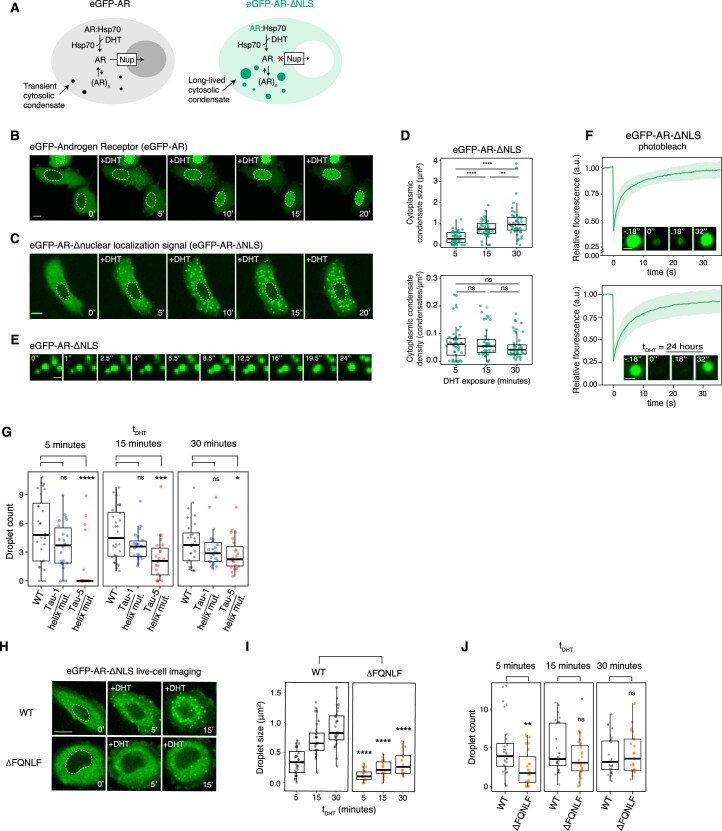
“In agreement with this hypothesis, eGFP-AR-ΔNLS lacking the 23 FQNLF 27 motif (ΔFQNLF) formed fewer and smaller condensates in PC3 cells (Extended Data Fig.”
InfluentialLong-Range Interactions Within a Nonnative Protein
Klein-Seetharaman, J., Oikawa, M., Grimshaw, S. B., Wirmer, J., Duchardt, E., Ueda, T., Imoto, T., Smith, L. J., Dobson, C. M., & Schwalbe, H. (2002) · Science · doi:10.1126/science.1067680 · Cited by 615 · cited 3×
“In addition, 3D HNCO and HNCA experiments were acquired for two 15N,13C double labeled AR AD (1-558) samples (25 μM and 100 μM) dissolved in NMR buffer.”
RNA polymerase II clustering through carboxy-terminal domain phase separation
Boehning, M., Dugast-Darzacq, C., Rankovic, M., Hansen, A. S., Yu, T., Marie-Nelly, H., McSwiggen, D. T., Kokic, G., Dailey, G. M., Cramer, P., et al. (2018) · Nature Structural & Molecular Biology · doi:10.1038/s41594-018-0112-y · Cited by 601 · cited 1×
“We incubated AR AD proteins with preassembled droplets formed by purified recombinant MED1 IDR, an in vitro model of Mediator condensates 32 , and droplets formed by purified recombinant RNAPII C-terminal domain (CTD), an in vitro model for RNAPII condensates 33 .”
Defining mechanisms that regulate RNA polymerase II transcription in vivo
Fuda, N. J., Ardehali, M. B., & Lis, J. T. (2009) · Nature · doi:10.1038/nature08449 · Cited by 576 · cited 3×
“In addition, 3D HNCO and HNCA experiments were acquired for two 15N,13C double labeled AR AD (1-558) samples (25 μM and 100 μM) dissolved in NMR buffer.”
Structural Overview of the Nuclear Receptor Superfamily: Insights into Physiology and Therapeutics
Huang, P., Chandra, V., & Rastinejad, F. (2010) · Annual Review of Physiology · doi:10.1146/annurev-physiol-021909-135917 · Cited by 533 · cited 1×
“Nuclear hormone receptors, for example the androgen receptor (AR), are TFs that contain a structured ligand-binding domain (LBD), and anti-androgens targeting the LBD are a first-line therapy for the treatment of AR-driven prostate cancer 7,8 .”
Andersen, R. J., Mawji, N. R., Wang, J., Wang, G., Haile, S., Myung, J.-K., Watt, K., Tam, T., Yang, Y. C., Bañuelos, C. A., et al. (2010) · Cancer Cell · doi:10.1016/j.ccr.2010.04.027 · Cited by 503 · cited 5×
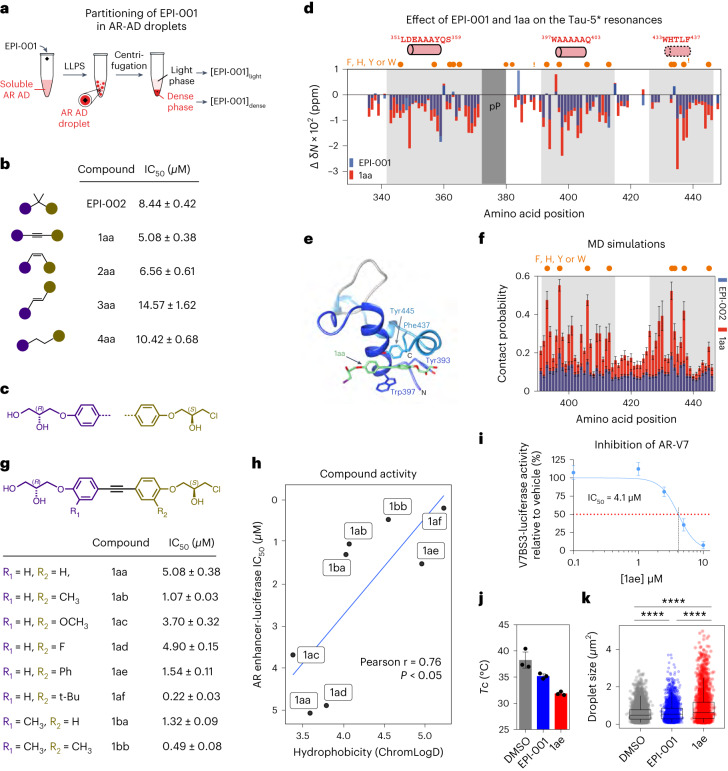
“23), a small-molecular inhibitor of the AR AD discovered by phenotypic screening 24 , a derivative of which is being investigated in clinical trials for CRPC (NCT04421222, NCT05075577).”
InfluentialSelf-citationThe CamSol method of rational design of protein mutants with enhanced solubility
Sormanni, P., Aprile, F. A., & Vendruscolo, M. (2015) · Journal of Molecular Biology · doi:10.1016/j.jmb.2014.09.026 · Cited by 494
Bouchard, J. J., Otero, J. H., Scott, D. C., Szulc, E., Martin, E. W., Sabri, N., Granata, D., Marzahn, M. R., Lindorff-Larsen, K., Salvatella, X., et al. (2018) · Molecular Cell · doi:10.1016/j.molcel.2018.08.027 · Cited by 391 · cited 1×
“To test the contribution of aromatic residues to phase separation, we measured how decreasing the aromatic character of the AR AD affects its cloud point ( T c ) in vitro 18,31 .”
Self-citationRelationship of sequence and phase separation in protein low-complexity regions
Martin, E. W., & Mittag, T. (2018) · Biochemistry · doi:10.1021/acs.biochem.8b00008 · Cited by 389 · cited 1×
“According to theory 47 , coarse-grained simulations 48 and experiments 49 , this decreases the minimal concentration needed for phase separation.”
Ueda, T., Bruchovsky, N., & Sadar, M. D. (2002) · Journal of Biological Chemistry · doi:10.1074/jbc.m108255200 · Cited by 381 · cited 3×
“In addition, 3D HNCO and HNCA experiments were acquired for two 15N,13C double labeled AR AD (1-558) samples (25 μM and 100 μM) dissolved in NMR buffer.”
Self-citationAlternatively spliced androgen receptor variants
Dehm, S. M., & Tindall, D. J. (2011) · Endocrine-Related Cancer · doi:10.1530/erc-11-0141 · Cited by 380 · cited 3×
“In addition, 3D HNCO and HNCA experiments were acquired for two 15N,13C double labeled AR AD (1-558) samples (25 μM and 100 μM) dissolved in NMR buffer.”
Camilloni, C., De Simone, A., Vranken, W. F., & Vendruscolo, M. (2012) · Biochemistry · doi:10.1021/bi3001825 · Cited by 376 · cited 1×
“Helix populations were extracted using the δ2D software 67 .”
Analysis of non-uniformly sampled spectra with multi-dimensional decomposition
Orekhov, V. Y., & Jaravine, V. A. (2011) · Progress in Nuclear Magnetic Resonance Spectroscopy · doi:10.1016/j.pnmrs.2011.02.002 · Cited by 363 · cited 1×
“Data processing was done using qMDD 77 for non-uniform sampled data, and NMRPipe 78 for all uniformly collected experiments.”
Takeda, D. Y., Spisák, S., Seo, J.-H., Bell, C., O’Connor, E., Korthauer, K., Ribli, D., Csabai, I., Solymosi, N., Szállási, Z., et al. (2018) · Cell · doi:10.1016/j.cell.2018.05.037 · Cited by 317 · cited 3×
“In addition, 3D HNCO and HNCA experiments were acquired for two 15N,13C double labeled AR AD (1-558) samples (25 μM and 100 μM) dissolved in NMR buffer.”
Zhou, Z. X., Sar, M., Simental, J. A., Lane, M. V., & Wilson, E. M. (1994) · Journal of Biological Chemistry · doi:10.1016/s0021-9258(17)36806-0 · Cited by 312
Plasticity of an Ultrafast Interaction between Nucleoporins and Nuclear Transport Receptors
Milles, S., Mercadante, D., Aramburu, I. V., Jensen, M. R., Banterle, N., Koehler, C., Tyagi, S., Clarke, J., Shammas, S. L., Blackledge, M., et al. (2015) · Cell · doi:10.1016/j.cell.2015.09.047 · Cited by 308 · cited 1×
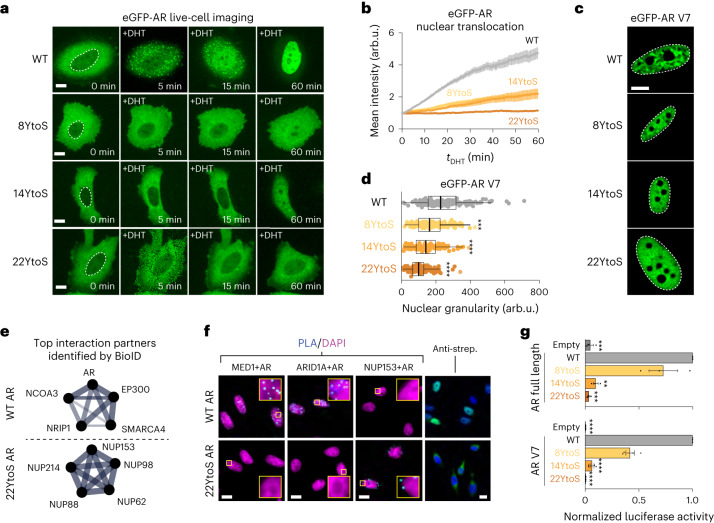
“We speculate that aromatic residues in the AR AD, which drive its phase separation, can interact with aromatic residues in FG repeats of nucleoporins, without the mediation of nuclear import receptors and adapter proteins 63 , to facilitate translocation.”
An androgen receptor N-terminal domain antagonist for treating prostate cancer
Myung, J.-K., Banuelos, C. A., Fernandez, J. G., Mawji, N. R., Wang, J., Tien, A. H., Yang, Y. C., Tavakoli, I., Haile, S., Watt, K., et al. (2013) · Journal of Clinical Investigation · doi:10.1172/jci66398 · Cited by 305 · cited 3×
“In addition, 3D HNCO and HNCA experiments were acquired for two 15N,13C double labeled AR AD (1-558) samples (25 μM and 100 μM) dissolved in NMR buffer.”
Self-citationHe, B., Gampe, R. T., Kole, A. J., Hnat, A. T., Stanley, T. B., An, G., Stewart, E. L., Kalman, R. I., Minges, J. T., & Wilson, E. M. (2004) · Molecular Cell · doi:10.1016/j.molcel.2004.09.036 · Cited by 295 · cited 16×
“Such splice variants lack a LBD and consist of only a DNA-binding domain (DBD) and an intrinsically disordered activation domain (AD), rendering them insensitive to LBD-targeting anti-androgens 9–12 .”
InfluentialA User’s Guide for Phase Separation Assays with Purified Proteins
Alberti, S., Saha, S., Woodruff, J. B., Franzmann, T. M., Wang, J., & Hyman, A. A. (2018) · Journal of Molecular Biology · doi:10.1016/j.jmb.2018.06.038 · Cited by 291 · cited 1×
“Coverslips were PEGylated according to the published protocol 73 .”
Self-citationLi, H.-R., Chiang, W.-C., Chou, P.-C., Wang, W.-J., & Huang, J.-R. (2018) · Journal of Biological Chemistry · doi:10.1074/jbc.ac117.001037 · Cited by 267 · cited 3×
“In addition, 3D HNCO and HNCA experiments were acquired for two 15N,13C double labeled AR AD (1-558) samples (25 μM and 100 μM) dissolved in NMR buffer.”
Solyom, Z., Schwarten, M., Geist, L., Konrat, R., Willbold, D., & Brutscher, B. (2013) · Journal of Biomolecular NMR · doi:10.1007/s10858-013-9715-0 · Cited by 245 · cited 3×
“In addition, 3D HNCO and HNCA experiments were acquired for two 15N,13C double labeled AR AD (1-558) samples (25 μM and 100 μM) dissolved in NMR buffer.”
TDP-43 condensation properties specify its RNA-binding and regulatory repertoire
Hallegger, M., Chakrabarti, A. M., Lee, F. C. Y., Lee, B. L., Amalietti, A. G., Odeh, H. M., Copley, K. E., Rubien, J. D., Portz, B., Kuret, K., et al. (2021) · Cell · doi:10.1016/j.cell.2021.07.018 · Cited by 240 · cited 1×
“This indicates that regions with helical propensity in the Tau-5 subdomain enhance AR phase separation in cells 45 .”
Chan, S. C., Li, Y., & Dehm, S. M. (2012) · Journal of Biological Chemistry · doi:10.1074/jbc.m112.352930 · Cited by 218
Malleable machines take shape in eukaryotic transcriptional regulation
Fuxreiter, M., Tompa, P., Simon, I., Uversky, V. N., Hansen, J. C., & Asturias, F. J. (2008) · Nature Chemical Biology · doi:10.1038/nchembio.127 · Cited by 209 · cited 3×
“In addition, 3D HNCO and HNCA experiments were acquired for two 15N,13C double labeled AR AD (1-558) samples (25 μM and 100 μM) dissolved in NMR buffer.”
Brzovic, P. S., Heikaus, C. C., Kisselev, L., Vernon, R., Herbig, E., Pacheco, D., Warfield, L., Littlefield, P., Baker, D., Klevit, R. E., et al. (2011) · Molecular Cell · doi:10.1016/j.molcel.2011.11.008 · Cited by 203
Unblending of Transcriptional Condensates in Human Repeat Expansion Disease
Basu, S., Mackowiak, S. D., Niskanen, H., Knezevic, D., Asimi, V., Grosswendt, S., Geertsema, H., Ali, S., Jerković, I., Ewers, H., et al. (2020) · Cell · doi:10.1016/j.cell.2020.04.018 · Cited by 198 · cited 2×
“The molecular basis of TF condensation has been dissected for a small number of TFs and, in all cases, substitutions of amino acids in the IDRs that altered phase separation also altered transcriptional activity 15,20–22 .”
Self-citationStructure of the homodimeric androgen receptor ligand-binding domain
Nadal, M., Prekovic, S., Gallastegui, N., Helsen, C., Abella, M., Zielinska, K., Gay, M., Vilaseca, M., Taulès, M., Houtsmuller, A. B., et al. (2017) · Nature Communications · doi:10.1038/ncomms14388 · Cited by 193 · cited 15×
“Such splice variants lack a LBD and consist of only a DNA-binding domain (DBD) and an intrinsically disordered activation domain (AD), rendering them insensitive to LBD-targeting anti-androgens 9–12 .”
InfluentialDi Lello, P., Jenkins, L. M. M., Jones, T. N., Nguyen, B. D., Hara, T., Yamaguchi, H., Dikeakos, J. D., Appella, E., Legault, P., & Omichinski, J. G. (2006) · Molecular Cell · doi:10.1016/j.molcel.2006.05.007 · Cited by 192
Androgen Receptor Splice Variants Dimerize to Transactivate Target Genes
Xu, D., Zhan, Y., Qi, Y., Cao, B., Bai, S., Xu, W., Gambhir, S. S., Lee, P., Sartor, O., Flemington, E. K., et al. (2015) · Cancer Research · doi:10.1158/0008-5472.can-15-0381 · Cited by 189 · cited 3×
“In addition, 3D HNCO and HNCA experiments were acquired for two 15N,13C double labeled AR AD (1-558) samples (25 μM and 100 μM) dissolved in NMR buffer.”
Zhang, H., Shao, S., Zeng, Y., Wang, X., Qin, Y., Ren, Q., Xiang, S., Wang, Y., Xiao, J., & Sun, Y. (2022) · Nature Cell Biology · doi:10.1038/s41556-022-00846-7 · Cited by 174 · cited 3×
“In addition, 3D HNCO and HNCA experiments were acquired for two 15N,13C double labeled AR AD (1-558) samples (25 μM and 100 μM) dissolved in NMR buffer.”
Surface Properties Determining Passage Rates of Proteins through Nuclear Pores
Frey, S., Rees, R., Schünemann, J., Ng, S. C., Fünfgeld, K., Huyton, T., & Görlich, D. (2018) · Cell · doi:10.1016/j.cell.2018.05.045 · Cited by 170 · cited 1×
“This idea is supported by the observation that substituting surface residues with aromatic ones in a large globular protein enhances translocation 64 .”
ARv7 Represses Tumor-Suppressor Genes in Castration-Resistant Prostate Cancer
Cato, L., de Tribolet-Hardy, J., Lee, I., Rottenberg, J. T., Coleman, I., Melchers, D., Houtman, R., Xiao, T., Li, W., Uo, T., et al. (2019) · Cancer Cell · doi:10.1016/j.ccell.2019.01.008 · Cited by 167 · cited 1×
“59).”
Targeting androgen receptor phase separation to overcome antiandrogen resistance
Xie, J., He, H., Kong, W., Li, Z., Gao, Z., Xie, D., Sun, L., Fan, X., Jiang, X., Zheng, Q., et al. (2022) · Nature Chemical Biology · doi:10.1038/s41589-022-01151-y · Cited by 166 · cited 3×
“AR forms mesoscale nuclear ‘speckles,’ but their properties have been elusive because of their small size and the nuclear shuttling of the receptor 17–19, 25, 26 .”
Self-citationeasyFRAP: an interactive, easy-to-use tool for qualitative and quantitative analysis of FRAP data
Rapsomaniki, M. A., Kotsantis, P., Symeonidou, I.-E., Giakoumakis, N.-N., Taraviras, S., & Lygerou, Z. (2012) · Bioinformatics · doi:10.1093/bioinformatics/bts241 · Cited by 164 · cited 2×
“Exported csv tables were normalized and fitted in EasyFrap software 74 to extract kinetic parameters, such as T-half and mobile fraction.”
Phase separation of OCT4 controls TAD reorganization to promote cell fate transitions
Wang, J., Yu, H., Ma, Q., Zeng, P., Wu, D., Hou, Y., Liu, X., Jia, L., Sun, J., Chen, Y., et al. (2021) · Cell Stem Cell · doi:10.1016/j.stem.2021.04.023 · Cited by 156 · cited 3×
“In addition, 3D HNCO and HNCA experiments were acquired for two 15N,13C double labeled AR AD (1-558) samples (25 μM and 100 μM) dissolved in NMR buffer.”
Self-citationAkt blocks ligand binding and protects against expanded polyglutamine androgen receptor toxicity
Palazzolo, I., Burnett, B. G., Young, J. E., Brenne, P. L., La Spada, A. R., Fischbeck, K. H., Howell, B. W., & Pennuto, M. (2007) · Human Molecular Genetics · doi:10.1093/hmg/ddm109 · Cited by 148 · cited 1×
“Luciferase activities were normalized to co-transfected β-galactosidase activity 81 .”
De Mol, E., Fenwick, R. B., Phang, C. T. W., Buzón, V., Szulc, E., de la Fuente, A., Escobedo, A., García, J., Bertoncini, C. W., Estébanez-Perpiñá, E., et al. (2016) · ACS Chemical Biology · doi:10.1021/acschembio.6b00182 · Cited by 147 · cited 4×
“Tau-5* (330–448 aa) was expressed and purified as previously described 23 , and an equivalent protocol was used to express and purify fragment AR AD (441–558 aa).”
InfluentialSelf-citationGcn4-Mediator Specificity Is Mediated by a Large and Dynamic Fuzzy Protein-Protein Complex
Tuttle, L. M., Pacheco, D., Warfield, L., Luo, J., Ranish, J., Hahn, S., & Klevit, R. E. (2018) · Cell Reports · doi:10.1016/j.celrep.2018.02.097 · Cited by 144 · cited 1×
“Transcriptional activation involves interactions between AD motifs— also known as activation units—and members of the transcriptional machinery 35,36 .”
Tomura, A., Goto, K., Morinaga, H., Nomura, M., Okabe, T., Yanase, T., Takayanagi, R., & Nawata, H. (2001) · Journal of Biological Chemistry · doi:10.1074/jbc.m101755200 · Cited by 134 · cited 3×
“In addition, 3D HNCO and HNCA experiments were acquired for two 15N,13C double labeled AR AD (1-558) samples (25 μM and 100 μM) dissolved in NMR buffer.”
Lin, Y.-H., Song, J., Forman-Kay, J. D., & Chan, H. S. (2017) · Journal of Molecular Liquids · doi:10.1016/j.molliq.2016.09.090 · Cited by 134 · cited 3×
“In addition, 3D HNCO and HNCA experiments were acquired for two 15N,13C double labeled AR AD (1-558) samples (25 μM and 100 μM) dissolved in NMR buffer.”
CDK7 Inhibition Suppresses Castration-Resistant Prostate Cancer through MED1 Inactivation
Rasool, R. U., Natesan, R., Deng, Q., Aras, S., Lal, P., Effron, S. S., Mitchell-Velasquez, E., Posimo, J. M., Carskadon, S. L., Baca, S. C., et al. (2019) · Cancer Discovery · doi:10.1158/2159-8290.cd-19-0189 · Cited by 133
Lin, Y., Brady, J. P., Forman-Kay, J. D., & Chan, H. S. (2017) · New Journal of Physics · doi:10.1088/1367-2630/aa9369 · Cited by 133 · cited 3×
“In addition, 3D HNCO and HNCA experiments were acquired for two 15N,13C double labeled AR AD (1-558) samples (25 μM and 100 μM) dissolved in NMR buffer.”
Posey, A. E., Ruff, K. M., Harmon, T. S., Crick, S. L., Li, A., Diamond, M. I., & Pappu, R. V. (2018) · Journal of Biological Chemistry · doi:10.1074/jbc.ra117.000357 · Cited by 128 · cited 1×
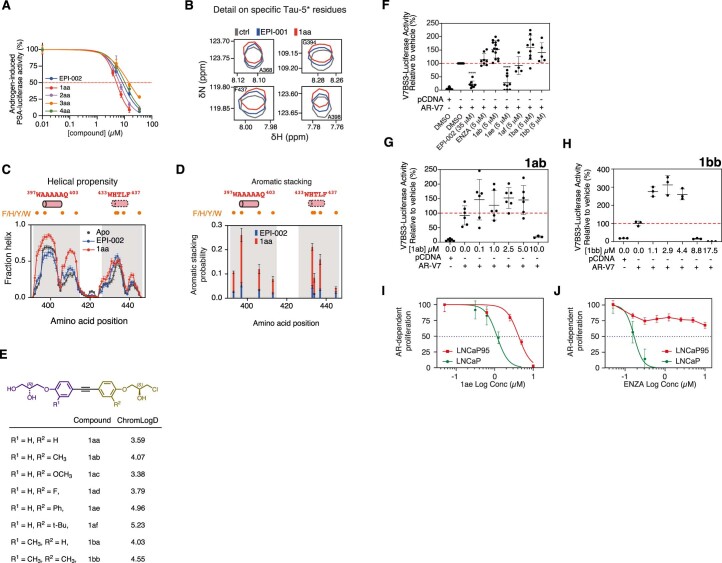
“In agreement with polyphasic linkage 54,55 , we found that EPI-001 decreases the T c and increases the size of the droplets, and that, at the same concentration, 1ae has a larger effect (Fig.”
Structural Basis for p300 Taz2-p53 TAD1 Binding and Modulation by Phosphorylation
Feng, H., Jenkins, L. M. M., Durell, S. R., Hayashi, R., Mazur, S. J., Cherry, S., Tropea, J. E., Miller, M., Wlodawer, A., Appella, E., et al. (2009) · Structure · doi:10.1016/j.str.2008.12.009 · Cited by 128 · cited 3×
“In addition, 3D HNCO and HNCA experiments were acquired for two 15N,13C double labeled AR AD (1-558) samples (25 μM and 100 μM) dissolved in NMR buffer.”
Erijman, A., Kozlowski, L., Sohrabi-Jahromi, S., Fishburn, J., Warfield, L., Schreiber, J., Noble, W. S., Söding, J., & Hahn, S. (2020) · Molecular Cell · doi:10.1016/j.molcel.2020.04.020 · Cited by 123
Intrinsically disordered proteins and biomolecular condensates as drug targets
Biesaga, M., Frigolé-Vivas, M., & Salvatella, X. (2021) · Current Opinion in Chemical Biology · doi:10.1016/j.cbpa.2021.02.009 · Cited by 115 · cited 2×
“Despite their appeal, TFs are considered largely ‘undruggable’ because of the intrinsic disorder of their protein regions that are essential for transcriptional activity, rendering them challenging targets for structure-based drug discovery 5,6 .”
Self-citationZhang, F., Biswas, M., Massah, S., Lee, J., Lingadahalli, S., Wong, S. T. S., Wells, C. A., Foo, J., Khan, N., Morin, H., et al. (2022) · Nucleic Acids Research · doi:10.1093/nar/gkac1158 · Cited by 111 · cited 1×
“AR forms mesoscale nuclear ‘speckles,’ but their properties have been elusive because of their small size and the nuclear shuttling of the receptor 17–19, 25, 26 .”
Side chain to main chain hydrogen bonds stabilize a polyglutamine helix in a transcription factor
Escobedo, A., Topal, B., Kunze, M. B. A., Aranda, J., Chiesa, G., Mungianu, D., Bernardo-Seisdedos, G., Eftekharzadeh, B., Gairí, M., Pierattelli, R., et al. (2019) · Nature Communications · doi:10.1038/s41467-019-09923-2 · Cited by 98 · cited 1×
“3a) 39,40 .”
Self-citationWarfield, L., Tuttle, L. M., Pacheco, D., Klevit, R. E., & Hahn, S. (2014) · Proceedings of the National Academy of Sciences · doi:10.1073/pnas.1412088111 · Cited by 97 · cited 1×
“Transcriptional activation involves interactions between AD motifs— also known as activation units—and members of the transcriptional machinery 35,36 .”
Zhu, J., Salvatella, X., & Robustelli, P. (2022) · Nature Communications · doi:10.1038/s41467-022-34077-z · Cited by 97 · cited 2×
“Convergence of simulated properties was assessed by a comparison of the conformational sampling of each simulated replica, as previously reported 51 , and statistical errors were calculated using a blocking analysis following Flyvbjerg and Peterson 91 .”
Self-citationIntranuclear organization and function of the androgen receptor
Black, B. E., & Paschal, B. M. (2004) · Trends in Endocrinology and Metabolism · doi:10.1016/j.tem.2004.09.006 · Cited by 87 · cited 3×
“In addition, 3D HNCO and HNCA experiments were acquired for two 15N,13C double labeled AR AD (1-558) samples (25 μM and 100 μM) dissolved in NMR buffer.”
Androgen receptor targeted therapies in castration‐resistant prostate cancer: Bench to clinic
Imamura, Y., & Sadar, M. D. (2016) · International Journal of Urology · doi:10.1111/iju.13137 · Cited by 86
Self-citationDehm, S. M., Regan, K. M., Schmidt, L. J., & Tindall, D. J. (2007) · Cancer Research · doi:10.1158/0008-5472.can-07-1267 · Cited by 84 · cited 1×
“In the AR AD, these cluster in the 23 FQNLF 27 motif and in the C terminus of the domain, which includes a sequence region that is key for transactivation in the absence of androgens 61 (Tau-5, Fig.”
Sequence Context Influences the Structure and Aggregation Behavior of a PolyQ Tract
Eftekharzadeh, B., Piai, A., Chiesa, G., Mungianu, D., García, J., Pierattelli, R., Felli, I. C., & Salvatella, X. (2016) · Biophysical Journal · doi:10.1016/j.bpj.2016.04.022 · Cited by 77 · cited 1×
“3a) 39,40 .”
Self-citationEftekharzadeh, B., Banduseela, V. C., Chiesa, G., Martínez-Cristóbal, P., Rauch, J. N., Nath, S. R., Schwarz, D. M. C., Shao, H., Marin-Argany, M., Di Sanza, C., et al. (2019) · Nature Communications · doi:10.1038/s41467-019-11594-y · Cited by 76 · cited 1×
“We recently reported that Hsp70 binding to the 23 FQNLF 27 motif of the AR AD increases its solubility in vitro 30 .”
Self-citationTeo, G., Koh, H. W. L., Fermin, D., Lambert, J., Knight, J. D. R., Gingras, A., & Choi, H. (2016) · PROTEOMICS · doi:10.1002/pmic.201500499 · Cited by 73
Black, B. E., Vitto, M. J., Gioeli, D. G., Spencer, A., Afshar, N., Conaway, M. R., Weber, M. J., & Paschal, B. M. (2003) · Molecular Endocrinology · doi:10.1210/me.2003-0145 · Cited by 70 · cited 1×
“AR forms mesoscale nuclear ‘speckles,’ but their properties have been elusive because of their small size and the nuclear shuttling of the receptor 17–19, 25, 26 .”
Ligand-linked phase changes in a biological system: applications to sickle cell hemoglobin.
Wyman, J., & Gill, S. J. (1980) · Proceedings of the National Academy of Sciences · doi:10.1073/pnas.77.9.5239 · Cited by 66 · cited 1×
“In agreement with polyphasic linkage 54,55 , we found that EPI-001 decreases the T c and increases the size of the droplets, and that, at the same concentration, 1ae has a larger effect (Fig.”
Regulation of biomolecular condensate dynamics by signaling
Garcia‐Cabau, C., & Salvatella, X. (2021) · Current Opinion in Cell Biology · doi:10.1016/j.ceb.2021.01.002 · Cited by 65 · cited 1×
“Recent studies have suggested that IDRs in many cellular proteins mediate liquid–liquid phase separation in vitro and the partitioning of proteins into biomolecular condensates in cells 13,14 .”
Self-citationMol, E. D., Szulc, E., Sanza, C. D., Martínez-Cristóbal, P., Bertoncini, C. W., Fenwick, R. B., Frigolé‐Vivas, M., Masin, M., Hunter, I., Buzón, V., et al. (2017) · Structure · doi:10.1016/j.str.2017.11.007 · Cited by 61 · cited 1×
“Our previous NMR experiments have shown that the 433 WHTLF 437 motif in Tau-5 forms a helix when interacting with TFIIF and have identified two additional motifs, 232 DNAKELCKA 240 and 351 LDEAAAYQS 359 , with weak helical propensity 23,42 (Fig.”
Self-citationThiyagarajan, T., Ponnusamy, S., Hwang, D., He, Y., Asemota, S., Young, K. L., Johnson, D. L., Bocharova, V., Zhou, W., Jain, A. K., et al. (2022) · Proceedings of the National Academy of Sciences · doi:10.1073/pnas.2211832120 · Cited by 52 · cited 1×
“…of a drug-like small molecule initially identified by phenotypic screening 24,50 , is complementary to alternative strategies based on the identification of inhibitors of AR condensation 19 and on targeting Cys residues of the AR AD by the addition of electrophilic warheads to existing ligands 66 .”
Yuwen, T., & Skrynnikov, N. R. (2014) · Journal of Biomolecular NMR · doi:10.1007/s10858-014-9815-5 · Cited by 45
Banuelos, C. A., Ito, Y., Obst, J. K., Mawji, N. R., Wang, J., Hirayama, Y., Leung, J. K., Tam, T. W., Tien, A. H., Andersen, R. J., et al. (2020) · Cancers · doi:10.3390/cancers12071991 · Cited by 30 · cited 2×
“The potency of the compounds was evaluated in LNCaP cells transfected with a luciferase reporter driven by an AR-dependent promoter and enhancer 24,50,52 .”
InfluentialSelf-citationBielskutė, S., Garcia‐Cabau, C., Frigolé‐Vivas, M., Szulc, E., Mol, E. D., Pesarrodona, M., García, J., & Salvatella, X. (2021) · Protein Science · doi:10.1002/pro.4110 · Cited by 28 · cited 1×
“3a) 41 .”
Self-citationAn imaging agent to detect androgen receptor and its active splice variants in prostate cancer
Imamura, Y., Tien, A. H., Pan, J., Leung, J. K., Banuelos, C. A., Jian, K., Wang, J., Mawji, N. R., Fernandez, F., Lin, K., et al. (2016) · JCI Insight · doi:10.1172/jci.insight.87850 · Cited by 27 · cited 3×
“In addition, 3D HNCO and HNCA experiments were acquired for two 15N,13C double labeled AR AD (1-558) samples (25 μM and 100 μM) dissolved in NMR buffer.”
Self-citationPavinato, L., Villamor-Payà, M., Sanchiz-Calvo, M., Andreoli, C., Gay, M., Vilaseca, M., Arauz‐Garofalo, G., Ciolfi, A., Bruselles, A., Pippucci, T., et al. (2020) · Journal of Medical Genetics · doi:10.1136/jmedgenet-2020-107281 · Cited by 21 · cited 3×
“In addition, 3D HNCO and HNCA experiments were acquired for two 15N,13C double labeled AR AD (1-558) samples (25 μM and 100 μM) dissolved in NMR buffer.”
Self-citationKumar, S., & Tyagi, R. K. (2012) · FEBS Journal · doi:10.1111/febs.12046 · Cited by 20 · cited 3×
“In addition, 3D HNCO and HNCA experiments were acquired for two 15N,13C double labeled AR AD (1-558) samples (25 μM and 100 μM) dissolved in NMR buffer.”
Roggero, C. M., Esser, V., Duan, L., Rice, A. M., Ma, S., Raj, G. V., Rosen, M. K., Liu, Z., & Rizo, J. (2022) · PLoS ONE · doi:10.1371/journal.pone.0258876 · Cited by 17
Isolation and characterization of castration-resistant prostate cancer LNCaP95 clones
Leung, J. K., Tam, T. W., Wang, J., & Sadar, M. D. (2020) · Human Cell · doi:10.1007/s13577-020-00435-6 · Cited by 13
Self-citationPiol, D., Tosatto, L., Zuccaro, E., Anderson, E. N., Falconieri, A., Polanco, M. J., Marchioretti, C., Lia, F., White, J., Bregolin, E., et al. (2023) · Science Advances · doi:10.1126/sciadv.ade1694 · Cited by 12
Self-citationMoigne, R. L., Banuelos, C. A., Mawji, N. R., Tam, T. W., Wang, J., Jian, K., Andersen, R. J., Cesano, A., Sadar, M. D., Zhou, H.-J., et al. (2020) · Journal of Clinical Oncology · doi:10.1200/jco.2020.38.6_suppl.142 · Cited by 12 · cited 3×
“In addition, 3D HNCO and HNCA experiments were acquired for two 15N,13C double labeled AR AD (1-558) samples (25 μM and 100 μM) dissolved in NMR buffer.”
Self-citationIntrinsically Disordered Proteins (IDP): Purification Under Denaturing Conditions
Pesarrodona, M., Latorre, I. J., & Salvatella, X. (2022) · Methods in molecular biology · doi:10.1007/978-1-0716-1859-2_21 · Cited by 7
Self-citation
Cited by
Transcription regulation by biomolecular condensates
Pei, G., Lyons, H., Li, P., & Sabari, B. R. (2024) · Nature Reviews Molecular Cell Biology · doi:10.1038/s41580-024-00789-x · Cited by 197
“Initial progress has been achieved towards developing peptides or small molecules targeting signalling-driven 248 and androgen-receptor-driven 124,249 transcriptional condensates.”
Molecular determinants of condensate composition
Holehouse, A. S., & Alberti, S. (2025) · Molecular Cell · doi:10.1016/j.molcel.2024.12.021 · Cited by 97
Computer-Aided Drug Discovery for Undruggable Targets
Sun, Q., Wang, H., Xie, J., Wang, L., Mu, J., Li, J., Ren, Y., & Lai, L. (2025) · Chemical Reviews · doi:10.1021/acs.chemrev.4c00969 · Cited by 82
Mis-splicing of a neuronal microexon promotes CPEB4 aggregation in ASD
Garcia‐Cabau, C., Bartomeu, A., Tesei, G., Cheung, K. C., Pose‐Utrilla, J., Picó, S., Balaceanu, A., Duran-Arqué, B., Fernández‐Alfara, M., Martín, J., et al. (2024) · Nature · doi:10.1038/s41586-024-08289-w · Cited by 68
Self-citationPicosecond Dynamics of a Small Molecule in Its Bound State with an Intrinsically Disordered Protein
Heller, G. T., Shukla, V. K., Figueiredo, A. M., & Hansen, D. F. (2024) · Journal of the American Chemical Society · doi:10.1021/jacs.3c11614 · Cited by 48
Metadata
- Authors
- Basu, S., Martínez-Cristóbal, P., Frigolé-Vivas, M., Pesarrodona, M., Lewis, M., Szulc, E., Bañuelos, C. A., Sánchez-Zarzalejo, C., Bielskutė, S., Zhu, J., Pombo-García, K., Garcia-Cabau, C., Zodi, L., Dockx, H., Smak, J., Kaur, H., Batlle, C., Mateos, B., Biesaga, M., Escobedo, A., Bardia, L., Verdaguer, X., Ruffoni, A., Mawji, N. R., Wang, J., Obst, J. K., Tam, T., Brun-Heath, I., Ventura, S., Meierhofer, D., García, J., Robustelli, P., Stracker, T. H., Sadar, M. D., Riera, A., Hnisz, D., & Salvatella, X.
- Affiliations
- Max Planck Institute for Molecular Genetics (DE)
- Institute for Research in Biomedicine (ES)
- Dartmouth College (US)
- National Institutes of Health (US)
- Universitat Autònoma de Barcelona (ES)
- University of British Columbia (CA)
- Institució Catalana de Recerca i Estudis Avançats (ES)
- Corresponding author
- Sadar, Marianne D.
- Hnisz, Denes
- Salvatella, Xavier
- ORCID
- Basu, Shaon
- Martínez-Cristóbal, Paula
- Pesarrodona, Mireia
- Sánchez-Zarzalejo, Carolina
- Bielskutė, Stasė
- Zhu, Jiaqi
- Pombo-García, Karina
- Garcia-Cabau, Carla
- Dockx, Hannes
- Smak, Jordann
- Kaur, Harpreet
- Batlle, Cristina
- Mateos, Borja
- Biesaga, Mateusz
- Escobedo, Albert
- Bardia, Lídia
- Verdaguer, Xavier
- Ruffoni, Alessandro
- Brun-Heath, Isabelle
- Ventura, Salvador
- Meierhofer, David
- García, Jesús
- Robustelli, Paul
- Stracker, Travis H.
- Sadar, Marianne D.
- Riera, Antoni
- Hnisz, Denes
- Salvatella, Xavier
- Venue
- Nature Structural & Molecular Biology
- Published
- 2023-12
- Volume
- 30
- Issue
- 12
- Pages
- 1958-1969
- ISSN
- 1545-9985 (ISSN-L)
- 1545-9993
- PMC
- PMC10716049
- OpenAlex
- W4389312307
- Cited by
- 83
- References
- 117
- Citations by year
- 2026: 27 · 2025: 31 · 2024: 20 · 2023: 4
- FWCI
- 15.03
- Type
- journal article
- Language
- en
- Open access
- hybrid
- doi.org
- Licence
- cc-by
- creativecommons.org/licenses/by/4.0 (tdm)
- creativecommons.org/licenses/by/4.0 (vor, 3 d)
- Locations
- Nature Structural & Molecular Biology (publishedVersion, cc-by)
- bioRxiv (Cold Spring Harbor Laboratory) (acceptedVersion, cc-by-nc-nd)
- PubMed Central (publishedVersion, cc-by)
- PubMed (publishedVersion)
- Dipòsit Digital de Documents de la UAB (Universitat Autònoma de Barcelona) (submittedVersion, cc-by)
- Dipòsit Digital de la Universitat de Barcelona (Universitat de Barcelona) (submittedVersion, cc-by)
- Funders
- Institute for Research in Biomedicine
- European Commission (754558)
- China Scholarship Council
- Ministerio de Ciencia e Innovación (PID2019, PID2020, PID2020-115074GB-I00)
- National Institutes of Health
- Agència de Gestió d'Ajuts Universitaris i de Recerca (2017SGR, 2017 SGR 324)
- National Cancer Institute (R01CA105304, ZIABC012012, P30CA023108, R01CA255044)
- National Institute of General Medical Sciences (R35GM142750)
- H2020 European Research Council (648201)
- Topics
- Life Sciences › Biochemistry, Genetics and Molecular Biology › Cancer Research › Prostate Cancer Treatment and Research
- Life Sciences › Biochemistry, Genetics and Molecular Biology › Molecular Biology › Protein Structure and Dynamics
- Life Sciences › Pharmacology, Toxicology and Pharmaceutics › Drug Discovery › Computational Drug Discovery Methods
- Keywords
- androgen receptor, small molecule inhibitors, intrinsically disordered proteins, aromaticity, transcriptional condensates, castration-resistant prostate cancer, nuclear translocation, phenotypic screening, anti-tumorigenic activity
- MeSH terms
- Protein Domains, Androgens, Humans, Male, Prostatic Neoplasms, Receptors, Androgen, Transcription Factors, Cell Line, Tumor, Prostatic Neoplasms, Castration-Resistant
About these checks
Registry, retraction, Cites and statistics results are computed, not judged, with one exception: a printed reference that no index lists is read once by a model before it counts as a citation error. Claims are extracted by a model and kept only when their quote appears verbatim in the text; each cited source is then checked, with a model’s help, for whether it says what the claim relies on. Those verdicts can be wrong — read the claim’s quote and the cited source before relying on one.
Statistics and arithmetic are recomputed, not judged.
Confidence bands are shown only for fields calibrated on our annotated test set. None is calibrated yet, so no band is shown.
What counts as a claim ›How we measure confidence ›How we check this ›
Are you an author, or do you see a problem with this page? Request a review
Data sources
Bibliographic data: Semantic Scholar, OpenAlex, Crossref.
Contains information from the Semantic Scholar Academic Graph Datasets, made available under the ODC Attribution License (ODC-BY 1.0).
Semantic Scholar’s data is described in: Kinney, R., et al. (2023). The Semantic Scholar Open Data Platform. arXiv:2301.10140.
