

CellChat for systematic analysis of cell–cell communication from single-cell transcriptomics
Open accessPublished version of a preprint
The DOI matches its Crossref record; 64 of the 64 references it cites were found in a registry or an index; 2 of the 41 sources its claims cite were checked for support.
Abstract
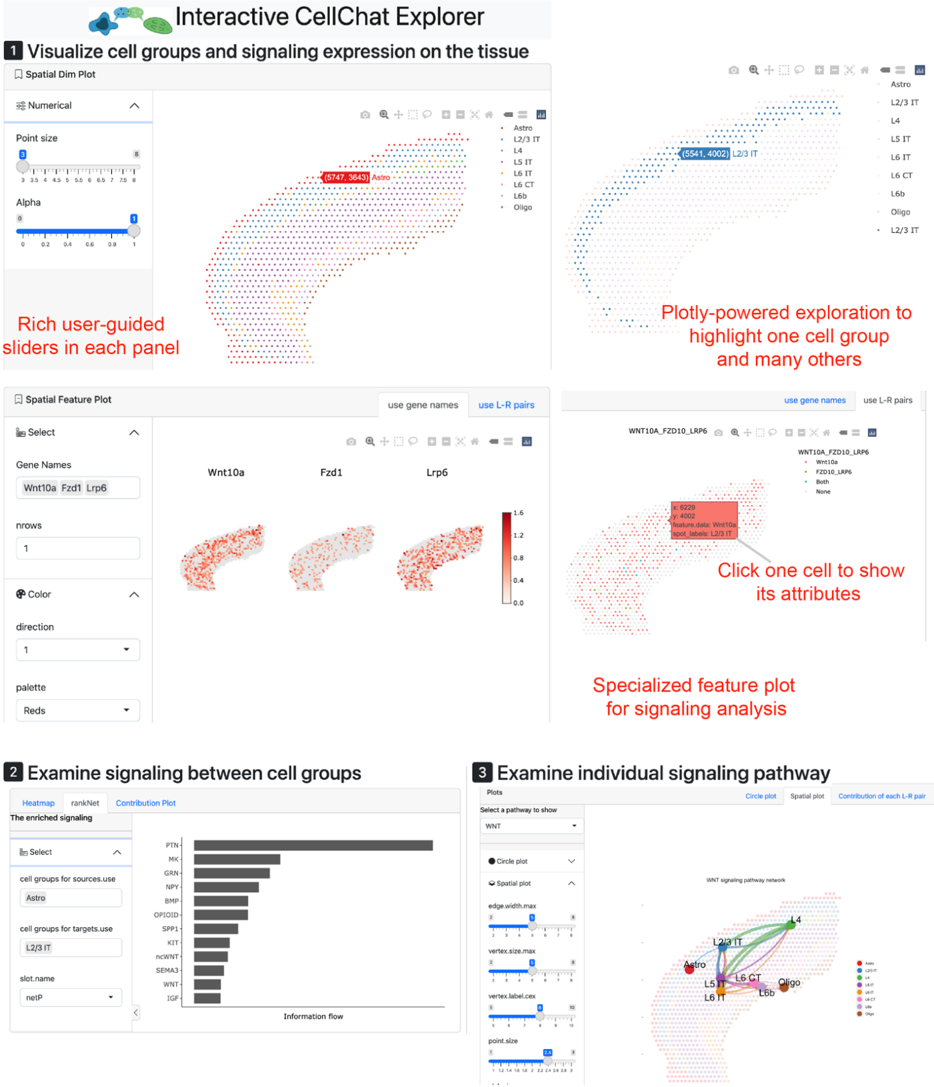
Recent advances in single-cell sequencing technologies offer an opportunity to explore cell-cell communication in tissues systematically and with reduced bias. A key challenge is integrating known molecular interactions and measurements into a framework to identify and analyze complex cell-cell communication networks. Previously, we developed a computational tool, named CellChat, that infers and analyzes cell-cell communication networks from single-cell transcriptomic data within an easily interpretable framework. CellChat quantifies the signaling communication probability between two cell groups using a simplified mass-action-based model, which incorporates the core interaction between ligands and receptors with multisubunit structure along with modulation by cofactors. Importantly, CellChat performs a systematic and comparative analysis of cell-cell communication using a variety of quantitative metrics and machine-learning approaches. CellChat v2 is an updated version that includes additional comparison functionalities, an expanded database of ligand-receptor pairs along with rich functional annotations, and an Interactive CellChat Explorer. Here we provide a step-by-step protocol for using CellChat v2 on single-cell transcriptomic data, including inference and analysis of cell-cell communication from one dataset and identification of altered intercellular communication, signals and cell populations from different datasets across biological conditions. The R implementation of CellChat v2 toolkit and its tutorials together with the graphic outputs are available at https://github.com/jinworks/CellChat . This protocol typically takes ~5 min depending on dataset size and requires a basic understanding of R and single-cell data analysis but no specialized bioinformatics training for its implementation.
Overview
CoChat Summary
TL;DR
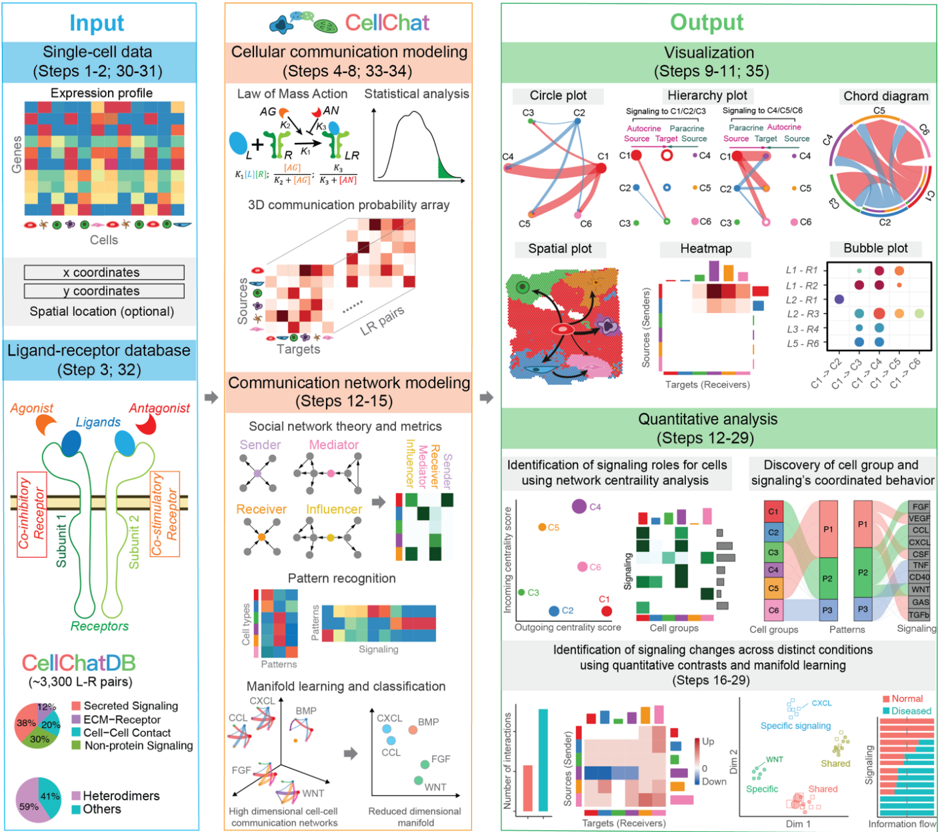
CellChat v2 is an R toolkit and step-by-step protocol for inferring, analyzing, and comparing cell–cell communication from scRNA-seq and spatially resolved transcriptomics. It extends the original CellChat with spatial proximity constraints, expanded ligand–receptor resources, comparison tools, and interactive exploration.
Key findings
- CellChat v2 infers communication probability using a simplified mass action-based model that incorporates multi-subunit ligand–receptor complexes and cofactors, with significance assessed by permutation tests.
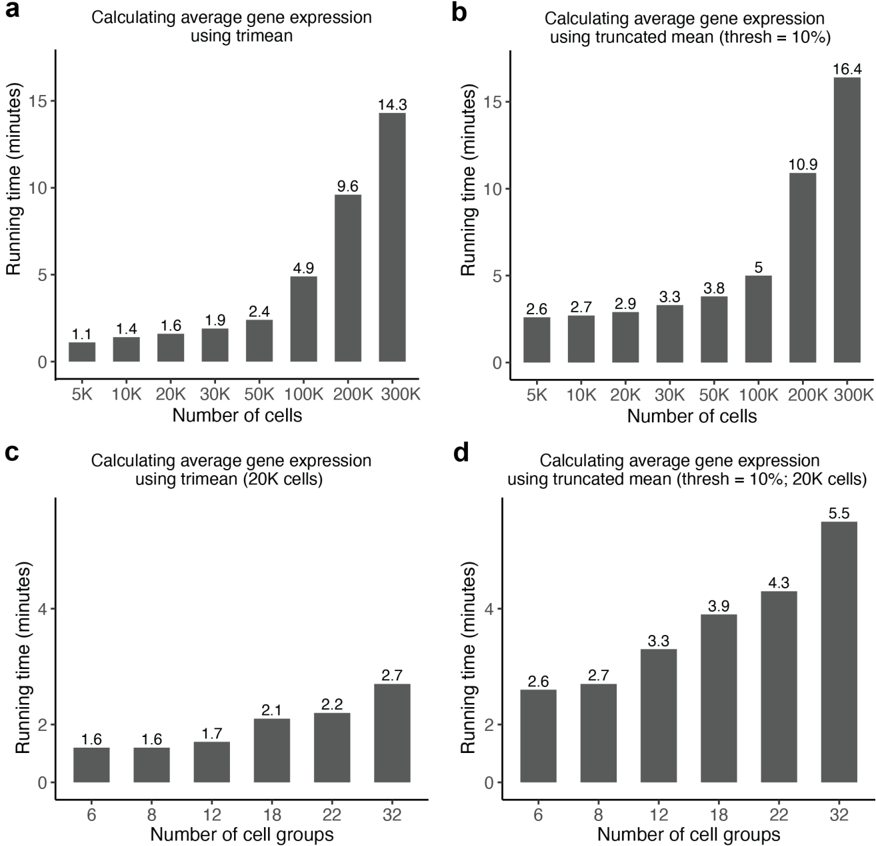
- The protocol typically takes around 20 minutes and requires no specialized prior bioinformatics training; CellChat ran in ~15 mins on an adult human skin atlas of ~300,000 cells.
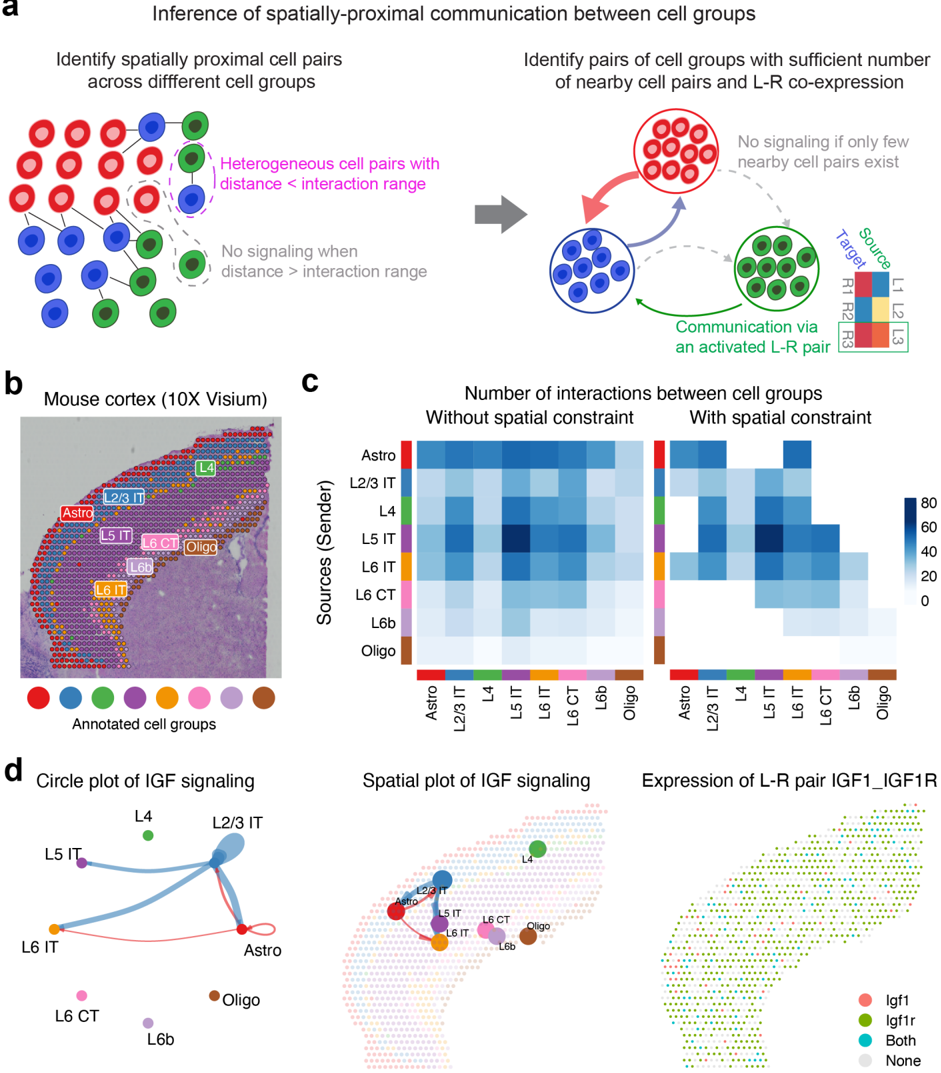
- CellChatDB was expanded to include more than 1,000 protein and non-protein interactions, with a total of ~3,300 interactions for both mouse and human; spatial inference uses a default maximum diffusion range of 250 µm.
- In systematic evaluations of more than 15 cell–cell communication inference methods, CellChat was among the top-performing methods.
Methods
- Step-by-step protocol for using CellChat v2 on scRNA-seq and spatially resolved transcriptomic data, requiring normalized gene expression data, user-assigned cell labels, and, for spatial data, spatial locations plus scale factors/spot diameters.
- Main analyses include ligand–receptor- and pathway-level communication inference, network centrality analysis, pattern recognition, manifold learning, differential expression, and cross-condition comparison; spatial inference first identifies physically proximal cell pairs within a maximum diffusion range and then cell-group pairs with sufficient nearby cell pairs.
- Example applications include human skin non-lesional vs lesional atopic dermatitis, embryonic mouse skin E13.5 vs E14.5, mouse brain 10X Visium, and human adult intestine 10X Visium data.
Limitations
- The paper states that CellChatDB may miss ligand–receptor interactions, though users can update it; CellChat infers interactions between defined cell groups without considering heterogeneity within those groups; and it is limited to hypothesis generation with heuristics and limited benchmarking.
- The paper also states that cross-condition analysis is largely restricted to pairwise comparisons, non-protein communication is estimated via key mediators or enzymes, and the simplified mass action model plus lack of downstream signaling events may limit inference accuracy.
- The text makes evident that output quality depends on dataset quality, including sufficient sequencing depth, simultaneous measurement of paired ligand and receptor genes in image-based spatial methods, batch effects, and the use of replicates and control datasets.
Model-written summary. Check it against the paper before relying on it.
Integrity signals
Registry
Cites
Statistics
Figures
Verification
Claims the paper makes
0 Valid · 15 Not valid · 26 Not checked · 99 Own results and interpretations
The cited sources that could be checked couldn’t confirm or dispute this claim.
In the paper
“Both CellChat v2 and CellPhoneDB v3 can eliminate some false positive communication links by utilizing spatial information.”
§ CellChat for systematic analysis of cell-cell communication from single-cell and spatially resolved transcriptomics > Running
What the sources say
- Could not verifycites [23] Yang, A.C. et al. Dysregulation of brain and choroid plexus cell types in severe COVID-19. Nature 595, 565-571 (2021). sourceExperimental — accuracy not yet measured
Our copy of Yang et al. (2021) applies only CellChat v.0.02 on snRNA-seq ligand–receptor expression (Methods, 'Cell–cell communication') and never mentions CellChat v2, CellPhoneDB (any version), or spatial-transcriptomic filtering of false-positive interactions. Searches for 'CellPhoneDB', 'spatial information / false positive communication links' and 'spatial transcriptomics' returned only the CellChat methods paragraph, the snRNA-seq QC/integration sections (which describe dissociated nuclei, no coordinates) and unrelated reference lists. The paper therefore makes no statement about the capabilities the claim attributes to it, so the claim can be neither supported nor contradicted from our copy. (LLM, conf=0.72)
plainstates a cause- Asserted: passes — The authors put it forward as true.
- Checkable: passes — It can be checked against evidence.
- Load-bearing: unclear — It is unclear whether the paper’s conclusions depend on it.
- Based: passes — The paper gives a reason why it holds.
- Rests on an assumption not shown here.
- Could not verify
None of the sources cited for this claim have been checked yet.
In the paper
“expanded the CellChatDB to include more than 1000 protein and non-protein interactions (e.g., metabolic and synaptic signaling) with rich annotations, based on the peer reviewed literature and existing databases such as CellPhoneDB 10 and NeuronChatDB 11”
§ CellChat for systematic analysis of cell-cell communication from single-cell and spatially resolved transcriptomics > Development of the protocol
What the sources say
- Could not verifycites [10] Dimitrov, D. et al. Comparison of methods and resources for cell-cell communication inference from single-cell RNA-Seq data. Nat Commun 13, 3224 (2022). sourceExperimental — accuracy not yet measured
Our copy of Dimitrov et al. (2022) treats CellChatDB only as one of the resources benchmarked: Table 1 lists 'CellChat#14 | CellChatDB' with its scoring system, and the Results section 'Resource uniqueness and overlap' (with Fig. 2 lineage and Fig. 3) reports that CellChatDB includes protein complexes and shares on average ~40-50% of the interactions present in other resources, with curated inputs from Guide to Pharmacology, CellPhoneDB, HMPR and Ramilowski commonly incorporated into later resources. No passage describes a CellChat v2 release, an expansion to more than 1000 protein and non-protein (metabolic, synaptic) interactions, or 'rich annotations', and NeuronChatDB is not mentioned anywhere; the CellChat work cited here is Jin et al. (2021), ref. 14/54. Searches for 'CellChat v2', 'non-protein interactions', 'NeuronChatDB', 'metabolic and synaptic signaling' and 'CellChatDB curation/number of interactions' returned nothing addressing the claim, so the attributed statement can be neither confirmed nor contradicted from our copy. (LLM, conf=0.72)
- Not checked yetcites [11] Liu, Z., Sun, D. & Wang, C. Evaluation of cell-cell interaction methods by integrating single-cell RNA sequencing data with spatial information. Genome Biol 23, 218 (2022). source
Checked before — its earlier verdict is held back until a new check runs.
plainstates a cause- Asserted: passes — The authors put it forward as true.
- Checkable: passes — It can be checked against evidence.
- Load-bearing: passes — The paper’s conclusions depend on it.
- Based: passes — The paper gives a reason why it holds.
- Could not verify
A result the paper reports from its own data — it cites no other source for it, so there is none to check. The quote shows it is in the paper.
In the paper
“CellChat computationally scales well with the number of cells and cell groups in the data, as reflected by the observed running time of ~15 mins on a single cell atlas of adult human skin with ~300,000 cells”
§ CellChat for systematic analysis of cell-cell communication from single-cell and spatially resolved transcriptomics > Development of the protocol
plainstates an associationSingle case- Asserted: passes — The authors put it forward as true.
- Checkable: passes — It can be checked against evidence.
- Load-bearing: unclear — It is unclear whether the paper’s conclusions depend on it.
- Based: passes — The paper gives a reason why it holds.
A result the paper reports from its own data — it cites no other source for it, so there is none to check. The quote shows it is in the paper.
In the paper
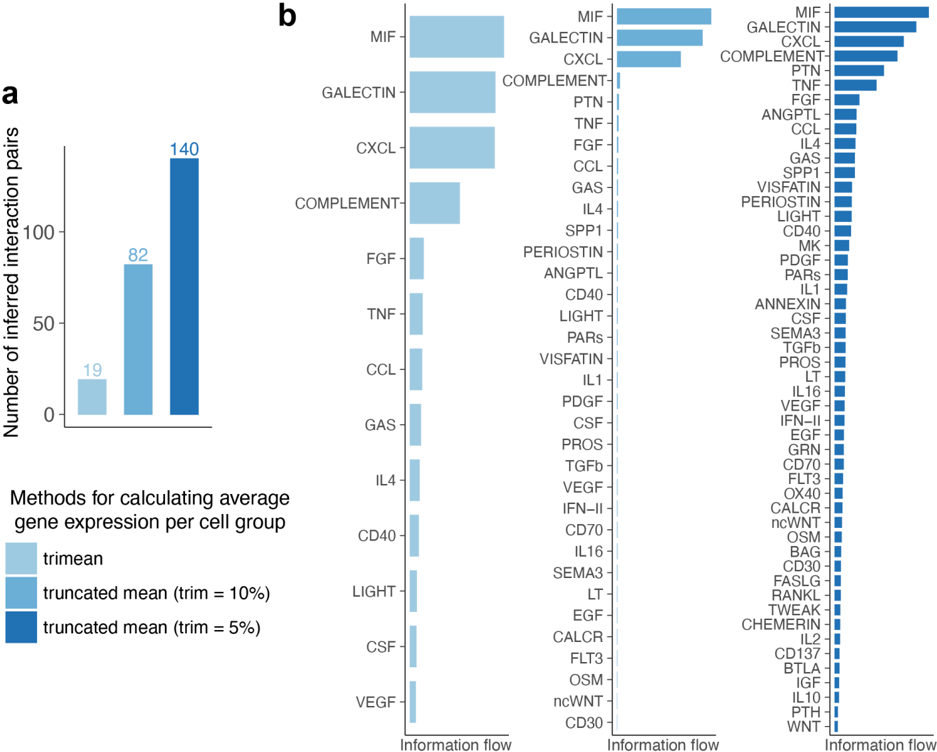
“The inferred cell-cell communications depend on the method for computing average expression per cell group.”
§ CellChat for systematic analysis of cell-cell communication from single-cell and spatially resolved transcriptomics > Troubleshooting
plainstates a cause- Asserted: passes — The authors put it forward as true.
- Checkable: passes — It can be checked against evidence.
- Load-bearing: unclear — It is unclear whether the paper’s conclusions depend on it.
- Based: passes — The paper gives a reason why it holds.
A result the paper states — it cites no source for it, so there is none to check. The quote shows it is in the paper.
In the paper
“CellChat can identify the signaling networks with larger (or smaller) difference based on their Euclidean distance in the shared two-dimensions space.”
§ CellChat for systematic analysis of cell-cell communication from single-cell and spatially resolved transcriptomics > Running
plainstates an association- Asserted: passes — The authors put it forward as true.
- Checkable: passes — It can be checked against evidence.
- Load-bearing: passes — The paper’s conclusions depend on it.
- Based: passes — The paper gives a reason why it holds.
38 more claims
Create a free account to see all 140 claims and to verify the 39 references still open.
- Probably not a substantial claim. 81
- It may state two separate claims as one. 36
- The quote only partly states this claim. 1
Claims other papers make about this one
Each is checked against this paper’s own text: does it say what the citing paper says it does?
In the citing paper
“The predicted total number of significant ligand–receptor interactions for each pair of cell types indicated that monocytes were the main drivers of cell-to-cell communication, increasing from NS as early as in SS and through advanced MASH, whereas lymphocyte interactions peaked in early MASH but decreased in advanced MASH (Fig. 8a).”
In the citing paper
“Pathway-level analysis of these clusters demonstrated increased inferred signaling through synaptic pathways, including Glutamate, NRXN, GABA-A, and GABA-B (Fig. 4C–D), based on coordinated ligand-receptor expression patterns [97].”
From Tau Ablation Rewires Brain Cell Programs in Health and Restores Function in Disease (2026) · cites this paper as [97]
Citations
Cites
Comprehensive Integration of Single-Cell Data
Stuart, T., Butler, A., Hoffman, P., Hafemeister, C., Papalexi, E., Mauck, W. M., Hao, Y., Stoeckius, M., Smibert, P., & Satija, R. (2019) · Cell · doi:10.1016/j.cell.2019.05.031 · Cited by 15,453
Inference and analysis of cell-cell communication using CellChat
Jin, S., Guerrero-Juarez, C. F., Zhang, L., Chang, I., Ramos, R., Kuan, C.-H., Myung, P., Plikus, M. V., & Nie, Q. (2021) · Nature Communications · doi:10.1038/s41467-021-21246-9 · Cited by 8,409
Self-citationEfremova, M., Vento-Tormo, M., Teichmann, S. A., & Vento-Tormo, R. (2020) · Nature Protocols · doi:10.1038/s41596-020-0292-x · Cited by 3,449
Single-cell reconstruction of the early maternal–fetal interface in humans
Vento-Tormo, R., Efremova, M., Botting, R. A., Turco, M. Y., Vento-Tormo, M., Meyer, K. B., Park, J.-E., Stephenson, E., Polański, K., Goncalves, A., et al. (2018) · Nature · doi:10.1038/s41586-018-0698-6 · Cited by 2,358 · cited 1×
“The Python tool CellPhoneDB 12,19 is a pioneering method that considers multiple subunits of ligands and receptors to accurately represent known heteromeric molecular complexes.”
NicheNet: Modeling intercellular communication by linking ligands to target genes
Browaeys, R., Saelens, W., & Saeys, Y. (2020) · Nature Methods · doi:10.1038/s41592-019-0667-5 · Cited by 2,192
Deciphering cell–cell interactions and communication from gene expression
Armingol, E., Officer, A., Harismendy, O., & Lewis, N. E. (2021) · Nature Reviews Genetics · doi:10.1038/s41576-020-00292-x · Cited by 1,267
Integrating single-cell and spatial transcriptomics to elucidate intercellular tissue dynamics
Longo, S. K., Guo, M. G., Ji, A. L., & Khavari, P. A. (2021) · Nature Reviews Genetics · doi:10.1038/s41576-021-00370-8 · Cited by 1,059
An atlas of healthy and injured cell states and niches in the human kidney
Lake, B. B., Menon, R., Winfree, S., Hu, Q., Melo Ferreira, R., Kalhor, K., Barwinska, D., Otto, E. A., Ferkowicz, M., Diep, D., et al. (2023) · Nature · doi:10.1038/s41586-023-05769-3 · Cited by 743 · cited 2×
“Recently, state-and niche-dependent signaling pathways for reparative states in proximal and distal tubules have been identified by mining healthy and injured human kidney single-cell atlases 26 .”
Dimitrov, D., Türei, D., Garrido-Rodriguez, M., Burmedi, P. L., Nagai, J. S., Boys, C., Ramirez Flores, R. O., Kim, H., Szalai, B., Costa, I. G., et al. (2022) · Nature Communications · doi:10.1038/s41467-022-30755-0 · Cited by 664 · cited 3×
“With limited benchmarking studies 10,11,18 , the question of how to better validate the inferred signaling networks and their downstream gene outputs remains to be answered.”
Mapping the temporal and spatial dynamics of the human endometrium in vivo and in vitro
Garcia-Alonso, L., Handfield, L.-F., Roberts, K., Nikolakopoulou, K., Fernando, R. C., Gardner, L., Woodhams, B., Arutyunyan, A., Polanski, K., Hoo, R., et al. (2021) · Nature Genetics · doi:10.1038/s41588-021-00972-2 · Cited by 662
Cited by
Items 601–700 of 1,770
Wysocka, A., Jaśkiewicz, K., Wozniak, J., Rydzanicz, M., Ploski, R., Udziela, M., Szaflik, J. P., & Gajęcka, M. (2026) · Investigative Ophthalmology & Visual Science · doi:10.1167/iovs.67.4.7 · Cited by 3
Huang, Y., Guo, J., Yao, F., Feng, B., Gong, D., Dang, K., Hu, T., Deng, S., Liu, Y., Tan, C., et al. (2026) · Cell & Bioscience · doi:10.1186/s13578-026-01571-6 · Cited by 3
“1.2) [42] with default parameters and the precompiled mouse ligand-receptor interaction database provided within the package.”
InfluentialNetwork hypermotifs in biological systems: structure, dynamics, and functional implications
Singh, M. S., Bhattacharya, P., & Raman, K. (2026) · npj Systems Biology and Applications · doi:10.1038/s41540-026-00701-7 · Cited by 3
Wu, Q.-Q., Peng, S.-Q., Zhang, Y.-L., Yang, Y., Shi, W., Wen, X., Liu, Z.-Y., Zhou, X.-J., Zheng, M., Hu, L.-D., et al. (2026) · Nature Communications · doi:10.1038/s41467-026-72451-3 · Cited by 3
Harada, Y., Masuda, A., Matsuura, T., Nagata, K., Nanno, Y., Masamune, A., Kodama, Y., Hara, E., & Matsumoto, T. (2026) · Cellular and Molecular Gastroenterology and Hepatology · doi:10.1016/j.jcmgh.2026.101808 · Cited by 3
Zou, X., Wang, X., Xiong, B., Wang, M., Yang, D., Lin, Z., & Wang, Z. (2026) · Frontiers in Immunology · doi:10.3389/fimmu.2026.1848643 · Cited by 3
“…have undergone signi fi cant recent updates: CellChat v2 now quanti fi es signaling communication probability using a mass-action-based model incorporating multisubunit structures and cofactor modulation, with an expanded ligand – receptor database and interactive visualization capabilities (58).”
A Meta-Review of Spatial Transcriptomics Analysis Software
Gillespie, J. L., Pietrzak, M., Song, M., & Chung, D. (2025) · Cells · doi:10.3390/cells14141060 · Cited by 3
“CellChat [60], ICELLNET [61], and CellPhoneDB [62] all performed very well with most datasets.”
Topical rewetting restores the autoimmune-damaged corneal stroma
Efraim, Y., Chen, Y. T., An, L., Niknezhad, S. V., Pham, D., Cheong, K. N., Robledo, M. A., Sinada, H., McNamara, N. A., & Knox, S. M. (2026) · iScience · doi:10.1016/j.isci.2026.116130 · Cited by 3
Spatial and Single-cell Transcriptomics Reveal Programs Governing Fibroblastic Foci FibroblastsPreprint
Stein, Y., Freund, O., Borsekofsky, S., Cohn‐Schwartz, D., Levy, L., Ofek, E., Spitzer, A., Adams, T. S., Schupp, J. C., Kaminski, N., et al. (2025) · bioRxiv (Cold Spring Harbor Laboratory) · doi:10.1101/2025.09.26.678416 · Cited by 3
ecDNA-driven oncogene super-expressors shape immunoevasive tumor microenvironmentPreprint
Qiao, K., Yang, Q., Li, T., Chen, X., Yazgan, Z., Kim, Y. J., Gilbreath, C., Lim, J. Y. S., Xie, Y., Sun, X., et al. (2025) · bioRxiv (Cold Spring Harbor Laboratory) · doi:10.1101/2025.11.15.688565 · Cited by 3
Sathe, A., Zhang, M., Bai, X., Kang, J. I., Meka, R. S., Sun, H., Grimes, S. M., Khan, A., Liu, M., Luksik, A. S., et al. (2025) · bioRxiv (Cold Spring Harbor Laboratory) · doi:10.1101/2025.11.14.688538 · Cited by 3
Xu, H., Lee, S., Leser, F. S., Fedorova, O., Lu, P., Song, E., Touat, M., Eichmann, A., Iwasaki, A., Pyle, A. M., et al. (2026) · bioRxiv (Cold Spring Harbor Laboratory) · doi:10.64898/2026.01.07.698153 · Cited by 3
“Interactions between the myeloid and lymphoid cell clusters were predicted using CellChat 35 .”
Sandhi, S., Somers, H. M., Cox, M., Nobrega, C., Seaman, R. P., Bakers, E., Letchner, O., Reeve, R. E., Menard, R., Godwin, J. W., et al. (2026) · Aging Cell · doi:10.64898/2026.02.09.704879 · Cited by 3
“1.2) (Jin et al., 2025) was used to infer intercellular communication within the single-nuclei data.”
InfluentialMartija, A. A., Bristow, B. N., Rana, D., Bollu, S., Fazzari, E., Baisiwala, S., Nguyen, C. V., Ge, W., Kan, R. L., Azizad, D. J., et al. (2026) · bioRxiv (Cold Spring Harbor Laboratory) · doi:10.64898/2026.05.14.725216 · Cited by 3
Glioblastoma-associated fibroblasts enhance vascular stiffness and confer to poor prognosis
Long, X., Wang, X., Wang, S., Huang, W., Gao, W., Li, X., Huang, M., Du, Y., Guan, F., Deng, K., et al. (2025) · International Journal of Surgery · doi:10.1097/js9.0000000000004114 · Cited by 3
Branco, L., Yentür, Z., Yang, M. J., Balachandran, P., Sedov, K., Kumar, G., Zafar, F., Kagermeier, T., Sarieva, K., Becker, K., et al. (2026) · Stem Cell Reports · doi:10.1016/j.stemcr.2026.103112 · Cited by 3
Dynamic remodeling of the pancreas immune landscape in obesity
Koshkin, A., Tanagala, K. K. K., Eichinger, A., Chait, M., Young, A., Shakil, S., Yoshikawa, J., Sakamoto, Y., Wells, S. B., Fazlollahi, L., et al. (2026) · Nature Communications · doi:10.1038/s41467-026-75090-w · Cited by 3
Preoperative Serum Alkaline Phosphatase Predicts Arteriovenous Fistula Maturation Failure
Si, T., Yu, H., Shen, Z., Chen, G., Shi, Z., Wu, S., Ma, S., Ren, B., Gu, H., Hu, D., et al. (2026) · Kidney International Reports · doi:10.1016/j.ekir.2026.106687 · Cited by 3
Foley, K. E., Weekman, E. M., & Wilcock, D. M. (2026) · Alzheimer s & Dementia Translational Research & Clinical Interventions · doi:10.1002/trc2.70201 · Cited by 3
Zhang, C. J., Fan, J., Guo, Y., Xiao, F., Chao, J., & Yang, D. (2026) · Angewandte Chemie International Edition · doi:10.1002/anie.2621334 · Cited by 3
Time-resolved single-cell transcriptomics maps zebrafish heart development
Tarasco, M., Juan, T., Alayoubi, Y., Kulkarni, R., Schumann, A., da Silva, A. R., Albu, M., Dwari, M., Mirza, D., Günther, S., et al. (2026) · Cell Reports · doi:10.1016/j.celrep.2026.117249 · Cited by 3
Tumor immune microenvironment remodeling predicts response to checkpoint inhibitor therapy
Lin, Z., Chandra, M., Srinivas, N., Ugurel, S., Becker, J. C., & Aran, D. (2026) · Cancer Cell · doi:10.1016/j.ccell.2026.08.007 · Cited by 4
IRF4 Promotes Immune Evasion and Shapes the Tumor Microenvironment in Follicular Lymphoma
Dasari, S., Wenzl, K., Nelson, G. M., Guzman, E. C., Wang, Z., Chartier, L., Yang, Z.-Z., Villasboas, J. C., Olson, J., Mukherjee, P., et al. (2025) · Blood Cancer Discovery · doi:10.1158/2643-3230.bcd-24-0223 · Cited by 3
Yin, Z., Xi, Z. H. E. N., Li, H., Duan, H., Hu, X., Yu, T., Shi, Q., Liu, Z., Li, Y., Zhang, P., et al. (2026) · Oncology Research Featuring Preclinical and Clinical Cancer Therapeutics · doi:10.32604/or.2026.077808 · Cited by 3
Short-term gonadal cultures are sufficient for germline transmission in a songbird
Biegler, M. T., Harter, E., Sidhu, A. V., Szialta, C., Durham, G. P., Tchernichovski, L., Collier, P., Luo, J., Wang, W., MacIsaac, R., et al. (2026) · Stem Cell Reports · doi:10.1016/j.stemcr.2026.103052 · Cited by 3
Ye, J., Ding, Y., Wu, R., Ding, H., Ren, J., Xia, Z., Chen, J., Xie, S., & Jia, Y. (2025) · International Journal of Surgery · doi:10.1097/js9.0000000000003519 · Cited by 3
Wu, P., Gao, R., Zhao, K., & Meng, X. (2025) · Translational Cancer Research · doi:10.21037/tcr-2024-2581 · Cited by 3
Zhang, W., Good, Z., Baertsch, M., Lu, G., Hickey, J. W., Hildebrand, R., Chang, S., Gentles, A. J., Sunwoo, J. B., Le, Q., et al. (2025) · bioRxiv (Cold Spring Harbor Laboratory) · doi:10.1101/2025.04.30.651486 · Cited by 3
Puluca, N., Vafadarnejad, E., Saleem, T., Rammoser, C., Wirth, F., Schwerdt, V., Dreßen, M., Gottmann, I., Reiminger, X., Yan, Y., et al. (2026) · Cardiovascular Research · doi:10.1093/cvr/cvag189 · Cited by 2
Feasibility of Ex Vivo Ligandomics
Waduge, P., Veettil, R. A., Zhang, B., Huang, C., Tian, H., & Li, W. (2025) · Biomolecules · doi:10.3390/biom15010145 · Cited by 2
Sosa-Díaz, E., Reyes-Gopar, H., de Anda‐Jáuregui, G., & Lemus, E. H. (2025) · Nutrients · doi:10.3390/nu17030429 · Cited by 2
Graph-Based 3-Dimensional Spatial Gene Neighborhood Networks of Single Cells in Gels and Tissues
Fang, Z., Krusen, K., Priest, H., Wang, M., Kim, S., Sriram, A., Yellanki, A., Singh, A. K., Horwitz, E. M., & Coskun, A. F. (2025) · BME Frontiers · doi:10.34133/bmef.0110 · Cited by 2
Hsiao, C., Liao, W., Li, J., Chou, Y., Chou, Y., Lin, J.-R., Chen, C., & Liu, C. (2025) · Cancer Cell International · doi:10.1186/s12935-025-03811-0 · Cited by 2
“Cell-to-cell communication analyses were conducted using CellChat package (version 2.1.0 in R [28, 29]), on the single-cell RNA dataset, SCP2154, focusing on interactions involving DCN-overexpressing stromal cells and other tumor microenvironmental cells types.”
InfluentialA practical guide to sequencing in neuropsychiatric research
Minerva, A. R., DeBerardine, M., Lin, R., Kim, H. J. J., Rogers, F. D., Rashford, R. L., & Peña, C. J. (2025) · NPP—Digital Psychiatry and Neuroscience · doi:10.1038/s44277-025-00041-0 · Cited by 2
“This is essential for understanding cellular heterogeneity [4, 5], how cells interact [6 – 8], or how diverse cell types are altered differently across conditions [9 – 12].”
He, Y., Li, S., Guo, L., Chen, M., Pan, H., Li, Z., Tian, H., Yu, H., Zhou, Y., & Xiao, H. (2025) · Frontiers in Immunology · doi:10.3389/fimmu.2025.1653738 · Cited by 2
Zhao, L. Z., Chen, Z., Ma, X., & Chi, X. (2025) · Journal of Neuroscience Research · doi:10.1002/jnr.70085 · Cited by 2
GDF5 modulation of MuSC pool as a potential therapeutic benefit for DMD
Gentil, C., Bourguiba, A., Vergnol, A., Cadot, B., Guesmia, Z., Saillard, L., Meunier, P., Hoareau‐Coudert, B., Lemaître, M., Falcone, S., et al. (2026) · Molecular Therapy — Nucleic Acids · doi:10.1016/j.omtn.2026.103005 · Cited by 2
DD-CC-II: Data Driven Cell–Cell Interaction Inference and Its Application to COVID-19
Park, H., & Miyano, S. (2025) · International Journal of Molecular Sciences · doi:10.3390/ijms262010170 · Cited by 2
“Product-Int or permutation-based models, including CellChat, NATMI, and scSeqComm, estimate interaction probabilities using geometric or statistical normalization strategies [5–7].”
Weng, Y., Jia, R., & Ning, P. (2025) · Discover Oncology · doi:10.1007/s12672-025-03877-2 · Cited by 2
Wang, Q., Deng, L., Xu, S., Guo, P., Zhu, H., Ge, H., Gong, Y., Du, G., Huang, K., Su, C., et al. (2025) · Interdisciplinary medicine · doi:10.1002/inmd.70067 · Cited by 2
Targeting the HMGB1-IL32 pathway to alleviate T cell exhaustion in epithelial ovarian cancer
Murmu, A., & Győrffy, B. (2025) · GeroScience · doi:10.1007/s11357-025-01963-5 · Cited by 2
Shang, Q., Wang, Z., Peng, J., Yang, D., Li, W., Huang, X., Qing, M., Cheng, H., Liu, J., Dan, H., et al. (2025) · Cell Death Discovery · doi:10.1038/s41420-025-02853-7 · Cited by 2
“CellChat v2 is an updated version of Cellchat, which performs spatial intercellular communication analysis [44].”
Tao, J., Antoine, D., Jalodia, R., Valdes, E., Boyles, S. M., Hulme, W. F., & Roy, S. (2025) · Communications Biology · doi:10.1038/s42003-025-09150-0 · Cited by 2
“Female adolescents were used to collect the midbrain tissues.”
Rivera-Caraballo, K., Lee, T. J., Sinha, A., Orecchioni, M., Pacholczyk, R., Vázquez-Arreguín, K., Sharma, S., Jones, K., Vemuri, K., Sahu, U., et al. (2025) · Cancer Research · doi:10.1158/0008-5472.can-25-1402 · Cited by 2
Liu, D., Shi, H. W., Lin, Y., Chen, Z. B., & Zou, Q. (2025) · Genomics · doi:10.1016/j.ygeno.2025.111179 · Cited by 2
Yang, Y.-E., Lin, Y.-A., Ling, L.-L., Kuo, I.-Y., Kuo, W., Liu, H., & Wang, Y. (2026) · Oncogenesis · doi:10.1038/s41389-026-00596-3 · Cited by 2
“Quantitative assessment revealed that increased in fi ltration of CD163 + /Rab37 + /OPN + cells was signi fi cantly associated with cancer recurrence (Fig.”
InfluentialThe Evolution of Spatial Omics Technologies Introduces A Novel Avenue for Lung Cancer Research
(何越), Y. H., Li, Z., (王文香), W. W., Liu, X., Lu, S., (白晶), J. B., Weng, L., Zhang, Q., Wang, J., & Chen, K. (2026) · Genomics Proteomics & Bioinformatics · doi:10.1093/gpbjnl/qzag010 · Cited by 2
“0 for analyzing cell-to-cell gene interactions [118–120]; SVCA for quantifying cell-to-cell interactions [121]; MISTy using a multi-slice approach for simulating cell interactions [110]; and NICHES for visualizing L–”
MultiSP deciphers tissue structure and multicellular communication from spatial multi-omics data
Mo, C., Zou, X., & Jin, S. (2026) · Cell Genomics · doi:10.1016/j.xgen.2026.101141 · Cited by 2
“In addition, existing studies of cell-cell communication inference, including our previously developed CellChat method, 36,37 rely solely on mRNA expression as a proxy for cell-surface protein levels, assuming that mRNA abundance correlates well with protein expression.”
Self-citationDaher, A., Trucu, D., & Eftimie, R. (2026) · npj Systems Biology and Applications · doi:10.1038/s41540-026-00657-8 · Cited by 2
“It should be noted, however, that CellPho-neDB does not incorporate spatial information regarding cell locations or distances between interacting cells, which is important since ligands and receptors often interact within limited maximal diffusion spatial ranges 27,33 .”
Ma, Q., Xu, S., Ma, N., Li, K., Liu, Y., & Ma, F. (2026) · Frontiers in Immunology · doi:10.3389/fimmu.2026.1741261 · Cited by 2
Edelstein, S. E., Mizoguchi, S., Gracia, M. T., Wang, N., Lee, V., Obata, T., Kim, H., Haynes, C. V., Danelski, C., Tsuchiya, T., et al. (2026) · iScience · doi:10.1016/j.isci.2026.115030 · Cited by 2
Yoo, J. Y., Akter, S., Zuo, Q., Rilloraza, M., Kazemi, A., Wu, W., Goel, M., Lam, A., Dutta, D., Barnick, B., et al. (2026) · Cancer Research · doi:10.1158/0008-5472.can-25-3161 · Cited by 2
Chen, C.-W., Zhang, X., Yan, Y.-M., Pan, K.-W., Ou, F., Su, K., & Cheng, B. (2026) · Cell Death Discovery · doi:10.1038/s41420-026-02991-6 · Cited by 2
Heterogeneity and Clinical Relevance of Human Adipose Stromal and Progenitor Cells
Albert, M., Nalir, K., Zhong, J., & Massier, L. (2026) · Diabetes & Metabolism Journal · doi:10.4093/dmj.2025.1182 · Cited by 2
“Cell-cell communication inference in AT follows general frameworks, with CellPhoneDB [74] and CellChat [75] most commonly applied.”
Li, Y., Lu, B., Zhao, Z., Gong, M., Lyu, D., Zhang, H., Huang, R., Yao, Y., Liu, Y., Huang, P., et al. (2026) · Frontiers in Immunology · doi:10.3389/fimmu.2026.1616889 · Cited by 2
“Furthermore, intercellular signaling patterns were reconstructed using the CellChat R package (53), utilizing the curated CellChatDB to quantify and visualize ligand-receptor interaction strengths across cell types.”
Shan, J., Shi, R., Jiang, L., Dufort, C., Miao, W., Mai, T.-W., Lyu, J., Barreiro, J., Chen, K., Leak, R. K., et al. (2026) · iScience · doi:10.1016/j.isci.2026.115331 · Cited by 2
Wang, Y., He, J., Lu, W., Zhao, Y., Feng, K., Wu, H., Zhang, Y. M., & Bai, Y. (2026) · Nano Today · doi:10.1016/j.nantod.2026.103041 · Cited by 2
Roy, B., Obaid, A., Wang, Z., Kovacs, K. G., Ohashi, S. N., Kalayci, F. N. C., Joo, D., Masi, G., Coppola, C., Das, S., et al. (2026) · Proceedings of the National Academy of Sciences · doi:10.1073/pnas.2525717123 · Cited by 2
Yin, S., Gao, H., Li, Q., Wang, M., Zhang, P., Guo, Y., Nan, P., Kong, W., Shen, H., Wang, L., et al. (2026) · npj Precision Oncology · doi:10.1038/s41698-026-01446-6 · Cited by 2
“2.0) 61 .”
InfluentialSheikh, M. A. A., Kimura, K., Motoyama, E., Asano, K., Deleeuw, V., Sips, P. Y., Tokunaga, C., Matsunaga, H., Kanki, S., Koizumi, S., et al. (2026) · Scientific Reports · doi:10.1038/s41598-026-50847-x · Cited by 2
“Cell–cell communication analysis was performed using the CellChat R package (Version 2.1.2) 26,27 .”
InfluentialAdvancing lupus nephritis research through multi-omics and predictive modeling
Mou, L., Lu, Y., Wu, Z., & Pu, Z. (2026) · Innate Immunity · doi:10.1177/17534259261426818 · Cited by 2
“21 We converted the Seurat object containing single-cell RNA-seq data into a CellChat object using the create CellChat function and the CellChatDB human database.”
Zhu, Y., Ran, Y., Fu, T., Zheng, X. M., Chen, Y., Liang, C., Li, Y., Huang, R., Zhao, H., Pan, X., et al. (2026) · Frontiers in Cell and Developmental Biology · doi:10.3389/fcell.2026.1786720 · Cited by 2
“In this analysis, only the expression of receptors and ligands in the cells of any type from the different groups > 10% was included to identify ligand–receptor interactions among all clusters of cells (Jin et al., 2025).”
InfluentialMapping of Neutrophils in Cancers: Insights From Spatial Omics Technologies
Li, X., He, X., Cao, S., Shih, C., Chen, X.-Y., & Ng, L. G. (2026) · European Journal of Immunology · doi:10.1002/eji.70194 · Cited by 2
“The expanding applications of scRNA-seq now extend beyond cellular heterogeneity assessment to include temporal modeling and reconstruction of intercellular communication networks [ 14, 15 ].”
Chen, J., Hao, Y., Feng, Y., Dai, Y., Shi, H., & Zhu, L. (2026) · Frontiers in Immunology · doi:10.3389/fimmu.2026.1747043 · Cited by 2
Macrophage reprogramming nodes for bone repair identified by single-cell and spatial omics
Chen, H., Lei, C., Yeo, G. C., Lim, K. S., & Xu, C. (2026) · Bone · doi:10.1016/j.bone.2026.117937 · Cited by 2
Cytokine-mediated intrinsic and extrinsic regulation of anti-tumor adoptive T cell therapy
Hu, J., Qiu, J., Chen, T., & Yu, B. (2026) · Cytokine & Growth Factor Reviews · doi:10.1016/j.cytogfr.2026.05.002 · Cited by 2
Shen, W., Liu, W., Guo, M., You, T., Wang, Y., Wen, T., Liang, S., Xie, X., Jiang, Y., Dong, Q., et al. (2026) · Journal of Extracellular Vesicles · doi:10.1002/jev2.70319 · Cited by 2
“12) under default settings, employing the CellChatDB mouse database (Jin et al. 2025 ).”
Dang, M., Rueda, L. Y. M., Calado, M. J. A., Bansal, H., Nolasco, D. B., Vora, A. U., Mejia, J. D., Huang, M., Tan, W., Qin, L., et al. (2026) · Blood · doi:10.1182/blood.2025032630 · Cited by 2
Modeling human embryo adhesion using a microfluidic platform
Zaragozano, S., Pardo‐Figuerez, M., Monteagudo, A., Quirant, A., Javier, M.-A., González-Fernández, J., Llera-Oyola, J., Volkov, P., Maggi, S., Quintero, L., et al. (2026) · Science Advances · doi:10.1126/sciadv.adz2249 · Cited by 2
“To infer cell-cell communication among ADOC cell populations, we used CellChat (version 2.2.0) using CellChatDB as a receptor-ligand interaction database ( 40 ).”
InfluentialScafidi, A., Kaoma, T., Cerella, C., Campus, E., Grzyb, K., Nosirov, B., Mogensen, F. L., Klein, E., Costa, R. D., Skupin, A., et al. (2026) · Journal of Neuroinflammation · doi:10.1186/s12974-026-03964-3 · Cited by 2
“…transcriptional monocytic subset, was characterized by genes related to metabolic processes, such as oxidative phosphorylation (e.g. MT-CYB, PDK4 and BACH1 ), while cluster 4 was represented by the expression of the prototypical non-classical monocytic marker FCGR3A (encoding CD16).”
Garcia, L., Granotier-Beckers, C., Pineau, D., Sika, D., Hideg, S., Labadie, C., Cázarez, K. A., Kundnani, J., Stuani, L., Gauthier, L., et al. (2026) · Acta Neuropathologica Communications · doi:10.1186/s40478-026-02316-9 · Cited by 2
Mauel, K., HIRSCHMANN, D. J., Blank-Stein, N., Diefenbach-Wilke, M.-L., Eulgem, T., Le, S., Breit, S. N., Soares, M. P., Tsai, V. W.-W., Ginhoux, F., et al. (2026) · Immunity · doi:10.1016/j.immuni.2026.07.006 · Cited by 2
A categorization of spatial transcriptomics methods for cell–cell communication analysis
Fischer, Z., Imkeller, K., Schulz, M. H., & Baumgarten, N. (2026) · Trends in Genetics · doi:10.1016/j.tig.2026.07.004 · Cited by 2
Multimodality Molecular Profiling Nominates Targetable Mechanisms in Progressive RV Dysfunction
Blake, M., Mendelson, J. B., Sternbach, J. D., 김민우, Raveendran, R. M., Moon, R. A., Hartweck, L. M., Tollison, W., Carney, J. P., Markowski, T. W., et al. (2026) · Circulation Research · doi:10.1161/circresaha.126.328649 · Cited by 2
Liu, J., Li, P., Zhang, Y., & Lian, Z. (2025) · Scientific Reports · doi:10.1038/s41598-025-91299-z · Cited by 2
“CellChat is a computational tool designed to infer and analyze communication networks between cells using single-cell transcriptome data, all within a framework that is accessible and easy to interpret 23 .”
Liu, Y., Wang, W., Zheng, G., Xu, W., Wang, Z., Wang, X., Liu, J., Qiu, D., Li, Y., Zhao, Y., et al. (2025) · Discover Oncology · doi:10.1007/s12672-025-02909-1 · Cited by 2
“6.1 package was applied to infer the potential interactions according to the predefined ligand-receptor pairs [21].”
InfluentialLi, Y., Rong, Y., Jiang, K., Zhang, J., Li, J., & Li, G. (2025) · 3 Biotech · doi:10.1007/s13205-025-04448-6 · Cited by 2
““CellChat” package was applied to analyze the expression of different cell ligand–receptor pairs and construct inter-cellular communication networks (Jin et al. 2021, 2024).”
Cao, J., Zeng, J., Meng, Y., Huang, S., Zhang, J., Fang, X., Guo, Y., Shi, W., Liu, Y., Zheng, Z., et al. (2026) · Science Advances · doi:10.1101/2025.09.12.675967 · Cited by 2
Improved Spatial Transcriptomics Clustering with Nested Graph Neural Networks
Jain, A., Laidlaw, D. H., Ma, Y., & Singh, R. (2025) · ACM International Conference on Bioinformatics, Computational Biology, and Health Informatics (ACM-BCB) · doi:10.1145/3765612.3767241 · Cited by 2
Mapping spatially-resolved transcriptomes in systemic sclerosisPreprint
Li, Z., Rigau, A. R., Xie, W., Huang, L., Shao, X., Li, Y., Matei, A.-E., Ye, W., Zou, H., Pinello, L., et al. (2025) · bioRxiv (Cold Spring Harbor Laboratory) · doi:10.1101/2025.01.14.632962 · Cited by 2
Bonilla, P., McBride, D., Shanks, A., Kartik, J., Bhan, A., & Porcu, A. (2025) · bioRxiv (Cold Spring Harbor Laboratory) · doi:10.1101/2025.01.31.635947 · Cited by 2
Advancing cell–cell communication analysis from single-cell genomics data
Pinheiro‐de‐Sousa, I., & Petsalaki, E. (2025) · Nature Protocols · doi:10.1038/s41596-025-01140-0 · Cited by 2
Furlanetto, F., Segura, A., Kravikass, M., Dolai, P., Frank, S., Turan, S., Leal, A. L., Käseberg, S., Schweiger, S., Lie, D. C., et al. (2025) · bioRxiv (Cold Spring Harbor Laboratory) · doi:10.1101/2025.04.15.648981 · Cited by 2
Limbu, S., & Kumar, A. (2025) · bioRxiv (Cold Spring Harbor Laboratory) · doi:10.1101/2025.05.01.651763 · Cited by 2
Volpato, V., Menassa, D. A., Sheshadri, P., Giussani, S., Rokicki, M., Cardo, L. F., Bafaloukou, M., Schalkamp, A.-K., Zaremba, A., Monzón‐Sandoval, J., et al. (2025) · medRxiv · doi:10.1101/2025.05.28.25328401 · Cited by 2
“package 85 .”
Cao, T., Tang, J., Zhou, D., Yao, C., Xu, J., Liu, Y., Feng, C., Shi, Y., Wang, M., Chao, W., et al. (2025) · bioRxiv (Cold Spring Harbor Laboratory) · doi:10.1101/2025.06.02.657200 · Cited by 2
Baddour, T., Ninh, V. K., Gorashi, R. M., Peña, R., King, K. R., & Aguado, B. A. (2025) · bioRxiv (Cold Spring Harbor Laboratory) · doi:10.1101/2025.08.20.671175 · Cited by 2
“Cell Chat 34 , an R package, was used to determine ligand and receptor binding between single cell RNA sequencing populations using previously described methods 35 .”
CellWHISPER Disentangles Direct Cell–Cell Communication from Structural ProximityPreprint
Kumar, A., Rivera, F., Aggarwal, B., Zhang, N. Y., Coskun, A. F., & Sinha, S. (2026) · SSRN Electronic Journal · doi:10.2139/ssrn.6815051 · Cited by 2
A Single-Cell Transcriptomic Atlas of Symmetry Breaking Across Eutherian MammalsPreprint
González‐Brusi, L., Reyes, N. M. D. L., Marigorta, P., Simpson, L., Toledano‐Díaz, A., Santiago‐Moreno, J., Alberio, R., Bermejo‐Álvarez, P., & Ramos‐Ibeas, P. (2026) · bioRxiv (Cold Spring Harbor Laboratory) · doi:10.64898/2026.02.27.708463 · Cited by 2
Zhang, B., & Shang, D. (2026) · Molecular Cancer · doi:10.1186/s12943-026-02656-z · Cited by 2
“The CellChat package (version 2.1.2) was employed to systematically analyze intercellular communication networks within the pancreatic cancer microenvironment [13].”
InfluentialShi, Y., Yu, Y., Zhao, J., Huang, L., Wang, Q., Sun, Q., Liu, L., & Sun, C. (2025) · Discover Oncology · doi:10.1007/s12672-025-01812-z · Cited by 2
Liu, X. S., Zhang, J., Chen, J., Su, L., Lin, J., Zhu, X., & Ye, X. (2025) · Discover Oncology · doi:10.1007/s12672-025-02535-x · Cited by 2
Zhu, K., Yang, C., Wang, G., Wang, X., Lin, C., Li, Y., He, N., Tian, Y., & Shen, W. (2025) · Journal of Cancer · doi:10.7150/jca.115989 · Cited by 2
“To explore their interactions within TME, inter-cellular crosstalk was evaluated by CellChat package (version 1.6.1) [28], focusing on secreted signaling pathways to assess interaction strength between different cell types.”
InfluentialLiang, S., Zhou, Z., Huang, P., Fu, J., Jiao, J., Huang, Y., Zhou, S., Wang, G., Wang, Y., & Guo, Y. (2025) · Advanced Science · doi:10.1002/advs.202505456 · Cited by 2
Carroll, K. A., Gu, W., Phan, L., Santiago, E. G. G., Wang, W., Tseng, G. C., Konnikova, L., & Sharma, S. (2025) · JCI Insight · doi:10.1172/jci.insight.192550 · Cited by 2
Lu, W., Liu, Y., Cen, J., Huang, S., Zheng, W., Li, J., Mo, Z., Liang, X., Zheng, L., Su, C., et al. (2025) · Cancer Science · doi:10.1111/cas.70220 · Cited by 2
“Simultaneously, scRNA-seq can discover cell- to-cell interactions, especially those between tumor cells and immune cells via CellChat [23] (Figure S11A).”
Hu, C., Li, L., Li, T., Qi, B., Mi, W., He, Y., Yang, K., Ou, Q., Li, X., & Zhang, Y. (2025) · International Journal of Molecular Sciences · doi:10.3390/ijms26209956 · Cited by 2
Qin, Y., Zhou, H., Zhu, L., Li, W., Jiang, Z., Li, L., & Wu, M. (2025) · Human Mutation · doi:10.1155/humu/6663166 · Cited by 2
Zhang, X., Li, H., Hu, Z., Zhao, Y., Zhao, L., Ding, S., & Zhou, G. (2025) · Food Research International · doi:10.1016/j.foodres.2025.117879 · Cited by 2
Wang, L., Hu, Y., & Gao, L. (2025) · Communications Biology · doi:10.1038/s42003-025-09001-y · Cited by 2
Metadata
- Authors
- Jin, S., Plikus, M. V., & Nie, Q.
- Affiliations
- Wuhan University (CN)
- University of California, Irvine (US)
- Corresponding author
- Jin, Suoqin
- Nie, Qing
- Venue
- Nature Protocols
- Published
- 2024-09-16
- Volume
- 20
- Issue
- 1
- Pages
- 180-219
- ISSN
- 1750-2799 (ISSN-L)
- 1754-2189
- OpenAlex
- W4402604581
- Semantic Scholar
- 92038ff7c7f4449feeb0df9fa2b16d02169fdd86
- Cited by
- 1,448
- References
- 54
- Citations by year
- 2026: 821 · 2025: 542 · 2024: 82
- FWCI
- 196.85
- Type
- journal article
- Language
- en
- Open access
- green
- doi.org
- Licence
- cc-by-nc-nd
- www.springernature.com/gp/researchers/text-and-data-mining (tdm)
- www.springernature.com/gp/researchers/text-and-data-mining (vor)
- Locations
- Nature Protocols (publishedVersion)
- bioRxiv (Cold Spring Harbor Laboratory) (acceptedVersion, cc-by-nc-nd)
- PubMed (publishedVersion)
- Funders
- National Science Foundation (MCB2028424)
- Foundation for the National Institutes of Health (R01AR079150, R01DE030565)
- National Natural Science Foundation of China (92374108)
- Topics
- Life Sciences › Biochemistry, Genetics and Molecular Biology › Molecular Biology › Single-cell and spatial transcriptomics
- Life Sciences › Biochemistry, Genetics and Molecular Biology › Molecular Biology › Bioinformatics and Genomic Networks
- Life Sciences › Biochemistry, Genetics and Molecular Biology › Molecular Biology › Gene Regulatory Network Analysis
- Keywords
- intercellular communication, CellChat, single-cell transcriptomics, ligand-receptor interactions, mass action model, cofactors, interactive visualization
- MeSH terms
- Animals, Cell Communication, Humans, Software, Computational Biology, Gene Expression Profiling, Single-Cell Analysis, Transcriptome
About these checks
Registry, retraction, Cites and statistics results are computed, not judged, with one exception: a printed reference that no index lists is read once by a model before it counts as a citation error. Claims are extracted by a model and kept only when their quote appears verbatim in the text; each cited source is then checked, with a model’s help, for whether it says what the claim relies on. Those verdicts can be wrong — read the claim’s quote and the cited source before relying on one.
The claim verdicts this report counts are experimental: their accuracy is not yet measured.
A language model drew the claims from the paper on 2026-11-22, under version 3 of the claim definition (model deepseek-v4.1-flash, prompt extract-v3).
A second model labelled each claim on 2026-11-22 (model jev-1.13-20260917, definition revision gold-guideline-v0.2).
Cited sources are checked with a language model’s help (qwen3.8-omni-flash).
Statistics and arithmetic are recomputed, not judged.
Confidence bands are shown only for fields calibrated on our annotated test set. None is calibrated yet, so no band is shown.
What counts as a claim ›How we measure confidence ›How we check this ›
Are you an author, or do you see a problem with this page? Request a review
Data sources
Bibliographic data: Semantic Scholar, OpenAlex, Crossref.
Contains information from the Semantic Scholar Academic Graph Datasets, made available under the ODC Attribution License (ODC-BY 1.0).
Semantic Scholar’s data is described in: Kinney, R., et al. (2023). The Semantic Scholar Open Data Platform. arXiv:2301.10140.
