

CellChat for systematic analysis of cell–cell communication from single-cell transcriptomics
Open accessPublished version of a preprint
The DOI matches its Crossref record; 64 of the 64 references it cites were found in a registry or an index; 2 of the 41 sources its claims cite were checked for support.
Abstract
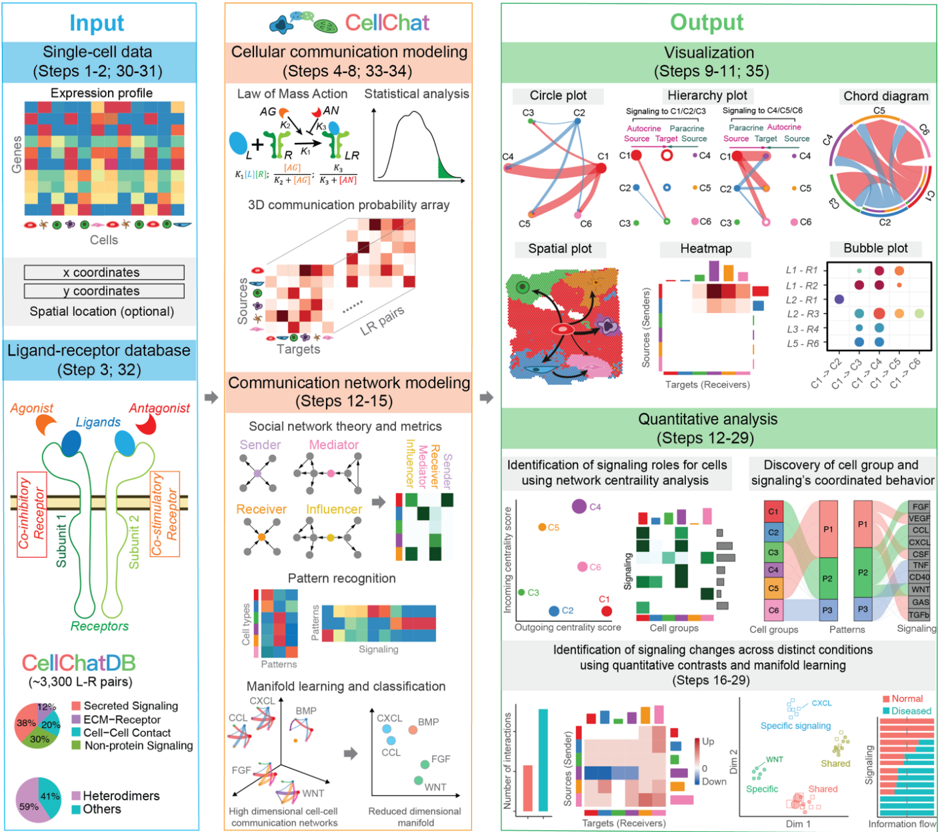
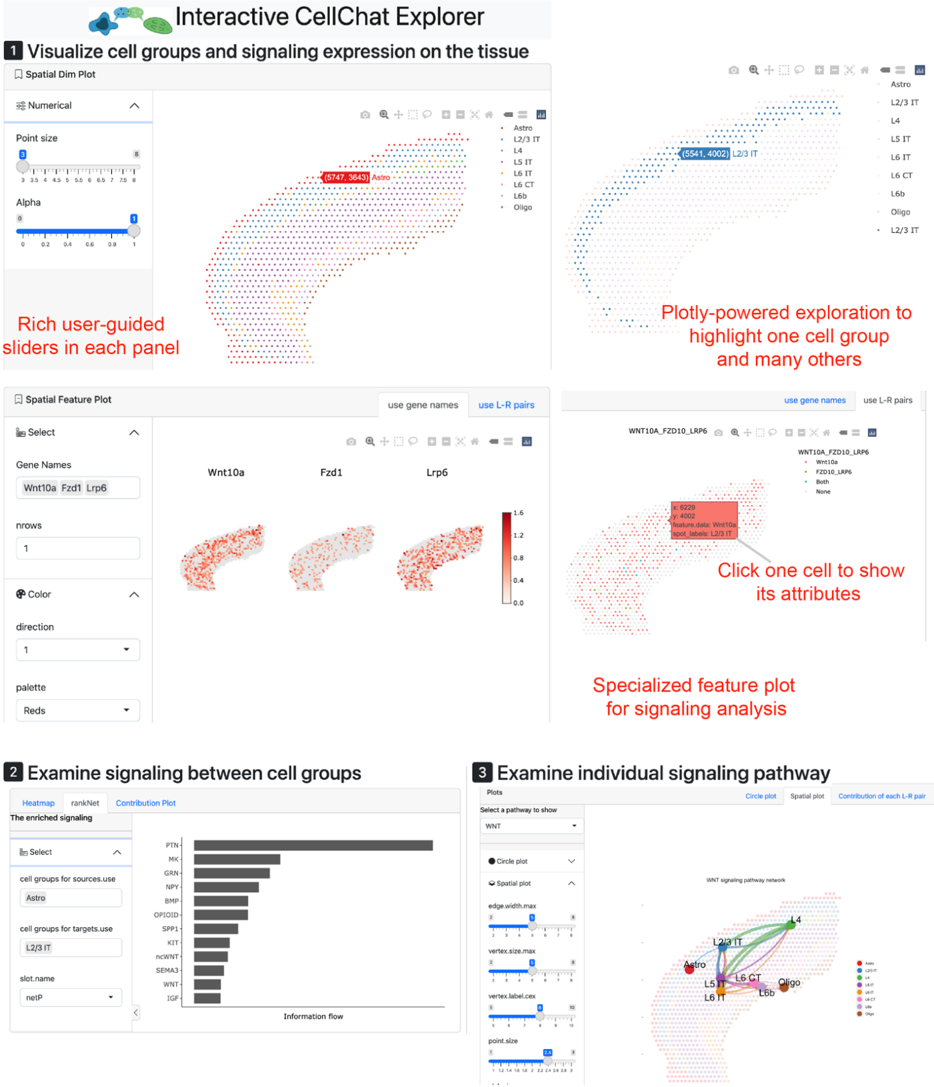
Recent advances in single-cell sequencing technologies offer an opportunity to explore cell-cell communication in tissues systematically and with reduced bias. A key challenge is integrating known molecular interactions and measurements into a framework to identify and analyze complex cell-cell communication networks. Previously, we developed a computational tool, named CellChat, that infers and analyzes cell-cell communication networks from single-cell transcriptomic data within an easily interpretable framework. CellChat quantifies the signaling communication probability between two cell groups using a simplified mass-action-based model, which incorporates the core interaction between ligands and receptors with multisubunit structure along with modulation by cofactors. Importantly, CellChat performs a systematic and comparative analysis of cell-cell communication using a variety of quantitative metrics and machine-learning approaches. CellChat v2 is an updated version that includes additional comparison functionalities, an expanded database of ligand-receptor pairs along with rich functional annotations, and an Interactive CellChat Explorer. Here we provide a step-by-step protocol for using CellChat v2 on single-cell transcriptomic data, including inference and analysis of cell-cell communication from one dataset and identification of altered intercellular communication, signals and cell populations from different datasets across biological conditions. The R implementation of CellChat v2 toolkit and its tutorials together with the graphic outputs are available at https://github.com/jinworks/CellChat . This protocol typically takes ~5 min depending on dataset size and requires a basic understanding of R and single-cell data analysis but no specialized bioinformatics training for its implementation.
Overview
CoChat Summary
TL;DR
CellChat v2 is an R toolkit and step-by-step protocol for inferring, analyzing, and comparing cell–cell communication from scRNA-seq and spatially resolved transcriptomics. It extends the original CellChat with spatial proximity constraints, expanded ligand–receptor resources, comparison tools, and interactive exploration.
Key findings
- CellChat v2 infers communication probability using a simplified mass action-based model that incorporates multi-subunit ligand–receptor complexes and cofactors, with significance assessed by permutation tests.
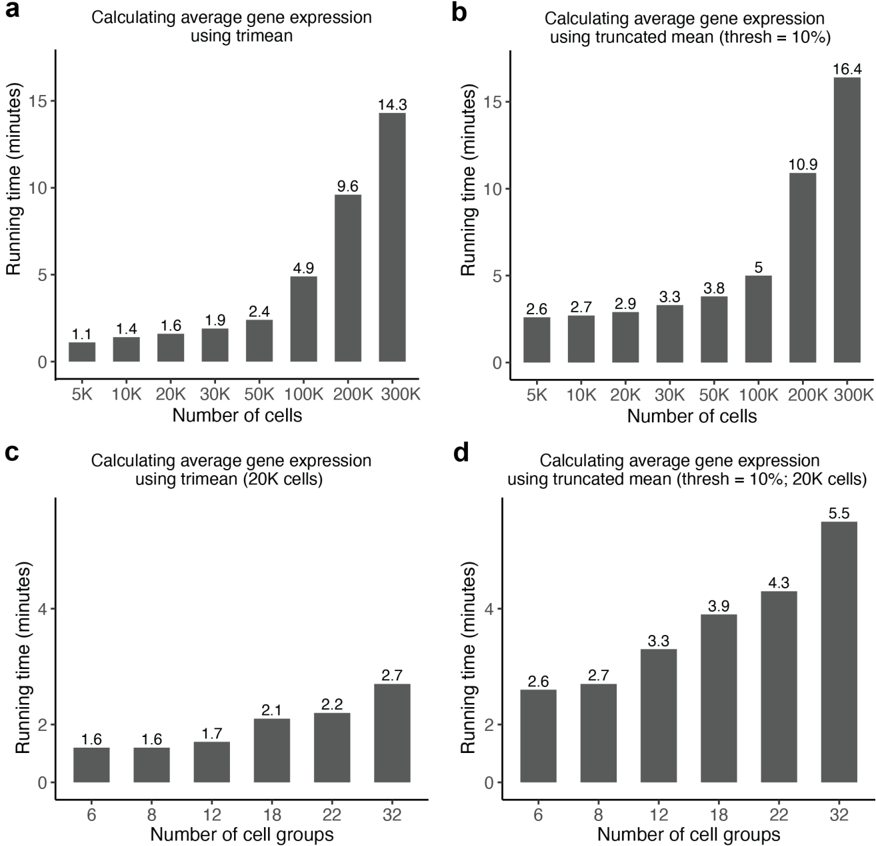
- The protocol typically takes around 20 minutes and requires no specialized prior bioinformatics training; CellChat ran in ~15 mins on an adult human skin atlas of ~300,000 cells.
- CellChatDB was expanded to include more than 1,000 protein and non-protein interactions, with a total of ~3,300 interactions for both mouse and human; spatial inference uses a default maximum diffusion range of 250 µm.
- In systematic evaluations of more than 15 cell–cell communication inference methods, CellChat was among the top-performing methods.
Methods
- Step-by-step protocol for using CellChat v2 on scRNA-seq and spatially resolved transcriptomic data, requiring normalized gene expression data, user-assigned cell labels, and, for spatial data, spatial locations plus scale factors/spot diameters.
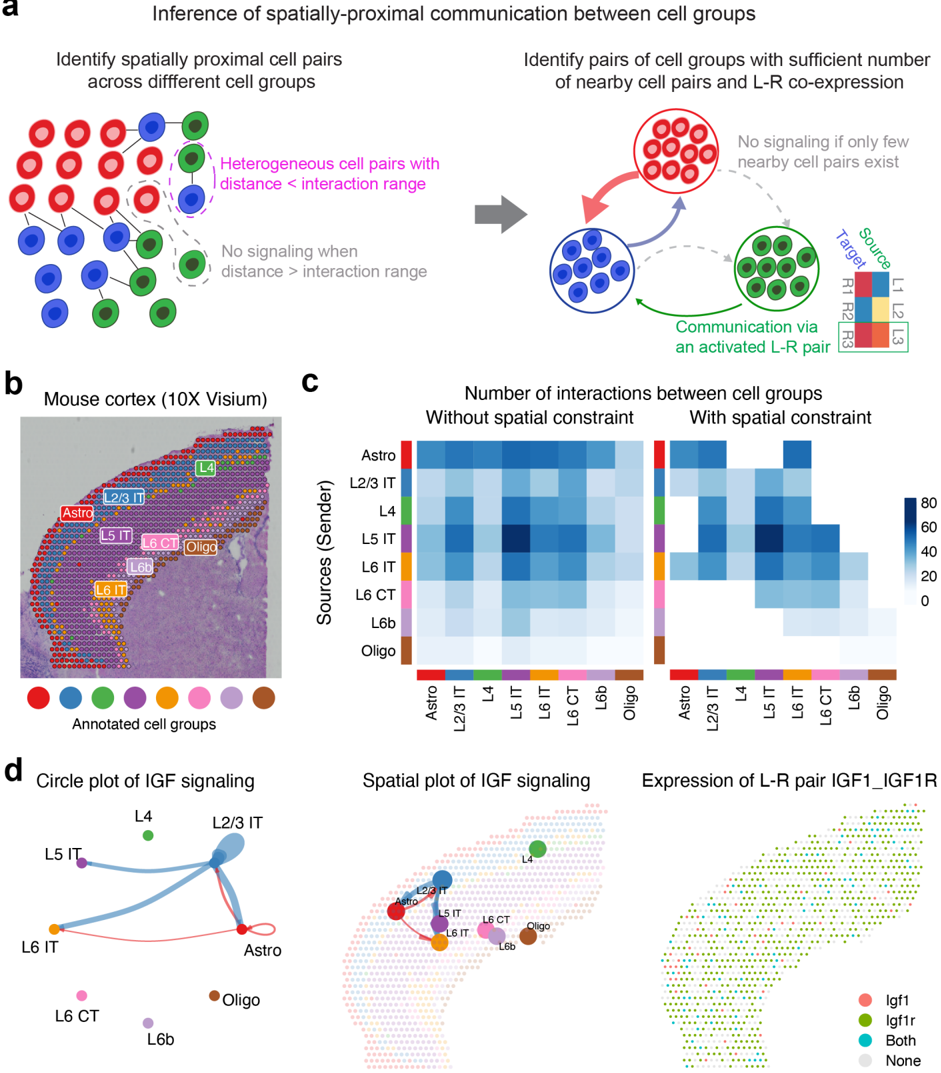
- Main analyses include ligand–receptor- and pathway-level communication inference, network centrality analysis, pattern recognition, manifold learning, differential expression, and cross-condition comparison; spatial inference first identifies physically proximal cell pairs within a maximum diffusion range and then cell-group pairs with sufficient nearby cell pairs.
- Example applications include human skin non-lesional vs lesional atopic dermatitis, embryonic mouse skin E13.5 vs E14.5, mouse brain 10X Visium, and human adult intestine 10X Visium data.
Limitations
- The paper states that CellChatDB may miss ligand–receptor interactions, though users can update it; CellChat infers interactions between defined cell groups without considering heterogeneity within those groups; and it is limited to hypothesis generation with heuristics and limited benchmarking.
- The paper also states that cross-condition analysis is largely restricted to pairwise comparisons, non-protein communication is estimated via key mediators or enzymes, and the simplified mass action model plus lack of downstream signaling events may limit inference accuracy.
- The text makes evident that output quality depends on dataset quality, including sufficient sequencing depth, simultaneous measurement of paired ligand and receptor genes in image-based spatial methods, batch effects, and the use of replicates and control datasets.
Model-written summary. Check it against the paper before relying on it.
Integrity signals
Registry
Cites
Statistics
Figures
Verification
Claims the paper makes
0 Valid · 15 Not valid · 26 Not checked · 99 Own results and interpretations
The cited sources that could be checked couldn’t confirm or dispute this claim.
In the paper
“Both CellChat v2 and CellPhoneDB v3 can eliminate some false positive communication links by utilizing spatial information.”
§ CellChat for systematic analysis of cell-cell communication from single-cell and spatially resolved transcriptomics > Running
What the sources say
- Could not verifycites [23] Yang, A.C. et al. Dysregulation of brain and choroid plexus cell types in severe COVID-19. Nature 595, 565-571 (2021). sourceExperimental — accuracy not yet measured
Our copy of Yang et al. (2021) applies only CellChat v.0.02 on snRNA-seq ligand–receptor expression (Methods, 'Cell–cell communication') and never mentions CellChat v2, CellPhoneDB (any version), or spatial-transcriptomic filtering of false-positive interactions. Searches for 'CellPhoneDB', 'spatial information / false positive communication links' and 'spatial transcriptomics' returned only the CellChat methods paragraph, the snRNA-seq QC/integration sections (which describe dissociated nuclei, no coordinates) and unrelated reference lists. The paper therefore makes no statement about the capabilities the claim attributes to it, so the claim can be neither supported nor contradicted from our copy. (LLM, conf=0.72)
plainstates a cause- Asserted: passes — The authors put it forward as true.
- Checkable: passes — It can be checked against evidence.
- Load-bearing: unclear — It is unclear whether the paper’s conclusions depend on it.
- Based: passes — The paper gives a reason why it holds.
- Rests on an assumption not shown here.
- Could not verify
None of the sources cited for this claim have been checked yet.
In the paper
“expanded the CellChatDB to include more than 1000 protein and non-protein interactions (e.g., metabolic and synaptic signaling) with rich annotations, based on the peer reviewed literature and existing databases such as CellPhoneDB 10 and NeuronChatDB 11”
§ CellChat for systematic analysis of cell-cell communication from single-cell and spatially resolved transcriptomics > Development of the protocol
What the sources say
- Could not verifycites [10] Dimitrov, D. et al. Comparison of methods and resources for cell-cell communication inference from single-cell RNA-Seq data. Nat Commun 13, 3224 (2022). sourceExperimental — accuracy not yet measured
Our copy of Dimitrov et al. (2022) treats CellChatDB only as one of the resources benchmarked: Table 1 lists 'CellChat#14 | CellChatDB' with its scoring system, and the Results section 'Resource uniqueness and overlap' (with Fig. 2 lineage and Fig. 3) reports that CellChatDB includes protein complexes and shares on average ~40-50% of the interactions present in other resources, with curated inputs from Guide to Pharmacology, CellPhoneDB, HMPR and Ramilowski commonly incorporated into later resources. No passage describes a CellChat v2 release, an expansion to more than 1000 protein and non-protein (metabolic, synaptic) interactions, or 'rich annotations', and NeuronChatDB is not mentioned anywhere; the CellChat work cited here is Jin et al. (2021), ref. 14/54. Searches for 'CellChat v2', 'non-protein interactions', 'NeuronChatDB', 'metabolic and synaptic signaling' and 'CellChatDB curation/number of interactions' returned nothing addressing the claim, so the attributed statement can be neither confirmed nor contradicted from our copy. (LLM, conf=0.72)
- Not checked yetcites [11] Liu, Z., Sun, D. & Wang, C. Evaluation of cell-cell interaction methods by integrating single-cell RNA sequencing data with spatial information. Genome Biol 23, 218 (2022). source
Checked before — its earlier verdict is held back until a new check runs.
plainstates a cause- Asserted: passes — The authors put it forward as true.
- Checkable: passes — It can be checked against evidence.
- Load-bearing: passes — The paper’s conclusions depend on it.
- Based: passes — The paper gives a reason why it holds.
- Could not verify
A result the paper reports from its own data — it cites no other source for it, so there is none to check. The quote shows it is in the paper.
In the paper
“CellChat computationally scales well with the number of cells and cell groups in the data, as reflected by the observed running time of ~15 mins on a single cell atlas of adult human skin with ~300,000 cells”
§ CellChat for systematic analysis of cell-cell communication from single-cell and spatially resolved transcriptomics > Development of the protocol
plainstates an associationSingle case- Asserted: passes — The authors put it forward as true.
- Checkable: passes — It can be checked against evidence.
- Load-bearing: unclear — It is unclear whether the paper’s conclusions depend on it.
- Based: passes — The paper gives a reason why it holds.
A result the paper reports from its own data — it cites no other source for it, so there is none to check. The quote shows it is in the paper.
In the paper
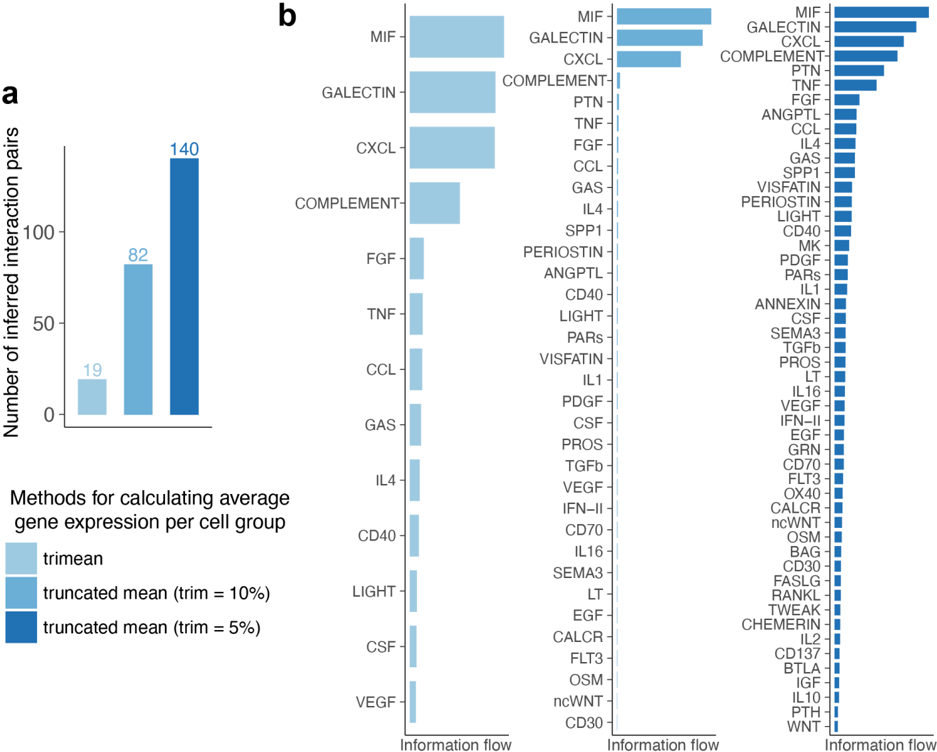
“The inferred cell-cell communications depend on the method for computing average expression per cell group.”
§ CellChat for systematic analysis of cell-cell communication from single-cell and spatially resolved transcriptomics > Troubleshooting
plainstates a cause- Asserted: passes — The authors put it forward as true.
- Checkable: passes — It can be checked against evidence.
- Load-bearing: unclear — It is unclear whether the paper’s conclusions depend on it.
- Based: passes — The paper gives a reason why it holds.
A result the paper states — it cites no source for it, so there is none to check. The quote shows it is in the paper.
In the paper
“CellChat can identify the signaling networks with larger (or smaller) difference based on their Euclidean distance in the shared two-dimensions space.”
§ CellChat for systematic analysis of cell-cell communication from single-cell and spatially resolved transcriptomics > Running
plainstates an association- Asserted: passes — The authors put it forward as true.
- Checkable: passes — It can be checked against evidence.
- Load-bearing: passes — The paper’s conclusions depend on it.
- Based: passes — The paper gives a reason why it holds.
38 more claims
Create a free account to see all 140 claims and to verify the 39 references still open.
- Probably not a substantial claim. 81
- It may state two separate claims as one. 36
- The quote only partly states this claim. 1
Claims other papers make about this one
Each is checked against this paper’s own text: does it say what the citing paper says it does?
In the citing paper
“The predicted total number of significant ligand–receptor interactions for each pair of cell types indicated that monocytes were the main drivers of cell-to-cell communication, increasing from NS as early as in SS and through advanced MASH, whereas lymphocyte interactions peaked in early MASH but decreased in advanced MASH (Fig. 8a).”
In the citing paper
“Pathway-level analysis of these clusters demonstrated increased inferred signaling through synaptic pathways, including Glutamate, NRXN, GABA-A, and GABA-B (Fig. 4C–D), based on coordinated ligand-receptor expression patterns [97].”
From Tau Ablation Rewires Brain Cell Programs in Health and Restores Function in Disease (2026) · cites this paper as [97]
Citations
Cites
Comprehensive Integration of Single-Cell Data
Stuart, T., Butler, A., Hoffman, P., Hafemeister, C., Papalexi, E., Mauck, W. M., Hao, Y., Stoeckius, M., Smibert, P., & Satija, R. (2019) · Cell · doi:10.1016/j.cell.2019.05.031 · Cited by 15,453
Inference and analysis of cell-cell communication using CellChat
Jin, S., Guerrero-Juarez, C. F., Zhang, L., Chang, I., Ramos, R., Kuan, C.-H., Myung, P., Plikus, M. V., & Nie, Q. (2021) · Nature Communications · doi:10.1038/s41467-021-21246-9 · Cited by 8,409
Self-citationEfremova, M., Vento-Tormo, M., Teichmann, S. A., & Vento-Tormo, R. (2020) · Nature Protocols · doi:10.1038/s41596-020-0292-x · Cited by 3,449
Single-cell reconstruction of the early maternal–fetal interface in humans
Vento-Tormo, R., Efremova, M., Botting, R. A., Turco, M. Y., Vento-Tormo, M., Meyer, K. B., Park, J.-E., Stephenson, E., Polański, K., Goncalves, A., et al. (2018) · Nature · doi:10.1038/s41586-018-0698-6 · Cited by 2,358 · cited 1×
“The Python tool CellPhoneDB 12,19 is a pioneering method that considers multiple subunits of ligands and receptors to accurately represent known heteromeric molecular complexes.”
NicheNet: Modeling intercellular communication by linking ligands to target genes
Browaeys, R., Saelens, W., & Saeys, Y. (2020) · Nature Methods · doi:10.1038/s41592-019-0667-5 · Cited by 2,192
Deciphering cell–cell interactions and communication from gene expression
Armingol, E., Officer, A., Harismendy, O., & Lewis, N. E. (2021) · Nature Reviews Genetics · doi:10.1038/s41576-020-00292-x · Cited by 1,267
Integrating single-cell and spatial transcriptomics to elucidate intercellular tissue dynamics
Longo, S. K., Guo, M. G., Ji, A. L., & Khavari, P. A. (2021) · Nature Reviews Genetics · doi:10.1038/s41576-021-00370-8 · Cited by 1,059
An atlas of healthy and injured cell states and niches in the human kidney
Lake, B. B., Menon, R., Winfree, S., Hu, Q., Melo Ferreira, R., Kalhor, K., Barwinska, D., Otto, E. A., Ferkowicz, M., Diep, D., et al. (2023) · Nature · doi:10.1038/s41586-023-05769-3 · Cited by 743 · cited 2×
“Recently, state-and niche-dependent signaling pathways for reparative states in proximal and distal tubules have been identified by mining healthy and injured human kidney single-cell atlases 26 .”
Dimitrov, D., Türei, D., Garrido-Rodriguez, M., Burmedi, P. L., Nagai, J. S., Boys, C., Ramirez Flores, R. O., Kim, H., Szalai, B., Costa, I. G., et al. (2022) · Nature Communications · doi:10.1038/s41467-022-30755-0 · Cited by 664 · cited 3×
“With limited benchmarking studies 10,11,18 , the question of how to better validate the inferred signaling networks and their downstream gene outputs remains to be answered.”
Mapping the temporal and spatial dynamics of the human endometrium in vivo and in vitro
Garcia-Alonso, L., Handfield, L.-F., Roberts, K., Nikolakopoulou, K., Fernando, R. C., Gardner, L., Woodhams, B., Arutyunyan, A., Polanski, K., Hoo, R., et al. (2021) · Nature Genetics · doi:10.1038/s41588-021-00972-2 · Cited by 662
Cited by
Items 1,001–1,100 of 1,770
Islam, M. N., Suja, M. K. I. S., Takbir, A. A., & Kibria, M. K. (2026) · Computational and Systems Oncology · doi:10.1002/cso2.70025 · Cited by 1
Romero, S., Gupta, S., Chapkin, R. S., & Cai, J. J. (2026) · PubMed Central · doi:10.48550/arxiv.2604.02203 · Cited by 1
scMustree: a multi-scale functional hierarchy for single-cell transcriptomic analysis
Xu, Y., Wang, S., Ding, L., Li, H., & Wang, J. (2026) · Bioinformatics · doi:10.1093/bioinformatics/btag672 · Cited by 1
Signaling Connectomics: A Brain-wide Framework for Intercellular Communication
Shin, J., Oh, H., Jeong, Y., Heo, Y., & Heo, W. D. (2026) · Experimental Neurobiology · doi:10.5607/en26005 · Cited by 1
Liu, S., Wang, Y., Peng, S., Wang, J., Cui, D., Deng, K., Huang, L., An, N., Duan, L., & Wei, S. (2026) · International Journal of Surgery · doi:10.1097/js9.0000000000005103 · Cited by 1
Speth, J. M., Wong, V. T., Guzman, S. D., Walker, N., Liu, Y., Zemans, R. L., Blackwell, T. S., Aguilar, C. A., Peters-Golden, M. L., & Fortier, S. M. (2026) · Scientific Reports · doi:10.1038/s41598-026-75301-w · Cited by 1
Gao, W., Lv, H., Xie, Y., Chang, Y., Li, B., Chang, J., Sun, K., & Chen, T. (2026) · Frontiers in Immunology · doi:10.3389/fimmu.2026.1771401 · Cited by 1
Keiser, S., Botello, N., Cruz, E., & Wietecha, M. S. (2025) · Journal of Visualized Experiments · doi:10.3791/67266 · Cited by 1
Du, X., Li, J., Wang, X., Wu, W., Zhu, T., Yan, H.-B., Wu, C., Li, Y., Gao, Y., Yi, H., et al. (2026) · Nature Communications · doi:10.1038/s41467-026-76175-2 · Cited by 1
Gillotay, P., Bangru, S., Shen, J., Moore, B., Ou, J., Stewart, R. M., & Poss, K. D. (2026) · bioRxiv (Cold Spring Harbor Laboratory) · doi:10.64898/2026.09.07.749713 · Cited by 1
AARS1-mediated lactylation reprograms macrophage lipid metabolism to restrict antitumor immunity
Xiao, Z., Meng, L., Xu, S., Xu, N., Li, Y., Wang, J., Tong, J., Ding, H., & Tan, X. (2026) · Journal for ImmunoTherapy of Cancer · doi:10.1136/jitc-2026-015773 · Cited by 1
Single-nucleus profiling of social behaviour in a mutualistic reef fishPreprint
Desantis, D., Wright, D. J., Haerty, W., Lister, A., Macaulay, I. C., & Schunter, C. (2026) · bioRxiv (Cold Spring Harbor Laboratory) · doi:10.64898/2026.09.15.751910 · Cited by 1
Thangavadivel, S., Shaffer, J. L., Misra, S., Benrashid, S., Gordon, B. K., He, A., Li, W., Oyman, K., Chura, A., Cabrera, S., et al. (2026) · Clinical Cancer Research · doi:10.1158/1078-0432.ccr-25-3349 · Cited by 1
Duong, E., Wu, T. D., Tran, C. W., Foo, C., Banta, K. L., Adams, L., Nutsch, K., Anand, A. A., Carbone, C. B., Gutierrez, A. G., et al. (2026) · Immunity · doi:10.1016/j.immuni.2026.10.005 · Cited by 1
He, X., Xu, C., Zou, Y., Wang, W., Wu, L., & Zhou, Q. (2026) · Clinical and Experimental Medicine · doi:10.1007/s10238-026-02210-7 · Cited by 1
Mapping Embryonic Mouse Lung Development Using Enhanced Spatial Transcriptomics
Zhang, P., Law, B. K., Huang, N., Goodwin, K., Nelson, C. M., & Chan, M. M. (2026) · Advanced Science · doi:10.1002/advs.77678 · Cited by 1
A fibroblast-CD8+ T cell circuit drives a Type 1 shift in allergic inflammatory memoryPreprint
Kwong, A. C., Oliver, I., Yang, L., Lotfy, P., & Ordovás-Montañés, J. (2026) · bioRxiv (Cold Spring Harbor Laboratory) · doi:10.64898/2026.11.02.763646 · Cited by 1
Ssemaganda, A., Kahia, N., Oo, M. M., Rozenberg, D., Nuhu, F., Jahan, N., Mulhall, F., Downing, K., Sandberg, B., Elands, H., et al. (2026) · American Journal of Reproductive Immunology · doi:10.1111/aji.70222 · Cited by 1
Spatial orchestration of skin fibrosis by a CD8 T cell-ADAM12+ myofibroblast axis
Boothby, I. C., Gan, C., Johri, V., Flynn, E., Kazmi, M., Maliskova, L., Shaikh, S., Combes, A., Fragiadakis, G. K., Neuhaus, I., et al. (2026) · Journal of Investigative Dermatology · doi:10.1016/j.jid.2026.06.061 · Cited by 1
Urabe, F., Yoshihara, K., Nakayama, J., Hirano, Y., Watanabe, N., Suzuki, H., Umemori, M., Ito, K., Igarashi, T., Sato, S., et al. (2026) · iScience · doi:10.1016/j.isci.2026.116725 · Cited by 1
Li, D., Zou, H., Wang, M., Tian, N., Liu, C., Zhang, W., Jiang, S., Zhu, R., Yang, X., Li, F., et al. (2026) · Theranostics · doi:10.7150/thno.132582 · Cited by 1
Abdelkareem, A. O. (2025) · doi:10.11575/prism/50507 · Cited by 1
Nociceptor neurons suppress antitumor immunity in breast cancerPreprint
Talbot, S., Wu, Y., Ahmadi, M., Bogoslowski, A., Brabenec, L., Abbadi, J., Rocha, B. G. S., Nikpoor, A. R., Thiel, V., Preto, E., et al. (2026) · Research Square · doi:10.21203/rs.3.rs-9927184/v2 · Cited by 1
Ruiyu, L., Fang, K., Zhao, C., Xiong, J., Zhu, Y., Lu, M., Yan, H., Li, Z., Wu, B., Jiang, H., et al. (2026) · Advanced Science · doi:10.1002/advs.77109 · Cited by 1
p53 supports healthy agingPreprint
Teneche, M. G., Miller, K. N., Li, K. Y., Lande, K., Mamde, S., Shi, C. H., Rajesh, A., Havas, A. P., Proulx, J. M., Arnold, R., et al. (2026) · bioRxiv (Cold Spring Harbor Laboratory) · doi:10.64898/2026.11.16.766897 · Cited by 1
Huang, B., Wu, Z., Zhang, T., Cheng, L., Ren, Y., Hong, F., Chen, X., Zhang, H., Zhang, H., Bao, F., et al. (2026) · Biomaterials · doi:10.1016/j.biomaterials.2026.124296 · Cited by 1
Xia, X., 白杨娟, Yang, B., Mao, W., Yang, H., Li, Y., He, Y., Wu, J., Cai, B., Fan, Y., et al. (2026) · Signal Transduction and Targeted Therapy · doi:10.1038/s41392-026-03017-4 · Cited by 1
Li, Z., Wu, X., Ding, W., & Jia, H. (2026) · International Journal of Biological Macromolecules · doi:10.1016/j.ijbiomac.2026.152105 · Cited by 1
Gamberale, R., Bergamaschi, M., Tascini, A. S., D’Orlando, C., Signo, M., Spinelli, A., Meneveri, R., Bocciardi, R., Chazaud, B., Azzoni, E., et al. (2026) · Cellular and Molecular Life Sciences · doi:10.1007/s00018-026-06320-z · Cited by 1
Hyperandrogenism drives pathogenic adipocyte differentiation to promote insulin resistance in PMOS
Feng, G., Dong, Y., Huang, X., Jiang, Y., Shi, H., Liu, T., Zhao, Z., Yang, Z., Gao, X., 魏代敏, et al. (2026) · Nature Metabolism · doi:10.1038/s42255-026-01654-1 · Cited by 1
The tectum transversum(TTR) maintains patency of the developing coronal suturePreprint
Umar, M., Bartoletti, G., Sokolowskei, D., Janser, N., Tower, R. J., & He, F. (2025) · bioRxiv (Cold Spring Harbor Laboratory) · doi:10.1101/2025.03.30.646197 · Cited by 1
Lin, J., Wu, S., Lin, C., Jin, S., Chen, L., Luo, J., Xu, S., Jin, L., Yu, M., Zheng, Y., et al. (2026) · Journal of the American Heart Association · doi:10.1161/jaha.126.050327
Self-citationTau Ablation Rewires Brain Cell Programs in Health and Restores Function in Disease
Chimal-Juárez, E., Patel, H., Jury-Garfe, N., Dabin, L. C., Vidal, R., Kim, J., & Lasagna-Reeves, C. A. (2026) · bioRxiv · doi:10.64898/2026.05.12.724684
Vitamin C attenuates primate bone marrow aging at the molecular and progenitor level
Ye, Y., Zhang, H., Xin, Z., Sun, W., Liu, L., Xiong, M., Zhao, H., Zhang, Y., Geng, J., Zhao, L., et al. (2026) · Cell stem cell · doi:10.1016/j.stem.2026.06.006
He, T., & Yu, Y. (2024) · bioRxiv (Cold Spring Harbor Laboratory) · doi:10.1101/2024.02.27.582406
Soucy, J. R., Kriukov, E., Oswald, J., Phay, M., Masland, J., Pernstich, C., & Baranov, P. Y. (2024) · SSRN Electronic Journal · doi:10.2139/ssrn.4875101
ADAM17 regulates hepatic DNA damage repair and tumour formationPreprint
Reichert, M., Halwachs, B., Bolik, J., Senftleben, A., Krause, F., Conrady, L., Bauer, R., Rachmilewitz, J., Horejs‐Hoeck, J., Rose‐John, S., et al. (2024) · bioRxiv (Cold Spring Harbor Laboratory) · doi:10.1101/2024.07.30.605791
Tsutsumi, H., Chiba, T., Fujii, Y., Matsushima, T., Kimura, T., Kanai, A., Kishida, A., Suzuki, Y., & Asahara, H. (2026) · eLife · doi:10.7554/elife.104768.3
Wang, Y., Wu, Y., Zhang, H., Liu, X., Ling, J., Zhou, X., Song, A., Sun, L., Qiu, H., Yuan, X., et al. (2024) · bioRxiv (Cold Spring Harbor Laboratory) · doi:10.1101/2024.11.04.610003
The Role of Ferroptosis Driver Genes in Glioma Progression and Potential Treatment OptionsPreprint
Wu, Y., Zhang, Y., Li, M., & Cheng, L. (2024) · SSRN Electronic Journal · doi:10.2139/ssrn.5034319
TOGGLE Unveils Functional Heterogeneity and Epigenetic Memory in Single CellsPreprint
Chen, J., Sun, T., Song, T., Chen, Z., Xu, H., Guo, Z., Jiang, E., Nong, Y., Yuan, T., Dai, C. C., et al. (2025) · bioRxiv (Cold Spring Harbor Laboratory) · doi:10.1101/2025.01.01.631041
Wang, Y., Wu, Y., Zhang, H., Liu, X., Ling, J., Zhou, X., Song, A., Sun, L., Qiu, H., Yuan, X., et al. (2025) · eLife · doi:10.7554/elife.102302
Han, W., Hu, J., Toh, K., Ni, M., Tan, R., Wu, L., Jin, X., Jian, M., Xu, M., & Chen, H. (2025) · bioRxiv (Cold Spring Harbor Laboratory) · doi:10.1101/2025.02.27.639934
Hu, Y., Wang, D., Wang, J., Wang, Y., Cheng, X. Y., Zhang, W.-S., Mo, Y., Ge, T., Ma, W., Jiang, Y., et al. (2025) · SSRN Electronic Journal · doi:10.2139/ssrn.5166268
Evaluating gene representation in spatial transcriptomics across pre-designed panelsPreprint
Seo, H., & Krawetz, R. J. (2025) · bioRxiv (Cold Spring Harbor Laboratory) · doi:10.1101/2025.04.07.647642
Wang, Y., Wu, Y., Zhang, H., Liu, X., Jing, L., Zhou, X., Song, A., Sun, L., Qiu, H., Yuan, X., et al. (2025) · eLife · doi:10.7554/elife.102302.2
Transcriptional Signature for Dysplastic Epidermal Development in Human Premalignant Skin
Chen, S., Yarygina, O., Gutiérrez, E. E. G., Silvers, D. N., & Owens, D. M. (2025) · Journal of Investigative Dermatology · doi:10.1016/j.jid.2025.04.006
Wang, R., Zhao, Y., Yang, J. A., Luo, R., Sun, W., Zhang, M., Liu, X., Hou, Y., Cao, P., & Li, E. (2025) · bioRxiv (Cold Spring Harbor Laboratory) · doi:10.1101/2025.05.23.655674
Ye, L., Chen, Z., Zhang, J., & Li, Q. (2025) · Cancers · doi:10.3390/cancers17111813
“We then fed the entire Seurat object into CellChat (version 2.1.2) [30] to explore the interactions between the epithelial cell groups and other cell types in the dataset.”
InfluentialDissecting Tissue Architecture and Function through Mapping of Cellular Communication NetworksPreprint
Li, D., Yang, M., & Hou, L. (2025) · bioRxiv (Cold Spring Harbor Laboratory) · doi:10.1101/2025.06.21.660290
Wu, F., Cai, X., Qian, Z., Song, G., Zhang, X., Ding, T., Xu, W., & Wang, W. (2025) · Research Square · doi:10.21203/rs.3.rs-6709366/v1
Wu, Z., Cao, L., & Zhao, J. (2025) · Scientific Reports · doi:10.1038/s41598-025-07015-4
“The “netVisual_aggregate” and “netVisual_individual” functions were used to visualize the inferred signaling pathway communication network 35,36 .”
Huang, Y.-F., & Huang, K.-L. (2026) · Journal of Translational Medicine · doi:10.1186/s12967-026-08266-z
Formulation and Characterization of Primary Tissue-Derived Microfluidic Droplet-Engineered OrganoidsPreprint
Wang, W., Cai, Y., Dai, X., Yang, H., Khutsishvili, D., Li, J., Zhu, Y., Wang, J., Xiu, Y., Wang, Z., et al. (2025) · bioRxiv (Cold Spring Harbor Laboratory) · doi:10.1101/2025.07.10.664241
Schmid, T., Rodrian, G., Bachmann, E., Kohler, A., Wegner, M., Gölz, L., & Weider, M. (2025) · Open Biology · doi:10.1098/rsob.250129
Obesogenic diet alters decidual differentiation and cell-cell communication in the mouse uterusPreprint
Koksal, B., Bellissimo, C. J., Jazwiec, P. A., Sloboda, D. M., & Beristain, A. G. (2025) · bioRxiv (Cold Spring Harbor Laboratory) · doi:10.1101/2025.08.13.670199
Jiang, Q.-Y., Tian‐ai, R., Xin‐yu, F., & Hui‐yan, Z. (2025) · Plant Biotechnology Journal · doi:10.1111/pbi.70321
Yu, Y., Zhang, W., Zheng, X., Shen, J., & Li, Y. (2025) · Interdisciplinary Sciences Computational Life Sciences · doi:10.1007/s12539-025-00762-y
Wang, W., Deng, Y., Feng, Y., Chen, R., Xu, M., Chen, P., & Yuan, S. (2025) · IUBMB Life · doi:10.1002/iub.70056
“Cell–cell communication analysis was conducted using the “ CellChat ” R package, which infers intercellular signaling based on known ligand–receptor interactions and associated cofactors [33].”
Pathological Angiogenesis Precedes the Onset of Aortic DissectionPreprint
Yoshioka, K., Iino, K., Ito, Y., Iba, T., Matsuzaki, T., Sakurai, N., Horie, M., Matsuyama, T., Wakabayashi, T., Matsui, A., et al. (2025) · bioRxiv (Cold Spring Harbor Laboratory) · doi:10.1101/2025.09.10.675317
Disrupted astrocyte-endothelial crosstalk drives hemangioblastoma lesions in VHL diseasePreprint
Andrés-Laguillo, M. D., García-Gónzalez, I., Rocha, S. F., Garcia-Cabero, A., Ruiz-Garcia, S., Diago-Domingo, L., Danana, A., Cussó, L., Bock, K. D., Enríquez, J. A., et al. (2025) · bioRxiv (Cold Spring Harbor Laboratory) · doi:10.1101/2025.09.15.675862
Swanson, G., Arenas‐Hernandez, M., & Gurdziel, K. (2025) · bioRxiv (Cold Spring Harbor Laboratory) · doi:10.1101/2025.09.26.677858
Sreekanth, V., Rusanov, T., Yousef, F., Sanborn, M. A., Yeon, S. Y., Ananthanarayanan, V., Karginova, O. A., Rehman, J., & Salahudeen, A. A. (2025) · bioRxiv (Cold Spring Harbor Laboratory) · doi:10.1101/2025.09.30.679409
“CellChat infers potential ligand–receptor interactions solely from single cell transcriptional profiles, and its successor CellChatv2 34 allows for the integration of spatial transcriptomic data by analyzing of interactions between spatial locations.”
Han, J., Kong, D., Schwarz, E. L., Takaesu, F., Lee, S., Kim, C.-L., Yang, E., Park, M., Kim, E., Kim, W., et al. (2025) · bioRxiv (Cold Spring Harbor Laboratory) · doi:10.1101/2025.10.08.681286 · Cited by 1
Cell Type Based Cell-Cell Communication Inference via Multi-Scale Network Modeling
Bai, Q. (2025) · Chinese Control Conference (CCC) · doi:10.23919/ccc64809.2025.11178985
“As shown in Fig.4, we found that the number of cell-cell communications was more than that of CellChat [16], Italk [17] and CellTalker [18] both on GSM5101013 and GSE130148.”
Qiu, A., Zhang, H., Ramsey, J., Andrews, B., Sun, B., Ren, S., Lu, M., Zhang, K., Cooper, G. F., Lu, B., et al. (2026) · Briefings in Bioinformatics · doi:10.1093/bib/bbag139
“Widely used tools such as CellChat [10], NicheNet [11], and Cell-PhoneDB [12] have been applied to characterize ligand-receptor-mediated signaling across diverse cell types.”
Lv, X., Liu, M., Chen, J., He, X., Weng, J., Lin, Y., Wang, Y., Zhang, R., Huang, M., Zhao, L., et al. (2025) · International Immunopharmacology · doi:10.1016/j.intimp.2025.115663
How to get the most out of your cancer spatial transcriptomics data
Kaplan, D. I., Guo, X. Y., Hirimuthugoda, S. D., Cain, L., Weng, S., Le, D., Comben, J., & Trigos, A. (2025) · Seminars in Cell and Developmental Biology · doi:10.1016/j.semcdb.2025.103657
Xiao, G., Wang, H., Zhang, S., Zhou, X., Ou, M., Zhang, X., Li, G., Liu, A., Shuai, S., & Zhang, G. (2025) · BMC Immunology · doi:10.1186/s12865-025-00763-y
Stra8 links neuronal activity to inhibitory circuit protection in the adult mouse brain
Huang, M., Yue, S., Zhang, X., Wu, L., Vivian, J. L., Wang, Z., & Wang, N. (2025) · Cell Reports · doi:10.1016/j.celrep.2025.116513
HeartMAP: A multi-chamber spatial framework for cardiac cell-cell communication
Kgabeng, T., Wang, L., Ngwangwa, H., & Pandelani, T. (2025) · Computational and Structural Biotechnology Journal · doi:10.1016/j.csbj.2025.11.015
“A simplified mass action-based model is employed in the core communication inference algorithm to quantify the probability of cell-cell communication between any two cell groups [5,22].”
Cheng, L., Zhang, H., Shi, M., & Zhu, Z. (2025) · Scientific Reports · doi:10.1038/s41598-025-23386-0
Chen, Z., Zhao, C., Zeng, X., He, X., Yuan, C., & Zhang, X. (2025) · Functional & Integrative Genomics · doi:10.1007/s10142-025-01726-7
Su, K., Mi, J., Wang, R., Zhou, J. H., Yan, F., & Liu, O. (2025) · International Dental Journal · doi:10.1016/j.identj.2025.104009
Hadas, N., Xu, H., Twan, W. K., Neupane, S., Elgamal, A., Koenitzer, J. R., & Horani, A. (2025) · bioRxiv (Cold Spring Harbor Laboratory) · doi:10.1101/2025.11.17.688876
Shen, F., Zhou, J., Liu, M., Ren, Q., Cui, J., Yang, P., Zheng, T., Wang, J., Ye, L., & Shi, Y. (2025) · bioRxiv (Cold Spring Harbor Laboratory) · doi:10.1101/2025.11.19.689158
A Thalamocortical Cell-Adhesion Code Primes Sensory Cortical SpecificationPreprint
Guillamón-Vivancos, T., Puche-Aroca, L., Wang, L., Fuentes-Jurado, I., Vandael, D., Torres, D., Aníbal-Martínez, M., Martini, F. J., & López‐Bendito, G. (2025) · bioRxiv (Cold Spring Harbor Laboratory) · doi:10.1101/2025.11.17.688831
Javaid, A., & Frost, H. R. (2026) · Studies in computational intelligence · doi:10.1007/978-3-032-16719-4_16
Zhou, H., Chen, H., Rudnick, Z., Baalbaki, S. I., Shao, Y., Lee, Y. J., & Lugo-Martinez, J. (2025) · bioRxiv (Cold Spring Harbor Laboratory) · doi:10.1101/2025.11.20.689569
Leavitt, M. L., Patterson, A. L., Wagle, M. D., Warren, W. C., Spencer, T. E., & Davenport, K. M. (2025) · Scientific Reports · doi:10.1038/s41598-025-29895-2
“Cell-cell communication via ligand-receptor interaction was inferred using CellChat v2 with bovine homologs mapped to the human ligand-receptor database 67 .”
An interneuronal CRH and CRHBP circuit stabilizes birdsong performancePreprint
Colquitt, B. M., & Brainard, M. S. (2025) · eLife · doi:10.7554/elife.109232
Xia, S., Wu, J., Duan, J., Ye, W., Sun, Y., Yang, X., Chen, X., Lin, H., Huang, S., Cai, J., et al. (2026) · iScience · doi:10.1016/j.isci.2026.117094
“In this study, we focused on relative, network-level trends across conditions rather than absolute interaction counts for individual sender-receiver pairs, 60 thereby minimizing overinterpretation of abun-dance-driven effects.”
Li, M., Fang, Z., Ji, Y., Yu, T., Li, Y., Cheng, W., Duan, Y., Wang, X., Feng, J., Zhang, J., et al. (2025) · Scientific Reports · doi:10.1038/s41598-025-26694-7
Yoshikawa, M., Miuzuno, T., Ohto, Y., Fujimoto, H., & Kusuhara, H. (2025) · bioRxiv (Cold Spring Harbor Laboratory) · doi:10.64898/2025.12.01.691726
“…supplementary analyses indicate that CCC extraction errors are not strongly associated with simple surface-level factors such as sentence length, entity distance between cell mentions, or the presence of negation and speculative expressions ( Supplementary Figures 5–8, Supplementary Tables 3–4 ).”
Solomonidis, E. G., Hecker, D., Shumliakivska, M., Leberzammer, J., Fischer, A., Katschke, M.-T., Bendel, M., Korth, L., Schuhmacher, B., Rumpf, L., et al. (2026) · Nature Cardiovascular Research · doi:10.1038/s44161-026-00887-3
Spatial and Multiomic profiling of muscle regeneration dynamics in Duchenne Muscular DystrophyPreprint
Virtanen, L., D’Ercole, C., Saillard, L., Grandi, F. C., Peccate, C., Hoareau‐Coudert, B., Karunanuthy, V., Bertholle, C., Izac, B., Saintpierre, B., et al. (2025) · bioRxiv (Cold Spring Harbor Laboratory) · doi:10.64898/2025.12.02.691824
“Briefly, the CellChat object was created from a subset of the integrated seurat object containing only the selected region of interest.”
InfluentialProtocol to investigate fibroblastic reticular cell-immune cell interaction in human lung cancer
Papadopoulou, C., Cheng, H., Luetge, A., Lütge, M., Martin, A. D., Robinson, M. D., Ludewig, B., & Onder, L. (2025) · STAR Protocols · doi:10.1016/j.xpro.2025.104256
Zuo, J., Yang, X. H., Zhou, F., Qu, Z.-J., Tian, Y.-X., Yang, J.-R., & Fan, Y.-C. (2025) · Virology Journal · doi:10.1186/s12985-025-03055-4
“We subsetted Seurat objects by disease group and performed cell communication analysis using the Cell-Chat package [23].”
Mapping fusion-driven cell reprogramming through integrative single-cell computational frameworks
Nazaryabrbekoh, F., Huang, J., Shoaib, S. S., Tang, X., Ebrahimi-Barough, S., Kim, J., Ogle, B. M., & Jung, J. P. (2025) · npj Systems Biology and Applications · doi:10.1038/s41540-025-00637-4
“CellChat analysis 36 typically requires a minimum of 10 cells per cell type 26 .”
Perry, C., Frey, A., Fei, Y., Wang, J., Costa, P., Amin, H. N., Ghadermarzi, S., Levine, D., Tong, W., Koda, A., et al. (2025) · bioRxiv (Cold Spring Harbor Laboratory) · doi:10.64898/2025.12.09.693245
Kaganovich, A., Horan-Portelance, L., Landeck, N., Acri, D. J., Ding, J., Langston, R. G., & Cookson, M. (2025) · bioRxiv (Cold Spring Harbor Laboratory) · doi:10.64898/2025.12.18.695199
Integrative transcriptomic identification of cellular senescence beyond marker limitationsPreprint
Lu, J. N., Güderer, İ., Alvi, T., Olenik, M., & Dönertaş, H. M. (2026) · bioRxiv (Cold Spring Harbor Laboratory) · doi:10.64898/2026.01.02.697374
“Cell–cell communication networks were inferred using the CellChat R package 60 .”
Spatial mapping of cellular and molecular plasticity in the maternal and postpartum mouse brainPreprint
Arbabi, K., Ghazisaeidi, S., Kim, M., Kukreja, B., Feng, M. Y., Pogue, S., Hudson, H., Fafouti, M. E., Crouch, E. L., Galea, L. A. M., et al. (2026) · bioRxiv (Cold Spring Harbor Laboratory) · doi:10.64898/2026.01.03.697464
Qiao, Y., Liu, G., Ong, M. T., Sun, H., So, H., & Wang, H. (2026) · iScience · doi:10.64898/2026.01.04.696800
Zhuang, Z., Sun, F., Fan, B., Wu, H., Luo, C. L., & Ren, Q. (2026) · Ecotoxicology and Environmental Safety · doi:10.1016/j.ecoenv.2025.119623
Damme, P. V., Georgopoulou, M., Hobin, F., Dubin, J., Masrori, P., Arekatla, G., Poesen, K., Cruz, S. D., Bosch, L. V. D., Thal, D. R., et al. (2026) · Research Square · doi:10.21203/rs.3.rs-8351425/v1
Howard, L., Ishikawa, Y., Kamuro, R., Katayama, T., Bains, K. K., Hill, M., Blake, D. J., Park, S.-J., Hayashi, R., Quantock, A. J., et al. (2026) · Cells · doi:10.3390/cells15020104
“For CellChat analysis [16,17], Seurat objects were transformed into CellChat objects, and the ligand–receptor database was set to CellChatDB.human.”
Zhang, L., Ao, Y., Bagale, K., Hu, S., Mostafa, A., Ye, C., Salvadore, K., Gibson, G. A., Pineda, R., Lu, J., et al. (2026) · Research Square · doi:10.21203/rs.3.rs-7796497/v1
“CellChat analysis 27 revealed progressive enrichment of MHC-I signaling from ECs to CD8⁺ T cells and IFN II signaling in the reverse direction ( Fig.”
Metadata
- Authors
- Jin, S., Plikus, M. V., & Nie, Q.
- Affiliations
- Wuhan University (CN)
- University of California, Irvine (US)
- Corresponding author
- Jin, Suoqin
- Nie, Qing
- Venue
- Nature Protocols
- Published
- 2024-09-16
- Volume
- 20
- Issue
- 1
- Pages
- 180-219
- ISSN
- 1750-2799 (ISSN-L)
- 1754-2189
- OpenAlex
- W4402604581
- Semantic Scholar
- 92038ff7c7f4449feeb0df9fa2b16d02169fdd86
- Cited by
- 1,448
- References
- 54
- Citations by year
- 2026: 821 · 2025: 542 · 2024: 82
- FWCI
- 196.85
- Type
- journal article
- Language
- en
- Open access
- green
- doi.org
- Licence
- cc-by-nc-nd
- www.springernature.com/gp/researchers/text-and-data-mining (tdm)
- www.springernature.com/gp/researchers/text-and-data-mining (vor)
- Locations
- Nature Protocols (publishedVersion)
- bioRxiv (Cold Spring Harbor Laboratory) (acceptedVersion, cc-by-nc-nd)
- PubMed (publishedVersion)
- Funders
- National Science Foundation (MCB2028424)
- Foundation for the National Institutes of Health (R01AR079150, R01DE030565)
- National Natural Science Foundation of China (92374108)
- Topics
- Life Sciences › Biochemistry, Genetics and Molecular Biology › Molecular Biology › Single-cell and spatial transcriptomics
- Life Sciences › Biochemistry, Genetics and Molecular Biology › Molecular Biology › Bioinformatics and Genomic Networks
- Life Sciences › Biochemistry, Genetics and Molecular Biology › Molecular Biology › Gene Regulatory Network Analysis
- Keywords
- intercellular communication, CellChat, single-cell transcriptomics, ligand-receptor interactions, mass action model, cofactors, interactive visualization
- MeSH terms
- Animals, Cell Communication, Humans, Software, Computational Biology, Gene Expression Profiling, Single-Cell Analysis, Transcriptome
About these checks
Registry, retraction, Cites and statistics results are computed, not judged, with one exception: a printed reference that no index lists is read once by a model before it counts as a citation error. Claims are extracted by a model and kept only when their quote appears verbatim in the text; each cited source is then checked, with a model’s help, for whether it says what the claim relies on. Those verdicts can be wrong — read the claim’s quote and the cited source before relying on one.
The claim verdicts this report counts are experimental: their accuracy is not yet measured.
A language model drew the claims from the paper on 2026-11-22, under version 3 of the claim definition (model deepseek-v4.1-flash, prompt extract-v3).
A second model labelled each claim on 2026-11-22 (model jev-1.13-20260917, definition revision gold-guideline-v0.2).
Cited sources are checked with a language model’s help (qwen3.8-omni-flash).
Statistics and arithmetic are recomputed, not judged.
Confidence bands are shown only for fields calibrated on our annotated test set. None is calibrated yet, so no band is shown.
What counts as a claim ›How we measure confidence ›How we check this ›
Are you an author, or do you see a problem with this page? Request a review
Data sources
Bibliographic data: Semantic Scholar, OpenAlex, Crossref.
Contains information from the Semantic Scholar Academic Graph Datasets, made available under the ODC Attribution License (ODC-BY 1.0).
Semantic Scholar’s data is described in: Kinney, R., et al. (2023). The Semantic Scholar Open Data Platform. arXiv:2301.10140.
