

CellChat for systematic analysis of cell–cell communication from single-cell transcriptomics
Open accessPublished version of a preprint
The DOI matches its Crossref record; 64 of the 64 references it cites were found in a registry or an index; 2 of the 41 sources its claims cite were checked for support.
Abstract
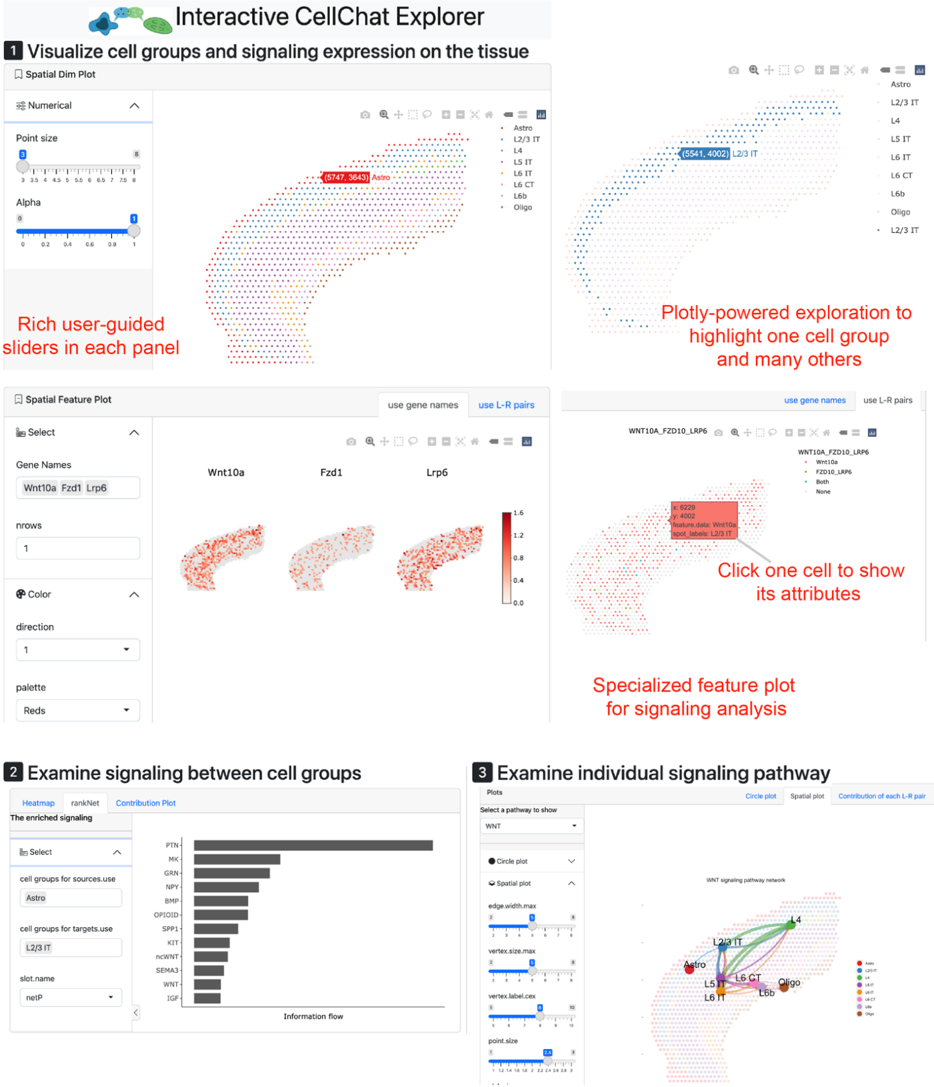
Recent advances in single-cell sequencing technologies offer an opportunity to explore cell-cell communication in tissues systematically and with reduced bias. A key challenge is integrating known molecular interactions and measurements into a framework to identify and analyze complex cell-cell communication networks. Previously, we developed a computational tool, named CellChat, that infers and analyzes cell-cell communication networks from single-cell transcriptomic data within an easily interpretable framework. CellChat quantifies the signaling communication probability between two cell groups using a simplified mass-action-based model, which incorporates the core interaction between ligands and receptors with multisubunit structure along with modulation by cofactors. Importantly, CellChat performs a systematic and comparative analysis of cell-cell communication using a variety of quantitative metrics and machine-learning approaches. CellChat v2 is an updated version that includes additional comparison functionalities, an expanded database of ligand-receptor pairs along with rich functional annotations, and an Interactive CellChat Explorer. Here we provide a step-by-step protocol for using CellChat v2 on single-cell transcriptomic data, including inference and analysis of cell-cell communication from one dataset and identification of altered intercellular communication, signals and cell populations from different datasets across biological conditions. The R implementation of CellChat v2 toolkit and its tutorials together with the graphic outputs are available at https://github.com/jinworks/CellChat . This protocol typically takes ~5 min depending on dataset size and requires a basic understanding of R and single-cell data analysis but no specialized bioinformatics training for its implementation.
Overview
CoChat Summary
TL;DR
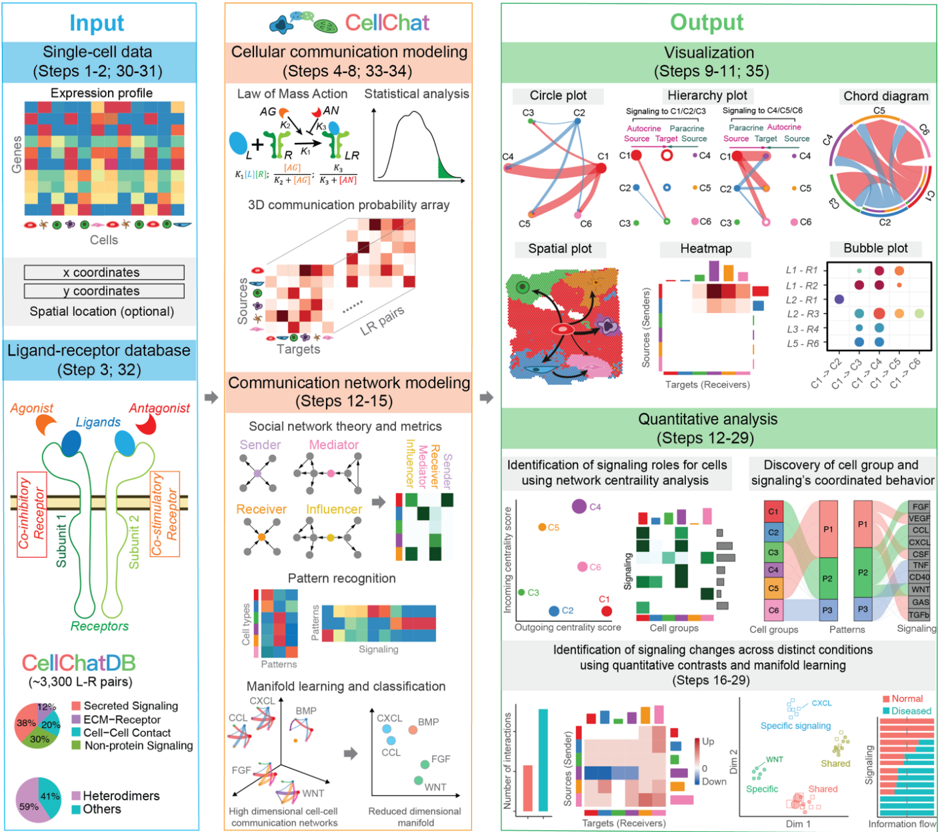
CellChat v2 is an R toolkit and step-by-step protocol for inferring, analyzing, and comparing cell–cell communication from scRNA-seq and spatially resolved transcriptomics. It extends the original CellChat with spatial proximity constraints, expanded ligand–receptor resources, comparison tools, and interactive exploration.
Key findings
- CellChat v2 infers communication probability using a simplified mass action-based model that incorporates multi-subunit ligand–receptor complexes and cofactors, with significance assessed by permutation tests.
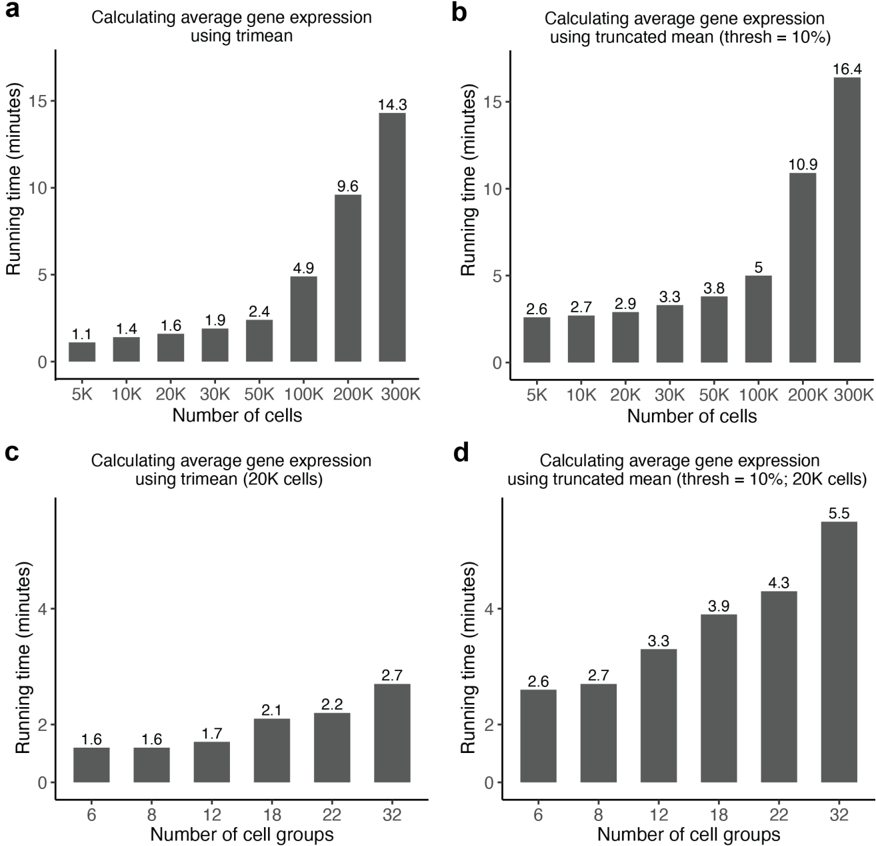
- The protocol typically takes around 20 minutes and requires no specialized prior bioinformatics training; CellChat ran in ~15 mins on an adult human skin atlas of ~300,000 cells.
- CellChatDB was expanded to include more than 1,000 protein and non-protein interactions, with a total of ~3,300 interactions for both mouse and human; spatial inference uses a default maximum diffusion range of 250 µm.
- In systematic evaluations of more than 15 cell–cell communication inference methods, CellChat was among the top-performing methods.
Methods
- Step-by-step protocol for using CellChat v2 on scRNA-seq and spatially resolved transcriptomic data, requiring normalized gene expression data, user-assigned cell labels, and, for spatial data, spatial locations plus scale factors/spot diameters.
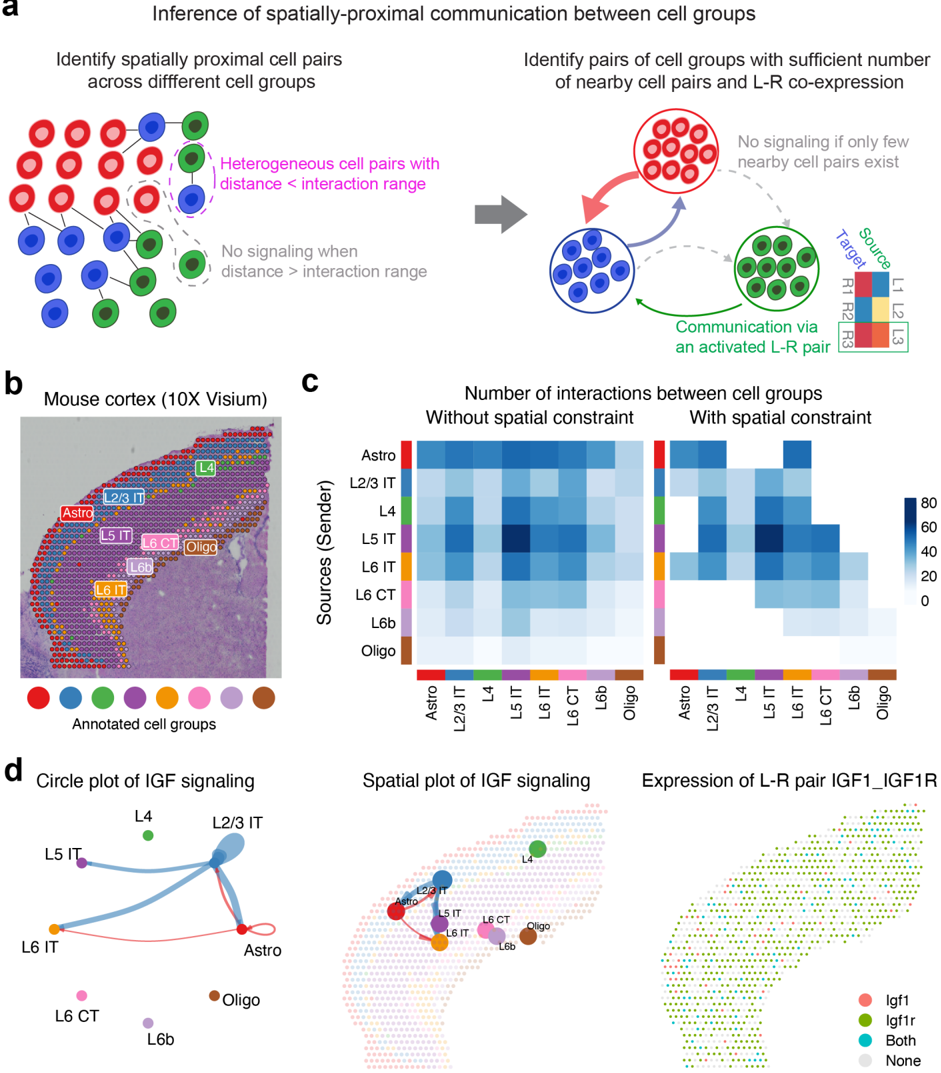
- Main analyses include ligand–receptor- and pathway-level communication inference, network centrality analysis, pattern recognition, manifold learning, differential expression, and cross-condition comparison; spatial inference first identifies physically proximal cell pairs within a maximum diffusion range and then cell-group pairs with sufficient nearby cell pairs.
- Example applications include human skin non-lesional vs lesional atopic dermatitis, embryonic mouse skin E13.5 vs E14.5, mouse brain 10X Visium, and human adult intestine 10X Visium data.
Limitations
- The paper states that CellChatDB may miss ligand–receptor interactions, though users can update it; CellChat infers interactions between defined cell groups without considering heterogeneity within those groups; and it is limited to hypothesis generation with heuristics and limited benchmarking.
- The paper also states that cross-condition analysis is largely restricted to pairwise comparisons, non-protein communication is estimated via key mediators or enzymes, and the simplified mass action model plus lack of downstream signaling events may limit inference accuracy.
- The text makes evident that output quality depends on dataset quality, including sufficient sequencing depth, simultaneous measurement of paired ligand and receptor genes in image-based spatial methods, batch effects, and the use of replicates and control datasets.
Model-written summary. Check it against the paper before relying on it.
Integrity signals
Registry
Cites
Statistics
Figures
Verification
Claims the paper makes
0 Valid · 15 Not valid · 26 Not checked · 99 Own results and interpretations
The cited sources that could be checked couldn’t confirm or dispute this claim.
In the paper
“Both CellChat v2 and CellPhoneDB v3 can eliminate some false positive communication links by utilizing spatial information.”
§ CellChat for systematic analysis of cell-cell communication from single-cell and spatially resolved transcriptomics > Running
What the sources say
- Could not verifycites [23] Yang, A.C. et al. Dysregulation of brain and choroid plexus cell types in severe COVID-19. Nature 595, 565-571 (2021). sourceExperimental — accuracy not yet measured
Our copy of Yang et al. (2021) applies only CellChat v.0.02 on snRNA-seq ligand–receptor expression (Methods, 'Cell–cell communication') and never mentions CellChat v2, CellPhoneDB (any version), or spatial-transcriptomic filtering of false-positive interactions. Searches for 'CellPhoneDB', 'spatial information / false positive communication links' and 'spatial transcriptomics' returned only the CellChat methods paragraph, the snRNA-seq QC/integration sections (which describe dissociated nuclei, no coordinates) and unrelated reference lists. The paper therefore makes no statement about the capabilities the claim attributes to it, so the claim can be neither supported nor contradicted from our copy. (LLM, conf=0.72)
plainstates a cause- Asserted: passes — The authors put it forward as true.
- Checkable: passes — It can be checked against evidence.
- Load-bearing: unclear — It is unclear whether the paper’s conclusions depend on it.
- Based: passes — The paper gives a reason why it holds.
- Rests on an assumption not shown here.
- Could not verify
None of the sources cited for this claim have been checked yet.
In the paper
“expanded the CellChatDB to include more than 1000 protein and non-protein interactions (e.g., metabolic and synaptic signaling) with rich annotations, based on the peer reviewed literature and existing databases such as CellPhoneDB 10 and NeuronChatDB 11”
§ CellChat for systematic analysis of cell-cell communication from single-cell and spatially resolved transcriptomics > Development of the protocol
What the sources say
- Could not verifycites [10] Dimitrov, D. et al. Comparison of methods and resources for cell-cell communication inference from single-cell RNA-Seq data. Nat Commun 13, 3224 (2022). sourceExperimental — accuracy not yet measured
Our copy of Dimitrov et al. (2022) treats CellChatDB only as one of the resources benchmarked: Table 1 lists 'CellChat#14 | CellChatDB' with its scoring system, and the Results section 'Resource uniqueness and overlap' (with Fig. 2 lineage and Fig. 3) reports that CellChatDB includes protein complexes and shares on average ~40-50% of the interactions present in other resources, with curated inputs from Guide to Pharmacology, CellPhoneDB, HMPR and Ramilowski commonly incorporated into later resources. No passage describes a CellChat v2 release, an expansion to more than 1000 protein and non-protein (metabolic, synaptic) interactions, or 'rich annotations', and NeuronChatDB is not mentioned anywhere; the CellChat work cited here is Jin et al. (2021), ref. 14/54. Searches for 'CellChat v2', 'non-protein interactions', 'NeuronChatDB', 'metabolic and synaptic signaling' and 'CellChatDB curation/number of interactions' returned nothing addressing the claim, so the attributed statement can be neither confirmed nor contradicted from our copy. (LLM, conf=0.72)
- Not checked yetcites [11] Liu, Z., Sun, D. & Wang, C. Evaluation of cell-cell interaction methods by integrating single-cell RNA sequencing data with spatial information. Genome Biol 23, 218 (2022). source
Checked before — its earlier verdict is held back until a new check runs.
plainstates a cause- Asserted: passes — The authors put it forward as true.
- Checkable: passes — It can be checked against evidence.
- Load-bearing: passes — The paper’s conclusions depend on it.
- Based: passes — The paper gives a reason why it holds.
- Could not verify
A result the paper reports from its own data — it cites no other source for it, so there is none to check. The quote shows it is in the paper.
In the paper
“CellChat computationally scales well with the number of cells and cell groups in the data, as reflected by the observed running time of ~15 mins on a single cell atlas of adult human skin with ~300,000 cells”
§ CellChat for systematic analysis of cell-cell communication from single-cell and spatially resolved transcriptomics > Development of the protocol
plainstates an associationSingle case- Asserted: passes — The authors put it forward as true.
- Checkable: passes — It can be checked against evidence.
- Load-bearing: unclear — It is unclear whether the paper’s conclusions depend on it.
- Based: passes — The paper gives a reason why it holds.
A result the paper reports from its own data — it cites no other source for it, so there is none to check. The quote shows it is in the paper.
In the paper
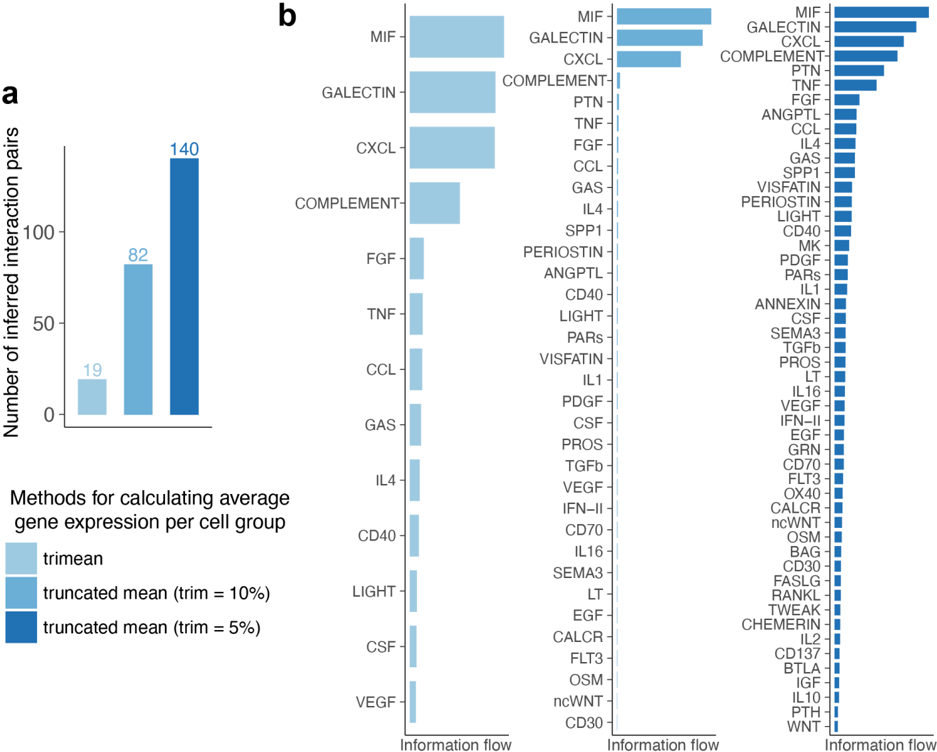
“The inferred cell-cell communications depend on the method for computing average expression per cell group.”
§ CellChat for systematic analysis of cell-cell communication from single-cell and spatially resolved transcriptomics > Troubleshooting
plainstates a cause- Asserted: passes — The authors put it forward as true.
- Checkable: passes — It can be checked against evidence.
- Load-bearing: unclear — It is unclear whether the paper’s conclusions depend on it.
- Based: passes — The paper gives a reason why it holds.
A result the paper states — it cites no source for it, so there is none to check. The quote shows it is in the paper.
In the paper
“CellChat can identify the signaling networks with larger (or smaller) difference based on their Euclidean distance in the shared two-dimensions space.”
§ CellChat for systematic analysis of cell-cell communication from single-cell and spatially resolved transcriptomics > Running
plainstates an association- Asserted: passes — The authors put it forward as true.
- Checkable: passes — It can be checked against evidence.
- Load-bearing: passes — The paper’s conclusions depend on it.
- Based: passes — The paper gives a reason why it holds.
38 more claims
Create a free account to see all 140 claims and to verify the 39 references still open.
- Probably not a substantial claim. 81
- It may state two separate claims as one. 36
- The quote only partly states this claim. 1
Claims other papers make about this one
Each is checked against this paper’s own text: does it say what the citing paper says it does?
In the citing paper
“The predicted total number of significant ligand–receptor interactions for each pair of cell types indicated that monocytes were the main drivers of cell-to-cell communication, increasing from NS as early as in SS and through advanced MASH, whereas lymphocyte interactions peaked in early MASH but decreased in advanced MASH (Fig. 8a).”
In the citing paper
“Pathway-level analysis of these clusters demonstrated increased inferred signaling through synaptic pathways, including Glutamate, NRXN, GABA-A, and GABA-B (Fig. 4C–D), based on coordinated ligand-receptor expression patterns [97].”
From Tau Ablation Rewires Brain Cell Programs in Health and Restores Function in Disease (2026) · cites this paper as [97]
Citations
Cites
Comprehensive Integration of Single-Cell Data
Stuart, T., Butler, A., Hoffman, P., Hafemeister, C., Papalexi, E., Mauck, W. M., Hao, Y., Stoeckius, M., Smibert, P., & Satija, R. (2019) · Cell · doi:10.1016/j.cell.2019.05.031 · Cited by 15,453
Inference and analysis of cell-cell communication using CellChat
Jin, S., Guerrero-Juarez, C. F., Zhang, L., Chang, I., Ramos, R., Kuan, C.-H., Myung, P., Plikus, M. V., & Nie, Q. (2021) · Nature Communications · doi:10.1038/s41467-021-21246-9 · Cited by 8,409
Self-citationEfremova, M., Vento-Tormo, M., Teichmann, S. A., & Vento-Tormo, R. (2020) · Nature Protocols · doi:10.1038/s41596-020-0292-x · Cited by 3,449
Single-cell reconstruction of the early maternal–fetal interface in humans
Vento-Tormo, R., Efremova, M., Botting, R. A., Turco, M. Y., Vento-Tormo, M., Meyer, K. B., Park, J.-E., Stephenson, E., Polański, K., Goncalves, A., et al. (2018) · Nature · doi:10.1038/s41586-018-0698-6 · Cited by 2,358 · cited 1×
“The Python tool CellPhoneDB 12,19 is a pioneering method that considers multiple subunits of ligands and receptors to accurately represent known heteromeric molecular complexes.”
NicheNet: Modeling intercellular communication by linking ligands to target genes
Browaeys, R., Saelens, W., & Saeys, Y. (2020) · Nature Methods · doi:10.1038/s41592-019-0667-5 · Cited by 2,192
Deciphering cell–cell interactions and communication from gene expression
Armingol, E., Officer, A., Harismendy, O., & Lewis, N. E. (2021) · Nature Reviews Genetics · doi:10.1038/s41576-020-00292-x · Cited by 1,267
Integrating single-cell and spatial transcriptomics to elucidate intercellular tissue dynamics
Longo, S. K., Guo, M. G., Ji, A. L., & Khavari, P. A. (2021) · Nature Reviews Genetics · doi:10.1038/s41576-021-00370-8 · Cited by 1,059
An atlas of healthy and injured cell states and niches in the human kidney
Lake, B. B., Menon, R., Winfree, S., Hu, Q., Melo Ferreira, R., Kalhor, K., Barwinska, D., Otto, E. A., Ferkowicz, M., Diep, D., et al. (2023) · Nature · doi:10.1038/s41586-023-05769-3 · Cited by 743 · cited 2×
“Recently, state-and niche-dependent signaling pathways for reparative states in proximal and distal tubules have been identified by mining healthy and injured human kidney single-cell atlases 26 .”
Dimitrov, D., Türei, D., Garrido-Rodriguez, M., Burmedi, P. L., Nagai, J. S., Boys, C., Ramirez Flores, R. O., Kim, H., Szalai, B., Costa, I. G., et al. (2022) · Nature Communications · doi:10.1038/s41467-022-30755-0 · Cited by 664 · cited 3×
“With limited benchmarking studies 10,11,18 , the question of how to better validate the inferred signaling networks and their downstream gene outputs remains to be answered.”
Mapping the temporal and spatial dynamics of the human endometrium in vivo and in vitro
Garcia-Alonso, L., Handfield, L.-F., Roberts, K., Nikolakopoulou, K., Fernando, R. C., Gardner, L., Woodhams, B., Arutyunyan, A., Polanski, K., Hoo, R., et al. (2021) · Nature Genetics · doi:10.1038/s41588-021-00972-2 · Cited by 662
Cited by
Items 701–800 of 1,770
Ma, Y., Wang, B., Gao, S., & Song, T. (2025) · Biomedicines · doi:10.3390/biomedicines13112836 · Cited by 2
“6.1) [15] was used to analyze the interactions among various cell types across different groups.”
InfluentialJain, A., Pham, T. M., Laidlaw, D. H., Ma, Y., & Singh, R. (2026) · Bioinformatics · doi:10.1093/bioinformatics/btag259 · Cited by 2
“…2024a, Yuan et al. 2024a), clustering (Dong and Zhang 2022, Long et al. 2023, Yuan et al. 2024b, Zhang et al. 2024), cell–cell interaction inference ( Garcia-Alonso et al. 2021, Cang et al. 2023, Yang et al. 2024, Jin et al. 2025), and cross-section alignment (Zeira et al. 2022, Liu et al. 2023).”
Zhou, J., Li, Y., Zhu, T., Yang, K., Zhang, C., Zhang, R., Zhang, X., Zhou, D., Ding, X., Qiao, Y., et al. (2025) · iScience · doi:10.1016/j.isci.2025.114174 · Cited by 2
Zhao, Z., Huang, S., Huang, W., Song, W., Liu, L., Chen, J., Zhang, R., & Shen, Y. (2025) · Frontiers in Immunology · doi:10.3389/fimmu.2025.1680538 · Cited by 2
Shen, S., Li, Z., Yang, H. Y., Zhang, X., Chen, G., & Pa, C. (2025) · Clinical and Experimental Medicine · doi:10.1007/s10238-025-01974-8 · Cited by 2
“Cell–cell communication networks were inferred using the CellChat R package [ 33, 34].”
Targeting Pan-Cancer Stemness: Core Regulatory lncRNAs as Novel Therapeutic Vulnerabilities
Deng, S., Yang, Y., Gao, D., Gao, J., & Xiong, Y. (2025) · International Journal of Molecular Sciences · doi:10.3390/ijms262311684 · Cited by 2
“6.1) [105,106] was then employed to decipher differentially expressed ligand-receptor interactions and identify signaling pathways with significantly altered communication probability (permutation test, p 0.05) between the two cell clusters.”
InfluentialAn, J., Wasikowski, R., Najjar, R., Tsoi, L. C., Kahlenberg, J. M., Anufrieva, K. S., Theisen, E., Wei, K., Gudjonsson, J. E., & Elkon, K. B. (2025) · Journal of Investigative Dermatology · doi:10.1016/j.jid.2025.11.024 · Cited by 2
Dynamic Immune Cell Composition, Phenotypes, and Signaling in an Engineered Metastatic Niche
Pereles, R. S., Roy, J., Brooks, M. D., Wicha, M. S., Jeruss, J. S., Shea, L. D., & Orbach, S. M. (2026) · Biotechnology and Bioengineering · doi:10.1002/bit.70140 · Cited by 2
Multifaceted B cell response to transient HIV viremia in elite controllers
Muir, L., Suchánek, O., Thomas, P., Griffith, S. A., Touizer, E., Rees-Spear, C., Krause, R., Yoshida, M., Pinder, C. L., Patil, R., et al. (2026) · PLoS Pathogens · doi:10.1371/journal.ppat.1013817 · Cited by 2
“Inferred number and strength of cell-cell interactions between all annotated cell subsets during pre-blip timepoint was calculated using CellChat v2 [88], following the standard workflow (from Anndata object) and keeping the default settings.”
Comparative Single‐Cell Transcriptomic Atlas Reveals the Genetic Regulation of Reproductive Traits
Zhao, B., Luo, H., Guan, D., Fu, X., Wang, F., Zhang, G., Li, S., Yang, H., & Zhang, Y. (2026) · Advanced Science · doi:10.1002/advs.202517633 · Cited by 2
“To identify and visualize cellular cross-talk between cell types, the CellChat [ 49 ] package (v1.”
Tendon Organoids Enable Functional Tendon Rejuvenation Through ALKBH5‐Dependent RNA Demethylation
Tian, Q., Pan, A., Miao, Z., Zhao, Y., Mo, X., Sun, H., Fan, C., Guo, J., Wu, B., Shen, W., et al. (2026) · Advanced Science · doi:10.1002/advs.202508376 · Cited by 2
“The mRNA levels of tenogenesis-specific genes were assessed using real-time PCR, as previously described [ 35 ].”
InfluentialCeLLTra: aligning cell names with gene expression via a pathway-informed transformer
Zhao, L., Zheng, Z., Li, R., Chen, W., Yang, Y., Ali, M. A., Li, J., & Zheng, W. J. (2025) · Bioinformatics · doi:10.1093/bioinformatics/btaf655 · Cited by 2
“This detailed view allows for the annotation of cell types, facilitating the understanding of cellular diversity and its changes under various conditions (Svensson et al. 2018, Chen et al. 2019, Perez et al. 2022, Jin et al. 2025).”
Ge, Y., Liu, H., Shen, J., Xu, H., Feng, Y., Zong, D., & Wang, L. (2026) · Cell Communication and Signaling · doi:10.1186/s12964-026-02689-3 · Cited by 2
“CXCL12 (SDF-1) facilitates immune suppression by recruiting regulatory T cells and M2-like macrophages [28].”
SpatialESD: Spatial Ensemble Domain Detection in Spatial Transcriptomics
Cao, H., Liu, G., Xia, J., Chen, R., Wang, T., Yang, X., Fang, R., Luo, Y., Zeng, P., Yu, H., et al. (2026) · Advanced Science · doi:10.1002/advs.202520912 · Cited by 2
“We performed cell-cell communication analysis using CellChat v2 [38] , which includes an expanded ligand-receptor database, additional functional annotations, and new comparison features.”
Liu, X., Demircik, F., Antipova, M., Stylianakis, E., Klein, M., Bejarano, D. A., Elwy, A., Ebering, A., Blanfeld, M., Carter, K., et al. (2026) · Cellular and Molecular Immunology · doi:10.1038/s41423-026-01392-0 · Cited by 2
Macrophage-derived CCL20 promotes abdominal aortic aneurysm progression via lymphocytes CCR6
Ren, Q., Sun, T., Shen, S., Cao, Y., Wei, L., Zhao, Y. C., Wan, F., Sui, P., Xiao, K., Bai, H., et al. (2026) · Frontiers in Immunology · doi:10.3389/fimmu.2026.1780720 · Cited by 2
Hu, H. X., Li, L., Bian, W., & Wu, X. (2026) · Discover Oncology · doi:10.1007/s12672-026-04725-7 · Cited by 2
“Cell-cell interaction networks were inferred using R CellChat [36] (version 2.1.1), focusing on ligand-receptor pairs involved in immune modulation, angiogenesis, and stromal activation.”
InfluentialMalonga, T., Lhuillier, É., Marrauld, C., Fourmy, D., Riant, É., Cabau, C., Vialaneix, N., & Beaumont, M. (2026) · American Journal of Physiology-Gastrointestinal and Liver Physiology · doi:10.1152/ajpgi.00251.2025 · Cited by 2
Dynamic changes of the immune microenvironment in ovarian cancer following neoadjuvant chemotherapy
Wu, M., Lv, F., Jin, Y., Wang, S., Meng, L., Tong, J., & Zou, R. (2026) · Cell Death Discovery · doi:10.1038/s41420-026-03070-6 · Cited by 2
“Considering that cellular interactions constitute the foundation of the tumour microenvironment, we inferred cell – cell communication using CellChat [17].”
Zhang, W., Chen, K., Ke, Y., Yan, D., Lin, Z., Chen, L., Gao, Z., Shen, Y., Wan, H., Yang, X., et al. (2026) · Cell Reports · doi:10.1016/j.celrep.2026.117191 · Cited by 2
Wu, J., Zhou, X., Luo, T., Wang, X., Zuo, H., Yang, R., Tian, R., Wu, Y., Wu, Y. F., Jiang, W., et al. (2026) · Molecular Psychiatry · doi:10.1038/s41380-026-03545-z · Cited by 2
“Cell-cell communication analysis was performed using the CellChat [34] package (v1.”
A spatiotemporal transcriptomic atlas of porcine (Sus scrofa) female early gonadal development
He, P., Xia, W., Chen, T., Yan, Y., Gao, D., Teng, Y., Zhao, T., Chen, X., Feng, Z., Li, R., et al. (2026) · Communications Biology · doi:10.1038/s42003-026-09932-0 · Cited by 2
Díaz-Valdivia, N., Duch, P., Ikemori, R., Parker, A. L., Arshakyan, M., Llorente, A., Bernardo, A., Rodriguez-Rojas, J., Carrasco, J. L., Park, D., et al. (2026) · Cell Death and Disease · doi:10.1038/s41419-026-08677-2 · Cited by 2
“Kaplan ‑ Meier plots with log ‑ rank p ‑ values visualized survival associations.”
Benchmarking tools for deciphering cellular crosstalk in spatially-resolved transcriptomics
Ku, L.-T., Bernard, V., Min, J., Yuan, Y., Koay, E. J., Maitra, A., Li, L., & Li, Z. Y. (2026) · Genome biology · doi:10.1186/s13059-026-04063-5 · Cited by 2
Dong, X., Yang, Z., Zhao, Z., Liu, J., & Zhang, M. (2026) · Journal of Gastroenterology · doi:10.1007/s00535-026-02416-2 · Cited by 2
“To infer intercellular communication networks, we applied CellChat [37] (v2.”
iS2C2: a cointelligent platform for mechanistic discovery of disease cellular crosstalk
Sheng, J., Ahn, J. Y., Yang, L., Wan, Z., Qi, S., Yu, X., Xu, Z., Cao, Y., Vasquez, M., Irfan, A., et al. (2026) · Signal Transduction and Targeted Therapy · doi:10.1038/s41392-026-02691-8 · Cited by 2
“16 – 18 In these systems, ligand – receptor ( L –”
Xie, B., Kang, Y., Zhao, S., Wu, Z., Wu, Z., Kuang, X., Jiang, J., Xu, N., Lin, X., Wu, J., et al. (2026) · Biomaterials Science · doi:10.1039/d6bm00274a · Cited by 3
Liu, W., Zhu, X., Wu, M., Wu, G., Wu, S., Woldegiorgis, S. T., Huang, G., Zhang, L., Hu, P., Zheng, Y., et al. (2026) · The Plant Journal · doi:10.1111/tpj.70905 · Cited by 2
Deng, Y., Chen, M., Gao, P., Luo, R., Li, Z., & Yao, Y. (2026) · Journal of Translational Medicine · doi:10.1186/s12967-026-08033-0 · Cited by 2
“The widely used CellChat tool has recently evolved to CellChat v2, incorporating an expanded data-base, interactive visualization, and enhanced functionalities for comparing communication across different biological conditions [20, 21].”
Pan, Y., Xiang, X., Li, J., Ge, Y., & Liang, X. (2026) · BMC Cancer · doi:10.1186/s12885-026-16248-z · Cited by 2
“0.0) [20].”
InfluentialZeng, F., Guo, J., Zeng, Z., Zhang, V. X., Tsui, Y., Li, P.-M., Husain, A., Zhang, Q., Lee, J. M., Cheung, T.-T., et al. (2026) · Molecular Cancer · doi:10.1186/s12943-026-02682-x · Cited by 2
“To investigate cell-cell communication, we employed Cellchat [43] and Nichenetr [44] for subsequent analysis.”
Li, H., Abhulimen, P. O., Yu, Q., Cheng, W., & Njunge, L. W. (2026) · Ageing Research Reviews · doi:10.1016/j.arr.2026.103205 · Cited by 2
Liu, H., Wang, L., Li, C., Li, D., Meng, L., Zheng, G., Ren, J., Shang, L., & Bao, Y. M. (2026) · Cancer Immunology Immunotherapy · doi:10.1007/s00262-026-04456-2 · Cited by 2
The tectum transversum maintains patency of the developing coronal suture
Umar, M., Bartoletti, G., Sokolowskei, D., Janser, N., Tower, R. J., & He, F. (2026) · Development · doi:10.1242/dev.205347 · Cited by 2
Multicellular ecosystems: Linking cellular diversity to tissue function and disease
Shi, Q., Tang, F., Chen, Y., & Zhang, Z. (2026) · Trends in Cell Biology · doi:10.1016/j.tcb.2026.06.005 · Cited by 2
Zhang, Q., Zhang, Y., Sun, H., Li, H., Wang, Y., & Wei, F. (2026) · Journal of Virology · doi:10.1128/jvi.00746-26 · Cited by 2
Song, Q., Xu, Y., Wang, X., Wang, W. Y., Feng, Y., Hu, Z., Tong, Y., Wang, S., Jankowski, S. E., Chaudagar, K. K., et al. (2026) · Science Translational Medicine · doi:10.1126/scitranslmed.adx7264 · Cited by 2
Huang, R., & Goods, B. A. (2026) · Reproduction · doi:10.1093/reprod/xaag079 · Cited by 2
BDNF regulates pituitary stem cell engagement toward precursor state
Sochodolsky, K., Khetchoumian, K., Balsalobre, A., Feeley, R. M., Rice, M. E., Chakravarty, P., Lovell-Badge, R. H., Rizzoti, K., & Drouin, J. (2026) · Stem Cell Reports · doi:10.1016/j.stemcr.2026.102997 · Cited by 2
Single nucleus RNA profiling reveals potential therapeutic vulnerabilities in sinonasal carcinomas
Zhdanovich, Y., Geisenberger, C., Mochmann, L. H., Schleich, K., Chimal, E., Engelhardt-Schott, F., Bergmayr, L., Klingler, D., Schmid, S., Capper, D., et al. (2026) · npj Precision Oncology · doi:10.1038/s41698-026-01597-6 · Cited by 2
Fantuz, M., Liebig, J., Fontana, G., Noè, R., Milan, G., Piccoli, G., Iebba, V., Lukassen, S., Carbone, C., Blaauw, B., et al. (2026) · Cell Death and Differentiation · doi:10.1038/s41418-026-01804-8 · Cited by 2
Kawamura, Y., Johnson, C. W., DeLong, J. H., Camillo, L. P. D. L., Velazquez, S. E., Takahashi, M., Beatty, H. E., Hebert, R., Cord, B. J., Matouk, C. C., et al. (2026) · Journal of Cerebral Blood Flow & Metabolism · doi:10.1177/0271678x261471282 · Cited by 2
“Cell-cell interaction analysis was performed using CellChat2 15 after filtering for non-protein interactions and subsetting for microglia clusters in hematoma tissue.”
Zheng, H., Li, Q., Luo, H., Yuan, Y., Zhang, N., Lu, Y., Duan, S., Zhong, J., Hb, Z., Liu, C. G., et al. (2026) · Advanced Science · doi:10.1002/advs.76761 · Cited by 2
“1.2) with the mouse ligand-receptor interaction database (CellChatDB.mouse) [ 58 ].”
InfluentialShin, S., Hong, S.-P., Lee, S., Jang, Y., Yang, J., Oh, J., Jang, D., Lee, S.-J., Kim, J., Lee, S. E., et al. (2026) · Cancer Research · doi:10.1158/0008-5472.can-26-0403 · Cited by 2
Kotah, J. M., Trombetta-Lima, M., Dragt, E. C., Voulgaroglou, A., Brouwer, N., Holtman, I. R., Kooistra, S. M., & Eggen, B. J. L. (2026) · Glia · doi:10.1002/glia.70210 · Cited by 2
Khatri, A., McKernan, C. M., Swearingen, A. E. D. V., Jain, V., Thrash, H. L., Towne, A., Gu, J., Gregory, S. G., Anders, C. K., & Pendergast, A. M. (2026) · iScience · doi:10.1016/j.isci.2026.116517 · Cited by 2
“20 The CellChat tool quantitatively infers and analyzes intercellular communication networks in single cell RNA-seq datasets and allows for predictions of signaling inputs and outputs for each sub-population of cells.”
Henstridge, A. Z., Azorsa, P. A., Arya, N., Elhossiny, A. M., Kadiyala, P., Goldwasser, M., Branch, G., Sahai, V., Peterson, N., Machicado, J. D., et al. (2026) · Cancer Research · doi:10.1158/0008-5472.can-26-0823 · Cited by 2
Reducing Nuclear Rupture Rescues Gene Expression and Survival in LMNA -DCM
Zuela-Sopilniak, N., Morival, J. L. P., Ntekas, I., Elpers, M., Agarwal, R., Henretta, S. J., Odell, J., Vlaminck, I. D., & Lammerding, J. (2026) · Circulation Research · doi:10.1161/circresaha.125.327744 · Cited by 2
“While CM5 contained too few nuclei in the 11-dpi cWT sample to assess differential communication, CellChat predicted interactions between CM5 and Fib1, Mye1, and Mye2 in cKO hearts, similar to CM3 (Figure S16).”
InfluentialEffects of semaglutide on kidney disease in type 2 diabetes: a randomized placebo-controlled trial
Tuttle, K. R., Bjornstad, P., Smith, C., Pruijm, M. T., McCown, P. J., Hodgin, J. B., Cherney, D. Z. I., Belmar, N., Chacko, M. M., Das, V., et al. (2026) · Nature Medicine · doi:10.1038/s41591-026-04674-2 · Cited by 3
Stoner, S. N., Larson, E. D., Fulte, S., Shaw, S. C., Fish, E. R., Janoff, E. N., Mack, M., & Clark, S. E. (2026) · Proceedings of the National Academy of Sciences · doi:10.1073/pnas.2623525123 · Cited by 2
Salamero‐Boix, A., Schulz, M., Anthes, J., Mayer, J. B., Möckl, A., Tsoukala, I., Menger, D., Mosa, M. H., Hetzer, J., Macas, J., et al. (2024) · bioRxiv (Cold Spring Harbor Laboratory) · doi:10.1101/2024.09.30.615883 · Cited by 2
Thavaratnam, K., Gracey, E., Ratneswaran, A., Rockel, J. S., Vohra, S., Pastrello, C., Stappers, F., Planckaert, G., Hueniken, K., Garcia, J., et al. (2025) · bioRxiv (Cold Spring Harbor Laboratory) · doi:10.1101/2025.03.05.641539 · Cited by 2
Single-cell profiling of bam mutant germaria identifies gcrf1 as a regulator of TOR signaling in GSC
Sun, Z., Zeng, Y., Nystul, T. G., & Zhong, G. (2026) · EMBO Reports · doi:10.1101/2025.10.14.682265 · Cited by 2
Integrated Single-cell Analysis Uncovers Regulatory Logic of Cranial Ectoderm DevelopmentPreprint
Pajanoja, C., Rees, J. M., Taroc, E. Z. M., & Kerosuo, L. (2025) · bioRxiv (Cold Spring Harbor Laboratory) · doi:10.64898/2025.12.17.694990 · Cited by 2
MEA-LINK identifies the CCL4-CCR5 axis in neuronal hyperactivity control by human microgliaPreprint
Mordelt, A., Scheefhals, N., Schuurmans, I. M. E., Slottje, K., Rivera, M. C., Hommersom, M. P., Huang, A., Bichmann, L., Lewerissa, E., van Hugte, E., et al. (2026) · bioRxiv (Cold Spring Harbor Laboratory) · doi:10.64898/2026.02.04.703799 · Cited by 2
“1.2) was used 64 .”
InfluentialVanegas-Avendaño, N., Chen, H., Wellmerling, J. H., Rodriguez-Lopez, J., Ghobashi, A. H., Peters, V., Sen, C., Reader, B. F., Shilo, K., Gomperts, B. N., et al. (2026) · bioRxiv (Cold Spring Harbor Laboratory) · doi:10.64898/2026.04.08.717092 · Cited by 2
Uzun, S., Haefliger, S., Zinner, C., Pant, A., Beenen, A. C., Bendik, N., Heusler, H., Stalder, A. K., Whipman, J., Mertz, K. D., et al. (2026) · medRxiv · doi:10.64898/2026.04.27.26351449 · Cited by 2
dos Anjos-Monteiro, A., Ferreira, J. G. P., dos Santos-Affonso, V. H., Chamiec-Case, E., Mickelsen, L. E., Abbasabadi, B. M., Elias, C. F., Jackson, A. C., & Bittencourt, J. C. (2026) · bioRxiv (Cold Spring Harbor Laboratory) · doi:10.64898/2026.05.12.724557 · Cited by 2
“At the cellular level, the MPOA is predominantly composed of GABAergic neurons and exhibits strong sensitivity to reproductive hormones, including estrogen, progesterone, and prolactin (42–46).”
Mantica, G., Vedi, A., Tuval, A., Encabo, H. H., Hayler, D., Krzywon, A., Mitchell, E., Dunn, W. G., Biezuner, T., Bastos, H. P., et al. (2025) · bioRxiv (Cold Spring Harbor Laboratory) · doi:10.1101/2025.10.08.679225 · Cited by 2
“(C) Chord diagram of CSF soluble factor communication network inferred from ligand-receptor expression in scRNA-seq data using CellChat algorithm 74 (left).”
Ren, H., Liu, S., Ji, D., Li, X., Sun, X., Wang, W., Liu, T., & Li, Y. (2025) · Molecular Therapy Oncology · doi:10.1016/j.omton.2025.200965 · Cited by 2
Aslani, T., Asif, S., Oh, Y., Lee, H., Stocker, C., Kwon, S.-K., Pan, J., Dababneh, S., Zhao, X., Taylor, L., et al. (2025) · bioRxiv (Cold Spring Harbor Laboratory) · doi:10.1101/2025.11.17.688915 · Cited by 2
“Following the developer’s protocols (32), over-expressed genes and interactions were identified using IdentifyOverExpressedGenes and IdentifyOverExpressedInteractions, respectively.”
Exercise Engages Coordinated Neuron–Glia Signaling to Shape Spinal Cord PlasticityPreprint
Mansingh, S., Dilbaz, S., Ritz, D., Santos, G., Steurer, S. A., & Handschin, C. (2025) · bioRxiv (Cold Spring Harbor Laboratory) · doi:10.64898/2025.12.11.693787 · Cited by 2
Chen, H., Kaneko, N., Ohyama, Y., & Moriyama, M. (2026) · Journal of Autoimmunity · doi:10.1016/j.jaut.2025.103521 · Cited by 2
Unveiling critical signaling pathways in the murine salivary gland and the role of midkine
Wrynn, T., Osinski, J. M., Sinha, S., & Romano, R.-A. (2026) · iScience · doi:10.1016/j.isci.2026.114852 · Cited by 2
“24,25 Interest-ingly, while our analysis identified well-established pathways that contribute to the various stages of embryonic development, such as COLLAGEN, LAMININ, and NOTCH, additional pathways were also unearthed that were enriched at each developmental stage.”
Single-cell transcriptomic profiling of malignant peripheral nerve sheath tumors
Gui, C., Bunda, S., Li, M., Singh, O., Zadeh, G. M., & Suppiah, S. (2026) · Neuro-Oncology Advances · doi:10.1093/noajnl/vdaf243 · Cited by 2
“22 High expression of both a ligand and its corresponding receptor is interpreted as evidence of potential cellular cross-talk.”
Niu, H., Zhang, S., Mao, J., Wu, Y., Chen, Y., Chen, J., Wang, R., Zhang, G., Zhang, P., Zhang, X., et al. (2026) · Cell stem cell · doi:10.1016/j.stem.2026.03.001 · Cited by 2
Zhang, H., Jiang, S., Zhu, T., Liu, Y., Li, J., Fang, S., Li, Y., Sun, J., He, X., Tong, C., et al. (2026) · BMC Medicine · doi:10.1186/s12916-026-04957-y · Cited by 2
He, Y., Peng, H., Li, L., Sheng, S., Wang, Q., Li, W., Lin, F., & Yi, J. (2026) · Nature Communications · doi:10.1038/s41467-026-71209-1 · Cited by 2
Zhong, J., Lu, J., Li, H., Zhong, J., Luo, X., Hu, Y., Wang, X., Wang, P., Zhang, Y., Wang, Z., et al. (2026) · Advanced Science · doi:10.1002/advs.202523872 · Cited by 2
KRAS-extrachromosomal DNA drives intratumoral heterogeneity in gastric cancer
Guan, R., Li, C., Dai, X., Wang, Y., Zhang, Y., Liang, X., Yu, S., Li, Z., Dong, K., Cai, M., et al. (2026) · Oncogene · doi:10.1038/s41388-026-03713-z · Cited by 2
Multi-omics profiling-derived signature links cellular ecosystem to glioblastoma prognosis
Zhang, Z., Xu, H., Zheng, H., Pan, Z., Feng, M., Yang, Y., & Cao, M. (2026) · iScience · doi:10.1016/j.isci.2026.115982 · Cited by 2
Islamuddin, M., Ji, L., Chen, Y., Song, K., Ellsworth, C. R., Rappaport, J. D., Wang, C., Liu, S., Kolls, J. K., Xu, X., et al. (2026) · Cells · doi:10.3390/cells15121102 · Cited by 2
Embryonic and postnatal macrophages are necessary for proper tooth development and homeostasis
González‐López, M., Katsura, K. A., Neves, V. C. M., Soldatov, R., Lavický, J., Azam, M., Kavková, M., Cigosova, K., Temsamrit, B., Bonnardel, J., et al. (2026) · Nature Communications · doi:10.1038/s41467-026-75576-7 · Cited by 2
Reprogramming of neuronal genome function and phenotype by astrocytesPreprint
Li, B., Hagy, K. T., Safi, A., Beer, M., Barrera, A., Geraghty, S., Rai, R., Pederson, A. N., Reisman, S. J., Love, M. I., et al. (2026) · bioRxiv (Cold Spring Harbor Laboratory) · doi:10.64898/2026.03.07.710282 · Cited by 2
Zhang, C. J., Fan, J., Guo, Y., Xiao, F., Chao, J., & Yang, D. (2026) · Angewandte Chemie · doi:10.1002/ange.2621334 · Cited by 2
Smirnova, N. P., Ponomartsev, S. V., Ali, T. M. L., Lycke, M., Chung, B. K., Øgaard, J., Melum, E., Combriat, T. M. D., Veenvliet, J. V., & Krauss, S. J. K. (2025) · bioRxiv (Cold Spring Harbor Laboratory) · doi:10.1101/2025.11.09.687163 · Cited by 2
Jin, K., Wang, N., Mou, C., Yuan, K., Wang, C., Yuan, J., Zheng, F., Fang, Z., Jin, X., He, J., et al. (2026) · The Ocular Surface · doi:10.1016/j.jtos.2026.02.003 · Cited by 2
Hu, Y., Feng, W., He, Z., Zeng, J., Tang, J., Li, S., Yu, T., Fu, S., X, H., Lu, B., et al. (2026) · Advanced Science · doi:10.1002/advs.202524339 · Cited by 2
Zhao, Y., Zhang, R., Li, Y., Liu, S., Liu, C., Wang, Y., Wang, T., Xiao, M., Huang, J., Zhang, B., et al. (2026) · Nature Communications · doi:10.1038/s41467-026-76959-6 · Cited by 2
Bellomo, G., Gittens, J., Brunning, C., Abudula, M., Jones, R. P., Schmid, M. C., & Mielgo, A. (2026) · Science Advances · doi:10.1126/sciadv.aed1296 · Cited by 2
Fetisov, T. I., Ikonnikov, A. V., Kopantseva, E., Shtompel, P. A., Khazanova, S. A., Trapeznikova, E. S., Zinovieva, V. Y., Zuevskaya, S. N., Tararykova, A. A., Bokhyan, B. Y., et al. (2026) · Medical Sciences · doi:10.3390/medsci14010077 · Cited by 2
Wu, J., Liu, B., Chen, S., Xin, J., & Wang, M. X. (2026) · Clinical and Translational Medicine · doi:10.1002/ctm2.70688 · Cited by 2
Tertiary lymphoid structures support the development of allergen-specific progenitor CD4+ T cellsPreprint
Bangs, D. J., Hondowicz, B. D., Abadie, K., Savard, R., Weiss, M. A., Karakousi, T. R., Skene, P. J., Lund, A. W., Goldrath, A. W., Heeg, M., et al. (2025) · bioRxiv (Cold Spring Harbor Laboratory) · doi:10.1101/2025.10.03.680350 · Cited by 2
Long, M. A., Westenskow, M. R., Perales, G., Burris, S., Singh, G., & Gardiner, A. S. (2026) · bioRxiv (Cold Spring Harbor Laboratory) · doi:10.64898/2026.09.01.748632 · Cited by 2
Bai, J., Su, H., Wang, S., Dong, Y., & Gao, Y. (2026) · Theranostics · doi:10.7150/thno.124789 · Cited by 2
Wang, F., Li, J., Zhou, J., Lin, Y., Chen, Y., Yang, L., Wang, Y., Yang, H., & Yang, H. (2026) · Translational Cancer Research · doi:10.21037/tcr-2025-2129 · Cited by 2
Wu, S., Zhang, G., Yang, J., & Wang, S. (2026) · Digestive Diseases and Sciences · doi:10.1007/s10620-026-09923-5 · Cited by 2
Dhodapkar, K. M., Matera, A., Duffy, A. M., Taz, A., Manalo, R. J., Yushak, M. L., Kuchadkar, R., Lawson, D. H., & Dhodapkar, M. V. (2026) · Journal of Clinical Investigation · doi:10.1172/jci205606 · Cited by 2
Du, Y., Nie, Y., Luo, Z., Deng, J., Xu, Z., Zhang, Y., Gao, C., Liu, Y., Lei, X., Long, J., et al. (2026) · Nature Communications · doi:10.1038/s41467-026-74932-x · Cited by 2
Xu, X., Yang, R., Fang, L., Sun, M., Ma, Y., Zhang, Y., & Wu, C. (2026) · BioFactors · doi:10.1002/biof.70135 · Cited by 2
Wu, S., Xue, L., Li, X., Wang, Y., Zhu, Y., Luo, Y., Sun, J., Jin, T., Shu, W., & Wang, Z. (2025) · Immunologic Research · doi:10.1007/s12026-025-09609-6 · Cited by 1
“To conduct an in-depth analysis of intercellular communication, we initially installed the CellChat package [28] and integrated essential auxiliary packages, including dplyr for data manipulation and ggplot2 for visualization.”
Unjitwattana, T., Huang, Q., Yang, Y., Tao, L., Yang, Y., Zhou, M., Du, Y., & Garmire, L. X. (2025) · Genome biology · doi:10.1186/s13059-025-03495-9 · Cited by 1
Hiura, T., Seno, S., & Matsuda, H. (2025) · Communications in computer and information science · doi:10.1007/978-3-031-85638-9_11 · Cited by 1
Poor sleep impairs immune responses and influenza vaccine protection
Guan, M., Gu, W., Gileles‐Hillel, A., Khalyfa, A., Balamalaliyage, P., Tunterak, W., Li, M., Huang, Y., Wen, Y., Driver, J. P., et al. (2026) · Nature Communications · doi:10.1038/s41467-026-72212-2 · Cited by 1
Wiarda, J. E., Arruda, B. L., Zanella, E. L., Kim, H., Hau, S. J., Zhang, J., & Buckley, A. (2026) · Microbiology Spectrum · doi:10.1128/spectrum.02643-25 · Cited by 1
Fang, Y., Fu, T., Xiong, Z., Zhang, Q., Liu, W., Yu, K., & Le, A. (2025) · MedComm · doi:10.1002/mco2.70284 · Cited by 1
“Intercellular communication was assessed using the CellChat tool (version 2.1.0) [60].”
InfluentialZhang, P., Chen, W., Chen, K., Ye, Y., & Wu, W. (2025) · Discover Oncology · doi:10.1007/s12672-025-03114-w · Cited by 1
Aging-enhanced accumulation of fibroblasts excludes oligodendrocytes in demyelinated lesions
Lozinski, B. M., Melchor, G. S., D’Mello, C., Gorter, R. P., Dong, Y., Ghorbani, S., Li, C., Mørch, M. T., Moezzi, D., Jain, R., et al. (2026) · Journal of Neuroinflammation · doi:10.1186/s12974-026-03976-z · Cited by 1
Huang, P., Guo, K., Tu, J., Fang, J., Zhou, L. F., Luo, X., & Xu, H. (2025) · Human Mutation · doi:10.1155/humu/6705599 · Cited by 1
Song, W., Jin, K., & Wang, Q. (2025) · Journal of Translational Medicine · doi:10.1186/s12967-025-06845-0 · Cited by 1
“The CellChat package version 1.6.1 was utilized to reconstruct differential cell-cell interaction networks [25].”
Influential
Metadata
- Authors
- Jin, S., Plikus, M. V., & Nie, Q.
- Affiliations
- Wuhan University (CN)
- University of California, Irvine (US)
- Corresponding author
- Jin, Suoqin
- Nie, Qing
- Venue
- Nature Protocols
- Published
- 2024-09-16
- Volume
- 20
- Issue
- 1
- Pages
- 180-219
- ISSN
- 1750-2799 (ISSN-L)
- 1754-2189
- OpenAlex
- W4402604581
- Semantic Scholar
- 92038ff7c7f4449feeb0df9fa2b16d02169fdd86
- Cited by
- 1,448
- References
- 54
- Citations by year
- 2026: 821 · 2025: 542 · 2024: 82
- FWCI
- 196.85
- Type
- journal article
- Language
- en
- Open access
- green
- doi.org
- Licence
- cc-by-nc-nd
- www.springernature.com/gp/researchers/text-and-data-mining (tdm)
- www.springernature.com/gp/researchers/text-and-data-mining (vor)
- Locations
- Nature Protocols (publishedVersion)
- bioRxiv (Cold Spring Harbor Laboratory) (acceptedVersion, cc-by-nc-nd)
- PubMed (publishedVersion)
- Funders
- National Science Foundation (MCB2028424)
- Foundation for the National Institutes of Health (R01AR079150, R01DE030565)
- National Natural Science Foundation of China (92374108)
- Topics
- Life Sciences › Biochemistry, Genetics and Molecular Biology › Molecular Biology › Single-cell and spatial transcriptomics
- Life Sciences › Biochemistry, Genetics and Molecular Biology › Molecular Biology › Bioinformatics and Genomic Networks
- Life Sciences › Biochemistry, Genetics and Molecular Biology › Molecular Biology › Gene Regulatory Network Analysis
- Keywords
- intercellular communication, CellChat, single-cell transcriptomics, ligand-receptor interactions, mass action model, cofactors, interactive visualization
- MeSH terms
- Animals, Cell Communication, Humans, Software, Computational Biology, Gene Expression Profiling, Single-Cell Analysis, Transcriptome
About these checks
Registry, retraction, Cites and statistics results are computed, not judged, with one exception: a printed reference that no index lists is read once by a model before it counts as a citation error. Claims are extracted by a model and kept only when their quote appears verbatim in the text; each cited source is then checked, with a model’s help, for whether it says what the claim relies on. Those verdicts can be wrong — read the claim’s quote and the cited source before relying on one.
The claim verdicts this report counts are experimental: their accuracy is not yet measured.
A language model drew the claims from the paper on 2026-11-22, under version 3 of the claim definition (model deepseek-v4.1-flash, prompt extract-v3).
A second model labelled each claim on 2026-11-22 (model jev-1.13-20260917, definition revision gold-guideline-v0.2).
Cited sources are checked with a language model’s help (qwen3.8-omni-flash).
Statistics and arithmetic are recomputed, not judged.
Confidence bands are shown only for fields calibrated on our annotated test set. None is calibrated yet, so no band is shown.
What counts as a claim ›How we measure confidence ›How we check this ›
Are you an author, or do you see a problem with this page? Request a review
Data sources
Bibliographic data: Semantic Scholar, OpenAlex, Crossref.
Contains information from the Semantic Scholar Academic Graph Datasets, made available under the ODC Attribution License (ODC-BY 1.0).
Semantic Scholar’s data is described in: Kinney, R., et al. (2023). The Semantic Scholar Open Data Platform. arXiv:2301.10140.
