

YidC and SecYEG form a heterotetrameric protein translocation channel.
Open accessThe DOI matches its Crossref record; 64 of the 65 references it cites were found in a registry or an index.
Abstract
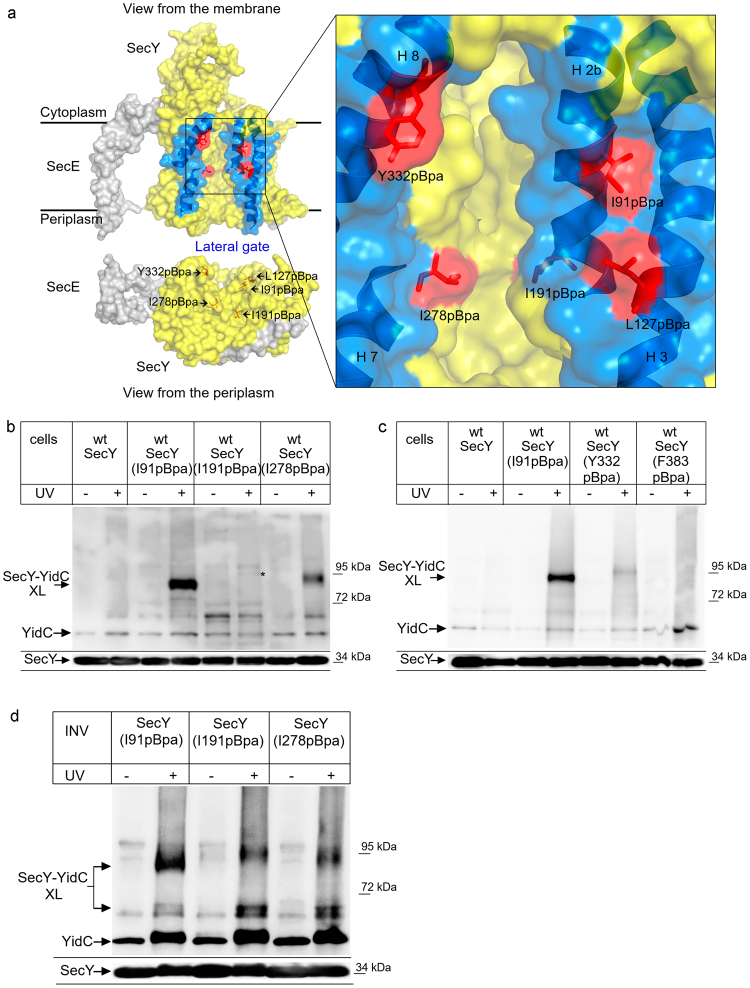
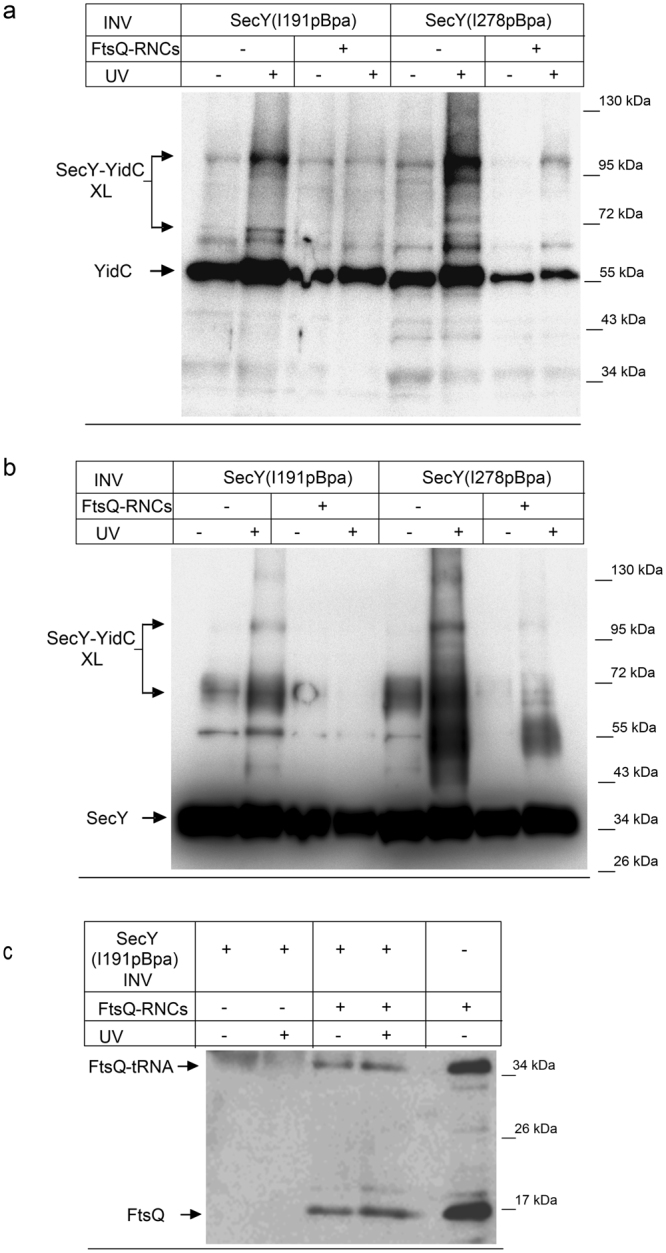
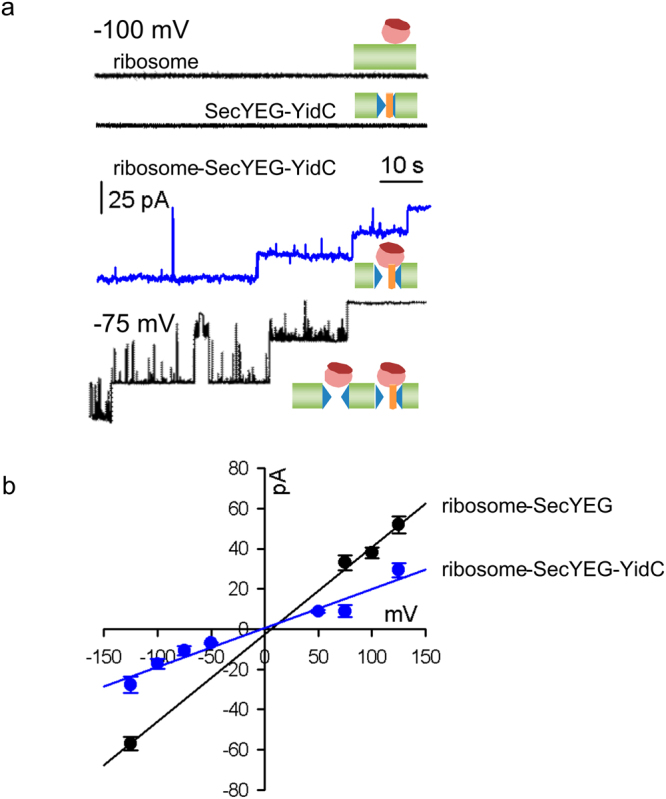
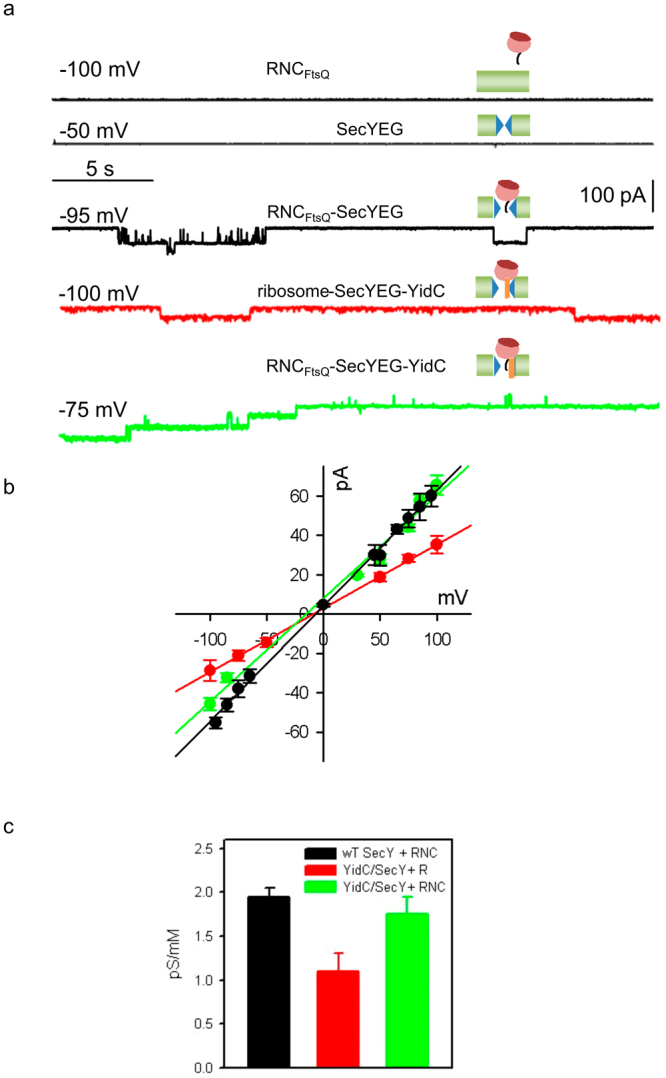
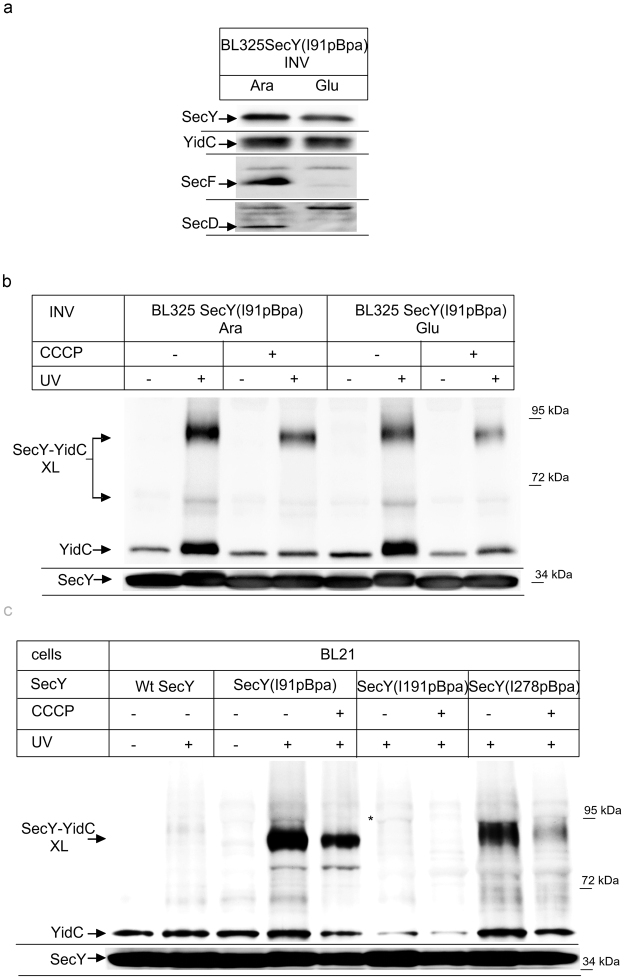
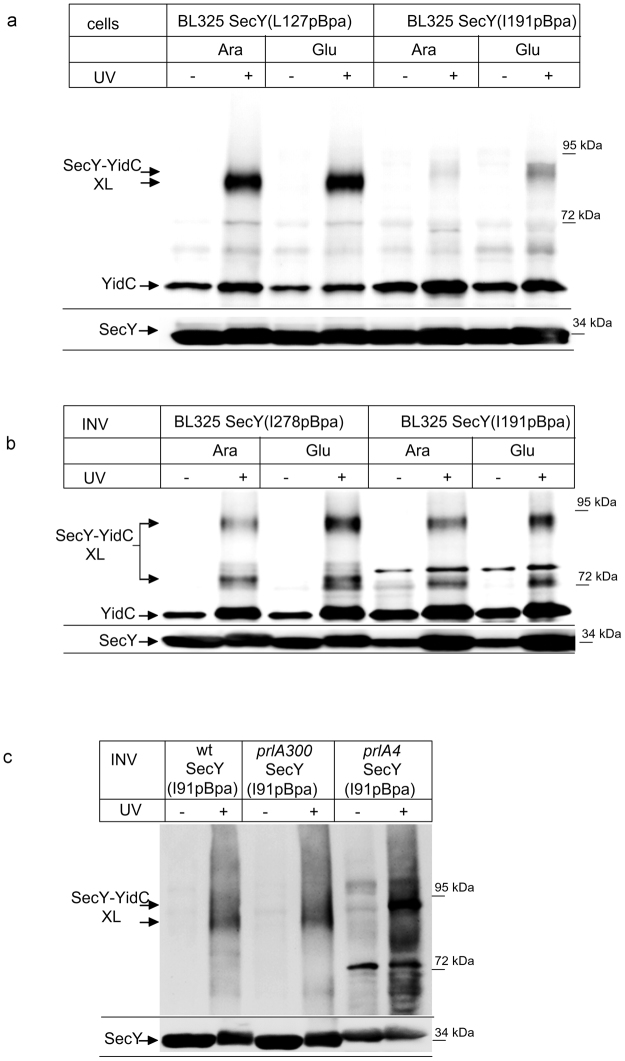
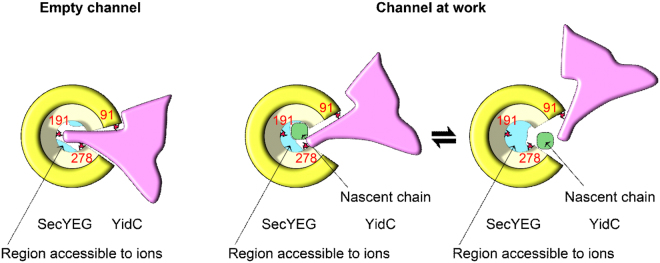
The heterotrimeric SecYEG complex cooperates with YidC to facilitate membrane protein insertion by an unknown mechanism. Here we show that YidC contacts the interior of the SecY channel resulting in a ligand-activated and voltage-dependent complex with distinct ion channel characteristics. The SecYEG pore diameter decreases from 8 Å to only 5 Å for the YidC-SecYEG pore, indicating a reduction in channel cross-section by YidC intercalation. In the presence of a substrate, YidC relocates to the rim of the pore as indicated by increased pore diameter and loss of YidC crosslinks to the channel interior. Changing the surface charge of the pore by incorporating YidC into the channel wall increases the anion selectivity, and the accompanying change in wall hydrophobicity is liable to alter the partition of helices from the pore into the membrane. This could explain how the exit of transmembrane domains from the SecY channel is facilitated by YidC.
Overview
The claims and statistics of this paper haven’t been checked yet.
Free: it reads the open-access text and checks the first 5 claims that cite a source we can check. Create a free account to check every claim.
Integrity signals
Registry
Cites
Statistics
Figures
Verification
Claims the paper makes
The claims and statistics of this paper haven’t been checked yet.
Free: it reads the open-access text and checks the first 5 claims that cite a source we can check. Create a free account to check every claim.
Claims other papers make about this one
Each is checked against this paper’s own text: does it say what the citing paper says it does?
In the citing paper
“SecYEG was furthermore found in heterotetrameric complexes with SecA (Zimmer et al., 2008) or YidC (Boy and Koch, 2009; Sachelaru et al., 2017), and as heterohexameric complexes with SecDFYajC (Duong and Wickner, 1997) or FtsY-SRP-RNCs (Jomaa et al., 2017).”
From The Dynamic SecYEG Translocon (2021) · cites this paper as Sachelaru et al., 2017
In the citing paper
“YidC can even enter the SecY channel (Sachelaru et al., 2017) and this is achieved via the flexible TM1 and the P1-loop that reaches deep into the periplasmic cavity of SecY, where it makes contact to the plug domain of SecY (Jauss et al., 2019).”
From The Dynamic SecYEG Translocon (2021) · cites this paper as Sachelaru et al., 2017
Self-check
Percentages, sums and reported differences re-computed from the paper’s own numbers.
The self-check needs the paper’s full text.
Citations
Cites
X-ray structure of a protein-conducting channel
Berg, B. V. D., Clemons, W. M., Collinson, I., Modis, Y., Hartmann, E., Harrison, S. C., & Rapoport, T. A. (2004) · Nature · doi:10.1038/nature02218 · Cited by 1,250
Recognition of transmembrane helices by the endoplasmic reticulum translocon
Hessa, T., Kim, H., Bihlmaier, K., Lundin, C., Boekel, J., Andersson, H., Nilsson, I., White, S. H., & von Heijne, G. (2005) · Nature · doi:10.1038/nature03216 · Cited by 996
Molecular code for transmembrane-helix recognition by the Sec61 translocon.
Hessa, T., Meindl-Beinker, N. M., Bernsel, A., Kim, H., Sato, Y., Lerch-Bader, M., Nilsson, I., White, S. H., & von Heijne, G. (2007) · Nature · doi:10.1038/nature06387 · Cited by 708
GORLICH, D. (1993) · Cell · doi:10.1016/0092-8674(93)90483-7 · Cited by 674
YidC mediates membrane protein insertion in bacteria.
Samuelson, J. C., Chen, M., Jiang, F., Möller, I., Wiedmann, M., Kuhn, A., Phillips, G. J., & Dalbey, R. E. (2000) · Nature · doi:10.1038/35020586 · Cited by 538
YidC, the Escherichia coli homologue of mitochondrial Oxa1p, is a component of the Sec translocase.
Scotti, P. A., Urbanus, M. L., Brunner, J., de Gier, J. L., von Heijne, G., van der Does, C., Driessen, A. J. M., Oudega, B., & Luirink, J. (2000) · The EMBO Journal · doi:10.1093/emboj/19.4.542 · Cited by 374
Efficient incorporation of unnatural amino acids into proteins in Escherichia coli
Ryu, Y., & Schultz, P. G. (2006) · Nature Methods · doi:10.1038/nmeth864 · Cited by 315
Cryo-EM structure of the ribosome-SecYE complex in the membrane environment.
Frauenfeld, J., Gumbart, J., Sluis, E. O. V. D., Funes, S., Gartmann, M., Beatrix, B., Mielke, T., Berninghausen, O., Becker, T., Schulten, K., et al. (2011) · Nature Structural & Molecular Biology · doi:10.1038/nsmb.2026 · Cited by 298
Economou, A., Pogliano, J. A., Beckwith, J., Oliver, D. B., & Wickner, W. (1995) · Cell · doi:10.1016/0092-8674(95)90143-4 · Cited by 295
Duong, F. (1997) · The EMBO Journal · doi:10.1093/emboj/16.10.2756 · Cited by 285
Cited by
The emerging landscape of single-molecule protein sequencing technologies
Alfaro, J. A., Bohländer, P., Dai, M., Filius, M., Howard, C. J., van Kooten, X. F., Ohayon, S., Pomorski, A., Schmid, S., Aksimentiev, A., et al. (2021) · Nature Methods · doi:10.1038/s41592-021-01143-1 · Cited by 351
Identification of Oxa1 homologs operating in the eukaryotic endoplasmic reticulum.
Anghel, S. A., McGilvray, P. T., Hegde, R. S., & Keenan, R. J. (2017) · Cell Reports · doi:10.1016/j.celrep.2017.12.006 · Cited by 150
“Indeed, other well-characterized membrane protein insertases, including the bacterial and eukaryotic Sec translocon (Sachelaru et al., 2017; Simon and Blobel, 1991; Simon et al., 1989; Wirth et al., 2003) and mitochondrial Oxa1 (Krüger et al.”
Coping with stress: How bacteria fine-tune protein synthesis and protein transport
Njenga, R. K., Boele, J., Öztürk, Y., & Koch, H. (2023) · Journal of Biological Chemistry · doi:10.1016/j.jbc.2023.105163 · Cited by 119
Self-citationPlant Mitochondrial Inner Membrane Protein Insertion
Kolli, R., Soll, J., & Carrie, C. (2018) · International Journal of Molecular Sciences · doi:10.3390/ijms19020641 · Cited by 103
Oswald, J., Njenga, R., Natriashvili, A., Sarmah, P., & Koch, H.-G. (2021) · Frontiers in Molecular Biosciences · doi:10.3389/fmolb.2021.664241 · Cited by 88
Self-citationCo-translational protein targeting in bacteria.
Steinberg, R., Knüpffer, L., Origi, A., Asti, R., & Koch, H.-G. (2018) · FEMS Microbiology Letters · doi:10.1093/femsle/fny095 · Cited by 81
Self-citationBacterial Signal Peptides- Navigating the Journey of Proteins
Kaushik, S., He, H., & Dalbey, R. (2022) · Frontiers in Physiology · doi:10.3389/fphys.2022.933153 · Cited by 88
Petriman, N.-A., Jauß, B., Hufnagel, A., Franz, L., Sachelaru, I., Drepper, F., Warscheid, B., & Koch, H.-G. (2018) · Scientific Reports · doi:10.1038/s41598-017-19019-w · Cited by 66
Self-citationNanopores: a versatile tool to study protein dynamics
Schmid, S., & Dekker, C. (2021) · Essays in Biochemistry · doi:10.1042/ebc20200020 · Cited by 57
“Such ideas are being pursued by several groups, where other unfolding motors are also considered, e.g. SecYEG [127,128].”
BackgroundJauss, B., Petriman, N.-A., Drepper, F., Franz, L., Sachelaru, I., Welte, T., Steinberg, R., Warscheid, B., & Koch, H.-G. (2019) · Journal of Biological Chemistry · doi:10.1074/jbc.ra119.010686 · Cited by 43
“YidC contacts to the channel interior have been observed in vitro using purified inner membrane vesicles (INV) (65).”
BackgroundMethodSelf-citationFake It ‘Till You Make It—The Pursuit of Suitable Membrane Mimetics for Membrane Protein Biophysics
Thoma, J., & Burmann, B. M. (2020) · International Journal of Molecular Sciences · doi:10.3390/ijms22010050 · Cited by 48
Driving forces of translocation through bacterial translocon SecYEG.
Knyazev, D. G., Kuttner, R., Zimmermann, M., Sobakinskaya, E., & Pohl, P. (2018) · The Journal of Membrane Biology · doi:10.1007/s00232-017-0012-9 · Cited by 33
Self-citationPushing the Envelope: The Mysterious Journey Through the Bacterial Secretory Machinery, and Beyond
Troman, L. A., & Collinson, I. R. (2021) · Frontiers in Microbiology · doi:10.3389/fmicb.2021.782900 · Cited by 35
Advancements in Escherichia coli secretion systems for enhanced recombinant protein production
Lokireddy, S. R., Kunchala, S. R., & Vadde, R. (2025) · World Journal of Microbiology and Biotechnology · doi:10.1007/s11274-025-04302-0 · Cited by 36
“The SRPs binds to the ribosome-bound nascent chain (RNC) and targets it to FtsY, where the SRP bound RNC is sent to the Sec translocase (Sachelaru et al. 2017).”
A photo-cross-linking approach to monitor protein dynamics in living cells
Miyazaki, R., Akiyama, Y., & Mori, H. (2019) · Biochimica et Biophysica Acta (BBA) - General Subjects · doi:10.1016/j.bbagen.2019.03.003 · Cited by 32
Molecular mimicry of SecA and signal recognition particle binding to the bacterial ribosome.
Knüpffer, L., Fehrenbach, C., Denks, K., Erichsen, V., Petriman, N.-A., & Koch, H.-G. (2019) · mBio · doi:10.1128/mbio.01317-19 · Cited by 28
Self-citationTanaka, Y., Izumioka, A., Abdul Hamid, A., Fujii, A., Haruyama, T., Furukawa, A., & Tsukazaki, T. (2018) · Biochemical and Biophysical Research Communications · doi:10.1016/j.bbrc.2018.09.043 · Cited by 23
Monitoring substrate enables real-time regulation of a protein localization pathway.
Ito, K., Mori, H., & Chiba, S. (2018) · FEMS Microbiology Letters · doi:10.1093/femsle/fny109 · Cited by 23
Gradients in gene essentiality reshape antibacterial research
Hogan, A. M., & Cardona, S. T. (2022) · FEMS Microbiology Reviews · doi:10.1093/femsre/fuac005 · Cited by 25
Lateral gate dynamics of the bacterial translocon during cotranslational membrane protein insertion
Mercier, E., Wang, X., Maiti, M., Wintermeyer, W., & Rodnina, M. V. (2021) · Proceedings of the National Academy of Sciences · doi:10.1073/pnas.2100474118 · Cited by 21
“7), consistent with the finding that YidC interacts with TMs of nascent membrane proteins during membrane insertion (6, 21, 48).”
BackgroundWright, B. W., Logel, D. Y., Mirzai, M., Pascovici, D., Molloy, M. P., & Jaschke, P. R. (2021) · mSystems · doi:10.1128/msystems.00046-21 · Cited by 19
Vasquez, P. L., Mishra, S., Kuppuswamy, S. K., Crowley, P. J., & Brady, L. J. (2021) · mSphere · doi:10.1128/msphere.01308-20 · Cited by 20
Nass, K., Ilie, I. M., Saller, M. J., Driessen, A. J. M., Caflisch, A., Kammerer, R. A., & Li, X. (2021) · Biochimica et Biophysica Acta (BBA) - Biomembranes · doi:10.1016/j.bbamem.2021.183825 · Cited by 20
Asher, A. H., & Theg, S. M. (2021) · Proceedings of the National Academy of Sciences · doi:10.1073/pnas.2018122118 · Cited by 18
Chen, Y., Sotomayor, M. M., Capponi, S., Hariharan, B., Sahu, I. D., Haase, M., Lorigan, G. A., Kühn, A., White, S. H., & Dalbey, R. (2022) · Journal of Biological Chemistry · doi:10.1016/j.jbc.2022.101690 · Cited by 20
“YidC helps facilitate the removal of transmembrane (TM) proteins from the Sec channel (15) and assists in the formation of α-helical bundles of membrane proteins (16, 17).”
BackgroundCotranslational Biogenesis of Membrane Proteins in Bacteria
Mercier, E., Wang, X., Bögeholz, L. A. K., Wintermeyer, W., & Rodnina, M. V. (2022) · Frontiers in Molecular Biosciences · doi:10.3389/fmolb.2022.871121 · Cited by 20
“Thus, the pause in mRNA translation, which is encoded in the mRNA and independent of the SecYEG insertion machinery, may provide additional time to stabilize the inverted N-in conformation of EmrD.”
BackgroundInfluentialTemporal proteomic profiling reveals changes that support Burkholderia biofilms
Khan, M. M., Chattagul, S., Tran, B. Q., Freiberg, J. A., Nita‐Lazar, A., Shirtliff, M. E., Sermswan, R. W., Ernst, R. K., & Goodlett, D. R. (2019) · Pathogens and Disease · doi:10.1093/femspd/ftz005 · Cited by 20
YidC as a potential antibiotic target
Dalbey, R., Kaushik, S., & Kühn, A. (2022) · Biochimica et Biophysica Acta (BBA) - Molecular Cell Research · doi:10.1016/j.bbamcr.2022.119403 · Cited by 17
Single-Molecule Studies on the Protein Translocon
Seinen, A., & Driessen, A. J. M. (2019) · Annual Review of Biophysics · doi:10.1146/annurev-biophys-052118-115352 · Cited by 14
“YidC likely associates near the lateral gate of SecY to have access to nascent TMDs and to aid their membrane partitioning (64, 84, 85).”
BackgroundVoltage Sensing in Bacterial Protein Translocation
Knyazev, D. G., Kuttner, R., Bondar, A., Zimmerman, M., Siligan, C., & Pohl, P. (2020) · Biomolecules · doi:10.3390/biom10010078 · Cited by 16
Self-citationStructural analysis of the dynamic ribosome-translocon complex
Lewis, A. J., Zhong, F., Keenan, R. J., & Hegde, R. S. (2024) · eLife · doi:10.7554/elife.95814.3 · Cited by 9
Winkler, K., Karner, A., Hörner, A., Hannesschlaeger, C., Knyazev, D. G., Siligan, C., Zimmermann, M., Kuttner, R., Pohl, P., & Preiner, J. (2020) · Nanoscale Advances · doi:10.1039/d0na00427h · Cited by 13
Self-citationThe contribution of mRNA targeting to spatial protein localization in bacteria
Shang, W., Lichtenberg, E., Mlesnita, A.-M., Wilde, A., & Koch, H. (2024) · FEBS Journal · doi:10.1111/febs.17054 · Cited by 11
“The best-studied examples are the cooperation of SRP and SecA during the insertion of membrane proteins with large periplasmic loops [69,70], the formation of a SecYEG-YidC-containing holotranslocon [71 – 73] or the interaction of TatA with the SecYEG translocon [74,75].”
Self-citationGewily, D. I., Mahmoud, F. A., Saber, S. A., ElSalkh, B. A., El‐Dahshan, A. A., Abumandour, M. M. A., Kandyel, R., & Gadel-Rab, A. G. (2021) · Microscopy Research and Technique · doi:10.1002/jemt.23753 · Cited by 10
The versatile role of YidC in membrane protein biosynthesis and quality control
Çalıseki, M., Schaffitzel, C., & Kabasakal, B. V. (2025) · Biochimica et Biophysica Acta (BBA) - Molecular Cell Research · doi:10.1016/j.bbamcr.2025.119956 · Cited by 7
“The C2 loop-ribosome interaction is modulated by nascent polypeptides [21].”
Biophysical Analysis of Sec-Mediated Protein Translocation in Nanodiscs
Koch, S., Driessen, A. J. M., & Kedrov, A. (2018) · Advances in biomembranes and lipid self-assembly · doi:10.1016/bs.abl.2018.05.003 · Cited by 6
Linhartová, M., Skotnicová, P., Hakkila, K., Tichý, M., Komenda, J., Knoppová, J., Gilabert, J. F., Guallar, V., Tyystjärvi, T., & Sobotka, R. (2021) · Frontiers in Microbiology · doi:10.3389/fmicb.2021.756912 · Cited by 6
Structural analysis of the dynamic ribosome-translocon complexPreprint
Lewis, A. J. O., Zhong, F. W., Keenan, R. J., & Hegde, R. S. (2024) · eLife · doi:10.7554/elife.95814.2 · Cited by 8
YidC from Escherichia coli Forms an Ion-Conducting Pore upon Activation by Ribosomes
Knyazev, D. G., Winter, L., Vogt, A., Posch, S., Öztürk, Y., Siligan, C., Goessweiner‐Mohr, N., Hagleitner-Ertuğrul, N., Koch, H., & Pohl, P. (2023) · Biomolecules · doi:10.3390/biom13121774 · Cited by 4
Self-citationDeciphering the Interdomain Coupling in a Gram-Negative Bacterial Membrane Insertase
Polasa, A., Badiee, S. A., & Moradi, M. (2024) · The Journal of Physical Chemistry B · doi:10.1021/acs.jpcb.4c02824 · Cited by 5
Advances in EPR Approaches for Studying Structural Properties of Membrane Proteins
Sahu, I. D., & Lorigan, G. A. (2026) · Magnetic Resonance in Chemistry · doi:10.1002/mrc.70085 · Cited by 4
“YidC is involved in the removal of transmembrane (TM) proteins from the Sec channel and helps in the formation of membrane protein α-helical bundles [146, 147].”
Zhao, Z., Yamamoto, N., Young, J. W., Solis, N., Fong, A., Al‐Seragi, M., Kim, S., Aoki, H., Phanse, S., Le, H.-T., et al. (2025) · Journal of Biological Chemistry · doi:10.1016/j.jbc.2025.108395 · Cited by 4
Mishra, S., van Aalst, E. J., Wylie, B. J., & Brady, L. J. (2023) · Frontiers in Molecular Biosciences · doi:10.3389/fmolb.2023.1264454 · Cited by 3
Fine mapping of yellow-green leaf gene (ygl2) in soybean (Glycine max L.)
Wang, H.-R., Zhang, Y., Chun-Miao, Y. U., Dong, Q., Wei-Wei, L. I., Kai-Feng, H. U., ZHANG, M.-M., Hong, X. U. E., Yang, M.-P., Ji-Ling, S. O. N. G., et al. (2022) · ACTA AGRONOMICA SINICA · doi:10.3724/sp.j.1006.2022.14062 · Cited by 2
McCafferty, C. L., Taylor, D. W., & Marcotte, E. M. (2021) · Protein Science · doi:10.1002/pro.4067 · Cited by 2
“This is consistent with the role of the sub-complexes in transporting hydrophobic polypeptides across the membrane.(41)”
ResultThe Sec pathway gene yidC regulates the virulence of mesophilic Aeromonas salmonicida
Yi, X., Xu, X., Xu, G., Zhang, Y., Chen, Y., Zhu, Z., & Guo, M. (2024) · Fish & Shellfish Immunology · doi:10.1016/j.fsi.2024.109863 · Cited by 2
Functional diversity and molecular interactions of small membrane proteins in bacteria
Yuan, J., Koch, H., & Berghoff, B. A. (2025) · microLife · doi:10.1093/femsml/uqaf035 · Cited by 4
Self-citationHassan, R. M., El-Shafei, A. A., & Mohamed, D. H. (2026) · Beni-Suef University Journal of Basic and Applied Sciences · doi:10.1186/s43088-025-00734-7 · Cited by 1
Winkler, K., Karner, A., Hörner, A., Hannesschlaeger, C., Knyazev, D. G., Siligan, C., Zimmermann, M., Kuttner, R., Pohl, P., & Preiner, J. (2019) · bioRxiv (Cold Spring Harbor Laboratory) · doi:10.1101/799247
Self-citationWright, B. W., Logel, D. Y., Mirzai, M., Pascovici, D., Molloy, M. P., & Jaschke, P. R. (2020) · bioRxiv (Cold Spring Harbor Laboratory) · doi:10.1101/2020.10.26.355149
Bibi, E. (2019) · Faculty Opinions – Post-Publication Peer Review of the Biomedical Literature · doi:10.3410/f.736422813.793566881
Ito, K. (2019) · Faculty Opinions – Post-Publication Peer Review of the Biomedical Literature · doi:10.3410/f.732369786.793568677
Steady-state polypeptide transfer from the translocon to the membranePreprint
Knyazev, D. G., Schaur, M., Kuttner, R., Siligan, C., Goessweiner‐Mohr, N., Hagleitner-Ertuğrul, N., & Pohl, P. (2023) · bioRxiv (Cold Spring Harbor Laboratory) · doi:10.1101/2023.01.10.523415
“First, we used Ni chelating agarose (Quiagen) and, second, calmodulin agarose (Sigma) as previously described (31).”
MethodSelf-citationStructural analysis of the dynamic ribosome-translocon complex
Lewis, A. J. O., Zhong, F., Keenan, R. J., & Hegde, R. S. (2023) · doi:10.1101/2023.12.22.572959
“For example, the first TMD of E. coli YidC invades the lateral gate of SecYEG 106,107 , as does the TMD of PpiD 108 , a periplasmic chaperone.”
BackgroundMembrane Protein Insertion in Cells: Principles, Pathways, and Quality Control
Peled‐Zehavi, H., Yemini, R., & Fluman, N. (2026) · Chemical Reviews · doi:10.1021/acs.chemrev.5c01033
“105,127,133 − 254 However, a recent high-resolution cryo-EM structure of the SecYEG-YidC complex inserting a multispanning substrate showed that the TM was inserted without lateral gate opening.”
Zhang, N., Miao, X., Zhu, W., Zhou, Y., Jing, Z., Liu, Y., Liu, H., Ge, X., & Tian, H. (2026) · LWT · doi:10.1016/j.lwt.2026.119794
Metadata
- Authors
- Sachelaru, I., Winter, L., Knyazev, D. G., Zimmermann, M., Vogt, A., Kuttner, R., Ollinger, N., Siligan, C., Pohl, P., & Koch, H.-G.
- Affiliations
- University of Freiburg (DE)
- Johannes Kepler University of Linz (AT)
- Corresponding author
- Pohl, Peter
- Koch, Hans-Georg
- ORCID
- Venue
- Scientific Reports
- Published
- 2017-03-07
- Volume
- 7
- Issue
- 1
- Pages
- 101-101
- ISSN
- 2045-2322 (ISSN-L)
- PMC
- PMC5427846
- OpenAlex
- W2594496570
- Cited by
- 58
- References
- 65
- Citations by year
- 2026: 3 · 2025: 4 · 2024: 7 · 2023: 5 · 2022: 6 · 2021: 12 · 2020: 5 · 2019: 8 · 2018: 7 · 2017: 1
- FWCI
- 3.81
- Type
- journal article
- Language
- en
- Open access
- gold
- doi.org
- Licence
- cc-by
- creativecommons.org/licenses/by/4.0 (tdm)
- creativecommons.org/licenses/by/4.0 (vor)
- Locations
- Scientific Reports (publishedVersion, cc-by)
- Europe PMC (PubMed Central) (publishedVersion, cc-by)
- PubMed Central (publishedVersion, cc-by)
- PubMed (publishedVersion)
- DOAJ (DOAJ: Directory of Open Access Journals) (submittedVersion, cc-by-sa)
- Funders
- Deutsche Forschungsgemeinschaft (GSC‐4, FOR 967, GRK2202, KO2184/8)
- Austrian Science Fund (P 28213)
- Uppsala Universitet
- Topics
- Life Sciences › Biochemistry, Genetics and Molecular Biology › Genetics › Bacterial Genetics and Biotechnology
- Life Sciences › Biochemistry, Genetics and Molecular Biology › Molecular Biology › Ion channel regulation and function
- Life Sciences › Biochemistry, Genetics and Molecular Biology › Molecular Biology › Lipid Membrane Structure and Behavior
- Keywords
- YidC, SecYEG, protein translocation channel, membrane protein insertion, heterotetrameric channels, pore size, anion selectivity, voltage-gated ion channels, protein translocation machinery
- MeSH terms
- Protein Translocation Systems, SEC Translocation Channels, Escherichia coli, Models, Molecular, Protein Binding, Protein Conformation, Membrane Transport Proteins, Escherichia coli Proteins, Protein Multimerization
About these checks
Registry, retraction, Cites and statistics results are computed, not judged, with one exception: a printed reference that no index lists is read once by a model before it counts as a citation error. Claims are extracted by a model and kept only when their quote appears verbatim in the text; each cited source is then checked, with a model’s help, for whether it says what the claim relies on. Those verdicts can be wrong — read the claim’s quote and the cited source before relying on one.
Statistics and arithmetic are recomputed, not judged.
Confidence bands are shown only for fields calibrated on our annotated test set. None is calibrated yet, so no band is shown.
What counts as a claim ›How we measure confidence ›How we check this ›
Are you an author, or do you see a problem with this page? Request a review
Data sources
Bibliographic data: Semantic Scholar, OpenAlex, Crossref.
Contains information from the Semantic Scholar Academic Graph Datasets, made available under the ODC Attribution License (ODC-BY 1.0).
Semantic Scholar’s data is described in: Kinney, R., et al. (2023). The Semantic Scholar Open Data Platform. arXiv:2301.10140.
