

The DOI matches its Crossref record; 3 of the 3 references it cites were found in a registry or an index.
Complete genome sequence and comparative genomics of the probiotic yeast Saccharomyces boulardii
Abstract
The probiotic yeast, Saccharomyces boulardii (Sb) is known to be effective against many gastrointestinal disorders and antibiotic-associated diarrhea. To understand molecular basis of probiotic-properties ascribed to Sb we determined the complete genomes of two strains of Sb i.e. Biocodex and unique28 and the draft genomes for three other Sb strains that are marketed as probiotics in India. We compared these genomes with 145 strains of S. cerevisiae (Sc) to understand genome-level similarities and differences between these yeasts. A distinctive feature of Sb from other Sc is absence of Ty elements Ty1, Ty3, Ty4 and associated LTR. However, we could identify complete Ty2 and Ty5 elements in Sb. The genes for hexose transporters HXT 11 and HXT 9, and asparagine-utilization are absent in all Sb strains. We find differences in repeat periods and copy numbers of repeats in flocculin genes that are likely related to the differential adhesion of Sb as compared to Sc. Core-proteome based taxonomy places Sb strains along with wine strains of Sc. We find the introgression of five genes from Z. bailii into the chromosome IV of Sb and wine strains of Sc. Intriguingly, genes involved in conferring known probiotic properties to Sb are conserved in most Sc strains.
Overview
The claims and statistics of this paper haven’t been checked yet.
Run the check — free, no account needed. It reads the open-access text and checks the sources it cites.
Integrity signals
Registry
Cites
Statistics
Figures
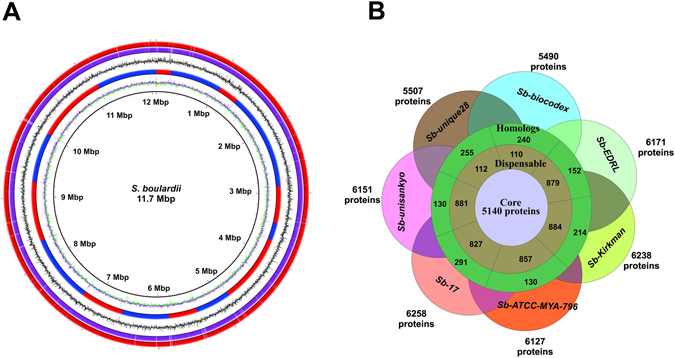
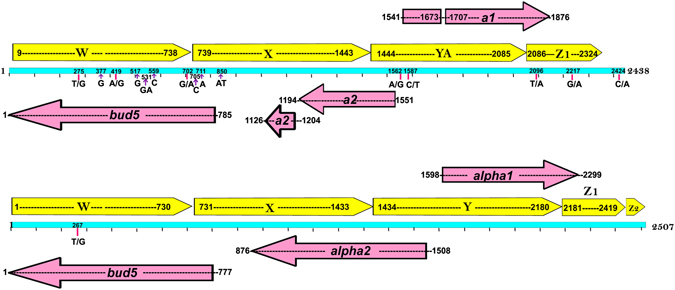
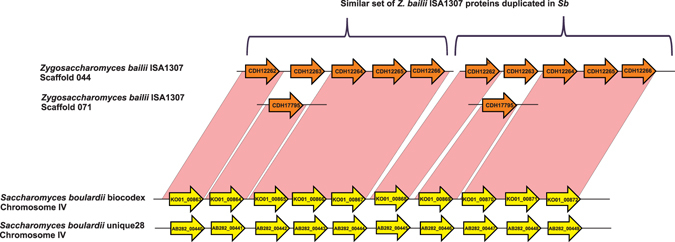
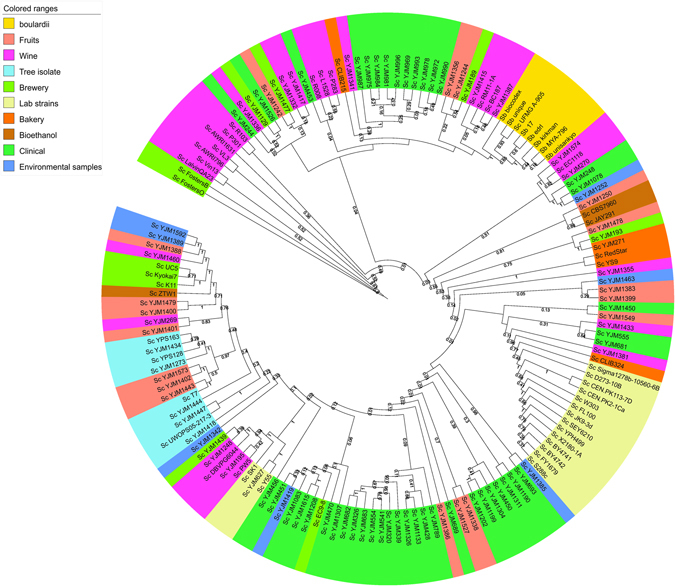
Verification
Claims the paper makes
The claims and statistics of this paper haven’t been checked yet.
Run the check — free, no account needed. It reads the open-access text and checks the sources it cites.
Claims other papers make about this one
Each is checked against this paper’s own text: does it say what the citing paper says it does?
In the citing paper
“These flo genes are often truncated in deposited genomes, but it is possible that in many cases, this is due to sequencing and assembly issues, and that in reality, these genes are intact in many of the sequenced strains (83).”
From Tandem repeats lead to sequence assembly errors and impose multi-level challenges for genome and protein databases (2019) · cites this paper as [83]
Self-check
Percentages, sums and reported differences re-computed from the paper’s own numbers.
The self-check needs the paper’s full text.
Citations
Cites
Review article: yeast as probiotics – Saccharomyces boulardii
CZERUCKA, D., PICHE, T., & RAMPAL, P. (2007) · Alimentary Pharmacology & Therapeutics · doi:10.1111/j.1365-2036.2007.03442.x · Cited by 587
Kelesidis, T., & Pothoulakis, C. (2012) · Therapeutic Advances in Gastroenterology · doi:10.1177/1756283x11428502 · Cited by 377
Riaz, M., Alam, S., Malik, A., & Ali, S. M. (2012) · The Indian Journal of Pediatrics · doi:10.1007/s12098-011-0573-z · Cited by 43
Research works printed but not linked: 84
- Fietto, J. L. et al. Molecular and physiological comparisons between Saccharomyces cerevisiae and Saccharomyces boulardii. Canadian journal of microbiology 50, 615–621, doi:10.1139/w04-050 (2004). · DOI
- Berg, R., Bernasconi, P., Fowler, D. & Gautreaux, M. Inhibition of Candida albicans translocation from the gastrointestinal tract of mice by oral administration of Saccharomyces boulardii. J Infect Dis 168, 1314–1318 (1993). · DOI
- Dahan, S. et al. Saccharomyces boulardii interferes with Enterohaemorrhagic Escherchia coli-induced signalling pathways in T84 cells. Infection and Immunity 71, 766–773 (2003). · DOI
- Tasteyre, A., Barc, M., Karjalainen, T., Bourlioux, P. & Collignon, A. Inhibition of in vitro cell adherence of Clostridium difficle by Saccharomyces boulardii. Microb Pathog 32, 219–225 (2002). · DOI
- Zbar, N. S., Nashi, L. F. & Saleh, S. M. Saccharomyces boulardii as effective probiotic against Shigella flexneri in mice. International Journal of Materials, Methods and Technologies 1, 17–21 (2013).
- Zaouche, A. et al. Effects of oral Saccharomyces boulardii on bacterial overgrowth, translocation, and intestinal adaptation after small-bowel resection in rats. Scandinavian journal of gastroenterology 35, 160–165 (2000). · DOI
- Tiago, F. C. et al. Adhesion to the yeast cell surface as a mechanism for trapping pathogenic bacteria by Saccharomyces probiotics. Journal of medical microbiology 61, 1194–1207, doi:10.1099/jmm.0.042283-0 (2012). · DOI
- Gedek, B. R. Adherence of Escherichia coli serogroup O 157 and the Salmonella typhimurium mutant DT 104 to the surface of Saccharomyces boulardii. Mycoses 42, 261–264 (1999). · DOI
- Buts, J.-P. et al. Saccharomyces boulardii produces in rat small intestine a novel protein phosphatase that inhibits Escherchia coli endotoxin by dephosphorylation. Pediatric Research 60, 24–29 (2006). · DOI
- Castagliuolo, I., LaMont, J. T., Nikulasson, S. T. & Pothoulakis, C. Saccharomyces boulardii protease inhibits Clostridium difficile toxin A effects in the rat ileum. Infect Immun 64, 5225–5232 (1996). · DOI
- Castagliuolo, I., Riegler, M. F., Valenick, L., Lamont, J. T. & Pothoulakis, C. Saccharomyces boulardii protease inhibits the effects of Clostridium difficile Toxins A and B in Human Colonic Mucosa. Infection and Immunity 67, 302–307 (1998). · DOI
- Czerucka, D., Roux, I. & Rampal, P. Saccharomyces boulardii inhibits secretagogue-mediated adenosine 3′,5′-cyclic monophosphate induction in intestinal cells. Gastroenterology 106, 65–72 (1994). · DOI
- van der Aa Kuhle, A. & Jespersen, L. The taxonomic position of Saccharomyces boulardii as evaluated by sequence analysis of the D1/D2 domain of 26S rDNA, the ITS1-5.8S rDNA-ITS2 region and the mitochondrial cytochrome-c oxidase II gene. Systematic and applied microbiology 26, 564–571, doi:10.1078/072320203770865873 (2003). · DOI
- McFarland, L. V. Saccharomyces boulardii is not Saccharomyces cerevisiae. Clinical infectious diseases: an official publication of the Infectious Diseases Society of America 22, 200–201 (1996). · DOI
- Mitterdorfer, G., Mayer, H. K., Kneife, W. & Viernstein, H. Clustering of Saccharomyces boulardii strains within the species S. cerevisiae using molecular typing techniques. Journal of Applied Microbiology 93, 521–530 (2002). · DOI
- Edwards-Ingram, L. C. et al. Comparative genomic hybridization provides new insights into the molecular taxonomy of the Saccharomyces sensu stricto complex. Genome research 14, 1043–1051, doi:10.1101/gr.2114704 (2004). · DOI
- Dubois, E., Jacobs, E. & Jauniaux, J. C. Expression of the ROAM mutations in Saccharomyces cerevisiae: involvement of trans-acting regulatory elements and relation with the Ty1 transcription. The EMBO journal 1, 1133–1139 (1982). · DOI
- Warmington, J. R. & Oliver, S. G. A downstream activator sequence regulates the expression of the yeast transposon. Current genetics 13, 357–362 (1988). · DOI
- Warmington, J. R. et al. A ‘hot-spot’ for Ty transposition on the left arm of yeast chromosome III. Nucleic acids research 14, 3475–3485 (1986). · DOI
- Warmington, J. R., Green, R. P., Newlon, C. S. & Oliver, S. G. Polymorphisms on the right arm of yeast chromosome III associated with Ty transposition and recombination events. Nucleic acids research 15, 8963–8982 (1987). · DOI
- Plein, K. & Hotz, J. Therapeutic effects of Saccharomyces boulardii on mild residual symptoms in a stable phase of Crohn’s disease with special respect to chronic diarrhea–a pilot study. Zeitschrift fur Gastroenterologie 31, 129–134 (1993).
- Sudha, M. R. Safety assessment studies of probiotic Saccharomyces boulardii strain Unique 28 in Sprague-Dawley rats. Beneficial microbes 2, 221–227, doi:10.3920/BM2011.0013 (2011). · DOI
- Sudha, M. R., Bhonagiri, S. & Kumar, M. A. Oral consumption of potential probiotic Saccharomyces boulardii strain Unique 28 in patients with acute diarrhoea: a clinical report. Beneficial microbes 3, 145–150, doi:10.3920/BM2011.0055 (2012). · DOI
- Surawicz, C. M., McFarland, L. V., Elmer, G. & Chinn, J. Treatment of recurrent Clostridium difficile colitis with vancomycin and Saccharomyces boulardii. The American journal of gastroenterology 84, 1285–1287 (1989).
- Villar-Garcia, J. et al. Effect of probiotics (Saccharomyces boulardii) on microbial translocation and inflammation in HIV-treated patients: a double-blind, randomized, placebo-controlled trial. Journal of acquired immune deficiency syndromes 68, 256–263, doi:10.1097/QAI.0000000000000468 (2015). · DOI
- Wu, D., Teng, D., Wang, X., Dai, C. & Wang, J. Saccharomyces boulardii prevention of the hepatic injury induced by Salmonella Enteritidis infection. Canadian journal of microbiology 60, 681–686, doi:10.1139/cjm-2014-0259 (2014). · DOI
- Bassetti, S., Frei, R. & Zimmerli, W. Fungemia with Saccharomyces cerevisiae after treatment with Saccharomyces boulardii. The American journal of medicine 105, 71–72 (1998). · DOI
- Cassone, M. et al. Outbreak of Saccharomyces cerevisiae subtype boulardii fungemia in patients neighboring those treated with a probiotic preparation of the organism. Journal of clinical microbiology 41, 5340–5343 (2003). · DOI
- Graf, C. & Gavazzi, G. Saccharomyces cerevisiae fungemia in an immunocompromised patient not treated with Saccharomyces boulardii preparation. The Journal of infection 54, 310–311, doi:10.1016/j.jinf.2006.01.019 (2007). · DOI
- Lherm, T. et al. Seven cases of fungemia with Saccharomyces boulardii in critically ill patients. Intensive care medicine 28, 797–801, doi:10.1007/s00134-002-1267-9 (2002). · DOI
- Khatri, I. et al. Gleaning evolutionary insights from the genome sequence of a probiotic yeast Saccharomyces boulardii. Gut pathogens 5, 30, doi:10.1186/1757-4749-5930 (2013). · DOI
- Cherry, J. M. et al. SGD: Saccharomyces Genome Database. Nucleic acids research 26, 73–79 (1998). · DOI
- Haber, J. E. Mating-type genes and MAT switching in Saccharomyces cerevisiae. Genetics 191, 33–64, doi:10.1534/genetics.111.134577 (2012). · DOI
- Edwards-Ingram, L. et al. Genotypic and physiological characterization of Saccharomyces boulardii, the probiotic strain of Saccharomyces cerevisiae. Applied and environmental microbiology 73, 2458–2467, doi:10.1128/AEM.02201-06 (2007). · DOI
- Wang, T. et al. The establishment of Saccharomyces boulardii surface display system using a single expression vector. Fungal genetics and biology: FG & B 64, 1–10, doi:10.1016/j.fgb.2013.11.006 (2014). · DOI
- Nasmyth, K. A. Molecular genetics of yeast mating type. Annual review of genetics 16, 439–500, doi:10.1146/annurev.ge.16.120182.002255 (1982). · DOI
- Ekino, K., Kwon, I., Goto, M., Yoshino, S. & Furukawa, K. Functional analysis of HO gene in delayed homothallism in Saccharomyces cerevisiae wy2. Yeast 15, 451–458, doi:10.1002/(SICI)1097-0061(199904)15:6<451::AID-YEA383>3.0.CO;2-K (1999). · DOI
- Meiron, H., Nahon, E. & Raveh, D. Identification of the heterothallic mutation in HO-endonuclease of S. cerevisiae using HO/ho chimeric genes. Current genetics 28, 367–373 (1995). · DOI
- Kurtzman, C., Fell, J. W., Boekhout, T. & Robert, V. The Yeasts: A Taxonomic Study. 5 edn, Vol. 2 (Elsevier, 2011).
- Jambhekar, A. & Amon, A. Control of meiosis by respiration. Current biology: CB 18, 969–975, doi:10.1016/j.cub.2008.05.047 (2008). · DOI
- Tsuboi, M. & Takahashi, T. Genetic analysis of the non-sporulating phenotype of Brewer’s yeast. Journal of Fermentation Technology 66, 605–613 (1988). · DOI
- Balakrishnan, R. et al. YeastMine–an integrated data warehouse for Saccharomyces cerevisiae data as a multipurpose tool-kit. Database: the journal of biological databases and curation 2012, bar062, doi:10.1093/database/bar062 (2012). · DOI
- Boles, E. & Hollenberg, C. P. The molecular genetics of hexose transport in yeasts. FEMS microbiology reviews 21, 85–111 (1997). · DOI
- Nourani, A., Wesolowski-Louvel, M., Delaveau, T., Jacq, C. & Delahodde, A. Multiple-drug-resistance phenomenon in the yeast Saccharomyces cerevisiae: involvement of two hexose transporters. Molecular and cellular biology 17, 5453–5460 (1997). · DOI
- Landry, C. R., Oh, J., Hartl, D. L. & Cavalieri, D. Genome-wide scan reveals that genetic variation for transcriptional plasticity in yeast is biased towards multi-copy and dispensable genes. Gene 366, 343–351, doi:10.1016/j.gene.2005.10.042 (2006). · DOI
- Hyle, J. W., Shaw, R. J. & Reines, D. Functional distinctions between IMP dehydrogenase genes in providing mycophenolate resistance and guanine prototrophy to yeast. The Journal of biological chemistry 278, 28470–28478, doi:10.1074/jbc.M303736200 (2003). · DOI
- Mitsui, K. et al. A novel membrane protein capable of binding the Na+/H+ antiporter (Nha1p) enhances the salinity-resistant cell growth of Saccharomyces cerevisiae. The Journal of biological chemistry 279, 12438–12447, doi:10.1074/jbc.M310806200 (2004). · DOI
- Bolton, E. C. & Boeke, J. D. Transcriptional interactions between yeast tRNA genes, flanking genes and Ty elements: a genomic point of view. Genome research 13, 254–263, doi:10.1101/gr.612203 (2003). · DOI
- Bruckner, S. & Mosch, H. U. Choosing the right lifestyle: adhesion and development in Saccharomyces cerevisiae. FEMS microbiology reviews 36, 25–58, doi:10.1111/j.1574-6976.2011.00275.x (2012). · DOI
- Verstrepen, K. J. & Klis, F. M. Flocculation, adhesion and biofilm formation in yeasts. Molecular microbiology 60, 5–15, doi:10.1111/j.1365-2958.2006.05072.x (2006). · DOI · Paper page
- Hodgson, J. A., Berry, D. R. & Johnston, J. R. Discrimination by heat and proteinase treatments between flocculent phenotypes conferred on Saccharomyces cerevisiae by the genes FLO1 and FLO5. Journal of general microbiology 131, 3219–3227, doi:10.1099/00221287-131-12-3219 (1985). · DOI
- Goossens, K. & Willaert, R. Flocculation protein structure and cell-cell adhesion mechanism in Saccharomyces cerevisiae. Biotechnology letters 32, 1571–1585, doi:10.1007/s10529-010-0352-3 (2010). · DOI
- Soares, E. V. Flocculation in Saccharomyces cerevisiae: a review. J Appl Microbiol 110, 1–18, doi:10.1111/j.1365-2672.2010.04897.x (2011). · DOI
- Edgar, R. C. MUSCLE: multiple sequence alignment with high accuracy and high throughput. Nucleic acids research 32, 1792–1797, doi:10.1093/nar/gkh340 (2004). · DOI · Paper page
- Liu, H., Styles, C. A. & Fink, G. R. Saccharomyces cerevisiae S288C has a mutation in FLO8, a gene required for filamentous growth. Genetics 144, 967–978 (1996). · DOI
- Douradinha, B. et al. Novel insights in genetic transformation of the probiotic yeast Saccharomyces boulardii. Bioengineered 5, 21–29, doi:10.4161/bioe.26271 (2014). · DOI
- Brandao, R. L. et al. Intracellular signal triggered by cholera toxin in Saccharomyces boulardii and Saccharomyces cerevisiae. Applied and environmental microbiology 64, 564–568 (1998). · DOI
- Pontier-Bres, R. et al. Modification of Salmonella Typhimurium motility by the probiotic yeast strain Saccharomyces boulardii. PloS one 7, e33796, doi:10.1371/journal.pone.0033796 (2012). · DOI
- Smukalla, S. et al. FLO1 is a variable green beard gene that drives biofilm-like cooperation in budding yeast. Cell 135, 726–737, doi:10.1016/j.cell.2008.09.037 (2008). · DOI
- Guo, B., Styles, C. A., Feng, Q. & Fink, G. R. A Saccharomyces gene family involved in invasive growth, cell-cell adhesion, and mating. Proceedings of the National Academy of Sciences of the United States of America 97, 12158–12163, doi:10.1073/pnas.220420397 (2000). · DOI
- Lo, W. S. & Dranginis, A. M. The cell surface flocculin Flo11 is required for pseudohyphae formation and invasion by Saccharomyces cerevisiae. Molecular biology of the cell 9, 161–171 (1998). · DOI
- Barrio, E., Gonza, l. S., Arias, A., Belloch, C. & Querol, A. In The Yeast Handbook Vol. 2 (eds A., Querol & G. H., Fleet) 153–174 (Springer, Berlin, 2006).
- Novo, M. et al. Eukaryote-to-eukaryote gene transfer events revealed by the genome sequence of the wine yeast Saccharomyces cerevisiae EC1118. Proceedings of the National Academy of Sciences of the United States of America 106, 16333–16338, doi:10.1073/pnas.0904673106 (2009). · DOI
- Strope, P. K. et al. The 100-genomes strains, an S. cerevisiae resource that illuminates its natural phenotypic and genotypic variation and emergence as an opportunistic pathogen. Genome research 25, 762–774, doi:10.1101/gr.185538.114 (2015). · DOI
- Cardinali, G. & Martini, A. Electrophoretic karyotypes of authentic strains of the sensu stricto group of genus Saccharomyces. Int J Syst Bacteriol 44, 791–797 (1994). · DOI
- Posteraro, B. et al. Molecular tools for differentiating probiotic and clinical strains of Saccharomyces cerevisiae. International journal of food microbiology 103, 295–304, doi:10.1016/j.ijfoodmicro.2004.12.031 (2005). · DOI
- van den Brink, J. et al. Energetic limits to metabolic flexibility: responses of Saccharomyces cerevisiae to glucose-galactose transitions. Microbiology 155, 1340–1350, doi:10.1099/mic.0.025775-0 (2009). · DOI
- Buts, J. P., Bernasconi, P., Vaerman, J. P. & Dive, C. Stimulation of secretory IgA and secretory component of immunoglobulins in small intestine of rats treated with Saccharomyces boulardii. Digestive diseases and sciences 35, 251–256 (1990). · DOI
- Buts, J. P., De Keyser, N. & De Raedemaeker, L. Saccharomyces boulardii enhances rat intestinal enzyme expression by endoluminal release of polyamines. Pediatr Res 36, 522–527, doi:10.1203/00006450-199410000-00019 (1994). · DOI
- Diezmann, S. & Dietrich, F. S. Oxidative stress survival in a clinical Saccharomyces cerevisiae isolate is influenced by a major quantitative trait nucleotide. Genetics 188, 709–722, doi:10.1534/genetics.111.128256 (2011). · DOI
- Fuller, R. Probiotics in man and animals. Journal of Applied Bacteriology 66, 365–378 (1989). · DOI
- Martins, F. S. et al. Oral treatment with Saccharomyces cerevisiae strain UFMG 905 modulates immune responses and interferes with signal pathways involved in the activation of inflammation in a murine model of typhoid fever. International journal of medical microbiology : IJMM 301, 359–364, doi:10.1016/j.ijmm.2010.11.002 (2011). · DOI
- Tiago, F. C. et al. Effect of Saccharomyces cerevisiae strain UFMG A-905 in experimental model of inflammatory bowel disease. Beneficial microbes 6, 807–815, doi:10.3920/BM2015.0018 (2015). · DOI
- Chin, C. S. et al. Nonhybrid, finished microbial genome assemblies from long-read SMRT sequencing data. Nature methods 10, 563–569, doi:10.1038/nmeth.2474 (2013). · DOI · Paper page
- Rissman, A. I. et al. Reordering contigs of draft genomes using the Mauve aligner. Bioinformatics 25, 2071–2073, doi:10.1093/bioinformatics/btp356 (2009). · DOI
- Altschul, S. F., Gish, W., Miller, W., Myers, E. W. & Lipman, D. J. Basic local alignment search tool. Journal of molecular biology 215, 403–410, doi:10.1016/S0022-2836(05)80360-2 (1990). · DOI · Paper page
- Boetzer, M., Henkel, C. V., Jansen, H. J., Butler, D. & Pirovano, W. Scaffolding pre-assembled contigs using SSPACE. Bioinformatics 27, 578–579, doi:10.1093/bioinformatics/btq683 (2011). · DOI · Paper page
- Nadalin, F., Vezzi, F. & Policriti, A. GapFiller: a de novo assembly approach to fill the gap within paired reads. BMC bioinformatics 13 Suppl 14, S8, doi:10.1186/1471-2105-13-S14-S8 (2012). · DOI
- Bankevich, A. et al. SPAdes: a new genome assembly algorithm and its applications to single-cell sequencing. Journal of computational biology: a journal of computational molecular cell biology 19, 455–477, doi:10.1089/cmb.2012.0021 (2012). · DOI
- Stanke, M. & Morgenstern, B. AUGUSTUS: a web server for gene prediction in eukaryotes that allows user-defined constraints. Nucleic acids research 33, W465–W467, doi:10.1093/nar/gki458 (2005). · DOI
- Schattner, P., Brooks, A. N. & Lowe, T. M. The tRNAscan-SE, snoscan and snoGPS web servers for the detection of tRNAs and snoRNAs. Nucleic acids research 33, W686–W689, doi:10.1093/nar/gki366 (2005). · DOI
- Lechner, M. et al. Proteinortho: detection of (co-)orthologs in large-scale analysis. BMC bioinformatics 12, 124, doi:10.1186/1471-2105-12-124 (2011). · DOI
- Katoh, K., Misawa, K., Kuma, K. & Miyata, T. MAFFT: a novel method for rapid multiple sequence alignment based on fast Fourier transform. Nucleic acids research 30, 3059–3066 (2002). · DOI · Paper page
- Tamura, K., Stecher, G., Peterson, D., Filipski, A. & Kumar, S. MEGA6: Molecular Evolutionary Genetics Analysis version 6.0. Molecular biology and evolution 30, 2725–2729, doi:10.1093/molbev/mst197 (2013). · DOI
Cited by
Sorted by citations
Tørresen, O. K., Star, B., Mier, P., Andrade-Navarro, M. A., Bateman, A., Jarnot, P., Gruca, A., Grynberg, M., Kajava, A. V., Promponas, V. J., et al. (2019) · Nucleic Acids Research · doi:10.1093/nar/gkz841 · Cited by 347
Commensal Fungi in Health and Disease
Limon, J. J., Skalski, J. H., & Underhill, D. M. (2017) · Cell Host & Microbe · doi:10.1016/j.chom.2017.07.002 · Cited by 336
Saccharomyces boulardii: What Makes It Tick as Successful Probiotic?
Pais, P., Almeida, V., Yılmaz, M., & Teixeira, M. C. (2020) · Journal of Fungi · doi:10.3390/jof6020078 · Cited by 327
Kaźmierczak-Siedlecka, K., Ruszkowski, J., Fic, M., Folwarski, M., & Makarewicz, W. (2020) · Current Microbiology · doi:10.1007/s00284-020-02053-9 · Cited by 127
In vitro bile salt hydrolase (BSH) activity screening of different probiotic microorganisms
Hernández-Gómez, J. G., López-Bonilla, A., Trejo-Tapia, G., Ávila-Reyes, S. V., Jiménez-Aparicio, A. R., & Hernández-Sánchez, H. (2021) · Foods · doi:10.3390/foods10030674 · Cited by 122
Metadata
- Authors
- Khatri, I., Tomar, R., Ganesan, K., Prasad, G. S., & Subramanian, S.
- Venue
- Scientific Reports
- Published
- 2017-03-23
- Volume
- 7
- Issue
- 1
- ISSN
- 2045-2322
- PMC
- PMC5428479
- Cited by
- 123
- References
- 3
- Language
- en
About these checks
Registry, retraction, Cites and statistics results are computed, not judged, with one exception: a printed reference that no index lists is read once by a model before it counts as a citation error. Claims are extracted by a model and kept only when their quote appears verbatim in the text; each cited source is then checked, with a model’s help, for whether it says what the claim relies on. Those verdicts can be wrong — read the claim’s quote and the cited source before relying on one.
Statistics and arithmetic are recomputed, not judged.
Confidence bands are shown only for fields calibrated on our annotated test set. None is calibrated yet, so no band is shown.
What counts as a claim ›How we measure confidence ›How we check this ›
Are you an author, or do you see a problem with this page? Request a review
