

Potential role of fecal microbiota from patients with slow transit constipation in the regulation of gastrointestinal motility
Open accessThe DOI matches its Crossref record; 61 of the 61 references it cites were found in a registry or an index.
Abstract
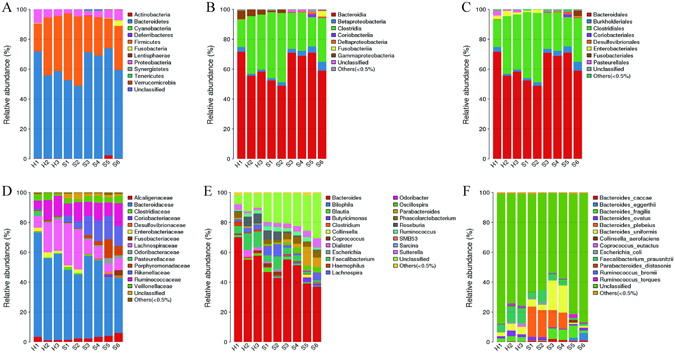
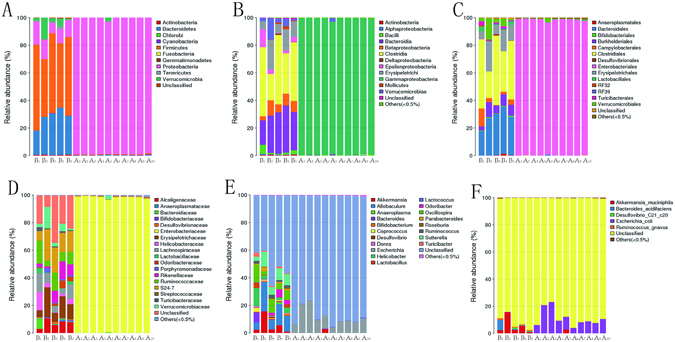
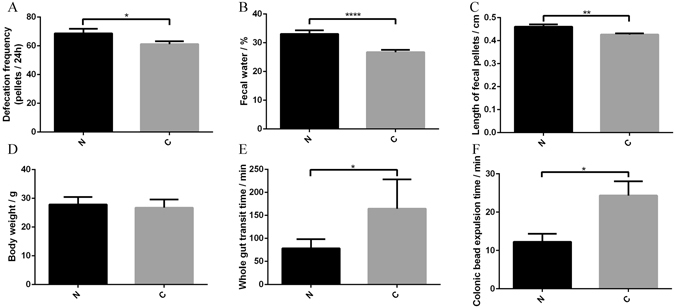
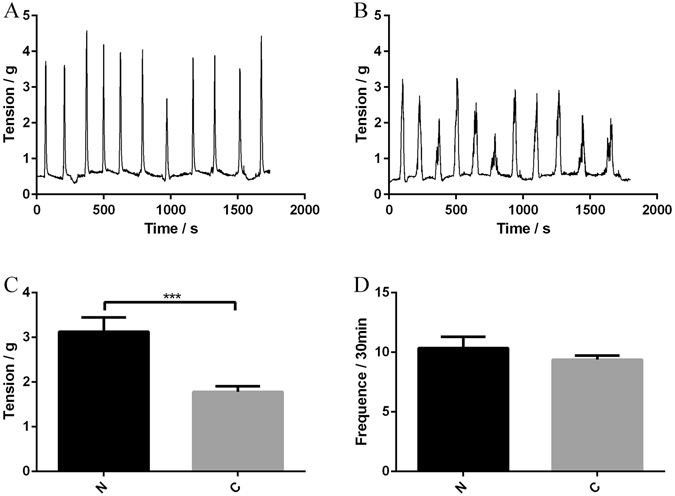
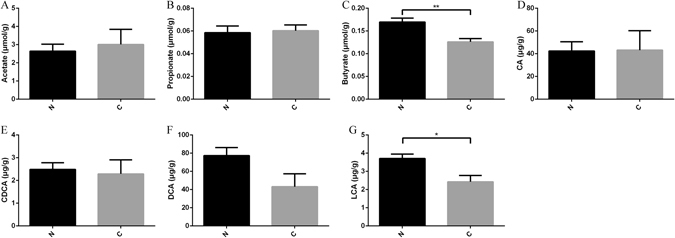
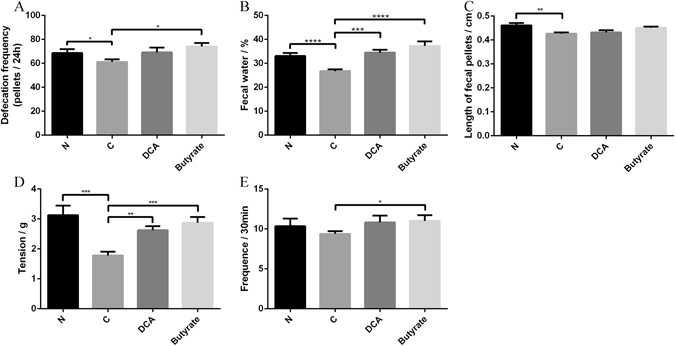
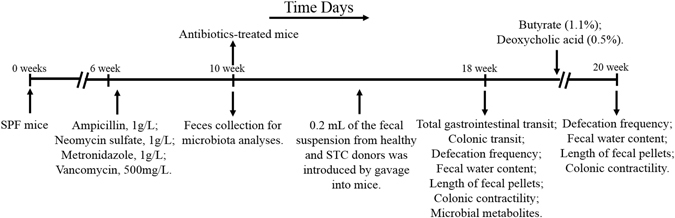
The gut microbiota is involved in various physiological functions, and disturbances in the host-microbiome have been proven to contribute to the dysfunction of gut; however, whether microbiota participates in the pathogenesis of constipation remains unclear. In this study, we extracted and analyzed microbiota in feces from constipated donors who had undergone effective therapy with fecal microbiota transplantation, transplanted microbiota into pseudo-germ-free mice, and measured gut motility. These mice presented with lower pellet frequency and water percentage, smaller pellet size, delayed gastrointestinal transit time, and weaker spontaneous contractions of colonic smooth muscle. To determine the mechanism underlying delayed gut motility, microbial metabolites were measured. Short chain fatty acids and secondary bile acids were decreased in mice receiving microbiota from constipated donors. Moreover, the compositional changes of gut microbiota in constipated patients were identified, including the operational taxonomic unit, and the species richness and α diversity were much greater than those in healthy volunteers. These findings suggest that alterations of the microbiome might affect gut motility via altered microbial-derived metabolites in the development of constipation, and the restoration of disturbed microbiota might improve the clinical phenotype. This study indicates that regulating the intestinal environment may be a novel therapy strategy for constipation.
Overview
The claims and statistics of this paper haven’t been checked yet.
Free: it reads the open-access text and checks the first 5 claims that cite a source we can check. Create a free account to check every claim.
Integrity signals
Registry
Cites
Statistics
Figures
Verification
Claims the paper makes
The claims and statistics of this paper haven’t been checked yet.
Free: it reads the open-access text and checks the first 5 claims that cite a source we can check. Create a free account to check every claim.
Claims other papers make about this one
Each is checked against this paper’s own text: does it say what the citing paper says it does?
In the citing paper
“The potential role of microbially-derived metabolites is further supported by findings of delayed GI transit and altered SCFA and bile acid profiles following transfer of fecal microbiota from patients with slow transit constipation to antibiotic-treated mice159.”
From The gut Microbiome in adult and pediatric functional gastrointestinal disorders (2019) · cites this paper as [159]
Self-check
Percentages, sums and reported differences re-computed from the paper’s own numbers.
The self-check needs the paper’s full text.
Citations
Cites
Enterotypes of the human gut microbiome
MetaHIT Consortium (additional members), Arumugam, M., Raes, J., Pelletier, E., Le Paslier, D., Yamada, T., Mende, D. R., Fernandes, G. R., Tap, J., Bruls, T., et al. (2011) · Nature · doi:10.1038/nature09944 · Cited by 7,548
From Dietary Fiber to Host Physiology: Short-Chain Fatty Acids as Key Bacterial Metabolites
Koh, A., De Vadder, F., Kovatcheva-Datchary, P., & Bäckhed, F. (2016) · Cell · doi:10.1016/j.cell.2016.05.041 · Cited by 7,070
Recognition of Commensal Microflora by Toll-Like Receptors Is Required for Intestinal Homeostasis
Rakoff-Nahoum, S., Paglino, J., Eslami-Varzaneh, F., Edberg, S., & Medzhitov, R. (2004) · Cell · doi:10.1016/j.cell.2004.07.002 · Cited by 4,251
Indigenous bacteria from the gut microbiota regulate host serotonin biosynthesis
Yano, J. M., Yu, K., Donaldson, G. P., Shastri, G. G., Ann, P., Ma, L., Nagler, C. R., Ismagilov, R. F., Mazmanian, S. K., & Hsiao, E. Y. (2015) · Cell · doi:10.1016/j.cell.2015.02.047 · Cited by 3,614
The Effect of Diet on the Human Gut Microbiome: A Metagenomic Analysis in Humanized Gnotobiotic Mice
Turnbaugh, P. J., Ridaura, V. K., Faith, J. J., Rey, F. E., Knight, R., & Gordon, J. I. (2009) · Science Translational Medicine · doi:10.1126/scitranslmed.3000322 · Cited by 3,058
Shekhar, C., Monaghan, P. J., Morris, J., Issa, B., Whorwell, P. J., Keevil, B. G., & Houghton, L. A. (2013) · Gastroenterology · doi:10.1053/j.gastro.2013.07.014 · Cited by 2,945
Lacy, B. E., Mearin, F., Chang, L., Chey, W. D., Lembo, A. J., Simren, M., & Spiller, R. (2016) · Gastroenterology · doi:10.1053/j.gastro.2016.02.031 · Cited by 2,866
Intestinal Crosstalk between Bile Acids and Microbiota and Its Impact on Host Metabolism
Wahlström, A., Sayin, S. I., Marschall, H.-U., & Bäckhed, F. (2016) · Cell Metabolism · doi:10.1016/j.cmet.2016.05.005 · Cited by 2,851
(2013) · Gastroenterology Research · doi:10.1053/j · Cited by 2,759
Sayin, S. I., Wahlström, A., Felin, J., Jäntti, S., Marschall, H.-U., Bamberg, K., Angelin, B., Hyötyläinen, T., Orešič, M., & Bäckhed, F. (2013) · Cell Metabolism · doi:10.1016/j.cmet.2013.01.003 · Cited by 2,331
Cited by
Items 201–242 of 242
Ogata, T., Kessoku, T., Jono, T., Kasai, Y., Ozaki, A., Tanaka, K., Takahashi, K., Yamamoto, A., Iwaki, M., Kobayashi, T., et al. (2022) · Research Square · doi:10.21203/rs.3.rs-2001863/v1
1) Treatment Strategy for Internal Medicine Diseases Targeting Metabolism, Focusing on Gut
Naito, Y. (2021) · Nihon Naika Gakkai Zasshi · doi:10.2169/naika.110.1856
Esophageal dysbiosis and esophageal motility disorders
Patel, A. C., & Gyawali, C. P. (2023) · Elsevier eBooks · doi:10.1016/b978-0-323-95070-1.00004-7
Guo, K., Yi, X., Tang, Y., & Tan, Z. (2023) · Research Square · doi:10.21203/rs.3.rs-3247286/v1
Liu, X., & Wu, S. (2023) · World Chinese Journal of Digestology · doi:10.11569/wcjd.v31.i22.922
Xian, X., Liu, J., Yang, H., Liu, J., & He, G.-R. (2023) · Research Square · doi:10.21203/rs.3.rs-3647892/v1
Investigation and description of the New Brain and New Mind hypotheses
Klinedinst, B. S. (2021) · doi:10.31274/td-20240329-457
Park, J., Kato, K., Murakami, H., Hosomi, K., Tanisawa, K., Nakagata, T., Ohno, H., Konishi, K., Kawashima, H., Chen, Y. A., et al. (2021) · Figshare · doi:10.6084/m9.figshare.14633676
Liu, H., Tian, R., Wang, H., Feng, S., Li, H., Xiao, Y., Luan, X., Zhang, Z., Shi, N., Niu, H., et al. (2020) · Figshare · doi:10.6084/m9.figshare.13076628
Self-citationPark, J., Kato, K., Murakami, H., Hosomi, K., Tanisawa, K., Nakagata, T., Ohno, H., Konishi, K., Kawashima, H., Chen, Y. A., et al. (2021) · Figshare · doi:10.6084/m9.figshare.14633667
Park, J., Kato, K., Murakami, H., Hosomi, K., Tanisawa, K., Nakagata, T., Ohno, H., Konishi, K., Kawashima, H., Chen, Y., et al. (2021) · Figshare · doi:10.6084/m9.figshare.14633661
Park, J., Kato, K., Murakami, H., Hosomi, K., Tanisawa, K., Nakagata, T., Ohno, H., Konishi, K., Kawashima, H., Chen, Y., et al. (2021) · Figshare · doi:10.6084/m9.figshare.14633658
Park, J., Kato, K., Murakami, H., Hosomi, K., Tanisawa, K., Nakagata, T., Ohno, H., Konishi, K., Kawashima, H., Chen, Y. A., et al. (2021) · Figshare · doi:10.6084/m9.figshare.14633664
Role of high-resolution anal manometry in evaluation of chronic constipation. A Review
DNB, Z. S. M., Dr. Astha Sareen, M. B. B. S., MD, D. S. S. M., DNB, K. M. M., DNB, K. M. M., & DM, G. C. M. M. (2024) · Gastroenterology & Hepatology Open Access · doi:10.15406/ghoa.2024.15.00590
Pharmacological Therapies for Urinary, Bowel, and Erectile Dysfunction
Cerruto, M. A., Ornaghi, P. I., Salhi, Y. A., & Pastore, A. L. (2024) · Urodynamics, neurourology and pelvic floor dysfunctions · doi:10.1007/978-3-031-76341-0_6
Zhang, Y., Zhao, Y. G., Han, L., Yang, W., Dai, T., Sheng, J., Peng, L., Tian, Y., & Gao, X. (2025) · Food Science and Human Wellness · doi:10.26599/fshw.2025.9250524
Guo, R. X., Zhao, C. F., Li, Y., Zhang, Y. X., Luo, F. Y., Sun, Y., Wang, Y. F., Huang, J., Du, B., & Li, P. (2025) · Food Frontiers · doi:10.1002/fft2.70113
The gut microbiota in Parkinson's disease
Cirstea, M. S. (2024) · cIRcle (University of British Columbia) · doi:10.14288/1.0422979
Li, H., Xiao, H.-Y., Yuan, L.-P., Yan, B., Pan, Y., Tian, P.-P., & Zhang, W.-J. (2023) · Figshare · doi:10.6084/m9.figshare.23001763
Li, H., Xiao, H.-Y., Yuan, L.-P., Yan, B., Pan, Y., Tian, P.-P., & Zhang, W.-J. (2023) · Figshare · doi:10.6084/m9.figshare.23001754
Li, H., Xiao, H.-Y., Yuan, L.-P., Yan, B., Pan, Y., Tian, P.-P., & Zhang, W.-J. (2023) · Figshare · doi:10.6084/m9.figshare.23001766
Liu, H., Tian, R., Wang, H., Feng, S., Li, H., Xiao, Y., Luan, X., Zhang, Z., Shi, N., Niu, H., et al. (2020) · Figshare · doi:10.6084/m9.figshare.13076631
Self-citationLi, H., Xiao, H.-Y., Yuan, L.-P., Yan, B., Pan, Y., Tian, P.-P., & Zhang, W.-J. (2023) · Figshare · doi:10.6084/m9.figshare.23001748
Park, J., Kato, K., Murakami, H., Hosomi, K., Tanisawa, K., Nakagata, T., Ohno, H., Konishi, K., Kawashima, H., Chen, Y.-A., et al. (2021) · Figshare · doi:10.6084/m9.figshare.14633673
Li, H., Xiao, H.-Y., Yuan, L.-P., Yan, B., Pan, Y., Tian, P.-P., & Zhang, W.-J. (2023) · Figshare · doi:10.6084/m9.figshare.23001760
Li, H., Xiao, H.-Y., Yuan, L.-P., Yan, B., Pan, Y., Tian, P.-P., & Zhang, W.-J. (2023) · Figshare · doi:10.6084/m9.figshare.23001757
Park, J., Kato, K., Murakami, H., Hosomi, K., Tanisawa, K., Nakagata, T., Ohno, H., Konishi, K., Kawashima, H., Chen, Y.-A., et al. (2021) · Figshare · doi:10.6084/m9.figshare.14633670
Li, H., Xiao, H.-Y., Yuan, L.-P., Yan, B., Pan, Y., Tian, P.-P., & Zhang, W.-J. (2023) · Figshare · doi:10.6084/m9.figshare.23001751
Li, H., Xiao, H.-Y., Yuan, L.-P., Yan, B., Pan, Y., Tian, P.-P., & Zhang, W.-J. (2023) · Figshare · doi:10.6084/m9.figshare.23001745
Zhang, S., Shi, H., Liu, B., Ge, Z., Zhang, N., Liu, Q., Duan, Z. G., & Chang, Q. (2026) · BMC Gastroenterology · doi:10.1186/s12876-025-04362-4
“It was reported that the variation of the microbiota might influence gastrointestinal motility via microbial-derived metabolites [10, 12].”
Diagnosis and treatment of slow-transit constipation
Yang, F., & Tao, Q. (2026) · BMC Gastroenterology · doi:10.1186/s12876-026-04784-8
“For instance, after Ning Litransplanted healthy human flora into 6 patients with slow-transmission constipation, the weekly defecation frequency of the constipated patients increased from 1.6 times/week to 5 times/week, and stool consistency also improved [70].”
InfluentialWang, Y., Zhen, S., Sun, M., Su, L., & Yan, S. (2026) · Neurogastroenterology & Motility · doi:10.1111/nmo.70341
“This aligns with the established negative correlation between Bacteroidota abundance and colonic transit time in constipated patients [54].”
Lactobacillus acidophilus C4 ameliorates constipation in mice
Yan, H., Jia, Q., Liu, J., Hua, X., Cui, Y., Jian, W., Tan, Y., Oduor, O. S., Thomas, P., Kawimbe, M., et al. (2026) · Microbiology Spectrum · doi:10.1128/spectrum.02950-25
“Recent studies have shown that an imbalance in the homeostasis of intestinal microbiota is a key causative factor of functional constipation (28, 29).”
Safety and efficacy of faecal microbiota transplantation in Parkinson’s disease
Chernova, V. O., Ng, R. W., Yang, L., Margaret, I., Corcione, S., Benech, N., van Prehn, J., Kuijper, E. J., & Contarino, M. F. (2026) · npj Parkinson's Disease · doi:10.1038/s41531-026-01376-x
“Previous studies showed that gut microbiota can in fl u-ence intestinal motility through multiple pathways, including the production of short-chain fatty acids, regulation of bile acid metabolism, and modulation of enteric serotonergic signalling 29 – 31 .”
Lu, Q., Teng, Q., An, Y., Wu, Z., & Wan, C. (2026) · Food Bioscience · doi:10.1016/j.fbio.2026.109080
Xu, Z., Yao, Y., Wei, W., Wang, X., Du, M., Jia, H., Bao, J., Chen, F., Tong, X., Li, L., et al. (2026) · BMC Oral Health · doi:10.1186/s12903-026-08936-w
Gwon, H., Kim, H., Kim, J.-Y., Shim, J.-J., & Lee, J.-H. (2026) · Journal of Microbiology and Biotechnology · doi:10.4014/jmb.2605.05041
Zhao, X., Song, Y., Zhu, J., Ma, B., Liang, D., Xu, Z., & Ma, Y. (2026) · Frontiers in Pharmacology · doi:10.3389/fphar.2026.1880189 · Cited by 1
“Among constipated children, increased abundance of Ascomycota phylum species was observed, alongside elevated levels of Anaplasma , Paraplasma , and Bifidobacterium longum , while levels of Alipis and Rumen subphylum were reduced (Steed et al., 2010).”
InfluentialNing, Z., Wu, G., Luo, J., Li, Y., Li, Y., Shi, J., Fang, W., To, W. L. W., Ruan, S., Zhou, Y., et al. (2026) · medRxiv · doi:10.64898/2026.08.08.26359996
Kraïmi, N., Fabregat‐Safont, D., Canaguier, J., Mallaret, G., Barbosa, S., Brouillet, J. Z., Lejuste, F., Gaman, A., Richard, J.-R., Derbel, C. S., et al. (2026) · Scientific Reports · doi:10.1038/s41598-026-62588-y
“First, decreased fecal pellet count and harder feces are two well-known hallmark features in validated murine models of constipation 55–57 .”
Zhu, J., Zeng, B., Zhu, W., Liu, Y., Li, X., Zhang, Y., Xu, Z., Xu, Q., Wu, W., Li, J., et al. (2026) · iScience · doi:10.1016/j.isci.2026.117850
“171 Furthermore, under normal conditions, commensal bacteria metabolize tryptophan into indoles and related derivatives, which preserve barrier integrity and modulate mucosal immunity.”
Self-citation
Metadata
- Authors
- Ge, X., Zhao, W., Ding, C., Tian, H., Xu, L., Wang, H., Ni, L., Jiang, J., Gong, J., Zhu, W., Zhu, M., & Li, N.
- Affiliations
- Nanjing General Hospital of Nanjing Military Command (CN)
- Nanjing University (CN)
- First Affiliated Hospital Zhejiang University (CN)
- Tongji University (CN)
- Corresponding author
- Gong, Jianfeng
- Zhu, Weiming
- Li, Ning
- Venue
- Scientific Reports
- Published
- 2017-03-27
- Volume
- 7
- Issue
- 1
- Pages
- 441-441
- ISSN
- 2045-2322 (ISSN-L)
- PMC
- PMC5428802
- OpenAlex
- W2602278063
- Semantic Scholar
- 2f580554da81d54b49248a49633dbadd958236ac
- Cited by
- 232
- References
- 60
- Citations by year
- 2026: 12 · 2025: 22 · 2024: 26 · 2023: 46 · 2022: 18 · 2021: 32 · 2020: 30 · 2019: 31 · 2018: 10 · 2017: 5
- FWCI
- 22.05
- Type
- journal article
- Language
- en
- Open access
- gold
- doi.org
- Licence
- cc-by
- creativecommons.org/licenses/by/4.0 (tdm)
- creativecommons.org/licenses/by/4.0 (vor)
- Locations
- Scientific Reports (publishedVersion, cc-by)
- PubMed Central (publishedVersion, cc-by)
- PubMed (publishedVersion)
- DOAJ (DOAJ: Directory of Open Access Journals) (submittedVersion, cc-by-sa)
- Funders
- National Natural Science Foundation of China (81670493, 81270006, 2015BAI13B07)
- Topics
- Health Sciences › Medicine › Gastroenterology › Gastrointestinal motility and disorders
- Life Sciences › Biochemistry, Genetics and Molecular Biology › Molecular Biology › Gut microbiota and health
- Health Sciences › Medicine › Surgery › Congenital gastrointestinal and neural anomalies
- Keywords
- slow transit constipation, fecal microbiota, intestinal motility, fecal microbiota transplantation, microbial metabolites, short-chain fatty acids, secondary bile acids, colonic smooth muscle contraction, gut microbiota diversity
- MeSH terms
- Gastrointestinal Microbiome, Fecal Microbiota Transplantation, Animals, Constipation, Disease Models, Animal, Feces, Gastrointestinal Motility, Humans, Mice, Microbiota
About these checks
Registry, retraction, Cites and statistics results are computed, not judged, with one exception: a printed reference that no index lists is read once by a model before it counts as a citation error. Claims are extracted by a model and kept only when their quote appears verbatim in the text; each cited source is then checked, with a model’s help, for whether it says what the claim relies on. Those verdicts can be wrong — read the claim’s quote and the cited source before relying on one.
Statistics and arithmetic are recomputed, not judged.
Confidence bands are shown only for fields calibrated on our annotated test set. None is calibrated yet, so no band is shown.
What counts as a claim ›How we measure confidence ›How we check this ›
Are you an author, or do you see a problem with this page? Request a review
Data sources
Bibliographic data: Semantic Scholar, OpenAlex, Crossref.
Contains information from the Semantic Scholar Academic Graph Datasets, made available under the ODC Attribution License (ODC-BY 1.0).
Semantic Scholar’s data is described in: Kinney, R., et al. (2023). The Semantic Scholar Open Data Platform. arXiv:2301.10140.
