

Invisible body illusion modulates interpersonal space
Open accessThe DOI matches its Crossref record; 53 of the 53 references it cites were found in a registry or an index.
Abstract
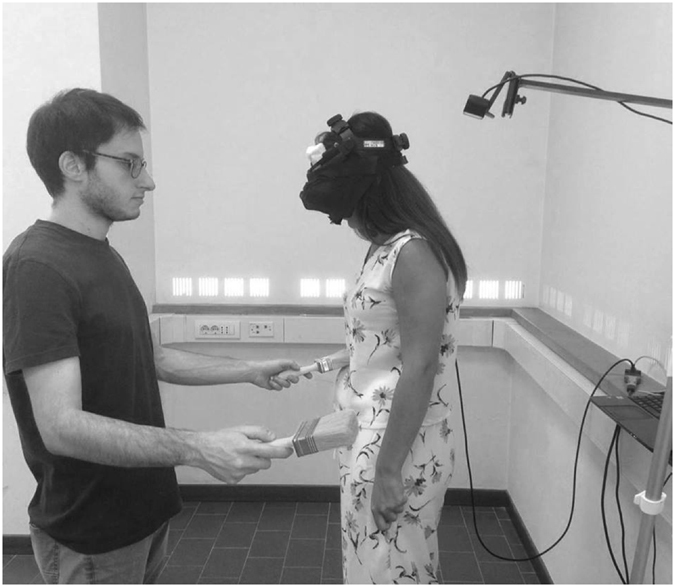
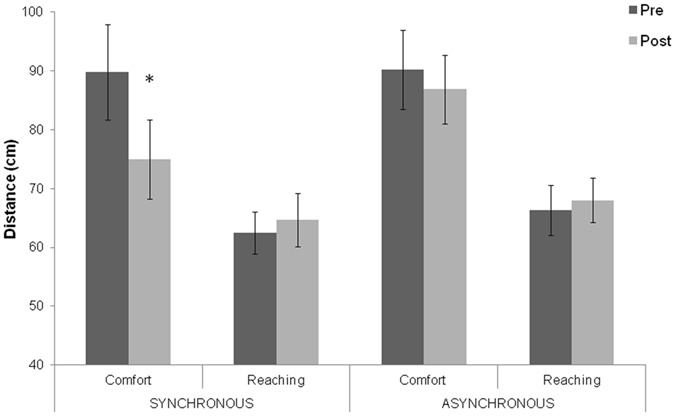
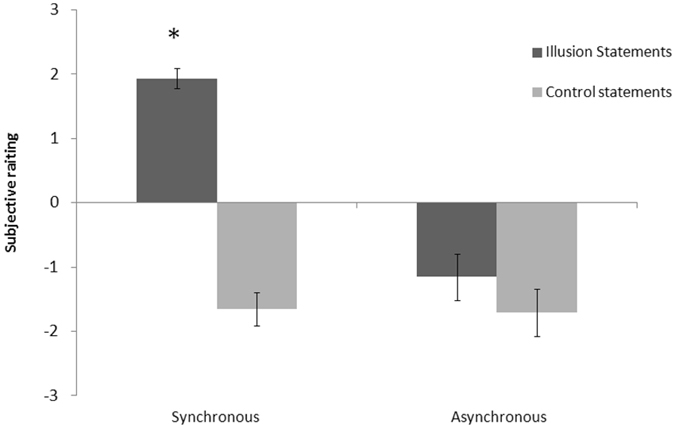
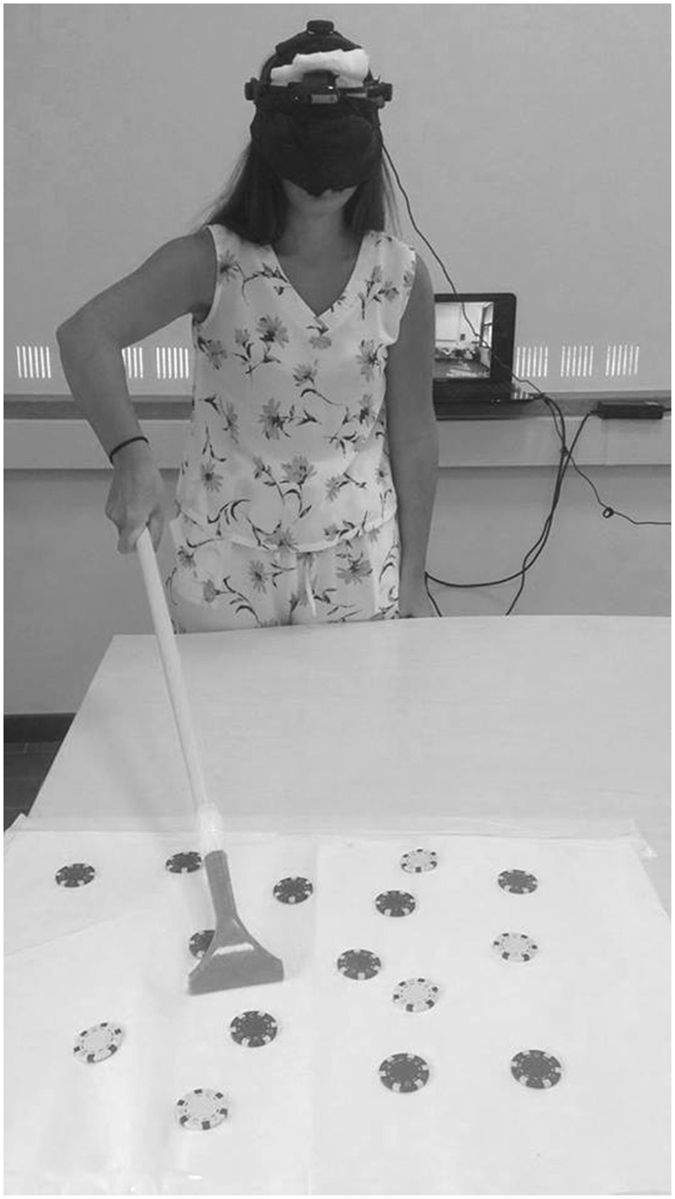
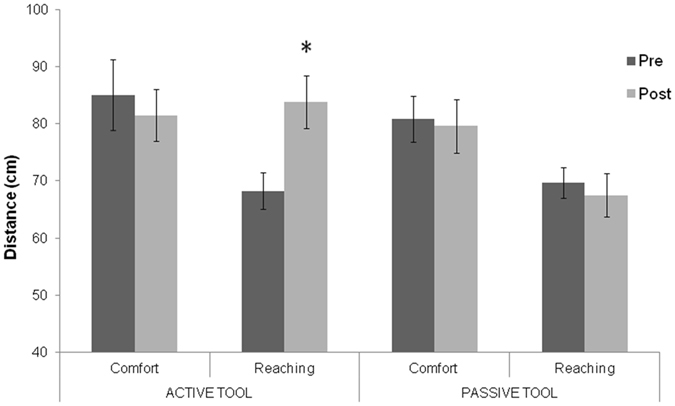
Interpersonal space (e.g., IPS) refers to the physical distance individuals maintain from others during social interactions, and into which intrusion by others can cause discomfort. Here, we asked whether the size of IPS is affected by manipulation of one’s own body representation. To address this issue, in Experiment 1, IPS was measured through a comfort-distance task, before and after eliciting the illusion of owning an invisible body. To rule out a general, nonspecific change in space perception consequent the illusion, we also assessed peripersonal space, e.g., PPS, the area around the body used to act on nearby objects, through a reaching-distance task. Results showed that the experience of invisibility induces a selective contraction of IPS, without affecting the perceived reaching space around the body. In Experiment 2, a tool-use manipulation produced the opposite dissociation, modifying the boundaries of PPS, but leaving IPS distance unaltered. Collectively, these findings support a close relationship between IPS and the conscious representation of the body external appearance, i.e. the body image, and suggest the existence of two functionally separate representations of the space immediately surrounding the body in humans, which may form the basis of distinct processes engaged for different behavioural contexts.
Overview
The claims and statistics of this paper haven’t been checked yet.
Free: it reads the open-access text and checks the first 5 claims that cite a source we can check. Create a free account to check every claim.
Integrity signals
Registry
Cites
Statistics
Figures
Verification
Claims the paper makes
The claims and statistics of this paper haven’t been checked yet.
Free: it reads the open-access text and checks the first 5 claims that cite a source we can check. Create a free account to check every claim.
Claims other papers make about this one
Each is checked against this paper’s own text: does it say what the citing paper says it does?
The source backs part of the claim, not all of it — or backs it for a different population, condition or comparison.
In the citing paper
“Some researchers (D' Angelo et al., 2017;Patan e et al., 2016) showed that this measure remained unchanged when facing an unfamiliar person, while it decreased after cooperative tool use in the same paradigm (Candini et al., 2019;Patan e et al., 2017).”
From The Peripersonal Space in a social world (2021) · cites this paper as D' Angelo et al., 2017
Experimental — accuracy not yet measuredThe cited source says what the claim attributes to it.
In the citing paper
“The use of a long tool consistently increased reachability distance estimated either alone (Bourgeois, Farn e, & Coello, 2014), or in the presence of a point-light walker (Quesque et al., 2017), a real confederate (D'Angelo, Pellegrino, & Frassinetti, 2017; Patan e, Iachini, Farn e, & Frassinetti, 2016), as well as following cooperative tool use (Patan e et al., 2017).”
From The Peripersonal Space in a social world (2021) · cites this paper as D'Angelo, Pellegrino, & Frassinetti, 2017
Self-check
Percentages, sums and reported differences re-computed from the paper’s own numbers.
The self-check needs the paper’s full text.
Citations
Cites
Faul, F., Erdfelder, E., Lang, A.-G., & Buchner, A. (2007) · Behavior Research Methods · doi:10.3758/bf03193146 · Cited by 65,971
The assessment and analysis of handedness: The Edinburgh inventory
Oldfield, R. C. (1971) · Neuropsychologia · doi:10.1016/0028-3932(71)90067-4 · Cited by 35,900
Barsalou, L. W. (2008) · Annual Review of Psychology · doi:10.1146/annurev.psych.59.103006.093639 · Cited by 5,936
Hall, E. T. (1973) · Leonardo · doi:10.2307/1572461 · Cited by 4,859
Gallagher, S. (2005) · doi:10.1093/0199271941.001.0001 · Cited by 3,311
The Proteus Effect: The Effect of Transformed Self-Representation on Behavior
Yee, N., & Bailenson, J. (2007) · Human Communication Research · doi:10.1111/j.1468-2958.2007.00299.x · Cited by 2,126
From presence to consciousness through virtual reality.
Sanchez-Vives, M. V., & Slater, M. (2005) · Nature reviews. Neuroscience · doi:10.1038/nrn1651 · Cited by 1,831
Maravita, A., & Iriki, A. (2004) · Trends in Cognitive Sciences · doi:10.1016/j.tics.2003.12.008 · Cited by 1,214
Putting yourself in the skin of a black avatar reduces implicit racial bias
Peck, T. C., Seinfeld, S., Aglioti, S. M., & Slater, M. (2013) · Consciousness and Cognition · doi:10.1016/j.concog.2013.04.016 · Cited by 967
When Far Becomes Near: Remapping of Space by Tool Use
Berti, A., & Frassinetti, F. (2000) · Journal of Cognitive Neuroscience · doi:10.1162/089892900562237 · Cited by 731
Self-citation
Research works printed but not linked: 2
- Aiello, J. R. Human spatial behaviour in Handbook of Environmental Psychology (Eds Stokols, D. and Altman, I.) 1, 389–504 (New York: Wiley, 1987).
- Sommer, R. From personal space to cyberspace in Handbook of Environmental Psychology (Eds Bechtel, R. B. and Churchman, A.) 2, 647–660 (New York: Wiley, 2002).
Cited by
Hecht, H., Welsch, R., Viehoff, J., & Longo, M. R. (2019) · Acta Psychologica · doi:10.1016/j.actpsy.2018.12.009 · Cited by 139
The Peripersonal Space in a social world
Bogdanova, O. V., Bogdanov, V. B., Dureux, A., Farnè, A., & Hadj-Bouziane, F. (2021) · Cortex · doi:10.1016/j.cortex.2021.05.005 · Cited by 86
“Some researchers (D’Angelo et al., 2017; Patané et al., 2016) showed that this measure remained unchanged when facing an unfamiliar person, while it decreased after cooperative tool use in the same paradigm (Candini et al.”
BackgroundMethodInfluentialNoel, J., Blanke, O., & Serino, A. (2018) · Annals of the New York Academy of Sciences · doi:10.1111/nyas.13867 · Cited by 79
The physiological correlates of interpersonal space
Candini, M., Battaglia, S., Benassi, M., di Pellegrino, G., & Frassinetti, F. (2021) · Scientific Reports · doi:10.1038/s41598-021-82223-2 · Cited by 73
Self-citationFrontier of Self and Impact Prediction
Cléry, J., & Hamed, S. B. (2018) · Frontiers in Psychology · doi:10.3389/fpsyg.2018.01073 · Cited by 54
“In the same lines, the introduction of invisible body illusions results in dissociable changes in InterPS and PPS sizes (D’Angelo et al., 2017).”
BackgroundDefensive functions provoke similar psychophysiological reactions in reaching and comfort spaces
Ruggiero, G., Rapuano, M., Cartaud, A., Coello, Y., & Iachini, T. (2021) · Scientific Reports · doi:10.1038/s41598-021-83988-2 · Cited by 45
Peri-personal Space as a Prior in Coupling Visual and Proprioceptive Signals
Noel, J.-P., Samad, M., Doxon, A., Clark, J., Keller, S., & Di Luca, M. (2018) · Scientific Reports · doi:10.1038/s41598-018-33961-3 · Cited by 39
Iriye, H., & Ehrsson, H. H. (2021) · iScience · doi:10.1016/j.isci.2021.103584 · Cited by 38
“One can still feel ownership over one’s body in visually degraded conditions, such as in darkness, fog, or in ‘‘invisible body illusions’’ (D’Angelo et al., 2017; Guterstam et al., 2015a; Kondo et al., 2018).”
BackgroundD’Angelo, M., di Pellegrino, G., & Frassinetti, F. (2019) · Behavioural Brain Research · doi:10.1016/j.bbr.2019.112146 · Cited by 25
Self-citationFalcone, S., Englebienne, G., van Erp, J. B. F., & Heylen, D. (2022) · Human-Computer Interaction · doi:10.1080/07370024.2022.2039147 · Cited by 34
“…Zeller et al., 2016), or just singularly the sense of ownership (Botvinick & Cohen, 1998; Burin et al., 2017; Ehrsson et al., 2007; Hohwy & Paton, 2010; Lane et al., 2017; Moseley et al., 2008), the sense of agency (Knoblich & Kircher, 2004), or the sense of self-location (D’Angelo et al., 2017).”
BackgroundA Continuous Illusion of Having a Sixth Finger
Cadete, D., & Longo, M. R. (2020) · Perception · doi:10.1177/0301006620939457 · Cited by 23
“…al., 2012; Lackner, 1988; Normand et al., 2011), body weight (Piryankova et al., 2014; Preston & Ehrsson, 2016), age (Banakou et al., 2013), ethnicity (Maister et al., 2013; Peck et al., 2013), visibility (D’Angelo et al., 2017 , in press; Guterstam et al., 2013), and solidity (Senna et al., 2014).”
Personal Space of Autonomous Car’s Passengers Sitting in the Driver’s Seat
Ferrier-Barbut, É., Vaufreydaz, D., David, J.-A., Lussereau, J., & Spalanzani, A. (2018) · IEEE Intelligent Vehicles Symposium · doi:10.1109/ivs.2018.8500648 · Cited by 19
The role of group membership and culture in interpersonal distance regulation
Wei, J., Candini, M., Frassinetti, F., & Rubini, M. (2024) · Journal of Applied Social Psychology · doi:10.1111/jasp.13056 · Cited by 16
Self-citationRemote hand: Hand-centered peripersonal space transfers to a disconnected hand avatar
Mine, D., & Yokosawa, K. (2021) · Attention Perception & Psychophysics · doi:10.3758/s13414-021-02320-2 · Cited by 18
“This result is consistent with a previous study that suggested that visibility of the hand does not modulate the HPPS boundary (D’Angelo et al., 2017).”
ResultBodily self‐recognition in patients with pathological embodiment
Candini, M., Fossataro, C., Pia, L., Vezzadini, G., Gindri, P., Galigani, M., Berti, A., Frassinetti, F., & Garbarini, F. (2022) · Journal of Neuroscience Research · doi:10.1002/jnr.25109 · Cited by 14
“…2007; Zeller et al., 2011, 2016), the enfacement illusion (D'Angelo et al., 2020; Sforza et al., 2010; Tsakiris, 2008), and the full- body illusion (D'Angelo et al., 2017; D'Angelo et al., 2019; Ehrsson, 2007; Lenggenhager et al., 2007; Petkova & Ehrsson, 2008), participants identify themselves…”
BackgroundSelf-citationWearing a Mask Shapes Interpersonal Space during COVID-19 Pandemic
Biggio, M., Bisio, A., Bruno, V., Garbarini, F., & Bove, M. (2022) · Brain Sciences · doi:10.3390/brainsci12050682 · Cited by 18
Zempo, K., Yamazaki, A., Wakatsuki, N., Mizutani, K., & Okada, Y. (2022) · IEEE Access · doi:10.1109/access.2022.3222804 · Cited by 13
“For example, Angelo et al.: [65] has shown that changing one’s own visibility can change one’s perception of the surroundings.”
BackgroundCadete, D., & Longo, M. R. (2021) · Cognition · doi:10.1016/j.cognition.2021.104948 · Cited by 12
Iriye, H., & Jacques, P. L. S. (2025) · Imaging Neuroscience · doi:10.1162/imag.a.93 · Cited by 9
“For example, Guterstam, Abdulkarim, et al. (2015) and D’Angelo et al. (2017) had participants wear HMD units mounted to a wall, allowing them to see empty space below the cameras.”
Curved sixth fingers: Flexible representation of the shape of supernumerary body parts
Cadete, D., Alsmith, A., & Longo, M. R. (2022) · Consciousness and Cognition · doi:10.1016/j.concog.2022.103413 · Cited by 11
Embodying an invisible face shrinks the cone of gaze.
D’Angelo, M., Maister, L., Tucciarelli, R., Frassinetti, F., & Longo, M. R. (2021) · Journal of Experimental Psychology General · doi:10.1037/xge0000953 · Cited by 8
Self-citationAbrupt visibility modifications affect specific subjective (not objective) aspects of body ownership
Pamplona, G. S. P., Gruaz, Q., Mauron, K., & Ionta, S. (2022) · Acta Psychologica · doi:10.1016/j.actpsy.2022.103672 · Cited by 4
The Perception and Effect of Aggressive Dog Breeds on Human Social Interactions
Briones, E., & Marshall, P. H. (2022) · Human-animal interaction bulletin · doi:10.1079/hai.2022.0011 · Cited by 4
Hartmann, T. (2025) · De Gruyter eBooks · doi:10.1515/9783111292144-032 · Cited by 3
Risk-taking behaviour as a central concept in evolutionary biology
Møller, A. P. (2021) · Oxford University Press eBooks · doi:10.1093/oso/9780198851738.003.0017 · Cited by 3
Falcone, S. (2023) · doi:10.3990/1.9789036558815 · Cited by 2
Baby face enlarges perceived reachable space
Kuroda, N., Harada, S., Morii, R., & Teramoto, W. (2026) · Experimental Brain Research · doi:10.1007/s00221-026-07353-3 · Cited by 1
“Previous research has reported both similarities (Iachini et al. 2014, 2016; Ruggiero et al. 2017, 2021 ) and differences (D’Angelo et al. 2017; Patané et al. 2017) between the mechanisms underlying the perception of reachable and personal space.”
Kinesthetic mirror illusionにおける 「手のイメージの想起性」の影響
由貴, 石., & Kodaka, K. (2019) · Institutional Repositories DataBase (IRDB) · doi:10.11225/jcss.26.72
Cartaud, A. (2021) · theses.fr (ABES) · doi:10.13140/rg.2.2.23983.05286 · Cited by 1
Acquisition of the Width of a Virtual Body through Collision Avoidance Trials
Saito, Y., Kawashima, K., & Hirakawa, M. (2021) · IEICE Transactions on Information and Systems · doi:10.1587/transinf.2020edp7135
Nishiyama, Y., UEBAYASHI, N., & Nomura, S. (2021) · Transactions of Japan Society of Kansei Engineering · doi:10.5057/jjske.tjske-d-20-00068
“しかしながら,最近の研究では,自身の身体が“視覚的に 存在しない”状況であっても多感覚同期刺激により所有感が 生じることが報告されている[9-11].”
Wei, J. (2024) · AMS Dottorato Institutional Doctoral Theses Repository (University of Bologna) · doi:10.48676/unibo/amsdottorato/11192
Investigating a minimal condition to induce illusory body ownership using virtual reality
近藤, 亮. (2021) · Institutional Repositories DataBase (IRDB)
Dimension sociale de l’espace péri-personnel des primates
Dureux, A. (2021) · theses.fr (ABES) · doi:10.70675/624f12eaz695fz4433zbd0aza56128110325
Wei, J., & Qian, Z. (2026) · Frontiers in Psychology · doi:10.3389/fpsyg.2026.1881465
“…which posits that cognitive processes are grounded in the dynamic integration of sensory input, affective responses, and motor actions, and are continuously shaped by bodily interactions with the environment (D’Angelo et al., 2017; De Vignemont, 2011; Paladino et al., 2010; Schnall, 2011).”
Metadata
- Authors
- D’Angelo, M., di Pellegrino, G., & Frassinetti, F.
- Affiliations
- University of Bologna (IT)
- Istituti Clinici Scientifici Maugeri (IT)
- Corresponding author
- Frassinetti, Francesca
- Venue
- Scientific Reports
- Published
- 2017-05-02
- Volume
- 7
- Issue
- 1
- Pages
- 1302-1302
- ISSN
- 2045-2322 (ISSN-L)
- PMC
- PMC5430991
- OpenAlex
- W2609250021
- Cited by
- 32
- References
- 53
- Citations by year
- 2026: 2 · 2025: 2 · 2024: 1 · 2023: 1 · 2022: 6 · 2021: 11 · 2020: 2 · 2019: 3 · 2018: 4
- FWCI
- 3.04
- Type
- journal article
- Language
- en
- Open access
- gold
- doi.org
- Licence
- cc-by
- creativecommons.org/licenses/by/4.0 (tdm)
- creativecommons.org/licenses/by/4.0 (vor)
- Locations
- Scientific Reports (publishedVersion, cc-by)
- PubMed Central (publishedVersion, cc-by)
- PubMed (publishedVersion)
- Archivio istituzionale della ricerca (Alma Mater Studiorum Università di Bologna) (submittedVersion, cc-by)
- DOAJ (DOAJ: Directory of Open Access Journals) (submittedVersion, cc-by-sa)
- Funders
- Leverhulme Trust
- Università di Bologna
- Topics
- Physical Sciences › Computer Science › Human-Computer Interaction › Virtual Reality Applications and Impacts
- Life Sciences › Neuroscience › Cognitive Neuroscience › Embodied and Extended Cognition
- Life Sciences › Neuroscience › Cognitive Neuroscience › Tactile and Sensory Interactions
- Keywords
- personal space, body image, peripersonal space, representation of the body, tool use, spatial perception, reaching task, social distance
- MeSH terms
- Adult, Body Image, Female, Humans, Illusions, Interpersonal Relations, Personal Space, Physical Stimulation, Reaction Time, Space Perception, Touch, Young Adult
About these checks
Registry, retraction, Cites and statistics results are computed, not judged, with one exception: a printed reference that no index lists is read once by a model before it counts as a citation error. Claims are extracted by a model and kept only when their quote appears verbatim in the text; each cited source is then checked, with a model’s help, for whether it says what the claim relies on. Those verdicts can be wrong — read the claim’s quote and the cited source before relying on one.
Statistics and arithmetic are recomputed, not judged.
Confidence bands are shown only for fields calibrated on our annotated test set. None is calibrated yet, so no band is shown.
What counts as a claim ›How we measure confidence ›How we check this ›
Are you an author, or do you see a problem with this page? Request a review
Data sources
Bibliographic data: Semantic Scholar, OpenAlex, Crossref.
Contains information from the Semantic Scholar Academic Graph Datasets, made available under the ODC Attribution License (ODC-BY 1.0).
Semantic Scholar’s data is described in: Kinney, R., et al. (2023). The Semantic Scholar Open Data Platform. arXiv:2301.10140.
