

Hepatic estrogen receptor α is critical for regulation of gluconeogenesis and lipid metabolism in males
Open accessThe DOI matches its Crossref record; 55 of the 55 references it cites were found in a registry or an index.
Abstract
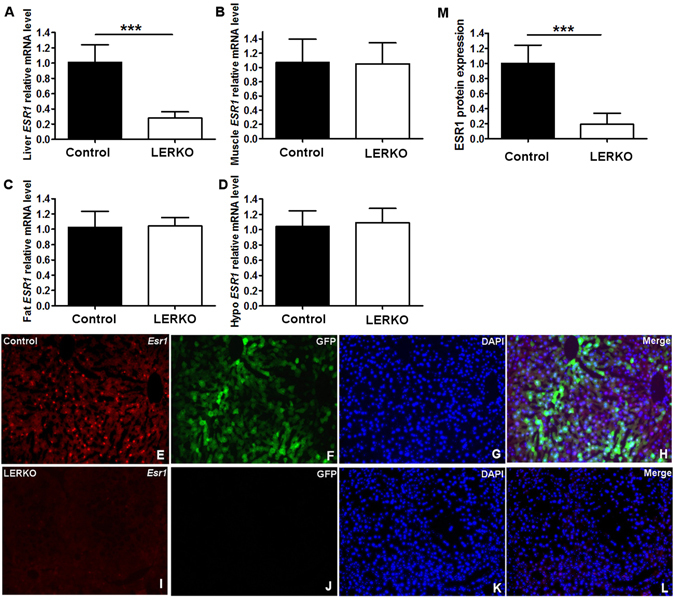
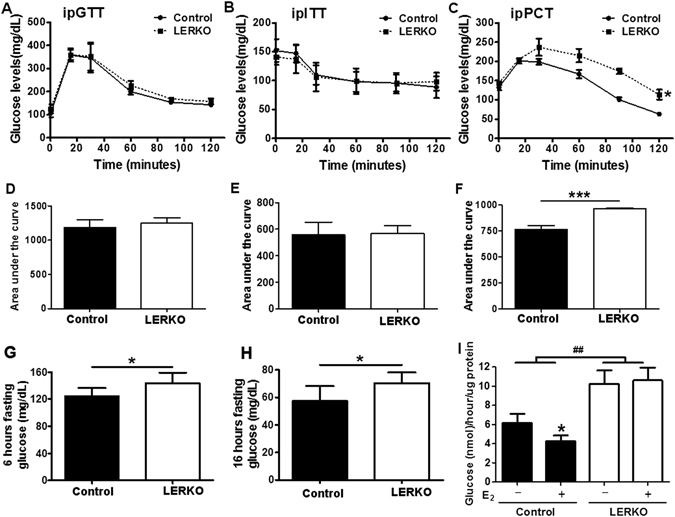
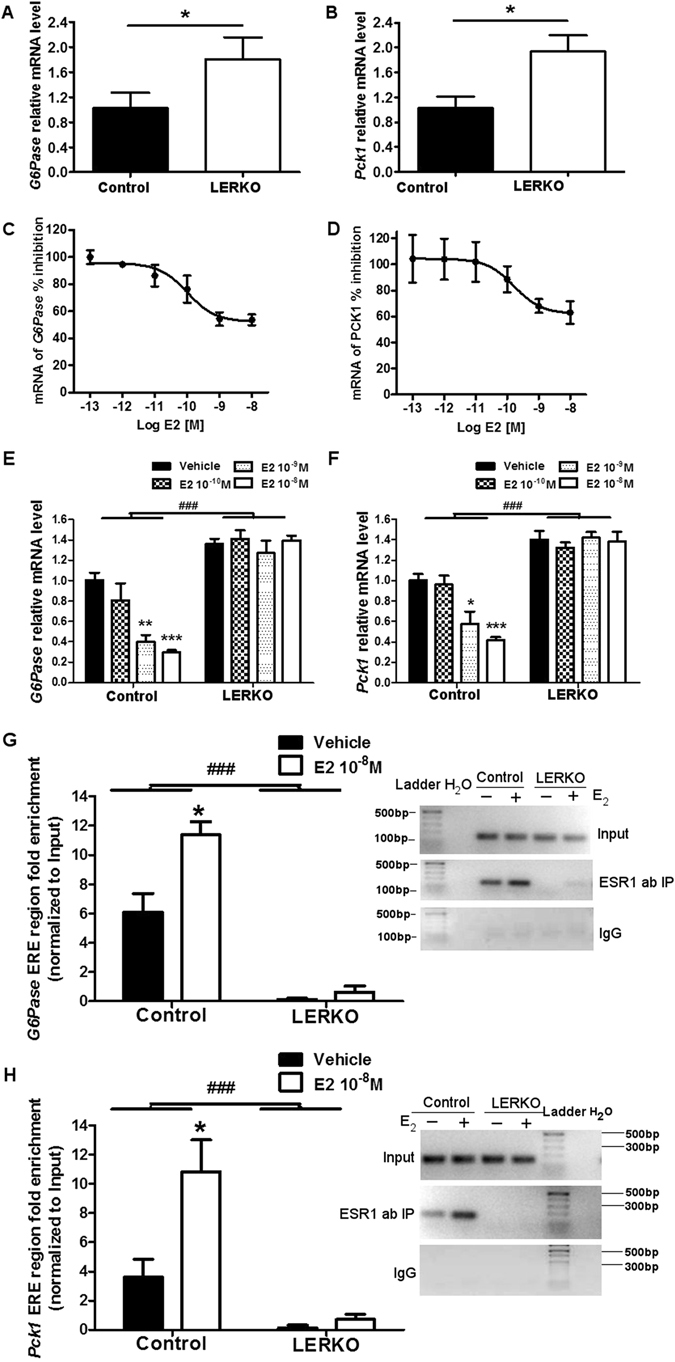
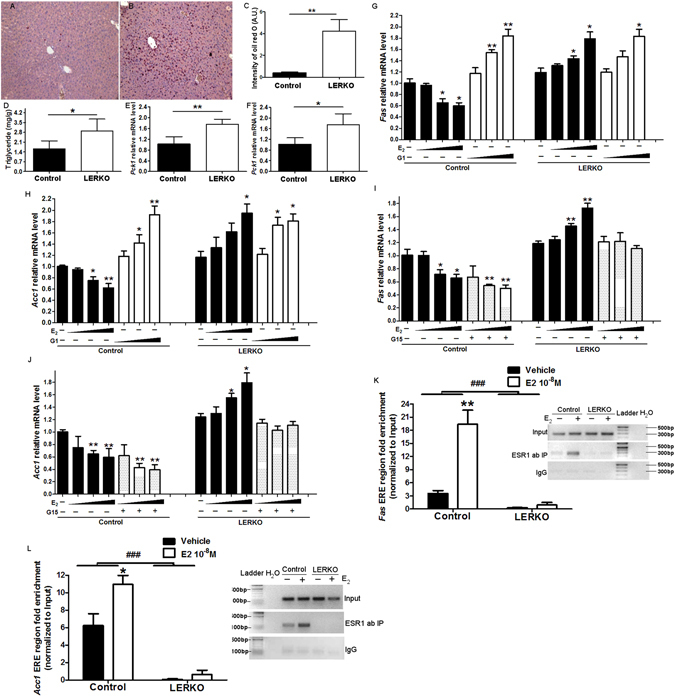
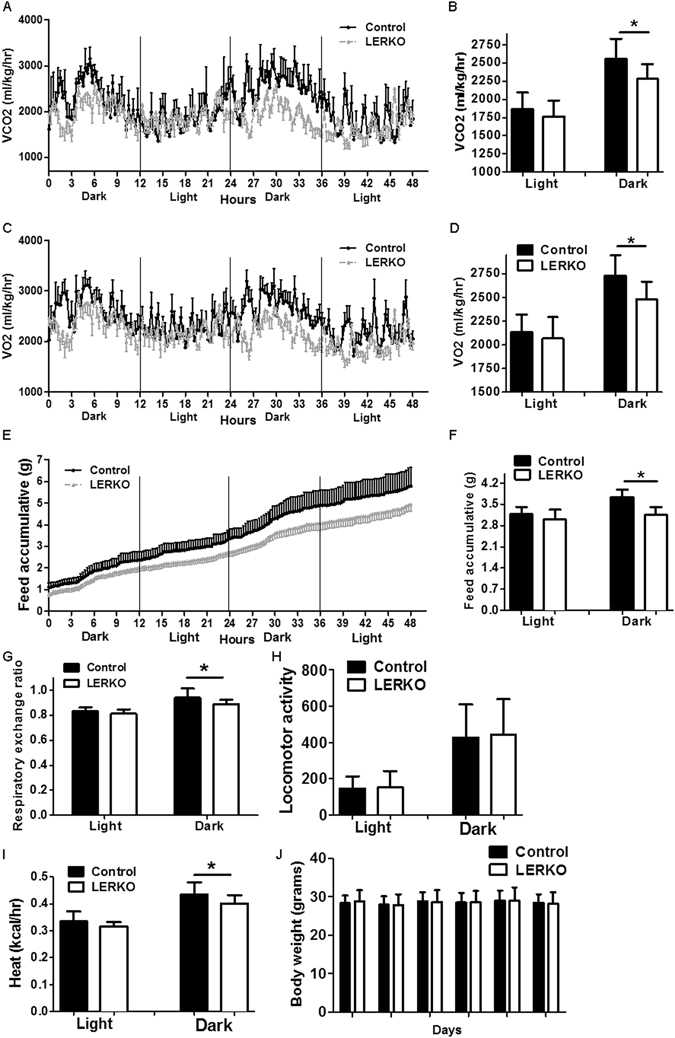
Impaired estrogens action is associated with features of the metabolic syndrome in animal models and humans. We sought to determine whether disruption of hepatic estrogens action in adult male mice could recapitulate aspects of the metabolic syndrome to understand the mechanistic basis for the phenotype. We found 17β-estradiol (E 2) inhibited hepatic gluconeogenic genes such as phosphoenolpyruvate carboxykinase 1 (Pck-1) and glucose 6-phosphatase (G6Pase) and this effect was absent in mice lacking l iver e strogen r eceptor α (Esr1) (LERKO mice). Male LERKO mice displayed elevated hepatic gluconeogenic activity and fasting hyperglycemia. We also observed increased liver lipid deposits and triglyceride levels in male LERKO mice, resulting from increased hepatic lipogenesis as reflected by increased mRNA levels of fatty acid synthase (Fas) and acetyl-CoA carboxylase (Acc1). ChIP assay demonstrated estradiol (E 2) induced ESR1 binding to Pck-1, G6Pase, Fas and Acc1 promoters. Metabolic phenotyping demonstrated both basal metabolic rate and feeding were lower for the LERKO mice as compared to Controls. Furthermore, the respiratory exchange rate was significantly lower in LERKO mice than in Controls, suggesting an increase in lipid oxidation. Our data indicate that hepatic E 2/ESR1 signaling plays a key role in the maintenance of gluconeogenesis and lipid metabolism in males.
Overview
The claims and statistics of this paper haven’t been checked yet.
Free: it reads the open-access text and checks the first 5 claims that cite a source we can check. Create a free account to check every claim.
Integrity signals
Registry
Cites
Statistics
Figures
Verification
Claims the paper makes
The claims and statistics of this paper haven’t been checked yet.
Free: it reads the open-access text and checks the first 5 claims that cite a source we can check. Create a free account to check every claim.
Claims other papers make about this one
Each is checked against this paper’s own text: does it say what the citing paper says it does?
The source backs part of the claim, not all of it — or backs it for a different population, condition or comparison.
In the citing paper
“Loss of ERα in hepatocytes appears to impair glucose tolerance and increase lipid accumulation in the liver, worsening adiposity and IR in both male and female mice, with one study reporting a greater effect in female mice (158, 159).”
From Metabolic impact of endogenously produced estrogens by adipose tissue in females and males across the lifespan (2025) · cites this paper as [159]
Experimental — accuracy not yet measuredThe check wasn’t confident either way, so it gives no verdict — never disputed.
In the citing paper
“Orally ingested estrogens have also been reported to induce acute cholestasis, causing a decrease in bile flux which is detrimental to cholesterol homeostasis (159).”
From Metabolic impact of endogenously produced estrogens by adipose tissue in females and males across the lifespan (2025) · cites this paper as [159]
Experimental — accuracy not yet measured
Self-check
Percentages, sums and reported differences re-computed from the paper’s own numbers.
The self-check needs the paper’s full text.
Citations
Cites
A SIMPLE METHOD FOR THE ISOLATION AND PURIFICATION OF TOTAL LIPIDES FROM ANIMAL TISSUES
Folch, J., Lees, M., & Stanley, G. H. S. (1957) · Journal of Biological Chemistry · doi:10.1016/s0021-9258(18)64849-5 · Cited by 65,189
A transmembrane intracellular estrogen receptor mediates rapid cell signaling
Revankar, C. M., Cimino, D. F., Sklar, L. A., Arterburn, J. B., & Prossnitz, E. R. (2005) · Science · doi:10.1126/science.1106943 · Cited by 2,302
Nonalcoholic Fatty Liver Disease: A Systematic Review
Rinella, M. E. (2015) · JAMA · doi:10.1001/jama.2015.5370 · Cited by 2,267
Ding, E. L., Song, Y., Malik, V. S., & Liu, S. (2006) · JAMA · doi:10.1001/jama.295.11.1288 · Cited by 1,354
Griffin, M. E., Marcucci, M. J., Cline, G. W., Bell, K., Barucci, N., Lee, D., Goodyear, L. J., Kraegen, E. W., White, M. F., & Shulman, G. I. (1999) · Diabetes · doi:10.2337/diabetes.48.6.1270 · Cited by 1,267
The role of hepatic lipids in hepatic insulin resistance and type 2 diabetes
Perry, R. J., Samuel, V. T., Petersen, K. F., & Shulman, G. I. (2014) · Nature · doi:10.1038/nature13478 · Cited by 1,136
Aromatase-deficient (ArKO) mice have a phenotype of increased adiposity
Jones, M. E. E., Thorburn, A. W., Britt, K. L., Hewitt, K. N., Wreford, N. G., Proietto, J., Oz, O. K., Leury, B. J., Robertson, K. M., Yao, S., et al. (2000) · Proceedings of the National Academy of Sciences · doi:10.1073/pnas.97.23.12735 · Cited by 729
Estrogen deficiency induces bone loss by enhancing T-cell production of TNF-α
Cenci, S., Weitzmann, M. N., Roggia, C., Namba, N., Novack, D., Woodring, J., & Pacifici, R. (2000) · Journal of Clinical Investigation · doi:10.1172/jci11066 · Cited by 705
Distinct Hypothalamic Neurons Mediate Estrogenic Effects on Energy Homeostasis and Reproduction
Xu, Y., Nedungadi, T. P., Zhu, L., Sobhani, N., Irani, B. G., Davis, K. E., Zhang, X., Zou, F., Gent, L. M., Hahner, L. D., et al. (2011) · Cell Metabolism · doi:10.1016/j.cmet.2011.08.009 · Cited by 597
Estrogen Regulation of Growth Hormone Action
Leung, K.-C., Johannsson, G., Leong, G. M., & Ho, K. K. Y. (2004) · Endocrine Reviews · doi:10.1210/er.2003-0035 · Cited by 542
Cited by
Items 101–135 of 135
Larocque, J. C., Gardy, S., Sammut, M. J., McBey, D. P., & Melling, C. W. J. (2022) · PLoS ONE · doi:10.1371/journal.pone.0273701 · Cited by 3
Ayanful‐Torgby, R., Shabanova, V., Essuman, A. A., Boafo, E., Amoah, L. E., & Paintsil, E. (2025) · PLoS ONE · doi:10.1371/journal.pone.0318314 · Cited by 4
“This difference in LDL-C could be attributed to sexual maturation and hormonal changes, with estrogen higher in females playing a key role in lipid metabolism by modulating hepatic LDL receptor activity and cholesterol bio-synthesis pathways [37–39].”
Size, site, and signaling: Three attributes of estrogen receptors
Sachdeva, G., Desouza, J., Gadkar, S., & Jagtap, D. D. (2019) · Biomedical Research Journal · doi:10.4103/bmrj.bmrj_24_19 · Cited by 5
“metabolism by modulating genes involved in gluconeogenesis, such as Pck-1 and G6Pase.[34] In endothelial cells, E2 activation”
BackgroundMasoumi‐Ardakani, Y., Aminizadeh, S., & Shahouzehi, B. (2020) · Biologia · doi:10.2478/s11756-020-00532-9 · Cited by 2
“Qiu and colleagues have shown that knockout of the liver enzyme which involved in lipogenesis, ACC, protects mice from insulin resistance (Qiu et al. 2017).”
BackgroundSánchez‐Mendoza, L. M., González-Reyes, J. A., Rodríguez-López, S., García‐Caballero, C., Moreno, J. A., de Cabo, R., Burón, M. I., & Villalba, J. M. (2025) · GeroScience · doi:10.1007/s11357-025-01761-z · Cited by 2
“Furthermore, ERα signalling is associated with reduced incidence and progression of liver cancer [40].”
Taquiqui, A., Ferrer, A. M., David, J. R., Deocaris, C. C., & Alinsug, M. V. (2021) · bioRxiv (Cold Spring Harbor Laboratory) · doi:10.1101/2021.10.15.464488 · Cited by 2
Remesar, X., Oliva, L., Fernández–Löpez, J., & Alemany, M. (2023) · Preprints.org · doi:10.20944/preprints202310.0281.v1 · Cited by 1
Li, Y., Liu, Y., Li, Y., Cao, Y., Zhang, H., Yuan, P., Dong, B., & Shen, L. (2024) · Journal of Traditional and Complementary Medicine · doi:10.1016/j.jtcme.2024.09.005 · Cited by 1
“53 Research further demonstrates that the loss of ESR1 in male rats causes weight loss while promoting fat deposition and impaired glucose tolerance, indicating its potential role in lipid metabolism disorders.”
Song, H., Wang, J., Hao, Y., Li, X., Yan, S., Han, S., Zhao, J., Han, Y., Sun, S., Chen, X., et al. (2026) · Poultry Science · doi:10.1016/j.psj.2026.106927 · Cited by 1
“The former is a primary bile acid and the latter an estrogen metabolite, both of which belong to the steroid class and are centrally metabolized by the liver, itself subject to their regulatory feedback (Qiu et al., 2017; Ren et al., 2021; Dong et al., 2025).”
Martins, R. X., Filho, R. D. O. L., Gomes, C. D. S., Carvalho, M., Maia, M. E. D. S., Mataribu, B., Serrão, C., Medeiros, M. V. P., Arruda, M., de Magalhães, A. J. A., et al. (2026) · Environmental Research · doi:10.1016/j.envres.2026.124698 · Cited by 1
Atsamnia, D., Hanini, S., Oukrif, D., Benachour, K., Benkortbi, O., & Hamadache, M. (2022) · Kemija u industriji · doi:10.15255/kui.2021.035 · Cited by 1
Nasti, A., Okumura, M., Takeshita, Y., Ho, T. T. B., Sakai, Y., Sato, T., Nomura, C., Goto, H., Nakano, Y., Urabe, T., et al. (2024) · Diabetes Research and Clinical Practice · doi:10.1016/j.diabres.2024.111090 · Cited by 2
Malukiewicz, J., Boere, V., Curi, N. H. A., Dergam, J. A., de Souza, C. I., Moreira, S. B., Nicola, P. A., Passamani, M., Pereira, L. C., del Rosario, R. C. H., et al. (2025) · bioRxiv (Cold Spring Harbor Laboratory) · doi:10.1101/2025.05.19.654637 · Cited by 1
“We also identified candidate genes in C. geoffroyi that included ESR1 (gluconeogenesis (Qiu et al., 2017); liver carbohydrate metabolism (Khristi et al., 2019)), and the aforementioned IGF2 (regulation of pancreatic growth and function (Hammerle et al., 2020)), and STAT4 (glucose intolerance and…”
Estrogen receptor inhibition enhances cold-induced adipocyte beiging and glucose sensitivityPreprint
Lapid, K., Lim, A., Berglund, E. D., & Graff, J. M. (2017) · bioRxiv (Cold Spring Harbor Laboratory) · doi:10.1101/229591
Iñigo, M. M. R. (2018) · The Scholarship East Carolina University's Institutional Repository (East Carolina University)
Common transcriptional programme of liver fibrosis in mouse genetic models and humansPreprint
Cokan, K. B., Urlep, Ž., Moškon, M., Mraz, M., Kong, X. Y., Eskild, W., Rozman, D., Juvan, P., & Režen, T. (2020) · bioRxiv (Cold Spring Harbor Laboratory) · doi:10.1101/2020.11.02.364901
“…steatosis in both sexes, indicating that ERα activation in fibrosis could be a sex-independent protective adaptation against liver insults, exposing estrogen receptor as a potential drug target for NAFLD management (Hart-Unger et al. 2017; Qiu et al. 2017; Hevener, Clegg, and Mauvais-Jarvis 2015).”
BackgroundYamagishi, G., Park, M. K., & Miyagawa, S. (2022) · ZOOLOGICAL SCIENCE · doi:10.2108/zs210113
“Similar observations have been reported for both mammalian and non-mammalian vertebrates (Petersen et al., 1983; Qiu et al., 2017).”
BackgroundResultModelling sex-specific whole-body metabolic responses to feeding and fastingPreprint
Abo, S. M. C., & Layton, A. T. (2024) · bioRxiv (Cold Spring Harbor Laboratory) · doi:10.1101/2024.04.29.591595
Carbohydrate intake and acid secretion decrease gastric estrogen secretionPreprint
Kanai, Y., Ito, T., Ozaki, Y., & Tanaka, A. (2024) · Research Square · doi:10.21203/rs.3.rs-4567800/v1
Pathogenesis and research progress of nonalcoholic fatty liver disease/nonalcoholic steatohepatitis
Shan, G.-Y., Wan, H., Zhang, Y., Cheng, J.-Y., Qiao, D.-R., Liu, Y.-Y., Shi, W., & Li, H. (2024) · World Journal of Hepatology · doi:10.4254/wjh.v16.i10.1322
Carbohydrate intake and activation of gastric acid secretion decrease gastric estrogen secretion
Ito, T., Ozaki, Y., Tanaka, A., & Kanai, Y. (2025) · Scientific Reports · doi:10.1038/s41598-025-95718-z · Cited by 1
“1d) 11,16 .”
Remesar, X., Oliva, L., Fernández–Löpez, J., & Alemany, M. (2025) · Discover Endocrinology and Metabolism · doi:10.1007/s44417-025-00009-w
Liver molecular networks associated with drinking behavior in nonhuman primates
Cox, L. A., Daunais, J. B., Howard, T. D., Li, G., Puppala, S., Chan, J., Hamid, Z., Gawrieh, S., Lee, S. M., Ferguson, B. M., et al. (2025) · Alcoholism Clinical and Experimental Research · doi:10.1111/acer.70162
“…were included in this study, ESR1 and downstream targets differ be-tween VHD and LD. Estrogens are traditionally considered female sex steroid hormones; however, females and males both express high levels of ESR1 in the liver, which mediates the he-patic response to estrogens (Qiu et al., 2017 ).”
Sécula, A., Bluy, L. E., Chapuis, H., Bonnet, A., Collin, A., Gress, L., Cornuez, A., Martin, X., Bodin, L., Bonnefont, C. M. D., et al. (2023) · Figshare · doi:10.6084/m9.figshare.22609325
Camon, C., Kip, E., Lord, R. A., Decourt, C., Prescott, M., Clarkson, J., Prókai-Tátrai, K., Correa, S. M., Campbell, R. E., & Garratt, M. (2026) · bioRxiv (Cold Spring Harbor Laboratory) · doi:10.64898/2026.01.26.701850
“Ablation of peripheral ERs disrupts metabolic health, by altering triglyceride levels (liver-specific knockout models), enhancing adipocyte mass (adipocyte-specific knockouts) and disrupting bone turnover (global knockouts) 60–63 .”
Influence du sexe dans la susceptibilité aux hépatopathies métaboliques
Smati, S. (2019) · theses.fr (ABES) · doi:10.70675/01997f55za990z41e6z96baz8221de2a6281
Treeby, J., Kung, S.-Y., Saer, B., Prillo, J., Hunter, L., & Fustin, J. (2026) · bioRxiv (Cold Spring Harbor Laboratory) · doi:10.64898/2026.04.28.720569 · Cited by 1
“Enrichment of ESR1 (Estrogen Receptor 1) target genes was identified in Cluster 3 and, to a lesser extent, Cluster 5 (q = 0.056), supporting a role for ESR1 in hepatic metabolic homeostasis in both sexes 23,24 (Figure 1A, Supplemental Table S2).”
InfluentialClark, C., Yang, G., Alarcón, C., Mishra, M., & Perera, M. A. (2026) · Research Square · doi:10.21203/rs.3.rs-9611937/v1
The regulation of intrahepatic fatty acid partitioning within the human liver: the effect of sex
Dennis, K. M. J. H., Start, C. A. T., Josh, D., & Hodson, L. (2026) · Clinical Science · doi:10.1042/cs20260180 · Cited by 1
“While limited, in male rodent models hepatic ER α KO mice have increased IHTG accumulation, which has been postulated to occur as a result of elevated gluconeogenesis and up-regulation of DNL genes (i.e., FAS and ACC) [140].”
Liu, W., Zhao, Z. C., Han, J. Y., Li, H., Cheng, G., Li, Y., Lu, Y., Zhai, Y., & Cao, Z. (2026) · Ecotoxicology and Environmental Safety · doi:10.1016/j.ecoenv.2026.120313
Goyal, V., & Tosini, G. (2026) · Frontiers in Endocrinology · doi:10.3389/fendo.2026.1884802
Sex differences in hepatitis A virus infection in mice
Misumi, I., Shiota, I., Shiota, T., Zhao, J., Cullen, J. M., Lemon, S. M., & Whitmire, J. K. (2026) · PLoS Pathogens · doi:10.1371/journal.ppat.1014660 · Cited by 1
“Estradiol receptors vary by cell and tissue, with ESR1 abundant in hepatocytes, GPER1 context dependent, and ESR2 often low or undetectable in hepatic and immune cell populations [32–34 , 37– 39].”
Zou, J., Zhang, J., Gao, C., Guo, H., Liu, L., Ma, J., Xiao, Z., Li, Z., Luo, Y., Cheng, X., et al. (2026) · ACS ES&T Toxicology · doi:10.1021/acsesttox.6c00063
Metadata
- Authors
- Qiu, S., Vazquez, J. T., Boulger, E., Liu, H., Xue, P., Hussain, M. A., & Wolfe, A.
- Affiliations
- Johns Hopkins University (US)
- Ponce Health Sciences University (PR)
- Corresponding author
- Wolfe, Andrew
- Venue
- Scientific Reports
- Published
- 2017-05-10
- Volume
- 7
- Issue
- 1
- Pages
- 1661-1661
- ISSN
- 2045-2322 (ISSN-L)
- PMC
- PMC5431852
- OpenAlex
- W2610476257
- Cited by
- 135
- References
- 55
- Citations by year
- 2026: 11 · 2025: 15 · 2024: 18 · 2023: 16 · 2022: 14 · 2021: 15 · 2020: 21 · 2019: 14 · 2018: 7 · 2017: 4
- FWCI
- 8.33
- Type
- journal article
- Language
- en
- Open access
- gold
- doi.org
- Licence
- cc-by
- creativecommons.org/licenses/by/4.0 (tdm)
- creativecommons.org/licenses/by/4.0 (vor)
- Locations
- Scientific Reports (publishedVersion, cc-by)
- PubMed Central (publishedVersion, cc-by)
- PubMed (publishedVersion)
- DOAJ (DOAJ: Directory of Open Access Journals) (submittedVersion, cc-by-sa)
- Funders
- University of Wisconsin-Madison
- Johns Hopkins University
- National Institutes of Health (DK-079637)
- Robert Wood Johnson Medical School, Rutgers, The State University of New Jersey
- National Institute of Diabetes and Digestive and Kidney Diseases (T32DK007751, P30DK079637, R01DK101591)
- Eunice Kennedy Shriver National Institute of Child Health and Human Development (R01HD068777)
- Topics
- Life Sciences › Biochemistry, Genetics and Molecular Biology › Endocrinology › Estrogen and related hormone effects
- Health Sciences › Medicine › Endocrinology, Diabetes and Metabolism › Diet, Metabolism, and Disease
- Life Sciences › Neuroscience › Endocrine and Autonomic Systems › Regulation of Appetite and Obesity
- Keywords
- ESR1, estradiol, gluconeogenesis, hepatic lipid metabolism, metabolic syndrome, PCK1, glucose-6-phosphatase, fatty acid synthase, acetyl-CoA carboxylase 1, hepatic lipogenesis, fasting hyperglycemia, liver fat deposition, transcriptional regulation, male mice
- MeSH terms
- Animals, Body Weight, Energy Metabolism, Estradiol, Gene Expression Regulation, Gluconeogenesis, Glucose, Insulin, Liver, Male, Organ Specificity, Signal Transduction, Mice, Knockout, Pyruvic Acid, Estrogen Receptor alpha, Lipid Metabolism, Gene Knockdown Techniques
About these checks
Registry, retraction, Cites and statistics results are computed, not judged, with one exception: a printed reference that no index lists is read once by a model before it counts as a citation error. Claims are extracted by a model and kept only when their quote appears verbatim in the text; each cited source is then checked, with a model’s help, for whether it says what the claim relies on. Those verdicts can be wrong — read the claim’s quote and the cited source before relying on one.
Statistics and arithmetic are recomputed, not judged.
Confidence bands are shown only for fields calibrated on our annotated test set. None is calibrated yet, so no band is shown.
What counts as a claim ›How we measure confidence ›How we check this ›
Are you an author, or do you see a problem with this page? Request a review
Data sources
Bibliographic data: Semantic Scholar, OpenAlex, Crossref.
Contains information from the Semantic Scholar Academic Graph Datasets, made available under the ODC Attribution License (ODC-BY 1.0).
Semantic Scholar’s data is described in: Kinney, R., et al. (2023). The Semantic Scholar Open Data Platform. arXiv:2301.10140.
